Unlock Your Rough Swing With Simple Biomechanical Adjustments
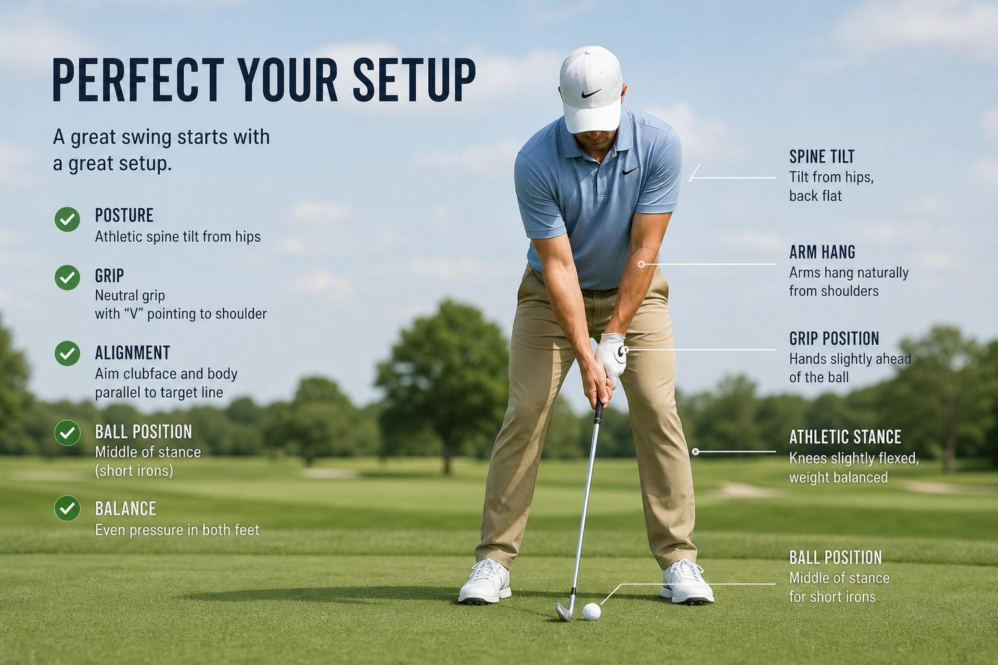
Correcting a rough swing begins with addressing essential body alignment and clubface control. Start by ensuring your stance is balanced with feet shoulder-width apart, weight evenly distributed, and knees slightly flexed to maintain stability through your swing. Many golfers struggle with an open or closed clubface at impact, frequently enough causing erratic ball flight and loss of distance. To improve this, practice drills such as the gate drill, where two tees are placed just wider than the clubhead outside the ball line; the goal is to swing cleanly through the gate without touching the tees. This promotes a square clubface through impact and encourages proper swing path. Additionally, focus on maintaining a consistent hinge angle of approximately 90 degrees in your wrists during the backswing, which helps generate power and control. By ingraining these biomechanical adjustments, you will rebuild your swing from the ground up, reducing slices, hooks, and other miss-hits.
Once basic mechanics are consistent, incorporate specific drills that translate directly onto course situations. For exmaple, practicing the slow-motion swing emphasizes muscle memory and timing, fostering smoother transitions from backswing to downswing. Pair this with targeted fitness exercises that enhance core rotation and hip mobility to enable a more efficient weight shift; these are measurable by aiming for a clear hip turn of at least 45 degrees in the backswing while keeping the head relatively steady. When you move to full-speed swings, use launch monitor feedback or smartphone swing apps to track clubhead speed and ball launch parameters, striving for incremental improvements in driving distance and accuracy. On the course, adapt these adjustments for rough lies by focusing on a slightly steeper angle of attack and opening the clubface intentionally with wedges to escape challenging turf. This strategic thinking, combined with biomechanical precision, empowers you to recover confidently and avoid big numbers.
integrating mental game awareness with technical practice enhances consistency under pressure.Visualize each shot’s target line and environmental factors like wind or slope before addressing the ball, which prevents rushed or flawed setup routines. Develop pre-shot checklists emphasizing grip pressure, stance width, and alignment angles to create routine and reduce swing variability.For players of all levels, employing practice drills such as hitting alternated partial and full swings encourages adaptability and feels for distance control, essential in tight scoring scenarios. Equipment choices also matter here; experimenting with shaft flex and clubhead loft can fine-tune launch conditions suitable for your swing speed and strength.embracing these biomechanical and strategic nuances will transform rough swings into reliable weapons, making your game more enjoyable and your scorecard more competitive. By breaking down complex techniques into manageable parts and linking them to real course challenges, you’ll find measurable progress and lasting confidence.
Discover How Course Strategy Can Sharpen Your Driving Precision
Mastering driving precision begins with understanding how course strategy intertwines with your swing mechanics and overall shot planning. When facing a tee shot, analyze the hole layout by considering hazards, fairway width, and prevailing wind conditions. This strategic evaluation shapes the target line and club selection, ensuring you avoid needless risks. Instead of aiming solely for maximum distance, focus on controlling your ball flight to land in favorable positions that set up easier approach shots. Such as, adjusting your stance and tee height to promote a slight draw or fade can definitely help navigate doglegs or avoid bunkers. Incorporate the “Rough swing drill” during practice to simulate hitting from tougher lies off the tee-this means setting up a tee ball in a patch of coarse grass to refine your ability to maintain balance and swing through resistance, which translates to stronger, more accurate drives under pressure.
Improvement in driving precision also hinges on the fundamentals of your setup and swing path. Begin with a balanced stance, placing your feet shoulder-width apart and positioning the ball off the inside of your lead heel to encourage an upward strike at around a 5 to 7-degree angle of attack. This promotes optimal launch conditions with reduced spin, key for maximizing distance and accuracy. As you progress, apply the “Rough swing drill” to enhance clubhead control by swinging slowly through a simulated rough patch, emphasizing maintaining an accelerated clubhead speed through impact without decelerating. For beginners, focusing on a smooth, consistent tempo and proper wrist hinge will build a solid foundation, whereas advanced players might experiment with slight grip adjustments or tweaking shaft flex according to course conditions such as wind speed and firmness of the fairway to fine-tune shot dispersion. Regularly integrating these setup checkpoints into practice can reduce common mistakes like casting or coming over the top, allowing for straighter drives and improved scoring opportunities.
combining mental focus with tactical execution yields the best improvements in driving precision. Visualizing each tee shot within the broader course context helps align intention with execution, promoting confidence and reducing tension. Adopt a pre-shot routine that includes reading the lie and observing environmental factors like crosswinds or damp turf, which affect ball behaviour off the tee. In structured practice sessions, alternate between hitting full swings and implementing partial, controlled swings simulating recovery shots from the rough, reinforcing adaptability for diverse scenarios. Employ target-oriented drills by placing alignment sticks or markers to train shot shaping and directional control, fostering repeatability under tournament pressure. Remember, sharpening your driving precision through strategic course management not only enhances accuracy but also lowers your scoring potential by consistently placing the ball in favorable positions, setting up more manageable approaches and dynamic scoring chances.
Master Progressive Drills to Transform Your Putting Consistency
Developing a reliable putting stroke begins with a consistent setup that balances stability and adaptability. Focus on aligning your eyes directly over the ball or slightly inside the target line to improve perception of the putt’s break and distance. Maintain a slight forward shaft lean of approximately 5 degrees to promote a clean strike and reduce skidding. Incorporate a gentle, pendulum-like stroke from the shoulders, keeping the wrists firm to avoid excessive hand manipulation that can introduce inconsistency. For golfers struggling with speed control, practice the “clock drill” targeting putts from 3, 6, and 9 feet to calibrate feel and develop muscle memory.Use alignment aids on your putter or training mats to reinforce proper face angle through impact. Emphasizing these setup fundamentals and incorporating progressive distance drills will build a solid foundation for consistent putting across varied green speeds.
To refine touch and accuracy under diverse course conditions, practice strokes that simulate real-game scenarios such as uneven lies or downhill breaks. The Rough swing drill provides valuable insights here by encouraging a more compact, controlled motion, which translates to better green reading and shot execution. Set up to practice putts from different slopes, adjusting for elevated or lowered ball positions common near fringe or collar areas. Incorporate clockwise and counterclockwise break reads with a focus on smooth acceleration through the ball to ensure a stable roll.Track shot outcomes by recording proximity to the hole to gauge improvement objectively. This deliberate exposure to challenging conditions will increase your confidence and adaptability, enhancing course management by allowing you to make smarter, lower-risk decisions during play.
Ultimately, turning putting proficiency into lower scores requires integrating technical skill with course strategy and mental focus. Begin each round by assessing green speed and grain direction-both vital for effective read and pace control. Use pre-putt routines that include visualization and commitment to the chosen line, grounding the mental game alongside your mechanics. Set measurable goals such as hitting 75% of putts within a 3-foot radius during practice rounds, which will translate into better competitive performance. Explore equipment options such as mallet versus blade putters, ensuring the putter’s weight and balance suit your stroke style for optimal feel and feedback. By practicing progressive drills, staying aware of green conditions, and honing your mental approach, you can master putting consistency and dramatically impact your overall scorecard.