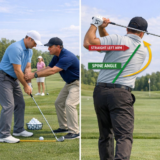
An accurate, reliable short game separates elite players from the rest, and within that domain the chip shot stands out for its demand of exact club choice, delicate technique, and repeatable execution under tight biomechanical and perceptual constraints. This article applies a systematic, evidence-informed lens-hereafter termed an academic approach-to unpack the essential principles of chipping. By placing short-game practice at the intersection of biomechanics, motor learning, decision-making, and equipment dynamics, the goal is to move beyond slogan-driven coaching toward testable concepts and usable procedures.
The objectives are twofold: (1) consolidate relevant theoretical and empirical findings about short‑game mechanics and skill acquisition; and (2) convert those findings into practical, generalizable recommendations for selecting clubs and executing shots to improve scoring consistency. to do so we combine biomechanical descriptions of posture,segmental timing,and impact mechanics with motor‑learning insights on variability,feedback schedules,and practice design,while also accounting for how club characteristics (loft,bounce,center of gravity) alter outcomes.
The method is deliberately synthetic: critical review of peer‑reviewed work, targeted biomechanical modeling where useful, and the formulation of empirically falsifiable coaching prescriptions. The contribution is both conceptual-clarifying why certain patterns produce reliable chips-and applied-offering coaches and players a coherent framework for instruction, objective measurement, and iterative refinement.
Bridging the gap between research and coaching, the article presents principles that support principled on-course choices (club, trajectory, landing spot) and help researchers design focused studies that advance our understanding of the short game.
Biomechanical Analysis of the Chipping Stroke and Recommended Movement Patterns
Modern biomechanical models treat the chip as a compact proximal‑to‑distal kinematic chain in wich the pelvis and trunk initiate movement and the shoulder/arm segments fine‑tune clubhead velocity. Core mechanical goals are postural steadiness, minimal unwanted lateral centre‑of‑mass travel, and precise regulation of angular impulse to control launch angle and spin. Computational simulations and motion‑capture studies show that modest setup changes-small shifts in stance width or spine tilt-can produce outsized changes in face angle at impact, underlining the importance of a repeatable address.
For instructional clarity the stroke can be segmented into measurable phases that simplify practice and assessment:
- Address / Setup: alignment, weight bias, and torso tilt calibration.
- Takeaway / Backswing: modest coil with preservation of the wrist triangle.
- Downswing / Acceleration: proximal rotation sequencing with elastic energy transfer.
- Impact: a fleeting instant where loft and face orientation matter more than top speed.
- Finish: controlled energy dissipation and balance recovery.
Each phase exhibits identifiable kinematic markers that can be measured and coached.
Teaching cues and movement preferences should favor economy and reproducibility: adopt a relatively narrow stance with roughly 55-60% of weight toward the lead foot at address, drive rotation from the torso rather than an exaggerated wrist snap, and allow a small, controlled upward shift of the lead hip to preserve loft without scooping. The table below summarizes joint emphasis and pragmatic cue ranges for teaching and sensor feedback:
| Phase | Primary Joint Contribution | Recommended ROM / Cue |
|---|---|---|
| Setup / Backswing | Pelvis & thorax | ~15-25° trunk turn; “settle the triangle” |
| Downswing / Impact | Thorax → shoulder → wrist sequence | Gradual acceleration; avoid wrist collapse |
| Follow-through | Upper trunk deceleration | Hold balance; “finish soft and low” |
from a motor‑learning standpoint, applying progressive constraints and simplifying tasks speeds robust acquisition.Useful drill categories include:
- Tempo drills (e.g., metronome-guided 3:1 backswing-to-downswing) to stabilize timing.
- Alignment lanes (gate drills) to reduce lateral dispersion at contact.
- Partial‑to‑full progressions to develop feel for loft before increasing speed.
These drills isolate timing, orientation, and energy transfer and are compatible with blocked, random, or contextual interference practice depending on the learner’s stage.
Long‑term performance also requires injury‑aware coaching and objective monitoring. Track simple metrics-impact face angle variability (target ±2°), pelvis rotation consistency (target ±3°), and centre‑of‑pressure excursion (<25 mm)-using wearable IMUs and force plates when practical. Keep coaching cues short and research‑aligned (for example, "rotate, don't flip" and "keep your spine angle"). Include mobility screens (thoracic rotation, ankle dorsiflexion) and progressive loading to reduce repetitive micro‑stress from short‑game practice.

Club Selection Strategy Based on Lie Assessment, Green speed, and Anticipated Landing Trajectory
The turf contact point largely determines suitable club options: a tight, closely mown lie with little grass between ball and sole generally favors lower‑lofted clubs with modest bounce (for example, 7-9 iron or pitching wedge for bump‑and‑run), while a thick or plugged lie calls for more loft and greater bounce (gap wedge to sand wedge) to avoid digging. Importantly, loft and bounce interact with sole geometry: bounce helps prevent sole penetration on soft turf, but too much bounce on a tight lie can cause bladed shots. Rapid, accurate lie assessment should reduce the candidate club set to options that preserve standard strike mechanics rather than forcing compensatory swings.
Green speed (Stimp) directly affects landing choice and acceptable rollout. On quicker greens, prioritize higher trajectory and more spin to limit roll; on slower, receptive putting surfaces, a lower‑trajectory shot with predictable run‑out can improve control. Convert perceived or measured green speed into a target landing angle and expected roll distance,then select the club whose typical flight and spin profile align with those objectives.
Anticipated landing trajectory synthesizes lie and green speed into an actionable decision rule. Account for:
- Distance to the pin – informs loft choice and swing amplitude.
- surface firmness – guides bounce needs and attack angle.
- Hazards and slope – require higher trajectories to carry hazards or lower trajectories to run under slopes.
- Desired rollout – determines whether stopping spin or forward roll is preferred.
Use this checklist as a concise pre‑shot heuristic to simplify decision making under pressure.
| Condition | Recommended Club | Intended Landing Behavior |
|---|---|---|
| tight lie / fast green | PW / 9I | Lower flight, controlled rollout |
| Fluffy lie / slow green | GW / SW | Higher landing, quicker stop |
| Uphill approach | 8-9I | Soft landing, moderate roll |
| Downhill approach | PW / lower loft | Lower landing, more run |
Combine lie assessment, green speed, and landing expectations into a simple decision matrix: first rule out clubs that the lie makes unsuitable, next narrow by target rollout given green speed, and finally adjust for landing corridor and obstacles. Rehearse this algorithmically during practice so that it becomes reliable on course: calibrate chosen club outcomes in controlled drills to build intuitive, evidence‑backed club selection.
Optimal Setup Parameters including Stance Width, Ball Position, and Weight Distribution
Reproducibility begins with a compact, biomechanically efficient base. A stable chipping stance is typically narrower than a full‑swing posture-about 6-12 inches (15-30 cm) between the inside edges of the feet, roughly hip‑to‑shoulder width. This reduces lateral sway and supports a compact vertical motion. Motion‑capture observations show that an excessively wide stance increases torso rotation and degrades loft control, while an overly narrow stance undermines balance.
Ball position strongly influences launch and spin.Place the ball slightly back of center for bump‑and‑run shots; at center for moderate trajectory chips; and forward of center for softer, higher‑spinning shots. Hands should be ahead of the ball at address to encourage a descending, compressive strike. Use these concise setup checks:
- Feet: hip/shoulder width, minimal toe flare for stability.
- Hands: slightly ahead of the ball for crisp contact.
- Posture: slight knee flex, neutral spine, chest over or just behind the ball.
- Grip pressure: light to moderate to preserve feel without tension.
| Club | Ball Position | Weight Distribution |
|---|---|---|
| Pitching Wedge (PW) | Center to slightly back | ~55% lead / 45% trail |
| Sand Wedge (SW) | Center | ~60% lead / 40% trail |
| Lob Wedge (LW) | Slightly forward | ~65-70% lead / 35-30% trail |
Lead‑foot forward bias (roughly 55-70% weight toward the lead) encourages a descending attack and reduces fat shots while preserving ground feel. minimize vertical bobbing; for consistency,let the stroke rely on shoulder rotation and forearm control rather than lower‑body weight shifts. keep the lead‑weight bias consistent across repetitions-reduced setup variance correlates with narrower outcome dispersion and better short‑game scoring over time.
Enforce these parameters through constraint‑based drills: use an alignment stick outside the trail foot to hold stance width,place a tee under the trail foot to discourage weight shift,and set a towel 6-12 inches behind the ball to promote a downward strike. Record baseline setup metrics (feet spacing, ball location, measured weight distribution) and track variance; reduced variance typically aligns with measurable improvements in shot dispersion.
Swing Tempo, Kinematic Sequencing, and Drills for Consistent Contact
Tempo functions as the temporal scaffold that constrains motor execution rather than as a stand‑alone mechanical attribute. In chipping a steady rhythm lowers impact variability by stabilizing the timing relationships among segments and clubhead. Research endorses an externally paced reference (metronome or audible cue) to lock the interval between backswing and downswing while allowing amplitude adjustments for distance. Practically,measure tempo with short video or timing apps and prioritize consistency of timing over brute speed: tiny timing inconsistencies produce more dispersion in launch conditions than modest changes in speed.
Even in small strokes, efficient chips exhibit a proximal‑to‑distal sequencing: pelvis and thorax start the downswing, followed by shoulders and forearms, with limited late wrist uncocking. This pattern preserves the clubhead path and reduces flipping or scooping. From a kinetic viewpoint, a stable centre of mass and fixed base of support are prerequisites for precise temporal phasing, so lower‑body restraint and upright posture are as vital as hand action for clean contact.
Diagnosis of common contact problems often reveals temporal or spatial sequence breakdowns. Typical error patterns and corrective emphases include:
- Early arm acceleration: produces thin/skulled shots-cue to postpone hand acceleration and initiate with torso rotation.
- Wrist collapse (“flip”): leads to fat strikes-correct by maintaining a firm lead wrist and letting the chest move ahead of the hands through impact.
- Deceleration through impact: results in weak, short chips-train continuous acceleration through impact using tempo cues such as “slow back, through even.”
Transfer sequencing concepts to the practice tee with targeted drills:
- Metronome cadence drill: 20 chips at a fixed beat to stabilize backswing‑downswing timing; only vary club once tempo is consistent.
- Gate impact drill: two tees force a centered strike; perform small strokes initiated by body rotation-3 sets of 10.
- Weighted‑handle slow motion: slightly heavier grip or dampener to bias proximal initiation and discourage early wrist acceleration-8-12 slow reps per session.
Practice design should intentionally combine measurement, feedback, and structured variability. Start with blocks of intentional practice (for example, 4-6 sets of 10 reps) and interleave randomized targets so timing control transfers to situational play. Use objective feedback-video frame analysis,face impact marks,or short‑range launch monitor data-to track temporal regularity and contact quality.A simple progression to implement early on is shown below:
| Stage | Focus | Session Target |
|---|---|---|
| Acquisition | Establish steady tempo | 3 sets × 10 with metronome |
| Integration | Maintain sequencing under pressure | 4 sets × 8 random targets |
| Transfer | adapt to on‑course variability | 10 chips across 5 different lies |
Loft Manipulation and bounce Management for Variable Turf and Lie Conditions
Viewing loft and bounce as manipulable variables-part of an interaction system that includes turf, lie, and stroke dynamics-helps players control trajectory, spin, and energy loss at landing. Practically, effective loft at impact is the sum of static loft, dynamic loft, and face‑to‑path orientation; effective bounce is how the sole geometry engages the turf under shear. Measuring these relationships in practice enables intentional adjustments to arrival behavior.
Begin any equipment or technique change with a simple turf and lie diagnostic: note surface firmness (firm, normal, soft), grass length, and ball lie angle. Map observations to technical responses-open face and increased dynamic loft for tight, downhill, or plugged lies; delofting and more neutral face for soft, thick turf. Tactical options include:
- Open face / increase dynamic loft – raises launch and can increase spin on tightly cut turf.
- Shaft‑lean / delofting – lowers trajectory and reduces bounce effect on soft lies.
- Shallow attack angle – lets the bounce work on firm turf to avoid digging.
- Club selection – match sole/bounce profile to the course’s prevailing conditions.
Bounce management is a strategic interaction rather than a fixed club trait: on firm surfaces, using more bounce helps the sole skid and avoid digging; on soft ground, reducing functional bounce via delofting and forward shaft lean prevents the sole from acting like a spade. Adjust swing depth and attack angle modestly; consistent impact conditions produce predictable bounce behavior and rollout.
| Surface | Bounce Strategy | Technical cue |
|---|---|---|
| Firm (mown) | Favor higher bounce / glancing sole | Shallow attack, slightly open face |
| Normal | Neutral bounce | standard setup, moderate shaft lean |
| Soft (thick) | reduce effective bounce | Forward shaft lean, steeper hands‑through |
Train these adjustments with controlled trials: change static loft or face angle incrementally, record impact position with video, and log carry, roll, and perceived spin. Alter one variable at a time and document results. A hypothesis‑driven, incremental process accelerates useful transfer from practice to match play and improves equipment decisions.
Deliberate Practice Protocols with Objective Feedback and Progression Criteria
Organize training blocks around explicit objectives, fixed repetition counts, and managed variability. Use a 3:1 work‑to‑rest structure (for example, 30 attempts with micro‑rests) to maintain movement quality while achieving volume. Record core dependent variables for each attempt-landing proximity (cm), carry + run (m), clubhead speed (m/s), and a subjective control rating (1-5)-so sessions can be compared statistically over time.
feedback should be immediate, specific, and actionable. Combine quantitative devices (short‑range launch monitors, rangefinders) with qualitative capture (high‑speed video) to separate trajectory, contact, and setup faults. Useful measurement tools and outputs include:
- Launch monitor: carry, spin, launch angle, clubhead speed.
- rangefinder / markers: landing proximity and rollout validation.
- High‑speed video: impact location, shaft lean, hand path.
- Structured rubrics: consistent 1-5 scoring for stance, alignment, tempo.
These inputs enable objective scoring and targeted micro‑corrections within practice cycles.
Progression should be tied to measurable thresholds rather than impressions. The table below outlines performance bands and pass criteria. Require at least three consecutive sessions meeting criteria before progressing; two consecutive failures should prompt regression or technical recalibration.
| Performance Band | Landing Proximity | Green‑Hit Rate | Variability (SD) |
|---|---|---|---|
| Novice → Intermediate | ≤ 90 cm | ≥ 60% | SD ≤ 35 cm |
| Intermediate → advanced | ≤ 60 cm | ≥ 75% | SD ≤ 20 cm |
| advanced | ≤ 40 cm | ≥ 90% | SD ≤ 12 cm |
Structure sessions to apply progressive overload and specificity: start with closed‑skill blocks (fixed lie and target), shift to variable practice (multiple lies and distances), and finish with contextually realistic challenges (pressure drills, time limits). Example drills to scaffold this process:
- Proximity ladder: five targets at increasing distances with pass thresholds.
- Wind pairing: paired attempts with and without simulated wind to practice compensation.
- Time simulation: 10 shots in 6 minutes to rehearse tempo under time pressure.
Log results and conduct weekly micro‑assessments to decide whether to advance, consolidate, or remediate based on the predefined criteria.
Quantitative assessment of shot Dispersion Using Statistical Methods and Video Analysis
Rigorous quantification of chipping variability requires an explicit measurement model that converts shot outcomes into analyzable data. Define a local coordinate system centered on the target (x = lateral, y = distance‑to‑hole) and record each shot’s endpoint as a bivariate (x,y). core statistical descriptors include the sample mean (centroid),covariance matrix,and root‑mean‑square error (RMSE) to capture bias and spread. For angular or non‑linear rollout effects, supplement Cartesian summaries with circular statistics. Aim for at least 30-50 shots per condition to stabilize variance estimates for basic inferential tests.
High‑frame‑rate video complements endpoint data by exposing kinematic drivers of dispersion.Use cameras with ≥120 fps, fixed focal length, and geometric calibration (checkerboard or homography) to convert pixel coordinates to metric space. semi‑automatic marker tracking or computer‑vision feature tracking can extract clubhead trajectory,impact point,and initial launch vectors. Time‑synchronized multiple cameras enable 3D reconstruction where needed; correct lens distortion to preserve spatial accuracy for small lateral errors.
Statistical analysis should move beyond single metrics to multivariate and inferential approaches. Compute a 95% confidence ellipse from the covariance matrix to visualize bivariate spread, and report measures such as Circular Error Probable (CEP) and signed bias for applied interpretation. For comparisons (e.g., wedge type, stance change), use repeated‑measures ANOVA or linear mixed‑effects models to separate within‑player and between‑player sources of variation. Key analytical outputs include:
- Centroid shift (bias) – directional tendency of misses
- Covariance eigenvalues – principal axes of dispersion
- CEP / RMSE – summary consistency metrics
- Launch‑kinematic correlates – variables that predict spread
Data pipelines must be reproducible and resilient to artifacts. Preprocess trajectories with low‑pass filters tuned to clubhead frequency,exclude mechanical outliers (mis‑hits) using robust estimators,and use bootstrap resampling to estimate confidence intervals for non‑normal measures. The table below links analytic metrics to practical interpretation.
| Metric | Interpretation |
|---|---|
| Centroid (x,y) | Systematic miss direction (aiming or setup bias) |
| Covariance ellipse | Directional dispersion-useful for targeted drills |
| CEP / RMSE | overall consistency-benchmarks progress |
Close the loop by translating diagnostics into training plans. Set measurable targets (for example, reduce lateral SD by 20% in six weeks), implement drills targeting kinematic contributors identified by regression, and reassess periodically using the same calibrated video/statistical pipeline. For coaching, overlay live endpoints with the player’s past confidence ellipse to provide immediate, actionable feedback; for research, archive raw and processed data for longitudinal and meta‑analytic work.
Integration of Cognitive Techniques and Pre shot Routine to Minimize performance Variability
Viewing cognitive strategies and the pre‑shot routine as integrated subsystems creates a compact model for stabilizing performance. Much like an orchestra where individual instruments synchronize under a conductor, combining attentional control, imagery, and a consistent motor routine reduces the micro‑fluctuations that produce shot-to‑shot variability. This systems perspective makes cognitive techniques concrete, testable parts of short‑game training.
A practical taxonomy of mental tools helps convert theory into practice. core elements are:
- Attentional focus – cue an external target and minimize distracting internal chatter;
- Imagery – mentally rehearse the landing and roll to bias feedforward control;
- Self‑talk – use brief instructional or confidence phrases to stabilize arousal;
- Arousal regulation – breathing and micro‑pauses to preserve tempo.
Embedding these anchors within the pre‑shot sequence turns them into reliable inputs for the motor system, reducing variance between attempts.
structure the pre‑shot routine around observable anchors. The table below offers a compact, evidence‑oriented template linking routine steps to cognitive anchors for field testing and iterative refinement.
| Routine step | Cognitive Anchor |
|---|---|
| Visualize landing | Imagery |
| Align and waggle | Attentional Focus |
| Deep exhale | Arousal Regulation |
| One confident phrase | Self‑talk |
Measure whether cognitive anchors produce measurable improvements by tracking proximity mean, dispersion (SD), and routine duration across controlled perturbations (different lies, wind, pressure simulations). Emphasize aggregated statistics rather than single shots-small, consistent benefits compound into reliable performance gains.
Pair cognitive training with staged motor practice:
- Block 1 – Acquisition: practice each cognitive tool separately in low‑pressure,high‑repetition drills;
- Block 2 – Integration: combine selected anchors with the full routine across varied lies;
- Block 3 – Transfer: add time pressure and competitive elements while monitoring variability metrics for retention.
This periodized pairing fosters durable motor programs and predictable behavior when it matters most.
Q&A
Q: What does an “academic approach” to chipping mean?
A: It means applying structured, theory‑driven methods to study and practice chipping: integrating biomechanics, motor‑learning science, and performance measurement with deliberate practice design, objective feedback, and critical evaluation. the emphasis is on reproducibility, hypothesis testing, and using scholarly evidence to guide instruction.
Q: Why is evidence‑based coaching important for chipping?
A: Evidence‑based coaching replaces folklore with interventions shown to affect performance reliably. It helps coaches prioritize which cues, drills, and equipment choices actually move metrics that matter-such as proximity to hole or strokes‑gained around the green-thereby increasing practice efficiency and transfer to competition.
Q: What biomechanical factors most influence successful chips?
A: Primary determinants are impact geometry (loft and face angle), clubhead speed at contact, ball‑club compression and spin, and body mechanics that support consistent impact (center‑of‑mass control, weight bias, trunk tilt, and controlled wrist behavior). Reducing variability in these inputs generally improves accuracy.
Q: How should club selection be framed academically for chipping?
A: Treat club choice as an optimization balancing trajectory, stop distance, and control. Consider landing spot, green firmness, slope, and desired rollout. Use a decision hierarchy: when stopping power is needed, choose higher loft and suitable grinds; for bump‑and‑run or firm surfaces, opt for lower loft. Build decision rules by systematically recording outcomes across representative conditions.
Q: Which technical fundamentals should an academic model emphasize?
A: Emphasize reproducible stance and ball position, a forward weight bias for crisp contact, limited wrist hinge with pendulum‑like arm motion, a stable lower body with minimal lateral sway, and an attack angle matched to turf. Adapt these fundamentals empirically to individual anatomy and skill level.
Q: How do bounce and grind affect outcomes?
A: Bounce and grind determine how the leading edge meets turf. higher bounce resists digging in soft turf but can hamper contact on tight lies; low‑bounce grinds facilitate cleaner strikes on firm turf. An academic approach quantifies these effects through controlled trials and outcome logging.
Q: What measurement variables best describe chipping performance?
A: useful variables include launch angle, spin rate, clubhead speed, impact location, carry, rollout, lateral/depth deviation, and proximity to hole. For performance assessment use strokes‑gained around the green or mean proximity across repeated trials. Biomechanical measures (joint angles, COP) help diagnose technique.
Q: What tools enable rigorous assessment?
A: Combine motion capture/high‑speed video for kinematics, launch monitors for ball/club metrics, force plates for weight transfer, and standardized on‑turf tests for ecological validity. Statistical analyses should report central tendency, variability, reliability (ICC), and appropriate inferential tests.
Q: How should practice be structured according to motor learning?
A: Use deliberate, varied, and contextualized practice. Distribute sessions with focused repetitions, alternate blocked and random practice according to stage, provide faded augmented feedback, and encourage an external focus to build automaticity. periodize acquisition, consolidation, and transfer phases.
Q: What is the role of feedback?
A: Feedback must be timely and actionable. Begin with prescriptive feedback to establish basics,then move toward summary and bandwidth feedback to foster self‑monitoring. Limit technology outputs to essential metrics to avoid dependency; promote self‑evaluation where feasible.
Q: Are there research‑supported drills for chipping?
A: Yes. Landing‑spot practice, constrained setups that bias desired trajectories, and variability drills that force adaptation are all supported by motor‑learning principles. Validate drills by measuring improvements in proximity and consistency across representative conditions.
Q: How should instruction be individualized?
A: Tailor instruction based on body dimensions, mobility, existing motor patterns, and cognitive preferences.Baseline testing reveals whether issues stem from impact inconsistency or distance control. Use objective measures to guide iterative adjustments to technique, drills, and equipment.Q: how can researchers evaluate chipping interventions rigorously?
A: Use controlled designs with adequate sample sizes, randomization where possible, and pre/post retention and transfer tests. Prioritize ecologically valid tasks, blind outcome assessment if feasible, and report measure reliability. Mixed methods that add learner perspectives improve interpretation.
Q: What misconceptions can an academic approach correct?
A: Common errors include overvaluing wrist flick for power, assuming a single technique fits all lies, and believing raw repetition without variability guarantees transfer. Academic methods clarify mechanisms and support context‑sensitive solutions.Q: How can statistical methods help individual practice?
A: Apply time‑series and reliability analyses to monitor progress, compute consistency metrics (SD, CV), and use regression to link kinematics with outcomes. Bayesian updating can refine individual decision rules (for club choice or landing spot) as more data accumulate.
Q: What are promising future research directions?
A: Suggested areas include testing ecological validity of lab results on real turf, long‑term retention comparisons of practice schedules, equipment‑player interaction across swing styles, neurocognitive drivers of pressure performance, and personalized algorithms for club selection and practice sequencing.
Q: how should readers use scholarly resources?
A: Conduct structured keyword searches (e.g., “golf chipping biomechanics,” “short‑game motor learning”) on platforms like Google Scholar and Academia.edu; critically appraise methods and applicability to on‑course contexts.
Q: How do you preserve ecological relevance when translating research to practice?
A: Design representative practice sessions that mimic on‑course constraints (multiple lies,slopes,green speed),test interventions in situ,and use measurable outcomes (proximity,strokes‑gained). Follow a cycle of hypothesis, controlled testing, and real‑world validation.
Q: Practical checklist after reading:
A: (1) Establish baseline chipping metrics. (2) identify constraints (equipment, turf, technique). (3) Select targeted, theory‑based interventions. (4) Implement a periodized practice plan with variable practice and calibrated feedback. (5) Measure and analyze outcomes iteratively. (6) Validate improvements on course.
Concluding note: An academic approach to chipping unites theoretical understanding, precise measurement, and structured practice. When coaches and players apply evidence‑based principles-diagnosing constraints, selecting clubs deliberately, and designing representative practice-they create predictable, transferable short‑game skills and contribute observational data that strengthen the knowledge base.
To Conclude
this synthesis presents an evidence‑informed framework that prioritizes precise club selection and repeatable execution, and that systematically links biomechanical theory, motor‑learning principles, and applied coaching methods. For practitioners the immediate takeaway is to emphasize diagnostic assessment, individualized club‑selection rules, and practice that mirrors competitive perceptual and motor demands. For researchers it highlights opportunities for controlled trials, longitudinal retention studies, and analyses tying kinematic markers to outcome variability.
Recognize limitations in existing work-heterogeneous methods and small samples-and prioritize methodological rigor in future efforts. Collaboration between coaches, biomechanists, and sport psychologists will accelerate translation of theory into sustained performance gains.
Adopting an academic orientation does not replace the craftsmanship of the short game; rather, it sharpens that craft with systematic inquiry and evidence‑based practice. Ongoing dialog between scientists and practitioners will continue to refine teaching, learning, and execution, advancing both the art and the science of golf chipping.
Chip Like a Pro: Biomechanics and Tactics for Precision Around the Green
Why biomechanics matters for golf chipping
Chipping is more than a feel shot – it’s a repeatable motor pattern shaped by body posture, joint actions, and simple physics. understanding the biomechanics behind a quality chip shot helps you convert feel into reliable technique. Key principles that influence accuracy and consistency include center-of-mass control, wrist behavior, clubhead path, and launch/impact conditions.
essential biomechanical concepts
- Center of gravity and balance: A stable center of mass over your lead foot keeps the strike consistent and reduces unwanted rotation.
- Minimal wrist flip: Overactive wrist release introduces loft and spin variability. Controlled wrist hinge on takeaway and a firmer lead wrist at impact improves compression and predictability.
- Short lever principle: Short, pendulum-like strokes (similar to putting) reduce variables – less arm extension and less body rotation equal more repeatable contact.
- Clubhead path and face control: A slightly inside-to-square path with a square (or deliberately open) face controls launch direction and roll-out.
Setup and stance: foundation for consistent chips
Small setup adjustments dramatically change launch angle, spin, and roll. Use setup as your biggest advantage – it’s consistent and under your control.
Recommended chipping setup
- Stance: Narrower than full swing, feet about shoulder-width or slightly narrower; right foot (for right-handers) slightly back to encourage hands-ahead.
- Ball position: Back of center to mid-stance for lower launch and more roll; move forward for a higher-trajectory chip.
- Weight distribution: 60-70% on front foot at address to promote downward contact and crisp strike.
- Hands and grip: Hands slightly ahead of the ball, light grip pressure but firm lead wrist; use a standard grip or choke down slightly for control.
- Spine and shoulder tilt: Slight tilt away from the target to keep hands ahead and promote descending blow.
Club selection: choose trajectory and roll with intent
Club choice controls launch angle, landing behavior, and roll. Think in terms of “land and roll” rather than pure carry for most greenside chips.
| Club | Typical Use | Landing & Roll |
|---|---|---|
| 9‑iron / PW | longer chips, more rollout | Low landing, long roll |
| Gap/Wedge (50°-54°) | Versatile around greens | Balanced carry and roll |
| Sand/Lob Wedge (56°-60°) | Higher flop or soft-landing shots | High carry, minimal roll |
| Hybrid or 7‑iron (bump-and-run) | Fast greens, long chips | Very low carry, lots of roll |
Impact mechanics: contact beat theatrics
Good contact is the single greatest predictor of chipping success. Focus on predictable impact conditions every time.
Impact checklist
- Hands slightly ahead of the ball at impact (promotes crisp contact).
- Weight on lead foot to ensure downward strike.
- clubhead moving low-to-high through impact (not an upward-attacking full swing).
- Minimal loft change from wrist flip – keep face consistent.
Shot planning and green-reading
Biomechanics gives you consistent strikes; smart tactics give you the right shot. Combine reading greens with deliberate trajectory choices.
How to plan a chip shot
- Identify target landing spot (visualize distance from landing to hole).
- assess slope and green speed – a downhill landing will increase rollout, uphill slows it.
- Choose trajectory: low (more roll), mid (carry + roll), or high (more carry, less roll).
- Select club based on desired carry-to-roll ratio and green firmness.
- Commit to a landing spot and a stroke length; hesitation ruins chipping rythm.
Practical green-reading tips
- Walk around the green when possible to observe undulations and grain direction.
- Note the crown lines – balls tend to chase laterally along slopes.
- Estimate break at the landing point, not just the hole.
tactics: when to bump-and-run vs. flop vs. chip-and-run
Choose the shot that minimizes risk and maximizes make probability.
- Bump-and-run: Use when the green is fast and you wont more roll. Use lower-lofted clubs (7‑iron to gap wedge).
- Chip-and-run: Mid-trajectory shot with balanced carry/roll – good for approach-type chips using PW/GW.
- Flop shot: Reserved for tight pin placements with hazards or steep lips. Requires confident open face and soft hands; higher risk.
Drills to reinforce biomechanics and feel
Practice with purpose: use drills that isolate the variables you want to improve – contact, launch, and distance control.
Top drills (repeat each drill in 10-20 rep sets)
- Landing-spot ladder: Place towels or markers at 5‑ to 10‑foot intervals. Chip to each target, focusing on a consistent landing spot and strike.
- One-handed chips: Right-hand-only and left-hand-only reps to develop feel and control from the lead wrist and forearm.
- Gate drill: Set tees slightly wider than the clubhead on either side of the ball to ensure a square path through impact.
- Hands-ahead drill: With a short spoon (or towel under lead armpit),practice maintaining forward shaft lean through impact.
- Distance-control pendulum: Short, consistent back-and-through strokes; think putting motion to develop tempo.
Practice plan: turn drills into results (8-week template)
Consistency requires structured practice. this sample plan fits golfers who can spare 2-3 sessions per week (30-60 minutes each).
Weeks 1-2: Fundamentals (focus on contact)
- Session structure: 10 min warm-up, 20 min impact drills (gate + hands-ahead), 15 min landing-spot ladder.
- goals: Create repeatable hands-ahead contact and predictable launch angle.
Weeks 3-4: Club selection and trajectory control
- Session structure: 10 min warm-up, 20 min trajectory practice (use different clubs for same landing), 15 min one-handed chips.
- Goals: Understand carry-to-roll ratios for each club on your typical greens.
Weeks 5-6: Pressure and green-reading
- Session structure: 10 min warm-up, 25 min simulated pressure (scorekeeping games around targets), 15 min uphill/downhill practice.
- Goals: Make consistent choices under mild pressure and improve reads.
Weeks 7-8: Speed and competitive practice
- Session structure: 10 min warm-up, 30 min speed control ladder (random distances), 15 min situational play (short course or tight pins).
- Goals: Maintain mechanics with varying yardages and stakes.
Common problems and quick fixes
- Fat shots: Move ball slightly back, increase lead-foot pressure, and think of a descending strike.
- Thin shots: Too much weight back; shift 10-20% more weight forward and shorten the stroke.
- Too much spin (hop and stop): Reduce wrist flip and choose less lofted club or firmer landing spot.
- Inconsistent distance: Work the landing-spot ladder and use a consistent tempo (count 1-2 for back and through).
Case study: converting a weak short game into reliable scoring
A mid-handicap player who averaged 36 putts and struggled from within 30 yards improved their short-game scoring by making three core changes over six weeks: (1) consistent hands-ahead setup, (2) deliberate club selection based on landing-spot practice, and (3) weekly pressure drills. The result: they shaved nearly two strokes off their score by converting more 10‑ to 20‑footers and avoiding chunked chips. This highlights how small, biomechanically sound adjustments compound into measurable on-course gains.
Benefits and real-world gains from mastering chipping
- Lower scores: Fewer bogeys and more one-putt opportunities.
- Reduced stress around greens: Knowing you have a repeatable pattern builds confidence.
- More strategic options: Better chipping lets you play safer lines off the tee.
- Faster improvement curve: Short-game gains often yield faster strokes-gained improvements than long game over similar practice time.
First-hand tips from coaches and biomechanists
- “Train the hands-ahead posture until it’s automatic.” – short-game coach
- “Small changes to launch angle affect roll far more than you think; practice land-and-roll distances.” – biomechanist
- “Don’t overcomplicate: control the landing spot, then the rest follows.” – touring pro
SEO-focused keyword guidance for golfers
When practicing or sharing about your chipping, use natural keyword phrases to improve search visibility and clarity, such as:
- golf chipping technique
- short game drills
- chipping tips for consistent contact
- best clubs for chipping
- green reading for chip shots
Quick reference: chipping checklist (printable)
- Stance: narrow, weight 60-70% forward
- Ball: back of center for low-rolling shots
- Hands: slightly ahead at address and impact
- Stroke: short, pendulum-like, controlled wrist hinge
- Club: choose by desired carry and roll
- Plan: pick a landing spot and commit
If you want, I can tailor a 4‑week personalized chipping practice plan based on your current handicap, favorite clubs, and how often you can practice – tell me your typical chipping trouble and I’ll create a step-by-step routine.