
A novice in any skill domain is commonly understood too be an individual with limited experience who is beginning to acquire competence and often benefits from clear, stepwise instruction. In the context of golf,this early learning phase is characterized by frequent technical inconsistencies that impede performance,frustrate learners,and can slow skill acquisition. Among these, eight error categories-grip, stance, alignment, posture, swing path, tempo, ball position, and the short game-consistently appear in coaching diagnostics and empirical studies of beginner performance.
This article synthesizes contemporary research and coaching practice to identify the biomechanical, perceptual, and motor-learning factors that underlie each error type and to recommend practical, evidence-based interventions. Emphasis is placed on interventions that are feasible for novice golfers and scalable for use in group lessons, individual coaching, or self-directed practice. Interventions are selected and described with attention to their theoretical rationale, expected outcomes, and procedural steps, enabling instructors and learners to apply them systematically.
By framing common faults within an applied motor-learning perspective, the article aims to move beyond prescriptive cues toward strategies that foster durable skill acquisition-such as task simplification, augmented feedback, constraint manipulation, and progressive variability in practice. The final sections translate these principles into concise drill progressions and assessment checkpoints, offering practitioners concrete tools to accelerate early-stage betterment while minimizing frustration and injury risk.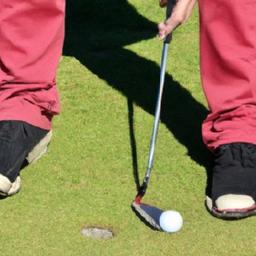
Grip Errors and Evidence-Based Corrective Techniques for Consistent Clubface Control
Novice players frequently demonstrate systematic grip deficiencies that compromise clubface orientation at impact.Common manifestations include a too-weak (ulnar side) or too-strong (radial side) hand placement,excessively tight grip pressure,and inconsistent use of fingers versus palms to control the handle.Biomechanical analyses and observational coaching studies link these errors to predictable ball‑flight biases (e.g., open face → slices; closed face → hooks) and increased shot dispersion. Emphasizing the role of the lead wrist and forearm rotation during the downswing clarifies why small variances in hand position produce large deviations in face angle at impact; consequently, diagnosis should prioritize hand rotation range, wrist hinge timing, and static address checks rather than isolated aesthetic preferences.
Corrective interventions should be explicit, progressive, and measurable. Begin with static alignment protocols and low‑velocity drills before reintroducing full‑speed swings. Effective, evidence‑based drills include:
- Mirror Alignment Drill – set address in front of a mirror to verify 2-3 knuckles visible on the lead hand and neutral pad placement on the shaft;
- Pressure Progression Drill – practice hitting short shots while maintaining graded pressure (target ~4/10) to reduce tension and preserve release;
- Impact Bag Drill – deliver controlled strikes into an impact bag to train square face at the moment of contact and a stable lead wrist;
- Towel Grip Drill – wrap a towel under both hands to promote unified hand action and discourage independent trailing-hand flipping.
Each drill should be executed with immediate feedback (video or coach) and progressively integrated into full‑swing practice once consistency is observed at reduced speed.
To translate practice into measurable improvement, pair drills with simple outcome metrics and short retention tests. The following table provides a concise template coaches can use during a 4-6 week intervention block. Use ball‑flight observation and dispersion radius as primary field metrics, supplementing with slow‑motion video to quantify face angle variability where available.
| Drill | Primary Target | Simple Metric |
|---|---|---|
| Mirror Alignment | Static hand placement | Knuckle visibility (2-3) at address |
| Impact Bag | Square face at contact | Number of square impacts per 20 reps |
| Pressure Progression | Grip tension control | Subjective pressure (1-10) & consistency |
Use pre/post tests (dispersion circle, bias frequency) to quantify transfer to the course.
From a motor‑learning perspective, adopt blocked practice for initial acquisition and rapidly shift to variable/random practice to facilitate transfer under contest conditions. Prioritize clear, externally focused cues and retention checks:
- Lead-knuckles cue – “show two knuckles” to promote neutral rotation;
- Pressure cue – “hold 4 of 10” to reduce excess tension;
- Release cue – “turn palms through impact” to encourage forearm pronation and a square face.
Combine these cues with short, intentional practice sessions (20-30 minutes, high repetition, immediate feedback) and schedule a retention test after 48-72 hours to evaluate consolidation. When persistent variability remains, escalate to instrumented feedback (face‑angle sensors, high‑speed video) and individualized motor cue refinement guided by a trained instructor.
Optimizing Stance Balance and alignment Through quantitative Assessment and Practical Adjustments
Optimizing in this context follows the lexical definition of making a system as perfect or effective as possible; therefore, stance, balance and alignment should be treated as quantifiable systems rather than subjective impressions. Objective metrics-such as center-of-pressure (CoP) excursions,medial-lateral weight distribution,and joint-angle consistency-provide reproducible indicators of a golfer’s static and dynamic stability. Adopting a measurement-first approach permits comparison across sessions and players, and enables targeted interventions grounded in measurable change rather than anecdote.
Practical, low-cost assessment protocols can be deployed on the range or in the clinic to translate those metrics into actionable insights.Recommended rapid assessments include:
- Static weight distribution: measured with a bathroom scale or dual scales to quantify fore/aft and left/right biases;
- Video kinematics: smartphone slow‑motion to capture shoulder-hip alignment at address and impact;
- Balance-challenge tests: single-leg stands and narrow-stance sway tests to reveal instability under perturbation.
These simple tests form a baseline against which coaching adjustments can be evaluated.
Use concise benchmarks to link measurement to intervention. The table below offers compact target ranges and corresponding practical adjustments that coaches and players can apply instantly. (Values are illustrative starting points and should be individualized.)
| Metric | Typical target | Immediate Adjustment |
|---|---|---|
| Stance width | Shoulder-width ± 5% | Adjust feet laterally; re-check ball position |
| Weight distribution | 55% front : 45% back at address | Shift lead-knee slightly forward; use step-drill to set bias |
| Shoulder alignment | Parallel to target line ± 2° | Mirror or video feedback; place club on ground as visual guide |
Implement interventions through iterative, data-driven practice: record baseline metrics, apply a single targeted adjustment, and re-measure after a short drill set. Progression should follow a measured hierarchy-first eliminate gross asymmetries, then refine micro-adjustments under simulated play conditions. Use biofeedback where available (pressure mats, mirror drills, or video) and maintain a brief log of measurements and perceived effort to facilitate long-term motor-learning consolidation. Bolded cues and concise drills accelerate transfer from practice to on-course performance while preserving the rigor of quantitative assessment.
Posture and spine Angle: biomechanical Insights and Targeted Drills to Improve Strike Quality
Maintaining an appropriate spine tilt is a primary determinant of consistent contact quality. Biomechanically, the torso orientation governs the clubhead’s arc relative to the ground and the preservation of the swing plane; even small changes in the upper-body tilt produce measurable variations in clubhead path and low-point control. Medical and health sources emphasize that posture is central to balance and load distribution-factors that translate directly to the dynamic demands of a golf swing. Conserving a stable spine angle through the backswing and into impact reduces compensatory movements (e.g., early extension or lateral sway) that lead to thin or fat strikes.
Common postural deviations among novices are identifiable and predictable. Typical faults include excessive uprightness at address, collapse through the lumbar region, forward head carriage, and loss of tilt during the transition. These deviations often manifest as an inconsistent low point or a shifting center of mass. Observational cues to detect these errors include:
- Visual: clubhead striking the turf behind or ahead of the ball more than expected;
- Kinesthetic: sensation of “standing up” during the downswing;
- Balance: premature weight transfer to the lead foot or lateral movement.
Targeted drills should prioritize spine-angle awareness, endurance, and rotational competency. Implement drills that create external reference points, promote isometric support of the torso, and re-train the proprioceptive environment of the swing. Effective,field-ready exercises include the alignment-stick spine-check,towel-under-armpits drill for compactness,and wall-takeaway to preserve tilt. the following concise table summarizes practical drills for integration into short practice sessions.
| Drill | Target | Practical Prescription |
|---|---|---|
| Alignment-stick spine-check | Maintain address tilt | 3×10 slow swings,mirror feedback |
| Towel under armpits | Prevent arm separation,keep torso angle | 4×8 impact-focused strikes |
| Wall takeaway | Preserve hip-hinge and initial tilt | 2×12 groove reps |
Translate drills into a structured practice progression emphasizing feedback and load management. Begin with static posture checks (mirror or video),progress to slow-motion swings that preserve tilt,then re-introduce tempo and ball-striking while monitoring low-point consistency. Incorporate brief posture endurance exercises (plank variations, posterior-chain activation) twice weekly to support spinal stability. Use objective feedback-video review at 60 fps or a launch monitor low-point trace-so learning is measurable; clinically informed sources on posture also note that improved postural mechanics reduce undue strain and support long-term athletic function.
Swing Path Deviations: Diagnostic Indicators and Motor Learning Interventions to Reduce Slices and Hooks
Objective diagnostic signs provide the most reliable basis for distinguishing between an out‑to‑in path that produces a slice and an in‑to‑out path that produces a hook. Use a combination of observable ball flight, turf interaction, and impact evidence together with technology when available. Typical indicators include:
- Ball flight: high,glancing fade with leftward spin axis (slice) vs. low, exaggerated draw/turn with rightward spin axis (hook).
- Divot and turf pattern: shallow, toe‑first divots or lack of forward shaft lean (slice tendency) vs. deep, heel‑first divots or early release (hook tendency).
- Impact markings & face alignment: toe‑side impact and open face relative to path (slice); heel‑side impact and closed face relative to path (hook).
- Quantitative metrics: negative club path with open face (slice), positive path with closed face (hook), and corresponding spin/launch numbers from a launch monitor.
Translate diagnosis into motor‑learning prescriptions that alter the emergent coordination rather than prescribing a single mechanical fix. Favor an instructional palette grounded in contemporary motor‑learning principles: external focus cues (e.g., aiming ball flight rather than body positions), variable practice schedules (different targets, lie angles, clubs), and constraint‑led manipulations (placement of alignment sticks, gate drills to constrain swing arc). Augmented feedback should be deliberate: brief, summary feedback after blocks of attempts promotes retention more than continuous, trial‑by‑trial correction.
Match simple, scalable drills to the diagnosed pattern and progress via measurable outcomes. The table below summarizes concise pairings suitable for practice sessions (use 10-20 ball blocks, alternate targets, and record launch monitor data when possible):
| Diagnosed Pattern | Primary Drill | Motor Cue |
|---|---|---|
| Out‑to‑in (slice) | Inside‑path gate (alignment sticks) | “Brush the toe” – external target line |
| In‑to‑out (hook) | Path‑restriction wall drill | “Sustain the arc” – delayed release |
| Face‑path mismatch | Impact tape + mirror feedback | “Square at impact” – external target aim |
implement a structured progression and evaluation protocol to convert short‑term corrections into robust skill acquisition. Begin with high‑feedback, low‑speed practice to establish a new coordination pattern, then move to variable, higher‑speed contexts while reducing augmented feedback frequency. Use objective retention tests (no feedback, different target) and transfer tests (different club, different lie) to confirm learning. Emphasize concise, external cues and constraint manipulation; these yield more stable reductions in both slices and hooks than prescriptive kinematic micromanagement.
Tempo and Rhythm: External Focus Strategies and Metronome Training to Develop Durable Timing
Temporal consistency in the golf swing is not merely a feel – it is a measurable motor attribute that underpins repeatable ball-striking. Contemporary motor-learning research indicates that adopting an external focus (e.g., concentrating on the clubhead path or a sound cue) promotes automaticity and reduces conscious interference with timing. This section synthesizes those principles into targeted interventions: by relocating attentional demands away from body mechanics and toward outcome-related cues, coaches can foster the sort of durable timing that resists pressure and fatigue. The theoretical anchor is the constrained action hypothesis, which explains why external focus interventions typically produce superior learning and retention versus internal, body-focused instruction.
practical metronome protocols translate theory into minutes of purposeful practice.Use a metronome to instantiate consistent tempo ratios (backswing:transition:downswing) and to create an external auditory scaffold that the learner can attend to instead of internal sensations. The short table below offers concise starting points that are simple to implement and easy to scale in difficulty. Apply the metronome in goal-directed ranges rather than rigid prescriptions – emphasize feel consistent with the auditory beat and alter bpm to test transferability.
| Drill | Tempo Ratio | Metronome BPM (example) |
|---|---|---|
| Full swing | 3:1 backswing:downswing | 60 BPM (backswing = 3 beats, downswing = 1 beat) |
| Short game | 2:1 controlled acceleration | 80 BPM (consistent chipping cadence) |
| Tempo walk | Even pacing for setup → strike | 70 BPM (match pre-shot routine) |
designable drills that emphasize external cues accelerate retention and on-course transfer. For novice correction,prioritize these simple progressions:
- Auditory anchor: swing to the metronome and call out “strike” on the beat to couple sound with impact intent;
- Visual target chaining: align the clubhead’s outside-in/inside-out path to an external marker and focus solely on that marker during repetitions;
- Sound-focus feedback: use impact sound (e.g., practice balls on a sound board) as the primary feedback channel rather than body sensations.
Each drill should be practiced in short bouts (5-10 minutes) with variable contexts (different clubs, lie angles) to build robustness.
Evaluation and progression use objective and pragmatic metrics: track consistency via video frame counts or phone slow-motion to measure time from top to impact, record mean beat alignment with the metronome, and log subjective perceived effort. A recommended microcycle is daily 10-15 minute tempo work for two weeks, then increasing variability (random clubs, light pressure shots) to test durability. Emphasize retention checks (no metronome after two days) and transfer tests (on-course target outcomes) to verify that the external-focus tempo has become resilient under real conditions.
Ball Position and Club selection: Contextual Guidelines and Prescriptive adjustments for Consistent Contact
Precise alignment of the ball within the stance and the matched selection of a club are essential determinants of where the clubhead first interacts with the turf and the ball. Empirical observations and biomechanical analysis indicate that a ball positioned too far forward relative to a golfer’s center of mass produces upward-contact tendencies (higher launch, less compression), whereas a ball placed too far back encourages downward strikes and increased spin. Accordingly, the interplay between shaft length, loft, and intended point of contact should be treated as an integrated system rather than independent adjustments: altering one variable obligates compensatory changes in the others to preserve contact consistency and shot geometry. Consistency emerges from predictable relationships among stance midpoint, swing arc apex, and the club’s design parameters.
Practical prescriptions translate those relationships into simple spatial rules that can be rehearsed on the range. The following heuristics are robust starting points for most amateur golfers, modifiable by individual anthropometrics and swing tendencies:
- Driver: ball on or just inside the lead heel to promote a sweeping, upward strike.
- Long irons/woods (2-4, 3W): ball slightly forward of center to encourage a shallow descent and higher launch.
- Mid-irons (5-7): ball near center of the stance to balance compression and trajectory.
- Short irons/wedges: ball slightly back of center to facilitate a steeper, descending strike for controlled spin.
These rules are prescriptive anchors; practitioners should quantify adjustments in incremental steps (one ball-width at a time) and observe contact repeatability.
For quick reference in practice situations, the following compact rubric correlates common clubs with ball placement and the primary contact objective. The table below uses concise categories for rapid assimilation during range sessions or pre-shot routines.
| Club | Relative Ball Location | Contact Goal |
|---|---|---|
| Driver | Lead heel / forward | Upward sweep; low spin |
| 3-iron / 3W | Slightly forward of center | Shallow descent; higher launch |
| 7-iron | Center | Solid compression; neutral trajectory |
| Pitching Wedge | Slightly back of center | Descending strike; increased spin |
Contextual factors-surface firmness,lie angle,wind vector,and target trajectory-necessitate systematic micro-adjustments rather than wholesale changes. When the ball is sitting down in rough, move it marginally forward to avoid excessive ground contact; on tight fairway lies, revert to the nominal position to preserve crisp compression. For practical, practice-oriented remediation use drills that isolate the geometry of contact:
- Tee Height Drill: set the ball progressively lower while maintaining the same stance to sensitize feel for low versus sweeping strikes.
- Towel-Under-Toe Drill: place a towel under the trail toe to encourage a forward weight transfer and cleaner compression on short irons.
- Step-In Rehearsal: take a practice step with the lead foot after setup to lock ball position relative to body posture, then execute the swing.
These interventions should be instrumented with objective feedback (impact tape,divot pattern,short-session video) and adjusted iteratively to achieve reproducible contact under varied playing conditions.
Short Game Fundamentals: Evidence-Based Chipping and Putting Practices to Lower Scores
Fundamental control elements for the short game center on reproducible contact, reliable distance control and appropriate green-speed management. For chipping, emphasize a compact stroke with a forward ball position and a slightly hands-ahead setup to promote a descending blow and predictable roll-out. For putting, prioritize a pendular stroke, consistent launch direction and speed control over radical alignment changes; empirical work in motor learning indicates that stable initial conditions and reduced movement degrees of freedom improve execution consistency under pressure. Coaches should target measurable outcomes (e.g., metres of rollout per club, putts per hole) rather than aesthetic notions of the ”perfect” stroke to create objective feedback loops for improvement.
Practice design should be evidence-driven and task-specific. Recommended micro-drills include:
- Distance ladder – place targets at 1m increments to train graded feel and use outcome feedback for each attempt.
- Clock chip – chip around a central hole from multiple directions to develop consistent contact and landing-zone judgment.
- Gate putting – use narrow gates to enforce center-face contact and square impact angle.
- Speed ladder – set a series of putts to different lengths to train pace control across green speeds.
- Pressure simulation – introduce scoring consequences or set-piece “to-par” challenges to transfer practice gains to on-course performance.
| Element | Chipping | putting |
|---|---|---|
| Ball position | Back-to-center for crisp contact | Centre or slightly forward for stroking arc |
| Weight | 60/40 lead-side | Even, subtle forward bias |
| Primary cue | Accelerate through the shot | Control backswing length for speed |
Adopt a structured, evidence-based practice regimen: combine deliberate practice (focused, feedback-rich reps) with variable practice (changing lies, distances, green speeds) to enhance adaptability. Use outcome measures such as up-and-down percentage, average putts per green and dispersion from intended landing zones to quantify change; set short cyclical goals (e.g., 10% improvement in up-and-downs over six weeks). integrate short-game sessions into on-course play to promote transfer, and periodically reassess technique with video or objective sensors to ensure that mechanical adjustments produce the intended performance gains.
Q&A
Q: What is the scope and purpose of the article “Eight Common Novice Golf errors and Practical Interventions”?
A: The article identifies eight frequently occurring errors made by novice golfers-grip, stance, alignment, posture, swing path, tempo, ball position, and short‑game technique-and synthesizes practical, research‑informed interventions to remediate each. the descriptor “common” indicates frequent occurrence in novice populations (see WordReference, Vocabulary.com). The goal is to translate principles from biomechanics and motor‑learning science into concise, coachable remedies and measurable practice prescriptions.
Q: Why focus on these eight errors rather than a longer list of faults?
A: These eight error categories capture foundational elements that most strongly constrain repeatable ball‑strike and ball‑flight outcomes. They are amenable to objective observation and to interventions that leverage established principles from biomechanics (e.g., how grip and posture affect clubface orientation and kinematic sequencing) and motor learning (e.g., feedback schedules, external focus, variability of practice). Targeting foundational faults first yields greater downstream improvement across skill components.
Q: How is each error defined and what are typical novice manifestations?
A:
– Grip: hand placement and pressure that produce inconsistent clubface orientation (too strong/weak grip, excessive tension).
– Stance: feet width and weight distribution incompatible with balance and rotational mechanics (too narrow/wide, weight on heels/toes).
– Alignment: body and clubface aimed improperly relative to the target line (open/closed alignment).
– Posture: spinal tilt/hip hinge that prevents effective rotation (upright or collapsed posture).- Swing path: excessively inside‑out or outside‑in trajectories causing hooks/slices or poor contact.
– Tempo: inconsistent or hurried timing between backswing and downswing impairing kinematic sequence.
– Ball position: incorrect fore‑aft ball placement relative to club selection producing mis‑launch and inconsistent contact.
– Short game (chipping/putting): flawed setup, poor contact strategy, and inadequate distance control.
Q: For grip faults, what evidence‑based interventions are recommended?
A:
– Intervention principles: optimize clubface control, reduce excessive tension, and create reproducible wrist/forearm relationships at impact.
– Practical steps: establish a neutral grip reference (V’s of thumbs/index fingers pointing toward rear shoulder), use a pressure cue (“hold the club like a bird”), and reduce interlocking/grip tension via progressive pressure drills.
– Drills: single‑hand swings (right or left only) to feel natural release; slow‑motion half‑swings to rehearse neutral face; impact tape or foot spray to monitor face alignment at contact.
– Motor‑learning cues: promote an external focus (e.g., “square the clubface to the target”) rather than internal finger placement lists.
– Progress measures: reduction in toe/heel contact variance, improved dispersion patterns, and consistent clubface angle at impact (video or launch monitor).Q: For stance and alignment errors, what interventions are effective?
A:
– Intervention principles: create a stable base and repeatable aim that supports the intended swing plane.
– Practical steps: standardize foot width to approximately shoulder width for mid‑irons; adopt a target‑line check routine (pick an intermediate spot 1-2 m in front of the ball).
– Drills: alignment sticks on the ground for feet and clubface; mirror or filming from above to verify parallel lines; “step‑on” drill (assume stance, step into posture to feel balance).- Motor‑learning cues: use visual feedback and self‑set pre‑shot routine to reduce alignment errors.
– Progress measures: reduced left/right dispersion, improved face‑target concordance.
Q: For posture faults, what interventions are effective?
A:
– Intervention principles: attain an athletic hip hinge with preserved spine angle to enable rotation without lateral sway.
– Practical steps: hinge at hips with slight knee flex; maintain neutral spine; ensure chest tilt angle supports shoulder turn.- Drills: club‑across‑shoulders rotation drill, wall‑posterior check (hips away from wall while addressing), and chair‑oriented setup drills to teach hip hinge.
– Progress measures: increased shoulder turn range, reduced sway, and improved consistency of contact plane.
Q: For swing‑path errors, what corrective methods are recommended?
A:
– Intervention principles: re‑establish an appropriate plane to reduce sidespin and improve compression.
– Practical steps: identify whether path is inside‑out or outside‑in; use path‑limiting aids (alignment sticks, pole) to visually constrain the club’s approach.- Drills: gate drill (two tees/sticks) to encourage desired takeaway and release; impact‑bag or tee‑block to rehearse square impact; slow‑motion groove swings focusing on low point control.
– Motor‑learning cueing: combine outcome cues (“draw/straight/slice”) with feel cues and progressive speed increases.- Progress measures: launch monitor metrics (side‑spin, lateral dispersion), shot shape reduction.
Q: How should novices address tempo and timing problems?
A:
– Intervention principles: establish reproducible rhythm that supports proper kinematic sequencing; avoid over‑acceleration early in downswing.
– Practical steps: prescribe a simple tempo ratio (e.g., 3:1 backswing to downswing) and use a metronome or count routine.- Drills: metronome‑paced swings, “pause at top” to rehearse transition timing, and progressively increase swing speed once rhythm is stable.
– Motor‑learning notes: reduced feedback frequency and increased variability of practice promote transfer of tempo control.- progress measures: consistent time proportions across repetitions and improved contact consistency.Q: What are practical guidelines for correcting ball position errors?
A:
– Principles: ball position affects dynamic loft, low‑point location, and launch conditions.
– practical rules: center to slightly forward of center for short irons; progressively forward with longer clubs; position a ball‑based reference using foot markers.
– Drills: place a coin or tee behind or in front of the ball to feel low‑point; step‑and‑hit (assume stance, step into the shot to establish relative ball position).
– Progress measures: improved expected launch angles, reduced thin or fat contacts, and more consistent carry distances.
Q: What interventions improve short‑game performance for novices?
A:
A:
– Intervention principles: prioritize contact quality, distance control, and simplified mechanics for repeatable outcomes.
- Chipping: use a narrow stance, slightly forward ball position, minimal wrist break; practice landing‑spot drills (choose a landing and vary carry).
– Putting: standardize setup and alignment, use pendulum stroke drills, perform “clock” and “gate” drills for accuracy and feel; practice distance control with ladder drills.- Practice structure: emphasize high‑repetition, variable distance practice with blocked and random sequences to develop feel and adaptability.
– Progress measures: decreased three‑putt rate, improved up‑and‑down percentage, and tighter proximity to hole distributions.
Q: How should instruction be sequenced and how much change should be introduced at once?
A:
A: Prioritize foundational elements (posture, grip, stance, alignment) before changing dynamic elements (path, tempo).Limit changes to one or two cues per session to avoid cognitive overload. Employ a plan‑do‑review cycle: establish baseline, introduce targeted intervention, use focused practice with feedback, reassess.
Q: What motor‑learning and coaching principles underpin the recommended interventions?
A:
– Use external focus cues where possible (e.g., “finish pointing at target” rather than ”rotate the hips”).
– Favor variable practice to encourage adaptability and transfer.- Reduce feedback frequency over time to promote error detection and retention.
– Employ augmented feedback judiciously (video,launch monitors) to provide objective metrics without creating dependency.
– Gradually increase practice complexity (speed, pressure, environmental variability).
Q: How should progress be assessed and what metrics are useful?
A:
A: Use a combination of objective and subjective measures:
– Objective: dispersion (left/right), distance consistency, launch monitor data (launch angle, spin, smash factor), up‑and‑down percentage, putts per round.
– Subjective: perceived confidence, perceived contact quality, movement feel.
Establish baseline metrics, set measurable short‑term targets (e.g., reduce lateral dispersion by X m), and reassess at regular intervals (2-6 weeks depending on practice volume).
Q: What are common pitfalls and safety/cautionary notes?
A:
– Avoid excessive technical cueing (paralysis by analysis). Focus on one change at a time.
– do not use equipment changes as the first remedy for fundamental faults.
– Be cautious with drills that stress the lower back or shoulders-use progressive loading and seek professional screening if pain is present.
– Novices should consider periodic lessons with a certified instructor to ensure interventions are applied correctly.
Q: What is the evidence base for these interventions and where can readers go for primary research?
A:
A: the interventions synthesize principles supported by biomechanics and motor‑learning literatures (studies on swing kinematics, practice schedules, feedback effects) and applied coaching practice. Readers seeking empirical detail should consult peer‑reviewed journals in sports biomechanics, motor control, and applied coaching science, and resources from recognized coaching bodies. For practical submission and the full article, see the source: https://golflessonschannel.com/eight-novice-golfing-errors-and-evidence-based-interventions/. Note: “common” is used here in its conventional sense of being frequently observed among novices (see WordReference/Vocabulary.com).
Q: How can a coach or novice implement these interventions in a practice plan?
A:
– Week 1: Baseline assessment (video, basic dispersion measures), prioritize posture/grip/stance, short deliberate practice sessions (15-25 minutes) focusing on one fault.
– weeks 2-4: Introduce path/tempo/ball position interventions with metronome and drills; incorporate short‑game sessions.
– Ongoing: Increase variability, reduce feedback frequency, monitor objective metrics, and adjust based on progress. Aim for distributed practice (multiple short sessions per week) rather than infrequent long sessions.
If you would like, I can convert this Q&A into a printable checklist for on‑range use, or expand any single error section with step‑by‑step drills and video‑cue examples.
In synthesizing practical, research-informed responses to the eight common novice golf errors-grip, stance, alignment, posture, swing path, tempo, ball position, and short-game technique-this review underscores that targeted, principled interventions can markedly improve early skill acquisition and playing satisfaction. When diagnostic clarity about specific error patterns is combined with interventions grounded in motor-learning theory (for example, appropriate feedback scheduling, external focus cues, progressive task simplification, and variable practice), novices are more likely to achieve durable improvements in performance and transfer to on-course situations.
For practitioners, the principal implication is to move beyond prescriptive, one-size-fits-all instruction toward individualized, evidence-aligned coaching plans that prioritize diagnostic assessment, measurable goals, and staged progression. Integrating low-cost technologies (video analysis, simple launch monitors) and objective performance metrics can enhance error detection and track response to intervention, while attention to psychosocial factors-motivation, self-efficacy, and practice design-supports sustained engagement.
For researchers, further longitudinal and experimentally controlled work is needed to quantify the comparative effectiveness of specific interventions across age groups, learning histories, and contexts (practice range versus on-course play), and to identify moderators of retention and transfer. Cost-effectiveness analyses and implementation research would also aid dissemination of best practices in community and coaching settings.
Ultimately, addressing these eight novice errors with pragmatic, evidence-based strategies offers a clear pathway for more efficient learning and higher-quality play. Continued collaboration between researchers and practitioners will be essential to refine interventions and translate laboratory findings into routine coaching practice.
Eight Common Novice Golf Errors and Practical Interventions
Below are eight of the most frequent mistakes beginner golfers make, with research-backed interventions, simple drills, and practical coaching cues you can use on the range and course today. Keywords such as golf grip, stance, alignment, swing path, tempo, ball position and short game are woven naturally throughout too help you find the correct fixes quickly.
Error 1 – Weak or Inconsistent Grip
Problem: A weak, too-tight, or inconsistent grip causes poor clubface control, slices, or lack of distance. Many novices either choke the handle or hold it in different places each swing.
Evidence-Based Interventions
- teach a neutral grip: V’s formed by the thumb and forefinger should point toward the trail shoulder (right shoulder for right-handed players).
- Grip pressure: Practice holding the club at 4-5/10 pressure. Research on motor control suggests moderate, consistent tension helps repeatable movement patterns.
- Use training tools: Grip trainers and oversize grips help develop consistent hand placement and reduce tension.
- Video feedback: Short clips of your address and impact position accelerate motor learning compared with verbal cues alone.
simple Drill - Quarter/Two-Hand Drill
- Place a quarter under the trail hand’s lifeline between the thumb and index. Hold the coin with light pressure while hitting short pitch shots to promote a solid grip and encourage full release.
Error 2 - Poor Stance and Balance
Problem: Too narrow or too wide a stance, weight too far forward or back, and poor balance reduce power and consistency.
Evidence-Based Interventions
- Adopt an athletic stance: Feet shoulder-width for irons, slightly wider for driver; knees flexed, spine tilted forward from the hips.
- Balance drills: Single-leg balance holds and hitting short shots off a balance board or foam pad improve proprioception and stability.
- Pre-shot routine: Use a two-stage setup - feet,then clubface then posture – to standardize stance and balance before each shot.
Practice Drill – Step-In Setup
- Stand beside the ball, set clubface and body alignment, then step into your stance and hit. This removes rushed setups and promotes consistent balance.
Error 3 – Misalignment (Aim Problems)
Problem: Poor alignment causes compensations in swing path and direction. Novices often aim the body and clubface in different directions.
Evidence-Based Interventions
- Use alignment aids: Alignment rods or a club on the ground create visual references for feet, hips, and shoulders.
- Two-target method: Pick an intermediate target 6-10 feet in front of the ball and the distant target to train visual line-up and commitment.
- Video and mirror checks: External visual feedback improves alignment learning faster than internal cues alone.
Speedy Drill – Rods on the Ground
- Place one rod pointing at your target and another along your toe line. Practice hitting 20 shots while checking both rods before each swing.
Error 4 – Rounded or Slumped Posture
Problem: A slumped or rounded upper body limits turn, power and consistent contact.Poor posture also contributes to early extension and fat shots.
Evidence-Based Interventions
- Set a neutral spine angle: Hinge from the hips with a slight knee flex and chest lifted but relaxed.
- Posture checkpoints: Hands on thighs and rotate to feel the hip hinge, then set the club. Tactile checks reinforce the posture pattern.
- Mobility work: Thoracic mobility and hip flexor stretches improve the ability to maintain posture thru the swing.
Drill – Butt-Bump Drill
- Address the ball, then push your hips slightly rearward (as if closing a car door with the butt). Swing keeping that hinge to avoid standing up in transition.
Error 5 – Incorrect Swing Path (Over-the-Top or Inside-Out Extremes)
Problem: Outside-to-in (over-the-top) produces slices and pulls; extreme inside-out leads to hooks and inconsistent toe or heel strikes.
Evidence-Based Interventions
- Path awareness with face impact: Use impact tape or spray to see where on the clubface you’re striking the ball and how that relates to swing path.
- Drills that constrain the club: Place a headcover outside the ball to discourage over-the-top moves; place a tee just inside to encourage a slightly in-to-out feel when needed.
- Use slow, rhythmic reps: Motor learning research supports slow, focused practice for establishing new swing paths before increasing speed.
Drill – Gate Drill
- Set two tees slightly wider than the clubhead a couple of inches in front of the ball to encourage the correct swing path through impact.
Error 6 – Poor Tempo and Rhythm
Problem: Too fast on the backswing or over-swinging (trying to hit it too hard) causes loss of timing, balance and distance control.
Evidence-Based Interventions
- Metronome training: Practice with a metronome set to a tempo where backswing to impact follows a consistent beat (e.g., 3:1 or 2:1 backswing-to-downswing ratios).
- Count or word cues: Use a simple verbal rhythm like “one-two” to sequence backswing and transition.
- Slow-motion reps: Perform full swing motions at 50% speed to ingrain the rhythm before returning to normal speed.
Drill - Two-to-One Tempo Drill
- count “1-2-3” on the backswing and “4” at impact (or use a metronome). Maintain this tempo for 20-30 reps to create a stable tempo pattern.
Error 7 - Incorrect Ball Position
Problem: Ball too far forward or too far back in stance affects launch angle, spin, and contact. Novices often move ball position with club choice inconsistently.
Evidence-Based Interventions
- Reference points: Use the trail heel for driver, center of stance for mid-irons, and slightly back for wedges. Mark these positions until they become routine.
- Impact tape and observation: Analyze low and high shots to confirm correct ball position based on desired launch and spin.
- Club-by-club checklist: Create a simple chart (below) mapping ball position to club to speed setup on the course.
| Club | Ball Position | Result |
|---|---|---|
| Driver | Inside front heel | High launch,forgiving |
| 7-Iron | Center of stance | Neutral launch,crisp contact |
| Wedge | Slightly back of center | Controlled spin,steeper descent |
Error 8 – Weak Short Game (Chipping & Putting)
Problem: Many beginners neglect the short game,leading to higher scores despite decent long-game contact. Common faults include inconsistent setup, poor weight distribution, and overactive wrists.
Evidence-Based Interventions
- Putting fundamentals: Eyes over ball or slightly inside, light grip pressure, pendulum stroke from the shoulders, and consistent alignment with an intermediate target.
- Chipping fundamentals: Hands ahead of the ball at impact, narrow stance, and using body rotation rather than wrist flicking.
- Intentional practice: Short game improves most with high-repetition,variable practice – alternate chip distances and green speeds across sets.
Drills
- Gate Putting Drill: Place two tees just wider than the putterhead to promote a square stroke path.
- Landing-Spot Chip Drill: Place a towel as a landing target and practice landing the ball on the towel for distance control.
practice Plan: 4-week Beginner-to-Better Program
Follow this simple weekly plan to address the eight errors systematically. Each session is 60-75 minutes.
- Warm-up (10 min): Mobility and 10 easy shots focusing on posture and balance.
- Basic work (15-20 min): Grip + stance + alignment checks with rods and mirror/video feedback.
- Skill block (20-25 min): One primary swing issue per session (swing path or tempo) using drills and slow-motion reps.
- Short game (15-20 min): Putting and chipping drills with variable distances and deliberate reps.
- Cool-down (5 min): Reflection, quick notes in a practice log to reinforce motor learning and retention.
Benefits and Practical tips
- Prioritize one error at a time - addressing multiple technical faults at once slows learning.
- use external feedback (video, impact tape, alignment rods) to accelerate improvement – research shows augmented feedback improves motor skill acquisition.
- Commit to consistent practice: 30-60 focused minutes three times per week produces measurable gains for beginners.
- Record short video clips each week to monitor progress and compare posture, alignment and path.
- Stay patient: Small, steady changes compound into dependable golf shots and lower scores.
Firsthand Coaching Tip
A simple cue I use with beginners: “Set,check face,breathe,swing.” It forces a standardized setup and prevents rushed alignment. Combine that with a tempo cue like “slow-count two” and you’ll see fewer mishits and more confidence around the course.
Quick Reference Table – Errors, Cause, One Drill
| Error | Main cause | One Quick Drill |
|---|---|---|
| Grip | Inconsistent hand placement | Quarter under trail hand |
| Stance | Poor balance | Step-in setup |
| Alignment | Wrong visual reference | Rods on ground |
| Posture | Hip hinge missing | Butt-bump drill |
| Swing Path | Over-the-top | Gate drill |
| Tempo | Too fast/jerky | Metronome 2:1 |
| Ball Position | Club confusion | Club-by-club checklist |
| Short Game | Wrist flicking | Landing-spot chip |
SEO & Practical notes for Publishing on WordPress
- Meta title and description are included at the top of this article; paste them into your SEO plugin (Yoast/RankMath) for best results.
- Use header tags in order (H1 once, then H2/H3). WordPress blocks preserve headings – keep the H1 as the post title if possible and use H2 for major sections.
- Include at least one internal link to a related article on your site (e.g., ”beginner golf drills”) and one external authoritative source (golf governing body, peer-reviewed motor learning resources) to boost credibility.
- Compress and add alt text to any images (e.g., “novice golfer alignment drill”) for accessibility and SEO.
Use these focused, evidence-based interventions and drill progressions to fix the common mistakes that hold beginner golfers back. Consistent, deliberate practice and reliable feedback are the fastest routes from inconsistent contact to controlled, confident golf shots.