

Putting performance remains the single biggest influence on scoring, yet differences in technique, perceptual judgement, and shot‑selection create persistent inconsistency across golfers of every ability. this article brings together findings from biomechanics, motor‑control science, and cognitive research to offer practical, evidence‑based strategies that address the most immediate contributors to putting accuracy: grip and wrist behavior, stance and postural stability, alignment and visual referencing, stroke kinematics and tempo, and the attentional/decision processes used during pre‑shot readiness. Drawing from motion‑capture, EMG, and eye‑tracking work as well as controlled training studies and field observations, the guidance below converts empirical insights into concrete adjustments and practice plans meant to increase repeatability and cut down on costly three‑putts.
Where experimental data are limited or inconsistent, recommendations are labeled with their degree of confidence and the reasoning behind them, separating effects that are well replicated from those that are promising but preliminary. The aim is to give coaches and players a clear, science‑rooted framework for diagnosing putting faults and applying focused changes that raise consistency and scoring on the greens.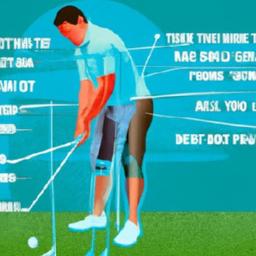
Kinematic Principles and Postural Support in the Putting Motion
Modern research treats putting as a low‑amplitude, near‑pendular skill in which success depends on tightly constrained motion patterns through the shoulder‒arm‒putter linkage. Using biomechanics-the study of mechanical laws applied to living systems-as a lens, three kinematic properties best describe the stroke: putter‑face orientation at impact, the path the clubhead follows, and temporal consistency (tempo and velocity profile).Small errors in face orientation at contact can create much larger lateral ball deviations, so limiting rotational and translational movement of the head by using a shoulder‑dominated arc and stabilizing wrist geometry is essential for directional control.
Stability provides the platform that reduces kinematic variability. A well‑controlled torso and lower body produce a steady proximal base for the distal pendulum of the putter; weak support or excessive hip/ankle motion adds “noise” to the shoulder pivot and club trajectory. Postural settings linked to lower variability include:
- Base of support: stance roughly aligned with hip width to optimize side‑to‑side balance
- Center of mass distribution: a slight forward bias toward the lead foot to aid downhill control
- Spine and head orientation: consistent forward bend with minimal head travel to preserve visual cues and impact geometry
- Lower‑body stiffness: modest knee flex to absorb disturbances without creating excessive motion
Kinematics and stability interact and can be measured and trained. Coaches can track within‑player variability in face angle,backswing arc (degrees),and peak angular speed as indicators of motor control; complementary measures such as center‑of‑pressure excursions or trunk sway from wearable IMUs reveal instability. The table that follows links commonly measured biomechanical variables to short, actionable coaching cues supported by controlled motion studies.
| Variable | Practical cue |
|---|---|
| Face angle at impact | “Set the face square to the target just before contact” |
| Clubhead path | “Drive with a shoulder arc; limit wrist corrections” |
| Temporal variability | “Stabilize cadence using rhythm drills” |
| postural sway | “Eyes‑forward stance; soft knee bend” |
To apply these foundations, use drills that separate distal control from proximal stability: light resistance pendulum swings to reinforce shoulder‑led motion, rounds with sensor feedback to tighten face‑angle dispersion, and progressive balance challenges that maintain putting mechanics under perturbation. Set measurable targets (such as, aim for low standard deviations in face angle and consistent backswing arc) and iterate using objective feedback-slow‑motion video, IMU outputs, or pressure mats-to systematically reduce kinematic variability while preserving the steady base that underlies repeatable, accurate putting.
Grip Setup and Pressure Management to Reduce Face Rotation and Improve Roll
Control of grip pressure is equally vital: small,consistent pressure adjustments have large effects on stroke mechanics. Recommended practice elements are:
- Contact bias: favoring pads and fingertips rather than power‑gripping the palms to maintain tactile sensitivity.
- Balanced pressure profile: slightly firmer lead‑hand pressure with a softer trail hand to prevent trail‑wrist collapse.
- Reproducible pressure target: train to a moderate, repeatable pressure rather than maximum grip force.
These refinements limit tiny motions that cause face rotation instantly before and at impact.
| Pressure Category | typical Numeric Range | Primary effect on yaw/roll |
|---|---|---|
| Light | Low end of feel scale | Less yaw but greater risk of deceleration; softer initial roll |
| Moderate (Recommended) | Comfortable, repeatable pressure | Balanced energy transfer; minimal face rotation |
| Heavy | High tension grip | More wrist torque and yaw; inconsistent roll |
From a transfer viewpoint, weave pressure targets into pre‑shot checks and objective feedback systems. Use pressure‑sensing grips,a simple handheld scale,or therapist calibration to lock in a reproducible pressure set point,and pair this with tempo work that preserves the set point through the backswing and finish. prioritize lead‑arm control and limit trail‑wrist flexion; together these approaches reduce inter‑stroke variability in yaw and improve initial ball roll quality, supporting more reliable scoring outcomes on the course.
Footing, Spinal Alignment, and Lower‑Body Quietness for Consistent Aim
Create a reproducible base. Evidence shows that a steady foundation-consistent foot placement and a controlled center of pressure-reduces variation in the putter arc and face angle at contact. Choose foot spacing that avoids excessive narrowness (more sway) and extreme width (restricted shoulder motion). Small, repeatable adjustments to foot rotation or toe flare can tune pelvis orientation and thus the putter path; record and reproduce these settings in practice to build sensorimotor memory.
- Feet width: roughly shoulder‑width (adjust slightly per player)
- Weight distribution: slightly toward heels/midfoot for a stable COP
- Foot angle: minimal outward rotation to encourage square shoulders
Spine and head orientation influence visual and motor consistency. Keep a neutral spine with a modest anterior pelvic tilt so the eyes sit over or just inside the target line-this aids visual triangulation and limits compensatory head movement. Cervical and thoracic alignment should allow a relaxed shoulder hinge; excessive rounding or hunching disturbs the shoulder pendulum and increases stroke variability.
| Postural Element | Practical cue |
|---|---|
| Spine angle | Neutral tilt; avoid rounded shoulders |
| Head position | Eyes over or slightly inside the line |
Quiet lower limbs reduce unwanted chain noise. High‑quality putting treats the legs as a stabilizing platform, not an active mover; tiny knee and hip motions should soak up ground reaction forces while avoiding lateral sway. A gentle knee flex and lightly braced hips produce a quiet base, decreasing torso counter‑rotation and preserving a shoulder‑driven stroke. Video analysis or pressure‑mat center‑of‑pressure traces confirm that limiting lower‑body motion correlates with tighter dispersion of putt outcomes.
- Drill: Camera feedback to remove lateral hip shift
- Drill: Two‑second settle at setup to calm the lower body before the stroke
- Drill: Light alignment stick under heels during practice to discourage foot lift
Turn alignment stability into a compact routine and decision rule. Incorporate lower‑body and postural checks into a short pre‑putt routine: reproduce stance, confirm spine/head relation, take a single practice stroke focused on a quiet lower body, then execute. Use a simple checklist (stance, posture, eyes, settle) to reduce mental load and avoid last‑second corrections under pressure. Combine perceptual judgements with brief objective tests-alignment mirrors, short rollouts, and consistency trials-to iteratively adjust stance and posture for the specific green.
- Pre‑putt checklist: stance → spine/head → practice stroke → commit
- Performance rule: achieve a few consistent practice rolls before altering stance
Visual Setup and gaze Strategies to Sharpen Aim and Distance Judgement
Where you place your eyes and how you stabilize your head determines the perceptual information available for aiming and slope assessment. Placing the eyes over or slightly inside the target line reduces parallax among shaft, ball, and hole and yields a truer sense of direction. When binocular cues conflict-such as an off‑center stance with a dominant eye-small angular differences create systematic lateral bias; aligning the dominant eye with the intended line reduces these errors and simplifies sensorimotor mapping. Minor adjustments to eye laterality and head offset can improve alignment accuracy without altering stroke mechanics.
Holding the head steady and maintaining a final, prolonged fixation immediately before the stroke improves both aim and distance control. The “quiet eye” effect-a sustained fixation on a key location in the final pre‑movement interval-has been linked repeatedly to greater precision in target‑directed tasks. Likewise, minimizing head translation and rotation during the backswing reduces drift in the visual reference frame and reduces mismatch between perceived and executed line. Stabilizing gaze and head position therefore lowers the need for last‑second visual corrections and supports better feedforward distance calibration.
Practical visual drills for practice and competition include:
- Dominant‑eye check: perform a simple sighting test and position your stance so the dominant eye sits over the line.
- Quiet‑eye rehearsal: hold a 1-3 second fixation on the near edge of the ball or an intermediate aim point before starting the stroke.
- Head‑stability drill: use a small marker or mirror to monitor lateral head movement during repetitions.
- Parallax exposure: alternate front‑eye and over‑eye views in practice to feel and correct parallax errors.
| Visual cue | Perceptual benefit |
|---|---|
| Eye over ball | Reduces parallax and improves alignment fidelity |
| Extended fixation (quiet eye) | Stabilizes the motor plan and enhances distance scaling |
| Head stillness | Reduces drift in visual reference; lowers variability |
Embed these cues in a concise pre‑shot routine that emphasizes a consistent fixation point,a brief visual line check,and a controlled,head‑stable stroke. To ensure transfer, vary both putt length and green speed in practice while keeping the visual routine constant; this preserves perceptual strategies across contexts and helps distance perception remain robust under pressure.
Interpreting Greens and surface Physics to Choose Line and pace
Good putting decisions combine perceptual sampling with a practical model of how the ball interacts with the green. Think of the green as a system: slope, grain (mowing direction), moisture, and turf species together determine rolling resistance and lateral deflection. Motor control research suggests that reducing variability in aim and putter acceleration matters more than attempting tiny impact‑time corrections; thus read the surface to form a single probabilistic estimate of line and a matching target speed, rather than juggling multiple competing lines.
A consistent scanning routine improves the reliability of perceptual estimates. From three vantage points-behind, behind‑left, and behind‑right-observe the same cues and combine them into a consensus read. Visual indicators to check include:
- Slope magnitude: steepness across the intended fall line
- Grain direction: sheen and blade orientation that signal downhill/uphill resistance
- Surface condition: dew, scuffs, or wear that change friction
- Undulations: small contours that can induce lateral deviation
Convert those judgements into a speed prescription using simple biomechanical rules and consistent heuristics. The table below summarizes common surface factors and practical adjustments you can make to pace and stroke mechanics.
| Surface factor | Expected effect | Practical adjustment |
|---|---|---|
| Down‑grain | Lower friction, quicker roll | shorten backswing; soften acceleration |
| Up‑grain or damp turf | Higher friction, slower roll | Lengthen backswing; firmer acceleration |
| Strong slope | Notable lateral break | Increase aim offset and allow more speed |
Decision accuracy rises when cognitive routines tie the read to a motor plan and a commitment rule.Before addressing, state the intended pace (aloud or mentally), take one calibrated practice stroke to feel the required acceleration, then commit-this reduces online corrections and limits variability.Drills that focus on speed control (for example, ladder drills at short increments and distance‑control lanes) and those that practice multi‑angle reads (putts aligned from different approach lines) accelerate the conversion of perceptual readings into consistent strokes. Follow a simple checklist:
- Scan (three positions)
- Predict (line + speed)
- Calibrate (one feel stroke)
- Commit (address and execute)
Pre‑Shot Routine, Tempo Control, and Managing Mental Load for Reliable Execution
Using a short, repeatable sequence before every putt anchors motor planning and reduces trial‑to‑trial differences. motor‑control studies indicate that a compact pre‑shot routine-visual read, single practice stroke, and a intentional alignment check-improves execution consistency by constraining preparatory processes. Keep the routine time‑bounded (such as, 6-12 seconds) to avoid overthinking; routines that are long or variable raise working memory demands and are more vulnerable under pressure. Coaches should specify the order and maximum duration of each element so the routine becomes a predictable stimulus‑response cycle linking intention to stroke.
Stable intersegmental timing between the backswing and forward stroke is central to repeatable distance control and directional accuracy. Training with a metronome or a simple audible count helps stabilize cadence; a practical target is roughly a 1:1 backswing:forward swing ratio for mid‑range putts, with a slightly longer follow‑through for long distances. Use drills that record timing and outcomes; the table below gives tempo targets to practice against:
| Putting context | Tempo target |
|---|---|
| Short putt (≤3 ft) | Faster backswing, crisp forward (approx. 0.8 : 1) |
| Mid putt (4-20 ft) | Balanced 1 : 1 ratio |
| Long putt (>20 ft) | Slightly longer backswing relative to forward (approx. 1.2 : 1) |
Managing cognitive load is essential for keeping mechanics intact under pressure. Reduce internal monitoring by adopting an external focus (for example, a target point on the green or a hole‑centered cue) and use a short trigger word that captures the desired feeling (such as “smooth”). Useful interventions include:
- Pre‑performance cues that grab attention without reintroducing technical thinking,
- Dual‑task practice to build resistance to distraction,
- Pressure simulations (timed repetitions, scoring stakes) to rehearse affective control.
Together, these practices lower working memory demands, foster automatic control, and enhance the transfer of practice to competitive settings.
Training Designs and Feedback Approaches Grounded in Learning Science
Motor‑learning literature favors structured, evidence‑driven practice plans that emphasize long‑term retention and transfer rather than momentary performance spikes. Prioritize deliberate practice with specific targets (distance consistency, speed variance, alignment) and use distributed (spaced) sessions rather than massed blocks to limit fatigue and strengthen consolidation. Incorporate variable practice and contextual interference-mixing putt lengths,slopes,and practice formats-to build flexible perceptual‑motor mappings; although these methods can lower short‑term accuracy,they reliably improve retention and on‑course transfer.
Augmented feedback should match the learner’s stage and training goals. Blend intrinsic sensory input (feel and vision) with extrinsic information delivered as Knowledge of Results (KR) and Knowledge of Performance (KP). Effective feedback methods include:
- Bandwidth feedback-give KP only when errors exceed a set threshold so learners develop self‑evaluation;
- faded feedback-frequent guidance early, then progressively less to promote independence;
- Summary and delayed KR-provide aggregated outcome data after short blocks (for example, every 5-10 putts) to sharpen error detection;
- Self‑controlled feedback-let players request feedback, which boosts motivation and retention.
These approaches balance external guidance with opportunities for learners to estimate errors internally-a key process for long‑term skill formation.
Feedback interacts with biomechanical constraints and attentional focus to shape learning. Encourage an external focus on ball roll and target line rather than internal mechanics; the literature shows external focus fosters more automatic and stable strokes. Introduce small, controlled movement variations (for instance, slight stance width changes or modest putter‑path deviations) to expand adaptable solutions suited to different green surfaces. use practical monitoring tools-video frame analysis, wearable inertial sensors, and simple stroke variability statistics-to quantify progress. The table below summarizes common feedback schedules and their typical effects on immediate performance and retention.
| Feedback schedule | Immediate performance | Long‑term retention |
|---|---|---|
| Blocked, high KR | High | Low |
| Random, faded KR | Moderate | High |
| Bandwidth + summary | Moderate | High |
Turn these principles into session plans: start with short warm‑ups that reinforce desired tempo and alignment, move into variable‑distance work with randomized order, and finish with a retention probe 24-48 hours later. Track objective outcomes-mean radial error, stroke variability measures, putts‑per‑green-and include periodic transfer tests that simulate on‑course pressures (competitive scoring, different green speeds). For coaches: favor faded, bandwidth feedback, promote external focus cues, and schedule spaced, varied practice to maximize both skill acquisition and long‑term retention.
Q&A
Q: What is the scope and purpose of the article “evidence‑Based Strategies to Enhance Golf Putting Accuracy”?
A: this review brings together empirical results from biomechanics, motor‑control science, and cognitive psychology to produce practical, testable recommendations for improving putting accuracy.It concentrates on (1) biomechanical determinants (grip, stance, alignment, stroke kinematics), (2) perceptual and cognitive contributors (attention, decision routines, visual strategies), (3) training methods that transfer to on‑course play, and (4) measurement approaches for coaches and players.
Q: What does “evidence” mean here and how should it be phrased in academic writing?
A: “Evidence” refers to empirical observations and experimental outcomes that support conclusions; it is indeed not synonymous with absolute proof. in scholarly writing, specify the type and quality of evidence (randomized trials, quasi‑experimental work, kinematic analysis, lab vs. field studies) and avoid overstating certainty.Use formulations such as “evidence suggests,” “data indicate,” or “as evidenced by,” and avoid nonstandard phrasings like “as evident by.” Prefer verbs like ”demonstrate” or “show” instead of using “evidence” as a verb.
Q: Which biomechanical elements most influence putting accuracy?
A: Converging work points to three key contributors: putter‑face orientation at impact (directional control), impact speed regulation (distance control), and the consistency of the kinematic chain (a shoulder‑driven pendulum versus excessive wrist/elbow action). Minimizing face rotation at impact narrows lateral dispersion; consistent tempo and acceleration profiles improve distance control; and coordinated low‑variance shoulder/torso action reduces trial‑to‑trial scatter.
Q: What grip, stance, and alignment practices are supported by research?
A: Grip: a neutral, comfortable hold that limits independent wrist motion is generally preferable. Stance: a shoulder‑width or slightly narrower stance that allows a free shoulder hinge while maintaining balance. Alignment: square the putter face to the intended line and maintain consistent body and eye positioning relative to the ball; use simple alignment checks during practice to calibrate aim. The goal is consistent, low intra‑player variability rather than a single global posture.
Q: What stroke features correlate with higher success?
A: Effective strokes are smooth and pendular, with minimal wrist flexion/extension and forearm rotation, consistent tempo (measured as a repeatable backswing:forward swing ratio), and controlled acceleration through impact instead of abrupt deceleration. These traits reduce both directional and distance errors.
Q: How do perception and cognition shape putting outcomes?
A: Perception and cognition determine aim, speed judgements, and execution. Critical factors include visual pick‑up (slope, grain, target cues), attentional focus (external focus on the target usually outperforms internal focus on mechanics), decision making under uncertainty (balancing aggressive versus conservative reads), and pre‑shot routines that stabilize behavior. The quiet‑eye period-a final sustained fixation-has been repeatedly associated with improved precision in aiming tasks such as putting.
Q: What does research say about instructional focus and cueing?
A: Motor learning studies show external focus cues (for instance,on the ball’s path or an intermediate aim point) typically yield better performance and retention than internal instructions about body mechanics.Technical coaching is useful early on, but excessive conscious control during execution can harm performance under pressure. Implicit learning strategies and analogies that promote automaticity often support better on‑course transfer.
Q: Which practice structures best improve putting?
A: Evidence‑based practice includes distributed (spaced) sessions with realistic variability, starting with blocked practice for initial acquisition and progressing to variable practice to enhance transfer. Use augmented feedback (distance and direction errors) early on but fade it over time, and employ constrained tasks to isolate components (e.g., face alignment or speed drills).Deliberate practice with clear, measurable outcomes and intermittent feedback produces the most durable gains.
Q: How should progress be measured?
A: Rely on objective metrics: make percentage by distance bands, average lateral deviation at impact, left/right dispersion, putts per round (with green difficulty adjustments), and kinematic measures (stroke length, tempo, face angle) when instruments are available. Use repeated measures across different slopes and report effect sizes and confidence intervals where possible when evaluating interventions.Q: How can practice gains be transferred to the course?
A: maximize transfer by practicing in representative contexts-vary slopes, replicate green speeds, include decision‑making about aggression versus safety, and simulate pressure in training. Gradually remove augmented feedback to encourage intrinsic error detection and integrate the pre‑shot routines and psychological strategies used on course into practice so perceptual, cognitive, and biomechanical elements align.
Q: What role do equipment and green conditions play?
A: Equipment (putter loft,lie,shaft length,grip size) affects face behavior and feel; proper fit reduces compensatory movements. Green characteristics-speed (stimp), grain, moisture, and contour-change both pace and break; players should calibrate distance and reads using consistent sensory cues and practice on surfaces that mimic competition conditions.Q: What common faults hurt putting and how can they be fixed?
A: Typical problems include inconsistent face angle at impact, excessive wrist action, variable tempo, poor alignment, overreliance on conscious mechanics under pressure, and weak green reading. Remediation strategies include video or sensor feedback to reveal face rotation, drills that stabilize wrists and promote a shoulder‑driven stroke, tempo drills with a metronome, alignment aids, external focus cues, and structured green‑reading practice.
Q: What are current evidence limitations and future research priorities?
A: Limitations include diverse study designs (lab vs. field), small samples, inconsistent outcome measures, and few long‑term field studies under competitive pressure. Future research should prioritize randomized controlled trials in ecologically valid contexts,larger cohorts,integration of wearable sensors with perceptual measures (gaze tracking),and investigations of individualized prescriptions-how player morphology and skill moderate optimal strategies.
Q: How should writers use the word “evidence” in titles and prose?
A: use “evidence” to signal empirical support and avoid implying proof. Favor idiomatic phrases like “evidence‑based strategies” or “evidence suggests,” and prefer “as evidenced by” over the nonstandard “as evident by.” Say “there is no evidence” rather than awkward negations, and avoid using ”evidence” as a verb-use “demonstrate,” “show,” or “indicate” instead.
Q: What quick checklist can a coach give a player after reading this review?
A: A compact checklist:
- Verify a neutral,comfortable grip that minimizes wrist torque.
– Adopt a consistent stance and eye position relative to the ball.
– Confirm putter‑face alignment to the intended line before every stroke.
– Practice a shoulder‑driven, pendulum‑like stroke with minimal wrist action and steady tempo.
– Use external focus cues and a short pre‑shot routine; rehearse quiet‑eye fixation.
– Train with variable, course‑relevant practice and intermittent objective feedback.
– Log objective metrics (make % by distance, lateral dispersion, tempo) and progress toward on‑course transfer.
– Ensure equipment fits and practice on greens resembling competition surfaces.
If desired, this Q&A can be condensed into a one‑page boxed summary for the article or expanded into a tiered practice protocol and measurement worksheet tailored to beginner, intermediate, and advanced players.
Conclusion
This integrated review of biomechanical and cognitive research identifies practical, evidence‑based strategies to improve putting accuracy. Core takeaways are that stable, repeatable mechanics (consistent setup, a shoulder‑led pendulum stroke, and minimal face rotation at impact), precise perceptual alignment, and decision processes that simplify target selection and reduce cognitive load each contribute to more reliable short‑game performance. Training that blends deliberate mechanical practice with contextual decision drills and progressively faded objective feedback produces the most consistent improvements.
For practitioners, the implications are to prioritize reproducible setup and stroke patterns, use drills that isolate key kinematic elements (such as shoulder arc and limited wrist motion), and establish routine‑based pre‑putt decision rules to strengthen perceptual‑motor coupling. Employ measurable feedback-video kinematics, launch/impact data, and outcome tracking-to individualize cues and progressions while avoiding overly complex technical instructions that disrupt automatic control. Current evidence is limited by heterogeneity in methods, small samples across ability levels, and varying ecological validity; future work should emphasize longitudinal, field‑based studies of transfer, examine individual differences in motor learning and perception, and evaluate how stroke mechanics interact with putter design and green‑reading aids. In sum, a disciplined, evidence‑informed approach-balancing biomechanical consistency, perceptual alignment, and sound decision strategies-offers the most promising route to better putting accuracy. For coaches and researchers alike, the priority is turning robust empirical findings into simple, repeatable practices that support dependable performance under pressure.

Here are several more engaging title options – pick a tone (scientific, punchy, inspirational) and I can refine further
- 1. Master the Greens: Evidence-Based Putting Techniques for Pinpoint Accuracy
- 2. Science-Backed Putting Secrets to Sink More Putts
- 3. Putting Precision: Proven,Research-Based Strategies to Improve Accuracy
- 4. Sink More Putts: Research-Proven methods to Sharpen Your stroke
- 5. The Science of Putting: Evidence-Based Tips for Consistent Accuracy
- 6.From Grip to Green: Proven Putting Techniques That Deliver Results
- 7. Aim True: Research-Backed Putting Strategies for Lower Scores
- 8.Putts You Can Trust: Practical, Evidence-Based Ways to Improve Accuracy
- 9. turn Data into Dead-Eye Putting: Research-Proven Steps to Better accuracy
- 10. Putting Perfection: Science-Backed methods to Boost Your Green Game
pick a tone – suggested headline picks
Choose one of the tones below and I’ll refine the headline and meta copy for SEO and social platforms.
Scientific (calm, authority)
- Selected headline: The Science of Putting: Evidence-Based Tips for Consistent Accuracy
- Social headline: How Motor Control & Green Reading Improve Your Putting
Punchy (short, energetic)
- Selected headline: Sink More Putts: Research-Proven Methods to Sharpen Your Stroke
- Social headline: Sink It – proven Putting Tactics to drop Your Score
Inspirational (motivating)
- Selected headline: Master the Greens: Evidence-Based Putting Techniques for Pinpoint Accuracy
- Social headline: Putts You Can Trust – Build Confidence with Science-Backed Methods
Evidence-based putting techniques that reduce stroke variability and boost scoring
The best putting improvements come from combining biomechanics, perception (green reading), and cognitive strategies. Below are research-aligned methods that reduce stroke variability, increase consistency, and help you sink more putts.
Grip: stability without tension
- Goal: minimize wrist play and grip tension while maintaining control.
- Key points:
- Prefer a neutral, light grip pressure – squeeze too hard and you introduce micro-movements that increase variability.
- Grip style (reverse overlap, cross-handed, claw) matters less than weather the grip reduces wrist breakdown and promotes a pendulum-like stroke.
- Check for wrist action by putting with your forearms strapped together or using a training glove - if performance improves, reduce wrist involvement.
Setup, stance, and eye position
- Feet: shoulder-width or slightly narrower for balance; weight slightly toward the balls of the feet for better tempo control.
- Shoulders: square to the target line; chest soft and relaxed.
- Eye position: research on visual focus shows lining one eye over the ball or slightly inside the target line can improve perceived alignment and accuracy. Test whether your dominant-eye alignment feels most repeatable.
Alignment and aim – reduce systematic error
Consistent aim eliminates a large portion of missed putts. Use a two-step alignment check:
- Pick an intermediate target about 1-2 feet in front of the ball on the intended line (a blade of grass, a discoloration, or your putter shaft).
- Align your putter face square to that spot, then set your stance and repeat the alignment check before each putt.
Alignment aids (lines on the ball or putter) can help,but practice without them too - transfer skill requires you to align reliably under pressure.
Stroke mechanics and tempo
Motor-control research supports a pendulum-like stroke driven by the shoulders and upper arms with minimal wrist flick. Focus on:
- shoulder-driven movement: keep forearms passive and let the shoulders swing the putter back and through.
- Consistent tempo: use a metronome, step-count cadence, or “1-2” rhythm to program a repeatable backswing-to-through time. Studies show tempo consistency reduces stroke variability and improves accuracy under pressure.
- Distance control: longer strokes for longer putts with proportional tempo; practice lag putting separately from short putt accuracy.
Green reading – combine feel and data
Green reading is both art and science. Combine visual cues with a repeatable method to estimate break and speed:
- Read the slope coming out of a stationary position, then confirm by crouching and checking low to the ground – small changes in perspective reveal subtle breaks.
- Use a consistent system (e.g., aiming at an intermediate spot, estimating break in inches per foot, or structured methods like AimPoint) to reduce guesswork.
- Take wind, grain, and green speed (stimp) into account. Faster greens require more aggressive aim-line adjustments.
Attentional control: routines, focus, and the “quiet eye”
Performance under pressure improves with a concise pre-shot routine and the right attentional focus:
- Pre-shot routine: visualize the ball rolling along the line, take a practice stroke focused on tempo, then execute. A short fixed routine stabilizes arousal and reduces variability.
- External focus: motor learning literature indicates focusing on the intended ball path or target (external focus) often yields better performance and retention than focusing on body mechanics (internal focus).
- Quiet eye: maintain a final visual fixation on your chosen target for 1-3 seconds before initiating the stroke – this has been linked to improved accuracy in precision sports.
Practice drills that transfer to on-course putting
Drills should measure and reduce variability, train distance control, and build pressure-resilient routines.
| Drill | Purpose | How to do it (1-2 lines) |
|---|---|---|
| Gate drill | Face control & straight roll | Place tees just wider than head; stroke through without hitting tees. |
| Ladder Distance Drill | Distance control | Putts from 3, 6, 9, 12 feet; record how many land inside a 3-foot circle. |
| Pressure 3-Ball | Routine & pressure simulation | Make 2 of 3 putts to advance; repeat to build routine under consequence. |
| One-Hand Stroke | Eliminate wrist action | Put with only the lead hand for 10-15 minutes. |
How to practice for transfer
- Block vs. random practice: mix short, medium, and long putts randomly to simulate on-course variability – this improves retention.
- Track stats: record make %, three-putt frequency, and average distance left of missed putts.
- Simulate pressure: add small bets, set goals, or create “must-make” sequences to bring mental elements into practice.
equipment, aids, and data tracking
Use technology and simple aids to accelerate learning – but avoid overdependence.
- Putter fitting: pick shaft length and lie that allow your eyes to be over the ball and the putter face square at address.
- Training aids: alignment sticks, flat-stick mats, and tempo metronomes are useful when used deliberately for short blocks.
- Data: track putts per round, putts-to-greens proximity (feet left), and make % from inside 6-10 feet. Use smartphone apps or a notebook to spot trends and measure advancement.
Common putting mistakes and remedies
- Tension: if you feel jerky or rushed,stop and breathe – reduce grip pressure and reset tempo.
- Over-reading: don’t second-guess your read after committing – quietly trust your aim and stroke.
- wristy stroke: remedy with one-hand drills and by consciously driving from the shoulders.
Benefits & practical tips
- Lower scores: reducing one extra three-putt per round saves strokes; improved inside-6ft make % directly cuts your score.
- Short on time? Spend 15-20 minutes per practice session focused on high-quality, variable-distance drills rather than mindless reps.
- Record video periodically to check shoulder movement, head sway, and follow-through consistency.
Case studies & first-hand implementation (example week plan)
Use this simple micro-program to build measurable improvements over four weeks.
- week 1 – Fundamentals: 3 practice sessions (20 min each) on grip, alignment, and gate drill.
- Week 2 – Distance control: add ladder drill and one-hand stroke; track make % from 6-12 feet.
- Week 3 – Pressure & routine: include pressure 3-ball, and integrate pre-shot routine every putt.
- Week 4 - On-course transfer: play 9 holes focusing only on green reads, aim selection, and execution; record putts per hole.
SEO, social, and short punchline options (ready-to-use)
Here are optimized variations depending on your use case.
SEO-tuned headline & meta
Headline: Master the greens: Evidence-Based Putting Techniques for Pinpoint Accuracy
Meta title: Master the Greens - Science-Backed Putting Tips for Better Accuracy
Meta description: Learn proven putting techniques – grip, alignment, green reading, tempo, and mental routines that reduce stroke variability and help you sink more putts.
Social headline (engaging)
Sink More Putts – Swift science-backed fixes you can test today.
Punchline (short)
Putts You Can Trust.
Action checklist – start improving today
- Set a 30-second pre-putt routine and stick to it for every practice putt.
- practice one drill per session with a clear metric (e.g., 8/10 from 6ft).
- Video one putting stroke weekly and compare to earlier clips to detect improvements in tempo and face control.
- Track putts per round and average distance left on missed putts – aim for steady reduction.
if you want, pick a tone (scientific, punchy, inspirational) and I’ll refine three headline options-one optimized for SEO, one designed for social sharing, and a short punchline you can use as a tag or subject line. I can also tailor the article length and add WordPress-ready featured images or alt text suggestions.
You might be interested in …

Raymond Floyd’s Comprehensive Golf Lesson: Mastering Mechanics, Mindset, and Strategy
Delve deeply into the profound teachings of the legendary Raymond Floyd as he unlocks the secrets of golf mechanics. Explore the art of the “Floyd Fade” swing, where precision meets sensory feedback for unparalleled control over the clubface. Beyond technical mastery, embrace athleticism, rhythm, and a champion mindset to elevate your golfing prowess. Discover Floyd’s insights on resilience and strategic play, empowering you to conquer the challenges of the course. Uncover the brilliance that defines his golfing legacy, inspiring you to embody athleticism, rhythm, and mental fortitude on your journey to greatness. Read more at: [Raymond Floyd’s Comprehensive Golf Lesson](https://golflessonschannel.com/raymond-floyds-comprehensive-golf-lesson-mastering-mechanics-mindset-and-strategy/)

Akshay Bhatia shows how to master a low, spinny pitch shot
Akshay Bhatia, the rising golf star, unveils his secret to mastering a low, spinny pitch shot. This technique is a game-changer when the flag hides behind a bunker or when precision is key on the green. Bhatia’s approach entails wielding a wedge with a wide-open face, setting the ball a tad back in the stance, and executing a gentle yet forceful downward swing. By embracing these tactics, golfers can perfect this skill and elevate their game strategy

Jim Furyk: A Paradigm of Golfing Excellence – Unraveling Technique and Course Mastery
Jim Furyk, an exemplar of golfing prowess, has left an indelible mark on the sport. His exceptional technique, exemplified by his signature “stack-and-tilt” swing, and astute course strategy have consistently propelled him to golfing heights. Furyk’s meticulous attention to detail extends beyond swing mechanics; his strategic approach to course management, characterized by rigorous hazard assessment and pinpoint club selection, showcases his mastery of the mental and physical demands of golf. This academic examination dissects Furyk’s approach to the game, providing invaluable insights into his technical proficiency and strategic brilliance. Through analysis of his technique and decision-making, golfers of all levels can aspire to emulate Furyk’s principles of precision, adaptability, and unwavering mental fortitude, ultimately elevating their own gameplay on the links.


