Putting performance exerts a disproportionate influence on scoring and competitive outcomes in golf; small, repeatable gains on the green translate into measurable reductions in stroke count across rounds. Too move beyond anecdote and tradition, practitioners and players increasingly require interventions grounded in empirical evidence-integrating findings from biomechanics, motor learning, perceptual-cognitive science, and applied practice research. This article synthesizes that multidisciplinary evidence to identify which technical adjustments, perceptual strategies, and practice prescriptions most reliably improve putting precision.
The review focuses on modifiable factors with robust empirical support: grip and hand placement, body and eye alignment, stroke kinematics and tempo, posture and stability, perceptual strategies for reading greens, and practice structures that optimize retention and transfer. Attention is given to both acute performance techniques (e.g., alignment routines, visual fixation strategies) and longer-term training principles (e.g., variable practice, feedback scheduling, and purposeful practice) that produce durable gains. Where available,objective assessment methods-video kinematic analysis,stroke consistency metrics,and pressure-based testing-are recommended to quantify progress and tailor interventions.
practical translation is emphasized: for each evidence-supported principle the article offers actionable drills, measurement approaches, and guidelines for integrating technology and coaching feedback while addressing common performance constraints such as anxiety and the yips. The goal is to provide coaches, sports scientists, and serious players with a coherent, empirically grounded framework for systematically improving putting precision.
optimizing Grip Pressure and Hand Position: Empirical Insights and Practical Recommendations
Contemporary motor-control and biomechanics research converges on a central principle: minimizing unneeded muscular co-contraction in the hands and forearms reduces within-stroke variability and improves distance control. empirical observations show that excessive squeeze increases micro‑noise in the kinematic chain, producing both lateral and longitudinal errors; conversely, an extremely light grip can permit slippage and early wrist compensation. Electromyographic and kinematic studies thus favor a low‑to‑moderate tonic force that stabilizes the putter without inducing elevated antagonist activity. In practice, this creates a more repeatable pendulum-like motion where the putter head path and face orientation are governed by larger, proximal structures (shoulders and torso) rather than small wrist corrections.
Translation of these findings into on‑course prescriptions requires simple, actionable targets. A pragmatic guideline is to adopt a consistent, subjective pressure rating each stroke (for example, a 3-5 on a 10 scale), and to monitor relative changes rather than absolute numbers. Useful tactile and verbal cues derived from the literature include:
- “Hold the putter like a tube” – enough grip to stabilize, not to crush.
- “Feel the weight, not the squeeze” – focus on the putter head mass to encourage passive pendulum action.
- “Same pressure backswing and through” – consistency across the stroke reduces transition noise.
Hand placement interacts systematically with pressure to influence face angle, loft, and wrist dynamics. A neutral hand position (palms roughly facing each other, shaft in line with forearms) tends to produce the most repeatable geometry and minimal face-rotation. Variants such as cross‑handed or claw grips, supported by experimental comparisons, can be effective for players seeking to limit wrist flexion/extension as thay change the moment arm and sensory feedback-though, these should be evaluated empirically for each player. When adjusting placement, prioritize alignment that allows both hands to share stabilization duties while avoiding excessive dominance of the trailing hand, which is associated with unwanted face manipulation at impact.
Implementing these recommendations benefits from short, focused practice blocks using objective or proxy feedback. Useful drills and training tools supported by applied studies include: pressure‑sensor feedback (or simple grip‑pressure trainers), mirror checks to confirm neutral wrist posture, metronome‑paced stroking to couple tempo with low grip tension, and progressive variability training (alternating putts under low and simulated competitive pressure). Record small datasets (e.g., 20 putts under each condition) and compare dispersion metrics (standard deviation of distance remaining) rather than only makes; this empirical approach enables individualized calibration of grip pressure and hand position that is both evidence‑based and performance‑driven.
Stance Stability and Posture: Biomechanical Principles and Correction Strategies
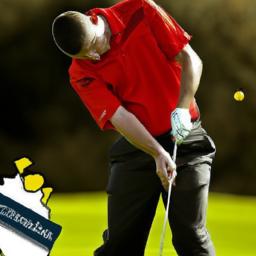
Effective putting begins with a stable base and a controlled posture that optimizes the relationship between the golfer’s center of mass and the putter arc. From a biomechanical perspective, the priorities are: maintain a low, balanced center of mass over the mid-foot; establish a consistent spine angle that permits a pendulum-like shoulder-driven stroke; and ensure segmental alignment (ankles, knees, hips, shoulders) that minimizes unwanted frontal- and transverse-plane motion. Empirical observations and motion‑capture studies indicate that small deviations in spine tilt or weight bias produce disproportionately large changes in face angle at impact; thus, **small, repeatable postural adjustments** are more effective than large, unstable changes.
Stability is achieved by combining passive alignment with active postural control and scalable constraints. key, evidence-based targets include even weight distribution, minimal knee flex (10-20°), and a hip hinge that produces a slight forward trunk tilt without collapsing the lumbar spine. Try these corrective cues and drills to recalibrate stability:
- Foot width drill: set feet shoulder-width, then reduce by one finger-width until pendulum feels centered.
- Mid-foot pressure cue: feel weight over the arch,not toes or heels.
- Spine-angle mirror check: use a mirror or smartphone to confirm consistent forward tilt across practice putts.
- Shoulder-rock constraint: practice with arms across chest to internalize shoulder-driven motion.
These strategies reduce lateral sway and rotational noise while preserving the dynamic requirement for a smooth backswing and follow-through.
When objective assessment reveals recurring faults, apply targeted correction strategies that address the biomechanical source. The table below summarizes common postural faults, the likely mechanical cause, and a concise corrective intervention suitable for practice sessions. Use slow-motion video (60-240 fps) or pressure-mat feedback to verify advancement and to quantify change over time.
| Fault | Likely Cause | Swift Correction |
|---|---|---|
| Excessive lateral sway | Too-wide stance / weak core bracing | Shorten stance, add core-brace drill |
| Forward head or rounded shoulders | Insufficient hip hinge | Hip‑hinge alignment check |
| Weight on toes or heels | Unbalanced base | Mid-foot pressure + mirror cue |
To convert postural corrections into on-course consistency, integrate motor-learning principles: use blocked practice to ingrain the new posture, then introduce variable and pressure conditions to promote robustness. Provide augmented feedback sparingly (e.g., summary KPIs from 10 putts) and emphasize self-monitoring of two cues only-**base stability** and **spine tilt**-to avoid cognitive overload. Over weeks, progress from guided drills (mirror, alignment sticks, video replay) to unguided transfer tests that replicate real‑round constraints; measurable improvements in stroke repeatability and putt outcome validate the biomechanical interventions.
Alignment and Visual Anchors: Perceptual Evidence and Implementation on the Green
Alignment in putting functions as a perceptual-motor calibration problem: the golfer must translate a three-dimensional green geometry into a one-dimensional stroke path. Empirical work in perceptual control and motor learning indicates that reducing ambiguity in visual information lowers movement variability and improves outcome precision. Practical implications include privileging stable, high-contrast referents and minimizing redundant cues that compete for attention. In applied terms, this means selecting one primary visual anchor at address and using it consistently to align the putter face and body rather than attempting simultaneous multi-cue matching, which increases cognitive load and movement noise.
- Putter-face leading line – a single, high-contrast line on the putter head that affords direct mapping of clubface orientation to the intended path.
- Ball-aim mark – a small, consistent mark on the ball that links ball alignment to the putter line and the target direction.
- Intermediate visual target – a spot 1-3 meters ahead (e.g., a blade of grass or tee) that biases the initial roll direction and simplifies slope compensation.
- Dominant-eye reference – aligning using the dominant eye reduces parallax errors when fixing on a single aiming cue.
Implementation emphasizes short, repeatable prescriptions derived from perceptual evidence: choose one primary anchor and verify it through a pre-shot routine; use an intermediate target to stabilize the initial ball roll; and perform a quick dominant-eye check during practice to confirm alignment symmetry. The following concise table summarizes common anchors and their practical utility for on-green training:
| Anchor | Primary Benefit | Simple Drill |
|---|---|---|
| Putter-face line | Reduces rotational error | Align line to string,10 reps |
| Ball-aim mark | Improves aim consistency | Mark and mirror-check |
| Intermediate target | Stabilizes initial roll | Pick spot 2m out,hit 20 putts |
For transfer to competition,incorporate variability and perceptual noise into practice while preserving the chosen anchor as a constant; this hybrid approach promotes robust perceptual-motor mapping. Use video or simple alignment rigs to quantify drift in anchor use and to measure consistency over blocks of trials. maintain visual conditions that support the anchor (contrast, lighting, minimal glare) and train brief pre-shot fixation periods-evidence from gaze research suggests that a short, stable fixation on the anchor (a “quiet eye” interval) increases endpoint accuracy and enhances confidence under pressure.
Stroke Kinematics and Tempo Control: Motor Learning Findings and Structured Practice Protocols
Empirical work on putting biomechanics converges on a model in which a smooth,pendulum-like shoulder-driven motion with minimal wrist flicking reduces between-stroke variability and improves distance control. High-performing putters exhibit consistent acceleration profiles and repeatable path geometry rather than maximal clubhead speed; subtle changes in wrist torque or early deceleration are the primary sources of error. Contemporary studies therefore emphasize temporal regularity-consistent onset,backswing/forward duration,and follow-through-over prescriptive joint angles. Practical translation: prioritize reproducible timing cues (auditory metronome, internal counting) and a stable upper-body frame to preserve the kinematic template across distances and conditions. Temporal regularity is a stronger predictor of repeatability than absolute stroke magnitude.
Motor learning research supplies constraints for instruction that minimize conscious interference and promote robustness under pressure. Implicit and external-focus methods (e.g., “roll the ball through the target”) facilitate automaticity and reduce choking relative to detailed, body-centric directions. Variable practice and contextual interference-mixing distances and starting positions-promote transfer, while blocked drills can accelerate initial acquisition of a desired tempo. Feedback schedules should be reduced and structured (faded or bandwidth feedback) to avoid dependency; summary feedback after short blocks encourages error processing. Core actionable principles include:
- External focus cues over internal biomechanics.
- Variable practice to build adaptable control policies.
- Reduced/faded feedback to enhance retention and self-calibration.
Below is a concise, evidence-informed practice template that operationalizes kinematic and motor-learning findings into a single session. The format balances focused tempo rehearsal with variable contextual practice and a short pressure-transfer phase to assess consolidation. Use a metronome or recorded auditory cue for tempo consistency,and capture a small sample of putts on video for kinematic feedback only after blocks (avoid constant coaching during trials).
| Phase | Duration/Trials | Purpose |
|---|---|---|
| Warm-up | 8-12 putts | Groove baseline tempo, gentle variability |
| Tempo Blocks | 20-30 putts (blocked) | Stabilize kinematic template with metronome |
| Variable Practice | 20-30 putts (mixed distances) | Contextual transfer, distance scaling |
| Pressure/Transfer | 8-12 putts (scored) | Retention/pressure simulation |
Quantifiable targets and simple drills make progress measurable and accelerate motor learning. monitor: stroke-to-stroke temporal variance (standard deviation of backswing duration),make percentage from key ranges (3 ft,6 ft,10 ft),and retention performance 24-48 hours later. Drills that reinforce tempo while increasing task variability-such as metronome-guided ladder distances or dual-task trials that simulate crowd/competition distractions-produce more robust performance than high-volume, identical repetitions. use a graded feedback plan: frequent KP (kinematic) feedback during early acquisition, then transition to KR (outcome) and summary feedback to support automatization; and always emphasize an external target-directed intention to maintain automatic control under pressure.
Green Reading and Speed Judgment: Cognitive Techniques and Decision Making Protocols
Green assessment is fundamentally a perceptual‑cognitive task: players must integrate visual cues, tactile expectations, and prior experience to produce a calibrated motor command. Contemporary cognitive frameworks emphasize the roles of **perception**, **selective attention**, and **working memory** in on‑green decision making. Practically, this implies a structured sequence in which golfers first extract salient visual information (slope, grain, break points) and then transform that information into a speed hypothesis-separating **line estimation** from **pace estimation** reduces intra‑trial interference and stroke variability.
Operationalizing that separation into a reproducible protocol improves consistency. adopt a concise pre‑putt routine with explicit attentional anchors:
- Scan (3-5 s) – identify dominant slope and surface quality.
- Visualize - imagine the ball path for the intended pace (commit to a single path).
- Touch check - a single, brief feel of putting stroke tempo on practice swings.
- Lock gaze – a final fixation on the intended impact point before stroke execution.
This ordered routine leverages limited working memory capacity by chunking perceptual input into discrete processing stages, consistent with cognitive theories of information processing.
| Perceptual Cue | Cognitive Test | Immediate Adjustment |
|---|---|---|
| Overall slope | Rate global downhill/uphill bias | Increase/decrease initial pace by 10-20% |
| Grain direction | Observe fringe and flag movement | fine‑tune lateral aim 1-2 ball widths |
| Surface speed | Compare to known reference putt | alter stroke length; maintain tempo |
Training should target both perceptual discrimination and decision commitment to reduce trial‑to‑trial variance. Drills that isolate variables (e.g., same line/different speeds, same speed/different lines) cultivate **automaticity** in lower‑level motor control while preserving conscious control at the decision node. Emphasize a single committed choice prior to execution-post‑decision focus should be maintenance of tempo and a narrow external attention (ball target), not ongoing reanalysis. Over time this protocol fosters robust decision‑making under pressure by shifting processing from deliberative working memory to well‑practiced perceptual routines.
Pre shot Routine and Attentional Focus: Psychological Interventions to Reduce Performance Variability
Consistent pre-shot behavior functions as a motor and cognitive anchor that reduces between-putt variability. Empirical frameworks emphasize a concise,repeatable sequence that couples perceptual calibration with motor planning: scan the lie,select a line,rehearse a feel-stroke,and commit. Integrating these elements into a compact routine transforms fluctuating decisions into automatized responses; the result is decreased decision-time variability and more uniform motor output. Key components commonly trained include:
- Visualization: brief mental projection of the ball path and endpoint
- Aim verification: alignment checks using a fixed head-and-eye posture
- Feel rehearsal: 1-2 practice strokes with the intended tempo
- Commitment cue: single-word trigger (e.g., ”Strike”) to initiate execution
attentional focus moderates the effect of routines on performance variability. Contemporary sport-psychology findings-grounded in the study of mind and behavior as described in psychological literature-support an external, task-relevant focus (e.g., the target line or intended speed) over internal attentional targets (e.g., wrist motion) for precision tasks. Techniques such as the Quiet Eye (sustained fixation on the target prior to movement), short mindfulness breathing to reduce cognitive noise, and scripted task-focused self-talk each lower intra-individual variability by stabilizing perceptual input and reducing conscious movement monitoring. Practitioners should favor concise, externally oriented cues when designing interventions.
For applied monitoring, use simple, repeatable metrics to evaluate whether psychological interventions reduce variability. The table below is intended for immediate use on the practice green; it can be logged after a short 15-putt test to detect shifts in consistency and outcome. Use these metrics iteratively to refine the routine.
| metric | How to measure | Target | Frequency |
|---|---|---|---|
| Stroke variability | SD of backswing time (s) | <0.10 s | Daily |
| Pre-shot duration | Seconds from setup to trigger | 2-4 s | Session |
| Outcome consistency | Distance left from hole (cm) | <30 cm avg. | Weekly |
Integrating Technology and Quantitative Feedback: Applications of Video Analysis and Measurement for practice Design
Contemporary practice design leverages objective measurement to reduce stroke variability and accelerate motor learning. High-speed cameras and inertial sensors quantify kinematic patterns (putter face rotation, path curvature, and head stability) while pressure mats and force plates reveal weight distribution and temporal shifts during the stroke. By converting qualitative sensations into reproducible metrics, coaches and players can set specific, testable hypotheses about what to change and monitor progress across sessions. This empirical lens moves practice from trial-and-error to targeted intervention.
Effective integration requires selecting a concise set of priority metrics and using them consistently.Typical measurable targets include:
- Face angle at impact (degrees)
- Club path relative to target line (degrees)
- Tempo (backswing:downswing ratio)
- Center of pressure shift (cm)
These variables map directly to common performance outcomes (start-line accuracy, roll quality, and distance control) and are amenable to both immediate feedback and longitudinal analysis.
Designing practice sessions around quantitative feedback increases transfer to on-course performance. Below is a compact matrix coaches can use to calibrate practice focus and feedback frequency. use short, repeated drills with augmented feedback (video clips, numeric readouts) initially, then gradually fade feedback to promote internalization and resilience under pressure.
| Metric | Typical Range | Practice Focus |
|---|---|---|
| Face angle (°) | -1.0 to +1.0 | Impact alignment drills |
| Path (°) | -2.0 to +2.0 | Arc vs. straight stroke refinement |
| Tempo (ratio) | 2:1 to 3:1 | Metronome-paced reps |
| Weight shift (cm) | 0-3 | Balance and stability work |
Q&A
Note: The following Q&A synthesizes findings from the motor-learning, biomechanics, and sport‑psychology literature on golf putting (literature through mid‑2024). the provided web search results did not contain directly relevant academic sources; answers therefore summarize established evidence and practical implications from peer‑reviewed research and standard texts in motor control and sport psychology.
Q1.What does “evidence‑based putting” mean?
Answer: Evidence‑based putting integrates empirical findings from biomechanics, motor learning, and sport psychology to guide technique, practice design, and on‑course decision making. rather than prescribing a single “correct” look or feel, it favors interventions shown to produce reliable improvements in accuracy, distance control, consistency, and performance under pressure.
Q2. is there a single ”best” grip for putting?
Answer: No single grip has been shown unequivocally superior. Research indicates prosperous putters use a variety of grips (conventional, cross‑hand, claw, and variations) provided the grip promotes: (a) a stable clubface, (b) minimal unwanted wrist motion, and (c) reproducible contact. Choice should prioritize comfort and consistency; changes should be practiced deliberately and tested for transfer under simulated pressure.
Q3. What does evidence say about stance, posture, and eye position?
Answer: Key, evidence‑supported setup principles are: narrow, athletic stance to allow a shoulder‑driven pendulum stroke; slight knee flexion and forward‑bent spine to promote a stable center of mass; eyes either directly over or slightly inside the ball’s line to facilitate accurate alignment perception. Small variations in stance (open/closed feet) have less effect than the repeatability of the setup.
Q4. Which alignment cues are most crucial?
Answer: Clubface alignment at address is the single most influential factor for initial ball direction. Visual alignment aids (aiming rods,lines on the ball) and checks (aiming at a distant target line) reduce variability. Perceptual strategies that combine clubface checks with body alignment (feet/shoulders parallel to target line) are effective if they are reliable and reproducible.
Q5. What stroke mechanics are supported by research?
Answer: Evidence favors a pendulum‑like stroke driven predominantly by the shoulders (minimal wrist flexion/extension and forearm rotation), which reduces kinematic variability at impact. A stable putter path with controlled low variability in face angle and loft at impact correlates strongly with accuracy. Though, minor individual adaptations (toe‑hang vs face‑balanced) can be acceptable if they are consistent.
Q6.How important is tempo and rhythm?
Answer: Consistent tempo and a stable ratio between backswing and follow‑through (a predictable rhythm) are associated with better performance and fewer mishits. Training with a metronome or an internal counting routine during practice can stabilize tempo. The optimal absolute tempo is individual; consistency matters more than a particular beats‑per‑minute.
Q7. What does the literature say about focus of attention?
Answer: Multiple studies support an external focus of attention (e.g., focus on target line or ball roll) over an internal focus (e.g., “move wrists this way”) for both performance and motor learning. The constrained‑action hypothesis explains this: external focus promotes automatic, efficient control and reduces conscious interference.
Q8. Does “quiet eye” matter for putting?
Answer: Yes. Quiet‑eye research shows that longer final fixation on the target or aiming point instantly prior to movement onset predicts better putting accuracy. Training to extend the quiet‑eye period (final fixation) has been shown to improve accuracy and resilience under pressure.
Q9. How should golfers train distance control?
Answer: Distance control is the most important determinant of scoring on short putts. Effective, evidence‑based approaches include: scaled stroke length drills (ladder/box drills), feedback on final ball position (not only make/miss), and blocked practice with variable distances (to train scaling). Emphasize feel and outcome‑based feedback; practice should simulate the range of distances encountered on the course.
Q10. What practice designs produce the best long‑term improvement?
Answer: Motor‑learning literature supports:
– Deliberate practice: focused,goal‑directed sessions with feedback.
– Variable and random practice (contextual interference): increases retention and transfer compared with repetitive blocked practice.
– Distribution: shorter, distributed sessions generally produce better learning than a single long session.
these principles should be balanced with the need for high‑quality repetitions.
Q11. How should feedback be used during practice?
Answer: Use outcome feedback (ball end position, distance error) and periodic augmented feedback (video, launch monitor) to guide correction. Avoid over‑reliance on external feedback; allow learners to experience intrinsic feedback to promote self‑monitoring. Fading feedback schedules (less frequent external feedback over time) improve retention.
Q12. How do pressure and anxiety affect putting, and what mitigations work?
answer: Pressure can shift attention internally and increase movement variability, producing “choking.” Effective mitigations supported in the literature include: consistent pre‑shot routines, external focus cues, quiet‑eye training, simulated pressure practice (competition drills, performance incentives), and arousal regulation techniques (breathing, imagery). Cognitive restructuring and routines reduce attentional drift under stress.
Q13. What are evidence‑based strategies for dealing with the yips?
Answer: The “yips” may include both psychological choking and task‑specific movement disorders. Treatment varies accordingly: for anxiety‑dominant cases, routine, relaxation, and attentional strategies help; for neuromuscular/task‑specific cases, therapies include movement re‑training, altering grip/stroke to break maladaptive motor patterns, and consultation with neurology/physiotherapy if needed. Systematic assessment to differentiate causes is essential.
Q14. What drills have empirical support or strong theoretical rationale?
Answer: Examples with practical instructions:
– Gate/face‑alignment drill: place two tees slightly wider than the putter head to enforce square impact.
– Distance ladder: putt to a series of increasing distances; record end position errors to train scaling.
– Quiet‑eye drill: practice final fixation on target for a specific duration before starting stroke.
– Random‑distance drill: practice multiple distances in random order to promote adaptability.
– Pressure simulation: add competitive stakes or observers to practice to induce stress.
each drill should be performed with deliberate focus and measurable outcomes.
Q15. How should progress be measured?
Answer: Use objective metrics: make percentage at standardized distances,distance control error (mean absolute error on lag putts),strokes‑gained putting (if on‑course data available),and consistency metrics from launch monitors (face angle and path variability at impact). Track these over time and under both low‑ and high‑pressure conditions.
Q16. Are there technological aids that meaningfully improve putting?
Answer: Video analysis,launch monitors,and auditory/metronome devices can provide useful feedback on stroke mechanics,tempo,and impact variables. Their benefit depends on appropriate interpretation and targeted practice. Overreliance without structured learning goals can limit transfer.
Q17. What are practical on‑course tips derived from the evidence?
Answer: Key actionable items:
– Have a concise, consistent pre‑shot routine.
– Prioritize lagging to the correct distance when long putts threaten three‑putts.
– Use clear aiming strategies and verify clubface alignment.
– Use external focus cues and quiet‑eye fixation before initiating the stroke.
– Manage arousal and practice under simulated pressure to build robustness.
Q18. how should coaches balance individual differences with evidence‑based prescriptions?
Answer: Apply evidence as a framework, not a formula.assess the individual’s biomechanics, movement variability, psychological profile, and learning response. Use small, experimentally controlled changes (single variable at a time), measure outcomes, and iterate. Individual optimization guided by evidence and data is superior to one‑size‑fits‑all prescriptions.Q19. What are the primary research gaps?
Answer: gaps include longitudinal field studies linking specific training interventions to on‑course scoring, granular neuromechanical mechanisms underlying the yips across individuals, and translation studies showing how laboratory findings (e.g., quiet eye, attentional focus) scale across different skill levels and competitive contexts.
Q20. Summary recommendations for players and coaches
Answer:
- Emphasize reproducible setup (stable eyes/body) and shoulder‑driven pendulum mechanics.
– Prioritize clubface control and distance scaling over aesthetic stroke changes.
– Train with evidence‑based practice design: deliberate, distributed, variable/random practice with outcome‑focused feedback.
– Use external focus and quiet‑eye techniques to improve accuracy and resilience under pressure.
– Monitor progress with objective metrics and individualize interventions based on measured outcomes.
If you would like, I can convert these Q&A items into: (a) a printable FAQ handout, (b) a short annotated reading list of key empirical papers and books, or (c) a weekly practice plan that implements these evidence‑based principles. Which would you prefer?
the reviewed evidence indicates that improvements in putting performance are most reliably achieved when biomechanical, perceptual, and cognitive components are addressed concurrently and with attention to individual variability. Technical elements-such as a reproducible grip, a stable yet comfortable stance, precise alignment, and a stroke that minimizes unnecessary wrist and shoulder motion-are supported by kinematic and outcome studies as foundations for consistent ball roll. Equally important are cognitive strategies that optimize attentional focus,pre-shot routines,and confidence under pressure; these psychological factors mediate the translation of technical skill into reliable performance,particularly in competitive settings.
For practitioners and coaches,the practical implication is to adopt a structured,evidence-based training program: begin with objective assessment (baseline performance metrics,kinematic analysis where available),implement targeted interventions grounded in the empirical literature,and track changes using repeatable outcome measures (make percentage,distance-control metrics,and variability). Training should emphasize deliberate practice with progressive difficulty, integration of perceptual-motor constraints that mimic on-course demands, and rehearsal of pressure-management techniques. Technology-video analysis, inertial sensors, and putting mats or launch monitors-can enhance diagnostic precision and feedback but should be used to inform, not supplant, individualized coaching judgment.
Limitations in the current literature warrant cautious application. Many studies vary in methodology, sample characteristics, and ecological validity; laboratory findings do not always generalize directly to tournament conditions. Therefore,interventions should be iteratively evaluated in situ,and expectations for transfer and retention should be realistic. Future research priorities include longitudinal trials of integrated training protocols, investigations of individual-difference moderators (e.g., experience level, motor learning profiles), and mechanistic studies linking neurocognitive processes to putting adaptation under pressure.in closing, advancing putting performance requires an interdisciplinary, evidence-driven approach that combines sound biomechanics, perceptual training, and cognitive skill development, tailored to the individual golfer. By grounding coaching practice in empirical findings and continuously measuring outcomes, practitioners can more effectively foster consistent, transferable improvements on the green.