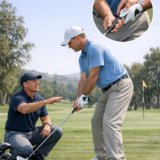
Golf Digest: Master Swing, Putting & Driving for All Levels
Introduction
Consistent performance in golf emerges from teh integration of technical proficiency, biomechanical efficiency, and strategically informed decision-making.This article synthesizes contemporary biomechanical insights and evidence-based instructional protocols to present a coherent framework for mastering the three fundamental domains of the game-swing, putting, and driving-across the continuum of player ability. Drawing on principles emphasized by leading instructional authorities and performance science, the exposition is organized to translate theory into practice through level-specific drills, measurable performance metrics, and methods for on-course request.
The aims are threefold: (1) to operationalize key biomechanical concepts that underpin effective ball-striking and stroke mechanics; (2) to prescribe empirical,scalable practice protocols and objective metrics that enable reliable assessment of progress; and (3) to demonstrate how technical improvements can be integrated into course strategy to reduce variance and lower scores. Emphasis is placed on reproducibility and transferability-providing coaches and players with clear diagnostic criteria, quantifiable targets (e.g., swing tempo, face-to-path differentials, putting stroke consistency), and progressive drill sequences that respect differing learning rates and physical constraints.
By framing instruction within an evidence-based, performance-oriented model, the article seeks to bridge the gap between laboratory findings and on-course outcomes. Subsequent sections examine biomechanical foundations for the full swing, science-informed approaches to putting, and driving strategies that balance distance with controllability, followed by case-based examples illustrating assessment, intervention, and measurable advancement across novice, intermediate, and advanced cohorts.
Biomechanical Foundations of a Reproducible Golf Swing: Assessment Metrics and Corrective Strategies
A reproducible swing begins with an objective biomechanical baseline that links posture, balance, and the kinematic sequence to measurable performance. Start by assessing static setup: spine tilt of approximately 20-30° from vertical,knee flex between 15-25°,and a weight distribution near 55/45 (lead/trail) at address for irons that promotes a downward strike. Then measure dynamic metrics with a launch monitor or high-speed video: clubhead speed, smash factor, attack angle, and lateral center-of-pressure shift (ideally 10-20 cm of rear-to-front transfer). Using these metrics, set tiered goals (beginners: improve strike consistency and achieve a repeatable attack angle; intermediate: narrow dispersion and increase carry by 5-10%; low handicappers: fine-tune launch/spin window). These objective numbers provide a shared language for coach and student, and they guide equipment decisions such as shaft flex, loft, and lie angle to match a playerS natural kinematic sequence.
Next, break the swing into its key mechanical phases-setup, takeaway, backswing, transition, downswing, impact, and follow-through-and use targeted corrective strategies for common faults. For example, to correct casting (loss of lag) employ the pump drill to feel a sustained wrist hinge and create a 30°-45° lag angle into the transition; to fix early extension use a wall-posture drill to maintain hip hinge and spine angle through impact. Practical drills and checkpoints include:
- Gate drill (put two tees just wider than the clubhead to ensure on-plane path);
- Towel under lead armpit (promotes connection and prevents arm separation);
- Alignment rod along toe line (checks shoulder and hip alignment and swing plane).
Progress through these drills with quantified feedback-e.g., reduce leftward misses by 50% over four weeks-so technical corrections translate into reliable ballflight changes on the course.
Because full-swing biomechanics directly influence short game control, integrate short-game mechanics and contact control into the same assessment model. Consistent low-point control for approach shots improves chipping and green-side bunker play; therefore practice drills that reinforce forward shaft lean and a slightly closed clubface at impact for chips and pitches. For putting, focus on a stable axis rotation and tempo: aim for a repeatable stroke length ratio with a backswing:downswing tempo near 2:1-3:1 depending on distance, and practice lag putting to a measurable standard-75% of lag putts from 20-40 ft finish inside 6 ft within a 6-week block. Course scenarios informed by Golf Digest insights-such as choosing a bump-and-run from a tight fairway lie or aiming different landing zones on a firm green-connect technique to lower scores by improving strokes gained around the green and putting.
Driving efficiency requires optimizing launch conditions and strategic teeing decisions rather than maximal distance alone. Use launch monitor targets tuned to your speed: such as, a player with 95 mph driver speed often finds an optimal launch near 12-14° with spin between 2200-3000 rpm; adjust driver loft and shaft launch characteristics to hit these windows. On-course strategy must then account for wind, firmness, and hazards: play to carry distances rather than absolute length, and employ controlled partial swings or fairway-first strategies when penal rough or wind make low-percentage lines risky. drills that translate to course play include tee-box alignment routines, simulated pressure hitting to carry a hazard, and variable-length driver practice to dial in preferred carry numbers.
create a structured, measurable practice program that blends technical work, situational practice, and mental routines. A weekly plan might include: 2 sessions of 50 full-swing balls with launch-monitor feedback (track dispersion and carry), 2 short-game sessions focusing on up-and-downs from 30-50 yards, and daily 15-minute putting blocks emphasizing lag control and 3-foot make rates. Troubleshooting tips:
- If shots are consistently fat: check forward shaft lean and ball position; practice hitting tees lower to the ground to feel low-point control.
- If you hook or slice: verify grip pressure and face-to-path relationship using impact tape or a face-contact mat.
- For limited mobility: shorten the backswing, widen stance, and use hybrids rather of long irons to maintain tempo and center-face contact.
Incorporate a concise pre-shot routine (7-10 seconds), breathing cues, and visualization to reduce variability under pressure. By linking biomechanical assessment to targeted drills, equipment choices, and on-course decision-making, golfers at every level can achieve a more reproducible swing and measurable scoring improvement.
Evidence based Putting Techniques: Stroke Mechanics, Green Reading and Distance Control Drills
Begin with a biomechanically sound setup that makes repeatable stroke mechanics possible. Place the ball slightly forward of center (about 1-1.5 in.) in your stance, with feet shoulder-width for a moderate arc or narrower for a more straight-back/straight-through stroke; this positions the putter to sweep the ground rather than scoop. Adopt a neutral putter loft at address-most modern blades sit between 3° and 4°-and ensure the shaft leans slightly forward so the hands are 0.25-1 in.ahead of the ball for a crisp forward roll.For stroke motion, emphasize a low-wrist, pendulum-like action with minimal wrist hinge (<10°) and torso rotation driving the shoulders; this reduces face rotation and improves face-to-path control. Practically, use a mirror or an overhead camera to confirm vertical shoulder rotation, and implement an alignment check before each stroke: eyes over the ball, putter face square to the intended line, and feet/hips parallel to the target line. step-by-step: set alignment, settle grip pressure (light, about a 3-4/10 on a subjective scale), take one practice stroke to establish tempo, and execute with a committed finish-this routine reduces variability under pressure.
Reading a green requires integrating visual inspection, tactile feedback, and situational variables such as grain, moisture, and wind.Walk around the putt to identify the low point and grain direction: grass blades reflect light differently and the grain typically runs toward faster, shinier areas. Advanced players can quantify slope using AimPoint or a smartphone level app to estimate degrees of break, while beginners should learn to identify the dominant tilt by observing how water drains or how approach shots release. When calculating your line, factor in the putt’s start line (face alignment), intended roll speed, and the low point; for long lag putts favor pace over exact line to reduce three-putt risk. On-course application: for a putt that runs across a slope and into a back-left hole placement, consider aiming slightly more toward the high side and using a softer pace to allow the ball to approach the hole from below rather than attempting an aggressive “make” that leaves an impractical downhill comeback.
Distance control is the greatest single determiner of putting effectiveness; structure your practice with measurable drills that retrain the feel of backswing-to-distance relationships. Use these evidence-based drills to build reproducible speed control:
- Ladder Drill: putt to rings at 3, 6, 9, and 12 ft; goal-leave each putt within 6 in.
- 50/30/20 Lag Set: from 50, 30, and 20 ft take 10 putts each aiming to leave 70% inside 6 ft.
- Gate/Tee Stroke Drill: place tees just outside the putter path to enforce a square face through impact and consistent arc radius.
During these drills measure outcomes and adjust backswing length rather than wrist speed to change pace: a 1:1 backswing-to-follow-through often produces a neutral tempo; for longer lag putts experiment with a slightly longer follow-through (ratio ~1:1.2) to promote acceleration through impact. Track progress by logging percentage of leaves within the target circle and aim to reduce three-putts by an objectively set target (for example, cut three-putts by 50% over eight weeks of focused practice).
Translate technique into course strategy by linking putt selection, aggressiveness, and green conditions to scoring objectives. Under typical stroke-play strategy, choose to be aggressive only when the probability of holing outweighs the risk of leaving a long comeback; otherwise “play to the hole” by using speed to limit break.For example, when facing a 30‑ft breaking putt with a protected pin, a conservative strategy is to aim for a landing zone that leaves a makable 6-8 ft uphill return rather than trying to carry the entire break. Remember relevant rules: you may mark and lift your ball on the putting green and repair ball marks and old hole plugs (per the Rules of Golf), but you must not anchor the putter to your body when making a stroke. Apply situational drills on the course: practice lagging to a 3-6 ft circle from various positions and test reads in different wind directions and green speeds-this builds the situational judgment necessary to choose the right line and pace under tournament pressure.
Equipment choices, practice structure, and mental routines complete an evidence-based putting program. Evaluate putter head weight (commonly 330-360 g in modern mallets/blades), grip thickness (larger grips can stabilize wrist action), and loft/lie setup with a certified club fitter; small changes can yield measurable improvements in face stability and roll. For practice scheduling, allocate short sessions of 20-30 minutes per day focused on one objective (alignment, distance, or green reading) and weekly longer sessions that integrate all elements. Troubleshooting common faults:
- Too much wrist action -> strengthen shoulder-driven pendulum and use a shorter grip to reduce torque.
- Inconsistent pace -> use metronome or breathing to stabilize tempo; practice with a target circle to quantify outcomes.
- Misreads -> walk the putt from multiple vantage points and use the low-point method before picking a target.
integrate a simple pre-putt routine to manage pressure-visualize the ball brushing the center of the cup, take one practice stroke at your intended speed, and commit to the chosen line. by combining precise setup, repeatable mechanics, quantified practice goals, and on-course decision-making, players of all levels can convert more opportunities and lower scores through evidence-based putting.
Driving Power and Accuracy: Kinetic Chain Optimization and Launch Angle Management
Begin with a systematic, reproducible setup that primes the kinetic chain for efficient energy transfer from ground to clubhead.Establish a neutral spine angle with a 5-8° forward tilt, a shoulder-width plus 1-2 in. stance for drivers, and a ball position approximately one ball diameter inside the lead heel; these dimensions create the required geometry for an upward attack on the driver. In addition, weight distribution should be balanced (about 55/45 to 60/40 lead/trail at address) so that the lower body can initiate the downswing without excess lateral slide. For practical checkpoints,use the following setup cues:
- Chin up slightly to allow shoulder turn,not lifting the head out of posture.
- Light grip pressure (~4-5/10) to allow wrist hinge and release.
- Alignment stick down target line to confirm feet, hips and shoulders are co‑parallel to the target.
These setup fundamentals are the baseline for improving both distance and accuracy, and they are simple to measure and replicate during practice and on-course situations.
next, focus on sequencing and the transfer of force through the kinetic chain: ground reaction → legs → hips → torso → arms → club. Advanced players often achieve an X‑factor (shoulder turn minus hip turn) of ~40-60°, while recreational players may develop useful separation at lower degrees; irrespective, the importent principle is controlled separation rather than forced contortion. Transition into the downswing by initiating with the lower body – a subtle lateral weight shift to the lead foot and a downward-forward rotation of the pelvis – which allows the torso and arms to follow in sequence and create lag. Drills to reinforce correct sequencing include:
- Medicine‑ball rotational throws (emphasize hip rotation before arm movement).
- Step‑through drill: start with trail foot slightly off the ground and step into impact to feel the weight shift.
- Impact‑bag drill to train hands‑ahead feel and compressive impact.
Use a metronome or 3:1 rhythm (backswing to downswing) to stabilize tempo; consistent sequencing directly reduces dispersion and improves repeatable power delivery.
Proper launch angle and spin control are the mechanical outputs of a well‑timed kinetic chain combined with correct equipment selection. Understand that launch is the product of dynamic loft and angle of attack: for most players a driver launch angle of 10-15° with a spin rate of 1,800-3,000 rpm produces optimal carry for distance, though elite players with higher clubhead speed may target the lower end of that spin range. In practice, use a launch monitor to measure clubhead speed, ball speed, smash factor (ball speed/clubhead speed target: ~1.45-1.52), launch angle, and spin; then iterate loft and shaft choices accordingly. Equipment and teeing drills include:
- Adjust tee height incrementally (e.g., raising or lowering by 10-20 mm) to find the best attack angle without inducing a steep strike.
- Test driver lofts in 0.5-1.0° increments to trade spin for launch as needed.
- Experiment with shaft flex and tip stiffness in a controlled fitting session to stabilize face control through impact.
As Golf Digest fitting guidance emphasizes,matching attack angle and shaft characteristics to the player’s swing will often yield greater distance than simply increasing clubhead speed alone.
Accuracy relies on face‑to‑path control and bright course management.A small difference between face angle and swing path produces the curvature of the ball: face open to path = fade/slide; face closed to path = draw. Train precise face control with the following practice methods:
- Gate drill at mid‑backswing and impact to train consistent clubface rotation.
- Impact tape or foot spray to confirm center‑contact and monitor toe/heel strikes.
- Alignment and ball‑position checks under varied wind conditions (lower ball position and reduced loft or a 3‑wood off the tee to keep trajectory controlled into headwinds).
On the course, prioritize landing zones-aim to place drives to leave the preferred approach angle into the green rather than always demanding maximum carry. For example,on a firm downwind par‑4 where the fairway narrows near a green,a controlled 80-90% swing targeted to the wider side of the fairway produces better scoring opportunities than maximizing distance with higher dispersion risk.
implement a progressive practice plan that translates range improvements to scoring gains. Set measurable short‑term goals (e.g., increase average clubhead speed by 3-5 mph over 8 weeks, improve smash factor by 0.03, or reduce 95% drive dispersion radius by 10 yards) and pair them with weekly drills:
- two technical sessions (30-45 minutes) focusing on sequencing, lag and impact drills.
- One launch‑monitor session to validate changes in launch/spin and make loft/shaft adjustments.
- One on‑course session emphasizing target management and wind/trajectory choices.
Address common faults with clear corrective exercises: early extension (wall or posture‑hold drill), casting (half‑swing pause drill to build retained lag), and excessive grip tension (soft‑grip repeat swings). Additionally, accommodate differing physical abilities by offering rotational‑only drills for limited‑mobility players and plyometric/stepping drills for athletic movers. Integrate mental routines-pre‑shot visualization, routine one‑two breathing-to reinforce technical changes under pressure. Together these elements produce measurable improvement in both power and accuracy and translate directly into lower scores through more consistent tee shots and improved approach opportunities.
Level Specific Training Protocols: Progressive Drills and Periodization for Beginners to Elite Players
Begin with a systematic assessment and periodized plan so improvement is measurable and sustainable. Perform a baseline evaluation of swing characteristics, short game metrics, and on-course statistics (e.g., driving dispersion, greens in regulation (GIR), and putts per hole) over at least three full rounds or 50 range shots. Then prescribe a periodization model: a foundation phase (3-6 weeks) emphasizing mobility, setup fundamentals and contact consistency; a growth phase (4-8 weeks) focused on swing mechanics and shot-shaping; and a performance/peaking phase (2-4 weeks) emphasizing course simulation and tempo under pressure. For beginners, shorten cycles to 2-4 weeks per phase and concentrate on reproducible setup and ball-striking; for elite players extend the development phase and increase specificity (e.g., trajectory control and spin management). To track progress, set quantifiable targets such as: reduce iron shot dispersion to <15 yards side-to-side at 150 yards within 12 weeks, or increase GIR by 10 percentage points in one season.
Next, break down swing mechanics into teachable, progressive drills that respect individual anatomy and equipment. Begin with setup fundamentals: stance width = shoulder width for full swings (~35-42 cm depending on player), ball position = center for mid‑irons, 1-2 ball widths forward for driver, and spine tilt ≈ 3-5° away from target for a driver address. Then progress to motions: establish a smooth takeaway to waist-high, maintain a flat left wrist through the backswing for most players, and achieve a compact, athletic impact where the shaft lean is 5-10° forward for irons. Useful drills include:
- Gate drill for swing path (use two tees to form a gate at ball position)
- Towel-under-arms drill for connection and rotation
- Half-swing clock drill (10-2 positions) with a metronome to control tempo
Common faults such as casting, early extension, and excessive lateral sway are corrected with targeted feedback (video review, impact bag, or shallow-to-steep swing-plane exercises). For advanced players,introduce intentional face rotation and shaft lean drills to shape shots-practice a 3-degree fade and 3-degree draw window on the range to learn repeatable curvature.
Then, devote concentrated time to the short game with progressive drills that transfer directly to scoring. Prioritize the sequence: putting (tempo, green reading), chipping (trajectory and bump-and-run vs. lofted shots), and flop/sand shots (bounce management). Specific technical cues include keeping the hands ahead of the ball at putter impact by 1-2 cm, and for chips using a slightly narrower stance with weight 60/40 on the front foot. Practice routines:
- 60-minute short game block: 30 minutes of 3-to-8-yard chips to a towel target, 15 minutes of 20-40-foot putts focusing on lag control, 15 minutes of bunker/60° wedge half-swing control
- “Around-the-clock” wedge drill: 8 balls from 8 different lies at 20-40 yards, aim to land within a 3‑meter circle (score improvement measured as % within circle)
Address common mistakes such as flipping at impact (fix with hands‑ahead impact drills) and excessive wrist hinge on chips (use a putting‑style stroke for bump-and-run). As golf Digest recommends,simulate course lies and green speed to ensure practice conditions replicate on-course variables.
Building on mechanics and short-game proficiency,integrate strategic course management and situational practice so players convert skills to lower scores. Teach players to calculate risk vs. reward: use carry distances, wind, and slope to pick target zones rather than pin-seeking when unneeded. Such as,when facing a 160-yard par 3 into wind,add 6-10% to carry distance for a 10-15 mph headwind and aim at the fat part of the green advised by Golf Digest’s green-reading principles (target the center or high side rather than the flag when slope or recovery is risky).Practice scenario drills:
- Play a 9-hole simulation where you must hit a predetermined miss (e.g., “always leave tee shots short and left of fairway bunker”)
- Pressure routine: 3-ball challenge where only the best two scores count, promoting conservative strategy under stress
This paragraph emphasizes the rules-conscious approach-if needing to play a provisional ball or declare relief, rehearse the correct procedures so stress does not cause rule errors during competition.
consolidate technical and strategic gains by incorporating mental skills, equipment tuning, and individualized load management into weekly periodization. Implement a reliable pre-shot routine with three consistent cues (alignment, visualization, breathing) and practice it until it becomes automatic; use breathing to regulate heart rate (inhale 3s, exhale 4s) before critical shots. Equipment checks should include verifying lofts and lies (have wedges lofted at 50-62° for gap/sand/lob progression), shaft flex suited to swing speed (e.g., 95-105 mph driver speed commonly fits regular/stiff flex), and proper grip size to avoid wrist manipulation. For practice scheduling, alternate high-volume technical sessions with short, high-intensity situational work:
- Week example: 2 technical range sessions (60-90 minutes), 2 short-game blocks (60 minutes), 1 course-management round, 1 active recovery day
- Measurable weekly goals: hit 500 quality swings (monitor with a launch monitor or video), and reduce three-putts by 25% over four weeks
By combining disciplined periodization, measurable drills, equipment optimization, and mental routines, players from beginners to elite can systematically lower scores and maintain long-term progression.
Objective Performance Metrics and Technology integration: Launch Monitors, Motion Capture and Putting Sensors
Objective measurement technologies transform subjective coaching into repeatable, data-driven instruction by providing quantifiable metrics such as clubhead speed, attack angle, face angle at impact, smash factor, spin rate and launch angle. Such as, a golfer seeking predictable driver performance should target a smash factor near 1.45-1.50 and a spin rate between 2,000-2,600 rpm depending on loft and swing characteristics; beginners will accept wider ranges while low handicappers pursue tighter tolerances. Consequently, coaches should begin sessions by establishing baseline numbers with a certified launch monitor and, when possible, synchronized motion-capture or high-speed video so that kinematic sequence (pelvis → thorax → arms → club) can be linked to the ball-flight data. This measured baseline is essential because it creates objective improvement targets (for example, increase carry by 10-15 yards through +3-5 mph clubhead speed or by reducing negative attack angle) rather than subjective feel cues alone.
Building on baseline data, three-dimensional motion capture isolates swing mechanics with precision: typical desirable ranges include shoulder turn ~80-100° on the backswing for full shots, hip rotation ~40-60°, and a downswing sequencing where peak pelvic rotation velocity precedes peak thoracic rotation. When addressing common faults, use synchronized video and motion-capture metrics to prescribe corrective drills. For instance, if the system shows an early extension (+ vertical displacement > 10-15 mm at transition), implement a sequence drill (half-swing to impact, hold posture for 2-3 seconds) and monitor pelvic tilt and spine angle until the motion-capture trace shows reduced extension. Additionally,provide beginner-pleasant explanations: explain that a negative attack angle on irons (typically -2° to -6°) produces compression and predictable spin,while the driver frequently enough benefits from a slightly positive attack angle (+1° to +4°) for optimized launch and lower spin.
Launch monitor data translate directly to on-course strategy when interpreted correctly. For example, when the data indicate a golfer achieves optimal carry at a driver launch of 12-14° with spin ~2,200 rpm, the coach should recommend teeing up and aligning for reduced dispersion rather than maximal distance. Conversely, if a fairway metal produces tighter dispersion at a given loft and speed, the data justify clubbing down on risk holes. In practice, translate numbers into measurable goals: aim to reduce 95% shot dispersion (95th percentile) by 10 yards within six weeks via swing path and face-angle adjustments. To make these adjustments actionable, use practice routines that replicate tournament or windy conditions (e.g., simulate 15-25 mph crosswinds by varying launch monitor wind settings) and then apply the successful setup and shot-shape on the course, consistent with Golf Digest-style emphasis on on-course transfer.
Putting sensors add a complementary layer of precision by measuring stroke path,face rotation,loft at impact and ball roll quality; key targets for proficient putting include face angle at impact within ±1° of square and launch angles between 2°-4° to promote immediate forward roll. Use the sensor output to correct common errors: a closed-face at impact can be addressed with a gate drill to promote square-to-square motion, while excessive loft on impact ( > 6°) often indicates scooping and should be remedied by a low-hand, forward-press setup and a putt-into-impact drill that emphasizes a descending hands-to-ball motion. For novices, introduce these concepts with simple feedback loops-put strokes of 3-5 ft recorded on a sensor to show immediate numerical improvements-while advanced players can refine face rotation and path to achieve consistent uphill and downhill speed control across varying green speeds.
integrate these technologies into a structured practice progression that links practice bay work to short-game and course-management outcomes. Begin each block with 5-10 swings or putts to re-establish baseline numbers, follow with targeted drills informed by the data, then conclude with simulated pressure situations (e.g., make 8 of 12 from specific yardages or break ties with competitive routines). Useful unnumbered practice checklists include:
- Setup checkpoints: ball position, spine tilt, weight distribution 55/45 at address for driver, 60/40 for short irons
- Drills: alignment-rod gate for path, impact-bag compression sets, putting gate and tempo metronome
- Troubleshooting: reduce lateral head movement if vertical oscillation > 20 mm, adjust shaft lean forward at impact if ball flight is ballooning
Moreover, set measurable milestones-such as improving average proximity to hole from 100 yards to 10-12 ft or decreasing three-putt rate by 30%-and account for environmental factors (green speed, grain, wind) when interpreting tech-derived targets. By combining launch monitors, motion capture, and putting sensors within a deliberate practice framework, golfers at every level can convert objective metrics into repeatable technique adjustments and better on-course decision-making, yielding measurable scoring improvements.
Motor Learning Principles and Practice Design: Deliberate Practice, Feedback Frequency and transfer to Competition
motor learning research underpins effective practice design; therefore, build sessions around deliberate practice principles that emphasize high-quality, goal-directed repetitions with immediate, measurable outcomes. Begin each session with a specific measurable objective (such as, five of seven fairways hit with a 10-15 m dispersion, or 80% of putts from 6-12 feet made on a repeatable stroke) and structure time blocks of 10-20 minutes focused on one technical element to prevent cognitive overload. In addition, apply the principle of specificity: practice should match the task constraints of competition (club selection, stance, lie, wind and green speed). Progress from closed, low-variability tasks to open, variable tasks to support transfer; for example, begin with stationary ball-strike drills on a mat and progress to uneven lies and windy conditions on the range. Transition phrases: first set explicit metrics and constraints, then increase variability to promote robust motor planning under pressure.
Feedback frequency and type materially affect retention and transfer.Use a combination of knowledge of results (KR)-distance,dispersion,green proximity-and knowledge of performance (KP)-video analysis,launch monitor numbers (spin rate,launch angle,clubhead speed). Though, adopt a faded-feedback schedule: provide KP frequently during initial technique acquisition, then reduce KP while keeping KR frequent to encourage internal error detection. Practical implementation: after a block of 10-15 swings,give one targeted technical cue (e.g., increase left forearm rotation at takeaway by ~10°) followed by three ball flights before feedback; use a launch monitor to record attack angle (seek +2° to +5° for driver; -2° to -6° for mid-irons) and share these numbers intermittently. For coaches working with different learners, vary modality-verbal cues, video with slow-motion, and feel-based analogies-to accommodate visual, auditory, and kinesthetic preferences.
When refining swing mechanics and equipment setup, emphasize reproducible checkpoints: neutral grip (V’s to right shoulder for right-handers), ball position (one ball width inside left heel for driver; center-to-slightly-forward for short irons), spine tilt (approx. 5°-7° away from target for driver) and shaft lean at address for irons (hands slightly ahead of the ball). Use drills and measurable goals such as the Headcover Gate Drill to promote inside-to-square clubhead path, or the Impact Tape Drill to verify centered strikes (aim for a 2-3 cm cluster on the clubface). Practice drills include:
- Tempo Drill: use a metronome set to 60-80 BPM to achieve a backswing:downswing ratio of ~3:1;
- Attack Angle Drill: hit driver to a launch monitor to train a positive attack angle of +2°-+5° by placing a towel under the rear foot to encourage weight transfer;
- divot Control Drill: for irons, place tees at intended low-point and practice taking shallow-divot strikes that begin just after the ball (target divot length 5-10 cm).
Address common mistakes-early extension (correct with wall drill to keep hips back), overactive wrists (use slow-motion one-arm swings)-and set measurable improvement targets (e.g., reduce shot dispersion by 20% over six weeks).
Short game and putting require high-fidelity practice that mirrors green conditions and course pressure. For chipping and pitching, calibrate loft and bounce selection: use a 54°-58° sand wedge with 8°-12° bounce for bunkers and tight lies choose lower bounce. Train the contact point and landing zone with the Landing Zone Drill-mark a spot 6-12 m from the hole and aim to land 70% of chips within a 1.5 m radius. For putting, measure green speed with a stimpmeter equivalent (or note hole-to-hole consistency) and practice distance control with ladder drills: from 3, 6, 9, and 12 feet, record make percentage and pace control (target +/- 0.5 m roll deviation). Include short-game drills:
- Gate-to-gate putting to improve face alignment and arc consistency;
- 50-ball sand-bunker routine focusing on consistent entry point and explosion angle;
- Tempo ladder (putts at increasing distance with the same backswing length) to train a repeatable stroke.
Additionally, integrate situational practice-uphill/downhill chips, sidehill lies, firm links-style bunkers-to ensure techniques transfer to actual course conditions.
to ensure transfer to competition, simulate tournament constraints and monitor physiological and psychological responses. Conduct practice rounds where players impose realistic rules and consequences-maximizing focus by using stroke play scoring, imposing time limits (e.g., 40 seconds per shot as in typical pace-of-play rules), and practicing relief and penalty scenarios in accordance with the Rules of Golf (for example, executing free relief for casual water without penalty). Use pressure training: introduce performance-based incentives, crowd noise, or competitive formats to reproduce arousal and attentional demands. For measurable progression, maintain a practice log that records launch monitor numbers, make percentages, fairways/greens hit, strokes gained metrics, and perceived mental state; review weekly to set SMART goals (Specific, Measurable, Achievable, Relevant, Time-bound), for example: improve Strokes Gained: Approach by 0.2 over eight weeks. integrate deliberate practice, faded feedback, equipment tuning, and on-course simulation so technical gains reliably transfer into lower scores under competition conditions.
Course Management and strategy Integration: Shot Selection,Risk Assessment and Scoring improvement Plans
First,develop a reproducible pre-shot framework that converts course information into a repeatable decision. Begin by quantifying yardage to within ±5 yards using a rangefinder or GPS, then assess the lie (tight, plugged, uphill, downhill), wind speed and direction, slope of the fairway/green, and any hazards or out-of-bounds that affect your margin for error. use a four-step checklist before every shot: target → club → swing thought → commitment. For example, on a 420‑yard par‑4 with a fairway bunker 260 yards out, choose a club that keeps your tee shot inside of that bunker margin (e.g., 3‑wood to carry ~230-240 yards) rather than defaulting to driver; this simple trade-off reduces variance and improves scoring consistency. Key checks: ball position (±1-2 inches from standard), stance width (shoulder width for full swings), and alignment within 2-3 degrees of the intended target line.
Next,apply a structured risk-assessment model to shot selection that leans on probability and consequence rather than ego. Evaluate the risk by estimating two numbers: probability of successful execution (based on current form and conditions) and cost of failure (stroke penalty, lost position). For example, when facing a reachable par‑5 with water guarding the pin at 30 yards, an aggressive fairway wood attempt that has a 30% success rate but a 90% chance of a penalty stroke is often worse than a conservative layup that leaves 80-100 yards into the green. As Golf Digest and teaching professionals recommend, prefer shots that minimize variance in windy or firm conditions; when wind increases launch dispersion by >10-15%, favor lower, higher‑lofted clubs or altered ball positions to control spin and trajectory. Practice decision-making with on‑course simulations: create scenarios where you force a conservative vs. aggressive choice and record outcome statistics for later analysis.
Then integrate shot-shaping mechanics into your strategy so that technical skill matches tactical decisions. To shape a shot, adjust three primary elements: face angle relative to target, swing path, and ball position. For a controlled fade, set the face 2-4° open to the target while promoting an out‑to‑in path 1-3° to that face; for a draw, close the face 2-4° and encourage an in‑to‑out path 1-3°. Alter ball position by 1-2 inches forward to increase launch and spin or back to lower trajectory.For trajectory control into firm greens, choke down 1-2 inches and play the ball 1-2 inches back in stance to reduce launch by ~2-4 degrees and lower spin. Useful drills include:
- alignment‑stick shape drill (place two sticks to force path and face feel),
- half‑swing clock drill to groove consistent release timing,
- trajectory ladder (hit 5 shots each at target heights measured by intermediate markers at 20, 30, 40 yards of carry).
Common errors are over‑manipulation of the hands (fix with tempo/metronome practice) and inconsistent setup; correct these by rehearsing setup checkpoints and by recording your swing for visual feedback.
Focus the short game on scoring opportunities with measurable targets and equipment awareness. Set weekly goals such as reducing three‑putts to ≤1 per 9 holes and increasing up‑and‑down rate by 10 percentage points. Break the short game into quantifiable practice blocks:
- chipping: 50 balls from 10-30 yards focusing on roll vs. carry with three selected wedge lofts,
- pitching: 50 repetitions from 30-60 yards using a clock‑face distance ladder (e.g., 10, 20, 30, 40, 50 yards),
- putting: gate drill for alignment and ladder drill for pace control from 3-30 feet.
Consider wedge bounce and grind when selecting shots around tight lies; higher bounce is forgiving from soft sand or rough, while low bounce suits tight, firm turf. For green reading,combine pace assessment (use a reliable 3‑foot practice putt to calibrate speed) with slope reads; use the AimPoint method or visual left/right read to convert slope into target offsets. Remember the rules: repair spike marks before putting, and remove loose impediments but play the ball as it lies unless relief applies (e.g., abnormal course condition provides free relief).
build a disciplined, data‑driven practice and on‑course plan that addresses physical, technical, and mental facets. Establish a weekly routine of 3-4 practice sessions totaling 3-5 hours with allocated segments (30% short game, 30% putting, 30% full swing/shot shaping, 10% course management simulation). Track metrics such as proximity to hole from 100 yards, GIR%, putts per GIR, and scramble rate; use these to set SMART goals (e.g., reduce average score by 2 strokes in 8 weeks by improving proximity from 100 yards from 40 ft to 30 ft). Include mental rehearsals: pre‑shot breathing, visualization of preferred shot shape, and contingency plans for trouble shots. Offer multiple learning approaches-visual learners use video and target markers, kinesthetic players use repetitive drills and tempo devices, and analytical golfers keep a decision log of every on‑course choice. By combining measurable practice, strategic decision rules, technical adjustments, and mental rehearsal, golfers at every level can convert improved technique into lower, more predictable scores.
Psychological Skills and Routine Development: Focus,Pressure Management and Pre Shot Consistency
Develop a rigid,repeatable pre-performance process that networks attention,visualization,and arousal control into a single flow. Begin by walking to the ball while identifying an exact target (a spot on the fairway, a blade of grass on the green, or a cart path edge) and creating a clear visual image of the ball flight and landing area; “aim small, miss small” is a useful principle to reduce outcome anxiety. Then perform a timed routine: look (2-4 s) at the target, visualize flight (2-3 s), take one or two practice swings (3-5 s) focusing on feel and tempo, set the club behind the ball and take a full inhale-exhale (box breathing: 4-4-4-4 counts if extra calm is needed) before addressing the ball. For beginners allow a slightly longer cycle (total 20-30 seconds) while competent players should compress the same steps into 8-15 seconds to preserve pace of play. Consistently executing this compact sequence builds automaticity so attention is directed to process cues (alignment, tempo, commitment) rather than outcome under stress.
Pressure management is trainable and should be simulated frequently so the mental routine holds when stakes rise.Use progressive exposure: start with low-stakes challenges and increase consequences (scorecards, small wagers, or teammate judging) to habituate arousal. Practice drills to reproduce tournament pressure include:
- “Make 3 to move on” putting games – only three consecutive makes let you finish the station.
- Range stress sets – play a 9-hole sequence on the range where every missed target incurs a small penalty (e.g.,3 push-ups) to mimic consequence.
- Shot execution under fatigue – after a physical warm-up or a few minutes of light cardio, hit mid-iron targets to practice technique when heart rate is elevated.
During these drills use a single trigger word or kinesthetic cue (such as “commit” or a subtle toe-wiggle) as your final signal to swing; this rapid cue reduces conscious interference. Additionally,maintain a process scoreboard (e.g., number of committed pre-shots, tempo hits, and target hits) rather than a score-based scoreboard to reinforce controllable behaviors over results.
Technical consistency in the pre-shot setup anchors mental routines to reliable ball-striking. Follow these setup checkpoints before each attempt and correct the common errors listed:
- Alignment: clubface square to the intended line; feet, hips and shoulders parallel to that line. use an alignment stick in practice to ingrain this plane.
- Stance width: shoulder width for mid/short irons, slightly narrower for wedges, and approximately 1.25-1.5× shoulder width for driver to allow a full shoulder turn.
- Ball position: center for short irons, one ball left of center for mid-irons, and just inside the left heel for driver (right-handed player), adjusting forward in wind conditions to reduce spin.
- Spine tilt and posture: maintain a slight forward tilt of 7-10° from the hips with knees flexed ~15°, keeping the chin up to allow a free shoulder turn.
- Grip pressure: moderate and consistent – approximately a 4/10 on a relaxed scale – to promote release without tension.
Common corrections: if slices persist, close the stance slightly and feel a stronger lower-body rotation; for fat shots, ensure weight starts balanced and shifts toward the front foot through impact. Use slow-motion video to confirm spine angle and head position, and measure progress via impact tape or launch monitor when available.
Link the mental routine and setup to smart course strategy so specific shot execution becomes a scoring weapon. Prioritize percentage golf: when faced with a narrow green or wind, choose a conservative target that leaves a comfortable chip rather than attacking the flag every time – for instance, aim 10-15 yards short or to the wider side of a green to avoid trouble. Use environmental cues: add or subtract yardage for wind (e.g., club up one for every 10-15 mph headwind or for soft conditions increase loft to control spin), and pick landing zones accounting for slope and roll. Set measurable on-course goals such as increasing greens in regulation (GIR) by 10% over six weeks, or cutting three-putts by 50%, and translate those goals into targeted practice (lag putting and approach distance control).Incorporate Golf Digest-style green-reading techniques: read the overall slope first, then local undulations, and always visualize the ball’s path from landing to hole rather than just aim point.
construct a weekly practice plan that marries technical work, pressure drills, and conditional play so improvements are measurable and transferable. A sample session for intermediate to advanced players might be: 10 minutes dynamic warm-up, 30 minutes range (60% targeted ball-flight work, 40% pressure sets), 30 minutes short game (high and low lob, bump-and-run, and bunker exits with progressive target difficulty), and 20 minutes putting (clock drill, 25-40 foot lag drills, and three-putt elimination games). For beginners, emphasize fundamentals with shorter blocks: alignment, grip, and one technical concept per session. Use measurable feedback such as carry distance, dispersion diameter, and putting makes to set weekly targets. Troubleshooting recommendations: if progress stalls,reduce complexity (simplify the pre-shot thought to one cue),increase variability in practice to improve adaptability,and consult equipment specs (shaft flex,loft,and grip size) to ensure they are not masking technical fixes. Together, these steps form a robust, evidence-based approach to integrating psychological skill development with dependable technical execution and smart course management.
Q&A
1. What is the primary aim of the article “Golf Digest: Master Swing, Putting & Driving for All Levels”?
Answer: The article aims to synthesize biomechanical principles and evidence-based coaching protocols into level-specific, measurable practice prescriptions that improve swing mechanics, putting performance, and driving consistency.It integrates laboratory metrics (e.g., clubhead speed, launch conditions, stroke kinematics) with on-course strategy to translate practice gains into lower scores across skill levels.
2. what theoretical framework underpins the recommendations presented?
Answer: Recommendations are grounded in motor learning theory (deliberate practice, variability of practice, and feedback schedules), biomechanics (kinematics and kinetics of the golf swing and putting stroke), and performance science (skill transfer, perceptual-cognitive decision making). The article emphasizes objective measurement and progressive overload principles adapted for technical skill acquisition.
3. How does the article differentiate instruction for beginners, intermediate, and advanced players?
answer: Instructional content is stratified by diagnostic baseline and desired performance metrics. Beginners receive foundational drills emphasizing grip, posture, alignment, and tempo with low-complexity, high-repetition tasks. Intermediate players focus on kinetic chain sequencing, impact consistency, and situational shot-making drills. Advanced players use high-resolution biomechanical feedback (motion capture, launch monitors), individualized swing model refinement, and sophisticated course-management strategies. Progression criteria and quantitative thresholds are provided to move between levels.
4.Which measurable metrics does the article recommend monitoring for the full swing (iron and driver)?
Answer: Core metrics include clubhead speed, ball speed, smash factor, launch angle, spin rate (backspin and sidespin), attack angle, face-to-path, swing tempo (backswing:downswing ratio), and dispersion (shot grouping). Normative ranges and performance targets are specified relative to skill level and club selection to enable objective progress tracking.
5. What specific metrics are prioritized for putting, and why?
Answer: Putting metrics emphasized are putt pace (as indexed by roll-out or required first-roll distance), launch direction (initial face aim), face rotation through impact, stroke length and path, impact spot consistency, and green-reading accuracy (judged relative to Stimp speed and slope). These parameters directly relate to ball speed control and directional precision, the two determinants of putting success.
6. What biomechanical elements are identified as most critical to an efficient and repeatable swing?
Answer: Critical elements include stable base and pelvic rotation initiation, upper torso and shoulder coil (the X-factor), maintenance of spinal tilt, synchronized sequencing of hip-to-shoulder-to-arm energy transfer, controlled wrist hinge (creating and releasing lag), and consistent impact posture.The article links these elements to measurable outcomes such as transfer of energy to clubhead speed and centeredness of impact.
7. Can you summarize level-specific drills the article prescribes for improving swing mechanics?
Answer:
– Beginner: Alignment rods for setup, slow-motion half-swings to ingrain swing plane, metronome-tempo drills (e.g.,3:1 backswing:downswing),impact bag to feel forward shaft lean.
– intermediate: Medicine ball rotational throws for hip-shoulder separation, impact tape and face-target drills, weighted club swings for increasing radius and sequencing.
– Advanced: Video-based kinematic comparison to an individual target swing, delayed release/lateral force drills to optimize launch and spin, two-ball tempo drills to refine timing under pressure.
8. What putting drills are recommended by skill level?
Answer:
– Beginner: Pendulum stroke with mirror for face alignment, short putt ladder (3-6 feet) to build confidence in pace.
– Intermediate: Gate drill for face-path control, uphill/downhill length drills to calibrate pace to Stimp speeds.
– Advanced: Randomized distance practice with decision-making under time pressure, return-putt drills to simulate in-round psychological pressure and read verification.
9.How does the article advise developing driving consistency and distance?
Answer: It recommends a dual approach: technical optimization (attack angle, launch angle, spin rate tuning via launch monitor) and physical preparation (strength/power training for hip and core). Drills include tee-height/lateral ball position experiments,optimized swing length with weighted implements,and specific practice sets targeting repeatable face-to-path outcomes. Target metrics for driver: maximize ball speed and smash factor while maintaining acceptable spin to control carry and dispersion.
10. What role do technology and measurement tools play in the protocols?
answer: Objective tools-launch monitors (trackers for speed/launch/spin), high-speed video, force plates, and pressure mats-are central for diagnosis, feedback, and progress quantification. The article advocates using these devices to set individual baselines,prescribe measurable targets,and allow evidence-based adjustments. It also recommends recording practice sessions for longitudinal analysis.
11. What evidence supports the effectiveness of the proposed drills and protocols?
Answer: The article references a body of applied biomechanics and motor learning research demonstrating that objective feedback, deliberate practice with variability, and progressive overload improve technical skill and transfer to competition.It also aligns with instruction paradigms promoted by authoritative sources in the sport (e.g.,Golf Digest and professional tour bodies) that incorporate similar measurement-driven coaching methods.
12. How does course strategy integrate with technical work to improve scoring?
Answer: Technical improvements are coupled with strategic decision-making: selecting safer tee targets when dispersion increases, choosing clubs to maximize GIR probability, and applying putting strategies that minimize three-putt risk (e.g., lagging to a ring around the hole on long putts). The article emphasizes pre-shot planning, risk-reward analyses consistent with player dispersion metrics, and adaptive strategy based on current performance measures.13. How should practitioners structure practice sessions (frequency, duration, and content) to maximize transfer?
Answer: The article recommends distributed, deliberate practice with mixed schedules: 3-5 sessions per week, 45-90 minutes each, combining technical blocks (20-40% of time) with performance simulation and variability drills (60-80%). Warm-up and motor priming precede high-intensity technical work. Periodization across microcycles (weeks) and mesocycles (months) is suggested to manage load and peaking for tournaments.
14. What are the recommended assessment tests to quantify improvement?
Answer: suggested assessments include timed on-course measures (fairways hit, GIR, scrambling), launch-monitor-based protocols (standardized ball flight test for dispersion and launch conditions), putting tests (percentage made from 3/6/10/20 ft and average pace control error), and biomechanical screens (rotation ROM, strength/power tests). Results should be recorded and trended.
15.How does the article address injury prevention and physical conditioning?
Answer: It emphasizes prehabilitation and conditioning targeting thoracic rotation, hip mobility, core stability, and eccentric deceleration strength in the posterior chain.Warm-up protocols and load management guidelines reduce overuse risk. Strength and power conditioning are prescribed to support efficient force transfer without promoting compensatory mechanics that increase injury risk.
16. How should coaches handle variability among players with different anatomical or physical constraints?
Answer: The article advocates an individualized approach: respect anatomical variation, use functional movement screening to identify limits, and prioritize solutions that achieve desired ball-flight outcomes within the player’s physical capacities. Technique modifications should be validated by measurement (e.g., launch monitor) and player comfort, rather than forcing a single “model” swing.
17. What metrics or thresholds indicate readiness to advance a player from one level to the next?
Answer: Advancement is evidence-based: consistent achievement of predefined targets over several sessions. Examples include: beginner → intermediate when ball-striking dispersion and basic tempo (e.g., 3:1) are consistent and short-game percentages reach predetermined levels; intermediate → advanced when swing metrics (clubhead speed variability <5%, consistent smash factor), GIR and scrambling rates meet higher benchmarks, and the player reliably executes pressure simulations. 18. How should practitioners measure and manage practice-to-performance transfer during competition? Answer: Use simulated pressure drills and randomized practice to mirror competitive demands. Track key on-course metrics (fairways, GIR, putt proximity-to-hole) and compare to practice baselines. Implement pre-shot routines and checklist-based cognitive strategies to reduce variability under stress.Adjust practice emphasis based on performance analytics. 19. Where can readers find authoritative, ongoing instruction and research updates related to these methods? Answer: Authoritative resources include Golf Digest for instructional content and applied coaching insights, PGA TOUR resources for professional standards and statistics, and sport-science literature addressing biomechanics and motor learning. the article recommends consulting these sources and validated measurement tools for continuous learning. 20. What are the practical next steps for a reader who wants to implement the article's recommendations? Answer: Conduct a diagnostic assessment using simple tools (video and basic launch-monitor data), set 3-6 measurable short- and medium-term goals, adopt a structured practice plan as outlined, incorporate objective feedback tools when available, and periodically reassess using the recommended tests to adjust the program. Where possible, collaborate with a qualified coach or performance professional to individualize interventions. References and further reading (selected): Golf Digest (instructional resources), PGA TOUR (performance data and professional standards), applied biomechanics and motor learning literature as cited within the article. For ongoing updates and applied coaching pieces, consult the authoritative outlets listed above.
The Way Forward
this review synthesizes contemporary biomechanical insights and evidence-based training protocols to provide golfers and coaches with a coherent framework for optimizing swing mechanics, putting proficiency, and driving performance across ability levels. By integrating level-specific drills, quantifiable performance metrics, and course-strategy considerations, practitioners can translate laboratory findings into measurable on-course improvements while preserving individual variability and injury risk management.
Implementation requires iterative assessment, objective data collection, and deliberate practice guided by qualified instruction; progress should be evaluated against both short-term technical goals and longer-term scoring outcomes. For ongoing updates and complementary instructional perspectives, readers are advised to consult established industry resources such as GOLF.com and the PGA TOUR, and to situate sport-specific recommendations within the broader evidence base.
Ultimately, mastery emerges from the systematic application of theory to practice-measured, reviewed, and refined over time-ensuring that golfers at every level can realize meaningful, sustainable gains in swing, putting, and driving performance.