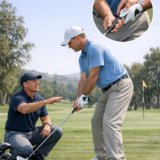
This piece consolidates modern biomechanical principles, motor‑learning science, and hands‑on coaching methods into a structured roadmap for improving swing technique, putting reliability, and driving output. Prioritizing reproducible, evidence‑driven approaches, the guidance links lab‑grade measurements with practical on‑course application to create measurable gains in consistency, accuracy, and shot execution across variable conditions. Expect definitive diagnostic steps, stepwise drill progressions, and numeric benchmarks that support individualized programming while preserving transfer to competition.
Central chapters dissect the mechanical and force‑based contributors to an efficient full swing, the sensory‑motor mechanisms behind putting control, and how equipment choices, technical execution, and tactical thinking combine to determine driving results. Each section blends motion‑analysis findings, practice design principles (variability of practice, optimal feedback timing, deliberate practice), and real‑world case notes showing how modest, focused changes produce measurable performance improvements. Scalability is emphasized – programs for novices, developing players, and elite competitors are provided, together with evaluation tools to direct training priorities.Technical refinement is framed inside broader decision‑making and psychological routines, reflecting that peak performance depends on the intersection of mechanics, strategy, and pressure management. Practical checklists, progressive drills, and suggested tracking metrics give players and coaches a usable blueprint for long‑term improvement, enabling biomechanical insight to consistently convert into better on‑course outcomes.
Refining Swing Mechanics with Biomechanics and Quantified Metrics
Meaningful improvement starts with a methodical movement assessment that converts motion into quantifiable metrics.Capture an initial data set using a launch monitor and high‑speed camera system (or 3‑D motion capture when available) to log clubhead speed, ball speed, smash factor, attack angle, launch angle, and spin rate. At address and through the motion, verify core kinematic checkpoints: aim for a backswing shoulder turn ≈ 90° (female players commonly nearer 80°), hip rotation ≈ 45°, and a sustained spine tilt of 10-15°; knees should be flexed to build a stable base. Force‑platform or pressure‑mapping data reveal sequencing: optimal flow is ground reaction (feet) → hips → torso → arms → club, and a useful sign of efficient sequencing is distinct time separation between peak rotational velocities of these segments.For driver work, establish practical target windows as baselines: smash factor 1.48-1.50, launch angle 10-14°, and spin 1,800-2,800 rpm; irons typically show a mildly negative attack angle (for example ∼-2° to -4°). Run a short diagnostic block (one week) capturing 50-100 swings, flagging outliers, and diagnosing whether variability stems from sequence timing, impact face angle, or setup inconsistencies.
Convert diagnostic insight into prioritized technical cues and practice plans that move from basics to nuance. First, stabilize the setup: consistent ball position, stance width, and spine angle reduce compensatory patterns.
- Setup checkpoints: ball placement relative to the front heel (driver: just inside lead heel; 7‑iron: near center), typical address weight split around 55/45 lead/trail for many players, and a square clubface to the intended line.
- Typical faults & fixes: over‑the‑top path → rehearse a shallow takeaway via single‑arm swings; early release/casting → impact‑bag drills and hold‑impact reps to practice later release; lateral sway → step‑and‑hold weight‑shift drills to train center‑of‑pressure movement.
Then layer in quantifiable drills and progression aims:
- Gate drill (tees) to refine path and face control-goal: shrink lateral dispersion by 10-20% in four weeks.
- Impact bag to cultivate compression and forward shaft lean-target: consistent forward shaft lean on short irons for ~80% of reps.
- Tempo & power plan: begin with a metronome 3:1 backswing‑to‑downswing ratio, ramp toward full‑speed swings, and add strength‑power work (medicine‑ball rotational throws) aiming for an increase of 1-3 mph in clubhead speed every 6-8 weeks depending on starting level).
For the scoring game, use a wedge distance ladder with 10‑yard landing bands and a one‑hand chipping series to reinforce clean contact-these exercises improve proximity and reduce putt counts. Preserve measurable targets (for instance, boost GIR by 5-10% or cut average putts by 0.3-0.5 per round) and retest every 4-6 weeks to track progress.
Embed biomechanical gains into course tactics so technical progress becomes lower scores. if diagnostics reveal tight dispersion but reduced carry in wind, alter club selection and line (as an example, use a controlled ¾ swing to lower trajectory by ≈5-10°), and prioritize position over attacking pins on holes where wider green targets are available. Situational practice cues encourage transfer:
- Wind & trajectory work: rehearse knock‑down shots and reduced‑spin swings; quantify carry loss to inform club choice.
- Course‑management routine: a pre‑shot checklist (wind, lie, target, margin for error) and a conservative aiming plan to increase fairway and GIR percentages.
- Pressure simulation: play practice holes under scoring constraints (e.g., aim for a 60% fairway hit rate or a specific wedge proximity of 20-30 feet).
Tailor approaches by level-beginners concentrate on repeatable setup and contact, intermediates on path/face control and trajectory shaping, low‑handicappers on dispersion tightening and match‑play shot choices-and incorporate mental routines (breathing, imagery, a concise pre‑shot sequence) so technical changes hold under pressure. Anchoring drills to objective metrics creates reliable pathways to lower scores.
Level‑Tiered Swing Drills and Training Protocols to Build Reliability
Note: the supplied web search results point to Progressive (insurance) and are not related to golf instruction; the content below is created to meet your golf-specific request.
Begin with a repeatable address that makes later mechanics easier to replicate: consistent grip, posture, and alignment are prerequisites for dependable swings. For moast iron strikes use a neutral vardon or interlocking grip with the club seated across the fingers, a shoulder‑width stance for mid‑irons, and widen by 1-2 clubheads for the driver.Ball position should span from ~1-2″ inside the left heel for the driver to centered for short irons. Maintain a spine tilt of roughly 10-15° away from the target for driver setups and reduce that tilt a little for shorter clubs; target a ~90° shoulder turn for standard full swings (players can use the right shoulder at or below chin height at the top as a visual cue). Reinforce these fundamentals with simple, repeatable drills:
- Alignment‑stick routine: one stick on the target line, one parallel to the feet to ingrain square setup.
- Wall pivot drill: position the back near a wall to feel correct hip turn and eliminate sway.
- Impact bag / towel drill: encourages forward shaft lean and solid compression-aim for a handle tilt of 2-4° forward at impact on irons.
Only progress when players can reproduce address and takeaway on 8-10 consecutive swings to ensure learning consolidation.
Prescribe graded drills by ability and measure improvements objectively. Beginners should concentrate on center‑face contact and repeated setups with an initial benchmark of 60-70% center strikes across a 25‑ball test: use a tee‑under‑ball exercise to promote solid contact and slow‑motion half‑swings to establish tempo (a 3:1 backswing‑to‑downswing ratio is a useful early target).Intermediate players focus on sequencing and distance control-employ the split‑hand drill to feel proper release and the gate drill to square the face at impact, tracking metrics such as clubhead speed within ±2 mph or dispersion inside a 15-20 yard radius.low‑handicappers fine‑tune launch and spin using launch‑monitor sessions to dial in launch angle and spin windows (for many, driver launch around 9-12° may be appropriate) and tighten face‑angle tolerances to about ±1° at impact. Across levels, structure practice in 3:1 blocks (three minutes technical work, one minute target shots) and set weekly, measurable objectives (fairways hit, GIR, simulated strokes‑gained), then validate progress with 50‑shot evaluations.
Combine short‑game practice and course tactics to convert mechanical gains into scoring advantage.For putting, use a 9‑foot gate drill to train square impact and a clock drill around the hole for speed control; aim to hole roughly 20% of 6-10 ft attempts in practice, progressing toward 30% for tournament readiness.For specialty shots, practice high‑flop alternatives on soft turf and compact “blast” motions from tight lies; in bunkers, set an aggressive entry point about 1-2″ behind the ball and rehearse consistent sand contact to control distance. Integrate on‑course pressure by counting pars and bogeys and varying wind and lie scenarios-play to the wider part of the green, choose clubs that leave an uphill putt, and avoid high‑risk recoveries unless strategically justified. Add mental components: a short pre‑shot routine, reliable visual targets, and simple mechanical adjustments for adverse conditions (e.g., half‑swing choke‑down punch under trees). These combined technical and tactical protocols drive measurable consistency improvements across skill tiers and translate practice into lower scores.
Evidence‑Led Putting: Stroke Geometry, Tempo control, and Advanced Green reading
Start with a consistently repeatable setup and stroke shape: place the ball slightly forward of center (about ¼”-½”), stand with feet roughly 12-16 inches apart, and distribute weight slightly forward (near 55/45 toward the lead foot). Position the eyes over or marginally inside the ball line, square the putter face to the intended line, and aim for impact face orientation within ±1-2°. Blade putters generally suit small arcing strokes (putting arc radius ~150-300 mm), while mallet heads pair well with straighter back‑and‑through paths.Reinforce these key checkpoints each rep:
- Eye alignment: 0-1 inch inside the ball line;
- Shaft lean: ~2°-4° forward at address;
- Putter face: square at setup and through impact.
These fundamentals cut variability and form the foundation for reliable green performance.
Use tempo and contact drills that yield measurable gains: pursue a backswing‑to‑forward‑stroke ratio around 2:1-3:1 (for example, a 0.6 s backswing and a 0.25-0.30 s forward stroke). A metronome between 60-80 BPM or audible counting helps lock in timing. Practical progressions include:
- Gate drill: two tees just wider than the putter head to enforce square contact-work from 2 ft to 12 ft;
- Ladder drill: five attempts each from 3, 6, 9, 12 ft, recording make percentages to chase incremental goals (e.g., 70% at 6 ft within four weeks);
- Pace drill: roll putts to stop a towel ~6 ft past the hole from 20-40 ft to refine lag speed.
Typical errors-decelerating through impact, head lift, wrist flipping-are corrected with slow‑motion reps and shoulder‑only stroke focus. Fit equipment to stroke: ensure putter length and lie allow forearms roughly parallel to the ground at setup and consider modern putter lofts of 3°-4° for improved forward roll.
Elevate green‑reading and tactical selection so technique yields strokes saved: combine visual assessment with speed testing-note slope, grain direction, and wind. On bermudagrass,grain can alter putt distance by multiple feet over long lines,so adjust aim and pace accordingly.For complex putts, follow a stepwise read: find the primary fall line, estimate break using intermediate aiming points or alignment aids, then opt for a conservative read when the three‑putt risk is meaningful (favor center‑of‑cup or an inside miss). On‑course routines:
- Pre‑putt process: walk the fall line, select a 6-10 ft intermediate reference point, and take a single practice stroke with the same tempo;
- Measurable targets: two‑putt frequency >85% in practice rounds and halve three‑putts within eight weeks;
- Mental checklist: commit to one read, one routine, and visualize line and speed to reduce indecision.
Follow Rules‑compliant procedures on the green (mark and replace the ball correctly) and, when uncertain about dramatic break, prioritize pace to limit costly misses. These mechanical, tempo, and reading practices produce measurable reductions in putts per round for players across the ability spectrum.
Putting metrics and Practice Plans to Cut Three‑Putt rates
start with a quantified baseline so training focuses on the highest‑leverage issues. Log putts across a representative sample (for example, 36 holes or 10 rounds) and categorize results by distance bands: 0-5 ft, 5-15 ft, 15-30 ft, >30 ft. From that dataset compute three‑putt frequency and the percentage of lag putts left inside a target circle (aim to leave ≥70% of lag attempts inside a 3‑ft radius).Carry out a technical audit: check eye position (over or slightly inside the ball), shaft lean (~2-4° forward), grip tension (~3-5/10), and putter face squareness at address (within ±1° when possible). prioritize faults-variable face angle, tempo inconsistency, alignment errors-and select focused drills to address them.
Transition to mechanical remedies that reduce distance control failures and short misses.Emphasize a stable, shoulder‑driven pendulum stroke with minimal wrist breakdown and a backswing/forward swing feel near 1:1 for many golfers, ensuring a smooth acceleration through impact. If excessive face rotation is present, match stroke type to putter design (use a face‑balanced head for straighter strokes, a toe‑hang head for arcing strokes) and validate with a gate drill. Effective exercises:
- Clock Drill – make 8 of 12 putts from 3-6 ft to boost short‑range conversion;
- Lag Ladder – from 30, 25, 20, 15, 10 ft, stop inside 3 ft and log success rates;
- Mirror/Face‑Angle Drill – use a mirror or phone camera to maintain face angle within ±1° at impact.
Progression goals by level: beginners should master consistent setup and 3‑ft makes; intermediates should leave ≥70% of lag attempts inside 3 ft; low handicappers chase tight face‑angle consistency and strokes‑gained metrics. Diagnose left/right short misses by checking aim and eye alignment; reduce three‑putts from distance by stabilizing backswing length and rehearsing distance control via the Lag Ladder.
Pair course tactics and scheduled practice so technical gains translate to better scoring. When greens are swift or heavily sloped, play conservatively-aim to leave an uphill or center‑of‑green putt rather than risking a long lag. An eight‑week practice example: three 30-45 minute sessions weekly-one on short‑range make percentage (Clock Drill), one on lag distance control (Lag Ladder with quantified leaves), and one on pressure simulation (competitive games/random‑distance reps). Track KPIs such as three‑putts per round, 1‑putt percentage, and % of lag leaves within 3 ft; reassess at four and eight weeks. Factor in environment (wind, stimpmeter readings, grain), and refine stroke length/speed accordingly. Use a compact pre‑putt routine, visualize tempo and roll, and commit to the line to eliminate hesitation that produces three‑putts. Together, these measurable plans reduce three‑putt frequency and enhance scoring consistency.
Increasing Driving distance & Accuracy via Kinetic‑Chain Efficiency and Launch Tuning
Distance and accuracy both start with an efficient kinetic chain: ground → legs → hips → torso → shoulders → arms → hands → club. At address adopt an athletic posture with roughly 50/50 to 60/40 weight distribution (lead/trail) and ball position just inside the lead heel for driver setups to promote a slightly upward attack angle of +2° to +4° when optimized. Train a sequential turn-a controlled lower‑body coil initiating the downswing, followed by torso rotation and a measured arm release-to create lag and a late release instead of casting. Drills that reinforce timing and ground force application include:
- Medicine‑ball rotational throws (3-5 kg, 3 sets × 8 reps) to build hip‑to‑shoulder sequencing;
- step‑through drill to train weight‑shift timing (short shots with a step toward the target on follow‑through);
- Impact‑bag compression to feel forward shaft lean and ideal hand position at impact.
Common breakdowns-early extension,restricted hip turn,collapsing the trail knee-are corrected with slow‑motion rehearsals emphasizing spine‑angle preservation and sustained hip rotation. Improving ground force application and boosting the X‑factor (shoulder‑to‑hip separation of roughly 20°-30° for many players) often produces more reliable speed gains than merely attempting to “swing harder.”
When sequencing is consistent, translate force into clubhead speed and efficient ball transfer. Use a launch monitor to set actionable targets: aim for a smash factor in the 1.45-1.50 range and work to increase clubhead speed by 3-5 mph across a 6-8 week mesocycle through targeted speed‑strength training. Optimize launch by adjusting loft, shaft selection, and tee height-lower spin and higher ball speed with launch angles in the 10°-14° window are frequently enough preferred for modern drivers when struck on a tee. Practice protocols:
- Targeted speed sessions (short, maximal swings with full recovery; 6-8 reps) to build neuromuscular power;
- Launch‑monitor tempo drills to link sensation with numbers-alter attack angle and record spin/launch to identify optimal conditions;
- equipment tuning with a clubfitter (shaft flex, torque, dynamic loft) so hardware matches your release profile.
When troubleshooting: high spin can indicate too steep an attack angle or excess loft at impact (open face/late release); low ball speed with high clubhead velocity typically points to off‑center strikes-focus on compression drills and lag retention to boost smash factor.
Fold technical improvements into on‑course decisions so extra yards become scoring leverage. Even with higher clubhead speed and ideal launch, situational play is key: in firm, windy conditions a controlled fade with slightly lower launch may keep you in play, while soft conditions benefit from higher launch and spin to increase carry. Practical tactics:
- Tee‑selection checklist: set tee height and ball position for desired launch and pick driver vs. fairway wood when precision matters more than raw carry;
- Situational practice: rehearse knock‑down trajectories and abbreviated wrist hinge shots for into‑wind scenarios;
- Pre‑shot routine: visualize the path and the intended attack angle to reduce technique changes under stress.
Define measurable on‑course objectives (e.g., retain fairway percentage > 60% on par‑4s, or reduce three‑putts via a 15‑minute green‑reading habit) and use practice benchmarks (launch numbers, dispersion maps, proximity stats) to monitor progress. Adopt a process‑focused mindset: adhere to reproducible setup and sequence cues from practice and adapt shot choices to course geometry and the Rules of Golf. Combining biomechanics, equipment tuning, and pragmatic course management allows players-from new golfers to low handicappers-to increase distance while maintaining accuracy and lowering scores.
Integrated weekly Regimens: Blending Full‑Swing, Putting & Driving into Course‑ready Practice
Build an integrated technical base that ties full‑swing mechanics to short‑game and putting so practice carries over to the course. Begin by reinforcing setup fundamentals: neutral spine, 50:50 or slight 55:45 weight split for irons, and for the driver place the ball 1-2 ball widths inside the left heel with a wider stance and slight forward shaft lean to promote an upward attack. Break down swing mechanics into measurable elements: shoulder turn of 90°-110° for accomplished players and 70°-90° for novices, a preferred backswing‑to‑downswing tempo near 3:1, and a release pattern that squares the face to within ±2° at impact. Integrate equipment checks-match shaft flex and loft to speed, and adjust driver loft by +1°-+2° if carry is insufficient-and practice with penalty scenarios to encourage conservative, rule‑aware choices under pressure.
On the short game, schedule focused sessions with explicit green‑reading and distance‑control drills. For putting emphasize a shoulder‑driven pendulum, minimal wrist hinge, and a subtle forward press to control loft; use stimpmeter benchmarks (practice at Stimp 8, 10, 12) to calibrate force. Targets might include 70% makes from 6-10 ft and a repeatable 20-30 ft lag routine that leaves balls inside a 3-4 ft circle. For chip/pitch play adjust contact point by club: lower‑lofted clubs should be struck slightly down to promote run‑out, wedges attacked with a shallow, lofted swing to manage spin. Drills to include:
- Gate drill for putter path (narrow arc with tees);
- Two‑landing‑zone wedge drill (alternate landing spots at 25 and 35 yards for trajectory control);
- Driving accuracy drill (aim for fairway targets at 200 and 240 yards to emphasize carry and position, not only distance).
Apply green‑reading methods-assess slope, grain, wind-and for multi‑break putts find the high point and choose a line that neutralizes the largest movement while following rules that prevent altering the surface or moving loose impediments.
Turn practice into on‑course performance by alternating technical sessions with scenario play and mental rehearsal. A sample week: start with a 45-60 minute technical block focused on one numeric metric (e.g., tighten driver dispersion to 15 yards or lift up‑and‑down rate to 60%+), follow with a 30-45 minute short‑game session, then conclude with a pressure simulation or on‑course segment where each shot is scored. Use this checklist to apply and troubleshoot:
- Pre‑shot routine: rhythm (count or breath), visual target, and a single concise swing thought;
- Course rule of thumb: play to the fat side of the fairway and avoid risky pins when the wind or wet conditions increase penalty probability;
- Troubleshooting: hooks → check clubface at takeaway and weight shift; thin chips → lower hands at setup and widen stance slightly.
Add brief visualization before each hole and process‑oriented goals (for example, “commit to the target” rather than focusing purely on the score) to reduce performance anxiety. By incrementally layering measurable technical aims, targeted drills, and tactical decision making, golfers at every level can establish a coherent practice‑to‑play pipeline that improves consistency, scoring, and course intelligence.
Evidence‑Based Testing and Progress Tracking to Quantify Gains
Start with an objective baseline capturing performance across key strokes and movement patterns. Use launch monitors and video to measure clubhead speed (typical ranges: beginners ~70-85 mph, mid‑handicaps ~85-100 mph, low handicappers > 100-115+ mph), launch angle (driver target ~10-15° depending on setup), and spin rate (driver roughly 1,800-3,000 rpm; iron spin varies with loft). Complement these with on‑course metrics: GIR, scrambling percentage, and putts per GIR. For reliable baselines perform at least three full swings per club and 20 putts from assorted distances, and record environmental context (wind, Stimp). Convert data into SMART objectives (e.g., add 10-15 yards to 7‑iron carry within eight weeks or cut three‑putts by 50% over a month). Useful baseline checks:
- Distance dispersion map for driver and 7‑iron;
- High‑frame‑rate impact snapshots to inspect face angle and low‑point;
- Putting tempo & speed diagnostics (target ~2:1 back‑to‑through for many strokes).
Turn assessment findings into targeted technical changes and progressive practice. Reinforce setup basics-alignment, ball position, posture, grip pressure-to create repeatable mechanics: for example, set the driver ball just inside the left heel and move it back gradually for shorter clubs. Apply measurable checkpoints: address weight distribution near 50/50 to 60/40, aim for 5-10° of forward shaft lean at impact on mid‑irons, and maintain a steady takeaway to a ~90° shoulder turn for many players.Design level‑appropriate progressions-beginners use alignment‑stick gates and slow half‑swings; intermediates incorporate impact bag and tempo ladders; low handicappers embrace weighted‑club tempo drills and release timing work. Common correction drills:
- Over‑casting → towel under lead armpit to preserve connection;
- Early extension → wall‑facing hip hinge drills to protect spine angle;
- Inconsistent chip contact → narrow stance, forward ball position, and a controlled rocking wrist motion.
Integrate measurable tracking with course management so technical gains convert into scoring improvements. Adopt a monitoring cadence-weekly range sessions, biweekly video reviews, monthly on‑course scoring audits-and chart strokes‑gained by category (off‑the‑tee, approach, around‑the‑green, putting) to identify where practice is transferring. Use situational drills that reflect course demands (winded tee shots, various Stimp speeds, bunker recovery from multiple lies).Set concrete performance goals (e.g., increase GIR by 15% in 12 rounds, reduce average driving dispersion by 10 yards, or cut scrambling by 20%) and adjust strategy: play to wider green areas, opt for fairway woods when position beats distance, and follow the 3‑minute lost‑ball guideline when deciding on provisionals. accommodate diverse learning styles with annotated video for visuals, feel‑based drills for kinesthetic learners, and numeric feedback for data‑driven players. Combining objective measurement, targeted exercises, and course application makes the practice‑to‑performance cycle visible and repeatable, producing steady improvement.
Q&A
Below is an academic‑style, practitioner Q&A written for an article titled “Unlock and Perfect Your swing, Putting & Driving Skills.” The answers summarize applied biomechanics, course strategy, level‑specific drills, measurable protocols, equipment fit considerations, and practice planning with contemporary coaching context.
1. What framework ties together improvements across swing, putting, and driving?
Answer: The model integrates three interdependent domains: (1) biomechanical optimization (kinematics and kinetics), (2) motor‑learning practice design (progressive, variable, deliberate practice with timely feedback), and (3) course‑management application (using skills within strategic decision making). These are operationalized through objective assessment (motion metrics, launch data, stroke parameters), level‑appropriate protocols, and outcome measures (consistency, dispersion, strokes‑gained).
2. Which biomechanical concepts are central to a reliable full swing?
Answer: Core principles include effective proximal‑to‑distal sequencing (energy flow torso → arms → club), a stable lower body and controlled axis, adequate pelvis‑thorax separation to store elastic energy, and consistent clubface‑to‑path alignment at impact. Proper ground reaction use and timely weight transfer are essential to maximize power without sacrificing repeatability.3. How can swing performance be measured objectively?
Answer: Combine biomechanical indicators (shoulder‑hip separation, rotation velocities), kinetic outputs (ground reaction force timing and peaks), and ball‑flight data (ball speed, launch angle, spin, smash factor, lateral dispersion). Record baselines and set time‑bound numeric targets (for example increase ball speed by a specified amount or reduce lateral dispersion by a defined margin).
4. What evidence‑based drills improve sequencing and consistency by level?
Answer:
– Beginner: slow, segmental drills (torso‑only swings, “no‑hands” body repetitions), short daily reps to embed tempo; metric: reduced tempo variability.
– Intermediate: medicine‑ball rotational work, half‑to‑full swing progressions with launch‑monitor feedback; metric: increased smash factor and reduced face‑angle scatter.
– Advanced: contrast training (heavy/light implements), velocity‑specific drills emphasizing correct ground‑force timing, and pressure simulations; metric: higher peak rotational velocity and narrower dispersion confidence intervals.
5. How do putting biomechanics differ from full‑swing needs,and what metrics matter?
Answer: Putting relies on precise,low‑amplitude motion and perceptual integration (green reading). Key metrics are putter face angle at impact, path curvature, contact location, launch angle, pace (roll‑out distance), and lateral dispersion relative to the aim line. Temporal consistency (stroke length and tempo) and eye‑to‑target alignment are critical.
6.Which putting drills best train pace and alignment across abilities?
Answer:
– Beginner: gate drills and short straight‑putt repetitions to build feel; target >90% from 3 ft within several weeks.
- Intermediate: distance‑control ladders and two‑line drills; metric: reduced roll‑out SD.
– Advanced: variable practice on slopes and constraint‑led tasks to raise strokes‑gained in practice rounds.
7. How should driving practice differ from iron and putting work?
Answer: Driving combines maximal force production with directional control. Training emphasizes ground‑up force application, launch optimization (angle/spin windows), and clubface orientation control. Unlike iron work, which prioritizes repeatable low‑point and trajectory, driver training must balance speed increases with dispersion management through targeted speed and control drills.
8. what role does equipment play and what trends matter?
Answer: Equipment should complement mechanics-not replace them. Recent conversations highlight novel putter geometries intended to reduce rotation, a growing range of shaft options to influence launch/spin, and iterative golf‑ball models affecting short‑game spin and roll. Fit equipment using measured needs (launch/spin windows, putter stroke type) and evidence‑based fitting rather than marketing claims.
9. How can structured practice raise scoring?
Answer: Adopt periodized microcycles (weekly) and mesocycles (monthly).Each session should include a measurable warm‑up, a technical block with predefined numeric targets, a transfer block with pressure or course scenarios, and a review of data. Define SMART outcomes (e.g., reduce three‑putts by 30% in eight weeks) and use objective feedback (launch monitor, video, stat tracking) to measure trends.10. Which course‑strategy principles convert biomechanical gains into lower scores?
Answer: Use risk/reward analysis,hole‑by‑hole club selection informed by dispersion envelopes,and green targeting aligned with putting strengths. Reassess driver vs. 3‑wood decisions as dispersion tightens and use expected strokes‑gained logic to prioritize practice areas with the greatest scoring ROI.
11. How should coaches and players assess progress and adapt plans?
Answer: Use repeated measures-baseline, periodic reassessment (every 4-8 weeks), and statistical comparisons (effect sizes, confidence intervals). Combine quantitative metrics with qualitative video analysis and adjust training volume, intensity, and specificity according to observed effects and player feedback.
12. What injury‑prevention steps are essential when increasing intensity?
Answer: apply progressive overload, screen movement (hip mobility, trunk stability, shoulder function), and maintain balanced strength programs (posterior chain, rotator cuff). Monitor load with session RPE and gradual progressions-avoid abrupt speed jumps without conditioning.
13. Are there validated training aids or new products worth integrating?
Answer: Some aids show measurable benefit for targeted deficits (face‑path gates, tempo trainers). Novel putter geometries and shaft offerings can influence launch and feel; however, evaluate aids scientifically and integrate them under coach supervision to avoid distraction or overreliance.
14. How should practice change across seasons and skill levels?
Answer: Off‑season: prioritize biomechanics, conditioning, and motor learning. Pre‑season: increase specificity and course scenarios. In‑season: maintain gains, refine strategy, and taper for events. Novices need high volumes of simple reps; intermediates require variability and constraints; advanced players focus on marginal gains and pressure work.
15. What are limitations and future directions for biomechanics in coaching?
Answer: Constraints include limited access to high‑fidelity measurement, large inter‑individual differences, and the lab‑to‑course transfer gap. Future work will emphasize wearable sensors, individualized predictive models linking kinematics to ball flight, and longitudinal outcome studies that quantify scoring benefits from integrated biomechanical and tactical interventions.
References and equipment notes:
– Innovations in putter geometry and shaft technology continue to influence stroke and launch behaviour; selection should follow an evidence‑based fitting process.
– Training aids can be useful for specific deficits, but coach‑guided testing is recommended before broad adoption.
If you would like a condensed FAQ, a specific eight‑week practice plan for a chosen level, or a coach’s checklist for equipment fitting and data collection, I can prepare that next.

Elevate Your Game: Transform Your Swing, Sharpen Your Putting & Drive Like a Pro
Swing Mechanics: build a Reliable, Repeatable Golf swing
The foundation of consistent scoring is a reliable golf swing. Focus on posture, grip, balance, and sequencing to produce solid contact, predictable ball flight, and repeatable distances. Use these biomechanics-based checkpoints to improve swing mechanics and consistency.
Key elements of a repeatable golf swing
- Posture: Hinge from the hips, slight knee flex, chest over the ball – maintain a neutral spine angle.
- Grip: Neutral to slight strong for most amateur players; ensure palms work together through impact.
- Alignment & Aim: Feet, hips and shoulders should align parallel to your target line – use an alignment stick when practicing.
- Tempo & Rhythm: Adopt a controlled backswing and a smooth transition; count 1-2 for backswing->downswing.
- Sequencing: Start the downswing with lower-body rotation and weight transfer (hips lead,then torso,then arms).
Drills to transform your swing
- Towel Under Arms Drill: Place a small towel between your forearms to encourage body-driven motion and prevent arms-only swings.
- Alignment Stick Plane Drill: Angle an alignment stick along the shaft on the takeaway to ingrain a one-piece takeaway and correct swing plane.
- Impact Bag Drill: Hit soft impact bag contacts to feel forward shaft lean and solid compressive impact.
- Hip Rotation Drill: Set up with a club across your shoulders and practice rotating your hips on the backswing and through impact.
Putting: Sharpen Your Short Game and Lower Your Scores
Putting is where rounds are won or lost. Improve green reading, stroke mechanics, and distance control to reduce three-putts and convert more opportunities inside 10 feet.
Putting fundamentals
- Setup: Eyes over the ball or slightly inside, shoulders parallel to the target line, light grip pressure.
- Stroke: Pendulum motion from the shoulders; minimize wrist action.
- Speed Control: Prioritize distance control – pace wins over perfect aim long-term.
- Green Reading: Read the overall slope, grain, and high/low points; stand behind putt and visualize the finish.
High-impact putting drills
- Gate Drill: Place two tees just wider than your putter head to ensure a square, straight stroke through impact.
- Clock Drill (6-12 ft): Putt from positions around a hole at 3, 6, 9, and 12 o’clock to build confidence from mid-range.
- Lag Putting Drill: From 30-60 feet, putt to a 3-foot circle around the hole to master distance control and reduce 3-putts.
- Eyes-Over Drill: Drill with a coin under your chin or a small mirror to maintain consistent eye position over the ball.
Driving: Add Distance While Keeping Accuracy
Driving well requires combining clubhead speed with solid strike location and launch conditions. Focus on setup, tee height, weight shift, and clubface control to maximize distance and find fairways.
Driver fundamentals for more distance and accuracy
- Tee Height: Tee the ball so about half the ball sits above the crown of the driver at address to hit up on the ball.
- Ball Position: Forward in your stance (inside the left heel for right-handers) to promote upward strike.
- Weight Shift: Complete the hip rotation toward the target; avoid hanging back at impact.
- Clubface Control: Square clubface at impact; small face errors amplify at driver speeds.
Driver drills
- Step Drill: Take your normal setup, step your lead foot forward at the top of the backswing to promote weight shift and dynamic rotation.
- Tee-Target Drill: Place a tee in the ground 6-8 inches in front of the ball (off the target line) and try to miss it - promotes inside-out path for draw-biased ball flight.
- Speed-Band Warmup: Use a resistance band for rotational swings to safely build tempo and speed before hitting full shots.
Biomechanics & Measurable Metrics
Tracking measurable metrics helps convert practice into progress. Use a launch monitor or smartphone apps to measure clubhead speed, ball speed, launch angle, spin, carry distance, and dispersion.
Recommended baseline targets (amateur averages)
- Clubhead speed: Men: 85-105 mph (advanced amateurs higher); Women: 65-85 mph. Higher speed increases distance but must be paired with strike accuracy.
- launch angle: Driver: 10°-14° depending on swing speed and spin profile.
- Spin rate: Driver: 1800-3000 rpm (too high reduces roll; too low can make the ball balloon).
- Greens in Regulation (GIR): Track to measure ball-striking and iron play improvement.
Simple measurement routine
- Warm up with 10-15 swings and short putts.
- Hit 10 shots with the driver while recording clubhead speed and carry distance – calculate average and standard deviation.
- Record 20 approach shots (7-8 iron) to track dispersion and consistency.
- Log putts per round and three-putt frequency.
Course Management: Smart Decisions Lower scores
Course management turns better swing skills into lower scores. Understand your strengths, risk tolerance, and the hole’s scoring zones.
Practical course-management principles
- play to your numbers: Know your comfortable yardages with each club and avoid shots beyond your reliable range.
- Risk vs. Reward: If the reward is only a small scoring probability, play safe to avoid big numbers.
- Pin Placement Strategy: When pins are tucked, use the centre of the green as your target unless you have a short-iron confidence to attack.
- Wind & Lies: Adjust shots for wind direction and uneven lies; choose clubs that neutralize error magnification.
Drills & Weekly Practice Plan (table)
| Day | Focus | Key Drills (30-60 min) |
|---|---|---|
| Mon | swing mechanics | Towel drill, plane drill, impact bag |
| Wed | Putting | Gate drill, clock drill, lag putting |
| Fri | Driving & long game | Step drill, tee-target, speed-band warmup |
| sun | Short game & course play | Chipping ladder, bunker shots, 9-hole focus |
Performance Metrics Table (Simple Targets)
| Metric | Baseline | 4-Week Target |
|---|---|---|
| Clubhead Speed (mph) | 88 | 92 |
| greens in Regulation (%) | 35 | 45 |
| Putts per Round | 34 | 31 |
| fairways Hit (%) | 55 | 62 |
Mental Game & Pre-Shot routine
A consistent mental routine reduces pressure and improves decision-making. Establish a reliable pre-shot routine to reproduce optimal physical and mental states on every shot.
Simple pre-shot routine
- Visualize the shot and landing area for 3-5 seconds.
- Take a practice swing focusing on feel and tempo.
- Address the ball, make a final look at the target, set grip pressure, and commit.
Case Study: From 95 to 82 – A Practical Example
Player: weekend amateur, baseline handicap ~18. Primary issues: inconsistent driver contact, 3-putts, and lack of course management.
4-week intervention
- Week 1-2: Emphasis on swing fundamentals – towel drill,plane,impact bag; tracked clubhead speed and strike consistency.
- Week 2-3: Putting overhaul – gate and clock drills daily; lag putting twice weekly to reduce 3-putts.
- Week 3-4: Course-management coaching – played 9 holes focusing on club selection and conservative play to avoid high-risk forced carries.
Results: Driver strike improved (less toe & heel), clubhead speed up 3-4 mph, putts per round reduced from 34 to 30, and the player shot 82 on week 4.The combination of biomechanical fixes, structured putting practice, and smarter course decisions produced measurable scoring gains.
Benefits & Practical tips
- Small, measurable goals: Track one metric at a time (e.g., reduce 3-putts or increase fairways hit).
- Quality over quantity: 30 focused minutes of deliberate practice beats 2 hours of unfocused hitting.
- Use tech wisely: Launch monitors and phone video for swing feedback; don’t obsess over numbers-use them to guide practice.
- rest & recovery: Incorporate mobility and versatility work to keep the body ready for a full, powerful rotation.
First-Hand Experience Tips From Coaches
- “many amateurs try to add speed by swinging harder – instead,work on sequencing and strike quality.Better contact unlocks more distance.”
- “Putting confidence comes from making short putts under pressure in practice – simulate a penalty for missed 3-footers to build focus.”
- “When approaching a hole, ask: what is my target and what is my miss? Planning the miss reduces panic and prevents big numbers.”
SEO-Focused Content Notes & Keywords Used
This article naturally incorporates core golf keywords to improve search visibility: golf swing, putting, driving, golf tips, swing mechanics, short game, course management, clubhead speed, launch angle, putting drills, driver tips, distance and accuracy. Use descriptive subheadings (H2/H3), meta title, and meta description for on-page SEO impact – a best practice backed by leading SEO guides.
Practice Checklist (Fast Reference)
- Warm up: 5-10 minutes mobility + 10 short swings.
- Swing session: 30 minutes focused on one or two drills.
- Putting: 15-30 minutes daily of targeted drills.
- Driving: 20-30 minutes twice a week with tee height and weight-shift checks.
- Course play: One practice round per week focusing only on process, not score.
Adopt a sustainable practice plan, measure progress with simple metrics, and prioritize high-impact drills. By combining biomechanics-based swing work, focused putting practice, and smarter driving strategies you’ll create a pathway to lower scores and more enjoyable golf.