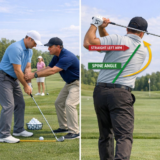
Golf performance is often measured by quantifiable metrics-clubhead speed,launch angles,and stroke repeatability-but on-course results also hinge on social behaviors that govern safety,tempo,and the mental atmosphere. Treating golf etiquette as an actionable performance factor rather than just good manners broadens how players and coaches approach enhancement: courteous, predictable behavior lowers extraneous cognitive demands, sharpens decision-making, and makes it easier to reproduce biomechanically efficient movements when the stakes are high.The word “master” here refers to high-level proficiency and control: dictionary definitions emphasize the capacity to direct and use a domain effectively.That interpretation anchors this piece’s goal-to move golfers from competent execution toward integrated expertise by marrying movement science wiht time-tested on-course behavioral norms.
This article merges principles of biomechanics with standards of on-course conduct and delivers practical, evidence-informed guidance across three connected areas: precise swing sequencing and energy transfer; repeatable putting techniques emphasizing read, tempo, and routine; and responsible tee‑box strategy that weighs distance against safety, course care, and pace. By showing how etiquette sharpens focus, cuts variability, and cultivates an habitat conducive to performance, the piece provides drills, verbal cues, and situational protocols to help convert technical work into lower scores and more dependable play.
Why Golf Etiquette Matters for Consistent Swing Mechanics and Mental Control
Thoughtful behavior on the tee and during the pre-shot sequence does more than show respect-it protects a golfer’s routine and cuts down on distractions that break timing and mechanics. To make your address and tempo more repeatable, use a compact pre-shot routine of about 20-30 seconds that includes: picking your target line visually, taking two practice swings with identical tempo, and a final check of feet, ball position, and alignment. At setup, follow these measurable basics: stance roughly shoulder-width for mid-irons and closer to 1.5× shoulder-width for driver; knee flex around 10-15°; spine tilt forward about 5-8° for driver (more neutral for short clubs); and grip pressure light-to-moderate (~4-6/10) so the hands can release naturally. In practice, make etiquette part of your technical checks-ask playing partners for silence, keep observers behind the player to watch flight, and rehearse a tempo ratio close to 3:1 (backswing to downswing by time) so the desired impact positions-shaft lean on irons, centered contact on wedges-hold up in real rounds.
Behavior around the green directly influences short-game outcomes as careful handling of the surface and respectful positioning preserve the read and roll.Fix pitch marks, smooth footprints in bunkers, and avoid crossing another player’s intended line to protect green speed and line fidelity-small actions that lead to steadier distance control and alignment.Combine etiquette with skill-building using these drills and practice routines:
- Putting clock sequence – place five tees in a 3-6 ft radius around a hole and make 25 consecutive putts to train stroke repeatability under pressure;
- Wedge distance ladder (30-50 yards) – aim at targets spaced by 10 yards to establish carry and trajectory control (bench goal: ±5 yards accuracy in six weeks);
- Bunker entry/exit routine – hit 10 consistent shots from uniform sand depths using an open stance and face, then always rake the bunker when on-course.
New golfers should be coached to replace the flagstick and mark the ball correctly; more experienced players should minimize foot traffic across opponents’ lines and share reads quietly so focus is maintained without telegraphing strategy.
Course-management manners-such as applying ready golf when appropriate, giving clear safety alerts, and making swift repairs-help sustain composure and improve decision-making in changing conditions. When choosing clubs,make measurable environmental adjustments: as a simple rule,add roughly 10% to yardage in moderate wind (10-15 mph) or select one extra club on tight lies or thru thicker rough. Always confirm distances with GPS or laser and identify a planned miss to avoid hazards. Use these checkpoints to turn etiquette into fewer penalty strokes and smarter strategy:
- Alignment-rod pre-check – confirm aim and ball position before playing to prevent last‑second corrections;
- Tempo metronome drill – swing to a 60-80 bpm beat at the range to stabilize rhythm and prevent hurried swings caused by slow play;
- Full‑etiquette simulation – play practice rounds enforcing all course-care habits (repair marks, rake bunkers, enforce quiet) to condition concentration under real pressure.
combined, these behaviors demonstrate that golf etiquette functions as a tactical resource: it protects consistent lies and surfaces, minimizes interruptions that change grip or alignment, and fosters an environment where technical gains-better ball-striking, sharper short game, smarter strategy-turn into lower scores.
Pre‑Shot Protocols & Time Management: Practical Timing Guidelines and routine Design
Create a pre‑shot routine that is predictable and efficient: quickly assess the lie, wind, and target; choose a club and visualise the intended flight for 3-5 seconds; take one or two practice swings to set rhythm and check balance; then step in for a final look and commitment that should take about 8-12 seconds for full shots and 4-8 seconds for short shots and routine putts. Motor control research supports that consistent timing cuts shot variability-use a stopwatch in practice to set a personal baseline (a total routine of 20-30 seconds is a useful benchmark for most full swings) and rehearse it under pressure. Add a simple breathing cue-a deep inhale at address, exhale as you start-to steady heart rate and attention.
Fold setup checks and technical elements into the same fixed sequence so mechanics aren’t sacrificed for speed. At address confirm: the clubface is square to the target line, ball position (e.g., centered for a 7‑iron, 1-2 ball widths forward for driver), appropriate spine tilt and forward shaft lean (aim for about 5°-10° forward shaft lean on mid‑irons), and a balanced stance width (roughly shoulder-width for irons, a touch wider for longer clubs). Use alignment tools (rods, mirrors) during practice to lock in aim, and try tempo drills-metronome work or the 3:1 backswing-to-downswing timing-to reduce casting and early release. Watch for creeping alignment, rising grip tension (keep it near 4-6/10), and early extension; correct these with short, focused drills embedded inside your pre‑shot sequence so fixes become automatic on the course rather than improvised.
Apply the same temporal structure to the short game so you keep pace and stay productive. For chips and putts, do a quick read of slope and speed, pick a precise aim point on the green (a pebble, leaf, or grass tuft), then commit. Useful practice exercises include:
- Three‑putt prevention – tee markers at 10, 15, and 25 feet; rehearse commit‑and‑stroke routines with a 10-15 second pre‑putt window;
- 50/100‑yard wedge routine – hit 10 shots to the same target with identical pre‑shot timing and track dispersion and proximity;
- Timed course simulation - play practice holes aiming for 25-35 seconds per full shot and 10-15 seconds for chips/putts to build decisive, efficient on‑course decision making.
During rounds, select clubs and lines that maximize expected score rather than raw distance (such as, lay up to leave a pleasant wedge). Observe etiquette by using ready golf where sensible, repairing turf and ball marks, and raking bunkers to keep pace and course condition high. Combining measurable timing targets, technical checkpoints, and situational planning helps golfers cut variability and play faster and smarter.
Biomechanics of a Reliable Swing: Etiquette‑Aware Drills for Posture, Rotation & Weight Transfer
Built on biomechanics-the analysis of forces and motion in the body-the coaching emphasis starts with a reproducible setup that provides a stable platform for consistent strikes. Use a neutral spine angle of about 20-30° at address, knee flex ~15-20°, and a shoulder‑to‑hip tilt that permits the grip to point slightly toward the target for irons; these target positions reduce compensations and protect the lower back. Beginners can verify these positions using a mirror or phone video; better players can use launch monitors or pressure plates to measure center‑of‑pressure and weight shift. Use the following setup checklist in practice:
- Grip & face: neutral to slightly strong grip with the clubface square at address;
- Stance width: shoulder width for mid‑irons, 10-15% wider for long clubs;
- Ball position: center to slightly forward for mid‑irons; inside the left heel for driver (for right‑handers).
Also maintain course etiquette during practice and play: wait your turn on the tee, avoid stepping on another player’s putting line, and repair divots and ball marks-these habits protect turf and help pace of play.
Rotation and sequencing create the torque and clubhead speed that deliver distance and accuracy. Aim for roughly a ~90° shoulder turn with a ~30-45° hip rotation to produce a productive X‑factor (shoulder minus hip turn) without early hip release. Prioritize a ground‑up downswing where the trail leg and ground reaction forces start the motion, hips rotate, torso unwinds, and the release occurs through the forearms. Try these drills to ingrain proper sequencing:
- Medicine‑ball rotational throws to build coordinated explosive turn and timing;
- Step‑through drill – a slow takeaway followed by a step toward the target at transition to feel ground‑force submission;
- Alignment‑rod check – run a rod along the spine or shaft to validate plane on takeaway and finish.
Adapt rotation for windy or very firm conditions by reducing shoulder turn and using a three‑quarter swing to keep ball flight penetrating. And if your warm‑up or practice is slowing others, show course awareness by permitting quicker groups to play through.
Good weight transfer and a balanced finish turn rotation into repeatable impact conditions. Aim for about 60% of weight on the lead foot at impact for full shots, shifting toward 50/50 for delicate chips and 40/60 for low punch shots. Impact drills such as the feet‑together exercise,impact bag,or the towel‑under‑arms drill help synchronize lower‑body motion and preserve connection through impact. Equipment choices-shaft flex, lie angle, club length-also affect movement patterns, so schedule periodic fittings and track goals like keeping ball‑flight dispersion within 15 yards or distance variance under 5%. troubleshoot common faults with corrective actions:
- Early extension – strengthen glutes and hamstrings and practice hip‑hinge patterns;
- over‑the‑top downswing – rehearse an inside takeaway and employ one‑arm drills to feel proper sequencing;
- Deceleration at impact – use weighted club swings to encourage follow‑through momentum.
Layer mental routines-breathing, alignment checks, and concise hole plans-so technical work transfers to scoring. Always respect course conditions (rake bunkers, avoid needless green work) so courteous play and skill development progress together for all levels.
Driving Strategy & Safety: Course‑Aware Positioning, Risk Management and Communication
Start with a repeatable, safety‑minded pre‑shot routine: align feet, hips, and shoulders to the intended line with an alignment stick on the ground; use a stance width about shoulder‑width plus 1-2 inches for driver and place the ball just inside the lead heel for an upward attack. A slight spine tilt of ~4-6° toward the trail shoulder helps promote a positive attack angle; many players benefit from a driver attack angle near +2° to +4° to boost launch and reduce spin. Match driver loft and shaft flex to a comfortable carry without sacrificing control and tee the ball so it sits roughly half to two‑thirds above the crown to encourage center‑face contact. Beginners should simplify to a wider stance, ball forward, and balance focus; better players can fine‑tune tee height and shaft lean to shape trajectory. Before committing to an aggressive line,always confirm landing areas and downstream hazards to limit risk to yourself and others.
Tee‑box risk management means choosing bailouts, reading wind and future pin placements, and picking targets that limit penalty exposure while keeping scoring potential. On tight holes consider a conservative club-3‑wood or long iron-to prioritize fairways; set short‑term goals like increasing fairways hit to about 70% or cutting penalty strokes by 1-2 per round. No the rules and safety norms: shout “Fore!” loudly and point if a ball heads toward others, and remember the lost‑ball search time is 3 minutes under current USGA/R&A guidance-mark a provisional if there’s doubt. Use clear partner communication-who calls/retrieves, announcing shots over cart paths, and applying ready golf in casual stroke play-to preserve pace without compromising safety. Train decision making and risk assessment with drills such as:
- Range distance control – alternate driver and 3‑wood to designated fairway targets at 60%, 80%, and 100% effort to learn carry control;
- Target visualization - before each tee shot on the range, select a primary and a safe secondary target to practice conservative commitment;
- Communication rehearsal – role‑play calling “Fore!” and pointing while teammates simulate being in harm’s way to normalize calm, clear alerts.
Combine driving strategy with short‑game planning and shot shaping to lower scores: when choosing conservatively off the tee, plan your approach to a favored side of the green; when shaping is required, adjust ball position (move back ~1-1.5 inches) and shallow the hands for a lower punch. For a fade, open the face ~2-4° and align feet left of the target; for a draw, close the face and align right. Set measurable practice goals such as producing a targeted trajectory on 8 out of 10 reps and raising GIR by 5-10% over eight weeks. Drills that tie practice to course outcomes include:
- Shape‑target drill – pick two flags 20-40 yards apart and alternate draws and fades,tracking success rates;
- Pressure simulation – play a nine‑hole competitive practice assigning penalty points for missed fairways to force decisions under stress;
- Short‑game integration – after a set tee shot,practice the likely up‑and‑down from adjacent lies to build realistic recovery skills.
Across practice and play,emphasize clear communication,suitable footwear to avoid obstructing lines,and adaptive tactics for wind,wet conditions,or firm surfaces. By marrying setup precision with practical course management and steady communication, players reduce penalties, create scoring chances, and keep the course safe for all.
Putting Etiquette & Green Care: Alignment, Pace Control, and Marking Procedures
Start with a repeatable setup and stroke that prioritize alignment and a clean putting arc. At address position your eyes roughly over or within 1 inch inside the ball, tilt the putter shaft so the hands sit slightly ahead, and use a gentle forward press to achieve about 2°-4° of dynamic loft at impact.favor a compact shoulder‑driven pendulum with minimal wrist hinge (generally 10° or less) to keep the putter face stable. Select a putter length that fits your posture (most players use 33-35″) and a head shape that matches your path-face‑balanced for straight strokes, toe‑hang for arcing strokes. To build reliable motor patterns, practice these drills:
- gate & alignment – tee two markers to create a gate the width of your putter head and make 50 consecutive putts through it to reinforce square impact;
- Mirror setup – 100 short putts from 3-6 ft using a mirror to lock eye position and shoulder alignment;
- Stroke‑length control – use a metronome or counts to build a consistent tempo (target ~3:1 back‑to‑through) and measure success by the percentage of putts finishing within 12 inches from 10 feet.
These checkpoints correct common errors (bad eye position, excessive wrist action, tempo variability) and offer objective progress measures for players across ability levels.
Improve pace control and green reading to turn alignment into scoring advantage. Club greens commonly run from Stimp 8-12; a 20‑foot lag requires noticeably less force at Stimp 10 than at Stimp 12. Read greens by locating the fall line, noting grain (the shiny side can slow the ball), and estimating small cross slopes-roughly 1°-2° across 10 feet is a perceptible break to account for. Practice pace with drills that generate measurable targets:
- Ladder drill – from 20 ft, aim to leave the ball within 3 ft, then 2 ft, then 1 ft in sequence and repeat sets of 10;
- 1‑putt zone – place tees at 6, 10 and 15 ft and aim to hole or finish inside a 12‑inch circle in at least 80% of attempts;
- Break‑mapping routine – before match holes, roll two practice balls on the same line to gauge speed and visualize the finish.
Adopt strategic habits-leave approaches below the hole whenever possible for uphill putts and, in match play, consider conceding short lag putts to help pace and sportsmanship. Correct mistakes like decelerating through impact by focusing on smooth acceleration and applying the drills above to develop consistent distance control.
Make green preservation part of your standard procedures to protect turf and gain small competitive advantages. Under the Rules of Golf, you may mark, lift, clean, and replace a ball on the putting green; follow this efficient sequence to avoid delays: mark directly behind the ball on your line, lift and clean, repair any mark, then replace precisely. Use a repair tool to push soil inward from the edges (don’t twist) and practice this on the practice green so you can fix marks in about 5-10 seconds without harming the surface. key etiquette reminders:
- Never stand on another player’s line or cast your shadow over their putting area;
- Limit practice strokes on the green during competition and replace or remove the flagstick in a way that protects the hole edge (use a coin or marker if needed to steady the cup);
- When marking for relief or in match play,communicate clearly and replace the ball exactly to maintain fairness.
By making green care routine-repairing pitch marks, minimizing foot traffic, and following precise marking procedures-players preserve true rolls for following groups and reduce downtime. A disciplined pre‑putt routine combined with respectful conduct both sharpens focus and lowers three‑putt risk.
Practice Frameworks That Mirror Course Etiquette: Simulation, Repetition & Feedback
Open practice sessions by reinforcing setup fundamentals that match on‑course demands: clubface square to the line, feet shoulder‑width for full shots (narrower for short game), and ball position varied by club (center for wedges, slightly forward for mid‑irons, inside the front heel for driver).Set technical benchmarks-aim for a 45° shoulder turn on full backswing and a transfer of about 60% body weight to the lead foot at impact-and verify positions with video at 60 fps or a mirror.Progress methodically: begin with half‑swings focusing on a smooth 2:1 tempo, advance to three‑quarter swings, and only move to full swings after 20 consistent reps of good strike and direction. Use this pre‑shot checklist to lock in motor patterns used on the course:
- Grip tension: light enough to permit wrist hinge (scale 1-10; target 4-5);
- Alignment rod: down the line to confirm face and aim;
- Posture: 15-20° forward tilt at the hips with slight knee flex;
- Ball position & stance: adjust by club and shot type.
Next, use situational simulation drills that enforce etiquette constraints so practice transfers to scoring conditions. Recreate on‑course scenarios at the range and green (wind, firm lies, narrow corridors), and follow proper warm‑up and turf‑care practices-repair divots and ball marks promptly. Effective simulations include:
- Target ladder (50/100/150 yards) – 10 shots to each distance with a dispersion window (e.g., ±10 yards);
- Pressure Putting Sequence – make consecutive putts from 6, 12 and 20 ft to simulate lag control under pressure;
- Recovery Roulette - play 12 recovery shots from various lies and bunkers to assigned pins with a 3‑shot limit to mimic scramble scenarios.
Assign measurable goals for each drill (e.g., up‑and‑down percentage ≥60% within 30 attempts; median dispersion ≤10 yards at 100 yards) and enforce etiquette by restricting range balls when on‑course practice is absolutely possible and by raking and repairing instantly after shots.
Build a feedback loop that turns practice into quantifiable on‑course gains by combining objective metrics (launch monitor data, dispersion maps, stroke counts) with subjective notes (RPE, balance, mental state). Start each week with a baseline session-record ball speed, launch angle, spin for drivers, and distance gaps for each club-and set time‑bound improvement targets such as reducing dispersion by 20% in six weeks or cutting three‑putt frequency to ≤0.5 per round. Use targeted corrective drills (foam roller behind the hips for early extension, towel‑under‑armpits for too‑active hands) and schedule video reviews with slow‑motion annotations to link feel to visual evidence. Add a concise mental loop-visualize → breathe twice → commit-and adapt techniques for physical limits (shorter swings or hybrids for high‑handicappers; fine shot‑shaping for lower handicappers) so repetition, simulation and feedback create skills that respect both the rules and proper on‑course behavior.
Making Etiquette Part of Competitive Preparation: Mental Readiness, Partner Interaction & Post‑Round Review
Begin competition with a short pre‑round routine that blends physical warm‑up and psychological priming so technical execution holds up under pressure. spend 10-15 minutes on dynamic movement (hip swings, thoracic rotations, light swings), then follow a progressive sequence: 10 short putts, 10 chips from 20-40 ft, 15 half‑to‑three‑quarter swings with a 7‑iron, and finish with five driver swings. use this time to re‑check setup fundamentals-stance width, ball positions, and a minor spine tilt for long clubs-and verify your aim with an alignment rod or visual target. add a brief mental script during warm‑up (three even breaths, visualize your landing zone, then run your pre‑shot routine) and check equipment and course notes (loft and shaft choices, ball compression for temperature, local rules) as small gear or environmental changes alter trajectory and spin in match conditions.
During play, pair pragmatic course management with explicit etiquette to keep performance steady and relations positive.communicate intentions before tee shots and approaches-who will hit, whether a provisional ball will be used-especially when hazards or lost‑ball risks exist. Apply simple decision rules: when 150-170 yards into a firm green, target the first 15-20 feet of green to allow rollout; in winds above 20 mph, add one to two clubs and lower trajectory by shifting weight slightly forward and shortening the backswing 10-20%. Keep short‑game skills sharp between strokes with micro‑drills-clockface chipping, gate putting, and bunker splash practice-while raking bunkers and repairing marks as you go. If partners want feedback, keep comments brief and constructive (one cue at a time) and offer a single drill they can try between holes to preserve pace and morale.
After the round, convert results into a focused practice plan through disciplined reflection and data capture; this respects partners (timely score signing) and produces measurable improvement. Immediately log objective stats-fairways hit, GIR, putts, proximity from 100 yd, penalty strokes-and jot subjective notes on turning points (e.g., bunker technique failed under pressure, wind misread on holes 4 and 12). Use a short debrief template:
- What went well: techniques and decisions to repeat;
- What went poorly: shots, setups, or mental lapses (e.g., rushed routine causing early release);
- Action items: two drills to prioritize (for example, 3×10 impact‑bag hits to stop casting; 30 minutes twice weekly on 6-20 ft lag putts) and measurable targets (reduce three‑putts by 0.5 per round, raise fairway percentage by 10% over eight weeks).
Finish by sharing concise, courteous feedback with partners when appropriate-thank them for pace and honesty, confirm scorecards, and outline your practice focus. This reinforces a culture of continuous learning and sportsmanship that helps both technical growth and competitive resilience.
Q&A
Below is a concise, practitioner‑focused Q&A to accompany this article, titled “master Golf Etiquette: Unlock Peak Performance in Swing & Putting.” It integrates course protocol, biomechanics, practice design, and measurement, and clarifies the use of the word “master” in context.
1) What is “golf etiquette” and why is it important for performance?
Answer: Golf etiquette consists of on‑course behaviors, safety practices, and turf‑care actions (pace of play, hazard awareness, repairing marks) that govern play.Beyond manners,etiquette structures routines,lowers unnecessary cognitive load,preserves playing surfaces that affect ball behavior,and reduces conflict and distraction-together supporting consistent movement execution and better decisions.2) How does strict etiquette produce measurable gains in swing and putting?
Answer: Etiquette encourages repeatable pre‑shot and on‑green routines, stabilizing attention and motor planning. For swings, this decreases setup, alignment, and tempo variability-key factors for strike quality. For putting, maintaining the green preserves roll characteristics, lowering unmodeled variability. These effects shrink outcome variance and improve scoring consistency.
3) Which biomechanical principles pair best with etiquette‑based routines?
answer: Maintain a stable base and posture at setup; sequence movements from proximal to distal (ground reaction through hip, torso, arms) for energy transfer; and use controlled acceleration with consistent tempo for solid contact. On greens,emphasize a low‑amplitude shoulder arc,consistent loft and face angle,and quiet lower‑body stabilization-each reinforced by an undistracted environment.
4) How should a pre‑shot routine fold etiquette into performance?
Answer: Combine technical checks (grip,alignment,ball position),perceptual processing (target and wind assessment),and courteous procedures (ensuring others are ready,avoiding shadows on lines) in a fixed order and time. Rehearse under simulated on‑course constraints (limited time,social pressure) to reduce variability in movement initiation and tempo.5) what tee‑box behaviors both improve performance and maintain etiquette?
Answer: Be prepared to play when it’s your turn; respect tee order and positioning; alert others if your shot could be unsafe; repair divots; and avoid needless practice swings that slow play. Pre‑planning club choice and target helps preserve focus and communication among partners.
6) Which putting and green behaviors most directly affect scoring?
Answer: Repairing ball marks, smoothing lines, not walking on another player’s putting line, and positioning out of sightlines preserve green condition and visual cues.Limiting conversation and movement during reads and strokes reduces attention disruption and helps reproducible mechanics.
7) How to structure practice so etiquette and biomechanics transfer to rounds?
Answer: Use purposeful practice that alternates technical drills (tempo, face control), etiquette‑constrained simulations (group rotations, time‑pressure putting), and variability training (randomized distances and shapes). Distribute practice across skills, interleave categories, and include reflection on both technique and etiquette.
8) How can a player measure the impact of etiquette changes?
Answer: Track objective metrics-strokes gained, fairways hit, GIR, putts per round, multi‑putt counts-and variability measures (standard deviation of putt distance left).Pair these with behavioral logs (percentage of ball marks repaired, time ready to play) and pre/post measures of routine duration and arousal.
9) What mental skills support etiquette to stabilize performance?
Answer: Use imagery, breath control (box breathing), attentional cues focused externally on the target, and acceptance strategies to stop rumination about distractions or etiquette slips. Etiquette reduces external interruptions; mental skills manage internal responses.
10) which common etiquette lapses most harm performance?
Answer: Not repairing marks/divots, slow or inconsistent pace, standing on a player’s line, and loud or erratic movement during strokes increase environmental and psychological noise, raising motor variability and impairing judgment.
11) How do elite events show etiquette’s role in performance?
Answer: Major tournaments (e.g.,Augusta National) enforce strict course care and conduct to maintain premium playing surfaces and a controlled environment.This ensures that players’ technical and tactical skills, not extraneous disturbances, decide outcomes-illustrating etiquette’s functional role in high performance.
12) How is “master” used in this article?
Answer: Here “master” signifies skill acquisition and high competence in etiquette and performance behaviors. Be aware that “master” can also mean an academic degree or reference the Masters tournament; context matters.
13) What quick checklist should a player use to “master” etiquette for better swing and putting?
Answer:
– Fix the order and timing of your pre‑shot actions.
– Always repair ball marks and replace divots promptly.
– Avoid stepping on others’ putting lines and position respectfully.
– Be ready to play; limit excessive practice swings.
– Communicate safety (call “fore”), and wait for others to be ready.
– Simulate on‑course etiquette during practice.
– Log scoring and a brief etiquette adherence score each round.
– Review weekly and set micro‑goals for technical and behavioral improvements.
14) What should researchers and coaches do next to study etiquette’s role?
Answer: Conduct controlled trials manipulating etiquette variables (ambient distractors, green damage) while measuring biomechanical outputs, perceptual accuracy, and performance outcomes. Coaches should add etiquette metrics into development plans and use mixed methods (quantitative performance + qualitative player reports) to track long‑term effects.
References and notes:
– The word “master” has several senses in lexicographic sources; readers should distinguish skill‑based usage from academic or event‑name meanings.
– Practical next steps: convert this Q&A into a one‑page handout, create a short log to record etiquette adherence with strokes‑gained data, or design a brief protocol to test specific etiquette behaviors’ influence on putting variability.
The evidence summarized here supports the view that golf etiquette is more than a social convention-it is a low‑cost,high‑value performance lever. When embedded into training and competition, etiquette‑based protocols (efficient pace‑of‑play, careful course maintenance, and concise on‑course communication) create an environment that stabilizes biomechanics, reduces avoidable variability, and improves scoring reliability.
For coaches and players the prescription is straightforward: integrate etiquette‑focused simulations and drills into regular practice, add standardized warm‑ups and pre‑shot routines that include course‑respect behaviors, and use post‑round reflection to link technical metrics with etiquette adherence. At the program level, include etiquette education in coaching curricula and junior development to align expectations with performance goals, and track outcomes to refine best practices.
Future research should quantify how targeted etiquette interventions affect biomechanical consistency, cognitive load, and scoring variance across skill levels. Until a rich experimental literature accumulates, the theoretical and applied rationale presented here supports treating etiquette as an essential, measurable component of holistic golf training that advances technical skill, competitive composure, and the long‑term health of courses and players alike.

Elevate Your Game: golf Etiquette Secrets for Flawless swing and Putting
Why golf etiquette matters for swing, putting, and scoring
Good golf etiquette isn’t just about manners-it directly improves your golf swing consistency, putting performance, and driving accuracy by creating predictable on-course conditions and minimizing distractions. Respecting pace of play, repairing the course, following green etiquette, and using a consistent pre-shot routine all feed into better focus and fewer interruptions. Below you’ll find field-tested etiquette tips, drills, and course-management strategies that lift both your game and the experience of everyone you play with.
Core golf etiquette rules that improve performance
- be ready to play: Practise “ready golf” when appropriate to keep pace of play. Prepared players reduce wait time and maintain momentum for a consistent golf swing and putting rhythm.
- Keep quiet and still: Avoid movement and conversation when a player is addressing or swinging at the ball. Noise and motion are major causes of lost concentration on the tee, fairway, and green.
- Respect the line: Never stand on or near another player’s putting line. Even a footprint near the line can affect roll and read.
- Safety first: Always call “Fore!” if a shot is likely to endanger others. Clear communication keeps the course safe and avoids rushed, defensive swings.
- Repair the course: Fix ball marks, replace divots, and rake bunkers.A well-kept surface helps everyone’s club interaction with the turf-especially crucial for consistent iron contact and putting pace.
Pre-shot routine and alignment etiquette (Hitting and Putting)
A repeatable pre-shot routine is a performance habit and an etiquette habit: it signals to your group that you’re prepared and reduces unnecessary delay.The following guidelines maintain respect for others while improving your golf swing and putting stroke.
Pre-shot routine checklist
- Walk to your ball, assess lie and target, choose club, and visualize the shot quickly.
- Take practice swings off to the side-never over another player’s line.
- When on the green, keep practice strokes limited to avoid scuffing the surface.
- Align clubface using a single alignment stick or marker; avoid multiple alignment checks that slow the group.
Tip: Use one alignment stick for both swing alignment and putting aim. It’s a simple, fast way to maintain consistency and speed.
Driving etiquette & tee box behavior
The tee box sets the tone for every hole. Good tee box etiquette protects turf, speeds play, and promotes focus for your driving shots.
Tee box rules that protect pace and performance
- Arrive at the tee with clubs chosen and warm-up finished.
- Replace divots or repair damage around the teeing area.
- limit practice swings to one or two and avoid hitting practice shots past the tee area toward the fairway.
- Let faster groups play through when appropriate; staying behind the group ahead makes patience and rhythm easier for everyone.
Putting green etiquette for flawless roll and scoring
Putting etiquette is crucial-errors here directly affect scoring. Observing green protocol helps maintain an accurate, predictable putting surface and reduces distractions that break your putting rhythm.
Essential putting green etiquette
- Mark and lift your ball when required-always replace in the exact spot.
- Repair ball marks immediately; prompt repairing prevents bumps in your next putt.
- Don’t stand on another player’s line or cast a shadow over it.
- Limit time spent reading the green-spend more time practicing speed control on the practice green, not delaying on the hole.
- leave the hole area clear; when retrieving, step to the side and avoid leaning on the flagstick or hole edge.
Putting drills that respect etiquette and lower scores
- Gate Drill (Alignment): Use tees as gates to ensure a square face through impact-do it on the practice green,not when others are lined up.
- Clockwork Drill (Distance Control): Place balls at 3, 6, 9, and 12 feet and putt each with a consistent tempo. Keep this drill to practice sessions to avoid slowing group play.
- Read and Tape drill: Mark a 3-foot line with tape on the practice green to practice reading slopes-then play one or two competitive putts to simulate pressure.
Course repair and bunker etiquette-small actions, big payoff
Fixing the course is not optional: it’s essential to keeping conditions consistent. A well-maintained fairway and green directly benefit iron contact, driving accuracy, and putting roll.
- Ball mark repair: use a proper tool and push grass back toward the center; smooth the surface with a putter handle.
- Divot repair: Replace the turf plug when possible; otherwise, use sand/seed mix and smooth the area.
- Bunker etiquette: Rake to erase footprints and smooth the sand. Rake from the edge toward the center, then step well outside the bunker when hitting to avoid traffic in the hazard.
Pace of play strategies that preserve focus and form
Speed is an etiquette issue and a performance tool. consistent pace of play keeps your rhythm and avoids rushed swings or hurried putts.
To keep pace and improve your golf swing and putting
- Play ready golf when it’s safe-if your group agrees, the person ready hits first regardless of order.
- Limit to one practice swing when near your ball; too many practice swings break concentration and extend the round.
- Use continuous putting only when allowed and if it speeds play; always follow local rules and tournament regulations.
- Keep a shot plan and stick to it. Overthinking at the ball leads to slower play and inconsistent swings.
Practice range and lesson etiquette
Practice areas teach habits that translate to the course. Respecting range etiquette creates better practice sessions and cleaner swings.
- Take only one bucket and keep range time to a reasonable limit when others are waiting.
- Don’t hit shots until the target is clear-this prevents errant drives and maintains safety.
- When taking lessons, let the instructor and student work without interruption; practice the instructor’s drills between shots rather than crowding them.
Putting it into practice: etiquette-focused drills that transfer to rounds
Below are three drills that combine etiquette-awareness with technical work for improved swing, driving, and putting.
1.Two-minute Pre-shot Drill
- Before the round, practice a concise pre-shot routine that takes no more than 2 minutes per shot on average.
- Work on visualization, alignment, and one practice swing.
- On-course, commit to this routine to keep pace and maintain focus.
2. Quiet-Range Challenge
- Practice on the range with the goal of keeping noise below a whisper while working through a full bag rotation. This trains concentration and simulates on-course conditions where silence matters.
3. Putting Etiquette Relay
- With a partner, alternate putting from 6, 12, and 18 feet. Each player has 30 seconds per putt to mimic tournament pressure and speed-of-play expectations.
Benefits and practical tips
| Etiquette Action | Benefit to Game | Practical Tip |
|---|---|---|
| Repair ball marks | Smoother greens → truer putts | Carry a simple repair tool in your pocket |
| Limit practice swings | Faster round → consistent rhythm | pre-visualize to cut extra swings |
| Rake bunkers | Predictable lies → better sand technique | Always rake thoroughly after leaving |
Case study: how etiquette improved our club’s scoring
At a local club, a group of mid-handicap players implemented a few core etiquette habits for a season: consistent pre-shot routines, immediate ball-mark repair, and a “one-bucket” range policy. The result: average pace of play improved by 15 minutes per round, and the group reported fewer rushed shots and a 1.3-stroke reduction in average scores. The biggest intangible was reduced stress-players felt more focused and ready to execute their golf swing and putting stroke.
First-hand experience: common scenarios and how to handle them
Scenario: Your ball is near another group-what to do
- Inform the group and ask if they prefer you to wait or play through; prioritize safety and minimize interference with their shot lines.
- If you must play, be extra mindful of noise, movement, and position to avoid casting shadows or standing on lines.
Scenario: You find a badly damaged green
- report to the pro shop and do what you can to repair nearby marks. Avoid attempting major restoration which could make things worse.
- Play with caution-speed and break might potentially be irregular; communicate to your group to avoid confusion.
SEO quick-hit checklist (keywords and topics to include in your content)
- golf etiquette
- golf swing
- putting etiquette
- driving etiquette
- pace of play
- pre-shot routine
- course management
- repair ball marks
- rake bunkers
- ready golf
use these keywords naturally in headings and body copy to boost search visibility while keeping content reader-focused and actionable.
Ready to play better and be a better player?
adopting these golf etiquette secrets improves the quality of your rounds,your golf swing consistency,and your putting results. Respect the course and your playing partners, and your performance-and enjoyment-will follow. Put these practices into action the next time you step on the tee and notice how small, courteous actions compound into better shots and lower scores.