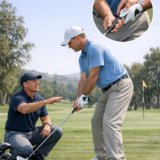
Contemporary performance in golf now requires a cohesive strategy that blends biomechanical accuracy, motor-learning science, and smart course strategy too produce consistent outcomes under pressure.This piece distills contemporary findings from biomechanics and sport science alongside hands-on coaching practices to outline measurable,level-appropriate programs that address three core performance areas: the full swing,tee shots,and putting.The focus is on objective screening, staged drills, and outcome-based metrics that convert practice adaptations into lower variability and better scoring.
A problem-oriented structure underpins the content: diagnosing the kinematic and kinetic drivers of inefficient swings and injury susceptibility; separating the mechanical and perceptual contributors to long-game distance and lateral control; and breaking putting performance into stroke mechanics, green-reading technique, and cognitive control. For each domain we provide standardized screening protocols, concrete performance benchmarks (for example, clubhead speed with repeatability thresholds, carry dispersion windows, and putt-launch/roll targets), and interventions that scale load, complexity, and feedback to the player’s ability and training history.
This approach prioritizes transfer to the course: every drill is prescribed with a clear causal link between the targeted physiological or technical feature and the anticipated on-course behavior. Program design follows the pillars of specificity, progressive overload, and variability of practice and incorporates periodized blocks for short-term peaking and sustained development. Measurement combines wearable and launch-monitor data, video kinematic analysis, and on-course statistics (strokes gained, proximity to hole) to enable iterative tuning and accountability.
By marrying biomechanical understanding with pragmatic coaching and shot-making strategy, the protocols here are intended to boost consistency, improve efficient power output, and enhance putting dependability at all ability levels. coaches and players are given a reproducible pathway from screening through focused training to measurable competitive gains.
Integrated Biomechanical Assessment for Golf Fitness with Prescriptive Exercises to Optimize Swing Mechanics
Start with a structured movement screen that connects joint and tissue function to expected on-course performance: evaluate ankle dorsiflexion, hip internal/external rotation, thoracic rotation, lead-knee flex at setup, and single-leg balance under load. For instance, measure thoracic rotation in a standing reach or seated rotation test and aim for a combined target near 45° of thoracic rotation (left + right) so a full shoulder turn can occur without lumbar compensation; likewise, target roughly 30°-45° of lead hip external rotation to support a stable coil. Use consistent setup checkpoints during testing to assure reliability and objective comparison:
- Address posture: approximately 20° of knee bend, maintained spine angle, and shaft lean suited to the club in hand.
- Rotation tests: seated thoracic rotation and prone hip rotation using a goniometer or inclinometer for repeatable readings.
- Stability tests: single-leg stance for 20-30 seconds eyes open and a 3-5 repetition loaded step test to assess dynamic weight transfer.
Record these values and benchmark them against normative ranges to determine whether swing faults (early extension, lateral sway, excessive hand action) stem from mobility, stability, or timing problems. Also document current equipment-shaft flex, club length, and typical ball flight-because poorly fitted gear can conceal or exacerbate physical limitations.
Prescribe corrective and performance exercises that map directly to the deficits found in screening, progressing from isolated range-of-motion work to integrated power development. For mobility limitations, use controlled mobilizations such as thoracic rotations with a club (2-3 sets of 8-12 reps per side) and 90/90 hip switches (3×10) to regain rotational freedom without sacrificing stability. For stability deficits, include anti-rotation exercises like Pallof presses and single-leg Romanian deadlifts (3×6-8) to reinforce hip-hinge mechanics and resist unwanted torso rotation. Move next to sequencing and power drills-medicine-ball rotational throws (target: raise rotational velocity by ~5-10% over 8-12 weeks), step-and-rotate progressions for correct weight shift, and impact-bag repetitions to rehearse neutral shaft lean at impact. Practical practice drills to encourage transfer include:
- Metronome-guided slow swings: 3-5 swings at a 3:1 tempo to program correct proximal-to-distal timing.
- Impact-tape/face-angle checks: 10-ball clusters to establish repeatable face alignment within ±2° for scoring clubs like wedges and the putter.
- Progressive overload: stepwise increases in medicine ball mass or prescribed swing-speed targets while tracking clubhead speed and dispersion.
For beginners, prioritize simplified movement patterns and a consistent setup; for lower-handicap players, focus on tightening sequencing and removing compensations (for example, excessive shoulder tilt or an overly flattened plane) with measurable objectives such as maintaining a reproducible 20°-40° shoulder-to-pelvis separation at the top of the backswing.
convert these mechanical and fitness gains into better short-game execution and smarter course play for quantifiable scoring improvements.Use fatigue- and condition-aware routines so that environmental factors (wind, altitude) are accounted for in pre-shot decisions: a short mobility cue (like a two-breath thoracic rotation) in the pre-shot routine can help replicate the primed movement patterns under tournament stress. Structure practice to alternate technical blocks-e.g., 30 minutes on swing mechanics followed by 20 minutes of situational putting-and include simulated on-course tasks such as playing three holes using only one mid-iron and wedges to force creativity and distance control. Common on-course troubleshooting includes:
- Early extension: address with wall-posture holds and hip-dominant hinge drills to re-establish spine angle at impact.
- Overactive hands/flip at impact: use short-hopped pitch reps and half-swings with impact tape to teach forward shaft lean.
- Putting yips or balance issues: progress standing-balance exercises and metronome-guided stroke rehearsals to stabilize tempo under pressure.
Link the mental game to the physical routine by embedding a concise pre-shot checklist that includes a rapid mobility cue. Set measurable short-term targets-such as cutting fairway misses by 15% over eight weeks through better weight transfer and shot selection-and validate progress using launch-monitor outputs and scorecard analytics to show the connection between biomechanical work and improved scoring confidence.
strength, Power and Mobility Protocols to Increase driving Distance and Reduce Injury Risk
Begin with a complete assessment of range-of-motion and setup fundamentals, as adequate mobility creates the mechanical platform for safe and efficient power. Prioritize thoracic rotation, hip rotation, and ankle dorsiflexion as key contributors to a rotational, on-plane swing: target roughly ≥45° thoracic rotation each side and about 30°-40° hip internal/external motion so the torso can rotate without lumbar compensations that raise injury risk and reduce clubhead speed. Before adding load, confirm basic setup and posture cues:
- Ball position: for a right-handed player, the driver ball should sit just inside the left heel to encourage a positive attack angle.
- Tee height: set the tee so that the top half of the ball is above the driver crown to support higher launch.
- Spine tilt and shoulder turn: maintain about 10°-15° of upper-body tilt away from the target and preserve a pelvis-to-shoulder separation (an X-factor near 20°-30° for most amateur golfers).
These checkpoints reduce typical faults-early extension, casting, reverse pivot-by creating a stable base for rotational power and by informing individualized warm-ups (thoracic foam rolling, ankle mobilizations, active hip openers) that prepare the athlete for loaded training.
Design progressive strength and power blocks aimed at the posterior chain, hip stabilizers, thoracic extensors, and scapular complex to raise driving distance and lower injury incidence. A practical mesocycle is two strength sessions plus two power/mobility sessions per week for 8-12 weeks, with measurable targets such as a +3-6 mph clubhead-speed gain or a 10-20% improvement in single-leg balance duration.Use golf-specific exercises, prescribed with sets, reps, and intent:
- Medicine-ball rotational throws: 3×6-8 per side with maximal intent to develop torso torque and acceleration.
- Trap-bar or Romanian deadlifts: 3-5×4-6 heavy, hip-dominant sets to strengthen the posterior chain and increase vertical ground reaction force.
- Pallof presses and band anti-rotation chops: 3×8-12 to enhance core stability and deceleration through follow-through.
- Kettlebell swings and single-leg RDLs: 3×8-12 to build ballistic hip extension and unilateral control.
Progress first by adding load, then by incorporating faster concentric intent and sport-specific sequencing. include rotator-cuff and scapular-stability work (3×10-15) to cut shoulder injury risk and emphasize eccentric control in lifts to protect the lumbar spine.Track objective markers-clubhead speed, smash factor, and single-leg balance time-to adjust loads and exercise selection before movement quality deteriorates.
Bridge strength gains to the swing and course by combining technical rehearsal, launch-monitor feedback, and scenario-based practice. After completing a mobility and strength block, layer drills that pair power with timing and accuracy:
- Tempo-to-power progression: 8 swings at ¾ speed focusing on correct sequence, then 4 full-speed swings while preserving that same sequencing.
- Launch-monitor progressions: pursue an effective driver launch angle of roughly 10°-14° and spin that avoids energy loss (commonly 1500-3000 rpm depending on swing speed and chosen trajectory) while gradually increasing clubhead speed by 3-6 mph.
- Wind-aware on-course tactics: practice lower-trajectory tee shots for blustery days by lowering tee height and narrowing wrist hinge; opt for a fairway wood or hybrid when accuracy is essential to protect the scorecard.
manage common course conditions-tight fairways, crosswinds, firm surfaces-by adjusting launch and spin rather than chasing raw distance; thoughtful restraint often yields more birdie opportunities. Layer a mental routine of diaphragmatic breathing, visualization of shot shape, and a concise pre-shot checklist (setup, alignment, chosen target) so physical gains reliably convert to lower scores. With consistent, measurable progressions and sport-specific sessions, golfers from novices to elite amateurs can extend driving distance while managing injury risk in a controlled, evidence-informed way.
Neuromuscular Control and Balance Strategies to Enhance putting Stability and Stroke Consistency
Start by establishing a repeatable setup that enhances proprioception and minimizes extraneous muscle noise. Adopt a stance width roughly equal to shoulder width, maintain a light knee flex of about 10°-15°, and a moderate 15° forward spine tilt so the shoulders can drive a pendulum stroke; position the ball 1-2 cm forward of center to promote a descending, square-face impact. Cue proximal stability (core and glutes) to stabilize the pelvis and torso while letting the shoulders dominate the stroke-this reduces wrist action and lateral sway. Monitor head and upper-body motion with a camera or alignment tool and aim for <0.5 in (≈1.2 cm) of vertical/horizontal movement during the stroke. Ensure the putter matches the setup: correct lie and loft (typically 3°-4° at address) and a grip size that limits excessive wrist motion will support neuromuscular efficiency and face control.
Convert that setup into reliable motor patterns using progressive drills that train sensorimotor coordination and balance under golf-specific constraints. Start with simple exercises and expand to more challenging variations:
- Two-Count Pendulum Drill: feet shoulder-width, eyes on target, use a 2-count back / 2-count through rhythm; target: 10 consecutive made putts from 6 ft.
- Single-Leg Balance to stroke: step onto the trail leg for 3-5 seconds, then plant both feet and roll a 6-10 ft putt-this builds dynamic balance for golfers with unilateral weaknesses.
- Metronome Distance Ladder: at 60-70 bpm hit three putts each from 3, 6, 12, and 20 ft and log miss distances; aim to cut the pace standard deviation by about 25% in four weeks.
Use measurable benchmarks-reduce three-putts per round by 30% or reach 80% make rate from 6 ft-and support neuromuscular capacity with golf-fitness work (single-leg RDLs, Pallof presses, ankle dorsiflexion drills). Employ video feedback and pressure-sensitive mats to reveal faults like early wrist hinge or head movement and correct them with immediate, specific cues.
Apply these stability and neuromuscular principles to on-course choices and mental strategies that affect putting outcomes. When confronting greens of differing Stimp speeds (e.g., 7-12 ft), adapt stroke length and rhythm rather than tightening the grip; uphill putts deserve a marginally firmer acceleration with a slightly shorter backswing, while downhill strokes should reduce backswing by around 20% to control pace. Game-management tactics: on lag putts from 30-50 ft, prioritize speed control over line to limit three-putts; in windy or wet conditions shorten the pendulum arc and use a firmer stroke to cut through surface drag. Quick fixes and checkpoints include:
- Excessive wrist action: lower grip pressure and increase reps on forearm-connection drills.
- Side-to-side sway: strengthen the glute medius with lateral-band walks and temporarily narrow stance width.
- Inconsistent pace: incorporate metronome tempo drills and define pace goals by distance.
Always observe the Rules of Golf-do not anchor the club to the body-and integrate psychological tools such as pre-putt rituals, breathing cues, and imagery to manage arousal and preserve fine motor control. Together these neuromuscular and balance strategies build a dependable stroke that reduces scores through improved pace,line judgment,and fewer mistakes in real-course situations.
Periodized training progressions and Level Specific Drills to Translate Practice Gains into On Course Performance
Adopt a periodized structure that ties physical preparation, technical refinement, and on-course rehearsal so practice improvements consistently lower scores. A practical macrocycle can be divided into an anatomical-adaptation block (3-4 weeks), a strength and motor-learning block (6-8 weeks), and a speed/peaking and tournament-prep block (2-4 weeks). In the adaptation phase prioritize mobility and posture-thoracic rotation and hip-hinge patterning to lock in a reproducible setup-aiming for about 5°-7° spine tilt away from the target and a neutral pelvis. During the strength/motor phase layer progressive overload for rotational power (medicine-ball throws, cable chops) plus on-deck swing reps that reinforce sequencing (hips clear, torso follows, then arms). Set measurable targets like increasing medicine-ball rotational distance by 10-15% or adding +3-6 mph to clubhead speed over eight weeks for motivated players. In peaking, reduce volume and preserve power with low-volume strength work while simulating tournament pressure via mixed-club on-course sessions. Daily checkpoints by level:
- Beginner: 10-15 minutes mobility + 30-45 minutes technical practice focused on grip, stance, and balanced finishes.
- Intermediate: 15-25 minutes gym (rotational strength), 45-60 minutes range time emphasizing impact-position drills, and 20-30 minutes short-game work.
- Low handicap: 2-3 weekly power sessions, twice-weekly short-game rehearsals, and regular on-course simulations under tournament-like constraints.
Then, turn mechanical gains into lower scores by emphasizing high-leverage skills: short-game control, shot shaping, and conservative course management. Cement setup fundamentals-ball position, posture, weight distribution-and use measurable impact targets such as hands ahead of the ball by 1-2 inches at impact for mid-irons and around ~30° shaft lean for controlled pitch and half-shot play. For short-game distance calibration, employ ladder and clock drills with targets at 3, 5, 7, and 10 yards and require 10 successful conversions in each band before progression. For bunker play practice opening the face for a sand-blast trajectory while respecting the rule that you must not ground the club in the hazard prior to the stroke.Include session-specific strategy rehearsal-rehearse club choices under variable wind, firmness, and pin positions so selection becomes automatic (for example, take one club more into firm, downhill greens and one club less into a strong headwind). Useful drills and checkpoints:
- Putting: gate/clock drill for face alignment and stroke path-place three tees at 2,4,and 6 ft and aim for 30 consecutive makes to simulate pressure.
- Approach control: impact-bag and half-swing sequences to feel forward shaft lean and compressed impacts.
- Shot shaping: controlled fade/draw routines over targets, emphasizing setup manipulation (feet, shoulder line) rather than late hand adjustments.
Implement level-appropriate, evidence-aligned drills and monitoring so practice gains carry to the course, while simultaneously addressing equipment and psychological variables that affect transfer. Use objective metrics-fairways hit %, greens-in-regulation %, and putts per round-to set measurable targets such as reducing putts to ≤29 or cutting three-putt rate below 10% within 12 weeks. Practical progressions include beginner-friendly up-and-down stations (20-30 ball quotas), intermediate tempo and balance exercises (alignment-rod toe-tap with a 3:1 backswing-to-downswing cadence), and high-pressure sets that simulate tournament holes with score caps to practice decision-making under stress. Check equipment concurrently-confirm wedge loft and bounce for turf interaction and verify shaft flex allows your desired launch and dispersion-use launch monitors or TrackMan-type data to log carry and spread and refine gear choices.Integrate mental skills into every practice-pre-shot routines, visualization, and a breathing sequence like 4-4-4 box breathing-and use troubleshooting checkpoints for common faults:
- Casting: impact-bag holds and light-weight swings to feel lag.
- Early extension: alignment-rod drill under the trail hip to encourage hinge.
- Poor green reads: practice uphill, downhill, and sidehill putts under varying wind and firmness to develop feel.
Combining periodized physical preparation, precise technical targets, realistic course simulations, and measurable outcomes enables coaches and players to reliably translate practice repetitions into lower scores at all ability levels.
Objective Metrics and Testing Protocols to Quantify Swing efficiency, Driving Velocity and putting Accuracy
Clarifying what “objective” means improves test design: an objective metric is a verifiable, numeric quantity rather than a subjective opinion. Define the primary variables and their units-examples include clubhead speed (mph), ball speed (mph), smash factor (ratio), launch angle (°), spin rate (rpm), attack angle (°), face-to-path (°), and for putting: putt launch speed (ft/s), impact face angle (°), and make% by distance. For repeatable testing follow a standard protocol: (1) standardize equipment (same ball model,fit clubs),(2) warm up to tournament tempo for 8-10 minutes,(3) use a calibrated launch monitor or high-speed camera,(4) collect a fixed sample size (commonly 12-15 strokes per condition) and omit clear mis-hits,and (5) report mean ± standard deviation. Note environmental factors (wind, temperature, Stimp) because thay materially influence outputs and inform course strategy.
Translate biomechanical and equipment data into prescriptive interventions for swing efficiency and increased driving velocity. Begin with kinematic-sequence and force-plate analysis: measure pelvis-to-shoulder separation (X-factor) and time-to-peak angular velocity. Targets depend on level but a practical aim is to increase functional separation without losing balance-roughly 20°-45° hip-to-shoulder separation through the top for most adults. Use targeted drills and strength work to produce quantifiable change:
- Step drill: 5 sets × 5 swings to train weight-shift and ground-force timing with a smooth transfer focus;
- Medicine-ball rotational throws: 3×8 to grow transverse power and strengthen the core-to-arm link for higher clubhead speed;
- Pause-at-top and impact-bag drills: 3×10 to build lag and correct casting tendencies.
Simultaneously verify equipment: ensure shaft flex and loft create a desirable smash factor (well-struck drivers often approach 1.45-1.50) and adjust loft/lie settings to match attack angle and launch goals. Address common faults (casting, early extension, overactive hands) with immediate feedback-impact tape, launch-monitor numbers, and video-and set short-term targets such as a +3 mph clubhead-speed increase or a +0.05 smash-factor gain over a 6-8 week training block. Integrate those gains tactically: in soft, high-traction conditions favor higher launch and controlled spin; when the course is firm and fast, a lower trajectory with tighter dispersion often results in better scoring.
Apply objective testing to putting by quantifying distance control, alignment, and make percentages across representative on-course situations. Standard assessments include a 50-putt multi-distance test (12×3 ft,12×6 ft,12×10 ft,14×20-30 ft) and a lagging accuracy protocol from 30-60 ft where the goal is to finish inside a 6‑ft circle at least 70%-80% of the time. Use results to prescribe practice:
- Gate drill (putter path): 3×10 per side to reduce excessive wrist motion;
- Clock drill (3-6 ft): 3×12 to build short-range confidence and automaticity;
- Speed ladder (30 ft lagging): 5×5 to refine force request across varied green speeds.
Track progress via putts per round, strokes-gained: putting, and make% by distance, then set staged objectives-for example, reduce three-putts to <0.5 per round and raise 6‑ft make% to ≥75%. Manage situational variables by modifying line and pace on faster Stimp greens, lowering launch on early-morning skid-prone surfaces, and taking conservative approaches on wet days to avoid short-sided misses. Pair technical practice with mental routines (a consistent pre-shot process and quiet-eye focus) and body work (core stability and shoulder control) so improvements in putting, driving, and swing mechanics translate into fewer strokes on the course.
Evidence Based Warm Up, load Management and Recovery routines to Maximize Training Adaptation
Open each session with a systematic dynamic warm-up that primes the nervous system and protects the spine and shoulders so learned technical patterns transfer to competitive situations. Begin with 8-12 minutes of dynamic mobility: controlled thoracic rotations to roughly 45° per side, hip internal/external rotation drills to 45-60°, and anterior/posterior pelvic tilts while maintaining neutral spine alignment (aim for about 15°-25° forward spine tilt at address). Follow with progressive activation-band-resisted trunk rotations and medicine-ball throws-to load rotary sequencing: e.g., 3 sets of 8 banded trunk rotations and 6-8 light medicine-ball throws (chest pass and rotational side throws).Move to a graded swing routine: 10 slow half-swings → 10 three-quarter swings → 15-20 full swings, increasing club length and intensity and focusing on spine angle and a balanced weight shift (roughly 60/40 backswing-to-stance at transition). Finish the warm-up with short-game and putting touches (example: 10 wedges to varied distances, 12-15 putts from 3-12 ft) so both gross motor patterns and delicate feel are primed for practice or competition.
Manage weekly load to maximize adaptation by quantifying volume and applying progressive overload across gym work, range sessions, and on-course practice. Use a session framework of two to three strength sessions (30-45 minutes) emphasizing the hip hinge, single-leg stability, and rotational power; two targeted range sessions (30-60 minutes); and one on-course playing session. For swing exposure, novice golfers can start at 150-250 full swings/week, while experienced players may perform 300-500 full swings/week, tracking metrics such as mean clubhead speed, dispersion radius over 10-shot blocks, and RPE. Allow 48-72 hours between maximal-velocity swing sessions and heavy lower-body resistance work to support neural recovery. Useful technical drills include:
- Impact-bag / towel-under-arm drill to promote a square face and connection through impact;
- alignment-rod plane drill to train a stable swing plane and reduce lateral motion;
- Split-stance short-game drill (feet close) to hone low-point control and crisp contact.
Dose technical reps like strength work (e.g., 3-5 sets of 6-12 reps) and scale by skill level and fatigue monitoring.
Recovery strategies complete the training cycle and influence late-round performance and multi-day events. implement immediate post-session routines of 10-15 minutes active cooldown (easy cycling or walking), 5-10 minutes of targeted foam rolling for the thoracic spine and glute medius, and mobility sequences to restore hip internal rotation and extension. Nutritional guidance includes consuming 20-30 g protein within 60 minutes after training and consistent hydration with electrolytes in warm conditions. For acute recovery after notably intense practice or tournament days consider contrast showers or cold-water immersion for 8-12 minutes and prioritize 7-9 hours of nightly sleep for hormonal recovery.Fold recovery into on-course tactics: when fatigue mounts on the back nine, play conservatively-select clubs that lessen technical strain (e.g.,fairway woods off narrow tees,higher-loft irons into greens) and aim for larger target windows such as center fairways or the safe side of greens. Monitor change with measurable goals (e.g., reduce 5-shot dispersion by 10-20% over 8-12 weeks or lift clubhead speed by 3-6%) and iterate warm-up, load, and recovery variables to sustain peak performance across training and competition.
Integrating Fitness, Equipment Selection and Course Strategy to convert Physical Improvements into Lower Scores
Combine a focused fitness plan with precise equipment choices to produce consistent mechanical improvements and measurable distance gains. Start by assessing mobility and power targets-a spine tilt of about 20° at address, a shoulder turn near ~90° for men and ~80° for women to access full rotational power, and an observable hip-rotation increase of 8-12° after six weeks of mobility work; these adaptations commonly result in higher clubhead speed. Use objective metrics (radar clubhead speed,medicine-ball rotational distances) to quantify gains-for example,a rule of thumb is that each +1 mph in clubhead speed typically adds roughly 2.5-3 yards of carry with a given loft. concurrently, refit clubs to match the new motion: choose shaft flex/torque that stabilize the load profile, set iron lie angles within ±1° of dynamic lie, and adjust driver loft/length to retain a launch angle and spin rate that maximizes carry (optimal driver spin often falls in the range of 1800-3000 rpm, depending on swing speed).
translate physical improvements into technical consistency via disciplined setup, impact fundamentals, and short-game specificity. At address use clear checkpoints-ball central or slightly forward of center for mid-irons, forward off the left heel for driver, and 2-4° forward shaft lean for mid/short irons to encourage a descending attack (target -3° to -5° for irons). Couple fitness and technique through drills such as the weighted-swing tempo routine to groove sequencing, impact-bag work to feel compression, and single-leg balance swings to train force transfer. Recommended practices include:
- Tempo drill: 3:1 backswing-to-downswing rhythm with a metronome to stabilize timing.
- Impact-bag drill: promote forward shaft lean and low-point control for crisp iron strikes.
- Short-game ladder: wedges to 20, 30, 40, 50 yards with progressively narrower target windows.
- Putting gate drill: use two tees to enforce a square-face path and a pendulum stroke.
Choose wedge bounce appropriate to turf conditions-low-bounce (4°-6°) for tight lies, mid-bounce (7°-9°) for mixed turf, and high-bounce (10°-14°) for soft or sand-heavy lies-and practice from those surfaces to learn grind-specific shots. As players progress, set measurable objectives like trimming average wedge distance error by about ±5 yards within eight weeks and reducing three-putt frequency to one or fewer per 18.
Convert technical and physical gains into fewer strokes through deliberate course strategy,situational play,and a resilient pre-shot routine. use pre-round reconnaissance and a simple yardage book to map hole targets: when crosswinds exceed ~10 mph, adjust aim and club choice by approximately one club or 10-15 yards per 10 mph depending on ball-flight tendencies; when faced with a risk-reward tee shot, prioritize statistical expectation-aim for the widest safe landing area if the penalty for a missed green outweighs the upside of a birdie. Practical management tools:
- Pre-shot routine checklist: visualize the line → choose club → align → commit (repeatable under pressure).
- Wind and elevation rules of thumb: +1 club per 10-15 mph headwind; -1 club per 10-15 mph tailwind; add ~+2-3 yards per 10 feet uphill.
- Relief and rules awareness: utilize free relief for abnormal ground conditions and remember options for unplayable lies under Rule 19 when strategy dictates.
practice situational drills-simulated three-hole matches emphasizing scrambling, or playing alternate tees to hone wedge distances-and set quantifiable goals such as boosting greens-in-regulation by 5-10% or improving strokes-gained: putting as shown in launch-monitor and scoring data. Systematically aligning fitness, precision equipment, and conservative-yet-creative strategy enables golfers of all levels to convert physical improvements into repeatable scoring gains while retaining mental resilience across varied course and whether contexts.
Q&A
Note on search results: the provided web search results are not related to golf or the article topic; therefore the following Q&A is constructed from accepted biomechanical and exercise-science principles applied to golf performance rather than the search-result content.
Q&A – master Golf Fitness: Transform Swing, driving & Putting
1) Q: What is the central thesis of a golf-fitness approach that targets swing, driving, and putting?
A: The core idea is that combining biomechanically informed movement screening, level-specific conditioning plans, and task-based drills produces measurable gains in swing consistency, driving distance/control, and putting accuracy by improving kinematic sequencing, force production, postural stability, and fine motor control.
2) Q: Which objective assessments should precede program design?
A: Baseline testing should include mobility screens (thoracic rotation,hip internal/external rotation,ankle dorsiflexion),stability evaluations (Y‑Balance or single-leg hold),strength/power checks (medicine-ball rotational throw,countermovement jump,isometric mid-thigh pull if available),clubhead-speed measures (radar/launch monitor),putting accuracy tests (3-10 ft repeatability,20-40 ft lag tests),and on-course stats (fairways hit,driving dispersion,putts per round,and strokes-gained where feasible).
3) Q: Which biomechanical principles are most relevant to improving the swing and driving?
A: Key concepts: (1) efficient proximal-to-distal kinematic sequencing, (2) an appropriate X-factor (torso-pelvis separation) within safe ranges, (3) use of ground-reaction forces and lower-body torque, (4) keeping a stable spine angle and center-of-mass control through impact, and (5) minimizing compensatory movements (over-rotation, early extension) that erode repeatability.
4) Q: How do biomechanics differ between improving driving and improving iron/swing consistency?
A: Driving focuses on safe maximal power and launch optimization (clubhead speed, launch angle, spin, centered contact), thus emphasizing lower-body force development and power sequencing.Iron play and general swing consistency prioritize reproducible impact geometry and tempo, needing mobility, stability, and refined motor control rather than peak power.
5) Q: What are evidence-based mobility and strength priorities for golfers?
A: Mobility: thoracic rotation, hip internal/external rotation, ankle dorsiflexion, and scapular control. Strength: unilateral lower-limb force (squats/step variations), rotational core strength (anti-rotation and rotary drills), posterior-chain capacity (hip hinge), and shoulder stabilizers. Power training (medicine-ball throws, loaded rotational lifts) should follow established strength gains.
6) Q: Provide level-specific (novice/intermediate/advanced) measurable goals and protocols.
A:
– Novice (>36 handicap): Goals: cut three-putts by ~25%, improve contact consistency, add 5-10 yards off the tee. Protocol: 8-12 weeks; daily mobility (10-15 min), strength 2×/week (bodyweight to moderate loads, 2-3×8-12), putting 4×/week (15-30 min), range 2-3×/week. Reassess at 6 and 12 weeks.
– Intermediate (10-36 handicap): Goals: +3-6 mph clubhead speed, reduce dispersion 10-20%, lower putts per round by 0.5-1. Protocol: 12 weeks; strength 2-3×/week (progress to heavier loads, 3×6-8), power 1-2×/week (medicine-ball throws 3×6-8), mobility 4-5×/week, putting mixed tech and pressure 5×/week.
– Advanced (<10 handicap): Goals: add 5-15 yards while preserving dispersion, improve strokes-gained: putting by 0.25-0.5. Protocol: 12-24 weeks periodized, focused strength/power cycles, individualized mobility maintenance, high-fidelity launch-monitor work, and tournament simulation under pressure.
7) Q: what measurable outcomes indicate successful adaptation?
A: Objective indicators: higher clubhead speed (mph), better smash factor, increased carry/total distance (yards), reduced lateral dispersion (yards or % within corridor), fewer putts per round and fewer 3‑putts, lower putting deviation (sd of distance from hole), and improved functional test scores (greater thoracic rotation, Y‑Balance reach).
8) Q: Which drills target the kinematic sequence and rotational power?
A: Effective options: medicine-ball rotational throws (side throws, overhead rotational), step-and-rotate drills (lead-leg step to mimic downswing), band-resisted rotational accelerations, impact-bag work for centered contact, and "slow-to-fast" tempo progressions emphasizing proximal initiation then distal release. Progress through unloaded → band-resisted → medicine ball → weighted-club tempo → full-speed driver.
9) Q: Which drills target putting mechanics and green management?
A: Putting drills: gate and alignment-rod exercises for path and face control, triangle drills for consistent backstroke/forward stroke length, clock drills for tempo, lag-putt corridors (20-50 ft) for speed control, pressure short-putt sets (make 10 in a row from 6-8 ft), and combined perceptual tasks for read/line integration. A session breakdown: ~60% short putts (3-8 ft), 30% mid-range (8-20 ft), 10% long lag (20+ ft).
10) Q: How should practice be structured weekly for balanced improvements?
A: sample intermediate microcycle:
- 3 strength sessions (Mon/Thu/Sat; 45-60 min; include rotational strength/power)
- Daily mobility (10-20 min)
- 3-4 technical sessions (range/short game/putting, 30-60 min) including one simulated on-course session
- 1 power session (medicine-ball/track) combined with a strength day
- Recovery practices: active recovery, sleep, and nutrition plan
Use 3-4 week blocks to vary intensity and volume with scheduled deloads.
11) Q: How do you quantify and monitor putting improvements beyond putts per round?
A: Use measures like one-putt percentage inside set distances, 3‑putt frequency, average distance on made versus missed putts, accuracy deviation (cm) from targeted points, and strokes-gained: putting. Simple tests-10 attempts at 6 ft recorded daily-are useful for monitoring short-term changes.
12) Q: How should technology (launch monitors, radar, pressure sensors) be integrated?
A: Deploy launch monitors to log clubhead speed, ball speed, launch angle, spin rate, and dispersion for technique and equipment decisions. Use force plates or pressure-sensing insoles to analyze ground-reaction patterns. Apply data to define targets, validate training effects, and individualize programming-but keep field-based repeatable tests and on-course performance as the ultimate arbitrators.
13) Q: What common swing/physical faults degrade performance and how to address them?
A: Typical faults: early extension-resolve with hip mobility and posture drills; excessive shoulder rotation without pelvic dissociation-correct with pelvis-turn and anti-rotation core work; poor balance-tackle with single-leg strength and stability drills. Use video and kinematic feedback to diagnose and track remediation.
14) Q: How does course strategy integrate with golf fitness work?
A: Fitness widens a player's shot repertoire and reduces physical limits, enabling strategic choices like controlled drivers or 3‑woods. Strategy should reflect current measurable abilities (carry distances, dispersion zones). Simulated on-course drills train decision-making under fatigue and tie fitness improvements directly to scoring.
15) Q: what progress timelines are realistic?
A: Mobility gains can appear in days to weeks. Strength increases typically manifest over 6-12 weeks; power and transfer to clubhead speed often need 8-16 weeks once strength is established. Focused putting gains can occur quickly but consistent performance under pressure usually takes months. Expect diminishing returns as skill level increases.
16) Q: How to individualize program intensity and progression?
A: Base loads and goals on initial testing. Progress by increasing load (strength), velocity (power), complexity (technical drills), or time-under-tension (stability). Monitor objective metrics (clubhead speed, dispersion, ROM) and subjective markers (RPE, soreness) and autoregulate-reduce volume or intensity if recovery or metrics decline.
17) Q: Are there injury-risk considerations specific to golf fitness?
A: Common golf injuries include low-back strains, elbow tendinopathies, and shoulder impingement. Mitigate these risks by addressing deficits (hip/thoracic mobility, glute/hamstring strength), progressing load sensibly, correcting movement faults, prioritizing recovery, and avoiding excessive repetition of high-load swings without technical control.
18) Q: Provide a concise 8-12 week sample protocol for an intermediate player.
A: Weeks 1-4 (foundation): daily mobility; strength 2×/week with unilateral and anti-rotation exercises (3×8-10); power 1×/week light medicine-ball throws (3×6); putting technique 4×/week; range 2×/week with tempo work. Weeks 5-8 (development): strength 3×/week (heavier, 3×5-8), power 2×/week (explosive medicine-ball/resisted accelerations), increase driving intensity, putting under pressure 5×/week. weeks 9-12 (transfer/peaking): focus on power and on-course simulation,reduce total volume by ~10-20% while preserving intensity,reassess metrics at week 12 and set the next cycle objective.
19) Q: How should practitioners communicate and deliver this program to athletes?
A: Use clear,measurable objectives and baseline data with scheduled reassessments. Provide writen and video outlines for drills, explain the rationale linking exercises to on-course outcomes, and hold multidisciplinary reviews (coach, trainer, golfer) every 4-6 weeks to refine the plan.
20) Q: What are recommended next steps for a reader who wants to implement this approach?
A: Conduct baseline assessments, prioritize the largest deficits, start an 8-12 week integrated program combining mobility/strength/power with targeted putting practice, track objective metrics weekly, and consult a golf-specific strength coach and qualified swing instructor to integrate technique and conditioning.
If you would like, I can:
- Produce a printable assessment checklist,
- Draft a week-by-week program tailored to a specified handicap,
- Provide video-referenced drill progressions and measurable targets for a chosen level.
Improving golf performance through a structured fitness framework requires the same disciplined, evidence-led approach used in other high-performance fields. By integrating biomechanical screening, targeted strength and mobility work, level-appropriate drills, and objective performance metrics, coaches and players can systematically enhance swing mechanics, driving power, and putting stability while lowering injury risk. The greatest gains occur when physical training is synchronized with course strategy and skill acquisition so practice reliably transfers to competition. Adopt progressive,measurable programs; collaborate across disciplines (conditioning coaches,biomechanists,medical specialists); and implement longitudinal monitoring to refine interventions. While future studies will better define dose-response relationships and individual moderators,the principles set out here offer a practical roadmap to produce consistent,score-lowering outcomes. Commit to evidence, measure progress, and iterate deliberately-this pathway leads to mastery of golf fitness and tangible improvements in swing, driving, and putting performance.
Note: the supplied web search results referenced other uses of the term “Master” (product names and academic degrees) that do not relate to the golf-focused content above.

Unlock Peak Golf Performance: Elevate Your Swing, Drive & Putting
Golf Swing Mechanics: Foundations & Measurable metrics
Optimizing the golf swing starts with simple biomechanical principles: efficient weight transfer, coordinated body rotation, proper sequencing (kinematic sequence), and repeatable impact position. Use measurable metrics to monitor progress and make practice objective.
Key swing metrics to track
- Clubhead speed (mph or kph) - main driver of distance.
- Ball speed – combined with clubhead speed yields smash factor.
- Smash factor = ball speed / clubhead speed – indicates quality of impact (ideal for driver ~1.45).
- Launch angle & spin rate – determine carry and roll.
- Club path & face angle – control shot shape and dispersion.
- Tempo & rhythm – backswing : downswing ratio (commonly ~3:1 for many players).
Fundamental swing checkpoints
- Neutral grip and relaxed forearms.
- Balanced stance with athletic knee flex.
- Stable head and consistent eye-line through impact (not rigid).
- Full shoulder turn while maintaining hip coil – store rotational energy.
- Accelerate through the ball with a clear impact position (hands ahead for irons).
Level-Specific Swing Drills (Beginner → Advanced)
Beginner: Build fundamentals
- Gate Drill (short irons): Place two tees slightly wider than the clubhead and swing through the gate to encourage square face at impact. Reps: 50 slow, 50 at game speed.
- Wall-Turn Drill: Stand with your back a foot from a wall; practice shoulder turn without hitting the wall – improves rotation and prevents sway.
Intermediate: sequencing & impact
- step & Swing: Take a half-step forward with the lead foot as you begin the downswing. This promotes weight transfer and better impact position. Do 3 sets of 10.
- Impact Bag Drill: Use an impact bag or towel to feel solid compressive contact and forward shaft lean with irons.
Advanced: Speed, path & consistency
- Overspeed Training: Use lighter sticks or SuperSpeed® sticks to improve max clubhead speed safely – do short sets (6-8 swings) with proper rest to avoid breakdowns.
- Clubface Control Ladder: On a mat, place alignment aids to practice desired club path/face combinations (fade/draw shapes) and tighten dispersion.
Driving: Technique, Launch, and Distance Optimization
Driving well combines swing mechanics with equipment and launch conditions. Targets vary by level, but use the table below for simple goals and drills.
| Level | Clubhead Speed | Primary Drill | Launch Monitor Goal |
|---|---|---|---|
| Beginner | 70-85 mph | Wide stance tee drill (stability) | Launch 10-14° |
| Intermediate | 85-100 mph | Step & Swing (weight transfer) | Launch 10-12°, Smash ~1.45 |
| Advanced | 100+ mph | Overspeed + path control | Optimize spin for max carry + roll |
Driver setup & swing tips
- Ball forward in stance for a higher launch angle and shallower attack angle.
- Slight upper-body tilt away from target to promote an upward attack angle.
- Work on consistent tee height to match your preferred launch window.
- Use a launch monitor to dial in spin rate – lower spin for roll in firm conditions, higher for stopping on greens.
Putting: Green Reading, Stroke, and Drills That Transfer
Putting is where repeatability and feel rule. Combine mechanics (pendulum stroke, consistent low point) with green-reading strategy (slope, grain, speed).
Essential putting metrics
- Stroke length & tempo – consistent backswing/forward swing ratio.
- Impact location – sweet spot of the putter face.
- distance control (lag putting) – reduce three-putts by improving speed control from 10-40 feet.
Putting drills
- Gate Drill (short putts): Place tees to force a square clubface through impact for 3-6 footers.
- Clock Drill: Putt from 3, 6, 9, 12 feet around a hole to build short-range confidence (12-20 putts per session).
- Ladder Drill for Distance Control: Put 5 balls from 20-40 feet aiming to stop within zones (0-3 ft, 3-6 ft, >6 ft) – track percentage in each zone.
- Break & Read Practice: Walk the line and visualize high and low side breaks, than test with 15-25 putts from breaking lines.
Structured practice Program: weekly Plan for Measurable Gains
Consistency comes from planned practice.Alternate focused technical work with on-course simulation.
Sample 4-week microcycle (3 practice days per week)
- day 1 – Mechanics & Short Game (75 minutes)
- 15 min warm-up (mobility & light swings)
- 30 min chipping & pitching drills (targeted landing zones)
- 30 min putting (clock + ladder drills)
- Day 2 - Driving & Mid-Irons (90 minutes)
- 20 min launch monitor warm-up
- 40 min driver & fairway woods (path, face control)
- 30 min mid-iron accuracy (hitting to targets)
- Day 3 – On-course Simulation (9 holes or full range rotation)
- Practice tee-to-green routines, pre-shot routine, and course management decisions.
Progress tracking
- Record clubhead speed, ball speed, and carry distance monthly.
- Track putts per round and 3-putt frequency.
- use a simple log: date, drill, reps, notes, measured metrics.
Course strategy & Scoring: Smart Decisions for Better Scores
Peak performance on the course isn’t only swing mechanics – it’s also strategy and risk management.
Shot selection principles
- play to your strengths: if your short game is stronger than driver, favor accuracy off the tee and attack with wedges.
- Pick targets, not hazards: select safe landing zones with clear bailout options.
- Manage par effectively: accept the occasional conservative approach when hazards or slope make aggressive lines risky.
Putting tactics
- First putt: set yourself up for a cozy 2-foot comebacker – prioritize speed to avoid long second putts.
- When faced with uphill vs downhill, commit to pace; downhill putts require firmer strokes to avoid overread.
Biomechanics & Evidence-Informed Tips
Research-backed principles used by coaches and sports scientists translate directly to better golf performance:
- Kinematic sequencing (hips → torso → arms → club) produces higher clubhead speed and better control.
- Efficient ground reaction forces (using legs and ground) add measurable power – practice drills that emphasize weight-shift and push-off.
- High-repetition,variable practice (randomized targets,different clubs) improves skill retention more than blocked practice.
Practical application: pair video analysis with launch monitor data to diagnose whether power losses are due to sequencing (kinematic) errors or impact inefficiencies (smash factor).
benefits,Practical Tips & Common Fault Fixes
Benefits of focused drill practice
- Faster improvement through objective feedback (numbers + feel).
- reduced variability and improved on-course confidence.
- Better shot-shaping and distance control.
Quick fixes for common problems
- Hook/over-rotate: Check grip pressure and limit excessive inside-out path; practice with alignment stick to square path.
- Slice: Work on clubface control and shallow the angle of attack; place headcover outside ball to stop an outside-in swing.
- Fat shots: Practice forward shaft lean & low-point awareness with an impact bag or towel under ball.
- Three-putts: Prioritize lag putting drills and learn green speeds – practice speed control from 20-40 feet.
Case Study: 8-Week Turnaround (Practical Example)
player profile: Weekend player, handicap 18, limited practice time (3× per week).
- Baseline: average driver carry 205 yds, 36 putts/round, inconsistency with irons.
- Intervention: 8-week plan focusing on kinematic sequencing, step & swing drill, impact bag, and daily 15-minute putting routine.
- Results: clubhead speed up 4-6 mph, driver carry +12-18 yards, putts/round down to ~30, handicap reduced by ~3 strokes in 8 weeks.
Key takeaway: focused target practice, measurable goals, and consistent routine delivered real, trackable gains.
Recommended Tools & Tech for Faster Improvement
- launch monitor (e.g., GCQuad, skytrak, TrackMan) – for clubhead speed, ball speed, launch, spin.
- High-speed video (phone + tripod) - analyze swing plane and sequencing.
- Putt mirror & alignment sticks – alignment and stroke-path feedback.
- training aids (impact bags, speed sticks) – specific feel-based training.
Note on Search Results: “Unlock” Company (Unrelated to Golf)
Search results returned pages for “Unlock” – a home equity company and blog about home equity/finance. That “Unlock” is unrelated to this golf content. If you intended to reference that company or want content connecting golf topics to a brand named Unlock, let me know and I can create a separate piece.