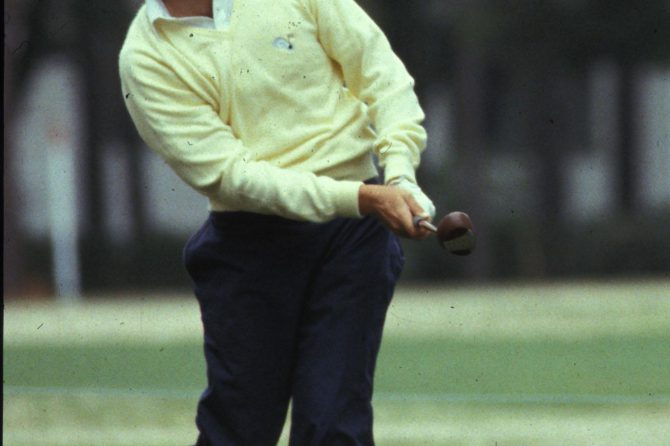
Putting performance is a critical determinant of scoring in golf, yet its role as a training modality for broader swing and driving control has received comparatively little systematic attention. This article synthesizes biomechanical analysis,motor-control theory,and evidence-based drill methodologies to define the kinematic and neuromuscular features of an effective putting stroke and to outline how targeted practice can enhance intra-stroke consistency and transfer to full-swing and driving performance. Drawing on motion- and muscle-activation studies, validated practice protocols, and applied coaching resources, the discussion identifies key variables-tempo, axis stability, joint sequencing, and sensory cueing-that govern repeatability at short range and influence proximal motor patterns used in longer shots. Practical drills are prescribed with their mechanistic rationale and measurable performance markers, enabling coaches and players to structure practice that promotes durable neuromuscular adaptations and functional carryover from the green to the tee.
Integrating Biomechanical Principles to Optimize the Putting Stroke and Whole Swing Consistency
Begin with a unified setup that links putting biomechanics to whole-swing consistency: establish a repeatable stance with feet approximately shoulder-width apart, knees flexed ~10-15°, and a spine tilt that inclines the shoulders slightly forward (~10-15°) so the eyes are over or just inside the ball. This geometry encourages a pendulum-like stroke generated by the shoulders rather than the wrists, which reduces face rotation and improves center strikes. For golfers transferring whole-swing mechanics to the short game, maintain the same shoulder plane and rotation sense used in the full swing-rotate the torso as the prime mover while allowing the arms to remain connected-to preserve timing and tempo across all shots. In practice, check these setup fundamentals:
- Ball position: slightly forward of center for moast putts (~1 inch), center for short, straight lag putts.
- Putter loft: standard putter loft ~3-4°; ensure the face meets the turf squarely at impact to avoid skidding.
- Grip pressure: light and consistent-aim for a subjective 3-4/10 to allow better feel without wrist breakdown.
These measurable checkpoints reduce variability and create a platform for linking short-game touch to full-swing rythm on course.
Next, refine stroke mechanics with specific, progressive drills that address face control, tempo, and distance management; this builds from beginner fundamentals to low-handicap refinements. Begin with a simple pendulum drill: make 50 strokes with only shoulder rotation, eyes focused on a fixed point, and no wrist hinge; progress to the gate drill using tees to ensure the putter path is square and repeatable. For distance control, use a metronome or count rhythm-start with a 2:1 backswing-to-follow-through ratio for intermediate control and adjust toward a slightly longer follow-through for lag putting-to develop consistent pace. Set measurable practice goals to track betterment:
- 3-foot putts: aim for 70%+ makes for beginners and 90%+ for low handicappers.
- 6-12-foot putts: set incremental targets (e.g., improve by 10 percentage points every four weeks).
- Lag practice: hit 10 putts from 30-50 feet and record how many finish inside a 6-foot circle; aim to increase that count by at least two within six weeks.
Common errors to monitor include excessive wrist hinge, early head lift, and over-gripping; correct these by returning to shoulder-driven drills and using slow-motion reps to engrain the correct motor pattern.
integrate biomechanics into course strategy and the mental routine so technical improvements translate directly into lower scores. Read greens by assessing slope, grain, and wind; combine this with the biomechanical intent of your stroke (shorter arc and firmer face for into-the-wind putts, fuller pendulum for down-slope lag control). Consider equipment choices-putter length, lie angle, and head-weight influence stroke mechanics-so select specifications that maintain your shoulder posture and eye line. Use these on-course applications and mental cues:
- Pre-putt routine: a consistent two- to four-step routine lasting no more than ~20 seconds to align, visualize the line, and commit to a speed.
- Situational adjustments: play the grain on fast greens by slightly increasing face loft awareness and favoring firm roll; on wet or slow greens, lengthen the stroke for the same target pace.
- Troubleshooting checklist: if you miss low, check loft and forward press; if you miss short, increase pendulum length or tempo; if you see too much heel/toe mis-hit, verify toe hang and face balance of the putter.
Set outcome-based goals-such as reducing three-putts by one per round within eight weeks-and pair them with the technical drills above. By combining measured setup parameters, disciplined practice, and on-course strategy (consistent with the Rules of Golf regarding repair and play), golfers of all levels can convert biomechanical gains into tangible scoring improvements.

Kinematic Sequencing and Stroke Rhythm: Linking Shoulder and Wrist Mechanics to Consistent Ball Roll
Understanding the kinematic chain for a repeatable putting stroke begins with a proximal-to-distal sequencing: the torso and shoulder girdle initiate rotation, the upper arms follow as relatively rigid levers, and the wrists remain passive to stabilize the putter face. For most players, an effective backswing uses a shoulder turn of approximately 10-30° (measured as the arc of the forearms relative to the sternum) rather than large wrist motions; this keeps the stroke on a shallow arc and reduces face rotation. In addition, strive for a tempo ratio near 2:1 (backswing to forward swing) or use a metronome set to ~60-72 bpm to internalize rhythm – beginners can start with a slower cadence and progress to a more compact, consistent tempo. Setup fundamentals that support this sequencing include shoulder width stance, the ball positioned slightly forward of center for most conventional putters, eyes roughly over the ball, and a light but secure grip pressure (roughly 3-4/10) to prevent tension and wrist flicking. Common mechanical faults such as early wrist break or excessive hand action often show up as increased clubface rotation at impact; use impact-tape or a face-marking spray to verify that face angle change is within ±3-5° on short-to-medium putts.
Once the proximal-driven pattern is established, practice routines should emphasize contact quality and consistent forward roll, because the kinematics of shoulder-led motion directly dictate the impulse that creates topspin on the ball. Aim for forward roll to begin within the first 12-18 inches (30-45 cm) of travel after impact to reduce skid and improve distance control; if the ball skids excessively, reduce loft at impact by slightly increasing forward shaft lean (but keep it subtle, 0-5°). The following drills develop these measurable outcomes and address different learning modalities: kinesthetic (towel-under-armpits to lock shoulders and reduce wrist action),visual (mirror or camera to check shoulder rotation and shaft plane),and auditory (metronome to stabilize tempo).Implement the drills in sets with explicit targets: for example, within a 20-minute session complete 50 three-footers with zero misses, 30 six-footers with fewer than six misses, and end with a 15-minute routine using impact tape to confirm centered contact. Practice checkpoints and troubleshooting steps include:
- Setup checkpoints: shoulders square to target line, eyes over ball, shaft leaning slightly forward, grip pressure 3-4/10.
- Drills: pendulum gate drill (two tees just wider than putter head), single-arm slow-stroke (right arm only for right-handers) to feel shoulder-driven motion, and clock drill for distance control.
- Troubleshooting: if the face rotates open at impact, shorten backswing and focus on shoulder turn; if the ball skids, increase forward shaft lean slightly and practice roll drills from 6-12 feet.
translate these biomechanical gains to course strategy by recognizing how slope, green speed, and weather alter required sequencing and rhythm: for uphill putts, maintain the same tempo but increase stroke length by 10-20%, while for firm, fast greens decrease length and emphasize a softer feel; for significant side breaks, keep the putter arc and face control consistent and accept a slightly larger aim margin rather than over-manipulating wrist action under pressure.Be mindful of equipment choices-putter length, lie, and face milling influence the feel and timing of the stroke; test changes on the practice green before competition play. Also consider the Rules: as the anchored-stroke ban, players must avoid anchoring the shaft to the body and rather use a shoulder-stabilized technique to comply with tournament regulations. To build on-course reliability, set measurable short-term goals (e.g., improve three-putt avoidance to fewer than one per round within four weeks) and use situational practice: simulate windy, uphill and downhill putts, and pressure drills such as “make three of five from 8-10 feet” to train decision-making and reduce pre-shot indecision.By linking controlled shoulder-led sequencing to minimal wrist involvement and a reproducible tempo, golfers of all levels can produce a truer ball roll, fewer misreads, and measurable scoring improvements over time.
Precision Alignment and Postural Control: Standardized Setup Measurements and Corrective Recommendations
Begin by establishing a repeatable, measurable setup that serves as the foundation for reliable ball-striking and putting. At address, aim for stance width roughly equal to shoulder width for full swings and narrower by 20-30% for short-game shots; adopt knee flex of approximately 15-20° and a neutral ankle tilt to allow rotational balance. For the spine, maintain a forward tilt of about 20-30° from vertical during iron play and slightly less for the driver to encourage an upward angle of attack; for putting, adopt minimal spine tilt with eyes positioned over or just inside the ball to promote a repeatable arc. Ensure the clubface is square to the intended target line within ±1-2° by using alignment sticks or tape on the practice mat, and check shaft lean at address-about 2-4° forward for mid-irons and near vertical for wedges and putters. For practical request on the course, use these fast checkpoints before every shot: feet and hips parallel to the target line, weight distribution appropriate to the club (for example, 55-60% on the front foot for short irons, even weight for putting), and a grip pressure that is firm but not tense (roughly 4-5/10 perceived tension).
Once baseline measurements are standardized, diagnose and correct common postural faults through targeted corrective drills and equipment checks. Typical issues include lateral sway, early extension, and loss of spine angle-each of which can be quantified. Such as, measure lateral sway with a marker behind the trail hip and limit movement to less than 2 inches lateral travel during the backswing; if early extension occurs, the spine angle at impact should still be within ±5° of your setup angle. Corrective interventions include the chair drill to prevent early extension, the wall drill to promote rotation rather of sway, and the towel-under-arms drill to improve connection through the short game.Equipment factors also influence posture: confirm proper shaft length and lie angle at a certified club fitter and adhere to conforming equipment rules (USGA/R&A) to avoid non-conforming modifications that alter setup mechanics. Practice routines should be measurable and progressive-begin with 5-10 minutes of posture-focused warm-up (mirror or video feedback), then perform 3 sets of 10 drill reps with purposeful feedback, gradually integrating drills into simulated on-course situations such as windy tee shots or uphill putts.
integrate alignment and postural control into shot-shaping, short-game strategy, and green-reading to directly lower scores.alignment errors translate into missed greens and three-putts, so use small, repeatable adjustments-such as, open the stance 1-2 inches and slightly close the clubface to intentionally fade or draw while keeping spine angle and weight distribution constant; this isolates path and face relationship as the primary shaping mechanism. Apply putting-specific posture by maintaining a stable lower body and a consistent eye-line over the shaft, then practice distance control with a metronome-paced stroking drill and a ladder drill using concentric target rings on the practice green. For varied learning styles and physical abilities, offer multiple approaches: visual learners use alignment sticks and video, kinesthetic learners use impact-bag and rotational drills, and analytic learners track measurable goals such as reducing lateral dispersion by 30% in six weeks or keeping alignment within 2° as measured with a laser alignment tool. In match-play or windy conditions,prioritize conservative alignment to the safe side and commit to your pre-shot routine-this mental consistency,paired with measurable postural control,converts technical improvements into reliable course management and lower scores.
Tempo and Pace Control: Evidence Based Drills to Calibrate Green Distance and Reinforce Driving distance Management
Effective distance control on the greens and consistent driving distance both originate in a stable, repeatable tempo. Begin by establishing a measurable rhythm: aim for a backswing-to-downswing ratio of approximately 2:1 on the putting stroke (for example, a 1.0‑second backswing and a 0.5‑second acceleration to impact) to produce a true pendulum motion and consistent pace. For full swings, especially with the driver, target an intentional rhythm rather than maximal aggression; a slightly longer backswing with a smooth transition produces more repeatable clubhead speed and narrower dispersion. Practically, use a metronome or a 3‑beat count (1‑2‑3) during practice to lock in timing, and monitor progress with specific, measurable goals such as reducing the standard deviation of putt length on 10‑ to 30‑foot putts to ±6 inches or maintaining driver carry variation within ±7 yards over five swings. Common mistakes include abrupt deceleration at impact and gripping tension; correct these by performing slow‑motion rehearsals that emphasize a relaxed grip pressure and a continuous follow‑through, and by incorporating the following drills during practice:
- Putting metronome drill: Use a metronome set to 60-72 bpm and strike 20 putts each at 6 ft, 15 ft, and 25 ft with the backswing on one tick and the forward swing on the next two ticks.
- distance ladder: place targets at 5‑foot increments from 10 to 40 ft and record deviation to quantify pace control improvement.
- Tempo percent swings: Take driver swings at 75%, 90%, and 100% effort while measuring carry on a launch monitor to learn controlled power versus maximum distance.
Transitioning to the short game, tempo and pace manifest as swing length and attack angle rather than pure time. for chips and pitches, adopt a consistent low-hand forward setup with the ball positioned slightly back of center for run‑out chips and center or slightly forward for higher trajectory pitches; this helps control the dynamic loft and landing angle. Use measurable swing lengths: a 30‑yard pitch might be rehearsed with a three‑quarter swing that finishes at waist height, while a 50‑yard pitch finishes near shoulder height-these visual endpoints create reliable pace reference points. To translate practice into course management, rehearse landing‑spot drills: place a towel or coin at a planned landing zone (such as, 20-30 yards short of a green) and calibrate spin and rollout by varying loft and bounce. Address common errors such as wrist flipping or deceleration by focusing on acceleration through the zone and keeping the wrists quiet through impact; corrective drill options include:
- Landing‑zone towels: Aim to land the ball on a towel placed at the predetermined spot to train trajectory and rollout.
- One‑hand control drill: Hit 20 short chips with only the lead hand to emphasize body rotation and minimize wrist action.
- Green‑reading integration: combine putting and chipping sessions by first reading the slope and grain, then executing a chip to a spot 6-8 feet above the hole and putting the remaining distance-this links approach pace to actual putting outcomes.
manage driving distance strategically by connecting tempo to club delivery, equipment setup, and course strategy. For many golfers a slightly positive angle of attack (e.g., +1° to +3°) with the driver maximizes launch and reduces spin; this requires precise ball position (just inside the lead heel) and a slight spine tilt away from the target. When approaching risk‑reward holes, prioritize controlled tempo to favor accuracy-intend to play a 90-95% swing with a targeted club selection to hit the fairway rather than over‑swinging for extra yards. Use measurable practice goals such as improving fairway hit percentage by 10 percentage points within six weeks by tracking dispersion on a GPS or range monitor, and employ these drills to support that goal:
- Swing‑length markers: Use tape on the shaft or alignment sticks to rehearse 75%, 85%, and 100% swings and note carry and lateral dispersion.
- Pre‑shot routine rehearsal: Practice a two‑breath rhythm and a visualized target line to reduce nervous quickening on the tee.
- Equipment check: Verify shaft flex, loft, and grip size with a clubfitter if tempo changes produce inconsistent launch numbers; small adjustments in loft or shaft stiffness can stabilize yardage when tempo is refined.
By integrating these evidence‑based tempo drills, setup checkpoints, and course scenarios, golfers from beginners to low handicappers can produce measurable improvements in putting distance control and driving management, reduce scoring variability, and translate practice tempo into on‑course confidence and lower scores.
Progressive Drills and Training Protocols by Skill Level with Specific Performance Targets and Assessment Criteria
Begin with a structured, progressive approach to full-swing mechanics that aligns physical training with measurable performance targets. For beginners, emphasize setup fundamentals: neutral posture with a spine tilt of approximately 5°-7°, ball position centered to slightly forward (half a ball forward per longer club), and weight distribution 50/50 to 60/40 (lead/trail) at address. Progress to intermediate and advanced levels by adding kinematic sequencing and tempo work: teach a backswing shoulder turn of roughly 80°-100° for full swings, a shallow downswing to promote inside-to-square impact, and 2°-4° of forward shaft lean at impact for iron shots to ensure crisp compression. Use targeted training tools and protocols to accelerate gains: incorporate overspeed training such as SuperSpeed Golf progressive protocols (observe all manufacturer safety guidelines) to increase clubhead speed in staged levels, practice Rypstick-derived speed drills for rotational power, and add the Cattail Crossing ’Success Progression’ face-contact drills to improve centered strikes. Drill examples and checkpoints include:
- Short-range speed sets with lighter overspeed clubs, 3×8 swings per level, assessing clubhead speed and perceived tempo.
- Face contact drill: five-ball sequence aiming for a complete ball print on the clubface; if incomplete, perform a 3-swing correction set.
- Impact-position mirror checks to confirm shaft lean and face alignment.
Assessment criteria: aim for 80% centered contact on a strike tape or impact tape session, a measurable 2-5 mph clubhead speed increase over 6-8 weeks when combining overspeed with sequencing drills, and consistent dispersion inside a 10-15 yard radius at target distance for intermediate players. Common mistakes (over-rotation, casting, inconsistent ball position) are corrected through tempo drills, impact tape feedback, and targeted video analysis to link felt changes to measurable outcomes.
Next, concentrate on the short game and putting where strokes are gained most efficiently; deliver step-by-step, distance-control protocols and putting routines that transfer promptly to course play. For chipping and pitch shots, set up landing-zone drills: from 30, 40 and 50 yards, play 10 balls to a 3-5 yard landing window and count successful landings; use a 60%+ success target for intermediates and 75%+ for low handicappers as progression milestones. For bunker play, practice sighting the required carry and splash angle, aiming to enter the sand 1-2 inches behind the ball and commit to an open clubface with accelerated follow-through. In putting, emphasize alignment, stroke path, and green reading: perform a clock drill (make 8 consecutive 3-6 ft putts from different faces; target 90% make rate for short-game reliability), a lag drill (from 20-40 ft, 20 balls aiming to leave ≤3 ft for par; target 70% within that radius), and a gate drill to ensure a square impact path. Practice drills:
- Three-tier short game routine: 20 chips (10 ft landing), 20 pitches (landing target), 10 bunker exits per session.
- Putting sequence: 10 three-foot makes, 10 six-foot saves, 20 twenty-foot lag attempts (record proximity).
- Green-reading simulation: practice uphill, downhill, and sidehill putts on the course, respecting local rules (repair ball marks, maintain pace of play).
Instructional notes: adjust mechanics to surface firmness and wind; for example,firm greens require lower trajectory putts and increased backspin for approaches. Troubleshooting includes correcting scoopy chip shots by increasing wrist hinge or moving ball back in stance, and flattening a steep putting arc by shortening the stroke and focusing on shoulder-driven motion. These short-game proficiencies should be quantified weekly to show measurable reductions in average putts per round and improved scrambling percentages.
integrate course management, shot-shaping strategies, and the mental routine into measurable practice-to-play protocols so technical gains convert to lower scores. Start by teaching decision-making principles: choose the club and shape that leave the highest-probability next shot (e.g., favor a 3-wood to a narrow fairway when iron into a reachable green risks OB), and factor in wind, firm conditions, and pin location. Develop tactical drills that replicate match conditions-play simulated 9-hole scorecards focusing on fairways hit %, GIR, and up-and-down rate-and set progressive targets (such as, beginners: improve fairways hit by 10% and reduce three-putts by 25% in 8 weeks; low handicappers: raise GIR into the 55%-65% band and maintain scrambling above 60%). To refine shot shaping and spin control, practice trajectories with varied ball positions and face angles to produce low, mid and high shots and document carry vs. roll on a range: note that a lower trajectory with less lofted face produces increased roll that must be quantified in yards. mental and assessment protocols:
- Pre-shot routine checklist (visualize line, select target, commit) practiced before every swing during training to build automaticity.
- Pressure sets: play short competitions (matchplay points,must-make targets) to measure performance under stress.
- Equipment audit: confirm loft/gap consistency, shaft flex suitability, and ball choice (spininfluencing balls on wet vs. dry turf) and retest launch monitor metrics after any equipment change.
by linking technical drills to tactical outcomes and using objective metrics (clubhead speed, centered contact %, proximity to hole, fairways hit, GIR, putts per hole), golfers at every level can track improvement, diagnose persistent errors, and make evidence-based adjustments that translate practice into lower scores and more confident on-course decision-making.
Feedback Systems and Quantitative Monitoring: Using Video Analysis, launch Data, and Stimp Metrics for Objective Improvement
Integrating high-frame-rate video with launch monitor data creates an objective foundation for technique improvement by revealing the causal links between posture, kinematics, and ball flight. Begin with a structured capture protocol: set one camera down-the-line and one face-on at waist height, shoot at 120 fps or higher, and record a minimum of 20 swings to establish a reliable baseline.Together log launch-monitor outputs-clubhead speed, ball speed, smash factor, launch angle, attack angle, spin rate, and face-to-path-so you can correlate kinematic faults with dispersion patterns. Common setup checkpoints include:
- use a stable tripod and consistent lighting to avoid parallax;
- place alignment sticks to verify aim and shoulder rotation;
- capture impact with a slow‑motion replay to spot impact location and dynamic loft.
From these recordings,derive measurable goals-for example,reduce lateral dispersion to ±7 yards with your stock 7‑iron or increase driver smash factor toward 1.45-and structure lessons around reproducible, quantifiable changes rather than impressions alone.
For the short game and putting, combine Stimp readings with video and impact data to tune speed control and face mechanics. Measure green speed with a Stimp meter in feet (typical practice ranges: 7-13 ft) and then practice under those specific speeds; on a 10 ft Stimp green, train lag putting to consistently leave misses inside 2 ft. Use video to analyze putter face angle at impact, stroke path, and head/body tilt; note that most effective strokes produce a near‑square face at impact and initiate forward roll within the first 6-12 inches of travel. useful drills include:
- gate drill for face control (two tees slightly wider than the putterhead);
- 3‑spot distance drill for tempo and release (make successive putts to 3 distances, focusing on identical backswing/through‑swing ratios);
- Stimp‑specific lag drill (roll balls from 40-60 ft to leave them inside 2 ft on a measured Stimp speed).
Beginner players should first master center contact and a consistent setup; advanced players should refine face rotation and off‑axis tolerance measured by impact location and roll metrics. Also remember competition constraints: while these devices are invaluable for practice, check local rules about in‑round technology use.
translate objective feedback into smarter on‑course strategy and progressive practice plans. Use launch‑monitor gapping sessions to create a club chart with average carry, total distance, and lateral dispersion for each club-aim for 5-10 shots per club to set reliable averages-and then apply that chart to decision making (e.g., if your 150‑yard club shows a ±7‑yard lateral band, avoid targets with 10‑yard hazards on the landing area). In windy or firm conditions, consult launch-angle and spin-rate data to select lower‑launch, lower‑spin trajectories that hold lines better. Adopt weekly practice cycles that alternate:
- technique sessions focused on one measurable variable (e.g., reduce attack angle variability by 1-2°) with video feedback;
- pressure simulations (score‑carded practice holes) that force application of data to shot selection;
- maintenance reps for putting speed control matched to the Stimp values you play most often.
Address common mistakes-over‑compensation after an out-shot, inconsistent setup, and ignoring environmental variables-by relying on the recorded baseline and using short, measurable milestones (for example, cut three‑putts to ≤1 per 18 holes within 8 weeks). In this way, objective monitoring not only diagnoses faults but also scaffolds confidence and course management, producing durable scoring gains across all skill levels.
Translating Putting Mastery into Course Strategy: Tactical decision Making, Green Management, and Scoring Optimization
Begin with a repeatable, course-ready setup and stroke that translate reliably from the practice green to tournament play. First, establish a consistent setup checklist: feet shoulder-width, eyes directly over or slightly inside the ball line, ball position slightly forward of center for most mallets and blades to promote top-spin (ball diameter 1.68 inches), and the putter face square to the intended line. Equipment matters: match your stroke to the putter design-use a face-balanced putter for a straight-back/straight-through stroke and a toe-hang putter for an arced stroke-while ensuring the putter loft is in the typical 3°-4° range so the ball begins to roll quickly after impact. To reduce common faults, correct these tendencies with specific cues: if you see wrist breakdown, place a towel under both armpits to promote shoulder rocking; if you decelerate through impact, practice a metronome-backed stroke emphasizing a slightly longer follow-through. use this simple setup checkpoint list during pre-shot routines to build consistency:
- Grip pressure: light (3-4 on a 1-10 scale)
- eye alignment: over ball or slightly inside
- Ball position: forward of center
- Shoulder-driven stroke: minimal wrist hinge
These elements create a mechanically sound foundation so your green-reading and pace practice transfer directly to scoreable putting.
Translate technical proficiency into tactical green management by combining accurate reads with deliberate pace control. Start each putt by identifying the primary slope and grain, noting that Stimp readings (typical range 8-12 ft on many courses) and surface moisture change how much you must adjust aim and pace; faster Stimps require less break and a firmer stroke. For decision-making, use the principle of “leave below the hole” whenever approach play allows-playing to the controlled, lower side of a green converts many perhaps risky downhill comebacks into manageable uphill two-putts. When facing long lag putts, favor leaving the ball within 3-4 feet rather than forcing an aggressive line that risks lip-outs; practice this with a ladder/length drill designed to leave the ball in a target zone:
- 30 putts from 10, 20, and 30 feet aiming to leave 70% within 3 feet
- Clock drill for break-read confidence inside 10 feet
- Two-speed practice: alternate rounds on a stimp 8 and Stimp 11 simulation
Additionally, remember the Rules: you may mark and lift the ball on the putting green (Rule 14.1) to clean or align, but always replace it on the original spot; this habit supports precise reads and alignment under pressure.
structure practice and on-course strategy around measurable scoring goals and situational choices that fit your handicap. Set progressive targets-examples include reducing three-putts to less than one per round in eight weeks, or increasing conversion from 6-10 ft to 40%+-and use a weekly routine combining technical drills and scenario play. A balanced schedule coudl be: two sessions of mechanics work (towel drill, gate drill, 1:2 tempo metronome work) and one on-course green-management session per week where you intentionally play for breaks, speed, and position. Troubleshooting steps for common problems include:
- Over-reading: re-check slope from multiple stances and trust a single aim point
- Poor pace: practice short backstroke ~distance-to-hole relationship and a ladder drill to calibrate speed
- Alignment drift: use an alignment stick or mirror for 10 minutes pre-round
Also consider physical and mental adjustments-use shorter grips or heavier putters for tremor-prone hands, and employ pre-shot breathing and visualization to reduce tension.By integrating precise mechanics, targeted drills, and on-course decision-making (risk/reward judgments, pin positions, and weather effects), players of all levels can convert putting mastery into consistent lower scores.
Q&A
Below is a focused,academically framed Q&A designed to accompany an article entitled “Master Putting: Transform Stroke,Swing & Driving Control.” Each answer synthesizes biomechanical principles, evidence-informed practice methods, equipment considerations, and behavioral (etiquette/mental) strategies to help practitioners improve putting consistency and transfer gains to full-swing and driving control.
1) What conceptual framework should guide a program to “master putting” while enhancing swing and driving control?
Answer: Adopt a systems framework that links (a) biomechanical consistency (posture, joint sequencing, repeatable kinematics), (b) perceptual-cognitive processes (visual target selection, green reading, pre‑shot routine), and (c) practice design (deliberate, varied, feedback-rich drills). Improvements in putting arise from stabilizing proximal movement patterns (shoulders/torso), developing reliable tempo and distance control, and embedding a reproducible pre‑shot routine.transfer to the full swing and driving occurs primarily through shared elements: tempo/rhythm, balance and postural control, and the cognitive routines that regulate pressure and execution.
2) What are the primary biomechanical principles of a repeatable putting stroke?
Answer: Key principles include:
– Pendulum action: Use shoulder-driven rotation with minimal wrist breakdown to produce a predictable arc and face orientation at impact.
– Stable base and head position: A consistent spine angle and limited head/body movement preserves stroke geometry.
– Consistent arc and face alignment: Matching putter path and face angle to intended line with minimal manipulation at impact.
– Tempo and rhythm: Regular backstroke/forward-stroke timing supports repeatable distance control.
Empirical and coaching literature emphasizes shoulder-driven motion and reduced distal variability as the basis of repeatability (see common putting Q&A resources).
3) How does practicing putting affect full-swing and driving mechanics?
Answer: Transfer is largely indirect and occurs via:
– Tempo/rhythm: A practiced sense of tempo on the green can be scaled to full‑swing timing, improving rhythm and reducing rushed transitions.
– Postural awareness and balance: Putting enforces a stable address posture and balance through the stroke-skills that translate to improved ground reaction control during drives.
– Cognitive routines: Discipline in pre‑shot routines, focus, and pressure management developed on the green improve decision‑making and execution under stress for long shots.
Note: Direct kinematic transfer (e.g., putter path to driver path) is limited; expect cross‑domain gains primarily in rhythm, balance, and mental control.
4) What mental skills are essential for consistent putting, and how are they trained?
answer: Essential skills: focused attention, cueing, visualization, arousal regulation, and resilient routines.Train them with:
– Pre‑shot routine scripting and rehearsal.
– Visualization/imagery of the ball path and speed.
– pressure simulation (scorekeeping during practice,competitive games).
- Mindfulness/breathing exercises to stabilize arousal.
Multimedia coaching resources that emphasize the “Zen” or mental components of putting can be used as adjuncts to biomechanical work.
5) What are the most common putting faults and practical diagnostics/corrections?
Answer: Common faults and corrective emphases:
– Pulls/pushes: Check face angle at impact and path; use gate drills and impact tape/video to isolate face control.
– Deceleration/short putts: Emphasize acceleration through the ball; practice short putt drills focusing on forward roll.
– Yips/tension: Reintroduce a simplified stroke (longer pendulum), employ desensitization practice, and consult sport psychology if persistent.
– Poor distance control: Use backstroke-length drills and ladder drills to condition stroke length → distance mappings.
Diagnosis should combine video analysis at address/impact, impact markings, and objective make/miss logs.
6) How should a player objectively measure putting performance and progression?
Answer: Use a combination of outcome and process metrics:
– Outcome: Putts per hole, 3‑, 6‑, 10‑, 20‑foot make percentages, one‑putt rate, and conversion from 3‑ft/6‑ft.- Process: Stroke length consistency, face angle at impact, tempo ratio (backstroke:forward-stroke), and green-reading accuracy.
Tools: video capture, impact tape, launch/impact sensors, and scoring apps to log practice results. Track trends across practice blocks rather than single sessions.
7) how should a player choose and test a putter?
answer: Systematic testing protocol:
– define goals (alignment aid vs. feel vs. toe hang).
– Test multiple head shapes (blade, mid-mallet, mallet), lengths, grips, and lie angles on the same green conditions.
– Record objective data (make percentage from standard distances) and subjective ratings (confidence, perceived alignment).
Pro players and testers stress iterating through many putters to match feel and function; formal fitting and repeat trials under variable conditions improve selection validity.
8) Which drills and practice structures best promote transfer from practice to competition?
Answer: Use mixed practice designs:
– Blocked practice for technical acquisition (short focused sets on mechanics).
– Random/contextual practice for retention and transfer (vary distances, breaks, and pressure).
– Incorporate specificity: simulate on-course lies and speeds; integrate pressure via scoring or accountability partners.
Recommended drills: ladder distance control, gate/arc alignment, 3‑circle putting for pressure, and routine-repetition sets with performance thresholds.
9) How can etiquette and on‑course behavior support effective putting practice and fairness?
Answer: Key etiquette behaviors:
– Repair ball marks and replace divots to preserve green speed and lines.- avoid stepping on another player’s line; stay quiet and still while others prepare.
– Keep pacing reasonable-prepare while others are playing to maintain flow without harassing speed-of‑play.- During practice on the green, use designated practice areas or ask group permission to avoid interfering with play.
Courteous behavior sustains green quality and facilitates fair, predictable conditions for everyone.
10) How do you maintain putting performance under tournament pressure?
Answer: Maintain a compact pre‑shot routine, focus on process cues (target and feel) rather than outcome, use breathing/anchoring techniques to regulate arousal, and apply graded-pressure practice so the competition environment is familiar. Literature and practice forums recommend simplified goals (e.g., “commit to line and speed”) to reduce decision‑making under stress.
11) How can putting practice be integrated with full-swing and driving practice in a weekly training plan?
Answer: Structure sessions by emphasis and mutual reinforcement:
– Session A (putting-focus): 30-45 minutes on distance and pressure drills + 15 minutes of tempo-maintenance swings with driver (focus on similar rhythm).
– Session B (swing-focus): full-swing mechanics with specific attention to balance and tempo followed by 15-20 minutes of green-side short‑game putting to reinforce feel.
– Use one weekly simulated round to practice decision-making, green reads, and on-course routines.
Integration prioritizes shared control variables: tempo, balance, and mental routine.
12) what are recommended next steps and resources for continued progress?
Answer: Recommended steps:
– Baseline assessment: record putts from common distances and capture video of stroke.
– Prioritize one biomechanical change at a time with measurable practice goals.
– Implement mixed practice (blocked + contextual) and pressure simulations.
– Use equipment fitting if objective metrics suggest mismatch.
Suggested resources include evidence-informed coaching articles and practitioner forums for drill libraries,mental-game material (e.g.,instructional presentations on putting psychology),and interviews with elite players about putter testing and feel. Specific practitioner resources and discussion threads provide applied tips and community testing protocols.
Selected references and practitioner sources (examples drawn from available practitioner content):
- Practical putting Q&A and common questions resource: “7 Of The Most Common Putting Questions (along With Detailed Answers)” (masterofthegreens.com) – useful for grip, ball position, and common drill ideas.
– community discussion on putting strategy and statistical context: MyGolfSpy Forum, “Let’s talk Putting” (forum.mygolfspy.com) – peer discussion of putting performance and tournament effects.
– Mental game and visualization material: “The Zen of Putting: Master the Mental Game” (youtube) – structured approaches to pre‑shot routine and pressure control.
– Equipment testing perspective from a touring professional: Charles Howell III Q&A on putter testing and equipment (golfwrx.com) – insight into putter fitting and iterative testing.
If you would like, I can convert this Q&A into a printable handout, produce a weekly practice schedule integrating these items, or create a short drill progression tailored to a specific handicap level. Which would you prefer?
mastering putting is not an isolated skill but a systemic process that interlinks stroke mechanics, full-swing kinematics, and driving control. This article has synthesized biomechanical analysis and evidence-based training protocols to demonstrate how fine-tuning posture, tempo, and pressure distribution in the short game yields measurable improvements that propagate through mid- and long-game performance. Level-specific drills, objective metrics (e.g., face angle consistency, launch variability, and putting-stroke tempo indexes), and deliberate course-strategy integration provide practitioners with a structured pathway from assessment to durable improvement.
For coaches and players, the practical implication is clear: integrate short-game interventions into holistic training plans, prioritize repeatable measurement, and adapt progressions to the athlete’s technical profile and competitive context. For researchers,the article identifies opportunities for controlled trials that examine transfer effects between putting-focused interventions and driving/swing stability under competitive stress.
Adoption of these principles should be iterative and data-informed-use baseline assessments, apply targeted protocols, monitor outcomes, and refine. By treating putting as a keystone skill that influences broader swing and driving control, practitioners can achieve greater consistency, lower scores, and a more resilient performance repertoire.
Note: The provided web search results reference other uses of the term “master” (e.g., Scrum Master, master’s degree, Git “master” branch) and are not relevant to the subject matter of this article.