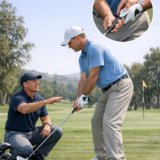
Master Swing, Putting & driving to Transform Your Golf
Abstract/introduction:
Becoming proficient in the core motor patterns for the full swing, the putting stroke, and the tee shot is the foundation of consistent scoring and long-term advancement. This article brings together biomechanical insights, principles from motor learning, and proven training methods to offer a unified roadmap for refining swing technique, sharpening putting accuracy, and boosting driving distance while preserving control. Lasting change on the course depends on three pillars: (1) objective, repeatable measurement of kinematics and outcomes; (2) progressive, level‑appropriate drill sequences that connect technical work to real play; and (3) intentional practice of course tactics and pressure management so practice gains reduce scores.
Scope and approach:
Using contemporary work in biomechanics and skill acquisition, the guide identifies measurable diagnostic markers for typical faults, prescribes progressive corrections for beginner, intermediate, and advanced players, and suggests concrete metrics to monitor (e.g., clubhead speed, launch conditions, putt dispersion). Practical protocols cover short‑ and long‑term periodization, when to emphasize technique versus result‑oriented practice, and how to weave course‑management decision making into training so improvements carry over to competition.
Note on terminology:
Here “master” refers to achieving reliable control and reproducible performance, not an academic credential such as a master’s degree.
Biomechanical Foundations of an Efficient Golf Swing: Kinematics, Kinetics, and Common Error Corrections
An effective swing starts with consistent kinematics – the relative positions and angular motion of the body. At address, adopt a balanced posture with roughly equal weight on both feet, a neutral grip, and a spine angle that keeps the eyes over the ball (commonly a 5-7° forward tilt with a hip hinge near 40-45°). During the backswing, target approximately a 90° shoulder turn for most men (a bit more for highly flexible players) and around 45° of pelvic rotation; this maintains torso‑to‑pelvis separation (the X‑factor) that stores elastic energy. Position the ball according to the club: driver just inside the left heel, mid‑irons near the center of your stance, and wedges slightly back of center. These setup benchmarks form the biomechanical baseline so subsequent instruction can focus on turning those positions into efficient movement on the course.
On the kinetic side, clubhead speed is produced by a timed transfer of force from the ground up through the body – the familiar proximal‑to‑distal sequence. Start the downswing with a subtle lateral weight shift and controlled lead‑hip rotation (roughly 45°), then the torso, then the arms, and finally the club; maintain wrist set to preserve lag. Strive for about 60-70% of weight on the lead foot at impact to create compressive force into the ball; inadequate weight shift frequently enough yields thin or topped strikes. Train these force patterns with drills that emphasize ground reaction force and sequencing, and verify progress with objective measures (clubhead speed, smash factor, dispersion) using a launch monitor or radar device.
Many mechanical faults are the result of breaks in the kinematic chain; diagnosing those failures allows precise correction. Early extension (hips thrusting toward the ball) reduces loft and power – fixable with a chair or wall‑tap drill that reinforces hip hinge and prevents vertical lifting. Casting (early wrist release) destroys lag; counter it with impact‑bag work and partial‑swing repetitions where you hold the wrist set until the late downswing. Other common problems include reverse pivot, excessive rotation, and inconsistent alignment. Use these practical checkpoints and drills:
- Setup checkpoints: feet parallel to the target line,ball position appropriate to club,shoulder line square,and slight knee flex (~15-20°).
- Drills: feet‑together swings for tempo, step‑through drill to rehearse weight shift, towel‑under‑arm to preserve connection, alignment‑rod drills for plane consistency.
- Tempo target: a 3:1 backswing‑to‑downswing ratio is a useful starting point for many players and can be refined with a metronome.
When practiced deliberately and measured over time, these targeted interventions yield quantifiable gains.
The short game uses different movement scales but shares the same demand for repeatability and feel. For chips and pitches minimize wrist hinge and favor a rotating shoulder motion with a stable lower body for better distance control; for a lob or flop open the face 10-20°, widen the stance, and bias weight forward at impact. In bunkers, use an open stance with the ball forward of center and accelerate through the sand with a shallow entry – aim to take roughly 1-2 inches of sand to create a consistent splash. Equipment choices matter: higher‑loft wedges (54°-60°) with appropriate bounce reduce digging on soft sand and increase forgiveness on tight lies – consider a professional club fitting for optimal lie angles and sole grinds. Practice routines should include repeatable distance control drills (landing‑spot ladders) and realistic on‑course simulations (uphill/downhill lies, different green speeds) to ensure transfer to scoring shots.
Combine biomechanical practice with course strategy and mental skills to lower scores. On course, select shot shapes and clubs that suit your strengths – if your 7‑iron dispersion is ±10 yards, play to larger targets and avoid aggressive pin locations where the risk outweighs the reward. Make practice measurable: a balanced weekly session could include 30 minutes of mobility and warm‑up, 30-45 minutes of focused technical work (one clear technical objective per session), and 30 minutes of pressure‑based short‑game simulations. Set performance targets such as increasing fairways hit to 60%+, cutting three‑putts to fewer than two per round, or improving approach proximity to under 25 yards from 150-175 yards. Build a consistent pre‑shot routine, visualization habits, and breathing strategies to reduce variance under stress. by linking kinematic and kinetic principles to equipment choices, error correction, and deliberate course tactics, golfers at every level can build an evidence‑based path to more efficient swings and better scoring.

Progressive Swing Drills and Metrics for Measurable Improvement
Start by locking in a reproducible setup and establishing objective baselines to guide improvement. Before altering mechanics, capture data with a launch monitor or tracking app – use 10‑shot averages for clubhead speed, ball speed, smash factor, launch angle, spin rate (rpm), attack angle, and dispersion (carry and total yards). also log on‑course stats for a month: fairways hit %, greens in regulation (GIR) %, and average putts per round. Use these setup checks each session to ensure consistent inputs:
- Stance width: shoulder width for mid‑irons, about 1.5× shoulder width for driver;
- Ball position: inside left heel for driver,one ball forward of center for mid‑irons,center or slightly back for wedges;
- Spine tilt: ~5-10° away from the target for driver,neutral for irons;
- Knee flex & weight distribution: light flex; ~60/40 front/back for driver setup,nearer 50/50 for irons.
These anchors promote repeatability so any mechanical changes produce measurable effects rather than random variation.
Then progress through a staged drill sequence that moves from control to speed while tracking key impact metrics. Begin in slow motion to install geometry, add tempo next, and finally reintroduce full speed.Aim for technical benchmarks such as an attack angle of roughly −3° to −6° for irons and +2° to +4° for driver, and a face‑to‑path within ±2° for reliable shaping. Example progressions and sets:
- Mirror half‑swing: 3×10 slow reps focusing on spine tilt and a square clubface at waist height;
- Impact bag/towel drill: 5×10 reps to ingrain forward shaft lean and compression for lower spin and better control;
- gate drill with alignment rods: 4×12 swings to promote consistent path and face alignment through impact;
- Metronome progression: begin at 60 BPM for 20 swings and increase gradually to your target tempo for full swings.
Use measurable thresholds to progress – such as, only graduate from half‑swings to full swings once dispersion on the launch monitor is within ±7 yards for 12 balls at that speed.
Shift from full‑swing mechanics to short‑game precision and shot‑shaping practice that directly influence scoring. Blend technique with distance control using drills like the 30‑60‑90 ladder for wedges (three distances, 10 balls each) and the clock chipping drill for trajectory control around the green. In bunker play emphasize open face and acceleration through impact – for example, open the face 10-20° and contact sand about 1-2 inches behind the ball. For shot‑shaping rehearse draws and fades with controlled face‑to‑path changes of 2-4° while monitoring spin and launch. Typical faults – over‑using the hands at impact or inconsistent ball position – can be fixed with the impact bag and alignment aids. Perform these drills in realistic scenarios (low, windy approaches into an elevated green) to increase transfer to scoring shots.
Combine swing work with conservative course management so technique gains reduce score volatility. If your driver dispersion radius is ~25 yards, plan tee shots so the worst‑case miss is playable rather than penal. As an example, on a 420‑yard par‑4 dogleg right, aim to the wider left side and accept a 10-15 yard layup to cut penalty risk. In windy conditions focus on lower launch and reduced spin (less loft or a stronger ball position) and practice these exposures so you know yardage differences for each setup. Adopt a brief course checklist to standardize decisions:
- club‑selection margin (e.g., carry hazards by at least 15 yards),
- target side selection (aim to the safe side of the green),
- risk/reward rule (attempt aggressive shots only when expected gain exceeds downside by measurable strokes).
This measured approach reduces scoring volatility and maximizes the benefit of technical improvements.
Formalize a measurable practice plan and evaluation routine to track progress and adapt coaching.use 6-8 week training cycles with weekly objectives: increase clubhead speed by 3-5 mph for power‑oriented players or tighten 7‑iron dispersion to ±10 yards for accuracy‑focused players; aim to raise GIR by 5-10% or cut putts by 0.5 per round. Assessments should include weekly launch monitor sessions (12‑ball tests), biweekly scorecard analysis, and a monthly skills battery (fairways, greens, and up‑and‑down percentages). Troubleshooting steps:
- If ball flight is erratic, check grip pressure and redo the mirror half‑swing drill;
- If spin rates are too high, move ball position slightly back and increase shaft lean at impact;
- If dispersion is wide, reassess alignment and posture using the setup checklist.
Add mental training such as visualization and process‑focused aims (e.g., “execute the target line” rather than “avoid a bogey”) to maintain performance under pressure.By combining staged drills, numeric targets, and on‑course validation, players from beginners to low handicappers can achieve measurable, durable gains in both technique and scoring.
Integrating Video Analysis and Wearable Sensors to Quantify Swing Performance
Begin with a standardized baseline protocol that synchronizes high‑speed video and inertial sensors (imus) to create an objective performance map. Capture face‑on and down‑the‑line video at 120-240 fps for full swings and 60-120 fps for short game and putting; mount cameras at hip height, perpendicular to the swing plane, and keep placement consistent. Attach wearable sensors – wrist devices (e.g., HackMotion style), torso/pelvis units, or lab‑grade systems – with sampling rates ideally ≥200 Hz to capture rapid events. Record a standardized battery (for example, 10 full swings, 10 half swings, 10 short‑game shots, and 10 putts), label trials, and export synchronized video and kinematic data. This repeatable baseline separates subjective feel from objective output and supports step‑by‑step comparisons for players of all levels.
Translate raw data into a focused set of actionable biomechanical metrics: shoulder turn (°), pelvis rotation (°), X‑factor (shoulder minus pelvis at the top), wrist set/lag angle (°), shaft plane relative to spine, vertical attack angle, clubhead speed, and face‑to‑path at impact. As reference, many tour players show roughly 100° shoulder turn with pelvis 40-50° producing an X‑factor near 40-50°; reasonable amateur targets include shoulder turn ≥80° and X‑factor ≥25-35°. Use wrist sensor outputs to set precise targets (e.g.,a lead wrist set of 40-60° at the top or maintaining >30° of lag into transition) and use video to confirm face presentation at impact. Interpret deviations to prioritize interventions: face‑to‑path variability points to grip/face control work, steep or shallow attack angles indicate setup or weight‑shift faults, and early release is observable as a rapid drop in wrist angle before impact.
Build measurable practice routines that leverage sensor feedback to accelerate learning. Begin sessions with a mobility and setup checklist:
- Grip pressure: moderate (4-6/10); feet shoulder‑width; ball position indexed to club (driver off the left heel, 7‑iron centered).
- Spine tilt & shaft lean: verify posture consistency within ±2-3° by video.
Then use targeted drills where wearables and video give instant feedback. For example:
- Impact bag work to prevent early release – monitor wrist sensor to keep >25-30° of lag into impact.
- Tempo drills with a metronome to establish a 3:1 backswing:downswing ratio; check angular velocity from sensors to confirm cadence.
- putting gate drill captured on high‑frame video to limit face rotation to ±3°, supplemented by a low‑profile IMU on the putter for arc data.
Set short‑term,measurable targets – e.g., reduce face‑to‑path variance to ±3° or increase ball speed by 3-5% over eight weeks – and structure each practice as warm‑up → focused block (50-100 quality reps with feedback) → pressure simulation (competition tempo or scorekeeping).
Use the same measurement tools to inform equipment and on‑course decisions. Video and IMUs show how different shafts or lofts change attack angle and spin – if sensors reveal an overly steep negative attack angle with the driver, try a lower loft or stiffer shaft and re‑measure ball speed and launch. Ideal driver launch often tracks with a slight positive attack angle (+2-4°) to optimize carry and spin.Translate technical metrics to course scenarios: when wind exceeds about 15 mph into your face, prioritize a lower launch and tighter dispersion (lower‑spin ball and a compact finish); when greens are firm, aim landing zones farther back to allow rollout.Remember the Rules of Golf when adjusting techniques in penalty or unusual lies,and use sensor trends to choose conservative layups over low‑percentage carries when appropriate.
Establish a data‑driven improvement cycle of retesting,troubleshooting,and mental skills. Retest every 2-4 weeks using the same protocol and log metrics in a coaching platform or spreadsheet to observe trends in clubhead speed, face angle, X‑factor, and putting face rotation. Set SMART objectives (e.g., reduce mean face‑to‑path error from 5° to ≤3° in eight weeks). troubleshoot systematically: recalibrate IMUs and re‑position sensors if data are noisy; verify camera placement and frame rates; if subjective feel conflicts with data, trust objective measures and use slow‑motion repetition to build kinesthetic awareness.Include pre‑shot routines, breathing, and visualization to preserve tempo and reduce variability under pressure. By measuring, intervening with drills, remeasuring, and refining, golfers can translate technical changes into better scoring through tighter dispersion, improved proximity, and smarter decisions.
Evidence Based Putting Mechanics: Stroke Path,Face Control,and Distance Management
Start with a dependable setup and stroke geometry: align feet,hips,and shoulders parallel to the intended target line,position the ball just forward of center for mid‑length putts,and slightly more forward for longer lag attempts. Establish a neutral putter face at address by checking that your eyes sit slightly inside the ball‑to‑target line, hands are ahead of the ball, and knees have a small flex – these cues promote consistent contact. Select a stroke path that suits your natural motor pattern: a straight‑back/straight‑through pendulum minimizes face rotation and suits many mallet putters, while a slight arc accommodates players with greater shoulder rotation. Set a measurable goal such as verifying the putter face is within ±2° of square at impact using an alignment rod and mirror; if you can’t meet that tolerance consistently, reduce stroke variability before changing equipment.
Face control through impact is the dominant factor in directional consistency. To ensure early forward roll, monitor putter static loft (commonly 3-4°) and aim for dynamic loft under 2° at impact to reduce initial skid. Use impact‑awareness drills – short gate work and impact tape – to observe contact location and whether the face opens or closes through the stroke. On course, when lagging across grain or into wind, promote forward roll with a firm, accelerating forward stroke rather than a decelerating hit. Remember anchoring the club to the body is not permitted under the Rules of Golf; always mark and replace your ball as required.
Distance control relies on consistent tempo, calibrated stroke length, and sensitivity to green speed. Measure your stroke‑length‑to‑distance relationships on a practice green: choose a representative Stimp (for example,8-10),hit 10 putts from 5,10,20,and 30 feet with three different stroke lengths (short,medium,long),and record average roll distances. Set concrete targets such as making 8/10 from six feet within two weeks, or reducing three‑putts to under 8% of holes over a month. Use a metronome to train steady tempo – many players find a 2:1 backswing:forward ratio (two beats back, one beat through) effective – and adjust tempo slightly for very firm or very slow greens. In adverse conditions, prioritize tempo over wrist manipulation to keep distance predictable.
Turn mechanics into drills that produce measurable improvement. Examples:
- Gate drill: two tees slightly wider than the putter head – 3 sets of 20, track clean stroke percentage.
- Clock drill: make 3‑footers at 12 positions around the hole – goal: 9/12 makes per session.
- Distance ladder: 1, 3, 6, 10, 20 ft with a metronome – record deviation from target distances over sessions.
- Impact feedback: impact tape or a low tee under toe/heel to identify face rotation and contact point; correct until center contact exceeds 80% of attempts.
Include equipment checks: verify putter length fits your posture (commonly 32-35 in depending on height and style), evaluate grip size to limit unwanted wrist action, and consider face technologies or inserts that encourage consistent forward roll if you struggle with early skid.
Integrate mechanics into practical course decisions and mental routines.on long,tiered greens pick conservative lines that prioritize speed control; for severe breaks,play a four‑to‑six foot short to avoid risky downhill or blind second putts. Correct frequent faults – lifting your head too soon, flipping the wrists, or inconsistent eye position – with short pre‑round routines: pick a precise aim point, use a three‑count tempo (back‑back‑through), and hold your head until the ball has rolled roughly 10 feet. Advanced players can use video to quantify face rotation and set incremental month‑to‑month targets (e.g.,reduce face rotation through impact by 0.5° monthly).By combining technical work, structured drills, proper equipment, and course tactics, putters at all levels can gain measurable scoring benefits and steadier performance under pressure.
Level Specific Putting Drills, feedback Protocols, and Performance Benchmarks
Begin with a level‑appropriate baseline assessment that yields repeatable benchmarks: measure make rates and distance control from set distances, assess green‑reading accuracy, and quantify stroke characteristics with video or stroke sensors. Suggested benchmarks:
- Novices: 75-85% make rate from 3 ft and lag to within 6-8 ft from 20 ft;
- Mid‑handicappers: 60-70% from 6 ft and lag to within 4-6 ft from 30 ft;
- Advanced/low handicaps: 80%+ from 6 ft and routine lagging to 3-4 ft from 40 ft.
Use these drills to gather objective data and provide immediate feedback:
- Static Make Test: 25 balls from 3 ft, 25 from 6 ft, 25 from 15-20 ft – record make % and miss locations;
- Ladder Distance Drill: putt to targets at 10, 20, 30, and 40 ft and record proximity‑to‑hole (PTP) in feet;
- Video/Stroke Sensor Baseline: capture stroke length, timing, and face angle for later comparison.
These measurements establish an evidence‑based starting point and a feedback protocol for coaching interventions.
Progress from setup fundamentals to reproducible stroke mechanics applicable across ability levels. Start with a neutral grip, eyes roughly over or slightly inside the ball, and a ball position a touch forward of center to create a small forward shaft lean (about 2-4°) at impact. Add these checkpoints:
- Shoulder‑led pendulum: minimize wrist hinge with a two‑count back and two‑count through to emphasize rhythm;
- Face control: use an alignment gate and impact tape to keep the face square at impact within ±1-2°;
- Stroke mapping: correlate backstroke length to distance (e.g., a 2 o’clock backstroke approximates 10-15 ft on typical surfaces) and document your mappings.
For rapid corrections use the gate drill, mirror checks for spine angle, and a metronome or counting method to stabilize tempo. Explain cues in plain language and offer modifications for different abilities (as a notable example, a claw grip to reduce wrist involvement).
Advance to green reading and speed control, teaching how slope, grain, and Stimp interact. Use the fall‑line concept and simple rules of thumb (for example, expect changing lateral deviation per 1% slope over 10-20 ft) to guide aim adjustments. Practical drills:
- Grain & Slope Walk: walk slopes around the hole to observe rolling characteristics;
- Speed Ladder: putt from 10, 20, 30 ft to a 3‑ft circle and count finishes inside the circle to quantify pace control;
- Controlled Break: set tees to simulate varying breaks, vary entry speed, and record whether the ball follows the intended line.
Factor course conditions into decisions: on very fast greens (Stimp ≥10) shorten stroke length and expect less break; in gusty or rough conditions focus on pace rather than trying to hole long putts.
Teach situational practice and course protocols so the technical improvements reduce scores. Use decision rules that incorporate pin location, scoreboard pressure, and green complexity: when above the hole and the pin is back, favor aggressive lagging to the high side and accept a two‑putt; facing a front‑left pin behind a false front, choose conservative speed and a safer inside line. Situation drills include:
- Pressure Relay: simulate competition by requiring a two‑putt par from set spots and track scores;
- Wind & Break Variance: practice putts with a fan or in breeze to adapt stroke length and face control;
- Pin‑Location Simulations: rehearse plays for common hole locations and note preferred entry angles and target lines.
Also keep equipment in check: match putter length and lie to posture, and periodically check loft and grip wear as small changes can alter face angle at impact and shift benchmarks.
Create an objective feedback protocol and progressive plan linking practice to scoring improvements. Set short‑ and long‑term data‑driven targets – for example, halve three‑putt percentage in eight weeks, raise one‑putt rate from inside 10 ft by 15 percentage points, or bring lag PTP from 30 ft to within 4 ft on average. Combine feedback methods:
- Quantitative tracking: keep a practice log with attempts, makes, PTP, and environmental notes (Stimp, wind);
- Qualitative cues: limit coaching to one or two simple process cues that correspond to measurable changes in video or sensor metrics;
- Progressive overload: increase challenge incrementally (distance, break, pressure) and re‑test benchmarks every 2-4 weeks.
Troubleshoot faults with targeted fixes: use weighted or tempo drills for deceleration, a short‑arm gate for face rotation, and repeated alignment checks for aim problems. Add mental routines – pre‑shot visualization, a three‑breath reset, and acceptance strategies – so technical gains persist under pressure. Collectively, these protocols map a clear route from basics to low‑handicap polish through repeatable technique, smart course play, and data‑driven feedback.
Optimizing Driving Power and Accuracy Through Ground Reaction Forces and Sequence Timing
Powerful, accurate driving depends on how the golfer uses the ground to create force and the timing of that force through a coordinated kinematic sequence. Ground reaction forces (GRF) let internal torque become clubhead speed, so coaches should optimize the magnitude and timing of GRF rather than just encouraging raw muscular effort.Practically, target a controlled transfer with roughly 55-65% of body weight on the lead leg at impact and peak vertical GRF that can range approximately 1.2-2.0× body weight in well‑trained golfers.Reinforce the classical sequence – pelvis → thorax → arms → club – with pelvis rotational velocity peaking before the thorax and the wrists releasing last; this timing preserves lag and delivers both speed and repeatability. Useful cues include feeling a strong push from the ground as the downswing starts, letting the hips initiate rotation, and avoiding early upper‑body takeover that destroys sequence timing.
Before dynamic drills,lock in repeatable setup fundamentals and equipment choices that affect GRF and sequencing. For driver, place the ball just inside the lead heel, choose a pleasant stance roughly shoulder‑width to shoulder‑width plus ~2 inches, and create 3-5° of spine tilt away from the target to promote an upward strike.Use a tee height that exposes the back half of the ball slightly above the crown so you hit the center/upper face, and select driver loft (commonly 8-12°) and shaft flex matched to your swing speed via launch monitor testing. Maintain grip pressure around 4-6/10 to allow wrist hinge and avoid tension that compromises clubhead speed. Rehearse these checkpoints on the range until they’re automatic:
- Ball position: just inside lead heel for driver;
- Stance width: shoulder‑width to +2 in;
- Spine angle: 3-5° tilt away from target;
- Grip pressure: 4-6/10;
- Loft/shaft match: determine via launch monitor.
A solid setup lets ground forces be applied efficiently.
Drills should first isolate elements of GRF and timing, then integrate them. Start with low‑impact exercises for novices and progress to explosive,golf‑specific moves for advanced players.Effective drills include:
- Step drill: lift the trail foot on the takeaway, then step into the lead foot at impact to rehearse weight shift and timing (10-15 reps from slow to medium tempo);
- Medicine‑ball rotational throws: chest‑pass rotations to a wall or partner (10-12 reps) emphasizing hip initiation to train pelvis→thorax sequencing;
- Toe‑tap tempo drill: a small toe‑tap at the top for a rhythmic transition and to discourage casting (3 sets of 8-12);
- Impact bag/half‑swing strikes: feel forward shaft lean and lead‑side compression to train vertical GRF timing (8-10 reps).
Advanced players can add resisted band rotations and plyometric lateral hops to increase GRF magnitude and transfer speed.Use a launch monitor to track progress: aim for smash factor >1.45, launch angles near 10-14° depending on loft, and spin rates roughly 1800-3000 rpm to balance carry and rollout.
Many driving faults come from improper GRF application or poor sequence timing. early lateral slide reduces rotational torque and often creates thin or blocky shots – correct with rotational cues and the step drill. Casting or early wrist release reduces clubhead speed – fix with impact‑bag and short‑radius swing work. Over‑rotation of the shoulders relative to the hips (a reverse sequence) produces hooks or pulls; reinforce pelvic lead with medicine‑ball throws and tempo drills. Troubleshooting checkpoints:
- If dispersion goes left (for right‑handers), look for early hand/arm takeover and excessive hip clearance;
- If contact is thin or topped, review vertical GRF timing – ensure weight is moving forward into impact;
- If clubhead speed rises but accuracy declines, prioritize sequencing over raw force until dispersion narrows.
Read launch monitor signals: rising spin without higher launch frequently enough indicates toe or high‑face strikes or an open face at impact – address face angle through alignment‑stick drills and face‑target practice.
Weave physical training,course strategy,and mental practice into a single plan so technical changes produce scoring gains. Set measurable goals (such as, increase clubhead speed by 2-4 mph in eight weeks or tighten 90% fairway dispersion to ±15 yards at 250 yards) and structure weekly work: two technical range sessions (30-45 minutes), one power session (medicine ball/plyometrics), and one course‑management round emphasizing conservative driver strategies under varied conditions. On course, when wind rises reduce driver loft or use a 3‑wood to control spin; on wide, dry fairways tune launch and spin targets to maximize roll. Use pre‑shot routines, breathing, and visualization to stabilize tempo and decisions under pressure. Offer multiple learning pathways – video and impact tape for visual learners, body‑feel drills for kinesthetics, and launch data for analytical players – so golfers of different levels can reliably convert improved GRF and sequencing into greater driving power and accuracy.
Practice periodization and on Course Strategy to Transfer Technical Gains into Scoring
Meaningful improvement demands a structured timeline that moves from isolated technical rehearsal to pressure‑tested on‑course application. Adopt a three‑tier periodization: a macrocycle (12-16 weeks) defining outcome goals (e.g., increase GIR by 10 percentage points or reduce putts by 0.5), mesocycles (3-6 weeks) focused on specific skills like ball‑striking or short‑game control, and microcycles (weekly plans) with daily sessions. Early phases emphasize block practice for motor acquisition; later phases increase variability,decision making,and pressure simulation. For efficient sessions, consider the 20/20/20 principle: 20 minutes short game, 20 minutes putting, 20 minutes full swing or situational shots within a one‑hour practice to balance scoring and transferable skills.
Structure each session around measurable swing and contact objectives, shifting the emphasis from correction to performance under variability. Track metrics – clubhead speed, smash factor, carry dispersion, attack angle – and aim for impact shaft lean of 5-10° with irons and an attack angle near −3° to −5° for mid‑irons. For driver, aim for a shallow positive attack angle (+2° to +4°) when maximizing carry. Sequence drills from technical to applied: slow‑motion groove swings and impact checks, then alignment‑stick gates for plane consistency, finishing with randomized targets to simulate course variability. Useful drills include:
- Tempo metronome drill: 3:1 backswing:downswing rhythm at slow and target tempos;
- Impact position drill: half‑swings emphasizing forward shaft lean and left wrist flat (30 reps);
- Random yardage funnel: select 10 target distances and rotate clubs to rebuild adaptive distance control.
These progressions produce measurable outcomes (e.g., reduce lateral dispersion to 15-20 yards with a mid‑iron) and create actionable feedback loops.
Transferring technical gains to lower scores hinges on short‑game consistency and proximate control around the greens.Establish wedge gapping so each club covers consistent yardage windows (aim for 5-8 yard gaps between wedges) and practice holding distances within ±5 yards. For putting, use the 3‑6‑9 lag drill to cut three‑putts: place balls at 3, 6, and 9 meters and work to leave each inside 0.5-1.0 meters.Incorporate turf and bounce awareness into chipping – choose higher bounce on soft turf to avoid digging and lower bounce for tight lies – and practice two reliable trajectories (low bump‑and‑run and high soft flop). Fix common faults (scooping on wedges, wrist flip on chips) by rehearsing forward shaft lean and making quiet‑wrist strokes for 50-100 dedicated reps.
Practice on‑course strategy with the same rigor as mechanical work because decision quality converts range gains into strokes saved. Use percentage golf – select clubs and targets that maximize your up‑and‑down probability rather than chasing high‑risk carries. As an example, against a 150‑yard water carry in a 20‑mph crosswind, play one club higher and aim at the safe half of the green rather than attacking the pin; this typically reduces penalty expectancy. Before each shot run a four‑check routine:
- Ball lie (tight/plugged)
- Stance and footing (uphill/downhill)
- Wind direction and strength
- Preferred bailout and recovery options
Also practice local‑rule knowledge and relief procedures so stress‑time decisions remain legally correct and efficient.
Meld mental skills, feedback systems, and monitoring to lock improvements into repeatable scoring performance. Adopt a concise pre‑shot routine (visualize the line, pick an intermediate target, commit, take a controlled breath) and rehearse it on the range and in simulated competition. Use objective feedback – video for positions, launch monitors for dispersion and spin, and scoring stats (GIR, fairways, scrambling %) – to measure progress. A sample intermediate weekly microcycle:
- One technical range session (45-60 minutes) with drills and launch monitor targets;
- One short‑game and putting session (60 minutes) focused on gapping and lag putting;
- One on‑course simulation (9 holes) emphasizing strategy and penalty avoidance.
When old errors resurface (early extension, casting, over‑rotation), apply immediate corrective cues (“maintain spine angle,” “pause at transition,” “lead arm connection”) and reduce volume to focused reps until the new pattern stabilizes. Systematic periodization, rehearsed decision sequences, and measured outcomes enable golfers at any level to convert technical gains into lower scores.
Designing individualized Training Plans: Assessment,Goal Setting,and Progress Monitoring
Start with a full, individualized assessment combining objective measures, on‑course observation, and a physical screen so programming targets each player’s unique needs. Collect launch monitor data (ball speed, launch angle, spin rate, carry distance), short‑game scoring (up‑and‑downs from 10-30 yards), and putting stats (three‑putt frequency, make % from 3 ft and 8 ft). Supplement these with a 9-18 hole on‑course evaluation to assess decision making under pressure and a physical screen for thoracic rotation,hip mobility,and ankle dorsiflexion to reveal movement limitations. This multi‑modal baseline ensures prescriptions address technique, equipment, and physical capacity rather than relying on generic drills.
Convert the assessment into SMART goals so progress is clear and actionable. set short‑term (4-6 week) aims – e.g., increase fairways hit by 10 percentage points or reduce three‑putts to ≤1 per round – and long‑term (3-12 month) outcomes – e.g., lower handicap by 3 strokes or raise GIR to a target. Pair performance aims with technical targets: consistent 1-2 inches forward shaft lean on mid‑irons, dynamic loft reduction of 2-4° at impact, and a tempo ratio near 3:1 for rhythm. Include equipment objectives (confirm appropriate driver loft in the 9-12° range for swing speed, or adjust lie if dispersion is directionally biased) so gear supports the technical work.
Construct a weekly training plan balancing full swing, short game, putting, and on‑course strategy with clear progressions and rep counts. Start sessions with setup checks: grip pressure 4-6/10, correct ball position for each club, and neutral spine tilt of about 5-7°.Use blocked practice for initial motor pattern repetition, then progress to random practice and on‑course simulation for transfer.Useful drills:
- Gate drill with alignment sticks for inside‑to‑square‑to‑inside path (3×10 swings);
- Impact bag for compression and forward shaft lean (10 controlled strikes);
- Clock‑face wedge drill for distance control: 12 stations at 5‑yard increments, repeat 3 cycles;
- Putting gate & lag routine alternating 10 putts from 6-8 ft and six lag putts from 30-40 ft;
- Bunker technique practice: open face, wide stance, accelerate through the sand for 15 focused reps.
Prescribe rep ranges (3 sets of 10-15 for many drills), use video or launch monitor feedback, and add metronome tempo work for players who benefit from auditory cues.
Establish a monitoring loop that uses quantitative and qualitative measures to adapt the plan regularly.track KPIs – strokes gained by category, GIR, proximity on approaches, fairways hit, and average putting distance missed – and retest with launch monitors and on‑course reviews every 4-6 weeks. Use video comparisons to analyze impact position and swing plane over time; document common faults and their fixes (e.g., a persistent slice often indicates open face and out‑to‑in path – address with a stronger grip and in‑to‑out path drills; duffed chips typically come from weight too far back – fix with forward‑weighted setup). keep a concise practice log so adjustments are evidence‑based rather than anecdotal.
Integrate technical gains into course tactics and the mental game so improvements hold up under varied conditions. Teach players to choose shots based on risk/reward and wind: into a 220‑yard par‑3 in wind, play one club higher and target a conservative portion of the green; in strong wind choke down 1-1.5 inches and narrow stance to lower trajectory and control spin. For shot shaping, remember a draw typically comes from a slightly closed face relative to an in‑to‑out path, while a fade uses a slightly open face with an out‑to‑in path – practice these with deliberate ball position and foot adjustments. Address mental skills by building a consistent pre‑shot routine, visualization, and process‑focused targets (commit to a landing zone rather than an outcome). Use multiple teaching modalities – video for visual learners, feel drills for kinesthetic learners, and concise verbal cues for auditory learners – so coaches can adapt instruction to physical ability and learning preference and ensure sustainable improvement across handicaps.
Q&A
Q1: What are the principal objectives when training the swing, putting, and driving to improve overall golf performance?
A1: The goals are to (1) develop repeatable, biomechanically efficient movement patterns that minimize variability; (2) optimize ball‑strike parameters (face orientation, clubhead speed, attack angle, launch and spin) for task demands; (3) build context‑specific short‑game control (putting pace and line); and (4) integrate these technical skills into course strategy to reduce scoring variance.Progress is validated via objective metrics (clubhead speed, smash factor, launch angle, dispersion, putt‑strokes gained) alongside consistency indices.
Q2: How should coaches and players prioritize biomechanical analysis in a training program?
A2: Use biomechanical analysis early as a diagnostic tool: high‑speed video, 3D motion data when available, and launch data reveal sequencing deficits and compensations that cause dispersion. Intervene with the smallest change that yields measurable KPI improvements and re‑assess every 4-8 weeks to document adaptation and avoid maladaptive patterns.Q3: Is there a single “correct” putting stroke?
A3: No. Effective putting can be a pendulum‑style straight‑back/straight‑through stroke or a slight push/arc depending on individual biomechanics and posture. The key elements are consistent face angle at impact,stable head/shoulder posture,and repeatable tempo and length that produce reliable pace. Choose the modality that best suits the player and train for consistency.
Q4: What objective metrics should be tracked for putting improvement?
A4: Track putts per round, putts gained (if shot‑level data exists), make % from key ranges (3-6 ft, 6-15 ft, 15-30 ft), pace control deviation on a standard test, and stroke consistency indices (stroke length and face‑angle variance). Collect data in practice and competition to assess transfer.
Q5: How can drivers and long‑game swings be trained to maximize distance and accuracy together?
A5: Balance speed growth with strike quality. Emphasize:
– efficient kinematic sequencing (proximal‑to‑distal energy transfer),
– optimized launch conditions (appropriate launch angle and spin for ball speed),
– face control at impact.
Combine progressive speed work with accuracy drills and monitor smash factor and dispersion. Use range sessions to develop speed and on‑course sessions to test dispersion under real conditions.
Q6: What level‑specific drills are evidence‑based for beginners, intermediates, and advanced players?
A6:
– Beginners: simple, repeatable putting strokes (gate drills), short‑iron impact drills (towel between arms for connection), and balance drills (single‑leg half‑swings). Focus on motor pattern acquisition and contact consistency.- Intermediates: distance control puttery (ladder drills), launch awareness via monitor feedback, tempo metronome drills, and target‑based driving work. Focus on transfer to moderate variability.
– Advanced: variable/random practice, pressure simulations, high‑speed conditioning, and integrated course‑management scenarios. Focus on minimizing errors under pressure and optimizing KPI trade‑offs.
Q7: How should measurable metrics and progression criteria be defined?
A7: Establish baseline KPIs (clubhead speed, face‑angle SD, putts per round) and set SMART thresholds (e.g., reduce face‑angle SD by 20% in 12 weeks; raise smash factor to >1.48 at current speed). Use weekly microcycles for technical work and monthly KPI reviews; failure to meet thresholds should trigger a return to technical emphasis or load adjustments.
Q8: How can training integrate course strategy to yield better scoring, not just better technique?
A8: Simulate hole templates and practice club/target selection and risk management. Use your measured dispersion and launch data to inform strategy (if driver dispersion is high, use fairway clubs off certain tees). Blend technical objectives with decision practice so gains transfer to play.
Q9: What role does perceptual and cognitive training play in mastery?
A9: Perceptual‑cognitive skills (green reading, focus, routine consistency, pressure control) are essential. Train visual slope reading, temporal attention for tempo, and decision making under time pressure using dual‑task practice and simulated pressure to build robust motor patterns.
Q10: How should putting technique be individualized given the swing vs. push distinction?
A10: Assess anatomy (arm length, shoulder mobility), posture, eye alignment, and natural tendencies. Trial both stroke types with objective outcome measures (make %,pace control,face‑angle variance) and retain the modality that produces superior,repeatable outcomes and player comfort,then pursue deliberate practice to reduce variability.Q11: Are videogame or simulator modalities useful for swing mastery?
A11: High‑quality simulators and validated game modes can supplement training by giving consistent, repeatable feedback and visualizing ball flight. They’re best used as adjuncts to on‑grass, variability‑rich practice and should be empirically verified for on‑course transfer.
Q12: How much of improvement is attributable to deliberate practice versus anecdotal breakthroughs?
A12: Research supports structured, deliberate practice with objective feedback as the primary driver of sustainable improvement. Anecdotal “breakthroughs” are usually the result of accumulated deliberate work, biomechanical adjustments, or psychological factors and are not a reliable standalone method.
Q13: What is an example 12‑week microcycle for balanced improvement in swing, putting, and driving?
A13: Weekly example:
– 3 technique sessions (range + video) 45-60 min focusing on sequencing and driver control;
– 2 short‑game/putting sessions 30-45 min for pace and short‑putt conversion;
– 1 on‑course simulation (9-18 holes) with decision focus;
– 1 active recovery/conditioning session for mobility and power.
Progression: weeks 1-4 technical acquisition, weeks 5-8 variability and speed, weeks 9-12 competitive simulation and peaking. Reassess KPIs every 4 weeks.
Q14: How should coaches use the literature and online instructional sources critically?
A14: Evaluate materials for empirical support, methodological transparency, and reproducibility. Prioritize peer‑reviewed or data‑driven guidance over anecdote.Use online communities for practical insights but cross‑check against objective measures and evidence‑based practice.
Q15: What are recommended next steps for a player or coach implementing this framework?
A15: (1) Perform a baseline assessment (biomechanics, launch data, putting metrics); (2) set specific, measurable KPIs; (3) design a periodized 12‑week plan with level‑appropriate drills and checkpoints; (4) incorporate course strategy and perceptual training; and (5) reassess and iterate with objective outcomes. Supplement with validated instruction platforms and simulator modes while prioritizing on‑grass transfer.
References (selected from provided search results):
– Instructional discussion on putting stroke modalities: “Putting – Swinging or pushing?” [1].
– Example of simulator and swing‑mode variability in practice tools: PGA TOUR 2K25 – swing modes [2].
– Community observations and user reports on putting and swing mastery [3,4].
If you would like, I can convert this Q&A into a one‑page handout, produce assessment templates for baseline kpis, or design a 12‑week drill schedule customized to a specific handicap level. Which would be most helpful?
Key Takeaways
the coordinated development of swing mechanics, putting proficiency, and driving performance is an evidence‑informed route to consistent scoring gains. Use biomechanical analysis and objective metrics – clubhead speed, launch and spin characteristics, stroke face control, and pace – to shape individualized training.Translate technical work into level‑specific drills and progressive practice that emphasize transfer to play. Equally meaningful are pre‑shot routines, green reading, and course management so that practice improvements result in fewer strokes. Contemporary coaching increasingly blends on‑grass variability,sensor data,and pressure simulation to maximize transfer; many coaching centers now pair launch monitors and wearable feedback with on‑course practice. Continued progress requires systematic measurement, iterative refinement, and realistic, pressure‑tested application. By adopting a metrics‑driven,evidence‑based approach that integrates technical,tactical,and psychological elements,golfers at every level can improve consistency and lower their scores over time.

Unlock peak Golf Performance: Elevate Your Swing,Putting & Driving
Why an evidence-based approach matters for golf advancement
Improvement comes fastest when technique,biomechanics,measurable metrics,and course strategy work together. Using launch monitors, video analysis, and repeatable drills creates objective feedback loops. That means better golf swing mechanics, more consistent putting, and repeatable driving performance – and the scorecard reflects it.
Key golf performance metrics to track
- Clubhead speed (mph) – primary predictor of distance off the tee.
- Ball speed (mph) – impacted by contact quality and smash factor.
- Smash factor = ball speed / clubhead speed (ideal ~1.45-1.52 with driver).
- Launch angle (degrees) – pairs with spin rate to determine carry distance.
- Spin rate (rpm) – affects stopping and roll-out.
- Tempo / timing – backswing : downswing ratios (commonly 3:1 for many players).
- strokes Gained metrics – GIR (greens in regulation), putts per GIR, and strokes gained: putting/approach/tee-to-green.
Biomechanics fundamentals for a powerful, repeatable swing
Apply thes evidence-based principles to get the most from your body and your equipment:
- Efficient kinematic sequence: pelvis -> torso -> arms -> club. Proper sequencing creates speed with less effort and more repeatability.
- Ground reaction force: use the ground to create torque.Good players push off the back foot into the front foot during transition.
- Hip turn vs. lateral slide: maximize rotation and minimize excessive lateral movement for consistent strikes.
- Centered rotation: keep the head/chest stable while allowing the torso to rotate around the spine to maintain consistent impact geometry.
Level-specific swing drills and target metrics
Below are practical drills mapped to player levels with measurable goals you can test on a launch monitor or via simple on-course checks.
Beginner (new to 12 handicap)
- Primary focus: contact, aim, rhythm.
- Drill – Alignment Rod Square-Impact Drill: Place an alignment rod on the ground along your target line and another leaning outside the ball to guide swing path. Make 50 slow half-swings, focusing on centered contact.
- Drill – Slow-Motion Tempo Drill: 3-second backswing,1-second downswing to ingrain a stable tempo.
- Targets: Clubhead speed (driver) 70-85 mph; fairways hit > 40%; reduce chunked shots.
Intermediate (12-6 handicap)
- Primary focus: sequence,launch,distance control.
- Drill – Step Drill for Sequencing: Start with feet together, step into the stance on the downswing to feel hip lead and proper weight shift.
- Drill – Impact Bag/Impact Tape: Train center contact – check ball speed and smash factor aim for 1.45+ with irons and 1.48-1.52 with driver.
- Targets: Clubhead speed 85-100 mph; smash factor ~1.45-1.50; carry & dispersion improvements.
Advanced (low single digits / aspiring elite)
- Primary focus: optimizing launch/spin, shaping shots, consistency under pressure.
- Drill – Launch Window Work: Use a launch monitor; dial launch angle & spin for each club to maximize carry for your conditions.Record and refine.
- drill – Pressure Simulation Rounds: Compete for small stakes or simulate match-play situations to improve decision-making and execution under stress.
- Targets: Clubhead speed 100+ mph; consistent smash factor and tight distance gaps; high GIR % and low strokes gained: putting.
Putting: mechanics, metrics, and drills for fewer putts
Putting is where strokes are won and lost. focus on green-reading, face control, and pace. Track these putting metrics:
- Putts per round / 18 holes
- 3-6 ft conversion %
- Putting path and face angle at impact (video or stroke analyzer)
- Lag putting average distance to hole from >10 ft
High-value putting drills
- gate Drill (face control): set two tees slightly wider than the putter head and stroke through to maintain square face – 50 reps from 6 feet.
- Ladder Drill (distance control): place successively longer targets at 6, 12, 18, 24 feet. putt 5 balls to each target and record how many reach the target zone with 1-2 feet of roll-out.
- Clock drill (short putts): 8 balls around the hole at 3 ft – make 7/8 to build confidence.
- Lag drill: from 30-60 ft, try to leave every putt inside a 6-ft circle. Track % inside target.
Driving: distance with accuracy
Good driving maximizes scoring opportunities and minimizes penalty shots. Balance distance (clubhead speed & launch profile) with accuracy (dispersion & decision-making).
Driver setup & launch basics
- tee height: ball center ~top of driver face for optimal launch.
- Ball position: inside left heel for most right-handers to encourage an upward attack angle.
- Launch monitor targets: carry distance, total distance, side spin (lower side spin improves dispersion).
Driver drills
- tee-to-Fairway Drill: choose a fairway target and limit practice to hitting 30 drives trying to keep 70% inside a 30-yard corridor at 200+ yards.
- Tee Height & Swing Path Drill: change tee height and practice upward strike for better smash factor. Use impact tape to confirm center-face contact.
- Controlled-Speed Drill: practice 80% swings to improve shot pattern and accuracy, then mix in 100% swings focusing on sequence.
Course strategy: translate practice into lower scores
Practice alone won’t remove mistakes on the course. Smart strategy reduces risk and capitalizes on strengths.
- Know your precise distances for each club (carry and roll) using a GPS or launch monitor.
- Play to your miss – aim to spots on the fairway or green where a missed shot still leaves a friendly recovery.
- Assess risk vs. reward – avoid hero shots (going for tight par-5s or forced carries) unless the reward justifies the risk.
- Short-game-first strategy – prioritize getting up-and-down in two from around the green; this saves the most strokes for mid handicaps.
Sample weekly practice plan (structured, measurable)
| Day | Focus | Session Goals |
|---|---|---|
| Mon | Putting | 30 min gate/ladder drills; 3ft clock (8/8), lag drill 10 reps |
| Wed | Short game | 60 chipping/pitching shots; 30 bunker exits; 80% within 10 ft |
| Fri | Full swing & driving | warm-up -> 60 balls, monitor smash factor; 30 targeted fairway drives |
| Sun | On-course play | 9-18 holes: apply strategy, record GIR, fairways, putts |
Practice to performance: how to use data effectively
Collecting metrics is only useful if you act on them:
- Set specific, measurable goals (e.g., reduce 3-putts by 30% in six weeks; increase driver fairways hit to 55%).
- Use baseline testing: record a 30-ball session for each club and track averages and dispersion.
- Create micro-goals: one aspect at a time (e.g., improve smash factor for driver for two weeks, then address launch angle).
- Review video: compare backswing/downswing positions frame-by-frame to identify inconsistencies.
Mental game and physical conditioning
Consistency depends on both mind and body.
- mental routines: establish a pre-shot routine and breathing cues to calm nerves under pressure.
- Physical conditioning: focus on rotational mobility, hip stability, and core strength to protect the body and create power.
- Recovery: mobility work and sleep matter. Fatigue breaks down mechanics and increases error.
Case study: 12-week improvement plan (example)
Player profile: a 14-handicap with inconsistent driver and 2-putt frequency of 34 putts per round.
- Week 1-4: Block practice – 2 sessions/week focusing on impact and distance control (impact bag, alignment rod), plus 1 putting session (gate + ladder).
- Week 5-8: Integrate random practice – simulate course pressure with target zones and competitive drills; launch monitor sessions to tune launch/spin.
- Week 9-12: On-course testing – play weekly, track strokes gained and make small strategy adjustments (play to miss, conservative tee choices).
Result: typical outcomes include improved smash factor, increased fairways hit, and a reduction in putts per round by ~2-3 strokes when the plan is followed consistently.
Practical tips to make every practice count
- Warm up with dynamic mobility and short-range swings before high-speed work.
- Limit full-swing practice to focused sets (e.g., three targets × 10 balls each) rather than mindless ball-hitting.
- Track small wins – log distances, smash factor, and short-game proximity to hole.
- Rotate focus weekly to avoid plateaus: one week on putting,next week on driving launch,next week on short game touch.
Recommended tools and tech
- Launch monitor (e.g., TrackMan, FlightScope, or affordable doppler models) for objective club and ball data.
- Smartphone slow-motion video + mirror markers for swing position checks.
- Putting/Stroke analyzers for face and path measurement.
- GPS/watch or rangefinder for accurate course distance mapping.
Next steps: how to get started this week
- Book a baseline session: 30 balls per club + 20 putts and record metrics.
- Choose one measurable goal (e.g., increase driver smash factor to 1.45, or reduce 3-putts by 50%).
- Create a simple 4-week plan from the sample above and schedule practice sessions in your calendar.
- Review progress weekly and adjust drills based on data.
Use these evidence-based mechanics, measurable metrics, level-specific drills, and course strategy tips to build consistency and lower scores. When you practice with intent and measure outcomes, peak golf performance becomes a predictable process – not just an occasional good round.