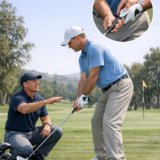
Transform, as defined by a complete alteration of form or character, captures the aim of modern golf coaching: to deliver structured, measurable advancement in a player’s swing, short game, and tee play. This piece, “Master Swing, Putting & Driving: Transform Golf for All levels,” combines contemporary biomechanical findings, motor learning principles, and hands‑on coaching to create a practical, evidence-driven roadmap for performance gains. Treating change as a systematic process-not scattered adjustments-aligns technical refinement, stroke economy, and force production as linked elements that produce reliable scoring improvements.
The overview that follows describes scope and methodology. We outline a tiered curriculum for novice, intermediate, and advanced players built around movement analysis, proven drill sequences, and objective metrics (kinematics, launch/profile data, and putting-stroke measures). We also integrate on‑course tactics and decision-making so technical progress converts into lower scores. Intended for coaches, performance staff, and committed golfers, this article reviews the empirical rationale for recommended interventions and supplies reproducible protocols to refine swing mechanics, enhance putting efficiency, and boost driving performance across ability levels.
Foundational Biomechanics: Building a reliable Swing with Objective Assessment
the golf swing functions as a linked biomechanical chain; achieving repeatability requires mastering the kinematic sequence-feet → hips → torso → shoulders → arms → club-and understanding how ground reaction forces drive clubhead velocity. Start by locking in a stable spine angle and modest knee flex (~10-20°) at address so rotation is efficient and lateral collapse is prevented. For full swings, aim for roughly 80-100° of shoulder rotation for manny men (ofen a touch less for women) with hip rotation near 30-45°; that separation stores elastic energy for the downswing. Use mirrors or video for immediate checks, and rehearse slow, purposeful reps that focus on initiating the downswing with a weight transition to the lead leg and a distinct push through the ground. The mechanical baseline is straightforward: preserve posture, create shoulder‑hip separation, and sequence forces from the ground to the clubhead to produce consistent, repeatable contact.
Objective measurement is essential for targeted correction. Deploy launch monitors and high‑speed recording to track clubhead speed, ball speed, smash factor, angle of attack, and face‑to‑path relationships. As an example, productive driver performance commonly features a slightly positive attack angle (about +1° to +4°) paired with a launch that complements the club’s loft to maximize carry and rollout, while mid‑iron strikes generally require a negative attack (around -2° to -5°) to compress the ball. When metrics reveal faults-such as an overly steep plane or a persistently open face-prescribe focused drills: impact‑bag repetitions to sense forward shaft lean, the step‑through drill to improve weight transfer, and slow‑motion swings with a 3:1 backswing-to-downswing tempo to reestablish timing.Clear diagnostics let coaches set quantifiable objectives (e.g., reduce face‑angle variability to ±2° at impact or raise smash factor by 0.05-0.10 over a training cycle).
Short‑game mechanics prioritize different variables: controlling effective loft, minimizing body motion, and achieving precise contact. On chips and pitches, maintain a small forward shaft lean at impact and keep the center of mass steady to produce predictable spin and launch. Putting should emphasize a shoulder‑driven pendulum with limited wrist action; preserve putter loft at address (typically 3-4°) and strive for face alignment within ±1-2° at impact. Useful drills to develop these skills include:
- Gate drill for putting-set tees to force a square path and discourage wrist manipulation
- Ladder drill for distance control-place balls progressively farther to train acceleration through contact
- Impact‑bag and towel drill for chips-feel compression and forward shaft lean at impact
Novices should begin with slow, deliberate repetitions to ingrain consistent contact; more advanced players can incorporate variable speeds and different green speeds to reduce three‑putts and raise up‑and‑down rates.
Equipment and setup convert biomechanical intent into ball flight. Make sure clubs are fit for both static and dynamic parameters-shaft flex tailored to tempo, correct lie angles to prevent directional misses, and loft mixes that produce target carry and spin. Address check points include:
- Ball position: centered for short irons, progressively forward for longer clubs and the driver
- Hand position: slightly ahead of the ball with irons to encourage compression
- Weight distribution: start near 50:50 and allow an intentional shift to the lead side during the downswing
A representative practice session of 60-90 minutes might include: 15 minutes of dynamic warm‑up and mobility (rotational medicine‑ball work, hip hinges), 30 minutes of technique with timely feedback (video or coach), and 15-30 minutes of pressure or simulation practice. Typical faults-early extension, hand casting, or an overactive upper body-respond to focused corrective drills (wall alignment, towel under the arms) and measurable targets such as limiting lateral hip slide to ≤5 cm on slow‑motion review.
Link biomechanics to course strategy and mental skills so technical gains actually reduce scores. Modify swing intent and club selection for conditions-choose a more controlled swing and higher loft in strong wind or wet turf, and use lower loft to capitalize on roll when surfaces are firm. Employ consistent pre‑shot routines combining visualization, breathing, and a single-point focus to lower tension under pressure.Track on‑course metrics like fairways hit, proximity from common yardages, and up‑and‑down percentage; set incremental goals (e.g., improve proximity by 2-4 yards in eight weeks).Use practice holes and simulated pressure events to validate that laboratory gains translate into competitive play and measurable scoring enhancement.
Progressive Drills & Objective Metrics: A Development Path for All Levels
create a consistent setup template as the foundation for reproducible swings. Emphasize neutral grip pressure (3-5/10), square shoulder alignment to the target, and standard ball positions (center for wedges, a ball width forward for long irons/woods). Use setup checkpoints you can measure: spine tilt of 5-7° for full shots,stance width equal to shoulder width for irons (broader for driver). For beginners, rely on simple, countable metrics such as a 3:1 backswing‑to‑downswing tempo and strike location checks with impact tape or spray. Common early errors-anticipatory head movement, an open address face, or reverse pivot-are best remedied with slow half‑swings and an alignment rod down the line to instill a square setup.
For intermediate players, progress to sequencing and measurable outputs. Teach the concept of coil-aim for a ~90° shoulder turn with ~45° pelvis turn for many amateurs-and emphasize a stable lower half through impact to preserve compression. Train lag and release with drills that produce observable jumps in clubhead speed and smash factor, such as the towel‑under‑arm or “pump” drill to feel retained wrist angle through transition. Use video (60-240 fps) plus launch data to monitor attack angle, dynamic loft, and face‑to‑path, and set incremental targets (reduce face‑to‑path variance to ±2°, raise center‑face strike to >70% in practice). Address faults-over‑the‑top, early extension, casting-by isolating the problem with short‑swing drills, then gradually adding length and speed while preserving the corrected motion.
Advanced players should focus on shot shaping, trajectory control, and tight impact management. Refine the relationship between dynamic loft, attack angle, and desired carry: a penetrating 7‑iron may target 12°-14° launch with spin around 5,000-6,500 rpm, while a high approach needs increased dynamic loft at impact. practice small face adjustments (1-3°) with drills like gate work and headcover targets to train feel for minor face changes and corresponding path variations. Optimize equipment by testing shaft flex/weight to match tempo and set measurable goals-raise fairway hit % by 5-10% or narrow five‑shot dispersion to under 10 yards for irons. Simulate tournament conditions (wind, tight lies, firm greens) and record metrics to ensure on‑range gains transfer to real play.
The short game and putting require objective targets and game‑like reps to reliably lower scores. Break the area into pitch, chip, bunker, and putting with measurable benchmarks-up‑and‑down rates of ~60% for intermediates and 75%+ for advanced players, plus three‑putt avoidance goals.Useful drills include:
- Clockface wedge drill: pitch to 10,20,and 30 yards to vary trajectory and landing zones.
- Two‑ball putting drill: alternate 6-12 ft putts aiming to make 15/20 to boost short‑range conversion.
- Bunker‑line drill: control splash by monitoring wrist hinge and face opening to repeat ~60-70% sand contact.
Teach trajectory adjustments by altering loft, ball position, and swing length rather of forcing shots with brute strength; quantify success with proximity metrics (e.g., land 40% of pitches inside 10 feet) and track progress across sessions.
Connect technical work to course management and mental strategy so improvements show up on the scoreboard. Train players to read greens and wind, interpret turf firmness, and select conservative options when risk outweighs reward-use expected strokes gained to quantify tradeoffs (for example, lay up to lower variance rather than risk a high‑penalty approach).Combine deliberate, focused practice with random, situational drills to build adaptability. A sample weekly plan: two technical range sessions (60 minutes each with metric targets),three short‑game/putting sessions (45 minutes),and one on‑course strategic session (9 holes). Address mental habits via pre‑shot routines, breathing cues, and outcome‑linked goals; for instance, set a target to reduce penalty strokes per round. By blending measurable drills, equipment tuning, and situational play, golfers at every level can methodically improve consistency and lower scoring averages.
Kinematic Sequencing & Training Protocols to Improve Driving Distance and Accuracy
The essential kinematic sequence channels energy from the ground upward through legs, pelvis, torso, arms, and finally the clubhead. Pelvic rotation should lead the downswing,followed by torso rotation,arm drop,and a late wrist release to maintain lag; this ordered timing maximizes clubhead speed without sacrificing direction. practically, aim for an 80-100° shoulder turn on full driver swings and hip rotation of roughly 35-55°, producing an X‑factor commonly between 20-50° depending on adaptability. Use the sequence to shape launch conditions: many players target driver launch in the 10-14° range with spin near 1,800-3,000 rpm for efficient carry and roll; adjust loft and spin for altitude, firmness, and wind. with targets set, the next step is methodical assessment to locate breakdowns.
Assessment should be standardized and measurable. Establish a baseline with a launch monitor (clubhead/ball speed, smash factor, launch, spin) and time segment peaks with high‑speed video or wearable IMUs. A practical protocol might be: 1) 10 warm‑up swings with a weighted club; 2) 10 monitored driver swings; 3) 3 backward medicine‑ball throws to reinforce the intended sequence. Record results and set SMART objectives (e.g., +5 mph clubhead speed in 12 weeks or a 300 rpm spin reduction). Validate improvements on course by tracking fairway percentage and proximity on par‑4s/5s to link range metrics to scoring impact. Effective drills (8-12 reps, three times weekly) include:
- Medicine‑ball rotational throws (2-4 kg) to emphasize pelvis lead and explosive torso rotation
- Step drill to feel a deliberate weight shift at transition
- Towel‑under‑arm drill to preserve arm‑body connection and prevent casting
- Impact‑bag or tee drill to train forward shaft lean and center‑face contact
Technique work targets common sequence faults with specific cues and measurable checkpoints. For early extension, practice with a chair or alignment pole behind the hips during slow swings to sense maintained posture; aim for no more than a 5° upper‑body tilt change through the swing. To recover lag (prevent casting), use the Pause‑and‑Go drill-pause briefly at the top, then start the downswing with a hip turn while holding wrist hinge through the initial descent. For lateral slide, introduce a subtle Lead‑Hip bump (~1-2 inches) at transition to create space for descending arms. Advanced players can compare frame‑by‑frame sequencing to pro benchmarks; beginners should prioritize stable positions and tempo (e.g., a 3:1 backswing‑to‑downswing rhythm).
Equipment and setup must support the kinematic sequence. Use a neutral stance for driver: ball just inside the front heel (R‑hander), a slight spine tilt away from the target, and an address weight bias that shifts to roughly 60% forward at impact.Match loft and shaft flex to swing speed: players under 90 mph clubhead speed often benefit from higher loft (≈10.5-12°) and softer flex to improve launch and spin, while those above 100 mph usually need stiffer shafts and lower loft (≈8.5-10°).Structure weekly practice with two technical sessions (20-30 minutes), one speed session (overspeed/weighted work), and one on‑course session to rehearse driver selection and preferred shot shapes.
Integrate sequence improvements into course strategy and the mental game. Apply decision rules: into the wind,select a controlled 3‑wood or long iron to keep trajectory low; on narrow,hazard‑protected fairways,favor accuracy and accept shorter drives to improve approach position.Include pressure drills (e.g., a 3‑ball competitive drill where the best two counts) to simulate decision making and pacing. Track progress with fairway hit %, average proximity from tee, and par‑4 scoring, adapting drills as needed. pair physical training with mental cues-a consistent pre‑shot routine,breath control,and a single landing‑zone target-to execute the kinematic sequence under pressure and deliver reliable driving distance and accuracy in rounds.
Precision Putting: stroke Mechanics, Green Reading & Pressure Training
start with reliable mechanics and equipment choices that promote repeatability.Most golfers use a 33-35 inch putter; choose a length that lets your eyes sit over or slightly inside the ball while maintaining a cozy spine angle. Confirm putter loft (2-4°) and head balance-toe‑hang for arced strokes, face‑balanced heads for straight strokes. Pre‑stroke setup checks should include:
- Feet: shoulder‑width or a touch narrower; weight balanced 50/50
- Ball position: slightly forward of center for mid‑length putts, centered for short ones
- Eyes: over or just inside the ball; maintain a relaxed neck
- grip pressure: light-about 2-3/10-to limit wrist intervention
Use these fundamentals as the baseline for drills and competition.
Refine a shoulder‑driven pendulum stroke with minimal wrist hinge. Most golfers should limit wrist break to 10-15° and maintain a slight forward press (≈½ inch) so contact is slightly descending or neutral rather than scooping. For tempo, a consistent ratio such as 2:1 backswing to forward stroke works well-example: a 1.2s backswing with a 0.6s forward stroke on a 10-12 ft putt, practiced with a metronome if required. Practice drills include:
- Gate drill: tees outside the putter head to groove a straight path
- Metronome drill: 60-70 bpm to train a steady 2:1 tempo
- Long‑line drill: roll putts along a seam or alignment rod to verify face alignment through impact
These mechanics underpin consistent speed control and scale from beginners to low handicaps.
Move from stroke mechanics to perceptual green reading and pace control. Learn to sense the fall line, grain direction, and moisture-small grades matter: a 2% slope can create measurable lateral deviation on a 10‑foot putt. Apply a slope‑based system (such as AimPoint logic) to convert perceived grade into an aim offset and strike force: feel slope with your feet, then translate that to aim and speed. Practical scenarios:
- Downhill putts: shorten backswing and hit firmer to avoid end‑over‑end speed; aim to leave lags inside 3 feet.
- Sidehill with grain: expect additional break when putting with grain; adjust face rotation on softer greens.
- Fast, firm greens: emphasize a pendulum stroke and limit wrist action to manage speed.
Drills like the ladder (3, 6, 9, 12 ft stops) and clock drill (six balls around the hole) develop both pace and directional feel.
To turn practice into performance, simulate pressure and use structured routines mirroring tournament play. Adopt a short pre‑shot sequence (≈3-5 seconds) that includes final read confirmation, one practice stroke, controlled breathing, and a commitment cue to prevent indecision. Use result‑based games (miss = penalty sprint or added practice strokes), group competitions, and timed reps to increase stress tolerance. Sample weekly distribution:
- Short range (<6 ft): 60-80 made putts per session to build holing confidence
- Mid range (6-15 ft): 50-60 reps focused on makes and leaving inside 3 ft
- Lag practice (15-40 ft): 40-60 reps emphasizing leaving inside 6-8 ft
Progress targets might include raising 8‑foot make percentage from 50% to 70% in six weeks while varying green speeds and adding time pressure to develop clutch performance.
Address common faults, link putting to course strategy, and build mental resilience with concrete fixes. Typical problems-excessive wrist action, inconsistent aim, or over‑controlling speed-are corrected by returning to setup, lowering grip pressure, and using video/mirror feedback to confirm shoulder‑driven motion. For the yips, consider a longer or heavier putter, heavier grip, or alternate grip styles to alter the motor pattern. Strategically, lag long downhill putts to avoid three‑putts and be aggressive on short, makeable putts on soft greens to maximize scoring chances. Remember the rules: you may mark, lift, and replace on the putting surface (see USGA Rule 13.1d), and opponents may concede putts in match play. Troubleshooting steps:
- Reconfirm setup checkpoints and ball/eye relation
- Use tempo drills (metronome) and alignment checks (rod/gate)
- Introduce pressure ladder games to rebuild confidence under stress
Combining mechanical correction, strategic choices, and mental rehearsal translates short‑game practice into tangible score reductions.
short‑Game Integration: Drills and Measurable outcomes to Save Strokes
Start by setting clear, measurable short‑game objectives that tie practice to scoring: aim for a 10-15% increase in up‑and‑down rate over 8-12 weeks and, for competitive players, a +0.2 to +0.5 improvement in Strokes Gained: Around‑the‑Green (SG:ARG). Also set distance control goals-leave pitches from 30-50 yards within ±2 yards of the intended landing spot and place chip shots inside 10 feet at least 70% of the time for low handicaps (beginners begin with a 50% target inside 15 feet). Assess progress regularly with round stats (up‑and‑down %, sand save %, putts per GIR) and simple practice drills that feed back measurable results.
Standardize setup and equipment choices across shot types. For chips, position the ball slightly back of center with a compact stance and shift 60-70% of weight to the lead foot; hands should sit about 1-2 inches ahead of the ball for a crisp descending strike. For pitches use a wider stance, ball slightly forward, and 50-60% weight forward to allow wrist hinge (~30-45°) for trajectory control. Choose clubs according to bounce and desired roll: low‑bounce for bump‑and‑runs,mid‑bounce (8-12°) for general pitching,and high‑bounce (12-14°) or open faces for soft sand/wet turf. Practice checkpoints:
- Ball position: back (chip) vs forward (flop/bunker)
- Weight: ~60/40 for chips; more centered for pitches
- Clubface angle: neutral for runs; open 20-40° for flops/bunkers
- Loft/bounce: match turf condition and desired spin
These rules reduce variability and help match execution to on‑course scenarios.
Work on mechanics and shot shaping with progressive, repeatable cues. Favor a stable lower body and an accelerating stroke where the low point is just in front of the ball for chips and slightly behind for soft pitches to create spin and trajectory. Use a pendulum motion for shots inside 10-15 yards with minimal wrist break; for pitches, add controlled wrist hinge (targeting ~30-45°) and accelerate through the ball to avoid deceleration. Troubleshooting:
- Thin shots: move ball slightly back and increase forward shaft lean
- Excessive turf contact: reduce bounce or close the face less
- Distance inconsistency: use a metronome to sync backswing length with follow‑through
Reinforcing drills include the landing‑spot drill (pitch to a 1-2 yard target), towel‑under‑arms for connection, and the clockface swing‑length exercise for 25-60 yard calibration.
Integrate course management and green reading into short‑game decision making. Assess green speed (stimp), slope, and pin location to choose between bump‑and‑run, full pitch, or high flop. For example, on firm greens with a tucked front pin, a bump‑and‑run with a 7‑iron or 4‑iron produces predictable roll and improves up‑and‑down odds. Factor in wind and grain-into‑wind pitches often require a half‑club more and a higher landing spot; downwind shots need less. Observe Rules of Golf when practicing on course: mark and replace on greens and avoid turf damage. Practice scenarios should include leaving flagsticks in or out and knowing when conservative play improves scoring probability.A helpful on‑course metric: keep missed approaches within 10-15 feet to raise birdie chances.
Prescribe structured practice with measurable outcomes and mental integration to ensure on‑course transfer.A weekly plan might look like:
- 3 sessions × 30-45 minutes focused on short game: 60 purposeful chips (20 each from 10, 20, 30 yards), 40 pitches from variable lies, and 20 bunker shots-track percentages in target zones
- One competitive Up‑and‑down challenge: 10 simulated course lies with a 7/10 conversion goal to build pressure tolerance
- Distance control sets: 5 reps per band (10-20, 20-30, 30-50 yards) aiming for ≥70% inside the target circle scaled to ability
Measure outcomes with up‑and‑down %, sand‑save %, average putts inside 10 feet, and subjective confidence. Adapt to learning preferences-visual players review video and landing spots, kinesthetic players use high‑rep feel drills, auditory players use metronomes. Add a concise pre‑shot routine, breathing control, and visualization to limit anxiety-mental skills matter as much as technical work for converting practice into lower scores.
Individualized Plans: video, Wearables & Performance Benchmarks
Start with a comprehensive assessment combining high‑frame video and wearable sensor data to establish an individualized baseline. Capture a setup photo and full‑swing video at 120-240 fps (or higher) from down‑the‑line and face‑on angles, and log wearable metrics such as clubhead speed, tempo, wrist hinge (degrees), pelvic rotation, and impact acceleration. From launch monitors record launch angle, spin rate, ball speed/smash factor, carry, and dispersion. Use these values to set tangible benchmarks-such as, aim for driver carry dispersion within ±15 yards, a progressive clubhead speed increase of 1-3 mph per month depending on training age, and consistent carry numbers for common clubs. Annotate video with lines for spine angle, shoulder plane, and shaft plane so frame‑by‑frame comparisons against an ideal model expose mismatches and produce clear coaching cues.
Turn assessment into prioritized technical actions using measurable cues. Reinforce the kinematic sequence-initiate downswing with lower‑body rotation, then torso, arms, and hands for efficient energy transfer. Practical targets include maintaining a spine angle between 15-25° at address, reaching a shoulder turn near 90° (men) / 70-80° (women), and achieving hip turn of 30-45°. Train these positions with sensor‑backed drills:
- Alignment‑stick gate drill for path and face control
- Towel‑under‑armpit to keep arm‑body connection
- Step‑through drill for correct weight transfer
- Impact‑bag or slow‑motion video to reinforce a neutral‑to‑slightly‑shallow iron attack (≈-1° to -4°) and a slightly positive driver attack (+1° to +4°) where helpful
Common faults-casting, chest over‑rotation, lateral sway-can be remedied by shortening swings, emphasizing hip clearance, and using immediate sensor feedback to confirm changes in wrist hinge and club velocity.
Apply technology to the short game with distinct benchmarks.For chips and pitches, track launch angle and spin to choose optimal loft (e.g., 56° vs 52° depending on desired descent angle). For putting, measure face angle and stroke path and aim for face‑to‑path within ±1-2° at impact to boost short‑range conversion. Practical drills:
- Clock drill for 5-50 yards to lock in distance control
- Putting ladder (3′, 6′, 10′) establishing targets-aim for 95% from 3′ and 70-80% from 6′ as benchmarks for low handicaps
- Gate drill sized at putter head width + 0.5″ to refine face control
Additionally,practice under varied course conditions-firm greens,steep slopes,wind-so that wearable and video metrics (spin,descent angle,rollout) align with felt experience and transfer to rounds reliably.
Integrate numbers into strategy: if your 7‑iron reliably carries 150 yards with ±8 yards dispersion, aim approaches to the safer side when hazards sit inside that margin. In risk scenarios (e.g., par‑5s guarded by water), choose layup yardages (e.g., 230 yards from the tee) using your measured fairway‑wood/hybrid carry rather than guessing. When wearable data reveals inconsistent driver face control, favor a 3‑wood or hybrid for tighter landing zones to boost GIR and scoring.Also use rules‑aware approaches-if an OB or penalty area exists, select shots that reduce forced carries beyond hazards and employ relief options strategically when available.
Design a periodized plan with objective reassessments so practice links directly to scoring metrics. Structure sessions with a warm‑up (mobility, dynamic impact drills), a technical block (20-30 minutes with video/sensor feedback), a skills block (pressure drills), and an on‑course/competitive block (9-18 holes). Set short‑term targets (reduce dispersion by 10 yards in six weeks; increase GIR by 5-10% in eight weeks) and retest every 4-6 weeks with the same protocols. If progress plateaus, adjust load, vary stimuli, or evaluate equipment (loft/lie/shaft) to ensure the body and gear produce the intended ball flight. Coupling quantified feedback with concise practice prescriptions enables measurable, strategic gains at all levels.
Course Strategy & Decision Making: Turning Technical Gains into Lower Scores
To convert technical improvements into better scoring, begin each round with a consistent setup routine that links mechanics to on‑course choices. Build a repeatable address ritual: for driver place the ball approximately 1.5 ball‑widths inside the trail heel, for mid‑irons aim a ball‑width left of center (R‑hander), and for wedges shift slightly back toward center. Maintain 1-2 inches of forward shaft lean for irons and a spine angle that permits a full shoulder turn (~90°). Track progress with measurable goals-reduce 150‑yard dispersion to ±10 yards and cut three‑putts by 50% in eight weeks-and translate range numbers into yardage bands (100-125, 125-150, 150-175) for clearer club selection on course.
Refine tee‑shot strategy so ball flight matches risk management. Train small face/path adjustments-open or close the face by 1-3° to shape shot while maintaining a neutral path. When deciding to attack or play safe, weigh reward against likely penalty: if a fairway bunker or lateral hazard creates stroke risk, target the broader margin. Rehearse shaping with drills:
- Gate drill for consistent impact location (tees 6-8 inches apart)
- Path‑isolation: alignment stick 2-3 inches outside the ball to train inside‑out or outside‑in paths
- Controlled flight set: 20 drivers alternating 10 draws and 10 fades to monitor carry and dispersion
These exercises help build a reliable tee plan so subsequent approach shots are simpler.
For approach play, combine swing mechanics and course variables into yardage and landing‑zone planning. Target a landing strip-e.g.,30-40 yards short of the pin on firm greens for controlled rollout or 10-20 yards short on soft greens to hold. Use attack angle as a cue; irons typically show a slightly negative attack (~-2° to -6°) to ensure crisp,predictable spin. Distance control drills:
- Progressive yardage ladder: 5 shots at 50, 75, 100, 125, 150 yards focusing on swing length and tempo
- Impact tape or spray to confirm consistent low‑point contact
- Club‑down exercise: hit shots one club shorter to learn stopping behavior
Validate loft and shaft choices with a launch monitor so club selection matches on‑course yardages and expected wind conditions.
Short game and putting save strokes-align technique with green reading and pace control. On chips,control leading edge and shallow attack so the club’s loft sets launch; for bunker shots use bounce and an open face to slide beneath the ball. On long putts aim to leave inside 3 feet from beyond 20 feet and practice a two‑step read: locate high/low visually, then practice pace to a landing target short of the hole. helpful drills:
- Ladder lag: tees at 10, 20, 30, 40 feet aiming to stop inside the circle
- Clock face putting: 12 balls around a 3‑foot circle to build short‑range confidence
- Bunker sightline: pick a front edge landing spot and open the face to land consistently ther
Use green repair and alignment time to reaffirm pace and commit to the line under the Rules of Golf.
Create an on‑course checklist that marries technical and tactical choices to mental resilience.Begin holes with an aerial and green‑side appraisal (wind, slope, firmness, hazards) and pick a target area rather than a risky pin when variance is high. Management goals could include limiting penalty strokes to fewer than two per round, playing to birdie percentage targets, and prioritizing bogey protection on hard holes. Troubleshooting on course:
- Rising dispersion: re‑establish a three‑ball routine (alignment,short swing,then full swing)
- Putting speed issues: cut backswing length by 10-20% to stabilize tempo
- uncomfortable shot: choose a lay‑up that leaves a full wedge or short iron into the green
A disciplined decision tree and measurable practice goals enable golfers-from beginners learning setup to low handicappers refining shot choice-to translate swing,putting,and driving improvements into fewer strokes.
periodization, Recovery & Mental Skills to Sustain Development and Performance
Organise training with a calendar that balances physical work, technical practice, and competition. Use a three‑tier periodization approach: macrocycle (12-52 weeks), mesocycle (4-12 weeks), and microcycle (7-14 days).An off‑season macro (12-16 weeks) should prioritize strength, mobility, and slow technical rep learning; a pre‑season mesocycle (6-8 weeks) shifts toward speed/power and on‑course simulation; in‑season microcycles focus on maintenance-keeping intensity at ~70-80% while reducing volume by 30-50%. Assign measurable cycle goals (e.g., +3-5 mph driver speed in 12 weeks or improving GIR from 120-150 yards) and schedule 2-4 technical sessions weekly in build phases, tapering to 1-2 light sessions plus competition during tournament weeks.
Integrate recovery systematically to protect learning and performance. Prioritize 7-9 hours sleep, protein intake near 1.6-2.2 g/kg, and electrolyte‑aware hydration during long practice days. add daily mobility and active recovery (20-30 minutes low‑intensity activity) targeting golf‑specific ranges: thoracic rotation (~40-60°), hip internal rotation (~30-40°), and adequate ankle dorsiflexion for stable setup. Apply evidence‑based modalities selectively-contrast baths for acute inflammation, brief foam rolling for tissue quality, and breathing or progressive relaxation to restore parasympathetic tone. A practical recovery checklist:
- Daily: dynamic warm‑up, 10 minutes mobility, 20 minutes low‑intensity cardio on rest days
- Post‑intense session: 10-15 minutes light cycling/walking + 5-10 minutes foam rolling
- Weekly: one active‑rest day with restorative work and visualization
Mental skills ensure practice carries over into competition. Build a concise pre‑shot routine (identify target → visualize → set up → two practice swings → trigger) and rehearse it under pressure until it becomes automatic; aim for a consistent duration of 8-15 seconds. Structure goals across three tiers-process (e.g., maintain spine angle), performance (e.g.,70% of 30‑yard pitches inside 10 feet),and outcome (e.g., reduce score by two strokes in a month)-to guide practice and feedback. use imagery and arousal control (box breathing 4‑4‑4), progressive exposure (competitive rep sets with consequences), and short cue words (e.g., “rotate,” “hold,” “smooth”) to restore technique under stress. Track psychological metrics such as pre‑shot anxiety on a 1-10 scale and target a 1-2 point reduction over a 6-8 week mental program.
Link periodization and recovery to measurable swing and short‑game targets during skill acquisition. Typical observable targets include address spine tilt near 20°, knee flex 15-20°, and neutral wrist hinge allowing 1-3° forward shaft lean at impact for irons; aim for a low‑point ~1-2 inches in front of the ball on iron strikes. Drills to support this:
- Tempo metronome: 3:1 backswing to downswing ratio, 30-50 half‑swings per set
- Step drill: start feet together, step into a balanced impact to prevent early extension
- Impact bag/tee drill: short swings into an impact bag or tee 1 inch forward to feel forward shaft lean
- Short‑game clock drill: chip around a hole at 3, 6, 9, 12 o’clock to sharpen distance control
Address common faults-casting, early extension, over‑gripping-with appropriate corrective drills and equipment checks; confirm loft/lie settings with a launch monitor and tune spin‑loft/attack angle combos (e.g., a 7‑iron attack ≈-3° with spin loft ~35-40° depending on setup).
Translate training to course readiness through consistent warm‑ups, situational practice, and in‑round recovery. Adopt a 20-30 minute dynamic warm‑up followed by a progressive range sequence (30-40 balls: half → 3/4 → full → targeted shots) and 10-15 short game strokes pre‑competition; make this routine habitual. When fatigued or in foul weather, club up into wind, use higher‑bounce wedges from soft bunkers, and choose conservative lines to reduce risk-these are tactical decisions aligned with physical state. Track quantitative on‑course targets such as +0.5 strokes gained on approaches inside 150 yards or a 25% reduction in three‑putts in 12 weeks using strokes‑gained and GIR metrics from your launch monitor or shot‑tracking app. Combining periodized practice, sensible recovery, and evidence‑based mental skills with targeted drills and on‑course strategy lets players sustain skill gains and convert practice into lower scores.
Q&A
Note on search results
– The supplied web search results were unrelated to golf instruction. The Q&A below thus synthesizes evidence‑based coaching principles and contemporary best practices in motor learning and biomechanics rather than citing the irrelevant links.
Q&A: Master Swing, Putting & Driving – Transform Golf for All Levels
1) Q: What is the core aim of a program to master swing, putting, and driving across abilities?
A: The goal is repeatable, measurable improvement in three domains: full swing (consistent flight and contact), driving (distance with controlled dispersion), and putting (holistic green performance). Achieve this via biomechanical analysis, motor‑learning progressions, level‑appropriate drills, and objective metrics that support iterative assessment and on‑course integration to lower scores.
2) Q: Which biomechanical variables matter most?
A: For full swing/driving: clubhead speed, center‑face contact (smash factor), launch angle, spin rate, swing plane, lower‑body sequencing (pelvis initiation and weight transfer), torso rotation, and kinematic timing. For putting: face angle at impact, stroke path, impact location, tempo ratio, and balance/pressure distribution (force plates are informative for both putting stability and swing weight transfer).
3) Q: What measurement tools are recommended?
A: High‑speed video for kinematic review, 3D motion capture or IMUs for sequencing, launch monitors (TrackMan/FlightScope style) for ball/launch metrics, pressure mats for balance, and putting analyzers for stroke/path/face data. Use validated consumer devices where budgets constrain choices and keep consistent protocols to ensure comparable retest data.
4) Q: How should training differ by level?
A: Beginners: nail fundamentals-grip, posture, stance, simple impact mechanics, and basic putting-using high‑frequency, low‑complexity reps.Intermediates: add variability, partial‑swing control, trajectory shaping, and launch data feedback. Advanced: pursue marginal gains-optimize smash factor, spin/launch windows, tempo consistency, and practice for transfer and pressure handling. Progressions should follow motor‑learning principles (blocked → random, performance → results, deliberate practice).5) Q: What practice structures optimize learning and retention?
A: Prioritize distributed, goal‑directed sessions over high‑volume mindless range time.Use variable practice to build adaptability, interleave skills, induce contextual interference for better retention, and provide delayed/summary feedback to promote self‑evaluation. Schedule regular objective testing and simulate on‑course variability to drive transfer.
6) Q: Example swing drills by level?
A: Beginners: alignment‑rod setup and half‑swing contact drills. Intermediates: metronome tempo matching, toe‑up/toe‑down transition drills for lag.Advanced: overspeed/weighted training, and constrained tasks (smaller targets, flight‑window goals) to develop precision under pressure.
7) Q: Practical putting drills by level?
A: Beginners: gate and short ladder drills. Intermediates: clock drill and two‑putt pressure sets. Advanced: multi‑speed green simulations,timed read‑and‑execute scenarios,and competitive scoring drills.
8) Q: Driving drills to balance distance and control?
A: Progressive target narrowing from wide to narrow fairways, launch‑window practice (meet target launch/spin ranges), and stability drills (medicine‑ball throws, step drills) to reinforce correct sequencing.
9) Q: How to quantify improvement?
A: Combine objective metrics (clubhead/ball speed, smash factor, carry, dispersion, putting stroke metrics) with scoring data (scoring average, strokes‑gained components). Set SMART goals and compare baseline to periodic retest results using standardized protocols.
10) Q: How does strategy enhance transfer to lower scores?
A: Practice should include situational scenarios-shot shaping, pre‑shot routines, club selection under variability, short‑game recovery drills, and risk‑reward practice-to align technical skills with tactical decisions and reduce costly on‑course errors.
11) Q: Role of conditioning and injury prevention?
A: Rotational strength, hip and thoracic mobility, scapular stability, and core endurance support efficient mechanics, power transfer, and durability. Screen asymmetries and tailor conditioning to reduce compensations and injury risk.
12) Q: How to use feedback and tech without overload?
A: Limit feedback to a few actionable metrics (clubhead speed, impact face angle, putter face angle) and display them simply. Start with feel and basic technique, then layer quantitative data. Teach players to interpret results to foster autonomy rather than reliance.
13) Q: Which psychological skills complement technical work?
A: arousal regulation, consistent pre‑shot routines, attentional control, goal setting, reflection logs, and stress‑inoculation drills prepare players to execute technical skills under competitive pressure.
14) Q: How often to test?
A: Baseline assessment, with retests every 4-8 weeks for technical metrics and every 8-12 weeks for conditioning; weekly micro‑checks for process indicators. Adjust frequency by player level and training phase.
15) Q: Sample weekly microcycle for a serious amateur?
A: Day 1: full‑swing technical + mobility (60-75 min). Day 2: putting & short game (60 min). Day 3: conditioning (rotational strength/power) + recovery. Day 4: simulation (on‑course scenarios). Day 5: speed/overspeed and targeted drill work (45-60 min). Daily short putting sessions (10-15 min) and prioritized rest/sleep.
16) Q: Common misconceptions to avoid?
A: Quality matters more than sheer ball count. Technology is a tool, not a cure.There is no single “perfect” swing-individual constraints require personalized solutions.
17) Q: How to report progress professionally?
A: Deliver metric‑based summaries with baseline, interventions, intermediate results, and next steps. Visualize trends, interpret with confidence intervals where possible, and link technical improvements to scoring metrics to demonstrate applied value.
Closing guidance
– A cohesive program to master swing, putting, and driving pairs biomechanical assessment, motor‑learning progressions, level‑appropriate drills, objective measurement, tactical training, conditioning, and mental skills. Structure progressions deliberately, measure consistently, and practice in context so improvements transfer to lower scores and greater on‑course reliability. For practitioners, the prescription is clear: combine precise assessment with targeted drills and situational play to produce consistent strokes and improved scoring outcomes. For researchers and technologists, longitudinal validation of these protocols and emerging measurement tools remains a priority to refine coaching efficacy.
To Conclude
a systematic, evidence‑based approach to golf instruction-grounded in biomechanics, quantifiable performance metrics, and tiered drill progressions-creates a practical path for enhancing swing mechanics, putting, and driving across ability levels. Translating biomechanical insight into reproducible practice protocols and embedding course strategy reduces reliance on intuition and increases measurable, repeatable gains.
Practically, this framework encourages routine use of objective metrics to guide individualized progression while preserving game‑like practice that simulates real decision making. Coaches and players should align movement assessment, targeted drills, and strategic scenarios to achieve consistent strokes and lower scores. With rigorous assessment, evidence‑based programming, and course‑aware training, golfers at every level can realize durable improvement and greater on‑course dependability.

Unlock Your Best Golf: Biomechanics & Drills for Every Player
Why biomechanics matter for your golf swing
Golf performance is a blend of efficient movement and smart practice.Biomechanics-the study of how the body moves-helps golfers produce consistent clubhead speed, accurate clubface control, and repeatable impact. When you align posture, sequencing, rotation, and balance, your ball flight becomes more predictable and your scores improve.
Key biomechanical principles
- Posture & spine angle: A strong address position (neutral spine, slight knee flex) creates a consistent swing plane and reliable strike.
- Sequencing (kinematic chain): Power should travel from ground → hips → torso → arms → club. Poor sequencing causes early release or slices/hook tendencies.
- Hip rotation & stability: Rotational drive from the hips creates torque and speed while stability controls face orientation.
- Energy transfer & center of mass: Efficient weight shift and balance let you transfer energy into the ball without over-arming.
- Clubface control at impact: The clubface angle at impact drives direction; small changes create big misses.
Essential setup checklist (swing mechanics)
- Feet shoulder-width for mid-irons; slightly wider for driver.
- Neutral grip pressure (about 4/10) to allow clubhead release.
- Balled forward for longer clubs to promote sweep (driver) and centered for irons.
- Chin up, chest over ball, slight knee flex, and a stable lower body.
Progressive drill plan by skill level
Below is a simple weekly drill progression you can adapt. Focus on 15-30 minutes of quality practice per session rather than hitting dozens of balls mindlessly.
| Level | Primary Focus | Drill (10-20 min) | Outcome |
|---|---|---|---|
| Beginner | Setup & contact | Slow swing to impact (w/ alignment stick) | Cleaner crisp strikes |
| Intermediate | Sequencing & tempo | Step-through rhythm drill | Better timing & distance control |
| Advanced | Shape & consistency | Destination-target shaping drills | Trustable ball flight |
Warm-up & mobility routine (5-10 min)
Good mobility primes the body for the kinematic chain. Try this before range sessions or a round:
- Cat-cow + thoracic rotations (1-2 min)
- Leg swings front-to-back and side-to-side (30 sec each leg)
- Hip circles and banded lateral walks (1-2 min)
- shoulder wall slides or arm circles (1 min)
- Short easy swings – half to three-quarter speed, slowly increasing
High-value swing drills
1. Impact bag or towel drill (contact & compression)
Place a towel on a pole or use an impact bag. Make short swings focusing on compressing the bag/towel wiht the clubface square. This trains forward shaft lean and crisp contact, improving iron performance and spin control.
2. Kinematic sequence step drill (timing)
Address the ball and step toward target with your front foot at transition, starting the downswing with the hips. This exaggerates hip-first sequencing,teaching the lower body to lead and the arms to lag properly.
3. Pause-at-top (connection & plane)
Make a full backswing and pause for one second at the top to check wrist set, shoulder turn, and left arm connection.Than swing down with intention. This builds awareness of positions and prevents over-acceleration with the hands.
4. Gate drill for clubface control
- Place two tees slightly wider than the clubhead a few inches in front of ball line.
- Hit shots through the gate-this encourages delivering a square face and correct swing path.
Tempo, rhythm & speed work
Tempo is often under-taught. Use a simple ratio (1:2 backswing to downswing) to create rhythm. For speed training, integrate short overspeed swings with a lighter club or speed trainer for 2-3 sets of 8-12 reps-always with recovery between sets.
Putting biomechanics & drills
Putting success depends on stable setup, consistent stroke arc, and face alignment more than raw power. Use these drills to build repeatable putting mechanics.
Putting fundamentals
- Eyes over or slightly inside the ball (experiment for comfort).
- Shoulders control the arc; wrists remain quiet.
- Use a slight forward press with hands at setup to promote solid contact.
Putting drills
- Gate putting drill: Two tees just wider than putter head to train square face at impact.
- 3-Spot drill: Putt three balls to a 3-foot target from varying angles-repeat until you make all three in a row.
- Distance ladder: Putt from 5, 10, 15, 20 feet focusing on speed control-count how many make the “two-putt zone.”
Driving & tee shots (accuracy + distance)
Driver performance is about launch conditions: clubhead speed, launch angle, spin rate, and face-to-path relationship. Prioritize consistency over maximum swing speed until you can control your miss.
Driver setup tips
- Tee the ball high enough to sweep the ball off the tee with a slight upward attack angle.
- Wider stance and more shoulder tilt to promote shoulder tilt through impact.
- Weight slightly on back foot at address to encourage a shallow takeaway and powerful transition.
Driver drills
- Headcover under lead arm: Keep a headcover under your lead arm to maintain connection and prevent flying elbows.
- Hit to fairway targets: Set up alignment sticks or cones downrange. Focus each bucket on hitting the target, not maxing speed.
- Launch monitor checkpoints: If available, track carry, spin, and launch-target a launch that balances speed and stabilize spin (ex: higher speed with moderate spin gives better roll).
Short game & chipping drills
Short game saves strokes.Chop practice into technique and creativity drills:
- Landing zone drill: Use a towel or small landing spot on the green and practice landing the ball there from different lies to control spin and roll.
- Sand save simulation: From rough or fringe, practice getting up-and-down with a 60-70% wedge swing to a tight target.
- Clock face drill: Place balls at 12,3,6,and 9 o’clock around a hole and chip to each-builds versatility of trajectory and spin.
How to structure a practice week (sample)
Here’s a balanced weekly structure for enhancement without burning out. Adjust volume to your available time and physical limits.
| Day | Focus | Session (30-60 min) |
|---|---|---|
| Mon | Mobility + short game | 10 min mobility, 30 min chipping/putting |
| Wed | swing mechanics | 20 min drills (impact, tempo), 20 min full-swing to targets |
| Fri | Driving & shaping | 30-45 min driver work with target practice |
| Weekend | On-course play | Play 9-18 holes using practice goals (one swing thought per hole) |
Measuring progress: what to track
Use simple metrics to judge improvement:
- Fairways hit, greens in regulation, up-and-down percentage, putts per round
- Ball flight trends (slice, draw, low, high)
- Practice quality counts: percentage of drill reps that met the goal
Common faults and rapid fixes
- Slicing: Cause-open clubface or outside-in path. Fix-gate drill, stronger grip, path drills, and practice inside-to-out path swings.
- Fat shots: Cause-early weight shift or reverse spine angle. Fix-impact bag, slow-motion strikes, and lower-body stability drills.
- Topping: Cause-head lift or poor weight transfer.Fix-keep eyes steady through impact and practice ball-first drills with short swings.
Benefits and practical tips
- Consistency: Biomechanics-focused practice reduces random errors and speeds learning.
- Injury prevention: Good mobility and sequencing reduce strain on the back and shoulders.
- Time-efficiency: Structured drills deliver more improvement per minute than aimless range sessions.
- Tip: Record video from down-the-line and face-on to compare before/after and track improvements.
Case study: converting practice to lower scores (example)
Player A (mid-handicap) added a weekly 30-minute impact/timing routine and 20 minutes of putting drills. Over 8 weeks they reported:
- Greens in regulation +12%
- Two-putt percentage improved by 8%
- Average score dropped by 3-4 strokes in casual play
Note: results vary by player; consistency and quality of practice drive gains.
First-hand practice blueprint (what to do tomorrow)
- Warm up 5 minutes with mobility exercises.
- 15 minutes impact & tempo drills (impact bag, pause-at-top).
- 15 minutes short game (landing zone & clock-face chips).
- 15 minutes putting ladder for speed control.
- Wrap with 10 quality driver shots to fairway targets-focus on one swing cue.
Quick FAQs (SEO-friendly)
how long before I see improvement?
With focused,quality practice 2-4 times per week,many golfers see meaningful changes in 4-8 weeks. Mobility and simple mechanics often produce early wins.
Do I need a launch monitor?
no-most improvement comes from feel and targeted drills.A launch monitor can accelerate progress by giving objective feedback on launch angle, spin, and spin axis.
Can biomechanics fix my chronic slice?
often yes-by addressing grip, club path, and impact face control through drills and sequencing work. If the slice persists, consider a lesson for personalized diagnosis.
Note on similarly named services
If you searched “Unlock” and found unrelated results (e.g.,Unlock home equity services),that’s a different brand unrelated to golf. This article focuses on unlocking your golf performance through biomechanics and practice.