
The Importance of Follow-Through in Golf Performance
The follow-through phase in every golf swing is fundamental to the shot’s accuracy, consistency, and overall quality. A smooth and controlled follow-through is a clear sign of efficient swing mechanics and helps ensure the clubface remains properly aligned at impact.Achieving a balanced finish, with roughly 70% of your weight on the lead foot and your hips and shoulders fully rotated toward the target, signals that your swing has delivered maximum power and precision. As an example, during approach shots or mid-iron plays, a fluid follow-through prevents deceleration, which can otherwise reduce distance and cause erratic ball flight. To cultivate this skill,golfers at all levels should incorporate drills like the “pause-at-impact” exercise,which involves briefly holding the club at the impact position before completing the swing. This technique builds muscle memory for consistent clubface control and tempo, directly enhancing shot shaping and strategic course management through dependable ball striking.
Incorporating follow-through awareness into your course strategy means understanding how it adapts to diffrent conditions and shot types. when facing uphill lies or strong headwinds, extending a full, high finish with a slightly open clubface helps generate the loft and spin needed for the ball to hold greens more effectively.Conversely,on tight fairways or under pressure,a shorter,more compact follow-through can improve trajectory control and reduce the risk of hooks or slices,tailoring your technique to the situation. Equipment also plays a role; for example, drivers with adjustable loft settings allow fine-tuning of launch angles and spin rates but depend heavily on a consistent finish to maximize their benefits. Ultimately, a reliable follow-through acts as a feedback tool, enabling golfers to detect subtle tempo or alignment issues early through feel and positioning. Whether you’re a beginner building solid fundamentals or an experienced player refining precision, focusing on follow-through mechanics during practice and on-course play leads to improved scores and more confident shot execution.
Perfecting the Driving Follow-Through for Power and Accuracy
Delivering a powerful and accurate drive starts with mastering the follow-through, a critical component that reflects the efficiency of your swing and energy transfer. To achieve consistency, emphasize finishing in a balanced position where your weight is fully transferred to your front foot, your hips and shoulders face the target line, and your hands extend naturally toward the target. The optimal follow-through angle for driving usually has the club shaft pointing about 45 degrees past the target line,with the clubface slightly closed or square, promoting both distance and directional control.Drills like the “Pause and Hold” are effective for ingraining this position: pause for 3-5 seconds after impact to develop muscle memory and biomechanical stability. Using alignment rods during practice can also help maintain the correct swing path and finish direction,preventing common faults such as “casting” or “early release” that reduce power and cause errant shots. This approach is especially valuable in challenging conditions like windy days or narrow fairways, where precise shot shape and trajectory are crucial to avoid hazards and rough.
From novices to advanced players,controlling follow-through mechanics is essential for effective course strategy and shot selection. Beginners benefit from simplifying their finish and focusing on smooth acceleration through the ball, which improves contact reliability and reduces slices or hooks. Intermediate golfers can track clubhead speed with launch monitors, aiming for consistent speeds between 85-100 mph to balance distance and control. advanced players should use feel-based drills such as slow-motion swings and video analysis to detect subtle variations in wrist release and body rotation that affect shot dispersion. Proper equipment fitting-including shaft flex and club length-also influences your ability to maintain a solid follow-through and generate clubhead speed efficiently. Mentally, adopting a confident follow-through mindset supports rhythm and focus, especially during pressure-packed tee shots on par 4s and 5s where positioning is key. Mastering thes elements creates a repeatable, powerful driving swing that enhances course management and lowers your handicap.
Enhancing putting Accuracy Through a smooth Follow-Through
A smooth follow-through in putting is vital for consistent distance control and accuracy across different green conditions. Start with a proper setup: maintain slight knee flex and bend from the hips, ensuring your eyes are directly over the ball to promote a square putter face at impact. During the stroke, allow your shoulders to pivot in a pendulum motion while keeping your wrists firm but relaxed. A fluid follow-through naturally extends the putter head along the target line, helping to avoid deceleration-a common cause of mis-hits and inconsistent ball roll. To build muscle memory, try drills like the “gate drill,” where you roll putts through a narrow channel formed by tees, emphasizing a balanced finish with the putter face slightly open through impact. Practicing on greens with speeds ranging from 8 to 12 feet per second, typical of most courses, will improve your adaptability and confidence.
Beyond technique, mastering the putting follow-through enhances course strategy by improving your ability to read breaks and execute lag putts that reduce three-putts. When dealing with subtle slopes or grainy turf, commit fully to your stroke length and follow-through arc, as hesitation often leads to deceleration and poor pace control. Golfers at all levels benefit from a consistent post-impact routine where the putter remains on line and finishes naturally, fostering trust in the stroke and mental focus under pressure. Experiment with putter lie angles and shaft lengths to find settings that support effortless follow-through without compensating with your hands or upper body. Set measurable goals,such as achieving 90% accuracy from 6 to 12 feet with a steady follow-through,combining technical refinement with game-like pressure. This comprehensive approach sharpens your short game precision and directly contributes to lower scores by increasing up-and-down success and reducing strokes around the green.
Effective Drills and tips for a Reliable follow-Through at Any Level
Developing a consistent follow-through starts with establishing a solid setup and finish position. Begin by ensuring your grip,stance,and posture promote balance and control throughout the swing. For example, aligning your shoulders and feet square to the target encourages an in-to-out swing path, which helps reduce slice tendencies that disrupt follow-through fluidity. During the backswing, prioritize smooth tempo over power; then, as you transition to the downswing, maintain your spine angle and initiate hip rotation to generate natural clubhead speed. The “pause and hold” drill is invaluable: after impact, hold your finish for at least three seconds, transferring your weight to the front foot with your chest facing the target and the club shaft positioned behind your head at about a 90-degree angle. This reinforces muscle memory and biomechanical awareness, preventing early release or deceleration that frequently enough diminish driving distance and putting consistency.
Once the basics are mastered, incorporate drills that refine timing and direction under various playing conditions, such as uneven lies or gusty winds. for instance, using alignment rods to visually guide your swing plane can substantially improve follow-through path and clubface angle, which are crucial when shaping shots around hazards or adjusting to firm greens. In putting, practice a pendulum stroke emphasizing smooth acceleration through the ball with a follow-through length proportional to the distance-shorter for lag putts and longer for breaks. Set measurable goals like maintaining a follow-through clubhead height of about 3 to 5 inches above impact level, verified with mirror checks. Additionally, video analysis during practice can help track shoulder tilt and hip rotation consistency, traits that distinguish advanced players who produce repeatable shot shapes under pressure. by integrating these drills into your routine, you develop a dependable and adaptable follow-through that enhances scoring opportunities and stabilizes performance even in challenging course conditions.
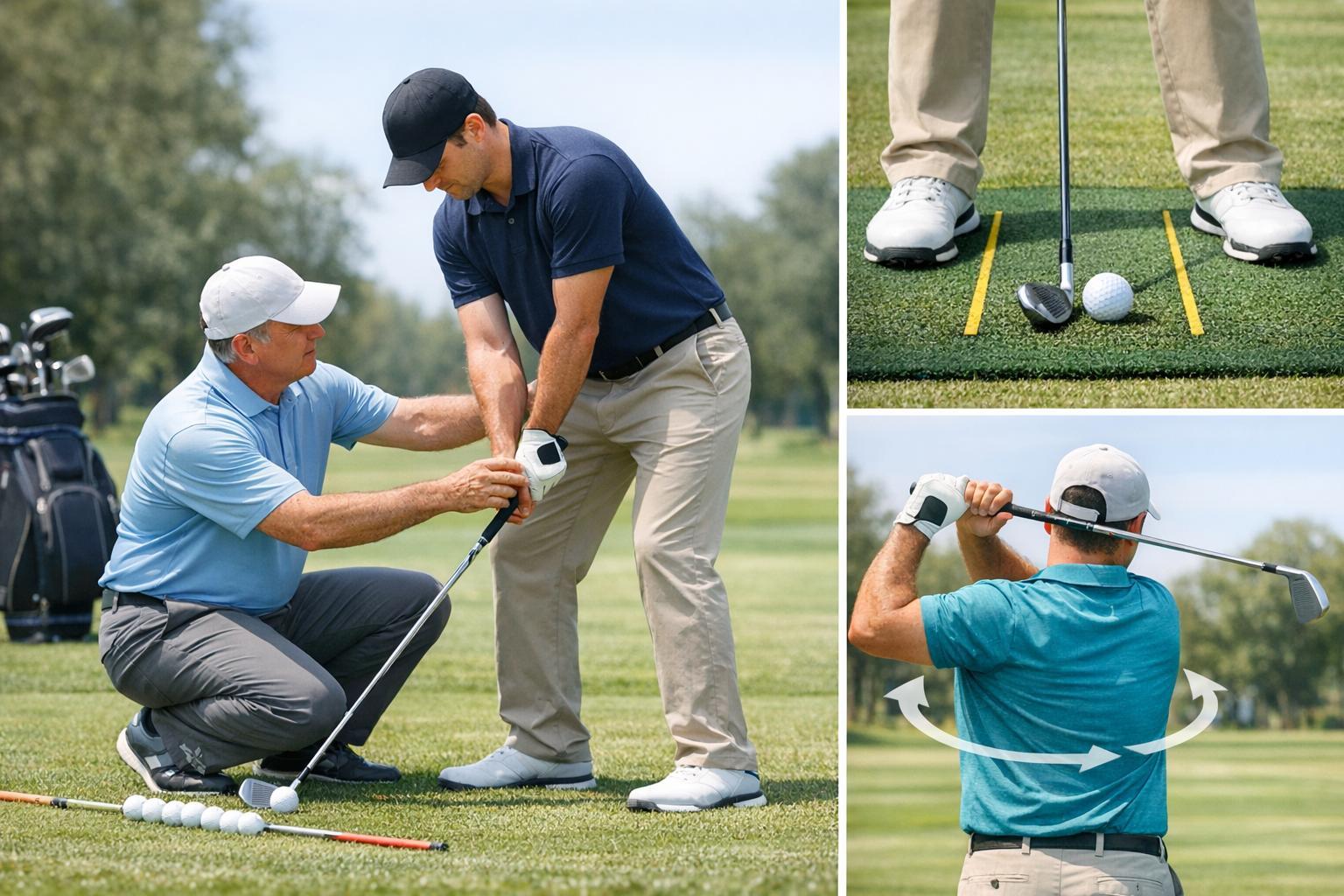
Unlock Your best Golf Swing Yet: Master the Follow-Through for Powerful Drives and precise Putting
Why the Follow-Through is Vital in Golf Swing Mechanics
The follow-through in golf is a critical phase that often gets overlooked by golfers eager to power through their drives or sink their putts quickly. However, the follow-through directly impacts your swing path, clubface angle, and overall control.When executed properly, it ensures that your energy transfers smoothly through the ball, resulting in powerful drives, accurate shots, and consistent putting performance.
- Promotes proper alignment of the clubface, reducing slices and hooks.
- Encourages balanced weight transfer,vital for generating clubhead speed.
- Improves shot consistency and precision on the fairway and green.
- Minimizes injury risk by promoting biomechanically efficient movement.
Key Elements of a Perfect Follow-Through
Mastering the follow-through involves focusing on several biomechanical and technical elements that can drastically improve your golf swing and putting accuracy.
1. Maintain balance and Finish High
After ball contact, your weight should gradually shift to your front foot, with your hips and shoulders fully rotated toward the target. A balanced finish position-often described as “holding your pose”-is a sign of good follow-through.
2. Extend Your Arms and Wrist
Extending the arms toward the target and allowing the wrists to naturally hinge and unhinge ensures maximum clubhead speed and control. This helps avoid early deceleration, which can reduce distance and accuracy.
3. Align Your Body with the Target Line
your hips, shoulders, and feet should face the target at the end of your swing to promote proper shot direction. An open or closed finish usually points to swing path issues.
Mastering the Follow-Through for Powerful Drives
Driving the ball effectively requires more than raw strength. It’s about applying principles of physics & biomechanics during your follow-through.
practical Tips to Enhance your follow-Through for Driving
- Start Slow,Finish fast: Build your swing speed progressively into the follow-through for more controlled power.
- Rotate Your Hips: Lead with your lower body after impact to increase torque and distance.
- Keep Your Head Steady: Avoid lifting your head too early to maintain strike accuracy.
- Practice with Visual Feedback: Use video to analyze your finish position and correct flaws.
Follow-Through Techniques to Achieve Consistent Putting
The follow-through in putting is much more subtle than in a full swing but just as crucial to consistent, accurate strokes.
How to Perfect Your Putting Follow-Through
- Smooth and Controlled Motion: Avoid jerky movements; the putter should glide smoothly through the ball.
- Maintain a Pendulum Stroke: The wrists remain firm; stroke comes mainly from shoulder rotation.
- Extend the Putter Towards the Target: Follow-through should mirror the backswing distance, helping control putt pace.
- Finish Low and Level: A low follow-through reduces loft and maintains optimal roll.
Common Putting Follow-Through Mistakes to Avoid
- Cutting the stroke short-results in inconsistent distance.
- Excessive wrist action causing “breaking” at impact.
- Early deceleration leads to pushed or pulled putts.
Evidence-Based Drills to Improve Follow-Through
Incorporating targeted drills into your practice sessions can significantly elevate your golf game by ingraining correct follow-through habits.
| Drill Name | Focus Area | Instructions | Benefits |
|---|---|---|---|
| Pause-and-Hold Drill | Balance & Finish Position | Swing back and through the ball, pause at full finish for 3-5 seconds | Improves stability and muscle memory |
| Path Trace Drill | Swing Path & Clubface Alignment | Visualize a target line; swing and trace clubhead path along it | Enhances accuracy & control |
| Mirror Practice | Posture & Follow-Through | Practice in front of a mirror, focus on keeping arms extended during follow-through | Develops proper finishing form |
| Putting Stroke Length drill | Consistent Putting Pace | Match backswing and follow-through length using a metronome or counting | Builds consistent putt distance control |
Benefits of Mastering the Follow-Through in your Golf Game
- Increased Driving Distance: Efficient energy transfer maximizes ball velocity.
- Heightened Accuracy: Proper clubface angle control cuts down on errant shots.
- Consistent Putting: Smooth follow-through helps regulate speed and line on greens.
- Improved Injury Prevention: Optimal biomechanics reduce joint strain especially in wrists and back.
Real-World Success: Case Study of a Mid-Handicap Golfer
John, a 15 handicap golfer, struggled with inconsistent drives that frequently enough veered offline. After focusing his training on the follow-through using the “Pause-and-Hold” and “Path Trace” drills for 6 weeks, john saw a marked betterment:
- Driving accuracy improved by 30%
- Average driving distance increased from 210 to 230 yards
- Fairway hit percentage rose from 45% to 60%
John also reported better confidence in his putting stroke after polishing his follow-through, enabling him to shave strokes off his scorecard.
Final Practical Tips for Daily Golf Swing and Putting Practice
- Always warm up your muscles before starting practice focusing on gentle dynamic stretches.
- Use slow-motion swings to ingrain correct follow-through mechanics before adding speed.
- Incorporate video analysis weekly for objective feedback.
- Practice on various lies and green speeds to adapt follow-through for real-world conditions.
- Stay patient and keep a positive mindset-improvements take consistent effort.