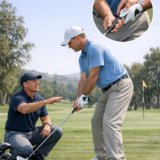
Consistent driving depends on multiple factors beyond backswing shape and impact conditions; the follow‑through plays a pivotal role because it represents the completion of the kinetic chain and strongly affects ball trajectory, lateral spread, and repeatability. A reliable follow‑through is the visible result of correct proximal‑to‑distal sequencing, measured deceleration, maintained extension, and a stable balance at the finish-elements that together determine clubface relationship, launch characteristics, spin behavior, and, ultimately, scoring potential. As driving contributes incrementally to scoring in both competitive and social golf, a focused analysis of follow‑through mechanics yields practical pathways to reduce shot variation and improve tactical results around the course.
This piece brings together biomechanical insights, on‑course decision tactics, and graduated practice plans for different ability levels to deliver practical, evidence‑informed coaching guidance on mastering the driving follow‑through. The biomechanical sections explain the neuromuscular coordination and kinematic markers linked with effective finishes; the tactical portions translate those mechanics into shot planning (trajectory choices, tee‑box positioning, and wind adjustments); and the drill libraries-scaled for beginners through advanced players-offer measurable training prescriptions supported by objective feedback tools (video capture, launch monitors, and dispersion tracking). Emphasis is placed on transfer: protocols are constructed to foster motor learning, durable retention, and competitive readiness through periodized practice and data‑driven refinement.
By pairing theoretical foundations with pragmatic coaching interventions and clear outcome measures,the following sections provide players and coaches with actionable methods to identify follow‑through shortcomings,choose appropriate corrections,and measure progress. The objective is to produce dependable technical gains that yield tighter driving patterns, smarter course management, and quantifiable improvements in scoring efficiency.
biomechanical Foundations of the Follow Through: Optimal kinematic sequencing, joint angles, and measurable performance targets
The most efficient swings follow a proximal‑to‑distal kinematic sequence: the hips begin the rotation, the torso and shoulders follow, then the arms, and finally the hands and clubhead. When peak angular velocities happen in that order, energy is transferred efficiently and accuracy improves. Practical coaching benchmarks include aiming for a backswing shoulder rotation of roughly 85-95° on full shots with pelvis turn near 40-50°, yielding an X‑factor (shoulder minus hip) commonly in the 30-50° band for many golfers; beginners will usually start lower and should progress gradually. Also target a weight transfer that places approximately 60-70% of pressure on the led foot at impact for iron shots (a touch less for driver), and confirm that the pelvis reaches peak angular speed before the torso so the release accelerates the club rather of the arms casting it. Coaches and players can quantify these elements using high‑speed down‑the‑line and face‑on video plus wearable inertial sensors or pressure‑mat systems to log rotation angles,sequencing timing,and center‑of‑pressure shifts during practice.
Moving into impact and the follow‑through, joint positions must support both power output and repeatable strike: keep a neutral or slightly flat lead wrist at impact and aim for about 2-3 inches of forward shaft lean on mid and short irons (the driver generally shows less forward lean and frequently enough a small positive attack angle). The trail wrist should be positioned to allow a controlled release through impact rather than an early cast; common errors like early release,reverse pivot,and excessive forearm activity create unpredictable loft and directional misses. Practical corrective checkpoints include:
- impact‑bag drill – feel a compact, hands‑forward contact and hold the finish for 2-3 seconds;
- towel under the lead armpit – encourage torso‑arm connection and limit arm separation;
- alignment‑stick through the belt buckle/finish drill - train a balanced, chest‑toward‑target finish with appropriate spine tilt.
Advanced players should track clubhead path as an inside→square→inside arc and use launch‑monitor outputs (attack angle, face angle, club speed, smash factor) to establish objective targets for carry and lateral dispersion, while less experienced golfers concentrate on achieving consistent impact position and balance.
The follow‑through is both a technical outcome and a tactical expression: its length, extension, and finish communicate intended shot shape, club choice, and prevailing conditions. On the green, prioritize a pendulum putting action with minimal wrist flexion, keep putter face rotation under 5° through impact, and match follow‑through length to distance-short strokes for tap‑ins and fuller motions for long lag putts-using metronome work (about 60-80 bpm) and the gate drill to refine face path. For drives and approach shaping, train a full shoulder‑over‑hip finish with belt buckle and chest oriented toward the target, hold balance for 2-3 seconds, and alter follow‑through length depending on wind and lie (a taller, fuller finish in calm conditions; a more compact, lower finish to keep the ball down in strong wind). equipment factors-shaft flex,loft,and clubhead design-affect attack angle,sequencing,and the demands on your finish,so include club‑fitting feedback in practice cycles. Across all abilities, combine technical training with situational on‑course routines (pre‑shot visualization, target selection, and conservative decisions when appropriate) so biomechanical gains produce lower scores and dependable shot‑making under pressure.

Kinetic Chain and Power Transfer in Driving Follow through: Evidence based strategies to maximize clubhead speed while preserving directional control
Producing power efficiently requires a coordinated kinetic chain that directs force from the ground through the legs, hips, torso, and arms into the clubhead. Begin with a stable base: stance roughly shoulder‑width, modest knee flex (~20-30° at address), and weight centered over the midfoot. during takeaway and backswing prioritize sequence: shift weight to the trail side, achieve a hip coil of about 40-60° for recreational players (with advanced players frequently enough approaching a ~90° shoulder turn), and maintain wrist set to preserve lag. Initiate the downswing by driving into the ground with the trail foot and moving weight to the lead side so the hips clear before the upper body unwinds-this creates the desired proximal‑to‑distal acceleration and increases angular velocity at the hands and club. Common faults-arm‑led downswing, casting, and excessive lateral slide-interrupt the chain and reduce clubhead speed. Train sequencing with drills such as:
- medicine‑ball rotational throws (3-5 kg) to practice explosive hip‑to‑torso transfer;
- step‑through drill: perform a normal backswing then step the trail foot forward on the downswing to feel hip lead and weight shift;
- half‑swing, impact‑focused reps with an impact bag or tee drill to reinforce forward shaft lean (~5-10°) and compression at contact.
These exercises should be tied to measurable aims: target a roughly 3-6% increase in clubhead speed over 8-12 weeks while keeping or improving centered contact frequency.
Maintaining directional control while increasing speed depends on consistent clubface control, a stable swing plane, and a repeatable release pattern. The transition from generating power to controlling impact rests on three variables: face angle at impact, swing path, and the timing of release. For distance‑focused driving aim for a slightly closed to square face at impact with a neutral‑to‑slightly inside‑out path to encourage a controlled draw or straight flight and reduce sidespin. Setup choices matter: many amateurs find driver lengths of 43-45 in a reasonable balance of leverage and control; match shaft flex to swing speed (too stiff can reduce speed and open the face), and check clubhead center‑of‑gravity and MOI against your dispersion goals. To sharpen control at speed, practice:
- alignment‑rod gate work at hip height to stabilize the plane;
- impact‑bag repetitions to sense face‑to‑target alignment and forward shaft lean;
- tempo‑controlled speed swings (use a metronome; a 3:1 backswing:downswing ratio) to lock timing under load.
when fairways are narrow, intentionally shorten the swing to ¾ length and focus on a square face-sacrificing a small amount of pace for tighter dispersion is frequently enough the best risk‑management play and can reduce penalty strokes.
Convert kinetic‑chain improvements into scoring gains by integrating physical preparation, structured practice, and on‑course simulations. Start sessions with dynamic mobility (thoracic rotation, hip hinges, glute activation) and follow a periodized block: warm‑up (10 minutes), mechanics (20 minutes of sequencing and impact drills), speed (10-15 minutes of overspeed or weighted work), then request (20-30 minutes of range‑to‑course scenarios). Track progress using objective metrics-clubhead and ball speed,and smash factor (driver benchmarks near ~1.45-1.50 for efficient energy transfer)-and set incremental targets (for example, a 2-4 mph clubhead speed gain or a 0.02 improvement in smash factor within 6-8 weeks). Tailor emphasis by ability: beginners focus on balance, simple weight shift, and coordinated hip turn; intermediates on preserving lag and increasing X‑factor; low handicappers on release timing and face control under pressure. Account for environmental and rules constraints-reduce spin and aggression into strong wind, and ensure any equipment changes comply with USGA/R&A standards. Include mental elements (pre‑shot imagery and a consistent tempo cue) so added physical speed doesn’t undermine decision‑making; in competitive formats favor controlled aggression that matches the hole’s risk‑reward profile to turn kinetic improvements into scoring benefits.
Postural Dynamics and Balance Through Impact and Follow Through: Objective assessment protocols and corrective exercise recommendations
Begin with objective, repeatable assessments: record static setup and dynamic swings from down‑the‑line and face‑on perspectives using high‑frame‑rate video (120 fps or higher), and when possible pair recordings with a pressure‑mat or force plate to capture center‑of‑pressure data and weight‑shift patterns.Log key measures such as spine tilt at address (aim for ~10-15° for irons, 15-20° for driver), shoulder turn (backswing target ~70-100°), hip rotation/opening at impact (target ~20-40° open to target), weight distribution at impact (aim for 60-70% on the lead foot for irons; 55-70% for driver depending on shot type), and clubface angle at impact (target within ±2° square). Follow motion capture with a concise physical screen-single‑leg balance (eyes open/closed), thoracic rotation, ankle dorsiflexion, and glute/hamstring strength checks-to connect visible mechanical faults to physical constraints. Using these baselines allows coaches to create measurable improvement objectives (for instance, reduce lateral sway to below 10% of stance width on face‑on video or increase thoracic rotation into the 40-50° range) and to direct corrective work at root causes rather than symptoms.
From assessment move to focused corrections for posture, balance, and the kinetic chain. Start with setup basics: correct ball position relative to stance (center for mid‑irons; forward for driver), maintain knee flex around 10-15°, and preserve a stable shoulder‑to‑hip tilt through impact. Then apply tiered drills for all skill levels-beginners concentrate on balance and weight‑shift awareness; intermediates on sequencing and impact position; low handicappers on eliminating unnecessary movement while maximizing rotational power. Effective practice elements include:
- split‑stance impact drill – short swings with staggered feet to cement lead‑side pressure at impact; hold a balanced finish for 3-5 seconds;
- step‑through drill – a full swing where the rear foot steps forward after impact to train complete weight transfer and follow‑through alignment;
- medicine‑ball rotational throws – 3 sets of 8 reps toward a target to build explosive torso rotation and sequencing;
- single‑leg balance with a clubhead swing – hold 30 seconds per leg to improve COP control under rotation.
Complement this work with mobility (thoracic foam rolling, internal/external hip drills) and strength moves (glute bridges, Pallof presses) and set objective targets such as holding single‑leg balance for 30-45 seconds and achieving thoracic rotation of 40-55°. Recheck equipment fit-shaft flex, club length, and grip size-since poor fit can produce compensations that undermine follow‑through mechanics.
Connect balance and follow‑through training to course situations and short‑game choices for better scoring transfer. Use on‑course and simulated drills: hit tee shots into the wind to practice forward impact pressure and controlled finishes, chip from tight lies to enforce a compact stroke and stable finish, and practice uphill/downhill putts to tune posture and foot pressure. Create a weekly practice plan with measurable goals (for example, achieve centered contact on 80% of 50 iron shots or maintain lead‑foot weight >60% across three consecutive range sessions) and embed short mental cues-“finish balanced” or “lead hip to target”-into a consistent pre‑shot routine. When addressing common faults (early extension, excessive sway, collapsed lead knee) use the drills above and retest with the same video and pressure‑mat protocols to quantify progress-for example, reduce late‑release tendencies by increasing lead‑hip stability via resisted band walks and confirm improvement through improved face‑on balance and COP readings.Linking postural mechanics to real course scenarios and measurable targets helps golfers from novice to expert translate better impact positions and follow‑throughs into steadier ball flight, improved short‑game control, and lower scores.
Motor Learning Principles for Consistent Follow Through: Practice structures, feedback modalities, and progressive drill prescriptions
Design practice for a repeatable driving follow‑through using motor‑learning principles: promote an external focus of attention (attend to the target or desired ball path rather than internal joint angles), include variable practice to increase adaptability, and manage feedback frequency with a bandwidth policy (give augmented feedback only when errors exceed acceptable bounds). Start with brief blocks of blocked practice (e.g., 10-12 half‑swing reps emphasizing extension) to establish the movement, then progress to random and variable practice (alternate targets, simulate wind, vary club speeds) to improve on‑course transfer. For a 60‑minute session a useful allocation might be 20 minutes on technique (slow motion,mirror or video KP),25 minutes on variable full‑swing practice (randomized targets and lies),and 15 minutes on pressure simulation and decision drills; gradually taper augmented feedback from near‑constant toward about 20-30% as the week advances to foster self‑assessment and retention.
Progress drills in a part‑to‑whole and constraints‑led order so follow‑through components integrate naturally with full swings. Begin with basics: a trail‑side spine tilt of ~10-15° for driver, feet shoulder‑width, ball placed just inside the lead heel; target a weight shift of ~60-70% to the lead foot at impact and move toward ~90-100% at a stable finish with belt buckle toward the target and the shaft resting over the lead shoulder. then apply this drill sequence with measurable goals and regressions as required:
- Foot‑together finish – 5-10 half‑swings with feet together, hold the finish 3 s; goal: achieve balance and shaft resting over the lead shoulder on 8/10 reps;
- towel‑under‑arm – 3 sets of 10 slow swings focused on maintaining upper‑body connection; goal: no towel drop on 9/10 reps;
- impact‑pause progression – swing to impact, pause 1 s to check shaft lean (irons ~6-12° forward), then continue to a full finish; 4 sets of 8, increasing tempo per set;
- step‑through/step‑back – begin with the trail foot stepping forward on the finish to instill weight shift; progress to the normal finish once the step is repeatable across 12 reps.
Advanced players should augment training with launch‑monitor goals (e.g., keeping driver spin inside an individualized optimal band and tightening lateral dispersion to ±10-15 yards) and high‑speed video for sequence analysis. Common faults-staying on the trail foot, early release, or collapsing the lead leg-are addressed with the regressions above (towel drill, foot‑together) and by using an external target such as a specific landing area to encourage correct release timing.
To move results from range to course, use multimodal feedback and contextual practice: combine intrinsic feedback (feel), augmented visual feedback (side‑by‑side slow‑motion video), and outcome feedback (carry distance and dispersion from a launch monitor), and apply self‑controlled feedback where the player requests video review after a set of shots. In windy or firm conditions alter follow‑through intent-adopt a slightly abbreviated finish while preserving forward shaft lean at impact to keep the ball flight lower-and practice this variant under simulated wind (handheld fans or trajectory targets). Course‑management prescriptions that link technique to scoring include:
- play to a miss: pick a preferred miss side and practice shaping shots until 8/10 controlled misses land inside that side of the fairway;
- pressure simulation: create point systems (e.g.,3 points for fairway,1 for GIR) to simulate cognitive load and check whether the follow‑through stays balanced in >80% of attempts;
- measurable weekly goals: reduce lateral dispersion by 25% in four weeks,hold a 3‑second balanced finish for 90% of practice swings,or add +5-10 yards of controlled carry while keeping spin acceptable.
Cater to different learning styles with tactile cues (towel, impact bag), visual cues (alignment rods, video), and auditory cues (metronome) so kinesthetic and visual learners can internalize the follow‑through. With a structured, progressive, feedback‑managed plan golfers at every level can turn technical adjustments into consistent driving gains and measurable scoreboard improvement.
Course Management and Tactical Implications of Follow Through Variability: Shot selection, tee placement, and situational adjustment guidelines
Reading follow‑through variability into shot choice and tee positioning starts from a simple idea: the finish is the movement continuation of your intent at impact. When planning a hole decide which flight profile (low punch, mid‑height, or high, stopping shot) gives the best angle into the green, then pick a tee position that supports that plan-forward tees to shorten a drive into a headwind, or lateral tee placement to alter lie angle and open/close the face for a preferred shape. Key tactical concepts include: leaving the approach in a cozy yardage window (commonly 120-150 yards for comfortable mid‑iron or wedge shots), using tee placement to create a larger landing corridor, and selecting shots with follow‑through patterns you can reliably reproduce under pressure. On the range rehearse three to four finishes (full, abbreviated, punch, and high) and observe how each finish affects carry and roll; building this repertoire supports smart on‑course choices.
Mechanically, follow‑through differences are the visible outcome of impact decisions-clubface angle, shaft lean, attack angle, and body rotation-so instruction should break those variables into quantifiable targets. Verify setup essentials: ball position, spine tilt, and weight distribution. For full irons place the ball slightly left of center with a 45-60° shoulder turn (a range suitable for many athletic frames); for driver set the ball near the left heel and use a small positive angle of attack (~2-4°) to encourage launch. At impact aim for forward shaft lean on mid‑irons, then allow full extension and rotation so the finish is balanced-the belt buckle to the target and hands up for a full release. Conversely, shorten the finish and reduce shoulder turn by ~30-40% when punching into wind or under tree cover. Useful drills:
- gate drill: place two alignment sticks to constrain clubpath and observe follow‑through direction;
- finish‑hold sets: hit 10 shots holding specified finishes (full, 3/4, low) to get tempo and balance feedback;
- impact tape and launch‑monitor sessions: track dynamic loft and spin to link finish variations to ball flight.
These practices generate measurable outcomes-cut side dispersion by 10-20 yards or attain repeatable dynamic loft within ±1°-and are scalable from beginner drills to low‑handicap refinement.
Make technical adjustments part of broader course strategy and mental preparation so follow‑through variability becomes a tactical asset rather than a flaw. In play, take conservative tee positions when hazards (OB, water, or severe angle loss) make risk unacceptable; for instance, tee slightly right to open a narrow approach for a draw or tee higher to encourage a higher launch and steeper landing into a front pin. Use a compact pre‑shot routine that includes a follow‑through visualization (e.g., picture a low, abbreviated finish for punch shots), and when shots drift off plan check these items:
- setup fundamentals-ball position or stance width might potentially be forcing an unintended finish;
- reduce swing length-shortening the swing frequently enough restores face control and cuts spin in the wind;
- adjust equipment-confirm loft and shaft flex suit your speed and desired trajectory.
Prefer process goals-commit to the chosen finish on every attempt-rather than outcome‑only targets. Over time this reduces indecision, improves shot‑shape reliability, and converts technical follow‑through mastery into consistently lower scores.
Level Specific Training Protocols for Follow Through Mastery: Beginner, intermediate, and advanced progressions with measurable benchmarks
Start with fundamentals to make a correct finish automatic.For full swings and tee shots place the ball forward in the stance (inside the left heel for right‑handed players) and consider a slightly stronger grip if release is a problem; for putting get eyes over the ball and set the putter so the shaft tilts slightly forward (~5-10°) to encourage solid contact. Practice a controlled finish: hold the finish 2-3 seconds with belt buckle and chest toward the target, and aim for roughly 60-80% weight on the lead foot for beginners with the trail heel raised. These simple checkpoints turn complex biomechanics into achievable proprioceptive goals. Starter drills:
- towel under trail arm – keep a towel in the trail armpit through impact to promote connection and a full release;
- mirror hold - perform half swings and hold the finish 3 seconds to check chest/belt alignment and shaft position;
- slow‑motion impact drill – step‑through practice finishing on the lead foot to train weight transfer.
Beginner faults-casting, incomplete rotation, collapsing the trail side-are corrected by slowing the swing, exaggerating the finish hold, and using the towel drill to preserve connection. For putting,focus on a stable lower body and a pendulum stroke; in the short game,a slightly abbreviated finish helps control spin and consistency.
Intermediate players refine sequencing,face control,and performance metrics. Incorporate launch‑monitor targets (clubhead speed, launch angle, dispersion) and short‑game stats (proximity from 20-40 ft, three‑putt rate) to set objective benchmarks-for example, reduce 20-30 ft lag‑putt proximity to 6-8 ft and increase fairways hit by incremental 5-10% gains. Technically, emphasize releasing the club through impact with hands moving on the target line while the torso rotates; cue a ~45° lead‑hip turn through impact with shoulders and hips finishing square to the target. Drills:
- impact‑bag or short‑tee drill – create a square face at contact and forward shaft lean for crisp strikes;
- step‑and‑release - start feet together, step on the downswing to force correct sequencing and a balanced finish;
- putting gate and clock drills - use tees or coins to ensure square follow‑through and consistent face rotation across distances.
bridge practice and play by simulating course conditions-hit lower, three‑quarter finishes into wind and practice controlled chip‑and‑runs while holding the finish to observe spin and rollout.Only consider equipment changes after consistent data indicates a technical limitation, not as a first description for errors.
advanced progressions concentrate on precision, shot‑shaping, and integrating finish adjustments into course strategy for low handicappers. Use high‑speed video and launch data to detect subtle finish differences-trackable goals might be tightening a 15-20 yard dispersion down to 10-12 yards, increasing smash factor by ~+0.03-0.05, and reducing putts per round measurably. Treat the follow‑through as a deliberate tool: a full, extended release (hands high, shaft over the lead shoulder) can add height and spin for approach shots into receptive greens, while an abbreviated finish flattens trajectory for windy or low‑roll approaches. Advanced drills:
- weighted‑club tempo and finish – build resilience so the finish stays consistent under fatigue;
- video overlay and cadence analysis - compare finish frames to a model swing to eliminate small faults like over‑rotation or early arm collapse;
- on‑course scenario sets – play practice loops with explicit targets (e.g., seven consecutive fairways using a specific finish change) to transfer range gains to scoring.
Maintain a concise pre‑shot routine that includes a visualized finish, commit to it, and accept outcome feedback without mid‑round technical changes. In challenging conditions (wet greens,firm turf,strong wind) modify finish length and release to manage launch and spin,turning follow‑through proficiency into a tactical advantage and lower scores.
Injury Risk Mitigation and Longevity Strategies: Load management,mobility screening,and warm up routines to protect the shoulder,elbow,and lumbar spine
Start with a concise mobility screen to identify risk factors for the shoulder,elbow,and lumbar spine and to relate those findings to swing mechanics and the targeted follow‑through. At address maintain a neutral lumbar curve with a modest forward flexion (~20-30° sagittal tilt) and an athletic knee bend; on the backswing expect thoracic rotation around 45-60° and hip turn near 30-45° for many players-losses in thoracic or hip mobility increase compensatory lumbar rotation and shoulder stress. A speedy screen set includes:
- thoracic rotation test: seated with hips stable, rotate shoulders to end range-aim for ≥ 45° each direction;
- shoulder external rotation/abduction check: supine or standing ROM assessment to observe scapulohumeral rhythm and symmetry;
- single‑leg balance and hip hinge: hold single‑leg balance 30-60 seconds and perform controlled hinges to assess glute and posterior chain activation.
Use these results to prescribe movement‑based corrections (T‑spine mobility drills,scapular stability work) before making technical swing changes so refining the follow‑through does not overload the elbow or lower back.If screening reveals persistent pain or red flags, refer the golfer for medical evaluation and evidence‑based musculoskeletal resources before increasing training load.
Employ a progressive warm‑up and load‑management plan that moves from mobility to motor control and then to speed, protecting tissue health. A practical warm‑up (8-12 minutes) could include 2-3 minutes of light cardio (walking),4-6 minutes of dynamic mobility (band pull‑aparts,T‑spine foam rotations,hip CARs),and 2-3 minutes of progressive swing reps (half → 3/4 → full with a short iron). Follow measurable checkpoints: hold mobility stretches 10-15 seconds, perform 2-3 sets of 8-12 reps for activation exercises, and complete a ramp of 5-10 progressive swing reps prior to full efforts. Manage weekly high‑speed repetitions by level: beginners 50-100 full swings per session, intermediates 75-125, and low handicappers should limit intense full efforts to 150-200 high‑intensity swings per week with scheduled recovery. Sample activation and conditioning drills:
- banded external rotation with scapular retraction: 3×12 for shoulder resilience;
- glute bridge progressions and single‑leg romanian deadlifts: 3×8 to support the lumbar spine;
- progressive impact sequence: 10 half‑swings → 10 three‑quarter swings → 5 full swings focused on smooth deceleration into a balanced finish.
Common mistakes-skipping warm‑ups, ramping intensity too quickly, and over‑rotating the lumbar spine-are best remedied by returning to controlled tempo swings and repeating activation sets until technique remains stable under fatigue.
Translate physical preparation into course decisions and measurable technique goals that lower injury risk while improving scoring. When tired or when course conditions raise risk (windy tees, hard fairways), choose lower‑stress shot shapes and clubs-use a 3‑wood or long iron off the tee instead of the driver to reduce peak shoulder/elbow torque, play punch shots from tight lies to limit extreme extension, and target positions that avoid repeated recovery swings. Safe finish cues: maintain light lead‑side pressure and finish with roughly 80% of body weight on the lead foot, rotate the chest toward the target about 40-60°, and hold the finish for 2-3 seconds to ensure deceleration is distributed through the body rather than the arm. Practical targets include increasing T‑spine rotation to ≥ 45° per side in 8 weeks, reducing reported shoulder/elbow soreness by ~50% after four weeks of activation and load management, and holding a balanced 2-3 second finish on 80% of full swings during range sessions. Combine these physical aims with mental cues that prioritize tempo and posture over aesthetics so golfers at every level can adopt lasting routines that protect vulnerable tissues while improving consistency and scoring.
Q&A
Below is a concise Q&A companion to “Master the Golf Swing: Perfecting Follow‑Through for Consistent Driving.” Responses summarize biomechanical principles, applied practice methods, level‑specific drills, course strategy, assessment approaches, and injury‑prevention guidance in professional language.
1. What is the follow‑through and why does it matter for consistent driving?
– The follow‑through is the phase promptly after impact that includes deceleration and the continuation of segmental rotation to the finish. It functions as an observable indicator of pre‑impact mechanics (sequence, face control, strike location) and reflects how effectively energy was transferred. Consistent finishes are linked to reduced clubface and launch variability, which supports steadier distance and directional control.
2. Which biomechanical rules underpin an effective driving follow‑through?
– Essential principles are proximal‑to‑distal sequencing (hips lead, then torso, then arms), preservation of wrist/forearm positions through contact (to optimize smash factor), appropriate weight transfer to the lead leg, maintenance of suitable spine angle, and controlled deceleration via eccentric muscle action. Together these factors maximize clubhead speed while maintaining face stability at impact.
3. How does follow‑through quality affect launch conditions (angle, spin, dispersion)?
– A coordinated follow‑through usually indicates a stable clubface orientation and consistent impact point-both primary drivers of initial launch angle, spin rate, and lateral dispersion. Excessive deceleration or casting can reduce ball speed and increase unwanted spin or lateral bias. Conversely, a full, balanced finish is associated with steadier launch parameters and tighter dispersion.
4. What common kinetic or kinematic faults show up in poor follow‑throughs?
– Frequent issues include early release (casting), incomplete weight transfer with excessive rear‑foot load at the finish, lateral sway instead of rotation, loss of spine angle through impact, and over‑rotation or balance loss caused by timing errors.
5. How should coaches assess follow‑through quality qualitatively and quantitatively?
– Qualitatively use a visual checklist: balanced finish, chest toward target, stable lead leg bearing most weight, club over the lead shoulder, minimal head movement. Quantitatively use high‑speed video for sequence and finish angles, launch‑monitor metrics (ball speed, smash factor, spin axis, carry and total dispersion), pressure‑mat or force‑plate readings for weight transfer, and inertial sensors for rotational velocity and sequencing. Combine both approaches-video for pattern recognition and devices for trend tracking.
6. Which evidence‑based practice concepts should guide follow‑through training?
– Apply specificity (drills reflect the full swing), progressive overload (gradual increases in intensity), distributed practice, deliberate practice with focused feedback, and variability of practice to foster transfer across conditions. Motor‑learning literature supports external focus cues and reduced explicit instruction for more skilled learners.
7.How should training be staged across skill levels?
– Beginner: goals-basic sequencing, balance, and weight transfer. Methods-simple drills (slow full swings, finish holds), short sessions (2-3 per week), 5-10 minutes per session focused on finish, with immediate qualitative feedback.
– Intermediate: goals-timing, face control, consistency under varied speeds. Methods-impact drills,tempo work with a metronome,basic launch‑monitor use,3-4 sessions per week,10-20 minutes per session with intermittent feedback.
– advanced: goals-sequencing refinement, variability management, course‑specific application. Methods-high‑speed drills, weighted clubs, pressure and balance training, scenario practice (wind, target deviation), systematic use of objective metrics and video, 3-5 focused sessions per week in a periodized plan.
8.Which drills reliably improve follow‑through mechanics?
– Slow‑motion finish holds (50% speed, hold finish 2-3 s); step‑through drill (trail foot steps forward to instill weight transfer); towel‑under‑arms (upper‑body connection); impact‑to‑finish or pump drills (reinforce release sequence); resistance‑band rotational work (eccentric deceleration); alignment‑rod path drills (consistent club path).
9. How should tempo and rhythm be trained for the follow‑through?
- Employ graded tempo training (e.g., 3:1 backswing:downswing cadence progressing to full speed) and metronome pacing to stabilize rhythm.Encourage a smooth transition through impact and continuation into the follow‑through; abrupt stopping must be avoided.Alternating slow and fast swings builds adaptability for different shot demands.10. How can follow‑through practice be integrated with on‑course shot‑making?
– Practice finishes in context: aim at defined targets, simulate wind, and use varied tee positions to develop adaptive finishes. A repeatable follow‑through supports predictable flight and better club selection. Use pre‑shot routines that cue the intended finish (visualizing chest alignment) to aid transfer.
11. What role does club fitting play in follow‑through consistency?
– Proper fit (length, loft, shaft flex, lie) helps a golfer maintain repeatable biomechanics and prevents compensations that disrupt the finish. Ill‑fitting clubs can force altered mechanics; individualized fitting should be part of an integrated performance plan.12. How should progress be tracked and what timelines are realistic?
– Monitor metrics such as lateral dispersion, smash factor, launch angle, spin consistency, and visual finish repeatability. Beginners can often show measurable gains in 4-8 weeks with regular practice; intermediates may need 6-12 weeks to consolidate changes; advanced players typically work in longer cycles to achieve marginal improvements. Track both short‑term session variability and longer‑term trends.
13. Which feedback tools accelerate follow‑through learning?
– Augmented tools include slow‑motion video playback, mirrors, live launch‑monitor numbers, metronome pacing, and haptic cues (bands, weighted clubs). Motor‑learning research favors summary feedback over constant correction to encourage self‑monitoring and retention.
14. What common follow‑through myths should be dispelled?
- Myth: “A big finish guarantees distance.” A dramatic finish can hide poor impact mechanics and does not ensure consistent distance.
– Myth: “Finish position is everything.” The finish is a useful proxy but must be considered with impact metrics to confirm correctness.
– Myth: “more rotation always equals more power.” Excessive rotation without proper sequencing and stability can reduce energy transfer and increase variability.
15.How can players avoid injury while training the follow‑through?
– use progressive loading, thorough warm‑ups (dynamic mobility for hips, thoracic spine, shoulders), and eccentric deceleration training for the rotator cuff, obliques, and gluteals. Avoid sudden jumps in practice volume or heavy weighted swings without conditioning. Monitor pain and modify drills that provoke symptoms.16. How should a coach individualize follow‑through corrections?
– perform a multimodal assessment (mobility, strength, movement screen, swing kinematics) and tailor interventions to the limiting factor: mobility deficits need targeted mobility drills; sequencing/timing issues require motor‑learning drills; strength shortfalls call for conditioning. Use outcome measures to refine the program iteratively.
17. How do practice gains translate to on‑course performance under pressure?
– Use pressure‑recreation exercises (competitive sets, consequence‑based tasks), practice with time limits, and maintain pre‑shot routines that cue the follow‑through.Varied, contextual practice is supported by research for transfer and resilience under stressful conditions.
18. which objective changes should trigger re‑evaluation of follow‑through quality?
– Watch for sudden rises in dispersion, drops in smash factor, increased launch‑angle variability (session SD), visible balance loss at the finish, or asymmetric weight distribution; any abrupt shift merits biomechanical reassessment.
19. Are there population‑specific considerations (youth, seniors, women)?
– yes. Youth programs should emphasize movement quality and motor skill development rather than maximal force.Seniors should prioritize balance, controlled rotation, and mobility preservation with lower‑impact strength work. Female golfers may benefit from individualized strength and mobility plans addressing common differences in upper‑body strength and hip mobility. Always adapt programs to developmental and physiological constraints.
20. What are recommended first steps for practitioners implementing these protocols?
- Perform baseline assessments (video and launch monitor if available), select level‑appropriate drills, build a practice schedule with short, focused sessions and progressive challenges, incorporate objective monitoring, and plan re‑assessments every 4-8 weeks. Coordinate with a strength‑and‑conditioning specialist for physical deficits and align club fitting with biomechanical goals.
If desired, I can:
– convert this Q&A into a printable coach’s checklist;
– design a 6‑week, level‑specific follow‑through plan with daily drills, sets, reps, and progression markers;
– provide smartphone camera setup tips and sample video cue points for reliable self‑assessment.
Improving the driving follow‑through is not merely cosmetic-it is a systematic intervention that unites biomechanical efficiency,tactical course thinking,and deliberate practice. Consistent driving emerges from coordinated sequencing (timing and rotation), context‑sensitive decision making (risk vs. reward and shot planning), and targeted, level‑appropriate drills with measurable outcomes. When these elements are integrated into an evidence‑based, progressive training plan, golfers at every stage can expect more reproducible ball flight, reduced dispersion, and improved scoring opportunities.
For coaches and practitioners the takeaway is straightforward: adopt objective metrics (clubhead speed, launch data, dispersion), individualize progressions to each player’s technical and physical profile, and embed follow‑through goals into realistic course scenarios. Prioritize injury prevention through balanced mobility, strength, and recovery planning so performance gains last. Use technology (video, launch monitors, wearables) to accelerate learning by delivering immediate, quantifiable feedback that links drill work to on‑course outcomes.
Ongoing research and applied evaluation are encouraged. Longitudinal tracking of follow‑through interventions across skill levels and field studies assessing transfer to competitive play will continue to refine recommended practice.Coaches and clinicians should stay critical consumers of new evidence and prioritize interventions that show clear, reproducible benefits.Readers are encouraged to apply the level‑specific recommendations here, monitor outcomes methodically, and work with qualified instructors to turn follow‑through improvements into consistent scoring gains.

Unlock explosive Drives: The Science-Backed Guide to Flawless Follow-Through in Your Golf Swing
Explosive (everyday definition): relating to high, sudden energy or force – a useful image for what you want your drives to feel like when follow-through is efficient and biomechanically sound. (Source: Merriam‑Webster)
Why follow-through matters for driving distance and accuracy
The follow-through isn’t just aesthetic - it’s the closing chapter of the kinetic chain that creates clubhead speed, launch angle, and consistency. A complete, balanced follow-through indicates proper weight transfer, effective rotation, and clean impact timing. Poor follow-through often signals early deceleration, reversed rotation, or incomplete extension through the ball – all of which reduce ball speed and increase dispersion off the tee.
Key benefits of a flawless follow-through
- Increased clubhead and ball speed (more driving distance)
- More consistent launch angle and spin rate (improved carry and roll)
- Better accuracy – repeatable swing path and face control
- Lower risk of swing-related injuries from unwanted compensations
- Clear feedback: a good finish makes diagnosing issues easier
Biomechanics: the science behind an explosive follow-through
Creating an explosive drive begins at the ground and moves up through the body in a precise sequence. the reliable biomechanical model is: ground reaction forces → lower body rotation → pelvis (hip) turn → torso rotation → shoulder and arm action → wrist release and clubhead acceleration into follow-through.
Sequence and timing (the kinetic chain)
- Foot & ground interaction: Push off the trail foot and drive into the ground with your lead leg to create vertical and rotational force.
- hip rotation: Timely hip clearance allows the torso to rotate unrestricted – a primary source of clubhead speed.
- Torso and shoulder transfer: The upper body must follow the hips with elastic transfer of energy through the core and lats.
- arm extension & release: The hands and arms extend through impact; delayed release reduces spin and adds distance when timed properly.
- Finish position: Balanced finish with chest facing target and club wrapped across shoulder indicates efficient energy transfer.
Common biomechanical faults that kill drives
- Early arm casting (releasing wrists too soon) → loss of clubhead speed.
- Over-rotated upper body before impact → pulls/blocks and inconsistent launch.
- Weight stuck on trail foot at impact → thin shots and loss of power.
- Insufficient thoracic rotation → limited swing arc and reduced leverage.
How follow-through affects launch conditions
Follow-through quality is tightly linked to launch angle, spin rate and ball speed. When you accelerate through the ball and allow the club to release naturally, you tend to generate:
- Optimal launch angle (higher carry with efficient spin)
- Reduced sidespin (straighter drives)
- Higher ball speed due to maintained acceleration through impact
Practical drills to develop a powerful, flawless follow-through
Use these drills progressively – start slow to ingrain sequencing, then gradually add speed. Repeat with purpose, not volume.
1. Towel under back foot drill (weight transfer)
- Place a small towel under your trail foot heel. Make half-swings, focusing on pushing the towel out behind you at impact. This promotes proper weight shift to the lead leg.
- Progression: full swings once you can consistently clear the towel.
2. Medicine ball rotational throws (power & sequencing)
- Stand in golf posture,hold a 6-10 lb medicine ball,rotate explosively toward a net or wall,throwing the ball. Emphasize hip clearance then trunk rotation, mirroring the golf sequence.
- 3 sets of 8 throws, 2-3x/week.
3.Impact bag drill (impact feel)
- Strike an impact bag with your driver or a training club, focusing on squaring the clubface and extending the arms through the bag.Hold follow-through for 2 seconds to lock the feeling.
4. One-arm finish drill (release and extension)
- Swing with your lead arm only (left arm for right-handed golfers) and finish with the club across your chest. This teaches extension through impact and a natural release.
5. pause-at-impact drill (tempo & sequencing)
- Take a full backswing, start down, and pause with your hands at the expected impact position for one second before completing the swing. This builds awareness of impact and follow-through sequencing.
Mobility and strength essentials for explosive follow-through
Powerful driving requires mobility and strength in specific areas:
- thoracic spine mobility: Enables full shoulder turn and saves the lower back.
- Hip internal/external rotation: Permits efficient hip clearance and rotation.
- Glute and core strength: Stabilize pelvis so rotational forces transfer into the club.
- Explosive lower-body power: allows a strong ground push into the downswing.
Sample exercises
- Thoracic rotations on foam roller - 2 sets of 10 per side
- Single-leg Romanian deadlifts - 3 sets of 8-10 per leg
- cable woodchops – 3 sets of 10 per side
- Plyometric box jumps or squat jumps – 3 sets of 6 for explosive lower-body power
8-week progressive practice plan to unlock explosive drives
Follow this template 2-3 practice sessions per week plus 2 gym sessions. Emphasize quality and gradual loading.
| Week | Focus | Key Drill |
|---|---|---|
| 1-2 | Sequencing & impact feel | Towel drill, pause-at-impact |
| 3-4 | Rotation & mobility | Medicine ball throws, thoracic mobility |
| 5-6 | Power & release | Impact bag, one-arm finish |
| 7-8 | Speed integration | full-speed swings with trackable metrics |
how to measure progress: metrics that matter
Track objective metrics to ensure follow-through work equals real-world gains:
- Clubhead speed (radar or launch monitor)
- ball speed and smash factor
- Launch angle and spin rate
- Shot dispersion (accuracy) – fairways hit percentage
- Subjective: balance at finish and feel of extension
Sample tracking log (simple)
- Before program: baseline clubhead speed, average carry distance, fairways hit
- Midpoint (week 4): reassess metrics and tweak drills
- End (week 8): final comparison and adjustments for maintenance
Case study – Amateur to longer, straighter drives (realistic example)
Player: 38-year-old male amateur with average swing speed of 92 mph and inconsistent ball flight.
Intervention: 8-week program combining two weekly practice sessions focused on sequencing drills, weekly medicine-ball power work, and twice-weekly strength sessions focusing on glutes, core and thoracic mobility.
- Outcome (typical realistic gains): clubhead speed +4-6 mph, carry distance +10-20 yards, fairways hit up from 45% to 58%.
- Key change: visibly improved hip clearance at transition and longer sustained extension through impact.
Common troubleshooting and quick fixes on the range
- Shot shape swings low/right: check early upper-body rotation – slow backswing to groove hip lead.
- Thin shots:Ensure forward shaft lean and weight forward at impact; use impact bag to feel compression.
- Loss of distance: look for early release – do one-arm drill to rebuild later release and extension.
- Balance problems at finish: reduce swing speed to regain sequencing, strengthen single-leg stability.
Equipment notes: how the driver affects follow-through
Club fitting can amplify your follow-through work. A driver with the correct loft, shaft flex and length will help launch the ball efficiently without forcing you into swing compensations. Key considerations:
- Shaft flex and kick point – match your speed to optimize timing of release.
- Loft – proper loft reduces the need to manipulate attack angle.
- Grip size – too large or too small can hinder release and feel.
Putting it all together: practice checklist for every session
- Warm up mobility (thoracic rotations, hip swings) – 5-8 minutes
- Dynamic warm-up swings at 50% speed, focusing on sequencing – 10 swings
- Drill block (choose 1-2 drills) – 15-20 minutes
- Integrate full swings with intent, monitor metrics – 20-30 shots
- Cool-down: light mobility and a note on what felt diffrent
SEO tips for writers and coaches: keywords that resonate
When publishing articles, posts or lesson pages, use these high-value golf keywords naturally in headings and body copy:
- golf swing
- follow-through
- driver
- driving distance
- clubhead speed
- launch angle
- hip rotation
- weight transfer
- impact position
Include local or niche modifiers (e.g.,”golf lessons [city]” or “beginner golf swing follow-through”) for better local search visibility. Use descriptive alt text for images like “golfer finishing follow-through drill” and structured headers (H2/H3) to improve readability and SEO.
Final practical tips (quick wins)
- Practice the same follow-through sensation on the range as you want on the course – tempo and balance beat raw speed for consistency.
- record video from down-the-line and face-on to confirm hip clearance and finish position.
- Use data once a week (launch monitor or radar) to validate improvements rather than guessing.
- Be patient: sequencing and mobility changes can take weeks; focus on gradual, measurable progress.
Apply these science-backed principles and progressive drills consistently, and your follow-through will become a reliable end-product of an efficient, powerful golf swing – unlocking the explosive drives you’re aiming for.