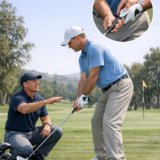
“Master the Langer Swing: Fix Driving, Iron Play & Putting” introduces a structured, evidence‑based approach to improving every scoring phase of your game, inspired by the repeatable, technically precise motion of Bernhard Langer. Rather than relying on rapid tips or feel-based adjustments, this method applies modern biomechanical analysis and periodized practise to help you build a swing that is both powerful and reliable under pressure.
In this article, we will break down the core principles behind the Langer-inspired motion-how body sequencing, clubface control, and balance interact to create consistent ball striking. You’ll see how these same fundamentals translate from the tee box to the fairway and onto the green, forming a unified framework for driving, iron play, and putting.
First, we’ll examine how to stabilize your setup and improve rotation to increase driving distance while tightening dispersion. Next, we’ll apply the same mechanical concepts to your iron play, focusing on predictable contact, trajectory control, and precise distance gapping. we’ll show how Langer’s disciplined approach extends to putting mechanics and green-reading, helping you reduce three‑putts and convert more makeable opportunities.
By the end, you’ll have a clear, practical roadmap-complete with key checkpoints and training priorities-to systematically refine your swing, upgrade your ball striking, and lower your scores.
Understanding the Langer Swing fundamentals for Every Club in the Bag
At the heart of Bernhard Langer’s approach is a repeatable swing blueprint that adjusts subtly from driver down to wedges without ever abandoning its core fundamentals. Langer prioritizes a balanced setup: feet roughly shoulder-width apart with longer clubs and slightly narrower with short irons and wedges, weight distributed about 55% on lead side for irons and 50/50 for driver. The spine tilts a few degrees away from the target with the driver to promote an upward strike, while remaining more neutral with irons for a downward, ball-then-turf contact. Grip pressure stays at about a 4 out of 10 across all clubs, preventing tension in the forearms and allowing the clubhead to release. To internalize this, practice a neutral setup in a mirror and use these checkpoints before every shot:
- clubface aimed at the intermediate target
- Feet, hips, shoulders aligned parallel to the target line
- Ball position forward heel with driver; gradually moving back to center with wedges
- Chin up to free the shoulder turn; arms hanging naturally under the shoulders
Langer’s full-swing mechanics are built on compact control rather than sheer power, a philosophy that works for every club in the bag. The takeaway is one piece: the clubhead stays outside the hands, the wrists remain relatively firm for the first 12-18 inches, and the club travels on a neutral-to-slightly-inside path. At the top, langer favors a stable lead wrist and full shoulder turn, allowing the trail shoulder to move behind the ball while keeping the lower body braced. This supports consistent clubface control from driver to wedges. to improve, use these drills:
- Slow-motion 9-to-3 drill: Swing from waist-high to waist-high, focusing on a flat lead wrist and body rotation, using mid-irons and fairway woods.
- Towel under lead arm: Keep a small towel under your lead armpit while hitting half shots with every club; this trains connected arm-body movement and prevents “over-swinging.”
- Launch monitor checkpoints (if available): Aim for consistent club path (within 2° of neutral) and face-to-path numbers small enough (±2°) to avoid wild curvature.
As Langer transitions into the scoring clubs-short irons,wedges,and the putter-the emphasis shifts to distance control,trajectory,and spin management. With wedges, he narrows the stance slightly, places the ball just slightly back of center, and increases shaft lean by 5-10 degrees to ensure a crisp, descending blow. The swing length, not swing speed, becomes the primary distance regulator. A simple Langer-inspired system is to map three swing lengths (hip-high, chest-high, shoulder-high) with each wedge and record carry distances on a launch monitor or practice range. For practical scoring benefits, integrate:
- Clock-face wedge drill: Imagine your lead arm as the hour hand; hit shots with the lead arm at 8, 9, and 10 o’clock and write down the carry distance for each wedge.
- Lie and turf-read habit: Before every wedge shot, check grass length, moisture, and grain; adjust to more loft and less spin expectation from wet or fluffy lies.
- Rule-awareness: Know you may mark, clean, and replace your ball on the green, but not improve your lie in the fairway or rough; practice playing the ball “as it lies” with varied lies around the practice green.
Langer’s long-game strategy with driver, fairway woods, and hybrids is grounded in course management rather than raw aggression. He often chooses the club that positions him on the correct side of the fairway for his preferred angle into the green, especially under wind and pressure.For driver, keep the ball just inside the lead heel, add a bit more spine tilt away from the target, and feel the club sweeping the ball with an upward angle of attack (around +2° to +4° for many amateurs). With fairway woods and hybrids, move the ball slightly back and focus on a shallow downward strike, brushing the turf after the ball. To apply this on-course:
- Pre-round tee plan: Before you play, choose at least 4-6 holes where you will deliberately hit hybrid or 3-wood instead of driver to prioritize fairways hit.
- Wind-adjustment routine: Into a strong headwind, club up (or two clubs), focus on a lower, controlled trajectory; downwind, accept more roll and try to flight the ball slightly higher.
- Measurable target: Track fairways hit and “good misses” (in light rough, still with a shot) and aim for gradual improvement-e.g., from 6/14 to 9/14 fairways over a month of practice.
Langer’s mental approach and practice structure tie all swing fundamentals together for every club in the bag. He is meticulous about pre-shot routines, visualizing the shot shape, trajectory, and landing zone before stepping in. For all skill levels, adopt a consistent routine: stand behind the ball, pick a precise target and intermediate spot a few feet in front, visualize the ball’s flight, then commit to one swing thought (such as “smooth tempo” or “turn and finish”). In practice, blend technical work and pressure training by alternating block practice (same club, same target) with situational practice (changing club and target each ball, like playing an imaginary hole). To make this effective:
- 3-ball challenge: On the range, simulate a par 4: hit a tee shot, then an approach, then a chip/pitch; only move to the next “hole” if you meet a specific goal (e.g., imaginary green hit, up-and-down within two shots).
- Tempo metronome drill: Use a metronome or rhythm app to maintain a 3:1 backswing-to-downswing ratio; Langer-like consistency comes from repeatable tempo as much as mechanics.
- Post-round review: Note which clubs caused the biggest scoring issues (e.g., greenside wedges, long irons, or driver) and design your next practice around that specific segment of the bag.
Biomechanical Checkpoints to Stabilize Your Setup and Backswing
Your address position is the first biomechanical checkpoint that stabilizes everything that follows. Start by building a balanced, athletic setup: feet roughly shoulder-width apart for irons and slightly wider for the driver; weight distributed 55-60% in the balls of the feet, never on the heels. Bend from the hips so your spine tilts forward about 30-40°, with a neutral lower back and relaxed knees, not a slump from the waist. Let the arms hang naturally so the hands fall just under the chin, avoiding tension in the forearms and shoulders. Borrowing from Bernhard Langer’s meticulous routine, take a moment to feel this posture before every shot: if you froze here and someone gave you a light push, you should feel stable, not wobbly. On the course, this consistency allows you to handle uneven lies by recreating your posture first, then adjusting knee and hip flex rather than inventing a new swing each time.
once your body posture is set, the next checkpoint is alignment and pressure distribution. Lay a club or alignment stick on the ground parallel to the target line and set your feet,knees,hips and shoulders square,as if standing on railroad tracks.For standard shots, aim to feel slightly more pressure in your lead foot (about 55%) with short irons to promote a descending strike, and a more neutral 50/50 distribution with the driver to encourage a sweeping motion. Langer is known for his precise pre-shot routine: after setting the clubface first, he builds his stance and then subtly “wiggles” into the ground to sense even pressure under both feet. You can copy this by doing three slow practice swings beside the ball, paying attention to where your weight moves, then step in and recreate that same pressure at address. This approach improves not only swing mechanics but course management, because when you’re under pressure-say, a tight tee shot with trouble left-you can trust your body lines and ground connection instead of steering the club.
The backswing starts with a critical checkpoint: one-piece takeaway with stable lower body. From the first 12-18 inches, the chest, arms, and club should move together while your lower body remains quiet and your head stays relatively centered. Imagine the grip of the club tracing straight back along the target line while the clubhead stays outside the hands until the shaft is parallel to the ground; at this point,the leading edge should be close to matching your spine angle,indicating a square clubface. Langer frequently enough rehearses this move deliberately,using slow,exaggerated takeaways to “set” the club in a repeatable position. To train this, place a tee about a foot behind the ball and practice brushing it back without changing knee flex or swaying off the ball. Over time, this stabilizes your swing arc, improves contact quality, and reduces the common miss of hitting fat or thin shots, which directly lowers scores by eliminating penalty strokes and wasted shots around the green.
as the backswing continues to the top, focus on coil versus sway. Your goal is to rotate your upper body around a relatively fixed spine angle while allowing the hips to turn about 35-45° and the shoulders about 80-90° for a full swing, depending on mobility. The lead shoulder should work down and across the chest, moving toward the trail foot, while the trail leg maintains some flex to prevent excessive lateral movement. Think of langer’s compact yet powerful coil-he turns deeply without losing his posture or balance. Common faults here include straightening the trail leg, collapsing the lead arm, or overswinging past parallel, which disrupts timing. To correct this, try the “wall drill”: stand with your trail hip lightly touching a wall and make backswings where the hip turns but does not drive hard into the wall. This teaches you to rotate instead of slide,keeping the center of mass more stable,improving both distance control with your irons and accuracy off the tee.
To link these checkpoints into a functional routine,blend technical awareness with on-course strategy. Before each shot,especially in pressure situations-such as a tight pin over a bunker or a lay‑up on a par‑5-run a quick mental checklist inspired by Langer’s methodical style: club selection based on distance and lie,wind and slope assessment,then a short internal cue such as “balanced posture,quiet feet,smooth coil”. On the practice tee, organize your sessions with targeted drills that build measurable improvement:
- Setup checkpoints: Use a mirror or smartphone video to verify posture angles and alignment for 10 balls with wedges, 10 with mid‑irons, and 10 with driver.
- Pressure ladder: Hit sets of 5 balls focusing only on consistent weight distribution at address and to the top; note how many you strike solidly (aim to reach 4 out of 5 before moving clubs).
- Slow‑motion backswing drill: Make 10 swings at 50% speed, pausing when the lead arm is parallel to the ground to check clubface and body rotation, then gradually increase tempo.
By integrating these biomechanical checkpoints into a consistent routine,you create a swing that holds up from the first tee to the 18th green,in wind,rough,or under tournament pressure. This stability not only sharpens full-swing mechanics but also reinforces the same balance and posture you need for wedge play and putting, ultimately turning technical consistency into lower scores and more confident decision‑making on the course.
Sequencing the Downswing for Maximum Driving Distance and Fairway Accuracy
The downswing begins long before the club starts down from the top; it is the product of a correct sequence of motion from the ground up. Following the model often demonstrated by Bernhard Langer, focus on initiating the downswing with a subtle pressure shift into your lead foot (typically the left foot for right-handed players) while your upper body remains relatively stable. Aim to feel at least 60-70% of your weight move onto the lead side by the time the shaft reaches a position parallel to the ground on the way down. This blends lateral shift and rotational power: the hips start to unwind toward the target while the upper body and club stay “loaded,” creating a slight increase in the angle between the lead arm and the club (lag) without forcing it. For beginners, think “feet-hips-chest-arms-club” in that order; low handicappers can refine the timing so the lower body leads the rotation by a fraction of a second, increasing clubhead speed while keeping the driver on plane for better fairway accuracy.
to support this proper sequencing, your setup and equipment must work with you, not against you. Start with a balanced athletic stance: shoulder-width to slightly wider with the driver, ball positioned just inside the lead heel, and spine tilted away from the target about 5-10° to encourage an upward angle of attack.Ensure your driver shaft flex and length match your swing speed; an overly stiff or long shaft can delay the downswing release and push shots offline. Before each tee shot, adopt a consistent pre-shot routine similar to Langer’s methodical approach: visualize the intended curve and landing area, then rehearse a half-speed downswing feeling the correct order-lower body, then torso, then arms. Use simple checkpoints such as: maintain light grip pressure (about 4-5 on a 10 scale), keep your lead knee flexed as the hips open, and avoid pulling the handle with the hands from the top, which commonly leads to over-the-top slices and lost distance.
as you move from transition into the mid-downswing, your goal is to deliver the club from the inside with a square, stable clubface. Langer often emphasizes control over violence; his downswing tempo is smooth yet purposeful. Focus on maintaining your lead wrist relatively flat and your trail wrist bent (extended) as the hands drop in front of the trail thigh. this preserves lag and positions the club on an inside path,promoting a slight draw that maximizes roll and fairway penetration. For players struggling with hooks, monitor that the clubface is not excessively closed when the shaft is parallel to the ground; for slicers, ensure the clubface is not wide open. On the course-especially in windy conditions or tight driving holes-intentionally shorten your backswing by about 10-15% and feel an even slower transition. This adjustment tightens your sequencing, reduces timing errors, and produces a lower-spinning “fairway finder” that holds its line under pressure.
To ingrain effective sequencing, integrate targeted practice drills and short game awareness into your routine, just as elite players blend full-swing work with scoring skills.On the range, use these drills:
- Step-Through Drill: Take your normal backswing, then step your trail foot toward the target as you start down, exaggerating the lead-side pressure shift. This teaches ground-up sequence and helps beginners feel how the hips lead.
- Pause-at-the-Top Drill: Pause for 1-2 seconds at the top, then start down by shifting weight and turning the hips, not by snatching with the hands. Advanced players can use this to refine transition tempo under tournament-like tension.
- 9-to-3 Half-Swing Drill: Swing back until the lead arm is parallel to the ground (9 o’clock) and through to the mirror point (3 o’clock), focusing on compressing the ball and starting it on your intended line. Track start line dispersion as a measurable goal-aim to keep 8 of 10 drives within a 20-25 yard window.
Link this to your short game and course management by noticing how a well-sequenced, balanced swing with wedges produces more consistent contact and spin. When you trust that same motion with the driver, you can confidently choose smarter targets-like Langer often does-favoring the wide side of fairways and playing to positions that open up the best angle into the green.
connect the technical sequence to strategic thinking and the mental game. Before committing to your downswing, decide on the shape and height that best fits the hole strategy and conditions: a lower, controlled fade into a crosswind, or a higher draw to carry a fairway bunker. Use simple internal cues to stay process-focused, such as “pressure, turn, deliver” instead of worrying about out-of-bounds stakes or hazards (as required by the rules of Golf).For golfers with limited mobility, allow a slightly narrower stance and shorter turn, but keep the same order-lower body leads, upper body follows, arms and club respond. Track progress using launch monitor numbers when possible-clubhead speed, ball speed, launch angle (10-15° with driver), and fairways hit percentage. As those metrics improve through better sequencing, you’ll see direct payoff in lower scores, more greens in regulation, and less stress on your short game, creating a complete, reliable tee-to-green performance.
Dialing In Iron Play Through Controlled Tempo and Precise Impact Position
Consistent iron play starts with a controlled tempo that you can repeat under pressure, not with maximum speed. Bernhard Langer is a classic model: his swing looks unhurried, yet the ball flight is powerful and precise. Begin by matching your backswing and downswing to a simple count, such as “1-2” going back and “3” into impact.The goal is a smooth ratio of roughly 3:1 backswing to downswing, avoiding a sudden “lunge” from the top. A practical drill is to hit half‑swings with a 7‑iron while keeping your grip pressure at about 5 out of 10 from takeaway to finish. If the club feels heavy and your body stays in balance-chest over the ball and weight between the arches of your feet-you are starting to find a tempo that will hold up on tight approach shots, into the wind, or over water.
To translate that tempo into precise impact position, you must build a solid setup that encourages a slight downward strike on the ball. With a mid‑iron, play the ball roughly one to two ball widths forward of center, keep your sternum slightly ahead of the ball, and set 55-60% of your weight on your lead foot. Langer often emphasizes a quiet lower body and a stable head position, allowing the chest and arms to deliver the club with a forward shaft lean of about 5-10 degrees at impact. Check these fundamentals before each swing:
- Posture: Slight knee flex, spine tilted from the hips about 25-35°, arms hanging naturally under the shoulders.
- Alignment: Clubface aimed at the target; feet, hips, and shoulders parallel (or slightly open with shorter irons).
- Handle position: Hands just ahead of the clubhead at address to promote ball‑then‑turf contact.
On the course, this setup helps you obey the Rules of Golf regarding grounding the club in the fairway while still taking a proper divot after the ball, which is crucial for clean contact and distance control.
Once the setup is in place, refine your impact by training how the club travels through the ball.With irons, you want a slightly descending angle of attack, typically between -3° and -6° for most players, creating a divot that starts just in front of the ball. Borrowing from Langer’s disciplined practice, focus on controlling the low point of your swing. A simple drill is to draw a line on the turf (or use painter’s tape on a mat) and set the ball just ahead of the line. Work on making your divot start on or just in front of that line 8 out of 10 swings. For additional feedback, place a tee in the ground just outside the toe of the club: if your tempo rushes and you cast the club, you’ll frequently enough hit the tee; when your tempo is smooth and your hands lead, you’ll miss it and clip the ball crisply.
To apply these skills under real-course conditions, blend course management with your controlled tempo. Langer is famous for choosing clubs and targets that fit his swing rather than forcing distance. on approach shots, favor the club that allows a comfortable, full‑tempo swing instead of a hard one-taking a 7‑iron instead of trying to “muscle” an 8‑iron, for instance. Consider wind, lie, and green firmness: from a downhill lie or into a stiff breeze, prioritize solid contact and trajectory control by gripping down 0.5-1 inch, aiming for the safe side of the green, and committing to the same tempo you use on the range.When you have a front pin over a bunker, aim to the fat part of the green and think, “smooth swing, hold the finish.” This mindset reduces tension, protects your scorecard, and leads to more greens in regulation.
structure your practice to make improvement measurable for every skill level. Use these targeted routines:
- Tempo ladder drill: Hit 10 balls with a 9‑iron,alternating between 50%,70%,and 90% effort while trying to maintain the same rhythm. Track how many shots finish within a 10‑yard distance window; aim to increase that percentage each week.
- Impact stripe drill: Apply face tape or impact spray and hit 20 balls, noting strike location. Beginners should aim to get at least 12/20 contacts in the center third of the face; low handicappers should push for 16/20.
- Pressure routine: Simulate Langer‑like focus by playing “9‑hole” approach games on the range: choose a target, call the club and shot shape, and give yourself a score based on proximity (e.g., inside 20 feet = birdie, green hit = par). Maintain your pre‑shot routine and controlled tempo for every ball.
By linking a repeatable tempo with a disciplined impact position and smart strategy, you convert technical work on the range into lower scores on the course-fewer fat and thin shots, more predictable distances, and the confidence to attack when appropriate and play safely when conditions demand caution.
Integrating Lag and Shaft Lean to Optimize Ball Flight and Spin Control
Lag and forward shaft lean work together to control launch angle, spin rate, and distance control. In simple terms, lag is the angle between the lead arm and the club shaft on the downswing, and shaft lean is how far the grip is ahead of the clubhead at impact. For a stock iron shot, most elite players deliver the shaft with roughly 5-15 degrees of forward lean, compressing the ball and creating a penetrating flight.Following the model of Bernhard Langer’s disciplined technique, your goal is not to “hold lag forever,” but to sequence your body, arms, and wrists so that the club releases late enough to create compression without flipping.Think of it as allowing the clubhead to catch up to your hands through the ball, not before it.
To build this impact position, start with a sound setup that encourages forward shaft lean without forcing it.At address with a mid-iron, position the ball slightly forward of center, your hands a fraction ahead of the ball, and your weight about 55-60% on the lead side. Langer is a master of repeating this organized setup under pressure, even in windy conditions where controlling spin is critical. As you start the downswing, feel the lower body initiate-hips and torso rotating toward the target-while your wrists maintain a soft, cocked angle. Avoid yanking the handle; instead, create the sensation that your chest is rotating past the ball while your hands stay in front of your sternum. This helps produce shaft lean from rotation, not from a forced hand push, which is essential for consistent ball striking and legal club delivery within the Rules of golf.
Improved lag and shaft lean translate directly into better ball flight and spin control on both full swings and finesse shots. With irons, a well-leaned shaft at impact reduces dynamic loft by 2-4 degrees, promoting a lower, more penetrating trajectory with predictable backspin-ideal for hitting into the wind or to tight pins. Around the greens, langer frequently enough varies his shaft lean to tailor spin: more lean and a slightly descending strike for a low spinner, less lean and a shallower strike for a higher, softer pitch. On firm, fast greens, this lets you land the ball earlier and let it release, whereas on soft, receptive greens you can fly the ball farther and stop it quickly. Course management-wise, this means choosing the correct landing zone and trajectory rather of always aiming directly at the flag, especially when trouble surrounds the green.
to train these skills, incorporate focused practice drills with clear, measurable goals. On the range, place an alignment stick about 2-3 inches behind the ball and slightly above the ground, then practice striking the ball without clipping the stick; this encourages ball-first contact and natural forward shaft lean. Another drill is the ”L-to-Y” drill: in the backswing, stop when your lead arm is parallel to the ground and the club forms an “L”; then swing to impact focusing on turning your chest so that at impact your body and hands form a “Y” shape with the shaft leaning toward the target. Aim to hit 10 solid shots in a row before changing clubs. For players with less strength or mobility,use shorter clubs or a half-swing to feel the motion,then gradually lengthen the swing while maintaining the same impact sensation.
Common mistakes include early release (casting),over-leaning the shaft,and trying to manufacture lag with tension. Casting often shows up as thin or fat shots and ballooning ball flight. To correct it,rehearse slow-motion swings where you feel the clubhead “heavy” and your wrists soft until just before impact,then allow the club to release naturally as your body turns. Over-leaning can cause low, digging shots with excessive spin; in that case, soften your hands and allow a bit more dynamic loft, especially with wedges. Just as Langer uses his meticulous pre-shot routine to commit to the shot shape and trajectory he wants, adopt a brief mental checklist before each swing: target, trajectory, contact, commit.By blending this mental clarity with improved lag and shaft lean mechanics, you not only enhance ball flight and spin control, but also lower your scores through smarter shot selection and more predictable outcomes in all course and weather conditions.
Applying the Langer Method to Build a Repeatable and Reliable Putting Stroke
Begin by building a putting setup that you can reproduce under pressure, just as Bernhard Langer does in his pre-shot routine. Stand with your feet approximately shoulder-width apart, weight balanced slightly toward the balls of your feet (about 55-60% front foot), and your eyes positioned so the lead eye is either directly over the ball or just inside the target line. A simple checkpoint is to let a ball drop from your lead eye; it should land on or just inside the line of your putt. grip the putter lightly-around 3 out of 10 on a pressure scale-to allow a free, pendulum motion. For golfers of all levels,the goal is a neutral,repeatable setup: square shoulders,hips,and putter face aligned to the start line,with the ball positioned just forward of center to promote a slight upward strike and true roll.
Langer’s method emphasizes a stroke driven by the shoulders and upper torso, minimizing hand and wrist action for consistency. Think of the stroke as a controlled rocking motion of the shoulders around your spine, with the putter head tracing a slight arc rather than an exaggerated in-to-out path. Keep the lead wrist firm and avoid “flipping” at impact, which changes loft and start direction. To ingrain this, use checkpoints such as:
- Quiet hands: Feel that the grip pressure stays constant from takeaway through follow-through.
- Stable lower body: Knees and hips remain still; no swaying or “peeking” early.
- Symmetrical stroke length: Backstroke and through-stroke are roughly the same length on short putts, slightly longer through on lag putts.
For beginners, focus on simply brushing the grass and listening for the ball to drop before you look up. Low handicappers can refine by monitoring face angle with a putting mirror or alignment gate, aiming to start 8 out of 10 putts within 1 degree of the intended start line from 6 feet.
A core element of Langer’s approach is purposeful, measurable practice that simulates on-course pressure. build a routine that covers short putts, mid-range putts, and lag putting. For instance:
- 3-6 foot “scoring circle” drill: Place tees in a circle around the hole at 3, 4, 5, and 6 feet. Putt one ball from each tee,working around the circle. Beginners aim to make 50%+; competitive golfers should strive for 80-90% from 3-5 feet.
- Distance ladder drill: From one edge of the practice green, putt to a hole at 20, 30, and 40 feet. Try to leave each ball within a 3-foot radius. This builds speed control and reduces three-putts.
- One-ball “course” drill: Roll one ball around the green to different holes, always going through your full routine. This mirrors Langer’s habit of treating every practice putt like a real shot under the Rules of Golf-no raking six balls and rapid-fire stroking.
Track your results (makes, proximity to the hole, three-putt avoidance) so you can see improvement over time and adjust your focus, just as a tour player reviews stats between rounds.
Langer’s success on fast, undulating greens comes from combining solid mechanics with sharp green-reading and course management. Build a consistent process: first, read the putt from behind the ball to assess overall slope; second, walk around the low side to gauge grain, moisture, and shine (down-grain putts look shinier, up-grain duller); visualize the exact start line and pace that would allow the ball to “die” into the cup.On downhill or downwind putts, play extra break and reduce stroke length, keeping the hit soft and smooth. Uphill or into-the-grain putts require more pace-maintain your tempo, but lengthen the stroke slightly. For beginners, a good rule is to aim to finish the ball 12-18 inches past the hole on most flat putts. Advanced players can adjust this “capture speed” based on tournament conditions, aiming to leave tricky downhill putts no more than 6 inches past to avoid long comebackers.
the Langer method ties the technical and strategic elements together with a disciplined mental routine and equipment choices that suit your stroke. Choose a putter with a head shape and neck design that matches your stroke arc: face-balanced putters often suit straighter strokes, while toe-hang models can complement a moderate arc. Make a commitment-like Langer-to your chosen style and practice it until your stroke feels automatic. Before each putt, follow the same sequence: read - decide – rehearse – commit – execute. Once over the ball, shift entirely to feel: focus on your intended roll and trust your mechanics. If you miss, note whether the error was read, speed, or stroke, then move on without emotional carryover. Over time, this blend of clear mechanics, structured drills, sound course strategy, and calm mental habits will produce a repeatable, reliable putting stroke that directly lowers your scores by cutting down three-putts and converting more makeable birdie and par putts.
Green Reading,Start Line Control and Speed management the langer Way
elite putters like Bernhard Langer treat green reading as a disciplined pre-shot routine,not a guess. Begin by walking around the putt to view it from behind the ball, behind the hole, and from the low side, where the slope is easiest to see. Notice how your feet feel: if your weight falls toward your toes, you’re likely on a downhill slope; toward your heels suggests an uphill putt. Use fixed references such as drainage patterns,surrounding mounds,and nearby water hazards-greens are typically built to shed water in those directions. On longer putts (over 25 feet), Langer-style course management means reading the putt in two stages: the first 70-80% as a speed putt, then the final 20-30% as the most break-sensitive area. this helps you choose a realistic starting line and avoid over-aiming or under-reading the most critical part of the roll.
Once the break is understood, the next priority is start line control.Langer’s putting success is rooted in a stable setup and a repeatable stroke. Set your eyes so they’re either directly over the ball or just inside the target line, depending on what feels most natural; you can test this by dropping a ball from the bridge of your nose and seeing where it lands relative to the ball. Create a checklist at address using a mirror or smartphone video on the practice green:
- Shoulders and forearms parallel to the intended start line
- Ball position slightly forward of center (about 1-2 ball widths) to promote a slight upward strike
- Grip pressure at roughly “3 out of 10” to reduce tension and wrist breakdown
- Putters with proper lie and loft (around 3-4° loft) to ensure a true roll rather than a bounce or skid
For all skill levels, a simple gate drill is invaluable: place two tees just wider than your putter head about 8-10 feet from the hole and hit putts through the “gate.” For advanced players,add a second gate 12-18 inches in front of the ball to tighten start line tolerance to ±1°,which is critical inside 10 feet.
Speed management is where many golfers lose strokes, and Langer’s method is to match stroke length and rhythm to the desired distance.Think of your putting stroke length in terms of a clock: for mid-range putts, a backstroke to “7 o’clock” and follow-through to “5 o’clock” (for right-handers) can serve as a baseline, then adjust in small increments for longer or shorter putts while maintaining a constant tempo. On downhill putts, narrow your stance slightly, grip down the putter by 1-2 inches, and shorten the stroke while keeping the same rhythm; on uphill putts, widen the stance for stability and make a slightly longer stroke without adding extra hit at impact. Useful practice drills include:
- Ladder drill: Place tees or coins at 3, 6, 9, and 12 feet. Roll three balls to each station, focusing on stopping them within 18 inches past the target if they miss.
- fringe-stop drill: From 30-40 feet, putt toward the fringe or a golf towel and try to stop the ball right on the edge. This trains depth perception and speed on long putts.
- One-hand drill: Hit 10-15 putts using only your lead hand to develop feel and reduce tension; Langer has long emphasized the importance of a dominant, stable lead side in putting.
To bring this together in real-course scenarios, you must integrate green reading, start line, and speed into a single routine. Before each putt, decide first on speed, then on line-not the other way around-because the amount of intended pace determines how much the ball will break. For example, on a 15-foot right-to-left putt on fast greens (Stimpmeter 11+), you may choose a softer pace that finishes just past the hole, which requires aiming several inches higher than for a firmer stroke that enters on the high side of the cup. Once you commit, focus your eyes on a precise starting spot (e.g., a discolored blade of grass 6 inches in front of the ball) and make a smooth, unhurried stroke past that spot. Common mistakes include decelerating into impact, peeking early to watch the ball, and changing grip pressure mid-stroke; counter these by rehearsing a full, confident practice stroke, then stepping in and copying that feel without hesitation.
remember that putting performance is closely tied to your mental game and overall scoring strategy. Langer is renowned for his discipline: he accepts that even perfect putts won’t always drop, but he relentlessly manages his misses. Adopt similar rules for yourself: on putts outside 25 feet,your primary goal is no three-putts; inside 10 feet,focus on solid contact and starting the ball on your line rather than “making everything.” Incorporate mixed-skill practice where you alternate between putts of 3, 15, and 30 feet to simulate on-course pressure and changing conditions such as grain direction, morning moisture, or late-afternoon footprints. For different physical abilities, adjust stance width, putter length, and grip style (customary, claw, cross-handed) to reduce strain while maintaining control.Over time, as your green reading, start line control, and speed management improve, you will see measurable gains in one-putt percentage, reduced three-putts, and lower scoring averages, reinforcing that a Langer-like commitment to detail on the greens is one of the fastest pathways to better golf.
Structured Practice routines to Reinforce Swing, Iron and Putting Improvements
To convert technical changes into lower scores, organize your practice the way bernhard langer structures his preparation: purposeful, repeatable, and measurable. Begin each session with a clear swing focus: for example,improving clubface control or shallowing the downswing. Use alignment sticks to create a visual “railway track” on the ground, placing one stick along the target line and another parallel to your toe line. Aim to start with 20-30 balls using a mid-iron (7 or 8 iron), maintaining a consistent pre-shot routine and tempo. Between shots, step away and rehearse one key move-such as a 90° lead arm-shaft angle at the top or a slight forward shaft lean at impact-then verify your ball flight. This mirrors Langer’s disciplined approach: one intention per swing, constant feedback, and no “mindless” balls.
Once your full swing fundamentals are engaged, transition into structured iron practice that simulates on-course demands. Divide your iron session into short blocks that target different trajectories and shapes, similar to how Langer prepares for varying course set-ups. For example, hit 10 stock shots with a 7-iron at 70-75% effort, focusing on solid contact and a balanced finish; then move to 10 controlled draws (ball positioned a ball-width back, clubface slightly closed to stance, swing path slightly in-to-out); finish with 10 soft fades (ball a ball-width forward, clubface slightly open to stance, path slightly out-to-in). Use a launch monitor or range markers to set specific targets: start line within 5 yards of the target and curvature kept inside the fairway width. This structured variety teaches shot shaping for course management-like aiming at the middle of a green and working the ball away from trouble, a hallmark of Langer’s conservative-aggressive strategy.
To reinforce swing mechanics under pressure, integrate games-based routines that blend technique with decision-making.Create a “virtual round” on the range: pick a hole from your home course and play it shot by shot. Such as, on a tight par 4, choose a 3-wood or hybrid instead of driver to practice strategic club selection; aim for a safe target that leaves a comfortable approach distance (e.g., 140-150 yards if that’s your favorite iron yardage). Execute your pre-shot routine fully-visualization,rehearsal swing,and alignment check-before every shot. track your performance by scoring each swing: +1 for hitting the planned target zone, 0 for a playable miss, and -1 for a penalty-type miss. Over time, aim to improve your ”virtual score” just as Langer relentlessly refines his course management, choosing the highest-percentage shot rather than the most heroic one.
For putting,Langer’s legendary discipline on the greens provides a perfect model for structured practice. Begin each session with a start-line drill: place a gate of two tees slightly wider than your putter head, 3-4 feet from the hole, and roll 20 putts through the gate, focusing on a square face at impact and a smooth, accelerating stroke. Next, train distance control with a ladder drill: putt from 10, 20, 30, and 40 feet, trying to leave the ball within 18 inches past the hole. Work in sets of 4 putts at each distance and record how many finish in your “tap-in circle.” add a pressure drill inspired by Langer’s major-championship preparation: place 10 tees in a circle around the hole at 3 feet; you must make all 10 in a row before moving on. This routine not only sharpens your stroke and green reading (break,grain,and speed) but also builds the mental resilience needed to convert par and birdie putts when it matters most.
To tie everything together, close your sessions with integrated short-game practice that links swing improvements to scoring. Around the green, practice three core shots from similar lies: a bump-and-run with a 7-8 iron, a standard pitch with a gap or sand wedge, and a high, soft lob when necessary. Use simple checkpoints: ball back, hands forward and a shorter follow-through for bump-and-run; ball center, moderate shaft lean and 60-70% swing length for standard pitches; ball forward, more wrist hinge and a steeper angle of attack for higher shots. Set clear goals-such as getting 7 out of 10 balls inside a 6-foot circle-and adjust for course conditions (firm vs. soft greens, uphill vs.downhill lies,wind direction). Just as Bernhard langer chooses the highest-percentage short-game option rather than the most glamorous shot, train yourself to select the shot that gives the largest landing area and the simplest motion. Over time, these structured routines transform technical gains into consistent up-and-downs, lower putt totals, and a reliably lower handicap.
Q&A
**Q: what is the “Langer Swing” and how does this method differ from other golf instruction systems?**
**A:** The Langer Swing, inspired by Bernhard Langer’s repeatable, technically sound motion, is an evidence-based framework that prioritizes biomechanically efficient movement over style or aesthetics. Rather than forcing you into a single “perfect” model, it:
– Analyzes your current mechanics (video + basic biomechanical checkpoints).
– Identifies the highest‑impact faults tied to ball flight and dispersion.
- Uses periodized practice (staged,structured drills) to upgrade your swing,driving,iron play,and putting systematically.
The focus is on *function first*: impact conditions, face control, low point control, and repeatability under pressure.
—
**Q: Who is this method designed for?**
**A:** The method suits:
– Intermediate players (8-25 handicap) who struggle with consistency.
– Better players chasing tighter dispersion, more distance, and fewer three‑putts.
– Late starters or senior golfers who want efficiency and longevity rather than “young tour‑pro positions.”
It is not a quick‑fix tip collection; it’s a structured improvement system emphasizing incremental, measurable change.
—
**Q: What are the core principles of the Langer Swing framework?**
**A:** The method is built on four core pillars:
1. **Impact‑First Biomechanics** – Prioritizing clubface, path, angle of attack, and strike location over how the swing “looks.”
2. **Stable structure** – Creating reliable alignments: grip, posture, balance, and arm‑body connection that hold up under pressure.
3. **Minimal Moving parts** – Reducing excessive hand action, sway, or timing‑dependent moves that often break down in competition.
4. **Periodized Practice** – Progressing from slow, exaggerated drills to full‑speed, context‑rich practice (randomized targets, pressure games).
—
**Q: How does the Langer Method specifically help fix my driving?**
**A:** For driving,the framework targets:
– **Face-to-path control** to eliminate big misses (hooks/slices).
– **Launch and spin optimization** via improved angle of attack, tee height, and ball position.
– **Ground reaction forces and rotation** to generate speed without over‑swinging.
Typical progression:
1.**Assessment:** Measure start lines and curvature; record swing on face-on and down-the-line angles.
2. **Setup corrections:** Grip, stance width, spine tilt, and ball position tailored to a positive or neutral angle of attack.
3. **Movement drills:**
– ”Turn in a barrel” drill to limit sway and improve centered contact.- “Split‑hand driver swings” for clubface awareness and sequencing.
4. **Pressure integration:** Fairway‑finder vs max‑distance routines, alternating clubs and targets to solidify control.
—
**Q: What about iron play-how does the method improve ball‑striking with irons?**
**A:** The focus with irons is on **compression and control**:
– Establishing a **consistent low point** in front of the ball.
– Managing **shaft lean** and **body rotation** so the hands and body work together.
– Creating predictable **carry distances** and tighter proximity to the hole.Key elements include:
– **Setup:** Slight weight favoring lead side, narrower stance than driver, neutral ball position (slightly forward of center for mid‑irons).
– **Pivot‑driven strike:** Drills that emphasize turning and shifting rather than “hitting with the hands.”
– **Impact drills:**
– “Line drill” (striking the ground in front of a line without a ball).
– “Three‑quarter knockdowns” to train control of trajectory and contact.
—
**Q: How does the method approach putting, and what makes it different from standard putting tips?**
**A:** The putting component is built on **precision, repeatability, and evidence** rather than feel alone. It covers:
1. **Aim and Face control** – Using reference lines or a gate drill to prove where you’re actually aiming and how your face behaves.
2. **Start Line Skills** – Training to start the ball within a tight tolerance window over short and mid‑range putts.
3.**Speed Control** – Calibrated distance drills to dial in green speed and reduce three‑putts.
4. **Green Reading** - A simple, consistent process (e.g., a hybrid of aim‑point concepts and traditional visualization) rather than guessing.
You’ll use structured drills, such as:
– **Gate drill** (tees at the putter head and just in front of the ball) for start line accuracy.- **Ladder drill** (progressively longer putts) to groove pace.
– **Circle of trust** (3-4 ft circle around a hole) to build confidence from scoring range.
—
**Q: What does “evidence‑based” mean in a practical sense for my training?**
**A:** Evidence‑based means decisions are guided by data and validated principles,not opinion or fad trends. Practically, that includes:
– **ball‑flight data:** Where the ball starts, curves, and finishes.
– **Simple metrics:** Fairways hit, greens in regulation, proximity to the hole, putts per round, and make percentages by distance.
– **Before/after comparisons:** Video checkpoints and stats to verify improvement,not just “better feels.”
– **Drills with measurable outcomes:** Such as, “hole 8 of 10 from 3 feet” or “achieve 7/10 solid strikes on the line drill” before progressing.
—
**Q: What are “periodized drills,” and why are they vital?**
**A:** Periodization is structuring practice over time so that the right skills are emphasized at the right stage. In golf, this means:
1. **Foundation Phase** – Slow, exaggerated, mechanics‑focused drills with high feedback (mirrors, video, training aids).
2. **Integration Phase** – Moving to normal tempo, adding variability: different targets, clubs, and lies while maintaining form.3. **Performance Phase** – Simulated on‑course conditions: pressure games,scoring challenges,and decision‑making tasks.
This prevents random, unfocused practice and accelerates the transfer of skills from the range to the course.
—
**Q: How much time do I need to commit to see noticeable improvements?**
**A:** While results vary, a realistic guideline is:
– **2-3 structured sessions per week**, 45-60 minutes each.- Within each session, dividing time across:
– Full swing (driver + irons).
- Short game and putting.
– At least one “performance” or pressure drill.
With consistent adherence, many players see measurable gains in **driving accuracy, iron contact, and putting stats within 4-8 weeks**.
—
**Q: Can I apply the Langer Swing principles if I’m not very flexible or athletic?**
**A:** Yes.The method is designed around **efficiency and repeatability**, not extreme physical attributes. Adjustments often include:
– Slightly shorter backswing with stable structure rather than chasing extra length.
– Setup tweaks for balance and joint comfort.
– Emphasizing rotation within your available range and using the ground effectively, instead of forcing a “tour‑style” coil.
The system is scalable: ranges of motion and speed targets are customized to your body and goals.
—
**Q: How do I know which part of my game to prioritize first-driving, irons, or putting?**
**A:** The framework uses a simple diagnostic approach:
1. **Scorecard audit:** Where are strokes being lost-tee, approach, short game, or putting?
2. **Key metrics:**
– Fairways hit vs penalty balls.
– Greens in regulation and approach proximity.
– Three‑putts and make rate inside 6 feet.
3.**Impact assessment:** Which area, if improved slightly, would drop the most strokes?
For many mid‑handicaps, the highest return often comes from **eliminating driving disasters and tightening putting inside 6-8 feet**, then refining iron proximity.
—
**Q: Is this method compatible with other coaching I’ve had, or will it conflict?**
**A:** The Langer Method is built on worldwide impact laws and biomechanical principles.It can:
– Complement existing swing thoughts by focusing them around clear impact goals.
– Clarify which previous tips align with those goals and which may be counterproductive.Rather than “starting over,” it organizes what you already know into a coherent,testable structure.
—
**Q: How should I track my progress while using the Langer Swing framework?**
**A:** Use a simple,repeatable tracking system:
– **On‑course stats:**
– Fairways hit,penalties off the tee.
- Greens in regulation and up‑and‑down percentage.
– Putts per round, three‑putts, and make % from 3-6 feet.
– **Practice benchmarks:**
– % of solid strikes in drill sets (e.g., 7/10 compressed irons).- Gate drill success rates for putting.
– **Video checkpoints:**
– Setup and impact positions recorded monthly, compared against your baseline.This objective feedback ensures you’re not relying on feel alone and helps you adjust practice priorities as your game evolves.—
**Q: where should I start if I want to implement the Langer Swing approach today?**
**A:** A practical first step:
1. **Record a short baseline session**: 10 drivers, 10 mid‑irons, 20 putts (3-10 feet). Note directional patterns and misses.
2. **Fix foundation first:**
– neutral, functional grip.
– Balanced, athletic posture and stance.
– Consistent ball position for driver and irons.
3. **Select 1-2 targeted drills** each for driver,irons,and putting based on your most damaging miss.
4.**Schedule three focused sessions** over the next 10 days, repeating the same drills and tracking outcomes.
Over time, progress through the periodized phases from mechanics to performance, always guided by statistics and ball‑flight evidence.
The Conclusion
Incorporating the core principles of the Langer swing into your driving,iron play,and putting is not about copying a single player-it is about adopting a proven framework of balance,rhythm,and consistency that scales to any skill level. By committing to a repeatable pre-shot routine,a stable yet athletic setup,and a synchronized body-club motion,you create a swing that holds up under pressure and across all parts of the course.
From the tee, these fundamentals translate into more fairways hit and tighter shot patterns; with your irons, they promote predictable distance control and improved proximity to the hole; on the greens, they support a calm, dependable stroke that minimizes three-putts. Each change may appear incremental, but together they compound into measurable performance gains in both scoring and confidence.
as you move from theory to practice, prioritize deliberate, structured sessions over quick fixes. Use video, launch-monitor data, or simple impact feedback (like foot spray on the clubface) to verify that your feel matches what is actually happening.Track key metrics-fairways in regulation, greens in regulation, and putts per round-to quantify progress and to identify where to refine your application of Langer-inspired mechanics.
Ultimately, mastering the Langer swing is an ongoing process of observation, adjustment, and reinforcement. Integrate one principle at a time,evaluate its effect,and then layer in the next. With disciplined practice and objective feedback, you can build a game that is not only more technically sound, but also more resilient under tournament conditions-turning the Langer model into a practical blueprint for long-term improvement.