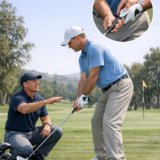
Golfers at every level know the frustration of hitting a perfect drive and solid approach, only to waste strokes around the green. Mis-hit chips-chunked, bladed, or inconsistent-don’t just cost you shots; they undermine confidence and add pressure to every subsequent swing. Yet for most players, the short game remains the least-practiced and least-understood part of golf.
This article, “Master Your Golf Chipping: Fix Mis-Hits and transform Your Short Game,” is designed to change that. Drawing on sound fundamentals and evidence-based technique, it will break down the key elements of effective chipping: smart club selection, reliable setup and stroke mechanics, and situational decision-making that matches shot type to lie and green conditions.
You will learn how to:
– Diagnose common chipping errors and understand why they happen
– Build a repeatable motion that minimizes fat and thin shots
– Choose the right club and trajectory for different lies and green speeds
– Develop practice habits that translate directly to lower scores
Whether you’re a mid-handicapper trying to stop throwing away shots around the green or an improving player looking to sharpen your scoring tools, mastering these fundamentals will help you turn mis-hits into makeable putts-and your short game into a true strength.
Understanding Common chipping Mis Hits and What Causes Them
The most frequent chipping mis-hits-chunks (fat shots), blades (thin shots), and shanks-almost always trace back to setup and low-point control rather than “bad luck.” A solid chipping setup starts with 55-70% of your weight on your lead foot, feet narrow (about clubhead-width apart), and the ball positioned just inside your back heel for a standard chip.This promotes a slightly descending strike and ensures the club’s low point occurs in front of the ball. When your weight drifts to the trail foot or the ball creeps forward, the club bottoms out early, digging into the turf and causing fat shots.To troubleshoot on the course, build a quick checkpoint routine:
- Check weight: feel lead foot heavier and lead knee subtly over your lead shoe laces.
- Check ball position: slightly back of center for a standard chip, never ahead of center.
- Check handle position: grip end slightly ahead of the ball but not excessively pressed forward.
Reinforcing these fundamentals promptly tightens contact and reduces mis-hits across all lies and course conditions.
Another common cause of inconsistent contact is excessive wrist action and poor clubhead path. Manny golfers “flip” the clubhead at impact, trying to scoop the ball into the air, wich leads to both fat and thin chips-especially under pressure. Instead,focus on maintaining the angle between your lead arm and the shaft from setup through impact,using a compact,body-driven motion. Think of a “shoulders-and-chest rock” rather than a hands-only swing. The ideal chipping motion keeps the club traveling slightly inside-to-square with minimal face rotation. Over-rotating the face open or closed during the motion invites shanks and inconsistent strike. A simple drill to correct this:
- Grip the club and place a second club or alignment stick along your lead hip.
- Make waist-high chips while ensuring the stick doesn’t bump your lead side early (which signals flipping) and that the club exits slightly left of the target line.
- Focus on brushing the grass just past the ball on every swing.
This builds the feel of forward shaft lean, proper low point, and a stable clubface-hallmarks of elite short-game technique.
Lie and turf interaction also play a huge role in chipping mis-hits, and skilled players adjust technique and club selection to match conditions. In tight, firm lies, many golfers try to help the ball up and end up blading it across the green.Instead,select a club with appropriate bounce (8-12°) and keep the hands only slightly ahead,encouraging the leading edge to stay close to the ground while the bounce glides.In fluffy rough or wet conditions, trying to “stab” the ball creates chunks because the club digs. Here, open the face a fraction, lower your handle slightly, and feel the club’s bounce slide under the ball with a slightly longer, smoother motion. Use this quick course-management checklist:
- Firm/tight lies: less wrist hinge, weight forward, shorter swing, accept a lower-trajectory, more rollout chip.
- Soft/fluffy lies: more bounce, slightly wider stance, a bit more speed through impact to avoid grabbing.
- Into the grain: extra commitment to a descending strike; pick a safer landing spot and more club.
By learning how lie and bounce interact,you drastically reduce surprises and penalty strokes from poor contact.
Distance control errors-chips that come up well short or race past the hole-are often mislabeled as “bad touch” when the real issues are inconsistent swing length, tempo, and strike location on the clubface. If your strike moves toward the toe or heel, ball speed changes even with the same effort. To improve, establish a repeatable “chip clock”: use three swing lengths (hip-high, waist-high, chest-high) and pair them with specific clubs (e.g., PW, 52°, 56°). On the practice green, note how far each combination carries the ball with a smooth, even tempo of about 2:1 backswing to through-swing. Then, build a simple routine:
- pick landing spot first, based on green slope and firmness.
- Choose club that gives a agreeable carry-to-roll ratio.
- Match swing length to the required carry using your chip clock.
Even beginners can aim for the measurable goal of getting at least 7 out of 10 chips within a 3-foot circle from 10-15 yards. Low handicappers can tighten that goal to 2 feet. Consistent contact plus structured distance calibration turns guesswork into predictable scoring opportunities.
nervous tension and poor decision-making often amplify mechanical flaws and lead to mis-hits in real rounds-even when practice sessions look good. Under pressure,players tend to decelerate,overthink,or choose the wrong shot for the situation. A reliable pre-shot process keeps the motion simple and the mind clear. Before every chip, follow this routine:
- Assess: Evaluate lie, green slope, grain, wind, and available landing zones within the Rules of Golf (no improving the lie, but you may fairly remove loose impediments around the ball).
- Select: Choose the simplest shot and club that allows a predictable landing area-frequently enough a lower, running chip rather than a high, risky one.
- Rehearse: Make 1-2 practice swings next to the ball,feeling the turf interaction and length/tempo you want.
- Commit: Align, breathe out, then swing through without slowing down, letting the chest turn toward the target.
For players of all levels, the measurable goal is to turn potential double-bogey chips into “two-putt or better” situations. By combining sound mechanics, lie-specific adjustments, a structured practice plan, and a calm, repeatable routine, you dramatically reduce common chipping mis-hits-and convert your short game into a consistent scoring strength.
Optimizing Setup And Ball Position For Clean Chip Contact
Clean contact on chip shots begins with a stable, repeatable setup that allows the clubhead to bottom out in the same spot every time. Start by positioning your feet slightly narrower than shoulder-width, then flare your lead foot (left foot for right-handed players) out about 20-30 degrees toward the target to promote a controlled, rotational motion through impact. Place roughly 60-70% of your weight on your lead side and keep it there throughout the swing to move the low point of your arc in front of the golf ball. The ball should typically be positioned just inside your lead heel for higher, softer chips and move progressively back toward the center or even slightly inside your trail foot for lower running chips. This simple system-narrow stance, weight forward, and incremental ball movement-gives you a framework to match trajectory and rollout to the green conditions you face.
From this foundation, refine your alignment and shaft angle to optimize turf interaction. Aim your body-feet,hips,and shoulders-slightly open to the target line (5-10 degrees) while keeping the clubface aimed at the landing spot; this helps you swing along your body line and encourages a shallow,consistent strike. At address, lean the shaft so the grip is just ahead of the ball, creating a small forward press without excessively de-lofting the club. Think of your hands being one golf ball’s width ahead of the clubhead. This promotes a slight downward strike and clean ball-first contact. For most stock chip shots, maintain a neutral grip pressure-around a “4 out of 10”-and keep the handle pointing toward your lead pocket to reduce wrist breakdown. As you improve, you can vary shaft lean and ball position to fine-tune spin and launch, but the basic relationship-hands slightly ahead, weight forward, ball under the sternum or slightly forward-remains your anchor.
Different lies and course conditions require intelligent adjustments to setup and ball position, which is where short game strategy intersects with technique. On tight fairway lies, resist the urge to move the ball too far back; instead, keep it around center and maintain extra stillness in the lower body to allow the bounce of the club to skim the turf rather than dig. In light rough, move the ball a fraction forward (about one ball) and stand a hair taller to encourage the clubhead to glide through the grass with less grab; this promotes better contact and predictable rollout. When chipping downhill to a fast green, keep the ball slightly forward and reduce shaft lean to add loft and use the club’s bounce; uphill chips or into-the-grain lies may call for a marginally back ball position and a firmer shaft lean to ensure you still strike the ball first. Strong wind or wet turf may also influence your choices-into the wind, a slightly back ball position and less loft can keep the ball down and rolling, while on soft, damp turf you’ll benefit from a bit more forward ball position and less digging.
To ingrain these setups, use targeted practice drills and simple checkpoints that you can take from the range to the course. On the practice green, lay down two alignment sticks or clubs: one on your toe line and one running perpendicular to mark ball position.Then rotate the perpendicular club to test variations: forward for high-soft chips, center for standard chips, and back for bump-and-runs. Cycle through these variations with the same club (e.g., a pitching wedge) and focus on how the trajectory, spin, and rollout change. Reinforce your “stock” chipping setup with a few quick checkpoints before every shot:
- Weight: 60-70% on lead foot, feeling pressure in the lead heel.
- Ball position: Just forward of center for your default chip.
- shaft lean: Hands slightly ahead of the ball, no excessive pressing.
- Alignment: Feet and shoulders slightly open, face at the landing spot.
- Posture: Chest over the ball, arms hanging naturally without tension.
Measure progress by tracking how many chips finish within one club-length of the hole from various lies and distances, and adjust your setup variables based on what produces the tightest dispersion.
tie your setup and ball position decisions to your green-reading and mental approach so your chipping becomes a scoring weapon rather than damage control. Before you address the ball, read the slope, grain, and firmness of the green, then choose a landing spot and trajectory that match what you see. If the green slopes severely left-to-right and runs away, choose a slightly forward ball position and more lofted club, with less shaft lean, to land the ball softer and kill some rollout. On flatter, slower greens, move the ball a touch back and consider a lower-lofted club (like a 9-iron) to play a bump-and-run, letting the ball behave more like a putt. Mentally, commit to one clear setup “picture” before you pull the trigger: see the ball position relative to your sternum, feel the weight in your lead foot, and trust that this structure will deliver the clubhead consistently. By blending technical setup fundamentals with smart shot selection and clear intention, golfers at every level-from beginners learning basic contact to single-digit players honing proximity to the hole-can transform their chipping from a weakness to a reliable source of up-and-downs.
Choosing The Right Club For Trajectory Spin And Roll Control
Choosing the correct club for a given shot starts with understanding how loft, bounce, and shaft length influence trajectory, spin, and roll. In the scoring zone (inside 40 yards), higher-lofted wedges (56°-60°) generally produce a higher launch with more spin and less roll, while lower-lofted options (7-9 iron, pitching wedge) create a lower trajectory with less spin and more roll. As a foundational rule for chipping, beginners should favor a simpler, lower-trajectory option like an 8-iron with a putting-style stroke to promote consistent contact. More advanced players can vary loft selection based on the landing area they choose. When practicing, record how far the ball carries and how far it rolls with each club so you build a reliable personal “carry/roll chart” instead of guessing under pressure.
From a technical standpoint, club choice must match both your intended landing spot and your swing length. For short game shots,maintain a relatively consistent,shallow chipping motion-minimal wrist hinge,slight forward shaft lean of about 5-10 degrees at impact,and weight favoring the lead side (about 60-70% forward). Then, adjust trajectory and roll mainly by changing clubs rather than dramatically altering your technique. For example, a standard chip with the ball centered, stance slightly open, and a neutral grip will send a 7-iron on a low, running trajectory, while the exact same motion with a sand wedge will produce a higher, softer flight. To reinforce this concept, use a simple drill:
- Drop 5 balls 10 yards off the green with about 15 yards to the hole.
- Play all 5 with a gap wedge, then with a pitching wedge, then with an 8-iron, keeping the same setup and swing length.
- Note the differences in launch, spin, and roll-out for each club and write them down.
Strategic gameplay enters when you evaluate lie,green firmness,and wind before selecting a club. On soft greens or into the wind, you can choose more loft (e.g., 56° wedge) to fly the ball closer to the hole, relying on spin and a steeper descent angle-close to 45-50 degrees-to stop the ball quickly. In contrast, on firm, fast greens or downwind, a lower-lofted club (9-iron or pitching wedge) keeps the ball under the wind, with a shallower landing angle and more predictable roll. Apply a basic chipping strategy rooted in “Mastering the fundamentals of Golf Chipping”: if you have plenty of green to work with, choose less loft and let it roll; if you have very little green, choose more loft and land it closer to the pin. Visualize where the ball will land and how it will react-this visualization should guide your club choice as much as the yardage itself.
Spin and roll control also depend on contact quality and face interaction with the turf, which makes equipment details like groove condition and bounce angle highly relevant. A wedge with 10-14 degrees of bounce and fresh grooves will help prevent digging and promote more consistent spin on standard chipping lies.Though, from tight fairway turf, many players-especially lower handicappers-may prefer a wedge with slightly less bounce to keep the leading edge closer to the ground. To improve your consistency, build a short game practice routine that includes:
- Contact drill: Place a towel 4-6 inches behind the ball and make chips without hitting the towel; this encourages ball-first contact, maximizing predictable spin.
- Spin vs. roll drill: With the same wedge, hit 5 shots landing on a specific spot and observe how spin and roll change when you slightly vary shaft lean (more forward lean reduces loft and spin, more neutral lean increases loft and spin).
- Club comparison drill: Repeat the same landing spot using a wedge and an 8-iron to see the dramatic difference in roll-out and learn which is more controllable for you.
Ultimately, using club selection to manage trajectory, spin, and roll is a scoring strategy, not just a technique exercise. Low handicappers will often work backwards from the hole: they choose the safest, most forgiving shot that still gets inside their “one-putt circle” (about 3-6 feet), even if that means a low-running chip instead of a high flop. Beginners and intermediates can adopt the same mindset by favoring simple trajectories and familiar clubs under pressure. Before each shot, commit to a brief checklist:
- Assess: Lie, wind, green speed, slope, and carry distance to your landing zone.
- Select: The club that allows your most reliable swing while producing the needed flight and roll.
- Execute: Trust your choice, focus on solid contact and the landing spot-not the flag alone.
Over time, tracking your up-and-down percentage from different lies and distances will show clear improvement as your club selection becomes more precise.With a consistent technique, thoughtful equipment choices, and structured practice, you will learn to control trajectory, spin, and roll with intention-and turn more of those borderline bogeys into confident pars and birdie chances.
Refining Swing Length Tempo And Wrist Action Around The Green
Around the green, the foundation of a refined motion starts with how far you swing the club and how consistently you control that length. Think of your chipping and pitching swing as a clock-face motion: for a basic chip with a wedge,a backswing to roughly 7:30-8 o’clock with a matching follow-through is often enough to send the ball 5-10 yards,depending on loft and green speed. As you move farther from the hole, gradually lengthen the swing to 9 o’clock and beyond, always matching the backswing length to the through-swing. To ingrain this, lay two tees in the ground just outside your trail foot and front foot, and practice keeping the clubhead roughly between those “gates” on short chips. This visual encourages a compact,repeatable arc and prevents the common beginner mistake of a long wristy backswing with a decelerating,short follow-through,which leads to chunks and bladed shots.
Once swing length is more predictable, the next layer is tempo-the smooth rhythm that links backswing and downswing. Elite short-game players maintain a consistent ratio of time back versus time through (roughly 3:1), whether hitting a 5-yard chip or a 25-yard pitch. To train this, count ”one, two… hit” in your head, or use a metronome app set around 60-72 bpm and let the club start back on one beat and strike on the third beat. Good tempo prevents the “jab” motion many mid- to high-handicappers make when they get nervous or try to help the ball into the air. For a practical drill, set up 10 balls at 10, 15, and 20 yards: keep the same tempo on all shots and change only your swing length. Track how many balls finish inside a 3-foot circle; your goal is to improve that percentage over time, turning feel into a measurable skill.
With length and tempo in place, refining wrist action is what separates a reliable short game from a streaky one.For standard chipping (ball just off the putting surface), you want a quiet-wrist, body-driven motion. Set up with the shaft leaning slightly toward the target, hands about 1-2 inches ahead of the ball, and roughly 60-70% of your weight on the lead foot. From there, focus on turning your chest and shoulders to move the club, maintaining the original angle between lead forearm and shaft through impact. This reduces excess loft and creates a crisp,descending strike. When the shot calls for more height and spin-say, over a bunker to a short-sided pin-you’ll allow a bit more hinge and unhinge in the wrists while still avoiding a “scoop.” A simple checkpoint: after impact on a basic chip, the clubhead should stay below your hands and close to the ground for several inches, signaling you didn’t flip the wrists. Around the green, the Rules of Golf permit grounding the club in the fairway fringe but not in a bunker, so practice maintaining the same stable wrist angles even when you can’t rest the club behind the ball in the sand.
To transfer these mechanics to real-course situations, combine your refined motion with smart course management and realistic “chipping strategy.” From the collar or fringe, a lower-lofted club (like an 8-iron or 9-iron) with a shorter swing and minimal wrist set often produces a more predictable rollout-essentially a “chip-and-run.” On soft, elevated greens or into the grain, a sand wedge or lob wedge with a slightly longer swing, smooth tempo, and a touch more wrist hinge helps you land the ball softer. Consider how lie, slope, and green speed affect required swing length and tempo: into a downhill grain, the ball will check and then roll out more, so choose a landing spot closer to you; down-grain on fast greens, land the ball shorter with a smaller swing to avoid racing it past the hole. Effective players pre-plan: they visualize the landing spot, match a repeatable swing length to that distance, and then trust their tempo. Over time, this strategic approach can eliminate many unnecessary bogeys and doubles by leaving more up-and-down opportunities inside that crucial 3-4 foot range.
To build these skills systematically, use targeted practice that ties mechanics to performance. On the short-game area, create stations at 5, 10, 15, and 20 yards with different lies and clubs, and rotate through while keeping your tempo constant and swing length proportional to the distance. Incorporate drills such as:
- Lead-Hand-Only chips: Hit 10 balls using only your lead hand to promote solid contact and reduce flipping.
- Ladder Drill: Place tees every 3 feet on the green and try to land the ball just past each tee with the same tempo, only adjusting swing length.
- One-Ball Up-and-Down Game: Drop one ball in various spots around the green and play it out, tracking how many times you get up-and-down. This simulates on-course pressure and reinforces decision-making.
As your control improves, set measurable goals-for example, 7 out of 10 chips inside a 6-foot circle for higher handicappers, and 7 out of 10 inside 3 feet for low handicappers. By blending disciplined mechanics, thoughtful club and shot selection, and a calm, tempo-focused mental routine, you’ll see your short game become a scoring weapon, directly lowering your handicap and building confidence under pressure.
Using Low point Control To Eliminate Thin And Fat Chips
Controlling the low point of your chipping motion is the key to eliminating both thin shots (striking the equator of the ball) and fat shots (hitting the turf before the ball). In a sound chip, the clubhead’s lowest point should be 1-2 inches in front of the ball, allowing you to strike the ball first with a slightly descending blow and then brush the turf. To set this up, position the ball slightly back of center in your stance-about one ball width inside your trail foot for a standard chip-and place roughly 60-70% of your weight on your lead side. Keep the handle of the club a few inches ahead of the ball at address so the shaft leans slightly toward the target; this reduces loft just enough to promote a controlled, lower trajectory while maintaining the precise contact emphasized in essential chipping technique.
From this solid setup, your goal is to keep the sternum (chest center) and lead hip slightly ahead of the ball throughout the motion, because the low point of your swing arc will naturally occur under and slightly in front of your sternum. A common cause of thin and fat chips is “helping” the ball into the air by hanging back or flipping the wrists through impact. rather, feel a quiet lower body and a simple, pendulum-like motion with the arms and shoulders. As you swing, maintain the original angle between your left arm and the club (for right-handed golfers) and allow the clubhead to bottom out after the ball. For many players, a helpful sensation is that the club is “following your chest” toward the target, rather than passing the hands early. This preserves the descending strike that produces consistent contact, low launch, and reliable backspin.
To build dependable low point control, incorporate specific practice drills that give clear feedback. On a tight fairway lie or short-cut apron,try these:
- line Drill: Draw a straight line on the turf with chalk or place an alignment stick on the ground. Set up so the ball is directly on the line, then hit a series of chips focusing on brushing the ground slightly in front of the line. Your goal is to see the first mark from the clubhead consistently appear just target-side of the line.
- coin or Tee Drill: Place a coin or a tee in the ground just 1 inch in front of the ball. Hit chips trying to clip the ball first and then just graze the coin or tee. If you miss it entirely, your low point is too far back (often leading to thins). If you strike the coin before the ball, your low point is too early, causing fats.
- One-Foot-Forward drill: For golfers who struggle to stay forward, hit a series of chips with your lead foot slightly closer to the target and more weight biased forward. This exaggerates the proper low point placement and helps you learn the feeling of staying on your front side.
On the course, low point control becomes a powerful course management tool, not just a swing concept. When you face a tight lie over a bunker, for example, a low-lofted wedge with the ball slightly back and weight left allows you to strike down crisply, keeping the leading edge from bouncing into the middle of the ball.In wet or soft conditions, you might favor a slightly more lofted club and allow the club’s bounce to skim the turf, but the principle is the same: ball first, turf second, with the low point just ahead. Conversely, from light rough, expect the club to slow down more through the grass; counter this by maintaining your forward weight and making a slightly firmer, committed stroke so the low point doesn’t drift back. Advanced players can adjust ball position by half a ball to fine-tune trajectory and spin, but the reference remains constant: the body, not the hands, controls where the club bottoms out.
connect low point control to your mental approach and scoring goals.Instead of fixating on “hit it close,” set a measurable target such as making clean, ball-first contact on 9 out of 10 chips in practice sessions.Use checkpoints like:
- Setup: Ball back of center, 60-70% weight on lead foot, slight shaft lean forward, stance slightly open to the target line.
- Motion: Quiet lower body, chest rotating toward the target, minimal wrist flip, and consistent tempo (backswing and follow-through of similar length).
- Feedback: Check your divot pattern; divots should be shallow and start just in front of where the ball was. If divots are behind, move your weight more forward and reduce lateral sway; if there are no turf marks at all and contact feels “topped,” allow the club to swing lower by softening your arms and avoiding standing up through impact.
As you master these fundamentals, you will not only eliminate thin and fat chips but also gain the confidence to choose smarter targets, select the right club for the lie, and turn more missed greens into easy up-and-down opportunities-directly lowering your scores and enhancing your overall short game performance.
Developing Reliable Distance Control through Structured Practice
Reliable distance control begins with a consistent setup and motion, especially in the scoring zone from 20-100 yards and around the greens. For both full and partial shots, establish a repeatable pre-shot routine: align the clubface first, then your feet, hips, and shoulders parallel to the target line. On chipping and pitching shots, narrow your stance to roughly 1-1.5 clubhead widths between your heels, place the ball slightly back of center for a lower trajectory or center for a higher flight, and lean your weight 60-70% onto your lead side. Grip pressure should remain light-about a “4” out of 10-to allow the clubhead to release consistently. This stable setup is the foundation that allows you to control carry distance and rollout predictably, which is essential under the Rules of Golf when you must drop and place balls at specific distances or navigate tight pin locations.
from this solid base, develop structured “clock system” yardages for your wedges and chipping motion. Using your favorite scoring clubs (for example, pitching wedge, gap wedge, sand wedge, and lob wedge), record carry distances for three length-controlled backswings: hip high (~9 o’clock), chest high (~10:30), and shoulder high (~11 o’clock). Maintain the same smooth tempo and accelerate through impact for each length. On the practice range and short game area, hit sets of 10 balls per wedge and swing length, then chart your average carry distance in a notebook or golf app. This creates a personal wedge distance matrix you can trust on the course. For chipping specifically, use the same concept with a shorter, pendulum-like motion: a small “toe-to-toe” stroke for 5-10 yards of carry, a “knee-to-knee” stroke for 10-15 yards, adjusting clubs to change how much the ball rolls out versus flies.
To turn these yardages into reliable, under-pressure skills, your practice needs to be highly structured and game-like. Instead of mindlessly hitting to one target, rotate between three distinct distances (for example, 30, 50, and 70 yards) and change clubs to simulate course situations. Try the following drills:
- Three-Target Ladder drill: Hit one shot to 30 yards, then 50, then 70.Repeat the sequence 5-10 times.Count how many land within a 3-yard radius of each target. Goal: 70% inside the scoring circle.
- Par-18 Short Game Course: Around a practice green, drop 9 balls in different lies (fairway, light rough, tight lie, uphill). Play each ball as a separate hole with par 2. Score yourself. Goal: Beat 20 and work down toward 18.
- One-Ball Simulation: Use one ball and never hit the same shot twice in a row. Walk to new locations, changing lie, distance, and trajectory demands-just like on the course.
These routines build adaptability as well as precision, helping both beginners and low handicappers transfer their range game onto the golf course.
Distance control also hinges on impact quality and trajectory management, particularly in chipping and pitching. Many golfers either flip their wrists at impact or decelerate, causing thin, fat, or unpredictable shots. Focus instead on a slight forward shaft lean at impact,with the handle of the club a few inches ahead of the clubhead and your chest rotating through the shot. On chips, imagine the handle tracing a shallow arc with the clubhead brushing the turf; the low point should be just ahead of the ball. For higher-level players, practice altering trajectory by making small changes to ball position, shaft lean, and club selection rather than forcing the swing. For example, use a 9-iron with the ball back and hands forward for a low, running chip, and a sand wedge with the ball more centered and less shaft lean for a softer landing. Common mistakes-such as leaning back, scooping, or changing grip pressure mid-swing-should be corrected by rehearsing controlled, slow-motion swings that emphasize a stable lower body and consistent tempo.
tie your distance control work to course management and mental strategy to see real scoring improvement. Before every approach, choose a target that fits your personal yardage chart rather than forcing maximum distance; if your comfortable 60-yard shot is a ¾ sand wedge, lay up to that distance instead of leaving yourself a half-hearted 35-yard pitch. On fast or firm greens,plan for more rollout and favor lower-trajectory chips using less lofted clubs (8-iron,9-iron),while in soft or into-the-grain conditions,choose more loft and land the ball closer to the hole to reduce unpredictability. Wind and weather also matter-expect into-the-wind shots to balloon and come up short, so flight them lower with extra club, and stay committed to your tempo. Support this strategic mindset with simple mental cues like “solid contact first, distance second” and track your progress by logging putts per round, up-and-down percentage, and proximity to the hole from 30-100 yards. Over time, this structured blend of technical work, purposeful practice, and smart on-course decisions will turn distance control into a dependable weapon that lowers your scores across all skill levels.
Adapting Your Chipping Technique To different Lies And Green Speeds
Effective chipping starts with a repeatable baseline technique that you can then adapt to different lies and green speeds. Begin with a narrow stance (feet approximately 8-12 inches apart), ball positioned just back of center for a standard chip, and 60-70% of your weight favoring your lead foot. Keep your hands slightly ahead of the ball at address to promote a downward strike and ball-first contact. From this solid foundation, adjust loft, ball position, and length of swing rather than “re-inventing” your motion. Think of your chipping technique as a simple pendulum: minimal wrist hinge, quiet lower body, and a consistent tempo. once this fundamental motion is stable, you can layer in course strategy-choosing the right club and trajectory to match lie and green conditions.
When facing different lies around the green, your first priority is to read the lie before choosing a shot. For a tight fairway lie, select a wedge with moderate bounce (e.g.,52°-56° with 8-12° bounce),stand slightly closer to the ball,and feel the handle more upright to promote a shallower,brushing strike. For a lush or fluffy lie in the rough, open the clubface slightly, lower your hands to increase effective bounce, and place the ball a touch more forward to allow the club to slide through the grass. In a downhill lie, align your shoulders with the slope, keep ball position neutral, and accept a lower trajectory; in an uphill lie, play the ball slightly more forward and allow for a higher, softer flight. To train lie assessment, use this simple checklist before each chip:
- Grass length and density
- Ball sitting up or down
- Slope under your feet and to the target
- Amount of green to work with
Make a habit of running through these points and your lie-specific adjustments will become automatic.
Adapting to different green speeds is the next key layer. On fast greens (e.g., Stimpmeter readings of 10.5+),favor a lower,running chip that lands earlier and rolls more,using less loft (9-iron,pitching wedge,or gap wedge). Shorten your backswing, soften your grip pressure to around a 3 out of 10, and focus on a smoother, slower through-swing to control rollout. On slow greens, you’ll typically need more carry and height: choose a higher-lofted wedge (56°-60°), open the face slightly, and lengthen the backswing while maintaining the same tempo, allowing for more speed through impact. A helpful practice routine is to create three landing zones (near, middle, far) at 1-yard intervals and hit 10 balls to each zone on both fast and slow days, adjusting club and swing length.Record how far each shot rolls out; over time you’ll develop a personal “yardage book” for your chipping game that directly translates to lower scores.
To merge technique with course management, tailor your chip selection to minimize risk and maximize your margin for error. Whenever possible, choose the simplest shot that gets the ball on the green quickly and rolling like a putt. Such as, from a fairway lie with plenty of green, a basic bump-and-run with a pitching wedge is usually more reliable than a high flop with a lob wedge. Conversely,when you have little green to work with or need to carry a bunker,accept the higher-risk,higher-lofted shot but tighten your fundamentals: maintain your spine angle,keep your head stable,and focus your eyes on a specific dimple on the back of the ball to improve strike. To sharpen decision-making, practice “par saves” on the course or practice green by dropping 3-5 balls in tricky spots and committing to the shot you’d choose in a tournament. Track how many up-and-downs you convert each practice session; aim to improve that percentage by 5-10% over a month.
structure your practice so that you can adapt under pressure to any lie or green speed. Incorporate both blocked practice (repeating the same shot) and random practice (changing lies, clubs, and targets each ball). Useful routines include:
- Lie Ladder Drill: Drop balls into four lies-tight fairway, fringe, light rough, heavy rough-and hit to the same hole with one club, then with three different clubs, noticing how setup and trajectory change.
- Speed Calibration Drill: On practice greens of varying speed, land chips on a towel placed 1-2 yards onto the surface and observe rollout; adjust swing length until you can finish consistently within 3 feet of the hole.
- pressure Par-18 Game: Play nine different short-game stations (chip or pitch) and score like golf (par 2 each). Track your total; strive to break 20, then 18.
Stay aware of common faults-flipping the wrists at impact, decelerating into the ball, and over-rotating the body-and correct them by rehearsing a firm lead wrist, continuous tempo, and a compact, connected motion. By combining sound mechanics, smart club selection, and structured practice, you’ll see your proximity to the hole improve, three-putts decrease, and your overall scoring average drop noticeably.
Building Pressure Proof Chipping Routines For On Course confidence
To make your chipping hold up under pressure, you need a repeatable routine that blends sound technique with clear decision-making. Start by standardizing your pre-shot process from bag to ball. As you walk up, commit to three steps: lie assessment, landing spot selection, and club choice. Evaluate whether the ball is sitting up or down, if there is fringe to carry, and how much green you have to work with. Then pick a precise landing spot-about a 3-5 cm (1-2 inch) target on the green or fringe-not just a general area. select the club that allows you to use your stock chipping motion (small, neutral wrist hinge and shallow attack angle) while letting the ball roll out naturally.This consistent sequence reduces decision fatigue and builds confidence when the shot matters most.
Once your decision is made,your setup checkpoints must be identical every time to create a pressure-proof motion.Use a narrow stance-about two clubheads wide-with 60-70% of your weight on your lead foot and the ball positioned just inside your back heel for standard chips. Gently lean the shaft so the hands are 2-4 cm (1-1.5 inches) ahead of the ball to promote a descending strike and ball-first contact. For consistency, rehearse these setup keys before every chip:
- Grip: Light to moderate pressure (about 4 out of 10), same as your putting grip or slightly stronger.
- Stance & alignment: Feet slightly open to the target line, shoulders parallel, weight favoring the lead side.
- Handle position: Hands just ahead of the ball, butt of the club pointing toward your lead hip pocket.
- Eye line: Focus on the back of the ball, then briefly shift your gaze to your landing spot before pulling the trigger.
Under pressure, these physical checkpoints become your anchor, minimizing the urge to “scoop” or decelerate.
To build the kind of trust that travels from the practice green to the 18th hole, integrate structured chipping drills that simulate on-course situations and provide measurable goals. A simple but powerful routine is the 3-Club Ladder Drill: choose three clubs (e.g., PW, gap wedge, sand wedge) and one landing spot. Hit three balls with each club,changing only your club selection while maintaining the same stance,ball position,and stroke length. Track how far each club rolls out, and aim to get at least 7 out of 9 chips inside a 1.8 m (6 ft) circle around the hole. This builds an internal feel for trajectory and roll ratio with different lofts,directly supporting the green-reading and landing-spot discipline you use on the course.
Next, train for pressure by adding consequences and variety, mirroring real-course demands like uneven lies and different green speeds. Use a Par-18 Chipping Game: pick nine different chipping locations around the green-uphill, downhill, tight lie, semi-rough, into the grain, down grain. For each location, you must get up and down in two shots (chip plus putt) to “make par.” Keep an honest score and repeat until you can regularly score 22 or better.While you play, focus on these troubleshooting keys:
- Chunked chips: Check that your weight stays on the lead side and your chest rotates through impact rather than stopping.
- Skulled chips: Reduce wrist action, feel the lead wrist staying flat, and shorten the backswing while maintaining acceleration.
- Inconsistent distance: Match swing length to carry distance; imagine backswing length like a clock (e.g., 7 o’clock, 8 o’clock) and repeat.
- Reading slopes: Pick a landing spot that allows the ball to roll with the break, not fight it; favor lower-trajectory, more-roll shots when nervous.
integrate a simple mental routine with your physical technique to make your chipping truly resilient under tournament or match-play pressure. Before each shot, take one rehearsal swing that exactly matches the motion and tempo you intend to use-no more, no less. As you rehearse, say a quiet cue word to yourself like “brush” or “smooth” to reinforce a shallow, accelerating strike that brushes the turf. Then step in, set your clubface to the landing spot, build your stance around the club, and pull the trigger within 5-7 seconds to avoid overthinking. For beginners, this routine keeps things simple and repeatable; for low handicappers, it refines tempo and commitment. Over time, this blend of technical clarity, purposeful practice, and consistent mental cues transforms your chipping from a stress point into a scoring weapon, lowering your scores by turning more missed greens into routine pars.
Q&A
**Q: Why is mastering chipping so crucial for my overall golf game?**
A: Chipping influences both your scoring and your confidence. A solid short game turns missed greens into realistic par saves instead of automatic bogeys. Consistent, predictable chips allow you to play more aggressively with approach shots, knowing that you can recover when you miss the green. Over a full round,improving your average chip by just a few feet can remove several strokes from your score.
—
**Q: What are the most common chipping mis-hits amateurs struggle with?**
A: The main mis-hits are:
– **Chunk (fat) shots** – hitting the ground well behind the ball, leaving it short.
– **Thin (skulled) shots** - hitting the ball on the equator or top, sending it low and long.
– **Double hits** - the club contacts the ball more than once in a single stroke.- **Inconsistent contact** - varying strike location on the face, causing unpredictable distance and launch.- **Shanks** – contact off the hosel, sending the ball sharply right (for right-handers).
Each of these typically traces back to predictable faults in setup, weight distribution, or swing pattern.
—
**Q: How should I select the right club for a chip shot?**
A: Use a simple decision framework based on **carry-to-roll ratio** and lie:
– **Firm greens / little green to work with:**
– Use more loft (sand wedge, lob wedge)
- Higher, softer landing; less roll.
– **Soft greens / lots of green to work with:**
– Use less loft (9-iron, PW, even 8-iron)
– Lower flight; more roll, easier to control distance.
– **Tight lies or bare ground:**
– Favor a lower-lofted wedge or short iron; shallower contact reduces digging.
– **Into grain or rough just off the green:**
– More loft helps the club escape the grass and get the ball on the green sooner.
As a guideline:
- **9-iron/PW:** when you can land it on the front and let it run.
– **Gap/Sand/Lob wedge:** when you must carry a hazard, bunker, collar, or stop it quickly.
—
**Q: What is the ideal chipping setup for consistent contact?**
A: Aim for a compact, stable stance that promotes a slightly descending strike:
– **Stance:** Narrow (feet about hip-width or less).
– **ball position:** slightly back of center for a standard chip (roughly under sternum or just inside back heel).
– **Weight distribution:** About **60-70% on your lead foot** at address, and keep it there.
– **Handle position:** Slight forward shaft lean; hands just ahead of the ball.
– **Alignment:** Feet and shoulders slightly open to the target line, clubface square.
– **Posture:** Stand a bit closer and more upright than a full shot; arms hang naturally with minimal reach.
This setup promotes a downward strike, cleaner turf interaction, and reduces the tendency to scoop the ball.
—
**Q: How should my chipping stroke differ from a full swing?**
A: Think of your chip as a **small, controlled pivot** rather than a miniature full swing:
– **Length:** Short backswing and short through-swing, roughly symmetrical.
– **Body motion:** Chest and hips rotate gently; avoid a hand-and-wrist-only stroke.
– **Wrist action:** Minimal hinge; maintain structure in lead wrist (no scooping).
– **tempo:** Smooth and even; avoid sudden acceleration at impact.
– **Speed control:** Distance is primarily controlled by the **length of the stroke**, not by sudden effort.
A helpful cue: imagine you’re making a **soft putting stroke with a bit of hinge** and a brushing of the grass.
—
**Q: How do I fix fat chips (chunking behind the ball)?**
A: Fat chips usually come from the club bottoming out too early. Common causes and fixes:
1. **Cause: Weight shifting to back foot in the downswing**
– **Fix:** Start with 60-70% weight on the lead foot and **keep it there** throughout the stroke. Feel pressure in your lead foot from start to finish.
2. **Cause: Scooping with the wrists,trying to lift the ball**
– **Fix:** Maintain light forward shaft lean through impact; feel the **back of your lead wrist staying flat** or slightly bowed,with the club following the hands.
3. **Cause: Ball too far forward in stance**
- **Fix:** Move ball slightly back of center so the clubhead naturally strikes ball then turf.
4. **Drill:** Draw or imagine a line on the turf. Set up with the line just forward of center. Make small chipping motions trying to **strike the ground on or slightly ahead of the line**. This trains proper low-point control.
—
**Q: How do I fix thin or skulled chips that shoot over the green?**
A: thins often come from raising the club at impact or striking the ball too high on its surface:
1. **Cause: Standing up or losing posture through the strike**
- **Fix:** Feel your chest staying over the ball and your head relatively steady until after impact. focus on **brushing the grass** under the ball.
2. **Cause: Trying to help the ball into the air**
– **Fix:** Trust the loft. Focus on hitting **down and through**, brushing the turf. Rehearse chips where you intentionally take a slight divot in front of the ball.
3. **Cause: Weight on the back foot / ball too far back**
- **Fix:** Maintain pressure on the lead foot and keep the ball only slightly back of center, not off the back toe.4.**Drill:** Place a small coin or leaf just behind the ball. Practice striking the ball **without hitting the object** behind it. This encourages ball-first contact and prevents you from scooping.
—
**Q: What can I do about shanking chip shots?**
A: Shanks occur when the ball contacts the hosel instead of the clubface. Common adjustments:
– **Distance from the ball:** Many players stand too close. Step **slightly farther away** and feel the weight more toward the middle of your feet (not on your toes).
– **Path and handle movement:** Excessive in-to-out path or the handle moving too far away from you can bring the hosel into play. Feel like the **clubhead tracks slightly closer to your body** through impact, and the handle doesn’t dramatically move outward.
– **Face awareness:** Ensure the clubface is square at address; a very open face can expose the hosel.- **Drill:** Place a tee just outside the ball (toward your toes). Chip shots while avoiding the tee. If you hit the tee, you’re moving the club too far out toward the ball and exposing the hosel.
—
**Q: How can I control distance more precisely when chipping?**
A: Distance control comes from a repeatable stroke and clear landing spot strategy:
1. **Pick a landing spot first:**
– Choose where you want the ball to land, then visualize how far it will roll with the club you’ve chosen.
2. **Use a consistent tempo:**
– Same rhythm, different stroke lengths. Think “one-two” – back on “one,” through on “two.”
3. **Develop a system:**
– Such as, with your sand wedge, note how far the ball carries with **small, medium, and large** chipping strokes.Repeat with your PW or 9-iron. Build a personal chart through practice.
4.**Drill:** Create a landing zone with tees or towels on the green. Practice landing the ball in that zone with different clubs and note rollout. This improves both visualization and calibration.
—
**Q: how should I adjust my technique based on different lies around the green?**
A: The lie strongly influences your strategy:
– **Tight, closely mown lies:**
– Use a slightly more neutral shaft lean and shallower angle of attack. A PW or gap wedge can be more forgiving than a high-loft wedge.
– Focus on clean, brushing contact with minimal dig.
– **Light rough:**
– Slightly more loft (sand wedge) to help the club escape the grass.
– Make a **firmer, committed** swing to maintain speed through the grass.
– **Heavy rough:**
– Open the face slightly, grip firmly, and hinge a bit more.
– Expect more resistance; plan on less spin and more unpredictable rollout.
– **into the grain (grass growing toward you):**
- Play slightly more loft, land it a bit farther onto the green, and accept shorter rollout.
– Maintain firm wrists to prevent the club from snagging.
—
**Q: What’s the difference between a chip and a pitch, and when should I choose each?**
A:
– **Chip:**
– Lower flight, more roll.
– Typically uses less loft and a shorter, more pendulum-like stroke.
– Best when you have plenty of green to work with and no major obstacle to carry.
- **Pitch:**
– Higher flight, less roll.
- Uses more loft and a slightly longer, more wrist-hinged motion.
- Best when you must carry rough, bunkers, or tiers, or stop the ball quickly.
A simple rule: **If you can chip it, chip it; if you must pitch it, pitch it.** Choose the lower, simpler option whenever conditions allow.
—
**Q: How can I practice chipping effectively without spending hours on the range?**
A: Focus on **short, focused sessions** that simulate real shots:
1. **10-15 minutes, 3-4 times per week** on:
– Solid contact drills (lines on turf, towel behind the ball).
– Landing spot drills (towels or tees on the green).
- Club variation (same landing spot, different clubs to learn rollout).
2. **Random practice:**
– Toss balls into different lies around the practice green.
– Change target and club each time, emulating on-course variety.
3. **Scoring games:**
- Chip 10 balls from one spot, track how many finish inside a 3-6 foot circle.
– Set a target score and try to beat it each session.
Consistency in these small sessions is far more valuable than occasional long practices.
—
**Q: How do I bring my improved chipping from practice onto the course?**
A: Use a simple on-course routine:
1. **Assess:** lie,green firmness,slope,and distance to the edge and to the hole.2. **Decide:** Choose the highest-percentage shot-usually the one that gets the ball **on the green and rolling** as soon as practical.
3. **visualize:** See the **landing spot and rollout** clearly in your mind.
4. **Rehearse:** One or two rehearsal swings focusing on contact and length of stroke.
5. **Commit:** Step in, align, and execute without second-guessing.
By simplifying decisions and repeating the same process, your practice improvements will transfer more reliably to real rounds.
—
If you share your most frequent chipping miss (fat,thin,shank,distance control,etc.), I can outline a short, tailored practice routine specifically for that issue.
Final Thoughts
As you refine your chipping,remember that meaningful improvement comes from deliberate practice,not quick fixes. By understanding why mis-hits occur, choosing the right club for each situation, and building a repeatable setup and motion, you create a framework you can trust under pressure.Make these fundamentals part of your regular routine: rehearse solid contact, vary trajectories and landing spots, and practice from different lies and distances. Track your progress-fewer chunks and skulls, closer proximity to the hole, and more up‑and‑downs-so you can clearly see which adjustments are working.
Mastering your chipping will not only save strokes around the green, it will also change how you think your way through each hole. With a disciplined approach and the techniques outlined in this guide, you’ll turn your short game from a liability into a reliable scoring weapon.