

Putting constitutes a disproportionately large component of scoring performance in golf, yet it remains one of the most variable and misunderstood elements of the game. reliable putting is not the product of a single adjustment or a lucky run; it emerges from a coherent system of technique and behavior that produces repeatable contact, accurate alignment and predictable distance control under varying green conditions and competitive pressure. This article synthesizes prevailing instructional frameworks and contemporary analyses to articulate a principled, performance‑oriented Putting Method that emphasizes reproducibility and resilience of the stroke (see instructional syntheses such as GolfLink, Golfing Lab, Golf Digest, and practitioner guides).
Central to the method presented here are three interdependent components: grip, stance, and alignment. Each element serves a distinct biomechanical and perceptual function-grip governs clubface control and feel, stance establishes balance and stroke plane, and alignment defines the intended target line-but their true effect on outcome depends on their interaction and on the golfer’s ability to integrate them into a stable motor pattern. By treating these components as a coordinated system rather than isolated fixes, practitioners can more effectively diagnose sources of inconsistency, prescribe targeted interventions, and develop drills that transfer to pressure situations on the course.
This introduction previews an evidence‑informed framework that: (1) defines reliable performance criteria for putting, (2) analyzes the mechanics and perceptual demands of grip, stance, and alignment, and (3) describes protocols for achieving and testing repeatability under variable conditions. The aim is to provide coaches and advanced players with a structured, academically grounded approach to constructing a dependable putting stroke that withstands both technical variation and competitive stress.
Theoretical Foundations of a Reliable Putting Stroke: Biomechanics, Kinematics, and Motor Learning
The mechanical analysis of putting frames the stroke as a constrained, low‑force motor task governed by human anatomy and club geometry. From a biomechanical perspective, the optimal motion minimizes needless degrees of freedom by stabilizing the wrists and promoting coordinated motion from the shoulders and torso. Emphasis on **joint stability**, **center-of-mass control**, and a consistent club‑head arc reduces variability at the moment of ball impact, thereby increasing repeatability under competitive pressure.
Kinematic descriptors translate biomechanical intent into measurable variables: path curvature, club‑face angle at impact, and angular velocity profiles of the shoulder-elbow complex.High‑precision motion capture studies indicate that small systematic deviations in face angle (fractions of a degree) produce large lateral dispersion at typical putting distances. Thus, training should prioritize reproducible kinematic signatures – especially a stable face angle and a consistent backswing-to-throughswing tempo – rather than attempting to eliminate all micro‑movements.
Motor learning principles determine how those biomechanical and kinematic targets are acquired and retained. Controlled practice with variable contexts (blocked vs. random schedules), augmented feedback (verbal, visual, and selective augmented feedback frequency), and task simplification optimizes both performance and transfer. Instructors should favor **error‑reducing implicit learning** (e.g., analogical cues, constraint manipulation) when robustness under pressure is the objective, reserving explicit technical instructions for fine calibration.
Integrating the three domains yields clear instructional priorities that are evidence‑based and practically actionable. Coaches and players should focus on:
- Stability before precision: prioritize proximal control (torso, shoulders) to stabilize distal segments;
- Consistent kinematic template: monitor face angle and path reproducibility more than muscle activation patterns;
- Practice design: use variable practice and faded feedback to build robustness for competition.
To operationalize these foundations, the following concise matrix connects theoretical variables to pragmatic prescriptions:
| Variable | Target | Coaching Cue |
|---|---|---|
| Face Angle | ±0.5° at impact | “Square the face – feel the line” |
| Path Consistency | Repeatable arc within 10 mm | “Shoulder arc, hands passive” |
| Tempo | 1:2 backswing:throughswing | “Smooth back, accelerate through” |
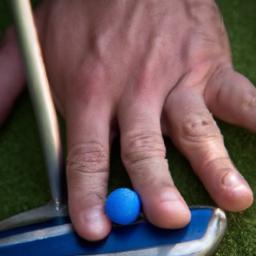
grip Mechanics and Tactile Feedback: Evidence Based recommendations for Consistent Contact
Precise hand mechanics are a primary determinant of consistent contact; the way the grip interfaces with the putter dictates both face control and the quality of tactile feedback transmitted to the brain. Empirical and instructional literature converges on the principle that grip should act as a passive coupling-transferring subtle forces while avoiding active manipulation of the putter head. Static hand set-up, repeatable finger placement, and a stable shaft axis create the baseline mechanical conditions for reproducible ball-face orientation at impact.
Different grip shapes alter contact dynamics in predictable ways. Cross-handed or reverse-overlap grips increase forearm coupling and can reduce wrist deviation, improving face stability for many players; more neutral, palms-together grips can heighten wrist involvement for those with excessive shoulder movement. Instructional guides recommend selecting a grip that (a) minimizes compensatory wrist action,(b) maximizes surface contact between fingers and grip for consistent proprioceptive input,and (c) allows the forearms to drive a pendulum-like stroke. Choice of grip should thus be individualized but grounded in these mechanical criteria.
Grip pressure is quantitatively and qualitatively vital: too light and the club wanders; too strong and tactile sensitivity and tempo suffer. Contemporary analyses and pro-examples suggest an optimal range around light-to-moderate pressure (roughly 2-4 on a 1-10 scale), which preserves feel while maintaining control. A small set of high-evidence practice variations promotes learning this balance:
- Feather-hold drill – hold with thumb and index onyl to learn minimal pressure and maintain face control.
- Coin-under-palm – place a coin beneath the heel of the top hand to sense unwanted palm collapse.
- Gate-putting – use two tees to enforce square face through the stroke and feel the contact path.
Grip mechanics must integrate with larger kinematic patterns: an effective grip supports a shoulder-driven pendulum,reduces wrist break,and facilitates a square-to-square path.When the hands provide stable tactile feedback, a player can better regulate backswing length and impact feel across green speeds. For structured practice, pair grip adjustments with short-range drills that emphasize impact quality, then progressively vary distance and green speed while preserving the tactile cues.
| Pressure (1-10) | Sensation | Likely outcome |
|---|---|---|
| 1-2 | Very light; high feel | Face instability on long strokes |
| 3-4 | Light-moderate; best tactile balance | Consistent contact, optimal control |
| 6-8+ | Firm; damped feedback | Tight tempo, reduced sensitivity |
Stance, Posture, and Center of Mass Control: Establishing a Stable Base for Reproducible Motion
Consistent putting begins with a deliberate, measurable platform: feet, hips, and shoulders establish the mechanical constraints that govern the pendular motion of the putter. When the lower body provides a predictable base, the upper-body segments can execute the small, repeatable rotations required for precise face control. Variability in foot placement or lateral weight transfer introduces noise into the stroke, manifesting as face-angle and path errors at impact rather than purely temporal inconsistencies.
Postural alignment must prioritize biomechanical economy and sensory feedback.A slight hinge at the hips with neutral spine alignment permits free rotation of the shoulders while maintaining head stability; a modest knee flex enhances shock absorption without inviting unnecessary lateral sway. Positioning the eyes approximately over or slightly inside the ball-target line improves visual parallax for more accurate aim and distance perception. In practice, these elements-hip hinge, spine angle, knee flex, and visual axis-are calibrated together to minimize compensatory movement.
Control of the center of mass (COM) is the differentiator between a setup that merely looks balanced and one that reproducibly yields the same dynamics. Ideally the COM should be aligned so that small, intentional torso rotation produces minimal lateral translation of the pelvis; this preserves the putter’s arc geometry through the strike zone. The table below presents concise,evidence-informed targets to guide setup calibration:
| Parameter | Recommended Range |
|---|---|
| Stance width | 0.85-1.10 × shoulder width |
| COM relative to ball | 45-55% toward lead foot |
| knee flex | 5-15° (soft, not collapsed) |
Practitioners should use a brief, structured checklist during setup to reduce pre-shot variability. Key elements include clear foot flare and alignment, equal initial pressure distribution, chest centered over the stance, and confirmation that the putter’s shaft inclination facilitates a natural wrist-free shoulder rotation. These items can be rehearsed as micro-routines to build procedural memory and reduce cognitive load under pressure.
- Feet: consistent placement markers on the mat or turf
- Weight: confirm distribution with a light cue (e.g., balance rod)
- Spine/Shoulders: neutral spine, shoulders parallel to the target line
- Eyes: verify alignment over ball using an aiming aid
Embedding these postural and COM controls into practice requires targeted drills and objective feedback. Use mirror work and high-frame-rate video to quantify head and pelvis translation, employ alignment rods to validate shoulder and foot orientation, and progressively constrain degrees of freedom (for example, reduced stance width or restricted lower-body motion) to isolate the desired motor pattern. Over time,the combination of measured setup parameters and repetitive,feedback-rich practice produces a robust,reproducible stroke that endures competitive stress.
Alignment Strategies and Visual Targeting: Optical Cues and Setup Procedures to Improve Aim
Precision in setting a reliable aim begins with an understanding of how the visual system and motor system interact. Empirical observation shows that golfers rely on a hierarchy of optical cues – primary target, intermediate reference (such as a seam or blade of grass), and local alignment marks on the ball and putter – to form a stable aiming intent. By intentionally organizing these cues into a reproducible sequence, the practitioner reduces cognitive load during execution and enhances the probability that the putter face will arrive square to the intended line at impact. Consistent visual referencing is therefore a foundational strategy rather than an optional refinement.
Physical setup must be treated as an extension of the visual plan. Adopt a stance that places the eyes, ball, and target in a predictable geometric relationship: feet shoulder-width for most stroke lengths, shoulders parallel to the intended target line, and eyes positioned over or just inside the ball-to-target line.The putter face should be aligned with a specific visual cue – a blade, a line on the green, or an artificial alignment mark on the ball. Such procedural regularity converts abstract aim into reproducible body orientation and minimizes postural variability between strokes. Emphasize small, repeatable adjustments over large, subjective corrections.
Optical targeting aids serve two complementary functions: they stabilize perception of the intended line and provide immediate feedback when alignment deviates. Use minimalistic alignment graphics on the putter and ball to avoid introducing parallax errors; for long-distance reads, prioritize distant targets and intermediate markers to average slope and grain effects. When reading a putt, adopt a systematic scan from the hole to the ball, identifying a primary high-contrast point that will act as the final visual anchor during the stroke. The deliberate selection of a single, dominant cue reduces micro-adjustments and anchors the stroke to a consistent endpoint.
Apply a concise pre-stroke checklist to translate optical facts into setup mechanics:
- Visual anchor: identify one dominant reference on the target line;
- Putter-face check: align the face to the anchor, not to body or feet;
- Eye-position verification: confirm eyes are consistently placed relative to the ball;
- Shoulder- and stance alignment: ensure shoulders mirror the intended line;
- Micro-commit: pick the cue and commit-avoid last-moment re-aiming.
These sequential actions produce a robust sensorimotor mapping that is rapidly retrievable under pressure.
The following compact reference summarizes targeted cues and their functional use for practice and on-course submission:
| Cue | Purpose | Application |
|---|---|---|
| Hole rim mark | Distant directional anchor | Use for long breaks |
| Grass seam | Local slope indicator | Confirm grain direction |
| Ball/putter line | Microsquare alignment | Final face-check before stroke |
Integrate these elements into short,measurable drills (e.g., 10x single-cue putts from 6 ft with no re-aim) to quantify alignment consistency and reduce mean aiming error over time.
Pendulum Stroke Mechanics and Tempo Regulation: coordinating Shoulders, wrists, and Lower body Restraint
Efficient putting motion relies on coordinated rotation of the shoulder girdle as the primary driver, with the forearms and hands acting as a passive link to the putter head. When the shoulders perform a smooth, symmetrical arc, the putter behaves like a mechanical pendulum: energy is conserved across the backswing and follow-through and directional stability increases. In practical terms this requires minimizing autonomous wrist manipulation and avoiding lateral displacement of the hands; the spine-shoulder complex should become the functional axis of rotation. Emphasize bio-mechanical principles: joint sequencing, proximal-to-distal control, and minimal degrees of freedom at the wrist.
The kinematic roles of the main segments can be summarized succinctly in a practice table for quick reference:
| Component | Primary Action | Coaching Cue |
|---|---|---|
| Shoulder girdle | Rotation about thoracic spine | “Turn the chest; keep arms soft” |
| Wrists | Passive hinge; minimal flex/extension | “Trust the shoulders; don’t flip” |
| Lower body | Stabilization and restraint | “Breathe, brace hips, hold position” |
Tempo is the temporal architecture that harmonizes these segments. Empirical observation and biomechanical analysis both support a backswing-to-forward-swing ratio near 2:1 for most reliable distance control – that is,the backswing is approximately twice the duration of the downswing – though absolute timing will scale with distance. maintain a consistent oscillatory period (pendulum length) and focus training on rhythm rather than force: cadence cues (metronome or internal count) improve reproducibility much more effectively than trying to “feel” a prescribed speed. Variability metrics show that a stable ratio reduces dispersion of terminal velocity at impact, which directly reduces distance error on short putts.
Effective practice integrates targeted drills and a concise checklist to reinforce the kinetic chain:
- Shoulder-guided swings: perform slow, mirror-assisted strokes keeping the hands passive.
- Wrist restraint drills: place a soft towel under each armpit to discourage independent wrist motion.
- Lower-body bracing: practice with a narrow stance and a conscious hip brace to eliminate sway.
- Tempo training: use a metronome or a steady internal count to stabilize the 2:1 relationship.
These elements, trained consistently, convert theoretical mechanics into a repeatable motor program.
Common failure modes illuminate corrective priorities: excessive wrist flexion produces inconsistent loft and face rotation; lower-body motion introduces lateral translation that corrupts the shoulder-centered arc; variable grip pressure alters damping characteristics of the pendulum. Address these with precise feedback: video kinematics to confirm shoulder pivot, pressure sensors or simple feel drills to maintain light, uniform grip, and targeted stability work for the hips. ultimately, reliable putting emerges from disciplined constraint of unnecessary joints and the preservation of a steady, shoulder-driven tempo.
Green Reading, Speed Control, and Distance Management: Integrative Techniques for Lag and Proximity Putts
Effective integration of surface assessment and speed regulation rests on quantifying two interdependent variables: the lateral break (degrees of curvature per unit distance) and the green’s effective speed (stimp-adjusted ball roll). Practically, this requires a repeatable observation protocol-visualize the fall line, estimate slope magnitude in small increments, and translate those inputs into an intended launch speed and face aim. **precision in green reading reduces reliance on compensatory stroke adjustments**, permitting a more stable pendulum motion that is predictable across distances and conditions.
For longer lag putts the principal control objective is residual proximity rather than outright holed percentage. Emphasize a consistent tempo ratio (backstroke : forward stroke ≈ 1:1) and calibrate stroke length to distance using staged targets during practice. **Distance control should be practiced as a sensory task**-feel-based cues (ball sound, return roll) become reliable error signals when combined with objective measurement (marker placement at 3-6 foot capture zones).
Shorter proximity putts require refined alignment and decisive stroke commitment. use a pre-shot checklist that collapses cognitive load and standardizes decision-making:
- Visual lock: confirm intended aim and start line.
- Speed target: identify exact capture point on backboard or hole front.
- Commitment cue: execute one confident pendulum motion without corrective thought.
This procedural economy supports motor system automation and reduces variability introduced by over-analysis.
| Distance Zone | Primary Goal | Practice Drill |
|---|---|---|
| 0-6 ft | Commit & make | Gate with pressure putts |
| 6-20 ft | Proximity (3-6 ft) | Random-distance capture drill |
| 20+ ft | Lag control | Two-marker lag routine |
Use block-periodized practice sessions that alternate high-volume short-range reps with focused lag routines. Objective feedback (video, ball-watching markers, and capture-zone scoring) accelerates perceptual calibration and fosters transferable improvements on varied green conditions.
embed measurement and cognitive strategies into the physical routine: log capture distances, maintain a binary acceptance rule for missed putts (commit or replay), and adopt micro-visualization promptly before setup to prime movement invariants. **Consistent measurement, decisive commitment, and structured variability in practice** create a mechanistic foundation on which psychological resilience is built-yielding a more dependable stroke across both lag and proximity contexts.
Practice Protocols and Drills for Motor Adaptation: Structuring Repetition, Variability, and Feedback
Design practice as an experiment in motor adaptation: prescribe repetition to stabilize a movement pattern, then introduce controlled variability to promote robust generalization. Begin sessions with focused, high‑quality repetitions (e.g., 30-50 strokes at a single distance) to consolidate the biomechanical template-consistent grip, stance and pendulum motion. Progressively schedule variability within and between sessions so that the central nervous system encodes flexible mappings between perception and action rather than a narrow, context‑bound solution.
Adopt a phased structure that alternates blocks of concentrated practice with randomized, contextual‑interference blocks. Use blocked practice early to reduce noise and permit technical correction; transition to random sequencing as automaticity increases. Empirical motor learning principles support reduced feedback frequency and interleaving of targets for long‑term retention: for example, move from 100% augmented feedback to faded schedules (50% → 25% → self‑evaluation only) while increasing target variability across putt length and green speed.
Embed deliberate variability in task constraints to mirror competitive demands: vary target distance, break angle, and starting ball position; manipulate environmental cues such as visual landmarks or simulated pressure. Employ error‑enhancing and error‑reducing drills strategically-use slight slope exaggeration or alignment gates to exaggerate common errors for rapid recalibration, then follow with low‑error trials to reinforce accomplished motor solutions. Maintain a practice diary with objective measures (make percentage, average deviation in inches) to quantify adaptation trajectories.
Use specific drills that emphasize different components of the stroke and integrate them into the phased plan. A recommended micro‑cycle might include:
- Clock Drill: 12-18 putts around hole, variable distances for feel and distance control.
- Gate Drill: narrow alignment gates to constrain face path and reduce wrist motion.
- Random Distance Series: 20 putts shuffled between 3, 7, 12, and 20 feet to induce contextual interference.
Rotate these drills within and across sessions to preserve both specificity and adaptability.
Structure feedback to encourage intrinsic error detection and decision‑making: prioritize brief,descriptive augmented feedback (e.g., “face closed at impact” or “short backswing”) followed by a delayed self‑assessment period. During competitive preparation, simulate pressure with time constraints or scoring penalties and reduce coach intervention to mirror match conditions. Emphasize metrics for transfer-consistency of launch direction, standard deviation of roll distance, and percentage of successful reads-so practice becomes a measurable pathway to a reliable, competition‑ready stroke.
Psychological Preparation and Performance under Pressure: Routines, Focus, and Anxiety Management
Consistent execution on the green depends less on isolated mechanics than on a reproducible, evidence-based pre-shot routine that primes both sensorimotor systems and attentional networks. A concise, repeatable sequence reduces cognitive load and transfers control to procedural memory, thereby increasing automaticity of the stroke.Empirical work on motor learning indicates that routines of brief duration (5-12 seconds) balance adequate preparation with minimal opportunity for disruptive conscious processing; thus, a well-designed sequence should be standardized, practiced under varied conditions, and deliberately shortened for competitive contexts.
Attentional strategy is a primary determinant of performance under increased demand. Contemporary findings support an external focus of attention-directing awareness toward the intended ball path or a specific target point-over an internal focus on body mechanics; this fosters smoother kinematic chains and more stable outcomes. Complementary to this is the application of the quiet eye technique: a final fixation of sustained duration on the target immediately prior to movement initiation, which has been associated with improved accuracy and greater resistance to stress-induced breakdowns in skill execution.
- Controlled breathing: 3-4 second diaphragmatic breaths to down-regulate physiological arousal.
- Imagery rehearsal: brief kinesthetic visualization of the intended roll and feel.
- Anchor cues: a single-word trigger (e.g.,”smooth”) to enforce movement tempo and prevent rumination.
- Micro-routine: fixed number of practice strokes and stance checks to stabilize motor output.
The following concise checklist summarizes an effective micro-routine suitable for training and competitive application:
| Phase | Mental Cue | Duration (s) |
|---|---|---|
| Setup | Visual target | 2-3 |
| Calibration | Practice stroke | 2-4 |
| Initiation | Breath + cue | 1-2 |
Managing cognitive and somatic anxiety requires targeted interventions that preserve task-relevant focus while accepting transient negative thoughts.Deliberate exposure through pressure simulation (time constraints, outcome contingencies, audience presence) during practice inoculates performers against stress-induced attentional narrowing. parallel strategies-brief mindfulness cues to reorient to the present, scheduled pre-shot self-talk to counter catastrophizing, and periodic confidence calibration based on objective feedback-promote resilience and sustain performance when stakes are elevated.
Equipment Considerations and Measurement of Progress: Putter Fitting, Ball Roll Metrics, and Objective Assessment
effective putter selection begins with empirical fitting rather than fashion. Contemporary testing of putter models-spanning dozens of head shapes and balance types-demonstrates that small changes in loft, length, and toe hang materially affect roll characteristics and alignment perception.A systematic fitting protocol conducted on a short game green or with a launch monitor yields actionable differences that cannot be inferred from looks alone. Custom fitting reduces variability in stroke mechanics by matching the putter to the player’s natural arc, setup height, and visual alignment preferences.
Key fitting variables should be evaluated in isolation and then in combination to establish causal effects. Typical parameters to test include:
- Length: influences posture, eye position, and pendulum dynamics.
- Loft and lie: determine initial launch and the extent of skid before forward roll.
- Head shape and toe hang: affect face rotation and the required stroke path.
- Grip size and balance: modulate wrist action and feel.
| Parameter | Primary Effect | Assessment method |
|---|---|---|
| Length | Posture / Eye Line | Static setup + dynamic roll test |
| loft | Initial launch & skid | Launch monitor: launch angle |
| Head Type | Alignment & MOI | Make % from 6-15 ft |
Ball-roll metrics bridge equipment choices and measurable performance. Use a launch monitor or high-speed camera to quantify launch angle, skid distance, forward roll (roll-out), and spin/roll rate. The primary objective is to minimize initial skid and maximize consistent forward roll so the ball remains on line after the transient phase. Benchmarks to record include mean launch angle (degrees), mean skid distance (meters), and 3-5 second roll rate; tracking these over time exposes real equipment or technique-driven changes rather than perceptual noise.
Objective assessment should drive practice and purchasing decisions.Track standardized metrics such as strokes gained: putting, putts per round, make percentage from 3/6/10 ft, and 3‑putt frequency. Complement these with structured on-course and range tests: a 20‑putt make test,a 3‑distance make chart,and a repeatability test using a launch monitor. Suggested assessments include:
- 20‑putt standard deviation and mean make rate
- Distance-specific make percentage (3/6/10 ft)
- Launch-monitor repeatability: launch angle and skid variance
Integrating equipment fitting with rigorous measurement produces a defensible improvement plan: adjust one variable, retest, and compare against the established baseline. Use short, hypothesis-driven experiments (e.g., change loft by 0.5° or add 1/8″ of grip thickness) and monitor both mechanical metrics and performance outcomes. Collaborating with a certified fitter or instructor ensures that changes are interpreted correctly and that interventions-weather a putter swap or a stroke adjustment-are supported by objective data rather than anecdote.
Q&A
1. Q: What is the central thesis of “Putting method: Principles for a Reliable Stroke”?
A: The central thesis is that a reliable putting stroke emerges from the systematic integration of three core elements-grip, stance (posture and ball position), and alignment-together with consistent kinematic sequencing and sensorimotor control. When these elements are mutually compatible and trained to reduce variability, the stroke becomes repeatable under practice and competitive conditions (cf.[1], [2]).
2. Q: Why focus on grip, stance, and alignment as primary principles?
A: Grip, stance, and alignment form the mechanical and perceptual foundation for the stroke. The grip determines wrist freedom and putter-face stability; stance controls balance and the body’s pivoting axis; alignment dictates initial aim and the relationship between eyes, putter face, and target line. Their interaction constrains stroke geometry and influences outcomes such as face-angle at impact and putter path, which are critical determinants of direction and distance control [1], [2].
3. Q: How does kinematic consistency contribute to a reliable putting stroke?
A: Kinematic consistency refers to repeatable patterns of joint motion (shoulder,elbow,wrist) and putter movement across strokes. Reduced intra-trial variability in stroke arc, tempo, and impact location improves both directional and distance control. Consistency is achieved by stabilizing proximal joints (shoulders/torso) and minimizing unwanted wrist or hand manipulation, promoting a pendulum-like motion that reduces noise in the motor output [1], [2].
4. Q: What grip characteristics are recommended for repeatability?
A: Evidence favors a grip that promotes large, stable contact between hands and the putter, limits independent wrist action, and aligns the forearms with the putter shaft. This can be achieved with a slightly neutral to strong grip that encourages shoulder-driven motion and reduces micro-adjustments at the wrists. The exact grip form should be individualized to preserve comfort while minimizing face manipulation [1], [3].
5. Q: What stance and posture principles support a consistent stroke?
A: Optimum stance maintains athletic balance, a stable spine angle, and freedom for shoulder rotation. Feet shoulder-width or slightly narrower can stabilize the torso pivot.Ball position should be slightly forward of center for many golfers to promote a slight upward impact on shorter putts; however, small individual adjustments are acceptable. Eyes should be approximately over or just inside the ball line to improve visual alignment and putter-face perception [1], [2].
6. Q: How should a golfer approach alignment?
A: Alignment requires consistent setup routines that establish the putter-face square to the intended line and the body parallel to that line.Visual checks (e.g., intermediate target, alignment aids on the putter) and tactile routines reduce pre-shot variability. Ensuring that the putter-face is the primary determinant of aim is critical, given its strong influence on initial ball direction [1], [2].
7. Q: What is the role of the arc versus straight-back-straight-through debate?
A: both arc and straight-back-straight-through strokes can be reliable. Most golfers naturally produce a slight arcing stroke due to shoulder rotation and the offset of the hands relative to the ball. The key is consistency of the path relative to face angle at impact. Practicing a stroke that matches one’s natural mechanics-while maintaining face control-yields better repeatability than forcing a fundamentally different pattern [4], [1].
8. Q: How important is tempo and rhythm?
A: Tempo (the ratio of backswing to follow-through duration) and rhythm govern timing of impact and influence distance control. A stable tempo reduces timing errors and helps produce predictable ball speeds. Many coaches recommend a consistent time-based pattern (e.g., 1:2 backswing-to-forward swing ratio) that is maintained across putt distances, adjusting swing length rather than timing to control distance [1], [2].
9. Q: What common faults undermine a reliable stroke?
A: Frequent faults include excessive wrist action, inconsistent eye position, head movement, poor alignment, and variable posture that changes the pivot axis. these behaviors increase kinematic variability and produce inconsistent face angle and speed at impact. Addressing these faults through both technique adjustments and targeted practice reduces variability [1], [2].
10. Q: Which practice drills effectively improve the core principles?
A: Evidence-based drills include:
– Pendulum drill: hands together, shoulders-only motion to reinforce a shoulder-driven arc.
– Gate/rail drill: narrow path to prevent excessive wrist breakdown and ensure square face through impact.
– Ladder/spot drill: set marks at intervals to practice distance control with consistent tempo.
– Alignment mirror or rail: visual feedback to check eye position and body parallelism.
– Pressure simulation (competitive reps): constrained-goal drills to train execution under stress [1],[2].
11. Q: How should practice be structured to transfer to competition?
A: Practice should include variable conditions, representative tasks, and pressure elements. Vary putt lengths, break, and green speed to enforce adaptable control. Include blocks of deliberate practice focusing on one principle, then integrate into mixed practice sessions. Introduce performance pressure (scoring, consequences for misses) to train resilience and reduce choking under competition [1], [2].
12. Q: What role does perceptual skill (green reading) play relative to stroke mechanics?
A: Perceptual skill complements mechanics: even a mechanically reliable stroke requires an accurate target line and speed judgment. Green-reading skills (slope perception, grain, speed estimation) should be trained in parallel. Misperception of line or required speed will negate the benefits of mechanical consistency, so integrated training is essential [2].
13. Q: How can a player objectively assess putting reliability?
A: Objective measures include: putts made per round, putts per green in regulation, percentage of short putts made (e.g., 3-6 ft), strokes gained: putting, and kinematic metrics such as face-angle at impact consistency, putter path variability, and impact location (if using launch monitors or motion capture).Tracking trial-to-trial variability is more informative than single averages for assessing reliability [1].
14.Q: What technologies are useful for diagnosing putter mechanics?
A: Useful tools include high-speed video, putter-mounted inertial sensors, launch monitors that capture ball speed and launch direction, and motion-capture systems that quantify joint kinematics and putter path. Pressure mats and force plates can assess weight distribution and balance. These tools provide objective feedback for targeted interventions [1].
15. Q: How should individual differences influence instruction?
A: Individual anthropometrics, motor preferences, and perceptual tendencies mean instruction should be customized. coaches should identify natural movement patterns, then adapt grip, stance, and alignment to minimize compensatory adjustments while maintaining consistency. The goal is to create a system that the player can reproduce reliably rather than imposing a single “ideal” technique [1], [2].
16. Q: How does cognitive load and emotional state affect the putting stroke?
A: Increased cognitive load and negative emotional states (anxiety, frustration) elevate motor variability and disrupt timing. Simple pre-shot routines, attentional focus strategies (external focus on target), and arousal regulation techniques (breathing, visualization) help preserve motor consistency under pressure. Training under simulated pressure improves robustness of the stroke [2].17.Q: What are the limitations of current putting research and practical implications?
A: Limitations include variability in study designs, individual differences not fully accounted for, and ecological validity of lab-based findings. Translationally,coaches should combine empirical insights with individualized assessment and in-field validation.More longitudinal and in-situ research is needed to refine guidelines across skill levels [1], [2].
18. Q: How should a coach design a short-term intervention to fix a specific putting problem?
A: Steps: (1) Diagnose using objective measures (video, sensors, performance stats); (2) Isolate the principal contributor (e.g., face angle vs.speed control); (3) Select targeted drills and feedback (e.g., gate drill for face control); (4) Implement blocked practice to engrain the correction, then variable practice for transfer; (5) Reassess with objective metrics and under pressure simulations; (6) iterate while preserving overall movement economy and comfort [1], [2].
19. Q: What are concise, evidence-based takeaways for players seeking a reliable stroke?
A: Prioritize a grip and stance that support a shoulder-driven pendulum; establish consistent alignment routines; stabilize kinematic patterns (reduce wrist manipulation); train tempo and distance control with varied, pressure-inclusive practice; use objective feedback when available; and individualize adjustments based on measurable outcomes rather than aesthetics alone [1], [2].
20. Q: What future directions should researchers and practitioners pursue?
A: Future work should examine individualized training paradigms, long-term retention of technique changes, interaction of perceptual and motor learning in field settings, and development of accessible diagnostics for in-situ measurement of putter-face control and kinematic variability. Translational studies that bridge lab findings with competitive performance outcomes will be particularly valuable [1],[2].
References
– Core synthesis and practical recommendations are drawn from contemporary evidence-based summaries of putting biomechanics and stroke mechanics (see sources such as the Putting Method and Evidence-Based tips entries) [1], [2]. Practical coaching notes are consistent with applied guidance in instructional literature [3], [4].
Key Takeaways
Conclusion
This synthesis has articulated a coherent set of principles-grip, stance, alignment and their dynamic interaction-intended to produce a repeatable, biomechanically sound putting stroke that can be executed under competitive pressure. Grounding technique in stable,whole‑body postures and a stroke pattern that minimizes unnecessary degrees of freedom supports consistency across variable green conditions and moment‑to‑moment performance demands.
Contemporary empirical work underscores the multifactorial nature of putting performance and the need to integrate biomechanical, perceptual and cognitive considerations when translating principles into practice. For example,instruction framing can alter stroke proficiency and kinematics,suggesting coaches should attend carefully to how cues are delivered rather than rely solely on content (see search result 1). Neurophysiological evidence relating to gaze indicates that the target of visual attention may matter in subtle ways even when overt gaze location does not alter gross outcomes for skilled putters (see search result 2). The unique postural demands of putting and their potential for fatigue-related degradation of technique argue for conditioning and ergonomic considerations in practice design (see search result 3). differences in experts’ sense of distance highlight the importance of perceptual-motor calibration for controlling impact intensity and thereby distance control (see search result 4).
Taken together, these findings support a coaching approach that couples clear, biomechanically principled technique with targeted perceptual training, evidence‑based instruction strategies, and endurance/ergonomic conditioning. Future applied research should evaluate integrated training protocols that manipulate instruction framing, gaze strategies, postural endurance training and perceptual calibration to determine how best to produce durable improvements in competitive putting performance.
In closing, a reliable putting method is not a single prescription but a framework: stable mechanics, aligned intent, and practiced perceptual-motor linking. When these elements are taught and trained in concert-and adapted to the individual golfer’s constraints-the probability of consistent, competitive putting performance is maximized.

Putting Method: Principles for a Reliable Stroke
Core principles that create a repeatable putting stroke
Developing a reliable putting stroke comes down to reducing stroke variability and improving speed control. The following principles combine mechanics, motor control ideas, and cognitive strategies used by coaches and supported by sports research. Use these as a checklist when you practice so your routine creates consistent outcomes under pressure.
- Stability first, movement second: Stabilize the shoulders and create a pendulum-like stroke from the upper body rather than wristy movements.
- Simple and repeatable setup: Consistent posture, eye position, and ball location reduce pre-shot noise.
- Speed over line: Prioritize speed control first (distance) then alignment-the vast majority of three-putts come from poor speed control.
- External focus: Direct attention to the target or ball roll rather than body mechanics to improve automaticity.
- Quiet Eye: A short, focused final visual fixation on the target line supports accuracy under pressure.
Putting Setup: foundation for consistency
A predictable setup reduces small differences that create large misses. Build a setup routine with these elements:
Posture & balance
- Feet roughly shoulder-width (or slightly narrower for short putts) with weight evenly distributed.
- Hinge from the hips so your eyes are over or just inside the ball-target line-this simplifies perceived line and aim.
- Soft knees and a slight forward lean; avoid a locked lower body that creates tension.
Ball position & eye alignment
- Ball slightly forward of center for many face-balanced putters; for blade faces it can be center or slightly forward-test for your putter.
- Make sure one or both eyes line up above the target line to aid accurate visual feedback of the putter head and line.
grip & pressure
Grip and pressure influence face control and wrist motion.
- Use a neutral grip with light-to-medium pressure. Over-gripping increases wrist action and tension.
- Grip pressure should be consistent-aim for about a 3-5 out of 10 feeling; tight enough to control but loose enough to allow pendulum motion.
- Experiment with face-balanced vs. toe-hang putters; choose the head that best matches your natural arc.
Stroke mechanics: creating a pendulum and tempo
The basic mechanics for a reliable stroke emphasize the shoulders, a consistent arc, and tempo.
Pendulum action
- Move the putter with the shoulders; keep wrists quiet to reduce face rotation at impact.
- Use your lead arm as a guide and the trailing hand as a support-both hands working together like a single unit.
Arc vs. straight-back-straight-through
Your putter type and natural motion determine whether you prefer a slight arc or a true straight path. Match your setup to the path-don’t force your stroke to a putter that counters your natural motion.
Consistent tempo & length
- Tempo (backstroke-to-forward-stroke ratio) matters more than force. Many pros keep near a 2:1 or 3:2 ratio for back to forward rhythm on longer putts.
- Control distance by stroke length, not by extra force or wrist flick at the moment of impact.
Green reading & speed control
Line and speed are separate skills-prioritize speed if you must choose. Good speed reduces three-putts and makes miss direction less penalizing.
Breaking down the green
- Read the primary slope first: determine whether the putt is predominantly uphill, downhill, or across.
- Assess subtle cross slopes and the grain. Walk around the hole if needed to see the undulation from multiple angles.
- Use both your eyes and feel: set a target spot on the ground an appropriate distance away (a second target) and use it to align the stroke.
Speed systems
Practice a simple speed system based on putt length – such as:
- Tap-ins (0-3 ft): confident stroke with short backswing.
- Short putts (3-12 ft): focus on hole-read and confident acceleration through impact.
- Lag putts (12+ ft): practice stroke length targets and two-mark drills to control distance.
Attentional control & mental cues
Mental approach and attentional strategies reduce variability, especially under pressure.
External vs internal focus
- Research in motor learning shows external focus (e.g., focus on the intended roll or the target point on the green) improves performance over internal focus (e.g., thinking about wrist movement).
- Adopt a simple external cue-“roll to the front of the hole” or ”finish at the flag”-rather of analyzing body parts during the stroke.
Routine & pre-shot ritual
- A concise, repeatable pre-shot routine reduces decision noise and primes the motor system for execution. Aim for 6-12 seconds from first look to stroke for competitive play.
- Include a visual fixation (quiet eye) of 1-2 seconds on the target line before starting the stroke.
Pressure management
- simulate pressure in practice with consequences (lost prize,small wager,or points) and practice breathing to settle heart rate on the putt.
- Focus on process goals (tempo, line selection, speed target) rather than outcome goals (“Must make”) to promote better execution.
High-impact putting drills and practice plan
Use structured practice focused on short-term skill acquisition and long-term retention. Below is a compact practice schedule and drill table you can use on the practice green.
| Drill | purpose | Time / Reps |
|---|---|---|
| Gate drill (short) | Improve face alignment and minimize wrist flip | 2 sets of 20 (3-6 ft) |
| 3-Point ladder | Speed control at 5, 10, 20 feet | 10 reps each distance |
| Clock drill | Short putt confidence & routine | 12 balls (3, 4, 5 ft around hole) |
| Lag + 2-mark | Distance control landing spot practice | 15 reps from 30-60 ft |
Detailed drill descriptions
- Gate drill: Form two tees slightly wider than your putter head in front of the ball-practice stroking without hitting tees to train a square face through impact.
- Clock drill: Place balls at 12,3,6,9 o’clock at 3-6 feet to build routine and inward confidence for makeable putts.
- Two-mark lag drill: Place a target spot (two marks): land the ball on or before the first mark and avoid the second-this trains distance feel for long putts.
Common faults and simple fixes
- Wristy stroke / flipping at impact: Fix with gate drill; reduce grip pressure and focus on shoulder rotation.
- Pulls and pushes: Check feet and eye alignment-aim with a practice alignment stick and confirm consistent ball position.
- Hot putts that run past the hole: Practice pace with ladder drill; shorten stroke length or smooth tempo.
- Missing short putts under pressure: Simplify the routine, increase quiet-eye fixation, and use an external cue for target speed.
7-week putting practice plan (sample)
This progressive plan blends short-game repetition, purposeful practice, and pressure simulation.
| Week | Focus | Session structure (30-45 min) |
|---|---|---|
| 1 | Setup & routine | Gate drill, clock drill, 10-minute alignment practice |
| 2 | Short putts & confidence | Clock drill 50 balls, pressure makes (bet points) |
| 3 | Tempo & arc | Pendulum drills, metronome tempo training |
| 4 | Distance control | Ladder drill, 2-mark lag practice |
| 5 | Green reading | Multiple-angle reads, walk-arounds, targeted rolling |
| 6 | Pressure & match play | Simulated pressure, wagering drills, winner-stays |
| 7 | Integration & review | Combined routines, record video of stroke, tweak setup |
Benefits and practical tips
- Reduce three-putts by focusing on speed control-most scoring gains on the green come from lag-putt improvement.
- Shorter pre-shot routines cut indecision and improve consistency; practice them until thay feel automatic.
- Video your stroke weekly to compare setup, eye position, and tempo; small visible changes often explain big performance swings.
- Use match-play or small-stakes pressure in practice to prepare your nervous system for competitive stress.
First-hand experience: applying the method under pressure
When players shift their focus to a concise routine and speed-first mentality, they often see immediate improvement in lower-stress putting. The real test is tournament play-here, keeping the routine short and the cue external (target-focused) prevents overthinking.Many golfers report that after a few weeks of the drills above, lag putting becomes less erratic and short putt confidence rises.
SEO keywords used in this article (naturally integrated)
- Putting method
- Putting stroke
- Putting mechanics
- Green reading
- Putting grip
- Speed control
- stroke consistency
- Putting drills
- Attentional focus
- Quiet eye
Speedy checklist to use on the course
- Confirm stance,eye-over-ball,and ball position.
- Make one confident read, pick a roll-target, and breathe.
- Perform the same 6-12 second routine each time (look, practice stroke, set, execute).
- Trust speed first-aim to leave short second putts when you miss.
Use these principles and drills consistently and review progress every 2-4 weeks. Small, focused changes in setup, tempo, and attention will dramatically reduce stroke variability and improve your putting performance over time.