Novice golfers frequently develop a small set of technical and mental habits that disproportionately hinder shot repeatability, distance control, and putting performance. This piece identifies the eight most common faults across the full swing, the tee shot, and the flatstick-areas where early movement patterns become reinforced and progress stalls. The focus is practical: converting biomechanical insights and motor-learning principles into step-by-step fixes, targeted drills, and practice prescriptions that deliver rapid, lasting gains.
Each flaw is broken down by its mechanical origin, the perceptual or motor-control drivers that maintain it, and the predictable consequences during play.For every issue we offer an evidence-informed remediation plan: objective diagnostics, graduated drills that build skill progressively, and straightforward metrics (for example, shot dispersion, carry distance, launch-angle repeatability, and putt-read success rates) to measure adaptation.Where relevant, we discuss trade-offs between short-term score gains and long-term technical resilience, and suggest practice schedules that balance variability, feedback timing, and purposeful repetition.
This guide is written for coaches who want reproducible lesson content and for beginners who want efficient self-directed correction. it ends with a compact practice roadmap that links prioritized fixes to measurable milestones, allowing teacher and pupil to judge progress by data rather than impression alone.
Grip and Hand Position: Biomechanical Effects,Signs to Watch,and Practical Fixes
Small shifts in how the hands hold and manipulate the club create outsized changes in how the clubface behaves thru impact. from a kinematic standpoint, hand orientation governs forearm pronation/supination and therefore the amount and timing of face rotation. A neutral grip generally places the “V” made by thumb and forefinger between the trail shoulder and the chin for right‑handers; a noticeably stronger grip rotates that V toward the trail shoulder and frequently enough leads to hooks, while a weak grip points it more toward the lead shoulder and predisposes to slices. Simple,observable diagnostics include persistent toe or heel contact marks and off‑center ball impressions on the face; repeated open‑face flights with side spin and divots moving left‑to‑right imply a weak grip or insufficient release,whereas closed‑face draws and heel strikes indicate over‑rotation or early supination. Practical assessment tools include slow‑motion video from down‑the‑line and face‑on views, impact tape to map contact, and a launch monitor to quantify face angle and spin axis at impact-these measures show whether hand position is producing too much face rotation, inadequate shaft lean, or premature wrist collapse.
Make adjustments gradually and with tactile reference points so the nervous system can adapt. Start by setting grip tension to about 4-6/10 (0-10 scale) to preserve wrist mobility while avoiding excess tension; then modify the hand rotation in small increments (around 5-10° toward neutral each session) rather than making abrupt changes. Use the checklist and drills below to rebuild dependable feel and mechanics:
- Setup checkpoints: hold the grip mainly in the pads of the fingers, position the lead thumb slightly right of center on the shaft, and have the trail hand overlap so 2-3 knuckles are visible on the lead hand when aiming for a neutral grip.
- Drills: one‑hand swings (20-30 slow reps each side) to feel the release sequence; impact‑bag hits (sets of 10) to learn a forward shaft lean of about 5-10° at impact for mid‑irons; towel‑under‑armpit or split‑grip chipping to lock connection and avoid flipping.
- Feedback: combine mirror or video checks with impact tape or a launch monitor, aiming for > 80% center‑face contact and reduced spin‑axis variability per session.
These methods work for beginners by establishing correct orientation and pressure, and they also let better players fine‑tune small rotations to intentionally shape the ball or preserve consistent shaft lean for crisp iron strikes.
Turn technical changes into smarter on‑course play and steadier short game by matching grip tweaks to conditions. Such as, in a crosswind or when a forced carry is required, strengthening the lead hand 3-5° to slightly close the face can help create a controlled draw; weakening the grip a touch makes it easier to produce a fade when the pin runs away. Structure weekly practice with alternating technical blocks (30-40 minutes of grip drills and impact‑bag work) and situational sessions (30 minutes simulating holes where you purposefully shape 3-4 shots from uneven lies or into wind). Sample short‑term goals: cut penalty strokes from mis‑hits by 50% in four weeks, or achieve 8/10 center‑face strikes in a practice set. Also check equipment-grip diameter that’s too small can promote an overactive release, while one that’s too large can inhibit release; ensure lie angle and shaft torque aren’t concealing hand‑position faults.By combining biomechanical diagnosis, stepwise drills, and in‑round practice with mental rehearsal (visualizing face orientation and target before the shot), players can translate grip adjustments into measurable scoring gains and more reliable shot‑making.
Stance, Posture, and Alignment: Building a Repeatable setup for Reliable Ball Striking
start with a stable, reproducible base calibrated to the shot. Foot width should vary by club-roughly shoulder‑width for irons, a touch narrower for wedges, and about 1.25-1.5× shoulder‑width for the driver-so the lower body can rotate without excessive lateral slide. Hold a neutral spine angle (around 10-15° forward tilt) with modest knee flex (≈ 15-20°) and hinge from the hips rather than rounding the lower back; this preserves posture through the swing and combats two frequent beginner faults: standing too upright or excessive lateral sway. Ball position should follow the club: driver – just inside the left heel; long irons/3‑5 – forward of center; mid/short irons – center; wedges - slightly back of center.Weight distribution should be deliberate-use about ~55% on the lead foot for irons (right‑hander example) to encourage a descending strike, whereas for driver bias slightly rearward at address (~55-60% back) to promote an upward attack when appropriate.Use these numbers as objective setup checkpoints to reduce alignment and ball‑position errors that cause inconsistent contact and undesired shot shapes.
Because setup underpins both swing mechanics and short‑game control,drill these positions until they become automatic. include the following exercises and checks to fix common issues like gripping too tightly, incorrect ball position, or poor alignment:
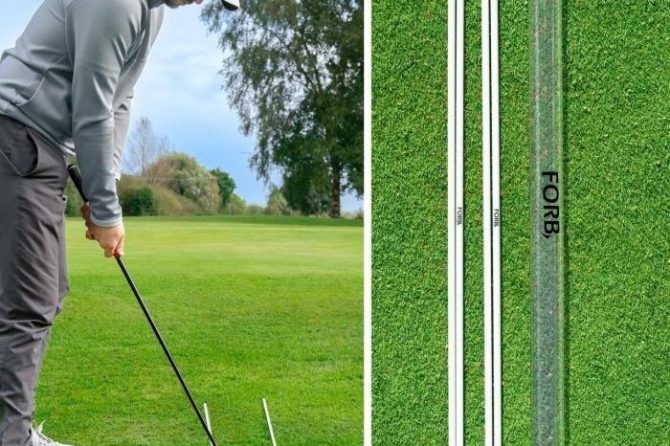
- Alignment‑stick drill: place one stick along your toes and a second aiming at the target to square shoulders and feet.
- Gate/footprint drill: set tees or cones just outside your feet to lock consistent stance width for each club.
- Mirror/phone video posture check: confirm hip hinge and spine angle and compare weekly.
- Towel‑under‑arms: for chipping,keep a towel between forearms to preserve connection and reduce wrist breakdown.
- feet‑together balance drill: hold 20-30 seconds per rep to train rotational stability and discourage sway.
Make these practice targets measurable: spend 15-20 minutes on a setup routine before each session,complete three sets of 25 reps per drill,and track impact using tape or a launch monitor; aim to raise center‑face strikes to 70-80% for irons within 6-8 weeks. These drills link setup to outcome-improving divot pattern, dispersion, and short‑game consistency so that range changes transfer to the course.
Adapt your repeatable setup into on‑course tactics by making small situational modifications and accounting for equipment and environmental factors. For example, in strong wind or when you need a low trajectory, move the ball back 1-2 ball widths and bias weight forward to keep the ball flight low; to hit a higher flop or soft pitch, narrow the stance, open the face, and favor the front foot.Equipment details (shaft length, lie angle, grip size) influence natural posture-a shorter shaft and more upright lie typically require a narrower stance and less spine tilt-so consult a fitter if you need persistent setup changes to square the club at address. use a short pre‑shot routine to steady the mind: 3-5 deep breaths, visualize the target line, and run a quick checklist (feet, ball position, spine tilt, grip pressure). Apply the following troubleshooting steps for the Top 8 beginner mistakes:
- If you slice or push: check ball position and alignment; move the ball slightly back and ensure shoulders are parallel to the target line.
- If you hook or pull: ease grip pressure and verify you haven’t loaded too much weight onto the lead foot at setup.
- If you fat or top shots: confirm correct spine tilt and use the towel‑under‑arms and feet‑together drills to sharpen low‑point control.
- If unstable on wet or sloped lies: widen the stance slightly, use traction in footwear, and shorten the backswing to retain balance.
With precise,repeatable setup mechanics combined with targeted drills and course adjustments,golfers at every level can improve contact quality,shrink score variance,and make smarter tactical choices in varied conditions.
Swing Plane, trunk Rotation, and Weight Transfer: Fault Identification, Corrective Exercises, and Metrics
Begin by diagnosing how the club tracks on plane, how the trunk rotates, and how weight shifts through the motion using measurable checkpoints: at address preserve a neutral spine, shoulders roughly parallel to the target, and an even starting weight distribution (~50/50), shifting slightly toward the lead side for shorter irons. During a full backswing aim for about 75-95° of shoulder turn with the pelvis rotating in the order of ~30-50°, creating a stable axis for the club to travel on the desired plane. Common problems-over‑the‑top swings, steep takeaways, reverse pivots, or early extension-show up as too much lateral hip motion, wrist casting, or a trunk that straightens before impact. Quick screening tools include down‑the‑line video, an alignment rod set on the shoulder plane, and a pressure mat to confirm weight moves to the back foot at the top (~60-70% back) and then shifts to the lead foot by impact (~60-70% front). Use these address and top‑of‑swing checks:
- address: shaft bisects the trail arm, chin up, shoulders level, feet shoulder width.
- Top‑of‑swing: lead thigh loaded, spine angle maintained, shaft near shoulder plane.
- Transition: smooth weight shift rather than lateral slide; minimal upper‑body lateral motion.
Putting objective numbers against observations makes faults reproducible and measurable for beginners and low handicappers alike.
Once issues are identified, apply progressive drills that follow motor‑learning principles and account for individual variability. For plane and rotation start with slow reversals and an alignment‑rod gate to engrain the correct arc, then move to the towel‑under‑arm drill for connection and a “chair‑against‑hip” exercise to prevent early extension. Advanced players can add medicine‑ball rotational throws and metronome tempo work to coordinate hip/shoulder separation (a practical practice target is a 3:1 shoulder‑to‑pelvis rotation ratio). For weight transfer, use step‑through and walk‑in impact drills, impact‑bag repetitions for compression feedback, and balance‑board or pressure‑mat practice to stabilize numbers: backswing weight ~60% back, impact weight ~60% front. Sample progressions:
- Beginner: 10-15 minutes of setup work plus ~50 slow, mindful swings emphasizing spine angle and a modest weight shift.
- Intermediate: 30-45 minutes alternating plane‑gate swings, towel‑under‑arm shots, and step drills; video feedback every 10-15 swings.
- Advanced: 200-300 targeted swings per week with force‑plate or launch‑monitor sessions to record club path and face‑to‑path, combined with rotational strength and mobility training.
if mechanics fail to improve after 4-8 weeks of focused practice, reassess equipment-shaft flex, club length, or lie angle can distort perceived plane and timing and mimic rotational faults.
Convert technical gains into course‑ready performance by tracking launch‑monitor metrics: aim for a driver attack angle near 0° to +3°, irons typically −2° to −6°, club path within ±2° of neutral for straighter shots, and face‑to‑path close to 0° for minimal curvature. monitor smash factor and dispersion and target a 15-25% reduction in lateral dispersion over 6-8 weeks as a realistic improvement. On‑course drills should replicate pressure-play nine holes where you choose safer clubs to practice a controlled plane into the wind or low trajectories on firm conditions-and focus on process goals (such as, “keep spine angle and deliver ~60% weight to the front foot at impact”) rather than outcomes. Apply the same rotation and weight principles to the short game: shallow chips need little lateral slide and forward weight bias,bunker escapes require a steeper attack and decisive lower‑body rotation. Under pressure use a short pre‑shot routine, breath control, and a single cue (e.g.,“rotate and compress”) to marry focus with practiced mechanics; consistent,measured practice plus on‑course application produces dependable scoring improvement across skill levels.
Tempo, Rhythm, and Sequencing: Training Plans and Quantifiable Targets to Improve Contact
Controlling tempo, rhythm, and sequencing starts with a repeatable setup and clear kinematic targets that translate directly into cleaner face strikes. As a baseline, use a spine tilt of about 5-8° away from the target, a shoulder turn approaching 90° for full swings with hips rotating near 45°, and a wrist hinge that approaches ~90° at the top for many iron full swings-these provide reproducible checkpoints for video or monitor analysis. Aim for a consistent pre‑impact weight bias of roughly 60% on the lead foot at impact (right‑handers) and an impact position that compresses the ball: typically a slightly negative attack angle on irons (around −2° to −6°) and a slight positive attack angle on driver when conditions permit (+2° to +4°). To avoid the Top 8 beginner errors-poor alignment, wrong ball position, over‑gripping, and rushing-use these checks before every shot:
- Grip pressure: roughly 4-5/10 to preserve wrist hinge and feel.
- ball position: center to slightly forward for mid/short irons, inside left heel for driver.
- Alignment: feet, hips, and shoulders parallel to the target; use an intermediate aim 6-8 feet ahead to train eye alignment.
Quantifying setup elements creates a stable template for tempo work that supports dependable sequencing and contact.
Turn tempo targets into repeatable motion with structured practice for all levels. A practical timing goal is a backswing:downswing ratio near 3:1 (for example, a 1.5s backswing and 0.5s downswing),trainable with a metronome or audible counts; for putting favor a 1:1 stroke ratio and a metronome at 60-72 bpm to lock short‑game rhythm. Use these drills to embody sequencing and improve contact:
- Metronome drill: 10 deliberate swings at 60 bpm focusing on a 3:1 ratio, then build to full speed while keeping the cue.
- Impact bag / towel under arms: three sets of 10 reps to train forward hip rotation and body‑arm connection, preventing casting and early release.
- Gate drill for center strikes: place two tees slightly wider than the clubhead and hit 50 shots aiming for center‑face contact; target ≥ 80% inside the gate.
- Short‑game tempo ladder: chip, pitch, and putt sequences timed to the metronome-15 minutes focused each session.
measure progress using dispersion, face‑to‑path stats, and impact location via a launch monitor or simple target sheets so practice yields objective gains rather than vague “feel” improvements.
Apply tempo and sequencing to course decisions and error correction so technical gains lower scores in real play. When conditions demand (wind, firm lies, forced carries), slightly shorten the backswing (reduce shoulder turn 3-5%) to keep tempo intact and control height; when shaping shots, hold the same cadence while changing face angle and path rather than altering overall speed. For common troubles:
- Early extension: practice with a headcover just behind the hips to maintain posture; use video to measure spine‑angle correction by 2-3° increments.
- Casting (loss of lag): do slow half‑swings that pause at transition for 3-5 seconds to feel retained hinge before accelerating.
- Thin or fat strikes: use an impact bag and monitor attack angle; aim for roughly −3° ±1° on irons and adjust ball position or posture if outside that band.
pair these mechanical fixes with a concise pre‑shot routine synchronized to your tempo (breathing, intermediate target, visualized ball flight) to reduce cognitive rush.Sequencing under pressure is as much mental timing as physical timing; connecting setup, measured drills, and on‑course adjustments lets golfers reliably improve contact, control trajectory, and lower scores.
Ball Position and Clubface Control: Practical Steps to reduce Slices and Hooks While Increasing Driving Distance
Start with a consistent setup because the relationship between ball position, swing arc, and face angle at impact determines flight. For right‑handed players with a driver place the ball roughly 1-2 inches inside the left heel so the clubhead approaches on a slightly upward arc; for long irons place the ball just forward of center, and for short irons move it back of center.Maintain 5-10° of spine tilt away from the target and a small forward shaft lean for irons (handles slightly ahead) so the face arrives at impact with consistent loft. Frequent novice errors-grip extremes, inconsistent stance width, and incorrect ball placement-change low‑point and produce heel/toe misses or exaggerated left/right curvature. To validate reproducibility on the range use checkpoints:
- Grip pressure: moderate (4-6/10);
- stance: feet shoulder‑width for mid‑irons, slightly wider for driver;
- Ball position: mark relative to toes/heels each shot.
Reducing setup variability makes subsequent face‑control work more predictable in its effects on slice or hook tendencies.
Face control is the product of grip, forearm rotation, wrist hinge, and the timing of release relative to the swing path. First confirm grip fundamentals-the V’s point toward the trail shoulder for right‑handers and the handle sits across the fingers rather than deep in the palm-this addresses common errors of incorrect grip and poor face awareness. Then train forearm rotation with progressive drills aimed at arriving square at impact while minimizing compensations:
- Gate drill: two tees create a narrow corridor to swing through, improving path and face orientation;
- Impact‑bag drill: teaches a stable, slightly closed yet square face at contact;
- Towel under lead armpit: synchronizes body rotation and reduces arm‑dominated casting that produces slices.
For measurable improvement use a launch monitor and set targets: face‑to‑path within ±2°, a driver smash factor ≥ 1.45,driver launch 10-13° with spin in the 2,000-3,000 rpm range as practical baselines for many amateurs aiming to raise carry while cutting side spin. Beginners should emphasize grip and a steady tempo; more experienced players can refine subtle hand timing and sequencing to neutralize persistent open or closed faces at impact.
Combine technique changes with equipment and strategy so improvements manifest on the scorecard. If a slice persists after technique work,consider temporary equipment tweaks-an adjustable driver set slightly closed (e.g., +0.5°-1.0°) or a shaft with lower torque-to reduce face rotation while staying within equipment rules. On course, manage the hole-when wind is present choose a controlled fade or draw based on the hole layout and use an intermediate target to start the ball within ~5 yards of the intended line. set a weekly, measurable practice plan that ramps from low complexity to full‑speed work:
- 10-15 minutes of alignment and setup repetition with mirrors or video;
- 20-30 minutes on face‑control drills (gate, impact bag) to stabilize contact;
- 20-30 minutes using a launch monitor to evaluate dispersion and spin metrics.
Include a compact pre‑shot routine and quick visualization to steady decisions under pressure-this combination of mental prep, technique, and equipment choices produces more consistent ball flight, better driving distance, and fewer slices or hooks across all levels.
Putting Fundamentals and Green Reading: Stroke Mechanics, Aiming, and Routine‑Based Error Reduction
Begin by creating a repeatable setup and stroke that reduce variables and emphasize distance control. Use a slight forward spine tilt so the eyes sit over or just inside the ball‑to‑target line (approximately within one ball diameter of the ball), and place the ball about one ball‑diameter forward of center to allow a small arcing stroke while still enabling the putter face to return square at impact. Maintain a light grip tension (4-5/10) and a putter shaft lean of roughly 5°-10° forward so the hands lead the head through impact-this encourages clean contact and a consistent launch. Mechanically, prefer a shoulder‑driven pendulum with minimal wrist hinge: rotate the shoulders and torso to move the putter, let the head follow a comfortable arc, and feel the stroke originate from the sternum rather than the hands. Common beginner mistakes-over‑gripping, excessive wrist use, and lifting the head prematurely-can be corrected with these checkpoints and drills:
- Setup: eyes over the ball, ball one diameter forward, light grip, 5°-10° shaft lean, shoulders level.
- Stroke drills: gate drill (two tees slightly wider than the putter head-25 strokes), mirror drill to check face and shaft lean, and one‑handed strokes to ingrain shoulder motion.
- troubleshooting: if the face opens at impact, reduce wrist hinge and increase shoulder turn; if putts are struck too firmly, reduce grip tension and shorten the backswing.
Translate stroke basics into reliable green reading and aim by combining objective checks with feel. Read the putt from behind the ball to assess slope, then behind the hole and from the sides (90°) to confirm the fall line; always walk the line to detect grain and subtle highs/lows. Recall that faster greens (higher Stimpmeter) lessen the amount of break for any given slope, so aim closer to the hole on firm, quick surfaces and allow more break on slower, softer greens. Adopt a pragmatic aiming routine: choose a primary line, pick an intermediate aim spot 1-3 feet in front of the ball where the ball must pass, and visualize the ideal speed and path-the goal on lag attempts should be to leave the ball within 12-18 inches for a comefrom‑behind make. To correct typical novice errors, practice reads from multiple angles, avoid lining only to the hole (which ignores pace), and factor in wind or dampness during competition. Helpful drills include:
- Clock drill: make eight putts from 3, 6, and 9 feet around the cup to build short‑range accuracy,
- Lag drill: from 30-50 feet attempt to leave 70% of putts inside 3 feet over 20 tries to lower three‑putt frequency,
- Reading comparison: have a partner mark your read, then swap opinions and compare to calibrate visual cues.
Lower putting errors with a concise pre‑putt routine and game plans that tie putting to scoring. A reliable routine-read from multiple angles,pick a line and intermediate spot,take two practice strokes matching intended pace,breathe,commit-reduces indecision and the yips by anchoring a consistent motor pattern. on course, choose appropriate tactics: when three off the green, prefer a higher‑trajectory chip only if the surface will hold it; or else aim to lag to an uphill tap. Equipment matters-ensure putter length and lie suit your posture (too long can force wrist action; too short encourages shoulder compensation)-and treat face inserts or sensors as training aids rather than fixes.Measurable goals could be cut three‑putts by 50% in eight weeks or make 50 consecutive 4‑footers in practice. Use a mix of visual (mirror/markings), kinesthetic (one‑handed feel drills), and auditory (click trainers) learning methods. Remember the rules of golf allow marking and lifting the ball on the green-use that permission to test during practice but stick to a single routine in competition for consistency.
Practice Design and Objective Assessment: Drill Progressions, Feedback Methods, and Metrics to Measure Progress
Good practice begins with a planned progression from isolated technical rehearsal to pressure‑challenged on‑course work. Start with a fundamentals block addressing setup: neutral grip, shoulder‑width feet, spine tilt ≈ 6-8°, shaft lean 2-4° for irons, and hands 1-2 inches ahead of the ball for mid‑iron address positions. For beginners progress through slow‑motion → half → three‑quarter → full swings; for lower handicaps introduce variable targets and differing lies. To fix the Top 8 novice mistakes (poor alignment, inconsistent ball position, over‑swinging), use short pre‑rep checks: alignment rod for aim, ball‑position verification, and a metronome at 60-72 bpm to stabilise tempo. Core drills include:
- Gate drill (two tees inside the clubhead path) to discourage outside‑in paths and address slices,
- Impact bag reps to teach forward shaft lean and resist casting,
- Half‑to‑full progression with target carry distances (±5 yards) to quantify dispersion improvement.
These stages move players from mechanical feel to consistent ball striking under simulated pressure.
Objective feedback is critical to measure transfer and decide priorities. Combine tech and simple stats: use launch monitors to log ball speed, launch angle, spin rate, carry and attack angle (aim for roughly −2° to −4° on short irons, +1° to +3° on driver when tee‑launched), high‑speed video for plane checks, and course metrics like fairways hit, GIR, up‑and‑down %, and putts per round. Set measurable targets-e.g., reduce three‑putts to <1.0 per round, raise up‑and‑down to ≥ 50%, or tighten 7‑iron carry dispersion to ±7 yards-and review weekly. Low‑tech practice tests include:
- 9‑Shot Test: hit nine shots to one target and track mean and standard deviation to monitor consistency,
- Lag Putting Tour: tees at 15, 25, 35 feet and record % of attempts leaving inside 3 feet,
- Pressure Par‑3 Simulation: play six consecutive tee shots with scoring consequences to simulate stress.
Coached feedback and a practice log are valuable-note wind, green speed, and slope as conditions materially affect decisions and short‑game choices.
Link drills and metrics directly to course strategy by staging assessment sessions that mimic real‑play scenarios and common corrections.Move from range to course with simulations (wind, uneven lies, recovery shots) and define decision rules: if a hole’s carry requirement exceeds your club‑accuracy (for example, your 7‑iron carry dispersion exceeds the hazard clearance), choose to lay up to a preset yardage. Address early extension and weight issues with on‑course checkpoints (use a pre‑shot focus on controlled takeaway and knee flex/hip rotation), and practice specific recoveries-bump‑and‑run from tight lies, open‑face lob for soft stoppage-until metrics like up‑and‑down % and sand saves improve. Prescribe weekly microcycles for all levels: two technical sessions (30-45 minutes), two short‑game sessions (60 minutes with a 70:30 split of chips/pitches to bunker practice), and one simulated round where strokes‑gained categories are tracked; reassess monthly and aim for incremental targets such as +0.5 strokes gained per month in approach play or a 2‑stroke handicap drop over three months. This integrated strategy ties together swing mechanics, short‑game skill, equipment, and course management into a measurable path to lower scores and greater confidence.
Q&A
Note: The following Q&A is compiled from established coaching practice, biomechanics, motor‑learning research, and commonly used performance metrics in golf.It is formatted for inclusion with an article titled “Top 8 Golf Swing & Putting Errors Beginners Make – Master Driving & Fix Your Game.” The answers are practical and data‑driven where possible, reflecting typical amateur benchmarks (many recreational players average driver carry in the ~200-230 yd range and see initial measurable gains within 4-8 weeks of focused practice).
1.Q: What are the eight most common errors beginners make in the swing,putting,and driving?
A: The eight most frequent beginner faults are:
– Faulty grip (swing)
– Incorrect posture/spine angle (swing)
– Overactive hands/early release (“casting”) (swing)
– Excessive lateral sway or poor lower‑body sequencing (swing/driving)
– Early extension (hips moving toward the ball at impact) (swing)
– Incorrect driver setup and ball position (driving)
– Poor alignment and aiming (putting and full swing)
– Variable putting stroke length and face control (putting)
2. Q: How does a faulty grip alter ball flight, and what is the evidence‑based fix?
A: Effect: An improper grip disrupts clubface control, producing slices, hooks, and inconsistent impact locations because grip orientation dictates face rotation and wrist behavior. Correction: Adopt a neutral or slightly strong grip so the V’s between the thumb and forefinger point toward the trail shoulder. place the handle across the fingers, not deep in the palm. Drill: monitor grip pressure (aim 4-6/10) using a pressure trainer or by holding a coin between palms and performing 50 controlled swings without dropping it. Metrics: reduce clubface angle standard deviation at impact to <3-4° (via launch monitor) and increase center‑face contact to >70% during practice. Timeline: noticeable change in 2-4 weeks with short, regular sessions.
3. Q: How do incorrect posture and spine angle present and how should they be corrected?
A: characteristics: rounded back, too much knee bend, or an overly upright stance that limits rotation or causes compensatory sway. Effect: loss of rotational power and inconsistency in low‑point control. Correction: establish a neutral spine, slight knee flex, and a hip hinge so the shoulders sit over the ball. Drill: mirror alignment and slow‑swing repetitions-practice until the neutral posture is repeatable,then perform 20 slow swings keeping that angle. Use impact bag or half‑swings to check low‑point. Metrics: keep spine‑angle variation under ~5° (video/IMU); expect improved contact consistency in 3-6 weeks.
4. Q: What triggers casting (early release) and how should beginners address it?
A: Cause: premature wrist unhinging reduces stored elastic energy, lowering clubhead speed and accuracy. Correction: learn to retain hinge into the transition and delay release until after impact. Drill: tee‑pickup (clip a tee after impact) or impact‑bag work to feel a delayed release; tempo drills with a 3:1 backswing:downswing ratio. Metrics: improved smash factor and clubhead speed for equivalent body motion; target a smash‑factor rise of ~0.02-0.05 and a 10-20% reduction in dispersion in 4-8 weeks.
5. Q: How does lateral sway harm long shots and what drills help?
A: Effect: lateral sway shifts the base under your body causing fat/thin strikes and reduced power. Correction: stabilize the pelvis and favor rotational weight shift with a stable lead hip. Drill: chair‑behind‑hip practice (avoid touching), heel‑toe balance exercises, and alignment sticks to enforce hip turn. Metrics: reduce head/pelvis lateral displacement to <2-3 cm (video/IMU) and expect tighter dispersion and better strike location within 4-6 weeks.
6. Q: What is early extension, why is it detrimental, and how do you fix it?
A: Problem: hips move forward during the downswing which flattens the spine, forces an out‑to‑in path, and causes blocks, hooks, or thin shots. Correction: improve hip stability and rotational mobility, maintain knee flex through impact. Drill: wall‑butt drill (light contact with a wall at the trail hip) and resistance‑band hip hinges. Metrics: aim to reduce forward hip translation at impact by ≥50% on video; expect more consistent strikes within 3-8 weeks.7. Q: What driver setup mistakes do beginners make and how should ball position and tee height be set?
A: Errors: ball placed too far back or forward, tee too high or low, poor posture, or too narrow a stance-these reduce launch, raise side spin, and cause slices. Correction: set the ball just inside the lead heel for most players and tee so about half the ball sits above the crown at address. Use a wider, athletic stance and a shallow attack to improve launch. Drill: step‑into‑drive (small forward step at impact) to feel proper weight transfer. Metrics: aim for an attack angle near +1° to +3° for many amateurs and launch/spin that maximize carry (use a launch monitor); target increased carry and reduced side spin over 6-12 weeks.
8. Q: What putting alignment and aiming errors are most common and how do you remedy them?
A: Common issues: misaligned shoulders/eyes, open/closed face at address, and mismatch between setup aim and stroke path. correction: use alignment aids (stick on the putter, chalk lines) to square the face; position eyes over or slightly inside the line.Drill: gate putts with tees to ensure the intended path (straight‑back‑straight‑through or small arc). Metrics: lift putt success from 3-10 ft by 10-20% and halve three‑putts within 6-12 weeks; track Strokes‑Gained: Putting if available.
9. Q: how to correct inconsistent putting stroke length and face control?
A: Cause: variable backswing length and face rotation cause poor distance control and missed short putts. Correction: standardize a pre‑stroke routine and set backswing lengths by distance (small for 3-6 ft, medium for 10-15 ft). Favor a shoulder pendulum and limit wrist action. Drill: ladder drill-putt multiple distances (3, 6, 9, 12 ft) focusing on where the ball stops; use a metronome to stabilize tempo. metrics: reduce distance‑to‑hole SD on a 20‑putt ladder by ≥20% and raise 3-6 ft make % to >50% for improving players.
10. Q: Which drills fix multiple swing issues at once for beginners?
A: Principle: start with blocked practice to build motor patterns, then shift to random practice for retention. Useful drills:
- Alignment‑stick sequence to address aim,posture,and ball position concurrently.
– Slow‑motion full swings: 25-50 reps at ~50% speed to ingrain sequencing.
– Impact bag: immediate tactile feedback for impact position and face angle.
– Quick video reviews (1‑minute) comparing model positions.
Metrics: run short tests (10‑ball dispersion,center‑face % ,launch‑monitor snapshots) before and after a 4-6 week program. Expect measurable contact and directional improvements in 2-6 weeks based on practice frequency.
11. Q: What measurable indicators should beginners track to show improvement?
A: Recommended metrics:
- Ball‑striking: center‑face %, mean shot dispersion, fairways hit.
– Distance & efficiency: ball speed, clubhead speed, smash factor, average carry.
– Scoring: GIR, putts per GIR, putts per round, three‑putt rate.
– Advanced: strokes‑Gained and dispersion SD.
Targets: increase center‑face contact >70%, cut dispersion by ~20%, and reduce putts per round by 2-4 strokes in 8-12 weeks with structured practice.
12. Q: What is an evidence‑based weekly practice plan for beginners?
A: Minimum weekly structure:
– 3 sessions of 45-60 minutes.
– Two swing sessions (60-80% drill work, 20-40% controlled shot play).
– One short‑game/putting session (50% putting, 30% chipping, 20% bunker).
Progression: two weeks of blocked repetitions → four weeks mixing drills with pressure simulations → ongoing transfer to on‑course random practice. Reassess every four weeks.
13.Q: How should players use technology (video,launch monitors,sensors) to speed correction?
A: Use slow‑motion video for kinematics and posture checks; launch monitors for face/attack/launch/spin/dispersion; IMU sensors for tempo,plane,and displacement metrics. best practice: baseline measurement, set one or two objective goals (e.g., face‑angle SD <4°, center strikes >70%), and remeasure biweekly.Technology should augment, not replace, focused drill work and coaching.14. Q: When should a beginner seek professional coaching rather than self‑correct?
A: See a coach when multiple persistent faults remain despite disciplined practice, when swings cause pain (possible biomechanical or medical issues), or when progress plateaus despite consistent, measured effort. A short course of lessons (4-6 over three months) is often an efficient investment for most beginners.
15.Q: How long before a beginner will see measurable improvement using these corrections and drills?
A: With deliberate practice (3-4 sessions weekly of 45-60 minutes) and objective tracking, measurable gains in contact consistency and putting distance control commonly appear within 4-8 weeks. Larger scoring improvements typically take 3-6 months as skills transfer to variable conditions and pressure situations.
Conclusion: The eight faults described combine technical, motor‑control, and perceptual elements. Evidence‑based corrections stress repeatable setup, minimized unnecessary movement, delayed release, consistent putting routines, and objective measurement. Structured drills supported by simple metrics and regular reassessment produce reliable, measurable improvement for beginning players.
Implementation advice: (1) collect baseline metrics (strokes‑gained, putts per round, fairways/GIR, dispersion patterns, club/ball speed, launch and face angles); (2) target one or two high‑impact faults; (3) apply concise, high‑quality drills grounded in deliberate practice and motor‑learning principles (focused reps with immediate feedback such as video or launch‑monitor output); (4) reassess at scheduled intervals and refine priorities. Aim for incremental, quantifiable gains-reductions in lateral dispersion or putts per round-rather than instantaneous perfection.
Limitations and future directions: individual anatomy, prior athletic background, and time available will influence the rate of improvement; some players will require expert coaching or biomechanical assessment. Future instruction should increasingly blend wearable sensors and launch‑monitor data with validated putting analysis tools to tailor interventions and speed transfer from practice to performance under pressure.
In short, overcoming the Top 8 beginner errors requires a disciplined, evidence‑based mix of strong fundamentals, targeted drills, objective metrics, and progressive overload of practice complexity. Applied consistently, these principles not only correct common faults but also establish a durable platform for continued skill development and lower scores.
If you’d like, I can: (a) convert these Q&As into a printable FAQ for the article, (b) create concise practice cards for each drill, or (c) design a 12‑week progressive practice plan with weekly targets and measurement checkpoints. Which option would you prefer?

8 Biggest Golf Mistakes Beginners make – And How to Instantly Improve Your Swing, Putting, and Driving
Below are the eight most common golf mistakes beginner golfers make, grouped into swing, putting, and driving issues. For each mistake you’ll get a swift diagnosis,an instant fix you can apply on the range or green today,simple drills,and measurable checkpoints so you know when you’ve improved. Keywords woven naturally: golf swing, putting tips, driving tips, beginner golfers, golf drills, golf alignment, tempo, grip.
The 8 Biggest Mistakes (With Instant Fixes)
| Mistake | Instant Fix | Drill / Check |
|---|---|---|
| 1. Grip too tight or inconsistent | Grip at a 3-5/10 pressure; recheck each shot | Grip-pressure scale drill; 10 swings at pressure 3 |
| 2. Poor alignment & stance | Use alignment stick to square feet,hips,shoulders | Aim-line drill: club on the ground to target |
| 3. Over-swing / loss of tempo | Shorten backswing; use metronome at 60 BPM | Half-swing to full-swing progression |
| 4. Early release / casting | Feel the lag; hold angle into transition | Towel-under-arm lag drill |
| 5. Wrong ball position for club | Follow ball-position rule by club | Line drill: mark positions on mat |
| 6. Putting: poor setup & inconsistent stroke | Eye over the ball; low hands; pendulum stroke | Gate drill + 3-foot stroke calibration |
| 7. Putting: bad speed & green-reading | Practice distance control drills | Clock drill and ladder drill for speed |
| 8.Driving: wrong tee height & poor rotation | Tee at 1/3 ball above club face; rotate through | Driver pivot drill & tee-height test |
1. Grip Too Tight or inconsistent (Swing + Driving)
Why it hurts
A grip that’s too tight kills clubhead speed, blocks wrist hinge, and creates tension that ruins tempo. Inconsistent grips cause a miss to the left or right because the clubface misaligns at impact.
Instant fix
- Adopt a neutral grip and aim for a consistent pressure of 3-5 out of 10 (10 is a baseball grip; 1 is barely holding the club).
- Before every shot, squeeze once to set the grip then breathe and address the ball – avoid re-gripping mid-shot.
Drills & measurable checks
- grip-pressure drill: hit 10 short shots with a 3/10 grip pressure; check ball flight for consistency.
- Measure improvement by ball dispersion: a tighter group within a 10-yard radius on short shots shows progress.
2. Poor Alignment & Stance
Why it hurts
Mistargeting is often the result of feet,hips,or shoulders pointing left/right of your intended target. even a small alignment error becomes magnified at 150+ yards.
Instant fix
- use an alignment stick on the ground pointing to your target. Square your feet, hips, and shoulders to that stick.
- For drivers, set feet slightly wider than shoulder width; for irons, shoulder-width stance.
Drills & measurable checks
- Aim-line drill: set a club on the ground to your target and lay another club across your toes; make practice swings until the clubface starts returning to the line.
- Track alignment using smartphone video from behind – consistent aim within a 2° variance is a good target for beginners.
3. Over-Swinging and Losing Tempo
Why it hurts
Beginners frequently enough try to swing harder to hit farther. Over-swinging causes loss of balance,inconsistent contact,and poor timing – which reduces distance and accuracy.
Instant fix
- Shorten your backswing and focus on a controlled, rhythmic tempo - aim for a smooth 3:1 feel (backswing:backswing pause:downswing ratio) or use a metronome set to 60-70 BPM.
- Let speed come from rotation, not arms alone.
drills & measurable checks
- Half-to-full progression: 20 half swings,20 three-quarter swings,20 full swings – measure ball dispersion and distance consistency.
- Tempo test: use a metronome app. If your strike consistency improves-fewer mishits and tighter dispersion-tempo is working.
4. Early Release / casting
Why it hurts
Casting (releasing the wrist hinge too soon) kills lag and reduces clubhead speed at impact. It also causes fat or thin shots as the club hits wrong in the arc.
Instant fix
- On transition,feel your wrists maintain the angle until the club is approaching the ball – aim to “release” through impact,not before.
- Practice with a short, controlled impact drill that focuses on forward shaft lean at impact.
Drills & measurable checks
- Towel-under-arm drill: tuck a small towel under your trail armpit (right armpit for right-handers) and make 20 swings-if the towel drops, your arms are flaring and casting.
- Use impact tape or a strike mat. Solid center-face strikes show corrected release mechanics.
5. Wrong Ball Position for the Club
Why it hurts
Ball too far back or forward throws off low-point control and causes fat/shot-top or slices/hooks. Ball position affects launch angle and spin-critical for approach shots and driver performance.
Instant fix – ball position guide
- Wedges/short irons: center or slightly back of center.
- Mid irons (6-8): just forward of center.
- Long irons (3-5): slightly forward of center.
- Driver: ball aligned with the inside of your front heel (right-handers: left heel).
Drills & measurable checks
- Line drill: place a line on your mat and position the ball according to the club; check low-point using impact spray or divot pattern.
- consistent divot starting position (for irons) is a measurable sign: divots should start just after the ball.
6. Putting: Poor Setup and Inconsistent Stroke
Why it hurts
Most three-putts stem from inconsistent setup, variable eye position over the ball, and a stroked paddle that uses hands instead of shoulders.
Instant fix
- Adopt a simple putting setup: eyes over the ball (or slightly inside), hands low and ahead of the putter face, light grip pressure.
- Use a pendulum stroke driven by the shoulders – keep wrists quiet.
Drills & measurable checks
- Gate drill: place two tees slightly wider than your putter head and practice strokes to ensure a square face through impact.
- 3-foot test: make 20 putts from 3 feet - aim for a 95%+ make rate to build confidence.
7. Putting: Poor Speed Control & Green-Reading
Why it hurts
Missing short putts frequently enough isn’t about line – it’s about speed. Hit a putt too hard and you’ll leave long returns; hit it too soft and you’ll come up short and make more putts under pressure.
Instant fix
- Practice distance control before worrying about reads. Spend 10 minutes on lag putts-focus on striking the ball the same way to different targets.
- Learn the basic slope rules: ball breaks more on slower slopes and with slower speeds; uphill putts need more force than downhill.
Drills & measurable checks
- Clock drill: place balls at 3, 6, 9, and 12 feet around the hole and make at least 16/20 to pass. Track progress weekly.
- Ladder drill: putt to a spot 10, 20, 30 feet away and measure distance control – ideally leave within 3 feet for each drill rep.
8. Driving: Wrong Tee Height & Poor Body Rotation
Why it hurts
Too-low tee heights encourage steep swings and fat shots; too-high can lead to topping.Also, many beginners “throw” the driver with hands and arms instead of using body rotation for power.
Instant fix
- Tee the ball so about one-third of the ball sits above the driver crown at address (for many modern drivers). Experiment +/- 1/4 inch until launch feels optimal.
- Initiate the downswing with lower body rotation (shift and rotate) – allow the arms to follow, creating more clubhead speed and consistency.
drills & measurable checks
- Driver pivot drill: make slow full swings focusing on hip rotation and keeping the head steady. Add speed while maintaining rotation mechanics.
- Track ball launch and spin with a launch monitor if available. Target consistent launch angles and spin rates rather than raw clubhead speed at first.
Practical 4-Week Practice Plan (Measurable)
Follow this schedule to turn instant fixes into lasting improvement. Spend 3-4 practice sessions each week, 45-60 minutes each.
- Week 1 – Fundamentals: 30% grip & alignment drills, 30% short-game (putting/chipping), 40% half-to-full swing integration. Measure: three straight sets of 10 center-face irons.
- Week 2 – Tempo & Release: 40% tempo drills (metronome), 30% driver pivot & tee-height work, 30% putting distance control. measure: 20 full swings with improved dispersion; 16/20 clock-drill putts.
- Week 3 – Pressure Reps: Simulate course pressure; play 9 holes focusing on one correction per hole. Measure: one fewer 3-putt or more GIRs (greens in regulation).
- week 4 – Integration & Stats: Track fairways hit, greens hit, putts per round. Aim for measurable improvement: +10-20 yards consistency off the tee,fewer fat shots,and 1-2 fewer putts per round.
Benefits & Practical Tips
- Practice with purpose: each practice rep should have one measurable goal (tighten dispersion, lower putts, consistent launch).
- Use simple training aids: alignment sticks, metronome app, a towel, and a gate for putting deliver high ROI.
- Video yourself from down-the-line and face-on angles every 2 weeks to objectively measure improvements.
Case Study – Beginner to Confident: A Short Example
Emma, a new golfer averaging 105, focused one month on these fixes: neutral grip (3/10 pressure), alignment-stick practice, metronome tempo, and putting clock drills. After four weeks she reduced three-putts per round from 6 to 3, increased fairways hit by 20%, and lowered her score by 10 strokes. Key measurable wins: 95% success on 3-foot putts and a 50% reduction in fat iron strikes.
Quick Checklist Before Every Round
- grip pressure set at 3-5/10.
- Alignment stick check to target.
- Ball position appropriate for club.
- Tempo warm-up with 20 half-swings + metronome.
- Three short putts (3 ft) to build confidence.
Useful Golf Drills Summary (Short & Simple)
- Towel-under-arm (lag and connection)
- Gate drill (putter path)
- Metronome tempo (60-70 BPM)
- Aim-line alignment (two sticks)
- Clock drill (putting speed control)
SEO and Keywords to Keep in mind
To help search visibility, use natural phrases like: golf swing tips, putting tips for beginners, driving tips for distance, golf drills for beginners, how to fix slice, alignment for golf, tempo in golf swing, and golf practice plan. Keep content useful, easily scannable, and include short headers and bullet lists (as above) to improve readability for both users and search engines.
If you’d like, I can convert this into a WordPress-ready post with featured image suggestions, alt-text, and optimized excerpt, or create downloadable practice cards for each drill.