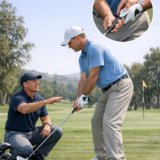
James Braid’s influence on the game stretches well beyond his five Open Championship victories. His deliberate, highly organized style of ball-striking, precise control of trajectory, and thoughtful course management anticipated many concepts now confirmed by contemporary sports science. With today’s tools-3D motion capture, launch monitors, and performance analytics-players can re‑interpret Braid’s approach in a modern, data‑driven way, converting early 20th‑century wisdom into practical technique for today’s golfer.
This article reframes the James Braid method as a complete performance system for full swing, putting, and driving. Using biomechanical insights, it breaks down the key joint actions and movement patterns that make Braid’s style so repeatable, then pairs each element with level‑appropriate drills. progress is evaluated through objective metrics such as clubhead speed, dispersion, attack angle, impact location, strokes gained putting, and three‑putt rate.
By blending Braid’s core principles with current research on kinematics, ground reaction forces, and visual‑motor control, the discussion aims to provide a structured roadmap for long‑term skill development rather than a loose set of tips. The objective is to turn “Braid’s secrets” into measurable performance improvements across the bag-building a reliable full swing, sharpening putting, and optimizing driving efficiency.
Foundations of the James Braid Method Biomechanics and Principles of Efficient Motion
For Braid, everything started with a fundamentally sound address position-the “silent engine” that powers the golf swing. He advocated a balanced, athletic posture with pressure slightly favoring the lead side: around 55% lead foot and 45% trail foot for irons, trending toward an even 50/50 split with the driver to permit a full, unrestrictive turn. The spine angle should lean subtly away from the target-approximately 5-10 degrees with longer clubs-to encourage an ascending strike with the driver and a compressive, downward blow with irons.Braid’s setup also relied on a neutral, symmetrical grip: the lead‑hand “V” directed between the trail shoulder and chin, with the trail‑hand “V” echoing this position to help return the clubface square through impact. To embed these fundamentals on the practice tee, use simple reference points:
- Feet: shoulder-width for irons and marginally wider for the driver, aligned parallel to the intended target line.
- Ball position: just inside the lead heel with the driver, one to two ball widths back for mid‑irons, and central to slightly back for wedges.
- Clubface: aim the face first, then build grip and stance around that orientation.
Repeating this same pre‑shot routine with every club engrains a consistent address position, cutting down on mid‑swing compensations and directly improving strike quality and directional control.
From this stable base, Braid’s method prioritizes efficiency of motion over brute strength, using the body’s levers in a coordinated chain. in the takeaway, he promoted a one-piece start in which the chest, arms, and club move together for the first 30-40 cm, limiting early wrist roll and excessive clubface rotation. A simple drill is to place a tee just outside the clubhead at address and gently sweep it away while keeping the club low and wrists quiet-encouraging width and a stable face.At the top of the backswing, the lead arm should sit roughly across the trail shoulder line without crossing excessively, with the shaft creating about a 90‑degree angle to the lead arm-evidence of sufficient but not forced wrist hinge.On the way down, Braid taught a sequence initiated “from the ground”: pressure shifts toward the lead foot, hips begin to unwind, then the torso, arms, and club follow. One effective exercise is making slow-motion swings at 50% speed, focusing on clearing the lead hip while the chest remains centered over the ball. Issues such as casting, steep over‑the‑top moves, or large lateral sway can ofen be traced by checking whether the lead hip has advanced toward the target by at least 2-4 cm at impact, and whether the hands are ahead of the ball with irons, producing a divot after the ball instead of behind it.
Braid’s biomechanical concepts naturally extend into the short game and on-course strategy, were fluid movement merges with mental discipline. Around the greens he favored a body-led action with minimal wrist hinge for standard chips and pitches, using a slightly open stance, weight biased 60-70% toward the lead side, and the handle a touch ahead of the clubhead.A practical drill is to hit sets of 10 chips each with a 9‑iron, sand wedge, and lob wedge, altering only ball position and landing spot. This teaches control of launch, spin, and rollout while preserving consistent body mechanics.On the course, Braid’s method encourages players to choose clubs and shot shapes that match their most repeatable pattern-especially under pressure or in gusty winds. into a strong headwind, for instance, he would typically choose a three-quarter motion with more club, controlling trajectory by shortening the follow‑through rather than swinging harder. Players can rehearse these patterns with scenario-based practice:
- Use alignment sticks to create a “fairway” and practice gentle fades or draws from the tee to simulate narrow landing areas.
- Work on “two‑putt challenges” from 9-12 meters, emphasizing line and pace to limit three‑putts.
- Incorporate pre‑shot routines that blend visualization and commitment, pairing a clear mental picture with the intended swing shape and target.
Through these drills and habits, golfers begin to link sound mechanics with smarter tactical decisions, turning Braid’s ideas into lower scores-fewer penalties, more greens in regulation, and a higher up‑and‑down conversion rate.
Kinematic Sequencing in the Full swing Optimizing Ground Forces and Segmental Rotation
In a well‑sequenced full swing, body segments accelerate and then slow down in a specific order: ground forces → lower body → torso → arms → club. At setup,establish a solid platform by placing the feet roughly shoulder-width apart,flexing the knees so the kneecaps sit above the balls of the feet,and distributing pressure 55-60% in the lead foot for irons (closer to 50/50 with the driver). As the backswing starts, sense a gentle increase of pressure into the trail heel rather of sliding laterally; this allows the pelvis and rib cage to “coil” without sacrificing balance. An effective benchmark is a 30-45° hip rotation combined with a 70-90° shoulder turn,while preserving original spine tilt. This ratio creates elastic “coil” without over‑turning-a point Braid often underscored with the cue to “turn inside the barrel,” especially useful on windy links where side‑to‑side movement is heavily penalized.
During the downswing, efficient sequencing again starts from the turf upward: the lead foot increases vertical and lateral force into the ground, the hips unwind toward the target, and then the torso, arms, and club catch up. To train this, use drills that exaggerate the feel of the lower body leading while the upper body initially resists, including:
- Step‑through drill: Make half swings where, from the top, the lead foot steps gently toward the target as the downswing begins, promoting proper weight shift and hip rotation.
- Pump‑and‑go drill: Pause at the top, then make two small “pump” motions with the arms while the lower body stays quiet, followed by a full swing; this contrast helps golfers sense the hips initiating when they return to a normal motion.
- Trail‑hand‑only half shots: Strike 30-50 yard shots with the trail hand alone to experience late clubhead speed generated by rotation and sequence rather than early hand flicking.
Frequent faults-such as upper‑body “lunge,” hanging back on the trail side, or spinning the hips so fast that the chest lags excessively-can be addressed through video checks of hip versus shoulder rotation at impact and by using alignment sticks as barriers to limit sliding. Braid’s match‑play pupils were frequently enough coached to use a “three‑quarter linked swing” in pronounced crosswinds, trading a few yards of distance for far tighter dispersion and more predictable roll on firm fairways.
Mastering ground forces and segmental rotation also enhances short game control and situational decision‑making. For partial wedges, chip‑and‑runs, and punch shots, the same kinematic pattern appears in a smaller form: subtle pressure shift to the lead side, modest but ordered hip and torso rotation, and a delayed, soft release. To build this skill under realistic conditions:
- Links-style wedge ladder: From 30, 50, and 70 yards, hit three balls to each distance with the same club, maintaining consistent tempo and sequence; track carry dispersion with a goal of ±3 yards.
- wind‑control practice: Into a headwind, hit “Braid‑style” punches with ball slightly back, hands ahead, and a compact, rotary follow‑through, aiming to keep the flight under a defined visual reference such as a tree line.
- Balance-and-rotation hold: After each shot, freeze the finish for three seconds. If you cannot maintain balance with your chest facing the target and 80-90% of weight on the lead leg, sequencing or ground interaction likely needs refinement.
Strategically, golfers should favor clubs and shot shapes that align with their most reliable sequencing pattern. A newer player who sequences best at about 80% effort should club up and swing smoothly, while better players may strategically add speed on forgiving holes. By syncing equipment configuration (shaft flex, lie angle, grip size), kinematic pattern, and a calm pre‑shot routine, players transform mechanical efficiency into more predictable ball flights and stronger decision-making under pressure.
Evidence Based Putting Mechanics stroke Path Face Control and Distance Regulation
Modern research shows that face orientation at impact is the dominant factor in starting line control,with stroke path playing a smaller yet still crucial role. High‑speed cameras and start‑line studies consistently indicate that,on typical green speeds,face angle explains roughly 80-90% of where the ball starts,with path accounting for the rest.Updating Braid’s adage-“swing the putter as you intend the ball to travel”-the modern goal is to produce a stroke that returns the face square to the intended start line within ±1° for putts inside 10 feet.Begin with a neutral address: eyes positioned either directly above the ball or just inside the target line, the putter shaft leaning slightly forward, and weight 55-60% over the lead foot. To coordinate face and path, incorporate drills such as:
- Start‑line gate drill: Place two tees just wider than a golf ball, 12-18 inches in front of it, and attempt to roll 10 balls in a row through this “gate” to reinforce a square face to the chosen line.
- Chalk line or alignment rod drill: Putt along a chalk line on a flat section, letting the putter trace a natural arc that is momentarily square at impact rather than artificially straight throughout.
- Path corridor drill: Arrange two alignment sticks parallel to the target line, just wider than the putter head, and make strokes without touching them, stabilizing path without forcing it dead straight.
These exercises give beginners a dependable stroke model while allowing strong players to refine feel and make small, measured adjustments, linking perceived motion to verified start‑line performance.
Once face and path are dependable, distance control becomes the main driver of three‑putt avoidance and scoring. Braid often stressed the importance of not leaving putts short on the high side-a concept that today translates into blending green speed, slope, and friction into a consistent relationship between stroke length and tempo.Data from motion‑analysis systems suggest that most golfers benefit from regulating distance primarily via stroke length and steady rhythm, rather than variable hit or acceleration. Many elite putters display a backswing‑to‑through‑swing ratio near 2:1 (e.g., a “one‑two” cadence). Treat each putt like a controlled “carry distance” task, similar to a wedge shot: on medium‑speed greens (about 9-10 on the Stimpmeter), calibrate by rolling putts to fixed distances-6, 12, 18, 24 feet-maintaining tempo and gradually extending length. Useful drills include:
- Ladder drill: Place tees every 3 feet out to 30 feet. Try to stop the ball within 18 inches past each tee, and only move back when you achieve at least 7/10 successes at that station.
- Uphill-downhill calibration: On a mild slope, hit 15-20 foot putts uphill, then the same putt downhill, noting how much more backswing is needed uphill and how much to shorten it downhill to finish within the same 18‑inch “capture zone.”
- Whether and surface adjustment: Repeat your ladder drill after rain or on noticeably slower greens, recording the increased stroke length required; do the same on quicker, firm afternoon greens or in wind to internalize how conditions alter roll.
By quantifying how stroke length maps to distance across varying speeds, golfers build an internal “putting yardage book,” supporting confident lag putting and more consistent scoring.
Putting reaches its full potential when mechanics, strategy, and mindset are integrated. Echoing Braid’s suggestion to ”play the odds of the green,” golfers should coordinate aim point and speed choice with the break profile. on a right‑to‑left putt, for example, a higher start line with slightly firmer pace decreases the total break but demands very tight face control (around ±0.5° on 5-8 footers), while a softer pace increases break and demands more precise green reading. A simple, repeatable pre‑putt routine should connect read, setup, and execution:
- Read and decide: Walk the low side of the putt, identify the main slope, and choose a specific starting spot rather than a vague line.
- Align and confirm: Use the putter face like a straightedge to aim at that start point,then set feet,knees,hips,and shoulders parallel to the start line (slightly left for right‑handers).
- Rehearse and trust: Make one or two rehearsal strokes that match intended distance and tempo, then step in, take a final look, and roll the ball without extra mechanical thought.
Common breakdowns-such as decelerating at impact, squeezing the grip under pressure, or steering the face-can be addressed with feel‑based drills like trail‑hand‑only putting for touch, or using a metronome to stabilize rhythm. Long‑term, players should track three‑putts per round, make percentage from 3-6 feet, and average leave distance on first putts over 20 feet. As these indicators improve through disciplined practice, gains in stroke path, face stability, and distance control translate directly to fewer strokes on the card.
Driving Performance Variables Launch Conditions Clubhead Speed and Impact Geometry
On the tee, launch conditions are shaped by the interplay of clubhead speed, attack angle, dynamic loft, and strike location. For a typical amateur seeking efficient distance, a useful target is a launch angle around 10-15° with spin between 2,000-2,800 rpm, adjusted according to ball speed and surroundings. These windows are usually achieved when the clubhead is moving slightly upward at impact (attack angle of about +1° to +4° for most recreational players), while the face is square to the target and closely aligned with the swing path.In line with Braid’s call for a “full but unhurried” motion, adopt a poised setup: ball just inside the lead heel, lead shoulder marginally higher than trail shoulder, and spine tilted 3-7° away from the target to support an upward strike.Typical issues include striking with a steep, negative attack angle-producing low, spinny drives-or contacting high on the toe or toward the heel, which alters spin axis and costs ball speed. Use face tape or light foot spray to map impact and strive to cluster strikes within a 1-2 cm circle around the sweet spot.
To build clubhead speed while protecting accuracy, golfers must integrate sequencing, ground use, and impact geometry. The downswing again begins from the ground: pressure moves early into the lead foot, the hips initiate rotation, and the torso and arms follow. Braid’s teaching that “the body must lead the club” remains a cornerstone for players who want both distance and control. The following drills develop speed and sharpen strike location without sacrificing balance:
- Lead‑hand‑only swings: Hit short shots using only the lead hand to feel forward shaft lean and centered contact; this sharpens control of face angle and attack location.
- Step‑through drill: Make practice swings allowing the trail foot to step toward the target through impact, training weight transfer and rotational speed without adding tension.
- Three‑tee height drill: Tee three balls at low, medium, and high heights and attempt to start all three on a similar line; this builds awareness of how tee height and attack angle interact with dynamic loft.
Newer golfers should focus first on a benchmark like achieving center‑face contact on 7 of 10 drives before chasing extra speed.More advanced players can work on increasing measured clubhead speed by 2-3 mph over a training block while keeping dispersion inside a defined “fairway” window on a launch monitor.
To translate technical proficiency into on-course strategy, golfers need to adapt launch parameters and shot shape to the hole design, wind, and ground conditions-an approach that mirrors Braid’s links‑golf course management. Into a firm headwind, such as, a slightly lower launch (8-11°) with reduced dynamic loft and a modestly more downward strike can keep spin manageable and flight below the wind; in dry, downwind situations, a higher launch with reduced spin can maximize roll.Practice sessions can be structured around these scenarios:
- Wind‑response sessions: On breezy days, hit 5-10 drives each “into,” “with,” and “across” the wind, altering tee height, ball position, and swing length to observe changes in curve, start line, and peak height.
- Fairway‑shape rehearsal: Choose an imaginary fairway bending left or right; use alignment sticks to create a path that gently brings the ball back to center, focusing on synchronizing face angle with your chosen starting line.
- Scoring‑zone targets: Rather than chasing maximum distance, select a target zone (e.g., 30 yards wide), note how many balls finish inside it, and gradually narrow the zone as center‑face contact and dispersion improve.
By combining technical refinement, appropriate equipment settings (loft, shaft flex, driver head adjustments), and nuanced shot selection, golfers can transform driving from a raw power exercise into a precision skill that sets up more birdie chances, shorter approaches, and ultimately lower scoring averages.
Level Specific practice Design Progressive Drills for Novice Intermediate and Advanced Golfers
For newer players, effective practice should first build repeatable setup, clean contact, and basic green-reading ability before moving into shot shaping or specialty shots. Every session should begin with a consistent pre‑shot routine: feet shoulder-width apart, ball just forward of center with irons and opposite the lead heel with the driver, and a neutral grip where the V between thumb and forefinger on each hand points between trail shoulder and chin. Following Braid’s preference for simplicity, prioritize a three‑quarter motion at about 70-75% intensity to improve balance and strike consistency. Beginner‑amiable drills include:
- Putter gate for start line: Set two tees marginally wider than the putter face and hit 10 putts from 1.5 m, aiming to pass through the gate cleanly at least 8 times.
- Low‑tee contact drill: Using a 7‑iron,strike 20 shots from a very low tee,monitoring that turf contact occurs ahead of the ball to encourage a descending strike and reduce thin or topped hits.
- Simple green‑reading walk: Before each putt, walk along the low side from ball to hole, observe overall tilt, and decide on a single break direction instead of over‑analyzing subtle contours.
At this stage, track progress via straightforward measures such as fairways hit, short putts made from 1-2 m, and percentage of shots that feel solid off the clubface.
Intermediate golfers should shift toward targeted practice and realistic scenarios that tie swing mechanics to short‑game precision and better course management. Honoring Braid’s view that the “correct” shot frequently enough beats the heroic one, design practice stations that mirror common on-course decisions. For mid‑iron approaches, select targets at 10‑meter spacing (e.g., 110, 120, 130 m), keeping a constant tempo while altering swing length-hip-high, chest‑high, then full-and recording dispersion and proximity in a notebook.Short‑game practice should emphasize trajectory and landing‑spot control using exercises such as:
- Three‑zone chipping drill: Mark landing spots at 2, 4, and 6 m; hit 10 chips to each with a gap wedge, modifying ball position and applying roughly 5-10° forward shaft lean to change launch without swinging harder.
- Bunker entry‑line drill: Draw a line in the sand and make 15 swings aiming to remove sand 2-3 cm ahead of the line, then place a ball on the line and maintain the same entry point.
- Course‑management ladder: On the range, simulate a narrow par 4 by designating a 25‑meter‑wide “fairway.” try to finish 7 of 10 tee shots inside this corridor, even if that means choosing a 3‑wood or hybrid instead of driver.
Using these tasks, players learn to produce modest shot shape (about 5-10 m fade or draw), adopt safer targets, and cut down on penalty strokes-major contributors to lower scores.
Advanced golfers and low‑handicap competitors benefit most from constraints‑based training that tightens shot shaping, advanced green reading, and decision-making under changing conditions. In line with Braid’s beliefs of using course contours intelligently, elite players should train planned curvature and trajectory windows. Use alignment sticks to set a straight target line and an intentional “curve window” 5-8 m either side, then hit sequences of draws and fades by adjusting face angle 2-3° relative to path while keeping swing speed constant. High‑performance routines might include:
- Wind‑adjusted yardage mapping: On windy days, estimate effective yardage (e.g., adding one club for every 15-20 km/h of headwind), then validate those estimates using launch‑monitor data or range markers.
- Lag‑putt zone training: Place tees at 30, 45, and 60 feet; aim to finish at least 8 of 10 putts within a 90 cm “tap‑in” ring past the hole, altering stroke length without changing tempo.
- Pressure grid challenge: Create a 9‑shot grid (low/medium/high × fade/straight/draw) with a 7‑iron, moving to the next shot only when the previous one lands within a 10-15 m dispersion area.
to integrate mental skills, add “must‑save‑par” chips and pitches around the practice green (e.g., 10 random lies with a target score of 20 strokes or better) and debrief the decision process after each attempt.This complete method ties refined mechanics to confident strategy, enabling advanced players to capitalize on birdie chances, avoid big numbers, and maintain consistently low scoring averages in a wide range of playing conditions.
Quantifying Improvement Performance metrics Data tracking and Statistical Feedback Loops
Creating a useful feedback system starts with identifying clear, measurable performance indicators that capture both technique and scoring outcomes. At a minimum, golfers should monitor fairways hit, greens in regulation (GIR), up‑and‑down percentage, putts per round, and penalty shots, along with scoring averages from key yardage bands (as an example, inside 50 yards, 50-100 yards, and 100-150 yards). Reflecting Braid’s methodical mindset, pair these outcome stats with simple technical measures such as start‑line dispersion (how many shots begin within a ±3° cone of the intended line) and strike quality (center, heel, or toe).A straightforward entry point is to keep a post‑round journal noting lie (tee, fairway, rough, sand), club used, intended shot shape, and result.Over 5-10 rounds, patterns become clear: for example, a mid‑handicapper might see that from 140-160 yards, proximity to the hole is dramatically better from the fairway than from the rough. These patterns then guide focused practice rather than generic “hit more balls” sessions.
To convert raw data into improvement, golfers should adopt structured practice plans anchored to explicit targets, creating a running statistical feedback loop that informs both technique tweaks and tactical changes. For full swing, use a launch monitor or simple alignment references to track club path, face angle, and ball curvature; aim to maintain club path within ±2° of the intended pattern and face angle within ±2° of the target for most scoring clubs. Echoing Braid’s focus on controlled shaping, one dedicated session might involve hitting a set of 10 controlled fades with a 7‑iron and recording how many start on one side of a target stick and finish on the other.For the scoring zone, set benchmarks such as landing‑zone precision within 2-3 yards and a two‑putt rate from 30 feet above 90%. Effective drills include:
- Wedge ladder: Hit 10 shots each to 40, 60, 80, and 100 yards; record average carry and left/right deviation to refine swing length and tempo at each yardage.
- Up‑and‑down circuit: Play 9 distinct short‑game lies (tight fairway, light rough, deep rough, bunker, uphill, downhill, sidehill, etc.); track how many times you finish inside 6 feet and convert the subsequent putt.
- Putting gate and distance matrix: Use a gate slightly wider than the putter head and test make/two‑putt percentage from 3, 6, 9, and 30 feet, adjusting stroke mechanics based on miss patterns.
Each session supplies completion percentages and dispersions that hint whether adjustments are needed in grip, posture, ball position, or if the main gains lie in smarter club selection and target choice.
Embedding these statistics into course strategy and mental frameworks completes the feedback cycle and aligns with Braid’s conviction that smart judgment is as critical as pure technique. After several logged rounds, evaluate where strokes are consistently lost-whether on tee‑shot strategy, approach distance control, green reading, or pressure decisions.If data reveal that a player drives into trouble on 70% of narrow par 4s with driver yet finds 65% of fairways with a 3‑wood, a new rule might be: on sub‑400‑yard holes with hazards inside 260 yards, default to 3‑wood unless conditions strongly argue otherwise. Likewise, if proximity averages 25 feet from 50-75 yards but 35 feet from 100-120 yards, lay‑up strategy should favor the shorter, more controllable yardage.To support different learning styles, combine visual scorecards (miss‑pattern heat maps), feel‑based notes (tempo, tension, confidence), and concise mental checklists such as:
- Setup checklist: Grip pressure around 4/10, reliable ball position by club, spine tilt matched to club length, and alignment verified with an intermediate target.
- Pre‑shot routine: One clear shot picture, one rehearsal swing, one deliberate breath, then execute.
- Post‑shot review: Classify any error as decision,execution,or emotion,jot down a brief note,then move on.
Over time, this blend of objective stats and structured reflection synchronizes mechanics, equipment, and course strategy, yielding tangible score reduction and a more robust mental game.
Integrating the James Braid Method Periodization Strategy course Transfer and Long Term Skill Retention
Building on James Braid’s preference for orderly progression, effective long‑term improvement comes from organizing practice into distinct, evolving phases that mirror real playing demands.In the foundation phase, golfers focus on technically sound setup and motion with low variability. Typical checkpoints include a driver ball position one to two inches inside the left heel, a neutral grip (V’s of both hands pointing between right ear and right shoulder), and a spine tilt near 8-12° away from the target at address. Short‑game work emphasizes a quiet lower body and stable wrists for basic chips, with 60-70% of weight favoring the lead leg. During this period, Braid‑style practice focuses on high‑repetition drills with feedback, using tools like alignment sticks and intermediate targets to engrain reliable patterns before adding variability.
As players move into the transfer phase, the Braid method promotes simulating course conditions and decision-making while preserving solid mechanics. Here, practice blends shot planning, club choice, and trajectory control to mimic actual holes. On a demanding par 4, for instance, players might rehearse a conservative “Braid line”: aiming at the wider side of the fairway, choosing a 3‑wood or hybrid to emphasize position, and shaping a soft 5-10 yard fade by aligning the body slightly left of target with the face marginally open to the swing path.Into a strong headwind, an approach might be played as a three‑quarter knock‑down with the ball one diameter back of normal, hands a fraction ahead, and a hold‑off finish below shoulder height. To consolidate this transfer, use structured games such as:
- Random‑target iron ladder: Hit to shifting yardages (e.g., 110, 135, 150, 95) in random order, changing clubs with each swing to resemble on‑course variability.
- Up‑and‑down challenge: Drop balls around the green in different lies (fairway, light rough, downhill) and require two consecutive up‑and‑downs before finishing the drill.
- Tee‑shot decision practice: On the range, “play” your home course by calling the intended shape and landing zone for each tee ball (e.g., “left‑center fairway, 210-230 carry”) and then executing.
For long‑term skill retention, Braid‑inspired periodization cycles back to fundamentals while varying both difficulty and cognitive load throughout the season. Alternate between blocked practice (repeating the same shot to refine mechanics) and variable practice (frequent changes in club,lie,and target) to consolidate motor patterns and decision skills. To guard against common regressions-over‑swinging the driver, decelerating on chips, or drifting into rushed green reading-use simple recurring checkpoints:
- Full‑swing checkpoints:
- Top of backswing: lead arm roughly across the shoulder line, club shaft near parallel to the target line, and 80-90% of pressure on the trail side without swaying past the trail foot.
- Impact: hands slightly ahead of the ball with irons (2-4° forward shaft lean), hips opened 20-40°, chest slightly open, and 80-90% of weight on the lead side.
- Short game and putting checkpoints:
- Chipping: maintain a narrow stance, weight forward, and a decisive, accelerating tempo to avoid scooping.
- Putting: follow a consistent routine (read, rehearse, commit), align the putter face first, then body lines, with eyes directly over or just inside the ball line.
- Mental and strategic routines:
- Use a pre‑shot decision script: evaluate lie and wind, choose a safe target and preferred miss, select club, visualize flight, then swing without second‑guessing.
- Monitor key outcomes: fairways hit, GIR, up‑and‑down percentage, and three‑putt avoidance over each nine or full round.
By weaving these phases,drills,and checkpoints together,golfers of all handicaps can progress from mechanical understanding to stable,course‑ready skills that hold up under pressure,travel to different layouts,and adapt to changing weather.
Q&A
**Q1.Who was james Braid, and why are his methods still relevant to modern golfers?**
**A1.** James Braid (1870-1950) was one of golf’s legendary “Great Triumvirate” alongside Harry Vardon and J.H. Taylor, a multiple Open Champion, and a highly influential architect and teacher. His methods remain relevant as they rest on timeless principles of centered ball‑striking, balance, and shot control rather than short‑lived swing fashions. Braid’s focus on a compact, repeatable motion, disciplined course strategy, and dependable putting directly maps onto modern performance metrics such as fairways hit, greens in regulation, strokes gained: putting, and reduced scoring volatility under pressure.
—
**Q2. What characterized James Braid’s full swing,and how did it differ from many modern swings?**
**A2.** Braid’s full swing can be summarized by:
1. **Compactness and control**
– A moderated backswing that avoided excessive “across‑the‑line” positions.
– Emphasis on maintaining arm and upper‑body structure instead of chasing maximum width or speed.
2. **Stable base and balance**
– A firm yet relaxed lower body at address.
- A weight shift expressed more as pressure change than large lateral sway, promoting stable low‑point control.
3. **neutral, reliable clubface**
– Preference for a relatively square clubface with minimal manipulation.- Dependence on body rotation and sequencing rather of late, hand‑dominant release.Today’s elite swings frequently enough feature higher athletic output with greater vertical force and rotational velocities. Braid’s motion was more economical, prioritizing precision and repeatability over raw speed-an approach that still suits many amateurs who value consistency more than maximum distance.
—
**Q3. What are the key setup fundamentals derived from Braid’s approach?**
**A3.** Braid viewed the address position as the cornerstone of every shot. Important setup principles include:
1. **posture**
- Spine tilted from the hips rather than rounding from the waist,preserving a neutral back.
– Light knee flex to support athletic balance.
– Chin high enough to allow the shoulders to turn freely.2. **Grip**
– A neutral to slightly strong grip that allows a natural release without forced manipulation.- Light‑to‑moderate grip pressure,primarily in the fingers,to maintain wrist mobility and clubhead feel.3.**Alignment**
- Feet, knees, hips, and shoulders generally parallel to the target line for stock shots.
– Conscious avoidance of mismatches such as open body alignment with a closed clubface that can create unintended curvature.
4.**Ball position and stance width**
– Center to slightly forward with irons; progressively forward with longer clubs and the driver.
– Stance width scaled to club length but never so wide that it restricts rotation or effective pressure shift.
These basics support an efficient swing path and predictable face‑to‑path relationship,tightening dispersion patterns and improving accuracy.
—
**Q4. How can Braid’s swing concepts be translated into practical drills today?**
**A4.** Modern golfers can apply Braid’s concepts through specific drills:
1. **Compact backswing control**
– Place an alignment stick in the ground just outside the trail shoulder.
– Rehearse backswings that keep the clubhead inside or brushing this reference, avoiding excessive lift or across‑the‑line positions.
– Goal: improve structure at the top and reduce variability in downswing path.
2. **Pressure‑shift, not sway drill**
– Hit half‑swings with the trail heel slightly raised or on a small block.
– focus on staying balanced while sensing pressure move into the lead foot by impact.
- Goal: promote a centered pivot and quiet head position, echoing Braid’s stable lower‑body motion.3. **Clubface discipline training**
- Use an impact bag or padded object.
- Make slow‑motion swings, pausing at impact to verify a square leading edge relative to the target line.
– Goal: develop awareness of forearm and wrist alignments that deliver a neutral face.
Executed consistently, these drills enhance mechanical robustness and reduce strike variability.
—
**Q5. What drove James Braid’s driving strategy,and how can contemporary golfers apply it?**
**A5.** Braid believed driving was primarily a scoring tool rather than a distance contest. His strategy combined prudent target selection with resilient mechanics:
1. **Strategic conservatism**
- Aim for favorable position, especially on narrow or hazard‑lined holes.
– choose shot shapes (mild fade or draw) that suit the geometry of the hole.
2. **Managed trajectory**
- Favor medium‑height flights that balance carry and roll and behave predictably in wind.
– Prioritize consistent launch and spin parameters over chasing peak ball speed.
3. **Predictable curvature**
- Work toward a single,dependable bias (for example,a gentle fade) rather than alternating between big hooks and slices.
Modern golfers can emulate this by using dispersion and yardage data from launch monitors or shot‑tracking apps to select conservative lines and clubs that mirror Braid’s preference for the “wide side” of trouble. Adjusting tee height and ball position to create a stable launch window, rather than frequent experimentation, supports this strategy.
—
**Q6. What specific technical keys underpinned Braid’s driving accuracy?**
**A6.** Despite dramatic changes in equipment, several of Braid’s technical keys still apply:
1.**Tempo and rhythm**
– A smooth transition from backswing to downswing, avoiding aggressive “hit from the top” moves.
– Consistent tempo regardless of pressure, supporting repeatable sequencing.2. **Face‑to‑path synergy**
– Maintaining small face‑to‑path differences that create gentle curvature rather than extreme shapes.
– Using torso rotation through the ball to limit last‑second wrist flips.
3. **Balanced, held finish**
– Finishing with weight fully on the lead side and spine upright. – Using the ability to hold the finish as a self‑check for good balance and timing.Modern tools such as video and launch monitors can quantify these elements (path, face angle, speed) and confirm whether Braid‑inspired changes are improving dispersion and consistency.
—
**Q7. How did James braid conceptualize putting, and what distinguishes his method?**
**A7.** braid treated putting as a restrained, precise motion governed by alignment, speed control, and mental steadiness:
1. **Mechanically simple stroke**
- Compact, pendulum‑like motion driven mainly by the shoulders.
– Minimal face rotation with the goal of returning the putter square to the start line and with consistent loft.
2.**Pace over perfect line**
- recognition that many misses result from poor speed rather than directional error alone.
– Emphasis on rolling the ball at an optimal “capture speed” so the hole effectively plays larger.3.**Routine and calm focus**
– A repeatable pre‑putt process for reading, aiming, and executing.- Quieting mechanical thoughts once over the ball to encourage trust.
Modern strokes‑gained studies validate these priorities: better speed control and short‑range conversion rates are among the strongest predictors of improved scoring.
—
**Q8. What putting drills reflect Braid’s philosophy and can be adopted today?**
**A8.** Drills consistent with Braid’s principles include:
1. **Gate drill (face and path)**
– Position two tees just wider than the putter head,slightly ahead of the ball.- Roll putts so that both putter and ball pass cleanly through.
– Goal: solid, centered strikes and a square face at impact.2. **Ladder distance‑control drill**
- Place markers at 3, 6, 9, and 12 feet (or longer for lag practice).
– putt balls trying to stop them at each marker in order, then in reverse.
- Goal: calibrate stroke length and feel for incremental distance changes.
3. **circle‑of‑confidence drill**
– Create a 3‑foot circle around a hole with tees.
– Hit putts from 20-30 feet and gauge success by how many finish inside the circle, then knock in the short ones.
– Goal: reinforce Braid’s focus on leaving an abundance of short, makeable putts and holing a high percentage of them.These exercises fortify the two major elements of putting performance: distance control and short‑putt reliability.—
**Q9. How did Braid’s course management complement his technical skills?**
**A9.** Braid’s strategic approach was central to his success and aligns closely with modern “expected value” and strokes‑gained concepts:
1. **Thoughtful hazard avoidance**
– Purposeful aiming away from severe trouble, even at the cost of slightly longer approaches.
– Willingness to surrender some birdie chances to avoid big numbers.
2. **Decision-making based on dispersion, not perfect shots**
– Selecting clubs and targets that accommodate typical misses, not just ideal strikes.
– For example, choosing a lay‑up that yields a fuller, more controllable wedge rather than gambling on a marginal carry.
3. **Adapting to daily conditions**
– Adjusting targets and shot shapes according to wind,firmness,and hole location.
– Using trajectory and curvature to exploit or avoid certain sections of the green.
Modern golfers can follow Braid’s lead by leveraging personal shot‑tracking data to make decisions that reduce round‑to‑round volatility, instead of chasing occasional hero shots.
—
**Q10. How can a modern training program integrate Braid’s swing, driving, and putting principles?**
**A10.** A Braid‑inspired training plan might look like this:
1. **Technical foundations (2-3 sessions per week)**
– 30-40 minutes on full‑swing structure: compact backswing,centered pivot,square clubface.
– Emphasize slow rehearsals and simple aids (alignment sticks, impact bag) over constant full‑speed hitting.
2. **Driving practice with strategic overlay (1-2 sessions per week)**
– Simulate tee shots from your home course or typical layouts.
– Record dispersion and adopt Braid‑style conservative lines and club choices that reduce penalty risk.
– Use specific objectives, e.g., “10 drives: at least 7 must finish within a defined fairway width.”
3. **Putting practice focused on process metrics (3-4 sessions per week)**
– Dedicate roughly half of putting time to distance‑control drills, 30% to short‑putt make‑rate, and 20% to green reading and routine.
– Track simple stats such as make rate inside 6 feet and average first‑putt leave distance from 20-40 feet.
4. **Regular evaluation and adjustment**
– Use on‑course data (fairways hit, GIR, three‑putts, penalties) to gauge training impact.
- Shift practice emphasis-toward putting,wedges,or driving-as weaknesses emerge,echoing Braid’s results‑oriented mindset.
By blending Braid’s enduring concepts-compact, controlled motion in the swing; strategically conservative driving; and disciplined, speed‑focused putting-with modern measurement tools, golfers can build a cohesive, evidence‑based framework for lasting improvement in swing, driving, and putting performance.

Decode James braid’s Timeless Golf Blueprint: Biomechanics to Transform Your Swing, Putting, and Driving

The Braid Blueprint: Why a 100-Year-Old Method Still Works
James Braid, one of golf’s original ”Great Triumvirate,” built his game on fundamentals so sound that they still stand up to modern golf biomechanics. Strip away hickory shafts and wool sweaters,and you find concepts every golfer can use:
- Stable,athletic setup
- Compact,repeatable swing
- Quiet hands in putting
- Thoughtful course management over raw power
Modern launch monitors,pressure plates,and high-speed video largely confirm what Braid discovered by feel: efficiency beats effort. Below is how to translate his timeless blueprint into your golf swing, putting stroke, and driving-through a biomechanical lens.
Braid’s Setup fundamentals Through a Biomechanics Lens
1. Posture and Balance
Braid favored a natural, slightly upright posture. Biomechanically, this helps you rotate without stress on the lower back and keeps the club on plane.
- Feet: About shoulder-width for irons, a bit wider for the driver.
- Knees: Soft, not squatting-think “ready to jump sideways,” not up and down.
- Spine: Tilt from the hips, not the waist, maintaining a neutral spine.
- Weight: Even across the balls of the feet, not in the heels.
This balanced stance optimizes your centre of mass, letting you rotate around a stable axis rather of swaying off the golf ball.
2. grip and Clubface Control
Braid taught a neutral, unforced grip that allowed the clubface to square naturally. Modern data shows face angle at impact is the single biggest factor in starting line and curvature.
- led hand: Two to three knuckles visible when you look down.
- Trail hand: palm facing the target, “covering” the lead thumb.
- Pressure: About 4 out of 10-firm enough for control, loose enough for speed.
Think of your grip as the interface that transfers ground-generated force through your body into the clubhead. If it’s overly tight or misaligned, you interrupt the kinetic chain Braid used so well.
The Full Swing: Classic Feel, Modern Physics
Ground-Up Power: How Braid Would Use Force Plates
Though he never saw a force plate, Braid’s swing clearly exploited ground reaction forces. He turned into his trail side, then posted up on the lead side through impact. Today we’d describe that as efficient ”pressure shift” rather than a lateral sway.
| Phase | Pressure (Trail / Lead) | Key Braid Cue |
|---|---|---|
| Address | 50% / 50% | Balanced & ready |
| Top of Backswing | 70% / 30% | Coil, don’t sway |
| Impact | 20% / 80% | Firm lead side |
Instead of thinking about “shifting weight,” feel pressure move under your feet: trail heel heavier going back, then lead heel heavier as you rotate through.
Backswing: Compact Coil Rather Than a Long Lift
Braid’s backswing was relatively compact, with minimal lifting of the arms. Modern teachers often call this “body-driven” rather than “arms-driven.”
- Shoulder turn: Rotate until your lead shoulder is under your chin.
- Hip turn: Allow 30-45° of rotation; a slight trail leg straighten is fine.
- Arm swing: Club finishes roughly over the trail shoulder, not wrapped behind your head.
Biomechanically, this shorter radius increases control and maintains tension in the big muscle groups, giving you a consistent golf swing plane without over-flexing the spine.
Downswing: Sequence, Not Effort
Where many amateurs “hit from the top,” braid’s move unwound from the ground up-exactly what modern kinematic sequence charts show for elite players.
- Lower body initiates: Slight bump and rotation of the lead hip toward the target.
- Torso follows: Chest opens to the target after the hips.
- Arms and hands: Drop into the slot, then release naturally through the ball.
Feel your belt buckle start the downswing, not your shoulders or hands. This gives you lag and clubhead speed without consciously “holding the angle.”
Full-Swing Drill: Braid’s Three-Quarter Strike
Goal: Improve strike quality, compress the golf ball, and stabilize ball flight.
- Take your normal setup with a mid-iron.
- Make a backswing that stops when the lead arm is parallel to the ground.
- Rotate through to a chest-high finish.
- Focus on solid contact and balanced finish, not distance.
Hit 20-30 balls this way, then move to full swings. You’ll likely keep the same swing speed with less effort but much better center-face contact.
Driving the Ball: Braid’s Accuracy-First Power
On narrow, windy links, Braid prized control with the driver. Modern driver fitting and ball-flight laws support his priorities: start line and curvature beat raw speed.
Driver Setup Tweaks
- Ball position: Just inside the lead heel.
- Spine tilt: Add a slight tilt away from the target to promote an upward angle of attack.
- Width: Feet a touch outside shoulder width for stability.
This geometry encourages you to hit up on the ball with a square face, maximizing launch angle and minimizing spin for distance without sacrificing control.
Braid-Inspired Driving Drill: Fairway Windows
Setup: Pick a narrow visual “window” (two trees, a cloud and a bunker edge, or two posts on the range).
- Hit 10 drives aiming to start the ball through the window with your stock shape (fade or draw).
- Track results: how many finish “playable” (fairway or first cut)?
- Adjust alignment and tee height until 7/10 are playable.
Focus on shot pattern, not heroic drives. Braid’s blueprint is about building a repeatable stock shot you can trust under pressure.
Putting Like Braid: Simple Stroke, Smart Green Reading
Biomechanics of a Classic Putting Stroke
Braid emphasized a pendulum stroke with quiet hands, which aligns perfectly with today’s understanding of putting biomechanics:
- Posture: Slight forward bend, eyes roughly over the ball or just inside the target line.
- Grip: Light and neutral,letting the shoulders drive the motion.
- Stroke: Small rock of the shoulders, minimal wrist hinge, consistent tempo back and through.
This design minimizes moving parts and keeps the putter face square longer, which is critical on fast, modern greens.
Green Reading: From Links to Any Course
Braid learned to read exposed, windswept links greens. His habits work anywhere:
- Circle the putt: View from behind the ball, behind the hole, and from the low side.
- Identify high point: Every breaking putt has a “crest” where gravity starts to take over.
- Match speed and line: Picture the ball dying 12-18 inches past the hole.
| Distance | Primary Focus | Braid-Style cue |
|---|---|---|
| 3-5 ft | Start line | Firm, narrow arc |
| 10-20 ft | Speed control | roll it to a ”teacup” |
| 30+ ft | Leaveable distance | Big, smooth rhythm |
Putting Drill: Braid’s Two-Speed Ladder
Purpose: Improve distance control and green reading across different green speeds.
- On a flat section, place tees at 10, 20, and 30 feet.
- Hit three balls to each tee, trying to stop within a 3-foot circle.
- Repeat the ladder but now imagine the green is faster: make a smaller, softer stroke.
- Repeat again as if the green is slower: longer, slightly quicker stroke.
This helps you adapt your putting stroke tempo as green speed changes from course to course.
Course management: Strategy That Saves Strokes
Braid was not the longest of his era, but he was one of the wisest. His approach to links golf strategy looks a lot like today’s ”strokes gained” thinking, but built from observation.
Play to Your Pattern, Not to Perfection
- Know your miss: If you usually fade, aim where a fade is safe and a pull is still playable.
- Favor wider sides: Aim for the largest safe area, not the flagstick on every approach.
- Lay up intelligently: Choose yardages that match your favorite wedge distances.
Braid would shape shots into the wind and use the ground to feed the ball to targets. On modern, softer courses, you can still “play corridors” rather than pins.
Wind and Weather: Braid’s Natural Laboratory
Wind is where braid’s blueprint really shines:
- Into the wind: Take more club, swing at 80%, and keep the ball flight down.
- Downwind: Choose less club and aim for a higher launch.
- Crosswind: Ride your stock shot; don’t fight the breeze with an unfamiliar pattern.
From a biomechanical perspective,smoother tempo in the wind prevents over-swinging and loss of balance-two main causes of mishits when conditions get tough.
Benefits and Practical Tips for Every handicap
How High Handicappers Gain from Braid’s Blueprint
- Fewer moving parts: Compact swings and simple putting strokes reduce timing errors.
- Better contact: Ground-up power leads to fewer tops and fats.
- Smarter targets: Course management alone can save 3-5 shots per round.
How Single-Digit Golfers Can Refine Their Game
- Pattern mastery: Tighten dispersion by embracing a predictable shot shape.
- Wind play: Add lower-flight and knockdown shots for tough conditions.
- Green-reading system: Combine Braid-style observation with a consistent routine.
Sample weekly Practise Plan (Braid + Biomechanics)
| Day | Focus | Key Drill | Time |
|---|---|---|---|
| Mon | Full-swing basics | Three-quarter strike | 45 min |
| Wed | Putting & short game | Two-speed ladder | 45 min |
| Fri | Driving accuracy | Fairway windows | 45 min |
| Sat/Sun | On-course strategy | play to your pattern | 18 holes |
Mini Case Study: Mid-Handicap golfer Applying Braid’s Blueprint
Player: 14-handicap, inconsistent driver, average putter.
changes based on Braid + biomechanics:
- Shortened backswing to a three-quarter position with focus on pressure shift.
- Adopted a neutral grip and slightly more upright posture for better rotation.
- practiced fairway-window drills and committed to a gentle fade as stock shot.
- Implemented the two-speed ladder putting drill twice per week.
Results after 8 weeks:
- Fairways hit: 34% → 52%
- Greens in regulation: 5 → 8 per round
- Average putts: 34 → 31
- Handicap: 14 → 10.8
The biggest shift wasn’t raw speed; it was consistency of contact and smarter shot selection-exactly what Braid’s blueprint predicts.
Implementing the Blueprint on Your Next Round
- On the first tee: Commit to one stock shot with your driver and play to that pattern all day.
- Into every approach: Choose club and target that let a small miss still hit or fringe the green.
- On the greens: Use one green-reading routine and one tempo for all putts.
- Post-round: Note where swings felt athletic and balanced versus forced-adjust practice accordingly.
By merging James Braid’s timeless fundamentals with modern golf swing biomechanics, you gain a framework that’s simple enough to trust under pressure and precise enough to scale from beginner to elite player.Use the drills and practice plan above as a starting point,and shape them around your own body,tendencies,and goals.