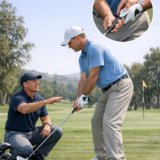
Reducing a golf handicap demands more then incremental practice; it requires a systematic integration of biomechanical principles,intentional motor learning,and situational course strategy. Persistent variability in swing mechanics, putting stroke, and driving contact underlies much of the performance gap between recreational and elite amateurs. By framing handicap reduction as an outcome measure-quantified through strokes gained, dispersion metrics, launch-monitor parameters, and putts-per-round-coaches and players can move from anecdotal prescriptions to targeted, evidence-informed interventions.
This article synthesizes contemporary biomechanics research (kinematic sequencing, ground-reaction force utilization, and segmental coordination), motor-control theory (implicit versus explicit learning, variability of practice, and contextual interference), and applied course management to generate practical, testable protocols. Emphasis is placed on measurable transfer: drills are selected and sequenced to promote stable movement patterns that persist under competitive stress, and assessments are specified so progress is objectively tracked. For putting, protocols prioritize stroke repeatability, green-reading heuristics, and distance control metrics; for driving, they emphasize launch conditions, spin management, and dispersion control; for full-swing refinement, the focus is on reproducible kinematic patterns and energy transfer.
Readers can expect level-specific training pathways-novice, intermediate, and advanced-each with clear benchmarks, session templates, and assessment intervals designed to produce quantifiable reductions in handicap. The following sections present the theoretical rationale,review the key empirical findings,and translate them into drill sets and monitoring tools that practitioners can implement immediatly and evaluate rigorously.
Biomechanical Foundations for a Repeatable Golf Swing: Assessment Protocols and Corrective Exercises
Begin with a structured, objective assessment that quantifies the biomechanical inputs underlying a repeatable swing. Use a combination of static setup checkpoints and dynamic screens: measure thoracic rotation with a goniometer (goal: ≥45° active rotation for recreational players, 60-90° common in low handicappers), pelvis rotation (35-55° backswing rotation typical), and lead wrist dorsiflexion at transition (~90° hinge at the top for efficient power transfer). In addition, test single-leg balance (maintain balance for 10+ seconds), hip internal/external rotation, and ankle dorsiflexion; deficits in any area often present as early extension, casting, or an overactive upper body. For kinematic-sequence screening, record slow-motion swings or use inertial sensors to confirm the desired distal-to-proximal sequence (hips → torso → arms → club) and measure clubhead lag and release timing. translate assessment findings into on-course metrics-fairways hit, greens in regulation (GIR), dispersion patterns, and average putts-wich provide objective baselines to set measurable betterment goals (for example, increase fairways hit by 15-25% for a mid-handicap player within a 12-week plan).
Next, implement corrective exercises and progressive drills that address the specific deficits identified, with clear, measurable progressions for beginners through low handicappers. For mobility and sequencing, prescribe thoracic rotation drills with a dowel and quarter-turn holds (3 sets of 10 holds, 5-10° increase target per 4 weeks), medicine-ball rotational throws (3 x 8 each side to build power and timing), and hip-turn stability work such as band-resisted step-throughs. For stability and impact control, use the “wall spring” drill (short, controlled swings against a wall to feel forward shaft lean) and a half-swing impact bag progression to train a square clubface and correct low-point control. Equipment considerations shoudl be integrated: confirm correct shaft flex and lie angle during the fitting stage and adjust grip size if wrist action or face control is inconsistent. Practice protocols should include both block and random practice phases-begin with 200 focused reps/week on technique drills for beginners, progressing to 60-80 targeted swings/session emphasizing specific impact positions for more advanced players-with measurable goals such as consistent carry within ±5 yards for mid-handicappers or reducing side dispersion by 30% for low handicappers. Troubleshooting checkpoints:
- Grip & setup: neutral grip, ball position, and spine tilt aligned with target
- Transition: maintain lag and avoid casting
- Impact: forward shaft lean with compressed strike on irons
integrate biomechanical improvements into short-game technique and course strategy to convert swing gains into lower scores. Use situational drills that mirror on-course constraints-such as a wind-conditional wedge routine for controlling trajectory and spin (practice three trajectory heights to 20, 40, 60 yards), a putting “gate and clock” drill to reduce face rotation and achieve a repeatable arc, and up-and-down challenges from varied lies to increase scrambling percentage. apply handicap-specific strategy: a high-handicap player should prioritize conservative tee placement and improve wedge proximity to hole to reduce penalty risk, whereas a low-handicap player should emphasize shaping shots and trajectory control to exploit firm/soft green conditions. Set measurable short-game targets like reduce 3-putts by 50% or increase up-and-downs to 60%, and maintain a pre-shot routine that includes a clear visual target, alignment check, and commitment statement to support transfer under pressure. progress from quantified assessment to targeted corrective work and then to situational practice on the course, ensuring each element-swing, putting, driving-is linked to scoring outcomes and adaptable for different physical abilities and learning styles.
Data Driven Putting Improvement: Stroke Mechanics, Green Reading Techniques, and Prescriptive Drills
Begin with a repeatable setup and stroke blueprint that optimizes contact and directional control. Adopt a shoulder-driven, pendulum stroke with minimal wrist hinge (wrist break kept to ~5° or less) so the putter face returns square through impact; this reduces sidespin and improves roll. At address, position the ball slightly forward of center (about one putter‑head length) for a shallow upward strike and set the putter loft to its factory value (typically ~3°-4°) to achieve consistent launch and end‑over‑end roll. Align feet, hips and shoulders parallel to the intended target line and establish eye position either directly over or marginally inside the line – this promotes an accurate sightline. To control tempo, practice a metronome or count cadence where the backswing and follow‑through are balanced in length and timing; for most players a near 1:1 timing ratio produces reliable distance control, while low handicappers may employ a slightly longer follow‑through to emphasize acceleration through the ball. Transitioning from setup to execution, maintain a short, purposeful pre‑shot routine (visualize the line and the break, take one practice stroke) to stabilize technique under pressure and comply with the Rules of Golf regarding pace of play and ball marking on the green (players may mark, lift and clean their ball on the putting green).
next,integrate objective green reading and pace control that translate to course management decisions based on handicap and hole context. Read the slope, grain and contour by standing behind the ball to identify the fall line, then step to the low side to confirm how a ball moves on similar lies; remember that speed (Stimp) alters break – a Stimp reading of 10-12 will show greater lateral movement than a Stimp of 7-8 for identical slopes.For match‑play or a stroke‑play strategy, use a pragmatic target: higher‑handicap players (>18) should typically aim to lag to 3-6 ft for a two‑putt, while low handicappers (<8) should be comfortable leaving putts inside 2-3 ft for birdie chances. In downhill or fast‑green scenarios, prioritize pace over aggressive line aiming as excessive speed reduces the ability to recover: play a slightly firmer line toward the high side and reduce target break. For example, on a 30‑foot downhill, left‑to‑right putt on a Stimp 11 green, aim approximately 1-2 ball diameters higher than your normal aiming point and commit to a stroke that holds its speed through the low side; this reduces the probability of a big miss and limits three‑putt risk. These readings should guide shot selection – when faced with a severe tier or hole location, consider an aggressive lag over a risky attempt to hole out, especially when saving score is prioritized in tournament play.
apply prescriptive drills and measurable practice routines that address common faults and deliver quantifiable improvement. Use the following unnumbered drills and checkpoints to develop both distance control and alignment:
- Clock Drill: place balls at 3, 6, 9, and 12 ft around a hole and make 10 consecutive attempts at each distance to build pressure tolerance and track make‑percentages.
- Gate/Path drill: set two tees just wider than the putterhead to ensure a square face through impact; this corrects inside‑out or outside‑in arcs.
- Lag Drill: from 30-60 ft practice leaving the ball within a personal target (e.g., 3-6 ft for mid‑handicaps, 2-3 ft for low handicaps) to reduce three‑putts to fewer than two per 18 over time.
Additionally, troubleshoot common errors: if putts consistently miss low, increase loft at address or move the ball slightly forward; if face rotation causes misses, reinforce a shoulder‑only stroke with mirror feedback and a slow‑motion repetition of 10-20 strokes per session. Equipment considerations also matter – test putter lie and loft with a professional fitting (a lie angle off by >2° can change face orientation at impact and create directional misses). incorporate the mental game through a concise pre‑shot routine and visualization of the ball’s path; combine this with measurable weekly targets (e.g., improve 6‑ft make percentage by 10% in four weeks) and log performance to translate technical gains into lower scores on course. By blending precise mechanics, objective green reading and disciplined drills, golfers at all levels can create repeatable performance improvements and reduce scoring variability.
Driving Distance with Consistency: Launch Conditions, Clubface Control, and Targeted Physical conditioning
To optimize carry and total distance while maintaining repeatability, begin with a precise understanding of the relationship between launch angle, spin rate, and angle of attack (AoA). For practical submission, categorize swing speeds and target values: for 80-90 mph driver speed aim for 14°-16° launch and 2,500-3,500 rpm spin; for 90-100 mph aim for 12°-14° and 2,000-3,000 rpm; and for 100-115+ mph aim for 10°-12° and 1,800-2,500 rpm. Next, control those variables through setup and impact mechanics: place the ball just inside the left heel (RH player) for the driver, adopt a stance approximately 1.5-2× shoulder width for stability, and promote a slightly positive AoA (approximately +1° to +4°) by shifting weight to the front foot at impact and by teeing the ball so the equator sits at or above the center of the clubface. To practice these fundamentals, use a launch monitor and the following drills to isolate single variables and produce measurable improvements.
- Tee-height and ball-position drill: alter only tee height in 0.5 cm increments and record launch/spin changes;
- Impact-feedback routine: use impact tape or foot-spray on the clubface to target center contact within a 5-10 mm window;
- Positive-AoA drill: place a headcover behind the ball to encourage sweeping upward contact and practice with a slight forward press at setup.
Moving from launch to precision,clubface control is the prime determiner of dispersion. Emphasize consistent grip pressure (roughly 4-6/10 subjective), square-to-path face control at impact, and repeatable forearm supination/pronation timing rather than large wrist manipulations. For beginners, focus on simple alignment checkpoints-shoulders square, clubface aimed at the intended flight corridor-then progress to advanced release work (e.g., varying face angle at impact by ±2° to shape shots). On the course, integrate these technical skills into strategy: higher-handicap players (18+) should prioritize fairways and may elect a 3-wood or hybrid to target a 65%+ fairway hit rate, while lower-handicap players should use controlled face manipulation to curve the ball around hazards and exploit doglegs. Common trajectory-management adjustments include opening the face +1°-2° to reduce spin and increase roll,or increasing loft/dynamic loft by 2°-4° when wind or wet fairways reduce rollout.
achieving consistent distance requires a targeted conditioning and practice program that links physical capabilities to swing mechanics. Establish measurable short-term goals-such as gaining +3-5 mph clubhead speed in 8-12 weeks, improving smash factor to >1.45, or producing 80% of drives within 15 yards of intended landing-and design exercises accordingly. Core and rotational power: medicine-ball rotational throws 3×10 per side and band-resisted woodchops 3×12; hip and thoracic mobility: thoracic rotations 3×15 each side and hip internal/external stretches aiming for functional hip rotation of 30°-40°; strength and stability: single-leg Romanian deadlifts 3×8 and glute bridges 3×10 (progress to weighted lifts). For practice routines, alternate monitored range sessions (30-45 minutes with a launch monitor focusing on one metric per session) with on-course simulation drills (play three holes using only 70% effort to emphasize accuracy and decision-making). Troubleshooting common errors can be addressed with this checklist:
- Early extension: reinforce posterior chain activation and a hinge-oriented drill;
- Casting/flip at impact: practice half-swings focusing on maintaining wrist lag;
- Open/closed face at impact: use alignment-stick gate drills to train clubface path.
Moreover, incorporate a consistent pre-shot routine, breathing tempo, and visualization to link the physical program with on-course execution; together these elements reduce variability and translate increased distance into lower scores across handicaps.
Motor learning Principles and Practice Design for Durable Skill Acquisition in Swing,Putting,and Driving
Effective skill acquisition begins with motor learning principles that prioritize variability,specificity,and measurable progression.Start with a clear baseline assessment: record ball flight dispersion,clubhead speed,and launch data (or simple on-course measures such as average carry and proximity to hole). Then design practice in phases-cognitive, associative, autonomous-using a constraint-led approach that manipulates task, habitat, and equipment to guide skill solutions rather than prescribing a single “perfect” movement.For example, for the full swing aim for a target shoulder turn of ~80-100° on the backswing, a maintained spine tilt of 15-25°, and a downswing sequence where the hips lead the shoulders by approximately 100-120 ms (feel-based cue: “lead with the belt buckle”). Practically, progress from high-frequency, low-variability drills (blocked practice for initial motor patterning: 20-30 focused reps) to low-frequency, high-variability practice (randomized shot types, wind conditions, and target locations) to promote transfer to the course. use objective targets for improvement-e.g., reduce 7-iron lateral dispersion to within 15 yards of intended line or increase smash factor by 0.02-and record sessions so feedback transitions from external (coach video/launch monitor) to internalised cues as the golfer advances.
Transitioning to the short game, apply the same motor learning frame but emphasise touch, speed control, and variability under pressure. For putting, set up fundamentals: eyes directly over or slightly inside the ball, a neutral pendulum wrist, and a stroke that limits face rotation to ±3° through impact for a consistent roll. For chipping and pitching, use loft and bounce to manage turf interaction-set up with 60-70% weight on the front foot for chips and allow a slightly wider stance for pitches to promote a descending blow. Incorporate drills that map to measurable on-course outcomes:
- Putting Drill – “Gate/Clock Drill”: 30 putts from 3, 6, 12 feet with a goal of making 70% at 3 ft, 50% at 6 ft, reducing three-putts to ≤1 per 9 holes.
- Lag Putting Drill – 10 balls from 30-50 yards aiming to finish within 3-6 feet of the hole on 7/10 attempts.
- Short Game Drill – “Landing Zone”: pitch to a marked 10-ft square with a target of 60% shots landing inside the zone from prescribed distances.
Beginner golfers should prioritize consistent contact and distance control with simplified routines; intermediate players focus on green-speed calibration and trajectory choices (bump-and-run vs. flop), while low handicappers refine face rotation, pace control, and pressure simulation to convert 2-3 foot putts above 95% and limit up-and-down failures. Additionally, reinforce rules and course strategy: mark and lift when required, and practice scenarios such as putting from a fried-egg lie or playing recovery shots from light rough.
apply motor learning concepts to driving and on-course strategy to improve scoring durability. Equipment choices-driver loft, shaft flex, and head design-should be validated with launch monitor targets: for most amateurs, aim for a launch angle between 10-14° and a spin rate of 1800-3000 rpm depending on swing speed; adjust loft until carry distance and dispersion are optimised. Address common swing faults with targeted corrective drills:
- Slice correction – shallow the clubplane with a path drill (place an alignment stick 6-8 inches outside the ball) and practice swings to close the face through impact.
- Hook correction - reduce over-rotation by rehearsing a controlled release with a pause drill at hip rotation to promote a neutral release.
- Loss of distance – increase effective clubhead speed with tempo and sequencing drills (e.g., step-through drill) while maintaining balance.
Course strategy ties these technical elements to scoring: high-handicap players should prioritise accuracy and play to the widest part of the fairway, aiming for conservative tee targets that reduce penalty risk (e.g., aim 10-20 yards off hazards). Mid-handicappers should practice shaping shots and managing wind-plan for an extra 5-10% carry distance in headwinds-and use lay-up distances that leave comfortable wedges into greens. low handicappers integrate shot-shape control, green-side recovery, and mental routines (pre-shot checklist, breathing for a 3-4 second pre-shot) to convert scoring opportunities under pressure.Across all levels, measure progress with handicap-specific metrics (fairways hit, GIR, scrambling %) and adapt practice to address the weakest link, using mental rehearsal and situational practice to ensure skills remain durable under competitive conditions.
Objective Measurement and Progress Tracking: Key Performance Indicators, Video Analysis, and Training Thresholds
Reliable improvement begins with clearly defined, golf-specific performance metrics that translate practice into lower scores on the course. Coaches should track a core set of Key Performance Indicators (KPIs): fairways hit (%), greens in regulation (GIR %), proximity to hole (average feet from pin on approaches), putts per round, scrambling %, and strokes gained (off-the-tee, approach, around-the-green, putting). For practical thresholds, set stage-based goals: beginners (handicap >20) aim for GIR ≥ 30% and average approach proximity ≤ 40 ft; mid-handicappers (10-20) target GIR 40-60% and proximity ≈ 30 ft; low handicappers (<10) pursue GIR ≥ 60% and proximity ≤ 20 ft.In addition, use situational KPIs such as percentage of up-and-downs from 20 yards and sand-save rate from standard fairway-side bunkers to connect short-game outcomes to scoring. To ensure setup consistency,evaluate these checkpoints during practice and rounds:
- Ball position: driver inside left heel (right-handed),short irons middle of stance
- Spine tilt: 5-10° toward target at address for irons
- Grip pressure: 4-5/10 for relaxed control
- Alignment: clubface square to intended line,feet parallel to target line
These empirical measures allow coaches and players to convert subjective impressions into objective targets and provide a baseline for progress tracking across seasons and course conditions.
after establishing KPIs, use systematic video analysis to diagnose cause-and-effect relationships between technique and outcomes. Record at minimum two angles-down-the-line and face-on-at high frame rates (ideally 120-240 fps) to capture impact dynamics; place one camera at ball height 6-10 ft behind the ball and another 8-12 ft in front, slightly downrange. Analyze quantitative variables: clubhead speed (mph) and resulting smash factor (driver ideal ≈ 1.48-1.52), attack angle (°) (driver +1 to +4°, mid/short irons −2 to −6°), face-to-path (°) (ideal ±1-2° for minimal curvature), and shaft lean at impact (driven iron: 1-2 inches of forward shaft lean). use slow-motion review to spot recurring faults-early extension, over-the-top downswing, or excessive lateral head movement-and prescribe corrective drills such as:
- Gate drill: narrow tee placement to enforce inside-out path and square face
- Impact bag drill: hold forward shaft lean and clubface square at impact for 10-15 reps
- Tempo metronome: practice a 3:1 backswing-to-downswing tempo to stabilize timing
For learners of all levels, pair visual feedback with numerical targets (e.g.,reduce face-to-path deviation to ±2°) so progress is measurable; beginners focus on consistent connection and rhythm,while low handicappers refine micro-variations such as face rotation and loft control to control trajectory and spin.
translate measurement and video insights into structured training thresholds, practice plans, and on-course management strategies that produce reliable scoring gains. Implement periodized weekly plans that alternate technical work (45-60 minutes focused on one KPI and associated drills), situational practice (30-45 minutes of short game from specified distances), and simulated pressure rounds. Set clear progression criteria: such as, only when fairways hit reaches a sustained ≥50% across five rounds should a mid-handicap player shift emphasis from swing mechanics to shaping shots under wind and uneven lies; similarly, advance putting practice to lag drills once single-putt rates from 10-30 ft exceed 60%. Include drills tailored to physical capabilities and learning preferences:
- Beginner: alignment-stick routine and 3-ball contact drill to build contact consistency
- Intermediate: trajectory-control ladder (vary lofts and swing length to hit 120-160-200 yards) for distance control
- Advanced: windy-round simulation and target-based shaping practice to manage curvature and spin
Moreover, integrate mental skills-pre-shot routine, visualization, and breathing-to reduce decision fatigue on course; adjust strategy for course conditions (firm greens require lower approach trajectories and more spin; wet fairways increase club choice by 5-10 yards). document sessions and round data in a coach/player log to review trends, update thresholds, and ensure that technical changes translate into reduced handicap and lower scores under the Rules and realities of on-course play.
Level Specific Drill Progressions from Novice to Advanced with Load Management and Recovery Guidelines
Begin with a structured, level-specific progression that emphasizes fundamentals and measurable benchmarks. For beginners (handicap 20+), prioritize setup fundamentals: stance width equal to shoulder width for mid-irons, ball position center to slightly left of center for a 7‑iron, and a neutral grip with the clubface square at address. Introduce a simplified swing model emphasizing weight transfer and rotation: lead hip rotation ~45°, shoulder turn ~80-90°, and a controlled wrist hinge of approximately 70-90° at the top of the backswing. Start with drills that build repeatable geometry and contact before distance-use alignment rods, the towel-under-arms drill to promote connected rotation, and a half‑swing impact bag drill to train a consistent low point. Practical goals for this stage include: reduce three‑putts by 50% in 8 weeks, increase fairways and greens‑in‑regulation by focusing on contact accuracy, and achieve 60-90 quality ball‑striking repetitions per practice session distributed in short sets to avoid fatigue. Common mistakes at this level are casting/early release,overgripping,and lateral sway; correct these with slow‑motion drills,mirror feedback,and coach/phone video review using a consistent pre‑shot routine.
Progress to intermediate and advanced students by layering trajectory, spin control, and course strategy onto the established fundamentals. For mid handicaps (10-20), emphasize wedge proximity and controlled trajectory: practice a clock‑face wedge drill (landing zones at 10, 20 and 30 yards) with a target of average proximity to hole within 20 feet for the 30‑yard pitch after 6 weeks. For low handicappers (0-9), refine launch monitor metrics-driver launch angle 10-14°, spin 1,800-2,800 rpm, and for scoring clubs aim for wedge spin 6,000-10,000 rpm depending on golf ball and turf-while developing shot shaping and trajectory control through the partial‑swing trajectory ladder and off‑line target shaping drills.Translate practice to course management by rehearsing constrained scenarios: when facing a crosswind, practice a 3⁄4 punch shot with a narrower stance and reduced wrist hinge to keep the ball lower by 2-4 degrees; on firm greens, rehearse bump‑and‑run with 6‑ to 8‑iron to remove spin and reduce roll unpredictability. Use these unnumbered practice elements to structure sessions:
- short game: 30-40 purposeful wedge and bunker shots with explicit landing targets;
- iron work: 3 sets of 10 quality strikes (focus on divisive data such as divot pattern and ball flight);
- shot‑shaping: 20 deliberate fades and draws from varying tees and lies.
These drills create transferable outcomes-better GIR, higher up‑and‑down percentages, and fewer penalty strokes-while integrating practical equipment considerations such as wedge bounce selection for sand conditions and shaft flex for wind control.
integrate load management and recovery into the progression to sustain improvement and reduce injury risk, applying the same principles used in athletic periodization. Structure weekly microcycles with 2-3 high‑intensity technical sessions (focused on ball‑striking and maximum speed swings), 1-2 moderate technical sessions (short game and trajectory work), and 2 active recovery/mobility days that include thoracic rotation, hip mobility, and rotator cuff prehab. During high‑intensity days limit maximal full‑swing repetitions to 80-120 quality swings (divided into short sets with 2-3 minutes rest between sets), and for wedge practice limit blocks to 3 sets of 20 with deliberate feedback; if performance drops by more than 15% within a session, terminate or switch to recovery work. For return‑to‑play after fatigue or minor injury follow a graded ramp: begin with half‑swings at 50% intensity, progress to 75% for ball‑flight validation, and only resume competitive intensity after pain‑free repetitions and normalized launch data. Additionally, implement tournament tapering-reduce volume by 30-50% in the 4-7 days prior while maintaining intensity via short, focused sessions (under 30 swings day‑before) and emphasize sleep, hydration, and soft‑tissue work. These strategies,combined with consistent measurement of on‑course KPIs (GIR,scrambling percentage,average proximity) and equipment checks,ensure steady,measurable improvement across all handicap levels while safeguarding long‑term performance capacity.
Course Strategy Integration to translate Practice Gains into lower Scores: shot Selection, Pre shot Routine, and Risk Management
Effective shot selection begins with a systematic evaluation of the hole and a clear link between range/practice metrics and on-course decisions. First, quantify your dispersion patterns during practice by recording average carry and total distance for each club and your 1-standard-deviation dispersion (for many amateurs this is 10-30 yards with long clubs). Then, on course, use those numbers to define a safe landing zone-a corridor or area where your probability of finding the fairway/green exceeds the penalty risk. Such as, when facing a 250‑yard carry over a hazard, a 3‑wood that reliably carries 230±15 yards may be a safer play than a driver that carries 280±40 yards; this trade‑off reduces expected penalty strokes. Transitioning from range to course also requires factoring wind, firmness, and pin location: on firm fairways add +10-20 yards to expected roll; into a headwind add 10-30% to carry. To operationalize these concepts, set measurable short‑term goals such as reduce penalty strokes by 25% over six rounds by choosing conservative targets (e.g.,playing to the fat part of the green when the pin is tucked) and monitor progress with a simple spreadsheet of club distances,GIR chances,and penalty events.
Establish a reproducible pre‑shot routine that bridges technical practice with in‑play execution, reduces decision anxiety, and standardizes alignment and tempo for players across handicap levels. A concise,step‑by‑step routine might include: visualize the shot (2-3 seconds),pick an intermediate aim point (a blade of grass,a sprinkler head),practice one smooth half‑swing to rehearse tempo,set up with feet shoulder‑width,weight slightly favoring the lead foot (about 55:45 at address for irons),spine tilt of approximately 5° toward the trail side,and ball position adjusted by club (driver off the heel,mid‑irons center,wedges slightly back of center). Use alignment aids and impact tape on the range to confirm face alignment and strike location.Common mistakes include rushing the routine, inconsistent ball position, and over‑adjusting alignment under pressure; correct these with a two‑strike rehearsal: practice the full routine on the range for 20 balls and then simulate pressure by playing competitive mini‑games where a missed routine incurs a short penalty. Drills and checkpoints:
- Routine drill: 10 balls with full routine, 10 balls skipping visualization-track performance difference.
- Setup checklist: ball position,grip pressure (moderate,~4/10),feet alignment to intermediate aim point.
- Tempo drill: metronome at 60-72 bpm for consistent backswing and transition timing.
This structure helps beginners develop reliable habits while allowing low handicappers to refine micro‑adjustments under pressure.
Risk management and shot shaping are the final link that turn practice gains into lower scores by minimizing big numbers and maximizing scoring opportunities. Integrate short‑game proficiency (50-100 yards) with course strategy: for example, when the green is guarded by bunkers short of the pin, favor a higher, softer landing pitch with an open 56-58° wedge and a controlled three‑quarter swing to hold the green, or intentionally play an aggressive lower‑trajectory punch with a 46-48° gap wedge when wind is gusting downwind. Address equipment and turf interaction: choose wedge bounce (e.g., 8-12° bounce for mixed conditions) and ensure grooves are within legal specifications for competitive play. Offer specific corrective actions for common errors-if shots flight too low, check cuffing at impact and close the clubface less; if you fat your chips, move the ball back ½-1 inch in your stance and accelerate through the turf. Practice routines that translate directly to scoring:
- Short‑game ladder: from 20,30,40,50 yards,play three balls to a target and record proximity; goal: average proximity ≤15 ft from 50 yd in 8 weeks for mid‑handicaps.
- Risk/reward simulation: play nine holes selecting the conservative option on par‑5s and measure score variance versus aggressive play.
- Shot‑shaping reps: 20 fades and 20 draws with 7‑iron, focusing on face-to-path relationship and low‑to‑high swing arc variance by 3-5° to change curvature.
incorporate situational judgment-when facing an elevated green in wet conditions, favor spin‑reducing lower trajectories; when down a stroke in match play, weigh the value of an aggressive attempt versus the penalty of a single errant shot. By linking measurable practice outcomes to on‑course choices, golfers of all abilities will convert technical improvements into tangible scoring gains.
Q&A
Below is an academic-style, professional Q&A tailored to the article topic ”Unlock lower Golf Handicap: Master Swing, Putting & Driving Consistency.” It integrates biomechanics, course strategy, and targeted drills into measurable, level‑specific protocols for improving swing mechanics, putting, and driving consistency. After the golf Q&A there is a brief separate Q&A clarifying that the provided web search results refer to an unrelated “Unlock” (home‑equity) company.
Part A – Golf Q&A (academic, professional)
Q1. What is the operational definition of “consistency” in golf performance for the purposes of a training protocol?
A1. Consistency is defined as repeatable task performance within pre‑specified statistical limits. Operationally,for swing and driving: mean clubhead speed,mean carry distance,and dispersion (standard deviation or 95% confidence ellipse) of landing points and impact location; for putting: make percentage across distance bands,standard deviation of putt length on distance control drills,and 3‑putt rate. Improvement is demonstrated by a statistically significant shift of group or individual means toward targets and/or a reduction in variability (e.g., coefficient of variation reduction ≥10%) across a prescribed training interval.
Q2.Which biomechanical principles most strongly govern repeatable full‑swing performance?
A2. Key principles are: (1) an efficient kinematic sequence (pelvis → torso → upper arms → forearms → club) to maximize energy transfer; (2) coordinated ground reaction force application for stable force initiation; (3) maintenance of a consistent center-of-mass (COM) trajectory and spine angle to preserve impact geometry; (4) control of wrist hinge and clubface orientation at release for face-to-path consistency; and (5) a repeatable tempo and rhythm. Training should quantify and monitor these via motion capture/IMUs, force plates or pressure mats, and high‑speed video.
Q3. What objective measurements should be gathered during baseline testing?
A3. Baseline measurements: clubhead speed (driver and 7‑iron), ball launch angle, spin rate, smash factor, carry and total distance, lateral dispersion (m), impact location on clubface, tempo ratio (backswing:downswing), pelvis rotation angle and timing, fairways hit %, greens in regulation (GIR) %, putts per round and make % by distance bands (0-3 ft, 3-6 ft, 6-10 ft, 10-20 ft), 3‑putt rate, and short‑game up-and-down percentage. Record at least 30 valid repetitions for statistical reliability.
Q4. How should training be organized by handicap/skill level?
A4. Use three pragmatic strata:
– Beginner (Handicap 25+): Objectives – dependable contact, ball flight control, basic putting distance control. Focus: impact fundamentals, alignment, short game basics. Targets: reduce mishits, increase fairways/GIR modestly.- Intermediate (Handicap 10-24): Objectives - repeatable launch conditions, dispersion control, green access. Focus: kinematic sequence, tempo, distance control, green reading. Targets: increase GIR and lower 3‑putts.
– Advanced (Handicap <10): Objectives - optimize ball flight and spin, minimize dispersion, maximize strokes gained. Focus: fine tuning of dispersion, tactical course management, microscale putting proficiency.Targets: measurable gains in strokes gained metrics.
Q5.What is a measurable, level‑specific 12‑week protocol outline?
A5. Structure (3 phases × 4 weeks):
- Weeks 1-4 (Foundations): Baseline testing; mobility/stability program; technical drills emphasizing contact, alignment, tempo (3×/week range + 2× short game + daily putting miles). Objective: reduce variability by 10% in contact location.- Weeks 5-8 (Skill acquisition): Introduce kinematic sequencing drills and launch/impact refinement; introduce range scenarios, pressure putting drills.Objective: increase clubhead speed by 3-8% (as appropriate) and improve make % in 3-10 ft band by 10-20%.
- Weeks 9-12 (Transfer & specificity): On‑course scenario practice, competitive simulations, and under‑pressure putting. Objective: measurable gains in GIR and reduction in total strokes per round; re‑test baseline metrics at week 12.
Q6. Which drills most effectively improve kinematic sequence and impact consistency?
A6. high‑value drills:
- Step/Drop Drill: step forward into downswing to train weight shift and pelvis sequencing.
- Pause‑at‑Top drill: brief pause to eliminate overactive casting and improve downswing sequencing.
- Impact Bag/Impact Tape work: focus on hands ahead of ball and centered impact.
- Half‑to‑three‑Quarter Swings with Alignment Rods: enforce consistent plane and path.
Protocol: 3 sets × 10 reps, 3×/week; capture video/IMU data and track variance.
Q7. How do you measure and improve driving consistency specifically?
A7. Measurement: driver clubhead speed, launch angle, spin rate, carry distance variability, lateral dispersion, and face-to-path correlation. Improvement protocol:
- Optimize launch/spin first (ball/tee height, loft, shaft flex); use launch monitor to find target launch and spin.
- Stability/rotation drills (medicine ball throws, single‑leg balance with rotation).
- Targeted practice: 3‑target session (30 swings: 10 to each target) with metrics logged. Aim to reduce lateral dispersion SD by ≥20% over 12 weeks.
Q8. What are evidence‑based targets for driver launch conditions?
A8. Typical target ranges (individualization required):
- Launch angle: approx. 10-14° (depends on clubhead speed and loft).
- Spin rate: 1800-3000 rpm for many amateurs (lower for higher speeds).
- Smash factor: 1.45-1.50+ (driver).
Targets should be individualized by launch monitor and player speed; prioritize reducing spread in those metrics.
Q9.How should putting practice be structured to produce measurable improvement?
A9. Structure practice by distance bands and outcome metrics:
- Short Zone (0-3 ft): focus on holing and confidence - 50 putts daily; target >90% makes for advanced, progressive increases for lower levels.
– Mid Zone (3-10 ft): gate and pressure drills – 5 sets × 10 reps, track make %.
- Long Zone (10-30 ft): distance control ladder (set targets at 3,6,9,12 ft past the hole). Measure distance error (mean absolute deviation) and aim to reduce it by ≥20% over 12 weeks.
Include tempo/pendulum metronome work and green‑reading quizzes. Record results to analyze trends.
Q10.What drills improve putting distance control and green speed adaptability?
A10. Drills:
- Ladder Drill: putts to land within 1, 2, 3, 4 feet past hole on progressively longer putts.
– One‑Putt matrix: 5 starting distances × 5 putts each; record 1‑putt rate.
- Stimp‑Simulation Drill: practice on surfaces of varying speed; use a training mat or indoor surface to simulate faster/slower greens.
Quantify by mean distance past the hole and variance; reduce mean absolute error.
Q11. How should short game practice be prioritized relative to full swing?
A11. For mid‑ to higher‑handicaps, prioritize short game: empirical and statistical analyses of scoring show a high return on short‑game practice.Suggested weekly time allocation: Beginners – 40% short game, 30% putting, 30% full swing; Intermediate - 35% short game, 30% putting, 35% full swing; Advanced – 30% short game, 30% putting, 40% full swing. Adjust according to individual weaknesses revealed by baseline metrics (e.g., scrambling %).
Q12. How can course strategy and decision‑making reduce handicap without technical change?
A12. Apply a data‑driven course management protocol:
– Pre‑round planning: hole map with preferred landing zones, conservative targets for risk holes.- Teeing strategy: prioritize position over maximum distance when dispersion risks GIR loss.
– Club selection charts based on wind, lie, and required carry.
– Post‑round reflection: record decisions and outcomes; aim to maximize green access and minimize penalty shots. Improve strokes gained via smarter choices, often yielding immediate handicap improvement.
Q13. what role does mental readiness and arousal regulation play?
A13. Mental factors influence motor control variability.Implement pre‑shot routines, breathing techniques, and attentional focus drills to reduce performance‑related variability. Measured outcomes: reduced heart‑rate variability during pre‑shot phase, lower intra‑round standard deviation in stroke metrics, and improved make % under simulated pressure.
Q14. Which strength and conditioning elements support consistent rotation and impact?
A14. Emphasize mobility (thoracic rotation, hip internal/external rotation), stability (single‑leg balance, anti‑rotation core work), and rotational power (medicine ball side throws, cable chops). Frequency: 2-3 S&C sessions/week embedded in the 12‑week plan. monitor range‑of‑motion gains and force production improvements (e.g., countermovement jump, rotational medicine ball velocity).Q15. What objective improvement thresholds are reasonable in 12 weeks?
A15. reasonable, measurable thresholds for committed players:
- Clubhead speed: +3-8% (depending on baseline).
– Reduction in dispersion SD: ≥15-25%.
– Putting make% improvements: short range (0-3 ft) +5-10% for beginners; mid range (3-10 ft) +10-20% for intermediates.
– GIR and scrambling: 5-10% absolute improvement.
Actual handicap change depends on on‑course integration but many players can lower handicap by 2-5 strokes with consistent adherence.
Q16. How should progress be assessed statistically?
A16. Use pre/post testing with repeated measures and compute effect sizes, confidence intervals, and percent change. Track session‑by‑session rolling averages and standard deviations. Use paired t‑test or nonparametric equivalents if sample sizes are small; report both mean change and change in variability.
Q17. Which technologies are recommended for measurement at each skill level?
A17. Recommended hierarchy:
– Beginner: high‑speed video (smartphone), launch monitor app (budget), putting mat.
– Intermediate: mid‑range launch monitor (portable), pressure mat, basic IMU sensors.
- Advanced: high‑fidelity launch monitors (TrackMan/FlightScope), 3D motion capture or research IMUs, force plates, SAM PuttLab or similar.
Use technology to quantify changes, not to replace deliberate practice design.
Q18. What are common implementation pitfalls and how to avoid them?
A18. Pitfalls: (1) Overemphasis on swing change without transfer drills - avoid by immediate on‑course simulation; (2) neglecting measurement – avoid by establishing a testing schedule; (3) inconsistent practice quality – use block and variable practice, accountability logs; (4) ignoring physical limits – include S&C and mobility. Regular coach/player reviews mitigate these risks.
Q19. Example 1‑session microcycle (90 minutes) focused on consistency:
A19. Warm‑up mobility (10 min); Full‑swing technical block (30 min: targeted drill sets with video/IMU feedback,3 targets × 10 swings); short‑game block (20 min: up‑and‑down scenarios,30 shots total); Putting block (20 min: ladder and pressure drills,50 putts); Cooldown & reflection (10 min,log metrics). Record key metrics and subjective load.
Q20. How should a coach create individual progression plans from the Q&A protocols?
A20. Steps: (1) baseline testing; (2) identify highest‑impact deficits (variance, GIR, putts per round); (3) set SMART metrics (e.g., reduce driver lateral SD by 20% in 12 weeks); (4) prescribe drills, physical training, and practice allocation aligned to deficits; (5) schedule re‑assessment every 4 weeks; (6) adjust interventions based on measured outcomes.
Part B – Clarification re: “Unlock” search results (separate subject)
Q1. Do the provided web search results relate to this golf article?
A1. No.The provided search results refer to “Unlock,” a consumer finance company offering Home Equity Agreements and related products. This is unrelated to the golf subject matter.
Q2. What is the Unlock company based on the search results?
A2. The search results indicate Unlock is a home‑equity firm that offers home Equity Agreements (HEAs) allowing homeowners to access cash in exchange for a share of future home value, with details on how the product works, product guides, costs, and customer stories (per the provided URLs).
Q3. Should the Unlock (home‑equity) content be integrated into the golf Q&A?
A3. No. The Unlock home‑equity content is a distinct commercial/financial topic and is not relevant to biomechanics, golf strategy, or training protocols. If you intended a cross‑topic exploration, specify and I can prepare a separate comparative analysis.
—
If you want,I can:
– Convert the Q&A into a printable assessment checklist and 12‑week template specific to a player’s baseline metrics;
– Provide drill videos/scripts and weekly practice logs;
– Create a short validated testing battery (with data sheets) for baseline and re‑test.Which would you prefer next?
reducing handicap requires an integrated, evidence-based approach that concurrently addresses swing mechanics, putting technique, and driving consistency. by applying biomechanical analysis to identify inefficiencies, implementing level-specific drills, and tracking objective performance metrics, practitioners can convert isolated improvements into reliable on-course outcomes. Equally critically important is the synthesis of technical work with course-strategy training-translating practice gains into lower scores under competitive conditions. Coaches and players should adopt systematic progression models, regular measurement, and iterative feedback to sustain improvement while prioritizing physical conditioning and injury prevention. Continued empirical evaluation and individualized coaching remain essential to optimize transfer from practice to play; when these elements are aligned, the pathway to a lower golf handicap becomes measurable, replicable, and sustainable.