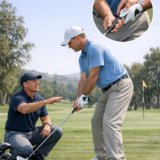
This article examines how deliberate slow-motion swing practice serves as a potent method for strengthening the psychological components of elite golf performance. Grounded in motor-learning theory, cognitive science, and applied sports physiology, it proposes that decelerating practice movements amplifies proprioceptive sensitivity, solidifies motor programs, and creates space for concentrated mental rehearsal - processes that together increase reliability under competitive stress. By separating timing and motion elements of each stroke, slow-motion work lowers sensory and cognitive interference, enabling golfers to fine-tune intersegmental timing, lock in beneficial movement patterns, and cultivate attentional routines that carry over to normal-speed play.
The review integrates evidence and theory on implicit versus explicit learning, focus of attention, and practice variability to show why intentional slow repetitions can speed learning and retention while reducing collapse under pressure. Following sections translate these ideas into practical,evidence-informed protocols for putting,short game,and full swings; define measurable outcomes; and outline how to insert slow-motion practice into periodized training aimed at steadier scoring and greater mental resilience.
Foundations: How Slow‑Motion Rehearsal Builds Motor Memory and Mental control
Practicing your swing in slow motion leverages well-established motor‑learning principles and neural consolidation processes to turn focused rehearsal into dependable on‑course performance. Slowing movements increases the rate and clarity of somatosensory details and frees attentional capacity, wich supports formation of robust motor engrams that consolidate with sleep and repetition. In practice, this looks like isolating key checkpoints – address, mid‑backswing, impact, and finish – and holding each for about 2-5 seconds while internally noting sensations (pressure distribution, clubshaft orientation, wrist set). A practical starting template is 3 sets of 8-12 deliberate slow swings per session, gradually increasing swing speed by roughly 10% every 1-2 weeks, and pairing physical reps with mental rehearsal (visualizing launch shape and feel) promptly afterwards to enhance encoding. Representative drills and awareness cues include:
- Hold‑at‑top routine – pause at the top for about 3 seconds and assess torso rotation (aim for near 90° relative to the target line on a full turn).
- Slow‑impact awareness – move deliberately to the impact position and monitor forward shaft lean (moderate forward lean is typical for irons).
- Verbal kinesthesia – articulate sensations (e.g., “pressure to left foot,” “shaft behind hands”) to reinforce sensorimotor mapping.
These practices create a progressive ladder from conscious control toward automatic execution and are appropriate for beginners through low‑handicap players.
Turning slow rehearsal into efficient movement requires attention to setup, segment sequencing, and gear fit. Start with basics: address stance roughly shoulder‑width for irons (a touch wider for woods), mid‑iron ball position centered to slightly forward, and a spine tilt of approximately 15°-20° forward. In slow work prioritize sequencing – takeaway led by the shoulders, transition initiated by the lower body, and impact characterized by a weight shift toward the lead side (about 60% of body mass). Use alignment rods, mirrors, and high‑frame‑rate video (≥120 fps) to confirm a repeatable swing plane and face control within about ±3° at impact. Common faults – early release (casting), premature standing up (early extension), or reverse pivot – can be corrected by exaggerating the proper feeling in slow motion: preserve wrist lag and delay release to improve compression. Equipment matters too: match shaft flex to clubhead speed (for example, a driver speed around 85-95 mph commonly pairs with a regular flex), and ensure loft/lie are set so slow positions map to predictable ball flights. Set measurable targets for practice: aim to cut shot dispersion by about 10-15 yards or to raise center‑face contact by roughly 20% over a 6-8 week program using consistent slow‑motion drills and video feedback.
Apply slow‑motion rehearsal to short‑game technique and tactical choices to reduce scores. For chipping and pitching, practice low‑run and high‑soft trajectories slowly - keep a neutral or slightly open face for high spins (e.g., 56°-60° wedges) and limit wrist hinge for bump‑and‑runs; hold finish positions to feel ball‑first contact. Putting benefits from pendulum‑style, slow strokes that minimize wrist breakdown and stabilize arc; alternate distance drills between 3-6 ft and 20-30 ft to quantify repeatability in strokes‑gained terms. Before tense shots such as a tight par‑3, run through two to three slow‑motion rehearsals as a compact pre‑shot to prime the motor plan and regulate arousal. Account for conditions – stronger winds may require a lower trajectory and a more forward ball position – and rehearse these adaptations slowly so the “feel” transfers during competition.Troubleshooting tips:
- If contact is inconsistent, return to half‑swings in slow motion to check shaft angle at impact.
- If choices become muddled under pressure, shorten your pre‑shot routine and use a single deliberate slow rehearsal to stabilize intent.
- To encourage contextual carryover, practice both on mats and real turf and include about 10-15 on‑course slow rehearsals weekly.
When combined with biomechanical accuracy and equipment‑matched setup, slow‑motion rehearsal helps players at every level convert deliberate practice into tighter short‑game performance, smarter strategy, and lower scores.
Designing Progressions that Reduce Cognitive Load and Improve motor Control
To build dependable motor control, structure slow‑motion training into stages that move from perceptual awareness to largely automatic execution. Begin each session with core setup checks: neutral grip pressure (around 4-6 on a 10‑point scale), correct ball position (center for wedges, one ball forward of center for mid‑irons, two balls forward for driver), and a spine tilt that preserves balance (about 5-7°). Calibrate joint angles at key positions – a roughly 90° wrist hinge at the top for many players, a ~90° shoulder turn on full swings, and approximately 45° hip rotation to harness ground reaction forces.Use slow‑motion pauses to inspect these checkpoints: hold the top for 2-3 seconds, pause at transition, and check impact posture in a mirror. Don’t overlook equipment mismatches - shaft flex, club length, grip size, and lie angle can force compensations that slow reps alone won’t fix. Before increasing speed, run this quick checklist:
- Grip & pressure: confirm neutral V shapes and consistent finger placement
- Ball position: set according to club to manage dynamic loft and strike
- Posture & spine tilt: maintain balance and allow rotation
- Alignment: feet, hips, shoulders square to the intended line
- Checkpoint angles: verify wrist, shoulder, and hip turn using video or mirror work
With setup repeatable, progress through graded tempo tiers that lower cognitive complexity while raising movement fidelity. Move through speed steps – 25%, 50%, 75%, then 100% – and control phase timing with explicit counts; such as, use a 6‑2‑2 rhythm (six counts to backswing, two‑count pause, two through impact) before compressing into a 3‑1 rhythm as pace increases.Layer in sensory cues: picture the target line, feel connection in the trail forearm, and use an external reference (a tee just outside the ball) to encourage a square face at contact.Scalable drills include:
- Beginners: mirror slow swings, one‑arm half swings to develop forearm feel, and tee contact drills to reinforce clean strikes
- Intermediate: pause‑at‑top sets, alignment‑rod plane work, and 50-75% pace swings to fixed yardage to train distance control
- Advanced: weighted‑club tempo sets, launch‑monitor feedback for clubhead speed and face‑angle consistency, and variable practice mixing clubs to mimic course variability
Translate slow‑motion gains into on‑course outcomes by sequencing practice, setting measurable targets, and rehearsing situationally. Aim for 20-30 minute deliberate sessions focused on slow checkpoints three times weekly, with goals such as reducing carry dispersion by 8-12 yards or raising up‑and‑down percentages by around 10 percentage points in 8-12 weeks. Reintroduce full speed methodically: first remove enforced pauses, then increase pace to about 75%, introduce variability (wind, uneven lies, obstacles), and finally include pre‑shot routine elements - visual target, single rehearsal, and a simple count. For the short game,use slow practice to refine strike and feel: for chips,rehearse accelerating through the ball while maintaining a controlled wrist set; for bunker escapes,exaggerate the finish so you commit to entering the sand 1-2 inches behind the ball. Watch for common progression errors - freezing the wrists, early acceleration (casting), or poor weight transfer – and correct by returning to mirror/video checks, simplifying instruction to one external cue, or adjusting equipment (grip size/shaft flex) when necessary. Respect competition practice rules by limiting on‑course rehearsal before events and adapt drills to visual, kinesthetic, or auditory learners to maximize the mental benefits of practicing your swing in slow motion and convert improved motor control into lower scores and smarter course management.
Merging Attentional Focus with Slow Repetition to Strengthen Consistency and Choice
Coupling attentional strategies with slow repetitions links conscious intent to precise kinematics and helps automate reliable mechanics.Start from a stable address – a slight spine tilt of about 3-5° away from the target, feet shoulder‑width for a mid‑iron, and a neutral grip that yields a square face at setup – then perform slow swings at roughly 25-40% of normal speed to isolate takeaway, hip rotation, and wrist set.Favor an external focus (for example, a line on the turf, a distant tree, or a fairway marker) over internal muscle cues; evidence favors external targets for automaticity and pressure resistance. Suggested step sequence:
(1) three slow reps emphasizing a smooth takeaway and maintaining a shoulder turn of 80-100° for men (60-80° for women), (2) three slow reps on lower‑body stability and trail‑hip loading at the top, (3) three slow reps through impact stressing a downward strike for irons and a flatter path for driver. Range checkpoints and drills include:
- Setup checks: clubface square at address,ball position relative to the hosel (driver about 1-1.5 clubheads inside left heel; 7‑iron centered), and slight knee flex.
- Slow drills: ”hold‑at‑top” (2-3 seconds), 3:1 tempo sets (three counts backswing, one count transition), and “impact‑feel” swings focusing on forward shaft lean and center‑face strike.
- Troubleshooting: slices – rehearse exaggerated in‑to‑out feeling in slow reps; hooks – practice face‑awareness drills and evaluate grip pressure.
Set realistic performance targets such as achieving center‑face contact on ~80% of full‑wedge shots and trimming dispersion on mid‑irons by 10-15 yards within 6-8 weeks of focused work.
Applying the same focus‑plus‑slow framework to the short game accelerates distance control and contact quality and improves green‑side decision making. For chips and pitches,rehearse slow reps that emphasize lead‑wrist extension at impact,forward shaft lean of about 5-10° for crisp contact,and consistent landing zones (for 30-40 yard pitches,aim to land 6-10 yards short of the hole). For putting, practice pendulum strokes at about 50% speed to ingrain a square face and stable arc; use a metronome set between 60-72 bpm to anchor tempo. practice realistic course scenarios – a downhill 20‑foot putt or a plugged pitch in light rough – by visualizing the line and speed, rehearsing slowly, then executing the live stroke. Short‑game drills:
- “landing ladder” – tees at 3-5 yard intervals to train consistent carry;
- “Clock‑face putting” – slow preshot rehearsals from 3, 6, 9, and 12 feet;
- “Two‑stage pitch” – a slow rehearsal focusing on tempo followed by two normal‑speed executions.
Beginner cues (light grip pressure ~4-5/10,half swings) sit alongside advanced refinements (micro loft adjustments,bounce use for steep lies). Correct common mistakes – rushing,reversing wrists,or failing to commit to a landing spot – with focused slow repetition and trackable outcomes such as a 10% up‑and‑down improvement over a month.
Embed slow rehearsals into on‑course decision routines to sharpen pre‑shot habits and tactical choices for varied conditions (wind, firm lies, tight pins) while obeying competition rules (e.g., avoid grounding the club where prohibited). Before each tee or approach shot, run a concise mental checklist: target selection, intended shot shape, wind compensation in yards/degrees, and club selection; then perform one or two slow rehearsals to cement trajectory and landing strategy.Equipment checks (shaft flex, loft, lie) ensure slow reps translate to full‑speed swings - such as, a player with early release may gain from a slightly stiffer shaft or a 1-2° lie change to stabilize face control. Suggested routine and benchmarks:
- Daily 15-20 minute slow‑repetition session blending full‑swing and short‑game work;
- Weekly scenario practice (e.g., play 9 holes where each shot begins with a single slow rehearsal) to speed decisions and build confidence;
- Performance targets: cut three‑putts by ~30% in eight weeks, increase fairways hit by ~10% in six weeks, or reduce scoring average by 1-2 strokes per round.
By integrating attentional strategies with slow reps and measurable habits, players develop more reliable motor programs, sharper tactical judgment, and the mental resilience needed for consistent scoring.
Tracking Transfer and Retention with Kinematic Data and Practical Benchmarks
Start with a clear baseline assessment using kinematic measures and on‑course performance metrics to guide training. employ high‑speed video, inertial sensors (IMUs), and a launch monitor (e.g., TrackMan/FlightScope) to log variables such as clubhead speed, attack angle, smash factor, face angle at impact, and segment sequencing (pelvis → torso → arms → club). Record static setup checks – ball position relative to the lead heel (driver: inside heel; mid‑iron: center), stance width (shoulder‑width for irons), and grip pressure (~4-5/10) – and dynamic metrics like shoulder turn (~80°-100°), hip rotation (~35°-50°), and X‑factor (shoulder minus hip rotation, ofen 20°-40°). Define performance benchmarks: carry dispersion, lateral dispersion, fairways hit (%), GIR (%), and up‑and‑down rate. Short‑term aims could include cutting dispersion by ~15 yards or raising GIR by ~10 percentage points over 8-12 weeks. Log contextual factors (wind, turf firmness, slope) and be mindful that measurement devices may be restricted during certain competitions under governing‑body rules.
To facilitate transfer,design drills that pair slow‑motion rehearsal with graduated full‑speed execution,exploiting the mental benefits of practicing your swing in slow motion - improved proprioception,cleaner sequencing,and lower error‑related anxiety when attention is focused. Begin sessions with slow reps at about 30-40% of full speed to engrain correct timing, then progress through speed steps (50%, 75%, 90%, 100%) while preserving key impact metrics.Useful drills and checkpoints:
- Split‑hand tempo drill - use split hands for 20 slow swings to feel a ~90° wrist set at the top, then rejoin and hit 10 balls at ~75% speed preserving the same release timing;
- Towel‑under‑arm drill - hold a small towel beneath the lead armpit for 3×30 second sets to prevent early extension and promote connected rotation;
- Alignment‑feedback drill – set one alignment stick on the target line and another parallel to the shaft at address; record face angle at impact to achieve about ±2° of target.
Novices should focus on single‑concept drills (grip, alignment, tempo) and may perform 50-100 swings per session; intermediate and low‑handicap players should use targeted kinematic drills (X‑factor separation, impact shaft lean ~5° forward) and track improvements with rotational velocity and impact‑point consistency.Correct common faults - casting, overactive hands, reverse pivot – by returning to slow sequencing and the towel drill before increasing speed to ensure learning transfers.
Assess retention with repeated kinematic tests and on‑course benchmarks over time. A practical schedule includes immediate post‑session checks, a 1‑week retention test, and a 4‑week follow‑up. Set retention criteria such as maintaining at least 80% of initial kinematic gains (e.g., clubhead speed or X‑factor improvements) and achieving target reductions in dispersion or increases in GIR on the course. When moving to situational play – for example, a windy links day – adjust attack angle and dynamic loft (reduce dynamic loft by ~2°-4° and add forward shaft lean) to create a penetrating flight, and use a brief pre‑shot slow rehearsal to consolidate the motor plan under pressure. Adapt practice formats for learner differences: visual players use side‑by‑side video comparisons; kinesthetic learners add tactile aids (towel,training grips); players with mobility limits modify rotation targets while measuring sequencing – all ensuring measurable,transferable,and retained improvements that lower scores and improve course management.
Contextualized Stations: Drills that Build Situational Awareness and Tactical Choice
Plan practice as a set of context stations that mirror real course challenges while reinforcing consistent setup. Such as, alternate between a 7‑iron station (typical carry ~140-150 yards for many club‑average male amateurs) for tight fairway approaches and a 56° sand wedge station for greenside bunker escapes. At each station use these setup checkpoints:
- Alignment – feet, hips, and shoulders parallel to the intended line within a few degrees;
- Ball position - center for mid‑irons, slightly back (~1-1.5 ball diameters) for wedges;
- Posture and spine tilt – roughly 15° forward tilt from the hips and a neutral spine;
- Grip pressure – light enough to sense the head but firm enough to manage face rotation (about 4-6/10).
Integrate slow‑motion swing reps at the start of each station to capture motor imagery and proprioceptive feedback: perform 8-12 slow swings at 25-30% speed focusing on sequencing (weight shift, hip rotation, shoulder turn), then 4 medium‑pace swings (50-75%) and finish with 4 full‑speed shots. Session goals might include halving lateral dispersion within six weeks and increasing proximity to the pin inside 20 ft on approach shots. Common beginner errors - excessive sway, early extension, overgripping – should be corrected promptly with mirror or video feedback and by re‑establishing the slow sequence to recover the correct feel.
Progress by creating drill variants that stress both mechanics and decision making. To develop shot shape and trajectory control, set up a gate with an alignment stick and place another stick on the turf to represent a hazard; rehearse three flight profiles (low punch, neutral, high‑soft) from the same target by altering ball position and wrist set: move the ball back ~½ ball position and reduce hinge to ~60-70° for a lower flight; move it forward and hinge the lead wrist to ~90° for a higher flight. Stepwise drills:
- Gate + target - a 2-3 inch gate at address to ensure correct club path;
- Percent‑speed sequencing - 10 reps at 40%, 10 at 70%, then 6 full‑speed reps while logging contact consistency and curvature;
- bunker simulation - place a rake line 2-3 inches behind the ball and practice entering the sand 1-2 inches back to produce proper splash and spin for escape shots.
From a course‑management stance, convert mechanics into choices: on a 420‑yard par‑4 with a fairway bunker at ~260 yards, consider a 3‑wood or long iron to leave a 120-140 yard approach rather than risking the hazard with a driver. If curvature is excessive check impact face rotation (>2-3°) and reset tempo with metronome drills. These station drills benefit beginners (contact and short‑game fundamentals) and low handicappers (spin control, trajectory shaping) when preparing for situations like firm greens or crosswinds.
Use slow‑motion rehearsal as part of pressure and cognitive‑load training to reduce decision fatigue. Alternate unconstrained range work with scenario circuits – for example, simulate a tournament front nine with score goals and require a slow‑motion visualization before every second shot.Track progress with metrics like GIR%, up‑and‑down%, and average strokes‑gained in approach over rolling four‑week blocks. Adjust club selection for conditions - add ~10-15% distance for a tailwind, subtract 5-10% for firm fairways, and add loft on wet greens to manage spin. Support multiple learning styles:
- Kinesthetic learners: extended slow reps followed by immediate on‑course application;
- Visual learners: overlayed video of slow reps and target lines;
- Analytical learners: numerical metrics (dispersion radius, proximity) to refine drills quantitatively.
By tying technical drills to real scenarios and using slow‑motion mental rehearsal as a link between practice and play, golfers convert mechanical gains into smarter choices, fewer penalties, and measurable scoring improvements.
Pairing Slow Practice with Imagery and a Compact Pre‑Shot Routine to Stabilize Arousal
Start each slow rep with the intent to encode an efficient motor pattern and use imagery to connect that pattern to the desired full‑speed result. Practically, perform sets of 8-12 slow swings, pausing at critical checkpoints (mid‑backswing, top, and impact) and holding positions for 1-2 seconds while mentally rehearsing the intended ball flight. Monitor measurable checkpoints – a shoulder turn of ~80-100°, minimal lateral sway (5°), and consistent spine tilt within ±5° through impact. Adopt a slow tempo target of roughly 3:1 backswing:downswing during practice (e.g., a three‑count backswing, one‑count downswing) and preserve the tempo ratio when ramping back to full speed. pair each slow sequence with a vivid imagery cue (visualize launch angle,landing zone and roll) and a short normal‑speed rehearsal to translate the felt pattern into performance,which reduces pre‑shot arousal and builds predictable outcomes.
- Drill: mirror or video slow reps - pause at the top to check wrist hinge (~90°) and shaft plane.
- Drill: impact‑bag slow reps to feel body‑and‑hands sequencing; hold impact for 1-2 seconds.
- Troubleshoot: if tension increases, reduce grip pressure to ~4-6/10 and repeat slow reps until relaxed.
Next, fold these slow‑motion and imagery methods into short‑game routines and a concise pre‑shot procedure so confidence carries inside 100 yards and on the green. For chipping, place the ball slightly back with ~60% weight on the lead foot and a narrower stance; for full wedges, bring the ball more toward center and increase hip rotation. track measurable targets such as 1-2 m proximity goals for 50‑yard chips and aim to raise up‑and‑down percentages (e.g., from 40% to 55% in six weeks). A practical, repeatable pre‑shot routine:
1) choose target and intended shape, 2) perform one slow‑motion rehearsal with the intended tempo/finish, 3) take two diaphragmatic breaths to lower arousal, 4) visualize trajectory and landing, 5) commit and execute. Beginners focus on rhythm and contact; advanced players fine‑tune dynamic loft and release timing (reduce early release through slow three‑quarter swings pausing at impact).
- Setup checkpoints: face square to line, hands slightly ahead at address for irons, and confirmed weight distribution.
- Drills: clock‑face chipping (land at preset distances),ladder putting (vary stroke length by distance),and bunker blast reps emphasizing slow‑motion entry angle.
- Common corrections: early extension → towel under lead armpit; thin shots → move ball slightly back and hold forward shaft lean.
Apply this combined slow‑motion + imagery + pre‑shot system in play to turn technical gains into scoring advantages. Before any tee or approach, evaluate lie, wind, pin position, and hazards; choose a conservative target when appropriate (e.g., aim for the center of the green rather than a risky flag) and perform a single slow rehearsal to lock mechanics under pressure. For wind assessment a practical rule is to add or subtract roughly one club per 10-15 mph of sustained head/tail wind, then validate feel with a brief slow reference swing; this links equipment choices (loft and shaft) directly to your mental routine. To recreate stress, add time constraints or scoring penalties in practice rounds and measure progress with targets such as reducing forced errors or improving fairway accuracy.To control arousal in competition use a two‑breath reset and the same imagery cue practiced in training – a reliable method to stabilize heart rate and neural patterns so rehearsed mechanics perform under pressure.
- Situational drills: 9‑hole scenarios with fixed targets and a prescribed pre‑shot routine to rehearse decision making.
- Equipment note: confirm lofts and gapping so imagery matches actual carry distances.
- Course tip: favor lower‑risk targets – consistency through routine typically beats occasional heroics.
Periodization and Assessment: From Slow reps to Competitive Readiness
Adopt a periodized framework that ties macro, meso, and microcycle goals to on‑course outcomes. Such as, plan a 12-16 week macrocycle aiming for a 3-5 stroke tournament reduction; divide it into 3-4 week mesocycles focused on power, technique, and specificity; and structure weekly microcycles to balance volume and intensity. Establish baseline metrics – ball speed, smash factor, driving dispersion, GIR, scrambling %, and putts per round – and set measurable intermediate targets (e.g., increase 7‑iron carry by 5-10 yards in eight weeks). Progress from technical emphasis (setup, neutral spine, weight distribution ~60/40 at address for long shots, 45° hip rotation, and ~90° shoulder turn) through kinetic sequencing drills and toward on‑course simulations under varied conditions. Insert slow‑motion reps in the technical phase to enhance kinesthetic awareness; as an example, do 20 slow swings at 30-40% speed focusing on wrist hinge and weight shift, then follow with 6 full‑speed swings to translate feel into power.
Assessment should be objective and frequent. Use launch monitors to track attack angle (target +2° to +4° for drivers; -4° to -6° for irons), dispersion goals (e.g., 90% of drives within a 30‑yard radius by week 12), and putting stats (cut three‑putts by ~50% in eight weeks). Combine these with on‑course tests like scoring from 100-150 yards and scrambling from recovery lies.Practical drills and checkpoints for all levels:
- Setup checks: ball position (driver inside left heel; 6‑iron center), shaft lean (2-5° forward at address for irons), and light grip pressure to allow release.
- Technical drills: slow‑motion three‑phase swings (takeaway, transition, impact) for 20 reps; impact bag for compression feel; step‑through drill for weight shift.
- Short‑game routines: laddered distances (5, 10, 20 yards) with target proximity goals (e.g., 3 ft for 50% of chips) and bunker sequences stressing open face and acceleration.
to fix common problems – over‑rotated hips,casting,tempo inconsistencies – rely on immediate feedback loops: video at 60-120 fps and metronome drills (backswing:downswing ≈ 3:1) to reestablish rhythm. Move from isolated practice into pressured simulations by adding time limits or scoring penalties that mirror tournament stress, and always remember players must play the ball as it lies except where relief is allowed under the Rules of Golf.
Include planned tapering, recovery, and mental prep before key events.Schedule deload weeks (reduce technical volume by about 40-60% every 3-4 weeks) and a 7-10 day pre‑competition taper that prioritizes short‑game sharpness and course strategy over heavy range work. Use slow‑motion mental rehearsal as a compact pre‑round routine: practicing your swing in slow motion immediately before a round can reduce anxiety and consolidate motor patterns. provide players with a pre‑round checklist covering equipment (correct loft/bounce on wedges, shaft flex matched to speed, proper ball compression), tactic reminders (safe bias on doglegs, layup yardages), and breathing techniques for pressure shots. Cater to learning styles: kinesthetic learners emphasize feel drills; visual learners get annotated video; analytical learners receive weekly stat reports. Troubleshooting:
- If dispersion increases: return to slow sequencing and impact drills for two sessions.
- If short game is patchy: increase deliberate practice to 30 minutes daily with proximity targets.
- If competition nerves spike: use a 4‑4 breathing pattern and two slow rehearsals pre‑shot.
By sequencing physical, technical, and mental work in a periodized plan and tracking progress, players at all levels can integrate skills sustainably and enter competition with reproducible performance advantages.
Q&A
Note on sources: the web search results supplied with the request were unrelated (they concerned Windows technical issues) and therefore were not used to inform the content below. The Q&A that follows is based on accepted principles from motor learning,sports psychology,and applied coaching practice tailored to slow‑motion swing practice in golf.
Q1 – What is “slow‑motion swing practice” and how is it defined in the context of golf performance training?
A1 – Slow‑motion swing practice is the intentional execution of golf swings or putting strokes at a markedly reduced tempo compared with competition speed, with the goal of improving sensorimotor control, proprioception, and cognitive rehearsal. Typical reductions range from about 25-75% of habitual speed depending on the training aim. it complements – rather than replaces – full‑speed practice and is applied with careful attention to technique, rhythm, and task specificity.
Q2 - What theoretical mechanisms explain why slow‑motion practice can improve performance?
A2 – Key mechanisms include:
– Motor pattern reinforcement: Slower motion allows repeated focus on desired kinematic and kinetic elements, promoting correct motor encoding.
– Proprioceptive calibration: Reduced speed delivers richer somatosensory feedback per moment, enhancing limb awareness.
– Cognitive rehearsal and imagery: Slowed execution gives room to pair kinaesthetic imagery, verbal cues, and attentional strategies with movement, strengthening procedural memory.
– Error detection and corrective learning: Extra time for observation helps identify deviations and apply immediate corrections, improving sensorimotor error‑correction.
– Neural plasticity: Focused attentive repetitions support synaptic changes in motor circuits; pairing slow physical practice with imagery can speed consolidation.
Q3 - What empirical evidence supports the use of slow‑motion practice in sports or motor learning?
A3 – Motor‑learning research shows that slowed practice can aid acquisition when combined with deliberate practice and feedback, especially for novices and complex coordination tasks.It sharpens perceptual discrimination and builds explicit understanding of mechanics. Transfer to full‑speed play is strongest when slow work is embedded within a progression that includes gradual speed increases and contextual variability.
Q4 – For which golfers or skill levels is slow‑motion swing practice most appropriate?
A4 – Useful across levels but particularly helpful for:
– Beginners establishing coordination and sequencing.
– Intermediate players correcting timing or sequencing faults.
– Advanced players targeting fine refinements in feel and tempo, especially under high cognitive load.
Caveat: elite players should use slow work selectively; prolonged exclusive use can limit transfer to competitive speeds.Q5 - How should slow‑motion practice be structured (duration,frequency,intensity)?
A5 – Practical guidelines:
– Frequency: 2-5 focused short sessions weekly within a broader practice plan.
- Session length: 15-35 minutes for targeted slow work to avoid attentional fatigue.
– Reps/sets: 8-20 reps per drill in 3-6 blocks with 1-2 minutes rest; quality matters more than quantity.
– Progression: Start ~30-50% speed, retain correct technique, then move toward 70-90% before full‑speed integration.
– Add deliberate feedback (video, coach, tech) and imagery between reps.
Q6 – How does slow‑motion practice differ for putting, full swing, and driving?
A6 – Task‑specific differences:
– Putting: emphasize stroke length, face control, and tempo. Slowed practice improves feel for acceleration through impact and distance control; use short,high‑quality reps.
– Full swing: focus on sequencing (hips → torso → arms), transition, and balance. Slow work clarifies the kinetic chain.
– Driving: emphasize sequencing and weight transfer, but avoid over‑slowing so as not to alter elastic recoil. use slow reps mainly for sequencing and rhythm, then reintroduce speed gradually.
Q7 - What specific drills exemplify slow‑motion training for these domains?
A7 - Examples:
– Putting: “pause at impact” – stroke at 40-60% speed, hold impact for 1-2 seconds to assess face and wrist, then finish; use a metronome for consistency.
– Full swing: “half‑to‑slow transition” – backswing to hip height at 40% speed, pause 1 s to feel coil, then accelerate slowly to 60-70% into a controlled impact; record for feedback.
– Driving: “split‑tempo sequencing” – slow backswing (30-50%), initiate transition with lower body focus, then slow downswing to observe weight shift and hip rotation; conclude with a light acceleration and balance check.
Q8 – How does one avoid the main pitfalls of slow‑motion practice?
A8 – Common pitfalls and fixes:
– Over‑slowing that breaks task specificity: remedy by adding progressive speed blocks and full‑speed practice.
– Reinforcing poor technique: pair slow reps with coach or video feedback.
– Cognitive overload causing choke under pressure: practice external focus cues and rehearse in competition‑like contexts once mechanics are stable.
– Fatigue or degraded reps: limit session length and prioritize focused, high‑quality repetitions.
Q9 – How should slow‑motion practice be integrated into a weekly plan?
A9 – Integration model:
– Warm‑up: dynamic warm‑up plus several full‑speed swings/putts.
– Technique block: 15-30 minutes of slow‑motion work on 1-2 elements.
– Speed progression: follow slow work with graded swings/putts at 60%, 80%, 95%, and full to aid transfer.
– Contextual practice: finish with situational drills (pressure,variability,course sim) to consolidate transfer.
Q10 – How should coaches and players measure progress from slow‑motion practice?
A10 – use objective and subjective metrics:
– Objective: dispersion, distance consistency, launch conditions, impact point (face‑to‑path), putting tempo metrics – measured with launch monitors, high‑speed video, or sensors.- Subjective: player’s proprioceptive clarity, perceived sequencing control, confidence, and stroke feel stability.
– Employ pre/post full‑speed testing with repeated measures to quantify transfer.Q11 – What role does attentional focus (internal vs external) play during slow practice?
A11 – Tailor focus to learning stage:
– Early learning: internal cues with explicit coaching can correct major faults during slow reps.
– Later stages: shift to external focus (target, clubhead flight) to foster automaticity and improve pressure performance.Coaches should plan this transition.
Q12 – Can slow‑motion practice help with competition‑related anxiety?
A12 – When combined with cognitive strategies, yes:
– Slow work allows coupling technique with pre‑shot routine and imagery.
– It builds proceduralized routines that are robust under stress.
– But to build pressure resilience, include pressure simulations and arousal replication; slow practice alone is not sufficient.
Q13 – Are there individual differences to consider?
A13 – Yes:
– Learning style: tailor feedback (kinesthetic, visual, verbal) accordingly.
– Baseline motor control: highly consistent players need subtler interventions; inconsistent players benefit from more deliberate slow reps.
– Anxiety profile: high‑anxiety athletes may need shorter slow blocks plus relaxation and imagery work.
Q14 – How long to expect measurable improvements?
A14 – Timelines vary: initial proprioceptive gains and feel often appear within days to weeks; measurable full‑speed performance and scoring gains usually require several weeks to months of integrated practice. Consistent deliberate practice with feedback accelerates consolidation.
Q15 – What concise protocol can players trial next week?
A15 – 3‑week microcycle (irons & putting):
Two slow sessions/week
– Warm‑up (10 min): dynamic drills + 6-8 full‑speed swings/putts.
– Slow technical block (15-20 min): 3-5 sets of 8-12 slow reps at 40-60% speed on one element, 1-2 min rest between sets, with coach/video feedback after each set.
– speed integration (10-15 min): 60%, 80%, 95%, full speed (3 reps each), shifting cues from internal to external.
– Contextual finish (10-15 min): short game or pressure drills.
Measure baseline dispersion and scoring metrics at week start and retest after 3 weeks to assess transfer.
Q16 – Summary recommendations for coaches and players
A16 – Treat slow‑motion practice as a targeted instrument to heighten proprioceptive awareness, fix sequencing errors, and embed cognitive rehearsal. Always: (1) set a clear technical objective, (2) keep sessions short to preserve attention, (3) use timely feedback, (4) progress speed and contextual challenges, and (5) measure transfer with objective metrics. Avoid relying solely on slow practice – it is most powerful when embedded in an evidence‑based, periodized plan.
if desired, I can:
– Create a condensed protocol customized to a specific handicap band (beginner, intermediate, advanced).
– Produce printable drill sheets for putting, irons, and driving with step‑by‑step progressions.- Draft a 6‑week periodized plan that blends slow‑motion practice with strength work and on‑course play.
Conclusion
practicing your swing in slow motion is a compact, evidence‑aligned method for reinforcing stable motor patterns, sharpening proprioceptive awareness, and scaffolding focused cognitive rehearsal – three mechanisms that collectively grant a mental and technical edge in golf. Theoretical and applied findings indicate that deliberate slowing enhances error detection and motor consolidation while providing a low‑pressure surroundings to rehearse attention, routines, and decision‑making that translate to normal‑speed play. For coaches and players the prescription is clear: incorporate structured slow‑motion drills into a periodized program with explicit objectives, objective measurement (kinematic checkpoints and outcome variability), and a planned reintroduction of tempo and pressure.
Coaches should individualize protocols to match learning stages and competitive needs – using slow practice for technical retraining, pre‑competition priming, and recovery – while maintaining exposure to full‑speed repetition and simulated pressure for contextual transfer. Researchers should continue with randomized and longitudinal studies that quantify retention, scoring transfer, and neural correlates of slow‑motion training across shot types and skill levels.When applied deliberately and monitored objectively, slow‑motion swing practice offers a straightforward yet powerful route to more consistent, resilient scoring: it pairs biomechanical refinement with cognitive control so players can perform reliably under pressure. continued coach-research collaboration will refine protocols and clarify limits of effectiveness, turning laboratory principles into measurable on‑course improvements.
Note on search results provided
The web search results returned items about services named “Unlock” (financial and device‑unlocking topics) that were unrelated to golf training, so they were not used to develop this content.
 Note: the supplied web search results did not return golf-related sources. Below is an original, SEO-optimized article crafted from established coaching and motor-learning principles.
Elevate Your Golf Game: Gain a Mental Edge with Slow-Motion Practice
Slow-motion practice is a highly effective, underused method to develop consistent mechanics, sharpen feel, and strengthen the mental game for golfers of all levels. Below you’ll find precise drills,session plans,tempo cues,and progress-tracking tools designed to help you use slow practice to improve your golf swing,putting and driving – translating practice into lower scores on the course.
Why Slow-Motion Practice Works for Golfers
- Improved motor learning: Slowing movements down increases sensory feedback and attention to body positions. That fosters cleaner neural encoding of the desired movement pattern for your golf swing, putting stroke, or driving motion.
- Enhanced body awareness: Slow reps help golfers feel correct sequencing – hip turn, shoulder rotation, wrist set, and weight shift - and the timing between them.
- Reduced tension: Practicing slowly lowers adrenaline and muscle tension, which often improves accuracy and tempo control when you speed back up.
- Stronger mental imagery: Slow motion lets you pair visualization and proprioception (internal sense of position) with physical rehearsal, improving confidence and execution under pressure.
How Slow practice Builds a Mental Edge
Golf is as much a mental sport as a physical one.Slow-motion practice guides you to:
- Build accurate pre-shot routines by repeating a calm,methodical setup.
- Form reliable tempo cues (e.g., “1-2” rhythm for backswing to downswing), which reduce pre-shot anxiety.
- Use cognitive rehearsal: visualizing a perfect swing while performing a slow-motion replica strengthens mental pathways used during competition.
Mental Skills Tied to Slow Practice
- Focus and concentration - longer, intentional reps train attention control.
- Emotional regulation – slower reps reduce arousal and help you remain composed.
- Confidence through mastery – deliberate repetition leads to measurable improvements, and that builds belief.
Coach tip: Use slow-motion practice when you’re learning a new change (grip, stance, swing plane) instead of full-speed ball hits. The transfer from slow to normal speed is faster when the movement is well encoded.
Slow-Motion Drills for Swing, Putting & Driving
1. Slow Full-Swing Drill (Driver or Irons)
Purpose: Improve sequencing and tempo; find the correct spine angle and weight transfer.
- Setup: Ball on a tee or mat. Take normal address and focus on balance and posture.
- Execution: Make a full swing at 25-40% speed. Pause for 1-2 seconds at the top to feel coil and arm/wrist position. Slowly transition into a controlled downswing and finish balanced.
- Reps: 10 slow reps per club, focusing on the same kinematic checkpoints each rep.
2. Slow Putting Stroke (Short and Mid-Range)
Purpose: Reinforce pendulum action, face control, and tempo for consistent roll.
- Setup: Standard putting grip and stance. Choose a 6-12 foot target.
- Execution: Stroke the putt at half speed, keeping the putter face square at impact. Count “1-2” (backswing-forward) or use a metronome at 60-70 bpm to maintain rhythm.
- Reps: 20 slow reps, then 10 at normal speed, noticing how the feel matches.
3. Slow Takeaway to Fast Finish (Tempo Transition Drill)
Purpose: Learn to keep a smooth takeaway while still allowing power at the finish.
- Execution: Take the club back slowly to hip/waist height; then accelerate into the downswing to normal speed. This teaches a controlled start and a confident release.
- Reps: 8-12 per session, alternating irons and driver.
4.Slow-Backswing Feel for Drivers
Purpose: Prevent early extension and flattening of the swing plane.
- Execution: Take a deliberate, slow backswing focusing on turning shoulders and loading the trail leg. pause at 3-4 seconds at the top to sense coil. Start the downswing while keeping the chest behind the ball for the first part of the downswing.
- Reps: 10-15; use a mirror or phone camera for instant feedback.
Practice Structure: Turn Slow Work into Measurable Gains
Structure your weekly training to include slow-motion segments mixed with normal-speed hitting and on-course play.
Sample Weekly Plan
| Day | Focus | Slow-Motion Component |
|---|---|---|
| Monday | Putting & short-game | 30 min slow putting drills + 15 short chip slow reps |
| Wednesday | Irons & tempo | 30 slow full-swing reps with pauses + 20 normal speed |
| Friday | Driving & power | 20 slow driver reps for sequencing + 10 controlled full-speed hits |
| Sunday | On-course application | Play 9 holes focusing on tempo cues developed in slow practice |
Session Blueprint (60 minutes)
- Warm-up (10 min): Mobility and dynamic stretches; gentle slow swings without a ball.
- Slow drill block (20-25 min): Focused slow-motion reps with checkpoints and video feedback.
- Normal-speed integration (15 min): Gradually speed to match on-course feel, 10-20 balls per club.
- Short-game and putting (10-15 min): Slow-to-normal transition; three-step routine (slow, half-speed, full-speed).
Progress Metrics & How to Measure Improvements
Turn subjective feeling into objective data so you can track the value of slow-motion practice.
- Tempo ratio: Measure backswing-to-downswing time with a stopwatch or metronome app. Improve stability of this ratio across reps.
- Ball dispersion: Track landing zones and group size on the range for a given club before and after a 4-week slow-practice block.
- Putting consistency: Count prosperous 8-12 foot putts after a slow putting routine vs before.
- Confidence & stress: Use a simple 1-10 rating pre- and post-session to monitor mental gains (lower stress, higher confidence).
Common Mistakes & Troubleshooting Slow Practice
- Going too slow: If you slow the movement until it’s unnatural, it might not transfer. The goal is deliberate speed that preserves the movement pattern.
- Lack of checkpoints: Without defined positions to feel (e.g., wrist hinge, hip turn, head position), slow reps become aimless. Use 3-5 checkpoints each rep.
- Skipping transition work: Always practice the transition back to normal speed. The real challenge is integrating the new pattern into game speed.
- No feedback: Use video, mirrors, or a coach to confirm you’re practicing the intended movement.
Case Study: Turning Slow practice into Lower Scores (Example)
Player: Weekend competitor (handicap 16). main issues: early casting with irons and three-putting under pressure.
- Intervention: 6-week program of slow-motion iron swings (twice weekly) and slow-to-normal putting routine (daily 10 minutes).
- Drills: Slow backswing pause at the top, slow-rock putting with metronome, and tempo transition drill for approach shots.
- Outcome after 6 weeks:
- Ball dispersion reduced by ~30% for 7-iron on the range.
- Average putts per round decreased from 34 to 30.
- Handicap dropped from 16 to 13; better on-course tempo and fewer nervous pre-shot adjustments.
First-Hand Experience: how to Apply Slow Practice on the Course
Here’s a practical on-course routine you can use right away:
- Pre-shot: Two slow practice swings (one full slow motion focusing on the checkpoint; the second at 60% speed), then take the shot.
- Short putts: Before each short putt (<6 ft), do one slow half-speed stroke focusing on face square and roll, then execute.
- Pressure shots: For crucial moments, say a simple cue (e.g., “smooth”) and do a single slow takeaway before committing to the shot. This centers attention and reduces rush.
Drills Table: Rapid Reference (WordPress-styled)
| Drill | Primary Benefit | Time/Reps |
|---|---|---|
| pause-at-top full swing | Sequencing & coil | 10 reps / club |
| Slow pendulum putting | Face control & tempo | 20 strokes |
| Slow takeaway, fast finish | Controlled start, confident release | 8-12 reps |
| Slow driver feel | Power with balance | 10 reps |
SEO & Practice Notes: Keywords to Use in Your Practice Journal
When tracking progress online or in your practice notes, include searchable keywords that tie practice to results. Examples:
- “slow-motion golf drills”
- “improve golf swing tempo”
- “putting rhythm slow practice”
- “driving consistency through tempo”
- “mental golf routine slow practice”
Final Practical Tips (Actionable Checklist)
- Set a clear objective for each slow-motion session (e.g., eliminate early release or square face at impact).
- Use video or mirrors every 4-6 sessions to confirm changes.
- Record tempo ratios for a few baseline swings and compare weekly.
- Integrate short bursts of normal-speed hitting promptly after slow blocks to reinforce transfer.
- keep sessions short and deliberate – 30-60 minutes focused sessions outperform unfocused hours.
Apply these slow-motion principles consistently for 4-8 weeks and you’ll notice improved swing consistency, steadier putting, better driving rhythm, and a measurable mental edge when competing. Practice slowly, measure often, and bring that calm control back to your on-course game.