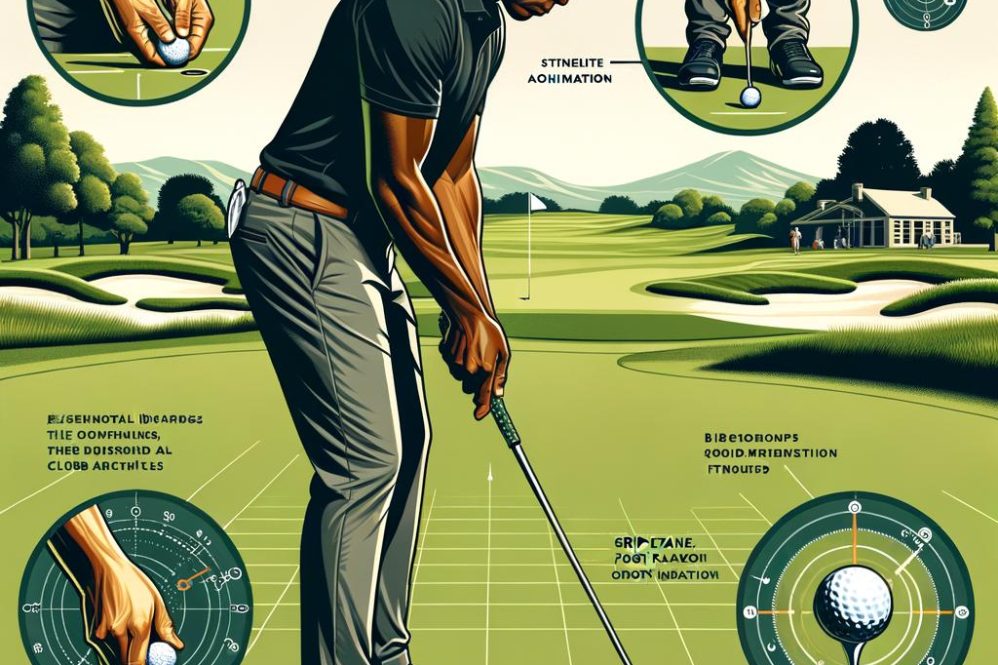
Accurate putting is a primary determinant of scoring adn competitive results, but consistently sinking putts requires more than instinct or repetition. Variations in grip, stance, alignment, and stroke mechanics interact with perceptual and motor-control systems to generate errors in both line and distance; analyzing these relationships empirically enables focused interventions that lower variability and raise success rates. This review brings together the relevant experimental literature to outline techniques and practice plans that have been shown to improve putting accuracy.
Drawing on findings from biomechanics, motor learning, and sports psychology – supplemented by applied tools such as high-speed video, motion capture, and objective performance metrics – this overview separates evidence-backed recommendations from tradition and hearsay. The focus includes grip configuration, postural stability, eye-putter-ball relationships, pendulum dynamics of the stroke, tempo management, and practice designs that promote transfer and retention. Where applicable, measurable benchmarks and objective evaluation methods are suggested to support individualized tuning.
Players and coaches will find practical,research-informed steps for diagnosing stroke inconsistencies,tightening setup and alignment routines,and structuring practice to speed skill acquisition and maintain performance under pressure. The aim is to convert empirical knowledge into usable guidance that strengthens consistency on the greens and delivers quantifiable gains in putting performance.
Optimizing Grip Mechanics to Reduce Wrist Torque and Steady the Stroke
start with a repeatable address position that aligns the hands and body to resist unwanted wrist torque. For right-handed golfers, place the left hand on the grip first with the thumb tracking down the shaft, then add the right hand in a reverse-overlap (alternatives such as cross‑handed or the claw grip are useful for players seeking extra wrist restraint). Use a light but secure grip pressure - roughly 3-4 out of 10 subjectively – to allow the shoulders to govern a pendulum-like stroke rather than the wrists. Make sure the putter face is square to the intended line at setup and that the shaft tilts slightly forward (about 2°-4°) so the leading edge contacts consistently; because many modern putters carry 3°-4° of static loft,a modest shaft lean helps reduce loft at impact. Note that anchoring the club to the body is not permitted under the Rules of Golf, so choose a non-anchored grip and stance that permit a free, shoulder-driven arc. Use the following simple setup checks in a pre-shot routine to limit variability and wrist compensation:
- Eyes over the ball: place the ball just forward of center for most mallet heads; verify sightline with a swift video if possible.
- Shoulders level and square: let the shoulders form the arc; wrists should remain relaxed.
- Grip alignment: the V’s created by both hands should generally point to the right shoulder (for RH players) to encourage face stability.
- Grip pressure check: squeeze twice and relax to reach the target 3-4/10 tension.
To keep wrist torque to a minimum during the stroke, adopt a shoulder-anchored pendulum motion and limit wrist-hinge change. Aim to keep wrist movement below approximately 5° - a value measurable with video or inertial sensors – because small pronation/supination at impact can rotate the face by 2°-4°, enough to miss many short putts. Begin with drills that emphasize shoulder control and suppress wrist activity: slow, long one-piece strokes observed in a mirror or on camera; the towel‑under‑armpits drill to keep the forearms connected to the torso; and one‑handed stroking (both dominant and non-dominant) to isolate face control. For players who want numeric feedback, use impact tape or a chalked face to check strike location and a launch monitor or smartphone app to quantify face rotation; set a clear objective such as reducing face rotation to 2°-3° through impact on flat putts inside 10 feet. Accommodate different needs with grip options: beginners often benefit from a standard reverse‑overlap and light pressure, while better players sometimes prefer a slightly thicker grip or a claw-style hold to mechanically limit wrist collapse without sacrificing feel.
- Drill - Metronome tempo (3:1): use a 3-beat backswing and 1-beat forward stroke to steady rhythm and cut last‑second wrist flipping.
- Drill – gate/rod drill: place two alignment rods just outside the putter path to engrain a consistent arc without wrist deviation.
- Drill - One‑handed stroking: 20 strokes with each hand to develop face control and remove compensatory wrist motion.
Turn mechanical gains into course-ready performance by adjusting technique for green speed and building a targeted practice routine. On quicker greens (higher Stimpmeter readings), shorten the pendulum arc and rely on feel over wrist manipulation; on slower or grainy surfaces, lengthen the arc and slightly increase tempo while still avoiding wrist torque. Implement a measurable practice plan such as a 30-45 minute session broken into: (a) 15 minutes of 3-6 foot putts with a goal of holing 90%+, (b) 15 minutes of 10-20 foot lag putts aiming to leave the ball within 3 feet on at least 70% of attempts, and (c) 10 minutes for equipment/feel checks (grip thickness, head weight, shaft alignment). Troubleshoot typical misses with targeted fixes: if putts consistently pull left, check for early face closing and curb right-hand dominance; if putts push right, examine for an open face at impact and reduce wrist roll or tension. Add concise mental cues such as “shoulder swing” or “quiet wrists” to the routine and track outcome-based benchmarks (fewer three‑putts per round, better proximity percentages). By combining technical, tactical and practice elements, golfers can steady the stroke, cut wrist torque, and convert improved mechanics into lower scores across conditions.
Building a Repeatable Setup and aim for Reliable Start Lines and Path
Reliable alignment starts with a consistent, measurable address that places the putter face square to the intended start line and the body in balance. Choose a stance width that keeps the shoulders relaxed – typically hip-width - and position the ball slightly forward of center (roughly 1-2 cm toward the lead foot for most right-handed players). Use the plumb‑bob technique (drop an imaginary line from the chin) or an alignment mirror to confirm that your eyes are over or just inside the ball line; this reduces lateral head motion and improves perception of the target line. Ensure the shaft leans marginally toward the target so the clubface returns more naturally to square at impact; many coaches continue to recommend a putter loft near 3°-4° for optimal roll. Quick setup drills include:
- Alignment mirror drill – check toe, heel and face alignment visually to within a degree.
- Plumb‑bob check – verify consistent eye-over-ball position across several putts.
- Gate with tees – make sure the clubhead path clears tees placed on the intended line.
These simple checks reduce pre-shot changes and create a uniform starting point for an aimable, repeatable stroke path.
After establishing a consistent setup, concentrate on producing a stable stroke path with steady tempo and minimal wrist action so contact and roll are predictable. Favor a shoulder-driven pendulum rather than active hands, and target a backswing-to-forward-stroke proportion close to 2:1 to preserve rhythm; a metronome set between 60-72 BPM or an internal “one‑two” count helps embed this timing. Match your stroke type to the putter: face-balanced heads pair well with straight-back, straight-through strokes, while toe‑hang designs naturally fit a small inside-to-in arc – don’t force a mismatch. Measurable drills and refinements include:
- Stringline drill – run a taut string over the target line to train face alignment and path.
- Low‑point ramp drill – roll putts along a small ramp to feel where the club bottoms out and eliminate early or late contact.
- Tempo ladder – hit 10 putts at increasing distances with identical tempo; aim to keep forward-stroke percentage within ±10% across lengths.
Fix common faults – excessive wrist hinge, open face at impact, and inconsistent addresses – by slowing the stroke, trimming the backswing, and reconfirming setup checks between attempts. These mechanical corrections lead directly to improved distance control and a reduction in costly three-putts.
Embed setup and stroke consistency into course play by rehearsing situational routines and adapting for green speed and pressure. On fast, firm surfaces, reduce backswing by 10-20% and emphasize acceleration through impact; on softer greens, proportionally increase backswing and maintain a firm follow‑through. Use aim‑point or fall‑line techniques to read break and pick an intermediate aim point, then align body and putter to that aim rather than to the hole itself. Useful on-course drills with measurable targets include:
- Lag series - from 20,40 and 60 feet (or equivalent yards on longer practice areas),aim to leave the ball inside 6 feet on 80% of tries.
- Pressure set – make 10 consecutive putts from 6-8 feet; if you miss any, restart until the set is completed to build stress‑resilient routine.
- Weather adjustment practice – play the same green in different wind and moisture, recording changes in speed and aim to create situational templates.
Also formalize a concise pre‑shot sequence - read the green, visualize the line, take 2-3 rehearsal strokes matching intended pace, then execute – which lowers cognitive load and increases consistency in decisions. Linking precise setup mechanics to a stable stroke and pragmatic course adaptations helps players produce repeatable aim and path, yielding measurable scoring gains and more confident course management.
Refining Stroke Kinematics: Pendulum Motion,Face Control and Impact Reliability
High-quality putting depends on a reproducible address and a biomechanically efficient,shoulder-driven stroke that behaves like a pendulum. Adopt a neutral posture with eyes approximately over the intended line, slight knee flex, and roughly 50-60% of weight on the lead foot for stability. Place the ball just forward of center (about 1-1.5 inches, adjusted for putter length), allowing contact with a slight forward shaft lean. Aim for a static putter loft near 3°-4° but a dynamic loft at impact closer to 1°-2° to encourage early topspin and shorten the skid phase. Generate the stroke with the shoulders and upper torso while keeping the wrists quiet and the forearms forming a stable triangle – this maintains a consistent arc and limits face rotation. Use these checkpoints to confirm the setup:
- Eyes over line: verify with a plumb line or camera.
- Hands slightly forward: maintain 2°-4° shaft lean at address.
- Shoulder-driven motion: minimize wrist hinge and feel the shoulders rock the putter.
- Ball position: 1-1.5 inches forward of center for most putts.
These basics create the mechanical conditions for a dependable pendulum and consistent impact geometry across varying green speeds and slopes.
When setup and pendulum mechanics are stable, emphasize face control and consistent contact – the principal determinants of direction and roll.The objective is a square face at impact with center contact and minimal dynamic loft; even 2°-3° of face rotation at impact can translate into several feet of miss on a 10-15 foot putt. Use objective feedback (impact tape, stickers, or launch‑monitor output) and staged distance drills so progress can be quantified. Examples:
- Clock‑face drill: from 3, 6, 9, and 12 feet, hit a dozen putts at each station, logging makes and near misses to evaluate directional control.
- Gate and rod drill: stroke through a narrow gate set to the intended line to refine path and face angle.
- Lag-putt progression: from 20, 30 and 40 feet, try to leave the ball within 3 feet on at least 70% of attempts (adjust targets by skill: beginners 50-60%, intermediates 65-75%, low handicaps 80%+).
Film practice from face-on and down-the-line views to confirm shoulder rotation, face angle, and center contact. Maintain a consistent tempo (a common target is a backswing:downswing ratio near 2:1) to produce predictable speed and roll.
To turn technical improvements into on-course success,integrate green reading,speed control and situational strategy. On fast, firm greens or when grain is strong, play a slightly more conservative aim and prioritize speed control to avoid three‑putts; on slow or wet greens, lengthen the backswing while preserving the same pendulum arc. Frequent faults and remedies include:
- Wrist breakdown: causes variable face angle – correct with toe‑up/toe‑down mirror drills or by switching to a thicker grip or an arm‑locked technique to reduce wrist motion.
- too steep an arc/path: yields off‑center contact - shorten the stroke and reduce wrist hinge so the putter reaches the same low‑point.
- Speed-first thinking: leads to poor reads – visualize the target path, identify an intermediate aim point (aimpoint or low‑side reference) and follow a read‑commit‑execute routine.
Equipment choices impact control: higher‑MOI mallet putters often assist face control for players with mild arc-to-straight tendencies, while blades reward pinpoint center strikes.Adopt a measurable practice regimen – for instance, 50 strokes inside 6 feet with an 80% make-or-confident‑miss standard followed by 30 lag putts from 20-40 feet targeting 70% within 3 feet – and pair physical drills with a consistent pre‑putt routine to keep the mental side stable under pressure. Together, technical, tactical and psychological elements reduce strokes and raise scoring from the greens.
Speed Control and Green Reading: converting Slope and Grain into Reliable Distance Management
reading a green effectively starts with a systematic survey of the surface: determine the fall line, inspect the grain direction, and estimate slope through multiple vantage points. Stand behind the ball and then kneel or view from a low angle at the side to expose subtle undulations that a single perspective will miss. Consider green speed – typical everyday Stimpmeter values often fall in an 8-12 ft range for public and many private courses, with championship setups faster – and use visual cues like glossy blade sheen (grain toward the hole) versus duller blades (grain away) to infer grain direction. For slope magnitude, mentally sort contours into bands such as 1-3° (gentle), 4-6° (moderate), and over 6° (steep) and scale pace and break accordingly; in competition, remember the option to mark and lift the ball to fix the line when permitted by the Rules. before you stroke, run through these pre‑putt checks:
- Line: read from behind, to the side, and again behind the hole to confirm the fall line;
- Grain: assess by observing blade sheen and by feeling grass direction with the back of your hand;
- Slope band: assign the green section to a slope band and decide whether to aim for a break or to lag for safety;
- External factors: account for wind, moisture and recent mowing patterns that influence speed and roll.
Once the read is solid, translate slope and grain into distance control through consistent mechanics and stable tempo. The objective is to match launch speed and roll behavior to the green’s characteristics: a shoulder-rock pendulum with minimal wrist action produces repeatable impact and quick conversion to roll (a putter loft near 3°-4° typically shortens skid-to-roll transition). For tempo,try a metronome between 60-72 BPM to cultivate a 1:1 backswing-to-forward timing on very short putts and lengthen the forward stroke slightly for medium-range attempts; strive for center-face contact to limit skid and speed variance. Useful drills include:
- Ladder drill: from 3, 6, 9, 12 and 15 feet, attempt to stop each ball inside a 12‑inch circle - repeat for five rounds;
- Clock‑face length control: use the putter as the hand of a clock and standardize backswing lengths for 3 ft (3-4 in), 10 ft (10-12 in), and 20+ ft (18-24 in), practicing with a metronome;
- Up/Downhill simulator: repeat identical-length strokes on a practice green with a 2-5° slope to learn the extra pace needed downhill versus uphill.
Address common issues such as decelerating through impact, excessive wrist hinge, or inaccurate grain reads by filming your stroke, checking launch conditions, and tracking make/leave percentages over time.
Make speed control and green reading integral to on‑course tactics and weekly practice so gains transfer into lower scores. In match or stroke play, use a simple rule: if you cannot reliably leave the ball within 3 ft (0.9 m) of the hole, favor a controlled lag aimed to leave 12-18 inches past to reduce three‑putt risk. Structure a weekly routine balancing short‑putt volume (50-100 reps from 3-6 ft), medium distance feel (100-150 lag putts from 12-30 ft to a 12‑inch circle), and scenario sessions (wet grass, fast greens, windy conditions) to build adaptability. Monitor progress with objective metrics – 3‑putt rate, putts per round and percentage of lag putts inside target – and set incremental goals (for example, reduce 3‑putts by 50% in eight weeks). Combine technical work with a repeatable pre‑putt routine, visualization of the ball’s path along the fall line, and a firm commitment to the chosen pace; together, these elements produce consistent results across green conditions and lower scores.
Attention Control and a Compact Pre‑Shot Routine to Limit Variability Under Pressure
Consistent attentional control is founded on a compact, repeatable pre‑shot sequence that organizes perception, decision-making and motor execution into discrete steps. Start by identifying a precise target (a seam on the ball, a single blade of grass, or a small mark on the green), then scan briefly for wind, lie and grain; anchoring attention on process elements diverts focus away from outcome pressure.Next, visualize the intended ball path and landing area for 2-4 seconds, mentally rehearsing pace and expected roll - in putting, visualize the ball draining at the correct speed rather than merely picturing the cup.Take one purposeful practice swing or stroke to rehearse tempo and face orientation, then set up with equipment and fundamentals: for putts and full swings alike, position feet and hands to produce the intended motion (for example, hands slightly ahead of the ball for a firmer forward press on longer strokes). End the routine with a low‑cognitive trigger (a deep exhale or a single cue word) to start the stroke and limit attentional drift under pressure.
Convert the routine into measurable practice using drills that reduce variability and habituate focused performance under stress. Try these protocols:
- Eye‑Fixation Putting Drill: place a coin 6-12 inches beyond the ball on the intended line and fixate on it during setup and stroke to stabilize gaze. Target: 75% makes from 3 ft and 50% from 6 ft within four weeks.
- 3‑2‑1 Tempo Drill: for putting, count a 3 on the backswing and 1 on the forward stroke (use a metronome at ~60-70 BPM). For full swings,rehearse a smooth 3:1 backswing-to-downswing rhythm. Goal: reduce tempo variability to ±5% across 30 continuous reps.
- Pressure Simulation Series: add competitive constraints during practice (e.g., make 10 consecutive 6‑ft putts to “win”) and introduce distractions (noise, time limits) to train attentional narrowing and recovery after misses.
Also monitor grip pressure (keep it around 4-5/10 subjectively) and alignment accuracy (aim for clubface orientation within 1-2° of the intended line at setup), and correct common lapses – rushing the routine, changing aim after address, or overcompensating stroke length – by returning to the core sequence: target → visualize → rehearse feel → align → trigger.
Embed attentional routines into course strategy so mental steadiness translates into lower scores. In windy or wet conditions, lengthen the visualization step by 1-2 seconds to incorporate altered ball behavior; for instance, on a soft green after rain, plan for an appreciably firmer stroke and rehearse that tempo. Equipment affects imagery – face‑balanced putters benefit from straight back‑and‑through visualization while toe‑hang heads require slightly arced imagery – and practice should reflect that. Use quick remedies when tension surfaces: a box‑breathing micro‑routine (inhale 4, hold 4, exhale 4) just before address can calm arousal; if alignment drifts, use an alignment stick during warm‑up and perform 30 enforced reps. Set measurable targets – cut three‑putts by 30% in six weeks or stabilize fairway percentage by 10% in eight weeks – and log progress. Combining structured attentional procedures, clear mechanical checkpoints, and scenario drills helps golfers reduce variability and make better decisions under pressure, improving scoring and course management.
Evidence‑Informed Drills and Feedback Strategies to Speed Motor Learning
Good instruction starts with systematic assessment and applying motor‑learning principles to create measurable,individualized objectives. First, gather baseline metrics using straightforward tests: record putting accuracy from 3, 6 and 9 feet (make percentages), note fairway‑hit percentage, and log ball‑flight data where available (launch angle, spin, dispersion). Then implement evidence‑based practice schedules such as distributed practice (short sessions spread across the week) and variable practice (varying target, lie and conditions) to support retention and transfer. For feedback,blend knowledge of results (KR – outcome numbers like makes,dispersion,Stimp) with knowledge of performance (KP – face angle,attack angle),and use a bandwidth approach where detailed corrective KP is delivered only when errors exceed a pre‑defined threshold (e.g., >±3° face angle at impact or lateral dispersion over 10 yards). Useful baseline checks include:
- Putting baseline: 30 putts each from 3/6/9 ft, recording makes and lag distances.
- Full-swing baseline: 10 tracked shots noting mean carry and lateral dispersion.
- short-game baseline: 20 chips/pitches to a 20‑ft target, logging proximity to the hole.
These measurements allow coaches to set progressive objectives (for example, lifting a 3‑ft make rate from 60% to 80% in 6-8 weeks) and to evaluate retention via delayed and transfer tests rather than only immediate improvements.
After assessment, break technique into observable components and progress from simplified drills to course‑relevant complexity. For swing fundamentals, emphasize setup (stance roughly shoulder‑width for full swings; ball position varying by club), moderate grip pressure (about 4-6/10), and alignment (clubs, feet and hips parallel to the line). Employ drills with clear feedback:
- Gate drill with tees to ensure a square clubface through impact (goal: contact without dislodging tees on 9 of 10 attempts).
- Impact‑bag drill to train compressive impact and a moderate shaft lean (~5-10°) for irons - hold the compressed finish for 1-2 seconds to ingrain the feel.
- Putting clock drill (3/6/9 ft): focus on pendulum motion and face control, using a metronome set to a 3:1 backswing:downswing ratio for consistent speed.
Shift from KP‑heavy, frequent feedback (frame‑by‑frame video, launch monitor data) in initial acquisition to less frequent KR during consolidation to encourage self‑monitoring and intrinsic correction. Correct specific faults: if a player slices approaches check for an open face at impact (>3°) and an out‑to‑in path and remediate with inside‑path drills and face‑closing cues; if putts are consistently short, emphasize lag putting to 20-40 ft targets and calibrate stroke length to green speed (increase stroke length on faster Stimps such as 11-12). Use scenario‑based practice to simulate pressure and environmental variability (wind, firm/soft lies, differing green speeds) and teach risk management consistent with pace of play and Rules of golf.
Design training that accommodates learning preferences: use errorless, high‑KP routines for beginners, and constraint‑led, discovery tasks with randomized practice for skilled players. Reinforce progress with measurable benchmarks (for example, halve three‑putts in eight weeks; raise fairways‑hit by 10% in tournament play) and schedule retention/transfer checks on the course to ensure technical gains carry into real scoring situations.
Equipment Evaluation and Outcome Measurement: Putter Fitting, Objective Metrics and Performance Review
Choosing the right putter starts with a structured fitting process that links gear to a player’s stroke and typical course conditions. Confirm the putter conforms to the Rules of Golf (players commonly use putters in the 32-36 inch range and anchoring is not permitted), then perform a dynamic fit: identify stroke type (straight back/through vs.arced) and determine toe hang or face balance via a simple pendulum test. As a general rule, blade heads with 1°-7° of toe hang suit arced strokes, while face‑balanced heads suit straighter strokes. Size the length so the player’s eyes sit about over the ball and the forearms are near parallel to the ground; oversized grips (>1.25″ diameter) can reduce wrist flex and help players who struggle with excess wrist action. Set loft and lie appropriate to prevailing greens and stroke tendencies: many manufacturers start near 3°-4° static loft to promote a 2°-4° dynamic launch and a first‑roll distance of roughly 6-12 inches on typical surfaces. Check these fit markers:
- Eye position: directly over or slightly inside the ball line.
- Shoulder/arm alignment: shoulders square to the target with minimal wrist hinge.
- Face angle at address: neutral and aligned to the intended path.
Fit adjustments should precede intensive practice so that technical improvements translate directly into rounds.
After fitting, track outcomes with objective key performance indicators to steer instruction and measure gains. Useful metrics include Strokes gained: Putting, putts per GIR, 3‑putt rate, and make percentages by distance band (example benchmarks: 0-3 ft ≈ 98-100%; 3-6 ft ≈ 70-80%; 6-10 ft ≈ 40-50%; 10-15 ft ≈ 20-30%). Set concrete goals – for instance,reduce 3‑putt frequency to under 5% over 12 weeks or boost 8-15 ft make rate by 5-10%. Where possible, employ technology such as launch monitors (GCQuad or similar), putt analysis systems (SAM PuttLab, Blast Motion) and a Stimpmeter to capture green speed; monitor variables like face angle at impact (aim for ±1°), ball speed consistency (±0.5 mph) and initial launch. Translate these figures into practice with focused drills:
- Clock drill: 12 balls at 3 ft on a circle to develop feel and consistent make rates.
- Speed Ladder: 20, 30, 40‑foot lag putts to a 3‑ft circle to quantify leave percentages.
- Gate Drill: a 1-2 inch gate to ensure square face and path through impact and reduce face rotation.
Linking specific numbers to practice tasks allows instructors and players to objectively monitor progress and target the highest‑impact weaknesses in technique or equipment.
Use performance analysis to guide course strategy and ongoing teaching so practice gains convert to fewer strokes.Begin post‑round review by comparing on‑course metrics (putts per GIR,make rates by band,average distance left after lag putts) with practice benchmarks; if lag putts consistently come up short on firm,fast greens (Stimpmeter readings of 10-12 ft or higher),prioritize drills that raise ball speed control and consider minor loft or face‑angle adjustments to increase rollout. In match situations prioritize speed control over pristine line for long lag putts – target leaving the ball within a 3‑ft circle downhill or below the hole on steep grades to reduce three‑putt risk. Correct common issues with direct interventions: prescribe broomstick or arm‑lock drills for excessive wrist breakdown; use metronome-paced drills (e.g., 1:2 backswing‑to‑forward) to stabilize tempo and set tempo targets using sensors. Add mental routines and concrete pre‑shot steps – visualize the line and pick a speed target such as “two rolls by the hole” – and plan 6-8 week training blocks with weekly measurable checkpoints to track improvements in strokes gained and putt frequency metrics. This cycle of fitting, measurement, targeted practice and on‑course application maximizes transfer from the practice green to better scoring in varied conditions.
Q&A
Below is a concise, professionally styled Q&A tailored to the review “Unlock Precision: Evidence‑Based Golf putting Tips to Perfect Your Stroke.” Each question is followed by an evidence-oriented response suitable for inclusion next to the article or as a stand‑alone FAQ for coaches, researchers and committed players.
1.What does “evidence‑based” mean in putting instruction?
Answer: “Evidence‑based” refers to guidance grounded in systematic observation, controlled experiments and validated principles from motor learning and biomechanics rather than tradition or anecdote. Practically,it prioritizes techniques that reliably improve repeatability,accuracy or transfer as shown through measurable outcomes (stroke metrics,make rates,strokes‑gained putting).
2. Is ”evidence‑based” the correct term?
Answer: Yes. The accepted phrase is “evidence‑based.” While “evidence” can be used as a verb in some contexts, academic and professional style favors the adjectival construction to describe practices supported by empirical data.
3. Which grip features have research backing for enhancing putting precision?
Answer: Studies and biomechanical analyses tend to favor grips that lessen wrist flexion/extension and stabilize the putter face: light to moderate grip pressure, forearm/shoulder alignment that supports a pendulum stroke, and optional grip variants (reverse‑overlap, claw) selected based on comfort and their affect on wrist motion. The overarching goal is to minimize wrist torque and face rotation at impact.
4. What stance and posture produce the most consistent path and face control?
Answer: A stable,repeatable setup enhances consistency: a narrow to moderate stance,neutral spine with slight knee flex,shoulders parallel to the intended line,and eyes slightly over or directly above the ball. This arrangement encourages a shoulder-driven pendulum and reduces compensatory head or torso movement.
5. Which alignment checks are most reliable for ensuring proper aim?
Answer: start by aligning the putter face, then the body. Effective, repeatable checks include using alignment rods or tees, mirror and video feedback, and brief visual scans before the stroke. Measuring initial face angle quantitatively is often the best predictor of start‑line accuracy.
6. What stroke mechanics should players prioritize to maximize precision?
Answer: Emphasize a shoulder‑driven pendulum with minimal wrist action, maintain a consistent backswing‑to‑follow‑through ratio, and accelerate slightly through impact to avoid deceleration and face rotation. Keeping the face square at impact and limiting open/close motion is critical.
7. How should players train reliable distance control?
Answer: Distance control is built through kinematic consistency and tempo regulation: calibrate backswing length and tempo to distance, practice graded‑distance drills (ladder drills), and include variable‑distance practice to refine proprioceptive mapping. Tools like metronomes and repeated measured practice help establish dependable tempo‑to‑distance relationships.
8. What does motor‑learning research recommend for structuring putting practice?
Answer: For durable learning and transfer, use variable practice (mixed distances and contexts) rather than only blocked repetition; distribute practice across multiple short sessions; combine part‑practice (short putts, technique) with whole‑task practice (reading and execution); and gradually reduce augmented feedback to encourage internal error detection.
9. How should green reading be taught and integrated into routine?
Answer: Teach green reading as a two‑stage process: identify the start line (the ball’s initial trajectory) then estimate the amount of break based on slope and speed. Train with varied green conditions and corroborating visual cues (fall line,grain,elevation) and use video or in‑person feedback to refine perceptual judgments.
10. which metrics best evaluate putting performance?
Answer: Use objective, repeatable measures: make rate by distance band, putts per round, strokes‑gained: putting, face angle at impact, face rotation and loft change, and variability statistics (standard deviation of backswing length, tempo). Combining on‑course stats with lab or video kinematics yields the most complete picture.
11. How can golfers train for pressure and competition?
Answer: Simulate pressure with constrained practice (competitive games, penalties), include dual‑task drills to reproduce distraction, and use progressive exposure to stressful scenarios. Psychological skills – pre‑shot routines, arousal control and concise focus cues – should be woven into technical practice.
12. How important is putter fitting for precision?
Answer: Putter fitting (length, lie, grip size, head style, loft) considerably influences posture, stroke plane and face control. Evidence supports individualized fitting to enhance consistency rather than opting for features based on marketing claims; choose specs that lessen compensations and improve alignment at address and impact.
13. What common technical faults reduce putting precision and which drills help?
Answer: Frequent faults include wrist breakdown, early deceleration, inconsistent face angle and lifting the head. Corrective drills include the gate drill for path control, face‑tracking chalk or tape to visualize rotation, metronome tempo exercises for rhythm, and extensive short‑putt repetition to reinforce centered contact and smooth follow‑through.
14. How should a coach or player measure and cut stroke variability?
Answer: Record baseline variability (backswing length, tempo, face angle at impact) across representative putts. Use constraint‑based interventions (limit wrist motion with aids), augmented feedback (video, sensors) targeted at specific variance sources, then re‑measure to assess retention and transfer to competitive play.
15. How can evidence‑based findings translate into a practical weekly putting schedule?
Answer: A balanced week could include 2-3 short sessions (10-20 minutes) focused on short‑putt reps and mechanics (blocked), two sessions of variable‑distance, random practice and green‑reading drills (30-40 minutes), one simulated‑pressure session, and regular metric tracking (make rates by band, tempo stability). Emphasize quality, spaced practice and gradual overload rather than raw volume.
16. Are there population‑specific considerations (age, sensory/motor differences)?
Answer: Yes. Older adults or those with visual/motor constraints may need adaptations – narrower stance, extended familiarization with tempo changes, larger alignment references and tailored feedback frequency. Assessment-based customization improves adherence and effectiveness.
17. What limits the current evidence and what should future research address?
Answer: Limitations include heterogenous study designs, small samples and differences in ecological validity (lab vs. on‑course). Future work should prioritize randomized controlled trials with on‑course endpoints, mechanistic studies linking kinematics to make probability, and longitudinal trials of practice protocols and transfer into tournament play.
18. How can coaches apply evidence while honoring individual differences?
Answer: Combine best available research with systematic individual assessment and short‑cycle experiments to identify what produces measurable improvement for each player. Use objective metrics to document change and iterate on interventions accordingly.
If desired, this Q&A can be reformatted as a printable FAQ, expanded with literature citations, or converted into drill templates and progressive practice plans tied to the recommendations above.
This review has integrated current empirical work on the biomechanical, perceptual and motor‑learning determinants of accomplished putting and converted those findings into practical, evidence‑based advice for practice and coaching.Across studies, the consistent themes are: establish a reproducible setup and alignment, develop a repeatable pendulum‑style stroke, control tempo, and use objective feedback (video, impact/launch metrics and outcome measures) to guide purposeful practice. Exposure to competitive‑like drills, emphasis on distance control, and realistic green‑reading practice repeatedly associate with better putting outcomes.
Practitioners should adopt an iterative, data‑driven workflow: define clear performance metrics (make percentage, strokes‑gained: putting, distance control accuracy), apply focused interventions, and track change over time. Individual differences in anatomy,motor preferences and perceptual strategies require tailored adaptations rather than a single global prescription. Coaches and players are encouraged to combine low‑cost observational methods with available technologies to maximize feedback fidelity while maintaining on‑course relevance.
Although existing evidence provides concrete paths to greater precision, further rigorous field and experimental research is needed to refine optimal practice dosage, transfer effects and long‑term retention of putting skills. By integrating current scientific insights with disciplined, measured practice, golfers and coaches can narrow the gap between intention and outcome – and, ultimately, elevate putting performance.

Master the Greens: Science-Backed Putting Secrets for Unstoppable Accuracy
How Science Informs Modern Putting
Putting used to be “feel” and superstition. Today, biomechanics, motor learning research, and turf science give golfers reproducible, measurable methods to lower scores. Whether you’re chasing better speed control, consistent alignment, or a dependable pre-shot routine, applying evidence-based principles makes practice more efficient and results more predictable.
Key Concepts Every Putter Should Know
- Tempo & rhythm: A consistent backswing-to-follow-through ratio reduces mis-hits and improves distance control.
- Pendulum Mechanics: Minimizing wrist action and creating a shoulder-driven pendulum produces a stable, repeatable stroke.
- Distance Control (Speed): Speed mistakes, not aim, cause most three-putts.Focus on pace first, then aim.
- Visual & Perceptual Skills: Accurate read of break and green speed depends on practiced visual cues and contrast recognition.
- Feedback & Purposeful Practice: Specific, measurable feedback (make %, pace error, left/right miss) accelerates learning.
Biomechanics of the Perfect Putting Stroke
Use these biomechanical anchors to develop a dependable stroke:
- Setup (Foundation): Feet shoulder-width (or slightly narrower), eyes roughly over or just inside the ball, slight knee flex, and a forward spine tilt to allow the shoulders and arms to hang naturally.
- Grip & Pressure: Moderate grip pressure (firm enough to control the putter, soft enough to feel the stroke). Excessive gripping creates tension and inconsistent contact.
- Shoulder-Led Arc: Drive the putter using a shoulder-rotation arc; avoid active wrist breaking. This produces a consistent low-to-mid launch and good roll.
- Stable Lower Body: Minimal hip or knee movement during the stroke; stability aids repeatability.
Checklist: Stroke Fundamentals
- Neutral spine with chin up slightly
- Square shoulders with a slight tilt toward target
- Eyes over or just inside the ball
- Shoulder-driven pendulum; wrists quiet
- Steady head and lower body
Mastering Distance Control (Speed Is King)
Most putting problems are speed-related. Use these science-backed methods for rapid improvement in distance control:
- Two-Phase Practice: Start with short targets (3-8 feet) to lock cadence, then move to medium (8-20 ft) and long lag putts (20-60 ft) specifically practicing pace.
- Backstroke-Length + Feel: Relate stroke length to distance; maintain the same tempo and vary stroke length for different distances.
- Impact Feedback: Use sound and roll quality-firmer center hits produce a different ball sound and smoother roll.Record or use a coachS feedback.
- Quantified Targets: Aim for a specific leave on lag putts (e.g., inside 3 feet) – track the % of accomplished leaves to measure improvement.
Green Reading: See the Break, Trust the Speed
green reading combines observation with practical heuristics. Develop a reliable method rather than guessing.
- Use Multiple Cues: Look for grain direction, slope, target elevation, and nearby breaks. walk around the putt if allowed to confirm.
- Functional Speed Reading: Faster greens reduce visible break; slow greens exaggerate it. Adjust your aim based on green speed.
- Visual Anchors: Pick a specific spot on the green (a blade of grass, an imperfection) as an aiming anchor.
Green-Reading Routine (Simple)
- Assess general slope and grain from your stance line.
- Walk to the low/high point if needed to confirm slope direction.
- Pick an intermediate aiming point (3-10 feet in front of ball) to focus the stroke.
- Choose pace – aggressive for downhill/fast greens, conservative for slow/uphill.
Practice Drills (Level-Specific & science-Backed)
Below are drills organized by skill level. each drill trains a specific component: stroke mechanics, speed control, or green reading.
Beginner Drills
- Gate Drill: Place two tees slightly wider than the putter head and stroke through to ensure a square path.
- Funnel Drill: Use tees or coins to create a funnel around the hole.Putt from 3-6 feet to train low misses and improve confidence alignment.
intermediate Drills
- Ladder Drill: Putt from 3,6,9,12,15 feet. track makes/% and note pace consistency.
- Speed Ladder: From 30-50 feet, attempt to leave each putt within a target circle (e.g., 3-foot radius). Count successful leaves to measure pace control.
Advanced Drills
- Pressure Makes: Create a points system or competition with playing partners. Incorporate time pressure and limited attempts to simulate tournament stress.
- Random Distance Drill: use a mat with multiple markings. Another player calls distances randomly to force adaptive distance control (improves transfer to on-course situations).
Practice Metrics: Track What Matters
Measurement makes practice meaningful. Use simple metrics to monitor progress and adjust practice time.
| Metric | What It Shows | Target |
|---|---|---|
| 3-6 ft Make % | Short putt consistency | 75%+ |
| 10-20 ft Make % | Mid-range proficiency | 20-35% |
| Lag Leave % (inside 3 ft) | Distance control | 50%+ |
Putting Routine & Mental game
Consistency under pressure starts with process. A short, repeatable pre-putt routine reduces nervous variability and primes motor patterns.
- Standard Routine Steps: read,align,practice stroke (one or two mirror strokes),set,and execute.
- Visualization: See the ball path and finishing spot before stepping in. Athletes following imagery perform more consistently in clutch moments.
- Breath & reset: A conscious breath before the stroke lowers sympathetic arousal and reduces tension.
Technology & Tools That Help
Modern tools give actionable feedback faster than ever:
- putting Mats & Time Gates: Great for indoor tempo and distance practice.
- launch Monitors & Putting Analyzers: Measure face angle at impact, loft, ball speed, roll, and launch direction to pinpoint technical errors.
- Video Analysis: Slow-motion video reveals wrist breakdowns, excessive head movement, or inconsistent arc.
- Green-Speed Apps & Stimpmeter: Knowing the actual green speed lets you calibrate pace practice to real-course conditions.
Common Putting Mistakes & How to Fix Them
- Overemphasizing Aim Over Speed: Fix: Prioritize speed drills; once pace is reliable, aim naturally improves.
- Wristy Stroke: Fix: Use a short-arm drill (hands only) where you feel shoulder rotation control the putter.
- Rushing Setup: Fix: Build a three-step routine: read, set alignment, execute – no shortcuts.
- Inconsistent Grip Pressure: Fix: Practice a “soft squeeze” test to find a pressure that prevents motion but avoids tension.
Sample 4-Week Putting Practice Plan (3 sessions/Week)
Follow this progressive plan (30-45 minutes per session) to build a science-based foundation.
- Week 1 – Fundamentals: 15 min gate and funnel drills; 15 min ladder (3-15 ft); 10 min short pressure makes.
- Week 2 – Pace & Read: 20 min speed ladder (lag leaves); 15 min green-reading practice; 10 min routine rehearsal under simulated pressure.
- Week 3 – Variability & Transfer: 20 min random-distance drill; 10 min functional reads on actual greens; 10 min tech work with video or analyzer.
- Week 4 – Competition & Simulation: 30 min matchplay-style pressure (points system); 15 min review of metrics and technique adjustments.
Case Study: Simple Evidence-Based Progress (Anonymous)
A mid-handicap amateur tracked practice metrics for 8 weeks using the ladder and speed ladder drills plus a strict pre-shot routine. Results:
- 3-6 ft make rate improved from 64% to 82%
- Lag leave (inside 3 ft) improved from 38% to 62%
- Average putts per round dropped from 32.6 to 29.4
Takeaway: Focused, measurable practice on speed and a repeatable routine created fast, enduring improvement without major technical overhauls.
Fast Fixes for On-Course Emergencies
- If greens are faster than expected: Commit to a firmer stroke and trust the backup line; lag slightly aggressive backstops if needed.
- if you’re missing left consistently: Check face angle at impact with a simple toothpick alignment on the putter face during practice.
- If nerves tighten your stroke: Reduce practice swing count to one calm stroke and a breath; use a shorter backswing to reduce error.
Gear Notes: Choose a putter That Matches Your stroke
- Blade vs mallet: Blades favor arc strokes; mallets frequently enough suit straighter paths and more forgiveness.
- Loft & lie: Most modern putters are fitted around 3-4° loft. Choose shaft length and lie angle that keep your eye position cozy and allow shoulder-led motion.
- Grip selection: Larger grips can reduce wrist action and help tempo; test in practice before committing.
Practical Tips for Immediate Gains
- Warm up on the practice green with short putts to build confidence before reaching for longer ones.
- Log practice metrics – small daily data beats sporadic long sessions.
- Rotate drills – dedicated tempo, distance, and pressure days yield better transfer to the course.
- use audible feedback (recorded sound) to compare center strikes and refine contact quality.
If you’re serious about lowering your putts per round, build a practice plan that prioritizes speed control, a shoulder-driven stroke, and a repeatable routine. Track progress with clear metrics and adapt drills to on-course green speeds. Master those elements and the greens will become your most reliable scoring ally.