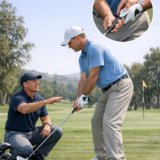
Bobby Jones holds a singular place in golf history: his blend of technical exactness, strategic course play, and rigorous mental preparation created a model that still shapes modern coaching and performance evaluation. This piece reinterprets Jones’s approach using contemporary tools-recasting period descriptions and photographs into biomechanical language, evidence-informed putting routines, and dependable tee-shot methods. The focus is on extracting the mechanical constants behind jones’s repeatability-kinematic sequencing, center-of-mass stability, and tempo control-and showing how coaches and players can implement those constants with today’s measurement devices and training systems.
Drawing on sport‑science methods, the review combines quantitative biomechanical metrics (joint angles, force‑time characteristics, and launch/dispersion data) with tactical thinking about course management and green care. Practical progressions are provided with objective benchmarks so instructors can quantify improvements in clubhead speed, shot dispersion, stroke consistency, and putting under pressure.The article also translates Jones’s decision framework-club selection, risk calculus, and routine-into scalable guidance for different ability levels and turf conditions.
By linking a historic technique too modern performance indicators,the intention is to offer a pragmatic roadmap for players and coaches aiming to improve swing synchrony,putting dependability,and tee-shot consistency. That framework supports applied instruction and empirical evaluation, enabling focused interventions that produce measurable on‑course gains.
Foundational Principles of the Bobby Jones method: Posture, Grip and Joint Alignment for Reproducible Swing Mechanics
Start by building a setup that can be repeated under pressure: establish a balanced stance with the torso tilted roughly 15-25° from vertical (measured floor to base of neck) and a knee flex of about 10-20° to permit free hip rotation. Position the ball by club: for mid‑irons place it near center or just forward; for the driver position it about 1-1.5 ball diameters inside the lead heel to preserve the intended attack angle. Select a grip that produces reliable hand alignment-Vardon/overlap, interlock, or neutral overlap-and present the hands so the two V’s formed by thumbs and forefingers point toward the trail shoulder. Maintain a relatively light grip pressure (~3-5/10)-firm enough to control the club but loose enough to allow wrist hinge. Ensure joint alignment at address: shoulders/collarbones should be square to the intended line with a subtle shoulder tilt (lead shoulder slightly lower, ~3-5°) and the lead wrist neutral or marginally bowed to favor a solid impact posture. To lock in setup consistency, try these reinforcement exercises:
- Mirror posture check: use a mirror to verify spine tilt and hip hinge; record video every 10th repetition.
- Spine‑alignment rod: run a rod down the spine to confirm shoulder‑hip‑spine alignment and prevent sway.
- Grip‑pressure progression: squeeze a soft ball between palms to internalize a 3-5/10 tension feel.
These measurable setup cues-posture,hand position,and joint alignment-create the dependable starting point Jones advocated for consistent ball‑striking.
From that setup, build a repeatable kinematic pattern that emphasizes connection and geometric consistency: maintain a stable base with an initial weight split around 50/50, coil the torso while holding spine angle, and develop lag by allowing purposeful wrist hinge on the backswing. at the transition, initiate with the hips (pelvis rotation before the shoulders) to sequence the body and keep the club on plane; most players benefit from a shallow‑to‑neutral clubhead path with a forward shaft lean and a flattened lead wrist at impact to compress the ball. For the short game, preserve spine tilt, narrow the stance, firm the lead wrist and minimize hand flipping on chips and pitches, using a descending strike for crisp contact. Typical faults and fixes include:
- Early extension (hips moving toward the ball): use a wall or chair drill to feel hip hinge and preserve posture.
- Casting/releasing early: practice towel‑under‑arm swings and half‑swings focused on impact to keep lag.
- Gripping too tightly and losing rhythm: use a metronome or ball‑drop drill to reestablish tempo.
Set concrete training targets such as reducing low‑point variability to ≤ 1 cm on impact tape,increasing center‑face strikes to > 70% during a 30‑ball sequence,and shrinking carry dispersion to 10 yards as measured on a launch monitor; these numbers provide objective progress signals for beginners and low handicappers.
Link technical work to course tactics and structured practice in keeping with Jones’s focus on fundamentals and decision‑making under pressure. Equipment factors-lie, shaft flex, and grip size-affect joint presentation and should be validated with a professional fitting so the hosel allows a square face at address without forced manipulation. Organize practice into short, focused blocks (15-30 minutes per element) rotating through full‑swing setup, short‑game contact, and pressure simulation on course: such as, 15 minutes on posture and setup drills, 20 minutes on varied short‑game lies, then six holes devoted to purposeful club selection and target management. Use situational practice to replicate wind,narrow fairways,and wet turf so players learn small adjustments to ball position,stance width,and club choice-e.g., aim to a landing area 30-40 yards short of hazards and choose clubs that provide conservative carry and predictable roll. Incorporate a pre‑shot routine and visualization: rehearse the intended flight and landing and use a breath cue to steady tempo. Cater to different learning preferences by offering video and launch‑monitor feedback for analytic players and feel‑based tools (towel, impact bag, metronome) for kinesthetic learners so posture, grip, and joint alignment reliably convert into lower scores and smarter course play.
Optimizing the Kinematic Sequence for Power and Accuracy: Pelvic Rotation, Torso Sequencing and Wrist Release Timing
The kinematic sequence is the engine of efficient power: motion should travel from the ground upward-pelvis initiates rotation, followed by the thorax, then arms, and finally the wrists and clubhead. Practically, aim for roughly 35°-45° of pelvic rotation on the backswing and 80°-100° of shoulder turn to create an X‑factor (shoulder‑to‑pelvis separation) in the ballpark of 30°-50°, storing rotational energy. Supportive setup features include modest knee flex (~15°-20°), neutral spine tilt, and stance width near shoulder width for mid‑irons (wider for the driver). Ball forwardness for long clubs and centered placement for wedges helps time release. Jones favored a simple, balanced rhythm so the pelvis could lead without tension; practice initiating the downswing with a small lateral hip shift toward the target while holding spine angle. Use these drills to ingrain the sequence across skill levels:
- Step‑through drill: perform a backswing then step the trail foot forward on the downswing to promote pelvis rotation and weight transfer.
- alignment‑stick torque: one stick along the spine to feel shoulder rotation and another across the hips to sense pelvic turn and X‑factor.
- Mirror rotation sets: three sets of 20‑second slow pelvis‑first repetitions without a club to cement the order.
Wrist release timing must follow the lower‑body and trunk rotations to convert stored torque into clubhead speed and face control. Coach players to retain wrist hinge (lag) into the downswing and to progressively uncock through impact rather than casting; a practical impact benchmark is hands ahead of the ball with slight shaft lean for irons. Targets for intermediate players include a 3-5 mph rise in clubhead speed while narrowing left/right dispersion and centering strikes on the face. Useful progressions:
- Towel‑under‑arm drill to preserve connection and stop the arms separating early.
- Impact‑bag strikes to experience forward shaft lean and delayed release without full ball flight.
- Split‑hand tempo drill (hands separated on the grip) to emphasize rotation and delayed release,returning to normal grip as timing steadies.
Equipment influences release timing: a shaft that’s too soft or too long encourages early unhinging, while correct flex and grip size support lag retention. Correct common errors-early extension, overactive hands, or over‑rotating the pelvis-by slowing the sequence, increasing hip‑lead awareness, and practicing tempo patterns (for example, a 3:1 backswing:downswing ratio).For advanced players, use launch‑monitor data (attack angle, smash factor, face‑to‑path) to set numeric goals-reduce face‑to‑path scatter to within ±3°, for example-and refine from there.
Translate technical gains into course choices through a Jones‑inspired management lens: play to safe miss zones and avoid forcing long, low‑percentage attempts. In wind or firm conditions,prefer a slightly earlier hip turn with a controlled wrist release to keep ball flight lower and more penetrating; in soft conditions or back‑pin situations allow a fuller shoulder turn and a marginally later release to maximize carry. Set on‑course practice aims-hit 8 of 10 fairways during a session or keep long‑iron carry variation within ±10 yards-and rehearse pre‑shot routines that lock in tempo and commitment. Troubleshoot in play using a quick checklist:
- Pulls/hooks: check for excessive pelvic rotation and premature release; rehearse slower hip lead and impact‑bag strikes.
- Pushes/slices: ensure the pelvis isn’t too closed and wrists aren’t blocking at impact; use split‑hand and alignment‑stick exercises.
- Fatigue‑driven timing issues: shorten the swing arc and preserve the kinematic order to keep accuracy-frequently enough the smartest scoring option when tired.
A coordinated mix of technical drilling, equipment tuning, and conservative course tactics produces measurable scoring gains and durable power improvements for beginners through low handicappers.
Driving Strategy and Launch Condition management: Tee Height, ball position, Club Selection and Shot Shape Calibration
Start with a reproducible driver setup that aligns tee height, ball position, and club choice with your intended launch profile. for many amateurs a sensible baseline is a tee that raises about 50-75% of the ball above the driver crown (~0.5-1.5 inches), a ball position just inside the left heel for neutral contact, and a club selection dictated by carry objectives rather than ego-use a 3‑wood off the tee when accuracy and a lower flight are preferable.As you move from driver to fairway wood and long irons, move the ball gradually back: 3‑wood slightly forward of center, long irons center to one ball back. Jones’s positional mindset-play to a landing area, not maximum distance-applies when hazards are in play: pick the club that produces the carry and landing angle you need. Quick pre‑shot checks for every tee shot:
- Grip pressure: steady moderate tension (~5-6/10).
- Stance width: driver stance roughly shoulder width with toes flared for stability.
- Alignment check: body parallel to the intended path; clubface aimed at an intermediate target.
Convert setup into predictable launch numbers by controlling attack angle, dynamic loft and spin. Target a small positive attack angle with the driver (~+2° to +4°) for better launch and smash factor, and expect launch angles in the ~10°-14° range for many players. Lower‑handicappers with faster speeds tend to aim for lower spin (~1,800-2,500 rpm), while higher handicaps often show ~2,500-3,500+ rpm; manage spin with loft, tee height and strike location. practice exercises to dial these values include:
- Low‑tee to mid‑tee progression: hit 10 balls from a lower tee and 10 from the target height to feel the upward strike and compare carry differences.
- Impact tape or spray check: confirm center‑face contact and adjust ball position in ½‑inch increments if strikes trend high/low.
- Smash factor target: shoot for ≥ 1.45 as a benchmark for improving amateurs and ~1.48-1.50 for lower handicaps; refine setup until numbers stabilize.
Use this feedback loop-adjust tee height, ball position or loft and remeasure launch/spin-until the swing and equipment reliably produce the desired trajectory for a variety of holes.
Attempt shot‑shaping deliberately as a tactical instrument, not an accident.Understand the face‑to‑path relationship: a face closed to the path yields a draw; open to the path yields a fade. Make small,repeatable tweaks-move the ball up or back ~½-1 inch-to bias launch and curvature without major swing changes,or choose a different club (e.g., 3‑wood vs. driver) to reduce curve and lower trajectory into wind.Practice these targeted calibrations:
- Gate + alignment‑rod drill: set rods to encourage an in‑to‑out path for a draw or an out‑to‑in path for a measured fade; hit 20 reps to build motor memory.
- Wind simulation routine: on breezy days alternate driver and 3‑wood to learn carry vs. roll differences and log results.
- Two‑step pre‑shot: visualize the landing and bounce, then execute-mirroring Jones’s preference for conservative, thoughtful play under pressure.
If you slice, check face angle at impact, strengthen the grip or shallow the path; if you hook, open the face slightly, temper the release and reassess ball position. Set short‑term goals (e.g., cut dispersal radius by 20 yards within four sessions) and long‑term targets (e.g., raise driving accuracy to 60% fairways) and fold these technical, equipment and mental elements into weekly practice blocks to turn launch‑condition gains into lower scores.
Precision Putting Protocols Informed by Bobby Jones Philosophy: Reading Principles, Stroke arc Control and Distance Management Drills
Start putting practice by adopting Jones’s insistence on careful visualization and a consistent routine for reads: identify the main fall line (the low point between ball and hole) first, then layer in modifiers-grain, slope percentage and wind. Confirm high and low points by looking at the putt from behind the ball, behind the hole and from the side; on moderate slopes a 2-4% grade can introduce meaningful break on a 10-12 ft putt on a typical stimp, so adapt aim and pace accordingly. Standardize reading with these checkpoints:
- Eye over the ball: align your dominant eye over the target line to reduce parallax errors.
- Ball position: slightly forward of center to encourage a shallow low point and truer roll.
- Line confirmation: select an intermediate aim point (leaf, blade, tee) at the low spot and commit before stroking.
Move from the read to a compact, repeatable routine: breathe, picture the finish, and commit to pace-anchoring out doubt through preparation as Jones recommended.
With reads and setup steady,focus on controlling the stroke arc and keeping the face stable so the intended line becomes repeatable.Favor a pendulum motion with minimal wrist action and an inside‑to‑square‑to‑inside putter path; for many players, an arc width of ~2-4 inches at the widest point suits the natural shoulder arc.Drills to reinforce arc and face control:
- Gate drill: place two tees or cones just wider than the putter head and make 20 putts without touching them to improve squareness at impact.
- Arc‑rod drill: align a rod across the toes and stroke with a second rod or cord to sense the inside‑square‑inside path and consistent handle travel.
- Metronome tempo drill: set a metronome to 60-80 bpm and use a 3:3 rhythm (three counts back/three through) to stabilize timing and avoid deceleration.
Typical errors-excess wrist hinge, early acceleration, and head movement-are corrected by shortening stroke length, increasing awareness of putter shaft tension, and practicing compact strokes that prioritize face control over brute force.
Translate arc and read proficiency into robust distance control and course‑level strategy-areas where Jones’s methodical conservatism pays dividends. Set practice targets such as leaving 80% of lag putts from 20-40 ft within 3 ft and use these drills:
- Ladder drill: place balls at 3, 6, 9, 12, 18 and 25 ft and aim to leave 8 of 10 inside a 3‑ft circle for each distance.
- One‑routine approach: use the same pre‑putt sequence for every stroke to reduce variability under pressure and when wind affects the green.
- Wet/firm simulation: practice adjusting pace for different stimp readings-use ~10-20% more force on firm, fast greens and proportionally less on wet surfaces.
Strategically,favor two‑putts (leave inside 6 ft when attacking pins) and avoid aggressive attempts on unfamiliar fast greens. Remember the Rules allow repair of ball marks and spike scars-use that to ensure a predictable roll. By combining Jones‑style routine discipline with measurable drills, proper putter loft (~3°-4°), lie and grip choices, and situational judgment, golfers from novices to low handicappers can systematically lower three‑putt rates and improve scoring.
Integrating Course Management and Mental Preparation: Preshot Routine, risk Assessment and Tactical Hole Planning
Build a pre‑shot routine that fuses mental preparation and physical checks: take a calming breath to reduce heart rate, visualize the shot’s shape and landing, then approach the ball with a concise alignment confirmation.Core setup parameters include feet roughly shoulder‑width (~12-14 in / 30-36 cm for mid‑irons, wider for driver), a moderate spine tilt (~3-5° for woods), and ball position shifting from slightly left‑of‑center for short irons to ~2-3 in (5-8 cm) inside the left heel for the driver. Embrace Jones’s maxim-play to where you can score-by selecting the target and club before practice swings; this reduces indecision and aligns intent with action. Aim to make the routine roughly 10-15 seconds long on average and rehearse it until it becomes automatic under simulated pressure; that consistency will reduce launch variability and improve fairway‑hit rates.
Next, make risk assessment and hole tactics habitual by combining yardages, lie, wind and hazards with your club‑specific dispersion data. Use precise front/middle/back numbers (for example, 145/160/175 yds) and account for your typical club carry and standard deviation-if your 7‑iron averages 155 ±8 yards base your target accordingly rather than textbook distances. Apply the Rules where necessary: when a penalty area or unplayable lie is highly likely, include penalty options in expected‑score calculations. Jones taught that minimizing the worst outcome frequently enough lowers expected strokes-choose the higher‑percentage play (layup vs. heroic carry) when risk grows. Before each shot, run through these checkpoints:
- Target selection: precise flag location or safe aim point (e.g.,center of the green);
- Club selection: factor wind,elevation,and firmness (+/‑ 10-20% adjustments as needed);
- Contingency: plan where to miss and why (up/down probability from the miss area).
Train decision skills with constrained range sessions-simulate hole scenarios (e.g., “must miss short of water and be inside 60 yds to the pin”) and track scoring outcomes to develop a data‑informed risk/reward sense.
Bind the mental plan to execution with short‑game drills and in‑round emotional control so tactical choices turn into lower scores. Practice routines that produce repeatable contact: the putting gate (two tees creating a 3-5 mm channel to force square contact), a clock‑face chipping progression (chip to shrinking targets at 5, 10 and 15 yards to refine trajectory), and an alignment‑stick tempo drill for consistent transitions and hip rotation (target ~45° hip turn on full shots and ~30-35% body rotation for punch shots). Common mistakes include grip tension above ~6/10, aiming at the flag rather of the landing zone, and ignoring green firmness for spin expectations-correct by deliberately reducing grip pressure to ~4-5/10, rehearsing one practice swing to feel line, and practicing varied lies to observe ball reactions. Set measurable goals-reduce three‑putts to fewer than 2 per 18, or raise up‑and‑down success to 60% in 8-12 weeks-and use video, launch‑monitor feedback, and on‑course validation to quantify progress while adapting drills for different learning styles and physical capacities.
Evidence Based Practice Regimens and Targeted Drills: Progressive training Blocks,Tempo Modulation and Quantitative Performance Metrics
Adopt block‑based training that secures setup and equipment consistency before introducing variability. Block 1 (2-3 weeks): prioritize posture and address-aim for spine tilt ~10-15°, a full‑swing shoulder turn of ~80-100°, and neutral grip pressure (~3-4/10)-and confirm equipment specs such as shaft flex and lofts (e.g., PW ~44-46°, SW ~54-56°). Block 2 (4-6 weeks): layer in kinematic sequencing and impact geometry-target a forward shaft lean of 5-10° at iron impact and a hip:shoulder ratio near 1:2 using slow‑motion video. Follow with 2-4 weeks of on‑course simulation to transfer mechanics under realistic pressures. Structure practice with these checkpoints:
- Setup checks: ball position, foot width (shoulder width for full swings, narrower for wedges), and balanced weight distribution (approximately 55/45 favoring the lead side for right‑handers).
- Foundational drills: alignment rod under the lead armpit, impact bag work for compression feel, and short‑range chip ladders for contact consistency.
- Progression targets: halve three‑putts in 8 weeks, increase fairways hit to >60% for mid‑handicappers, and improve approach proximity by ~20%.
Emphasize tempo as a deliberate learning variable: establish a consistent backswing:downswing ratio (commonly ~3:1) and train with a metronome (e.g., set to 60 BPM, take the backswing over three beats and start the downswing on the fourth). Beginners should begin with half‑swing tempo drills until the downswing order (hips → torso → arms → clubhead) becomes automatic. Advanced players can mix tempo-alternating fast and slow cycles and using overload/underload clubs-to build adaptability and speed control. Apply tempo concepts to the short game by calibrating stroke length to distance: for putting, a 20‑ft putt may correspond to ~8-12° of arc; for bunker shots maintain an open face and ~60-70% acceleration through the sand. Address common faults (casting, early extension, overactive hands) with targeted corrective drills and feedback. Example practice tools:
- Metronome 3:1 drill: full swings with a 60 BPM metronome-three beats back, one beat transition.
- Impact‑feel ladder: 10 shots at 50% speed, 10 at 75%, 10 at 100% to test consistency across speeds.
- Short‑game clock drill: chips to concentric rings at 5, 10 and 15 ft to train distance control and landing‑zone judgment.
Measure improvement with objective performance indicators and tie them back to strategy, honoring Jones’s emphasis on rhythm, conservative management, and short‑game precision. Track metrics such as proximity to hole (feet), strokes‑gained (approach/putting/tee), fairways hit (%), and greens‑in‑regulation (%)-establish baselines across several rounds, set incremental goals (e.g., improve approach proximity by ~20% in 8-12 weeks), and re‑test under varied conditions. On course, apply positional thinking: when the pin is tucked with crosswinds, aim for the center of the green to maximize up‑and‑down chances; when a forced carry exists, select a club that gives a 10-20 yard margin beyond the hazard to reduce decision stress. Build mental and situational readiness with pre‑shot routines, visualization and constrained, timed practice to simulate competitive stress. Use a post‑round troubleshooting checklist to convert data into training choices:
- Identify: largest negative variance versus baseline (e.g., putting or approach).
- Assign: a drill block to correct it (tempo work, impact drills, short‑game ladder).
- Measure: retest in three rounds and adjust training load based on the results.
These steps form an evidence‑informed path connecting mechanics, tempo, and measurable metrics to sustainable scoring gains across ability levels.
Equipment Optimization and data Informed Adjustments: Shaft Characteristics,Loft Selection and Launch monitor Interpretation for Translating Technique to Score
Match shaft and head characteristics to the athlete rather of forcing the swing to conform to the equipment. Begin by collecting baseline values-clubhead speed, ball speed, attack angle and an initial launch angle-on a launch monitor. Many amateurs record driver speeds in the 80-105 mph range; aim for a launch angle appropriate to speed and spin (commonly in the low‑teens for many players). Use this data to choose shaft weight, flex and kick point: typical graphite driver shafts span ~45-75 g, with more flexible options for slower swings and stiff/X‑stiff for faster players. A low kick point raises launch for slower swingers; a high kick point tempers launch for high‑speed players. Operationalize these checks in lessons:
- Setup checkpoint: ball position for driver inside the left heel (R‑hander), spine tilt ~6-10° away from the target, and balanced forward pressure to allow a positive or shallow attack angle.
- Drill: incremental shaft feel test-hit five balls with a shaft 10 g lighter/heavier and compare smash factor and dispersion; target ~1.45-1.50 smash with the driver.
These steps align with Jones’s simplicity principle: measure, simplify, repeat, then refine equipment to support the technique that consistently yields desirable launch and dispersion.
Next, optimize loft selection and gapping so the bag produces consistent scoring choices. Run a gapping session on a launch monitor and log carry distance, peak height, descent angle and spin rate. For amateurs aim for roughly 8-12 yards between clubs and loft steps of ~3-4° across irons,with wedges often spaced ~4° to maintain predictable scoring options. Such as, if a 7‑iron carries 150 yd, configure lofts and shafts so the 8‑iron carries ~142 yd and the 6‑iron ~158-162 yd, avoiding overlap and simplifying choices under pressure. Common pitfalls include optimizing for total distance rather than carry (problematic over hazards or to elevated greens) and ignoring wedge spin/launch in firm conditions. Fixes:
- Drill: gapping ladder-hit five balls with each club, average carry and SD, then tweak loft, shaft or ball until gaps align with targets.
- Course scenario: into strong wind, pick a club that launches lower and generates ~20-30% less spin; practice punch and low‑launch options to reproduce that profile.
Adopting a positional,variance‑reducing mindset like Jones’s turns precise gapping into tangible scoring advantages.
Read launch‑monitor outputs as diagnostic cues that guide practice and on‑course decisions. focus on a few core metrics: smash factor (ball speed ÷ club speed) – aim ~1.45-1.50 for driver and ~1.30-1.40 for irons; spin rate – drivers often ~1,800-3,000 rpm depending on conditions and wedges ~6,000-9,000 rpm; and attack angle – positive for driver (~+1° to +4°) and negative for irons (~‑4° to ‑8°). Use these numbers to define drills and goals:
- Attack‑angle drill: ladder of tee heights and ball positions to change attack angle in ~0.5° steps; monitor resulting launch and spin until the desired profile is consistent.
- Shot‑shaping drill: combine face‑to‑path cues with rods and launch‑monitor feedback to produce controlled draws/fades while holding dispersion to a 15-20 yard window at 150-200 yd.
- Troubleshooting: if driver spin exceeds ~3,000 rpm, try a touch more loft or a shaft with a lower kick point; if smash factor is low (<1.40), simplify takeaway and work lag control with progressive half‑swing drills.
Pair these technical adjustments with Jones‑style routines-deliberate pre‑shot choices, conservative aiming, and steady tempo-to bridge lesson work and measurable on‑course scoring improvements for players from beginners learning carry control to low handicappers fine‑tuning distance and dispersion for competition.
Q&A
Note: the brief web results supplied with the original prompt reference other uses of the name “Bobby” (a film and a media personality) and do not relate to Bobby Jones or the golf content below. The following Q&A is a professional synthesis grounded in coaching practice,biomechanics and historical descriptions of Bobby Jones,not drawn from those unrelated results.
Q1: who was Bobby Jones and why does his method matter to modern golfers?
A1: Bobby Jones (1902-1971) was an american amateur who dominated golf in the 1920s and is celebrated for his fundamentals, strategic thinking and consistency.His approach matters today because it codified repeatable fundamentals-balance, rhythm, face control and course management-that align with modern biomechanical and performance‑analysis findings as primary levers for reducing variability and improving scoring.
Q2: What defines the “Bobby Jones Method” across swing, driving and putting?
A2: Central features include:
– A rhythmical, fundamentally sound swing emphasizing connection between body and club.
– Controlled, repeatable face control at impact rather than unrestrained power.- Positional driving that values angles and layups over raw distance for scoring.
– A putting approach that prioritizes green reading, speed control and a minimal‑wrist stroke.
– A disciplined pre‑shot routine and mental habits that turn practice into competitive reliability.
Q3: From a biomechanical lens, what mechanics should players prioritize?
A3: Key mechanical priorities:
– A stable base and balanced posture to rotate around a consistent center of mass.
– Adequate shoulder rotation and controlled hip separation to generate torque without lateral collapse.
– Proper kinematic sequencing: takeaway, maintained wrist angles, a lower‑body‑led transition and an inside‑to‑square‑to‑inside path at impact.
– Consistent face presentation achieved through coordinated forearm/torsal rotation and timed release.
– Steady tempo and rhythm to conserve timing and shrink dispersion.
Q4: How should driving be approached under this method-principles over power?
A4: Driving under this paradigm:
– Favor accuracy and the appropriate attack angle for the hole (e.g., lower spin/forward launch for rollout when suitable).
– Use a controlled, repeatable tempo to limit lateral dispersion and accept modest distance tradeoffs for accuracy gains.
– Fit launch conditions (shaft flex, loft, ball) to the player’s optimal launch/spin window as measured on a monitor.
– Apply course sense: pick fairway position over maximal carry when hazards demand it and play to a preferred miss.
Q5: Which putting strategies reflect Jones’s philosophy?
A5: Putting priorities:
– A uniform setup and alignment sequence for every putt and focusing on intended speed as the primary determinant of success.
– A pendulum‑style stroke with minimal wrist breakdown and stable upper body; employ a small forward press only if it improves feel.- An integrated read that considers slope, grain and wind and then commits to a single line and pace.
– Drill work emphasizing lag control and holing short putts under simulated pressure.
Q6: What drills most effectively translate the method into measurable gains?
A6: High‑value drills:
– Impact bag / towel drill for a centered impact sensation and better compression.
– Gate drill near the clubhead to encourage a consistent inside‑to‑square‑to‑inside path.
– Clockface/metronome tempo drills to fix backswing:downswing timing (e.g., 3:1 rhythm).
– ladder drills for driving and putting to practice distance control and scaling.
– Pressure‑simulated putting routines to train holing under stress.
Q7: How should progress be quantified?
A7: Use these metrics:
- Strokes‑Gained (approach, off the tee, putting) for performance attribution.
– Fairways hit %, GIR %, and proximity‑to‑hole on GIR.
– Dispersion measurements-lateral deviation and carry‑SD from a launch monitor.
– Putting stats: putts per GIR, 3‑putt rate, short‑putt make % (3-6 ft), and average lag distance left.
- Compare pre/post intervention metrics over a 4-8 week window to gauge transfer.
Q8: What common technical faults arise when adopting this method and how to correct them?
A8: Typical issues and fixes:
– Over‑swing and tempo breakdown → use metronome and shorten backswing.
– Early extension/posture loss → posture retention drills and strength work for posterior chain.- Face being open/closed at impact → slow‑motion impact reps and alignment‑rod feedback.
– Poor putting speed → repetitive lag drills and immediate feedback aids.
Q9: How does course management fit with the Bobby Jones ethos?
A9: Course management under Jones’s model stresses percentage plays that maximize expected value, place the ball into favorable angles, minimize high‑penalty spots and adapt strategy to current form (e.g.,switch to 3‑wood when the driver is unreliable).Q10: What role does conditioning and injury prevention play?
A10: Conditioning essentials:
- Mobility (thoracic and hip rotation) for safe shoulder turn.
– Strength and endurance (core, glutes) to sustain posture and sequencing.
– Flexibility and joint health to avoid compensations.
– Regular warmups and movement screens to detect asymmetries and guide corrective exercises.
Q11: How should a coach phase practice into competition readiness using this method?
A11: A pragmatic progression:
– Phase 1 (2-4 weeks): diagnostics, posture, grip, tempo basics and short‑game speed work.
– Phase 2 (4-8 weeks): integrate sequencing and directional control, use launch‑monitor and short‑course scenarios.
– Phase 3 (ongoing): pressure practice, metric monitoring, equipment refinement and maintenance of conditioning.
– Review performance every 4-8 weeks and recalibrate objectives based on trends.Q12: What evidence‑based principles support these recommendations?
A12: Foundations include motor‑learning theory (blocked → random, variable practice), biomechanics (kinetic sequencing and angular momentum), performance analytics (strokes‑gained and launch‑monitor diagnostics), and sports psychology (pre‑shot routines and visualization).
Q13: What timeline can recreational players expect for measurable gains?
A13: Realistic timelines:
- Short (4-8 weeks): improved consistency-reduced dispersion and fewer three‑putts.
– Medium (3-6 months): likely scoring drops of 1-3 strokes as mechanics and strategy cohere.
– Long (6-12+ months): sustained handicap reduction with integrated conditioning and course sense.
Results depend on starting skill, practice frequency and feedback quality.Q14: Any cautions using the Bobby Jones Method with modern equipment and swings?
A14: Caveats:
– Historical accounts of Jones’s swing are descriptive; modern gear (club heads, shafts, balls) alters launch/spin so adapt rather than imitate exact aesthetics.
– Prioritize functional outcomes over replicating period motions-emphasize rhythm, face control and decision logic.- Customize to individual anatomy and athletic capacity; coaches should individualize drills and expectations.
Q15: Practical first steps to begin this week?
A15: First‑week plan:
– Capture baseline data (short swing video, basic putting test, key stats: fairways/GIR/putts).
– Set a simple pre‑shot routine and a tempo target (use a metronome).
– Schedule three focused 20-30 minute sessions: one for short game/putting, one for impact/short irons, one for driving/placement.
– Keep a practice log and subjective notes to inform the next structured phase.
Conclusion
This article reworks historical insight, biomechanical reasoning and coaching practice into a practical framework inspired by the “Bobby Jones Method” for improving swing, driving and putting. Emphasizing kinematic sequencing, consistent setup and alignment, tempo control, and stroke mechanics-paired with deliberate, feedback‑rich training and on‑course decision making-allows players and coaches to convert technical understanding into measurable scoring improvement. The core thesis: mastery comes from coupling objective measurement (launch and putting data, video kinematics, strokes‑gained analysis) with disciplined practice architecture focused on reproducibility and transfer to competition.
For coaches and players, begin with a baseline assessment, set time‑bound targets, and choose drills that isolate desired motor patterns. interventions must be individualized, monitored with quantitative metrics, and rehearsed under realistic pressure. For researchers and developers, opportunities exist to refine biomechanical models, validate long‑term interventions, and study how modern measurement tools speed skill acquisition without losing the strategic clarity exemplified by Bobby Jones. Implementing this method means committing to an iterative cycle-assess, intervene, measure, adapt-and when executed with rigor it produces both technical gains and smarter scoring decisions: the hallmark of elite performance.
Note on search results: the initial web snippets provided with the request referenced unrelated items named “Bobby” (a film and a media figure) and not Bobby jones or golf resources. If desired, I can perform a targeted literature search for primary sources on Bobby Jones, biomechanical analyses of his technique, or recent empirical studies to expand and support the recommendations above.

Bobby Jones Unleashed: Modern Secrets to a Legendary Swing, putting Precision & Driving Power
Channel the spirit of Bobby Jones with a modern, data-driven approach to swing mechanics, putting, and driving. This guide blends timeless fundamentals with biomechanics, measurable training, and practical drills so golfers of every level can build a more consistent swing, dial in putting, and add controlled power off the tee. Keywords you’ll find naturally throughout: golf swing, putting, driving, short game, swing mechanics, tempo, clubhead speed, launch angle, green reading, and course management.
Why Bobby Jones Still Matters to Modern Golfers
Bobby Jones’ career emphasized fundamentals: balance, tempo, wedge precision, and mental control. Translating those principles into modern coaching means adding biomechanics, launch-monitor feedback, targeted drills, and a deliberate practice plan. The result: improved ball striking,sharper putting,and more reliable distance on the tee.
Swing Mechanics: Build a Legendary, Repeatable Golf Swing
Core principles (apply these every session)
- Balance first: Maintain a centered pressure through the feet – 60/40 at address shifting to 70/30 on the follow-through in full swings.
- Stable base, mobile torso: Let the hips initiate the downswing while the upper body unwinds to create separation (the stretch in the kinetic chain).
- Steady tempo: A consistent backswing-to-downswing rhythm reduces mishits – aim for a 3:1 or 2:1 backswing-to-downswing time ratio depending on club length.
- Clubface control: Square the face at impact through proper wrist set and forearm rotation rather than flipping with the hands.
Biomechanics applied to the Bobby jones method
Modern motion-capture and biomechanics research emphasize:
- Ground reaction forces: Efficient power begins with the feet – drive into the ground to create upward and rotational force.
- Sequencing (kinematic chain): Hips → torso → arms → hands → clubhead. Practice drills that reinforce proper sequence.
- Spinal angle and rotation: Maintain your spine tilt through impact to preserve launch and control spin.
Practical swing drills
- In-to-out path drill: Place an alignment stick just outside the ball pointing to the target. Focus on making the club pass slightly inside to square the face at impact.
- Tempo metronome drill (3:1): Use a metronome app: count 3 beats for the backswing, 1 beat for transition, and 1 beat through impact. Repeat with half swings then full swings.
- Hip-lead downswing drill: On slow-motion swings, begin the downswing by opening hips toward the target while keeping the lead shoulder closed for a split-second to create separation.
- Impact bag or towel drill: Strike a towel or soft bag to develop a firm but braced impact and reduce flipping.
Putting precision: Read Greens, Control Speed, Make more Putts
Foundational putting checkpoints
- Eye-line over the ball or slightly inside - find your sightline where the target line appears straight.
- Minimal wrist action – use a pendulum stroke from the shoulders.
- Distance control – control backswing length matched to green speed (stimp).
- Consistent pre-shot routine – fix a routine that calms the nervous system and standardizes alignment.
Putting drills for measurable enhancement
- Gate drill: Place two tees slightly wider than your putter head and stroke through without touching tees to improve path and face control.
- One-hand distance drill: Putt 10 balls with only your dominant hand to isolate the shoulder-driven stroke and improve feel for distance.
- Clock drill (short putts): Place balls at 3, 6, 9, and 12 feet around the hole and make a percentage target (e.g., 80% in nine reps).
- Stimp-based speed practice: Measure your home green or local practice green with a stimp meter or estimate: on faster greens reduce backswing length by 10-20% and practice hitting a target speed.
Mental and visualization techniques
Picture the putt in three stages: read, visualize a running ball line, and hear-yes, “hear”-the ball drop. Rehearse your stroke rhythm in a 3-5 second loop before every stroke to maintain calm under pressure.
Driving Power: Controlled Distance Without Sacrificing Accuracy
Key metrics to monitor
- Clubhead speed: Primary driver of distance - measured with radar or launch monitor.
- Smash factor: Ball speed ÷ clubhead speed – efficiency of energy transfer (ideal range 1.45-1.50 for drivers).
- Launch angle & spin rate: Optimize for your swing speed. Higher speed needs lower spin and optimal launch (usually 9-13°) for max carry.
Driving drills and programming
- Step-and-drive drill: Take a small step toward the target as you begin your downswing to encourage weight shift and increase clubhead speed.
- Overspeed training: Use lighter training clubs or caps with weighted tools safely to train faster neuromuscular firing. Keep sessions short and monitored.
- Launch monitor sessions: Two 30-minute sessions per week to track clubhead speed, launch, spin, and smash factor.Adjust loft and shaft based on data (seek a professional fitter).
Practice Plan: Weekly Progression Inspired by Bobby Jones
| Day | Focus | Duration | Key Drill |
|---|---|---|---|
| Monday | Putting & short game | 60 min | clock drill + Gate drill |
| Wednesday | Swing mechanics | 75 min | tempo metronome + Hip-led downswing |
| Friday | Driving & launch monitor | 60 min | Overspeed & Step-and-drive |
| Weekend | On-course execution | 9-18 holes | Course management drills |
Short Game & Course Management: Where Bobby Jones Excelled
Jones was renowned for his short-game creativity and course intelligence. Modern players build this through repetitive,situation-based practice and strategic thinking:
- Practice 50% of your short game from 30-70 yards with different trajectories.
- Learn to play to a target zone, not a pin – hit to safe areas to reduce risk.
- Simulate pressure by creating points systems or target-based scoring during practice.
Short-game drills
- Flop-to-pitch progression: Start with controlled 30-yard pitches and increase loft/height while maintaining consistent landing zones.
- Clock around the hole (chip edition): Chip from nine locations inside 30 feet and try to get up-and-down percentage to a target (e.g., 75%).
Data & Measurement: How to Make Progress Measurable
Track these KPIs weekly:
- Greens in regulation (GIR) percentage
- Putts per round and one-putt percentage from inside 10 ft
- Average clubhead speed and smash factor (driver)
- Proximity to hole on approach shots
Simple tracking table (example)
| Metric | Baseline | 8-week Target |
|---|---|---|
| Clubhead speed (mph) | 92 | 96 |
| Putts/round | 34 | 31 |
| GIR% | 48% | 60% |
Case Study: Amateur to low-Handicap – A 6-Month Roadmap
Example progression for a 14-handicap player using Bobby Jones-inspired methods:
- Months 0-2: fundamentals & short game – improve contact and 30-50 yard wedge control; expected putts reduced by 1-2 per round.
- Months 3-4: Swing speed & launch optimization – measured sessions to tune driver loft and shaft; clubhead speed increase of 2-4 mph.
- Months 5-6: Course management and pressure practice - translate range gains to course play; GIR and scoring start to improve.
Equipment & Fitting Tips
- Get fitted for shafts and lofts – many distance and dispersion gains come from proper fitting, not swing changes alone.
- Use a putter that promotes your natural stroke (blade for arc, mallet for straight-back-straight-through).
- Consider a short-game-focused wedge setup: 48°, 54°, 60° with bounce matching your turf conditions.
Benefits & Practical Tips
- Consistency: A Bobby-inspired approach emphasizes fundamentals that create reliable outcomes under pressure.
- Scoring: Better short-game and putting yields faster scoring improvements than distance alone.
- Longevity: focus on efficient biomechanics reduces injury risk and allows sustainable power progress.
Swift checklist to use before every round
- Warm up with 10-15 minutes of dynamic mobility (hips, thoracic rotation).
- Hit 10 wedges at progressive distances, 10 pitch shots, 15 putts (short-to-long), and 8-10 driver swings with a smooth tempo.
- Set a simple game plan – aim points, club selections for three hardest holes, and target safe zones.
Further Reading & Resources
- Work with a PGA-certified coach who uses launch monitor data.
- Use apps and devices for tempo (metronome),putting stroke analysis,and shot tracking.
- Study archive footage of Bobby Jones and modern biomechanical analyses to see timeless principles applied.
Note on the provided web search results
the supplied search results reference a film titled “Bobby” (2006) and streaming listings (JustWatch, IMDb, Amazon, Tubi). Those results refer to a movie and are unrelated to Bobby Jones, the legendary golfer. If you wanted content about that film instead, hear’s a brief summary based on those links:
- “Bobby” (2006) – an ensemble dramatic film centered on events surrounding the assassination of Robert F. Kennedy at the Ambassador Hotel; listings available on services like JustWatch, IMDb, Amazon Prime Video, and Tubi.
If you want this article exported as a WordPress post (with block markup, CSS classes, or an alternate meta title/description length), or a printable PDF practice sheet with the drills and weekly plan, tell me your preferred format and any audience specifics (beginners, juniors, seniors, or competitive amateurs) and I’ll tailor it.