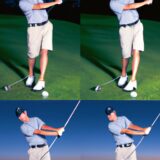
This piece blends the technical hallmarks associated with Roberto De Vicenzo and contemporary, evidence-informed training methods to build a practical roadmap for improving golf performance. Anchored in kinematic and kinetic principles for both full swings and putting, the rewrite specifies diagnostic signs for frequent technique errors, presents staged drills matched to ability, and recommends measurable performance indicators for assessing driving precision and putting reliability. Special attention is given to transferring practice gains into competitive rounds through motor‑learning and cognitive strategies, and to objective outcomes-clubhead path, face angle at impact, stroke steadiness, and green‑reading accuracy-so coaches, clinicians, and experienced players can move from evaluation to targeted intervention.
Biomechanical Principles Underpinning Roberto De Vicenzo’s Swing: Kinematic Sequencing, Weight Transfer, and Practical Prescriptions for Reproducible Contact
De Vicenzo’s movement pattern is most usefully interpreted through modern kinematic sequencing: a proximal‑to‑distal activation where the hips begin the rotation, followed by the torso, the upper arms, and finally the clubhead. In applied coaching, target roughly a 40°-50° pelvis turn on the backswing, a lead‑hip position approaching ~45° at the start of the downswing, and a shoulder rotation of about 80°-100° for full iron shots. When the segments accelerate in that order-hips, torso, arms, then club-the clubhead is more likely to be accelerating and square at impact. Novices should exaggerate slow rotations to internalize sequencing; intermediate and advanced players benefit from video analysis or inertial sensors to verify that peak hip angular velocity occurs before the torso’s peak. Also monitor spine angle: a modest forward tilt (around 20°-30° from vertical for iron play) helps maintain the swing plane and consistent low‑point control-deviations here commonly produce early extension or casting.
Reproducible contact depends on effective weight transfer. Aim to shift pressure so that about 60% of load rests on the lead foot at impact, progressing to 80%-90% at the finish. This sequencing encourages a descending strike with irons (a divot that starts roughly 1-3 inches past the ball) and predictable compression and spin. To cultivate the feel of efficient transfer and balance-consistent with De Vicenzo’s rhythm‑first ethos-use the following drills:
- Step‑transfer drill: lift the rear foot during the backswing and replant it on the downswing to exaggerate lateral and rotational transfer.
- Impact‑towel or bag drill: make controlled strikes into an impact target while focusing on forward shaft lean of about 5°-10° in mid‑iron impacts.
- Feet‑together and half‑swing progressions: narrow or abbreviated swings force correct sequencing and reveal timing faults.
Typical technical faults are lateral slide (weight remains on the trail side), early extension (rising of the torso), and casting (premature wrist uncocking). Practical corrections include shortening the backswing, exaggerating the hip turn through transition, and pausing briefly at the top during practice to re‑enforce the correct order of motion.
To convert mechanical improvements into lower scores, combine reliable contact with short‑game refinement and conservative course strategy that echoes De Vicenzo’s pragmatism. Set measurable range and on‑course targets-examples: achieve 8/10 center‑face strikes in a 30‑ball set, consistently begin the divot 1-3 inches past the ball, and tighten iron carry dispersion to within ±10 yards. Pair technical drills with situational practice (e.g., 100‑yard approaches from uneven lies, into wind, and onto firm greens). Equipment checks-correct shaft flex, lie angle, and grip size-are crucial because mismatched gear can conceal sequencing problems.Use simple setup checks and troubleshooting cues to bridge practice and play:
- Setup checkpoints: ball position, spine angle (~20°-30°), light trail‑heel pressure at address, and eye position inside the ball for irons.
- Troubleshooting steps: miss fat? shorten the swing and reinforce forward shaft lean; thin shots? verify weight forward before impact and rehearse hitting down using a tee.
On the course, favor center‑of‑green or safer targets when conditions or pin positions increase risk, keep a consistent pre‑shot routine, and use tempo work to reduce pressure‑induced breakdowns so technical gains yield score reductions.
Tempo and Rhythm Modulation: Evidence‑Based Drills to Calibrate De Vicenzo’s Timing for Increased Driving Accuracy
De Vicenzo prized a relaxed, repeatable rhythm. From a biomechanical standpoint this means enforcing consistent timing in the kinematic chain (hips → torso → arms → forearms → club). Start with a balanced address-spine tilt ~25°-30°, a full driver shoulder turn of about 90°, and a pelvis rotation in the 40°-50° range with the ball just inside the left heel for right‑handed players. Use a tempo target such as a 3:1 backswing‑to‑downswing ratio (such as, ~0.9 s backswing to ~0.3 s downswing) to favor correct sequencing and limit casting or early release. Emphasize proximal control: initiate the downswing with a decisive hip rotation and weight transfer (e.g., moving from approximately 40/60 back‑to‑front at address toward 70/30 through impact) to preserve clubhead lag and improve repeatability of a square face at contact. Common errors-overactive hands in transition and lateral sway-are best addressed by rehearsing the hip lead and feeling the club release rather than forcing it with the hands.
Scale tempo work through progressive, evidence‑backed drills appropriate for all skill levels. Begin with a metronome at 60 bpm and pattern a 3‑beat backswing / 1‑beat downswing to internalize rhythm. Add movement specificity with these practice progressions:
- Split‑hands drill: hold the trailing hand 4-6 inches down the shaft to exaggerate wrist hinge and the sensation of lag; perform sets of controlled swings to the 3:1 tempo.
- Pause‑at‑top drill: hold at the top for 0.25-0.35 s, then lead with the hips into the downswing-do 10-15 reps with a 7‑iron before progressing to driver.
- Impact‑feedback drill: use impact tape or alignment sticks to quantify strike location (aim for centered marks on >75% of attempts) and log progress weekly.
Combine these biomechanical drills with imagined pressure (e.g., simulate a crosswind tee shot) so players focus on setup and tempo rather than trying to muscle the ball. Beginners should prioritize rhythm and contact with shorter swings; lower handicaps can layer launch‑monitor metrics (launch angle, spin) and fine face control targets into practice.
Integrate tempo into club selection and mental routines to convert consistency into measurable scoring gains. Use the 3:1 tempo as part of the pre‑shot routine (two practice swings at the target tempo, then commit) and experiment with driver loft and shaft flex to find a configuration that supports a relaxed tempo-oversized stiffness often increases tension and speeds the downswing. Set pragmatic, timebound targets (e.g.,reduce dispersion to within 20 yards of centerline on 70% of tee shots in eight weeks,or raise fairways hit by ~15% through tempo‑focused work). Common troubleshooting checkpoints:
- Too‑fast transition: rehearse pause‑at‑top and a controlled early weight shift of 50-60% to the front foot.
- Open face at impact: check grip pressure and takeaway wrist set; practice slow‑motion impacts with alignment aids.
- Loss of distance despite good strikes: reassess loft/shaft and confirm full shoulder turn is being achieved without rushing.
Pair tempo drills with breathing to calm arousal (e.g., a 4‑second inhale, 2‑second exhale) and emphasize process goals (tempo, contact) not outcomes. Using measurable drills, biomechanical checkpoints, and on‑course strategy, golfers can sharpen timing, increase driving accuracy, and achieve more consistent scores.
Clubface Control and Impact Stability: Technical Cues and Progressive Training Exercises to Reduce Dispersion
begin with fundamentals that foster face awareness and repeatable impact: use a neutral to slightly strong grip (no more than a quarter‑turn from neutral), adopt shoulder‑width stance for mid‑irons and a slightly wider base for driver, and place the ball appropriately-at the hands for long clubs and just behind center for short irons/wedges. For consistent center‑face contact and narrower dispersion,aim for roughly 0°-5° forward shaft lean at iron impact and a modestly positive angle of attack for modern drivers (approximately +1° to +4°).These parameters help control dynamic loft and spin loft, which drive curvature and distance control. A steady pre‑shot routine-De Vicenzo’s hallmark-reduces variability at setup and helps keep face orientation within a manageable band (a practical target is ±2° face‑square at impact to lower lateral misses). Setup faults to correct include an open face at address, grip pressure greater than roughly 6/10, and incorrect ball position-all of which magnify face rotation through impact.
Move from static checks to dynamic contact drills that develop tactile face control and deliver measurable feedback. Start with mirror and alignment stick cues to verify a square face at address,then perform slow half‑swings into an impact bag to sense hands ahead of the ball and center‑face compression. progress with these drills (10-20 reps with video or impact tape feedback):
- Gate/tee drill: place tees just outside toe and heel and swing through to enforce a square face at impact.
- Half‑swing impact drill: controlled 50% swings emphasizing hands‑ahead contact and consistent ball flight.
- One‑hand swings: alternate single‑hand swings to isolate face control from lower body speed.
- tempo/lag routine: use a metronome cadence (roughly 3:2 backswing:downswing for these drills) to stabilize sequencing and limit early release.
Track progress with objective metrics: face‑angle variance (target ≈ ±2°), percentage of center strikes (aim for >70%), and reduction in directional dispersion (target a ~30% advancement over 6-8 weeks). Beginners should focus on gate and half‑swing exercises while intermediate and better players add one‑hand and impact‑bag velocity work to refine small face‑angle errors and shot shaping.
Translate better face control into on‑course decisions and pressure situations through scenario training and equipment checks. When crosswinds threaten, as an example, play a lower, controlled fade with one club more and a three‑quarter swing to reduce spin and lateral variability-a percentage play consistent with De vicenzo’s conservative beliefs. Confirm loft and lie with a fitter (an overly upright lie or worn grooves can disguise good technique), and experiment with shaft torque and grip size if face rotation persists. Simulate pressure with timed target sessions and small‑stakes games that require calling a target before each shot-this exposes common on‑course errors (e.g.,trying to muscle a recovery) so you can retrain by returning to practiced pre‑shot and impact routines. Use a simple on‑course checklist:
- Pre‑shot routine: align consistently and visualise the intended start line.
- Grip/pressure check: maintain steady, moderate pressure-do not squeeze.
- Attack‑angle selection: choose sweep or descending attack appropriate to the club and lie to control spin axis.
By combining technical cues, progressive drills, and strategic on‑course choices, players will improve impact stability, shrink dispersion across varied conditions, and convert technique work into lower scores.
Integrating Short Game Mastery into De Vicenzo’s System: Chipping and Pitching Protocols to Support Scoring Resilience
Start the short‑game with a compact, intention‑driven setup: adopt a slightly narrower-than‑full‑swing stance (roughly shoulder‑width or 0.5-1.0× shoulder width), position the ball just back of center for low bump‑and‑runs and mid‑stance for higher pitches, and bias weight toward the lead foot (approximately 60/40). Grip with hands slightly ahead of the ball so the shaft tilts toward the target-this promotes a descending, crisp contact. Use the clock analogy for stroke length: a typical chip may use a 7-8 o’clock backswing with stable wrists, while a controlled pitch might be a 9-10 o’clock backswing using more shoulder rotation. Match clubs to the task-choose a 48°-54° pitch wedge for bump‑and‑runs,about 56° for mid‑height pitches,and 58°-60° for flops-preferring higher bounce (around 8°-12°) in soft turf or sand to avoid digging. Troubleshooting checkpoints:
- Hands behind the ball at impact: shift grip 1-2 cm forward and keep forward shaft lean.
- excessive wrist breakdown: shorten the backswing and feel the forearms govern the stroke.
- Deceleration through impact: practice accelerating to a balanced finish on short strokes.
This streamlined setup and stroke philosophy mirrors De Vicenzo’s emphasis on reproducibility and simplicity, enabling players from novices to single‑figure handicaps to produce consistent launch and spin for scoring shots.
Apply these mechanics into course choices by matching trajectory and roll to the situation. For a front‑third pin on a firm green, select a low bump‑and‑run that uses surface run‑out; for a back‑left pin on a soft green, pick a higher‑lofted pitch and add roughly 10%-20% more swing length to increase stopping power. Wind alters club selection-play a lower controlled shot into a headwind and a slightly higher flight with less spin when the wind is behind you. Remember the rules: you may ground yoru club in the general area or fringe, but you may not touch the sand in a bunker before the stroke (Rule 12). Favor percentage plays and conservative targets in recovery situations to convert short‑game consistency into fewer strokes under pressure.
Construct measurable practice sessions with layered drills and mental routines. A practical structure is three blocks of 30-40 minutes: (1) contact and trajectory (30, 20, 10‑yard progressions), (2) green control and distance (land‑zone practice to a 10-15 ft circle), and (3) pressure simulation (10‑shot sets with scoring). Example exercises:
- Landing‑Spot Ladder: from 30, 20, and 10 yards aim for progressively smaller targets-goal: 7/10 within 6 feet at each distance in four weeks.
- One‑Hand Control: right‑hand only chips to enhance face control and touch-3 sets of 10 reps.
- Pressure Ten: string 10 consecutive chips/pitches to a 6‑ft circle; failure requires restart-builds routine under stress.
Set measurable outcomes-reduce three‑putts by ~30% within six weeks or raise up‑and‑down conversion to 50-60% for amateurs-and embed a pre‑shot routine and conservative bail‑out options so practice gains translate to resilient scoring in matches and casual rounds.
putting Mechanics and Routine Adaptations Derived from De vicenzo: Stroke Geometry, Speed Control, and Targeted Putting Drills
dependable putting starts with a consistent setup: feet about shoulder‑width, knees flexed ~10°-15°, spine tilt near 20°, and the ball 1-2 cm forward of center so the putter’s loft (~3°-4°) delifts to a near‑square face at contact. Favor a shoulder‑driven pendulum motion with minimal wrist hinge (aim for ≤5° of active wrist break) and a shallow arc-most players obtain repeatable roll with only 1°-3° of face rotation through impact. Step sequence: set posture, align eyes over or slightly inside the ball line, grip lightly (4-5/10), rock the shoulders back and through using torso motion, and rehearse equal back/through lengths for consistent distance control. This simple, feel‑based approach echoes De Vicenzo’s practical emphasis: steady setup, predictable arc, and minimal wrist action for consistent face orientation.
Once stroke geometry is stable, refine speed and green reading with progressive benchmarks. Indoors or on a practice green,work 3 ft → 6 ft → 12 ft → 20 ft,recording where misses finish past the hole; useful coaching targets are to finish within 12-18 inches past the hole for 8-12 ft putts and within 24 inches for 20 ft putts. adjust stroke length to stimp pace: on slower greens hit firmer than on very fast surfaces (increase stroke length by ~10%-15% on faster greens). For slope, adopt a two‑stage read: first aim to reach the visual low point with correct pace, then judge how the ball will track beyond that point. Train this with metronome long putts and reps on downhill, uphill and sidehill lines so you learn to separate line from pace under real conditions.
turn technique into on‑course scoring through targeted drills and routine adaptations suitable for all handicaps.Useful exercises and checks:
- Gate drill: tees outside the sole to confirm path and face are square through impact;
- Clock drill: 6-8 putts from the 3, 6 and 9 o’clock positions to build directional repeatability;
- ladder (pace) drill: five putts at 10, 15, 20 feet aiming to finish within 12, 18, and 24 inches respectively to quantify pace control.
For troubleshooting:
- head sway: if lateral head motion exceeds ~1 cm, shorten the stroke and rehearse in front of a mirror;
- Deceleration at impact: practice hitting to a spot 6-8 inches past the hole to promote acceleration through contact;
- Yips or excessive tension: experiment with choice grips (cross‑hand, arm‑lock) and use a short breathing routine (5-10 minutes) to re‑establish calm.
Set measurable putting goals (e.g., convert 40/50 eight‑footers in six weeks; cut three‑putts to <1 per round) and only adjust equipment after technique stabilizes-confirm putter length with elbow‑to‑floor measures, check loft/lie against USGA limits, and choose head weight that suits stroke tempo and typical wind exposures. Combining De Vicenzo’s feel‑first ethos with quantified drills and situational practice yields steadier mechanics, improved pace, and fewer strokes on the card.
Course Management and Decision Making Strategies: Strategic Shot Selection, Risk Assessment, and Play to Strengths for Different Skill Levels
Adopt a percentage‑based decision framework that matches shot choice to the player’s skill and physical capability: only attempt lower‑probability shots when the upside clearly outweighs downside risk. For instance, an amateur who reliably carries a 7‑iron ~150 yards should pick targets that leave a agreeable wedge distance with a 10-15 yard margin for dispersion, rather than pursuing a narrow carry that exceeds their dependable distance.Practically this means conservative clubbing where hazards are hidden (e.g., when required carry into a small landing area is >220 yards) and sensible use of the Rules-declare a provisional ball (rule 18.3) if the original might potentially be lost, and choose relief options (e.g., stroke‑and‑distance vs. back‑on‑line) by expected strokes minimization (Rule 17.1e). De Vicenzo’s consistency‑first advice translates into modern play by: (a) pre‑shot planning using yardage tools, (b) picking targets that leave preferred short‑game options, and (c) mentally rehearsing the intended shot to avoid impulsive choices under stress. Helpful setup checkpoints:
- Alignment: feet, hips, and shoulders parallel to the intended line;
- Ball position: half‑ball forward of center for a 7‑iron, shifting ~1-1.5 ball widths further forward per longer club;
- Stance width: shoulder width for mid‑irons, wider for longer clubs to maintain balance.
Integrate shot‑shaping mechanics with tactical planning so swing adjustments support the intended strategy. To shape a controlled fade or draw, manage the clubface‑to‑path relationship-target roughly 3°-5° face‑open vs. path for a gentle fade, and the inverse for a draw. Small ball‑position adjustments (1-2 ball widths) influence launch and spin. Break motion into measurable checkpoints-takeaway arc, shaft plane at the top (~30°-45° from vertical depending on stature), and impact where hands lead the clubhead by around 0.5-1.0 inch for compression.Transfer these mechanics via drills:
- Alignment‑stick gate to bias path (out‑to‑in or in‑to‑out);
- Lag‑rotation drill (half swings with a towel under the lead arm to preserve connection);
- Curvature practice: 20 intentional shots aiming for a consistent 10-15 yard lateral change at 150 yards.
Account for equipment effects-shaft flex influences timing for higher‑speed players; ball model affects spin and stopping power around greens. Common faults such as early release or lateral sway are corrected with tempo metronome work (60-70 bpm) and lower‑body stabilization exercises (step‑and‑hold reps) to build a balanced finish.
Prioritize short‑game choices and green strategy as the most efficient path to lower scores. Apply De Vicenzo’s pragmatic mindset: select the simplest, repeatable stroke that minimizes risk given the lie and target. On lag putts (20-40 ft) focus on leaving the ball inside a 3-6 ft circle rather than holing every attempt. Practice routines to improve measurable outcomes:
- Ladder drill for pace control (putts from 10-40 ft in repeated cycles);
- Gate‑putt accuracy (two tees slightly wider than putter head) to check face alignment;
- Bunker control: 50 reps from varied lips to learn open‑face technique and accelerate through sand (roughly 25%-30% more clubhead speed than a greenside chip).
Read greens by integrating Stimp, slope, and grain-when Stimp>10 expect less bite and add club on approaches; adjust ½-1 club per 10-15 mph of wind as a rule‑of‑thumb depending on direction. adopt a decision checklist: preferred miss, penalty severity, and expected score outcome; set short‑term measurable targets-e.g., keep three‑putts under 10% of holes or raise up‑and‑down conversion from 20 yards to >60% in six weeks. Linking technical refinement to conservative, situational choices is the most reliable route to turning practice into lower scores.
Translating Legacy Techniques into Modern Practice: Periodization, Measurement Metrics, and Individualized Coaching Plans for Long‑Term Improvement
Lasting improvement requires a structured training architecture: a 12‑month macrocycle split into mesocycles (6-8 weeks) and weekly microcycles that sequence technical, physical, tactical, and psychological work. Begin with baseline assessments combining on‑course statistics (greens‑in‑regulation, fairways hit, scrambling, putts per round) and launch‑monitor outputs (10‑shot averages for carry, smash factor, launch angle, spin, dispersion). Set concrete performance goals-for example,a relative increase in GIR over one mesocycle,cutting three‑putts to ≤1.5 per round, or narrowing driver dispersion to within ±15 yards of intended aim. Re‑test every 6-8 weeks with standard protocols: 10‑ball full‑swing sets, a 20‑shot short‑game proximity test, and a 9‑hole simulation to capture strokes‑gained components. Using these objective measures lets coaches turn legacy cues into data‑driven adjustments rather than relying on feel alone.
Translate classical cues-De Vicenzo’s rhythm and “the next shot” mentality-into precise coaching actions. reinforce setup fundamentals (spine angle ~15° forward tilt, knee flex ~15°, ball positions from one ball inside the left heel for driver to center/slightly forward for short irons) and a hands‑ahead address for irons (~1-2 cm) to encourage compression. Emphasize a controlled takeaway, lower‑body stability producing a hip turn of about 30°-45°, and a shoulder turn near 80°-90° for full swings to secure the intended kinematic sequence. Match equipment to measured launch: target a driver launch of 10°-14°, spin in a practical band (often cited ~1,800-3,000 rpm depending on player and conditions), and a smash factor above 1.45 for efficient energy transfer. Practice tools include:
- Gate drill for square face path;
- impact bag to feel compression and shaft lean;
- Towel under arms to preserve connection and limit casting;
- Step‑through drill to rehearse correct weight transfer.
Scale intensity by ability: beginners concentrate on setup and repeatable contact; low handicaps use the same drills at higher speed and under pressure to refine shaping and spin control.
Design individualized coaching plans that blend periodization, on‑course strategy, and mental skills. A sample weekly prescription for serious amateurs might include 3-6 practice sessions with 2-3 technical sessions, 2 short‑game/putting sessions, and one simulated pressure/on‑course session. Typical weekly volumes range from 200-400 purposeful swings plus at least 60 minutes of focused short‑game work. Use specific KPIs per session (e.g., 10 consecutive wedges inside 10 ft from 50 yards, average chip proximity under 6-8 ft, or 8/10 drives inside target cones). Actionable corrective steps for common faults:
- Over‑the‑top: slow the transition and rehearse a one‑piece takeaway to shallow the path;
- Casting/early release: impact‑bag repetitions and half‑swings with delayed release;
- Poor green reading/three‑putts: implement a putting clock drill and practice speed reads from multiple lies using the hold‑and‑watch method.
Include situational modules-wind play, hazard management, match‑play tactics-so technical improvements convert directly to lower scores. Combining objective monitoring, targeted drills, and individualized periodization preserves De Vicenzo’s enduring principles while applying modern metrics to secure sustainable gains.
Q&A
Below are two separate Q&A sets. The first is a concise, professionally styled Q&A that complements the article “Unlock Winning Techniques: Master Swing & putting with Roberto De Vicenzo.” The second clarifies that separate web search results reference a fintech firm named “unlock” (unrelated to the golf content) and summarizes those search results.
Part A – Q&A for “Unlock Winning Techniques: Master Swing & Putting with Roberto De Vicenzo”
(Style: academic; Tone: professional)
Q1. What analytical approach does this article use to evaluate De Vicenzo’s swing and putting?
A1. It applies an integrated framework combining biomechanics, motor‑learning principles, and applied course strategy. Biomechanics decomposes segmental timing and club kinematics; motor learning shapes drill design (emphasizing deliberate,variable practice with feedback); and course strategy connects technical skill to decision making in variable conditions.
Q2. Which biomechanical traits of De Vicenzo’s play are highlighted as central to performance?
A2.The rewrite stresses rhythmic tempo, balance throughout the stroke, efficient proximal‑to‑distal sequencing, and a compact economy of motion that favors repeatable impact conditions over maximal exertion-traits that collectively reduce face variability and lateral dispersion.
Q3.How are those biomechanical observations converted into quantifiable targets?
A3. Recommendations include measurable checkpoints-pelvic and torso rotation ranges (via slow‑motion video or sensors),acceptable head/COM excursion thresholds,repeatable shaft‑plane angles at key moments,and impact metrics (face angle,attack angle,launch/spin) from launch monitors-to guide iterative refinement.
Q4. Which drills are suggested to instill De Vicenzo‑style traits?
A4. Representative drills: tempo metronome (3:1 timing), towel‑under‑arms for connection, impact‑bag or towel strikes for compression and forward shaft lean, segmented slow‑motion sequencing with pauses, and one‑plane/low‑hand path drills to promote a compact arc.
Q5. How does the article treat putting and De Vicenzo’s reliability on the green?
A5. Putting is framed as a precision task where pace control and a pendulum shoulder stroke with minimal wrist action ensure repeatable roll. Emphasis is on consistent setup, sweet‑spot contact, and pre‑shot routines that lock in tempo and reads to reduce three‑putts.
Q6. What putting drills and protocols are recommended?
A6. Gate drills for path/face verification, ladder drills for pace (progressive distances), clock drills for directional consistency under pressure, green‑speed calibration procedures, and deliberate blocks (e.g., 30 focused strokes) with objective feedback (video, mirrors, or launch data).
Q7. How should recommendations be adapted across skill levels?
A7. Beginners: prioritize fundamentals, short focused sessions, and rhythm/contact work. Mid‑handicaps: add sequencing drills and basic tech feedback.Advanced players: use launch monitors,pressure simulations,and shot‑level analytics (strokes‑gained concepts) to refine marginal gains.
Q8. which metrics are proposed to assess transfer from practice to play?
A8.Outcome and process metrics: fairways hit, GIR, strokes‑gained components, approach proximity, putting averages and one‑putt percentage, and practice‑derived values like face‑angle consistency and launch SD.Longitudinal tracking and periodic standardized tests validate transfer.
Q9. How are tactical and cognitive strategies integrated with technical work?
A9. Technical training is paired with deliberate decision frameworks-pre‑shot planning, conservative target selection on risky holes, speed control priorities on greens-and cognitive routines (visualization/checklists) that reduce stress‑related variability.
Q10. What role does technology play in the regimen?
A10. Technology provides objective measurement and accelerated feedback: high‑speed video, launch monitors, pressure mats, and shot‑tracking platforms. The article advises blending tech data with perceptual training and warns against overdependence at the expense of feel.
Q11. How should practice sessions be structured for efficient learning?
A11.Use distributed, deliberate sessions with a warm‑up, focused technical block, a transfer block (on‑course or simulated), and reflective analysis. Interleave shot types and incorporate variability to improve adaptability.
Q12.What common errors and remedies are identified?
A12. Errors: misaligned address, overactive wrists in putting, early extension, lateral sway, and poor tempo. Remedies: alignment aids, stabilizing drills (towel/mirror), metronome tempo work, and segmented corrective repetitions with immediate feedback.Q13. Are there injury‑prevention recommendations?
A13. Yes-introduce load progressively for resistance work, prioritize hip and thoracic mobility to protect the lumbar spine, warm up dynamically before high‑intensity sessions, and monitor load and pain with appropriate medical referrals when needed.
Q14. How is the article’s guidance evidence‑based?
A14. The article synthesizes established biomechanics and motor‑learning concepts and aligns them with observational analyses of De Vicenzo’s technique, proposing empirical validation through pre/post metrics and regular monitoring.
Q15. What is a recommended 12‑week roadmap based on the article?
A15. Weeks 1-2: diagnostic testing and baseline metrics; Weeks 3-5: foundational tempo, alignment, and putting work; Weeks 6-8: progressive drills, variability, and launch‑monitor targets; Weeks 9-10: on‑course simulations and pressure work; Weeks 11-12: consolidation, metric review, and maintenance planning.Part B – Q&A regarding the web search results (“Unlock” fintech)
Q1. Are the supplied web search results relevant to the golf article?
A1. No. The search results reference a fintech company called “Unlock” offering home equity agreements-not golf instruction or biomechanics.
Q2. What do the search links describe?
A2. They describe Unlock’s HEA product and platform-lump‑sum capital in exchange for a share of future home value,typically with no monthly payments and terms up to 10 years-and include information and applicant/login pages.
Q3. Should those fintech pages be used as sources for the golf content?
A3.No. They are unrelated; use sport‑science, biomechanics, and coaching literature when substantiating claims in golf‑specific material.
If helpful, I can expand the Q&A with citations to peer‑reviewed biomechanics and motor‑learning literature, convert the Q&A into a printable practice planner tailored to a specific handicap, or assemble an annotated bibliography supporting the training recommendations.

Swing Like a Champion: Roberto De Vicenzo’s Proven Secrets for Perfect Drives & Unstoppable Putting
Who Roberto De Vicenzo Was – and why His Methods Matter
Roberto De Vicenzo is widely respected as one of golf’s most consistent and thoughtful players. His legacy is less about flashy power and more about fundamentals: balance, tempo, simple setup, sound course management and an unshakeable putting routine. Whether you’re a beginner or a low-handicap player, De Vicenzo’s principles can be translated into measurable practice and immediate scoring advancement.
Core Principles for a Championship Swing
- Simplicity over complexity: Keep your grip, alignment and posture repeatable every shot.
- Tempo and rhythm: Smooth backswing and accelerated but controlled transition too the downswing.
- Rotation, not flipping: Use torso rotation to generate clubhead speed rather than hand or wrist manipulation.
- Balance and spine angle: Maintain spine tilt through impact for consistent ball-striking.
Basic Setup (Daily checklist)
- Feet shoulder-width for a mid-iron; slightly wider for driver.
- grip neutral-pressure 4/10; check grip rotation only slightly.
- Ball position: center for short irons, slightly forward for driver.
- Posture: slight knee flex, hinge at hips, maintain spine angle.
- Aim: pre-shot alignment routine-feet,hips,shoulders parallel to target line.
Driving: Power Without Compromise
De Vicenzo’s driving secret was that he prioritized accuracy and repeatability over raw distance.Use these technical and mental cues to turn drives into scoring opportunities.
Driving Mechanics
- Wide stance + balanced coil: Create a stable base to allow a full shoulder turn without lunging.
- Controlled weight shift: 60/40 backswing to down swing into a balanced finish.
- Maintain lag: Let the hands release naturally; avoid casting the club early.
- Strike on the upswing: With the driver,tee height and forward ball position enable a shallow angle of attack for more roll.
Driving Drill: The Coiling Towel (Measurable)
- Place a small towel under your trail armpit.
- Make 10 slow swings focusing on keeping the towel in place – this trains connected rotation.
- Goal: After 5 practice sessions, keep towel in place on 9/10 swings at full speed.
Putting: Routine, Feel & Unwavering Focus
Putting was a cornerstone of De Vicenzo’s game.He emphasized routine and feel over fancy techniques. The following steps reflect his ideology and modern putting science.
Putting Fundamentals
- Routine first: Pre-putt read,alignment and two practice strokes with the same cadence each time.
- Face control: Square the putter face at impact – a slight face-first stroke can improve distance control.
- Distance vs. line: Prioritize distance control on long putts; line is secondary if pace is wrong.
- Eye position: aim to have your eyes just over or slightly inside the ball-helps visualizing line.
Putting Drill: Clock Drill for Feel (Progress Tracking)
- Place 8 balls around a hole at 3-4 feet (clock positions).
- Put each ball in sequence; record how many you make.
- Goal: move from 5/8 to 7/8 within a week. Increase to 6-8 feet onc achieved.
Biomechanical Insights (Why His Techniques work)
Translating De Vicenzo’s habits into biomechanical language helps players of all levels adopt his secrets reliably.
- Energy transfer: Good swing rotation stores elastic energy across the torso and releases it via the hips – efficient power,reduced injury risk.
- Stability vs. mobility: Stable lower body with a mobile upper body allows consistent strike and directional control.
- Neuromuscular patterning: Repetition of a short, repeatable routine trains the brain to execute under pressure – the same principle applies to putting routines.
Course Management: Play Like De Vicenzo
De Vicenzo’s strategic edge came from playing to his strengths – hitting fairways and relying on a dependable short game. Use these course-management tactics:
- Identify your “miss” and protect the hole: aim where hazards are least damaging.
- Choose the club that gives you the highest percentage shot, not the flashiest one.
- Visualize the hole’s safest score zone (green, up-and-down area, or par-save location).
- Short game confidence: practice up-and-downs from 30-60 yards weekly to lower scores.
Practice Plan: 6-Week Action Program (Measurable & Specific)
| Week | Focus | Key Drill | Goal |
|---|---|---|---|
| 1 | Setup & alignment | Mirror posture + 50 alignment shots | Consistent aim 9/10 |
| 2 | Tempo & rhythm | Metronome swings (60-70 bpm) | Repeatable tempo 8/10 |
| 3 | Driving accuracy | Towel coil + fairway target practice | Hit 60% fairways |
| 4 | Short game | 30-60yd proximity challenge | 10ft average proximity |
| 5 | Putting | clock drill + lag putting | Improve 3ft makes by 15% |
| 6 | On-course simulation | Play 9 with scoring goals | Reduce 9-hole score by 2 strokes |
Short Game & Around-the-Green: The De Vicenzo Advantage
Many rounds are won inside 100 yards. De Vicenzo’s approach: choose the simplest shot that gives a high percentage chance to save par.
- Chipping: Use the same shaft length and minimal wrist – rock the shoulders.
- Bunker play: Open stance, accelerate through the sand and land the ball at a specific spot on the green.
- Pitching: Match loft to trajectory; a consistent setup produces predictable spin and rollout.
Putting Routine Template (Repeatable Under Pressure)
- Read the line – look from behind,then from the low side.
- Pick an intermediate target (blade, tuft, grain of grass).
- Take two practice strokes focusing on distance and the same tempo.
- Settle behind the ball for 2-3 seconds, breathe, execute.
Equipment Tips – What De Vicenzo Would Approve
- Clubs matched to your swing speed: not necessarily the newest, but fit to your body.
- Putter length and head shape that deliver consistent face square at impact.
- Grip size that allows you to hold the club lightly and feel the release.
case Study: translating Principles into Lower Scores (Illustrative)
Player A (mid-handicap) adopted the 6-week plan above:
- Week 3: Fairways hit increased from 45% to 62% after the towel coil drill.
- Week 5: clock drill increased short-range putting make rate from 58% to 72%.
- Outcome: Reduced 9-hole scoring average by 2.5 strokes in six weeks-mainly from fewer three-putts and better lies off tee shots.
These results show that De Vicenzo-style fundamentals, repeated and measured, produce steady, reliable improvement.
first-hand Experience Tips (How to Practice Like a Pro)
- Practice with a purpose: every ball must have a goal (target, distance, swing thought).
- Record one metric per session (fairways, greens-in-regulation, putts per round) and track weekly.
- Use slow-motion video to verify spine angle and rotation once every two weeks.
- Spend 30% of practice on putting; 50% on short game and irons; 20% on driver and long game.
Common Faults & Speedy Fixes
- Fault: Casting at impact.fix: Half-swings with lag focus; hold angle longer.
- Fault: Tension in hands. Fix: Grip pressure drill – hold club 4/10 and swing 10 balls.
- Fault: Pulling putts. Fix: Check alignment using a coin or alignment aid; practice center strikes.
SEO-Amiable Keywords Included Naturally
This guide includes practical terms golfers search for: golf swing fundamentals, driving tips, putting routine, short game drills, golf practice plan, course management strategy, golf tempo, golf grip and alignment. Use these keywords in headings and practice logs to improve content visibility.
FAQ – Quick Answers to Common Questions
Q: How long until I see improvement?
A: With consistent practice following the 6-week plan, many players see measurable improvement in 3-6 weeks. Track one metric to stay motivated.
Q: should I try to copy De Vicenzo’s swing exactly?
A: Use his principles-simplicity, tempo, balance-rather than copying every physical detail. An individualized swing that follows those principles is both more sustainable and more effective.
Q: What’s the single best drill to improve putting?
A: The Clock Drill for feel and the 3-foot make percentage test-focus on consistency and routine.
Practical Tips to Adopt Today
- Start each practice with 10 minutes of alignment and posture checks in front of a mirror.
- Record one measurable goal per day (e.g., hit 70% fairways or make 20 putts inside 10ft).
- Play fewer practice balls but practice with intent-simulate on-course pressure by limiting retries.
Note on name collisions: If you searched for “Roberto” online, you may find other public figures (musicians and creators) with the same name. This article focuses entirely on Roberto De Vicenzo, the Argentine golf legend and his approach to driving and putting. Search results referencing other Robertos (e.g., musical artists) are unrelated to the golf methods and drills described here.