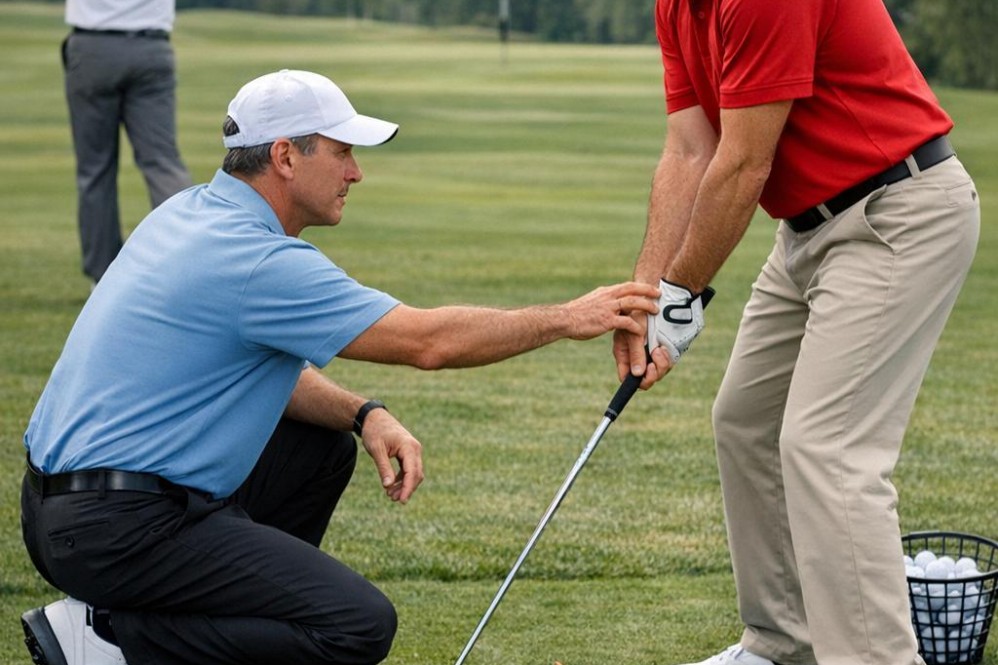
Unlock the Secrets of a Consistent Chip Shot from Setup to Follow Through
Begin by establishing a solid setup that fosters consistent contact and control. Position the ball slightly back in your stance-about a clubhead’s length behind center-to encourage a downward strike and crisp, clean contact. Maintain a narrow stance with feet approximately 6 to 8 inches apart, allowing for stability without restricting shoulder rotation. Distribute your weight so approximately 60 to 70 percent rests on your front foot, promoting a steeper angle of attack that minimizes scooping or thin shots. your grip should be neutral but relaxed, with hands slightly ahead of the ball to ensure the clubface remains square through impact. Incorporate a slight forward shaft lean and hinge your wrists naturally during the backswing to generate a smooth, pendulum-like motion, focusing on maintaining steady tempo and rhythm rather than aggressive speed. This precise alignment and posture sets the foundation for a dependable chip shot that can consistently produce the desired flight trajectory and spin characteristics.
During the swing, emphasize a controlled stroke that prioritizes clubhead path and face angle over brute force. Initiate the backswing with a limited wrist hinge-typically around 20 to 30 degrees-and keep the motion compact by rotating your shoulders rather than your arms. The swing arc should resemble a subtle half-circle,ending with your hands slightly ahead of the ball at the follow-through to maintain consistent loft and contact. Avoid excessive wrist breakdown through impact,which commonly results in topping or fat shots. Carry out drills such as the “toe tap drill,” where you tap the club’s toe on the ground during the backswing to promote a stable hinge and prevent wrist collapse. On the course, adapting your technique to account for lie conditions (tight lies versus fluffy rough) and green firmness plays a key role in shot outcome. For instance, a softer green may allow for more spin, enabling aggressive check shots, while a firmer surface demands a precise landing spot with softer roll-out control. Integrating these mechanics with an understanding of the turf interaction ensures not only solid contact but also predictable ball behavior.
cultivate a systematic approach to reading greens and managing course strategy that complements your technical skill. Analyze slopes and grain carefully by observing ball roll on putts in the same vicinity, then adjust your aim point and shot trajectory accordingly. Visualize the landing zone and intended roll-out distance to determine the optimal carry and release. Incorporate practice routines focusing on varied trajectory control, such as using wedges with different lofts or opening the clubface to alter spin and trajectory. This versatility expands your shot repertoire, equipping you to tackle uphill chips, downhill chips, and sidehill lies with confidence. Mental preparation,including pre-shot routines that reinforce focus and commitment to the target,enhances consistency and reduces “yips” or hesitation. By blending precise technique with strategic decision-making and course awareness, you transform your chipping into a reliable scoring tool, lowering your handicap and elevating your overall short-game effectiveness.
Discover How Swing mechanics Influence Your Chip Shot success
The foundation of a prosperous chip shot lies in understanding how your swing mechanics directly influence the ball’s trajectory and control. Maintaining a slightly open clubface at address, around 3 to 5 degrees, allows for crisp contact and helps the ball lift just enough to clear the fringe without ballooning high. Your swing path should be predominantly vertical with a shallow arc, minimizing excessive wrist breakdown-this means keeping the wrists firm through impact while allowing natural hinge only during the backswing. For beginners, focusing on a compact chip stroke with minimal hand action promotes consistency, while advanced players can experiment with controlled wrist leverage to shape shots around hazards.Incorporating drills such as the “one-piece takeaway,” where the arms and shoulders move together, is instrumental in ingraining a repeatable motion that translates into better distance control and accuracy.
In addition to the swing itself, attention to setup mechanics is crucial. Position the ball slightly back in your stance-approximately one shaft length behind center-which encourages a downward strike, ensuring clean contact with the turf before the ball. Distribute your weight forward, placing about 60-70% on the front foot, to promote a descending blow that reduces the risk of chunked or fat shots. An effective grip involves light tension to maximize feel and responsiveness, typically achieved by holding the club at roughly 4 to 5 on a clock face with your lead hand. When practicing, use alignment rods or place tees parallel to your target line to cultivate proper setup habits. Adjusting stance width to a shoulder-width base helps stabilize the body, enabling a smooth yet controlled follow-through that enhances both accuracy and ball roll consistency.This setup routine is applicable across diverse courses and playing conditions, allowing golfers to adapt seamlessly from firm, fast greens to softer, receptive surfaces.
Lastly, integrating your swing technique with course reading elevates chip shot success.Golf’s short game is as much mental as it is mechanical-before executing, analyze the lie, slope, and green speed to select the optimal club and shot type. As an example, a steeper lie on a downhill slope may warrant a sand wedge with an open face to add loft and spin, whereas a tight lie on a flatter green could favor a pitching wedge or 7-iron for a lower, running chip. Understanding how terrain undulations influence ball roll allows you to visualize landing zones and plan your swing length accordingly. To improve this skill, practice by creating mock slopes during training sessions and hitting shots that land on specific targets, focusing on trajectory adjustment and feel. Combining precise swing mechanics with savvy course management enriches your scoring opportunities and builds confidence in pressure situations, ultimately reducing strokes around the green and improving overall scoring averages.
Elevate Your Short Game with Smart Green Reading and Precision Control
Achieving finesse around the greens starts with a solid understanding of green reading and precision control. When approaching any chip or pitch shot, begin with a **consistent setup**, positioning the ball slightly back in your stance-approximately one ball width behind center-to promote a descending blow that avoids too much loft. Keeping your hands ahead of the clubhead through impact encourages crisp contact and reduces the chance of topping or fat shots.Incorporate a key visual check by aligning your body parallel to the target line and assessing the green’s slope from multiple angles to anticipate break and speed. For beginners, practice this by marking two points on the green-your landing spot and the hole-and imagine a gentle arc connecting the two, adjusting your aim accordingly. This approach aligns with core chipping fundamentals and sets a strong foundation for control even under pressure.
Understanding how to manipulate trajectory and spin is essential for refining shot shaping around the green. Golfers should experiment with opening or closing the clubface to modify ball flight and roll. such as, opening the face by about **10 to 15 degrees** can help create a higher, softer shot that stops quickly on tight greens.Conversely, a square or slightly closed face produces a lower, running chip ideal on faster, firm surfaces. Incorporate practice drills that focus on controlling swing length and acceleration, such as the “clock drill,” where you visualize a clock face with 9 o’clock as the backswing and 3 o’clock as the follow-through; keeping the swing within this range can develop consistency.Additionally, applying the principle of maintaining a steady head and body minimizes unnecessary movement, aiding shot repeatability. For advanced players, mastering these subtle adjustments can transform your short game strategy by allowing you to adapt to diverse course conditions and green speeds confidently.
Effective course management around the green blends technical skill with strategic decision-making to lower scores. Recognize when to be aggressive by attacking tight pins with a high, soft chip versus when to play conservatively by landing the ball short and letting it roll closer to the hole on sloped or grainy greens. Integrate mental visualization techniques to build confidence-imagine the ball landing precisely where you chose and the ideal roll-out path, which helps in committing to shots especially under pressure. Equipment choices also impact precision; selecting wedges with appropriate lofts (commonly **54 to 60 degrees**) and bounce angles suited to the turf conditions enhances versatility and turf interaction. regularly incorporate practice routines that simulate course scenarios, such as intentionally pitching from uphill lies or thick rough, to prepare for unexpected challenges.By connecting physical technique with strategic insight, golfers can elevate their short game to new levels of efficiency, leading to more pars and scoring opportunities across all skill levels.