Master Your Swing with Precision Techniques at The Olympic Club
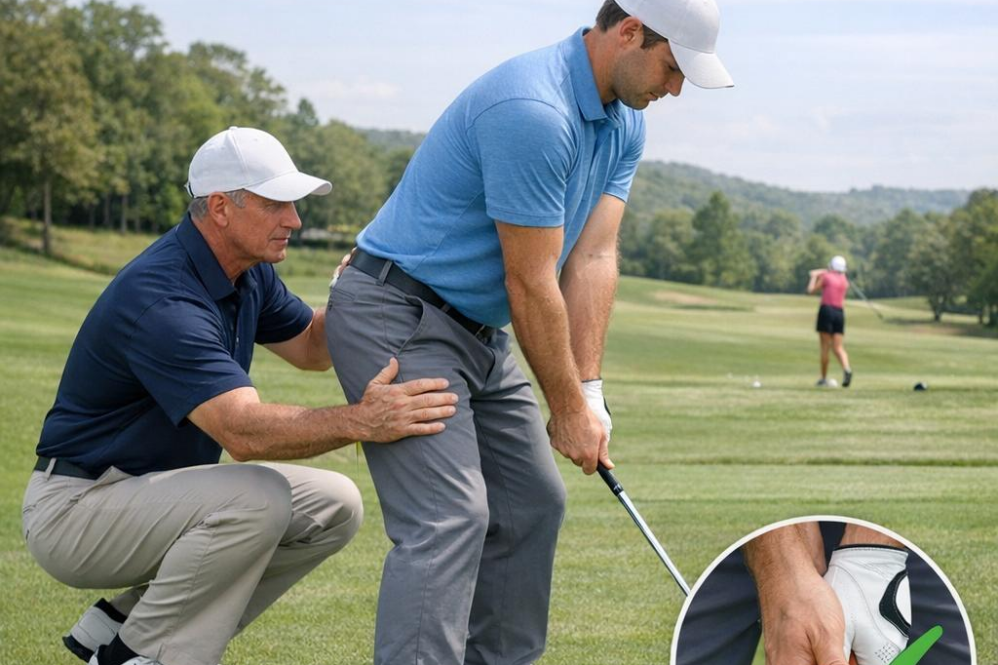
Developing a repeatable and efficient golf swing begins with understanding the fundamentals of stance and posture, especially when navigating The Olympic Club’s challenging fairways. Start by aligning your feet shoulder-width apart, creating a stable base that supports balance throughout the swing. Maintain a slight knee flex at approximately 15 degrees and tilt forward from the hips, keeping the spine angle consistent. This setup ensures that your center of gravity remains steady, which is crucial for consistent ball striking. When addressing the ball, position it slightly forward for drivers and progressively more centered as club length decreases. These adjustments help optimize launch conditions for each shot, accounting for the undulating lies and firm turf that are typical of The Olympic club’s course.
transitioning from setup to motion, focus on the mechanics of the backswing and downswing to enhance control and power. Emphasize initiating the backswing with a smooth rotation of the shoulders while keeping the lead arm straight but not rigid to create width and leverage. A common error is lateral sway, so practice drills that reinforce rotational movement over lateral shift, such as swinging with feet glued to the ground or using alignment sticks for feedback. During the downswing, transition weight from your trail foot to the lead foot, targeting a clubhead speed increase by maintaining lag through wrist angle preservation. Golfers should aim for a shoulder turn of roughly 90 degrees to build torque, translating to more power without sacrificing accuracy needed to navigate The Olympic Club’s demanding doglegs and tight corridors.
Short game proficiency is essential on a course like The Olympic Club, known for its challenging greens with subtle breaks and slopes. Developing a reliable putting stroke begins with consistent setup angles: eyes directly over the ball,a slight forward press of the hands,and relaxed shoulders to promote a pendulum-like motion. Practice drills like the “gate drill,” where two tees form a narrow channel for the putter head, can enhance stroke path fidelity and help avoid common mistakes such as a pushed or pulled ball. Additionally, mastering lag putting by practicing distance control with 70-80% swing length putts helps reduce three-putts on these fast, undulating putting surfaces. Course management plays a significant role here-reading greens from multiple vantage points and factoring in wind conditions are critical for minimizing strokes.
Effective course strategy complements technical skill by enabling golfers to play smart on this elite venue. Prioritize clubs that produce reliable shot shapes; for example, a controlled fade might be preferred to avoid The Olympic Club’s strategically placed bunkers and dense rough. Implement a mental routine that assesses hazards,pin placements,and turf firmness before every shot,adjusting your aim and club selection accordingly. Keeping measurable goals, such as reducing swing tempo variation to within 5% using a metronome or training app, can support consistency under pressure. For beginners, drills focusing on tempo and rhythm build foundational confidence, while low-handicap players can experiment with shot shaping techniques to tackle tighter fairways. By integrating precise swing mechanics with thoughtful course management, golfers can lower scores and fully capitalize on their practice efforts at The Olympic Club.

Unlock the Secrets to Consistent Putting on Challenging Greens
Mastering consistent putting on challenging greens begins with a solid understanding of green reading, which is essential for accurate speed and break judgment. At a course like The Olympic Club, where subtle undulations and firm surfaces prevail, start by studying the overall slope from multiple vantage points around your ball. Use a combination of your eyes and feel, first assessing the slope’s direction and degree, then confirming with practice putts.Pay close attention to the grain of the grass, which affects ball roll, slowing putts going against the grain and speeding those with it. Incorporating a routine of carefully visualizing the putt’s path before your stroke can substantially improve your aim and confidence,especially on tricky,fast greens prone to deceptive breaks.
Begin the setup by ensuring your posture aligns with your intended line. Keep your eyes directly over or just inside the ball to enhance depth perception and shot accuracy, a classic tip that remains fundamental across all skill levels. For beginners, focusing on a stable lower body to prevent lateral movement enhances stroke consistency, while advanced players can refine the pendulum action of the shoulders to maintain a smooth rhythm. At The Olympic Club,where speed can change with weather and green conditioning,adjust your stance width and clubface angle between putts to accommodate slight changes in slope and firmness.Practice drills like the “gate drill,” where two tees create a path slightly wider than your putterhead, can build confidence in delivering a straight, true stroke through impact.
To develop a feel for pace control, practice lag putting over varying distances, ranging from 20 to 40 feet-distances commonly encountered on championship courses. Begin by setting target markers and aiming to stop the ball within a 3-foot radius, progressively shortening this goal as your touch improves. On fast greens such as The Olympic Club’s, controlling pace can save strokes by reducing three-putts. Utilize drills like the “circle drill,” which sharpens distance control by requiring the ball to come to rest inside a tight circle around the hole. Recognise that environmental factors like wind and green moisture also influence ball behavior. Adjust your stroke length and acceleration accordingly, striking slightly firmer putts into headwinds and softer ones when grass is damp or slow.
Lastly, integrating course management with putting strategy elevates overall scoring potential. When facing downhill or severely breaking putts typical of The Olympic Club, align your aim several inches or even feet away from the hole, depending on the slope’s severity. Use intermediate targets-such as a specific blade of grass or a grain line-to guide your start line, rather than always aiming directly at the cup. For golfers at every level, understanding how to read and trust these reference points reduces indecision and hesitation. It’s crucial to maintain a consistent pre-putt routine,balancing mental focus and physical execution. Over time, blending technical proficiency with strategic reading of each green’s nuances will unlock the secret to consistent putting, allowing you to attack pins confidently and lower your scores steadily.
Harness driving Power through Biomechanical Insights and Practice
Maximizing driving power begins with a solid understanding of biomechanics, which enables golfers to generate clubhead speed efficiently and consistently. A fundamental aspect to focus on is proper sequencing of body movements, also known as the kinetic chain. From The Olympic Club’s challenging Tee shots,players learn that initiating the downswing with a controlled weight shift from the trail leg to the lead leg,followed by hip rotation and then arm release,builds torque without sacrificing balance. To internalize this, golfers can practice the “step drill” where you take a small step toward the target during the downswing to promote weight transfer and timing. Beginners should aim for a smooth, gradual increase in speed, while low handicappers can tighten their transition to minimize “casting” or early wrist release, which erodes power.
Proper setup is another crucial element influencing driving distance and accuracy.Establish a wider stance than for irons with the feet roughly shoulder-width apart, and position the ball just inside the lead heel to encourage an upward strike angle at impact. This will help produce an optimal launch angle around 12-15 degrees with a moderate spin rate, vital for maximizing roll and carry on hard fairways like those at The Olympic Club. Additionally, engaging the core muscles and maintaining a firm yet relaxed grip ensures efficient energy transfer while allowing for fluid wrist hinge. Practicing in front of a mirror or using video feedback can definitely help identify alignment errors, such as an open or closed clubface at address, which directly impact shot shape and distance.
To complement mechanical proficiency, golfers should incorporate targeted practice drills designed to build explosive strength and timing refinement. One effective routine is the “tempo drill,” where players use a metronome or count to create a consistent swing rhythm-preferably at a 3:1 ratio of backswing to downswing duration-that promotes rhythm and prevents rushing. Another drill involves the gradual buildup of swing speed over multiple swings, focusing on smooth acceleration rather than abrupt force. Incorporating resistance bands or weighted clubs during warm-up exercises can also enhance muscular control and flexibility, which is especially beneficial when navigating the tight driving corridors and uneven lies typical at The Olympic Club. Setting measurable goals, such as increasing swing speed by 5-10 mph over eight weeks, provides motivation and objective feedback for progress.
integrating biomechanical insights with strategic course management is essential for harnessing driving power effectively under real-play conditions. For instance, when facing windy conditions common to The Olympic Club’s seaside layout, adjusting ball position slightly back in the stance can help lower the trajectory for better control. Likewise,choosing a driver shaft with the correct flex and torque settings for one’s swing speed minimizes energy loss and optimizes distance. Golfers should also practice shaping drives intentionally-fading or drawing the ball-to navigate doglegs or heavily bunkered fairways while maintaining power.Emphasizing the mental game by visualizing shots and committing to targets reduces tension, preventing choke-ups that lead to sacrificed speed. Together, these biomechanical and strategic approaches form a comprehensive system for unlocking driving potential and lowering scores on demanding courses.
Tailoring Your Practice Routine to The Olympic Club’s Unique Terrain
The Olympic Club’s terrain presents a unique challenge that demands a tailored practice routine, especially given its renowned undulating greens and coastal wind patterns. To begin mastering the course, focus on green reading skills by practicing lag putts on similar sloped surfaces. Try setting up practice drills where you aim to leave the ball within 3 feet of the hole from distances ranging between 20 and 40 feet. This drill hones your feel for breaks and grain that are prevalent at The Olympic Club. For beginners, using alignment sticks placed along the intended putting line can improve your eye for the proper angle of approach. Advanced players should incorporate subtle wrist hinge control in their stroke to adjust pace according to the subtle uphill or downhill slopes typical of the course’s greens.
course management is a critical component when navigating The Olympic Club’s narrow fairways framed by dense rough and strategically placed bunkers.From the outset, it’s essential to develop a solid pre-shot routine that emphasizes club selection and shot shape according to wind conditions, often a factor due to the site’s seaside exposure. Golfers should practice controlled draws and fades on the driving range, using mid-irons to cultivate shot-shaping ability. Incorporate drills that focus on the clubface-to-path relationship, and experiment with grip pressure and stance adjustments until the ball consistently responds to your intended curvature. In round play, adopting a conservative strategy-favoring the center of fairways over risky pin-seeking shots-can lead to more manageable approach shots and ultimately lower scores.
Short game techniques can be game-changing on The Olympic Club’s tricky approach shots and tough bunker lies. Prioritize spending time on wedge play, employing open clubface techniques to maximize spin and control when navigating tight, sloped lies around the greens. Practice chip-and-run shots using a lofted iron, focusing on striking the ball with a crisp, descending blow to produce accuracy and minimize roll. Incorporate a drill where you alternate between landing zones to develop touch and distance control, gradually tightening your scoring circles to within a 10-foot radius.Pay careful attention to setup fundamentals such as a slightly open stance and weight favoring the front foot to stabilize your lower body and promote clean contact.
integrating mental game strategies and equipment optimization can elevate your performance throughout The olympic Club’s demanding layout. Establish a consistent visualization routine pre-shot, imagining the trajectory and landing area, while factoring in weather elements like gusting winds and cooler coastal temperatures that affect ball flight distance. utilize launch monitors or shot-tracking apps during practice sessions to set quantitative improvement goals, such as reducing dispersion by 20% or increasing greens in regulation by 10%. Regularly update your golf ball and shaft selection to match your swing speed and course conditions-opting for lower compression balls and stable shafts when facing gusty coastal winds can improve shot consistency. Through disciplined, purposeful practice and strategic mental readiness, golfers at all levels can conquer The Olympic Club’s challenges and significantly improve their scoring efficiency.
Integrating Course Strategy to Enhance Your Scoring Potential
Understanding the layout and unique challenges of a course like The Olympic Club is fundamental to elevating your scoring potential. Start by thoroughly studying the course map and yardage book before your round. Identify key landing zones that allow for optimal angle-of-attack on approach shots, especially on narrow fairways or heavily bunkered holes. for beginners, begin with focusing on stationing your tee shot within a comfortable distance-around 200 to 220 yards-to guarantee consistency. More advanced players can take calculated risks by using directional drivers or long irons to place the ball near the slope edges and near hazards, setting up favored approach angles. Practicing rounds with a simulated game plan emphasizing these zones can significantly reduce unnecessary penalty strokes and add confidence when hitting into challenging greens.
Course strategy is incomplete without mastering the art of situational shot selection. Considering factors such as wind direction, elevation changes, and turf firmness at The Olympic Club, you should adapt your club choice and shot shape accordingly. Such as, a 10-15 mph crosswind on seaside holes demands intentional curvature control-using a controlled fade or draw to counteract wind drift-improving shot accuracy and distance control. When hitting into elevated greens guarded by deep bunkers, emphasize a higher ball flight by slightly opening the clubface and focusing on a smooth, accelerating swing through impact. To build this skill, practice drills that promote trajectory modulation such as varying shaft lean and ball position during chipping and pitching. This adaptability in shot shaping enhances your ability to negotiate tight pin placements and complex green contours,directly lowering score potential.
Effective integration of course management also involves proactive risk assessment that matches your skill level and strengths. For novice golfers,the key is to avoid hazards altogether by playing conservative routes,such as laying up short of water hazards or deep rough rather than attempting heroic drives. Incorporate a practice routine featuring controlled punch shots and partial wedges to gain confidence in these essential shots. Low handicappers can utilize shot-pattern analysis by tracking where their misses typically occur on the course and then planning holes strategically to exploit safe zones.At The Olympic Club, for instance, choosing to aim for the center of ambush bunkers instead of the flagstick can sometimes reduce the risk-reward margin, leading to better score control. Regularly reassess your game during the round; don’t hesitate to adjust your strategy as weather or course conditions evolve, ensuring reliability and consistency across all conditions.
Lastly, embed mental resilience and deliberate pre-shot routines as cornerstones of your course strategy. Prior to every shot, employ a visualization technique-imagine the ball flight path, desired landing spot, and roll-out length-helping to align your body and mind. Set incremental goals like reducing three-putts by focusing on green reading, including recognizing subtle breaks and grain direction changes typical at coastal venues like The Olympic Club. Practical drills to sharpen this include walking off putt distances and practicing lag putting from 30-50 feet. Emphasize patience during difficult sequences by breaking down your round into manageable segments; this approach aids in maintaining focus, preventing frustration, and capitalizing on scoring opportunities as they arise.When technical skills and strategic thinking combine with strong mental discipline, the path to lower scores becomes both clearer and more attainable for golfers at every level.
Building Confidence and Focus for Competitive Play at The Olympic Club
Confidence and focus on a challenging course like The Olympic Club are cornerstones of competitive success. To build this mental resilience, start by mastering your pre-shot routine, which anchors your attention and calms nerves.Emphasize a consistent setup-feet shoulder-width apart, balanced weight distribution, and a relaxed grip pressure of about 5 to 6 on a 10-point scale-to promote repeatable swing mechanics under pressure. Incorporate controlled breathing exercises between shots, which help maintain composure amid the course’s demanding wind conditions and undulating fairways. Practicing visualization techniques can also enhance focus; imagine your ball flight trajectory and landing spot before each shot,especially on iconic holes like the 6th,where the strategic dogleg requires precise execution.
From a technical standpoint, refining your swing mechanics and short game is essential for scoring at The Olympic Club. The course’s tricky greens demand acute touch and green reading skills. Work on developing a reliable putting stroke with an emphasis on a smooth, pendulum motion and a stable lower body, aiming to keep the putter face square through impact. For the chipping and pitching around the greens, practice controlled wrist hinge drills and open clubface techniques to add versatility, particularly for delicate flop shots over the tightly mowed collar. Set specific practice goals such as achieving 80% up-and-down success from 20 yards, focusing on improving contact consistency and distance control.Recording your progress with video can help identify subtle swing faults like early extension or inconsistent weight transfer that compromise accuracy.
Effective course management at the Olympic Club demands strategic thinking tailored to your skill level. Beginners should focus on safe targets, such as aiming for the wider portions of the fairway to avoid penal rough or bunkers, while intermediate and advanced players can utilize shot shaping to navigate the challenging contours and elevation changes. For example, mastering a controlled fade or draw with trajectory control around 30 to 40 yards of lateral movement can dramatically improve approach shot positioning at holes like the 8th. Use yardage books or GPS devices to accurately assess hazards and strategically plan tee shots, avoiding distraction from risky pin positions. Additionally, adopting a “playing smart” mindset-knowing when to lay up instead of attacking pins-helps lower your score and preserves confidence throughout the round.
to reinforce both your physical and mental game, incorporate a balanced practice routine that reflects The Olympic Club’s unique demands. Alternate between technical drills-like alignment stick exercises to ensure consistent setup and swing plane drills for maintaining shoulder turn-and situational practice that simulates varied lies and weather conditions. Embrace feedback mechanisms such as launch monitor data to measure swing speed, launch angle, and spin rates, aiming for repeatable metrics that match the course’s long and tough layout. Remember that mental toughness is built through experience; participating in local competitions or practice rounds under timed conditions fosters resilience and adaptability. By integrating these elements,golfers at all levels can cultivate the confidence and focus necessary to tackle the historic challenges of The Olympic Club with precision and poise.