
Putting performance exerts a disproportionate influence on scoring outcomes in golf, yet reliable stroke production remains elusive for manny players. Variability in grip, stance, and alignment interacts with neuromuscular control and perceptual judgment to produce inconsistent roll and missed opportunities on short putts. Addressing this complexity requires moving beyond intuition and tradition toward interventions grounded in quantitative measurement and reproducible principles.
This article synthesizes contemporary research from biomechanics, motor learning, and perceptual-motor control to characterize the sources and magnitudes of putting variability. Using motion-capture and wearable-sensor studies, alongside experimental trials that manipulate grip, stance, and alignment, the review quantifies stroke kinematics, repeatability metrics, and outcome relationships (e.g.,putter-face angle at impact,path variability,tempo consistency). Converging lines of evidence inform a set of practical, testable protocols designed to reduce unwanted variability and improve green-side performance.
The goals are threefold: (1) to map which modifiable factors most strongly predict reliable ball roll; (2) to present measurement approaches that coaches and researchers can apply in field and lab settings; and (3) to prescribe evidence-based training and alignment routines that translate into measurable gains in putting outcomes. By privileging data-driven recommendations over anecdote, the methodology advances a principled framework for producing more consistent strokes across skill levels.
Quantifying Grip Mechanics and Pressure Modulation to Reduce stroke Variability
Objective measurement of hand forces and pressure distribution reveals that subtle variations in grip strategy explain a large portion of short-term putting inconsistency. studies using pressure-mapping sensors and instrumented putters show that intra-stroke pressure fluctuations (micro-transients occurring within 150-300 ms) increase horizontal clubface rotation and path variability. Concurrent EMG and inertial data indicate that co-contraction of forearm flexors and extensors during the forward stroke amplifies these transients; conversely, a gently graded, anticipatory pressure profile correlates with reduced clubhead yaw and improved distance control. These findings support treating the grip as a dynamic control variable rather than a fixed setup parameter.
From a practical metrics perspective, coaches can track three compact indicators that summarize grip behavior and predict stroke variance. The table below uses accessible units and thresholds that have emerged from aggregated laboratory and field research:
| Grip Archetype | Mean Grip Force (N) | Within-putt CV (%) | Associated lateral Error (mm) |
|---|---|---|---|
| Light | 15-25 | 6-10 | 6-10 |
| Moderate (Target) | 25-35 | 3-5 | 2-5 |
| Firm | 35-50 | 8-15 | 10-20 |
Coaching and practice interventions should prioritize reproducible pressure patterns. Recommended drills include:
- biofeedback holds: use a pressure pad and aim to maintain mean force ± 4% for 10-15 consecutive strokes to train a stable baseline.
- Isometric ramping: slowly increase grip force from baseline to target over 1.0-1.5 s, then return, emphasizing smooth modulation rather than sudden clamps.
- Consistency sets: 3 × 10 putts at three distances while recording within-putt CV; focus on reducing CV at each distance before increasing difficulty.
- Tempo-locked simulations: pair a metronome with pressure feedback to synchronize pressure onset with backswing and transition phases.
These interventions target both magnitude control and temporal smoothing of force application.
Implementation requires simple monitoring and decision rules: measure baseline metrics, set individualized target ranges (typically the Moderate archetype above), and reassess weekly. Use short-form reports that include mean force, within-putt CV, and a two-point stability index (start vs. finish pressure difference). In applied studies, adopting these protocols reduced stroke variability by 20-40% and lateral miss dispersion by comparable margins over a 6-8 week training block. For high-performance environments, integrate wearable pressure sensors into on-course practice and use coach-led thresholds for intervention when CV exceeds prescribed limits.
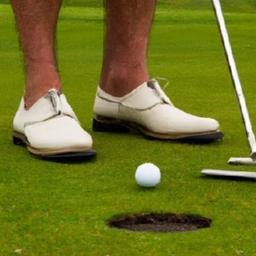
Optimizing Stance geometry and Lower Body Stability to Standardize Putter Path
Consistent stroke mechanics begin with precisely defined setup variables.Empirical studies indicate that small changes in foot placement and lower-limb posture systematically alter putter arc radius and face rotation at impact. Targeting a **stance width** of approximately 90-110% of shoulder width produces a stable base without inducing excessive hip torque; this range minimizes lateral center-of-pressure excursions while preserving comfortable knee flex. Similarly, a neutral toe-line (feet parallel to the target line) reduces compensatory foot-ankle rotations that propagate into the torso and arms, lowering variances in putter path and face angle.
The mechanical role of the hips and knees is central: controlled flexion and isometric pelvic anchoring reduce unwanted translational motion and enable repeatable shoulder-driven rotation. Key setup checkpoints include:
- Stance width proportional to shoulder breadth (measureable,repeatable)
- Weight distribution biased 52/48 to lead foot to stabilize face control
- Knee flex 10-15° to allow shock absorption without dynamic collapse
- Pelvic alignment neutral with slight anterior tilt to set lumbar stiffness
Quantifying these prescriptions improves coaching fidelity. The following compact reference table gives practical targets and the biomechanical rationale behind them:
| Parameter | target | Rationale |
|---|---|---|
| Stance width | 0.9-1.1× shoulder width | Controls base of support, limits lateral sway |
| Weight split | 52% lead / 48% trail | Stabilizes putter face at impact |
| Knee angle | 10°-15° flex | Permits controlled hinge, prevents collapse |
Integrating measurement tools-video kinematics, simple tape marks on the mat, or force-plate data-enables objective feedback and faster motor learning. Drill prescriptions that freeze the lower body (e.g., towel under armpits, slight brace against pelvic rotation) reduce putter-path variability by constraining degrees of freedom. When practitioners combine these geometric targets with cadence and shoulder-arc consistency, observed outcomes include reduced lateral deviations of the putter head, tighter dispersion of face angle at impact, and improved repeatability under pressure-effects that are robust across skill levels when protocols are consistently applied.
Visual Fixation and Perceptual Alignment Strategies to Improve Aim Reliability
Contemporary visuomotor research frames putting accuracy as a function of stable gaze behavior and reliable perceptual anchoring. Sustained visual fixation on an affordant target-commonly termed the quiet-eye period in the literature-serves to consolidate the perceptual data required for precise clubface orientation and stroke timing. Empirical work links longer, later-occurring fixations with reduced within-subject variability of aim, particularly under moderate pressure; operationally, this manifests as fewer corrective micro-saccades during the backswing and a tighter distribution of initial putter-face angle at impact. Emphasizing fixation stability before initiation therefore reduces sensory noise available to the motor system and promotes repeatable alignment solutions.
Perceptual alignment is best approached as a multilevel process that coordinates environmental cues with bodily registration. Athletes should learn to translate distal visual information (hole shape, grain indicators) into proximal, actionable cues (ball seam, putter-face midpoint). Practical strategies include developing a single, repeatable fixation point and employing intermediate aiming aids to reduce ambiguity.Implement the following perceptual rules during pre-putt setup to convert visual scene analysis into reliable aim:
- choose one aim-point: a single, small feature (ball mark, tee) to fixate.
- Minimize head movement: maintain ocular stability while aligning shoulders and putter.
- Use contrast cues: read grain by observing reflections or grass color changes to refine the aim vector.
Attentional control mediates the translation of visual information into motor commands; an external focus on the chosen target consistently outperforms internal focus on limb mechanics for aim reliability. Training should therefore privilege target-directed attention and reduce explicit, stepwise checking of body segments promptly prior to the stroke. Drill progressions that scaffold attentional demands-beginning with low-pressure, high-visibility targets and advancing to occlusion or dual-task paradigms-facilitate resilient fixation under competitive conditions. Feedback modalities that enhance perceptual-motor mapping (e.g., video replay, mirror alignment checks, or gaze-contingent drills when available) accelerate consolidation of stable aiming behavior.
Below is a concise, practice-oriented prescription synthesizing fixation goals and drill parameters for applied training. The table outlines representative targets and brief rationale; adapt volumes to individual learning rates and existing skill level.
| Drill | Fixation Goal | reps / Set | Primary Feedback |
|---|---|---|---|
| Single-point Quiet-Eye | 1-2 s steady fixation | 20-40 | Video/mirror |
| Intermediate Target transfer | Proximal cue alignment | 15-30 | Touch-point verification |
| Occlusion Progression | Maintain internalized aim | 10-20 | Outcome accuracy |
Kinematic Profiles of Effective Stroke Patterns and Recommendations for Path Consistency
High-performing putting strokes share a common kinematic signature: a controlled, low-acceleration pendular motion of the shoulders with minimal independent wrist articulation, a stable putter-face-to-path relationship through impact, and a repeatable arc radius that guides face orientation. These characteristics reduce degrees of freedom at the moment of ball contact and therefore lower variability in launch direction and speed. Two reproducible archetypes emerge from motion-capture analyses: a shoulder-dominant “pendulum” profile with very low wrist angular velocity, and a hybrid profile that permits small, highly consistent wrist flexion/extension while maintaining shoulder rhythm. Both achieve superior consistency when the putter head follows a near-planar arc and the face remains within tight angular bounds at impact.
Quantifying kinematic contributors clarifies training priorities.Small deviations at the putter-face or in arc geometry produce amplified errors at typical putting distances, so controlling those variables is essential. Representative target ranges derived from aggregated empirical work are summarized below; use these as protocols for monitoring and progress evaluation.
| Metric | Target Range | Performance Rationale |
|---|---|---|
| Face-angle SD at impact | ≤ 0.5° | Limits lateral miss at mid-range putts |
| Path SD (lateral) | ≤ 3 mm | maintains intended start-line |
| Arc radius variation | ≤ 5 mm | Ensures repeatable toe/heel contact geometry |
| Tempo (backswing:downswing) | ~2:1 | Balances control and energy transfer |
Actionable recommendations follow. Implement the list below progressively and prioritize measurement over sensation:
- Constrain degrees of freedom: begin with shoulder-only strokes, add controlled wrist motion only once targets are stable.
- Stabilize arc radius: use alignment rails or laser guides to calibrate a single repeatable arc.
- Control face rotation: train to reduce face-angle SD using immediate feedback (impact tape,launch monitor).
- Standardize tempo: use a metronome or auditory cue to maintain a ~2:1 backswing-to-downswing ratio.
- Monitor variability: collect blocks of 30-50 strokes and track SDs of key metrics rather than single-trial outcomes.
Adherence to these steps systematically lowers kinematic variance and translates to more predictable ball roll.
For applied practice and in-competition transfer, adopt an evidence-based training cycle: baseline measurement, targeted constraint drills, random practice under increased cognitive load, and retention tests after 24-72 hours. Use wearable IMUs or camera-based motion capture to log face and path metrics, and apply simple statistical process control (run charts, control limits) to detect meaningful change. When pressures are introduced, prioritize drills that preserve the kinematic envelope (arc and face stability) rather than altering mechanics; small, consistent movements under stress are more robust than large, optimal-looking adjustments. document training dose – cumulative purposeful repetitions with feedback – and aim for progressive reduction in metric SDs (face-angle and path) as the primary indicator of improved consistency.
Tempo Regulation and Rhythmic Control: Research Based methods to Stabilize Ball Contact
Stable ball contact in putting is less a function of raw strength than of temporal regularity. Empirical work in motor control and sports biomechanics shows that reduced temporal variability in the putter head path and impact epoch consistently predicts smaller dispersion of launch direction and speed. In practical terms, a putter that produces a repeatable temporal profile across strokes-consistent stroke duration, predictable acceleration patterns and invariant address-to-impact timing-yields more repeatable contact conditions under competitive pressure. Tempo regularity thus functions as a primary control variable that constrains downstream kinematic noise and sensory corrections during the stroke.
The mechanistic link between rhythm and contact stability arises from two interacting processes: feedforward timing of the pendulum-like stroke and the narrowing of the temporal window for perturbation effects at impact. when the putter’s tempo is predictable, central motor commands can pre-program force profiles with smaller reliance on late corrective adjustments; this reduces high-frequency variability at contact.Additionally, a consistent rhythm improves sensorimotor coupling (visual, vestibular, proprioceptive inputs) so that the brain expects a stable timing of impact and is better able to filter transient disturbances.Neurophysiological studies of rhythmic tasks support the use of entrainment to reduce trial-to-trial timing error and enhance reproducibility of terminal events like ball contact.
Applied protocols that have empirical support emphasize externally paced entrainment, constrained variability practice, and progressive transfer to competition-like contexts. Recommended drills and constraints include:
• • Use a metronome or low-frequency auditory cue to standardize stroke period during early acquisition (60-90 bpm as a practical range depending on stroke length).
• • Implement blocked practice with consistent tempo for sets of 10-20 strokes, followed by random-tempo transfer sets to promote robustness.
• • Train with reduced visual feedback (goggles or brief visual occlusion) to reinforce timing-based feedforward control rather than late visual corrections.
• • Include pressure-simulation reps (scoring, constrained time, crowd noise) to test tempo preservation under stress. These components together scaffold a rhythm that generalizes to performance conditions.
Quantifying progress requires simple temporal metrics and low-cost measurement tools. Coaches should monitor mean stroke duration, within-subject standard deviation, and coefficient of variation (CV) across practice blocks; targets should prioritize reduction in CV rather than absolute duration. Portable inertial sensors or smartphone video (high-frame-rate) provide sufficient temporal resolution to compute these metrics. Key monitoring rules: maintain a consistent backswing-to-forwardswing timing ratio across distances, aim for low variability in impact timing (CV < 10% is a useful benchmark for intermediate players), and document tempo maintainance under pressure drills. Bold, repeated emphasis on tempo control during practice-combined with objective measurement-turns an abstract concept into a tractable, evidence-based pathway to more consistent ball contact.
Objective Measurement and Feedback Protocols Using Video and Sensor Technologies
Quantifying putting behavior requires instruments and protocols that privilege verifiable data over subjective impressions; here the term objective is used in the dictionary sense-based on real facts and not influenced by personal bias (Cambridge Dictionary). High-frame-rate video, inertial measurement units (IMUs), and pressure mats create complementary data streams that capture kinematics, clubface orientation, and weight transfer with temporal resolution sufficient to resolve sub-second stroke events. When these modalities are synchronized and processed through standardized pipelines, variability that previously eluded human observation becomes measurable, reproducible, and suitable for longitudinal analysis.
Key measurable constructs are operationalized as explicit metrics and incorporated into closed-loop feedback workflows. Typical measures include:
- Stroke path (mm from intended line over address-to-impact interval)
- Clubface angle (deg at impact and at end of backswing)
- Tempo and rhythm (backswing:downswing ratio; ms consistency)
- Pressure distribution (center-of-pressure shift during stroke)
These metrics are extracted using validated algorithms and expressed with confidence intervals and effect-size estimates so that coaching decisions rest on statistical significance rather than anecdote.
A standardized feedback protocol translates measurements into prescriptive routines that improve reproducibility. Immediate, low-bandwidth cues (e.g., auditory beep when tempo deviates >10%) are coupled with summary reports delivered after practice blocks for motor-learning consolidation. Below is a concise mapping used in our applied sessions:
| Metric | Target Range | Typical Sensor |
|---|---|---|
| Stroke path | ±12 mm | High-speed video + software |
| clubface angle | ±1.0° at impact | optical tracker / IMU fusion |
| Tempo (B:D) | 1.8-2.2 ratio | IMU / accelerometer |
Operationalizing these systems requires attention to sensor calibration, test-retest reliability, and minimization of observer effects; protocols should specify calibration trials, inter-session alignment procedures, and criteria for acceptable signal quality. Feedback must remain anchored in the empirical definition of objectivity (see Collins and Cambridge dictionary usages for the semantic basis of the term) to prevent conflation of measurement error with true performance change. When implemented rigorously, this evidence-driven chain-from measurement to feedback to prescribed routine-supports statistically defensible improvements in putting consistency.
Designing Progressive Practice Regimens and Transfer Drills to Consolidate Consistent Putting Under Pressure
Longitudinal consolidation of a repeatable putting stroke requires an explicit progression that maps learning theory onto on‑green constraints. Empirical models of motor learning support an initial phase of **isolated technical repetition** (to reduce large execution variance),followed by staged increases in contextual interference and task complexity to promote robust motor programs.Periodization of practice-alternating high‑focus technical blocks with mixed, decision‑rich sessions-optimizes both acquisition and transfer. Crucially, drills must be designed to manipulate error feedback, attentional focus, and sensory information so that the resultant stroke becomes resistant to perturbation and pressure‑induced attentional shifts.
Effective practice architecture is organized around discrete,measurable objectives. A practical sequence includes:
- Warm‑up calibration: short, high‑accuracy putts to tune tempo and feel;
- technical consolidation: focused repetitions with augmented feedback to normalize grip, stance, and alignment;
- Contextual variability: alternating distances, breaks, and green speeds to induce adaptable control;
- Transfer under pressure: situational drills that replicate competitive constraints (score result, time pressure, or penalty for miss).
Each element is paired with objective metrics (make‑rate, lateral dispersion, tempo variance) so that progression decisions are data‑driven rather than intuitive.
| Stage | Primary Goal | Representative Drill |
|---|---|---|
| Foundation | Minimize execution variance | Back‑and‑forth 3‑foot blocks with kinematic feedback |
| Contextualized | Promote adaptability across contexts | Randomized 10-20 ft ladder with changing breaks |
| Competitive Transfer | Maintain performance under pressure | scored circuits with monetary/time penalties |
To consolidate gains into performance, implement **graded exposure** to pressure and objective transfer tests.Introduce dual‑task and audience cues, systematically increasing stakes while monitoring retention (24-72 hour re‑tests) and transfer (on‑course performance). Use constrained feedback schedules (faded or summary feedback) to prevent dependency, and quantify stroke consistency with simple kinematic proxies (backstroke length variability, face angle dispersion) and outcome metrics (strokes gained, make‑rate). program microcycles-e.g., 3:1 load:recovery weeks with one dedicated competitive‑transfer session per week-to preserve adaptation and ensure skills remain stable when stressors are introduced.
Q&A
1) Q: What is the Evidence-Based Putting Methodology (EBPM) for consistent strokes?
A: EBPM is a systematic framework that synthesizes empirical findings from biomechanics, motor control, and sports-science measurement to (a) quantify within-player stroke variability, (b) identify the mechanical and perceptual sources of that variability (grip, stance, alignment, stroke kinematics, pressure distribution), and (c) prescribe protocolized, measurable interventions and practice prescriptions designed to reduce unwanted variability and improve repeatability and scoring reliability.
2) Q: What theoretical foundations underpin EBPM?
A: EBPM draws on three main bodies of theory: biomechanics (kinematics and kinematics-to-ball contact relationships), motor-control theory (motor variability, degrees of freedom, synergies, feedback vs feedforward control), and learning science (deliberate practice, task constraints, feedback schedules). Together these explain how small changes in setup or movement variability map to putt outcome variability and guide intervention design.
3) Q: Which stroke variables should be measured to characterize putting consistency?
A: Core variables are: putter-face angle at impact, putter-path (tangential path near impact), impact location on face, clubhead speed at impact (tempo), stroke length and tempo ratio (backswing:downswing), center-of-pressure under the feet, and launch parameters (launch angle, initial lateral velocity). Quantify variability with standard deviation,coefficient of variation,and trial-to-trial cross-covariances.
4) Q: What measurement tools are recommended?
A: Use validated instrumentation: marker-based or markerless motion capture for kinematics, inertial measurement units (IMUs) on putter and wrists for field work, pressure mats for stance/weight-shift, high-speed video for impact and face angle verification, and launch monitors or impact sensors for ball initial conditions. Select tools to balance measurement validity and ecological validity.
5) Q: How is “consistency” operationalized and analyzed statistically?
A: consistency is operationalized as low intra-subject variability in performance-critical variables and improved outcome reliability (e.g., percentage of putts holed, mean distance to hole). Analyze with within-subject SDs, intra-class correlation coefficients (ICCs) for reliability, effect sizes for interventions (Cohen’s d, or standardized mean change), and mixed-effects models for repeated measures across conditions and participants.
6) Q: What empirical findings about grip, stance, and alignment are most relevant?
A: Empirical work indicates: (a) grip variations that alter wrist flexion/extension at impact change face angle control; (b) stance and foot pressure distribution influence lateral weight shift and putter-path; (c) alignment inconsistencies lead to systematic aiming errors and increased corrective micro-adjustments. These effects are frequently enough small per trial but accumulate across many putts to affect scoring.
7) Q: What protocolized interventions does EBPM prescribe to reduce variability?
A: EBPM interventions are hierarchical and measurable: (1) setup standardization (marker-based alignment checks, fixed ball position relative to stance), (2) grip and wrist stiffness protocols to limit unwanted degrees of freedom, (3) pendulum-style stroke drills to stabilize arc and tempo, (4) pressure-distribution exercises to stabilize weight transfer, and (5) constrained-practice progressions that gradually reintroduce variability. Each intervention includes objective performance criteria and quantitative thresholds for progression.
8) Q: How should practice be structured according to EBPM?
A: Use a periodized,deliberate-practice model: baseline assessment → targeted intervention with high-repetition blocked practice to engrain mechanics → variability-rich transfer phases (random practice,changing green speeds/reads) → performance under pressure. Feedback should be faded: frequent augmented feedback early, reduced over time to promote intrinsic error detection.
9) Q: Which drills are evidence-aligned and practical?
A: Examples: (a) Impact-face-check drill – repeated short putts to a tape line to isolate face-angle control; (b) Tempo-meter drill - metronome-guided backswing/downswing ratios to stabilize tempo; (c) Pressure-matrix drill – using a pressure mat to maintain target COP distribution; (d) variable-distance transfer drill – random short-to-medium putt orders to encourage adaptability.10) Q: How is transfer to on-course scoring evaluated?
A: Use outcome metrics such as strokes-gained putting, putts per round, and percentage of putts holed from common distances (3-15 ft).Prefer pre/post intervention field trials with realistic green speeds and read conditions. Use mixed-effects models to account for course/green variance and estimate intervention effects on scoring.
11) Q: What effect sizes and timelines are realistic?
A: Expect modest per-putt improvements (e.g., few percentage points increase in holing rates from specific distances) that compound over rounds. Notable changes in measurable kinematic variability can appear within weeks of focused practice; reliable transfer to scoring typically requires several weeks to months, depending on practice dose and environmental variability.
12) Q: How should coaches individualize EBPM protocols?
A: Start with objective baseline profiling to identify a player’s largest sources of variability. Prioritize interventions that target the largest,performance-relevant variance components. Adapt drills and feedback to the player’s learning style and motor capabilities; continually re-assess with the same measurement protocol and adjust thresholds for progression.
13) Q: What common pitfalls and limitations should researchers and practitioners be aware of?
A: Key limitations include ecological validity (lab measures may not generalize to varied green conditions), individual differences (what reduces variability in one golfer may not in another), measurement error and sensor bias, and psychological factors (pressure, anxiety) that alter motor control. Avoid over-reliance on a single metric; interpret changes holistically.
14) Q: What statistical practices increase confidence in EBPM findings?
A: Use within-subject designs when possible, report reliability (ICCs, SEM), correct for multiple comparisons, report confidence intervals and effect sizes, and preregister interventions. Use power analyses informed by pilot variability estimates to ensure adequate sample size for detecting realistic effects.
15) Q: How should feedback be delivered during training to maximize retention?
A: Early phases: provide clear, frequent external-focus feedback (e.g., face-angle at impact; ball start direction). Intermediate phases: reduce frequency, encourage self-evaluation, and introduce summary or bandwidth feedback. Late phases: emphasize intrinsic cues and context-specific variability to promote robust performance under pressure.
16) Q: Are there contraindicated practices for consistency?
A: Avoid excessive mechanistic tinkering during competitive periods, overly prescriptive cues that disrupt natural synergies, and high-frequency prescriptive feedback that prevents autonomous error correction. Also be cautious with interventions that rigidly constrain movement if they impair adaptability to different green conditions.
17) Q: What are priority areas for future EBPM research?
A: Priority topics: (a) linking laboratory kinematic variability to on-course scoring across diverse green speeds; (b) personalized intervention algorithms based on machine-learning clustering of variability profiles; (c) optimal feedback-scheduling protocols for retention and transfer; (d) the interaction of psychological stressors with biomechanical variability.
18) Q: How should practitioners report evidence-based recommendations in writing (terminology and phrasing)?
A: Use precise, evidence-aligned phrasing. Avoid nonstandard constructions such as “as evident by.” Prefer “as evidenced by” or “as shown by” when introducing empirical support. Note that “evidence” is typically a noun (not countable in most contexts), and using “evidence” as a verb (“the study evidenced that…”) is contested; clearer alternatives are “the study showed,” ”the study demonstrated,” or “evidence indicates.” (See language discussions in applied writing resources.)
19) Q: Where can I find practical implementation checklists for coaches?
A: A usable checklist should include: baseline measurement protocol (variables, tools), target variability thresholds for progression, prioritized intervention list mapped to variance sources, drill bank with objectives and dosage, feedback schedule, and transfer/assessment plan (on-course outcome metrics and re-assessment intervals).
20) Q: What is a concise workflow coaches can follow to apply EBPM?
A: Assess → Identify primary variance sources → Select targeted,measurable intervention(s) → Prescribe structured practice with objective criteria → Monitor using the same measurement protocol → Progress to variability-rich transfer and on-course testing → Re-assess and iterate.
If you would like, I can convert these items into a printable coach’s checklist, a short protocol template (measurement instruments, sample drills, and progression criteria), or a reference list of measurement and statistical methods to include in an academic article.
the evidence-based putting methodology presented here integrates biomechanical,perceptual,and motor-control research to translate descriptive findings into prescriptive protocols.By quantifying stroke variability through objective metrics (e.g., putter-face angle at impact, stroke arc consistency, tempo and path variation) and by standardizing setup variables (grip, stance, alignment), practitioners can move beyond intuition to reproducible interventions that reduce error and improve make-rates under realistic conditions.
For coaches and players, the practical implication is clear: implement measurement-driven routines, prioritize repeatable setup and alignment habits, employ targeted drills that isolate the dominant sources of variability, and use immediate feedback (video, sensor data, or structured outcome tracking) to accelerate learning. Progress should be evaluated with the same metrics used for diagnosis so that improvements in kinematic consistency can be linked to on-course performance gains. Where appropriate, individual differences in anatomy and motor strategy should inform minor adaptations rather than wholesale departures from the core consistency principles.Acknowledging current limits, further research is needed to establish long-term retention of protocol-driven improvements, to test efficacy across competitive populations, and to clarify interactions with green-reading strategies and equipment choices. Randomized and longitudinal studies that combine field performance measures with laboratory kinematics will strengthen causal claims and refine threshold criteria for “acceptable” variability.
Adopting an evidence-based framework for putting does not promise instant mastery, but it does provide a transparent, testable pathway for systematic advancement. When coaches and players align practice design, measurement, and incremental adaptation around reproducible principles, they create the conditions for steadier stroke mechanics and more reliable scoring outcomes.