
Putting is widely acknowledged as one of the most consequential components of stroke play,often accounting for the largest single share of strokes per round and differentiating performance at all levels of play. Despite its apparent simplicity, putting is a complex sensorimotor task that is influenced by kinematics, perceptual judgment, equipment, green conditions, and psychological state. Over the past two decades, a growing body of empirical research from biomechanics, motor learning, sports psychology, and applied coaching has produced evidence-based insights that challenge customary folk wisdom and offer systematic approaches to improving putting performance.
This article synthesizes current empirical findings and translates them into practical strategies for coaches and players. We examine three interrelated domains: (1) the biomechanical and motor-control determinants of repeatable stroke mechanics and tempo; (2) perceptual-cognitive factors, including alignment, visual details processing, and decision-making under uncertainty; and (3) affective and attentional influences such as focus, confidence, and the management of performance anxiety. In addition,we review practice-design principles-task variability,feedback schedules,and deliberate practice-that optimize learning and transfer to on-course performance,as well as measurement methods for assessing skill and monitoring progress.
By integrating cross-disciplinary evidence, this review aims to provide a coherent framework for evidence-based putting instruction and practice. We conclude with practical recommendations for clinicians and coaches, identify methodological limitations in the current literature, and propose directions for future research that will further refine strategies to enhance putting consistency and efficacy.
Biomechanical Foundations of an Effective Putting Stroke
Precise motor control underpins repeatable putting performance. Kinematic studies show that minimizing degrees of freedom-primarily by stabilizing the shoulders and limiting wrist motion-reduces variability at impact. Empirical evidence supports a shoulder-driven pendulum motion that promotes a consistent clubface orientation through the strike zone; clinicians and coaches therefore emphasize proximal control (trunk and shoulder mechanics) over distal articulation (wrists and hands) to reduce lateral deviation and improve launch consistency.
Posture and alignment create the foundational geometry for an effective stroke. A neutral spine, slight knee flexion and a hip hinge position the eyes over or slightly inside the ball line, optimizing visual-parallelism between the intended target line and the putter face. Small adjustments to stance width and ball position systematically change stroke arc and face-path interaction; these variables should be calibrated experimentally through short, high-repetition routines to identify the combination that minimizes face-angle variance at impact.
| Parameter | Practical target |
|---|---|
| Face angle | Square to target at impact |
| Stroke arc | Straight to slight arc (consistent) |
| Tempo | Even backswing/forward swing ratio |
Temporal consistency-tempo and rhythm-affects both speed control and the quality of roll. Research indicates that an even backswing-to-forward-swing ratio (commonly 2:1 or 3:2 depending on player) yields more predictable ball speed and reduces skid. Practically, integrating metronome-based drills and constrained-time repetitions enforces a reproducible tempo. Additionally, quantifying variability with simple metrics (standard deviation of putt distance or launch direction) enables objective tracking of motor learning.
Training should combine biomechanical fidelity with task specificity: use drills that preserve the desired shoulder-driven kinematics while manipulating environmental variables (green speed, break, distance). Recommended elements include focused visual fixation routines, graded distance ladders, and feedback-enhanced repetitions using launch monitors or smartphone video analysis. Emphasize measurable goals (e.g., % of putts within a target radius) and progressive overload of difficulty-this evidence-based framework aligns motor control principles with deliberate practice to improve on-course putting outcomes.
Quantitative assessment of Setup and Alignment for Consistent Aim
quantitative assessment moves setup and alignment from intuition to measurement, enabling coaches and players to reduce stroke-to-stroke variability with reproducible metrics.Rather than relying solely on visual inspection, practitioners can operationalize alignment as angular and positional variables-measurable, testable, and comparable across sessions. This empirical framing parallels standard quantitative research approaches that favor structured observation and numerical indices to support inference and intervention design.
Key variables for objective recording include both orientation and consistency metrics. Commonly captured measures are:
- Putter face angle at address (degrees relative to target line).
- Body alignment angles (shoulder, hip, and foot angles relative to target line).
- Ball position (distance from lead toe in cm) and putter head centering.
- Repeatability indices (standard deviation of face angle, RMS error of aim across trials).
- Tools: digital inclinometers, laser alignment guides, high-frame-rate video, IMUs, and pressure mats for stance consistency.
Robust measurement protocol requires controlling context and using clear statistical criteria. Collect at least 20-30 strokes per assessment to estimate within-subject variability reliably, and compute mean bias, standard deviation, and Intraclass Correlation Coefficient (ICC) for repeatability. The table below summarizes practical metrics and suggested thresholds for performance monitoring.
| Metric | Unit | Suggested Threshold |
|---|---|---|
| Mean face angle error | degrees | < 1.5° |
| Face angle SD | degrees | < 0.8° |
| Ball-pos variability | cm | < 0.5 cm |
Translating numbers into coaching practice requires targeted interventions: use immediate visual or auditory feedback to reduce face-angle drift, implement repetition-based drills that constrain ball position and stance, and integrate alignment aids during early learning before gradually removing them to promote transfer. Apply statistical decision rules (for example,a change exceeding 1.5× baseline SD) to determine whether observed improvements are meaningful rather than noise, and combine quantitative tracking with qualitative observation to capture contextual factors such as green speed and player fatigue.
Stroke Mechanics and Timing: Achieving Stable Tempo, Face Angle, and Path
Empirical work on putting consistently highlights that reducing kinematic variability is the most reliable route to improved outcomes. Small, repeatable differences in clubhead speed, face angle at impact, and path translate into disproportionately large changes in launch direction and spin. Consequently, training should prioritize reproducible motion patterns over maximal complexity: adopt a simplified stroke model, monitor key variance metrics (stroke length, backswing/forward-swing ratio, impact face angle), and set practice goals based on measurable reductions in standard deviation rather than only on feel.
Control of the putter face at impact is a primary determinant of direction.Laboratory and on-course analyses show that even minor deviations from square at impact produce lateral miss distances far greater than equivalent errors in speed. Emphasize drills that (1) create a stable wrist and forearm linkage, (2) produce consistent toe/heel distribution at address, and (3) use immediate feedback (impact tape, low-friction targets, or high-frame-rate video) to reinforce a “square at impact” sensation. Feedback that isolates face angle accelerates motor learning and reduces compensatory stroke changes.
Path control is complementary to face control: a neutral or minimally arcing path minimizes sidespin and maximizes repeatability. Practically, this translates to strokes that avoid large lateral translations and uncontrolled wrist breaks. Effective practice elements include:
- gate drills to constrain path and reduce lateral error,
- short-backstroke, short-through drills to stabilize low-speed control,
- mirror or rail-guided strokes to reinforce a consistent arc or straight-line geometry.
These simple constraints reduce the solution space the nervous system must manage, leading to faster consolidation of an optimal path.
Tempo and timing serve as the temporal backbone linking face and path stability. Use of an external pacer (metronome app,audible clicker) or a prescribed count reduces within-subject tempo variability and improves distance control under pressure. Below is a compact practice schedule showing targeted drills, intended training effect, and a simple measurable outcome to track progress:
| Drill | Focus | metric |
|---|---|---|
| Pendulum metronome | Consistent tempo | SD of backswing time |
| Gate + impact tape | Path & face | Impact deviation (mm) |
| Distance ladder | Acceleration control | Residual roll error (cm) |
integrate mechanical stability with a concise pre-shot routine and attentional strategy. Adopt an external focus (target line, hole) and a brief, consistent cue sequence to reduce cognitive noise and preserve motor invariants under pressure. Combine blocked practice for initial acquisition with variable, contextual practice (different slopes, speeds, and pressure scenarios) to promote robust transfer to competitive contexts. Stable tempo, square face at impact, and minimal path variability together form the mechanical trifecta that empirically predicts improved putting performance.
Green reading and Speed Control: Perceptual Strategies and Motor Calibration
Perceptual accuracy on the putting surface depends on extracting reliable visual affordances from the green: subtle slope, grain direction, and optic flow created by the approach line. Empirical work in perceptual-motor control indicates that golfers who explicitly anchor to the fall line and to two consistent visual references (an aiming point and a speed/landing zone) reduce directional variability. Visual sampling strategies-short fixation on a read followed by a smooth gaze-down during the stroke-help stabilize the internal estimate of curvature without overloading working memory.
Motor calibration for speed relies on consistent temporal and kinematic patterns rather than absolute stroke length alone. Studies show that controlling putter acceleration and maintaining a reproducible stroke tempo lowers within-subject variability in ball velocity at impact. Practically,this means rehearsing a stroke with a target terminal ball speed (e.g., expected runout to a given landing zone) and using immediate sensory feedback (ball travel distance and feel) to adjust subsequent strokes. Over time, recalibrating through progressively longer and shorter target distances refines the mapping between perceived effort and resultant speed.
- Identify the fall line: visualize were the ball would roll purely downhill.
- Choose a landing zone: pick a point short of the hole when speed is the primary determinant.
- Use tempo cues: anchor on a consistent backstroke/forward-stroke rhythm to stabilize acceleration.
- Limit explicit arithmetic: rely on perceptual templates and rehearsal rather than conscious slope calculations.
Training should integrate perception and action with transfer-appropriate practice. Variable practice protocols-alternating short and long putts, different green speeds, and varied visual textures-promote robust scaling of motor commands to perceived slope and grain. Augmented feedback is effective when scheduled: frequent feedback during early learning, then gradually reduced to encourage internal error detection. Theoretical frameworks from ecological psychology support this approach by emphasizing direct pickup of affordances and continuous sensorimotor recalibration over declarative rule memorization.
| Drill | Focus | Duration |
|---|---|---|
| Landing-Zone Series | Speed calibration | 10-15 min |
| Three-Point Read | Visual anchoring | 8-12 min |
| Variable-Speed Ladder | Adaptation to green pace | 12-20 min |
objective monitoring accelerates skill consolidation: record RMS speed error, average putt runout, and putts-per-round for ecological validity, then combine with subjective perceptual ratings (confidence in read, perceived speed difficulty). Use these metrics to implement progressive overload-incrementally alter green speed or target distance-and schedule feedback reduction to solidify internal calibration. When perception and motor output are co-trained with systematic measurement, reductions in stroke variability and measurable scoring gains reliably follow.
Integrating Technology into Training: Launch Monitors, High Speed Video, and Pressure Sensors
Contemporary training paradigms increasingly emphasize the necessity of synthesizing sensor-derived metrics with traditional coaching observation: to integrate here means to form a coordinated, functioning whole in which objective measurement informs technical modification and motor learning. By prioritizing **objective quantification**-rather than relying solely on subjective impressions-coaches and players can reduce ambiguity in diagnosis, accelerate motor-pattern adaptations, and create replicable practice prescriptions grounded in empirical feedback.
High-fidelity launch analyzers provide granular data on the ball and putter at impact, enabling precise evaluation of distance control and directional bias. Typical outputs that directly inform putting practice include:
- Ball metrics: initial speed, launch angle, and skid-to-roll transition
- Putter metrics: face angle at impact, path, loft delivered
- Derived measures: expected rollout and dispersion under given green-speed assumptions
| Device | Primary Output | Targeted request |
|---|---|---|
| Launch Monitor | Ball/putter kinematics | Distance calibration |
| High-speed Video | Stroke and setup kinematics | technique diagnosis |
| Pressure Sensor Mat | Center-of-pressure & weight transfer | Stability & consistency |
High-speed video analysis affords temporal and kinematic precision unattainable by eye alone; modern cameras and markerless tracking permit frame rates sufficient to resolve micro-adjustments in putter face rotation and stroke tempo. When used systematically-recording standardized camera angles (face-on, down-the-line, and overhead) and synchronized with launch data-video enables causal linkage between a technical fault (e.g., early face rotation) and its performance consequence (e.g., lateral miss). Combining slow‑motion review with annotated timelines supports evidence-based cueing and progressive overload of corrective drills.
Pressure-mapping systems quantify center-of-pressure trajectories and force-time curves,converting ephemeral sensations of balance into replicable metrics. Practical training applications include biofeedback drills that stabilize COP within a predefined corridor,progressive perturbation exercises to test robustness,and asymmetry screening to detect lateral weight bias. Best-practice implementation couples these devices with clear measurement objectives-such as reducing intra-session COP variability by a target percentage-and treats data as a decision-support tool rather than an absolute arbiter.
For applied practitioners, recommended implementation principles are: (1) align sensor selection with a priori training goals, (2) integrate devices into periodized sessions with alternating diagnostic and reinforcement phases, and (3) prioritize longitudinal tracking to evaluate adaptation rather than single-session snapshots. Avoid data overload by selecting a concise metric set (e.g., roll distance error, face angle at impact, COP drift) and establish **measurable, time‑bound performance criteria**. When used judiciously, technology enhances diagnosis, accelerates motor learning, and strengthens the transfer of skill from practice to competition.
Mental Skills for Putting: Focus,Routine,and Pressure Inoculation Training
Research on attentional processes in precision sport suggests that adopting an **external attentional focus**-directing attention toward the intended target or the intended effect of the putt-consistently outperforms an internal focus on mechanics. quiet-eye training, which prolongs the final fixation on a target prior to movement initiation, produces measurable gains in both accuracy and consistency. Practical focus cues that are empirically supported include:
- Fixating the far edge of the cup or a specific lip location
- Focusing on the speed of the ball’s roll toward the target
- Using a single-word external trigger (e.g., “smooth”) to initiate the stroke
Structured pre-shot routines consolidate attentional control and reduce variability under pressure. A concise, repeatable routine should integrate posture check, visual assessment, cognitive cueing, and a fixed initiation signal. Elements to include in a routine are:
- Sensory scan: short visual sweep of the line and green speed
- Cognitive set: a one-sentence commitment to target and speed
- Physical trigger: consistent placement of hands and putter
- Execution cue: a single action that begins the stroke
Systematic exposure to competitive stressors-implemented as progressive,controlled training stages-builds tolerance to pressure and reduces performance decrements. Below is a compact progression schema that coaches and players can replicate in practice sessions:
| Stage | Stimulus | Drill |
|---|---|---|
| Baseline | No consequences | 50 makes from 6-10 ft |
| Moderate | Scoring/points | Alternate make/miss with scorekeeping |
| High | Consequences & crowd | Timed rounds with observers & small penalties |
Arousal regulation strategies and cognitive techniques such as diaphragmatic breathing, imagery, and structured self-talk enhance coping capacity and focus during decisive putts. Practice interventions should develop short, task-specific imagery scripts (visualizing the ball’s roll and entry) and concise, affirmative self-statements that align with an external focus.Recommended micro-practices include:
- Two-count inhalation with four-count exhalation instantly before address
- One-line imagery: a single visual snapshot of ball-into-cup
- Pre-shot affirmation limited to 2-4 words emphasizing outcome (e.g., “smooth pace”)
Measurement and reflective practice convert mental skill interventions into evidence-based programs: record make percentage under each stress stage, monitor pre-shot routine adherence, and keep a brief mental-log noting arousal level and thought content. These methods align with broader public-health principles recognizing the role of mental well-being in coping with stress and optimizing performance; integrating short, regular mental-skill blocks (5-10 minutes) into practice schedules yields durable benefits comparable to technical repetitions. Bold commitments to objective monitoring-such as weekly progress charts-facilitate targeted adjustments and long-term gains.
Practice Design for Transfer: Deliberate Practice, Variable Conditions, and Simulation
Structured repetition with purposeful intent anchors effective transfer from practice to performance. Drawing on principles of deliberate practice, sessions should define explicit, measurable objectives (e.g., downhill 10‑ft make rate, lag outside‑10ft speed control), provide immediate feedback, and progressively increase difficulty. Controlled variability within repetition (systematic manipulation of distance, slope, and speed) preserves the error‑correction loop while avoiding mindless drilling. Coaches should embed quantitative thresholds for progression (e.g., 80% make rate or <0.5‑putt differential) so that repetition is both purposeful and diagnostically informative.
Contextual variability enhances adaptability by promoting robust motor programs and perceptual attunement. Empirical frameworks such as contextual interference predict better retention and transfer from practice schedules that interleave different putt types rather than block single distances. Practically, alternating short, medium, and long putts, and varying green speeds and breaks within a session, forces players to recalibrate force production and read greens more flexibly-critical for on‑course unpredictability.
- Green speed: replicate tournament meters (stimulate tempo adjustment)
- Slope and break: alternate left‑to‑right and right‑to‑left reads
- Distance variability: mix 3-6m,6-12m,and >12m putts
- Pressure simulation: limited attempts,scoring consequences,or crowd noise
Representative simulation consolidates perceptual‑motor coupling by aligning practice with the informational constraints of competition.Simulation strategies include using time pressure, consequence‑based scoring, and decision‑making tasks (e.g., choosing aim point under tournament conditions). Where feasible, integrate technology-video capture for kinematic review, launch monitors for speed consistency, or simple occlusion drills to emphasize feel-while preserving representative task design so that sensory cues encountered in practice match those on the green.
Plan, measure, and progress within a periodized framework. Use concise monitoring metrics (make percentage,1‑putt rate,average lag distance) and periodic transfer tests under simulated competitive conditions to evaluate retention. The table below illustrates concise alignment between practice modalities and expected transfer benefits; combine modalities across microcycles (e.g., two deliberate‑practice days, one variable context day, one simulation day) and incorporate scheduled reflection to consolidate learning and maintain confidence.
| Practice Modality | expected Transfer Benefit |
|---|---|
| Deliberate Repetition | Refined mechanics; reduced within‑putt variability |
| variable Conditions | Improved adaptability across green contexts |
| Simulation & Pressure | Better in‑competition decision making and resilience |
Objective Metrics for Performance Monitoring and Evidence Based Adjustment
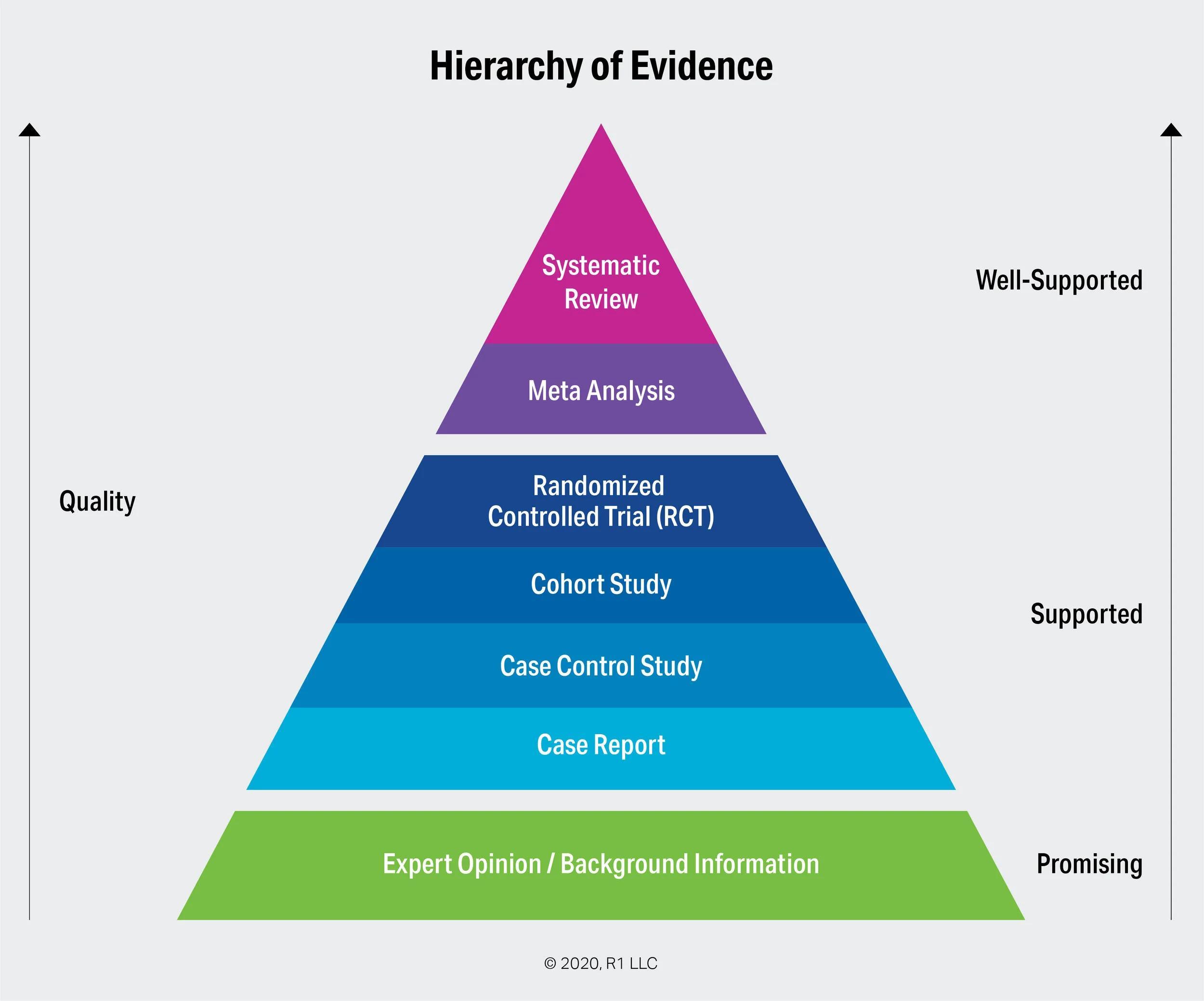
Reliable, quantifiable indicators are essential for translating practice into performance. Emphasize metrics that directly correlate with scoring outcomes-chief among these are Strokes Gained: Putting, make percentage by distance bands (e.g., 0-3 ft, 3-10 ft, 10-20 ft), and average putts per green in regulation. Complement these outcome measures with process metrics such as average putt speed at release, face angle at impact, and backswing-to-forwardswing tempo ratio. Together,outcome and process measures form a coherent framework that permits causal inferences about which technical or psychological changes are producing real enhancement.
Accurate measurement requires standardized tools and protocols. Use high-frame-rate video and optical sensors for face-angle and path; radar/laser devices or calibrated stimp tests for speed; and validated shot-tracking systems for make rates and SGP. Define data-collection rules up front: measurement frequency (e.g., weekly for practice sessions, per round for competition), minimum sample sizes for each distance band, and environmental controls (green speed, slope category). Recommended metrics to capture routinely include:
- Make percentage by distance (0-3 ft, 3-10 ft, 10-20 ft, >20 ft)
- Lag success rate (leaving inside 3 ft on long putts)
- Stroke mechanics (tempo ratio, face angle consistency)
- Strokes gained: putting per round
| Metric | Unit | Practical Target |
|---|---|---|
| Make % (3-10 ft) | % | 60-75% |
| Lag Success (>20 ft) | % inside 3 ft | 50%+ |
| Tempo Ratio | Back:Forward | 1.0-1.3 |
| SGP | Strokes per round | +0.5+ |
Interpreting fluctuations requires statistical rigor. Establish a baseline (minimum 30-50 recorded putts per distance band) and monitor using moving averages and simple control charts to distinguish signal from noise. Use predetermined thresholds for intervention (e.g.,a sustained drop of >0.25 SGP or a 10 percentage point decline in make rate over four weeks).Apply basic hypothesis testing or confidence-interval assessment before attributing causality to a training change; this prevents premature or confounding adjustments and supports reproducible improvements.
Translate metric deviations into targeted, evidence-based interventions. Such as, a consistent open face-angle reading suggests technical drills emphasizing face awareness and short-stroke alignment; poor lag performance indicates speed-control drills with graduated distance ladders and metronome tempo training; variable make rates from 3-10 ft frequently enough respond to focused pressure-simulation practice and pre-putt routine standardization.Implement an iterative cycle-measure,prescribe a focused intervention,re-measure after a pre-specified sample,and adjust-documenting effect sizes and retaining those changes that produce statistically and practically meaningful gains.
Q&A
Q: What is meant by “evidence-based” putting practice?
A: Evidence-based putting practice uses techniques and training protocols that are grounded in empirical research from motor learning, biomechanics, sports psychology, and applied coaching science. Rather than relying solely on tradition or anecdotes, it integrates peer-reviewed findings-about stroke mechanics, visual attention, practice structure, feedback, and psychophysiological factors-into coherent recommendations for improving performance and transfer to competition.
Q: what are the principal theoretical foundations that inform evidence-based putting strategies?
A: Key foundations include motor control and motor learning theory (e.g., the role of variability, contextual interference, and practice schedules), principles of biomechanics (minimizing degrees of freedom, consistent clubface orientation at impact), attentional focus research (benefits of an external focus), and sport psychology (pre-shot routines, arousal regulation, and confidence-building). These theories guide how to structure practice, what mechanics to prioritize, and how to prepare cognitively for competitive putting.
Q: Which biomechanical parameters most strongly predict putting accuracy?
A: Empirical work identifies putter face angle at impact and initial ball launch direction as primary determinants of accuracy. Secondary contributors include clubhead path, impact location on the face, stroke tempo, and consistency of address posture. Minimizing unwanted wrist and forearm motion and promoting a pendulum-like stroke often yield greater consistency of face orientation at impact.
Q: How vital are grip,stance,and alignment relative to stroke mechanics?
A: Grip,stance,and alignment are importent insofar as they promote repeatable address and facilitate a consistent stroke geometry. Research suggests no single grip or stance universally outperforms others; rather, the chosen setup should minimize compensatory motions and allow the player to consistently return the putter face to the desired orientation at impact. Coaches should individualize these elements while prioritizing reproducibility and comfort.
Q: what does research say about visual focus during the putt?
A: Studies on attentional focus and “quiet eye” indicate that longer final gaze durations on the intended target or on a specific point related to the line are associated with better performance. Additionally, adopting an external focus (e.g., on the path of the ball or the target) tends to produce better learning and performance than internal focus (e.g., on limb movement).Q: How should golfers train distance control (lag putting)?
A: Distance control benefits from variable practice and augmented knowledge of results. drills that require putts from multiple distances in randomized order, combined with immediate feedback on terminal error (where the ball stops relative to the hole), produce better transfer and retention than repetitive blocked practice from the same distance. emphasize velocity control, not only stroke length, and practice with realistic green speeds.
Q: What practice schedules and feedback schedules are recommended by motor-learning research?
A: Use a mix of variability and contextual interference-randomized or variable practice schedules enhance transfer compared with strictly blocked repetitions. Feedback should be instructive but faded over time: start with frequent augmented feedback (knowledge of results and some kinematic feedback) and progressively reduce its frequency to promote error detection and self-correction. Encourage distributed practice with deliberate,goal-directed sessions rather than massed,high-volume repetitions.
Q: How should coaches use technology (video, launch monitors, motion capture) in putting training?
A: technology can objectively quantify stroke parameters (face angle, path, tempo, impact location) and support targeted interventions. Use video for gross pattern recognition and self-modeling; employ launch-monitor or motion-capture data to monitor face angle and launch direction.However, technology should be used to inform specific coaching hypotheses and not to create dependency-data should be prioritized that directly links to performance (e.g., start-line accuracy, speed control).
Q: which cognitive and psychological strategies have empirical support for improving putting?
A: Evidence supports structured pre-shot routines,quiet-eye training,self-talk that is instructional and confidence-building,and arousal regulation techniques (breathing,imagery). These strategies help stabilize attentional processes and reduce choking under pressure. Confidence and self-efficacy are robust predictors of putting performance; practice that builds reliable execution under variable conditions fosters confidence.
Q: Are there clear advantages of particular putting grips (conventional vs. cross-handed vs. claw)?
A: The literature does not strongly favor one grip universally. Each grip can be effective if it reduces unwanted wrist movement and promotes a consistent face orientation. Grip selection should be individualized based on comfort and the ability to minimize compensations that lead to face-angle variability.
Q: What drills have empirical or theoretical support for improving specific aspects of putting?
A: Examples aligned with evidence-based principles:
– Start-line drill: place tees/strings to target and practice ensuring ball starts on intended line-improves face alignment control.- Random-distance lag drill: practice putts from 3-20 feet in randomized order to improve distance control via variable practice.
– Gate drill: use small gates near the ball to promote square face at impact and minimize inside-out or outside-in path errors.
– Quiet-eye training: structured gaze training before execution to increase final fixation duration.
Combine these with feedback fading and variability for retention.
Q: How should progress and effectiveness of practice be measured?
A: Use both outcome and process metrics: make percentage over standardized distances (e.g., 3, 6, 12 feet), percentage of putts that start on intended line (start-line accuracy), distance-to-hole for lag putts, and consistency metrics of stroke (tempo, face-angle variability). periodic blocked testing under simulated pressure conditions assesses transfer to competition.
Q: What are common misconceptions about putting that research refutes?
A: Misconceptions include:
– There is a single “correct” grip or stance for everyone.(Refuted; individual differences matter.)
– Massive repetition without variability is best. (Refuted; variable practice generally produces better transfer.)
– Visualizing the path is inferior to focusing on mechanics. (Refuted; external focus and imagery can enhance performance.)
Q: How do age and skill level influence recommended approaches?
A: beginners benefit from simple, prescriptive instructions emphasizing face alignment and distance scaling, with more frequent feedback. Intermediate and elite players benefit more from variable practice, complex contextual interference, and attention to fine mechanical adjustments informed by biomechanical data. Older players may require longer warm-ups and greater emphasis on tempo and rhythm to compensate for strength or adaptability changes.
Q: What are practical recommendations for integrating evidence-based putting into weekly practice?
A: Sample weekly structure (two 30-45 minute sessions + on-course integration):
– Session A (technique/process): 10-15 min warm-up; 20-30 min variable-distance drills with video-based feedback (faded); end with 10 minutes of pressure simulation.
– Session B (task-specific/transfer): 10 min warm-up; 30 min randomized short- and long-distance putting focusing on outcomes; finish with 5-10 min of quiet-eye/mental rehearsal.
Include at least one on-course or green-speed-specific session per week to ensure transfer.Q: How should coaches balance technique coaching with performance-oriented practice?
A: Prioritize performance outcomes early (ball start-line and distance control). Use brief, targeted technical interventions when a measurable deficiency is identified. After technique adjustments, return to performance-oriented practice with variable and contextualized tasks to consolidate changes and ensure transfer.
Q: What limitations exist in the current literature on putting?
A: Limitations include relatively few large randomized controlled trials specifically on putting,variability in ecological validity (lab vs.on-green studies), heterogeneity of measurement methods, and limited long-term follow-up on retention. Many studies emphasize short-term performance; more research is needed on long-term learning and competition transfer.
Q: what are suggested directions for future research?
A: Future work should examine: long-term retention and transfer of evidence-based interventions; individualized prediction models relating biomechanics and practice response; interaction effects of psychological and biomechanical interventions under pressure; and scalable coaching protocols tested in field settings with diverse skill levels.
Q: What are concise,evidence-aligned takeaways for practitioners?
A: – Prioritize reproducible address and minimizing face-angle variability at impact.
– Use an external focus and quiet-eye strategies to stabilize attention.
– Structure practice with variability and randomized tasks; fade feedback over time.
– Train distance control with randomized distances and knowledge-of-results feedback.
– Employ technology diagnostically, but focus on outcome measures relevant to competition.
– Integrate psychological skills (pre-shot routine, arousal control) and test changes under pressure.
If you would like, I can convert these Q&A items into a printable handout for coaches, create a week-by-week practice plan tailored to a specific handicap range, or generate a short annotated bibliography of primary research studies that support these recommendations. Which would you prefer?
Key Takeaways
this review synthesizes current empirical findings on mechanic, perceptual, and cognitive determinants of putting performance to offer a coherent framework for applied practice. key takeaways include the value of a stable, repeatable grip and setup that support an appropriate pendulum-like stroke, the importance of consistent alignment and visual focus to enhance read accuracy, and the efficacy of structured pre-putt routines and attentional strategies for preserving performance under pressure. Importantly, evidence suggests that individualized adjustments-guided by objective assessment of kinematics and outcome data-yield greater gains than one-size-fits-all prescriptions.
For practitioners and coaches, the practical implication is clear: integrate biomechanical assessment, deliberate practice with variable feedback, and mental-skills training into multifaceted practice plans. For researchers, priorities include randomized controlled trials that compare specific intervention components, longitudinal studies of learning and retention, and investigations that link neuromotor measures with perceptual decision-making during real-world putting conditions.
Even though the literature provides actionable guidance, continued cross-disciplinary research is needed to refine dose-response relationships for training, clarify mechanisms of transfer to competition, and identify moderators such as age, handicap, and movement variability. By grounding instruction and practice in evidence while maintaining responsiveness to individual differences, golfers and coaches can systematically enhance putting consistency and effectiveness.
In closing, the pursuit of improved putting performance is best served by an iterative, evidence-informed approach that synthesizes biomechanical precision, perceptual acuity, and robust psychological routines to produce reliable results on the greens.
Evidence-Based Strategies for Improving Golf Putting
Putting Fundamentals: What the Evidence Emphasizes
- Stroke mechanics: Research and biomechanical analyses consistently highlight a shoulder-driven, pendulum-like stroke with minimal wrist action for consistency and repeatability.
- Speed control over line: Controlled studies and performance analytics show distance control (speed) explains more three-putts and long misses than small alignment errors-so practice pace as much as aim.
- Pre-shot routine and focus: Sports science research supports a concise pre-shot routine and the “quiet eye” fixation to improve accuracy under pressure.
- Deliberate and variable practice: Motor learning research demonstrates that variable practice and immediate feedback produce better transfer to on-course performance than mindless repetition.
setup, Grip and Alignment (H2)
Grip & Pressure
Keep grip pressure light and consistent-think of a 2-4/10 on a relaxed scale. Lighter pressure reduces wrist breakdown and helps the putter return on plane. Use whichever grip (reverse overlap,cross-handed,claw) that encourages a square face at impact and minimal wrist action.
Stance & Ball Position
- Feet: shoulder-width to slightly narrower for stability and a consistent stroke arc.
- Ball position: slightly forward of center (towards lead foot) for most putts to promote forward roll and reduce skidding.
- Weight: balanced or slightly forward-this helps a smooth pendulum stroke and consistent contact.
- Eye position: research suggests eyes over or slightly inside the ball improves alignment perception and strike consistency.
Alignment Aids
Use alignment rods, a putting mirror, or the putter’s sightline. Practice aligning the putter face square to the intended line repeatedly-visual alignment consistency is foundational to making good reads and strokes.
Stroke Mechanics & Impact (H2)
- Shoulder-driven pendulum: Initiate the stroke from the shoulders; wrists stay quiet. This minimizes variability and is supported by biomechanical studies of elite putters.
- Face control: Train to return the putter face square to the target at impact-small face-angle errors are multiplied over distance.
- Centered strikes: Aim for centre-of-face contact to maximize predictable launch and roll. Use impact tape or foot spray during practice to monitor strike location.
- Putter loft and forward roll: Modern putting aims to achieve a forward roll quickly after impact. Slightly forward ball position plus a descending stroke with the putter’s loft produce desirable roll characteristics.
Distance Control & Green speed (H2)
Distance control is arguably the single biggest driver of putting performance. The following evidence-based methods are effective:
- Single-stroke length mapping: Associate backstroke length with target distance in practice-use a ladder drill (e.g., 6-, 12-, 18-foot gates) to internalize feel.
- Tempo training: A consistent ratio of backswing to forward swing (e.g., 2:1) helps repeat pace. Use a metronome app to train tempo.
- Practice on different green speeds: Variable practice increases adaptability-alternate between slow, medium and fast surfaces.
- Pre-shot speed check: Take one or two practice strokes matching intended pace rather than purely focusing on line.
Green Reading & Line Strategies (H2)
Green reading blends science and feel. Use these evidence-backed methods:
- Target-fixation method: Identify a precise target point (not just a line) where ball should cross-this narrows focus and improves execution.
- Slope and grain awareness: Read the low point and overall slope.On subtle breaks consider speed playing a larger role than bend.
- Multiple perspectives: Look from behind, from the low side, and walk the line to validate your read. Avoid overcomplicating-pick the read you can commit to.
Practice Drills Backed by Motor Learning Principles (H2)
Here are practical drills that incorporate variability,feedback and progressive challenge-key principles in motor learning:
- Ladder Drill – place balls at 3,6,9,12,15 feet. Putt each distance aiming to make two in a row before moving on. builds distance control across ranges.
- Gate Drill – set two tees slightly wider than the putter head and stroke through to promote a square face and minimal path deviation.
- Clock Drill – putt from multiple points around the hole (3′, 6′, 9′) to practice make pressure and repeated close-range execution.
- Speed-Only Drill – putts from 20-50 feet where the objective is rollout to a given circle (e.g., 3′ radius) rather of making the putt. Trains lag putting pace.
| Drill | Distance | Purpose |
|---|---|---|
| Ladder Drill | 3-15 ft | Distance control across ranges |
| Gate Drill | 3-10 ft | Face/path consistency |
| Clock drill | 3,6,9 ft | Short make pressure |
| Speed-Only | 20-50 ft | Lag putting/3-putt avoidance |
Mental Game & Routine (H2)
Psychology strongly impacts putting performance. Use these evidence-based mental strategies:
- Consistent pre-shot routine: A short, repeatable routine reduces variability. include alignment check, one or two feel strokes, and a final quiet-breath before execution.
- Quiet eye technique: Studies show that a final gaze fixation (~2-3 seconds) on the selected target before the movement improves accuracy-use it for pressure putts.
- Implementation intentions: Phrase plans as “If X, then Y” (e.g., “If the putt breaks right, I will aim left of the hole”)-this reduces decision paralysis under stress.
- Confidence cues: Use positive self-talk and pre-shot imagery of the ball rolling in.Confidence influences committed strokes and reduces tentative contact.
Tracking Progress & Performance Analytics (H2)
Measure what matters. Use simple metrics to focus improvement:
- Putts per round and putts per GIR (greens in regulation).
- Make percentage from key ranges (0-3 ft, 3-6 ft, 6-10 ft, 10-20 ft).
- Three-putt frequency and lag-putt proximity (how often your long putts finish inside 3 feet).
- Stroke Gained: Putting (if available from shot-tracking services) to benchmark against peers.
| Distance | Practice Target Make % |
|---|---|
| 0-3 ft | 98-100% |
| 3-6 ft | 65-80% |
| 6-10 ft | 35-55% |
| 10-20 ft | 10-30% |
Note: Targets are general performance goals; individual baselines will vary. Use your own data to set realistic targets.
Equipment & Fitting Considerations (H2)
- Putter length and lie: A properly fitted putter promotes a consistent setup and stroke plane. Short/long putters can alter shoulder mechanics-fit for your posture.
- Grip style: Choose a grip that reduces wrist collapse and promotes square impact. Counterbalanced or heavier grips can help some players stabilize the stroke.
- Putter head shape: Blade vs mallet is a feel and stability tradeoff.Mallets often offer more forgiveness on face-angle errors.
Sample 4-Week Putting Practice Plan (H2)
Commit 2-3 sessions per week at 20-30 minutes focused practice, plus on-course submission. Use progressive overload: start simple, build variability and pressure.
- Week 1 – Fundamentals & Short Game: 10 min gate drills and 10 min clock drill (0-6 ft).Finish with 10 lag putts (20-30 ft) for rollout control.
- Week 2 – Tempo & Distance Mapping: 10 min metronome tempo; 15 min ladder drill; 5 min pressure makes (3 in a row from 6 ft).
- Week 3 – Variable Surface Work: Practice on faster and slower greens; 15 min speed-only drill; 10 min gate/face control work.
- Week 4 – Pressure & On-Course Transfer: Simulate pressure by giving yourself consequences (e.g., 1-minute plank on miss); track make % and putt proximity on the course.
Benefits & Practical Tips (H2)
- Small improvements in putting can yield large score reductions-focus on reducing three-putts and improving lag proximity.
- Short, focused sessions with clear objectives beat long unfocused practice.
- Combine technical work (face/strike) with tactical practice (speed, pressure) for best transfer to rounds.
First-Hand Experience (Anecdotal Guidance) (H2)
Many players report that switching to a simple pre-shot routine, lowering grip pressure, and dedicating 20 minutes three times a week to structured drills produced measurable gains within a month-fewer three-putts, better make rates from 6-10 feet, and more confident lag putting. Track your data to confirm what’s working for you.
Rapid Checklist Before Every Round (H2)
- Warm-up with short putts (0-6 ft) to build confidence.
- spend a few minutes on 20-30 ft lag putts to calibrate green speed.
- Confirm ball position and eye alignment; check grip pressure.
- Decide on a single pre-shot routine and commit to it.
Implement these evidence-based strategies progressively. Prioritize measurement, deliberate practice and a consistent mental routine-those three pillars will produce sustainable putting improvement.