Putting performance has an outsized effect on scores in both stroke and match play, yet coaches and scientists often disagree on which mechanical and mental changes most reliably reduce variability. This revised synthesis condenses experimental and field-based research on putting mechanics and cognition into practical, evidence-aligned advice for coaches, clinicians, and committed players. Prioritizing measures tied to on-course results, the review weaves together findings about grip, stance, alignment, stroke kinematics, visual strategies, and concise pre-shot routines to highlight methods that consistently improve accuracy and repeatability.
To keep recommendations clear and actionable,the review emphasizes empirical data-direct measurement and controlled trials-over tradition and opinion,and reports outcomes using standard scientific language. Where helpful,laboratory motion‑capture results,randomized training studies,and real-world performance analyses are compared,noting effect magnitudes,situational moderators (green speed,slope,competitive pressure),and feasibility for coaching.The aim is to convert cumulative evidence into practical protocols that raise putting consistency while acknowledging remaining ambiguities and priorities for future research.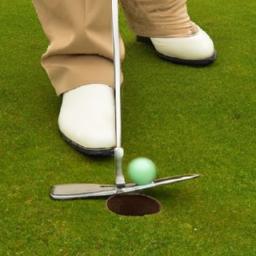
Kinematic Principles for the Putting stroke: Practical, Evidence‑Aligned Guidance on Plane, Tempo, and Face Control
Coherent, repeatable mechanics arise when the putter travels along a stable plane generated mainly by shoulder rotation with minimal self-reliant wrist action. Biomechanical studies show that a shoulder-led, pendulum-style motion reduces the system’s degrees of freedom and lowers endpoint scatter: when the upper torso and shoulder girdle serve as the primary rotation axis the putter head follows a near-constant plane. In practice this implies an address that lines the chest-shoulder axis roughly perpendicular to the intended stroke plane, grip tension that prevents wrist collapse, and posture that allows unhindered shoulder rotation. Anchoring rotation about one dominant center improves momentum transfer through impact and reduces lateral velocity imparted to the ball.
Tempo as a tuning parameter: a steady cadence improves both distance control and timing of face orientation at impact. Experimental work supports using an external pacer (metronome or beat) to cut within-player variability; a consistent timing pattern reduces compensatory moves that can twist the face before impact. Coaches commonly recommend maintaining a consistent backswing:downswing ratio (about 2:1 for longer strokes, nearer 1:1 for very short putts) and practicing to a two- or three-beat cycle for most competitive strokes. Train distance scaling by keeping tempo fixed while progressing from short to medium to long putts so players isolate force control without introducing face-rotation drift.
Face control and workable tolerances are the bridge from repeatable motion to scoring. Small angular errors at impact magnify at the hole, so the objective is to minimize face rotation and strike near the putter’s sweet spot. Coaching targets frequently used in evidence-informed practice are on the order of ±2-4° of face rotation at impact for routine putts and ±1-2° for critical short attempts. Effective drills include:
- narrow-gate drill – set low-profile gates to constrain excessive arc and guide the clubhead along a desired plane.
- impact mirror/video feedback – verify a square face at impact and retrain rotating habits with visual confirmation.
- tempo‑locked combinations – pair metronome pacing with face-feedback to separate speed control from face angle control.
Each exercise stresses the linked behavior of shoulder rotation, putter path, and face orientation rather than treating components in isolation.
Measurement-driven practice and progression connects kinematic goals to observable, trackable metrics and a simple progression plan. Useful variables to monitor are path deviation, face rotation at impact, and tempo variability; inexpensive video or affordable inertial sensors provide objective feedback. The table below lists compact targets and coaching cues that are practical for training and reporting.
| Metric | Recommended target | Practice cue |
|---|---|---|
| Stroke plane deviation | ≤ 5° from nominal plane | Shoulder-led rotation; minimal wrist bend |
| Face rotation at impact | ±2-4° (routine); ±1-2° (high‑pressure) | Mirror or slow‑motion video checks |
| Tempo variability | CV ≤ 10% across sessions | Metronome or beat-based pacing |
Grip Choices and Pressure control: Practical, Evidence‑Oriented Parameters for Hand Placement and Tension
recent biomechanical research highlights that grips should be selected to limit wrist motion and promote a single‑plane, pendulum-like action of the clubhead. Comparative analyses of common grips-traditional reverse‑overlap, cross‑hand, and claw/neutral styles-show no single universal winner; each changes joint angles and force distribution at the handle. Traditional grips generally preserve compact feedback and feel, cross‑hand grips can reduce lead‑wrist breakdown and lateral dispersion for many players, and claw or neutral grips reduce trailing-hand torque by de‑emphasizing it’s contribution. Choice should therefore be driven by which grip demonstrably lowers stroke variability and improves felt face control during quantified practice.
Hand position affects wrist moment arms and how much active hand manipulation occurs during the stroke. Raising the lead hand slightly and aligning the lead forearm with the shaft to form a near‑continuous forearm‑shaft line tends to curb compensatory wrist motion. Conversely, extreme offsets or stepped grips raise rotational moments that translate into wider directional spread. From a motor‑control perspective, an optimal placement creates balanced pressure distribution and consistent proprioceptive input between hands, supporting reliable feedforward timing and a stable face trajectory through the ball.
grip pressure is a major source of shot‑to‑shot variability. Empirical and applied findings converge on a low‑to‑moderate tension strategy: an overly light hold increases micro‑wobble and timing noise, whereas an excessively tight grip causes muscle co‑contraction and reduces shock absorption, harming distance control. The table below offers pragmatic starting points on a 1-10 tension scale (1 = near‑no pressure, 10 = full squeeze):
| Stroke Context | Target Pressure (1-10) |
|---|---|
| Short putts (<6 ft) | 3-4 |
| Mid-range putts (6-20 ft) | 3-5 |
| Long putts (>20 ft) | 4-6 |
These are baseline recommendations; players should measure intra-session consistency (tempo, dispersion) and adjust individual targets accordingly.
Turn these mechanical principles into durable habits with drills and attentional rules designed for retention and transfer. Examples include:
- pressure ramp sequence: start with a light grip and slowly increase pressure over a short series while tracking rollout and dispersion.
- palms‑aligned drill: insert a thin pad or lightweight sensor between palms to check symmetrical force sharing.
- gate + pressure variation: use a narrow path together with deliberate pressure changes to train face control under constraint.
Pair drills with an external focus instruction (for example, “roll to the back edge”) and objective feedback (video or pressure readings). Progressive overload of pressure demands and consistent measurement reduce variability and improve reliable distance control across green types.
Stance, Posture, and Eye Positioning: Research‑Backed Protocols for repeatable Aim and Visual Referencing
Biomechanical and perceptual research converges on a compact set of position principles that support high‑probability putting. A neutral spine maintained by a hip hinge with modest knee bend minimizes unwanted torso rotation and preserves a repeatable arc. A stance from shoulder width up to about 1.25× shoulder width balances lateral stability with freedom for shoulder movement; overly wide stances can hinder fluid rotation. Evidence also shows that placing the eyes over, or slightly inside, the ball‑to‑target line lessens parallax and stabilizes the visual frame used to program the stroke.
Condense laboratory and field findings into a short pre‑putt checklist that players can run through under pressure.Core checkpoints:
- Stance width: shoulder width → 1.25× shoulder width for reproducibility.
- Spine angle: maintain a hip hinge to prevent head drop during the stroke.
- Weight: centered or slightly toward the lead foot (~50-60%) for stability.
- Eye alignment: pupil or bridge of the nose vertically over or slightly inside the target line.
- Ball position: centered to mildly forward depending on stroke type and toe‑hang of the putter.
Rehearsing these elements as a single, integrated routine promotes automaticity and lowers cognitive demand during execution.
| component | Target Range | Primary rationale |
|---|---|---|
| Stance width | Shoulder-width → 1.25× | Balance while preserving shoulder mobility |
| Spine angle | Hip hinge, neutral | Limits torso rotation |
| Eye position | Over or slightly inside line | Reduces visual parallax |
Visual targeting goes beyond static setup; perceptual‑motor training strengthens on‑green execution. Brief final fixations (about 1-2 seconds) on the intended target and line, combined with drills that limit head and eye movement (mirror checks, rod‑guided strokes), consolidate sensorimotor mapping and cut variability. Coaches should stress the relationship between stable gaze and posture: small, steady head positions create consistent optical flow and more accurate feedforward control of the putter path. integrating these posture and gaze checks into routine drill cycles yields measurable reductions in directional spread and higher putt conversion rates in practice.
Alignment Aids and Setup Technology: Merging Visual targets with Biomechanical Feedback to Pinpoint Error Sources
Modern setup and green‑reading methods pair visual alignment aids with biomechanical feedback to reduce bias and noise in short putting. Tools such as aiming lines on putters, peripheral alignment sticks, laser guides, and mirrors supply an external reference that constrains the club and body. Coupled with biomechanical sensors-pressure mats, inertial measurement units, and face‑angle monitors-practitioners can separate misses caused by perceptual mis‑aiming, inconsistent posture, or pure kinematic variation.Motor‑control research shows that constraining initial conditions (consistent stance, gaze, face orientation) reduces movement variability, making combined visual‑biomechanical systems effective for diagnosing the root cause of error.
On‑green implementation should prioritize specificity, low intrusion, and staged feedback. Key recommendations:
- Calibrate: make sure visual aids are aligned precisely with the intended target line and verify with a fixed camera or laser to avoid systemic bias.
- Simplify: use one primary target (hole edge, ball line, or putter line) to prevent divided attention.
- Quantify: capture a short baseline (10-20 putts) with sensors to get face angle, path, and weight distribution metrics.
- Fade feedback: begin with high‑frequency augmented feedback then reduce it to promote internalization and transfer.
Distinguish short‑term performance gains from long‑term learning. High‑frequency augmented feedback speeds early correction but risks creating dependency if not tapered; schedule blocks of high‑feedback practice interleaved with low‑feedback and variable conditions (different distances and slopes). Apply motor‑learning principles such as external focus and variable practice: direct attention to alignment targets rather than internal limb positions. For assessment,prioritize a concise set of robust metrics (mean face angle at impact,stroke path deviation,pre‑stroke weight bias) and realistic target ranges (reduce face‑angle SD toward a few degrees and keep weight distribution within ±5% of baseline where feasible).
Tool comparison:
| Tool Category | Primary Output | PracticalUse |
|---|---|---|
| Visual aids | aim line, focal reference | Quick alignment checks on the green |
| Pressure sensors | Weight distribution, timing shifts | Detects sway and lateral bias during the stroke |
| Inertial sensors | Tempo, path, face angle | Quantifies kinematic repeatability across reps |
Bottom line: combine an external aiming reference to stabilize alignment with intermittent biomechanical diagnostics to identify and correct the underlying movement pattern. This twofold approach narrows the solution space perceptually while using objective measures to steer durable motor learning and real‑world transfer.
Green‑Reading and Speed Control: Cognitive Methods and Practice Drills to Hone Distance Perception
Perceptual calibration for rollout distance treats the green as a sensory‑motor map rather than a purely mechanical conversion. Perceptual‑motor studies show golfers build internal models that translate stroke force into ball travel from repeated exposure to reliable cues (grain,slope,and surface speed) and corrective feedback. Routines that use stable visual anchors (for example, lining up a subtle turf mark with the intended line) and a short pre‑putt visual sequence improve consistency of the distance estimate. In cognitive terms, a good calibration strategy shifts reliance away from noisy instantaneous judgments toward stored sensorimotor mappings keyed to contextual cues (slope class, grass variety, perceived speed).
Choose drills that isolate components of distance control. Evidence‑aligned drills include:
- increment ladder: putts to targets at 3,6,9,and 12 feet giving only speed feedback to teach graded force scaling.
- speed focus drill: repeat long putts (15-30 ft) aiming to stop within the same small radius to deprioritize line searching and emphasize force.
- radial clock drill: a dozen short putts around the cup at equal distance to train feel and radial consistency.
- blocked→random transition: begin with blocked reps at a single distance, then switch to randomized distances to encourage flexible retrieval and retention.
These progress from tightly controlled encoding of force to robust retrieval under variability.
Practice structure matters: deliberate practice with targeted error feedback leads to faster, longer‑lasting gains than sheer volume. Use augmented feedback sparingly (such as, objectively reporting rollout distance) and fade it as performance becomes consistent so golfers learn to trust intrinsic cues (sound, feel, visual flow). The contextual interference literature suggests starting with blocked practice to build an initial mapping, then moving to random practice to boost transfer to on‑course variability. Cognitive strategies-such as mentally picturing the intended rollout and using a single‑word trigger to start the stroke to preserve automaticity-reduce decision noise and improve execution under pressure.
Below is a compact 30‑minute practice template that puts these principles into action; short, frequent sessions emphasizing variability and intermittent objective feedback produce strong calibration improvements.
| Drill | Primary Goal | Suggested Reps |
|---|---|---|
| Ladder/Increment drill | Graded force scaling | 3 sets × 4 distances |
| Speed‑only drill | Consistent rollout magnitude | 8-12 putts |
| Clock drill | Radial consistency & feel | 12 putts (1 each position) |
| Randomized mix | Transfer to on‑course variability | 10-15 mixed‑distance putts |
Use brief pre‑trial visual checks, track rollout distances for objective feedback, and progressively remove external cues to consolidate an internally accessible sense of speed.
Routine, Focus, and Arousal Control: Cognitive Tools and Pre‑Stroke Rituals to Sustain Performance Under Pressure
A compact,evidence‑informed pre‑stroke routine lowers cognitive load and stabilizes physiological arousal. Key components are:
- single perceptual anchor: hold a focused external target (rim of the cup, a turf spot) for 1-2 seconds to steady gaze.
- rhythmic cue: a 2-3 second breath or a metered head/putter rhythm to standardize timing across strokes.
- brief imagery: a single,vivid image of the desired roll rather than detailed stepwise rehearsal.
- consistent trigger: a simple motion (takeaway to a fixed point) that initiates execution and ends conscious deliberation.
Managing arousal and attention can be operationalized with quick in‑game interventions.The table below links typical physiological/attentional states to immediate actions players can use to re‑establish an effective window of focus and calm activation.
| Arousal level | Signs | Immediate intervention |
|---|---|---|
| Low | Flat affect,slow rhythm | slightly quicken tempo; use an energizing cue word |
| Optimal | Calm,steady breath | Keep routine; single external focus |
| high | Rapid breathing,scattered thoughts | Long exhale,simplify cue to one word,reset anchor |
Build cognitive tools into practice with variability and pressure simulation to promote transfer. Recommended procedures:
- blocked→random progression: overlearn the routine in low‑pressure settings,then challenge it under noisy or time‑limited conditions.
- criterion advancement: only progress when routine fidelity and outcome variability meet predefined thresholds.
- self‑monitoring: keep simple logs of routine adherence, perceived arousal, and dispersion to guide small, data‑driven tweaks.
These methods help form prestroke schemas that resist competitive disruption and preserve consistency from putt to putt.
Program Design and Competition Transfer: Drill Progressions, Metrics, and Coaching Tactics Grounded in evidence
Organize training around specificity, progressive overload, and representative task constraints. Structure microcycles that alternate targeted technical work with performance‑oriented sessions so motor patterns become both refined and robust in variable conditions. Early blocks should favor short, high‑quality repetitions (distributed practice), evolving into longer, tournament‑style sequences. Define session goals (accuracy, speed calibration, or green reading) and record a primary outcome for each session. Specificity and transfer improve when practice mimics competitive constraints (stimp readings,target geometry,visual distractions).
Progress drill complexity from constrained, single‑variable work to multi‑faceted, decision‑rich tasks that replicate on‑course demands. Typical progression:
- Gate calibration – constrained groove to stabilize face and impact location (initial stage).
- Ladder range – stepped distances to improve speed scaling and feel (intermediate).
- Match simulation – alternating putts with scoring and penalties to surface emotion and decision making under pressure (advanced).
Measurement must be objective, reliable, and sensitive to change. Core session metrics include make percentage by distance band, mean distance‑to‑hole (DDH) on misses, coefficient of variation for stroke length, and temporal consistency (backswing:downswing ratio). Where available, supplement with video or wearable inertial data for kinematic indicators (face‑angle SD, impact loft). The table below maps progression stages to primary metrics and monitoring cadence.
| Progression Stage | Primary Metric | Assessment Frequency |
|---|---|---|
| Calibration | Impact location consistency | Weekly |
| Scaling | Make % per distance band | 2×/week |
| Competition‑sim | Mean DDH + clutch makes | End of each cycle |
coaching should emphasize structured, gradually reduced feedback and foster player autonomy to enhance retention and transfer. Use reduced‑frequency summary feedback in later phases, and early bandwidth feedback to allow exploration while preventing drift. Promote individualized pre‑shot routines and graded pressure exposure (practice with consequences, simulated crowds, or competitive scoring) to habituate stress responses. Periodize putting work within the broader season plan: intensify competition‑specific practice before events and allow recovery plus technical recalibration afterward,guided by session metrics. Clear cues,measurable targets,and routine fidelity yield the most reliable transfer to tournament play.
Q&A
Q: What counts as “evidence‑based” putting instruction?
A: Here, “evidence‑based” means recommendations grounded in direct measurement and controlled study rather than anecdote. Common empirical methods in putting research include motion capture, force‑plate analysis, eye‑tracking, randomized practice interventions, and performance testing under manipulated feedback or pressure conditions. (See note on evidence below.)
Q: Which grips are supported by the empirical literature for steady putting?
A: Studies don’t single out one universally best grip. Instead they underline principles:
– Reduce independent wrist motion. Grips that encourage a linked wrist (reverse‑overlap and its variations, or claw‑type holds) tend to cut face rotation and variability.- Reproducibility and comfort matter. A grip a player can reliably reproduce in practice and competition predicts better carryover.- For involuntary wrist issues (“yips”), clinical reports and case studies show option grips (claw, cross‑hand) often reduce maladaptive movement and improve outcomes.
Practical tip: pick a grip that promotes a pendulum stroke with minimal wrist action and verify its effect through quantified practice (make % from standard distances).
Q: What does research say about stance, posture, and setup?
A: Convergent findings include:
– A stable base and limited trunk sway improve distance control.
– Eyes over or slightly inside the ball‑to‑target line with a forward spine tilt encourage a pendulum stroke and predictable face orientation.
– Moderate knee flex and a hip hinge (not an upright stance) help maintain a consistent center of mass and stroke plane.
Practical tip: use a balanced, repeatable setup (feet roughly shoulder‑width, moderate knee bend, spine tilt aligning eyes over the ball) and confirm consistency with session metrics (contact dispersion, make rates).
Q: How should alignment be trained in an evidence‑based routine?
A: Research indicates:
– Systematic misalignments are common and materially affect outcomes; objective aim checks are thus valuable.
– External aids (alignment rods, ball marks) improve initial aim and transfer when practiced deliberately.
– Perceptual training that trains visual cues for the target line improves accuracy.
Practical tip: use objective alignment checks in practice (mirror or alignment rod), train aiming with feedback, and add a secondary visual confirmation to guard against unnoticed mis‑aiming.Q: Which stroke mechanics give the most consistent roll and distance control?
A: Evidence favors:
– A shoulder‑driven pendulum with limited wrist and hand manipulation for more consistent face angle and roll.
– Early forward roll (minimizing skid) and consistent launch conditions improve distance control; smooth acceleration through impact promotes quicker roll.
– stable tempo (backswing:forward swing ratio) strongly predicts repeatability.
Practical tip: train shoulder‑led strokes,accelerate through impact to encourage early roll,and monitor tempo with a metronome or internal count.
Q: What motor‑learning principles should guide putting practice?
A: Applied motor‑learning research suggests:
– variable practice (mixing distances and slopes) enhances retention and transfer relative to purely blocked repetition.
– Augmented feedback is useful early but should be faded; high immediate feedback enhances acquisition but can harm retention if not reduced.- Randomized practice schedules produce better transfer than highly blocked ones.
Practical tip: combine deliberate repetition for stability with random/variable practice for adaptability; use feedback to diagnose and then progressively reduce it.
Q: How do cognitive and attentional factors affect putting under pressure?
A: Studies show:
– Consistent pre‑shot routines and automatized motor programs protect performance in pressure situations.
– Longer final fixations (“quiet eye”) correlate with improved accuracy across sports, including putting.
– Looking inward at mechanics under pressure frequently enough disrupts performance (reinvestment); an external outcome focus tends to be more robust.
Practical tip: develop a concise routine with a quiet‑eye element and external focus, and rehearse it under simulated stress to build resilience.
Q: What helps players with the “yips” or involuntary movement?
A: Case studies and intervention reports support a multifaceted approach:
– Technical changes (alternative grips, stabilizers) to alter biomechanics and sensory feedback.
– Psychological techniques (reframing, desensitization, attentional training).
– Motor relearning through a changed movement pattern and focused blocked practice of the new technique.
Practical tip: combine a grip/stroke change with psychological strategies and progressive exposure; track objective metrics to evaluate progress.
Q: How should coaches use technology (video, launch monitors, pressure sensors)?
A: Technology provides objective diagnostic information when used judiciously:
– Video and motion capture reveal kinematic deviations and guide targeted practice.
– Launch/stroke analyzers give reliable measures of face angle, roll, and launch that correlate with outcomes.
– Beware overreliance; structure feedback (summary KPIs, scheduled checks) instead of continuous streams to promote internalization.
Practical tip: use tech to diagnose and set measurable goals (e.g., face-angle variability within specific degrees), then taper feedback to enhance learning.Q: How should pre‑shot routines and mental rehearsal be structured?
A: Evidence indicates:
– A short, consistent pre‑shot routine builds automaticity and stability.
– Imagery that simulates sensory and temporal aspects of the putt strengthens motor planning.
– Routines should emphasize outcome and environmental cues rather than last‑moment mechanical instructions.
Practical tip: design a 10-20 second routine (visualize the line, quiet‑eye fixation, a feel practice stroke, and a single trigger) and rehearse it in varied practice settings.
Q: How should progress be measured in an evidence‑based program?
A: Combine performance and process metrics:
– Performance: make % from standard distances, strokes‑gained putting (when round data are available), and outcomes under pressure.
– Process: face‑angle variability, tempo ratios, launch data, and routine fidelity.
– Transfer: retention tests and simulated competitive conditions to evaluate real‑world application.
Practical tip: set baseline metrics, apply targeted interventions, and reassess with the same objective measures-prioritize retention and transfer over short‑term acquisition gains.
Q: Which common coaching myths does the literature correct?
A: Research refines or refutes several widespread beliefs:
– “One grip fits all” – evidence supports choosing grips that reduce variability rather than mandating a single style.
– “Massed repetition is best” – variable and random practice generally yield better retention and adaptability.
– “More feedback always helps” – excessive immediate feedback can impede learning; a faded schedule is preferable.
– “Thinking mechanics helps under pressure” – explicit monitoring often degrades performance; automation and external focus are protective.
Practical tip: base interventions on motor‑learning principles and objective measurement rather than tradition alone.
Note on evidence and interpretation
– “Empirical evidence” here means data from direct observation and measurement, distinct from anecdote or pure theory. When changing technique, favor reproducible results from controlled studies and objective metrics; where findings conflict, use individualized testing with quantified evaluation to determine what transfers for a particular player.
Recent shot‑tracking and performance analyses through 2024 reinforce the central message: putting and short‑game skills account for a major portion of scoring differences, and small, consistent technical or cognitive adjustments can yield measurable on‑course gains. If desired, this Q&A can be condensed into a one‑page practitioner checklist, converted into an evidence‑rated training plan with drill progressions and metrics, or paired with a short bibliography of representative empirical studies supporting the recommendations.
this synthesis melds biomechanical and cognitive evidence to highlight putter grip, stance, alignment, and decision‑making strategies that reliably relate to better putting outcomes. The reviewed research indicates that modest, repeatable setup and stroke changes-combined with targeted perceptual training and concise decision frameworks-produce meaningful improvements in accuracy and consistency. These conclusions rest on convergent empirical findings rather than single definitive proofs,so practitioners should adopt systematic,measurement‑driven approaches,monitor outcomes,and tailor interventions to the individual player.Future work should expand sample sizes, use ecologically valid test settings, and employ longitudinal designs to sharpen effect estimates and boundary conditions.by pairing rigorous inquiry with disciplined practice, coaches and players can convert the best available evidence into lasting improvements in putting performance.
Putting Precision: Proven, Science-Backed Methods to Sink More Putts
Why evidence-based putting improves your short game
Modern golf instruction is moving from opinion to evidence. Research from motor learning, biomechanics, and sport psychology shows consistent patterns that lead to better putting performance: a stable pendulum-like stroke, accurate speed control, effective green reading, and repeatable pre-shot routines. Use these science-backed strategies to improve alignment, pace, and confidence across all distances on the green.
Key principles backed by research
- External focus improves performance: Studies in motor learning show directing attention to the intended ball path or target (external focus) produces more automatic,accurate putting than focusing on body mechanics.
- Pendulum mechanics reduce error: A stroke that minimizes wrist action and uses shoulder rotation improves consistency by reducing degrees of freedom.
- Quiet eye and visual focus: Maintaining a stable visual focus on a specific spot (quiet eye) instantly before and during the stroke enhances accuracy under pressure.
- Speed-first putting: Controlling pace is more important than perfect line-good speed leaves makeable comeback putts keeping 3-putts rare.
- Intentional and variable practise: Structured,variable drills that simulate on-course pressure lead to better transfer than thousands of mindless reps.
Stroke mechanics: build a reliable putting stroke
Work toward a simple, repeatable stroke that minimizes variability.
Set-up and alignment
- Feet: shoulder-width or slightly narrower for stability.
- Eyes: ideally over or just inside the ball line to improve alignment; confirm with mirror or camera if needed.
- Ball position: slightly forward of center for pendulum strokes (varies by putter type).
- shoulder-level aim: align shoulders,hips,and feet parallel to the target line.
Stroke path and mechanics
- Use the shoulders to create the back-and-through motion; minimize wrist hinge.
- A slight arc is normal for mallet and blade putters-match your putter face to the path.
- Keep the putter face square at impact by controlling rotation through the forearms and shoulders.
- Tempo consistency: a stable rhythm (e.g., 1:2 back-to-through) reduces timing errors.
Touch and speed control: the difference between 1-putt and 3-putt
Most missed putts are about pace. If you can control speed, you give yourself lots of second-chance opportunities.
Distance judging drills
- short ladder drill: place tees at 3, 6, 9 feet-putt to stop the ball as close as possible to each tee.
- downhill/uphill tempo drill: practice the same tempo on varied slopes to internalize pace adjustments.
- One-handed feel drill: take 20 putts with only the dominant hand on the grip to develop feel and release.
Speed-first ideology
Aim to have pace that leaves a comeback putt inside a cozy make range (e.g., within 3 feet). Research and tour-player tendencies show players with better speed control have fewer 3-putts and lower scoring averages.
Green reading: line,slope and the science of perception
Reading greens is a perceptual skill. Combine observation with a repeatable process.
- Use a consistent read routine: walk the fall line, check from low and high angles, and take a last look from behind the ball.
- Pay attention to surface cues: grain direction, moisture, and cut patterns change ball speed and break.
- Visualize the putt: picture the ball rolling along the intended line to prime motor systems (external focus).
Mental approach: routines, pressure handling and confidence
Sport psychology principles are directly applicable to putting.
- Create a short, repeatable pre-putt routine-visualize, breathe, align, commit.
- Use breathing or a one-phrase cue to reduce arousal and promote the quiet eye.
- Focus on process goals (commit to a line, maintain tempo) rather than outcome alone.
- Practice pressure by adding consequences in drills (betting, points, timed challenges).
Practice drills: deliberate and variable
Structure practice to prioritize transfer from practice to play.
- Mix short- and long-distance putts in the same session to create variability.
- Use task-relevant pressure: record makes, play points matches, or add a small penalty for misses.
- Limit mindless reps-create short blocks (10-15 minutes) of focused, deliberate practice with clear objectives.
| Drill | purpose | Time |
|---|---|---|
| Gate Drill | Improve face control through impact | 10 mins |
| 3-2-1 Ladder | Speed control at 3, 6, 9 ft | 12 mins |
| Pressure Points | Simulate pressure; build routine | 10-20 mins |
Equipment and putter fitting
A properly fitted putter reduces compensations and enhances confidence.
- Length: too long or too short alters posture and repeatability-fit so shoulders control stroke.
- loft and lie: ensure face meets the turf with consistent loft; modern putters frequently enough need less loft than advertised depending on ball position and stroke.
- Head design: choose a head that matches your preferred path (face-balanced for straight-back-straight-through; mallet for stability on arced strokes).
- Grip size: larger grips can reduce wrist action and help stabilize the stroke for some golfers.
Tailored plans: beginners, club players and tour pros
Here are short evidence-based plans you can adapt.
Beginners (focus: fundamentals & confidence)
- Goal: build a simple routine and reliable distance control.
- Weekly plan: 3 sessions × 20 minutes; 50% short putts (3-6 ft), 30% mid-range (6-18 ft), 20% speed drills.
- Key drills: 3-2-1 Ladder, Gate Drill, 5-minute quiet-eye visualization before each putting session.
Club players (focus: match-play readiness & variability)
- Goal: reduce 3-putts and become comfortable with a range of slopes and speeds.
- Weekly plan: 4 sessions × 30-40 minutes; include variable-distance drills and pressure competitions.
- Key drills: Pressure Points, Downhill/Upward Tempo, One-handed feel.
Tour pros & high-performance players (focus: marginal gains)
- Goal: Fine-tune visual routines, equipment, and micro-adjustments under tournament pressure.
- Weekly plan: Daily short sessions focused on tempo, green simulation, and pre-shot routine rehearsal with sports psychology support.
- Key drills: Advanced pressure simulations, biomechanical analysis, individualized fitting sessions.
Coaches: implementing evidence-based instruction
Coaches should blend principles from motor learning with practical on-course application.
- Use video feedback sparingly-focus on outcome and feel, not over-coaching mechanics.
- Teach an external focus (target line/ball roll) before internal cues.
- Prescribe variable practice: change distances, slopes and pressure to increase adaptability.
- Measure progress: track make percentages by distance and 3-putt frequency.
Benefits and practical tips
- Lower scores: fewer 3-putts and better from 6-20 ft translate directly into lower round scores.
- Faster on-course decisions: a standardized routine speeds reads and builds confidence under time pressure.
- Transferable skills: tempo and speed control help with chipping and pitch shots as well.
Case study: how a weekend hacker improved by 3 strokes in 6 weeks
Player profile: 85-90 handicap, inconsistent from 6-20 ft. Intervention: three 20-minute focused sessions per week emphasizing speed-first drills, an external-focus pre-shot cue, and a consistent 8-step routine. Outcome: make percentage from 6-15 ft improved by ~30%; 3-putt rate dropped by more than half across eight rounds. Main takeaway: simple, targeted practice delivered measurable on-course betterment.
Swift checklist before every putt
- Walk the line, pick a target spot on the green (external focus).
- Align feet, hips and shoulders to the target line.
- Visualize the ball path (quiet eye for 2-3 seconds).
- Set your tempo and breathe once to settle nerves.
- Commit to the stroke-no last-second adjustments.
First-hand tip from instructors
Many coaches recommend spending 60% of practice time on 3-20 ft putts as these are where strokes are won or lost. The emphasis should be on variability, pressure simulation, and external focus cues rather than endless technical tinkering.
FAQ – quick answers to common putting questions
Q: how much should I practice putting each week?
A: Quality beats quantity. 3-5 short focused sessions of 20-30 minutes each are typically more effective than a single long session. include deliberate drills with variability and pressure.
Q: Should I change my grip if I’m inconsistent?
A: Try a larger grip to reduce wrist action first. If inconsistency persists, a full fitting and a coach-led video analysis can reveal posture or face-angle issues.
Q: Do alignment aids help?
A: Yes-alignment sticks, tees, and marked balls provide immediate feedback and can accelerate learning when used deliberately.
Want a version tailored to your audience?
Looking for a beginner-friendly plan, a tour-pro level training template, or a coaching lesson plan you can hand to students? Tell me which audience (beginners, club players, tour pros, coaches) and I’ll generate a tailored 4-week practice schedule, downloadable drill sheet, and a printable pre-shot checklist optimized for that group.