
Golf is a game of precision were small, repeatable errors compound quickly – especially for players just starting out. In this evidence-based guide we identify the eight most common beginner mistakes across three high-impact areas – the full swing, putting, and driving – and provide clear, practical solutions: corrective strategies, focused drills, and measurable metrics to track progress. By “beginner” we mean players who are new to the game or still developing core fundamentals, and the advice here is designed to accelerate learning while minimizing frustration.
Each mistake is explained in plain terms, followed by the biomechanical or tactical cause, a step-by-step corrective plan, one or two drill variations you can practice on the range or green, and objective measures you can record to monitor betterment. Whether your priority is increased consistency off the tee, cleaner contact in your irons, or fewer three-putts, this article equips you with the actionable tools and benchmarks needed to turn common faults into reliable skills. Start here to build sound fundamentals, practice smarter, and see measurable results on the course.
Correcting grip Flaws to Improve Control and Consistency with Targeted Drills and tracking Metrics
Start with a repeatable neutral hold: establish a grip that keeps the clubface controllable through impact by placing the lead hand so that 2-3 knuckles are visible on a right-handed player and the V between thumb and forefinger points to the right shoulder. Place the trail hand so it covers the lead thumb with the lifeline of the trail hand closing over the lead thumb for an overlapping, interlocking, or baseball grip-whichever allows comfort and connection. Grip pressure shoudl be light: target a subjective 3-5 out of 10 (firm enough to retain control but not so tight that the forearms tense). Many of the Top 8 common mistakes-such as gripping too tightly, inconsistent hand placement, and using an overly strong or weak grip-trace back to setup; correcting these at address reduces tension and improves contact immediately. Remember that anchoring a putter is not permitted under the Rules of Golf, so practice putting grips that comply while maintaining neutrality in the hands.
Next, connect the grip to measurable swing outcomes: the primary reason a bad grip produces slices, hooks, or inconsistent contact is misalignment of the clubface at impact. Diagnose your grip by observing ball flight-an open face usually produces a slice, a closed face a hook-and confirm with an impact tape or face-marker. work toward a target of keeping the clubface within ±2 degrees of square at impact; use a launch monitor if available to track face-to-path, clubhead speed, and launch angle. For on-course practicality, when facing a windy tee shot where a controlled fade is safer, intentionally weaken the trail-hand rotation by about 5-10 degrees relative to your neutral hold to open the face slightly and promote left-to-right curvature while maintaining the same body alignment and ball position.
Use targeted drills to reprogram feel and build consistency. Try these simple, effective exercises daily to train grip position, pressure and release:
- Impact-bag drill: take 10 short swings into an impact bag focusing on a neutral grip and a firm, steady left wrist through impact;
- One-hand swing series: 15 reps with the lead hand only, then 15 with the trail hand only to build self-reliant control and reveal compensations;
- Towel-under-arm drill: place a small towel under the lead armpit and make 30 slow swings to promote connected arm-body motion and discourage excessive arm swing;
- Face-control gate: set two tees just wider than the clubhead at address and hit 20 shots ensuring the face passes cleanly between tees-this instills square-face awareness.
Track progress by noting strike location (aim for >80% center strikes on a strike mat), shot dispersion radius at target distances, and clubface angle readings from a launch monitor when possible.
Translate grip work into the short game and advanced shot-shaping. For wedges, maintain a slightly stronger lead-hand grip to secure a descending blow and 5-10 degrees of shaft lean at impact for crisp turf interaction; for chips and pitches use a softer grip pressure and allow the wrists to hinge lightly so the hands lead the clubhead through contact.When shaping shots-fade, draw, low punch-make small, deliberate grip adjustments: a slightly stronger trail-hand rotation (3-7 degrees) encourages a draw, while a slightly weaker trail-hand position promotes a fade. Advanced players should monitor spin rates and face-to-path data: such as, reducing driver spin into an ideal range and keeping face-to-path within ±2° often converts tighter dispersion into lower scores.
implement a measurable practice-to-play plan that ties grip corrections to course management. A weekly routine could be: 10 minutes of grip and impact-bag work, 20 minutes of one-hand and gate drills, 20 minutes of short-game repetitions, and a simulated on-course session where you play 9 holes using only the corrected grip.Use a practice log to record metrics-fairways hit %, GIR, average proximity to hole, putts per round, and strokes gained relative to your baseline-and set specific targets like reduce 3‑putts by 50% in 8 weeks or shrink driver dispersion to within 20 yards at your typical carry distance. Keep troubleshooting checkpoints handy:
- are you showing the correct knuckles on the lead hand?
- Is your grip pressure steady at 3-5/10 throughout the swing?
- Does the clubface return to square at impact (check with a marker or launch monitor)?
Combine these technical checks with a consistent pre-shot routine and breathing cue to manage nerves and reinforce motor patterns-this integration of grip mechanics, drills, equipment checks (grip size and wear), and tracked metrics produces lasting control, improved consistency, and measurable scoring gains for golfers at every level.
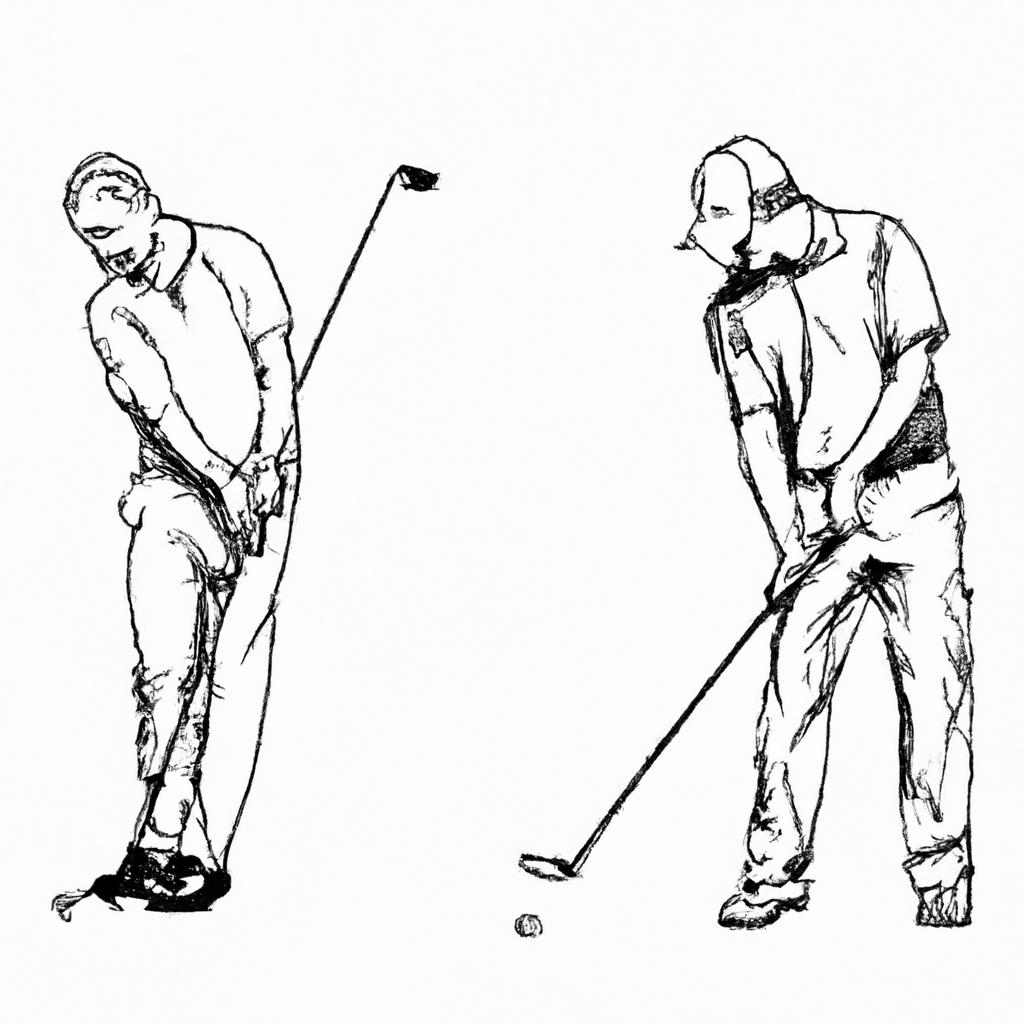
optimizing posture and Setup for a Repeatable Swing and Measurable Alignment Checks
Establishing a consistent posture and setup is the foundation of a repeatable swing; start with a neutral spine angle of approximately 20-30° tilt from vertical so the shoulders can rotate freely without compression of the lower back. Position your feet shoulder-width apart for mid-irons (wider for longer clubs), with a knee flex of about 15-25° and a modest hip hinge – not a rounded upper back – to maintain balance through the swing. For ball position use objective references: driver: inside of lead heel, mid-irons: center of stance, short irons: slightly back of center. At address, aim for a neutral grip and set the hands 0.5-1 inch ahead of the ball for irons to promote a descending strike and slightly less forward for the driver to aid a sweeping motion. These measurable setup cues reduce variability and create a dependable base for swing mechanics and short-game control.
Next, build alignment and measurable checks into every practice and pre-shot routine so direction becomes reproducible under pressure. Use simple tools and methods: alignment sticks parallel to the target line, place a club shaft across your toes to confirm foot alignment, and use a mirror or smartphone camera for visual feedback. Aim for alignment accuracy within ±2° of your target line as a practice goal – small angular errors at address translate to large misses at distance. Practical drills:
- Two-Club Alignment Drill: lay one stick on the target line and one at your feet; make 20 putts and 20 half-swings focusing on keeping the sticks parallel.
- Gate/Toe-Tap Drill: place tees or small cones to ensure consistent ball position and toe alignment; swing through without touching the gates.
- mirror/Video Check: record 10 swings from down-the-line and face-on once per practice session to track spine angle and shoulder alignment.
These checks help eliminate the common alignment errors that send novice shots offline and are essential for reliable course strategy when aiming at narrow fairways or small targets.
Common set-up and posture mistakes-such as gripping too tightly, incorrect ball position, standing too upright, and inconsistent weight distribution-are easily corrected with targeted cues and troubleshooting steps. First, relax grip tension to a 4-5/10 pressure to allow wrist hinge; squeeze-and-release drills help instill that feel. Second, correct ball position and weight: for irons aim for a near 50/50 to 55/45 lead-weight bias at address, moving to a 60/40 or more toward the lead foot at impact for short irons to ensure compression. Third, stop the habit of “lifting up” at impact by practicing low-to-high impact points on a towel or using impact tape to verify center-contact. Troubleshooting list:
- If slices occur: check open face at address and path – close face slightly and square feet to target line.
- If hooks occur: look for too strong a grip or early release – weaken the grip and work on maintaining lag.
- If fat shots: move ball slightly back,increase forward shaft lean for irons,and practice downward strike drills.
These corrections derive from the Top 8 common mistakes new golfers make and provide clear, immediate fixes for on-course application.
Turn setup and alignment work into measurable practice routines with specific goals and drills that transfer to scoring. For measurable improvement set targets such as 80% center contact in a 30-minute iron session, or 70% fairways hit during a targeted range-to-course practice. Use tempo drills (metronome at 60-80 BPM) to stabilize swing rhythm and perform the one-handed short-swing drill to improve clubface control. Include short-game setup practice – consistent knee flex, lower hands, and narrow stance for chips and pitches – with drills:
- 50-yard pitch routine: alternate 10 swings focusing on ball position and 10 focusing on forward shaft lean.
- Putting setup loop: check eye line over the ball and repeat 15 putts from 6-12 feet using alignment stick guides.
Also practice situational setups: open stance and narrower arc for windy conditions, more ball forward and a shallower attack for uphill lies, and respect the Rule of golf principle to play the ball as it lies when adjusting stance on tight fairways. These routines create transferable skills for course management and decision-making under varying conditions.
refine equipment and individualized adjustments to complement setup improvements and link them to scoring strategy. Ensure grips are the correct size to avoid excessive wrist action, confirm lie angles through a club fitting to prevent directional misses, and match shaft flex/length to swing speed to keep setup consistent (e.g., length within ±0.5 inch of standard for posture comfort). For advanced players, small changes – such as 1-2° of added shaft lean or 3-5° of shoulder tilt – can be practiced deliberately and tracked with launch monitor metrics (attack angle, clubface angle, and carry dispersion). tie mental routines to setup: a two-step pre-shot routine (visualize target then perform alignment check) reduces rushed setup mistakes and improves focus on shot selection and risk management. By combining technical setup metrics, targeted drills, equipment fit, and mental readiness, golfers of every level will see measurable gains in consistency, contact quality, and scoring.
Eliminating Overactive Hands by Learning Proper Wrist and Forearm Sequencing Drills
Start by understanding the biomechanical problem: excessive hand action usually comes from premature wrist unhinge, gripping tension, or incorrect forearm rotation. Overactive hands frequently enough create an early release (casting), open/closed clubface at impact, and inconsistent launch and spin – all common mistakes new golfers make. To correct this, prioritize a setup that promotes proper sequencing: grip pressure of 4-6/10, neutral grip (check knuckles: 2-3 visible on the lead hand), spine tilt of roughly 20-30° at address, and a ball position appropriate to the club (center for wedges, slightly forward for long irons/woods). These fundamentals reduce compensations that lead to hand-dominant swings and directly address top 8 errors like poor grip, wrong alignment, and excessive tension.
next, isolate the wrist and forearm sequence with clear technical benchmarks: at the top of the backswing aim for a wrist hinge that creates an approximate 90° angle between the lead forearm and the club shaft (or a visible strong wrist set), and maintain a lag angle of at least 30° into the start of the downswing. Emphasize that the release should come from controlled forearm rotation (pronation of the lead forearm and supination of the trail forearm) rather than a late, active wrist flick. This produces a square clubface at impact, hands slightly ahead of the ball, and consistent compression. Equipment considerations matter here: a slightly heavier grip or small increase in grip size can dampen excessive wrist motion; shaft flex and kick point influence timing and should be matched to swing speed to avoid compensatory hand action.
Implement specific drills that teach timing and sequencing; each should be practiced with measurable targets and progressive difficulty. Use the following routines to build muscle memory and fix common faults such as casting,scooping,and flipping:
- Split-hand drill: two hands separated 4-6 inches on the grip to feel forearm rotation and reduce wrist flick (goal: maintain lag until 6-12 inches from the ball).
- Impact bag or towel drill: take a half swing and strike a bag to feel hands ahead and a flat lead wrist at impact; repeat sets of 10, aiming for consistent contact position.
- Pause-at-top/pump drill: pause for 1-2 seconds at the top, pump down halfway to rehearse maintaining wrist hinge, then swing through; tempo target = 3:1 backswing to downswing with a metronome for rhythm training.
- Broomstick or shaft-tilt drill: hold a stick across the lead shoulder/forearm to train rotation without wrist manipulation.
Progress by increasing speed only after achieving positional consistency at reduced tempo.
Transfer these mechanics to on-course scenarios and the short game: when a fairway narrows or wind alters launch, use compact swings that limit wrist break (3/4 shots) to control trajectory and curvature.For approach shots where you must shape a fade or draw, think in terms of forearm sequencing and face control rather than extra hand action – a controlled forearm rotation will produce a gentle draw without hooking. Around the greens, keep wrists quiet on chips and bump-and-runs to avoid thin or fat contacts; for higher pitch shots allow a little more hinge but maintain the same release pattern so the ball lands and checks predictably. These situational applications combat Top 8 mistakes like over-swinging, poor shot selection, and inconsistent contact.
create a measurable practice plan and troubleshooting checklist to ensure progress for all skill levels. Beginners should spend 15-20 minutes per session on slow-motion repetition and mirror/video feedback; intermediate players add impact bag sets and tempo work (3-4 sessions/week). Low handicappers can refine timing with launch monitor feedback to aim for clubface square at impact within ±3° and consistent smash factor. Use this troubleshooting list during practice:
- Check grip pressure and alignment if you still cast.
- Use a weighted grip or slightly larger grip if hands remain overactive.
- Record swings to confirm a maintained lag angle until the final 6-12 inches before impact.
- Slow practice with a metronome for tempo control when nerves or course pressure make your hands rush.
Combine these technical fixes with mental cues such as “rotate not flip” and pre-shot routines that stabilize tempo; over time the proper wrist and forearm sequencing will reduce dispersion, increase ball-striking consistency, and lower scores through better course management and shot-shaping control.
Preventing Early Extension by Maintaining Spine Angle Through Strength Exercises and Impact Feedback
Early extension usually starts at address weaknesses and is compounded by insufficient strength and poor impact awareness.Begin by checking setup fundamentals: spine tilt of approximately 20°-30° forward from vertical, knee flex ~15°-25°, and weight distribution roughly 55/45 (front/back) to 60/40. If any of these are missing, the body will often stand up during the downswing to compensate, creating a scooped strike or a push/fade. To diagnose on the practice tee, use a mirror or phone camera to record your impact position and compare it to address; aim to keep the measured change in spine angle to within ±5° between address and impact. This connects directly to common beginner mistakes such as poor posture, grip tension, and early release – correct setup reduces the need for compensations later in the swing.
Strength and stability training is essential to prevent early extension across all skill levels. Focus on hip hinge, glute strength, and anti-extension core work that replicate the forces in the golf swing. Suggested routine (2-3x/week): Romanian deadlifts 3×8 (light-moderate load) to reinforce hip hinge; split squats 3×8 each leg for single-leg stability; glute bridges or hip thrusts 3×12 for posterior chain power; and Pallof presses 3×10 each side to build anti-rotation/core stability. Include balance and proprioception drills like single-leg Romanian deadlifts and 3×30-60s planks for anti-extension endurance. These exercises should be scaled: beginners use bodyweight/low load and focus on tempo and form; advanced players increase resistance and include explosive variations (e.g.,kettlebell swings) to translate strength into rotational speed.
Translate strength gains into swing-specific positions by using impact-feedback drills that teach the sensory pattern of maintaining spine angle. Use the following practice checkpoints and drills to create repeatable impact:
- Towel-under-armpits drill: Make half and three-quarter swings with a towel tucked under each armpit to keep the chest connected and prevent the hips from sliding forward into extension.
- Impact bag or wall drill: Strike an impact bag or simulate with a soft target at impact, feeling the hips back and the chest tilting forward – the shaft should show slight forward shaft lean with hands 1-2 inches ahead of the ball at impact for mid-irons.
- Gate/rail drill: Place two alignment rods just outside hip width and swing without contacting them to ensure the pelvis rotates rather than thrusting forward.
Set measurable practice goals: 10 solid iron strikes in a row with center contact and less than 5° change in spine angle, then progress to full swings and driver. Use a launch monitor or phone slow-motion replay for quantitative feedback on attack angle, dynamic loft, and dispersion.
Technique refinement should be paired with equipment and setup checks because flawed gear can mask or exacerbate early extension. ensure your shaft length and lie are properly fitted so you can maintain the correct spine tilt without compensating; grips that are too large can inhibit wrist hinge and create early extension as the body stands up to square the face.On the course, manage situational variables: in wind you may need a forward-ball position and slightly less forward spine tilt for a lower trajectory, while tight fairways favor maintaining your spine angle and using a controlled 3/4 swing to reduce miss direction. When playing, choose a club and shot shape that minimizes the need for last-second physical adjustments – good course management prevents rushed swings that commonly lead to the early extension mistake.
tie technique and fitness into a practice regime and mental routine that promotes consistency under pressure.A sample weekly plan: two gym sessions (strength/stability), two technical range sessions (30-60 minute focused blocks using the drills above), and one on-course session focusing on shot selection and situational application. Use process-oriented goals like “keep chest bending over ball at impact for 8/10 shots” rather than outcome-only targets.Troubleshooting quick fixes for common mistakes: reduce grip tension to avoid overactive hands, check ball position to prevent reverse pivot, and slow the transition to maintain spine angle (try a 3:1 backswing-to-downswing tempo initially). By integrating strength work, targeted drills, equipment checks, and on-course strategy, golfers from beginners to low handicappers can measurably reduce early extension and lower scores through more consistent contact and better course management.
Synchronizing Body Rotation and Clubhead Path to Improve Ball Striking and Shot Dispersion Metrics
Consistent synchronization of body rotation with the clubhead path is the single biggest determinant of repeatable ball striking and tighter shot dispersion. When the shoulders, hips and hands work in a coordinated kinematic sequence – hips initiating, torso following, then the arms and club – the clubhead arrives at impact on the intended path with a square face. Aim for a backswing shoulder turn of approximately 80°-90° for full shots (hip turn ~40°-50°), a spine tilt of 5°-7°±1°-3° of your desired line for irons (slightly inside-to-square-to-inside for controlled draws, near square for neutral shots). In practice,set measurable goals such as reducing lateral dispersion by 10-15 yards on approach shots and cutting distance standard deviation to ~6-8 yards for 7‑irons. These specific targets help translate swing changes into on-course scoring improvement rather of abstract feeling-based practice.
Start with a precise mechanical breakdown and simple sequencing drills to ingrain correct timing: ground reaction drives hip rotation, hips clear to allow torso rotation, then the arms deliver the club while preserving lag. This kinematic sequence prevents early casting and reverse pivot – two of the top 8 common mistakes new golfers make. Use the following practice progressions to build motor patterns and correct common faults:
- Step drill: take a small step with the lead foot on the downswing to promote hip rotation and prevent sliding.
- Pause-at-top drill: pause for one count at the top to ensure correct wrist hinge (~90°) and a path starting slightly inside.
- Towel under the arm: keep a towel between forearm and torso for a few sets to eliminate arm separation and early extension.
- Impact bag or short-hinge drill: feel a descending blow and stable lead wrist through impact to cure scooping and thin shots.
these drills address common errors such as overactive hands, casting, improper grip pressure, and poor balance, while giving both beginners and advanced players a clear, step-by-step pathway to cleaner contact.
Set-up fundamentals and equipment must support the desired rotation-path relationship. Check these setup checkpoints before every session:
- Stance width: shoulder-width for mid/short irons; ~1.25-1.5× shoulder width for driver to allow hip turn.
- Ball position: center for short irons, just forward of center for mid-irons, and off the inside of the front heel for driver.
- Weight distribution: ~60/40 (lead/trail) at address for longer clubs, moving toward 50/50 through impact for irons.
- Grip pressure: maintain light tension – roughly 4-6/10 – to enable natural release and feel.
Additionally, equipment choices strongly influence dispersion: have your lie angles checked (toe/heel strikes from incorrect lie exaggerate dispersion), confirm shaft flex fits your tempo (too stiff increases outside-in path tendencies), and use a modern loft and shaft fitting to optimize launch conditions. Target impact on the center-to-low-center of the face and a smash factor goal of ~1.40-1.50 for woods/drivers to quantify improvement.
Measure progress through structured practice routines paired with launch monitor data and on-course objectives. A sample weekly routine might include: a dynamic warm-up; 50 targeted iron shots alternating to two pins at 150 and 175 yards focusing on path/face alignment; 25 driver swings to a corridor using alignment sticks and a launch monitor to record club path, face angle, attack angle and dispersion; and 30 short game repetitions with variable lies.Target metrics to monitor: club path within ±2° of desired line, face-to-path within ±1.5° at impact,and attack angle near -1° to -4° for irons versus -2° to +3° for driver. Useful drills to reduce dispersion include a gate drill (two tees just outside the clubhead path), metronome-tempo swings (60-72 bpm) to stabilize timing, and the alignment-stick on-the-ground path drill to ingrain inside-to-square delivery.
link the technical work to short-game consistency, course strategy, and mental routines to convert practice gains into lower scores. For chips and pitches, emphasize the same rotational feel but with a shorter swing arc – maintain body rotation through impact rather than flipping the hands – and practice a clock‑face drill to control trajectory and rollout. On course, factor wind, lie, and green placement into club selection to reduce variability: when dispersion is higher due to wind, choose a club that lands short of hazards and plays for a conservative side of the green.For players with physical limits, adopt alternate strategies such as wider stance for limited hip rotation, or prioritize tempo and lag preservation over brute force. Track measurable outcomes (reduced GIR miss distances, improved proximity to hole, and lowered strokes gained) and iterate: if dispersion is not improving after 4-6 weeks, revisit setup, grip, and a fitting session. Consistent rotation aligned with a predictable clubhead path is the bridge from practice to scoring – measurable, trainable, and directly applicable on every hole.
Building driving Power with Efficient Weight Transfer and Clubface Control Drills
Start with a repeatable setup that makes efficient weight transfer and clubface control possible. At address,aim for a 50/50 weight distribution,neutral grip (hands neither overly strong nor weak),and a spine tilt of about 5-7° away from the target90° and women around 80°. For ball position, place the driver just inside the lead heel and move it progressively back as clubs shorten; this promotes an upward driver attack and a descending strike with irons. To avoid common beginner errors like poor alignment, inconsistent ball position, and an overly tight grip (Top 8 mistakes), use these quick setup checkpoints:
- Feet width: shoulder-width for mid-irons, slightly wider for driver.
- Ball position: driver = inside lead heel; 7-iron = center of stance.
- Hands relative to ball: slightly ahead of the ball at address for irons to ensure forward shaft lean at impact.
These fundamentals reduce compensation later in the swing and create the geometry needed for powerful, controlled strikes.
Efficient weight transfer is the engine of driving power: shift to the trail side on the backswing and aggressively commit to the lead side through impact. A practical target is to feel ~60% of weight on the trail foot at the top of the backswing and then move to ~80%+ on the lead foot at impact – this creates ground force and accelerates the clubhead. Crucial sequencing is hips initiating the downswing followed by the torso and then the arms; this kinematic chain prevents casting and early release, two common beginner mistakes. try these drills to ingrain transfer and sequencing:
- Step drill: take a narrow-stance half-swing, step toward the target with the lead foot through the downswing to feel forward weight shift (10-15 reps).
- Toe-tap drill: tap the trail toe at the top and then plant the toe to start the downswing to promote hip lead.
- Medicine-ball rotational throws: 8-12 reps focusing on hip-shoulder separation to build functional power safely.
Use a launch monitor or video to measure improvement: target a measurable increase in clubhead speed of 3-5 mph over 6-8 weeks for most golfers practicing these drills.
Clubface control determines starting line and spin – two critical scoring variables. Strive to return the face square to the target within ±2° at impact; small face errors create large misses. To accomplish this, manage grip pressure (light enough for feel, firm enough for control), maintain wrist angles through transition, and develop a consistent release pattern that avoids flipping (casting). Simple, high-impact drills include:
- Impact-bag drill: hit soft strikes into an impact bag to feel a stable, forward shaft lean of 4-6° at impact and the clubhead staying behind the hands.
- Gate drill: place tees just outside the clubhead path to train a square face through the strike zone.
- Towel-under-arm drill: keep a small towel under the lead armpit for 20 swings to preserve connection and prevent disconnection of the arms from the torso.
Remember the Rules of Golf: do not use anchoring techniques to stabilize the club – anchoring is prohibited – instead build face control through movement and feel.
Tempo, sequencing and efficient energy transfer tie mechanics into consistent power. For most golfers a stable tempo such as a 3:1 backswing-to-downswing rhythm (count 3 on the takeaway, 1 on the release) helps prevent overswing and deceleration, two frequent mistakes among beginners. Emphasize the X-factor (torso-pelvic separation) to store elastic energy; for amateurs, a safe target is ~20-30° of separation at the top while maintaining balance-avoid forcing maximal separation that causes loss of posture. Use progressive tempo drills:
- metronome practice: 30 swings per session at the chosen ratio, increasing speed only when mechanics are stable.
- Pause-at-top drill: pause 1 second at the top, then accelerate to impact to groove sequencing and avoid over-the-top moves.
Set measurable practice goals such as “perform 3 tempo sessions per week, 30 swings each, and track clubhead speed and dispersion” so improvements are objective and transferable to the course.
translate power and face control into course strategy: club selection, alignment, and shot choice matter as much as raw distance. When facing tight fairways or wind, prioritize accuracy-use a 3-wood or hybrid off the tee and swing 70% controlled to reduce dispersion; this corrects the Top 8 mistake of poor club choice under pressure. Practice on-course scenarios: pick target lines and play alternate shot shapes (fade/draw) to familiarize your weight-transfer and face-control responses under pressure. Such as, on a dogleg right play a fade and set up slightly left with a quieter release; in strong headwinds, deloft the club by a couple of degrees and choke down to decrease spin. Integrate a compact pre-shot routine (visualize trajectory, take a practice swing matching intended tempo, commit to target) to connect the mental game with physical execution. With consistent, measured practice and these drills, golfers of all levels will see improved driving distance, narrower dispersion, and better scoring from longer holes.
Mastering Distance Control and Green Reading for Reliable Putting with routine Practice Metrics
Start with a repeatable setup that makes distance control and green reading simpler under pressure. Eyes directly over or slightly inside the ball,spine tilt of about 5-10° forward,and a slight forward shaft lean of 2-4° at address will promote a consistent impact loft and first-roll contact. For most flat putts place the ball just forward of center in your stance; on steep downhill putts move it slightly back to reduce launch. Common mistakes new golfers make-poor alignment, inconsistent ball position, and a grip that is too tight-often cause skids or misreads.To correct these faults, check these setup points before every putt:
- Grip pressure: aim for a relaxed 3-4/10 tension
- eye line: confirm eyes over or just inside the ball using a shaft/plumb line
- Alignment: clubface square to intended target and shoulders parallel to the line
These fundamentals link directly to improved pace and consistent impact-two pillars of reliable putting that complement your overall swing and short-game strategy coming in from the green-side.
Distance control is generated by repeatable biomechanics rather than bigger swings. Adopt a shoulder-driven, pendulum stroke with minimal wrist hinge; this produces a pure roll and predictable energy transfer. Aim for a 1:1 backswing-to-follow-through ratio and a tempo in the neighborhood of 0.8-1.2 seconds per full stroke; use a metronome app set between 60-80 BPM to train consistent timing. At impact the putter face should be square within ±2°-excess face rotation is a leading cause of side misses.Typical corrections for common errors include relaxing the hands to eliminate deceleration (a major cause of coming-up-short) and using a slightly longer length of stroke-not more force-to hit longer putts.For beginners focus on controlling 3-20 ft distances; for low handicappers refine sub-6 ft touch and backspin control on tight greens.
Green reading synthesizes slope,speed (Stimp),grain and environmental factors into one actionable line. Always determine the fall line (the direction water would run) and assess uphill vs downhill as this changes both break and speed-uphill putts require roughly 10-15% more force per noticeable incline step, downhill putts require softer touch.Grain can be identified by looking at the minute shimmer of grass and by noting ball roll direction on short practice strokes; on Bermuda or fescue, grain toward the hole will speed the putt and reduce break. to avoid the common mistake of reading only one angle, walk around the putt, read from low and high viewpoints, and pick a target that accounts for both line and pace.Use this checklist when evaluating a putt:
- Identify fall line and main pivot point of break
- Estimate Stimp speed for the green (fast/medium/slow)
- Account for grain and wind-adjust pace conservatively in crosswinds
This process helps translate visual data into a precise aim point and speed plan rather than guesswork.
Practice with specific, measurable metrics and pressure drills to convert technique into scoring. Structure sessions into warm-up,stroke-feel,and pressure phases-for example,a 30-minute routine: 5 minutes of stroking 3-footers (warm-up),10 minutes of ladder distance control (3,6,9,12,15 ft),and 15 minutes of pressure tests (clock drill and elimination games). Target metrics by skill level:
- Beginner: make 80% of 3 ft and leave 70% of lag putts inside 3 ft from 20 ft
- Intermediate: make 50% of 6 ft and reduce 3-putts to under 10% of holes
- Low handicap: make 60% of 8-10 ft and convert 70% of within-15-ft lag attempts inside 3 ft
Recommended drills:
- Clock Drill: 12 balls at 3 ft around the hole-goal: 10/12 makes
- Ladder Drill: 5 balls each at 3, 6, 9, 12, 15 ft-record makes and average distance left
- Pressure Elimination: make consecutive putts to stay in the game; miss = out
Track reps, make percentage, and average leave distance so progress is measurable and repeatable.
bring these technical skills into course strategy and the mental game. When deciding to attack the pin or play safe, weigh green speed, hole location, and your make percentages: for example, on a fast, severely sloped green favor lagging when your make % from 8-12 ft is below your goal. Equipment choices matter-ensure putter loft is appropriate for your stroke (most modern putters are 2-4° of loft) and experiment with grip size to control wrist action. Also, follow proper rules and etiquette: mark and replace the ball when lifting to clean or pick up a ball (marking is required to avoid altering the line). Build a pre-putt routine (visualize the line, take two practice strokes, set, breathe) to reduce early head lift and the common mistake of looking up too soon.with consistent setup, biomechanically sound stroke, disciplined green reading, and measurable practice metrics, golfers of all levels will see fewer 3-putts, firmer scoring, and greater confidence under pressure.
Developing a Compact Backswing and Smooth Transition to Reduce Slices and Pulls Using Video Analysis
Start by establishing a reliable setup and compact backswing pattern on the range, as a reproducible address position reduces the variance that produces slices and pulls. Begin with a neutral grip-neither overly strong nor weak-and a shoulder tilt that matches your club selection: approximately 60° of shoulder turn for mid-irons and 75-90° for longer clubs for those who are flexible. use two camera angles for video analysis: a down-the-line camera placed 3-4 feet behind the ball and 3 feet high, and a face-on camera about 10-15 feet in front at chest height; record at least 120 fps where possible to capture transition timing. Common beginner mistakes such as over-swinging, casting the club, and poor alignment can be diagnosed immediately with this setup-look for an early hand release in slow motion, excessive wrist hinge beyond 45-60° on compact swings, or the clubshaft collapsing across the body at the top. Correct these at the range by returning to a set routine: feet parallel to the target line, ball positioned relative to the club (forward for long clubs, center for wedges), and a smooth takeaway that keeps the club on plane for the first 12-18 inches.
Next, focus the video review on the transition-the instant between the top of the backswing and the start of the downswing-because most slices result from an out-to-in path with an open face, while many pulls originate from an in-to-out path with a closed face. Use frame-by-frame playback to evaluate three key parameters at transition: (1) the position of the hands relative to the back foot, (2) hip rotation initiation, and (3) shaft plane. Aim for a quiet hands transition where the downswing is initiated by a subtle lateral shift of the hips (about 1-2 inches toward the target) combined with a rotational start of the pelvis of 15-25° before aggressive upper-body rotation. If the video shows an early casting motion or a steep “over-the-top” move,implement drills such as the towel-under-armpit and the “pump” drill (half-swing to three-quarter swing,pause at the top,make three small pumps down to groove the shallow approach) to retrain sequencing.
Practical drills and checkpoints bridge video insight to repeatable motion on the course.Use these practice items after reviewing footage to correct the Top 8 common mistakes-poor posture, incorrect grip, alignment errors, over-swinging, early release, weight shift problems, lack of tempo, and insufficient practice structure. Try these unnumbered drills and setup checkpoints:
- Towel under trail armpit drill to maintain connection and prevent the arm from separating (reduces casting).
- Alignment-stick gate at the ball to encourage an in-to-square-to-in path by swinging the clubhead through a narrow exit corridor.
- Impact bag drills to develop forward shaft lean and square face at impact for consistent distance control and to eliminate pulls caused by a closed face.
- Slow-motion mirror work or smartphone slow playback to practice initiating the downswing with hip rotation before aggressive hand/arm action.
These drills give measurable checkpoints: feel the hips start first, keep your hands quiet through transition, and achieve a slightly descending blow for irons with the hands 0.5-1 inch ahead of the ball at impact.
Equipment and course-management considerations amplify technical improvements into lower scores.If video shows persistent face-control problems despite sound sequencing, check shaft flex and lie angle-an overly flexible shaft or incorrect lie can magnify face-angle errors into a slice or pull-and get a professional fitting. On the course, apply a conservative strategy during windy conditions: opt for a lower-trajectory shot (less wrist hinge, shorter follow-through) or a fairway wood/hybrid instead of a driver to keep the swing compact and reduce slice/pull tendencies. For example,on a tight fairway with hazards right,prioritize a controlled 3-wood off the tee with a ¾ swing and 60-75% swing speed to ensure accuracy and leave a agreeable approach shot,converting improved ball-striking into better scoring opportunities.
integrate mental rehearsal and structured practice plans tailored to skill level-beginners benefit most from grooving the fundamentals and simple measurable goals, while low handicappers need nuanced refinements backed by video feedback. Set weekly goals such as: 3 range sessions with 15 minutes of transition-focused drills and one on-course session applying compact swings under pressure.For diffrent learning styles, offer multiple approaches: visual learners should review side-by-side video comparisons, kinesthetic learners perform the towel and impact-bag drills, and auditory learners use rhythm counts (e.g., “one-two” for backswing/downswing) to maintain tempo.By combining precise video diagnostics, specific mechanical checkpoints, and course-savvy decision-making, golfers can reliably reduce slices and pulls, lower dispersion, and turn technical gains into meaningful score improvement.
Q&A
Below is a professional, informative Q&A designed to accompany an article titled “Fix Top 8 Beginner Golf Mistakes: Master Swing, Putting & Driving.” It identifies the most common beginner errors, prescribes corrective strategies, gives targeted drills, and recommends measurable metrics so players can track improvement.
Q1: What are the top eight beginner golf mistakes covered in this article?
– 1) Poor grip (too tight,too weak/strong,inconsistent grip pressure)
– 2) incorrect setup: posture,stance,and alignment errors
– 3) Lack of body rotation / poor weight transfer (sway or overuse of arms)
– 4) Early release or “casting” (loss of lag and poor impact)
– 5) Swing path problems (outside‑in causing slices or inside‑out leading to hooks)
– 6) Inconsistent ball contact (topping,fat shots,toe/heel strikes)
– 7) Putting faults: poor alignment,wrong stroke path,inconsistent distance control and too much tension
– 8) Driving-specific issues: bad ball position/tee height,trying to “muscle” the driver,poor tempo/overswing
Q2: How should a beginner fix a poor grip?
– Corrective strategy: Establish a neutral,repeatable grip. Ensure V’s formed by thumb/index finger of each hand point to the trail shoulder; grip pressure should be light to moderate (about a 4-5/10).
– Drills:
– Grip-check routine before every shot (place club across fingers, set thumbs).
– split-grip drill (hands separated briefly to feel each hand’s role).
– Slow-motion swings focusing on maintaining the grip position.
– Metrics to track: Grip consistency (use video or coach feedback), decrease in open/closed clubface strikes at impact, improvement in shot dispersion (tighter groupings).
Q3: What’s the quickest way to correct setup/posture/alignment?
– Corrective strategy: Create a reproducible address routine-feet shoulder-width for mid-irons, ball position based on club, spine angle from hips with slight knee flex, shoulders parallel to target line.
– Drills:
– Alignment-stick drill: two sticks parallel to target and feet.
– Posture mirror check or video from down-the-line.
– Towel-under-armpits drill for connection.
– Metrics to track: Fewer directional misses aligned with setup errors (use range targets), consistency of ball strike location, improved fairways/greens hit percentages.Q4: How do beginners develop better body rotation and weight transfer?
– Corrective strategy: Learn to rotate hips and torso and allow arms to follow-avoid lateral sway.finish with weight on inside of front foot.
– Drills:
– Step drill (step into downswing to feel weight shift).
– Feet-together drill to promote rotation over sway.- Chair/door-frame hip-turn drill to isolate pelvic turn.
– Metrics to track: More solid center contact (less fat/topped shots), increased clubhead speed from better rotation, improved ball flight consistency (less slice/hook).
Q5: how do I stop early release/casting?
– Corrective strategy: Preserve wrist angle (lag) into transition; feel holding the angle to the point of impact.
– Drills:
– Impact bag drill (stop at impact position to feel firm hands).
– Pause-at-the-top drill (hold top for 1-2 seconds,then start down with lower body).
– Pumping drill: partial downswing stops to feel retained lag.
– Metrics to track: Reduction in thin or pop-up shots, higher ball speed to club speed ratio (smash factor), tighter distance dispersion.
Q6: What corrects a slice or outside‑in swing path?
– Corrective strategy: Promote a more inside-to-square-to-inside path and ensure square clubface at impact. Use rotation and a slightly shallower approach on the downswing.
– Drills:
– Gate drill near the ball to encourage an inside path (place two tees or alignment sticks with narrow gap).
– Baseball-step drill (take a small step toward target with lead foot to encourage inside path).
– Swing path board or mat with visual guide.
– Metrics to track: Reduction in lateral dispersion to the right (for right-handed players), improved carry distance, decrease in slice frequency.
Q7: How can beginners improve ball contact (eliminate tops and chunks)?
– Corrective strategy: Focus on consistent low-point control and centering the clubface at impact-good posture and weight shift are prerequisites.
– Drills:
– Impact bag for feeling solid compression.
– Tee drill: Hit half-shots trying to clip tee height to encourage descending blow into irons.
– Divot-drill: Place a small towel behind ball and practice taking a small divot after the ball.- Metrics to track: Center-contact percentage (use impact tape or strike marks), reduced number of fat/top shots per range session, more consistent carry distances.
Q8: What are the most common putting mistakes and how do I fix them?
– Common faults: Poor alignment, off-path stroke, excessive grip tension, poor read of green speed and slope, and inadequate distance control.
– Corrective strategy: Use a simple, repeatable setup (eyes over ball, putter face square), soft and pendulum-like stroke from shoulders, consistent routine, and practice distance control.
– Drills:
– Gate drill (putter through narrow gate to square face at impact).
– Clock drill (putts around hole at equal distance to improve short‑range accuracy).
– distance ladder drill (3, 6, 10, 15- footers to a target circle).
– “Start the ball on the line” drill: aim at a small target 10-15 ft away and start the ball on the intended line.
– Metrics to track: Putts per round (or per hole), three-putt rate, made putts from 3-6 ft (%), proximity to hole from 6-20 ft after first putt.
Q9: How should beginners correct driving mistakes (tee height, ball position, tempo)?
– Corrective strategy: tee so driver’s equator is slightly above clubface center for sweeping launch; set ball just inside left heel (right-handed), maintain a smooth tempo and full shoulder turn-don’t try to overpower.
– Drills:
– Tee-height experiment: hit several drives at different tee heights and note which gives best launch/center strike.
– Slow motion swing and tempo drill (counted 3:1 backswing:downswing tempo).
– Tee gate drill to ensure neutral-to-in-to-square path.
– Metrics to track: Fairways hit %, average carry/total distance, ball speed, smash factor, lateral dispersion (yards off target).
Q10: What simple measurements should beginners use to track progress (no launch monitor)?
– Baseline metrics to record:
– Putts per round and three-putt rate.
– Fairways hit % and greens in regulation (GIR).
– Average number of fat/top shots per practice session.- distance consistency on 7-iron and driver (e.g.,standard deviation of 5-10 shots).
– On-course proximity: average distance to hole from approach shots.
– Tools: Smartphone slow-motion video, range tokens with targets, small impact stickers, and simple logs (spreadsheet or practice notebook).
Q11: When is it worth using technology (video, launch monitors, apps)?
– Use video immediately-cheap, high-value feedback for grip, posture, swing plane, and tempo.
– Launch monitors (or handheld radar/phone apps) are useful once you have consistent contact; they provide ball speed, smash factor, spin, launch angle, and dispersion-helpful for fine-tuning distance and club choice.
– Use technology to quantify progress and validate changes from drills.
Q12: How should a beginner structure practice sessions for fastest improvement?
– Principles: Short, focused sessions with deliberate repetition and immediate feedback.
– Sample session (60 minutes):
– 10 min: Warm-up and mobility + short-game feel (chipping/putting).
– 25 min: 2-3 swing drills that address one primary fault (30-50 focused reps each).- 20 min: Targeted ball‑striking practice aiming at specific yardages and targets.
– 5 min: Putting ladder or clock drill.
– Frequency: 3-5 focused sessions per week (even 20-30 min focused practice daily yields good results).
Q13: How long before a beginner sees measurable improvement?
– Expect initial improvements in setup and reduced basic errors within 2-4 weeks with focused practice.
– Measurable on-course improvements (lower putts per round, better fairway/GIR stats) frequently enough take 6-12 weeks as new motor patterns consolidate. Progress depends on practice quality and feedback frequency.
Q14: When should a beginner seek professional coaching?
– Seek a coach if:
– You’re not seeing improvement despite deliberate practice.
– Fundamental faults persist (consistent slice, inability to make solid contact).
– You want efficient progress and individualized programming.
– A coach provides objective feedback, prioritizes correction order, and speeds learning with drills and on-course strategies.
Q15: What are realistic short-term goals for a beginner following these fixes?
– within 4-8 weeks:
– Reduce three-putts per round by 30-50%.
– Decrease number of fat/topped shots on range by 50%.- Noticeably fewer errant slices/hook shots; tighter shot dispersion.
– Improved confidence and a repeatable pre-shot routine.
– Track progress using the metrics listed earlier and re-evaluate goals monthly.
Final recommendations
– Focus on one or two faults at a time; correcting too much at once causes regression.- Use simple, repeatable drills and objective measurement. Video is cheap and very effective.
– Practice deliberately,track metrics,and get coaching when progress stalls.
If you’d like, I can convert this Q&A into a printable checklist, a 4‑week practice plan targeting specific mistakes, or a short on-course coaching checklist tailored for right- or left-handed beginners. Which would help you most?
In Summary
Closing out, remember that fixing the top eight beginner mistakes in swing, putting, and driving is less about overnight change and more about focused, evidence-based refinement. You’ve learned the common errors-grip and alignment faults, poor setup and posture, inconsistent tempo, mishandled short game mechanics-and the specific corrective strategies and drills to address them. Apply those drills deliberately, prioritize one or two faults at a time, and reinforce correct movement patterns with slow, repeatable practice before adding speed.
Measure progress with objective metrics: fairways hit, greens in regulation, putts per round, distance and dispersion, swing tempo (2:1 backswing-to-downswing rhythm), and lag-putt distance control. Use video feedback, a launch monitor or simple shot-tracking apps to quantify changes and adjust your practice plan. Set SMART goals (specific, measurable, achievable, relevant, time-bound), review them weekly, and adapt based on what the data tells you.
If progress stalls or pain or compensation patterns appear, consult a qualified instructor who can provide hands-on correction and a personalized plan. Above all, be patient and consistent-small, measurable improvements compound quickly when practice is deliberate and supported by accurate feedback.
Keep practicing with purpose, track the numbers, and you’ll turn these beginner mistakes into reliable strengths on the course.