Jim furyk’s golf swing stands out in technical study: it looks unconventional at first glance but yields elite-level results. This piece reframes Furyk’s motion as a source of broadly applicable coaching insights, translating observed kinematics, timing strategies, and motor-control choices into practical guidance for biomechanics-driven instruction and smarter on-course decisions.Method and scope
This synthesis draws on frame-by-frame video review, motion-capture principles from sport science, and observed competition outcomes to isolate how stability, sequencing, and repeatability combine to reliable ball-striking. Emphasis is given to segmental coordination, center-of-mass control, and strategies for reducing harmful variability. Where direct empirical datasets specific to Furyk are limited, interpretations rely on well-established biomechanical models and comparisons with typical professional kinematic profiles.
Purpose and practical contribution
Two outcomes are offered: (1) an explanation of how particular characteristics of Furyk’s technique - notably his downswing sequence,wrist behavior,and posture strategy – produce repeatable contact without excessive sacrifice of speed; and (2) a set of implementable drills,monitoring approaches,and planning principles coaches and players can adapt to improve consistency,reduce injury risk,and make smarter tactical choices on course. The emphasis is on functional outcomes rather than style imitation, so practitioners can extract useful principles and integrate them into individualized programs.
Kinematic Insights into Jim Furyk’s Path and Drills to Build Consistency
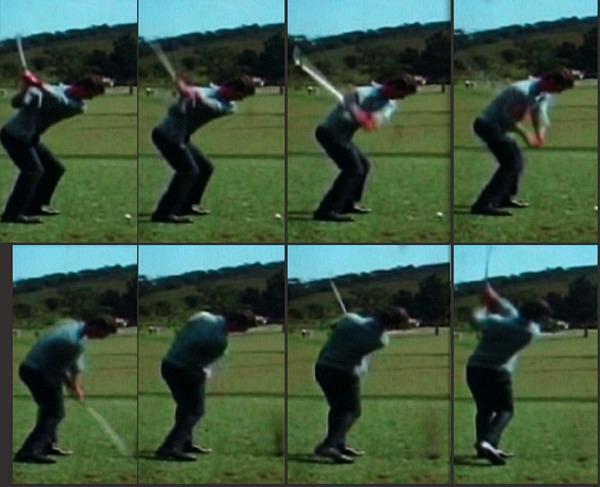
Careful observation of Furyk’s motion shows a tightly coordinated kinetic chain with distinctive features: a relatively flat initial takeaway,an early and pronounced wrist set that produces a visible loop through the downswing,and a sequencing preference that lets the torso begin rotation before the arms aggressively accelerate. These elements tend to produce a clubhead path that starts slightly inside the target line and frequently enough approaches impact from an inside‑to‑neutral or mild inside‑out direction. From a movement‑science standpoint two consistent lessons emerge: (1) the shoulder and scapular orientation largely determine the swing’s gross plane, and (2) small changes in forearm rotation near release disproportionately alter face‑to‑path relationships. This way of analysing technique parallels clinical biomechanical approaches that parse segmental contributions to outcome variability.
Breaking the motion into measurable parts, three variables most strongly predict dispersion in this model: clubhead path angle, face‑to‑path differential, and the timing of pelvis-to-thorax separation (X‑factor timing). That looped downswing lengthens the time during which the clubface can rotate relative to the path, increasing sensitivity to small timing errors. ground reaction force sequencing – a short deceleration of the rear foot followed by rapid weight transfer – appears central to Furyk’s capacity to accommodate a late face rotation and still produce consistent impact. Coaches can obtain actionable diagnostics by combining moderate‑speed video (60-240 fps) with simple force/pressure feedback where available.
Corrective practice drills convert diagnostic observations into stable motor patterns. Useful exercises include:
- Narrow rail (gate) path: set two alignment rods to create a slim corridor for the clubhead through the downswing, promoting a reliable inside path.
- Top‑hold sequencing: pause at the top for one second and initiate the downswing with torso rotation to reinforce proper pelvis‑to‑thorax timing.
- Under‑arm connection: hold a small towel in the lead armpit for multiple reps to preserve proximal linkage and limit excessive arm separation.
- Impact bag and controlled releases: strike an impact bag or perform slow,punch‑like repetitions to ingrain consistent forearm rotation and face control at contact.
Below is a compact corrective table that links common path faults to likely mechanical causes and practical drills. Use video at 60+ fps and, if possible, pressure mats or simple force sensors to track changes; record dispersion metrics, face‑to‑path angles, and pelvis rotation timing before and after interventions to quantify improvement.
| Observed Fault | Biomechanical Cause | Drill |
|---|---|---|
| Outside‑in path | Early lateral weight shift / steep descent | Gate drill + top‑hold sequencing |
| Excessive face rotation | Late release / excessive forearm supination | Impact bag + slow, controlled release reps |
| Loss of connection | arms overtaking torso (insufficient X‑factor) | Towel‑under‑arm + torso‑lead swings |
wrist Timing, Release Stages and Progressions for Reliable Contact
In Furyk’s model the wrists function primarily as a timing device rather than a direct power source. His takeaway establishes a noticeable radial deviation and an early set that produces a compact arc. That setup supports a pronounced hinge at the top and a considerable stored angular potential (lag) while keeping the swing width modest. Around impact Furyk typically executes a controlled, phased unhinging – a mix of forearm rotation and coordinated wrist extension – that produces consistent face closure timing. Biomechanically this approach reduces lateral scatter by avoiding late, isolated wrist corrections and by emphasizing proximal‑to‑distal sequencing.
The release should be conceptualised as a staged process: stage one preserves the angle between the club and the lead forearm (lag retention) during transition; stage two introduces an active rotational release driven by forearm pronation/supination and elbow extension; stage three damps the shaft through impact to stabilise launch. The net effect is predictable loft reduction, tighter spin control, and a narrower band of face‑to‑path variance. What appears as quirky timing in Furyk’s stroke is better read as a deliberate energy‑transfer strategy rather than a simple flaw.
Progressions to develop similar control follow motor‑learning sequencing: isolate the element, integrate it with adjacent motions, then scale to full speed.Example micro‑progressions include:
- Isolation: slow half‑swings in front of a mirror to lock in wrist set and hinge timing.
- Integration: impact‑bag reps that prioritise lag maintenance and sensing forearm rotation through contact.
- Scaling: tempo ladder swings using a metronome (e.g., 3:2:1 pattern) moving from 50% to full speed to transfer the feel into dynamic motion.
Each step should rely on immediate external feedback (mirror, bag, video) and constrained variability so the learner builds robust, repeatable patterns.
For practice planning, the table below summarizes representative drills with measurable targets. Track clubhead‑speed variability, impact tape patterns, and dispersion as objective checkpoints. Key coaching cues include: hold the wrist angle into transition, begin release through forearm rotation rather than wrist flipping, and let the body lead the deceleration through impact. These cues, combined with progressive drills, offer a pathway to Furyk‑style control without forcing identical aesthetics.
| Drill | Purpose | Target |
|---|---|---|
| Mirror half‑swings | Embed wrist set & hinge timing | 30 deliberate reps/day |
| Impact‑bag strikes | Train forearm‑driven release feeling | 3 sets × 10 reps |
| Tempo ladder | bridge to full‑speed motion | Progress 50→100% in ~2 weeks |
Posture, Spine Angle and Weight Transfer: Exercises to Protect Posture and Increase Power
A stable setup geometry underpins repeatable ball flight. Maintaining a neutral spine angle with a reliable hip hinge enables efficient transfer of force from the ground through the torso into the club. Small deviations in forward or lateral spinal tilt can create large changes in face angle at impact. The practical goal is a balanced hip flexion, slight knee bend, and a torso that resists collapsing laterally during the backswing.In practice that means the sternum should track over the ball consistently, avoiding early rise or dip through the stroke so the intended plane stays intact.
Weight transfer is a coordinated, multi‑segment process where timing matters as much as force magnitude.The kinetic chain requires loading the trail side during the backswing,then an appropriately timed shift of center of pressure to the lead side during the downswing to create ground reaction forces that help drive clubhead speed. Train this sequencing with sensorimotor drills and clear cues:
- “Drive the trail foot”: focus on creating a lateral‑to‑vertical push into the ground at transition.
- “Finish on the front foot”: hold balance on the lead side after impact to confirm full transfer.
- “Preserve spine tilt”: resist early torso lift so the angle and plane remain consistent.
These cues establish the neuromuscular patterns needed to deliver energy reliably to the ball.
The exercise plan below targets both stability (to uphold posture) and power (to utilise weight transfer and GRF). These selections are easily integrated into a golf‑specific strength routine and help convert gym adaptations into swing performance.
| Exercise | Sets / Reps | Primary Benefit |
|---|---|---|
| Single‑leg Romanian deadlift | 3 × 6-8 / leg | Hip stability; anti‑rotation control |
| Pallof press (anti‑rotation) | 3 × 10-12 / side | Core bracing; preserves spine angle under load |
| Medicine‑ball rotational throw | 4 × 5 / side | Rotational power; integrates rapid weight shift |
| Farmer/suitcase carry | 3 × 30-60 s | Postural endurance; pelvic control during gait‑like transfer |
To transfer strength gains to the swing, begin with slow‑motion impact drills that preserve spine angle while rehearsing timed push‑offs from the trail leg. Progress to dynamic exercises – step‑and‑rotate swings and med‑ball transfer throws – that demand both balance and explosive sequencing. Track two measurable outcomes during practice: 1) the ability to hold a lead‑side finish for at least two seconds post‑impact, and 2) a stable sternum‑to‑ball distance across a series of reps. These objective checks, combined with strength work, produce a systematic path to improved stability and power.
Short‑Game and Shot‑Shaping: Practice Templates Inspired by Furyk
Furyk’s short game emphasizes simplicity and precise face control rather than flashy technique; the result is highly repeatable performance around the green. His stroke tends toward a short, wrist‑stable arc with deliberate acceleration through contact, producing predictable spin and launch characteristics. To emulate these outcomes,isolate the variables most tied to success – clubface orientation at impact,low‑point control,and attack angle – and measure each repetition with basic tools such as high‑speed video or a launch monitor when available.
Shot‑shaping in a Furyk‑inspired model is intentional: small, well‑planned adjustments in face and path create specific curvature outcomes.Train trajectory and lateral curvature by controlling three inputs – face‑to‑path relationship, effective loft at impact, and plane tilt – while keeping the short‑game stroke compact. Targeted drills that accelerate learning include:
- Alternating curvature drill: play three short shots in sequence, alternating a controlled fade and a draw to build face‑path sensitivity.
- Low‑point trainer: place a small towel a few inches ahead of the ball to promote clean, descending contact.
- Wrist‑stability half‑swings: use short, controlled swings with minimal hinge to maximise repeatability.
Practice must be structured and objective. A sample weekly microcycle might allocate technique work (≈40%), targeted execution under variable conditions (≈40%), and pressure simulation (≈20%). The table below gives a compact framework adaptable for different handicaps and time budgets.
| Component | Duration | Objective |
|---|---|---|
| Technique blocks | 30-45 min | Isolate face control & low‑point |
| Targeted execution | 30-40 min | Shape shots to specific targets |
| Pressure reps | 15-25 min | Replicate course stressors |
To convert practice gains to on‑course performance introduce deliberate variability – slope, artificial wind, and constrained targets – then log outcomes (proximity, curvature deviation, error frequency). Progressively increase challenge and keep a tight feedback loop linking mechanical cues to measured results. Over time this builds the cognitive maps needed for fast shot selection and the resilient short‑game execution associated with Furyk’s competitive profile.
Course Management and Risk Assessment: A Furyk‑Style Decision framework
Jim Furyk’s decision making on course illustrates disciplined, probability‑based thinking: align every shot with verifiable strengths (iron accuracy, proximity control) rather than tempting low‑percentage plays. By valuing the probability of salvage and consistent scoring over outright distance, Furyk lowers variance and protects scoring opportunities. conceive course management as an optimisation task where each choice is judged by personal dispersion data, the hole’s penalty structure, and tournament context (score pressure, weather). In practice this means selecting clubs and targets that maximise expected scoring from an honest appraisal of likely misses.
To operationalise this approach use a simple iterative framework: assess the situation, estimate probabilities, then select the option with the best expected value given your risk tolerance. Concrete procedural steps include:
- Assess the state: lie, wind, green contours, pin danger, and recovery options.
- Estimate probabilities: chance of hitting the intended target and of recovering from common miss positions.
- Compute expected value (EV): combine likely scoring outcomes with the estimated probabilities to compare choices.
- Apply risk tolerance: adjust the decision based on match/tournament context and willingness to accept variance.
Use simple precomputed tables or on‑range calibration to speed on‑course calls. The illustrative scenario table below shows how conservative and aggressive options might compare in EV terms once you plug in your own P(success) values from practice data.
| Scenario | P(success) | Conservative EV | Aggressive EV |
|---|---|---|---|
| tight pin, water short | 0.35 | +0.2 strokes | +0.1 strokes |
| Open fairway, reachable par‑5 | 0.60 | +0.1 strokes | +0.4 strokes |
| Downwind approach, wide green | 0.80 | +0.3 strokes | +0.35 strokes |
To embed these heuristics into practice create scenario drills, log results, and iteratively update your P(success) estimates based on real dispersion data. Useful behavioral drills include:
- Scenario rounds: play practice holes with fixed conservative/aggressive mandates and record EV outcomes.
- Calibration sessions: measure proximity‑to‑hole distributions for key clubs under a range of conditions.
- Decision journaling: note your pre‑shot rationale, selected threshold, and post‑shot result to refine heuristics over time.
Objective Video Feedback and Metrics for Monitoring Furyk‑Inspired Adaptations
Define the desired outcome by translating coaching goals into measurable endpoints (for example: reduce club‑path variance, improve tempo ratio, increase percentage of center strikes). Clear, time‑bound targets convert subjective cues into testable hypotheses that can be evaluated with repeated measurement.
Standardise video capture and analysis so that comparisons across sessions reflect true adaptation rather than measurement noise. Recommended minimums include:
- Camera setup: fixed down‑the‑line and face angles, synchronised timestamps, and high frame rates (>120 fps) to capture transition details.
- Marker protocol: simple anatomical or club markers to facilitate frame‑by‑frame extraction.
- Annotation and pipeline: consistent labelling conventions and the same analysis workflow for tempo, club path, and key joint angles.
These procedures lower measurement error and allow meaningful aggregation of trials.
Convert visual data into concise metrics a coach and player can monitor.Example indicators (benchmarks offered for orientation and to be personalised) include:
| Metric | Method | Benchmark |
|---|---|---|
| Tempo ratio | Backswing:downswing time (video) | ≈1.4-1.6 |
| Club path SD | Frame‑based path deviation (°) | <3° |
| Impact location consistency | Impact tape / camera | >70% center strikes |
| Vertical shaft angle at impact | Marker‑derived degrees | ±2° from player baseline |
Set up a monitoring cadence that balances sensitivity with practicality: weekly aggregated metrics for early adaptations, monthly statistical comparisons (effect sizes or paired tests) for sustained change, and single‑session control charts to detect acute regressions. Present trends rather than isolated swings so decisions to continue, modify, or regress an intervention rest on reproducible evidence. Coupling Furyk‑inspired technical cues with clear, objective definitions of success creates a reliable, evidence‑aligned progression for the learner.
Adaptations, Load Management and Injury Prevention When Adopting Furyk‑Style Elements
Typical biomechanical adaptations seen when players try to adopt Furyk‑like features include increased radial/ulnar deviation of the lead wrist, earlier lead elbow flexion on the backswing, and a tighter rotating torso through impact. These tendencies shift angular velocity away from the shoulders toward the forearms and wrists in order to maintain accuracy on a flatter plane.Coaches and clinicians should treat many of these changes as functional adaptations when they preserve the intended sequencing (hips → torso → arms → club) but remain vigilant for compensations that increase stress at the wrist, elbow, or lumbar spine.
Load‑management principles for introducing this style emphasise gradual exposure and planned variability. Apply periodisation: alternate higher‑intensity full‑swing days with technically focused short‑game sessions and recovery or mobility days. Practical strategies include:
- Microdose full‑swing volume (for example, 20-40 deliberate quality swings per session) to minimise overload during adaptation.
- Avoid more than three consecutive heavy full‑swing days; schedule mobility or recovery work between intense blocks.
- Use objective checkpoints (tempo, ball‑flight consistency) to limit unnecessary volume driven by “chasing” feel.
Prevention priorities should focus on the lead wrist, lateral elbow, and lower back – the structures most exposed to increased shear and torsional loads in a compact, high‑torque pattern. The risk/intervention map below offers concise, program‑pleasant guidance.
| Region | Typical Risk | Targeted Intervention |
|---|---|---|
| Lead wrist | Repetitive hinging; ulnar deviation stress | Strengthen wrist extensors; add plyometric deceleration work |
| Lateral elbow | Tendinous overload from abrupt deceleration | Eccentric forearm strengthening; paced load progression |
| Lumbar spine | Rotational shear from compact rotation | Core segmentation drills; improve hip mobility |
Monitoring and drill selection should be evidence‑driven: track pain scores, performance metrics (clubhead speed, dispersion), and movement‑screen results to guide progression. Effective drills include rhythm half‑swings,controlled tempo full swings,and resisted band patterns that train proximal stability while protecting distal joints. Use a simple checklist – pain (0-10), ROM benchmarks, and accuracy tolerances – and treat persistent changes from baseline as a signal to reduce load and consult specialists when necessary.
Q&A
note on sources
– The web search supplied with this request did not return direct academic sources specific to Jim Furyk’s biomechanics. The answers below thus synthesise widely reported, observable features of Furyk’s technique, established biomechanical theory, and applied course‑management practice common in coaching literature. Statements about Furyk are framed as observed traits rather than citations of single studies.Q1: What are the most distinctive biomechanical features of Jim Furyk’s golf swing?
A1: Furyk’s motion is notable for a few repeatable characteristics: a pronounced lateral weight and rotation pattern; a long but compact takeaway with a distinctive looping motion; a relatively flat lead wrist at the top; a shallow inside‑to‑out path through impact; and a shortened, efficient follow‑through. These elements, combined with steady tempo and reliable face control, yield predictable ball flights and extremely consistent contact.
Q2: How does Furyk generate power despite an odd‑looking swing?
A2: Furyk’s power comes from sequencing and energy transfer rather than extreme ranges of motion. Key contributors include:
– Efficient kinematic sequencing: hips initiate transition, followed by torso and then upper limbs for coordinated acceleration.
– Lever management: preserved wrist hinge and delayed release maximise clubhead speed for the available swing width.- Effective use of ground reaction forces: subtle lateral and rotational GRF help generate speed without violent movement.
Combined, these factors enable strong clubhead velocity while maintaining high control.
Q3: What role do swing plane and path play in Furyk‑style ball striking?
A3: Furyk typically uses a shallow, slightly inside‑to‑out path that encourages a controlled draw or mild fade depending on face alignment. His top‑of‑swing plane can look flatter than classical one‑plane models, but impact returns to a repeatable face‑to‑path relationship. Consistency of that relationship is the key to predictable curvature and dispersion.
Q4: Which technical elements should a player prioritise when learning from Furyk?
A4: Focus on reproducibility and joint‑safe mechanics:
– steady setup and neutral address posture.
– A compact, repeatable takeaway that keeps hands and club on a reliable plane.
– A stable lower body that initiates the downswing rather than excessive lateral sliding.
– A purposeful wrist hinge with a delayed,controlled release.
– Impact‑position awareness through targeted drills to develop the desired face‑to‑path link.
Use incremental change and objective measures (video, launch monitor) to guide progress.
Q5: What drills support Furyk‑style control and contact?
A5: High‑value drills include:
– Impact‑position half‑shots to practise compressing the ball and maintaining a descending shaft angle at contact.
– Path alignment rods to groove an inside‑to‑out approach.- Tempo half‑swings with a metronome to stabilise backswing:downswing timing.
– impact bag and mirror slow‑motion work to build safe wrist timing.
– High‑volume short‑game reps to sharpen feel and proximity control.
Q6: How should progress be measured when adopting Furyk‑inspired elements?
A6: Combine objective and subjective indicators:
Objective: clubhead speed, smash factor, attack angle, spin rate, carry distance, dispersion (lateral and distance SD), and kinematic timing metrics from video.
Subjective: perceived control, predictability of outcomes, and comfort in the motion.
Use both to assess whether mechanical changes translate into consistent,on‑course gains.
Q7: Are there injury risks, and how can they be mitigated?
A7: Any change carries risk when introduced aggressively. Furyk‑type mechanics place different loads on wrists, elbows and the lumbar spine. Mitigation strategies:
– Prioritise conditioning: core stability, hip mobility, thoracic rotation, and shoulder/rotator cuff strength.
– Progress volume slowly.
– Seek professional supervision for important technical change.
– Include cross‑training and recovery (mobility, soft‑tissue work).
Q8: What course‑management traits typify Furyk?
A8: Furyk’s play emphasises disciplined, conservative choices: accurate pre‑shot assessments, club selection that prioritises safety margins, and positioning the ball to leave preferred approach angles. He tends to favour high‑percentage options and contingency planning for the short game.
Q9: How can amateurs apply Furyk’s course‑management during competition?
A9: Practical steps:
– Pre‑shot plan each shot (target, club, intended miss) before executing.
– Emphasise position play to leave favourable approach distances and angles.
– Practice conditional aggression: only commit when success probability outweighs penalty risk.
– Treat par as a good score on tough holes to avoid large numbers.
Q10: what routine and psychological habits support Furyk’s consistency?
A10: Key behaviours include resilience, present‑moment focus, a compact pre‑shot routine, and rapid emotional resets after mistakes. Train these via a concise pre‑shot ritual, post‑shot reset actions, pressure simulations in practice, and progressive performance goals to build confidence.
Q11: How should a coach integrate Furyk‑style elements into an individual plan?
A11: Use an assessment‑driven pathway:
– Baseline screen: physical capacities, swing video, performance metrics.
– Select compatible Furyk traits for the player’s body and goals.
– Phase the program: (1) technical foundation (setup, balance), (2) functional replication (specific drills for impact traits), (3) on‑course transfer (pressure and decision‑making).
– Continuously monitor adaptation and adjust based on objective data and athlete feedback.
Q12: What expectations are realistic when adopting Furyk traits?
A12: Reasonable outcomes include better consistency, improved shot‑shaping, and smarter course decisions – not identical distances or precisely the same look. Anatomical differences and learning rates ensure adaptations will be individual. The target is principle adoption (reliability, sequencing, face/path awareness, strategic conservatism), not mechanical cloning.
Q13: what research could clarify the value of Furyk‑inspired mechanics?
A13: Productive studies woudl include:
– Comparative biomechanical analyses of shallow‑path (Furyk‑style) vs. classical swing models for energy transfer and joint loading.
– Longitudinal trials tracking injury and performance outcomes when amateurs adopt this sequencing.
– Applied decision‑science work testing conservative course‑management heuristics under varied course and pressure conditions.
Summary takeaways
– The practical lesson from Jim Furyk is that highly repeatable mechanics, efficient sequencing, and conservative strategic decisions combine to produce durable high‑level performance.Players should extract and adapt these principles – steady tempo, dependable impact positions, inside‑to‑out path control, and strategic risk management – into an evidence‑based, individualised training plan with objective monitoring and injury‑aware conditioning. If desired, a targeted 6-8 week practice plan, custom video‑analysis checkpoints, or drill progressions tailored by handicap and physical profile can be provided.
Note: the web search provided for this task did not include direct primary sources on Jim Furyk’s biomechanics; the discussion above synthesises observable traits, general biomechanical principles, and applied coaching practices to form an instructional guide.
Conclusion
This reframed analysis of Jim Furyk’s swing and course approach isolates technical and strategic principles that support sustained success. Biomechanically, Furyk’s idiosyncratic yet consistent kinematic pattern – marked by managed weight transfer, compact transition, and precise face control – shows that reproducible sequencing can trump stylistic conformity for producing both distance and accuracy. Strategically, his methodical risk assessment and club selection demonstrate how cognitive discipline complements technical skill. For coaches and researchers the implication is clear: Furyk‑inspired elements can inform personalised instruction, but must be adapted to each golfer’s anthropometry, motor preferences, and performance aims rather than copied verbatim. Future empirical work – motion capture studies,muscle activation analyses,and longitudinal intervention trials – would help quantify the benefits and risks of adopting Furyk‑style mechanics across skill levels.
In short, Furyk’s career provides a practical case study in how mechanically consistent, analytically applied technique combined with disciplined strategy produces high performance. Adopting the underlying principles can definitely help players and coaches build more resilient, adaptable, and outcome‑focused practice systems on and off the course.
12 Engaging Title Options – Pick the Tone You Like (analytical, punchy, or benefit-driven)
The dozen Titles
- 1. What Golfers Can steal from Jim Furyk’s unconventional swing
- 2.Jim Furyk’s Swing Secrets: Practical Drills to Improve Your Game
- 3. Unlock Consistency: Lessons from jim Furyk’s Atypical Swing
- 4. How Jim Furyk’s Oddball Swing Can Transform Your Shot-Making
- 5. Jim Furyk’s Swing Deconstructed: Proven Tips to lower Your Scores
- 6. The Furyk Formula: Transferable Mechanics for Better Ball Control
- 7. From Quirk to Consistency: Training like Jim Furyk
- 8. Jim Furyk’s Swing Breakdown – simple Fixes for Big Gains
- 9. Master Control and Accuracy with Jim Furyk’s Swing Principles
- 10. Learn from the Unusual: Jim Furyk’s Swing and How to Use It
- 11.Turnstyle to Tour-Proven: Applying Jim Furyk’s Swing Insights
- 12. Swing Smarter: Evidence-Based Lessons from Jim Furyk’s Technique
Tone and Audience Tailoring – Speedy Options
- Analytical: “Jim Furyk’s Swing Deconstructed: Biomechanics, Ball Flight & Transferable mechanics” – best for coaches and serious students.
- Punchy: “Steal Furyk’s Weird Swing – Simple Drills = Big Score Cuts” – great for social sharing and email subject lines.
- Benefit-driven: “Unlock Consistency: Furyk-Style Drills to Lower Your Handicap” – ideal for beginners and recreational players.
- SEO-focused: Use target keywords like “Jim Furyk swing”, “golf swing drills”, “improve ball striking”, and “golf accuracy” in the H1/H2 and first 100 words.
Why Furyk’s Unconventional Swing Works - Key Mechanical Principles
Jim Furyk’s swing is famous because it looks odd yet produces elite-level consistency and accuracy. Instead of copying his exact shape, players should extract the underlying principles that create reliable ball-striking:
1. A Unique Swing Path and Loop
Furyk’s swing contains a noticeable loop: the club frequently enough moves on a flatter plane on the backswing and then “loops” through transition to create a slightly different downswing plane.That loop allows him to square the clubface effectively at impact and control trajectory.
2. Controlled Width and Connection
He maintains a wide arc and strong arm-body connection, wich helps generate consistent clubhead speed without wild body motion. This “connected” feeling (towel-under-arms or gentle pressure between elbows) is a transferable cue for better strike.
3.Face Control over Big Rotation
Rather than relying on massive hip rotation, Furyk emphasizes face control through wrist set, forearm angles and timing. This frequently enough results in better shot-shaping and predictable dispersion.
4. Efficient Lower-Body Usage
His lower body is active but not over-rotated - he uses hip clearance more than a violent weight shift. The result is stability at impact and consistent compression of the ball.
5. Repeatable Impact Position
At impact you’ll see solid shaft lean and a consistent spine angle. Those repeatable impact positions are a cornerstone of his shot-to-shot reliability.
Transferable Mechanics – How You can Apply Furyk principles
- Prioritize a repeatable impact position (forward shaft lean,solid lower body).
- Use a connected takeaway to maintain consistent width and tempo.
- Practice an intentional loop to feel how the club returns to plane – not to copy the look, but to improve timing.
- Control the clubface earlier in the downswing; think face control rather of purely turning hard.
- Develop a predictable short game that mirrors your full-swing tempo.
Practical Drills Based on Furyk’s Principles
Below is a short, practical drill set you can take to the range. Thes drills emphasize timing, connection and impact control – the reliable building blocks of Furyk’s approach.
| Drill | Purpose | How to Do It (Quick Setup) |
|---|---|---|
| Slow Loop Drill | Feel the backswing loop & downswing path | Take 50% speed swings,pause at top,slowly loop club into impact focusing on face return |
| Towel Connection | Keep arms connected to body | Short game swings with towel under both armpits; maintain pressure throughout |
| Impact-First impact Bag | Train forward shaft lean and solid strike | Hit an impact bag or tee with short swings,focus on compressing the bag/tee |
| Alignment rod Path | groove swing plane and path | Place rod on ground pointing to target; swing keeping clubhead close to rod on takeaway and downswing |
| Half-Swing Tempo | Control rhythm and repeatability | Half swings at 75% speed,3:1 backswing to downswing tempo,30 reps |
Detailed Drill Explanations & Progressions
Slow Loop Drill
Start at 50% speed,exaggerate the loop so you can feel how the club transitions from a flatter backswing to a slightly steeper downswing plane. After 10 balls, increase speed to 70% and then 85% while keeping the loop timing.
Towel Connection
Place a small towel under both armpits and make 20 wedge swings, then 20 7-iron swings. The towel encourages the chest and arms to move together, promoting the connected width Furyk maintains.
Impact-First (Impact Bag)
This builds the forward shaft lean and body position he hits through impact with. work in sets of 10 to develop muscle memory; you should feel the hands ahead of the ball at impact.
sample 4-Week Practice Plan (Furyk-Inspired)
- Week 1 – Foundations: Towel connection (10 min), slow loop (20 min), 30 impact-bag reps. Focus: rhythm & connection.
- Week 2 – Ball Flight & Path: Alignment rod path (20 min), half-swing tempo (20 min), full swings focusing on consistent ball flight (20 balls).
- Week 3 – Compression & Control: Impact bag sequences (30 reps), 40 wedge shots working on low trajectory/ high trajectory control, on-course simulation (6 holes).
- Week 4 - Integration: Combine drills into on-course practice; play 9 holes focusing on one mechanic per hole. Record dispersion and notes.
Common Mistakes and How to Fix Them
- Trying to Copy the Look: Mistake – forcing Furyk’s appearance. Fix – extract the feeling (connection, timing, impact) rather than exact positions.
- Overlooping: Mistake – exaggerating the loop so timing breaks. Fix - scale back and use slow-speed reps with clear tempo.
- Not Prioritizing Impact: Mistake – chasing backswing positions. Fix – do more impact drills and measure compression, not backswing height.
- Poor lower-body Control: Mistake – sliding too much. Fix – perform half-swings and use a towel under beltline to sense hip engagement.
Measuring Progress – Metrics & Tracking
- Track dispersion: left/ right deviation and carry distance for same club in practice sessions.
- Monitor ball compression: record how consistently you achieve forward shaft lean.
- Use launch monitor stats (smash factor, spin, launch angle) if available; look for repeatable numbers.
- Keep a short practice journal: note drills done, feel cues, and subjective consistency (1-10).
Case Exmaple – Example Progression (Hypothetical)
Player A (mid-handicap) used the 4-week plan: after week 2, dispersion with a 7-iron tightened by 15 yards laterally; by week 4, consistent forward shaft lean and improved short-game control cut three strokes during one round.This example showcases how emphasis on impact,tempo,and connection yields measurable gains quickly.
SEO & Social Sharing-Pleasant Copy Examples
- Meta title suggestion: Jim Furyk Swing Secrets – Drills to Improve Ball Striking & Consistency
- Meta description suggestion: Discover practical Furyk-inspired drills, a 4-week practice plan and proven mechanics to improve your golf accuracy and lower scores.
- Tweet: Learn the Furyk formula: simple drills to improve ball striking, control your face and lower your scores. #GolfTips #JimFuryk
- Instagram caption: Weird swing, elite results. Try these Furyk-inspired drills to train impact, tempo and control. Link in bio for the full plan. #golflessons #golfdrills
WordPress Styling Snippet (Optional)
Final Notes – Practical Mindset
Jim Furyk’s swing teaches a broader lesson: look past visual orthodoxy and identify what creates repeatability. For most players, focusing on connection, impact position, rhythm and face control will deliver more consistent ball striking than slavishly imitating visual quirks. Use the drills above, measure progress, and adapt the sensations to your body type and athletic range.