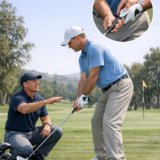
mastering the core skills of golf is the gateway to reliable scoring and steady betterment over time. Instead of chasing speedy fixes, golfers who invest in a clear understanding of swing mechanics, putting form, and driving fundamentals lay the groundwork for durable progress. This article re-frames those basics from a modern, biomechanical perspective, turning complex movements into simple, repeatable habits for every skill level.
By tracking objective performance markers-such as clubface control, face-to-path relationship, start-line dispersion, stroke tempo, and quality of impact-players can replace guesswork with a data-informed practice routine. The sections below present level-based systems for refining the full swing, stabilizing your putting, and maximizing driver performance, while tying each technical change to smarter course management. The goal is to offer a comprehensive, research-backed structure that helps golfers spot root causes of faults, apply targeted drills, and convert better mechanics into lower scores.
Key Biomechanics of the Golf Swing for Reliable Ball Striking
Consistent ball striking starts with how efficiently your body generates and transfers energy to the clubhead. At address,align your feet,knees,hips,and shoulders parallel to the target line,and add a slight spine tilt (5-10° away from the target) to encourage an in‑to‑out path and solid compression. With a mid‑iron, maintain roughly 45° of forward bend from the hips, keeping your weight 55-60% on the lead foot with short irons and closer to 50-50 for longer clubs. Newer players should favor a neutral grip-the lead hand’s ”V” pointing between the trail shoulder and chin-while experienced golfers can make small grip adjustments to curve the ball on demand.
From this athletic setup, the backswing should load pressure into the trail side without lateral sway. Keep the lead arm relatively straight, allow the trail hip to rotate instead of slide, and move the lead shoulder under the chin, building 80-100° of shoulder turn with about 35-45° of hip turn. This separation, often called the “X‑factor,” stores rotational energy so that, when released in sequence, it produces a strong, repeatable ball flight that holds up in wind and from uneven lies.
On the downswing, dependable impact is created from the ground up, with the lower body leading and the club following. As you change direction from the top, feel pressure move into the lead foot, shifting from 60-70% trail side at the top to around 70-80% lead side at impact. the lead hip should turn and open toward the target (typically 20-30° open at impact with irons in proficient players), while the hands remain ahead of the clubhead to preserve a flat lead wrist and forward shaft lean. For beginners, a simple cue is “turn and post” on the lead leg; skilled players can fine-tune the timing of the wrist release to dial in launch and spin.
To groove these moves and reduce common faults-such as early extension, casting, or an over‑the‑top move-add the following drills to structured range and short‑game sessions:
- Feet‑together drill: Hit half swings with your feet together to train balance, centered contact, and smooth rhythm, aiming to flush at least 8 out of 10 shots from the middle of the clubface.
- pause‑at‑the‑top drill: Pause for one second at the top of the backswing to rehearse a smooth transition, focusing on starting down with the hips rather than the hands.
- Impact line drill: Draw a line on the turf or place a strip of tape, then practice striking the ground just ahead of the line with wedges and short irons. This encourages a descending strike and compressed contact.
By tracking results-like a higher percentage of “pure” strikes, fewer fat and thin shots, and a tighter dispersion pattern-you directly connect biomechanics to lower scoring, especially when attacking firm greens or hitting under pressure.
These movement principles apply just as strongly to the short game and on‑course decision‑making. For standard pitches and chips,maintain 70-80% of your weight on the lead side,narrow your stance,and keep the motion more “body‑driven” with limited wrist hinge to produce consistent,lower‑running chips. For higher, softer shots, advanced golfers can add more wrist hinge and slightly open the clubface while keeping the lower body stable. On today’s faster greens and in windier conditions-PGA Tour data shows average green speeds regularly creeping above 11 on the Stimpmeter at major events-understanding how loft, spin, and launch angle interact helps you choose the right club and trajectory, avoiding short‑sided misses that quickly inflate scores.
When you practice, organize sessions around clear performance targets, such as:
- Full‑swing zone drill: Choose a 10‑yard window (such as, 150‑160 yards) and attempt to land 7 of 10 balls within that range, blending correct club selection with a mechanically sound swing.
- Up‑and‑down challenge: Drop 10 balls around the green in varied lies and aim to get at least 5 up‑and‑down, modifying setup and swing length for different lies, slopes, and green speeds.
- Wind and lie simulation: Practice three trajectories (low, stock, high) with the same club by adjusting ball position, stance, and release pattern-without forcing the swing-so your motion remains stable under changing course conditions.
Link these drills to simple mental routines-such as rehearsing one key swing feel, visualizing the ball flight, and fully committing to each shot-and golfers at any level can merge solid biomechanics with smarter strategy, resulting in more fairways hit, more greens in regulation, and more consistent scores.
Evidence‑Based Drills to Identify and Fix Common Swing Faults
Many frequent swing problems-like an over‑the‑top transition,early extension,or an unpredictable low point-can be diagnosed and improved with objective checkpoints and structured exercises. For players who slice because the club approaches from outside the target line, kinematic‑sequence research supports training the body to start the downswing from the ground up rather than from the shoulders. A simple,research‑supported option is the alignment stick “gate” drill: lay one stick along the target line and another just outside the ball at a 30‑45° angle to form a gate that rewards an in‑to‑out path.
Begin with half swings at 50‑60% effort, concentrating on shifting pressure into the lead foot (aiming for roughly 70% lead‑side pressure at impact). As you improve, lengthen the swing and increase speed while maintaining a shallow path that avoids the outside stick. On the course, picture that “gate” on tee shots with driver or fairway woods and commit to a smooth transition that delays upper‑body rotation until the lower body has started to unwind.
Another widespread issue-notably among newer players and higher handicaps-is fat or thin contact driven by a poor setup or erratic control of the low point. Biomechanical studies link consistent ball‑first contact to stable posture, forward shaft lean, and a predictable weight shift. A powerful corrective routine is the line drill: on a mat or firm turf, draw a line with chalk or carve a shallow groove, then hit shots with the ball placed just in front of that line. Your goal is to strike the ground on or slightly ahead of the line on at least 8 of 10 swings. Pair this with setup checkpoints to clean up your fundamentals:
- Ball position: Center for wedges, slightly forward of center (1‑2 ball widths) for mid‑irons, and opposite the lead heel for the driver.
- Spine tilt: Minimal tilt with irons; for driver,introduce a slight tilt away from the target (about 5‑10°) to promote an upward strike.
- Grip pressure: Hold the club at a moderate level-around 4‑5 on a 10‑point scale-to allow proper wrist hinge and release.
- Posture: Hinge from the hips with a neutral spine, soft knee flex, and arms hanging naturally under the shoulders.
To carry these improvements into scoring situations, build drills that imitate real‑round pressure and varied lies. For short‑game miscues like scooping, deceleration, or bladed chips, use the baseline contact drill: place a towel or headcover 8‑10 cm behind the ball and chip with wedges, ensuring the clubhead clears the obstacle and strikes the ball first. This reinforces a slightly descending blow, even on tight or damp turf.To spread progress across the entire bag, design a structured practice circuit alternating full‑swing mechanics, short‑game work, and decision‑making:
- Full‑swing station: Hit 10‑15 balls using the alignment stick gate drill, measuring start direction and curvature relative to an intermediate target.
- Short‑game station: Play 10 chips or pitches with the towel drill from various lies (fairway, light rough, uphill, downhill), tracking how many finish inside a 1.5 m circle.
- Course‑management station: Simulate a ”virtual hole” on the range: pick a fairway target, then a green, and choose clubs and shot shapes that favor your natural pattern (such as, aiming slightly left if your stock shot is a fade).Reflect on club selection, wind, and lie as if in competition.
By rotating through these stations and setting specific metrics-like achieving 70% fairway simulation success, 80% of chips inside 1.5 m, and dependable low‑point control-golfers of all abilities can develop a feedback‑rich routine that sharpens technique, boosts confidence, and enhances shot selection under true on‑course pressure.
Putting Stroke Mechanics and Green‑Reading Skills for Precision Control
Highly accurate putting begins with a repeatable stroke built on sound setup. At address, play the ball slightly forward of center, with your eyes directly over-or just inside-the target line.A quick checkpoint is to drop a ball from your lead eye and confirm it lands on or just inside the ball. Maintain light to moderate grip pressure (about 4 out of 10) and square the putter face perpendicular to the target line, as face angle at impact influences start direction far more than stroke path.
For most golfers, a compact, shoulder‑driven “rocking” motion with quiet wrists produces the most consistent roll. Beginners should prioritize a straight‑back,straight‑through stroke on short putts (inside six feet),while more advanced players can adopt a slight arc that matches natural shoulder rotation. Typical errors-too much lower‑body movement, decelerating into impact, or inconsistent tempo-can be addressed with these structured drills:
- Gate drill: Place two tees just wider than the putter head and roll putts without touching the tees to tighten stroke path and centered contact.
- Tempo drill: Count “one” on the backswing and “two” on the forward stroke, maintaining a smooth, slightly longer through‑stroke on putts beyond 15 feet.
- Distance ladder: Putt to targets at 10, 20, and 30 feet, trying to stop each ball within a three‑foot circle to curb three‑putts.
Once your stroke is stable, precision depends on reading greens systematically and integrating that read into a consistent routine. Start every putt by judging the overall slope from a distance, then walk along the low side of the line to feel subtle breaks underfoot-this tactile feedback is especially helpful for newer golfers who struggle to visually detect break. Next, assess grain direction where relevant, which often follows the setting sun or slopes toward nearby water; into‑the‑grain putts roll slower and break less, while down‑grain putts run faster and break more.
Intermediate and low‑handicap players benefit from a start‑line visualization system-such as identifying a precise entry point on the cup (“inside left,” “one ball outside right”)-to turn slope assessment into a clear aiming spot. To strengthen this skill on the practice green, use progressions like:
- 30‑second survey: Give yourself only 30 seconds to read the putt from behind the ball, behind the hole, and from the low side, then commit to a line and stroke to train fast, confident decisions.
- Tee gate for break: Place two tees a few feet in front of the ball on your intended start line. Start the ball through the gate to reinforce that you aim at your start line-not directly at the hole.
- Uphill vs. downhill comparison: Practice putts of equal length (for example, 15 feet) uphill and downhill, noticing how downhill putts demand more conservative speed and frequently enough a different start line.
Bringing putting mechanics and green‑reading into course management helps golfers convert more birdie chances and avoid needless bogeys. Strategically, try to leave approach shots and lag putts below the hole when possible; uphill putts are easier to strike firmly with a stable face. On long putts (over 30 feet), shift your main objective from holing out to finishing inside a defined “safe zone”-often a three‑foot circle for most players, shrinking to two feet for low handicappers. This approach mirrors strokes‑gained insights from professional golf, where reducing three‑putts has a major impact on scoring.
Adjust your read and stroke for conditions: on slow or wet greens, play less break and use a slightly longer stroke; on fast, firm greens or in wind, play more break with a shorter, softer stroke to keep the ball on line. To reinforce these skills under pressure,blend technical and mental practice by:
- Outcome games: For example,hole 20 consecutive putts from three feet before leaving the practice green to mimic tournament tension.
- Routine rehearsal: Follow the same sequence every time-read, aim, practice stroke, commit-so your brain links this routine with confidence and clarity.
- Equipment check: Ensure your putter length allows your arms to hang naturally (most adults fit between 33‑35 inches) and that the lie angle lets the sole sit flat at address.Poorly fit equipment can undermine even excellent technique.
By integrating mechanical, perceptual, and strategic skills, golfers can substantially enhance putting performance, carry practice success to the course, and lower scores by becoming more efficient on the greens.
Data‑Driven putting Routines to Improve Distance and Directional Accuracy
Productive putting practice starts with hard numbers rather than hunches.on a flat practice green,place tees at 3,6,9,and 12 feet around a hole and track how many out of 10 putts you make from each distance. Use a consistent setup: eyes directly over or just inside the ball‑to‑target line, shoulders parallel to the start line, and ball slightly forward of center to promote a gentle upward strike. Beginners should emphasize a shoulder‑driven pendulum stroke with the putter face staying square to the arc; low handicappers can also measure face angle at impact using a putting mirror or alignment gate.
Log your make percentages and categorize misses as short/long (distance issues) or left/right (directional issues). Over a few sessions, patterns will emerge that highlight what to prioritize technically and strategically during play.
With baselines in place, move on to data‑driven drills that separately target distance and start‑line control. For distance calibration, set up a long‑putt ladder on a mostly level area: place a tee at 20 feet and create “zones” at 3‑4 foot increments (for example, 20, 24, 28, 32 feet). Hit 10 putts from 20 feet and note how many finish inside a 24‑inch radius (your “three‑putt avoidance” circle). Then progress to 30 and 40 feet,adjusting stroke length rather than tempo.
For directional accuracy, build a tee gate just wider than your putter head, 6‑8 inches in front of the ball, and a second gate 12‑18 inches down the intended line. The goal is to roll the ball through both gates with a square face. Key checkpoints include:
- Grip pressure: Light to moderate, to avoid manipulating the face.
- Shoulder and hip alignment: Parallel to the target line to minimize pulls and pushes.
- Stroke path: A natural inside‑square‑inside arc rather than an exaggerated in‑to‑out motion.
Compare gate‑success rates and proximity to the hole so you can tweak setup, path, and face control with clear feedback.
to translate practice‑green successes into lower scores under real‑round pressure,connect your putting stats with course management and green‑reading choices. Use your known make rates from 3‑12 feet to guide strategy: such as, if your data shows you make fewer than 15% of putts beyond 25 feet, your priority from long range should be finishing inside a 3‑foot circle rather than aggressively chasing the hole.
Before each putt,read the green by gauging overall slope,grain direction,and surface speed,then pick a specific start spot-such as a blade of grass-that fits your expected break. In wet or windy conditions, adjust: slower greens and headwinds demand more stroke length for your calibrated distances. To keep practice engaging and competition‑relevant, incorporate situational drills like:
- Par‑save circuit: Drop balls in realistic “miss” zones (4‑8 feet below the hole on various slopes) and track up‑and‑down percentage, correcting patterns like deceleration or misreading sidehill breaks.
- Three‑putt challenge: Play nine “holes” from 25‑40 feet on the practice green, adding one penalty point for every three‑putt. Aim to lower your total points each week.
- Mental routine repetition: On every putt, use the same read‑rehearse‑commit sequence, breathing steadily and focusing on rolling the ball over your start spot instead of forcing it into the cup.
By continuously linking putting statistics to technical checkpoints,practice design,and smart on‑course choices,you build a robust stroke and confident mindset that improve both distance control and directional accuracy where it counts most-on the scorecard.
Driving Fundamentals for Maximum Distance with Fairway control
Driving the ball far while keeping it in play starts with a solid address position and efficient motion. At setup, align your feet, hips, and shoulders parallel to the target line, and place the ball off the inside of the lead heel to promote an upward angle of attack. For most golfers, a stance about shoulder‑width to slightly wider delivers the best mix of balance and rotation. Keep grip pressure neutral-around “4” on a 1‑10 scale-so the club can release naturally instead of being held in a death grip.
Introduce a light spine tilt (about 5‑10 degrees away from the target) to encourage hitting up on the ball, increasing launch and trimming spin for more carry. Beginners should emphasize a smooth, three‑quarter swing that maintains posture; low handicappers can work on the timing between the lower body initiating the downswing and the upper body following, ensuring an inside path with a square face. Use simple checks like an alignment stick on the ground and occasional video to confirm that the clubface returns square at impact.
Once your setup is consistent, the key to blending distance and accuracy is coordinating the swing so that the clubhead is moving quickly but under control through impact. The backswing should be wide and measured-avoid snatching the club away. think about creating width with the lead arm while allowing the trail elbow to fold naturally. At the top, stay clear of overswinging. When the club drifts past parallel, many golfers lose track of the face. Instead, arrive at a balanced top position with about 60‑70% of your weight on the trail side, then shift smoothly toward the lead side on the way down.
A simple global concept is “swing within yourself.” Aim to swing the driver at about 85‑90% of maximum effort for consistent center‑face contact. To engrain this, integrate drills such as:
- Fairway funnel drill: On the range, choose a target and imagine a fairway 25‑30 yards wide. Hit 10 drives at 80% effort and count how many finish inside the “fairway.” Only increase speed once you can consistently get 7 or more.
- Three‑tee contact drill: Place three tees in a line, 1 inch apart, and practice brushing the center tee without touching the others to encourage center‑face contact and a shallow, sweeping strike.
- Tempo breathing drill: Inhale during the backswing and exhale through impact to steady rhythm and reduce tension, especially in windy or high‑pressure situations.
These drills help newer players develop solid contact while allowing advanced golfers to refine face control, launch, and dispersion.
Strategic use of the driver on the course is crucial for turning practice into lower scores. Rather than always defaulting to driver, evaluate hole shape, wind direction, and hazards to choose the club and target that provide the largest effective landing area. On narrow par 4s with water or out‑of‑bounds on one side,better players might favor a controlled fade or draw-aiming at the safer side and curving the ball back toward the fairway-while beginners may choose a 3‑wood or hybrid to prioritize staying in play.
In soft conditions with little roll, emphasize carry by teeing the ball slightly higher (about half the ball above the driver’s top edge) and keeping an upward strike. In dry,downwind conditions,a slightly lower tee can prevent ballooning ball flights and take advantage of extra roll. For long‑term progress, track stats such as fairways‑hit percentage and average driving distance each round, then tailor practice sessions to weaknesses. For example:
- Accuracy focus: If you’re hitting fewer than 6 of 14 fairways, spend sessions with alignment sticks, slower swings, and shot‑shape drills.
- Distance focus: If your drives are straight but short, add speed training (faster practice swings, light overspeed or resistance work) while maintaining balance and center‑face strikes.
- Mental routine: Build a consistent pre‑shot process-visualize the shot,pick a small intermediate target,commit-to reduce indecision and guide your body toward a confident,repeatable motion.
By connecting sound technique, suitable equipment, and smart decisions, golfers at every level can hit the ball farther, find more fairways, and create better scoring opportunities throughout the round.
Launch Monitor Metrics and Feedback Systems to Optimize Driver Performance
Modern launch monitors deliver precise data on ball speed,clubhead speed,launch angle,spin rate,carry distance,total distance,and shot dispersion-data that is invaluable for sharpening driver performance. For newer players, the first objective is understanding how these numbers relate to solid contact. As an example, a typical recreational golfer swinging the driver at 85‑95 mph should target a launch angle of 12°‑16° and backspin between 2,200‑3,000 rpm to maximize carry distance.
Lower‑handicap golfers can look for tighter windows, such as a spin loft (difference between dynamic loft and attack angle) of 10°‑15° for efficient energy transfer.To make the data useful, pair each swing with instant monitor feedback and one clear swing cue-like “maintain spine tilt,” “finish the shoulder turn,” or “extend through impact”-and watch how these changes effect launch, spin, and dispersion over sets of 10‑15 drives.
To turn launch‑monitor information into mechanical upgrades, golfers should adjust setup, swing path, and impact conditions systematically. At address, verify key checkpoints with mirrors, video, or alignment tools:
- Ball position: Just inside the lead heel to encourage a positive angle of attack.
- Spine tilt: A slight 5°‑10° tilt away from the target, with the trail shoulder lower than the lead shoulder.
- Stance width: About shoulder width or slightly wider for stability.
After stabilizing your setup, use launch‑monitor data to diagnose misses. A common beginner pattern is a steep, downward strike with the driver producing a negative attack angle, excessive spin (frequently enough above 3,500 rpm), and high, short “balloon” shots. To fix this, tee the ball so that half the ball sits above the top of the driver face and practice brushing the tee forward rather than hitting down.
More advanced players can refine club path and face angle by tracking side spin (or curvature) and start line. If the monitor shows a path 4° inside‑out with the face 3° open,for example,work on drills that synchronize arm rotation with torso rotation to square the face,such as slow‑motion swings emphasizing forearm rotation through impact while keeping the chest turning.
On the course, launch‑monitor and feedback‑system data should guide driver selection, starting lines, and risk management, rather than encouraging overly technical swing thoughts. In practice, use structured protocols like:
- Distance‑control drill: Hit 10 drives aiming for a defined carry window (for example, 200‑210 yards for a developing player). Note how many land within that range and adjust tee height, tempo, or grip pressure to improve consistency by at least 20% over several sessions.
- Fairway‑finder drill: Establish a 30‑yard‑wide dispersion corridor on the range or simulator. Make slightly shorter,more controlled swings and use the launch monitor to confirm a 5‑8 mph reduction in clubhead speed with tighter dispersion. This becomes your “pressure” driver on tight holes.
- Wind and condition adaptation: In a simulator or into a real headwind, practice lowering launch by 2°‑3° and reducing spin by 300‑500 rpm (using slightly back ball position and smoother tempo) to avoid ballooning. Track differences in carry versus roll and carry those insights into competition.
By pairing quantitative feedback with process goals-such as ”achieve average attack angle between +2° and +5°” or “shrink left‑right dispersion under 20 yards”-golfers of all standards can harness technology within a complete performance system that supports confident decisions, smarter strategy, and better scoring.
Integrated Practice Framework for Mastering Swing, Putting, and Driving
An effective integrated practice framework starts with a consistent setup and motion pattern that applies across the full swing, putting stroke, and driving. for every club, golfers should adopt a neutral grip with the lead thumb just right of center on the shaft (for right‑handed players) and the trail hand forming a “V” pointing between the trail shoulder and ear, encouraging a square clubface through impact.
Ball position should follow a simple progression: inside the lead heel for driver, slightly forward of center for mid‑irons, and center or slightly back for short irons and chips, while putts generally benefit from a position just forward of center to promote an ascending strike. To unify mechanics, focus on a stable spine angle (about 35‑45° of forward bend), gentle knee flex, and balanced pressure in the feet-around 55‑60% on the lead side for putting and short game, and 50‑50 or slightly trail‑side for the driver. This shared foundation reduces variability and allows progress through adjustments in swing length, tempo, and wrist hinge rather than constant overhauls of basic positions.
To blend swing, putting, and driving skills, build practice around progressive, task‑based drills that directly connect mechanics with measurable results. Start each session with low‑intensity motion work, such as half swings using a 9‑iron while maintaining a consistent tempo (for example, a 3:1 backswing‑to‑through‑swing ratio) and a square clubface at hip height.Then move into integrated stations linking full swing and short game, such as:
- Block‑to‑random full‑swing drill: Hit 10 balls with one club at a single target, emphasizing a predictable shot shape (like a 5‑yard draw), then switch to random clubs and targets after every shot to simulate the course.Track fairways hit and proximity to target as key metrics.
- Lag‑putting and wedge‑distance pairing: Hit three 40‑60 yard wedge shots to a designated landing zone, then putt from where each ball stops, aiming to keep all first putts inside a 3‑foot circle.This ties approach precision directly to putting performance.
- Impact and start‑line station: Use an alignment stick or chalk line for putting and another on the ground for full swings. Focus on starting the ball within 1‑2° of your target line, checking visually or with impact tape or foot spray on the clubface.
Through these integrated routines, beginners develop a clear sense of cause and effect (for example, how an open face creates a slice or push), while advanced players refine launch conditions, spin, and dispersion for more reliable tee shots, approaches, and putts under pressure.
The framework also needs to include on‑course decision‑making and mental integration, where players apply swing and putting skills under realistic constraints-uneven lies, wind, temperature, and changing green speeds.During on‑course practice or simulated rounds, use a three‑phase routine: analysis, commitment, and execution. In the analysis phase, evaluate lie, wind, carry distance, and hazards, then pick a club and target that suit your highest‑percentage shot shape (for example, choosing a controlled fade with the driver to widen the effective fairway).
Commitment means following a consistent pre‑shot routine-such as one rehearsal swing focusing on path or stroke length-followed by a brief but vivid visualization of the ball’s flight or roll. Execution then centers on one external cue,like “smooth tempo” or “hold the finish for two seconds,” which limits overthinking and supports a free,athletic motion. Reinforce this integration with on‑course drills such as:
- Par‑18 short‑game circuit: Choose nine different up‑and‑down scenarios (bunker, tight lie, rough, fringe) and attempt to complete them in 18 strokes or fewer. This promotes savvy shot selection (bump‑and‑run vs. flop) and precise putting.
- Fairway and green challenge: Over nine holes, track how frequently enough you hit the fairway with the driver and then attempt to hit the green in regulation. Set progressive benchmarks (such as, 60% fairways and 50% GIR for intermediates) to link driving accuracy to scoring.
By repeatedly tying swing mechanics, putting technique, and strategic choices to measurable outcomes-such as strokes gained, average putts per hole, and up‑and‑down percentage-golfers across the handicap spectrum can turn practice into a unified system that boosts consistency, confidence, and overall scoring.
Q&A
**Q1.What foundational principles govern an effective golf swing?**
an effective golf swing is governed by three foundational principles: posture, balance, and sequencing of movement.
– **Posture** involves maintaining a neutral spine, slight knee flexion, and appropriate hip hinge, enabling an athletic stance that promotes both stability and mobility.
– **Balance** is maintained through even weight distribution across the feet and a centered mass over the mid-foot, permitting rotational movement without excessive sway.
- **Sequencing** refers to the ordered activation of body segments (frequently enough termed the kinetic chain): lower body initiation (hips and legs),followed by torso rotation,then arm motion,and finally club release. Efficient sequencing increases both power and control while reducing injury risk.—
**Q2. how can a player diagnose and correct common swing faults?**
Diagnosis begins with objective observation-ideally via video analysis or instruction from a qualified coach. Common faults include:
– **Over-the-top motion:** The club approaches the ball from outside the target line, often causing slices. Correction typically involves improving lower-body initiation and shallowing the club on the downswing.- **Early extension:** the hips move toward the ball, leading to loss of posture. Addressed by strengthening core and gluteal muscles and rehearsing drills that retain spine angle through impact.
– **Scooping or flipping:** Excessive wrist breakdown at impact. Corrected by practicing forward shaft lean and drills that emphasize body rotation through the ball.
In all cases,the correction process should be systematic: identify the fault,trace it to a specific mechanical cause,introduce a targeted drill,and then integrate the new motion into full swings.
—
**Q3. What are the biomechanical keys to a consistent putting stroke?**
consistent putting relies on minimizing unneeded moving parts and establishing repeatable geometry:
– **Stable base:** Feet approximately shoulder-width apart,weight slightly favoring the lead foot to promote a downward,controlled stroke.
– **Pendulum motion:** the shoulders act as the primary engine, moving the putter in a pendulum-like fashion while hands and wrists remain relatively quiet.
– **Eye-line positioning:** Ideally, the eyes are directly over or slightly inside the ball-target line to improve perception of line and alignment.
– **Stroke length and tempo:** distance control is managed more by stroke length and consistent tempo rather than changes in hit or acceleration.
emphasizing these biomechanical components reduces variability and improves both line and distance control.
—
**Q4. How can golfers systematically improve putting distance control?**
Improvement in distance control is best achieved through structured practice that isolates feel from outcome:
1. **Baseline calibration:** Practice putts from fixed distances (e.g.,3,6,9,and 12 feet),noting the stroke length and tempo required to reach each distance.
2. **Ladder drills:** Putt successively longer distances while attempting to leave the ball within a designated “safe zone” around a target.
3. **No-target drills:** Putt to a general area (e.g., a section of the green) without a specific hole, focusing purely on the sensation of stroke length and pace.
4. **Feedback integration:** Use alignment sticks or tees to create visual boundaries, and adjust stroke mechanics if putts consistently finish short or long.
Over time, this structured approach refines proprioception and leads to more predictable distance control.
—
**Q5. What are the primary technical factors affecting driving accuracy and distance?**
Driving performance is influenced by:
– **Clubface orientation at impact:** the dominant factor in initial ball direction; even small deviations substantially alter shot shape.
– **Swing path:** The direction of the clubhead’s travel relative to the target line (in-to-out, out-to-in, or neutral). The interaction between face angle and path determines curve (fade or draw).
– **Angle of attack:** The vertical direction of the clubhead’s movement at impact; a slightly upward angle for drivers typically increases launch and reduces spin, optimizing distance.
– **Clubhead speed and centeredness of contact:** Higher speed and strikes near the sweet spot increase energy transfer and consistency.
Technical training should focus on creating a functional relationship between face and path while maintaining a stable, repeatable setup.
—
**Q6. How can a golfer practically refine driving mechanics on the range?**
Effective range practice incorporates deliberate structure:
– **Pre-shot routine:** Rehearse the same sequence of alignment,grip,and stance before each shot to develop consistency.
– **Target-based practice:** Always select a specific target; avoid hitting “aimless” balls. This simulates on-course demands.
– **Variable practice:** Alternate between different clubs, shot shapes, and targets to enhance adaptability rather than over-specializing in a single shot.- **Feedback tools:** Use alignment sticks to ensure proper body and clubface alignment; employ impact tape or spray to monitor strike location on the clubface.
Documenting tendencies (e.g., typical miss and ball flight) enables more informed adjustments and supports long-term improvement.—
**Q7. What role does etiquette play in mastering basic golf skills?**
Etiquette creates an surroundings conducive to focused practice and fair play. By observing proper etiquette, players:
– Reduce distractions that interfere with concentration on swing, putting, and driving.
– foster mutual respect, which encourages constructive feedback and shared learning.- preserve course conditions, ensuring consistent lies and surfaces for skill development.
Thus, etiquette is not only a social expectation but also a facilitating factor in technical mastery.
—
**Q8. What are the essential etiquette guidelines on the practice range and putting green?**
Key guidelines include:
– **Safety and spacing:** Maintain adequate distance from other golfers; never swing when someone is too close or positioned ahead of you.
– **Respect for focus:** Avoid loud conversations, sudden movements, or phone use near others who are hitting or putting.
– **Care of facilities:** replace or fill divots on the range if required by facility policy; avoid damaging the putting green (e.g., by dragging feet or dropping clubs).
– **Order and flow:** on practice greens, yield to players who arrived earlier or are engaged in structured drills; do not putt across lines others are using.
Such practices ensure a professional environment where all players can work effectively.
—
**Q9. How can a beginner integrate etiquette into skill practice on the course itself?**
Beginners should adopt a dual-focus approach: technical execution and behavioral standards. this can be achieved by:
- **Pace of play awareness:** Be ready to hit when it is indeed your turn,take a limited number of practice swings,and move efficiently between shots.- **Quiet and stillness:** Remain silent and motionless when another player is preparing to swing or putt, and position yourself out of their line of sight.
– **Course care:** Repair ball marks, replace or fill divots, and rake bunkers after use.- **Order of play:** Understand basic conventions (e.g., ”honors” on the tee, furthest from the hole plays first) while accommodating ready golf when appropriate and safe.
integrating these habits early reinforces professionalism and eases social integration into playing groups.
—
**Q10. What is a structured framework for improving swing, putting, and driving while adhering to proper etiquette?**
A coherent framework may be organized into three phases:
1.**Assessment Phase**
– Record baseline performance (e.g.,common miss patterns,putting distances missed long or short,typical driving dispersion).
- Identify primary technical weaknesses with guidance from instructional resources or a coach.
2. **Focused Practice Phase**
– Allocate dedicated sessions for each skill:
– Swing mechanics: drills for posture,balance,and sequencing.- Putting: drills for alignment, stroke path, and distance control.
– driving: drills for face control,path,and launch conditions.
– Overlay etiquette: maintain proper behavior on range and greens, respect others’ space and time, and care for practice surfaces.
3.**Transfer and Evaluation Phase**
– Apply refined skills during actual rounds, emphasizing pre-shot routine and decision-making.
– Adhere strictly to on-course etiquette,treating each shot as a test of both technical proficiency and composure.
- periodically review performance data and adjust the practice plan accordingly.
This integrated framework ensures that technical development proceeds in parallel with the cultivation of courteous, disciplined conduct, supporting long-term mastery of golf basics.
mastering the fundamentals of swing mechanics, putting technique, and driving proficiency is not a one-time achievement but an ongoing, systematic process. By applying the core principles discussed-sound setup and alignment, efficient kinematic sequencing in the full swing, repeatable putting mechanics, and data-informed practice for driving-golfers can build a technically robust and sustainable foundation.
As you refine these basic skills, it is indeed essential to employ deliberate practice, track objective performance metrics, and periodically reassess both your technique and course-management decisions. Integrating these evidence-based strategies into your regular training will not only enhance consistency and accuracy,but also promote long-term performance gains and reduced injury risk.
Ultimately, golfers who commit to mastering the basics with a structured, analytical approach are best positioned to translate practice gains into lower scores, greater confidence under pressure, and a more complete understanding of their own game.

Transform Your Golf Game: Sharpen Your Swing, putting & Driving

Why Most Golfers Plateau (And How to Break Through)
Many golfers hit a performance ceiling as their golf training is random: a few range balls, some rushed putts before the round, and the occasional lesson.
To truly transform your golf game, you need structured practice that targets the three performance pillars:
full swing, putting, and driving. When these areas improve together, your scores drop consistently, not just on “good days.”
The Foundation: Build a Repeatable Golf Swing
Key Fundamentals of an Efficient Golf Swing
A powerful, consistent golf swing is less about strength and more about sequence and control.Focus on these fundamentals:
- Grip: Neutral grip (V’s pointing to right shoulder for right-handers) promotes square clubface at impact.
- Posture: Athletic stance, slight knee flex, bend from hips, weight distributed over laces.
- Alignment: Feet,hips,and shoulders parallel to the target line,clubface square to target.
- balance: Finish with weight on led side,belt buckle facing target,stable lower body.
Biomechanics Made Simple
You don’t need a phd in biomechanics, but you shoudl understand the basic movement pattern of an effective golf swing:
- Load: Turn shoulders around a stable spine, minimal lateral sway.
- transition: Lower body starts down-swing; hips shift then rotate toward target.
- Delivery: Club shallow and on-plane,hands lead the clubhead into impact.
- Release: Clubface squares naturally through impact, body fully rotates.
High-Impact Swing Drills
Integrate these evidence-backed swing drills into your golf practice routine:
- feet-Together Drill: Hit short shots with feet together to improve balance and centered contact.
- Pump Drill: Pause halfway down three times, then swing through to feel proper sequencing.
- 9-to-3 Drill: Swing from hip-high to hip-high; focus on solid contact and face control.
- Slow-Motion Swings: 50% speed swings emphasizing posture, plane, and balanced finish.
| Skill Level | Primary Swing Focus | Recommended Drill |
|---|---|---|
| Beginner | Solid contact | Feet-together, 9-to-3 |
| Intermediate | Club path & face control | Slow-motion swings |
| Advanced | Shot shaping & distance | Pump drill, tempo training |
Sharpen Your Putting: The Fastest Way to Lower Scores
Core Putting Fundamentals
Putting accounts for 35-45% of all strokes in a typical round. Improving your putting stroke and green reading produces immediate scoring gains.
Key fundamentals:
- Setup: Eyes roughly over the ball, slight forward shaft lean, weight slightly to lead side.
- Stroke: Pendulum motion from shoulders; quiet wrists and stable lower body.
- Face Control: Keep clubface square through impact to control start line.
- Speed Control: Match stroke length and tempo to putt distance.
Essential Putting Drills
- Gate Drill (Start Line): Place two tees just wider than your putter head and stroke through the “gate.” miss the tees = off-plane stroke.
- Circle Drill (Short Putts): Create a 3-foot circle of balls around the hole. Make all 10-12 putts; if you miss, restart.
- Ladder Drill (Distance Control): Place tees at 10, 20, 30 feet. Putt 3 balls to each, focusing on finishing within a club length.
- One-Handed Drill (Feel): Practice with trail hand only to develop touch and natural release.
| Putting Skill | Target Metric | Simple Test |
|---|---|---|
| Short putts | 85% from 3 feet | Circle drill, 20 attempts |
| Lag putting | Within 3 feet from 30 ft | Ladder drill, 10 balls |
| Start line | 90% through tee gate | Gate drill, 20 putts |
Green Reading: Turn Guessing into a System
Green reading can be systematic rather than guesswork. Use this simple process:
- Big Picture: Look from 10-15 yards behind the ball and the hole to see overall slope.
- Low Point: identify where water would flow if you poured a bucket on the green.
- Final Check: Read from behind the ball, then from the side for uphill/downhill.
Combine this with a consistent pre-shot routine and your putting confidence will soar.
Driving the Ball Better: Distance With Control
Driving fundamentals for Power and Accuracy
Transforming your driver swing doesn’t mean swinging out of your shoes.it’s about optimizing launch conditions and center-face contact.
Key elements:
- Ball Position: Inside lead heel to encourage upward angle of attack.
- Tee Height: Half the ball above the top of the driver for higher launch.
- Width of Stance: Slightly wider than shoulder-width for stability.
- Spine Tilt: Slight tilt away from target at address to promote upward strike.
Simple Driving Drills for Real Results
- Fairway Finder Drill: On the range,pick a “fairway” between two flags. Only count shots landing in that corridor.
- Launch Angle Feel Drill: Place an empty range basket ~2-3 yards in front of the tee; try to launch the ball over the basket, not into it.
- Center-Strike Check: Use face tape or foot spray on the clubface; aim for a tight cluster around the sweet spot.
- Tempo Count: Use a 3:1 tempo (e.g., “one-two” backswing, “three” downswing) to avoid rushing from the top.
| Driving Goal | Key Adjustment | Practice Focus |
|---|---|---|
| More distance | Higher launch, lower spin | Ball forward, spine tilt, center strike |
| More fairways | Face control | Fairway finder drill, smoother tempo |
| Consistency | Repeatable setup | Same tee height, stance, and pre-shot routine |
Evidence-Based Golf Practice: Make Every Minute Count
Structure Your Golf Training Session
Random practice leads to random results. Use this 60-minute structured golf practice plan:
| Time | Area | Focus |
|---|---|---|
| 10 min | Warm-up | Stretching, short wedges, tempo |
| 20 min | Full Swing | Specific swing drill + 5 “game-like” shots |
| 15 min | Driving | Fairway finder and launch drills |
| 15 min | Putting | Short putts + distance control |
Block Practice vs. Random Practice
Combine both styles to speed up learning:
- Block Practice: Same club, same target (e.g., 20 seven-irons to one flag). Great for learning a new move.
- Random Practice: Change club and target each shot. best for transferring skills to the golf course.
Course Strategy: Turn better Skills into Lower Scores
Smart Targeting with Your Swing, Putting & Driving
You can have a solid golf swing and still score poorly with bad decisions. Use simple strategy rules:
- Play to Your Shot Shape: If your typical drive is a fade, aim accordingly rather of fighting it.
- Center of Green: On approach shots, aim for the middle of the green unless you have a wedge in hand.
- “No-Go” Zones: Identify hazards or trouble areas and choose clubs that keep them out of play.
- Two-Putt Strategy: On long putts,think “first putt to tap-in range,” not “make every long putt.”
Case Study: How Intentional training Transformed One Golfer’s Game
consider a mid-handicap golfer who regularly shot in the low 90s. His biggest issues:
wild drives, three-putts, and inconsistent iron contact. over eight weeks, he followed a structured
golf training plan focusing on:
- two range sessions per week with targeted swing drills.
- Three putting practices per week (15-20 minutes each, circle and ladder drills).
- One “strategy round” each week, tracking fairways, greens in regulation, and putts.
Results after eight weeks:
- Fairways hit: Up from 35% to 55%.
- Three-putts: Down from 5-6 per round to 1-2.
- Average score: From 92 to 84.
His swing didn’t become “perfect,” but his driving accuracy, putting performance, and course management
improved enough to transform his scoring profile.
Practical Tips to Sustain Long-Term Improvement
track What Matters
Data-driven feedback accelerates improvement. Track these simple golf metrics:
- Fairways hit with driver.
- Greens in regulation.
- Putts per round and three-putts.
- Penalty strokes and out-of-bounds drives.
Use Technology Wisely
You don’t need expensive gear, but a few tools can sharpen your swing, putting, and driving:
- Smartphone video: Record down-the-line and face-on views for swing analysis.
- Launch monitor (if available): Track club speed, ball speed, and spin to optimize driving.
- Putting aids: Alignment sticks, chalk lines, and tee gates for start line feedback.
Mental Game Micro-Routines
Consistency in golf is largely mental. Use short, repeatable routines:
- pre-shot: Visualize shot, one rehearsal swing, align, commit.
- Post-shot: Rapid evaluation (face,path,contact),then move on.
- Between shots: Focus on breathing and target planning, not score anxiety.
Next Steps: Turn Knowledge into Lower Scores
To truly transform your golf game, choose one focus area for the next 2-3 weeks:
golf swing mechanics, putting performance, or driver control. Build a simple practice plan,
track your stats, and review progress after each round. Consistent, bright training will sharpen
your swing, putting, and driving-and the scorecard will reflect it.