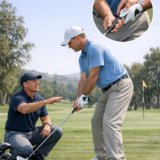
“Master” connotes a high level of skill and proficiency-an apt framing for an inquiry into the mechanics and methods that determine golf scoring (Dictionary.com). In competitive and recreational golf alike, scoring is the integrated outcome of three primary skill domains: the full swing, short-game putting, and the driving game. Each domain contributes distinct biomechanical demands, perceptual-motor requirements, and tactical considerations that together shape scoring consistency. understanding these components through an evidence-based lens enables practitioners and players to move beyond intuition toward repeatable performance gains.
This article synthesizes contemporary biomechanical analysis, motor-learning principles, and performance-analytics approaches to present a structured pathway for mastering golf scoring across swing, putting, and driving. We adopt an academic, practical orientation: defining objective metrics for assessment, describing level-specific drills and progressions, and integrating course-strategy implications that translate practice improvements into lower scores. By combining empirical findings with actionable protocols, the following sections aim to provide coaches and players with a rigorous, reproducible framework for improving consistency and competitive outcomes.
Biomechanical Foundations of the Golf Swing: Kinematic Sequencing, Common Faults, and Corrective Strategies
understanding the sequential nature of the golf swing begins with the biomechanics of the body: the lower body initiates rotation, the torso follows, then the arms, and finally the wrists and clubhead – a pattern known in sports science as kinematic sequencing. To create efficient energy transfer, strive for a proximal-to-distal sequence where the hips begin the downswing and attain maximum angular velocity before the torso; typical ranges for effective rotation are hips ~35-50° of turn and shoulders ~70-90° on a full swing, producing an X‑factor (shoulder‑pelvis separation) of approximately 20-45°. At setup, maintain a neutral spine tilt with a balanced stance (roughly 50/50 weight distribution at address) and a ball position that varies by club (e.g., centered to slightly forward in stance for mid-irons; forward inside the left heel for driver). In sequence practice, focus on:
- Initiate with the lead hip (feel a leftward bump for right-handed players) to start the downswing;
- Preserve a wrist-**** angle of ~30-45° through the early downswing to generate lag and clubhead speed;
- accelerate the release from mid-to-late downswing so that the hands lead the clubhead through impact, not the reverse.
These measurable guidelines translate into lower dispersion and more consistent distance control on the course, which in turn improves scoring opportunities by increasing fairways and greens in regulation percentages.
Common mechanical faults emerge when one link in the kinematic chain is mistimed or overcompensated. Such as, early extension (hips moving toward the ball on the downswing) shortens the swing arc and flattens attack angle, often causing fat or thin shots; conversely, casting (releasing wrist hinge too soon) sacrifices clubhead speed and produces weak, low shots.Biomechanically, a reverse pivot or excessive lateral sway indicates poor weight transfer or poor ground reaction force usage. To troubleshoot, apply these corrective drills and checkpoints:
- Chair drill – place a chair behind the hips to prevent early extension and promote hip rotation;
- Impact bag or towel drill – maintain the wrist-**** into impact to reinforce lag (goal: feel ~30°-40° lag until just before release);
- Step-through drill – promote correct weight shift and ground force by stepping the trail foot toward the target after impact.
Additionally, reference the Rules of Golf when practicing course scenarios (such as, when taking relief consult Rule 16 on abnormal course conditions) so practice habits align with competitive play.
The short game requires a modified kinematic sequence: lower body stability with controlled torso rotation and more active hands for trajectory manipulation. For chips and pitches, adopt a narrower stance with the ball back of center for low, running chips and progressively forward for higher pitches; a useful technical measure is an attack angle of +2° to +6° (descending-to-ascending relative to turf) depending on shot type. In bunker play, open the stance and clubface, and aim to contact sand ~1-2 inches behind the ball to use loft and bounce effectively. Practice routines should include:
- 60-yard pitch ladder – pick five target distances and repeat until 80% are inside a 15‑ft circle;
- One-handed chipping - promotes feel and reduces wrist breakdown for beginners;
- Explosion bunker drill – repeat shallow sand divots to learn depth control and consistent explosion angle.
These drills link directly to on-course scoring: better short game execution increases scrambling rate and reduces three-putts, which can lower scores by multiple strokes per round.
Equipment and fit influence how biomechanical principles are applied. shaft flex must match swing speed: as a general guideline,<85 mph driver speed - Senior/X‑flex; 85-95 mph - Regular; 95-105 mph - Stiff; >105 mph – X‑stiff – because mismatch alters timing and kinematic sequencing.Loft and lie adjustments change launch angle and turf interaction; for instance, increasing loft by 1-2° can raise trajectory and reduce side spin in windy conditions. When planning shots, use course management principles: favor targets that maximize scoring expectancy (e.g., aiming for the fat part of the green with a conservative club rather of going for a tucked pin that yields low birdie probability but high risk of bogey).Aim to hit into a 40-50 ft circle area around the hole for wedge approaches to dramatically improve one‑putt and up‑and‑down percentages.
integrate biomechanical training into periodized practice emphasizing measurable progress and mental skills. Begin with technical drills on the range (tempo counts, video analysis at 120-240 fps to evaluate sequencing), progress to situational practice (playing nine holes with pre‑set targets to simulate pressure), and conclude with on‑course application (track strokes gained components or a simpler statline: fairways hit, GIR, up-and-down %). Set specific, time‑bound goals such as: increase fairways hit by 10% in six weeks, or reduce three-putts by 50% in eight weeks.For diverse bodies and learning styles, offer multiple approaches – visual feedback (video), kinesthetic cues (impact bag), and auditory tempo (metronome or counting “1‑2” for backswing/downswing) – and adjust for weather (lower trajectory and less spin in wind by de-lofting club or using a half-swing).By combining biomechanical principles,targeted drills,equipment fit,and strategic thinking,golfers of all levels can convert technical improvements into quantifiable scoring gains.

evidence Based Drills for Swing consistency: Motor Learning principles and Progressive Training models for All Skill Levels
Beginning with motor learning principles establishes the foundation for consistent swing mechanics.Apply external focus cues (e.g., “send the clubface through the ball toward the target”) rather than internal body-part instructions to accelerate automaticity; research supports faster skill retention with external focus.Structure practice using a progression from blocked to random practice: start with focused, repetitive drills (blocked practice) to establish movement patterns, then move to random, variable practice to improve transfer to the course. For tempo and timing, use a metronome to train a 3:1 backswing-to-downswing tempo (for example, 0.9 s backswing / 0.3 s downswing) and measure attack angle goals with a launch monitor: aim for a positive attack angle of +2° to +5° with driver and a negative attack angle of -2° to -4° with long irons. implement faded feedback-begin with immediate video or launch monitor feedback, then reduce frequency (e.g., feedback every 5-10 shots) to encourage self-evaluation and long-term learning.
Next, break down swing mechanics into actionable checkpoints that apply to all skill levels, progressing from setup to impact. Begin with setup fundamentals: neutral spine tilt (approximately 6°-8° forward from the hips),shoulder-width stance (~40-45 cm for an average adult) for mid-irons,and a slightly wider stance (add 10-15 cm) for driver. Check shaft lean at address for irons to be slightly forward (~5°-10°), promoting crisp ball-first contact. During the swing, monitor a shoulder turn of ~80°-100° for golfers seeking balanced power and control; less experienced players may target ~80° for consistency. Use the following setup and troubleshooting checkpoints in practice:
- Alignment stick placement parallel to target line to verify feet, hips, and shoulders.
- Impact bag or towel under the lead arm drill to promote connection through impact.
- Gate drill with tees to eliminate casting and encourage a square clubface path.
These checkpoints reduce common errors such as early extension, casting, and an open clubface at impact, and each can be scaled in difficulty for beginners through low handicappers.
Transitioning to the short game, apply motor learning strategies that emphasize variable practice and pressure simulation. For chipping and pitching, set measurable targets: for example, from 30 yards, aim to land the ball within a 6-8 yard radius of a specific spot on 7 of 10 attempts; for bunker shots from a fairway-sand lie, establish a repeatable swing depth by marking the intended entry point in the sand. Practice drills include:
- Landing-zone ladder (place towels at 5, 10, and 15 yards) to train trajectory control.
- Clock face chipping (take shots to targets at 12, 3, 6, 9 o’clock positions) to build adaptability.
- Pressure scramble drill (must get up-and-down from varied lies to maintain a running score vs. par).
Moreover, apply the two-minute pre-shot routine in practice to improve on-course decision making and to reduce three-putts-practical scoring insight: reducing three-putts by one per round typically lowers score by about 0.5-1.0 strokes, a measurable benefit of purposeful putting practice.
Progressive training models should be explicit and measurable: define short-, medium-, and long-term objectives and assign practice load accordingly. Such as,a 12-week plan could target: short-term (4 weeks) – reduce swing path variance by 10-15% using alignment and impact drills; medium-term (8 weeks) – increase fairways hit to a target percent (e.g., an intermediate player aiming for 55-60%); long-term (12 weeks) – improve GIR (greens in regulation) by 5-10% and reduce putts per round by 1-2. Practical sessions follow a consistent template-warm-up (10 min),focused mechanic work (30-40 min),variable scenario practice (30 min),short game and putting (20-30 min)-and incorporate measurable feedback via launch monitor metrics (club path,face angle,ball speed) and scoring statistics (scrambling percentage,up-and-downs). Offer alternative drills for different learning styles and physical abilities: an armless swing drill for kinesthetic learners, video mirror for visual learners, and verbal cue checklists for auditory learners.
connect technical training to pragmatic course management and the mental game to convert skill improvement into lower scores. Emphasize planning shots to your strengths-play to the side of the green that matches your preferred ball flight and average dispersion (e.g.,if your 7-iron typically misses left by 10-15 yards,aim right of the pin accordingly). When wind or firm conditions affect club selection, use the rule-of-thumb clubbing adjustment: add 1 club for each 10-12 mph headwind, and subtract one for equivalent tailwind, then refine with practice observations. Integrate pressure-oriented practice such as match-play scenarios and pre-shot routines to improve stress response; this trains the same cognitive processes used under tournament conditions. track objective scoring metrics-fairways hit, GIR, scrambling, and putts per round-and use them as anchors for ongoing practice priorities so that technical drills directly map to score reduction. In this way, evidence-based motor learning and progressive training models translate into on-course gains for beginners through low handicappers.
Precision Putting Mechanics and Green Reading: Stroke Biomechanics,aim Calibration,and Speed Control Protocols
Begin with a repeatable setup that creates a stable platform for consistent roll. Establish a stance that is roughly shoulder-width with the ball positioned just forward of center (about half a ball-width) for most mallet and blade putters; this promotes a low, penetrating launch. Hinge from the hips to an upper-body angle of approximately 15-25° so the eyes fall slightly over or just inside the ball line – this encourages a better view of the target line and minimizes shoulder compensations. Use a light, neutral grip with the palms facing each other to reduce wrist breakdown; the hands should be in front of the ball at address to preserve loft through impact. for setup checkpoints, use this short checklist:
- Shoulder-width stance and balanced weight distribution (about 50/50).
- Eyes over/inside the ball and spine angle hinged at hips (~15-25°).
- Ball forward of center by ~0.5 ball-width and light, neutral grip.
These fundamentals reduce variability and place the emphasis on a pendulum-like stroke driven by the shoulders rather than the wrists, which is critical for consistent distance control and face alignment.
Next, refine stroke biomechanics to control face angle and impact dynamics. Adopt a shoulder-driven pendulum with minimal wrist uncocking so the putter face remains square through impact; aim for a face-to-path window within ±2-4 degrees at impact for accurate lines on medium to fast greens.Keep the stroke length proportional to the required speed: a straight-back-straight-through stroke for short, accuracy-focused putts (under 8 ft) and a slightly arced stroke for longer lag putts if your setup creates a natural arc. Include these practice elements to stabilize mechanics:
- Gate drill with a 1-2 inch tolerance to train a square face through impact.
- Stroke with a towel under both armpits for 5-10 minutes to reinforce shoulder-driven motion.
- Use a face tape or impact tape during practice to monitor centeredness of strike; aim for >80% centered strikes in a 10-minute session.
Progression should be measured: record center-contact percentage and face-angle variance, then set weekly improvement goals (for example, reduce face-angle deviation by 1° and increase centered strikes by 10% in four weeks).
Accurate aim calibration depends on reliable line-reading and establishing an intermediate target system. Begin by identifying the primary read – the overall slope from the ball to the hole - and then a secondary, intermediate aiming point where the ball should start to account for break. Quantify slope where possible: a 1% slope produces subtle breaks over distance whereas a 3-4% slope will move a putt substantially; as a rule of thumb, on a Stimp 10 green a 3% slope can bend a 20‑ft putt multiple feet. Take into account grain direction (shiny areas indicate uphill grain) and moisture; on early-morning damp greens expect 1-2 ft less roll than midday. Practical on-course applications include:
- Using an intermediate target 1-3 feet in front of the ball on breaking putts.
- Aligning putter sightlines or alignment aids to that intermediate point rather than the hole.
- When in doubt, aim to the high side of the hole to reduce three-putt risk on lag attempts.
These methods improve alignment reliability and convert reads into reproducible aim points under pressure.
Speed control protocols are the single biggest determinant of scoring from the green. Train a tempo-based system where distance is controlled by the ratio of backswing to follow-through time (targeting a 1:1.5-2.0 backswing:follow-through tempo for lag putts) rather than purely by backswing length. Practice with measurable drills:
- Lag ladder: from 30-60 ft, leave putts inside a 3‑ft circle; record conversion rate aiming for 70-80% within six weeks.
- Clock drill: twelve 3-6 ft putts around the hole to build short-range pace and confidence.
- Stimp-aware practice: simulate green speeds between Stimp 8-12 to train force application across conditions.
When playing, adopt a speed-first philosophy for two-putt strategy: if you cannot make the first putt, commit to leaving the second putt inside 3 feet.This reduces three-putt frequency and directly improves scoring; a realistic measurable goal is to lower three-putts per round by at least one within a month of focused practice.
integrate mechanics, reading, and speed into a course-management routine that supports consistent scoring. Before each round, take time to walk putts on the practice green to sense the day’s Stimp and grain; record the number (or estimate) and mentally adjust target speed. During play, choose percentage plays-preferentially aiming for conservative lines when a miss yields a straightforward next putt-and apply the rule: if green hardness or wind changes speed, adjust your target by ±5-10% force per club-like distance increment.Include mental routines: a concise pre-putt routine under 10 seconds that restates aim, speed, and stroke tempo reduces anxiety and improves execution.Troubleshooting common errors:
- Deceleration – practice dynamic impact drills focusing on follow-through extension.
- Face rotation – use alignment gates and impact tape to retrain a square face at impact.
- Poor reads – employ the intermediate target method and re-check slopes from two stances (behind and lateral).
By linking measurable practice drills to on-course decision-making and mental routines, golfers of all levels-from beginners learning pace to low handicappers polishing face control-can systematically improve one-putt and two-putt percentages and lower overall scores.
Driving Optimization: Launch Conditions, Clubhead Speed Development, and Strategies to Balance Distance and Accuracy
Understanding and optimizing launch conditions begins with precise measurement and clear targets: launch angle, spin rate, attack angle, smash factor, and clubhead speed are the primary variables that determine carry, carry-to-roll ratio, and dispersion.For most golfers with a driver,aim for a launch angle between 10° and 14° and a spin rate in the range of 1,800-3,000 rpm depending on swing speed and firmness of turf; higher swing speeds generally tolerate higher launch and lower spin for maximum carry. Use a calibrated launch monitor (e.g.,TrackMan,GCQuad,FlightScope) to establish baseline numbers: a good smash factor target for driver is ≈1.48, while clubhead speed benchmarks are 75-90 mph for beginners, 90-105 mph for typical amateurs, and 105-115+ mph for low handicappers and single-digit players. Step-by-step: record a 20-shot sample on the monitor, compute averages and standard deviation for each metric, then prioritize the variable that most departs from optimal ranges (for example, high spin with low launch suggests de-lofting or lower spinning head where permissible under the Rules of Golf).
Developing clubhead speed must be systematic, progressive, and tailored to the player’s physical profile. Begin with a mobility and power foundation: rotational medicine ball throws, hip-turn stability, and ankle stiffness drills create the platform for effective sequencing. Then, integrate golf-specific speed training using both technique and tempo work; overspeed training (lighter clubs/Speed Sticks) and resisted swings (weighted clubs, bands) should be alternated to stimulate neural adaptations while minimizing injury risk. Measurable goals make progress objective: aim for a +3-5 mph increase in clubhead speed over 8-12 weeks to expect roughly a +7-12 yards of total distance (individual conversion varies with smash factor). Practice drills:
- Step drill to improve ground-force sequencing-pause at the top, step through, rotate hips quickly;
- Towel drill to encourage late release and maintain lag-place towel under right armpit (right-handed) and make full swings without losing connection;
- Medicine ball side throws for power-3 sets of 8 explosive reps focusing on hip-to-shoulder transfer.
Correct common mistakes: reduce grip tension (target 4-5/10 pressure), eliminate casting by feeling the clubhead lag during downswing, and train a balanced finish to avoid energy leaks.
Balancing distance with accuracy requires both technical consistency and clever course management. On narrow or hazard-laden holes prioritize positional accuracy-use a 3-wood or hybrid off the tee to lower dispersion and increase GIR probability rather than always swinging driver. Such as,if a par‑4 requires 260 yards to reach the corner but leaves a blind approach with heavy rough right of the green,a conservative lay-up to 200-220 yards with a low-spinning fairway wood often yields a lower average score. transition strategy into practice by simulating course scenarios: range sessions should include target-oriented work that replicates carry distances to bunkers and lay-up yardages; on-course, play risk-reward holes both aggressively and conservatively to learn penalty thresholds. Key statistical insight: improving fairway hit percentage by 10% tends to increase GIR and reduce scrambling, which correlates directly to 1-2 strokes saved per round for many amateurs.
Setup and impact mechanics are central to converting optimized launch conditions into repeatable results. Begin with setup checkpoints that reliably produce a positive attack angle and center-face contact: ball position just inside left heel for driver (right-handed), a slight spine tilt away from the target to promote upward angle of attack, and weight distribution 55% on the front foot at address shifting to 65-70% at impact for many modern drivers. Practical setup and troubleshooting points:
- Alignment & ball position: confirm with alignment rod and tee height so only the top third of the driver face contacts the ball at impact;
- Spine angle & tilt: maintain shoulder plane and avoid lifting in transition (early extension);
- Impact sequence: ground force → hip rotation → torso clearance → wrist unhinge (release) for consistent center-face contact.
When a player commonly hooks or pulls, evaluate face control and path-work on a neutral-to-slightly-open face at address and a shallow inside-out path drill; when slices occur, focus on stronger lower body rotation and a fuller release. Use impact tape or face spray to verify center contact as an objective measure of improvement.
integrate practice structure, equipment considerations, and the mental routine into a coherent improvement plan that produces measurable scoring gains. A weekly practice template might allocate 2 technical sessions (60-90 minutes each focused on speed and impact drills),1 targeted range session (yardage control and shape work),and 1 on-course simulation (pressure shots,wind play,and strategic tee selection). Equipment adjustments-such as adding loft (+1-2°), selecting a higher-launch/higher-MOI head, or softening shaft flex-should be validated on a launch monitor and guided by the principle of producing tighter dispersion for equal or slightly reduced distance. Mental and pre-shot elements matter: adopt a concise pre-shot routine, visualize ball flight and landing area, and use breathing techniques to maintain tempo under pressure. For players with physical limitations, emphasize technique economy (e.g., using a shorter backswing and higher tempo) and consider hybrids or strong-lofted fairway woods to preserve distance while improving accuracy. Ultimately, incremental and measurable changes-such as reducing average tee-shot dispersion by 10-15 yards or increasing fairways hit by 1-2 per round-translate into lower scores through improved approach positions and fewer penalty strokes.
Quantifiable Metrics and Assessment Frameworks: Objective Testing, Trackman Data Interpretation, and Performance benchmarks
Begin with a standardized, repeatable testing protocol to create an objective baseline for improvement. First, warm up with progressive swings and then record a minimum of 10 tracked shots per club, taking the average of the best five to reduce outliers. Capture key metrics: clubhead speed (mph), ball speed (mph), smash factor, launch angle (°), spin rate (rpm), attack angle (°), dynamic loft, carry and total distance (yards), and lateral dispersion (yards). For beginners establish simple benchmarks (for example, 7‑iron carry ±5 yards consistency), while intermediate and low‑handicap players should target tighter dispersion (e.g., driver lateral dispersion ≤ 20 yards) and optimized smash factors (driver > 1.45). To ensure accuracy, perform tests on the same surface and into similar wind conditions, and document environmental variables (wind, temperature, turf firmness) because they materially affect launch and spin.
Next, interpret Trackman and launch monitor data using diagnostic hierarchies so that numbers lead to corrective actions rather than confusion. Begin with contact quality: smash factor indicates energy transfer-low values suggest poor centre‑face contact or equipment mismatch. then read trajectory: a high launch angle with low spin often yields poor carry; conversely, high spin and low launch creates ballooning. Examine club path versus face angle: a face angle left of path produces draw spin, right of path produces fade spin; face‑to‑path (°) within ±1° is a strong goal for shot‑shaping consistency. When data shows a miss pattern,follow this priority of fixes: setup (grip,ball position,shaft lean),then swing plane and release,and finally equipment (loft,shaft flex). Practical diagnostics and drills include:
- Impact tape drill: identify strike pattern, then drill with impact wedges focusing on centre contact.
- Path‑to‑face drill: place an alignment pole just outside ball to encourage correct club path and check resulting ball curvature.
- Attack angle drill: use tees at different heights to practice shallow vs steep attack angles for driver and irons.
Transitioning to the short game,quantify wedge gapping and putting performance to translate practice into scoring. Measure full‑swing carry gaps between wedges (aim for consistent 8-12 yard gaps through the bag) and verify with 20-30 yard partial swings to calibrate scoring clubs. For chipping and pitch shots, record proximity to hole statistics (e.g., percentage within 6 feet) and for putting track stroke length and tempo; a common benchmark for good short‑game performance is converting ≥60% of chip/pitch attempts to within 6-8 feet and reducing three‑putts to ≤6% of holes. Drills and setup checkpoints include:
- Distance ladder drill: hit 10 balls each at 10, 20, 30, 40, 50 yards and record average carry to build reliable partial‑swing distances.
- Clock‑face chipping: place balls around a hole at varying distances and use three different trajectories to practice landing spot and roll control.
- Putting gate/tempo drill: use two tees to force a square face through impact and a metronome for consistent backswing/downswing ratios.
Moreover, apply objective metrics to course management and scoring strategy. Use dispersion maps and carry/roll data to select the club that minimizes scoring risk on a given hole: for example, when Trackman shows your driver average carry is 250 yards with ±30 yards lateral dispersion, opt for a 3‑wood that produces 235 yards with tighter dispersion when a fairway bunker is at 270 yards. Similarly, integrate greens‑in‑regulation (GIR), proximity to hole, and scrambling percentages into shot selection-if your GIR is low but scrambling percentage is high, prioritize hitting short‑side bunker recoveries in practice to raise GIR. Consider weather and course conditions: into the wind, increase launch angle by 2-4° and expect spin rate increases; on firm greens reduce landing angle and aim for bump‑and‑run options. Practice routines to simulate course decision‑making include:
- Scenario practice: play 9 holes selecting clubs only from your measured carry zones and record score differentials.
- Pressure par drills: on the range, set up a target zone that mimics a green and require two‑shot sequences (approach + up‑and‑down) to replicate scoring demands.
establish an assessment cadence and measurable improvement plan that links technical work to scoring outcomes. Re‑test baseline metrics every 6-8 weeks and set incremental goals: e.g., reduce average lateral dispersion by 15% in three months, increase GIR by 8 percentage points in six months, or lower average strokes gained putting by 0.2 per round.Address common mistakes: avoid chasing single metrics (such as only increasing clubhead speed) without regard to dispersion and launch; correct faulty setup cues (over‑tilted spine,incorrect ball position) with simple alignment and mirror drills; and manage swing thoughts by using one concise pre‑shot routine to reduce performance pressure. combine technical measures with mental and physical plans-strength and mobility work to support desired attack angles,and visualization routines to improve green reading and course strategy-so that data drives practice and on‑course scoring improvements in a measurable,repeatable way. Consistent measurement, prioritized fixes, and contextual practice are the path to lowering scores.
Level Specific Training Plans: Tailored Practice Regimens,Frequency Guidelines,and Measurable Milestones
Begin with a structured weekly cadence that aligns practice content to skill level and scoring objectives. For beginners,schedule 3 sessions per week of 60-90 minutes emphasizing fundamentals: grip,stance,alignment,and consistent contact; include at least one on-course 9-hole session per week to apply basic rules and pace-of-play etiquette. Intermediate players should progress to 4-5 sessions per week totaling 4-6 hours,allocating time across the driving range,short game area,and putting green with one full round focused on course management each week. Low handicappers benefit from 5-6 focused sessions per week plus two competitive or practice rounds: one dedicated to scoring situations (scrambling, sand play, lag putting) and one to mechanical refinement. Measurable milestones to track across all levels include: fairways hit (FIR), greens in regulation (GIR), up-and-down percentage, and three-putt rate; for example, a realistic 12-week target for an intermediate player is to increase GIR by +10 percentage points and reduce three-putts by 50%, which translates to consistent mid-round scoring gains. To practice with facility realism, use range complexes that include sand bunkers and practice greens (for example, renovated driving ranges and chipping areas commonly found at public facilities) so that practice transfers directly to on-course conditions.
Next, concentrate on reproducible swing mechanics through progressive drills and measurable checkpoints. Establish a consistent setup with spine tilt of approximately 20° for full swings, knee flex of 5-10°, and a ball position that moves forward by roughly one ball diameter per club from mid-irons to driver; for a right‑handed player the driver ball position is near the inside of the left heel. Train an impact-first pattern for irons with an attack angle of about −3° to −6° (downward) and a slightly positive attack angle for driver of +2° to +4° to maximize launch and reduce spin. Use these drills to ingrain the feel and collect data:
- Alignment-stick gate drill for swing path and clubface control (place two sticks to form a path for the butt of the club through impact).
- Impact-bag or towel drill to rehearse forward shaft lean and centralized contact; hold the pose for 2-3 seconds after impact.
- Tempo metronome drill at a 3:1 backswing-to-downswing ratio to stabilize sequencing.
Common faults include early extension, casting the wrists, and over-rotation of the hips; correct these with slow-motion halftime swings on the range and video feedback, aiming to reduce lateral sway to less than 1-2 inches at hip level during transition.
Short game training must be deliberate and distance-specific because it yields the fastest scoring improvements. For chipping and pitching, set quantifiable targets: for example, work to achieve 75% of pitches within 10 feet from 30-60 yards and 70% of chips within 6 feet from the fringe. Technique points include using the bounce of a wedge when contacting sand or tight lies (open clubface of 8°-15° for high lob shots) and keeping the lead wrist firm through impact for crisp contact on chip shots. Drills to implement:
- Ladder drill: hit pitch shots to targets at 10‑, 20‑, 30‑, and 50‑yards to calibrate swing length and loft usage.
- Clock drill (bunker): from varying sand depths, play shots to a flag at 20-40 yards using different bounce angles to learn interaction with the sand.
- Putting gate and distance control: set 3-4 foot gates for stroke path and practice 15, 25, and 40‑foot lag putts aiming to leave within 3 feet on >80%.
Additionally, practice rhythms that simulate on-course pressure-such as performing three knockout chip shots where only the last counts-so players develop routine-based confidence and reduce scrambling failures on scorecards.
Transitioning to course management, integrate strategic decision-making into practice so technical gains convert to lower scores. Teach players to evaluate lie, wind, slope, and pin position before every shot and to choose the club and shotshape that minimize risk while maximizing scoring opportunity. For example, from a fairway lie on a 420‑yard par 4 into a green with a back-right pin and a narrow front bunker, a conservative strategy might be a 3‑wood to the center of the fairway to leave a full approach with a mid-iron rather than attempting a heroic driver carry over trouble. Develop shot-shaping proficiency-controlled draw/fade-by adjusting face-to-path relationships by 3°-6° and ball position by one ball width to promote consistent curvature. Practice scenarios include:
- Wind play: simulate +15 mph crosswind and rehearse club selection to carry hazards.
- Downhill/uphill lies: adjust loft and aim point; play the ball slightly back for downhill, slightly forward for uphill.
- Score management drills: play three holes aiming for target scores (e.g., two pars and a bogey) to practice conservative risk-reward decisions.
These management skills reduce penalty strokes and improve scoring consistency by turning technical ability into repeatable decisions under varying conditions.
create periodized regimens,monitor progress with objective metrics,and integrate mental skills training to sustain improvement.Use a 12‑week microcycle with 3 weeks of load, 1 week of active recovery, and specific measurable checkpoints (e.g., +5% GIR, −1 three‑putt per round, +5 mph clubhead speed) to evaluate adaptation. Tailor examples by level:
- Beginner: focus 60% on fundamentals, 25% short game, 15% putting; milestone-drop to a 30-36 handicap range by consistently striking the ball and completing nine-hole practice rounds.
- Intermediate: balance 40% mechanics, 30% short game, 30% on‑course situational practice; milestone-increase up‑and‑down rate to 50-60%.
- Low handicap: emphasize 30% refinement of swing,40% pressure short game and putting,30% course strategy/competition simulation; milestone-reduce scoring average by 1-2 strokes through improved scrambling and eliminating three‑putts.
Complement technical work with mental training: a concise pre‑shot routine, breathing cues to lower arousal, and visualization of the intended shot. use both high‑tech (launch monitors, GPS yardage books, strokes‑gained stats) and low‑tech feedback (targeted scoring games, video review, distance ladders) so that players of all learning styles and physical abilities can measure progress and convert practice into dependable on‑course scoring improvement.
Integrating Technology and Video Analysis: Using Wearables, Motion Capture, and Data Driven Feedback to Accelerate Improvement
Integrating wearable sensors, high-speed video, and motion-capture systems into practice begins with establishing a clear baseline. First, record a minimum of 30 swings across woods, irons, and wedges using a launch monitor or wearable that reports clubhead speed, ball speed, launch angle, spin rate (rpm), and attack angle (°). For reference, set target benchmarks appropriate to ability: recreational male drivers frequently enough sit near ~93 mph clubhead speed while low-handicappers exceed 105 mph+1° to +5° and iron attack angles from -4° to -8°. During data capture, note setup variables (ball position, spine tilt, stance width) and capture synchronized video from face-on and down-the-line perspectives. This objective baseline-paired with the U.S. Golf Association guidance that performance devices are for practice and readiness, not in-play advice-provides a reproducible dataset to measure change and to construct specific, measurable goals such as increasing average carry by 10-15 yards or reducing dispersion to within a 10-yard radius for a given club.
Onc baseline data are collected, use motion-capture-derived metrics to decompose the swing into mechanical components and to prescribe corrective sequencing. Focus on the kinematic sequence: pelvis rotation, torso coil, arm swing, then club release. An efficient sequence often produces an X-factor (difference between shoulder and hip rotation) in the order of ~15°-25°; when the X-factor consistently exceeds or falls below this range, the player typically suffers loss of power or control. Step-by-step, address faults with targeted drills: first isolate lower-body lead with a step-and-swing drill to improve hip rotation timing; then use a split-grip drill to promote correct wrist hinge and release. Use a metronome or wearable tempo coach to target a backswing:downswing ratio near 3:1 for tempo control, and verify changes with repeat motion-capture tests. Common mistakes-early extension, overactive upper body, or an open clubface-should be quantified (degrees of shoulder tilt or face-to-path at impact) and then reduced through measurable progressions (e.g., decrease face-open angle from +8° to +2° over a 6-8 week plan).
Apply the same technological precision to the short game where small mechanical differences produce large scoring effects. Use high-frame-rate video and launch data to analyze loft at impact, dynamic loft, and spin for chips, pitches, and bunker shots. For example, a pitch intended to hold a green may require launch angles 18°-30° and spin rates above 4000 rpm depending on wedge loft and turf. Prescribe practice routines with clear targets: improve up-and-down percentage by focusing on contact quality and clubface angle at impact. Practical drills include:
- gate drill for consistent strike (place tees just wider than the clubhead),
- towel-under-arms to maintain connection on blast shots,
- three-distance ladder to practice trajectory control at 10 yd,25 yd,and 40 yd ranges.
Use on-course scenarios-e.g., a 20-yard pitch from tight lies where rollout is increased on firm surfaces-to decide between a bump-and-run and a high-spin wedge, checking launch monitor data to confirm the selected shot will produce the intended carrying and stopping behavior.
Data-driven feedback also transforms course management into a quantifiable strategy. Leverage shot-tracking platforms to calculate strokes gained by area (off-the-tee, approach, around-the-green, putting) and then prioritize practice that yields the largest scoring return. For example, if data reveal a 0.25 strokes per round deficiency on approaches from 150-175 yards, focus sessions on that range and map club gapping precisely (carry, total distance, dispersion). In practice, create a pre-round plan based on average dispersion: choose target zones that keep the ball in play (e.g.,aim to a 40-yard fairway corridor rather than the center if wind increases dispersion) and employ conservative yardage when firm conditions add 10-20% rollout. Troubleshoot typical mistakes such as over-clubbing into firm greens or misjudging wind; correct by referencing launch monitor carry numbers and by simulating conditions on the range before applying the strategy in competition.
integrate technology into a lasting training program that combines measurable goals, coach-led interpretation, and mental-game preparation. Establish a testing protocol (for example, a biweekly 30-shot performance test for each club and a 20-putt speed/break assessment) to quantify progress and to adjust training loads. Cater to multiple learning styles by pairing visual feedback (annotated video), kinesthetic cues (wearable haptics or weighted-club drills), and auditory feedback (metronome cadence). Include periodization: skill acquisition (4-6 weeks of technical work), consolidation (2-3 weeks on course simulation), and evaluation (tournament simulation under pressure). Address competition rules and ethics by reminding players that in tournament play devices may only be used as permitted by Local Rules-distance devices are commonly allowed but devices that offer advice on club selection, strategy, or line may be restricted. By closing the feedback loop-measure, prescribe, practice, re-measure-players at all levels can convert technical improvements into measurable scoring gains such as improved GIR percentage, higher scrambling rates, and a reduction in average score by 1-3 strokes as realistic short-to-medium term objectives.
Course Strategy and Mental Skills integration: Shot Selection, Risk Management, and Cognitive Routines to Translate Practice into Lower Scores
Begin with a concise, repeatable pre-shot protocol that codifies decision-making and reduces indecision on the course. First, assess lie, wind, and target and then choose a conservative target when the risk outweighs the potential reward; commit to one target and one swing to avoid last-minute adjustments. Use a three-step cognitive routine: visualize the ball flight (trajectory and landing), quantify the required carry and margin for error in yards, and execute a one-minute confidence check (breath, grip pressure, and tempo). For example, when facing a 160-yard par 3 with water left and a narrow green, calculate a safe margin of at least 15-20 yards laterally from hazards and select the club that gives a 60-70% probability of holding that side of the green based on your tracked dispersion.Reinforce this routine with an on-course checklist:
- Target confirmation (visual aim point and landing area)
- Club selection (carry, wind compensation, and confidence)
- Execution trigger (specific tempo or physical cue)
Next, translate risk management into practical shot-selection rules by combining statistical decision thresholds with playability. In general, adopt a conservative threshold: if the probability of finding the fairway or green with a threatened shot is below 60%, opt for the safer play that still preserves birdie or par opportunities (for example, laying up to a comfortable wedge distance rather than trying to reach a tight par-5 in two). Consider wind, elevation, firmness, and temperature: a 10 mph crosswind will typically move a mid-iron 5-10 yards sideways and should increase your dispersion margin by the same amount. Use carry yardage and dispersion data from a launch monitor or shot tracker to inform decisions; for instance, if your 7-iron carry is 145 yards with a 15-yard lateral dispersion, avoid targets requiring ±10 yards of precision into small pins.When suitable,incorporate match-play or stroke-play tactics-play for bogey-safe positions on tough holes in stroke play but be more aggressive in match play when conceding holes is a strategic option.
After establishing decision rules, integrate swing mechanics to produce the required trajectories and shot shapes reliably. Focus on the relationship between clubface and swing path: small face-to-path differentials of 2-6° produce controllable draws and fades. For beginners, teach a neutral setup first-shoulders square to target, ball position centered for short irons and progressively forward for longer clubs (driver ball just inside front heel). Progressively refine with these setup checkpoints:
- Grip pressure: light-to-moderate (4-6/10) to allow release without tension
- Shaft lean: slight forward for irons at address to promote a descending attack angle of approximately -2° to -4°
- Weight distribution: 55/45 lead-to-trail at address for stability and consistent compression
For advanced players, implement targeted swing plane and face-control drills to alter curvature and trajectory: practice the “gate drill” to square the clubface at impact and use impact tape to confirm face orientation. Equipment considerations are also critical; adjust loft, shaft flex, and lie to match your attack angle and ball flight, and confirm wedge bounce (typically 8-12° for soft sand) to optimize bunker and tight-lie performance.
Transitioning to the short game, prioritize distance control and green-reading as primary scoring levers. Establish measurable goals such as 50% of lag putts inside 8 feet from 20-40 feet within three months and work wedges for 3-6 yard shot-stopping increments around the green. Use these drills to build repeatability:
- Lag putting drill: place tees at 8, 20, and 35 feet and track proximity statistics over 50 balls
- Chipping circle drill: aim to land balls inside a 6-foot radius from varying lies and club choices
- Bunker control drill: practice open-face, high-bounce shots to land soft on firm greens and aim for consistent 30-40% sand contact
Also, teach green-reading fundamentals-slope percentage estimation and speed control-by using the simple rule that a ball on a 2% slope will break approximately 1.5-2 feet over 20 feet of roll; adjust accordingly for grain and firmness. Provide corrections for common mistakes: if chips are running out, open the face slightly and accelerate through impact; if bunker shots fat, widen stance and lower hands at address to shallow the angle of attack.
ensure that practice transfers to lower scores through structured, pressure-incorporated routines that simulate on-course decision-making. Implement block and random practice cycles: spend 60% of a session on targeted technical work (e.g., impact position, face control) and 40% on goal-oriented scenarios (par-saving up-and-downs, 15-minute pressure putting with a bet). Track progress with quantifiable metrics-fairways hit, greens in regulation, and scrambling percentage-and set phased goals such as reducing three-putts by 30% in six weeks or improving greens-in-regulation by 5-8%. Mental skills should be drilled alongside technique: use breathing and cue words to manage arousal, rehearse decisive club selections under time pressure, and practice the rule-based relief options (e.g., knowing when to take a back-on-the-line drop for an unplayable lie) so these choices become automatic. In sum,integrate mechanical precision,deliberate practice drills,and a disciplined cognitive routine to convert range improvements into measurable lower scores on the course.
Q&A
Note on sources: the provided web search results do not pertain to golf; they reference unrelated topics. The Q&A below is thus compiled from domain knowledge in golf coaching, biomechanics, and sports science (evidence-based principles), and is presented in an academic, professional register.
Q1: What is the conceptual framework for “mastering” scoring through swing, putting, and driving?
A1: Mastery of golf scoring is a systems-level process integrating biomechanical efficiency (swing and driving mechanics), perceptual-motor control (putting and short-game precision), and tactical decision-making (course strategy). Optimal outcomes arise from aligning objective performance metrics (e.g., clubhead speed, launch characteristics, dispersion, putting stroke consistency) with individualized training protocols that address technical, physical, and cognitive subsystems.Q2: Which biomechanical variables most strongly predict effective full-swing performance and driving distance?
A2: Key biomechanical predictors include clubhead speed, proximal-to-distal kinematic sequencing (pelvis → thorax → arms → club), rotational range of motion (thoracic and hip rotation), and efficient energy transfer reflected in smash factor.Secondary but important variables are angle of attack, spine tilt at impact, and ground-reaction force generation. Together these variables determine ball speed, launch angle, and spin rate-primary determinants of carry and total distance.
Q3: What objective metrics should coaches monitor when optimizing the swing and driving?
A3: Essential metrics are clubhead speed, ball speed, smash factor (ball speed/clubhead speed), launch angle, spin rate (backspin and sidespin), attack angle, dynamic loft at impact, and shot dispersion (standard deviation of lateral misses). For longitudinal monitoring, use consistency measures (coefficient of variation) and session-to-session trends rather than single measurements.
Q4: How should putting be conceptualized from a motor-control perspective?
A4: Putting is a closed-skill, highly constrained motor task that relies on fine sensorimotor control, tempo regulation, and visual-kinesthetic calibration. Success depends on consistent stroke geometry (path and face-angle relationship), speed control (distance regulation), and perceptual skills (green reading). training should target both movement variability reduction and adaptive calibration to green speed and slope.
Q5: What measurable putting metrics predict scoring improvements?
A5: High-value putting metrics include putts per round,three-putt frequency,proximity to hole on approach (left outside the putting metric),percentage of putts holed from 3-10 ft,and stroke-length/velocity consistency. Advanced metrics include face-angle at impact variability and launch/roll ratio. Strokes-gained: putting is useful for integrating putting performance relative to peers.
Q6: How can training be organized by player level (beginner → elite)?
A6:
– Beginner: Emphasize fundamentals-grip, posture, basic alignment, simple tempo. Low-complexity drills with high repetition and frequent feedback.Targets: consistent contact, reducing large miss types.
– Intermediate: Introduce biomechanical sequencing, more targeted drills for launch/spin control, short-game routines, and structured practice blocks (blocked/serial practice). Begin using measurement tools (launch monitor, laser rangefinder).
– Advanced/Elite: High-resolution data-driven adjustments, individualized biomechanical interventions, variability training for tolerance to perturbations, periodized physical conditioning, and integrated course-strategy simulations. Use statistical benchmarks and kpis to guide training cycles.
Q7: Provide specific, evidence-based drills to improve swing sequencing and driving efficiency.A7:
– Med Ball Rotational Throws: Improve proximal-to-distal sequencing and power transfer.
– Slow-Motion Impact Repetitions with Alignment Rods: Focus on clubhead path and face orientation at impact.
– Tempo-Constraint drill (metronome at target cadence): Stabilizes timing and reduces excessive variability.
– Tee Height and Forward Shaft lean drill: Experiment to optimize dynamic loft/attack angle for desired launch and spin.
Each drill should be performed with objective feedback (video, launch monitor) and progressed via load/speed increments.Q8: Provide specific drills for putting consistency and speed control.
A8:
– Gate Drill for face Alignment: Place two tees to form a gate slightly wider than the putter head to enforce square face at impact.
– Ladder/Distance Control Drill: Putt to progressively farther targets, recording proximity; emphasize speed control rather than holing.- Two-Tempo Drill: Alternate slow/fast tempos to develop adaptability.
– Return-to-5-Foot Drill: From various distances, aim to leave the ball within a 5-foot circle; quantify success rate.
Incorporate purposeful variability (different green speeds and breaks) to build transfer to competition.
Q9: How should launch monitors and technology be integrated into training?
A9: Use launch monitors to quantify clubhead speed, ball speed, smash factor, launch angle, and spin. Begin sessions with baseline profiling, then apply interventions and re-measure to assess effect sizes. Use high-speed video for kinematic analysis. Technology should inform but not replace expert coaching judgment; emphasize meaningful metrics and longitudinal trends.
Q10: What are practical, evidence-based performance targets and how should they be used?
A10: Targets should be individualized and relative to baseline plus normative ranges for handicap tiers. Example target types:
– Reduce stroke average by defined increments (e.g.,2-4 strokes over 12 weeks).- Decrease putts per round by 1-2 via reducing three-putts and improving inside-6ft conversion.
- Improve clubhead speed by percent increments through strength/power training.
Use targets as data-driven milestones for training progression; adjust targets as the athlete adapts.
Q11: How should physical conditioning and injury prevention be integrated with technical work?
A11: Conditioning should support golf-specific demands: rotational power, hip and thoracic mobility, core stability, and unilateral lower-limb strength. Incorporate progressive overload, mobility routines (dynamic and tissue-specific), and load management. Address common dysfunctions (restricted thoracic rotation, hip internal rotation deficits) that adversely affect swing mechanics. Schedule conditioning phases to align with technical periods (off-season strength, pre-season power, in-season maintenance).
Q12: How do you translate technical improvements into course strategy to maximize scoring?
A12: Data-driven course strategy requires mapping performance envelopes (e.g., average carry distances, dispersion patterns, approach shot proximity) to hole-specific risk-reward decisions. Use statistical decision rules: play to a club that leaves a higher-probability scoring approach rather than maximizing green-attacking on low-odds holes. Integrate putting zone percentages to inform approach aggressiveness-if putting from 20-30 ft is weak, prioritize approaches that leave inside-15-ft chances.
Q13: What assessment protocol should coaches use to establish a baseline and monitor progress?
A13: Baseline assessment should include: physical screen (mobility, strength), swing kinematics (video and sensor data), launch monitor profile (driver and mid/short irons), short-game metrics (chip proximity distributions), and putting statistics (strokes-gained, proximity, face-angle consistency). Reassess at planned intervals (e.g., 6-8 weeks) and use standardized test batteries to quantify change and guide periodization.
Q14: How should practice be structured to maximize transfer and retention?
A14: Combine deliberate practice principles and motor-learning strategies: distributed practice, variable practice schedules that simulate competition conditions, randomized practice for contextual interference, and frequent performance feedback that transitions from augmented to intrinsic. Emphasize deliberate, outcome-focused repetitions with cognitive engagement (goal-setting) and periodic competitive simulation.
Q15: What role do psychological factors play, and how should they be trained?
A15: Psychological factors-arousal regulation, attention control, and confidence-moderate the expression of technical skill under pressure. Train routines (pre-shot routine, breathing), simulation of competitive pressures, and cognitive reframing strategies. Include pressure-based practice (scarcity of balls, scoring stakes) to improve transfer.
Concluding guidance:
– Prioritize objective measurement and longitudinal trends over single-session feedback.
– Integrate technical,physical,and tactical training within a periodized plan tailored to the player’s level.
– Use simple, repeatable drills with immediate feedback early; progress to complex, variable practice that enhances adaptability.
If you would like, I can convert this Q&A into a printable checklist, produce level-specific 12-week training plans, or provide drill progressions with weekly load prescriptions.
The Way Forward
achieving mastery in golf scoring depends on the systematic integration of biomechanical analysis, evidence‑based training protocols, and strategic course management focused specifically on swing mechanics, putting proficiency, and driving effectiveness. Practitioners should adopt level‑specific drills, objective performance metrics (e.g., stroke‑gained statistics, launch‑monitor parameters, dispersion and putting stroke consistency), and iterative, data‑driven feedback cycles to convert technical improvements into measurable scoring gains. Coaches and players alike are advised to periodize practice,prioritize transfer to on‑course scenarios,and individualize interventions according to biomechanical and cognitive profiles. Future work should continue to quantify dose-response relationships for drill selection and validate intervention efficacy across skill levels. By combining rigorous assessment with disciplined,evidence‑based practice,golfers can reliably improve consistency and lower scores across swing,putting,and driving domains.