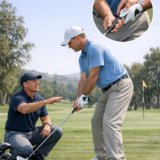
mastering the golf swing underpins improvements across both short- and long-game domains.This revised guide, “Master golf Swing: Transform Putting & Driving for All Levels,” distills contemporary biomechanical findings and proven coaching methods into a practical, outcome-focused system that targets the most common causes of inconsistency at every skill level. Framed around measurable objectives, the approach links technical checkpoints to on-course performance so players can enhance putting precision, maximize controlled driving distance and accuracy, and lower score variability.
Synthesizing motor‑learning principles,kinematic analysis,and standardized assessment tools,the material offers tiered progressions and drills that translate lab-based insights into field-ready training plans. Emphasis is placed on objective feedback-kinematic markers, tempo ratios, and launch-monitor metrics-so instruction is individualized, progress is tracked, and practice transfers to competition. tactical considerations and situational practice are woven in to ensure technical updates support real-world decision‑making during play.
The sections below revisit core mechanics, present diagnostic routines, lay out progressive drills for beginners through advanced players, and identify clear metrics for continuous evaluation. Together they form a structured roadmap for golfers and coaches pursuing a repeatable, high-performing swing that improves both putting and driving across all levels.
Foundations for a Repeatable, Performance-Driven Golf Swing: Sequencing, Setup, and Practice
Consistent setup and posture are prerequisites for an efficient, reproducible swing. Adopt a neutral spine tilt of about 10-15° away from the target, a knee flex near 15-20°, and an even initial weight distribution (50/50) that shifts slightly forward (roughly 55/45) at impact for most iron shots. Place the ball just inside the left heel with the driver, moving progressively toward center for mid‑irons and slightly back for wedges. Grip pressure should allow natural forearm rotation while maintaining face control-approximately a 4/10 on a relaxed scale. Ensure clubs meet conformity rules, and match shaft flex to swing tempo; use a launch monitor to verify that loft and shaft choices produce your target launch windows.
Energy transfer through the body follows a reliable sequence: ground reaction → hip rotation → shoulder/thorax turn → lead-arm extension → wrist release. Many recreational players will aim for around 45° hip rotation with 80-100° shoulder rotation, generating an X‑factor (shoulder-to-hip separation) in the order of 20-35°. Hold spine angle and resist early extension; start the downswing with a controlled lateral shift to the lead leg and a rotational unwind of the hips. Maintain a tempo that favors a backswing-to-downswing time ratio close to 3:1 for smooth acceleration, and for irons target an impact shaft lean of 5-8° forward to promote compression and consistent launch characteristics.
Accelerate motor learning with focused drills and measurable targets.Use these practice progressions to correct common faults and cement setup checkpoints:
- Step drill – begin with feet together, step into the stance on the downswing to encourage hip-first sequencing; target: dispersion under 10 yards at a 100‑yard reference.
- Impact bag / half swings – practice forward shaft lean and center contact; target: perceptible 3-5 cm compression on short-iron contacts.
- Split‑hand or one‑arm swings – isolate forearm and wrist action to prevent casting; target: consistent toe‑up position at waist height at the top of the backswing.
Couple these with launch-monitor feedback-ball speed, smash factor, and attack angle. For example, aim for a driver smash factor around 1.48-1.50 and a positive attack angle in the +2° to +6° range for desirable carry and roll. Common corrections: reduce early extension using mirror work or a towel under the trail hip; fix casting with short, restrained hinge drills.
Short‑game mechanics and putting should be coached alongside full‑swing principles as consistent contact and ideal trajectories drive scoring. For chip and pitch shots favor hands-ahead contact and a narrow impact window-target a 60/40 weight bias toward the front foot and hands‑forward at impact for predictable spin and landing angles. Drills include:
- Clock drill for wedge distance control-hit to multiple targets around the hole to refine landing spots;
- Gate drill for putting-use tees to enforce a square face through impact and the chosen stroke pattern.
In windy or cold conditions, lower trajectory by moving the ball back and choking down slightly; on firm or downwind approaches, opt for lower spin and more rollout when that increases scoring probability.
Embed technical work into an organized practice and periodization plan so improvements convert to lower scores.Example session structure: 10 minutes dynamic warm-up, 30 minutes targeted drill work on one kinetic link (hips or torso), 20 minutes simulated on‑course challenges (wind, narrow fairways), and 10 minutes short game/putting.Manage risk with shot shapes suited to conditions-as a notable example, under strong crosswinds prefer a controlled punch draw with a shortened arc and strong face control. Use a compact pre‑shot routine that emphasizes sequencing cues (e.g., “lead with the hips, accelerate through impact”), and set short-term, quantifiable objectives like reducing dispersion to ±15 yards at a 150‑yard reference or increasing greens‑in‑regulation by 10% over eight weeks. When setup, sequence, and practice are aligned, golfers at all levels can construct a reliable swing that consistently improves scoring.

Objective Testing and Injury‑Aware Screening for Efficient, Durable Swings
Robust assessment blends numeric data with observational notes to produce practical coaching plans. Start each evaluation with a uniform warm‑up and setup: a 10‑minute dynamic routine, three progressive swings with a mid‑iron, then a block of 10 measured swings per club using identical balls and tee heights.Capture data with a calibrated launch monitor (radar or optical), high‑speed video (≥240 fps), and when possible inertial sensors or force plates to log clubhead speed, ball speed, smash factor, vertical launch, spin, attack angle, and face‑to‑path. Record qualitative observations-posture, balance, tempo, compensations-alongside numbers: the combination explains both what changed and why, which is essential for instruction and injury prevention.
Track swing‑efficiency metrics that influence speed and accuracy while respecting safe mechanics. Measure shoulder and pelvis rotation to calculate an X‑factor (roughly 20-45° depending on mobility), time peak hip separation, and note swing‑plane inclination relative to the target line. For ball‑flight control monitor attack angle (drivers commonly +1° to +3° targets; irons -1° to -5° based on loft). To encourage a more upward driver strike, use drills like a low‑point tee exercise (ball centered in the driver head) and a forward‑press setup to feel an earlier low point. Practical training drills:
- Separation drill: rotational medicine‑ball throws (3×8) to develop elastic torso stretch and hip sequencing;
- Impact/compression drill: impact‑bag and half‑swings for forward shaft lean with mid‑irons (4×10);
- Attack‑angle drill: tee‑height experiments and impact tape for driver-aim for consistent positive vertical attack across 10 swings.
These exercises provide objective targets and tactile feedback that accelerate technical learning from beginner to low‑handicap levels.
Mitigating injury involves measurable screening and corrective programming. Include a movement battery (overhead squat, single‑leg balance, thoracic rotation, hip internal‑rotation) and measure ranges with a goniometer or inclinometer; flag asymmetries > 10° or strength imbalances > 15%. Monitor dynamic tendencies such as excessive lateral trunk flexion on the downswing or lumbar over‑extension at the top. Prescribe mobility and motor‑control work:
- thoracic rotation mobilizations with 3 × 30‑second holds;
- gluteus‑medius activation (clamshells 3 × 12 per side) to stabilize the hip in transition;
- eccentric hamstring sets and hip‑flexor lengthening drills to support pelvic rotation.
Also teach swing adjustments-shorter backswing, reduced lateral sway, and a tempo target around 3:1-to manage load; persistent pain warrants referral to sports‑medicine specialists.
Short‑game metrics and course scenarios turn technical improvements into strokes saved. Use launch‑monitor data to build wedge distance bands with spin and landing‑angle targets-as an example, aim for a landing angle that yields a controlled one‑bounce‑and‑stop on firm greens. Track meen and SD of shot distances and set consistency goals of ±5 yards per wedge. Simulate realistic situations-tight lie, elevated green, side‑hill-to teach club choice and trajectory control. Quantifiable short‑game drills include:
- ladder drill from 20-60 yards (5‑yard steps,3 shots per distance) recording % inside the target zone;
- spin‑and‑check from 30 yards with a 56° wedge,measuring stopping distance against the target;
- pressure scramble: play six balls from varied lies into a 10‑yard circle and log conversion rate.
These exercises emphasize rules‑aware strategy and produce KPIs that directly predict scoring outcomes.
Implement a longitudinal monitoring plan with clear benchmarks and a feedback loop. Establish baselines for clubhead speed, face‑angle SD at impact, shot dispersion, and injury‑screen metrics, then reassess every 4-8 weeks depending on training load. Example progression: eight weeks of progressive medicine‑ball training to increase lower‑body rotational power targeting a 2-4% clubhead‑speed gain, while using impact drills to reduce face variability to ±2°. Add mental training-standardized pre‑shot routines, breathing cues, and pressure simulations-because stress magnifies technical variance; compare performance under pressure with practice to gauge transfer. Use multimodal feedback-video,tactile tools (impact bag,towels),and concise verbal cues-and adapt plans for physical limits (shorter swings,higher‑lofted clubs) so every golfer has a safe,measurable path from deficit to on‑course gains.
Putting Fundamentals and Practical Green‑Reading: Consistent Conversion and Distance Control
Start with a reproducible setup that preserves impact geometry.Keep stance width around 12-16 inches (usually shoulder width or slightly narrower) so the shoulders can swing without unnecessary lower‑body motion. Position the ball slightly forward of center-about a quarter shaft length-so the putter de‑lofts a touch at impact and the ball starts rolling sooner. Maintain neutral spine posture, slight knee flex, and let the arms hang free; eyes should be directly over or within roughly one inch inside the ball to reduce parallax. Use light grip pressure (~3/10) and a modest forward shaft lean (~1-2°) at address to limit skidding and encourage early roll. Correct common faults (too wide a stance,ball too far back,excessive wrist action) with slow‑motion rehearsal and down‑the‑line/front camera review.
Adopt a stroke that emphasizes face control and a shoulder‑driven pendulum. Favor minimal wrist hinge and rotate the shoulders around the sternum; typical shoulder turn is 10-20° for short putts and can be 30-40° for long lag strokes.Strive to return the face to within 1-2° square at impact and to initiate forward roll within the first 6-12 inches after contact. Useful drills:
- Gate drill (two tees just outside the head) to enforce a straight face path;
- Impact tape or felt to confirm center strikes;
- Two‑to‑one pendulum drill where the backswing is half the follow‑through for consistent lag putting.
These give measurable feedback on contact and face control and reduce early skidding.
Green reading is about combining slope, speed, grain, and conditions into a single aim point. Estimate green speed via the course Stimpmeter or local norms (many maintained greens run in the mid‑single to low‑teens on the Stimp scale), and remember that higher speeds make break more pronounced. Find the high point between the ball and the hole, visualize the fall line, and use a multisensory read-walk the putt, feel the slope, and observe grain and mowing patterns. A practical routine: read from behind the ball, then from behind the hole, merge the reads, and choose a fixed turf target (a seam, blade orientation, or mower line). If you use calibrated systems like AimPoint, standardize thumb/foot positions so reads are reproducible under pressure.
Link putting to course strategy by weighing risk versus reward and practicing realistic scenarios. Decide early-attack the pin or play to the safe center-based on green contours and lie; when pins are located on tough slopes prefer a lag to ~3 feet over an aggressive putt that risks a big return. Trackable practice goals: reduce three‑putts to one or fewer per round within eight weeks, or lift make percentage from 6-8 feet by 10%. Situational drills:
- Clock drill-five putts from 3,6,9,12 feet to build pressure make skills;
- Lag ladder-rings at 10,20,30 feet to refine distance control;
- Pressure two‑putt-play a nine‑hole rotation where missing a two‑putt forces a restart to simulate consequences.
These bridge technical work and in‑round decision‑making.
Optimize equipment, practice modes, and mental routine to consolidate gains. Select a putter length and head that let your eyes sit over the target without changing spine posture; choose toe hang and head shape to match your stroke (arc vs straight). Use video and putting analyzers to quantify face angle and forward roll-set weekly targets, for example 80% of impacts in the center 1.5 inches and forward roll within 12 inches on 90% of putts. Fix wrist breakdown by shortening shaft length 0.5-1 inch or adding training aids that bias shoulder motion. On slow/wet greens lengthen backswing by 10-20% and visualize a softer landing. Build a concise pre‑putt routine (breathing, one practice stroke, visualization). For players with mobility constraints provide adaptive setups (wider base, approved long putters used non‑anchored) consistent with the Rules of golf. Integrating biomechanics, green reading, and focused practice produces measurable gains in putting consistency and scoring.
driver Optimization: Metrics, Mechanics, and Progressive Power Development
Use a launch monitor to turn swing adjustments into quantifiable outcomes. Prioritize clubhead speed, ball speed, smash factor, launch angle, spin rate, and attack angle as primary tuning variables. Practical initial benchmarks include a driver smash factor near 1.48-1.50 and a realistic clubhead speed enhancement target of +3-5 mph over 8-12 weeks. Launch and spin goals depend on player profile-aim for launch around 10°-14° with spin between approximately 1,800-3,000 rpm, adjusted for swing speed and trajectory preference.Record session averages rather than single bests to assess durable change.
Improve both sequencing and power. Reinforce a lower‑body initiated downswing, hip rotation producing torso separation, and a synchronized arm/hand release. Increase usable ground reaction by practicing a controlled rear‑to‑front leg push with a stable lead leg. Technical targets include positive attack angles of around +2° to +6° for many driver swings and hip‑shoulder separation in the 20°-40° band for more torque. Combine strength/speed training-medicine‑ball throws, loaded cable chops, explosive plyometrics-with on‑range technique work. Sample progressions:
- Beginners: slow hip‑turn drills with an alignment rod to ingrain sequencing;
- Intermediate: med‑ball side throws and mirror drills to up rotational speed while preserving posture;
- Advanced: contrast training-heavy med‑ball reps then unloaded speed swings-to boost rate of force development.
Schedule 2-3 technical sessions and 2 strength/speed sessions per week and recheck launch‑monitor metrics every 2-3 weeks.
Match equipment and setup to the mechanical plan. For right‑handers the ball is typically opposite the left heel, with a shoulder tilt that encourages an upward strike; tee height should position the ball near the top of the driver face (about 50% above the crown). Adjust loft and shaft to player speed: slower swingers may need 10.5°-12° loft, while stronger players often favor 8.5°-10.5° with stiffer shafts. Remember the USGA driver length limit of 46 inches and ensure competition conformity.In fittings, consider:
- Ball choice: lower‑spin models for high‑speed players, softer compression for slower tempos;
- Shaft flex/weight: match to tempo-quicker tempos usually demand stiffer shafts;
- Loft/adjustable weighting: tweak to land in measured launch/spin windows on the monitor.
Diagnose common launch‑monitor signatures and apply targeted corrections. Slices typically show high sidespin and an open face-repair with in‑to‑out path drills, a lead‑wrist pronation feel, and a tee‑gate to promote an inside path. Hooks reveal negative sidespin and closed‑face impacts-correct with face/path awareness, grip checks, and release‑timing cues. Early extension often appears as inconsistent attack angle and lower ball speed-try wall posture drills and posture holds. Useful drills include:
- impact‑bag sequences to feel shaft lean and face control;
- alignment‑rod angled path drills to groove in‑to‑out delivery and positive attack;
- slow‑to‑fast ladder swings recorded on the monitor at 60%, 80%, 100% to train speed control and consistency.
Measure progress by session means-reduce sidespin by 15-30% and lift smash factor into the target band as examples of incremental improvement.
Convert driver gains to smarter on‑course decisions. use monitor data to decide between driver and 3‑wood: choose a lower‑launch option into headwinds or tight fairways, and select higher‑launch lower‑spin setups when roll is advantageous. Account for local conditions and the competition limit of 14 clubs. Build a pre‑shot routine that includes an intermediate landing target rather than only the hole, and rehearse it under simulated penalties to strengthen mental resilience. In short, blend measurable technical goals, structured physical development, and situational strategy to translate launch‑monitor improvements into reliable, lower scores.
Progressive Training Templates: Novice → Intermediate → Advanced
Begin by establishing movement quality and course awareness that support future progressions. For novices emphasize grip consistency (neutral grip with the Vs pointing toward the right shoulder for right‑handers), posture (spine angle roughly 20°-30° from vertical), ball position (center for short irons, one ball width inside left heel for driver), and alignment (face to target, feet/hips/shoulders parallel). Teach essential rules (play the ball as it lies, marking on the green, relief options under Rules 16-17) since they affect on‑course choices. Early drills: mirror‑checked setup reps, 20‑ball towel contact sets (towel 6-8 inches behind the ball to encourage forward lean), and a 30‑minute range protocol focused on center‑face contact with a target of 50-60% solid strikes before moving into shot‑shaping.
Intermediate players refine sequencing, tempo, and short‑game control while integrating tactical thinking. Reinforce the kinetic chain and a late release-use a metronome to achieve a 3:1 backswing:downswing tempo and teach lag instead of casting. Introduce plane checkpoints: at the top the shaft should be within 10-15° of the setup plane; at impact aim for 2-4° forward shaft lean with appropriate attack angles (long irons shallow, short irons steeper at roughly -2° to -6°). Short‑game refinements include 30-60 yard pitching patterns, bunker technique (open face 10-15°, ball forward of center, enter sand 1-2 inches behind the ball). Drills and checkpoints:
- Metronome swing drill (60-70 bpm) for tempo;
- Impact tape or face spray to tighten strike locations;
- 3‑cone distance drill to calibrate wedges at 10, 20, 30 yards.
These reduce dispersion toward targets like 10-15 yards at 150 yards and improve dependable club selection.
Advanced players focus on marginal gains: dynamic loft control, spin management, and intentional shot‑shaping to exploit course architecture. Teach manipulating launch via attack angle and dynamic loft-add 2-4° dynamic loft for higher carry into firm greens or reduce loft by 2-3° with pronounced forward shaft lean to lower spin and enhance rollout.Practice with numerical targets (driver launch 10°-14°, spin 1,800-3,000 rpm depending on speed; wedge spin ~6,000-12,000 rpm on dry surfaces) and educate how temperature and altitude affect carry (roughly 2-3 yards per 10°F change for typical iron shots). On‑course strategy: commit to a preferred tee shape across 18 holes and run risk‑reward simulations to weigh green‑in‑two attempts versus bogey risk. Maintain equipment fidelity with fittings every 12-18 months or after major swing changes.
Short‑game and putting progressions must be systematic because strokes gained around the green yield the largest scoring returns. Fundamentals for short putts: shoulder‑driven pendulum with minimal wrist motion, eyes over the ball, and a putter shaft angle near 70-80° to the ground at address. Progress to lag drills-3‑peg ladder (10, 20, 30 ft)-and green‑reading anchored in Stimpmeter awareness: approximate break compensation of 1-2 inches per 10 feet on moderate slopes, and always confirm reads from multiple stances. Short‑game practice sets might include:
- 30‑minute pre‑round: 10 min chipping, 10 min bunker, 10 min putting (5 putts with eyes closed to refine feel);
- Controlled pressure: make five straight 6-8 ft putts from varying breaks;
- One‑handed chipping: build feel and release control, alternating hands.
Also remind players of practical rules (repairing the green, marking balls, and permitted loose‑impediment procedures).
Use periodized weekly microcycles that marry technical work with simulated competition. A sample session: 15 minutes warm‑up, 30 minutes mechanics (impact/tempo drills), 30 minutes short game, and 9 holes focused on tactical decisions. Set SMART outcomes-reduce putts per round by 0.5 in eight weeks or raise GIR by 10 percentage points-and track via strokes gained where possible. Include mental rehearsal and brief pre‑shot routines (visualize + two deep breaths) and stress inoculation drills (practice with consequences). Offer alternatives for injuries (one‑arm, slow‑motion drills) and build power for distance needs via medicine‑ball rotations-always emphasizing quality over quantity to avoid reinforcing errors. These structured progressions create a clear path from sound fundamentals to advanced shot‑making and strategy that measurably improves scoring consistency.
Blending Strategy with Technique: Shot Selection, Club Choice, and Mental Routines
Strategic execution begins with a repeatable setup that informs every shot choice. Maintain basic setup standards-neutral grip with moderate pressure (~4-6/10), and adjust shoulder/feet alignment for preferred ball flight (slightly left for a draw bias, square for a neutral shot). Calibrate ball position to club (driver: ~2-3 ball widths inside left heel, 7‑iron: centered) and quantify yardages with a launch monitor or rangefinder so carry and dispersion per club are known (for example, a mid‑handicap 7‑iron carry might be 135-150 yards). Objective numbers let you convert tactical decisions into targeted technical execution.
Use a simple decision checklist before each shot: assess distance, wind, lie, and hazards. Then: (1) determine required carry and landing zone, (2) pick the club that produces that launch/spin profile, and (3) define an error margin for the conditions. Train this process with scenario work on the range so it becomes automatic. Drills include:
- range‑scenario: pick a target and simulated wind, play 10 shots and log lateral/distance dispersion;
- lie sensitivity: 5 shots from tight, 5 from rough to learn club/swing adjustments;
- bailout rehearsal: select conservative targets on three holes and practice hitting them consistently.
These exercises build a feedback loop linking strategy to measurable outcomes.
Shape shots and trajectories with specific, repeatable adjustments. To lower trajectory, move the ball back 1-2 widths and shorten follow‑through; to raise it, move the ball forward and finish fuller. Modify face angle for shape-open the face ~2-3° for fades, close ~2-4° for draws-while altering path subtly. Typical attack angles: drivers often range -2° to +5°,irons commonly -3° to -6°. Practice drills:
- gate‑path: tees set to enforce inside‑out or outside‑in paths;
- tee‑height punch: lower tee by 30-50% and swing with a shorter arc for a controlled low punch;
- impact‑bag/towel for irons: grooves downward strike and consistent compression.
These refinements help execute strategy under pressure.
Integrate short‑game tactics with approach choices to convert complex green surfaces into makeable two‑putts. When pins sit behind slopes or hazards aim for a safe landing zone-use bump‑and‑run (6-7 iron) on firm greens for predictable rollout,or choose a lob/sand wedge on soft surfaces to land and check. practice landing‑zone drills (target a 5‑yard radius with wedges) and clock‑face wedge patterns to hone trajectory and spin control.Pair each technical choice with a short pre‑shot mental routine-visualize a landing spot, take a controlled breath, and commit to a single swing thought (such as, “accelerate through”).
Translate practice gains into on‑course benchmarks: tighten mid‑iron dispersion to ±10 yards, raise GIR by 5%, or shave 0.5 strokes from short‑game improvements. When issues arise, determine whether equipment, setup, or execution is at fault and apply structured corrections (grip/face checks for consistent left misses, shaft/loft assessments for distance loss, and shorter pre‑shot routines for anxiety). Adjust for weather-bump up one club and lower trajectory in wind; on wet days expect increased stopping power. By combining measurable goals, targeted drills, and consistent mental procedures, players can reliably convert strategy into technical execution that lowers scores.
Tracking Progress: Metrics, practice Design, and feedback Systems
Start by building a measurable baseline so subjective impressions become objective targets. Track core stats-GIR, fairways hit, scrambling percentage, putts per round, and proximity to the hole from typical distances (inside 100 yd, 100-150 yd, 150-200 yd). Supplement rounds with launch‑monitor practice data-ball/club speed, launch angle, spin, and carry-and set repeatability thresholds (e.g., ±10 yards carry dispersion for long clubs or ±5° face‑to‑path variance on approaches). For novices pick simple goals (reduce three‑putts by 50% in 8 weeks); for better players target finer gains (raise GIR by 5-8%, cut proximity by 2-4 ft). Record trends in a digital scorecard or spreadsheet to see which metrics most affect scores.
Structure practice with block and random elements to build both technical skill and adaptability. Example 90‑minute session: 10 minutes warm‑up and alignment, 25 minutes technical block, 25 minutes short‑game/distance work, and 30 minutes pressure or simulation drills. Use micro‑sets and countable reps-e.g., 5 sets of 8 approach shots across three distances or a putting ladder of 3‑6‑9‑12 ft with hit‑rate targets. Tools: alignment sticks, impact tape, a launch monitor or smartphone app, and stable footwear for consistent ground contact. Drills to reinforce retention:
- Clock Drill for wedge feel (5 balls per distance);
- Gate Drill to eliminate face rotation;
- 3‑to‑1 Speed Ladder for distance control (90%, 75%, 60% effort patterns).
Build feedback loops combining real‑time cues and post‑session analysis. after a set, capture two‑angle video (down‑the‑line and face‑on) and a snapshot of launch‑monitor data; annotate to highlight measurable faults (early extension, reverse spine angle, attack variability).Schedule review checkpoints every 2-4 weeks to compare trendlines (clubhead speed gains, reduced lateral dispersion) and adjust priorities. If driver carry dispersion remains above 15 yards,emphasize low‑point stabilization and path correction (inside post drills,slow half swings,weighted clubs). For novices, simplify metrics-“less sideways deviation equals more fairways”-and for advanced players translate numbers into equipment and shot‑shaping strategies.
Include short‑game KPIs so technical gains influence scoring. Targets might include a 10 percentage‑point bump in sand save rate or moving half of long approaches to within 15 ft. Drills:
- Bunker‑splash drill-50% of shots must finish inside a 10‑ft circle from varied lies;
- 7‑to‑3 Chipping Ladder-land at 7, 5 and 3 ft zones to dial trajectory and spin;
- Putting Distance Ladder-5-10-15-20 ft repeated until 80% of 5 ft and 60% of 10 ft are holed under time pressure.
Teach situational strategy: when wind > 15 mph favor lower‑loft shots and bump‑and‑run; on firm surfaces aim to leave approaches below the hole. Correct faults explicitly-hold the finish for 2 seconds to counter deceleration, or use towel‑under‑arms to prevent early release.
Blend technical metrics with mental training through reflection and adaptive objectives. Use pre‑shot routines and in‑round checkpoints mirroring practice, and adjust technique/strategy based on feedback (e.g., if mid‑iron proximity worsens in crosswinds add gust simulation practice and set a short‑term target to cut distance error by 3-5 yards). Define SMART goals: “Increase scrambling to 60% in 12 weeks” or “reduce average score by 2 strokes on Course X this season.” Use visual (video), kinesthetic (high‑rep feel), and auditory (coach cues) modalities and schedule on‑course lessons for direct transfer. Quantified metrics + principled practice + iterative feedback enable golfers at any level to convert technical change into reliable scoring improvements.
Sustaining Gains: Technology,Coaching,and Periodized Programs
Long‑term progress begins with a standardized measurement protocol that combines technology and coach observation. Record baseline metrics using a launch monitor (clubhead/ball speed, smash factor, spin, launch angle) and, if available, 3‑D motion capture or force‑plate data for ground reaction profiling. Typical baseline ranges helpful for planning: clubhead speed (beginners ~75-95 mph, intermediates ~90-105 mph, low‑handicap/elite >105 mph), driver smash factor ~1.45-1.50, and attack angles by club (driver −1° to +5°, irons around −4° to −2°). Set time‑based outcomes-e.g., +3-5% clubhead speed in 12 weeks or wedge dispersion ±5 yards-and standardize test conditions (same ball/tee height, warm‑up protocol, five swings per club) to ensure repeatability.
After benchmarking, deliver targeted technical interventions guided by data and video. Reconfirm setup fundamentals: neutral grip, spine angle ~20°-30°, knees flexed ~10-15°, exact ball positions. Progress through a staged drill list:
- alignment‑stick checks (feet/hips/shoulders parallel),
- half‑swing pump drills to reinforce downswing sequence and prevent casting,
- step or weight‑shift drills (trail foot pressure ~50-60% at the top) to establish robust transfer and avoid early extension.
Use a coached tempo target of approximately 3:1 backswing:downswing (e.g., 0.9s : 0.3s) and compress timing in advanced speed work while preserving sequencing. Make corrections explicit-reduce shoulder turn to remedy over‑pulling, prescribe impact‑bag work for casting-and set measurable checkpoints (e.g., reduce leftward dispersion by X yards).
Integrate short‑game and putting into the broader program as these areas yield the largest immediate scoring benefits. Establish dependable wedge gaps (~8-12 yards between clubs) and practice until carries are within ±5 yards. Drills:
- landing‑zone work for lob/gap wedges (mark 20-30 yard landing areas),
- clock‑face chipping to practice loft/bounce usage,
- putter gate drill to promote center strikes and minimal face rotation.
Technically encourage 1-2 inches of hands‑ahead at contact on chip/pitch to compress the ball; use bump‑and‑run on firm greens or windy days. Practice with Stimpmeter awareness-on 9-10 ft greens aim to leave approach putts within ~6 feet on average to reduce three‑putts.
Turn practice data into on‑course decisions through coaching interventions that reference miss patterns and dispersion.If logs show a consistent 10‑yard right fade, revise alignment or aim left, or choose an alternate club to alter the risk profile. Use realistic scenarios-on a 420‑yard par‑4 into a 15 mph headwind consider a 3‑wood layup to 125-150 yards instead of forcing driver to leave a full wedge with better proximity odds. Teach rules and pace‑of‑play considerations and rehearse recovery shots and differing pin positions under time limits to improve decision robustness and convert technical capability into lower scores.
Design lasting programs combining tech feedback, coach guidance, periodized practice, and mental skills. A weekly plan might include one coached technical session with video/monitoring, two focused short‑game/putting sessions, and one on‑course situational session. milestones could be: cut 3‑putts by 50% in eight weeks, narrow wedge dispersion to ±5 yards in 12 weeks, or boost driver carry by 10 yards in three months. Offer varied learning channels-visual (slow‑motion video), kinesthetic (impact bag, weighted swings), and auditory (concise cues)-and counter common barriers (overtraining, poor practice quality) by prescribing short, frequent focused blocks (20-30 minutes) anchored by objective metrics for accountability. Reinforce a compact pre‑shot routine, breathing techniques for pressure, and post‑shot reflection to drive incremental learning. Combining precise measurement, staged technical work, targeted short‑game practice, and structured coaching converts instruction into durable performance gains for players of all levels.
Q&A
Note: the term “master” in the title signifies achieved high proficiency and deliberate skill development-this article guides players toward that standard.1
1) Q: What is the main thesis of “Master Golf Swing: Transform Putting & Driving for All Levels”?
A: The thesis is that performance improves most when biomechanical insight, motor‑learning strategies, and level‑appropriate drills are integrated into a measurable, individualized training plan.The aim is reproducible full‑swing mechanics, consistent putting patterns, and course strategy that together boost consistency and scoring from beginners through competitive amateurs.
2) Q: What biomechanical concepts are essential for a productive swing and driving sequence?
A: Essential concepts include kinetic‑chain sequencing (ground forces → hips → torso → arms → club), optimal pelvis‑thorax separation to store elastic energy, a stable lead limb and shoulder plane, consistent face‑to‑path at impact, and effective wrist hinge (lag). measured targets include clubhead speed, transition timing (X‑factor velocity), and minimal lateral COM displacement.
3) Q: How is putting evaluated and which metrics matter most?
A: Putting evaluation focuses on repeatable stroke path, face angle control at impact, consistent impact loft, and pendulum‑style shoulder motion. Key metrics are face‑to‑path at impact (degrees),launch direction/speed,impact loft,stroke tempo ratio,and putter‑head arc; outcome metrics include proximity to hole and putts per round.
4) Q: Which motor‑learning approaches should coaches apply?
A: Use deliberate practice, variable practice, and constraint‑led methods. Begin with blocked practice and frequent augmented feedback, then progress to random/variable practice for transfer. Employ faded feedback schedules, goal‑directed sessions, and competitive simulations. Periodize training into acquisition,consolidation,and competition‑ready phases.
5) Q: how do protocols change across skill levels?
A: Beginners emphasize fundamentals (grip, stance, basic path) with high repetitions and feedback; intermediates refine sequencing, tempo, and short game while using monitor data; advanced players pursue marginal gains-fine‑tuning face‑to‑path, dispersion control, and pressure simulation. Progressions should be criterion‑based, not purely time‑based.
6) Q: What objective metrics should be tracked?
A: For full swing/driving: clubhead/ball speed, smash factor, launch angle, spin rate, carry distance, dispersion, and Strokes gained categories. For putting: make percentage at set distances, proximity (3-10 ft), putts per round, stroke tempo, and face‑to‑path consistency. Also monitor workload and pain indicators.
7) Q: Which drills reliably boost driving distance and accuracy?
A: Progressive overload speed work with control, rhythm/transition drills (pauses then controlled acceleration), alignment/path gate drills, and impact‑location exercises (tape/foot spray). Pair speed training with short, focused dispersion control sessions.
8) Q: Which drills reliably improve putting?
A: Gate drills for face path, ladder drills for stroke‑length control, metronome tempo routines, and lag ladders for distance control. Leverage feedback tools (mirrors, lasers, analyzers) to refine face angle and speed.
9) Q: How to structure an 8‑week block for an intermediate player?
A: Week 1: comprehensive assessment (video, launch monitor, putting tests, Strokes Gained baseline). Weeks 2-3: technical corrections and mobility/strength. Weeks 4-5: integration and variable practice with on‑course simulation. Weeks 6-7: pressure and competition drills; Week 8: reassessment and maintenance planning. Include measurable weekly goals and rest days.
10) Q: How to merge course strategy with technical practice?
A: Translate measured dispersion and carry numbers into concrete club choices and target lines. Rehearse shaping and distance control under simulated pressure. Practice green reading and lagging from realistic course distances; pair tactical sessions with measurable performance metrics.
11) Q: Recommended assessment tools and tech?
A: Use launch monitors (TrackMan, GCQuad), high‑speed video or 3‑D capture, force plates or pressure mats, putting analyzers, and standardized performance tests (50‑ball driving, 10‑putt test, Strokes Gained benchmarks).Employ repeatable protocols and normative comparisons.
12) Q: How should conditioning support golf skills?
A: Prioritize thoracic and hip mobility, core rotational strength, posterior chain power, scapular stability, and sport‑specific power training (medicine‑ball throws, resisted rotations).Incorporate corrective strength to prevent compensations that reduce consistency.
13) Q: Common injury risks and prevention?
A: Low‑back pain,wrist/elbow tendinopathies,and shoulder strain are frequent. Mitigate via movement screening, load management, stabilizer strengthening, technique tweaks to lower shear, and proper warm‑up/recovery.
14) Q: How to define and measure mastery?
A: Combine objective performance gains (higher clubhead/ball speed without accuracy loss, reduced dispersion, better putting percentages, positive Strokes Gained trends) with retention/transfer tests under pressure. Make mastery criterion‑referenced (e.g., 95% repeatability band for impact face angle or sustained SG:APP improvement of 0.3 strokes/round).
15) Q: Practical steps for coaches and players?
A: Start with detailed assessment, set clear measurable priorities, focus on a few high‑impact changes, use evidence‑based practice structure, integrate physical training and recovery, use technology as a guide not a dictator, and regularly reassess. Emphasize on‑course transfer through simulation and strategy drills.
Reference note: 1. “Master” defined as highly skilled or proficient.2
If desired, this material can be reformatted into a printable FAQ, converted into an 8-12 week level‑specific program, or translated into concise drill scripts or short training videos.
Key Takeaways
Conclusion
This revised guide presents an evidence‑informed,measurable pathway toward mastering the golf swing,putting,and driving for players across the ability spectrum. Rooted in biomechanical principles and motor‑learning approaches, and supported by level‑specific drills and objective metrics, the framework stresses transferable solutions that remain stable under competitive pressure.
“Mastery” in this context means deliberate, repeatable skill development achieved through systematic assessment, prioritized interventions, and ongoing refinement. Practitioners should implement baseline testing, focus on one or two high‑impact metrics each cycle, combine deliberate and variable practice contexts, and rehearse course scenarios to cement transfer. Employ sensor and video feedback where helpful, but keep data interpretation coach‑guided and player‑centred.
Next steps for coaches and players: run the recommended diagnostic battery, select one or two measurable targets per training block, embed deliberate practice within varied contexts, and include on‑course decision drills. Use technology and sensor feedback to accelerate learning while ensuring changes carry over to real play. With consistent measurement, purposeful practice, and strategic submission, golfers at any level can make reliable, long‑term improvements in consistency and scoring.

Unlock Your Best Golf: Elevate Swing, putting & Driving Skills
Swing Mechanics: Build a Repeatable Golf Swing
Consistent ball‑striking starts with simple, biomechanically sound fundamentals. Focus on posture, grip, alignment, rotation and impact position to create a reliable golf swing that produces predictable ball flight and distance.
Key swing fundamentals (keywords: golf swing, swing mechanics, posture)
- Grip: Neutral grip that allows a square clubface at impact – hands working together, light tension.
- Posture & Setup: Slight knee flex, hinge at hips, chest over the ball. Maintain athletic balance with weight evenly distributed.
- Alignment: Feet, hips and shoulders parallel to target line-use an alignment stick when practicing.
- Rotation: Generate power through torso and hip rotation rather than excessive arm action-quiet hands, strong core engagement.
- Impact Position: Slightly forward shaft lean on irons, centered hip position, and strong lower body at contact.
Biomechanics & tempo
Use a consistent tempo (e.g., 3:1 backswing-to-downswing feel) to synchronize rotation and weight shift.Good tempo improves clubhead speed, launch angle, and strike quality while reducing inconsistency.
Putting: Dialing In Speed, Line & Consistency
Putting is where rounds are won and lost. Focus on green reading, consistent stroke, distance control, and pre‑shot routine to improve putting consistency.
Putting fundamentals (keywords: putting,putting consistency,green reading)
- Setup: Eyes over the ball (or slightly inside),narrow stance,relaxed shoulders and a straight back.
- Stroke: Pendulum motion from the shoulders-minimize wrist break and hand manipulation.
- Distance Control: Practice lag putting to two distances (e.g., 20 ft & 40 ft) to build feel and speed control.
- Line Reading: Combine slope, speed and grain-practice from multiple angles around holes to develop confidence.
- Routine: Pick a spot to aim, set the pace, breathe and execute one smooth stroke.
Putting drills
- Gate Drill: Use two tees to create a gate slightly wider than your putter head to train square impact.
- Clock Drill: Putt from 3, 6, 9 and 12 feet around the hole to rehearse starting line and pace.
- lag Ladder: Place markers at 10, 20 and 30 feet; try to land within a 3‑foot target zone for each distance.
Driving: Maximize Distance & Driving Accuracy
Driving well requires a balance between distance and accuracy. Prioritize a controlled swing, proper launch conditions, and smart tee‑shot strategy to lower scores.
Driver fundamentals (keywords: driving, driving accuracy, tee shots)
- Ball Position: Off the inside of the front heel for an upward attack angle and higher launch.
- Width & Setup: Wider stance for stability; slight knee flex but athletic balance.
- Attack Angle & Launch: Aim for a positive attack angle (slight upward) to increase launch and reduce spin.
- Clubhead Speed & Efficiency: Build speed with efficient sequencing-hips lead, torso follows, then arms and club.
- Accuracy: Prioritize center face contact and a controlled fade/draw you can repeat.
Driver drills & tech
- Tee Height Drill: Vary tee height to find where you consistently strike the face center.
- Impact Tape / Face Spray: Track face contact to reduce heel/toe misses.
- Launch Monitor Feedback: Use numbers (launch angle, spin rate, carry) to dial in optimal driver setup.
Short Game & Course Management
Lower scores come from smart choices around the green and good strategies off the tee. Combine reliable bump-and-run shots, chips, pitch control, and sand play with course management to maximize scoring opportunities.
Short game focus (keywords: short game, chipping, bunker play)
- Chipping: Narrow stance, putter-like stroke for low runners; open face and more loft for higher pitches.
- Pitching: Vary length of backswing for distance control; use body rotation and a slightly forward shaft lean.
- Bunker Play: Open face, aim to hit sand an inch behind the ball and follow through to splash it out.
- Leave Yourself Putts: When possible,aim to leave the ball below the hole for an uphill knee‑knock putt.
Progressive Drill Plan: From Fundamentals to On‑Course Transfer
Progress through stages: motor pattern acquisition, variability practice, and transfer to on‑course scenarios.
3‑stage practice model (keywords: golf drills, practice routine)
- Stage 1 – Mechanics & Reps: 15-30 minutes of focused drills on a single swing element (e.g., weight shift or wrist set).
- Stage 2 – Random Practice: Alternate club selection, lie and target to build adaptability (e.g., 9 irons, 6 irons, then driver).
- Stage 3 – Situational Transfer: Play short simulated holes, practice penalty recovery shots and pressure putts to mimic course conditions.
Practice routine & Warm‑Up
Consistency grows from a smart pre‑round warm‑up and a focused practice session that prioritizes quality over quantity.
15‑minute pre‑round warmup (keywords: warm-up, pre-shot routine)
- Dynamic mobility (hips, thoracic rotation): 3-5 minutes.
- Short iron striking (7-9 iron): 5-7 minutes to groove tempo and contact.
- Driver & wedges (range to course): 3-5 minutes – finish with 3 short putts.
- Visualization & pre‑shot routine: 1-2 minutes to set mental focus.
Equipment, Fit & Technology
Proper equipment and data help isolate problems and accelerate betterment. Keywords: golf equipment, launch monitor, club fitting.
- Club Fitting: Shaft flex, loft and lie affect launch and dispersion-get fit for your swing speed and angle of attack.
- Launch Monitors: Use numbers (spin rate, launch angle, carry distance) to objectively improve driving and iron performance.
- Grip & Shoe Fit: Comfortable shoes and correctly sized grips improve balance and control.
sample 4‑Week Practice plan (Case Study / First‑Hand Style)
Structured weekly plan to improve swing mechanics, putting and driving in four focused weeks.
| Week | Main Focus | Daily Session (45-60 min) |
|---|---|---|
| 1 | Fundamentals & Posture | Grip, alignment, short irons, 20 min putting drills |
| 2 | Rotation & Impact | Hip rotation drills, impact bag, driver tempo, lag putting |
| 3 | Speed & Launch | Launch monitor session, tee‑height drill, pitch/bunker work |
| 4 | On‑Course Transfer | Play 9 holes simulating practice goals, pressure putts |
How to track progress (keywords: golf stats, shot tracking)
- Keep a short journal of fairways hit, greens in regulation (GIR), putts per hole, and up-and-down percentage.
- Review launch monitor sessions monthly-watch trends rather than single sessions.
- Set one measurable goal per week (e.g., reduce three‑putts by 30%).
Benefits & Practical Tips
Immediate benefits of a structured approach (keywords: course management, mental game)
- Fewer penalty strokes through smarter tee‑shot choices and recovery practice.
- Improved scoring by converting more short putts and up‑and‑downs.
- Higher confidence with measurable improvements in ball flight and distance.
Practical tips to stay consistent
- Focus on one change at a time-too many adjustments create confusion.
- Use video to compare swings week over week; small visual markers reveal trends.
- Schedule purposeful practice sessions rather of unfocused range balls-quality beats quantity.
- Keep a simple pre‑shot routine to reduce variability under pressure.
swift Reference: Key Focus Points
| Area | Primary Goal | Drill |
|---|---|---|
| Golf swing | Repeatable impact | Impact bag or alignment stick |
| Putting | Speed & Line | Clock drill & gate drill |
| Driving | Launch & accuracy | Tee height + launch monitor |
| Short Game | Proximity around green | Targeted chip-and-run |
Next Steps: Apply,Measure & Adjust
Pick one area to prioritize for the next 30 days (swing tempo,putting speed,or driving accuracy). Apply the drills above, measure progress with simple stats or a launch monitor, and adjust your plan based on what the data and your on‑course results show.
SEO keywords used naturally:
golf swing, swing mechanics, putting, putting consistency, driving, driving accuracy, golf drills, course management, short game, tee shots, clubhead speed, launch monitor, practice routine, warm‑up, green reading, impact position, tempo, posture, grip, alignment
Pro tip: Keep the process simple-small, consistent improvements compound into significantly lower scores over time.