Introduction
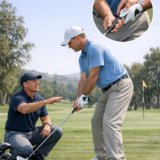
Golf is a precision sport that rewards repeatable technique, thoughtful practice, adn course management. For beginners, mastering three core components-swing, putting, and driving-provides the fastest path from frustrating inconsistency to reliable scoring. This article breaks those components into biomechanical principles you can feel and measure, evidence-based drills that accelerate motor learning, and level-specific progressions so each practice session builds toward repeatable performance on the course.
You will learn the movement fundamentals behind an efficient swing,how to build a strokeable putting routine,and how to generate controlled distance and accuracy off the tee. Each section pairs simple drills with measurable metrics (clubhead speed, launch conditions, stroke length and tempo, green-read routines) and practical practice plans for beginner, intermediate, and early-advanced players. Alongside technique, we integrate strategy-when to play safe, how to manage risk, and how to translate practice gains into lower, more consistent scores.
master the Fundamentals of a Repeatable Swing: Grip, Stance and Posture
Start every practice and round by establishing a consistent grip that promotes a square clubface through impact. Use a grip that fits your hands-overlap (Vardon), interlocking, or ten-finger-but prioritize a neutral hand position: the Vs formed by thumb/index should point between your right shoulder and chin for right-handers. Maintain grip pressure of about 4-6 on a 1-10 scale to allow wrist hinge without losing control; too tight causes tension and blocks rotation, too light creates flicking. for beginners, practice gripping and holding the club for 30-60 seconds while making half swings to feel rotation; advanced players should monitor face angle at setup with a mirror or camera to ensure the face is square, making small grip adjustments (rotate grip 2-3 degrees stronger or weaker) when consistent misses appear.
Next, align stance and ball position to the club and shot objective, as setup dictates the swing plane. Use shoulder-width stance for mid-irons, slightly narrower for wedges, and 1.5× shoulder width for driver. Place the ball centered to slightly forward (one ball left of center for mid- to long-irons, just inside the left heel for driver). Check these setup checkpoints before every shot:
- Feet parallel to target line; toes flared slightly for comfort.
- Weight distribution evenly split (~50/50) at address for irons; 55-60% on back foot for driver pre-swing.
- Alignment by using a club on the ground or alignment stick to avoid open or closed feet.
Then focus on posture and spine angles that allow a repeatable rotation. Adopt a hip hinge with a neutral spine-avoid excessive arching or rounding-so your shoulders can turn. For most players, a spine tilt of 5-8° away from the target for driver and a more vertical spine for short irons promotes consistent impact. Rotate around a stable axis: aim for roughly 90° of shoulder turn on a full swing if mobility allows (less if limited). Importantly, maintain the same setup tilt through the takeaway; early extension (hips moving toward the ball) or a lateral sway will change low-point and produce fat or thin shots. Use video from down-the-line and face-on angles to confirm that shoulder turn and hip rotation remain proportional.
Practice with measurable drills to convert these fundamentals into a repeatable swing and to correct common errors. Use the following routine and targets:
- 10-minute grip & alignment drill: 25 swings focusing solely on hand position and alignment, record with phone, adjust grip if face is open/closed repeatedly.
- Towel-under-armpit drill: 50 short swings to promote connected arms and body rotation; goal is to keep towel in place on 90% of swings.
- Impact-bag or gate drill: 3 sets of 10 to train center-face contact; aim for consistent ball flight and reduced dispersion within 10-15 yards for mid-irons over a week.
- Tempo metronome: Work on a 3:1 backswing-to-downswing rhythm with 60-80 practice swings; record tempo and aim for consistency within ±0.1s.
Common mistakes include grip too strong/weak,ball too far forward/back,and excessive head movement; fix these by isolating one variable per practice session and using immediate feedback (launch monitor,impact tape,or video).
translate these technical gains into course strategy and short-game betterment. Adjust setup for wind and lies-move the ball back in the stance and choke down for low punches into the wind; shift weight forward and narrow stance for chips and pitch shots to ensure crisp contact. Equipment choices such as proper grip size,correct lie angle,and shaft flex affect how the fundamentals perform-get a fitting if shots consistently miss the intended pattern. Mentally,use a pre-shot routine focused on setup checkpoints (grip,alignment,posture) to reduce decision pressure and commit to the shot; this routine should take 8-12 seconds and end with a clear target line. by combining these setup principles with targeted drills, measurable goals, and situational adjustments, golfers from beginners to low handicappers can build a reliable, repeatable swing that improves consistency, lowers scores, and enhances course management.

Build a Powerful and Controlled Driving Technique Through Proper Weight Transfer and Club Sequencing
begin with a rock-solid setup that makes efficient weight transfer and club sequencing repeatable. At address, place the ball forward in your stance-approximately just inside the left heel for right-handed drivers-and adopt a slightly tilted spine away from the target (about 3-5°) to promote an upward strike. Aim for a balanced distribution of weight near 50/50 on your feet at setup; during the backswing you should feel a intentional move toward the trail side so that weight at the top is approximately 60-70% on the back foot. Check fundamentals every session using these setup checkpoints:
- Ball position: equator of the ball aligned with the driver’s crown or just inside the front heel.
- Spine tilt: slight tilt away from the target to allow positive attack angle.
- Grip and wrist set: neutral to slightly strong for control and launch.
Next, break down the backswing and sequencing so power is manufactured through rotation rather than cast or lateral slide. Begin the takeaway with a one-piece motion-shoulders and hips turning together-until the club reaches hip height, then allow the upper body to continue rotating while the hips stop near 45° of trail hip turn. This separation (upper body continues while lower body pauses) creates stored elastic energy; for most golfers the shoulders should turn roughly 80-100° depending on flexibility, while hips rotate near 45°. Use the “pause at the top” or tempo-count drill to feel correct sequencing: take the club back on a 3-count,pause on 4,then start the downswing on 1 – this helps the lower body lead the transition and avoids casting or early release.
During transition and downswing, emphasize ground reaction force and proper hip-to-shoulder sequencing to produce a stable, controlled strike. Initiate the downswing with a subtle lateral shift of the hips toward the target and a rotation open of the lead hip (a controlled “bump”), wich transfers weight so that at impact you are near 70-80% on the lead foot and showing a slight forward shaft lean for compression.Keep the head stable and allow the hands to remain passive through the first part of the downswing so the clubhead releases naturally; common faults like reverse pivot, early extension, or sliding are corrected by drills that reinforce hip rotation and a centered posture. For impact geometry, aim for a slightly upward attack angle with driver (positive attack angle of +2° to +4° for most players) to optimize launch and spin.
Practice with purpose by using measurable goals and focused drills that address weight transfer and sequencing for all skill levels. A beginner goal might be to achieve consistent weight distribution changes where the top-of-swing reading shows ~60% weight on the back foot and impact shows ~70% on the front across a set of 20 drives; an intermediate/advanced goal could be to improve center-face contact rate to 80%+ and increase clubhead speed by 3-5 mph over 8-12 weeks through strength and technique work. Useful practice drills include:
- Step drill: initiate the swing by stepping toward the target with the lead foot on the downswing to feel weight shift.
- Feet-together drill: improves balance and forces rotation rather than sway.
- Impact-bag or towel-under-arms drill: promotes body connection and delayed release.
- Tempo metronome work: set a 3:1 backswing-to-downswing tempo to stabilize sequencing.
translate technique into sound course strategy by considering equipment, conditions, and the mental game. Make equipment choices that complement your sequencing-ensure shaft flex, loft and length match your swing speed (such as, players under 90 mph clubhead speed generally benefit from slightly higher loft and more flexible shafts); remember the USGA limit on club length is 48 inches. In windy conditions or tight fairways, prioritize controlled sequencing and lower launch by adjusting ball position slightly back and reducing shoulder turn to manage spin. Troubleshooting common issues: if you slice, check early release and weak lead wrist at impact; if you hook, reduce excessive inside-out path and strong grip pressure.Above all, blend technical practice with short-course challenges (simulate tee shots with strategic targets) and mental routines (pre-shot visualization and a consistent pre-shot tempo) to ensure that improved weight transfer and club sequencing reliably lower scores on the course.
Develop Consistent Putting Mechanics: Alignment, Stroke Path and Speed Control
First, establish a repeatable setup that makes alignment and face aim obvious.Start with your feet shoulder-width apart, putter shaft leaning slightly forward so the hands are just ahead of the ball at address, and your eyes approximately over or slightly inside the line of the putt. Check that the putter face is square to the target – a quick way to feel this is to set up to a line on the practice green and rock the putter back and forth; the face should return to the same spot. Equipment matters: most putters have 3-4° of loft built in and standard shaft lengths are around 33-35 inches, so choose a length that allows your forearms to be roughly parallel to the ground at address. Use this short checklist every time you address the ball to remove variability:
- Feet and shoulder alignment parallel to intended path
- Putter face square to the aiming line
- Hands slightly forward of the ball, eyes over the line
- Light grip pressure-about 4-5/10-to promote feel
These setup checkpoints are simple but critical; correcting a misaligned stance or an open face will reduce three-putts more than almost any other tweak for beginners and low handicappers alike.
Next, focus on stroke path and the kinematic sequence to create a consistent, repeatable stroke. Aim for a slight arc or straight-back-straight-through path depending on your putter type (blade players often prefer a small arc; mallet users can play a straighter path). The primary mover should be the shoulders with minimal wrist hinging-think of the putter as an extension of the shoulders rather than an arm-only motion.Use a tempo ratio of roughly 1:2 backswing to forward swing (example: 1 second back, 2 seconds through) to maintain face control and acceleration through impact.To train the correct path and face rotation, practice these drills:
- Gate drill: place tees just wider than the putter head to enforce a square, centered strike.
- Face tape drill: apply a small piece of tape to the face to monitor strike location and path.
- Mirror or video check: confirm shoulder rotation and minimal wrist action in slow motion.
These exercises help you trace consistent geometry from setup through impact, reducing left/right misses and improving tap-ins on the course.
Then refine speed control, the single biggest determinant of three-putt avoidance and scoring. Good speed control starts with feel and is sharpened by measuring outcomes: on a flat practice green, use a ladder drill where you putt from 3, 6, 9, 12, and 18 feet and try to leave every putt within 3 feet of the hole. Repeat sets until you can consistently leave ≥80% inside that 3-foot circle. Another effective drill is the uphill/downhill pace drill-hit putts of the same length on an uphill and downhill slope to internalize the difference in force required. Remember these specifics:
- Short putts (inside 6 ft): focus on stroke length and tempo; your backswing length should be predictable and scaled.
- Mid-range putts (6-20 ft): rehearse two-count acceleration and target-specific landing points, e.g., aim 12 inches past the hole on faster greens.
- Long putts (>20 ft): practice a controlled 3-4 foot follow-through to ensure pace rather than trying to hole every long one.
Set measurable goals for practice sessions, such as: make 50 of 60 from 3-6 ft and leave 80% of 6-20 ft attempts within a 3-foot circle.
Moreover, integrate green reading and course strategy with your mechanics. Read the green by isolating three factors: slope, grain, and speed-then pick a specific aim point rather than a vague line. On windy days or very firm greens, prioritize speed control because perimeter bounce and runout change how putts behave; on slow, soft greens, focus more on line. Use a practical routine: read the putt from behind the ball, walk the fall line, pick a target two to four inches in front of the hole for short breaking putts, and, per the Rules of Golf, you may mark and lift your ball on the putting green to clean or align it before replacing for putts.In match play or pressure situations, consider conservative reads that leave you an uphill comeback rather than aggressive reads that risk long, downhill returning putts. These situational choices connect your technical work to lower scores in real rounds.
program a practice plan that accounts for skill level and learning style, and address common mistakes with corrective actions. Beginners should spend sessions focusing 60% on short putts and alignment drills, 30% on distance control, and 10% on pressure routines; advanced players should reverse that emphasis and include simulated on-course pressure (competitive games, strokes gained tracking). Troubleshooting tips:
- If you consistently miss left/right: check face angle at setup and practice the gate drill.
- If you’re leaving putts short: lighten grip pressure, lengthen follow-through, and use the ladder drill for pace.
- If you have hit variability in wind or grain: rehearse on different green speeds and document how many degrees of face open/closed changes result in misses to quantify adjustments.
Combine these technical and mental strategies-consistent pre-shot routine, measurable practice goals, and equipment checks (grip size, putter balance)-and you’ll see tangible scoring improvements. Above all, keep practice purposeful: short, frequent sessions with clear, measurable targets produce faster and more reliable progress than long, unfocused putting sessions.
Use Biomechanical Principles to Improve Swing Efficiency and Reduce Injury Risk
Set the foundation with a repeatable setup that supports efficient biomechanics: start with a neutral grip,shoulders square to the target line,and a balanced athletic posture. For most full irons use a stance about shoulder-width; for driver widen to about +2-4 inches beyond shoulder width. Position the ball 1-2 ball widths inside the lead heel for driver and roughly center of the stance for mid-irons; maintain a slight spine tilt away from the target of about 5-10° to promote a sweeping driver attack and descending iron strikes. Common mistakes at setup-too much knee flex, a collapsed lead shoulder, or gripping the club too tightly-create compensations that degrade swing plane and increase injury risk; correct these with simple checkpoints. Try these setup drills to ingrain the fundamentals:
- Alignment-stick drill: place two sticks on the ground (feet/target) to monitor stance and alignment.
- Towel-under-armpit: keep a towel under the lead armpit for the first 10 shots to promote connection and shoulder turn.
- Mirror or video check: confirm spine angle and hand position prior to practice swings.
Next, focus on sequencing and efficient energy transfer through the kinematic chain-legs to hips to torso to shoulders to arms to clubhead-which drives both distance and consistency. Aim for a backswing shoulder turn of roughly 80-100° with pelvis rotation about 35-45°, producing an X‑factor (torso-pelvis separation) of approximately 20-40° for most golfers; this stored rotational difference is a primary source of clubhead speed without relying on excessive arm manipulation. Preserve lag in the downswing by keeping the wrist hinge until the hips initiate rotation; at impact the shaft should be slightly leaning forward with hands ahead of the ball for solid compression. To train sequencing and lag, use these practice items:
- Impact-bag drill: short, controlled swings into a bag to feel correct wrist release and impact compression.
- Pause-at-top drill: hold the top of the backswing for one second to rehearse transition initiated by the hips.
- Step-through drill: step toward the target on the downswing to emphasize weight transfer and rotation.
Reducing injury risk requires attention to mobility, stability, and sensible equipment choices. Assess thoracic rotation, hip internal/external rotation, and ankle mobility-limitations here often cause compensatory low-back or elbow stress. Implement a corrective routine of glute activation (banded clams, 2 sets of 12-15 reps), core stability (plank holds, 3 x 30-60 seconds), and thoracic mobility (foam-roll rotations and 90/90 twists). Also consider equipment: a shaft flex and club length matched to your swing speed reduces late release and over-torquing the wrists; properly sized grips (+/- 1/16″) prevent excessive wrist action and elbow strain. If you experience pain, scale drills to low-load variations and consult a medical professional; otherwise use these corrective drills:
- Half-swings with a weighted club (3-5 lb) to build strength without end-range stress.
- controlled tempo practice (see metronome drill below) to reduce violent decelerations that cause injury.
- Warm-up routine: dynamic mobility (5-8 minutes) before practice or a round-especially in cold conditions-to preserve range of motion.
Bring biomechanics into the short game and course strategy by applying impact principles on chips, pitches, bunker shots, and putting. For chips use a slightly narrower stance with 60-70% weight on the lead foot, hands ahead of the ball, and a steeper shaft lean through impact for crisp contact; for bunker shots open the clubface and utilize the club’s bounce to slide under the ball rather than digging. When managing risk on the course, translate this technique into situational play: if a pin is tucked front-left on a windy day, favor a lower-lofted bump-and-run to minimize backspin and wind effect; for long approaches into firm greens, plan to land short of the flag and use the green’s roll to approach the hole. Helpful short-game drills include:
- Clock-face drill around the hole to develop consistent distance control from different lies.
- 3‑club drill: select three clubs and hit to the same target to learn trajectory and yardage relationships.
- Bunker entry line practice: rehearse hitting the sand 1-2 inches behind the ball for consistent escapes.
structure practice with measurable goals, varied learning modalities, and mental skills to consolidate biomechanical gains into lower scores. Set specific metrics-such as increasing clubhead speed by 2-4 mph,improving fairways hit from 50% to 65%,or reducing three‑putts by 30%-and track progress with simple stats or a launch monitor when available (monitor launch angle,spin rate,and carry). Build weekly routines: two technique sessions (45-60 minutes focusing on drills above), one short-game practice (30 minutes), and one on-course situational session (9 holes) to apply choices under pressure. Support different learning styles by combining video feedback (visual), feel-based drills (kinesthetic), and a metronome or count (auditory) for tempo-try a 3:1 backswing-to-downswing tempo or use a metronome at 60-72 bpm for rhythm work. Above all, maintain a consistent pre-shot routine and emphasize process goals (quality of contact, correct posture) over outcome to build confidence and resilience under varying course conditions, ultimately converting biomechanical efficiency into lower scores and a more durable golf body.
Practice Level-Specific Drills and Progressions for Rapid Skill Development
Begin with a structured progression that cements the fundamentals before adding complexity: start by standardizing grip, stance and alignment so that every repetition builds a reliable motor pattern. emphasize ball position (e.g., center for wedges, just inside left heel for driver), feet shoulder-width for full shots and spine tilt of about 5-7° for drivers to promote a shallow attack angle. For beginners, use visual aids and slow-motion swings; for intermediate players add tempo constraints; for low handicappers introduce swing-shape objectives. Practical drills include aligning to a target line with two clubs, the “gate” drill to ensure correct takeaway path, and the impact-bag drill to feel compressing the ball. Tip for newcomers: limit initial practice sessions to 20-30 focused repetitions per drill to prevent inconsistent muscle memory.
Next, break the swing into measurable checkpoints-takeaway, top of backswing, transition, downswing and release-and practice each segment before connecting them. target values help quantify progress: aim for roughly 90° shoulder turn on a full backswing, about 45° hip rotation, and a weight transfer that finishes around 60% left / 40% right for right-handed golfers. Use drills such as slow 3/4 swings with a metronome (try a 3:1 backswing-to-downswing ratio initially), the wall drill to prevent early extension, and the toe-up/toe-down drill to ingrain correct wrist release.Common faults-casting (early wrist release),over-the-top starts,and lack of rotation-are corrected with targeted repetitions and video feedback. Include an unnumbered checklist for practice sessions so technical corrections are repeatable:
- record one 10-swing video from down-the-line
- rehearse 20 slow-motion swings focusing on hip rotation
- finish with 10 full-speed swings assessing ball flight
Short game and putting should dominate practice time as they yield the most immediate scoring gains. Teach chipping and pitching by separating trajectory control (loft & bounce) from spin control (face angle & speed). For example, use a sand-wedge or gap-wedge for higher, softer pitches and a pitching- or 9-iron for low-running bump-and-runs; choose a landing spot where the ball will roll to the hole-generally aim to land a pitch 8-12 yards short of the hole on medium-length pitches depending on slope. Practice progressions: start with 10-foot, 20-foot, then 30-foot pitch targets; use the ladder drill for distance control and the clock-face chip drill around the hole for trajectory variety. For putting,practice aim and speed with the gate drill and a ”3-3-3″ routine (make three 3-footers,three 6-footers,three 12-footers).Troubleshooting list:
- if shots fly too high: deloft slightly and shift ball back
- if ball skids on landing: accelerate through impact to impart forward roll
- if consistent thin or fat contacts: shorten swing arc and focus on weight forward
Course management and shot-shaping tie technical skills into scoring strategy; practice these on a real course or structured practice holes (resort facilities such as Sea Pines/Harbour Town offer varied target holes ideal for this). Begin by mapping your reliable distances (carry and roll) for each club in typical conditions and keep a yardage book or phone note.When planning shots, use conservative margins-e.g., if your driver average is 240 yards, don’t aim at a green that requires a precise 245-yard carry unless you have a safe bailout; rather, lay up to a comfortable 200-210 yard spot. Train wind and slope adjustments: add one club for a 10-15 mph headwind and subtract one for a similar tailwind; on firm conditions,expect ball roll to increase by 15-25%. Pre-shot routine checklist for on-course play:
- confirm target and yardage
- select club with margin for error
- visualize intended ball flight and landing area
structure practice time, measure progress, and account for the mental game to accelerate skill development. A sample weekly plan for rapid improvement: three sessions per week-(1) 30 minutes short game, (2) 45 minutes full-swing mechanics, (3) 30 minutes putting and one practice round focused on course management. Set measurable goals such as reduce three-putts by 50% in 6 weeks or increase fairways hit to 60% in 3 months, and track with simple stats.Adapt drills to different learning styles-use felt/tactile cues for kinesthetic learners, video for visual learners, and rhythm/count routines for auditory learners. Equipment considerations: confirm correct shaft flex and loft for consistent trajectory; consider a wedge loft check (bounce vs. loft) and get a fitting if dispersion is high. Address common psychological errors-overthinking, fear of failure-by using pre-shot breathing, a consistent routine, and committing to the shot. By combining level-specific technical drills, course-aware strategy, and a measurable practice plan, golfers at every level can make rapid, sustainable improvements in both skill and scoring.
Track Measurable Metrics and Set Performance Goals for Swing, Putting and Driving
Start by defining a small set of objective metrics you will record every session and round so improvements are measurable: for swing track clubhead speed (mph), attack angle (degrees), face angle at impact (degrees), and tempo ratio (backswing:downswing); for putting track putts per round, make % from 3-5 ft and 6-10 ft, and 3‑putt rate; for driving track carry distance, total distance, fairways hit %, and dispersion (yards left/right). Use a launch monitor,phone video,or shot‑tracking app to collect these numbers,and log them after each practice or round. Without baseline data you can’t set realistic targets30 per round.
Next, translate those metrics into specific swing fixes and drills.Begin with setup fundamentals: neutral grip, ball position appropriate to the club, and a balanced athletic posture with spine tilt about 20-25° and knees flexed. Then measure and refine sequencing: create a repeatable kinematic sequence where hips lead the downswing, followed by torso, arms and clubhead – aim for a tempo ratio of ~3:1 (backswing to downswing) for most players.Use these practice checkpoints:
- Video slow‑motion from down‑the‑line to verify clubhead path and face angle at impact.
- impact bag or half‑swings to feel forward shaft lean and a square face at impact.
- Launch monitor sessions to monitor attack angle (driver: slightly upward, ~+2° to +4°; irons: negative attack) and smash factor (>1.45 goal with driver).
Common mistakes include casting the hands through impact, over‑rotating the shoulders, or early extension; correct these with the pump drill for sequencing and the impact bag for compressing the ball.
Putting improvements are most quickly gained by tracking distance control and short make percentages. First, establish setup consistency: eyes over or just inside the ball, putter face square, shoulders and forearms forming a single pendulum unit.Practice measurable speed control by aiming for a roll of 30 ft from a 20‑ft stroke – repeat until you consistently leave your ball within a 3‑ft circle on 8/10 attempts. Use these drills to build repeatability:
- Gate drill (putter head travels through a narrow gate) to square the face and eliminate wrist breakdown.
- Ladder drill (place tees at 3,6,9,12 ft) to practice make percentage at each distance – set target make rates like 90% from 3-5 ft,60% from 6-10 ft.
- Speed drill on a slight uphill and downhill to learn green speed variations and how slope changes required stroke length.
Also account for rules and course strategy: always mark your ball when repairing a ball mark and know that lagging to a two‑putt is sometimes the smart play to protect your score.
Driving requires balancing distance with accuracy; thus, monitor launch conditions and course choices. Target a launch angle of about 10-14° and a spin rate in the range of 1800-3000 rpm for most clubhead speeds to optimize carry and roll – adjust for wind (lower launch and spin into a headwind; higher and softer into a tailwind).Use these on‑course scenarios to guide strategy: when fairways are narrow or hazards are present, prioritize hitting a preferred shape (fade/draw) at a slightly reduced swing intensity to increase fairway %; when you need to shorten approach distance into a reachable green, maximize launch and spin. Helpful driving drills and checkpoints:
- Tee height and ball forward in stance drill to stabilize launch angle.
- Tempo control drill: swing at 80% to find balance and consistent dispersion before increasing speed.
- Alignment stick aimed down the target line to ensure body and clubface alignment.
Set measurable goals such as 60% fairways hit for mid‑handicappers or target dispersion within 20 yards of center at your typical yardage for low handicappers.
integrate metrics into a progressive practice plan and mental approach that converts technical gains into lower scores. Keep a simple log that records pre‑shot routine, metric readings, drill outcomes, and on‑course results; review weekly to spot trends (e.g., improved smash factor but widened dispersion indicates equipment or face‑control issues). For practice structure, alternate focused technical sessions (30-40 minutes on a single metric like attack angle) with simulated pressure drills (play a 9‑hole scoring game on the range or practice green under a match‑play scenario). Troubleshooting steps include:
- If carry distance drops but clubhead speed is steady – check loft/shaft or impact location on face.
- If putting make % falls but tempo remains steady – test alignment and eye position with video.
- If GIR isn’t improving despite better approach distance - work on wedge gapping and distance control.
Combine these technical fixes with course management – know when to play conservatively,factor wind and lie,and keep pre‑shot routines consistent – and set measurable performance goals (for example,reduce strokes gained: putting by 0.2 per round and increase GIR by 5%) to ensure practice converts to scoring improvement.
Integrate Course strategy and Smart Club Selection to Turn Practice into Lower Scores
Start by translating practice-range skills into deliberate on-course decisions: assess lie, wind, and pin location, then choose the club that yields a conservative margin for error. At address, prioritize a repeatable setup: ball position (driver: approximately one ball width inside the left heel; mid‑irons: centered; wedges: one ball width back), shaft lean (irons: hands ahead of the ball by ½-1 in / 1.3-2.5 cm), and spine tilt (driver: slight tilt away from the target, ~10-15°). These measurable checkpoints create consistent contact and predictable distances. For beginners, use a conservative club that leaves a short pitch into the green rather than attempting long-flighted approaches; for low handicappers, match loft and trajectory to wind and green firmness to hold the putting surface. In practice, track actual carry distances for each club over several sessions and record the median carry – use those numbers to make club choices under pressure.
Link swing mechanics to strategic shot selection so your body can execute the intended shape.To hit a controlled fade, set up with the feet and shoulders slightly open to the target and make a more outside-to-inside swing path with a clubface a few degrees open at impact; for a draw, close the face slightly and promote an inside-to-out path. Focus on two mechanical keys during the practice-to-course transition: tempo (counted 3:1 rhythm on backswing to downswing) and low-point control (for iron shots, feel the low point just after the ball). Practice drills:
- Alignment-stick path drill: place a stick 6-12 in behind the ball to groove the correct path for fades/draws.
- Half‑swing low‑point drill: hit 50% swings to a towel 6 in in front of the ball to train forward shaft lean and divot after ball.
- Tempo metronome drill: use a 3:1 count or app to stabilize timing under pressure.
These drills address common mistakes like over-rotation or early release and help you choose the club that complements your reliable shot shape.
Short-game efficiency is the most reliable scorer and should guide club selection around the green. When you have 100 yards or less, prioritize meeting the green with a bounce-kind loft and a trajectory that matches the surface-use a sand wedge with more loft and an open face for higher stopping shots, or a gap/9‑iron for lower, running approaches. For putts, apply a pre‑shot routine that includes reading the green from behind the ball, estimating break with a two‑step check, and aligning a slightly open or closed putter face only if changing line intentionally. Practice drills for distance control and feel:
- Clock‑face wedge drill: from 20 yards, place targets at 12, 3, 6, 9 o’clock to work trajectory and spin.
- 3‑tee chipping: align three tees at incremental distances to train landing spots and roll‑out distances.
- Putting ladder: hit putts to 3, 6, 9 feet with a target zone to quantify pace consistency.
Set measurable goals (e.g., make 60% of 6‑ft putts in practice; carry gap wedge 85-95 yards) and correct common errors such as scooping (use forward shaft lean) or decelerating through impact (maintain a balanced finish).
course management transforms technical skill into lower scores by reducing high‑variance shots. Before each hole, select a target zone rather than a specific pin when green conditions or wind make the pin dangerous; for example, on a coastal course like Palmetto Dunes or Dolphin Head, factor in wind and choose the side of the green that affords an extra 10-15 yards of margin and fewer bunkers. Use layup strategies when forced carries exceed your reliable distance: if a water carry is 220 yards and your comfortable carry is 200, lay up to 120-140 to set up a full wedge instead of risking a penalty.Troubleshooting checklist:
- If you miss left frequently, check open clubface or alignment (feet/hips/shoulders).
- If you leave too many long birdie putts, practice pace control with longer‑distance ladders.
- When wind increases, reduce club by one loft increment for every 10-15 mph of headwind (approximate; verify on the range).
this decision-making reduces big numbers and converts practice consistency into scoreable rounds.
structure practice and mental routines so improvement is measurable and transferable.Create weekly sessions that balance technical work (30% swing mechanics), short game (40% chipping/putting), and course‑management simulation (30% playing or on‑course scenarios). Example progression: warm up with dynamic swings and a 15‑minute alignment routine, complete 50 quality half‑swings focusing on low‑point, then spend 45 minutes on the short game ladder and 9 holes practicing conservative club selection and target management.Aim for quantifiable benchmarks: reduce three‑putts by 50% in six weeks, increase sand save percentage by 10 points, or tighten 7‑iron dispersion to within a 15‑yard radius of target on the range. Address mental game by rehearsing a one‑minute pre‑shot routine, using breathing to reset after a bad hole, and employing process goals (target, club, swing thought) rather than outcome fixation. By integrating setup fundamentals, shot‑shaping mechanics, short‑game precision, and pragmatic course strategy, golfers at every level can turn practice into lower scores on courses from local municipal layouts to championship venues like those on Hilton Head.
Q&A
Note: I searched the provided links but they did not return golf-related content, so I proceeded to create a standalone, professional Q&A tailored to the requested article topic: “Master Golf Tips for Beginners: Swing, Putting & Driving.”
General questions
Q1: What are the first things a beginner should focus on when learning golf?
A1: Prioritize fundamentals: grip (neutral and relaxed), neutral spine angle, balanced athletic stance, and basic alignment (feet-shoulder-hip parallel to target). Learn to control tempo rather than raw power, and spend early practice time on short game (chipping and putting) because scoring is heavily influenced by these shots.
Q2: how should a beginner structure a practice session for efficient improvement?
A2: Use a 60-75 minute focused session:
– 10-15 min warm-up (mobility, light swings)
– 20-25 min short game (chips, pitches, bunker)
– 15-20 min full-swing technique (focused on one or two swing objectives)
– 10-15 min putting (distance control + 10-15 pressure putts)
Always end with a quick reflection and note one measurable goal for the next session.
Swing mechanics
Q3: What are the key biomechanical principles of an efficient golf swing?
A3: Key principles:
– Create width with arms and maintain wrist set
– Maintain spine angle and rotate the torso around the spine
– Proper sequencing (ground → hips → torso → arms → clubhead)
– Weight shift onto front leg through impact for compression
– Maintain a stable lower body with dynamic rotation (not rigid)
Q4: how do I set up to promote a consistent swing?
A4: Setup checklist:
– Grip: neutral, pressure 4-5/10
– Posture: knees slightly flexed, hinge at hips, spine tilt forward
– Stance width: narrow for wedges, shoulder-width for mid-irons, slightly wider for long clubs
– Ball position: center for short irons, slightly forward for long irons/driver
– Alignment: pick a line on ground 1-2 feet left of target (for right-handed golfer) and square clubface to that line
Q5: What drill helps beginners learn sequencing and rotation?
A5: The “chair drill”:
– Place a chair behind hips during backswing practice; rotate shoulders away while keeping hips light against the chair (no exaggerated bump).- This encourages shoulder turn and prevents excessive lateral sway.Follow with slow-motion swings focusing on hips leading downswing.
Putting
Q6: What are the fundamentals of a reliable putting stroke?
A6: Fundamentals:
– Square, stable face at address
– eyes over or slightly inside ball line
– Minimal wrist action-use shoulders to create pendulum stroke
– Controlled length for distance; keep tempo consistent (e.g., 3:1 backswing-to-forward ratio)
– Read greens for slope and speed; commit to line
Q7: How can beginners improve distance control?
A7: Drills:
– Ladder drill: set targets at 3, 6, 9, 12 feet and putt to each with focus on a consistent stroke length for each distance.
– Gate drill for impact: place tees slightly wider than the putter head 6-12 inches in front of ball to ensure a square, centered strike.
Practice 50-100 putts per session, with half distance-control and half short clutch putts (3-6 feet).
Q8: How do you read greens better?
A8: Steps:
– Walk around the putt line to view it from multiple angles (low and behind the ball,and behind the hole).
– Observe high points and water flow (if known) – putts break toward low points.
– Feel the green speed by rolling a test ball from the same distance.
– Combine slope and speed intuition into a target spot to aim through, not just the hole rim.
driving
Q9: What setup changes help improve driving accuracy?
A9: Driving setup:
– Ball forward in stance (inside of lead heel)
– Teed so half the ball sits above the driver face at address
– Slightly wider stance than for irons
– Share the same fundamentals as iron setup (neutral grip, relaxed posture)
– Focus on a sweeping motion rather than hitting down steeply
Q10: How do I generate more reliable distance with the driver?
A10: Focus on:
– Proper sequence: initiate downswing with hip rotation, not arms
– Maintain lag (angle between lead arm and clubshaft) into early downswing
– Good contact: hit slightly up on the ball (positive attack angle) to increase launch and reduce spin
Drill: Tee-ball drill-practice sweeping the ball off a tee with smooth acceleration and a full shoulder turn.
Q11: What causes slices and hooks, and how can beginners fix them?
A11: Slices: typically caused by an open clubface and out-to-in swing path. Fixes: strengthen grip slightly, focus on turning hips through impact, and swing more in-to-out on plane.
Hooks: caused by closed face and in-to-out path or excessive wrist release. Fixes: neutralize a strong grip, control release timing, and ensure shoulders/hips rotate properly to square the face.
Course etiquette & mental approach
Q12: What are the essential etiquette rules every beginner should know?
A12: key etiquette:
– Be ready to play when it’s your turn; keep pre-shot routine efficient
– Repair divots, ball marks, and rake bunkers
– Keep quiet and still when others hit
– Observe local pace of play; let faster groups play through
– Safety first: ensure range is clear before swinging; shout “Fore!” if a shot may hit someone
– Follow dress code and course rules
Q13: How should a beginner manage pace of play and on-course decision making?
A13: Pace:
– Limit practice swings and club searches
– Play ”ready golf” when safe (priority-based order instead of strict honor sometimes)
Decision-making:
– Play to your strengths: choose conservative targets if trouble is nearby
– Know average distances for your clubs; pick clubs that maximize margin for error
– on risk-reward holes, favor minimizing big numbers over chasing risky birdies
practice frameworks & drills
Q14: What is a simple weekly practice plan for a beginner?
A14: 3 focused sessions per week:
– Session A (Short game Focus): 30-40 min chipping/pitching + 20 min putting
– Session B (full Swing Focus): 20 min warm-up + 40-50 min focused range work (one technical point)
– Session C (On-course/Pressure Practice): 9 holes or simulated course on range – play recovery shots, practice decision making
Include one mobility/strength session per week (core, hip mobility, shoulder stability).
Q15: Which drills give quick, measurable improvement?
A15:
- Clock drill (putting): make 8-10 putts around a circle at 3 feet to build short-game confidence.
– 50/30/20 drill (range): 50% full shots, 30% targeted distance control, 20% novelty or pressure shots.
– One-ball swing drill: hit 20 balls focusing only on tempo (3:1 backswing-to-through) to stabilize rhythm.
Equipment & fitness
Q16: Do beginners need custom-fitted clubs?
A16: Fit matters,but beginners don’t need premium customizations immediately. Get clubs with forgiving characteristics (cavity-back irons, larger sweet spot driver) and correct length/lie to your height. After consistent practice (6-12 months), a basic fitting can remove swing compensations and speed progress.
Q17: What physical attributes help the golf swing and how can beginners improve them safely?
A17: Significant areas: hip mobility, thoracic rotation, ankle mobility, core stability, and shoulder stability. Safe ways to improve:
– Daily mobility routine (5-10 min) focused on hip and thoracic rotation
- Core stability exercises (planks, anti-rotation holds)
– Light resistance training for posterior chain (glute bridges, single-leg deadlifts)
Consult a qualified trainer for program design if possible.
Common mistakes & how to correct them
Q18: What are the three most common beginner swing faults and how do I correct them?
A18:
– Overgripping/tension: correct with relaxation drills-take practice swings holding the club lighter and breathe between shots.
– Early extension (standing up through impact): correct with posture drills-use a towel behind hips to maintain hip hinge through impact.
– Swaying laterally: correct with alignment stick/feet drill and practice rotating around a stable axis (chair drill or step-on-the-tee drill).
Progression & expectations
Q19: How long does it typically take for a beginner to play steady golf?
A19: Progress varies widely. Expect noticeable improvement in short game and consistency within 3-6 months of regular,structured practice (2-3 sessions/week). Playing complete, repeatable golf (consistently under 100, or lower depending on starting point) frequently enough takes 6-18 months with focused practice and lessons.
Q20: Should beginners take lessons or try to learn on their own?
A20: A few lessons with a certified instructor provide efficient learning, help prevent bad habits, and accelerate progress. Use lessons to build a practice plan; supplement with self-practice focusing on what the coach prescribes.
Closing advice
Q21: What is one final, practical piece of advice for beginners?
A21: Prioritize consistency over distance. Build a repeatable setup and tempo, practice the short game more than you think you should, and cultivate good course habits (pace, etiquette, safety). Small, consistent improvements compounded over months produce the best long-term results.
If you want,I can convert this into a printable Q&A handout,create a 6-8 week beginner practice plan with daily sessions,or generate short progressive drills tailored to your current scores and available practice time. Which would you prefer?
Insights and Conclusions
Mastering the essentials of swing,putting and driving begins with a clear,evidence‑based approach. Focus first on reliable setup, repeatable mechanics and efficient body movement; supplement skill work with putting drills that prioritize alignment and distance control; and use targeted driving routines to develop a consistent launch profile and controlled dispersion. Incorporate biomechanical analysis,measurable metrics (clubhead speed,launch angle,dispersion,putts per round) and level‑specific drills so practice is both efficient and objective.
Turn these lessons into a practical plan: establish a short daily routine (mobility + focused drills), schedule weekly skill sessions with video or launch‑monitor feedback, and set incremental performance goals. Simulate on‑course pressure during practice and integrate course‑management strategies so technical gains translate to lower scores. Regular review of data and coach feedback will accelerate progress and prevent plateau.Whether you’re just starting or rebuilding fundamentals, commit to consistent, purposeful practice and use evidence‑based protocols to guide changes. With disciplined work, measurable tracking and smart course strategy, you’ll steadily master your swing, sharpen your putting and lengthen your driving – and see that improvement show up where it matters: your scorecard.