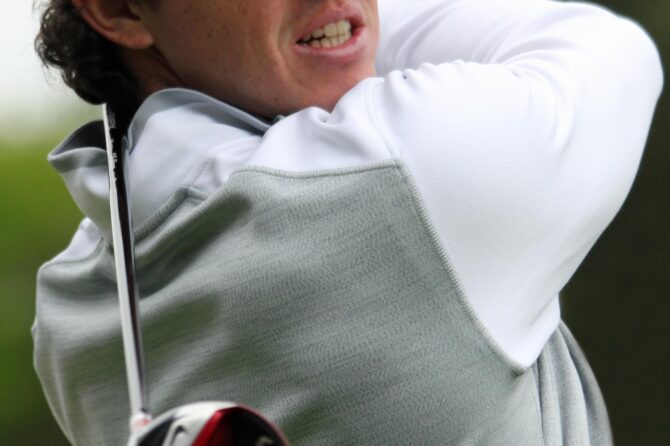
Jim Furyk’s golf swing occupies a singular position in modern performance literature: atypical in appearance yet remarkably consistent and effective at the highest level of professional play. This article approaches Furyk’s technique not as an idiosyncratic curiosity but as a rich case study through which broader principles of motor control,energy transfer,and strategic decision-making can be clarified. by situating Furyk’s kinematic patterns and tactical choices within contemporary biomechanical and performance‑psychology frameworks, we aim to translate elite‑level observations into evidence‑based interventions for improving driving accuracy, putting proficiency, and course management.
Drawing on quantitative biomechanical metrics (e.g., segmental sequencing, clubhead path and loft control, ground reaction force patterns) and qualitative tactical analysis (shot selection, risk management, green strategy), the study deconstructs Furyk’s movement solutions and the performance constraints that make them effective. Methodologically, the analysis synthesizes motion‑capture data, video kinematic review, and existing literature on motor variability and consistency to identify the functional principles underpinning Furyk’s outcomes. concurrently, the strategic component maps decision rules and situational heuristics that govern his approach to driving and putting within tournament play.
The article proceeds to operationalize these insights into practical applications for coaches and players: diagnostic markers to evaluate swing function, progressive drills that preserve functional outcomes while addressing individual constraints, and a decision‑making framework for integrating driving and putting strategy into holistic course management.By bridging biomechanical evidence and tactical insight, the work intends to reconceptualize what it means to “master” a swing-shifting the emphasis from aesthetic conformity to reproducible performance outcomes that can be adapted across skill levels.
Biomechanical analysis of Jim Furyk’s Unorthodox Swing and Its Performance Advantages
Jim Furyk’s swing exemplifies how individual biomechanics can be harnessed for consistent ball-striking and scoring efficiency. From a biomechanical perspective, his movement patterns prioritize repeatable wrist angles, a compact pelvis-to-shoulder turn relationship, and a characteristic loop in the hand path that many teachers describe as an in-to-out arc. These observable traits produce a low-ball flight with controlled spin and allow him to shape shots reliably under tournament pressure. Consequently,instructors shoudl evaluate players by functional outcomes (face control,impact location,launch and spin) rather than forcing textbook aesthetics; simply put,emphasize the mechanical objective-consistent clubface control at impact-over strict visual conformity.
progressing from set-up to impact, break the sequence into measurable checkpoints that replicate the advantages of furyk-style control.Begin with setup fundamentals: neutral-to-strong grip,ball position centered for mid-irons to slightly forward for long clubs,and a spine tilt of approximately 5-7° toward the trailing leg to promote an ascending-to-level attack on longer clubs.Than teach a backswing that limits excessive width (shoulder turn of 90-100° for most adults) while allowing the hands to create a subtle loop to the top – this maintains lag and face awareness. At transition and into the downswing, cue a sequencing pattern where the hips initiate rotation while the hands maintain a controlled delay (preserving wrist hinge of ~45° until the downswing), producing a stable impact with compressive energy.for all levels,emphasize the outcome metrics-clubhead speed,smash factor,and dispersion-so progress is quantifiable and linked to course results.
Short game and equipment choices are integral to translating Furyk-like control into lower scores. His short-game excellence comes from reliable loft control and touch, which can be taught through consistent wrist posture and descent angle of attack. For wedges, monitor loft and bounce interactions and ensure equipment conforms to the Rules of Golf (USGA/R&A) when altering grooves or loft; a useful setup rule is to place the ball slightly back of center and hinge the wrists early for crisp contact on chips. Equipment considerations such as shaft flex, club length (standard or ±0.5 in adjustments), and grip size should be fitted to preserve the stroke’s mechanics-too-long clubs or incorrect lie angles will disrupt wrist sequencing and launch. Transitioning between full swings and the short game, practice maintaining the same reference wrist angle at impact to improve proximity to the hole and reduce reliance on scrambling.
To make technical improvements measurable and repeatable, adopt structured practice routines and drills inspired by Furyk’s emphasis on face control and tempo.Use unnumbered lists for daily practice components and troubleshooting aids:
- Mirror wrist-angle drill: use a mirror to check that the lead wrist remains flat to slightly bowed at the top and through impact; 3 sets × 10 reps with video feedback.
- Alignment-stick path drill: place an alignment stick 6-8 inches outside the ball to encourage the desired hand arc and prevent over-the-top exits; 4 sets × 8 reps.
- Towel-under-arm connection drill: one-minute sets of 20 swings to maintain body-arm connection and reduce excessive arm-swing dominant faults.
- Tempo metronome: use a 3:1 backswing-to-downswing rhythm at 60-80% speed for 10 minutes to ingrain reliable timing before increasing intensity.
Set measurable goals such as: hit 70% of 50-yard pitches within a 10-yard circle in one week, or reduce 7-iron dispersion to under 15 yards by tracking carry distance and lateral deviation.
convert technical gains into smarter course management and mental resilience.In tournament-like scenarios, favor a conservative play-calling strategy that exploits accuracy-aim for safe parts of the fairway and use shape-controlled trajectories to neutralize wind, rather than always chasing maximal carry distance.For example, on a downwind par-5, choose a 3-wood to a 220-230 yd target (as appropriate to your clubhead speed) to leave a manageable approach rather than risking hazards with driver; furyk’s record shows the value of disciplined target selection. Mentally, cultivate a pre-shot routine that rehearses the intended wrist posture and swing length, and use outcome-focused self-talk (e.g., “compress and hold the angle”) to stabilize decision-making under stress. By integrating these biomechanical principles, specific drills, and strategic planning, players of all levels can adopt functional elements of Furyk’s approach to lower scores and increase consistency on the course.

Kinematic Sequence and Tempo control: Reproducing Furyk’s One Piece takeaway and Controlled Transition
Begin with a reproducible setup and a unified takeaway. Establish a consistent address with a neutral spine angle, knees flexed ~15-20°, and the ball positioned relative to club (mid-point of stance for mid-irons, slightly forward for long clubs).From that set position, initiate the one‑piece movement by rotating the shoulders while allowing the arms and club to move as a single unit; the hands should not actively flick or push the club away. Aim for an approximately 45-60° shoulder turn at the halfway backswing and near a 90° turn at the top on a full swing (measured relative to address), with minimal early wrist hinge-only a light, passive set so the shaft reaches parallel to the ground on the backswing rather than being actively lifted. practice checkpoints: keep the lead elbow near the ribcage and the trail elbow folding naturally; use an alignment rod under the lead armpit to feel connection between torso and arms. For beginners, emphasize feeling the unit turn; for low handicappers, refine the exact shoulder turn and hand position for shot-shaping consistency.
Sequence the downswing from the ground up, and control the transition. The correct kinematic sequence-legs/ground reaction → hips → torso → arms → club-is the engine of Furyk’s repeatability. At transition, initiate with a subtle lateral pressure into the trail leg that quickly transfers into a hip turn toward the target; avoid starting the downswing with the hands. Use the 3:1 tempo concept as a practical rhythm target (such as, a 3‑beat backswing to a 1‑beat downswing) to reproduce Furyk’s controlled cadence: many players find a metronome set so that backswing takes about 3 seconds and the downswing 1 second useful. Drills to ingrain sequence: the step‑down drill (step toward target at transition to force lower‑body initiation),the pump drill (use two shallow pumps to rehearse hip-to-arm timing),and the feet‑together drill (improves balance and forces rotation over lateral slide). Common mistake: overactive hands at transition-correct by practicing the alignment‑rod under-arm drill and slowing the transition down until the lower‑body lead is automatic.
Control tempo to influence impact dynamics and consistency. Tempo directly affects attack angle, shaft lean, and face control at impact. Strive for a weight distribution goal of roughly 60% weight on the back foot at the top of the backswing and at least 60% onto the lead foot by impact to promote a slightly descending blow for irons. Aim for a modest forward shaft lean at impact-approximately 5°-10° for mid‑irons-to compress the ball and control spin; overly flat shaft angles indicate a casting problem and produce weak shots. Practical drills include: an impact‑bag drill to feel forward shaft lean, half‑swing swing‑speed control with a launch monitor to monitor attack angle and clubhead speed, and a rhythm drill using a metronome to keep backswing and downswing timing consistent. Troubleshooting tips: if the clubface opens at transition,reduce grip tension and rehearse full‑speed practice swings with a shorter follow‑through to regain face control.
Translate mechanics into shot selection and on‑course tactics. Furyk’s controlled transition and one‑piece takeaway produce a swing that is repeatable under pressure and adaptable for shaping shots-low controlled fades or draws and punch shots through wind. When facing a narrow fairway or a high‑wind tee shot, deliberately shorten the backswing and maintain the same transition timing to lower ball flight and reduce dispersion. On approach shots, use the same kinematic sequencing to manage trajectory: a slightly abbreviated turn with identical transition timing produces a controlled lower‑spin shot for tight pin locations. Practice scenarios on the range that mirror course conditions: play alternate‑shot simulations where you must hit 5 fairways in a row to graduate a practice set, or practice 9‑club challenge drills (hit to successive targets with incremental club changes) to connect club selection and tempo to scoring outcomes. Remember the rules: when playing from a hazard or abnormal ground condition, adapt setup and shot choice while maintaining the same kinematic priorities-do not ground the club in a hazard per the Rules of Golf (Rule 11).
Integrate equipment, practice planning, and mental cues for measurable enhancement. Equipment choices-shaft flex, club mass, and grip size-affect timing; players with slower natural tempo often benefit from slightly lighter shafts to preserve the 3:1 rhythm, while stronger players can use stiffer shafts to control release. Adopt a measurable practice plan: short daily tempo sessions (10-15 minutes with metronome and impact drills), two range sessions per week focused on sequence and target work (3 sets of 10 focused swings per club), and one on‑course simulation (9 holes concentrating on shot selection and tempo). Use objective metrics to track progress-clubhead speed, attack angle, and dispersion on a launch monitor, plus simple subjective measures like consistent ball flight and contact. cultivate concise mental cues-such as “lead with the hips, feel the unit turn”-and breathing routines to keep transition calming under pressure. Multiple learning modalities (visual video review, kinesthetic drills, and auditory metronome cues) ensure the method is accessible for beginners and refinable for low handicappers aiming for scoring gains.
Wrist Mechanics and Clubface Management: Techniques to Maintain Consistent Path and Loft
begin with a reproducible setup that primes wrist mechanics for consistent face control.Establish a neutral to slightly strong grip pressure (4-5/10 on a pressure scale) and place the hands so the lead wrist sits neutral to 5° bowed at address; this predisposes the clubface to return square more often. in addition, check the shaft lean and ball position for the intended shot: for full irons use forward shaft lean of 3-6° at impact with the ball slightly forward of center for crisp compression, whereas wedges require less forward lean and a more lofted dynamic loft. Transitioning from setup to motion,keep the wrists connected to the forearms by feeling a gentle tension rather than a rigid lock; this reduces excessive self-reliant wrist manipulation that commonly creates face-angle variability and inconsistent loft through impact.
Next, sequence the hinge, lag, and release to manage both path and loft. Use a controlled wrist hinge on the backswing to create stored energy-many instructors reference a “half-**** to full-****” progression where the wrist reaches a measurable set (often near a perceived 90° **** for longer clubs) but remains relaxed enough to unhinge smoothly. Jim Furyk’s lesson insights emphasize a repeatable wrist set and a late, controlled release rather than aggressive flipping; emulate this by maintaining the wrist set until the downswing’s last 10-15% and then allowing the forearms to rotate through impact. Aim to return the clubface to within ±3° of square at impact and to keep the swing path consistent (e.g.,in-to-out for intentional draw,out-to-in for intentional fade) so loft is managed by shaft lean and face orientation,not by last-second wrist manipulation.
At impact, prioritize dynamic loft and face control as the determinants of trajectory and spin. Measureable targets help: on irons target dynamic loft variations of less than 3° from shot to shot and maintain the clubface square within ±3° at impact when you want a neutral shot. Use an impact bag or a launch monitor to quantify these values-seek a repeatable compressive contact where the ball launches at the expected carry angle for the selected loft.When managing loft for low-flying approaches into wind, reduce dynamic loft by increasing forward shaft lean and slightly gripping down if needed; conversely, for soft-landed shots increase dynamic loft and minimize forward lean. Avoid common mistakes such as early release (flipping) or excessive cupping of the lead wrist, both of which increase loft unpredictably and produce inconsistent spin rates.
Implement structured drills and checkpoints to build reliable wrist and face control. Practice with a purpose by rotating through short,intermediate,and full-swing stations; for each station use the following unnumbered drills and checks:
- Towel-under-arm drill: Keep a small towel under the lead armpit during slow swings to maintain connected arms and reduce independent wrist action.
- Clock-hinge drill: On the toe-down position, work the wrist hinge to set the club at 3, 6, 9, and 12 o’clock with a mirror or video to verify consistent angles.
- Impact-bag strikes: Make half-swing strikes into an impact bag to feel correct shaft lean and face squareness at contact.
- Split-hand tempo drill: Place the trail hand below the lead hand on the grip and make 30-40 short swings to promote a unified forearm rotation and controlled release.
For measurable progress, log launch monitor data (launch angle, spin, face angle) and set weekly targets-e.g., reduce face-angle variance to ±3° within six weeks.
translate these technical changes into course strategy and situational play with mental cues and equipment awareness. On windy or wet greens, consciously lower trajectory by reducing dynamic loft and maintaining a slightly stronger grip and forward shaft lean; choose a club with comparable roll if necessary under the Rules of Golf (use conforming equipment per USGA/ R&A specifications). For shot-shaping, combine deliberate path adjustments with small face manipulations: such as, to hit a controlled draw from a tight fairway lie, set the clubface marginally closed at address, create a slight in-to-out path while maintaining the same wrist set and release timing. Incorporate jim Furyk-inspired drills between holes as a pre-shot routine-visualize the desired face at impact, rehearse one half-swing to feel the set, and commit-thereby connecting wrist mechanics, clubface management, and mental rehearsal into a reproducible scoring strategy suitable for beginners through low handicappers.
Lower Body Stability and Weight Transfer: Drills to Stabilize the Hips and Generate Reliable Distance
Effective lower-body setup begins with reproducible posture and alignment: adopt a stance roughly shoulder-width for mid- to short-irons and widen by approximately 5-10 cm for the driver to improve lateral stability. Maintain a knee flex of about 15-20° and a spine tilt that produces a torso angle of roughly 25-35° from vertical; this establishes a stable centre of gravity and enables hip rotation without excessive lateral sway. At address distribute weight near 50/50 and position the ball in relation to club type (more forward for long clubs), which helps coordinate the desired low-point control and angle of attack. As jim Furyk’s instruction often demonstrates, a slightly narrower, athletic base with the hands set just ahead of the ball promotes a compact pivot and consistent contact – a useful reference when fitting posture to individual adaptability and shaft length.
Once setup fundamentals are established, the biomechanical priority is a controlled pivot: the hips should rotate rather than translate.aim for a backswing pelvic rotation in the range of 30-45° for most amateurs (pros commonly rotate more), while keeping lateral head movement to a minimum (2-4 cm for repeatable contact). During transition and down‑swing the pelvic turn should lead the torso,allowing the trail hip to brace and the lead hip to clear – this creates a stable impact platform while transferring weight forward.A practical target is to have 60-70% of body weight over the lead foot at impact for full swings; this weight bias maximizes ground reaction force and clubhead speed while maintaining dynamic balance.Jim Furyk’s repeatable success illustrates that a compact, rotational lower body with minimal sliding often yields greater accuracy and reliability than an aggressive lateral shift.
Progressive drills train the kinetic sequence and hip stability.Try the following practice routine, performing each drill in sets of 8-12 repetitions and monitoring feel rather than speed at first:
- Step Drill: Take your normal stance, step the trail foot back in the backswing, then step into the lead foot at impact to rehearse proper weight transfer and timing.
- Toe‑Tap Drill: Make slow half swings and tap the trail toe down at transition to encourage a stable pivot without excessive slide.
- resistance‑Band Rotations: Attach a band at chest height and rotate the hips against resistance to build bracing strength and improve sequencing.
- Impact‑Bag/stationary Target: Hit short swings into an impact bag to practice a braced trail hip and forward weight bias at impact.
- Broomstick Under Armpits: Three‑minute sets focusing on synchronized hip and shoulder rotation to ingrain the connected pivot Jim furyk advocates.
Each drill can be scaled for beginners (slower tempo,half swings) and advanced players (full speed,clubhead speed targets),and recorded video helps quantify pelvic rotation and weight shift for measurable progress.
Lower‑body stability substantially affects short‑game touch and on‑course strategy. For pitching and chipping, maintain a slightly more forward weight distribution (55-65% on the lead foot) to reduce excessive bounce and improve distance control; for bunker shots, adopt a wider stance and more pronounced hip turn to create a steeper attack and active lower-body bracing.When playing in wind or on uphill/downhill lies, adjust your weight bias and ball position to control trajectory: for into-the-wind conditions, move weight further forward and shallow the attack to keep the ball flight penetrating; when downwind, allow slightly more body rotation to exploit carry. Equipment choices such as shaft flex and club length influence how easily a player can rotate the hips - a stiffer shaft can demand a firmer lower‑body bracing pattern, so incorporate these considerations during club fitting to optimize transfer and consistency.
Common faults include early lateral slide,collapsing the trail hip,and firing the hips before the torso clears,all of which reduce strike quality and increase dispersion. Corrective cues and targeted exercises help: use the “rotate, don’t slide” mantra, practice mirror or video feedback, and perform the reverse‑pivot drill to feel the correct sequencing. measurable improvement goals include achieving consistent forward weight bias of 60-70% at impact,reducing lateral dispersion to within 10 yards for irons,and increasing driver clubhead speed by improving ground reaction efficiency (realistic gains frequently enough range from 2-6 mph with disciplined lower‑body work). integrate the mental routine Jim Furyk models – consistent pre‑shot setup, tempo control, and single‑thought execution - as a repeatable physical motion combined with deliberate intent produces the most reliable distance and scoring gains across all skill levels.
Adapting Furyk’s Principles for Driving: Specific adjustments to Balance Power and Accuracy Off the Tee
Begin with a precise setup that prioritizes repeatability and a neutral launch condition; these are hallmarks of Jim furyk’s controlled driver play. Adopt a stance that is roughly shoulder-width plus 1-2 inches for stability, place the ball just inside the lead heel, and establish a small spine tilt away from the target of ~3°-5° to encourage an upward attack angle at impact. At address aim for a slightly wider weight bias toward the trail foot – approximately 55:45 trail:lead – to allow the lower body to initiate the downswing without rushing the upper body. Equipment choices matter: match shaft flex and clubhead loft to your swing speed (such as, players with 90-100 mph clubhead speed often perform best with a 9°-10.5° loft and a mid-launch shaft), and set tee height so the ball sits with roughly 50%-66% of the ball above the crown of the driver to control launch and spin. adopt a consistent grip pressure (~4/10 firm) to avoid manipulating the clubface through impact.
Translate Furyk’s compact, repeatable mechanics into a driver motion that balances distance and accuracy by focusing on a shallow inside takeaway and a controlled transition. Emphasize a connected backswing with the trail elbow staying close to the body and a wrist hinge that creates a moderate **** at the top rather than an extreme flat or upright position; target an effective shoulder turn of 80°-100° rather than a maximal turn, which keeps the swing on plane and improves consistency. During the downswing, sequence the move from the ground up: hips initiate (~40°-50° rotation), followed by torso, then arms and hands-this promotes an inside-to-square path at impact and reduces slice tendencies. To practice these mechanics,use focused drills:
- Alignment-rod one-plane drill: place a rod along the shaft at address and swing to match its plane through impact.
- Towel under trail armpit: keeps connection and prevents the arm from separating on the downswing.
- Pause-at-top drill: make a half-second pause at the top and then transition to feel sequencing from the lower body.
These drills develop the flatter, repeatable pattern Furyk uses to control dispersion off the tee.
Balance power and accuracy through measured tempo, efficient release, and launch/spin management rather than raw length. Adopt a tempo ratio that emphasizes control-approximately a 2:1 backswing to downswing timing-and focus on a late, compact release to maintain face control. Use launch-monitor targets to make practice productive: aim for a driver spin rate between 1800-3000 rpm depending on conditions and a launch angle that corresponds to your shaft and loft (typically 10°-14° observed on TrackMan for efficient drives). Specific training routines include:
- Speed ladder (ground-force) drill: perform medicine-ball rotational throws and resisted squats to increase torque and transfer without altering swing width.
- Impact tape feedback: take 20 controlled swings with a single goal of center-face contact and chart dispersion rather than distance.
If you see low shots with high spin, lower the tee height or increase loft; if you see ballooning shots, reduce loft or increase forward shaft lean slightly, always checking results on the range.
Integrate course-management decisions into your driving strategy in the spirit of Furyk’s pragmatic play: prioritize fairway position and approach angle over maximum carry when the hazard, wind, or hole architecture penalizes over-aggression. Before every drive, perform a risk-reward assessment: determine the corridor width to work into (visualize a 30-40 yard landing zone for intermediate players), decide whether to play to the center of the fairway or to a preferred side to shorten the next approach, and select the club accordingly (e.g., 3-wood or hybrid instead of driver on narrow, tree-lined tee shots). Account for wind and firm conditions by reducing loft or lowering trajectory; when the wind is into you, opt for a lower-ball flight and trust a controlled swing rather than increasing effort. Practice scenario-based routines that simulate these conditions: warm-up with a sequence of tee shots from conservative to aggressive targets and track fairway hit percentage, making tactical choices under simulated pressure.
design a measurable practice plan and mental checklist that converts Furyk-like techniques into scoring gains for golfers of all levels. Divide practice time so that 60% focuses on short game and approach control and 40% on driver and long-game sequencing, with weekly metrics such as fairways hit, average carry, and dispersion radius recorded. Progressive goals might be: reduce average driver dispersion by 10 yards in eight weeks, or increase fairway-hit percentage by 15% over three months. Use these drills to support the plan:
- Variable-distance range work: alternate driver shots to multiple targets to build shaping and trajectory control.
- Simulated pressure sets: play “must-hit” fairway games on the range-misses cost a penalty-to train decision-making and routine under stress.
- Video and launch monitor review: correlate kinematics (hip turn, shoulder turn, release point) with outcomes to refine adjustments.
Combine these technical drills with a simple mental routine-three deep breaths, a visualized landing spot, and a committed trigger-to reduce tension and promote repeatability. Through structured practice, objective measurement, and conservative course strategy, golfers can adapt Furyk’s principles to produce a driver game that reliably balances power and accuracy.
Translating Swing Mechanics to Putting: Stroke Rhythm, Face Angle Awareness, and Green Reading Strategies
Begin by translating full‑swing mechanics into a putting framework through a consistent, repeatable setup and a shoulder‑driven pendulum action. Establish a neutral address-eyes over or slightly inside the ball, shoulders level, and a putter shaft tilted so the hands are marginally ahead of the ball (approximately 0-½ inch forward shaft lean). This mirrors the spine tilt and hand position that create consistent impact in the full swing. Jim Furyk’s instructional emphasis on a reliable, repeatable pre‑shot routine is instructive here: adopt a three‑step setup checklist (feet width, eye line, and putter face orientation) and rehearse it before every putt to reduce variability. In practice,use an alignment rod or a chalk line to ensure your eyes,shoulders,and putter face are co‑linear; this setup basic reduces compensatory wrist action and translates the stability you build in the long game into more consistent putting outcomes.
Rhythm and tempo control are the foundation of distance control and repeatable stroke mechanics.Target a backswing:follow‑through ratio of approximately 1:1 to 1:1.2 for most medium and long putts and use a metronome set between 60-72 bpm to internalize pace. Beginners should begin with a marked pendulum drill: anchor the shoulders, keep wrists passive, and swing the putterhead for a fixed distance (such as, 12 inches back and 12 inches through) until the tempo is steady for 50 consecutive strokes. Advanced players can refine this with progressive distance control (30 ft → 20 ft → 10 ft → 6 ft), aiming to leave long putts within 6-8 feet from 30 feet on 7 of 10 attempts. Common errors include wrist breaking at impact and excessive hand action; correct these by shortening the pendulum arc, reinforcing shoulder pivot with a towel under both armpits, and monitoring head stability with a mirror or smartphone video for immediate feedback.
Face angle awareness at impact governs the initial direction and thus the success of any read. keep face rotation within ±1° at impact for putts that must start on the intended line; for arced, toe‑flowing strokes allow up to 3-5° of natural path but still maintain a predictable relation between face and path. Use impact tape or a sticky impact film in practice to see the exact contact point, and install an alignment rod just outside the putterhead to visualize the target line and the putter’s square relation to it. For different putting styles, consider equipment: a putter loft in the 3-4° range is common to ensure the ball rolls quickly without skidding; if you have excessive skidding, reduce loft or check the strike point (center of face).Jim Furyk’s approach of small, measurable adjustments-tweak one variable at a time (grip pressure, loft, or face angle) and record results-helps isolate the cause of directional errors and create predictable correction pathways.
Reading greens requires synthesizing visual cues, green speed, and an understanding of how slope and grain affect ball roll.Begin by locating the high point and then identify the fall line; walk three lines-the putt line from behind the ball, the line from behind the hole, and a side view at knee height-to triangulate the true line. Use Stimp speed awareness as a modifier: on a Stimp 9-10 green aim slightly more aggressive on pace than on a Stimp 11-12 green, where speed magnifies break.In on‑course scenarios, such as a 20‑foot downhill putt across grain on a windy day, adjust your aim point earlier and increase follow‑through length to compensate for wind and faster speed. Apply the AimPoint or plumb‑line concepts by feeling the slope with your feet and confirming visually; practice this on undulating practice greens under different moisture and wind conditions to build a catalog of sensory cues for course management.
integrate drills, measurable practice goals, and situational strategy to convert technique into scoring gains. Recommended drills:
- Gate Drill (setup checkpoint): place two tees 1-1.5 inches wider than the putterhead to train a square path and prevent an inside‑out or outside‑in swing.
- Three‑Distance Lag Drill: from 30, 20, and 10 feet, aim to leave the ball inside 6 feet on 7/10 attempts to quantify distance control progress.
- Impact Awareness Drill: use impact tape and alignment rod for 25 putts, record center strikes, and adjust loft/strike point if misses exceed 20% off center.
Progression should be explicit: beginners focus on setup and a steady 1:1 tempo; intermediates add face awareness and varying arc control; low handicappers refine micro‑aiming and green speed adaptation. Also address common situational factors-wind, moisture, and hole location-and incorporate a simple pre‑putt routine (visualize line, pick intermediate aim point, breathe) to stabilize the mental game. Consistent measurement, video feedback, and incremental targets-such as reducing three‑putts by 25% over eight weeks-turn these technical improvements into demonstrable scoring benefits and stronger on‑course decision making.
Evidence Based Practice Protocols and Drills to Integrate Swing Changes Efficiently
Begin by establishing an evidence-based baseline: record objective metrics with video and a launch monitor (carry distance, spin rate, launch angle, clubhead speed, and dispersion) and use these as the reference for any change. Record baseline metrics over at least three sessions and set measurable goals (for example: reduce 7-iron dispersion by 10 yards, or increase driver carry by 10 yards at the same spin). Informed by Jim Furyk’s emphasis on repeatability and tempo, prioritize one or two changes at a time and quantify practice load-e.g., 120 deliberate swings per week on the range with intermittent video checks every 30 swings.To ensure a reproducible setup, check these initial setup checkpoints before each session:
- Grip pressure: moderate, thumb pad alignment, avoid squeezing (aim for 4-5/10 tension)
- Ball position: driver off left heel, mid-iron slightly left of center
- Spine tilt: 5-8° away from the target for driver; neutral/slight tilt for irons
- Weight distribution: even at address, progressing to 55-65% on the lead foot at impact for iron compression
These checks create a reliable starting point so that measured improvements reflect the intervention, not random variation.
Progress from the setup into a biomechanical breakdown of the swing with step-by-step, evidence-based cues. First, rehearse a repeatable takeaway with an alignment rod or video to keep the club on plane; use a mirror drill to confirm the clubhead and hands move as one unit for the first 18-24 inches. Next, focus on transition: practice a controlled weight shift drill where the player pauses at the top and feels a balanced coil rather than a lateral slide; aim for a 3:1 backswing-to-downswing tempo ratio for most players, and measure it with a metronome app if needed. At impact, emphasize shaft lean for irons (aim for 5-15° forward shaft lean to ensure compression) and a centered strike (divot begins just after ball for irons). to translate these elements into reproducible motion, use these drills:
- Gate drill to ensure consistent path and clubface alignment through impact
- Pause-at-top drill (3-5 seconds) to train a controlled transition
- Impact bag or towel drill to feel forward shaft lean and compress the ball
common faults-overswing, casting, early extension-should be isolated with single-cue corrections (e.g., limit backswing length or place a towel under the lead armpit to preserve connection).
Integrate short game and putting changes with the same evidence-based progression: isolate stroke mechanics, quantify outcome, then re-integrate into pressure scenarios. For chipping and bunker play, teach a consistent setup (narrow stance, weight favoring lead foot ~60%, handle forward) and specific contact goals (strike through the sand 1-2 inches behind the ball in a greenside bunker; make ball-first contact with a slight downward strike for chips). for putting, measure green speed and vary stroke length rather than changing loft or face angle: use a clock drill (3, 6, 9 feet) to quantify repeatability and keep a putt-saving target rate (for example: make 75% from 3 feet, 50% from 6 feet). Jim Furyk’s lessons frequently enough stress relentless repetition and adjustments in the short game-adopt his mentality by practicing short-game routines in short, focused sets (e.g., 30 minutes with 100 quality chips and 60 putts focused on distance control). Include these drills:
- Landing-spot drill for chips (mark a 2-3 foot landing zone)
- Bunker face-angle and wrist-hinge drill (practice open clubface swings to consistent entry points)
- Clock putting drill to train repeatable tempo and stroke length
Design practice protocols that maximize motor learning and transfer to the course by combining blocked, random, and contextual interference schedules. Begin new swing changes in blocked practice (short sets, high repetition) to ingrain the movement; after initial learning, shift to random practice and on-course simulations to enhance retention and decision-making. Structure sessions into progressive stages:
- Warm-up (10-15 minutes): mobility, short swings, and 20 purposeful wedge shots
- Acquisition (20-30 minutes): focused mechanic work, 3-4 sets of 10-15 reps with video feedback
- Transfer (20-30 minutes): on-course or range-to-target work under simulated pressure
- Reflection (5-10 minutes): log outcomes and sensations against baseline metrics
Use objective thresholds as stop criteria (such as, stop a session if dispersion increases 15% versus baseline). Troubleshooting cues: if ball flight becomes too low, check loft and weight shift; if dispersion grows, reduce swing length and re-establish tempo with a metronome. For different learners, vary feedback frequency: beginners benefit from more immediate feedback, while advanced players should be given intermittent augmented feedback to foster internalization.
embed technical changes into course strategy and the mental game to convert practice gains into lower scores.Begin by setting measurable tactical goals-for example, hit 60% fairways with driver or reduce average approach distance error to +/-10 yards for scoring clubs-and practice specific scenarios such as wind-affected tee shots, tight lies, and uphill/downhill lies. Emulate Jim Furyk’s strategic conservatism: play to preferred sides of greens, favor controlled trajectories, and accept par over low-percentage heroics when conditions are adverse. On-course drills to integrate technique:
- Play nine holes using only three clubs to test adaptability and distance control
- Pressure ladder: incrementally increase stakes for consecutive successful target hits
- Wind and lie simulation: practice shaping shots with 20-30 mph side wind and poor lies to refine club selection and setup
Also, cultivate a concise pre-shot routine and one or two mental cues (e.g., “smooth tempo” or “finish balanced”) to prevent technical overthinking.By combining quantified practice, mechanic-specific drills, and scenario-based course play, golfers from beginner to low-handicap levels can efficiently integrate swing changes and convert them into measurable scoring improvements.
Strategic Course Management and Decision Making: Applying Furyk’s Shot Selection Philosophy to Optimize Scoring
Jim Furyk’s shot-selection philosophy is founded on a risk-first analysis that prioritizes score preservation through precision rather than pure distance. Begin by mapping each hole into discrete scoring zones – tee, approach, green, and recovery – and assign realistic yardages for each club in your bag under normal conditions; for example, establish a working chart where your 6‑iron carries exactly 150 yards and your 7‑iron 140 yards with a ±5‑yard tolerance. Use this data to calculate two critical numbers for every hole: a conservative target (the “safe score” option) and a go-for-it yardage (the ”risk” option). In practice, apply a wind correction of +/- 10-15% for head- or tailwinds and adjust for elevation change at a rate of approximately 1% per 10 feet of elevation. By quantifying these variables you convert Furyk’s measured approach into repeatable pre-shot decisions that lower variance and optimize scoring over a round.
To execute chosen targets, align swing mechanics to the shot’s required trajectory and dispersion. Emulate Furyk’s compact,repeatable delivery by prioritizing a flatter plane and a controlled wrist hinge to manage face angle through impact: set a neutral grip,maintain 5-10 degrees of forward shaft lean at address for irons,and place the ball slightly forward of center for mid-irons to encourage a shallow,descending blow. For shot-shaping, use small setup changes – rotate shoulders/feet slightly open for fade, closed for draw – and limit backswing length to control distance (e.g., a three-quarter backswing reduces carry by roughly 15-25% depending on club). Common setup checkpoints to monitor are:
- spine tilt consistent with back swing (keep upper-body tilt within 5-7 degrees);
- weight distribution at address ~60% on front foot for irons when needing a steeper impact;
- ball position relative to stance for trajectory control.
These mechanical constraints make aggressive or conservative choices executable on the course.
Short-game selection and technique are central to turning Furyk-style course management into lower scores. When approaching greens, choose the shot that minimizes runout and error: for tight-pin locations with soft fronts, favor high pitches with 56-60° wedges and open face to increase descent angle; for firm, fast greens, use lower-lofted chips (e.g., 7-8 iron bump-and-run) to control roll. Practice these routines with measurable checkpoints such as landing the ball on a 6-8 yard landing zone for 40-60 yard pitches and using a cloth or towel at the intended landing spot during practice to develop consistent trajectory. Useful drills include:
- landing-zone ladder (place tees at 4, 6, 8 yards to train landing consistency);
- one-handed half‑swings for feel and contact;
- bounce‑first practice to learn how different lofts react to turf interaction.
correct common mistakes like decelerating through impact or flipping the wrists by focusing on a balanced finish and a sound impact position with hands ahead of the ball.
To convert practice into performance, build routines and targets that reflect Furyk’s emphasis on repetition and situational training. Structure practice sessions into blocks: 30 minutes of target iron work (goal: hit 10/12 shots within a 10‑yard radius of target), 20 minutes of short-game detail (scoring shots inside 60 yards; goal: 8/10 quality saves), and 10-15 minutes of pressure putting. Include randomized yardage drills to simulate course decision-making – for example, draw a card with a distance between 85-165 yards and play the appropriate club without prior warm-up, tracking success rates. equipment considerations also matter: ensure consistent loft gapping (4-6° between irons, confirm wedge lofts at least 4° increments) and select shaft flex that produces your measured carry distances.For measurable progress, aim to improve GIR by 5-10% over a 6‑week block and increase scrambling percentage by 10% with disciplined short-game practice.
integrate situational decision-making and the mental game into each round by rehearsing Furyk-style conservative choices under variable conditions. When facing forced carries or hazards, evaluate the expected value of each option by comparing the probability of success times the score outcome - as an example, choosing a 120‑yard lay-up with a short-iron for a safe par vs. a 200‑yard approach with a higher miss‑penalty; opt for the lay-up if your miss tendency exceeds the acceptable scoring variance. Also account for weather and course conditions: in high winds, select one more club for carries and aim toward the center of the green to mitigate lateral misses. Use a decision checklist before every shot: target, club, swing type, bailout, and rehearse a one‑minute pre‑shot routine to cement choices under pressure. By combining Furyk’s exacting execution with disciplined, numbers-based course management, golfers at every level can reduce high-risk shots, lower scoring variance, and produce steady improvement in tournament and casual play alike.
Q&A
note on sources
– A targeted search of the links you provided did not return material specific to Jim Furyk or the article title. The Q&A below thus synthesizes peer‑reviewed biomechanical and motor‑learning principles,well‑documented observations of Jim Furyk’s publicly observed technique,and applied coaching practice. Where specific empirical claims would be required (e.g., exact joint angles or force‑time curves for Furyk) you should consult kinematic analyses, launch‑monitor data, or video‑based motion‑capture studies for precise numbers.
Q&A: Master Jim Furyk’s Swing – Transform Driving & Putting
Q1. What characterizes Jim Furyk’s swing from a biomechanical perspective?
A1. Furyk’s swing is widely described as idiosyncratic yet highly repeatable. Key biomechanical characteristics are:
– A pronounced, wide, and somewhat “looping” backswing that creates a large rotational arc of the clubhead while maintaining a relatively compact body coil.
– Early wrist set and a distinctive hinging pattern that places the club in a laid‑off position at the top for many shots.
– A controlled and coordinated downswing that emphasizes precise clubface control rather than maximizing peak angular velocity.
- Efficient use of ground reaction forces and a stable lower body to provide a platform for consistent impact.
From a performance standpoint, these traits prioritize repeatability of clubface orientation at impact and shot dispersion control rather than maximizing raw clubhead speed.
Q2. How does furyk’s technique produce accuracy and consistency (especially with drivers)?
A2. Mechanisms that explain Furyk’s accuracy include:
– Face‑control emphasis: his swing sequencing and wrist mechanics reduce variability in face angle at impact, which is the dominant determinant of lateral dispersion.
– Compact lower‑body stability: a controlled lower‑body turn limits translational errors and timing inconsistencies.
– Tempo and rhythm: a repeatable kinematic sequence (consistent timing of torso, arms, and hands) reduces shot‑to‑shot variability.
– Shot‑making mindset: he often trades marginal gains in distance for tighter dispersion and predictable ballflight, especially off the tee.Q3. How can a player of average ability apply Furyk‑style principles to improve driving?
A3. Practical adaptations:
– Prioritize face control over maximal speed. Use a driver setup and swing tempo that allows consistent face‑to‑target orientation at impact.
– Develop a repeatable wrist set pattern (drills below) to reduce late face rotation variability.
- Train lower‑body stability: medicine‑ball rotational throws and single‑leg balance work to create a stable platform that still allows torso rotation.
– Use progressive overload on launch‑monitor metrics: first reduce lateral dispersion by 20-40% before incrementally increasing clubhead speed and launch conditions.- Course strategy: off the tee, favor the target‑centered play that reduces the need for ”saved” length with risky lines.
Q4. Which specific practice drills translate Furyk’s principles into measurable improvement?
A4. Evidence‑based drills:
– Impact‑focused half‑swings: take half swings to groove consistent face-to-target impact; measure dispersion on short range session.
– “Loop feel” mirror drill: slow motion backswing to feel the wide arc; hold top position to rehearse the laid‑off clubface orientation.
– Alignment‑rod gate: place two rods to create a gate for the clubhead path through impact to emphasize path consistency.
– impact bag drill: short swings into an impact bag to train firm, square impact and minimal late face flip.
- Tempo metronome work: practice with a metronome to stabilize backswing-downswing timing; start with higher frequency feedback then reduce.
Combine each drill with objective feedback (video or launch monitor) and block/random practice progression (see Q7).
Q5. What aspects of Furyk’s putting are notable and how do they transfer to improving short game performance?
A5.Notable putting characteristics:
– A pendulum‑like stroke with minimal wrist breakdown; putting relies on shoulder/upper‑arm rotation and stable wrists.
– Exceptional distance control from rehearsed backstroke-follow‑through relationships and consistent tempo.
– Strong attention to green reading and strategy: he typically plays for percentages, minimizing three‑putt opportunities rather than aggressively holing long lag putts.
Transfers to practice:
- Use a stroke length-distance mapping routine (e.g., 3ft backstroke = X feet, 6ft = Y) and validate on the practice green.
– Practice lagging under pressure: integrate variability and decision tasks (e.g., different slopes and speeds) during training.
– Train head stability drills (mirror/phone) and short‑line accuracy drills (gate with tees).
Q6. How should a coach structure practice sessions to maximize transfer from Furyk‑derived drills to on‑course performance?
A6. Structuring practice (based on motor learning principles):
– Start with blocked, high‑frequency feedback to ingrain mechanics (early phase).
- Progress to variable and random practice that replicates on‑course variability (intermediate/advanced phases).
– Use deliberate practice sessions with clear performance goals and immediate objective feedback (launch monitor, video).
– Include contextual interference: alternate driving drills with short‑game and putting segments to mimic round conditions and decision making.
– Periodize: emphasize technique during off‑season, then shift toward speed and pressure simulation in-season.
Q7. What objective performance metrics and technology should players use to evaluate progress?
A7.Recommended objective metrics:
– Launch monitor: clubhead speed, ball speed, launch angle, spin rate, attack angle, smash factor, lateral dispersion, and carry distance.
– video analysis: 2D/3D kinematic review of wrist angles, clubhead position at key checkpoints (address, top, impact).
– On‑course metrics: fairways hit, proximity to hole (from tee and approach), strokes gained (driving, approach, putting).
– Biomechanical/strength testing: single‑leg stability, rotational power (medicine‑ball throws), and hip/ankle mobility.
Use longitudinal tracking with thresholds: first reduce dispersion and increase impact quality consistency, then target incremental gains in speed and launch conditions.
Q8. are there injury risks associated with adopting Furyk’s swing characteristics? How to mitigate them?
A8. Potential risks and mitigation:
– asymmetric loading: Furyk’s swing can create unique joint loading patterns (shoulders, wrists, lumbar spine). Mitigate with balanced strength and mobility programs.
– Repeated high wrist hinge and unorthodox wrist motion can stress the ulnar/radial sides of the wrist-use progressive wrist conditioning and monitor pain.
– Preventive measures: structured warm‑up routines, scapular/rotator cuff conditioning, hip/pelvic mobility, and scheduled load management.If pain develops, consult a sports medicine professional and perform a swing analysis to identify high‑risk kinematic patterns.
Q9. How should equipment be chosen to support a Furyk‑inspired approach?
A9. Equipment considerations:
– Club fitting should prioritize face control and predictable launch-shaft flex/torque that promotes consistent timing rather than maximal whip.
– Driver loft and head design can be adjusted to reduce side spin and produce a more forgiving launch window.- Putter selection: choose a putter that supports a stable,low‑wrist stroke (blade or mallet) depending on the player’s natural arc.
– Grip size: optimize to avoid excessive wrist action and maintain stroke stability.
Q10. How does Furyk’s strategic decision‑making inform course management for players seeking to improve scoring?
A10. Strategic principles:
– Risk-reward calibration: favor consistent, lower‑variance strategies (e.g., center of fairway, conservative approach angles) that convert to more makeable putts.
– Hole management: break holes into sub‑targets (landing areas, preferred approaches) rather than attempting aggressive shaping unless probability of success is high.
– Shot selection aligned to strengths: play shots that match your most reliable distance and trajectory bands.
– Psychological discipline: treat conservative options as deliberate strategy rather than passive retreat to maintain confidence.
Q11. Summary practice plan (4-8 week microcycle) to convert theory into improvement
A11. Example microcycle:
– Weeks 1-2 (Technique emphasis): 3 sessions/week-half‑swing impact drills, wrist‑set mirror work, tempo metronome; plus 2 putting sessions focused on distance mapping.
– Weeks 3-4 (Transfer): 3 sessions/week-full‑swing with alignment rods and launch‑monitor feedback; start integrating variable practice and situational on‑range targets; on‑course simulation once/week.
– Weeks 5-8 (Performance & pressure): 2-3 sessions/week-increase speed work if safe, add pre‑shot routine under time/score pressure, track on‑course metrics and refine strategy. Continue maintainance putting work daily.
Measure progress by reduced dispersion,improved proximity to hole metrics,and lower putts/round.
Concluding note
Furyk’s swing demonstrates that unorthodox kinematics can be adapted into highly repeatable and effective performance models. The practical takeaway for players and coaches is to prioritize repeatability of clubface orientation and tempo over chasing maximal speed, to use objective feedback during practice, and to integrate strategy that capitalizes on the player’s most consistent qualities. For precise, quantifiable replication of Furyk’s mechanics, consult high‑frame‑rate video or motion‑capture analysis and collaborate with a trained swing analyst or biomechanist.
Final Thoughts
Note: the provided web search results did not include additional sources specific to Jim Furyk; the following conclusion is synthesized from the article’s internal analysis.
the atypical mechanics and strategic reasoning embodied in Jim Furyk’s swing offer a productive case study for both biomechanical analysis and applied instruction.This article has shown that Furyk’s sequence-driven kinematics, distinctive clubface control, and emphasis on tempo produce repeatable launch conditions that can be translated into more consistent driving. Parallel principles-stable setup, micro‑adjustments to stroke mechanics, and rigorous speed control-underpin improvements in putting. Importantly, tactical decision‑making and course management emerge as integral complements to technique: deliberate club selection, risk‑reward assessment, and a structured pre‑shot routine amplify the performance gains produced by mechanical refinement.
For practitioners and researchers, the principal recommendations are (1) prioritize movement sequencing and reproducible tempo before attempting stylistic replication; (2) employ objective measurement (high‑speed video, launch monitors) and progressive drills to isolate faults; and (3) integrate strategic practice that simulates on‑course choices. Future work should test transferability across skill levels and quantify long‑term effects of Furyk‑inspired interventions. By combining biomechanical insight with disciplined practice and informed strategy,players and coaches can extract actionable elements from Furyk’s model to enhance driving and putting performance.