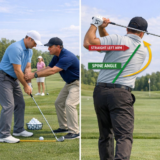
optimizing the golf swing follow-through-in the sense of maximizing its effectiveness, consistency, and injury-mitigating properties-constitutes a pivotal yet understudied element of overall stroke performance. The follow-through is not an isolated motion but the terminal expression of sequential force generation, intersegmental energy transfer, and neuromuscular coordination initiated earlier in the swing. Variability in follow-through mechanics correlates with dispersion of ball flight and with cumulative joint loading; therefore,systematic refinement of this phase offers dual benefits for shot precision and athlete longevity.
This article synthesizes biomechanical principles relevant to follow-through control, emphasizing kinematic chain continuity, timing of segmental decelerations, and targeted muscular activation patterns that underpin accurate club-face orientation at impact and thereafter. Methodological approaches-ranging from three-dimensional motion analysis and force-platform assessment to electromyographic profiling-are evaluated for their utility in diagnosing technical inefficiencies and guiding evidence-based interventions. Attention is given to how individual anthropometrics, swing archetypes, and adaptive motor learning strategies moderate optimal follow-through signatures.
By translating biomechanical insights into practical coaching cues and training prescriptions, the subsequent sections aim to provide researchers and practitioners with a framework to quantify, train, and monitor follow-through characteristics that enhance shot consistency while reducing injury risk. Specific recommendations for assessment protocols, progressive drills, and areas for future empirical investigation are proposed to advance both performance and safety in golf.
Kinematic Sequencing and Energy Transfer in the Golf Follow Through: Implications for Accuracy and Consistency
Kinematic sequencing in the follow-through represents the temporal order and angular velocities of body segments as they continue to rotate and decelerate after ball contact. The continuation of the proximal-to-distal pattern-pelvis rotation → trunk rotation → upper arm and forearm extension → wrist pronation-governs how residual segmental energy is redistributed rather than abruptly dissipated. This redistribution modulates clubhead path and face orientation instantly post-impact, which in turn affects the ballS launch direction and lateral dispersion; maintaining the intended sequence through the follow-through thus reduces variability in launch conditions and enhances repeatability across strokes.
Mechanically, the follow-through functions to manage angular momentum and to provide controlled deceleration of distal segments while preserving desired clubhead kinematics at impact. It is important to separate kinematic description (timing, angles, velocities) from dynamic causation (forces, torques): as noted in comparative definitions used in the literature, “dynamic” analyses concern forces and mass interactions while “kinematic” analyses describe motion self-reliant of those forces. Key measurable kinematic markers for follow-through control include:
- Pelvic rotation peak-relative timing to ball contact
- Trunk angular velocity decay-smooth reduction, not abrupt stall
- Elbow and wrist extension/pronation timing-sequence fidelity into release
Translating sequencing quality into performance metrics can be summarized succinctly. The table below (WordPress table styling) links a small set of segmental timing targets with their primary effect on accuracy and consistency:
| Segment | Ideal timing | Primary effect on accuracy |
|---|---|---|
| Pelvis | Early, smooth lead | Stabilizes swing plane |
| Trunk | Peaks near impact | Controls path consistency |
| Wrist/Forearm | Late, coordinated release | Fine‑tunes face angle |
For applied practice and monitoring, integrate both kinematic and dynamic measurements: high‑speed video or inertial measurement units (IMUs) to capture sequencing, and force/pressure data where available to contextualize muscle-generated torques. Suggested interventions include focused drills that preserve sequence through the follow-through, biofeedback to reduce timing jitter, and constraint-based practice that emphasizes controlled deceleration rather than abrupt stoppage. Practical cues and drills to employ are:
- “Finish the rotation” – promotes sustained trunk rotation and smooth energy transfer
- Release drills with short shafts – emphasize correct wrist pronation timing
- Tempo metronome sets – reduce inter‑shot timing variability

Ground Reaction Forces and Lower Limb Stabilization During the Follow Through: strategies to Control Ball Trajectory
Quantitative analysis of ground reaction forces (GRFs) during the follow-through reveals that both magnitude and vector orientation strongly modulate the kinematic chain and, consequently, ball flight. Increased **vertical GRF** at the lead foot during the deceleration phase supports pelvis elevation and facilitates higher clubhead vertical velocity at impact, which influences launch angle. Conversely, anterior-posterior (braking/propulsive) forces alter torso rotational deceleration and can induce subtle face-angle changes through coupling with upper-limb kinematics.Continuous monitoring of the **center of pressure (COP)** trajectory provides a sensitive marker of coordinated lower-limb response and predicts small deviations in shot dispersion that are otherwise invisible in gross kinematic measures.
Effective lower-limb stabilization is characterized by a coordinated sequence of muscular actions that create appropriate joint stiffness and energy transfer. The lead-leg ensemble-**quadriceps, gastrocnemii/soleus complex, gluteus medius and maximus**-must produce eccentric control followed by quasi-isometric bracing to arrest pelvic translation while permitting rotational momentum to continue into the finish. Excessive compliance at the ankle or knee increases medial-lateral COP excursions and correlates with inconsistent face orientation; excessive rigidity, however, reduces rotational freedom and can lower club speed.Key biomechanical markers to monitor include:
- Peak vertical GRF timing relative to impact (ms).
- COP path length from back foot to lead foot during follow-through.
- Knee flexion angle at deceleration and at finish.
These markers permit objectified feedback for technique adjustment and conditioning interventions targeted to stabilize the lower limb without compromising rotational power.
Practical strategies for trajectory control combine technique modification,neuromuscular training,and objective measurement.Technical cues emphasize a controlled lead-leg brace,slight external rotation of the lead hip to maintain hip clearance,and conscious attenuation of anterior-posterior braking forces to avoid premature torso halt. Training prescriptions include progressive eccentric quadriceps loading, ankle stiffness drills (e.g.,controlled hops),single-leg balance with perturbations,and sport-specific plyometrics to tune **dynamic stiffness**.Recommended measurement tools for both practice and research are force-plate metrics, pressure-mat COP analysis, and synchronized inertial/motion-capture systems to quantify interventions’ effects.
| GRF Component | Typical Change | expected Trajectory Effect |
|---|---|---|
| Vertical | ↑ peak at follow-through | Higher launch, reduced dispersion (if timed) |
| Anterior-Posterior | ↑ braking | Closed face tendency, lower roll |
| Medial-Lateral | ↑ COP excursion | Greater lateral dispersion |
pelvic and Torso Rotation Timing for Optimal Clubface Orientation: Diagnostic Indicators and Corrective Drills
Effective follow-through control depends on coordinated transfer of momentum from the lower to the upper body; the pelvis functions as the biomechanical bridge between the legs and trunk, supporting load transfer and rotational impulse.Anatomical and biomechanical evidence indicates the pelvic girdle not only supports weight-bearing but also provides the primary rotational torque that preconditions the thorax and shoulders for correct clubface orientation. In practical terms,a stable but mobile pelvic platform permits a smooth proximal-to-distal kinematic sequence: lower-limb drive → pelvic rotation → torso unwind → arm and wrist release. Failure in pelvic timing commonly manifests as compensatory torso adjustments that perturb clubface alignment through impact.
Diagnostic indicators focus on temporal sequencing and spatial relationships between pelvis and torso. Clinicians and coaches should monitor:
- Sequencing latency: whether peak pelvic angular velocity precedes thoracic peak angular velocity (expected proximal lead).
- Relative rotation angle: sustained X‑factor (torso rotation relative to pelvis) through impact versus premature collapse.
- Early extension: anterior translation of hips during downswing that reduces pelvic rotation range.
- Weight transfer symmetry: timely lateral shift onto the lead limb, measurable on force plates or pressure insoles.
Assessment modalities include high‑speed video (≥240 fps), wearable IMUs on pelvis and sternum, and pressure mats; these provide objective metrics to determine whether the pelvis is initiating and decelerating rotation appropriately to orient the clubface.
Corrective drills are designed to restore the intended pelvis‑first timing and improve torso dissociation while preserving balance and posture. Recommended interventions include:
- Pelvic‑lead step drill – initiate the downswing by stepping the trail foot slightly toward the target to cue hip rotation before shoulder unwind.
- Separation (pump) drill – rehearse the downswing in segmented reps (pelvis only → pelvis+torso → full swing) to reinforce temporal order.
- Band‑resisted rotation – attach a lateral band at hip height to resist early extension and promote controlled pelvic torque.
- Medicine‑ball rotational throws – develop explosive pelvic velocity and coordinated torso follow‑through with an emphasis on transferring force into the front hip.
Each drill should be paired with immediate feedback (video, mirror, or sensor) to ensure the corrective motion achieves desired pelvic lead without inducing compensatory trunk lateral flexion.
Progress should be quantified and progressed systematically.The table below provides a concise diagnostic-to-intervention mapping and simple progress criteria suitable for integration into practice plans and rehabilitation protocols.
| Indicator | Corrective Drill | Progress Criterion |
|---|---|---|
| Pelvis lags torso | Step drill + IMU feedback | Pelvic peak precedes thorax in 8/10 reps |
| Early extension | Band‑resisted rotation | Hip translation < 2 cm during downswing |
| Poor X‑factor retention | Separation drill | Sustained torso-pelvis angle at impact in 8/10 reps |
Prescribe drill frequency (3-4 sessions/week), low‑load technical reps (3-5 sets × 6-10 reps) followed by supervised full‑speed swings, and advance when objective metrics meet the progress criteria; this structured approach ensures pelvic and torso timing improvements translate into consistent clubface orientation and enhanced shot accuracy.
Shoulder Elbow and wrist Coordination in the Deceleration Phase: Techniques to Minimize Dynamic Loft Variability
Effective deceleration of the clubhead requires a coordinated eccentric interplay among the shoulder, elbow and wrist that stabilizes the kinematic chain and constrains dynamic loft variability. The posterior rotator cuff and scapular stabilizers act eccentrically to arrest excessive humeral internal rotation, while the distal segments (elbow and wrist) modulate angular velocity through controlled flexion and pronation/supination. Variability in any of these elements-timing of shoulder braking, elbow extension control, or premature wrist unhinging-transforms rotational energy into unwanted clubface rotation or increased dynamic loft, degrading carry and dispersion. In biomechanical terms, minimizing dynamic loft variability is a problem of reducing intersegmental phase error and maintaining consistent angular impulse during the deceleration interval.
Applied techniques emphasize clear motor cues and targeted neuromuscular training to refine intersegmental timing.Recommended interventions include the following structural and motor-control foci:
- Proximal stability, distal mobility: cue the lead scapula to “hold and guide” while allowing distal segments to attenuate energy.
- Elbow as a shock absorber: maintain slight flexion through impact to reduce abrupt extension-driven face rotation.
- Controlled wrist release: practice delayed, smooth wrist deceleration rather than a sudden flip that increases dynamic loft.
- Eccentric strength and tempo drills: slow‑motion swings with resistance or partner-applied braking emphasize controlled deceleration timing.
A concise kinematic table clarifies segment roles and simple training cues for on-range implementation:
| Segment | Primary deceleration action | Training cue |
|---|---|---|
| Shoulder (lead) | Eccentric braking of internal rotation | “Hold the lead side steady” |
| Elbow | Controlled flexion to absorb load | “Soft arm through impact” |
| Wrist | Fine-tune clubface orientation via gradual release | “Smooth unhinge – don’t flip” |
Assessment and progression should prioritize objective feedback and injury prevention. High‑speed video, launch monitors and targeted EMG (when available) allow quantification of phase timing and loft changes; empiric training progressions use tempo control and eccentric-focused sets (e.g., 3×8 controlled, resisted slow swings) before reintroducing full-speed practice. Importantly,clinicians and coaches must remain attentive to shoulder health-given the glenohumeral joint’s mobility-associated instability and common propensity for overuse and impingement (see guidance from major orthopedic resources)-so intensify eccentric load only after adequate rotator cuff and scapular endurance are established. Bold emphasis on progressive loading,monitored tempo,and segmental sequencing will reduce dynamic loft variability and produce a more repeatable,controllable follow-through.
Balance Center of Mass Progression and Postural Integrity after Impact: Assessment Protocols and training Interventions
Maintaining a controlled progression of the athlete’s center of mass (COM) through and beyond ball contact is a primary determinant of post-impact stability and energy transfer. Excessive anterior or lateral COM excursion in the follow-through is correlated with decreased clubhead deceleration, altered spin characteristics, and increased directional error. Objective quantification should focus on **COM trajectory**, trunk angular velocity, and lower-limb load symmetry immediately before and after contact to capture transient instabilities that degrade performance. Clinically relevant metrics include peak COM displacement (mm), time-to-peak COM velocity (ms), and trunk-to-pelvis separation angle (°).
Assessment protocols must balance laboratory precision with on-course ecological validity. Recommended measurement modalities are:
- Force plates for bilateral ground reaction forces and COP (center of pressure) excursions;
- 3D motion capture or markerless video for segment kinematics and COM mapping;
- Inertial measurement units (IMUs) for portable trunk and pelvis angular velocity profiles;
- Pressure-sensing insoles for transient load redistribution during follow-through.
Standardized test conditions should include at least three maximal-effort swings and three submaximal controlled swings to delineate habitual vs. fatigued motor patterns. Apply a pre-defined window (-50 ms to +200 ms relative to impact) for time-series analyses to ensure comparability.
Interventions to restore and optimize postural integrity are most effective when targeted and periodized. Emphasize neuromuscular control, eccentric capacity, and proprioceptive acuity through multimodal training. The table below summarizes practical interventions, primary targets, and a concise dosing guideline for implementation within an off-season or in-season microcycle.
| Intervention | Primary Target | Typical Dosage |
|---|---|---|
| Single-leg perturbation drills | Reactive balance & COM control | 3 sets × 30-45 s |
| Eccentric-loaded split squats | Deceleration control of lead limb | 3-4 sets × 6-8 reps |
| Rotational medicine-ball decelerations | Trunk braking and energy dissipation | 2-3 sets × 8-10 reps |
Integrate assessment findings with training prescriptions using explicit decision rules and threshold values for progression. For example, reduce on-course load if peak lateral COM excursion exceeds normative limits by >15% or if interlimb force asymmetry exceeds 10% at impact; advance plyometric complexity when trunk-to-pelvis separation improves by ≥5° and COP sway reduces by ≥20% across three consecutive sessions. Employ frequent low-cost monitoring (IMU or pressure insole) for on-field feedback and schedule full laboratory reassessments every 6-8 weeks.emphasize real-time cues that reinforce vertical spine alignment and hip-hinge braking strategies to translate laboratory gains into reproducible,performance-relevant follow-through mechanics.
Neuromuscular Conditioning and Motor Learning Approaches to Reinforce Effective Follow Through Patterns
Targeted neuromuscular conditioning should prioritize the coordinated production and dissipation of rotational torque across the hips, trunk and shoulders to preserve spatial consistency of the clubhead through the follow-through. Emphasis on **rate of force progress**, eccentric control of decelerating muscles (notably the posterior rotator cuff and scapular retractors), and integrated core stability produces more repeatable kinematic sequencing. Conditioning that isolates timing-such as rapid trunk rotation drills coupled with progressive external loading-facilitates the neuromechanical coupling necessary for consistent release and reduces compensatory variability at the wrists and forearms.
Adopting evidence-based motor learning strategies accelerates acquisition and retention of desirable movement patterns. Training should use **variable practice** schedules to enhance adaptability, provide **reduced but salient augmented feedback** (e.g., summary or bandwidth feedback) to prevent dependency, and incorporate an **external focus of attention** to improve automaticity. Periodized progression from high-frequency blocked practice to lower-frequency random practice, punctuated by scheduled retention and transfer tests, optimizes consolidation and ensures improvements translate to on-course performance.
Practical drill selection integrates neuromuscular goals with motor learning principles. Useful modalities include:
- Reactive rotational med-ball throws – improve intersegmental timing and rate of force development;
- Slow eccentric deceleration reps – enhance control of follow-through terminal phase and wrist pronation timing;
- Constraint-led target practice – manipulate launch constraints (e.g.,target width,stance,club length) to promote robust motor solutions;
- Augmented-sensory trials – brief periods with haptic or video cues followed by faded feedback to encourage self-calibration.
These drills should be embedded within cognitively demanding contexts to increase transfer and resilience of the learned pattern under competitive stress.
To operationalize a short training block, the following microcycle balances conditioning, skill practice and assessment:
| component | Frequency | Focus |
|---|---|---|
| Neuromuscular power | 2x/week | Rotational RFD (med-ball) |
| Eccentric control | 2x/week | Slow decel reps, wrist control |
| Skill practice | 3x/week | Variable practice, faded feedback |
| Assessment | Weekly | Retention & transfer tests |
Monitoring movement variability and transfer test outcomes guides progressive overload and feedback reduction, ensuring neuromuscular adaptations support stable, accurate follow-through mechanics.
Objective Monitoring Through Video Analysis and Real time Biofeedback to Quantify Follow Through Mechanics and Track Performance
Contemporary measurement combines synchronized high-speed video (250-1000 fps), optical/inertial motion capture, and physiological sensors to produce time-aligned kinematic and neuromuscular records of the swing termination phase. These systems enable objective quantification of segmental coordination and allow for extraction of discrete events (impact, peak trunk rotation, wrist pronation onset) with millisecond precision. Calibration protocols and standardized marker sets are emphasized to ensure inter-session reliability and to minimize soft-tissue artifact when interpreting follow-through kinematics.
From recorded data we derive reproducible outcome metrics that link movement execution to ball-flight outcomes. Key variables include:
- Peak trunk rotational velocity and deceleration time
- Shoulder-arm extension angle at 100 ms and 200 ms post-impact
- Wrist pronation timing relative to impact
- Center-of-mass displacement and weight-transfer symmetry
Real-time biofeedback is implemented to translate objective metrics into actionable cues during practice. Modalities commonly used are visual overlays on video, auditory tones linked to performance thresholds, and haptic cues delivered through wearables. The table below summarizes exemplar modalities and practical performance characteristics used in training interventions:
| Modality | Typical Latency | Primary Use |
|---|---|---|
| Visual (video overlay) | 50-150 ms | Technique comparison & motor learning |
| Auditory (threshold tones) | <50 ms | Timing cues for pronation/extension |
| Haptic (vibration) | <50 ms | Immediate corrective prompt for posture |
Integration of multimodal datasets supports longitudinal performance tracking and evidence‑based coaching decisions. Automated dashboards synthesize session-level statistics, flag deviations from individualized baselines, and permit regression analyses linking specific follow-through features to launch-angle variability and distance outcomes. Emphasis is placed on ensuring metric validity (concurrent with ball-flight measures) and on using repeated-measures designs to distinguish true performance change from measurement noise; recommended sampling frequency for diagnostic capture is at least 250 Hz for kinematics and 1 kHz for force/EMG channels where available.
Q&A
Preface: In this Q&A document, “optimizing” is taken in its conventional sense – to make as perfect, effective, or functional as possible (see Merriam‑Webster; cambridge Dictionary) – and applied to the biomechanical control of the golf swing follow‑through (sources: https://www.merriam-webster.com/dictionary/optimize; https://dictionary.cambridge.org).The answers are framed for an academic readership and draw on contemporary biomechanical principles,motor control theory,and applied coaching practice.
1. Q: What is the primary research question addressed by an article titled “Optimizing Golf Swing Follow‑Through: Biomechanical Control”?
A: The principal research question asks which kinematic patterns, kinetic profiles, and neuromuscular coordination strategies of the follow‑through phase are associated with improved shot precision and control, and how targeted interventions can modify those determinants to optimize performance while minimizing injury risk.
2. Q: Why focus on the follow‑through rather than only on the downswing or impact?
A: The follow‑through reflects the terminal expression of the coordinated kinetic chain and contains information about deceleration control, residual segmental rotations, and terminal clubface orientation. It reveals whether athletes successfully dissipate energy, maintain desired clubface trajectory, and preserve movement patterns that underpin repeatability and precision. Thus, analyzing follow‑through aids diagnosis of control deficits that may not be evident at impact alone.
3. Q: What are the key biomechanical variables examined in the follow‑through?
A: Core kinematic variables include trunk and pelvis rotation angles and velocities, thorax‑pelvis separation (X‑factor decay), lead arm extension and elbow flexion/extension, wrist and clubhead trajectories, and clubface orientation at several post‑impact time points. Kinetic measures include ground reaction force profiles, joint moments (shoulder, elbow, lumbar), and rate of change of clubhead deceleration. Neuromuscular variables typically comprise surface EMG patterns and timing for prime movers and decelerators (rotator cuff, latissimus dorsi, pectoralis major, forearm flexors/extensors, erector spinae, obliques).
4. Q: what experimental methods are suitable for studying follow‑through biomechanics?
A: High‑speed 3D motion capture synchronized with instrumented clubs or clubhead tracking, force plates to record ground reaction forces, and surface or intramuscular EMG for muscle activation timing and amplitude. Ball flight and clubface data (spin, launch angle, lateral dispersion) from launch monitors provide performance outcomes. Complementary analyses include inverse dynamics for joint moments and statistical modelling (mixed effects models, principal component analysis) to relate biomechanical predictors to precision/control outcomes.5. Q: Which follow‑through kinematic patterns correlate with greater shot precision and repeatability?
A: Patterns associated with precision include controlled dissipation of rotational velocity (smooth reduction of trunk angular velocity rather than abrupt deceleration), maintenance of lead arm extension through follow‑through (reducing late‑release variability), consistent clubhead path and face orientation during immediate post‑impact frames, and stable foot pressure transfer profiles. Consistency in the temporal sequencing of segmental peaks (proximal‑to‑distal timing preserved into the early follow‑through) correlates with repeatability.
6. Q: How does muscular coordination during follow‑through influence shot control?
A: Effective follow‑through control relies on well‑timed eccentric activity of decelerator muscles (rotator cuff, posterior deltoid, forearm extensors) and coordinated activation of core rotators and lumbar stabilizers to dissipate residual angular momentum.Feedforward activation patterns prepared during the downswing modulated by afferent feedback after impact contribute to minimizing perturbations to clubface orientation. Poor coordination (e.g., delayed eccentric braking) increases variability in clubface angle and ball dispersion.7. Q: What role does energy dissipation strategy play in reducing injury risk?
A: Gradual, distributed dissipation of residual angular and linear momentum across multiple joints reduces peak joint loads. Strategies that rely on abrupt deceleration at a single joint (e.g., excessive elbow braking) concentrate stress and increase risk of overuse injuries (medial/lateral elbow, rotator cuff, lumbar). Strengthening eccentric capacity across shoulder, forearm, and trunk musculature supports safer deceleration.
8.Q: Which training interventions meaningfully modify follow‑through control?
A: Interventions with empirical support include:
– Eccentric strength training for rotator cuff, forearm, and trunk musculature to improve deceleration capacity.
– Motor learning approaches emphasizing variability and external focus cues (e.g., target‑oriented tasks) to enhance adaptability.
– Constraint‑led drills (altered club weight, stance width, or swing tempo) to promote robust movement solutions.
– Augmented feedback (video, inertial sensor biofeedback, launch monitor metrics) to accelerate acquisition of consistent follow‑through kinematics.
– Plyometric and rotational power training to optimize proximal‑to‑distal sequencing while preserving controlled deceleration.
9. Q: What coaching cues and drills are recommended to improve follow‑through biomechanical control?
A: Practical cues include “finish soft and balanced,” “extend the lead arm through impact,” and “let the body rotate around a stable spine.” Drills: slow‑motion swings emphasizing smooth deceleration, impact‑to‑finish video self‑review, partner‑resisted deceleration drills to train eccentric control, and use of lighter/heavier clubs for tempo and control adaptation. Drill progression should balance precision practice with variability to foster transfer to play.10. Q: How should performance (precision/control) be quantified in research on follow‑through?
A: Use multiple outcome measures: lateral and longitudinal dispersion (distance from intended target),grouping measures (standard deviation of landing positions),clubface angle variability at impact and immediate post‑impact frames,repeatability of key kinematic markers (e.g., peak trunk rotation timing), and ball flight consistency (spin rate variance). Statistical models should account for within‑player repeated measures and random effects.
11.Q: What limitations commonly affect studies of follow‑through biomechanics?
A: Typical limitations include small sample sizes (limiting generalizability), heterogeneity of skill levels, ecological validity constraints when using indoor labs versus on‑course conditions, potential surface EMG cross‑talk, and the challenge of isolating follow‑through causality from pre‑impact mechanics. Longitudinal and intervention studies are needed to establish causal effects.
12. Q: Which populations require special consideration when optimizing follow‑through?
A: Recreational golfers with limited strength or mobility, older golfers, and players with prior upper‑body or lumbar injuries may need tailored interventions focusing on mobility, graded eccentric strengthening, and pain‑informed technique modification. Elite players may require fine‑tuning of neuromuscular timing and subtle technique adjustments informed by high‑resolution motion analysis.
13. Q: What are the clinical and injury‑prevention implications of optimizing follow‑through?
A: Optimizing follow‑through reduces compensatory loading patterns that contribute to overuse injury. Screening for asymmetric trunk rotation, weak eccentric rotator cuff control, or abrupt joint braking can inform targeted rehabilitation. Integrating biomechanical findings into strength and conditioning programs helps balance performance gains with tissue tolerance.
14. Q: How can wearable technology be used to monitor and enhance follow‑through training?
A: IMUs (inertial measurement units),instrumented grips,and wearable EMG systems provide real‑time kinematic and muscle activation feedback.When validated, these devices can deliver immediate cues about rotation rate, tempo, clubface stability, and deceleration smoothness, enabling iterative motor learning outside the lab. Validity and reliability should be verified against gold‑standard motion capture in each use context.
15. Q: What are promising directions for future research?
A: Areas for future work include longitudinal randomized controlled trials of specific training protocols targeting eccentric deceleration and motor learning, multiscale modelling integrating neuromuscular control and tissue loading, investigation of individual differences (anthropometrics, flexibility, strength) in optimal follow‑through strategies, and on‑course ecological studies that connect lab‑measured follow‑through metrics to tournament performance.
16. Q: What practical recommendations emerge for researchers, coaches, and clinicians?
A: Researchers: use multimodal measurement and larger, skill‑stratified cohorts; report effect sizes and within‑subject variability.Coaches: emphasize consistent deceleration mechanics, progressive eccentric strength, and task‑specific variability in practice. Clinicians: assess eccentric control and prescribe balanced strengthening and mobility programs that support safe energy dissipation.
17. Q: How does the general concept of “optimizing” inform design of interventions in this domain?
A: Consistent with dictionary definitions of “optimizing” (i.e., making as effective or useful as possible), intervention design should pursue maximal betterment in shot precision and control subject to constraints of athlete safety, transfer to competition, and individual variability (see Merriam‑Webster and Cambridge Dictionary definitions cited above). Optimization is therefore multiobjective and context dependent, requiring iterative assessment and individualized programming.
18. Q: What is the succinct takeaway for an academic audience?
A: Follow‑through biomechanics provide critical insight into the neuromuscular control and energy‑dissipation strategies that underlie shot precision. Multimodal assessment combined with targeted eccentric conditioning, motor learning-informed practice, and validated biofeedback offers a principled pathway to optimize follow‑through for performance gains while reducing injury risk.
this review has demonstrated that deliberate modulation of the golf swing follow-through-through coordinated sequencing, controlled deceleration, and postural stability-contributes measurably to shot precision and repeatability. Biomechanical evidence indicates that the follow-through is not merely the residual phase of the swing but an integral component that reflects and reinforces the kinematic and kinetic patterns established during the downswing. Accordingly, interventions that target neuromuscular timing, trunk-pelvic dissociation, and eccentric control of the lead arm can produce quantifiable improvements in accuracy and consistency.
For practitioners, these findings translate into targeted coaching strategies: incorporate drills that emphasize controlled finish positions, progressive overload of eccentric strength for deceleration, and feedback modalities (video, force-plate, or wearable sensors) to make aberrant follow-through mechanics visible and correctable.When designing training regimens, balance technical instruction with individualized conditioning to address player-specific asymmetries and motor control deficits.
From a research perspective, future work should pursue longitudinal intervention studies with larger, heterogeneous cohorts to establish causal links between specific follow-through modifications and on-course performance metrics. Additional investigation into the interactions among fatigue, cognitive load, and follow-through mechanics will clarify how laboratory observations generalize to competitive play.Standardization of measurement protocols and adoption of open data practices will further strengthen the evidence base.
In closing, optimizing the golf swing follow-through-understood as making the terminal phase of the swing as effective and functionally integrated as possible-offers a pragmatic pathway to enhance precision and control. Continued translational collaboration between biomechanists, coaches, and strength-and-conditioning specialists will be essential to realize these gains in both practice and performance.