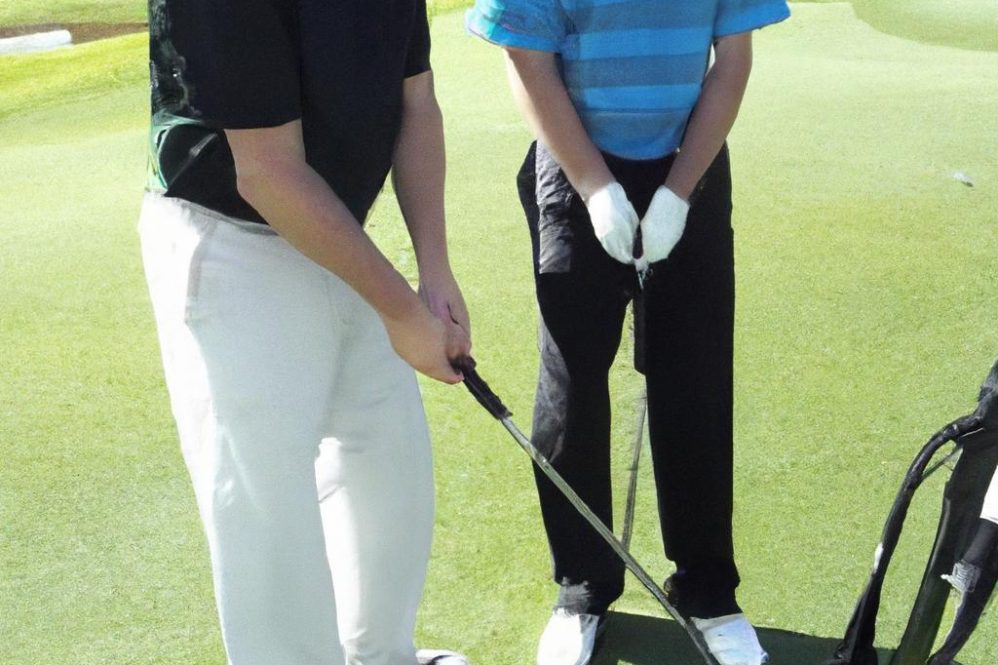
Abstract-This article presents a systematic, evidence-informed exposition of the “Perfect Harry Vardon Golf Lesson” framework, an instructional model that adapts Harry vardon’s enduring technical principles to contemporary objectives: restoring swing mechanics, refining putting performance, and optimizing driving effectiveness. Drawing on biomechanical analysis, motor learning theory, and course-management strategy, the framework synthesizes classical technique-most notably the Vardon (overlap) grip, swing plane awareness, and sequencing of body and club-with targeted drills and diagnostic protocols designed to enhance repeatability and lower scores across skill levels.Introduction-Harry Vardon’s contributions to golf technique remain a touchstone for instructors and players as they encapsulate reproducible mechanical patterns and ergonomic grip solutions that support both control and power. However, translating late-19th/early-20th-century descriptions into modern practice requires integration with current biomechanical understanding, quantifiable diagnostic measures (kinematics and kinetics), and individualized practice prescriptions.This article thus reframes Vardon’s core tenets within contemporary frameworks of stroke mechanics, putting dynamics, and driver performance, emphasizing how small, principled modifications can produce measurable gains in consistency and scoring.Scope and aims-The paper (1) articulates the biomechanical rationale for applying Vardon-derived techniques to full swing, putting, and driving; (2) proposes a stepwise assessment and corrective sequence to identify and remedy common faults; and (3) prescribes empirically grounded drills and on-course strategies that promote transfer from practice to competition. Intended for coaches, applied biomechanists, and serious players, the discussion balances theoretical rigor with practical prescription, with the ultimate objective of providing a cohesive lesson model that reduces variability, increases shot-quality, and contributes to sustained score advancement.
Biomechanical Foundations of the Harry Vardon Swing and Kinematic Sequence for Optimal Joint Coordination
Good posture and an efficient setup create the biomechanical platform from which the modern interpretation of Vardon-style mechanics arise. Begin with a balanced athletic address: spine tilt of approximately 25-30° from vertical, a knee flex of 10-20°, and weight distributed 55/45 (lead/trail) for full shots to encourage rotation rather than lateral sway. The classic Vardon grip (overlap) promotes forearm connection and consistent clubface control; use it unless hand size or comfort dictates a change. For ball position, place the ball slightly forward of center for mid-irons and progressively more forward for long irons and woods to accommodate the descending-to-ascending arc.To check setup quickly on the range, use these checkpoints:
- Feet shoulder-width with toe lines parallel to target line,
- neutral wrist angle so the clubshaft points to right hip (right-handed),
- visualize the target line and align shoulders, hips and feet accordingly,
- confirm grip pressure at a 4-6/10 intensity to preserve feel and release.
Efficient energy transfer in the Vardon-informed kinematic sequence is a proximal-to-distal cascade: pelvis rotation initiates downswing, torso follows, then the arms, and finally the clubhead. Biomechanically, you want the hips to begin rotating toward the target while the upper torso resists briefly to create a stretch in the obliques and latissimus-this stretch-shortening cycle is the engine for clubhead speed. Target rotational amplitudes are hip turn ≈ 40-50° and shoulder turn ≈ 80-100° (for stronger players), with the lead knee providing a bracing pivot rather than collapsing. To develop correct sequencing and feel:
- use the step drill (small step with lead foot on downswing) to encourage pelvis lead,
- practice the separation drill (pause at top, initiate hips only) to feel torso lag,
- employ the one-arm swings for smooth distal release and improved clubface control.
These drills help translate the kinematic chain into measurable outcomes: increased clubhead speed, improved strike consistency, and more controlled ball flight.
Impact mechanics are the practical outcome of a correct kinematic sequence and crucial to scoring. Aim for a descending blow with irons so that the low point is 1-2 inches past the ball, producing a shallow divot beginning after the ball. For longer clubs, a shallower attack angle and forward ball position produce an ascending strike. Short game and putting demand scaled kinetics: half and three-quarter swings should preserve the same proximal-to-distal order with reduced amplitude so contact remains predictable. Useful drills include:
- impact-bag work to feel a square face and compact release,
- towel-under-arms for chipping to maintain connection,
- gate drills for putting to eliminate wrist break.
On the course, when faced with firm fairways or a crosswind, lower trajectory by tightening ball position slightly back and narrowing stance to compress strikes; conversely, in wet or soft conditions, open the stance and place the ball slightly forward to increase loft and carry.
Equipment and fit influence how a Vardon-style kinematic sequence expresses itself. Shaft flex, kick point, lie angle, and grip size change the timing and the feel of release-so ensure clubs are conforming to the rules (USGA/R&A) and fitted: a lie angle that is too upright will produce hooks, too flat yields slices. For players seeking to emulate Vardon-era control with modern technology,consider a shaft that promotes a smooth load/unload (moderate torque and mid/high kick point) and keep club lengths within one-half inch of standard unless compensating for height. Adjustments for course strategy are straightforward:
- in high wind, move the ball back in stance and use lower-lofted clubs to keep the flight penetrating,
- when precision is required around hazards, employ a choked-down grip with a controlled three-quarter swing to shorten distance while maintaining face control,
- select balls with lower spin for windy links-style conditions and higher spin for soft greens to maximize stopping power.
structure practice and measure progress with clear, attainable goals that bridge biomechanics and scoring.For beginners set objectives like reducing lateral sway to <2 cm on swing video or producing a consistent divot location 1-2 inches after the ball with a 7-iron within six weeks. Intermediate and low-handicap players should track metrics such as face-angle at impact, dispersion (goal: tighten 20-30% over three months), and tempo consistency (use a metronome to train a 3:1 backswing-to-downswing ratio). Recommended practice template:
- 20 minutes of setup and sequence drills (step drill, separation drill),
- 20 minutes of impact/short game (impact bag, towel drill, putting gates),
- 20 minutes of on-course simulation focusing on shot selection and wind management.
Common faults-early arm release, over-rotation of the hips, excessive head movement-can be corrected with targeted feedback (video, launch monitor) and progressive drills.Integrate a consistent pre-shot routine, visualization, and breathing control to tie the mechanical improvements into reliable on-course performance and ultimately lower scores.

Translating the Classic Vardon Grip and Wrist Mechanics into Modern Swing Efficiency and Consistency
Begin with the classical hand placement and tension that Harry Vardon popularized: the Vardon overlap – where the little finger of the trailing (right) hand rests over the index finger of the lead (left) hand for right-handed players – provides a reliable connection between the hands while permitting necessary forearm rotation. For reproducible results, coach a grip pressure of about 4-5/10 in full swings (lighter for putting), and verify that the Vardon overlap sits so the thumbs align down the shaft, producing a neutral face at address. Setup fundamentals should include a slight shaft lean forward for irons (aim for ~5°-8° forward shaft lean at address), a ball position appropriate to the club, and a shoulder turn target of ~90° on full shots. To put these concepts into practice, use short, focused drills:
- Grip mirror check: confirm overlap and thumb alignment visually
- Pressure squeeze: hold a towel under the elbows while swinging to keep the connection
- Stationary wrist set: address, then slowly hinge wrists to the top to feel the ****
These checkpoints build a repeatable setup that links Vardon’s historical insight to modern consistency and equipment considerations (grip size and shaft profile influence feel but not the fundamental hand relationship).
Next, translate wrist mechanics into efficient energy transfer and shot-shape control.Modern efficiency emphasizes maintaining lag (the angle between the lead forearm and clubshaft during the downswing) and achieving a controlled release rather than an early flip.Aim for an initial wrist hinge of approximately 70°-90° from address to the top of the backswing on full swings, then preserve that angle as long as possible into the downswing to produce greater ball speed and consistent strike. Common faults include wrist cupping at the top (leading to an open face) and premature release (causing weak, high shots). Correct using drills such as the pump drill (pause at waist-high on the downstroke and feel the preserved angle) and the towel-under-arms drill (promotes connection and discourages flipping). For measurable goals, track ball flight and dispersion: aim to reduce side-to-side dispersion by 20% over six weeks through lag-focused reps and record clubhead speed and smash factor on a launch monitor to verify improved energy transfer.
For the short game and putting,adapt the Vardon connection to minimize excessive wrist action and promote face control. On the greens, use a lighter grip pressure of ~2-3/10 and adopt a pendulum putting stroke with the shoulders as the primary mover and the wrists quiet. When chipping or pitching, preserve a slightly firmer grip but still prioritize connection so that the hands and club move as a unit through impact; such as, a chip shot setup can use a ball back in the stance, narrow stance width (~shoulder-width minus 2-3 inches), and a shallow angle of attack that brushes the turf. Practice routines include:
- Gate drill for putter face alignment (paths set by tees)
- Clock drill for consistent distance control (putts from 3, 6, 9, 12 feet)
- Landing-zone drill for chips (aim to land 10-20 yards short of hole consistently)
Transitioning these mechanics under course conditions-such as a firm, fast green or a wet, slow green-requires adjusting stroke length and emphasis on pace rather than added hand action.
When applying the Vardon grip to the driver, modern drivers reward a connected, rotational swing that couples Vardon’s hand relationship to a wider stance and greater ground force. Use a slightly wider stance than for irons, set the ball forward (just inside the lead heel), and aim for a full shoulder turn of ~90° with a weight shift that loads the trail side to approximately 60% at the top before rotating through to impact. Equipment considerations matter: match shaft flex, length, and grip size to yoru swing kinematics so the Vardon overlap does not become uncomfortable or inhibit wrist rotation. Drills to build power while preserving control include medicine-ball rotational throws to train core sequencing and an impact-bag drill to feel forward shaft lean and solid contact. Typical mistakes are over-rotation of the hands (loss of face control) and overswinging; correct them with alignment-rod checks and a controlled three-quarter swing drill to rebuild timing.
structure practice and course management so that technical gains convert into lower scores. Create a progressive practice plan with measurable objectives: within four weeks, reduce three-shot anomalies (big misses) per round by practicing targeted 30-minute sessions that alternate technical work (lag preservation, face control) and scenario practice (wind-affected shots, tight fairway lies). Use these routine elements:
- Pre-shot routine: breath-visualize-align to reduce tension and speed variability
- On-course adjustment checklist: factor wind, firmness, and preferred bailout zones into club selection
- Performance metrics: dispersion radius under 20 yards with a given club, consistent distance control within ±3 feet on 10-foot putts
Also incorporate mental strategies: apply Vardon’s calm, intentional approach-visualize the shot shape, commit to a target, and limit technical thoughts to one key swing thought (e.g., “maintain lag”).By combining the classic Vardon overlap and wrist mechanics with modern measurement, equipment tuning, and situational play, golfers of all levels can achieve measurable improvements in consistency, scoring, and strategic course management.
Stroke Plane, Club Path, and Face Control: technical Adjustments for Repeatable Ball Striking
Establishing a reproducible relationship between address geometry and the backswing is the foundation of reliable ball striking. Begin with a repeatable setup: spine tilt of approximately 6-8° away from the target, a cozy knee flex of 10-15°, and weight distribution close to 50/50 (slightly forward on the lead foot for longer clubs). Use the Vardon grip as a reference for hand placement-overlap the lead index over the trail pinky to promote unified hand action-and make a full shoulders-only turn of roughly 85-100° on the backswing for a full 7‑iron or driver. transition phrases here: after establishing setup, align the clubshaft so that at address its angle matches the intended swing plane (visually similar to a 45° plane for most players); this alignment reduces early lifting or steepening and creates a consistent stroke plane through impact.
Next, understand how club path and clubface angle interact to determine the ball’s starting direction and curvature. At impact, ball flight equals the clubface’s orientation, while curvature results from the difference between face angle and path. For example, a club path that is 3-4° inside-out with a face closed 1-2° to that path produces a controlled draw; conversely, an outside-in path of 2-3° with an open face makes a fade. To build precision, aim for measurable tolerances: clubface control within ±2° of square at impact and club path within ±3-4° of the target line for mid-iron shots. Transitioning to practice,use an alignment stick on the ground and a visual face-target reference to train these angles progressively.
Practically, integrate stroke plane and path control through targeted drills and sequence work that mirror Harry Vardon’s emphasis on rhythm and turn. Vardon taught economy of motion and a connected turn; thus practice the following to synchronize plane and sequencing:
- Plane-trace drill: place an alignment stick along the desired plane and make slow half-swings, feeling the butt of the club follow the stick on the takeaway and downswing.
- Shallowing/pump drill: make three half swings to waist height, then a full swing, focusing on the shaft shallowing through the transition to promote an inside-path entry.
- Impact-bag/tee drill: hit soft balls into an impact bag or oversized tee target, monitoring face squareness at strike.
These drills are scalable: beginners use half-speed repetitions to ingrain movement patterns; low handicappers add variability (different clubs, shot shapes, wind simulations) to stress-test control.
Transfer these mechanics into short-game and on-course strategy with situational practice and equipment awareness. For chips and pitch shots, shorten the arc but maintain the same swing plane to preserve face control; a clock-face pendulum (3-9 o’clock for chips, 7-1 for pitches) helps repeat a stable face angle. In windy or wet conditions, favor trajectories produced by a slightly stronger face (grip down one notch) and a lower swing arc to reduce spin and drift. Additionally, incorporate course-management rules into decision-making: play the ball as it lies (Rule 4.2) and when taking relief follow Rule 16 procedures-staying within the rules while using technique to minimize hazard exposure. Transitioning from practice to play, always map a safe landing zone and choose a club that keeps the ball in play rather than forcing a narrowly placed shot.
adopt a measurable and progressive practice plan linking feel, feedback, and performance metrics: set short-term goals such as achieving face variance ≤ ±2° on 8/10 range shots and long-term targets like consistently hitting 60-70% of approach shots within a 10‑yard radius of the target at 150 yards. To troubleshoot common mistakes-casting/early release,over-rotation of the hands,or excessive lateral sway-use the setup checkpoints below and adjust with corresponding drills:
- Setup checkpoints: neutral grip,correct spine tilt,shoulders aligned to intended plane,weight distribution confirmed.
- Troubleshooting: if casting, perform the towel-under-arms drill to maintain connection; if steep, practice the shallowing drill; if face opens at impact, do mirror-face checks and slow-motion impacts.
Moreover, integrate mental routines (pre-shot visualization, tempo counts) to stabilize execution under pressure. By combining Vardon-inspired turn mechanics, precise face/path management, and situational strategy, golfers of all abilities can make measurable strides in repeatable ball striking and lower scores on the course.
Integrating Vardon Principles into Putting: Grip Pressure, Pendulum Motion, and Alignment Recommendations
Begin with a reproducible setup that emphasizes balance, eye position, and grip pressure. Drawing on Harry Vardon‘s teaching that a unified hand action and smooth rhythm underpin all short-game strokes, adopt a putting grip that feels secure without tension; aim for a grip pressure of about 3-5 on a 1-10 scale (1 = feather light, 10 = crushing). For many players the customary overlap or reverse-overlap works, but the priority is neutrality of the putter face at address. Check these setup points before every putt:
- Ball position: slightly forward of center, approximately 0-0.5 inches ahead of mid-stance for most putters.
- Eye line: eyes directly over or just inside the ball (within 0-1 inch), to help visualize the intended roll line.
- Shoulder and feet alignment: shoulders parallel to the target line, feet hip-width for stability.
- Putter loft and lie: ensure the putter has ~3-4° loft and a lie that allows the sole to sit square without toe or heel lift.
These checkpoints reduce variability and create a consistent starting geometry for the pendulum stroke advocated by Vardon-style instruction.
Next, develop the pendulum motion as a biomechanically efficient system with the shoulders as the prime movers. Instruct the body to move as a single unit: shoulders initiate and control the stroke, the forearms move with the shoulders, and the wrists remain quiet (ideally less than 5° of hinging through impact). For measurable feedback, use a mirror or video: the putter shaft should remain approximately parallel to the forearms through the stroke and the backstroke/follow-through lengths should be matched within ±10%. To refine proprioception, practice with these technical cues:
- Pivot point: think of the sternum as the pivot – the shoulders rotate the same distance on backstroke and follow-through.
- Face control: feel the putter face square at impact; any wrist flip produces face rotation that causes miss-hits.
- Tempo target: a 3:1 rhythm (three-part backswing buildup to a one-part acceleration through impact) works for many players when learning speed control.
This mechanical clarity produces a true roll and better distance control across green speeds.
Alignment and green reading should follow as an integrated process: first align the putter face to the intended line, then square the feet and shoulders to the same line. Use intermediate aiming points (a blade of grass,a leaf,a small divot) 3-5 feet in front of the ball to confirm the intended line,especially on breaking putts. When applying Vardon-style on-course decision-making, read the fall line from back-to-front and consider green speed (Stimp): on a fast green (Stimp ≥ 10) reduce stroke length by 15-25% relative to a slow green. keep these alignment and read protocols in mind:
- Confirm putter face square first, then body alignment.
- Use the grain and slope together-grain toward the hole reduces break; grain away increases it.
- On severe slopes, plan for the apex (highest part of the break) rather than aiming directly at the cup.
These steps convert green-reading into actionable alignment that aligns with Vardon’s emphasis on precise aim and rhythm.
Practice with measurable drills that translate Vardon principles into repeatable performance. Begin with a short, high-frequency routine for beginners and progress to pressure and distance-control tasks for low handicappers. Example drills:
- Vardon Pendulum Mirror Drill: stroke 30 putts with a mirror under the ball line to ensure shoulder rotation and minimal wrist motion; goal = 0 wobble in shaft-to-forearm angle on video for 20/30 strokes.
- Clock Drill (distance control): place balls at 3, 6, 9, 12 feet around the hole; make 10 consecutive 3-footers and stop 16 of 20 balls within 2 feet from the hole from 20 feet.
- Gate/Path Drill: create a narrow gate to train a straight back-straight-through path or an intended arc; measure consistency by the number of clean passes out of 20.
Progress indicators: 50 consecutive three-footers as a beginner benchmark, and for advanced players, stop-rate metrics (e.g., 15/20 from 20 ft within 2 ft) before moving to pressure-simulated practice such as competitive matches or a timed routine.
integrate course strategy, equipment choices, and mental routines to turn technical improvements into lower scores. When managing the course, choose the conservative line on severe contoured greens to limit three-putt risk-lag to a 3-6 foot circle rather than always hunting the cup when slope is extreme. Equipment considerations include putter length (fit to allow the spine angle that keeps eyes over the ball), grip thickness (thicker grips reduce wrist action for players with excessive wrist movement), and loft adjustments (verify the stated 3-4° loft is producing a clean first-roll). Common faults and corrections:
- Too tight a grip: relax to 3-5/10 and repeat short warm-up strokes to restore feel.
- Wrist breakdown: use the mirror pendulum drill to re-establish shoulder dominance.
- Poor alignment: practice the intermediate-aim method and mark an alignment line on the putter head for feedback.
Couple these technical fixes with pre-putt routines (visualize the putt, rehearse one pendulum stroke, commit) to maintain composure under pressure. By combining Vardon-inspired grip economy, pendulum mechanics, and systematic alignment, golfers at all levels can create measurable gains in consistency and scoring.
Driver Application of the Vardon Swing with Emphasis on Launch Conditions, Spin Management, and Controlled Aggression
Begin with a repeatable setup that translates Harry Vardon’s timeless principles to the driver: adopt the Vardon (overlap) grip to promote unified forearm rotation, position the ball approximately 1-1.5 ball widths inside the left heel (for a right-handed golfer), and widen the stance to shoulder width + 2-4 inches to create a stable base for rotational power. Maintain a slight spine tilt away from the target (~3-5°) so the low point moves forward and an upward attack angle is achievable; this facilitates launch without excessive spin. Checkpoints at address should include: weight ~55% on the back foot for coil, clubface square to the target, and a relaxed wrist hinge.Use the following setup checklist during practice to ensure consistency:
- Grip: Vardon overlap, hands neutral, pressure 5/10.
- Ball position: 1-1.5 ball widths inside left heel.
- Stance width: shoulder width + 2-4 in.; knees slightly flexed.
- Spine tilt: 3-5° away from target to encourage positive attack angle.
Transitioning from setup into swing mechanics, preserve Vardon’s emphasis on rotation rather than arm-dominant casting. Start the backswing with a smooth shoulder turn of ~80-90° while keeping the left arm comfortably extended to maintain width; at the top, the club should be on plane with the shaft pointing slightly down the target line. On the downswing,initiate with a lower-body rotation and a gradual release that preserves lag until just before impact-this maximizes clubhead speed while controlling face orientation. For measurable progress, use these drill cues: pause at the top for 1-2 seconds to check wrist hinge, perform 10 half-swings focusing on maintaining width, and then progress to full swings with an emphasis on a shallow, inside-to-square arc. Aim for a stable tempo (such as, a backswing:downswing ratio near 3:1 in feel) and monitor smash factor; a target of ≥1.45 indicates efficient energy transfer for most recreational players.
Launch and spin are inseparable and must be managed by both technique and equipment. Ideally, driver launch for most players should fall into a window of ~10-14° with spin between 1,800-2,600 rpm depending on swing speed: lower-spin targets are appropriate for high swing speeds (>105 mph), whereas moderate spin helps players with slower speeds achieve carry. to influence these numbers, emphasize an upward angle of attack (AOA) of +2 to +4° for many players; this increases launch while tending to reduce spin when combined with appropriate dynamic loft. Equipment adjustments include altering static loft, selecting a shaft with appropriate flex and kick point, and choosing a driver head with forward or rearward CG to manage spin. Remember USGA equipment parameters (e.g., driver COR/face limits and 460 cc typical head size) when making changes to ensure legal conformity.
Controlled aggression on the course requires marrying the aforementioned mechanics with situational strategy. When the fairways are firm and downhill run is available, opt for lower-spin settings and a slightly shallower AOA to promote roll; conversely, into the wind or over hazards, choose a higher launch and accept slightly more spin to hold greens or fairways.use Vardon’s lesson insight of playing to a precise target quadrant rather than the green itself: pick a landing zone that offers the best angle into the next shot. Shot-shaping drills to build controlled aggression include practicing a 75% pre-shot commitment to a draw or fade with intermediate targets at 100, 150, and 200 yards, and rehearsing a visualized trajectory under three distinct wind conditions. These strategic decisions should be rehearsed on the range with specific yardage goals and target lines so decision-making under pressure is automatic.
implement structured, measurable practice routines and common-correction protocols that serve all skill levels. progressive practice might follow this sequence: beginners focus 2-3 weeks on setup and basic upward AOA using slow-motion swings and alignment-stick feedback; intermediate players add launch-monitor sessions to dial loft/AOA and pursue target spin values; low-handicappers refine shot-shaping and launch windows while testing driver head and shaft combinations. Use these practical drills and goals:
- Impact-bag drill: 10-20 reps to feel forward compression and reduce flipping.
- Launch monitor protocol: 30 swings per session, record carry, total distance, launch angle, spin, and smash, and set incremental goals (e.g., reduce spin by 200-500 rpm; increase smash to ≥1.45).
- Tempo/lag drill: metronome or count-based swings emphasizing 3:1 rhythm, 5 sets of 8 reps.
- Course-scenario practice: simulated wind days, target quadrants, and penal angles with 20 purposeful tee shots each.
Address common mistakes-over-rolling the wrists (cast), excessive lateral sway, and inconsistent ball position-by returning to the setup checklist and using the impact-bag and pause-at-top drills. Integrate mental routines such as pre-shot visualization and controlled arousal techniques to convert technical gains into scoring improvement.In sum, by applying Vardon’s rotational fundamentals to modern launch and spin science, and by practicing measured, scenario-based drills, players at every level can develop the controlled aggression needed to increase driver efficiency, reduce dispersion, and lower scores.
Course Strategy and Shot Selection Informed by Vardon mechanics for Risk Management and Scoring opportunities
Accomplished course strategy begins with a disciplined pre-shot routine that integrates swing mechanics with on-course decision making. First, assess the lie, slope, wind, and pin location, then quantify your options: know your full-swing carry yardage with each club to within ±5 yards and your short-game distance windows (e.g.,40-70 yd pitch,20-40 yd chip) to within ±3 yards. Adopt the Vardon principle of a consistent grip pressure (approximately 4-5/10 on a relaxed scale) using the overlapping grip to promote repeatable wrist hinge and release; this will provide predictable ball flight when selecting shots under pressure. As a step-by-step framework, (1) pick the target and margin for error, (2) select the club to the conservative side when the penalty for miss is high, (3) rehearse a single, confident swing thought tied to mechanics (for example, maintain a 90° shoulder turn on the backswing for a full shot), and (4) commit-execute. This structured process reduces indecision and translates vardon-era fundamentals into modern risk management and scoring chance selection.
shot shaping is a mechanical and visual exercise of aligning face-to-path relationships with purposeful setup changes. To play a draw, use a slightly stronger overlap grip (rotate hands 2-4° stronger relative to neutral), close the stance by 2-3 degrees, and swing along a more inside-out path while allowing the hands to release through impact; conversely, produce a controlled fade with a slightly weaker grip, an open stance, and a marginally outside-in swing path. Focus on the face-to-path relationship: if the clubface is closed relative to the path, the ball will start left and curve right (draw) for a right-handed golfer. Practice this progression of drills to ingrain the changes:
- Gate drill: place two tees slightly wider than the clubhead to encourage the desired path.
- Half-swing feel drill: make 7-8 half swings focusing on forearm rotation and release timing to shape trajectory.
- Impact tape feedback: use impact tape to monitor where on the face you’re striking and adjust face alignment accordingly.
These drills scale from beginners (slow, deliberate swings) to low handicappers (targeted face-path work at full speed).
Course management is about creating scoring opportunities while minimizing large numbers. Use the Vardon insight of rhythm and controlled release to manage trajectory and spin: when a hazard guards the green,lower your trajectory by reducing wrist hinge and shortening the backswing to produce a 3-6° flatter attack angle and less spin,which helps the ball run into the green. Conversely, when the hole is tucked behind a false front or steep slope, increase loft and lag more wrist hinge to create higher spin and softer landings. In real-course scenarios-such as a par-4 with water left and OB right-choose the conservative play that leaves you an uphill approach of 100-120 yards, a distance statistically associated with higher GIR rates.Setup checkpoints to ensure repeatability:
- Alignment: clubface aimed at intended start line; body parallel to that line.
- Ball position: move forward 1-2 inches for higher trajectory,back for lower.
- Weight distribution: 60/40 front foot at impact for compressed strikes on long approaches.
These checkpoints tie equipment knowledge (loft, ball spin rates) to practical decisions on the course.
The short game is where Vardon-style control and scoring converge: dialed grip, precise setup, and an understanding of loft vs. bounce produce consistent scoring around the greens. For chips and pitches, employ a narrow stance, open clubface for higher flop shots, and maintain a forward shaft lean of approximately 5-8° for crisp contact on bump-and-run shots. putting benefits from a lighter grip pressure and a pendulum stroke; aim for a backstroke length proportional to the intended distance-roughly a 1:1 ratio of backstroke to expected rollout for putts inside 20 feet. Practice routines that address both mechanics and feel include:
- Distance ladder: place tees at 5, 10, 20, 30 ft and putt to each focusing on backstroke control.
- Clockwork chip drill: chip to a circle around the hole from 4 positions to improve landing-zone consistency.
- Two-club pitch drill: use a 7-iron and a 9-iron to learn trajectory differences and how to pick a club for various green angles.
These exercises are accessible for beginners and provide measurable progress markers for advanced players.
a disciplined practice plan and mental framework convert technique into lower scores. set measurable goals such as improving GIR by 10% over 12 weeks or reducing three-putts by 50% in two months; track outcomes and adjust practice emphasis based on data. Troubleshooting common faults-overactive hands leading to slices, sway in the transition causing fat shots, inconsistent alignment-requires specific corrections: reduce grip pressure, rehearse hip lead drills, and use alignment sticks on the range. Consider equipment choices too: a mid-launch, mid-spin ball for players needing forgiveness, or a slightly stronger lofted hybrid as a fairway-saver on windy days. Incorporate mental skills like pre-shot visualization and committed single-thought cues to manage nerves and maintain tempo, a principle endorsed by Vardon’s emphasis on rhythm. Lastly, know the Rules of Golf for strategic play-take free relief from abnormal course conditions, play preferred lies only when allowed, and use the embedded ball rule appropriately-to ensure your strategy and shot selection remain both effective and compliant.
Targeted Practice Protocols and Progressive Drills to Enhance Swing Consistency, Short Game Precision, and Putting Reliability
Begin with a systematic approach to the full swing that separates body motion from club control: establish a reproducible setup, rehearse a one-piece takeaway, and develop a consistent transition to impact. Start each session with a checklist of setup fundamentals-neutral spine angle, ball position (for mid-irons place the ball 1 ball left of center; for driver place it 1-2 balls inside the left heel), and a relaxed Vardon overlap grip if it suits the player (Harry Vardon’s historical grip emphasizes control through connection between the hands). Progress drills in three stages-mobility and address, single-plane tempo, and impact-focused strikes-using measurable targets: first, achieve a repeatable tempo of approximately 3:1 backswing to downswing on the metronome drill; second, make 50 solid strikes from 7-iron at 150 yards keeping dispersion within a 15-yard circle; third, record consistent impact characteristics such as shaft lean of 10°-20° at impact for irons. Troubleshooting checkpoints include a straightened left arm, maintained spine tilt through impact, and weight shift to the lead side; if early extension occurs, use the wall drill (trail hip touch) to reestablish posture before returning to full swings.
Refine short game precision by segmenting pitch, chip, and bunker techniques and applying progressive, outcome-based practice. For chips and pitches, control trajectory with a combination of loft and swing length: use wedges with the correct bounce (higher bounce for soft or fluffy lies, lower bounce for tight lies) and work on a hands-ahead impact where the leading wrist is slightly bowed to present the leading edge. Practice routine options should include:
- a 20-ball ladder drill from 15-60 yards where the goal is to land each shot on predetermined landing zones and have 70% of shots within a 10‑yard circle;
- a closed-eye feel drill (beginner pleasant) focusing on the length of wrist hinge and release rather than clubhead speed;
- a progressive bunker sequence starting with simple explosion shots to clear bunkers, then advancing to partial-face open shots to control spin and run-out, with a target of consistently leaving the ball within 6-10 feet of a chosen flag for practice holes.
Use Vardon-style rhythm cues-smooth acceleration and balance at finish-to connect touch and technique, and include common corrections: if shots chunk, move the ball slightly back and shallow the attack angle; if shots thin, increase forward shaft lean or slightly close the clubface to increase descent angle.
Develop putting reliability through technical consistency and deliberate green-reading strategy. Start by calibrating stroke length to green speed using a stimp-meter benchmark (typical range Stimp 8-12 ft for most public courses): establish a 3‑putt reduction goal such as halving three-putts in 30 rounds by practicing lag putting to a tee placed 6-30 feet from the hole. Employ a two-stage drill sequence-first, a gate drill to reinforce face square at impact (use alignment sticks forming a narrow corridor) and second, a random-distance drill to simulate on-course variability and improve distance control. For green reading, combine traditional Vardon observation (walk the line to assess subtle breaks and wind) with contemporary methods such as AimPoint feel charts; always factor in slope percentages and wind direction into the aim point. Key rules note: on the putting green you may repair ball marks and remove loose impediments, but avoid testing the line by rolling a ball to simulate the stroke in tournament play.
Integrate course management and situational practice to translate range improvement into lower scores. Create on-course scenarios during practice rounds: for example, play six holes aiming to hit the left-center of the fairway with driver on par 4s to avoid a water hazard right, or deliberately lay up to a safe yardage that leaves a comfortable wedge into the green. Use progressive pressure drills such as match-play stakes (one point per fairway hit, two per greens in regulation) to simulate competitive stress and sharpen decision-making. Equipment considerations are important here: confirm that driver loft and shaft flex match swing speed (e.g., players with 85-95 mph driver speed often benefit from a regular flex shaft with loft in the 9°-11° range), and ensure wedge gapping in 4-6° increments to maintain predictable distance control. embed a pre-shot routine modeled on Vardon’s deliberate planning-visualize the shot, pick an intermediate target, and execute-which reduces indecision and improves shot selection.
Measure progress with objective data collection, tailor drills to skill level, and maintain mental resilience through structured practice. Beginners should aim for simple, repeatable metrics: consistency in setup, 30 minutes of short game per session, and 10 minutes of putting drills focused on distance control. Intermediate and low-handicap players should track dispersion zones, greens-in-regulation percentage, and average putting strokes per round, then use targeted interventions such as swing-speed training or specialty wedge work to close gaps.Offer multiple learning methods-visual demonstrations, hands-on feedback, and quantified video analysis-to accommodate different learners and physical abilities. Address common mistakes with corrective exercises (e.g., kettlebell or medicine-ball rotational drills for poor hip turn; towel under arms to prevent arm separation), and always adjust for course conditions such as firm fairways or fast greens by practicing lower-lofted approach shots and softer landing areas. In sum, a disciplined, progressive protocol that integrates Vardon-style fundamentals, measured goals, and situational course strategy produces predictable improvement in swing consistency, short game precision, and putting reliability.
Measuring Improvement through Objective Metrics, Video Biomechanics, and Periodized Training Plans for Lower Scores
First, begin with a standardized baseline assessment that blends objective metrics with simple scorecard analytics to create a measurable starting point. Use a launch monitor (e.g., TrackMan/flightscope) and high-speed video (minimum 240 fps) to record at least 20 swings and a set of 10 tracked shots with each club to determine clubhead speed, ball speed, launch angle, spin rate, attack angle and impact face angle (degrees). Concurrently, compile on-course stats over a minimum of 6-10 rounds: greens in regulation (GIR), average putts per round, fairways hit, average proximity to the hole on approach shots, and penalty strokes. For setup fundamentals, verify grip (consider the Vardon grip for most players), stance width (approximately shoulder width for full shots, narrower for wedges), ball position (e.g., driver slightly forward of left heel for right‑handed golfers) and spine tilt (roughly 20-30° at address). These combined data provide the quantitative benchmarks needed to define realistic goals such as +4-6 mph clubhead speed in 8-12 weeks or a 0.5-1.0 stroke reduction in average putts per round.
Next, implement video biomechanics to isolate mechanical faults and validate corrective interventions.Use both down-the-line and face-on cameras to measure shoulder turn, pelvic rotation, and sequencing; aim for a shoulder turn of 80-100° in advanced players and hip rotation of about 40-50° to generate efficient torque while maintaining balance. Apply simple marker-based analysis (ankles,hips,shoulders,wrists,clubhead) with tools like Kinovea or Dartfish to quantify positions: top-of-backswing club shaft plane,lead wrist angle at impact (slight radial deviation or bow),and spine tilt through impact. Then prescribe targeted corrective drills and checkpoints to address common faults such as early extension, casting, or an over‑the‑top move:
- Impact bag drill – promotes proper shaft lean and compressive impact (short sets of 10 reps; focus on a shaft lean of approximately 10-20° forward for irons).
- Gate drill – fixes path issues by creating a narrow gate at mid‑down swing to reduce an over‑the‑top move.
- Top‑hold pause – trains sequencing and tempo by holding the top for 1-2 seconds then accelerating through impact.
For beginners, emphasize feel and tempo over technical minutiae; for low handicappers, refine micro‑metrics (face angle at impact within ±1-2°) to reduce dispersion and scoring volatility.
Moreover, integrate a periodized training plan that coordinates physical conditioning, technical practice, and on‑course rehearsal across mesocycles. Structure phases into: a preparatory (mobility and movement quality, 4 weeks), a strength/hypertrophy phase (6-8 weeks; compound lifts such as deadlifts and split squats at 3-5 sets of 5-8 reps), a power/power‑to‑speed phase (4-6 weeks; medicine‑ball rotational throws, plyometric lateral bounds, Olympic pulling derivatives at 3-5 sets of 3-6 reps), and a peak/competition phase (2-4 weeks; maintainance strength, sharpened tempo work, on‑course simulations). Combine technical work with physical sessions in a weekly microcycle-example:
- 2 technical range sessions (one long game, one short game)
- 2 gym sessions (one strength, one power)
- 1 on‑course strategic play session
- active recovery and mobility work (yoga or targeted stretching)
Set measurable interim targets such as a 2-4% increase in ball speed, a decrease in average proximity to the hole by 3-5 yards, or cutting three‑putts by 50% over a 12‑week block. harry vardon’s emphasis on rhythm and regular practice cadence supports planning: schedule deliberate, short focused practices rather than long, unfocused sessions.
Consequently, transfer improvements to course management and shot‑shaping through data‑driven strategy and Vardon‑inspired feel work. Use dispersion maps and carry-distance consistency to construct yardage bands (e.g., 7-iron 150-155 yds carry with a typical deviation of ±10 yds) and decide when to play aggressively or conservatively. Teach situational play: on narrow fairways favor a three‑quarter hybrid at a target landing zone instead of driver; when greens are firm and fast, lower trajectory shots with reduced spin (more forward shaft lean) can hold better. reinforce short game choices by practicing:
- clock drill around the green for consistent contact and distance control
- lag putting to a two‑putt circle (e.g., leaving 4-6 feet for the second putt)
- high‑to‑low trajectory wedge shots for soft holds on soggy greens
Also cover rules and etiquette that affect strategy (e.g., how to take free relief from a cart path under Rule 16, when to mark and lift a ball on the green under Rule 14.1).Common mistakes-such as over‑clubbing into hazards, neglecting wind and slope, or abandoning a pre‑shot routine-are corrected by rehearsing choice shot plans and target selection under simulated pressure.
establish a closed feedback loop to measure improvement and adapt the program using objective thresholds and psychological tools.Reassess every 4-6 weeks with the same launch monitor and video protocol and compare key variables: clubhead speed, smash factor, attack angle, impact face angle, and scoring metrics like strokes gained categories. Define success criteria numerically (for example, gaining +0.5 strokes gained/round in approach play or reducing average putts by 0.4-0.8 strokes per round) and use video side‑by‑side comparisons to visually reinforce technical gains.Incorporate mental training-pre‑shot routine, breathing cadence (e.g., 4‑4 box breathing pre‑shot), and visualization-as Harry Vardon consistently advocated calm tempo as central to execution. For troubleshooting and diverse learner needs, offer multiple practice modalities:
- kinesthetic: slow‑motion impact bag and feel drills
- visual: overlay video comparisons with outline traces
- auditory: metronome tempo training (e.g., backswing-to-downswing ratio near 3:1)
Conclude each cycle with clear next steps-adjust training emphases, update practice drills, and set new measurable goals-so progress is objective, repeatable, and focused on lowering scores.
Q&A
Note: the supplied web search results did not return material related to Harry Vardon or golf instruction; the following Q&A is an original, academically styled synthesis of historical Vardon principles and contemporary biomechanics, motor learning, and course-management practice.
Q1: Who was Harry Vardon and why is his method relevant to modern instruction?
A1: Harry Vardon (1870-1937) was a seminal figure in golf history, best known for popularizing the overlapping (Vardon) grip and for a repeatable swing that dominated early 20th‑century competition. His method is relevant because it emphasizes consistent grip, body rotation, and a one‑plane aesthetic that map well to modern biomechanical principles (stability, rotary power, kinematic sequencing) and to contemporary aims of reproducibility and efficiency in both long and short game play.
Q2: What are the core technical principles of a “Vardon” approach that should be retained?
A2: Core principles to retain are: (1) a neutral, overlapping grip to promote unified hand action and face control; (2) a balanced athletic setup with spine tilt and joint flexion that facilitate rotation; (3) a rotational, one‑plane swing path with the club and arms working as a connected unit; (4) consistent tempo and rhythm that reduce variability; and (5) an impact‑first mentality where body rotation delivers the hands to the ball, minimizing extraneous wrist manipulation.Q3: How do contemporary biomechanics refine the Vardon approach for the modern full swing?
A3: Biomechanical refinements include: optimizing ground reaction forces (using leg drive and posterior chain to generate torque), emphasizing a proximal‑to‑distal sequencing (hips, torso, shoulders, arms, hands) to create lag and efficient energy transfer, maintaining a consistent radius between shoulder and hands to stabilize swing arc, and promoting dynamic balance through controlled center‑of‑mass shift rather than exaggerated lateral sway. These refinements convert Vardon’s repeatability into measurable power and accuracy gains.
Q4: What specific setup and takeaway cues support a Vardon‑based full swing?
A4: Setup cues: feet shoulder‑width (wider for drivers), slight knee flex, neutral spine angle with modest forward tilt from the hips, weight distributed ~50/50, and hands ahead of the ball at address. Takeaway cues: initiate with shoulders turning the club away on a one‑piece (arms+shoulders) unit, maintain the length of the arms, and keep the clubhead outside the hands on the takeaway to preserve the swing plane.
Q5: How should transition and downswing be executed to maximize consistency?
A5: Transition should be initiated by a subtle weight shift and early lower‑body rotation (leading with hips), creating a Sequence: ground force → hip rotation → torso → shoulders → arms → hands. Emphasize retention of wrist hinge (lag) until just before impact to optimize clubhead speed while ensuring the clubface is square via body rotation rather than wrist manipulation.
Q6: How can the Vardon principles be adapted to putting mechanics?
A6: Transferable Vardon principles to putting include: (1) a stable, repeatable grip promoting feel and face control (overlapping grip may be used); (2) an axis‑based stroke (shoulder or chest pivot) to minimize wrist breakdown; (3) a consistent setup with eyes over or slightly inside the line and neutral spine tilt; and (4) a tempo‑based stroke where backswing and forward stroke maintain a predictable ratio to control distance. The goal is a pendulum‑like motion with minimal hand/ wrist action.
Q7: What distinguishing drills improve Vardon‑based putting?
A7: Targeted drills: (1) Gate drill-use two tees to ensure putter path and face control; (2) Pendulum drill-stroke with arms only (no wrist) while keeping shoulders turning; (3) Clock‑face drill-vary backswing lengths to calibrate distance control; (4) Pressure‑rep drill-make a run of consecutive short putts to simulate scoring demands. practice these with performance metrics (make percentage, distance error).
Q8: How should the Vardon approach be modified for driving?
A8: For driving: adopt a wider stance and slightly shallower spine tilt to allow higher launch; increase shoulder turn (within individual mobility limits) and emphasize ground force and hip clearance to produce power; maintain the same grip principles and swing plane but allow for a longer arc and fuller release. Prioritize connection (arms to torso) and sequencing over brute force to preserve dispersion control.
Q9: What drills build reliable driving using Vardon principles?
A9: Effective drills: (1) Step‑and‑drive drill-take a short stride to promote hip rotation and timing; (2) Medicine‑ball rotational throws-develop explosive torso rotation and sequencing; (3) Impact‑bag or short‑stick drills-train forward shaft lean and impact feeling; (4) Tempo drill (metronome 2:1-3:1 backswing:downswing) to stabilize rhythm. Use launch monitor data (ball speed, launch angle, spin, dispersion) to quantify improvements.
Q10: How should practice be structured to convert Vardon‑style mechanics into lower scores?
A10: Use deliberate practice principles: set specific, measurable goals (e.g.,reduce putts per round by 0.5), employ block practice for technical acquisition and random/variable practice for transfer to play, prioritize high‑leverage situations (short game and tee shots), and incorporate pressure simulations. Allocate time based on strokes‑gained analysis: more time where the golfer loses strokes. Regularly measure performance with objective metrics (dispersion patterns, putting make rates, strokes‑gained).
Q11: What course‑management strategies align with the Vardon philosophy?
A11: Vardon‑aligned course strategy emphasizes playability and position: choose clubs and lines that favor repeatable swings and high percentage outcomes, avoid forcing low‑probability shots, and play to the golfer’s strengths (e.g., if driver dispersion is high, favor a 3‑wood or iron off tee). On approach shots,aim to leave preferred yardages for the short game. Adopt conservative risk‑reward decisions that reduce big numbers and increase scoring consistency.
Q12: What are common faults when applying Vardon concepts and how are they corrected?
A12: Common faults: (1) Grip tension too tight → relax hands and use a lighter hold; (2) Over‑use of wrists → reinforce body rotation drills and arm‑shoulder connection (towel under armpit); (3) Lateral sway → practice wall drill or alignment‑stick foot‑pivot to encourage rotation; (4) Early release → lag drills and impact bag work. Corrections should be evidence‑based: use video, launch data, and simple biofeedback (pressure mats, alignment rods) to verify change.
Q13: How should coaches individualize the Vardon lesson for different bodies and skill levels?
A13: Individualization requires assessment of mobility, strength, motor learning preferences, and performance data. For limited mobility, reduce required shoulder turn and increase compensatory hip action; for juniors or weaker players, modify grip and arc length to prioritize contact and strike; for advanced players, emphasize fine motor control, tempo refinement, and strategic shot patterns. Use progressive overload-small technical changes with measurable outcomes-to avoid performance regressions.
Q14: What objective measures should a player or coach use to evaluate progress?
A14: Key metrics: shot dispersion (carry and total distance variance), clubhead and ball speed (for power), smash factor (efficiency), launch angle and spin (for optimization), putting make percentage by distance, short‑game proximity to hole, and strokes‑gained components. Supplement these with subjective but structured assessments: pre‑shot routine consistency, perceived confidence under pressure, and repeatable tempo ratios.
Q15: Are there limitations or risks in applying a historical method like Vardon’s to modern golf?
A15: Limitations include the risk of literal replication without accounting for modern equipment, athletic advancement, and course conditions. Blind adherence to historical aesthetics can neglect individual biomechanics and performance data. Risk mitigation involves integrating Vardon principles selectively-preserving grip, rotation, and tempo-while using contemporary strength/mobility screening, equipment fitting, and data‑driven feedback.
Q16: Practical summary: what are three immediate actions a player should take after reading this article?
A16: (1) Assess and standardize the grip (test the overlapping/Vardon grip for face control and comfort); (2) Implement two daily drills-one for full swing (towel under armpit for connection and rotation) and one for putting (gate drill for face path)-each 10-15 minutes with measurable goals; (3) Conduct a strokes‑gained audit over three 18‑hole sessions to prioritize practice focus (driver, approach, or putting) and structure subsequent training accordingly.
Concluding note: The “Vardon” framework offers historically validated, motor‑control friendly principles-grip, rotation, tempo, and repeatability-that, when integrated with biomechanics, evidence‑based practice methods, and course strategy, can produce durable improvements in swing mechanics, putting, driving, and ultimately scoring.
Final Thoughts
the systematic reappraisal of Harry Vardon’s technique-framed through contemporary biomechanical principles, targeted drills, and strategic on-course application-demonstrates that classic mechanics retain practical value for modern golfers seeking greater consistency across swing, putting, and driving. vardon’s emphasis on grip control, coordinated body rotation, and a repeatable wrist set provides an empirically coherent template when integrated with current understandings of kinematic sequencing, clubface control, and ground-reaction force management. When these mechanical elements are taught alongside purpose-built drills that isolate tempo, spine angle preservation, and impact alignment, measurable improvements in dispersion, launch consistency, and stroke repeatability are attainable.
From a coaching and practice-design viewpoint, the most effective interventions are those that: (1) operationalize Vardon-era concepts into reproducible motor patterns; (2) apply progressive overload and variability to accelerate transfer to competitive contexts; and (3) quantify outcomes using objective metrics (e.g., shot dispersion, launch-angle consistency, stroke path variability).Short, focused drills for putting (gate drills, tempo metronome work), mid-range swing sequence drills (slow-motion sequence with impact tape feedback), and driving (impact-location and launch-angle drills) should be embedded within periodized practice cycles that include deliberate feedback and on-course simulation.
it is significant to situate the pursuit of technical refinement within realistic psychological expectations. While the term “perfect” conveys an aspirational end-state (Dictionary.com), psychological research on perfectionism cautions against equating technical progress with flawless performance; adaptive goals oriented toward process and measurable improvement yield more lasting gains (SimplyPsychology.org). Future work should continue to evaluate Vardon-derived protocols with randomized training studies and objective biomechanical measurement to refine their efficacy across skill levels. Practitioners who combine historically informed technique with modern biomechanics, structured practice, and judicious mental conditioning will be best positioned to convert insight into lower scores and more reliable performance.