
Consistent putting is a critical determinant of scoring performance in golf, yet reliable execution under competitive conditions remains elusive for many players. Variability in stroke mechanics-rooted in grip configuration, stance geometry, and alignment strategy-interacts wiht sensorimotor control to produce differences in launch direction, speed control, and holing probability. Recent syntheses of biomechanical and experimental research have begun to quantify how specific task constraints and motor control strategies affect putter kinematics and outcome variability, offering a foundation for translating laboratory findings into practical training protocols.
This article synthesizes empirical evidence on grip, stance, and alignment to identify the mechanisms that most strongly influence putting consistency and to derive evidence-based protocols for reducing stroke variability. By integrating kinematic analyses, sensorimotor studies, and applied training interventions, the review quantifies effect sizes associated with common technique variations, evaluates measurement approaches for assessing consistency, and proposes reproducible practice frameworks aimed at improving competitive performance. The goal is to bridge theory and practice: providing coaches, clinicians, and players with actionable recommendations grounded in experimental data while highlighting gaps for future research.
Quantifying Putting Variability: Grip Mechanics Pressure Distribution and Recommended Adjustments
Contemporary assessment of putting variability begins by operationalizing what it means to quantify stroke mechanics: to convert observed grip behaviour into reproducible numerical descriptors. In practice this requires synchronized measurement of vertical and lateral grip forces,pressure-centroid location,and temporal force profiles across the backswing and follow-through. Instrumentation typically includes pressure-sensing grip inserts, force plates under the putter head, and high-resolution inertial sensors on the wrists; together these tools permit the translation of qualitative feel into statistically analyzable data suitable for intervention design.
Key metrics for describing variability are compact and directly interpretable. Representative measurements include:
- Mean grip force (N): central tendency across strokes.
- Force coefficient of variation (%): normalized variability, useful for between-player comparisons.
- Pressure-centroid shift (mm): lateral migration between set-up and impact.
- Temporal asymmetry (ms): timing differences between left- and right-hand peak forces.
Translating quantified profiles into actionable changes requires simple mapping rules. The table below provides concise adjustments tied to common pressure-distribution patterns observed in competitive samples.
| Observed Pattern | Representative Metric | Recommended Adjustment |
|---|---|---|
| Excessive overall grip force | Mean force > 35 N | Reduce grip by 10-15% using lighter grip or relaxed forearm drills |
| Right-shifted pressure centroid | Centroid > 8 mm R of centre | Neutralize with left-hand lead or 2° open wrist at address |
| High temporal asymmetry | Peak timing diff > 30 ms | Tempo drills with metronome; synchronized two-handed practice |
| High coefficient of variation | CV > 12% | Repeatable pre-shot routine + biofeedback sessions |
Implementation should follow an iterative, data-driven protocol: (1) baseline acquisition of 30-50 strokes to establish stable metrics; (2) targeted intervention using the table mapping; (3) immediate biofeedback (visual or haptic) to accelerate motor learning; (4) reassessment after 3-7 days of practice. Emphasize measurable progression-reduce coefficient of variation by ≥2-3 percentage points before altering technique again-and prioritize ecological validity by testing on different green speeds. consistent request of these quantified thresholds converts subjective coaching cues into verifiable changes that predict improved repeatability under competitive pressure.

Stance Alignment and Foot Pelvis Positioning Protocols to Stabilize the Stroke
Contemporary definitions frame stance as the bodily posture and foot placement assumed at address; in sport science a stance is operationalized as the relative position of the feet, lower limbs and pelvis that establishes the initial conditions for a motor skill. Empirical work on postural control indicates that small systematic differences in base-of-support and pelvic orientation produce measurable changes in upper‑body kinematics during short‑range strokes. For putting this means that a repeatable, evidence‑driven setup-rather than idiosyncratic feel alone-reduces variance in the clubhead arc and launch conditions.
The following setup parameters have robust biomechanical rationale and are recommended as a baseline protocol. Adhere to them, then individualize within the stated ranges:
- Foot width: 0.8-1.2 × shoulder width (≈20-30 cm for most adult players), creating a stable medial‑lateral base.
- Toe orientation: toes pointing within ±10° of target line; avoid excessive open or closed feet that induce pelvic rotation.
- Pelvic tilt & height: neutral to slight anterior tilt (0-5°) with hips flexed to allow a stable lumbar posture; no exaggerated posterior tuck.
- Weight distribution: 48-55% on lead foot to preserve a consistent swing plane without encouraging lateral sway.
- Knee and ankle: micro‑flexion at knees and ankle dorsiflexion to promote passive postural stiffness and reduce hip pivoting.
Translate these parameters into measurable targets using simple metrics:
| Metric | Target Range | Primary Purpose |
|---|---|---|
| Feet width | 0.8-1.2× shoulder | Medial‑lateral stability |
| Pelvic tilt | 0-5° anterior | Maintain lumbar alignment |
| Weight split | 48-55% lead | Minimize lateral sway |
| Toe angle | ±10° to line | Reduce induced rotation |
These concise targets enable objective coaching feedback and quantitative tracking of setup consistency across practice sessions.
Integrate the setup into practice through progressive drills that emphasize proprioceptive and visual feedback:
- Mirror/video check: immediate visual confirmation of pelvis and shoulder square to line.
- Alignment‑rod constraint: rods at heel and toe to enforce toe angle and foot width.
- Tandem & narrow‑base repetitions: short sets to train compensatory control and improve pelvic stiffness.
- Pelvic brace drill: light abdominal engagement while stroking to reduce hip rotation without restricting arm path.
Quantify stroke variability (e.g., standard deviation of contact point and face angle) before and after protocol adoption; reductions in these metrics validate the effectiveness of the stance and pelvis positioning strategy.
Putter Face Control and Path Consistency Evidence and Drills for Immediate Transfer
Contemporary biomechanical and ball-roll research converges on a central premise: the controllability of the putter face at impact is the dominant predictor of directional outcome, while the path of the stroke modulates the degree to which face errors manifest. High‑speed kinematic analyses show that even sub‑degree changes in face angle at impact produce measurable lateral launch deviations and altered initial ball roll. Consequently, interventions that reduce face‑angle variability - through grip refinement, sensory feedback, or constrained motion patterns – yield disproportionate improvements in shot dispersion relative to equivalent reductions in gross stroke-path variability. In practice, this implies prioritizing face control metrics during assessment and training rather than treating path consistency as an equivalent first-order variable.
Quantifying transferable consistency requires precise metrics and brief, frequent testing. Useable measures include standard deviation of impact face angle, percentage of putts within a ±1° face window, and stroke-path arc variance. Empirical coaching protocols demonstrate that reducing face‑angle SD by ~30-50% across short training blocks correlates with meaningful decreases in missed‑line putts on flat tests. Importantly, the interaction between face and path is multiplicative: a consistent face with a slightly varied neutral path produces far fewer misses than a perfect path with variable face control. thus, training design should emphasize drills and feedback that isolate and stabilize face orientation at the moment of impact.
Practice drills for immediate transfer emphasize constrained feedback, perceptual cues, and ecological variability to accelerate retention and on‑course application. Recommended, evidence‑aligned exercises include:
- Impact‑tape feedback – short sets of 10-15 strokes focused on producing centered contact and repeatable tape marks to reinforce face orientation.
- Gate‑alignment drill – narrow gates set just wider than the putter head to constrain the face-path relationship and bias a square face at impact.
- Face‑angle mirror work - slow, pre‑stroke head‑on inspection with a mirror or camera to habituate a consistent visual reference for face alignment.
- Randomized distance transfer – alternating short and medium putts with tempo cues (metronome) to promote ecological learning and immediate transfer under variability.
Below is a compact training matrix to operationalize the drills above; use brief, frequent blocks (e.g., 6-8 minutes, 2-3× day) and alternate blocked and random practice for consolidation.
| Drill | Target | Practice Cue |
|---|---|---|
| Impact‑tape | Face centering | “Tape to tape” |
| Gate‑alignment | face path coupling | “Through the gate” |
| Mirror work | Visual alignment | “Square at sight” |
| Random transfer | Robustness | “Tempo then read” |
Tempo and Stroke Length Calibration Using Objective Metrics and Progressive training
Objective calibration begins by operationalizing the stroke into measurable parameters: **tempo (beats per minute, BPM)**, **backswing length (percentage of a defined full-stroke arc)**, **impact-duration / dwell**, and **path variance**. These metrics are reliably captured with low-cost metronome/tempo apps, inertial measurement units (IMUs) mounted on the putter shaft, pressure-mat sensors under the feet, and ball-tracking systems for roll-out. For empirical fidelity, collect a minimum of 30 putts at each target distance to estimate central tendency and dispersion (median BPM, interquartile range of backswing length), then use those values to define the individual’s baseline motor signature for putting.
Calibration follows a progressive,data-driven protocol that transitions from constraint-driven repetition to variability-rich transfer.Core stages include:
- Tempo Lock: entrain the stroke to the baseline BPM with a metronome until intra-session BPM SD reaches a target threshold.
- Distance Integration: maintain tempo while varying backswing length to match precomputed distance-to-stroke mappings.
- Retention & Transfer: introduce contextual variability (green speed, visual perturbations) and monitor whether the tempo/backswing relationship persists.
Practical target values are individualized, but the following schema provides an evidence-aligned starting grid for progressive practice and immediate feedback calibration. Use the table entries as operational set-points and allow ±1.5 BPM and ±8-12% backswing tolerance windows when measuring success.
| Distance | Target BPM | Backswing (% of full) |
|---|---|---|
| 4-7 ft | 56-60 | 20-30% |
| 10-18 ft | 50-54 | 35-50% |
| 20-35 ft | 44-50 | 55-80% |
For programmatic monitoring adopt quantitative success criteria and scheduled recalibration: maintain **BPM SD < 1.5**, **backswing coefficient of variation < 10%**, and **goal-directed roll-out error within ±8%** of target distance. Reassess baselines every 2-4 weeks or after biomechanical changes (grip, putter length, surface speeds). Importantly, use these objective metrics to guide incremental overload and variability in training-metrics inform practice progression, while perceptual and situational drills ensure transfer to competitive conditions.
Green Reading and Visual Alignment Strategies Informed by Perceptual Research
Perceptual research demonstrates that triumphant green interpretation rests on integrating multiple visual cues rather than relying on a single hallmark. Observers gauge subtle gradients through relative contrasts (horizon lines, cup-to-heel brightness differences), texture anisotropy (grass grain direction), and environmental context (moisture, light angle). Contemporary green-reading resources emphasize these factors as complementary data streams: **slope gradients**, **grain orientation**, and **ambient lighting** each alter optic flow and luminance contrast, thereby changing perceived curvature of the putt. Understanding these sensory contributions reduces systematic bias in line selection and allows more reliable translation of visual input into motor plans.
Visual alignment strategies should therefore create a stable reference frame that minimizes perceptual ambiguity. adopt a two-stage visual fix: first, a global appraisal from behind the ball to register large-scale contours; second, a close-up fixation at the intended aim point that anchors the putting stroke. Concurrently, fix posture so the eyes maintain a consistent height and orientation relative to the target – this stabilizes binocular cues and parallax information. Empirical practice supports pairing these ocular strategies with **purposeful body alignment**: small changes in foot and shoulder orientation systematically shift visual interpretation, so intentionally locking stance reduces intra-putt variability.
Operationalizing these insights yields a compact, evidence-based pre-putt routine and a short reference table for swift decisions. Follow a concise checklist that integrates perceptual and somatosensory inputs:
- Survey the green from multiple vantage points to collect global slope cues.
- Anchor an intermediate aim point that matches the perceived curvature.
- Calibrate with your feet-stand along the fall line to sense grade and grain direction.
- Lock posture and eye height to preserve the visual frame during the stroke.
| Visual Cue | Perceptual Rationale |
|---|---|
| Horizon and large contours | Provides global slope reference for initial read |
| Grass grain | Alters ball roll and perceived speed/direction |
| Foot angle/stance | Somatosensory input refines slope estimation |
Training should target the visual-motor mapping that converts read into stroke execution. Controlled drills-aimpoint repetition on graduated slopes, vision-restriction drills to test reliance on tactile cues, and video-feedback sessions to align perceived versus actual break-promote **visual-motor calibration** and reduce cognitive load under pressure. Periodic measurement of read accuracy (e.g., percent of putts struck to chosen aimpoint versus resulting curvature) provides objective feedback for iterative adjustment. By systematizing perceptual acquisition,alignment stabilization,and motor calibration,practitioners can increase putting consistency in both practice and competitive settings.
Designing Practice protocols and Feedback Systems for Retention Under Competitive Pressure
Foundational principles for structuring practice emphasize controlled variability, contextual interference, and specificity of transfer. Empirical work indicates that retention under pressure is maximized when the practice environment systematically varies surface features (green speed, slope, and distance) while preserving the invariant parameters of the adapted motor program (grip, stance, and putter-face alignment). incorporate quantified targets for stroke variability (e.g., backstroke length ±X cm, impact face angle ±Y°) so that adaptation is measured, not assumed. These constraints-based prescriptions enable repeatable motor solutions while preventing overfitting to a single practice template.
The practical architecture of sessions should balance massed deliberate repetitions with distributed, high-context variability sets and staged pressure exposures. A representative microcycle is shown below to illustrate translation of principles into daily practice. Use progressive overload of cognitive and emotional stressors (time limits, simulated gallery, score penalties) rather than abrupt jumps, and schedule deliberate recovery to consolidate motor memory.
| Session | Primary Focus | Feedback Modality |
|---|---|---|
| Warm-up (15 min) | Sensorimotor calibration: speed & alignment | Immediate KR (distance), video snapshot |
| Variable Sets (30 min) | Adaptation to speed/slope variability | Faded KR, self-estimation |
| Pressure Blocks (15-20 min) | Decision-making under result | Delayed KR, biofeedback removed |
Design feedback systems to progressively shift control from external augmented cues to internalized error-detection. Effective configurations include:
- Bandwidth feedback – give KR only when error exceeds a predefined tolerance, promoting self-correction for small deviations;
- Faded schedule – high-frequency feedback in acquisition, tapering to sparse feedback for consolidation;
- Multimodal augmentation – initially combine video, auditory metronome, and haptic cues, then remove nonessential channels to test robustness.
This staged withdrawal is critical for retention and for preserving performance when cognitive load increases during competition.
Retention assessment must be explicit, quantitative, and ecologically valid: use retention tests after 48-72 hours and transfer tests under simulated competitive constraints (score pressure, crowd noise, shot-clock). Key outcome metrics are stroke-to-stroke variability (standard deviation of backstroke length and face angle at impact), putt-read success rates (percentage within expected makes), and resilience indices (performance decrement under stress). Employ repeated-measures analyses to detect meaningful change and define practical thresholds (e.g., ≤10% variability reduction or ≤5% drop in make-rate under pressure) that trigger protocol adjustments. Schedule reassessment at 1 week, 4 weeks, and post-tournament to ensure long-term retention and to guide periodized maintenance strategies.
Assessment Framework and Performance benchmarks for Long Term Consistency Development
the assessment architecture is built on three convergent measurement principles: **construct validity**, **reliability**, and **ecological validity**, following contemporary assessment standards (see APA Guidelines for Psychological Assessment and Evaluation). Instruments and protocols are selected to minimize systematic bias and maximize signal detection of stroke variability across grip, stance, and alignment domains. Emphasis is placed on repeated-measures designs,inter-instrument calibration,and clear operational definitions (e.g., stroke path variability in mm, face-angle deviation in degrees, tempo stability in ms) so that longitudinal change reflects learning rather than measurement noise.
Benchmarks are specified as operational targets and decision thresholds that translate sensor outputs into practical training priorities. The following compact reference table provides exemplar benchmarks for an intermediate-to-advanced development pathway; values should be individualized and adjusted by season and player age.
| Metric | Benchmark (Target) | Action threshold |
|---|---|---|
| Stroke path variability | ≤ 6 mm (3-m putts) | > 8 mm → refine stroke geometry |
| Face-angle deviation | ≤ 1.5° at impact | > 2.5° → equipment/alignment review |
| Tempo consistency (backswing/downswing) | 1.5 ± 0.15 ratio | σ > 0.25 → tempo drills |
| Make-rate (3-6 m) | > 45% | < 35% → targeted practice |
Implementation of the framework uses a standardized assessment battery administered on a scheduled cadence (baseline, 6-week, 12-week, quarterly). Key measurable components include:
- Kinematic metrics – optical/inertial tracking for stroke path and tempo;
- Postural/alignment indices – pressure-mat and radar-derived center-of-mass data;
- Outcome metrics - make-rate, green-read errors, and distance control;
- Psychophysiological markers – pre-putt arousal and routine consistency when needed.
Each element is rated for reliability and ecological relevance before inclusion in the individualized profile.
Data synthesis employs mixed-effects trend models and control-chart logic to distinguish true performance shifts from short-term variability. Progression criteria are explicit: a metric must meet benchmark targets across at least two consecutive assessment points and demonstrate an effect size commensurate with measurement error reduction. Practically, this yields a graded intervention pathway:
- Maintain – metrics stable within benchmarks;
- Tune – targeted drills when a single metric crosses an action threshold;
- Reset - biomechanical refit or technique redesign when multiple domains deviate persistently.
Regular recalibration against normative and intra-subject baselines ensures that long-term consistency development is evidence-based, measurable, and adaptive.
Q&A
Q: What is the central thesis of “Putting Method: Evidence-Based Secrets for Consistency”?
A: The central thesis is that putting performance can be measurably improved by systematically reducing stroke variability through protocols grounded in motor‑learning principles and empirical putting research. The guide synthesizes evidence on grip, stance, alignment, posture, stroke mechanics and feedback to quantify reliable sources of inconsistency and prescribe practice and on‑course routines that increase repeatability and outcome predictability.
Q: Which biomechanical and perceptual variables are most strongly associated with putting consistency?
A: Empirical and instructional sources converge on several high‑impact variables: putter face angle at impact, putter path, impact point on the face (strike location), stroke tempo and rhythm, body and head stability (posture), and alignment of the eyes and shoulders to the intended line. Speed control (ball velocity exiting the face) is also critical because distance errors amplify breaking‑line misreads into missed putts.These elements are emphasized in contemporary putting instruction and motor‑learning literature as primary contributors to variability [1,2].
Q: How does motor‑learning research inform practice design for putting?
A: Motor‑learning research recommends practice that balances skill acquisition and transfer: begin with structured,high‑feedback,blocked practice to establish a stable movement pattern,then transition to variable and randomized practice to enhance adaptability and transfer to on‑course situations. Augmented feedback (video, launch monitor numbers) should be reduced progressively to avoid dependence. Goal‑oriented, deliberate practice with measurable targets (e.g., face angle tolerance, tempo ranges, speed windows) facilitates retention and transfer [1].
Q: how should stroke variability be quantified for an individual golfer?
A: Quantification requires repeatable metrics and measurement tools. Useful metrics include standard deviation of putter face angle at impact, path deviation, impact point dispersion, stroke tempo ratio (backswing:follow‑through), and exit velocity variability. Tools range from simple video and marker‑based analysis to launch monitors and putting‑specific sensors that record face angle and path. Statistical measures (mean, SD, coefficient of variation) allow objective thresholds for acceptable repeatability.
Q: What measurement tools are recommended and at what level of complexity?
A: Recommended tiers:
– Low cost: high‑frame‑rate smartphone video (for face angle and path) and simple drills to record miss patterns.
- Mid level: pressure mats and inertial sensors that provide metrics on balance and stroke tempo.
- High level: launch monitors and putting‑specific systems that measure face angle, path, impact location, launch speed, and ball spin. Choice depends on resources and the desired precision of feedback.
Q: What specific protocols does the guide prescribe to improve putting reliability?
A: The guide prescribes:
– Baseline assessment: quantify variability across the key metrics over a representative set of putts.
– Target setting: set evidence‑based tolerances (e.g., face angle SD, speed variability) informed by baseline and skill level.
– phased practice: acquisition (blocked,high feedback),stabilization (reduced feedback,increased variability),and transfer (randomized distance/line,on‑grass simulation).
– Routine and alignment protocols: standardized pre‑shot routine, anchor points for stance and grip, alignment verification drills.
– Outcome monitoring: periodic reassessment to verify improvements in metric variability and match‑play outcomes.
Q: Which drills best transfer improvements from practice to on‑course putting?
A: Effective drills reflect on‑course constraints and emphasize both directional control and speed: gate drills for face angle/path consistency, distance ladders for speed control, alignment checks using a string or mirror for repeatable setup, and random distance/target drills that simulate course variability.These align with principles of representative practice and help bridge lab improvements to on‑course performance [2,3].
Q: How importent is grip and stance relative to stroke mechanics?
A: Grip and stance provide the initial constraints for the stroke; they influence wrist involvement, shoulder motion, and head position, which in turn affect face angle and path. While stroke mechanics (face control, tempo) are direct determinants of ball outcome, consistent grip and stance reduce upstream variability and make desired stroke mechanics more reproducible [2].
Q: What role does alignment and posture play in consistent putting?
A: Alignment and posture determine the reference frame for the stroke and the visual relationship to the target line. Consistent posture (spine angle, eye position over the ball) supports stable head and eye positioning, improving line perception and reducing compensatory movements that alter face angle and path. Instructional sources emphasize alignment as a foundational element of a repeatable setup [2].
Q: How should a clinician or coach set performance thresholds for a golfer?
A: Set thresholds using the individual’s baseline variability, literature norms were available, and the relationship between metric variability and outcome likelihood. For example, if data show that a face‑angle SD above a certain value correlates with markedly lower make percentages at given distances, use that as a target. Thresholds should be realistic, progressively tightened, and validated by improved on‑course results or simulated make percentages.
Q: What is the recommended progression from practice green to competitive play?
A: Progression: technical refinement on flat surfaces (establish mechanics), variable practice on graded slopes and different speeds, simulated pressure drills (competitive sets with scoring), and finally on‑course integration focused on reading and routine under play conditions. Emphasize transfer by practicing with the same equipment, ball types, and environmental constraints expected in competition.
Q: How should feedback be managed to avoid performer dependence?
A: Use a faded feedback schedule: provide frequent, precise feedback during early acquisition, then systematically reduce frequency and specificity. Encourage intrinsic feedback (ball roll and feel) and self‑assessment. When using technology, limit continuous metrics to periodic checkpoints; favor summary feedback (averages, trends) rather than trial‑by‑trial data in later stages.
Q: What common misconceptions about putting consistency does the guide address?
A: Common misconceptions corrected include: (1) power of gimmicks-special grips or training aids rarely replace fundamentals of face control and speed; (2) repetition without variability-mindless repetition can produce brittle skills that fail under different conditions; (3) overreliance on alignment aids-alignment must be paired with sound mechanics and speed control to produce makes.
Q: What measurable outcomes should be used to assess advancement?
A: Use a combination of process and outcome measures: reductions in SD of face angle/path/tempo (process) and increases in make percentage from representative distances or decreases in average putts per round (outcome).Combine laboratory metrics with on‑green performance statistics for a holistic assessment.
Q: Are there known limitations or gaps in the evidence base?
A: Yes. much instructional advice is extrapolated from laboratory studies or coach experience rather than large randomized trials in ecological settings. Individual differences (visual perception, putting yips, biomechanical idiosyncrasies) limit universal prescriptions. More longitudinal, transfer‑focused studies are needed to quantify how specific variability reductions translate into tournament‑level performance.Q: How should practitioners individualize the method?
A: Individualize by: (1) conducting a detailed baseline assessment, (2) identifying the dominant source(s) of variability for that golfer, (3) selecting drills and feedback modes that address those sources, and (4) setting progression rates and thresholds that respect the golfer’s learning curve and competitive schedule.
Q: How do you integrate reading greens and decision making into an evidence‑based putting program?
A: Integrate perceptual and decision components through representative practice: practice reads under similar visual and time constraints,train speed decisions with objective exit‑velocity targets,and incorporate routine elements that standardize pre‑putt information gathering. Decision training should prioritize repeatable processes (e.g., read, commit, execute) to reduce indecision‑driven variability.
Q: What practical recommendations does the guide give for coaches working within time constraints?
A: Prioritize: (1) a short baseline assessment (30-50 putts) to identify dominant errors; (2) one or two high‑impact interventions (e.g., tempo training, face‑angle gating); (3) drills that simultaneously address multiple variables (alignment + speed); and (4) a simple monitoring plan (weekly metrics and outcome tracking) to maintain progress with minimal time investment.
Q: What are the expected timelines for measurable improvement?
A: Timelines vary with initial skill level and training fidelity. Novices can show meaningful reductions in variability and performance gains in weeks with focused practice. Intermediate and advanced players may require months of disciplined,variable practice and competition exposure to consolidate small but meaningful reductions in variability that affect scoring.
Q: Where can readers find additional instructional and research resources?
A: Readers should consult contemporary instructional syntheses and motor‑learning reviews for putting, including coach resources that integrate PGA instruction with research findings [1,2]. Practical drill libraries and distance control protocols are widely available in instructional outlets and should be paired with peer‑reviewed motor‑learning literature to guide practice structure [1,3,4].
References (selective)
– Instructional and motor‑learning syntheses: sources summarizing PGA instruction and motor learning principles for putting [1].
– Technique and posture resources: contemporary putting technique explanations emphasizing posture, stroke, and strike mechanics [2].
– Practical drill/strategy compilations: applied putting tips linking alignment and speed practice to outcomes [3,4].
If you would like,I can convert these Q&A items into a formatted FAQ for publication,add figures or metric templates for baseline assessment,or produce a sample 8‑week practice plan tailored to a specific handicap level.
this review has synthesized contemporary empirical work on grip, stance, and alignment to characterize the principal sources of putting-stroke variability and to translate those findings into practicable protocols. The evidence indicates that minimizing unnecessary degrees of freedom in setup and stroke mechanics-through standardized grip positioning, consistent body and eye alignment, and a repeatable pendulum-like stroke-reduces intra-player variability and improves short-term outcome measures (e.g., face angle at impact, launch consistency, and putt-to-putt dispersion). quantification of variability, rather than reliance on anecdote or intuition, permits targeted intervention and objective tracking of progress.
For practitioners and coaches, the immediate implication is to adopt assessment-driven training: establish baseline metrics for an individual’s stroke, prioritize interventions that demonstrably reduce variability, and use objective feedback (video, launch/face-angle sensors, or structured drills) to confirm fidelity to the prescribed protocol. For players, disciplined rehearsal of the core setup and stroke elements, coupled with regular measurement of outcome variability, is likely to yield greater reliability under pressure than frequent changes to technique.Training programs should emphasize simple, measurable cues and progressive overload of task constraints to promote transfer to on-course performance.while current findings support a consistency-focused approach, further work is needed to refine individualization strategies, explore long-term retention and transfer, and validate low-cost measurement tools in ecologically valid settings. Bridging laboratory quantification with on-course efficacy remains a priority for future research. In the interim, clinicians, coaches, and players who integrate evidence-based assessment, clear protocol prescription, and objective feedback are best positioned to improve putting reliability and convert mechanical consistency into lower scores.
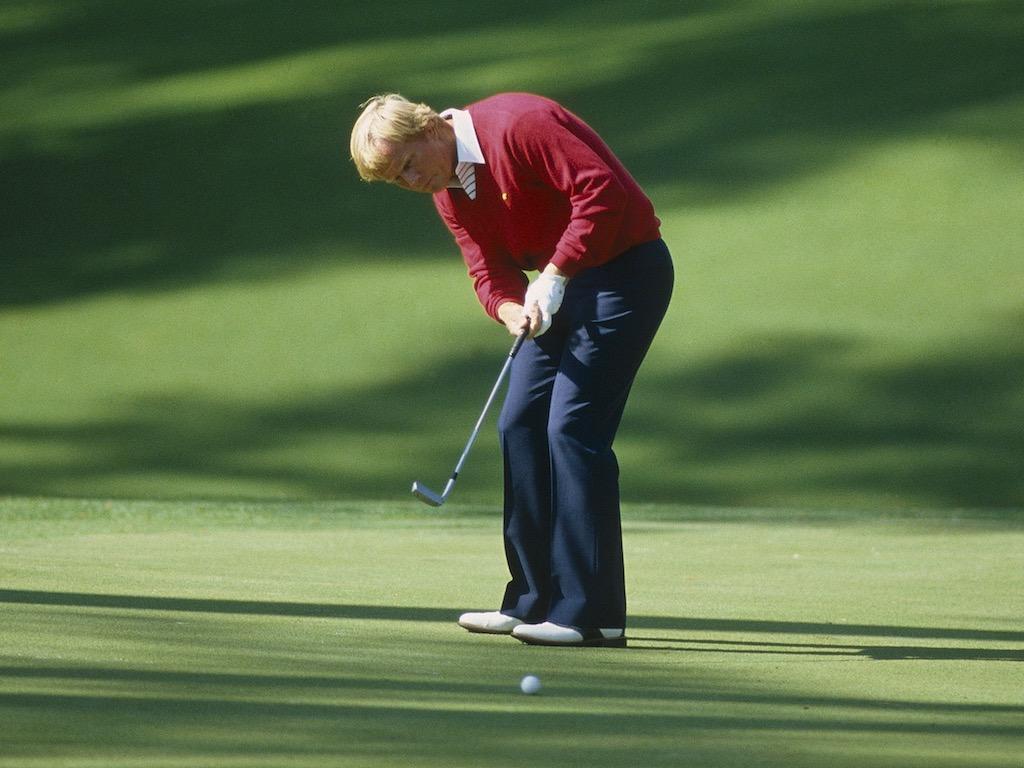
Putting Method: Evidence-Based Secrets for Consistency
Why an evidence-based putting method works
Putting is the single biggest scorer’s edge in golf.An evidence-based putting method combines biomechanics, motor-learning science, and simple on-course routines to deliver reliable speed and face control. Instead of chasing gimmicks, use proven principles-consistent setup, a repeatable stroke, effective green reading, and practice that reinforces transfer to pressure situations-to sink more putts and reduce three-putts.
Fundamentals: Setup, grip and alignment
Grip & pressure
- Use a comfortable grip that keeps wrists quiet and the putter working like a pendulum. Common options include the reverse overlap, claw, or a light forward press. The exact grip matters less than low,even grip pressure-aim for the pressure of holding a tube of toothpaste without squeezing it out.
- Research in motor learning suggests that relaxed muscle tension reduces small corrective movements and improves consistency. Keep hands and forearms soft; let the shoulders drive the stroke.
Stance, posture & eye position
- Feet roughly shoulder-width, slightly open for some golfers; weight balanced on the balls of the feet.
- Bend from the hips with a slightly flexed knee-this supports a natural shoulder hinge.
- Bring your eyes directly over or just inside the ball’s line. Studies show consistent visual reference points improve alignment and aim.
Alignment checklist
- Putter face square to target at address (use a mirror or alignment stick in practice).
- Shoulders, hips and feet parallel to the target line.
Stroke mechanics: Create a repeatable pendulum
Consistent putting strokes are characterized by a mostly shoulder-driven arc with minimal wrist breakdown. The putter should move like a pendulum-smooth backswing, controlled acceleration through impact, and a balanced finish.
Key mechanics to train
- Shoulder rocking: initiate and power the stroke with the shoulders, not the wrists.
- Minimal wrist action: wrists act as stabilizers, not drivers.
- Square face through impact: focus on where the face is at impact,not just where it starts.
- Tempo & rhythm: consistent backswing-to-follow-through ratio improves distance control. Try a 1:1 or 2:1 tempo that feels repeatable.
Impact & face control: the most important moment
Most misses are caused by face angle and speed error at impact. Train drills that emphasize striking the middle of the face and keeping the putter square at impact.
- impact tape drills: reveal where you hit the face and force you to adjust setup.
- Gate drill: set two tees slightly wider than the putter head to prevent face rotation and encourage a straight path.
Distance control (lag putting): practice for fewer three-putts
Speed control separates good putters from great ones. Effective lag putting reduces three-putts and builds confidence for short putts.
Evidence-based practice principles
- Variable practice beats repetitive single-distance practice for transfer: practice a range of distances (3-30 ft) in random order.
- External focus: cue the ball’s intended roll or target rather than thinking about body movements-this promotes automaticity.
- Reduced feedback during practice: get occasional feedback rather than constant correction so your nervous system learns to self-regulate.
Green reading & visualization
Reading the green is partly art and partly method.Use a systematic approach (slope, grain, speed) and combine it with visualization to lock in the start line and pace.
- Walk the line and pick several visual markers: low point of the break,grain direction,and how the green slopes in the intended line.
- Use AimPoint or similar systems as training tools; translate their measures into feel on the practice green.
- Visualize the ball’s path before addressing: research on the “quiet eye” shows that a calm, focused visual fixation improves accuracy under pressure.
Motor learning: Practice smarter, not harder
Apply proven motor-learning strategies to your putting practice so improvements carry to the course.
Practical practice rules
- Short, focused sessions (15-30 minutes) with high-quality repetitions are better than long mindless practice.
- Block then random: warm up with blocked reps on a distance to groove mechanics, then switch to random, game-like practice for transfer.
- Simulate pressure: use money drills, playing for points, or add consequences for missed putts to teach performance under stress.
- Track results: record make percentage, distance control and lag proximity over time to measure progress.
High-value drills & training plan
Use drills that target alignment, face control, tempo and distance control.Below is a compact drill table you can plug into a weekly routine.
| drill | Purpose | How to do it |
|---|---|---|
| Gate Drill | Face path & impact | Two tees outside the putter; stroke without hitting tees. 3 sets x 10 |
| Ladder (Distance) Drill | Speed control | Putts from 3, 6, 9, 12 ft aiming to stop within 3 ft.Randomize order. |
| clock Drill | Pressure short putts | 8 balls around hole at 3 ft. Make 8 before moving on. Repeat 3x. |
| Eyes-over-ball Check | Setup consistency | Use mirror to ensure eyes over ball. 2 minutes daily. |
Equipment, fitting & tech that matter
Putter type and length should support your natural stance and stroke. While head shape and alignment aids are personal preference, proper fitting improves consistency.
- putter length and lie: choose a length that keeps your eyes over the ball and allows shoulders to drive the stroke without wrist breakdown.
- Weighting and head design: a mallet may help stability; a blade may suit players who prefer feel-test both in fitting sessions.
- Technology: use a launch monitor or putting analysis system to check face angle at impact, path and tempo metrics. Use data to guide focused practice, not to chase tiny numbers.
Tracking progress: stats that reveal where to focus
- Strokes Gained: Putting (SG:P) - a key performance metric to see net impact of your putting changes.
- make percentage from 3-6 ft and 6-10 ft – tracks short-game reliability.
- Average lag distance (from 20-40 ft) - shows advancement in distance control and reduces three-putts.
- face impact location consistency - use impact tape or tech to monitor center hits.
Mental routine & confidence-building
Confidence and focus come from two places: a repeatable pre-putt routine and practice that replicates pressure. keep your routine short and consistent so it becomes an automatic trigger for performance.
- Pre-putt routine template: read the green → pick a target point → visualize path → practice stroke in the air → execute with a single trigger.
- Breathing: slow, diaphragmatic breaths before the stroke reduce tension and narrow attention to the task.
- self-talk: use short, positive cues (“smooth”, “roll it by”) that direct focus externally to the ball’s intended roll.
Case study: From inconsistent to confident putting (example)
A mid-handicap player tracked their putting for six weeks. By switching to a shoulder-driven stroke, lowering grip pressure and using variable-distance practice, their make percentage from 3-10 ft rose from 48% to 66% and three-putts dropped 40%. the change combined technical adjustment, disciplined practice, and a short, repeatable pre-putt routine-showing how evidence-based methods transfer quickly when applied consistently.
Benefits & practical tips – quick reference
- Benefit: More two-putts and fewer three-putts; practical tip: spend 10 minutes a day on ladder drills.
- Benefit: Better short-putt confidence; practical tip: use the clock drill under simulated pressure.
- Benefit: Faster learning and retention; practical tip: include random-distance reps and reduce feedback frequency.
- Benefit: Measurable improvement; practical tip: track key metrics weekly and adjust practice focus accordingly.
Weekly putting practice template (example)
- Day 1 - Warm-up 10 min; Gate & Clock drills (20 min); 10 pressure putts.
- Day 3 - Ladder drill (20 min) variable distances; 5 minutes alignment checks; 10 competitive putts.
- Day 5 - Green-reading practice: visualize and commit to lines; mixed-distance random reps (30 min).
- Day 7 – On-course putting session: play 9 holes focusing only on putter; track strokes gained.
Use these evidence-based secrets-consistent setup, pendulum stroke, intentional practice, and a calm pre-putt routine-to build repeatable putting that translates to lower scores. Practice with purpose, measure progress, and prioritize transfer to pressure situations for fastest results.