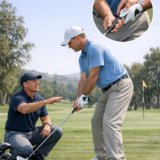
Lee TrevinoS competitive record and long-lasting impact on the modern game provide a powerful blueprint for golfers and coaches who want to tightly connect swing technique with real scoring results.Rather than being a collection of quirky habits, Trevino’s motion off the tee, his putting action, and his shot-planning reflect a deeply integrated use of biomechanics, skill acquisition, and course-management theory.His career demonstrates how a swing that looks unconventional can still deliver world-class accuracy, trajectory control, and scoring consistency when it is built on repeatable movement patterns and clear decision-making rules.
Viewed thru today’s analytical tools, Trevino’s game reveals an advanced blend of body mechanics and performance strategy. This article reinterprets his approach through modern biomechanical research and detailed observation of his tournament play. Particular attention is given to the defining kinematic elements of his full swing, the streamlined efficiency of his putting stroke, and the logic behind his driving patterns and shot selection in high-pressure situations. These components are translated into practical training concepts-such as optimized joint sequencing, precise face‑to‑path control, and repeatable perceptual-cognitive routines-so that dedicated golfers and instructors can adapt Trevino-style principles in contemporary practice environments.
The goal is not to copy Trevino’s distinctive look, but to extract the core ideas that made his technique so durable: efficient energy transfer between body and club, stable impact conditions from a wide range of lies and wind directions, and a strategic preference for high‑percentage shot patterns. By connecting these “secrets” to modern evidence-based coaching, golfers can develop clear pathways toward cleaner impact, more consistent ball flight, and lower scores under tournament-level pressure.
Biomechanical Foundations of Lee Trevino’s unique Swing Technique
At the heart of Trevino’s trademark motion is a set of biomechanics that emphasize open alignment, a braced lower body, and a reliable left‑to‑right ball flight. Instead of the conventional square setup, he routinely aligned his body slightly left of his intended target-often 10-20 yards with a full iron and even more with the driver-while keeping the clubface pointed much closer to the actual target. This produced a built‑in fade pattern that nearly eliminated the fear of a double‑cross and held up when the pressure peaked. For many players, a useful adaptation is to experiment with a moderately open stance in the feet, hips, and shoulders, while holding the clubface to no more than about 2-4 degrees open relative to the target line.
To train this geometry on the practice tee, lay two alignment sticks on the ground: one along your toe line aimed left of the target, and a second along the ball line pointing directly at the target. Rehearse swings while feeling the lead hip resisting sideways drift and the trail shoulder working down and through the strike rather than spinning around. This alignment and motion pattern tightens up club path and impact orientation, allowing golfers at every level to keep the ball in play on narrow fairways and to control curvature when the wind is swirling.
Trevino’s action also highlights how ground reaction forces, rotational torso movement, and arm structure can be blended to maintain both distance and precision. He preferred a relatively short, compact backswing with the lead arm rarely reaching parallel to the ground, limiting excess wrist hinge and keeping the club in front of his chest. from the top, his downswing featured a steady head, firm lead leg, and powerful torso rotation, using the ground primarily for stability rather than dramatic vertical jumps. Recreational players can borrow these ideas by monitoring three key positions:
- Setup: Soft knee flex, weight biased 55-60% toward the lead foot with irons, ball slightly forward of center for a standard mid‑iron, and a neutral to slightly weaker lead‑hand grip to support a gentle fade.
- top of swing: Lead arm stopping no farther than parallel to the ground, trail elbow staying within about a fist’s width of the ribcage, and minimal lifting of the hands above the shoulder plane.
- Impact: Lead hip rotated toward the target, chest partially open (around 20-30 degrees), hands fractionally ahead of the ball with irons, and the clubface just a touch open to the swing path.
During practice, hit 10-15 mid‑iron shots at roughly 70% effort, rating success by weather the ball begins slightly left of the target and falls back with a soft fade. Advanced players can refine this on a launch monitor by chasing a club path 1-3 degrees left with a face 0-2 degrees right of that path, while newer golfers should simply focus on solid contact and a predictable starting direction.
These full-swing biomechanics carried seamlessly into Trevino’s short game and overall course strategy. Around the greens he often relied on the same fade‑based geometry, setting up with a slightly open stance and modestly open clubface so the wedge’s bounce could glide through grass or sand. He kept wrist action minimal and drove the motion with a rotating pivot and steady chest, which simplified distance and trajectory control. To adopt similar habits, try three focused short‑game drills:
- Landing-spot drill: Lay a small towel 2-3 paces onto the green and play 20 chips, using a waist‑high backswing and chest‑turning‑through finish, tracking how many balls land on the towel.
- Wind and lie adjustment: In a left‑to‑right breeze, exaggerate the Trevino fade setup-stance more open, ball a hair farther back, and slightly firmer grip-to keep the face stable. From heavy rough, select more loft and open the face a fraction more, but retain a quiet lower body and assertive pivot so the club keeps accelerating.
- strategic dispersion drill: On the range, pick a narrow “fairway” target and hit a 10‑ball set, committing to a Trevino‑style fade on every swing. The goal is 7 of 10 balls finishing in the same safe corridor (starting at the left edge and fading toward the center or right half), ingraining a game plan that favors one shape and effectively takes one side of the course out of play.
By absorbing Trevino’s foundations-open alignment, controlled fade, compact backswing, and a firmly anchored lower body-golfers can construct a swing and short‑game blueprint that travels: from calm days to gusty conditions, from casual rounds to tournament setups.
Kinematic Sequence and Ground Reaction Forces in Trevino’s Ball Striking
Trevino’s ball-striking excellence rested on an efficient kinematic sequence in which the downswing unfolded from the ground upward. The lower body initiated, the torso followed, then the arms, and finally the clubhead. From a biomechanical standpoint, this reflects a cascading transfer of angular velocity, with each body segment peaking slightly later than the one below it. A practical benchmark for most golfers is to have the hips begin turning toward the target just before the club completes the backswing, creating about 30-45 degrees of separation between hips and shoulders at transition. Trevino exploited ground reaction forces (GRF) by pressing firmly into the turf with his lead foot-especially through the heel-to stabilize his slightly open posture and to reinforce his characteristic fade.
To start developing this feel, players should sense pressure loading into the inside of the trail heel at the top of the backswing, then shifting diagonally toward the lead heel during the first third of the downswing, instead of spinning out on the toes or lingering on the back leg. Modern force‑plate studies on elite players support this same pattern of pressure movement, and Trevino embodied it decades before such data was widely available.
From a performance standpoint, Trevino’s focus on low‑point control and face stability depended on GRF to organize balance and shaft delivery. At address, a useful reference is to stand with about 55-60% of pressure on the lead side with irons and roughly 50-50 with the driver, maintaining flexed knees and a spine tilted 5-10 degrees away from the target, avoiding swaying off the ball. His slightly open stance with scoring clubs allowed the lead hip to clear efficiently while the chest stayed closed to the target a fraction longer, reducing early casting and steep over‑the‑top moves. To internalize his structure, try these range and short‑game tasks:
- Pressure Shift Drill: Make half‑swings with a mid‑iron, aiming to feel about 70% of your weight on the lead foot at impact; hold the finish for three seconds to confirm balance.
- Step-Into-It Drill: Begin with feet together. As the club starts down, step the lead foot toward the target to train the sequence from feet to hips to hands.
- Alignment Fade Drill: Set your feet slightly open (about 5-10 degrees left of target for right-handers), keep the shoulders nearer to square, and rely on body rotation and GRF to produce a soft fade with no hand manipulation.
These drills sharpen full-swing mechanics and translate directly to Trevino-style knock‑downs and wind‑cheaters, where stable, ground‑up sequencing is vital.
On the course, Trevino’s kinematic clarity and use of ground forces informed his course management and short-game choices, especially in demanding setups with crosswinds or firm, quick greens. Because his motion was rooted in the ground and repeatable, he could lean on a predictable shape-typically a low, spinning fade-to aim at safer zones of the fairway or green. Such as, on a tight par‑4 with trouble right, a Trevino-inspired plan would be to pick a slightly more lofted club for control, aim with a mildly open stance, and prioritize a held, balanced finish over raw distance, using GRF to launch a penetrating fade that starts left of center and glides back. Around the green, the same chain appears in miniature: light but active pressure in the lead foot, open stance and face, and the chest and hips turning through so the sequence never breaks, even on touch shots.
Common issues can be diagnosed against these patterns:
- Fat shots: Frequently trace back to losing lead‑side pressure. Rehearse swings while feeling the lead heel “dig in” through impact.
- Thin shots: Often linked to early extension. Work on preserving knee flex and feeling the pelvis rotate, not thrust, toward the ball.
- inconsistent direction: Typically arises when the arms outrun the body. Practice slow‑motion swings where your belt buckle and chest face the target before the club finishes.
By anchoring these checkpoints to specific scoring goals-fewer penalty shots, one or two more greens in regulation per round, or a 10-20% uptick in up‑and‑down rate-players can turn Trevino’s kinematic and ground‑force lessons into structured practice that shows up where it matters: on the scorecard.
Impact Geometry and Clubface Control for Consistent shot Shaping
Predictable shot shaping begins with a clear understanding of impact geometry-the relationship among clubface angle, swing path, and angle of attack. At the instant of contact, clubface direction explains roughly 75-85% of the ball’s starting line, while the path relative to that face dictates whether the ball draws or fades. For a standard fade by a right‑handed golfer, this typically means a clubface 1-3° right of the target with a swing path 3-5° left of the target, creating left‑to‑right spin. Setup fundamentals shape this geometry: ball positioned slightly forward for a fade, neutral to slightly back for a draw, and a stable spine angle to stabilize the low point. As Lee Trevino famously showed with his go‑to fade,he aligned his body left,set the clubface just open to the target,and then “swung down his body line”. Golfers can mirror this by mastering face aim first, then tuning body alignment to suit the desired curve.
For reliable execution, players need to separate face control practice from path control practice. Start with short, waist‑high swings using a mid‑iron, focusing only on where the ball starts relative to an alignment stick on the target line. A widespread problem is an unstable clubface due to overactive hand rotation, which leads to snap hooks or blocked pushes. Trevino’s counter was to keep his body rotating through while his hands stayed quiet, effectively “holding the face off” to preserve his fade. To build similar stability, incorporate drills such as:
- Face Control Drill: Place an alignment stick at the target. Hit 10 balls trying to start each one within a 2-3 yard window left or right of the stick, altering only the clubface angle at address, not the overall motion.
- Path Awareness Drill: Lay two clubs on the ground-one on the target line and one along your stance line. Make swings where the club travels slightly inside‑out for draws or outside‑in for fades, then inspect divot direction relative to both lines.
- Low-point control Drill: On a firm surface, spray a line of paint or lay down masking tape. With wedges, strike shots so that the divot begins just forward of the line, reinforcing correct shaft lean and angle of attack.
These exercises develop measurable skills; as an example, you might require 7 out of 10 shots to start on the chosen side of the target line before graduating to full-speed swings.
On the golf course,applying impact geometry and clubface control demands smart target selection and the flexibility to adjust for conditions. Trevino’s ideology-playing the shot he could reproduce under stress-emphasizes the value of a trusted shape over chasing maximum yardage.In heavy wind,a controlled fade with a slightly lower flight and reduced curvature (face 1-2° open,path 2-3° left) will usually hold its line better than a high,aggressive draw. golfers should develop two dependable patterns: a “stock” shape (many choose a fade for control) and a “scoring” shot (perhaps a gentle draw or soft hold‑fade with wedges and short irons). Rather than firing directly at tucked flags, choose approach targets that allow your natural curvature to finish in the widest part of the green. On partial wedges and finesse shots, maintain a neutral relationship between face and path, using ball position and loft changes to regulate peak height and spin instead of heavy face manipulation. Simple verbal cues-such as saying “face to target, body to curve” before pulling the trigger-help different learning styles bridge the gap between technical understanding and on‑course execution, turning improved impact geometry into lower scores, tighter dispersions, and more confident strategy.
Translating Trevino’s Putting Stroke Mechanics into Modern Performance Gains
Trevino’s putting action was built around a compact, accelerating stroke with a firm lead side, and it maps neatly onto modern concepts of reliable putting performance. He preferred a slightly open stance,which allowed his eyes to trace the target line comfortably while keeping the putter face square at impact. To apply this, stand with your feet shoulder‑width apart, lead foot flared roughly 15-20 degrees toward the target, and trail foot square. Place the ball just forward of center so the putter is moving slightly upward at impact, encouraging pure roll. Keep the handle marginally ahead of the ball at address to limit excessive wrist hinge.Golfers with mobility constraints can maintain the same open orientation while standing a bit taller, whereas advanced players might narrow the stance on quick greens for a finer feel. Nonetheless of body type, the putter must be aimed carefully: use the leading edge and, if helpful, a line on the ball to ensure the face is actually square to your intended start line.
Trevino’s stroke was driven primarily by the lead shoulder and upper torso, limiting hand-driven variability-an essential quality when putts must hold up under major-championship pressure. To copy this pattern, focus on a stroke that travels on a slight natural arc, with the putter face returning to square at impact rather than being forced straight back and straight through. Maintain moderate grip tension (around 4 on a 1-10 scale) so the head can swing freely without flipping.As the putter moves,imagine the back of your lead hand and the putter face as a single unit. To ingrain these mechanics, add the following drills to your regular putting sessions:
- Gate Drill: Place two tees just outside the putter head and roll 20-30 putts from 1.2-1.5 m (4-5 ft), ensuring the putter passes between the tees without touching them. This trains centered strikes and face stability.
- lead-Shoulder Only Drill: Stroke 10-15 short putts while consciously moving only your lead shoulder and chest, keeping the wrists quiet to replicate Trevino’s body-driven motion.
- Distance-Ladder Drill: On a practice green,roll putts to targets at 3,6,9,and 12 m (10,20,30,40 ft),trying to finish each ball within 45 cm (18 in) of the cup. This develops speed control that converts Trevino-like mechanics into fewer three‑putts.
From a strategic angle, Trevino’s putting prowess underpinned his whole scoring system, allowing him to hit bold approach shots while trusting his short game to tidy up. To bring this into modern course management,adopt a mindset that prioritizes start line and pace ahead of perfect reads. For beginners, that means choosing conservative lines that leave the ball close even when the read is slightly off; for low handicappers, it means committing fully to the chosen line and speed without decelerating. Before each putt, use a consistent routine that might include:
- Green-Reading Checkpoints: View the putt from the low side, note grain, slope, and wind; on slick or down‑grain putts, shorten the stroke but maintain an assertive hit.
- Performance Goal: Track rounds with the aim of having at least 80-85% of putts from inside 9 m (30 ft) finish beyond the front edge,eliminating chronic short misses and promoting Trevino-like acceleration.
- Error correction: If most misses are low, add 2-5 cm (1-2 in) of extra break and ensure the lead shoulder keeps moving through impact to avoid a stalled, pushed stroke.
Over time, these Trevino-inspired putting habits connect seamlessly with your full-swing and wedge work: you can aim more assertively at mid‑iron targets, knowing that even from 6-9 m (20-30 ft) you have a robust process that secures two‑putts and protects your score.
Strategic Targeting and Course Management Principles Derived from Trevino’s Driving
Echoing Trevino’s famous mantra to never aim where the trouble is, effective targeting begins before the club starts back. At address, players should commit to a conservative start line paired with an aggressive swing, choosing goals that favor the widest, safest parts of the fairway or green. As a notable example, if there is water down the left and your natural pattern is a fade, align your body and clubface so that the clubface looks near the center of the fairway while the feet, hips, and shoulders sit 3-5° open to that line. That setup encourages a controlled fade that finishes well away from the hazard-exactly how Trevino played his way around trouble. Newer golfers can simplify this with an intermediate target (a blemish or old divot a meter in front of the ball) and by committing to one dependable shape, while elite players refine curvature windows in the 3-8 yard range based on hole design and wind.
Bringing Trevino’s driving blueprint into everyday course management means weaving together setup details, club choice, and lie evaluation inside a repeatable pre‑shot routine.Trevino routinely steered away from penalty areas and deep bunkers by tweaking ball position, stance width, and tee height to reinforce his preferred fade.For a fade‑oriented driver setup, place the ball just inside the lead heel-about one ball forward of center-and tee it so half the ball sits above the driver crown. This encourages a slightly upward strike that maintains carry distance while moderating spin. On narrow holes,he effectively “down‑clubbed” in modern strokes‑gained terms,taking 3‑wood or hybrid and gripping down 1-2 cm to favor accuracy over raw yardage.you can formalize this with a simple decision tree:
- Wind and trouble first: Identify the side of the hole you absolutely cannot miss (water, OB, deep rough) and shape the ball away from it.
- Club for zone,not pin: Select the club that leaves a preferred approach distance-such as your favorite 8‑iron yardage-rather than swinging max with driver.
- Adjust aim, not swing: Maintain your stock motion and tweak aim, ball position, and face orientation to suit the hole’s demands.
to embed these concepts, purposeful practice is essential. On the range,mark out an imaginary “fairway” that is 25-30 yards wide and hit 10‑ball sets trying to land at least 7 of 10 drives inside that corridor with your chosen shape. Shift your target line every few balls to mimic different doglegs, and jot down simple notes like “missed left – stance too closed” or “blocked right – face excessively open.” During actual rounds, perform a “Trevino walk‑through” on at least three tee shots:
- visualize the trouble line: Draw a mental line from the hazard and decide which side the ball is forbidden to cross.
- pick a strategic landing zone: Choose a goal that leaves a full wedge or comfortable mid‑iron, even if that means less club from the tee.
- Commit mentally: Take one rehearsal swing with full belief in your shot shape, then step in and swing with rhythm rather than extra effort.
Over time, this blend of technical alignment control, disciplined club selection, and confident intent will yield more fairways, better approach angles, and fewer penalty strokes, turning Trevino’s driving philosophy into tangible scoring gains.
Integrating Trevino-Inspired Drills into a Structured Practice Framework
To weave Trevino-inspired ideas into a long-term improvement plan, practice sessions should be divided into pre‑shot fundamentals, movement drills, and performance simulations. Start by standardizing your setup around Trevino’s priorities of alignment and ball position: for a mid‑iron, position the ball roughly 2-3 cm inside the left heel (right‑handers), maintain a shoulder tilt of 5-10 degrees away from the target, and align your body slightly left of the target line to promote his signature gentle fade. During the opening 15-20 minutes of any session, rehearse a full pre‑shot sequence: visualize a low‑starting, high‑fading shot; grip the club with a neutral-to-strong left hand and a slightly weaker right hand to calm hooks; and verify that weight is 55-60% forward on shorter irons for crisp turf interaction. This consistency is crucial for beginners who struggle with misalignment and for advanced players seeking narrower start‑line windows when the heat is on.
After this foundation, move into motion‑specific drills that target clubface stability, swing path control, and trajectory management. A core exercise is the “Trevino trap‑fade” drill: stick one alignment rod on the target line and another set 5-7 degrees left to indicate the desired swing path.Practice starting shots over the left stick and bending them back to the target with a slightly open clubface, initially at half speed. focus on a quiet lower body and a torso and lead arm that stay connected through impact. For wedges, add a “low‑spinner ladder” drill: hit 10-20 yard, then 30-40 yard pitches with the ball just back of center, hands ahead, and at least 65% of weight on the lead foot. Emphasize short, accelerating motions rather than long, slowing swings that lead to chunks and skulls. Reinforce the mechanics with these checkpoints:
- Setup checkpoint: Feet and shoulders slightly open to the target, clubface square or faintly open, and a balanced, athletic posture.
- backswing checkpoint: Clubhead staying “outside the hands” to avoid an inside, flip‑hook pattern; lead wrist relatively flat at the top.
- Impact checkpoint: Lead hip open, chest rotating left, hands leading the clubhead, and divot beginning just beyond the ball.
The final stage is to link Trevino-style mechanics with course management, green reading, and pressure practice via scenario-based games. Design range challenges that force you to shape shots deliberately around imagined trees or hazards, reflecting Trevino’s creative shot‑making. For example, simulate a dogleg by setting targets that require a low fade “under a branch” (ball teed lower, ball back 1-2 cm, weight 60% lead side, abbreviated follow‑through) followed by a high, soft fade into a “tiny green” (ball forward, increased spine tilt, full finish). On the short‑game area, run an “up‑and‑down challenge” from five varied lies-tight fairway, light rough, heavy rough, downhill, and sidehill-recording your success rates, with targets of 50-60% up‑and‑downs for single‑digit indexes and 30-40% for higher handicaps. Throughout,stress Trevino’s mental framework: commit to the chosen shape and target,accept the miss on the safe side,and adjust stance,ball position,and face angle based on feedback from each lie and wind condition. Over months rather than days, this structure turns isolated drills into a coherent system that lowers scores via more predictable ball flight, tighter proximity around the greens, and sharper strategic decisions.
Applying Data-Driven Feedback to Sustainably Implement Trevino’s Techniques
to integrate Trevino’s methods in a lasting, objective way, golfers should first document a clear baseline of their current performance, then track metrics that align with his core strengths: controlled curvature, penetrating trajectories, and consistent start lines. Use a launch monitor, shot‑tracking platform, or detailed notebook to record carry distance, dispersion, start direction, curvature, and contact quality with a standard 7‑iron, a fairway wood, and a scoring wedge. On the practice tee, place an alignment stick along the target line and another along your toes to confirm Trevino-style alignment-feet slightly left of target for a fade, with the clubface nearer to the actual target. Work in sets of 10-20 balls, and note how many start within 2-3 degrees of your intended line and curve predictably. Over time, this objective feedback helps fine‑tune changes in grip pressure, ball position, and stance, ensuring that tweaks yield measurable improvement rather than just a different feel.
Next, embed Trevino’s repeatable swing ideas into structured, feedback-rich sessions covering both long game and short game. For full swings, prioritize a stable lower body and rotational torso that keeps the club “in front” and prevents an over‑the‑top lunge. A simple drill is to place a headcover or range basket just outside the ball on the target side; your task is to start the ball slightly left (for a fade) without striking the object, reinforcing an slightly leftward path with an open face. track fairways hit, average approach proximity, and greens in regulation over multiple rounds and compare trends with practice data. In the scoring zone, apply Trevino’s preference for low, spinning chips and pitches via an open stance, 60-70% weight forward, and ball a touch back of center. Measure up‑and‑down rates from specified distances (10, 20, 30 yards) and add targets such as landing 7 of 10 balls within a 3‑foot circle of your landing spot.Combine video (for visual learners), launch data (for analytical thinkers), and feel‑based cues (for kinesthetic learners), always tying each change to a clear statistic.
extend this data-driven mindset to Trevino-style course management and shot choice. Trevino consistently chose shots he could curve away from danger, even when that meant playing to the wider side of the hole. You can copy this by monitoring penalty strokes, short‑sided misses, and three‑putts, then designing more conservative targets to reduce each category. On narrow par‑4s, for example, commit to a controlled fade that finishes in the broadest section of the fairway, then evaluate by tracking average approach distance and scoring average on those holes.In windy conditions, collect notes comparing a three‑quarter knock‑down with one extra club against a full, high‑spin shot-especially into crosswinds or onto firm greens-so your future decisions rely on evidence instead of guesswork. Use a quick post‑round checklist:
- Setup checkpoints: Was alignment consistent with the chosen curve (feet a bit left, face at target for a fade)?
- Decision-making: Did I repeatedly choose the highest‑percentage shot shape away from hazards?
- Execution: Did start lines and curvature match the plan at least 70% of the time?
By cycling through this review process and updating practice priorities, golfers from beginners to scratch players can transform Trevino’s distinctive style into a personalized, lasting model built on smarter decisions, more trustworthy ball flight, and a calmer, more objective competitive mindset.
Q&A
**Q1. Who is Lee Trevino, and why is his technique still studied?**
**A1.** Lee Trevino is a six-time major champion and world Golf Hall of Fame member who dominated large stretches of professional golf in the late 1960s through the 1980s.His motion frequently enough appeared unusual compared with textbook swings, yet his ball‑striking, putting, and driving were extraordinarily repeatable and clutch under pressure. Modern biomechanical analysis confirms that his patterns were highly efficient, especially in how he handled face‑to‑path relationships, low‑point control, and strategic shot selection. As of this, Trevino’s technique is widely used as a case study in functional mechanics: a swing that may look idiosyncratic but is biomechanically sound and strategically complex.
—
**Q2.What are the defining characteristics of Lee Trevino’s full swing?**
**A2.** Key traits of Trevino’s full swing include:
1. **Open stance and alignment:**
Trevino routinely set his feet, hips, and shoulders left of the target-more so with long clubs-while returning the clubface close to square at impact. This created a reliable fade and sharply cut down on left‑side misses for a right‑hander.
2. **Compact backswing with a steady base:**
He used a relatively short backswing with minimal lateral motion,emphasizing rotation and balance instead of large ranges of movement. that compactness simplified timing and boosted consistency.
3. **Lead-side dominance and “covering” the ball:**
Through impact his lead hip cleared early and his chest rotated open, allowing him to “cover” the ball with strong left‑side control. This produced a forward‑leaning shaft, downward strike, and stable face.
4. **Face-to-path control with a fade bias:**
By swinging slightly left of the target with a face that was marginally open to the path yet close to the target line,he generated a consistent left‑to‑right shot with excellent distance and trajectory control.
—
**Q3. How can Trevino’s open stance and fade bias benefit modern golfers?**
**A3.** An open stance paired with a fade‑based pattern can help golfers in several ways:
– **Stronger lead‑side rotation:** An open setup encourages the lead hip to clear sooner and more entirely, reducing the tendency to stall the body and flip the hands.
– **Less severe “big miss”:** Many amateurs fight destructive hooks. A fade‑oriented pattern naturally limits excessive clubface closure and helps keep curvature manageable.
– **Clearer visual alignment:** Some players see the target more accurately from an open orientation, improving aim and confidence.
– **Under‑pressure reliability:** A controlled fade frequently enough feels more stable as the face is not racing shut; this can hold up better in pressure situations.
Players with modest swing speed should be careful not to over‑open the face and lose carry distance, but a mild fade bias is playable for nearly all levels.
—
**Q4.From a biomechanical outlook, what made Trevino’s swing so consistent?**
**A4.** Several biomechanical qualities drove his consistency:
1. **Limited variability in moving parts:**
Trevino’s narrower stance, small sway, and compact backswing reduced the number of segments that had to be precisely controlled. with fewer extremes, his motion was easier to repeat.
2. **Early and continuous pelvic rotation:**
His lead hip began turning toward the target early, providing a stable rotational engine and allowing energy to sequence from ground to hips to torso to arms to club.
3. **Stable inclination to the ground:**
He preserved his spine angle through impact,minimizing vertical movement.This sharpened low‑point control and strike quality, especially with irons.
4. **Predictable shaft lean at impact:**
Trevino consistently delivered the handle forward with irons, stabilizing dynamic loft and spin. This repeatable impact geometry underpinned his trajectory and distance control.
—
**Q5. How did Trevino generate power despite a shorter, “compact” swing?**
**A5.** His power came from efficiency rather than length:
– **Optimized kinematic sequence:** He triggered the downswing from the ground up,transferring energy smoothly through the body segments and creating high clubhead speed without a long arc.
– **Effective use of the ground:** By pushing into the turf and rotating around a firm lead leg, he converted vertical and rotational forces into clubhead speed.
– **Well‑timed wrist release:** While not excessively lag‑oriented,he maintained enough wrist angle and released it at the right moment,generating speed without losing face control.
Trevino’s example shows that players can create distance from sequencing and force application, not only from overswinging.
—
**Q6.what were the key elements of Lee Trevino’s driving strategy?**
**A6.** His driving strategy prioritized control over maximum yardage:
1.**A single preferred shot shape (fade):**
He almost always played a fade. Sticking to one reliable pattern reduced dispersion and improved predictability.
2. **Conservative yet clever targets:**
Trevino frequently enough aimed away from hazards and let his fade work the ball back toward the fairway. This effectively removed one side of the hole from play.
3. **Trajectory tuning:**
He manipulated height to match conditions-lower, more penetrating drives into the wind and higher launches when chasing carry or downwind advantage.
4. **Deliberate club selection:**
He chose the club that protected his scoring objective rather than the one that went furthest, mirroring modern strokes‑gained strategies focused on minimizing expected score.
—
**Q7. How can amateur golfers apply Trevino’s driving concepts to their own games?**
**A7.** Practical takeaways include:
– **Adopt a primary shape:** Commit to either a fade or draw as your main pattern and build your tee strategy around it.
– **Plan away from danger:** Start by identifying the most punishing hazards and pick a line and shape that moves the ball away from them.
– **Value position over raw distance:** It’s often better to be a club farther back in the fairway than 20 yards closer in heavy rough or behind trees.
– **Practice different ball flights:** Work on low, medium, and high tee shots by adjusting ball position and tee height so you can handle wind and firm fairways.
—
**Q8. What distinguished Lee trevino’s putting technique and philosophy?**
**A8.** Trevino’s putting stood out because of its functionality:
1. **Highly stable face orientation:**
his grip and stroke minimized face rotation, which is the dominant factor in starting line.
2. **Repeatable tempo:**
He maintained a consistent rhythm regardless of putt length,trimming timing errors.
3. **Integrated green‑reading:**
He visualized start line, apex, and dying speed as a single picture, treating line and pace as one problem.
4. **Decisive execution:**
Once he chose a read, he committed fully, reducing last‑second changes that often cause poor contact and speed.
—
**Q9. How can modern players integrate Trevino’s putting principles?**
**A9.** Players can:
– **Emphasize face control:**
Use short‑range gate drills (1-6 feet) to groove start line,prioritizing face orientation over path perfection.
– **Standardize rhythm:**
use a metronome, counting, or a personal cadence to keep stroke speed constant while varying only stroke length for distance.
– **read greens holistically:**
Walk around the putt, viewing it from behind the ball and the hole, and visualize the entire curve and finishing speed.
– **Train commitment:**
In practice, once you choose a line and speed, execute without adjustment to build trust in your process.—
**Q10. How do Trevino’s swing and putting approaches interact from a performance standpoint?**
**A10.** Trevino’s long game and putting philosophies were aligned around control and repeatability:
– **In the long game**, his fade bias and open setup delivered a consistent shot shape and allowed cautious‑smart targets that reduced blow‑up holes.
– **On and around the greens**, his face‑stable stroke, precise visualization, and confident execution minimized three‑putts and capitalized on birdie chances.
Together, these approaches reduced score volatility-fewer disastrous holes, more steady rounds-showing how biomechanics and strategy reinforce each other.
—
**Q11. what biomechanical lessons from Trevino’s swing are especially relevant to injury prevention and longevity?**
**A11.** Several aspects of his motion support durability:
1. **Rotation rather than sliding:**
His emphasis on turn over sway reduces shear forces on the lower back and hips.
2. **Non‑extreme ranges of motion:**
A compact backswing and controlled follow‑through avoid end‑range joint stress that can aggravate soft tissues.
3. **Ground‑up power production:**
Using legs and hips effectively lessens the load on the lumbar spine and shoulders as primary power sources.
4. **Stable posture:**
Maintaining inclination and limiting early extension reduces spinal strain and encourages balanced muscular engagement.
These traits likely contributed to his long competitive window despite a heavy playing schedule.
—
**Q12. Can adopting Trevino-inspired techniques help all types of golfers, including beginners and elite players?**
**A12.** Yes, though the emphasis changes by skill level:
– **Beginners and high‑handicappers** should focus on:
- Establishing one reliable shot shape (often a fade).
– Simplifying movement with a compact, balanced swing.
- Improving contact quality and face control before chasing speed.
– **Intermediate and advanced players** benefit from:
– More precise face‑to‑path and trajectory management.
– Smarter tee‑shot patterns and course management choices.
– Using a fade bias to remove one side of the course when necessary.
– **Elite players** may adopt:
– Specific Trevino elements for pressure situations, such as a low, controlled fade.
- His data‑pleasant, conservative aggression where strokes‑gained analysis supports it.
—
**Q13. How can golfers practically train to integrate Trevino’s principles into their practice routines?**
**A13.** Effective methods include:
1. **Fade‑pattern swing drills:**
- Set feet and shoulders slightly open to the target.
– Aim the clubface nearer the target than the body line.- Use alignment sticks to monitor a slightly leftward path with a modestly open face.
2. **Low‑point and strike training:**
– Put a line or tape on the turf and practice striking the ground just ahead of it with irons.
– Use foot spray or impact labels on the clubface to check contact location.3. **Driving strategy games:**
– Create “virtual fairways” between range markers and hit your fade into them, shifting start lines to simulate hazards.
4. **Putting face-control drills:**
– Place a gate just in front of the ball to ensure the ball starts on your chosen line.
– Pair this with tempo counting to reinforce rhythm.
5. **Post‑round decision reviews:**
– Analyze tee‑shot and putting decisions and note where a Trevino-style fade bias or safer line would have lowered risk.
—
**Q14. What is the central takeaway from analyzing Lee Trevino’s swing, putting, and driving through biomechanical and strategic lenses?**
**A14.** The main lesson is that elite golf does not require fitting a single, cosmetic template of “perfect” technique. Trevino shows that:
– Biomechanically, a highly individual motion can still be extremely efficient if it controls face‑to‑path relationships, low‑point, and sequencing.- Strategically, relying on a consistent shot pattern and making conservative, data‑guided choices can substantially lower scoring variability.
– Holistic integration of swing mechanics, putting, and course management-prioritizing control, repeatability, and intelligent risk management-forms a robust pathway to better scores for golfers at every skill level.
Studying Trevino encourages golfers to pursue functional optimization-what holds up under pressure-rather than chasing visual uniformity.
a systematic examination of Lee Trevino’s swing, putting, and driving reveals a technically sophisticated yet pragmatically adaptable model for performance improvement. His distinctive motion, when viewed through contemporary biomechanics, illustrates that efficiency, repeatability, and ball‑flight command can all be achieved through personalized mechanics grounded in sound fundamentals rather than rigid aesthetics.
Trevino’s focus on face control, impact geometry, and functional alignment supplies a practical framework for players aiming to tighten directional dispersion and manage trajectory from the tee box. His putting system-built on stable posture, repeatable stroke mechanics, and precise speed regulation-shows how perceptual clarity and motor control can merge to deliver under pressure.Taken together, these elements underscore that elite scoring outcomes arise from the interaction of physical technique, strategic planning, and mental resilience.
For both coaches and players, the key message is that Trevino’s methods should not be copied superficially but dissected and re‑applied based on each golfer’s body type, mobility, and performance objectives. Future training programs might therefore emphasize:
– Biomechanically informed swing refinements that respect a player’s natural tendencies while upgrading impact conditions.- Evidence‑based putting drills targeting face angle control, start‑line reliability, and distance calibration.
– Strategy templates inspired by Trevino’s course management, focusing on shot selection, risk control, and situational awareness.
By blending trevino’s empirically validated principles with modern diagnostics-launch monitors, high‑speed video, and putting analytics-golfers can design individualized, data‑driven improvement plans. in this way, “unlocking” Lee Trevino’s secrets becomes less about mimicry and more about translation: converting his proven methods into contemporary, evidence‑grounded pathways for technical refinement, consistency, and lower scores.

Steal lee Trevino’s Blueprint: Biomechanical Secrets to a World‑Class swing, Putting Stroke & Driver
Why Lee Trevino’s Blueprint Works for Everyday Golfers
Among classic golf swings, Lee Trevino’s motion stands out for its repeatability and pressure-proof accuracy.
While his look was unorthodox, teh underlying golf swing biomechanics are textbook: stable lower body,
elite ground reaction forces, and a club path that produced a piercing, controlled fade.
This makes his blueprint perfect for amateurs chasing consistent ball striking, straighter drives, and reliable putting.
Rather of copying Trevino’s exact style, you’ll learn the principles that powered his iron play, soft hands around the greens,
and fearless driver swing. Each section includes practical drills and course‑management tips you can use in your next practice session.
Core Biomechanical Principles Behind Trevino’s Ball‑Striking
1. Open Alignment, Square Clubface: Fade on Purpose
trevino often aimed his feet and shoulders left of target while keeping the clubface nearly square at address.
Biomechanically,this allowed him to:
- Swing left of the target line with the clubface slightly open to that path
- Produce a gentle,controllable fade instead of fighting a hook
- Keep the body rotating aggressively without fear of the ball going left
Key setup checkpoints:
- Feet,knees,hips,and shoulders slightly left of the target (for right‑handed golfers)
- Clubface pointing closer to the actual target line,not as far left as your feet
- Weight biased 55-60% on lead foot to promote a downward strike with irons
2. Stable lower Body, Dynamic Upper Body
Trevino’s swing showcased a remarkably quiet lower body in the backswing.
he created coil by allowing his torso to rotate over relatively braced legs.
This increases torso‑pelvis separation, a major power source in modern golf biomechanics.
- Minimal hip sway; hips rotate but don’t drift laterally
- Trail knee retains flex instead of straightening excessively
- Lead knee points inward, creating hip resistance
The result is elastic energy stored in the muscles of the core and hips, ready to be unleashed in the downswing.
3. Lead Side Control & Shaft Lean
Great ball strikers “own” the lead side. Trevino’s impact showed:
- Lead hip rotated and slightly opened
- Lead wrist flat, trail wrist bent-preserving lag
- hands ahead of the ball delivering shaft lean for crisp contact
This compresses the golf ball, improves iron distance control, and keeps spin predictable.
4. Ground Reaction Forces & Pressure shift
Even with a compact motion, Trevino generated speed thru smart use of the ground:
- Pressure moved to the trail foot during the backswing without swaying off the ball
- Rapid shift toward the lead foot in transition, then pushing up through the lead leg
- This created a vertical force vector that added clubhead speed and stability
For amateur golfers, learning to shift pressure rather than slide the body is a cornerstone of consistent driving and iron play.
How to Build a Trevino‑Inspired Full Swing
Step‑by‑step Setup Blueprint
| Element | Trevino‑Style Feel |
|---|---|
| Stance | Slightly open, shoulder‑width |
| Ball Position | Centered (irons), off lead heel (driver) |
| Weight | 55-60% lead side at address |
| Grip Pressure | Light in the fingers, firm in last three fingers of lead hand |
| Shot shape | Planned fade with stable clubface |
Backswing Keys You Can Copy
- one‑piece takeaway: Move chest, arms, and club together the first 12-18 inches.
- Club outside hands: Keep the clubhead slightly outside your hands halfway back to avoid early inside takeaway.
- Short of parallel: Trevino rarely overswung. A three‑quarter backswing increases control and face stability.
Downswing & Impact: The “Cover the Ball” Move
Trevino looked like he was always covering the ball with his chest. Biomechanically, that means:
- Lead shoulder staying down and rotating left, not popping up early
- Head and chest remaining over the ball longer
- Hands leading the clubhead into impact
Feel cue: Imagine your sternum staying over the ball untill just after impact, while the club swings left and around your body. This helps create the signature fade‑biased golf swing path with compressive contact.
Drills to Groove the blueprint
1.Alignment Stick Fade Drill
- Place one stick on the ground pointing at the target.
- Place a second stick parallel but aimed 5-10 yards left (for right‑handers).
- Align feet and shoulders with the left stick, but aim the clubface at the target stick.
- Make three‑quarter swings trying to start the ball left and let it curve softly back.
2. Lead‑Side Wall Drill
- Stand with your lead hip very close to a wall (no club).
- Make slow motion downswings, ensuring your hip rotates around rather than sliding into the wall.
- This teaches you Trevino‑like rotation with minimal lateral slide,improving low‑point control.
3. Pressure Shift Step drill
- Start with feet together and the club hovering behind the ball.
- As you begin the backswing, step the trail foot back to its normal position.
- As you start down, step the lead foot toward the target to feel the pressure shift forward.
Use this with short irons at first; it trains dynamic weight transfer and ground reaction forces.
Stealing Trevino’s Driver Blueprint for Fairway‑Finding Power
Key Driver Setup adjustments
To hit the driver with Trevino‑style control, keep the same fade‑biased alignment but adjust for a more upward strike.
- Ball position: Just inside the lead heel.
- Spine tilt: Slightly away from target to encourage a shallow,upward attack angle.
- Stance width: Slightly wider than iron stance to stabilize rotational forces.
- Tee height: Half the ball above the crown promotes center‑face contact.
Driver Swing Concepts
- Same curve, different club: Use the same reliable fade as your irons for predictable driver dispersion.
- Smooth tempo: Trevino was brisk,but never rushed from the top. Prioritize sequence over raw speed.
- High launch, low spin: Focus on striking slightly above center on the face with an ascending blow.
two simple Driver Drills
1. Tee Line Contact Drill
- Place three tees in a straight line pointing at the target.
- Address the middle tee, but swing and clip each tee one at a time on separate swings.
- This improves driver path control and face delivery, key to Trevino‑like accuracy.
2. Fade Window Drill
- Pick a tree or range flag as your “start line.”
- Visualize a window 5-10 yards right of that line where you want the ball to finish.
- Hit a series of drives trying to start at the left edge of the window and finish at the right edge.
This trains the predictable fade Trevino used under pressure on tight driving holes.
Decoding Trevino’s Putting Stroke: Biomechanics of a Reliable Roll
Putting Setup Essentials
- Eyes slightly inside the ball: Trevino often kept his eyes a touch inside the target line, promoting an arc stroke instead of a forced straight‑back‑straight‑through motion.
- Weight forward: 60-70% on the lead foot for a stable base.
- Light grip pressure: Soft hands reduce hit impulse and improve distance control.
Stroke Mechanics You Can Imitate
- Small, controlled arc: The putter moves slightly inside on the backstroke and inside on the follow‑through.
- Shoulder‑driven motion: Minimal wrist hinge; the triangle formed by shoulders and arms stays intact.
- Quiet lower body: Knees and hips stay “frozen” to protect face aim.
Putting Drills Inspired by Trevino’s Feel
1. coin Gate Start‑Line Drill
- Place two coins about a ball‑width apart 12-18 inches in front of your ball.
- Hit putts that pass cleanly between the coins without touching them.
- This trains face control and true roll-vital elements of Trevino’s reliable putting stroke.
2. Ladder Distance Control Drill
- On a flat practice green,place tees at 3,6,9,and 12 feet.
- Putt three balls to each tee distance, focusing on identical tempo.
- Don’t advance to the next distance until you stop all three within a putter‑length of the tee.
Short‑Game Lessons from Trevino’s Genius
Chipping and Pitching Principles
- narrow stance, weight forward: 70% on the lead foot, ball back of center for low, spinning chips.
- Open clubface, open body: Similar to his full swing, promoting a soft, controlled fade‑spin.
- Accelerate through impact: Short backswing, longer follow‑through to avoid deceleration.
Bunker Play Blueprint
- dig feet into the sand for stability and consistent depth.
- Open the clubface first, then grip it-this adds bounce and prevents digging.
- Focus on a spot 1-2 inches behind the ball and splash the sand, not the ball.
Benefits & Practical Tips for Different Skill Levels
How Beginners Can use Trevino’s Ideas
- Commit to one shot shape: Start with the fade.Aim slightly left, keep the face at the target, and let the ball curve back.
- Shorter swings: copy Trevino’s compact backswing to improve contact and reduce big misses.
- Practice with one club: Groove the pattern with a 7‑iron before applying it to your driver or wedges.
Intermediate Golfers: Sharpening Ball Flight Control
- Use launch monitor or range markers to track start direction and curvature.
- Experiment with small adjustments in stance openness to fine‑tune your fade window.
- adopt Trevino’s pre‑shot routine: visualize the curve, pick a start line, and commit fully.
Advanced Players: Competitive Edge from Trevino’s Blueprint
- Build a dedicated fade‑only game plan for narrow courses and windy conditions.
- Use pressure drills on the putting green-make 10 in a row from 4-5 feet mimicking tournament conditions.
- Track strokes‑gained style stats in practice rounds to see gains in approach play, driving accuracy, and putting.
Sample Practice Plan: 60 Minutes of Trevino‑Style Training
| Time | focus | Drill |
|---|---|---|
| 10 min | Warm‑Up | Half‑swings with 9‑iron, one‑piece takeaway |
| 20 min | Full Swing | Alignment Stick Fade Drill with 7‑iron & driver |
| 10 min | Short Game | Weight‑forward chipping with open stance |
| 10 min | putting | Coin Gate + Ladder Distance Drill |
| 10 min | Pressure | Play 9 “imaginary holes” on the range with one ball |
Case Study: Mid‑Handicapper Using the Trevino Blueprint
Consider a 14‑handicap golfer who fights a two‑way miss with the driver and inconsistent iron contact.
By adopting Trevino’s fade‑biased setup and lead‑side control, their practice plan emphasized:
- Open stance and square clubface with every full swing.
- Three‑quarter backswing to improve low‑point control.
- Pressure‑shift step drills three times per week.
- Daily 15‑minute putting routine with the Coin Gate drill.
After six weeks, typical launch‑monitor and on‑course changes looked like this:
| Metric | Before | After |
|---|---|---|
| Fairways Hit | 6/14 | 9/14 |
| Greens in Regulation | 5/18 | 9/18 |
| Putts per Round | 35 | 31 |
| handicap | 14.2 | 10.9 |
While numbers will vary, this demonstrates how Trevino’s biomechanical blueprint-when applied systematically-can deliver
tangible improvements in driving accuracy, iron consistency, and putting performance.
Fast Reference: Trevino blueprint Checklist
- Adopt a slightly open stance with a nearly square clubface.
- Keep the lower body stable while coiling the torso.
- Shift pressure to the lead side early in the downswing.
- “Cover” the ball with your chest and maintain shaft lean at impact.
- Use a controlled fade as your stock shot with irons and driver.
- On the greens, favor a shoulder‑driven arc stroke with soft hands.
- In the short game, play weight‑forward, open‑face chips with acceleration.