

Optimal golf performance emerges from the interaction of human movement patterns and equipment that is tuned to those movements. Recent progress in club‑head engineering, shaft manufacturing, and precision fitting shows that modest tweaks to loft, lie, shaft flex/torque, length, and mass distribution (MOI and center of gravity) lead to observable shifts in swing mechanics and ball flight. When gear is matched to a player’s tempo, attack angle, and release timing, it improves energy transfer (raising smash factor), steadies face control at impact, and enlarges the effective launch window for increased carry and tighter accuracy. Objective measurements-clubhead speed,ball speed,launch angle,spin rate,carry,and dispersion-create a repeatable process for testing and refinement,while level‑appropriate drills and biomechanics‑informed coaching turn fitted specs into dependable on‑course results. This article consolidates evidence‑based fitting methods,biomechanical insight,and practical training progressions to help players and coaches choose equipment and practise plans that maximize driving distance,directional control,and scoring reliability.
Clubhead Form, Mass Distribution and Aerodynamic Traits That Improve Speed and Stability
Knowing how a clubhead’s geometry and weight layout interact with the air flow around it is indeed essential for boosting both swing velocity and shot robustness. From an equipment standpoint, key design limits and metrics include the 460 cc driver volume cap (per the Rules of Golf), the coefficient of restitution (COR) that affects energy return on off‑centre strikes, and how mass placement determines the center of gravity (CG) and moment of inertia (MOI). A low, rearward CG tends to raise launch and increase forgiveness; a forward CG suppresses spin and produces a more piercing trajectory. manufacturers manipulate these characteristics by redistributing tungsten, altering sole shapes, and refining crown geometry. Aerodynamically, reducing frontal drag thru cleaner hosel and crown profiles and smoothing flow off the trailing edge can help the head carry more speed through the impact zone; subtle surface features and head silhouette also play a role in stabilizing face angle at contact.When selecting a head, be intentional: opt for a back‑biased, high‑MOI design to prioritize accuracy and forgiveness, or a forward‑CG, lower‑spin model when roll and a penetrating flight are desirable on firm turf.to put design into practice, always match shafts and grips so launch, spin and feel work together with your intended game plan.
Turning those design benefits into measurable swing gains demands attention to setup, movement sequencing, and impact specifics.Begin with setup: for right‑handed players the ball for a driver should sit slightly inside the left heel to encourage a modestly upward attack; mid‑iron strikes generally favour a more central position. Target an angle of attack (AoA) near +2° to +4° with the driver to maximize carry, and a negative AoA with irons to compress the ball.During the motion, cultivate lag and a consistent release to build clubhead speed-tempo drills like a “three‑count takeaway” (1‑2‑3 backswing into transition) help synchronize hip and shoulder timing. Use a launch monitor to measure clubhead speed and smash factor; realistic short‑term goals include a 3-5 mph uptick in clubhead speed from better sequencing and lower aerodynamic loss, or a 10-20% shrinkage in lateral dispersion for players prioritizing accuracy. Typical errors are excessive wrist rotation (creating an open face at impact), early extension, and an ill‑matched shaft flex that permits too much twist on off‑centre hits-these are correctable with focused drills and fitting tweaks. useful practice tasks are:
- Impact bag drill - reinforce a square face and correct low point; perform ~30 reps concentrating on compressing the bag with forward shaft lean.
- Overspeed training – brief sets (5-10 swings) with lighter clubs or overspeed devices to condition the neuromuscular system for faster motion, followed by normal‑weight swings to consolidate gains.
- Alignment rod swing‑path drill – place a rod parallel to your intended line and rehearse an inside‑out or neutral path to engrain the desired shape.
Apply aerodynamic and equipment principles to on‑course choices and practice cycles to reduce scores. In windy conditions, favor a head/shaft pairing that suppresses launch and reduces spin (such as, forward‑CG heads, slightly stronger lofts, or firmer shafts) so drives stay beneath turbulent layers. Use adjustable hosels to alter loft by about ±1-2° when shifting between firm fairways and receptive targets. For approaches, pick hybrids or long irons based on launch and spin behaviour-a hybrid with a lower CG and high MOI often offers a forgiving, higher‑launching option from rough or wet lies. Structure practice with both range blocks and course simulations: on the range hit 20‑ball blocks focusing on a single variable (launch or dispersion) and log results; on the course rehearse strategic plays like laying up to preferred yardages and executing low‑trajectory punches into wind. Troubleshooting tips include:
- Verify loft and lie settings whenever you notice sudden distance or dispersion changes.
- Use a launch monitor regularly to keep an eye on spin (driver targets commonly fall between 1,800-3,000 rpm depending on speed and ball choice) and adjust gear or technique as needed.
- Employ mental cues-commit to a landing area and visualize the flight-to prevent indecision that leads to technical breakdowns.
Integrating aerodynamic awareness, precise setup basics, and course‑specific tactics-combined with targeted drills and quantifiable objectives-lets players at every level methodically build swing speed, tighten ball flight, and turn technical improvements into lower scores.

Choosing Shaft Flex, Torque and Mass to Match Swing Style and Flight Aims
Shaft behavior-its flex, torque, and weight-interacts directly with a golfer’s kinematics to shape ball flight. Flex denotes bending stiffness and is commonly classified as L (Ladies), A (Senior), R (Regular), S (Stiff), X (X‑Stiff). As a practical guide,players with driver swing speeds under 85 mph often suit L-R flexes; those around 85-95 mph benefit from R-S; 95-105 mph generally suits S; and speeds above 105 mph typically call for X. Torque measures how much a shaft twists under load-around ~2°-6°-with lower torque (~2°-3°) limiting face rotation for players needing shape control, and higher torque providing more feel that can help slower swingers square the face.Weight is also influential: modern driver graphite shafts usually fall between 45-75 g, graphite iron shafts ~60-100 g, and steel iron shafts ~95-130 g. Heavier shafts tend to produce a steadier, lower‑launching, lower‑spin trajectory for quicker swingers, while lighter shafts can boost swing speed and launch for players with slower tempos. In short, aligning these three attributes with measured swing speed, tempo, and release pattern is the first step toward predictable trajectory and dispersion control.
Converting theory to practice calls for a structured fitting and training workflow that connects launch data to shaft selection and technique adjustments. start with a dynamic fitting using a launch monitor to log ball speed, launch angle, spin rate, carry, and smash factor; many players aim for driver launch in the ~10-13° zone with spin between 1,800-3,000 rpm, though ideal windows vary with tempo and course. Use these drills to isolate shaft effects and make repeatable changes:
- Tempo metronome drill: adopt a 3:1 backswing:downswing rhythm (three beats up, one beat down) to normalize loading and reveal whether a softer shaft is being over‑released.
- Weighted swing progression: alternate swings with a heavier training shaft (+20-30 g) and your playing shaft to sense differences in loading and release timing.
- Impact bag/half‑swing drill: take shortened swings into an impact bag (50-70% effort) to observe shaft bend and tip loading; if the shaft is over‑loaded late, consider stepping up in stiffness or choosing a lower kick point.
Avoid common pitfalls such as picking a shaft only by swing speed (ignoring tempo and release), treating torque as a purely subjective “feel” spec, or keeping a shaft that produces erratic face rotation. The cure is to correlate launch‑monitor feedback with on‑course results and repeat these drills until launch and dispersion metrics meet your goals (for example, aiming to reduce driver lateral dispersion to within ±15 yards at a specified target distance).
Weave shaft choices into course tactics and short‑game planning so equipment decisions translate into lower scores. On windy or firm days where penetration is needed, consider a lower kick‑point, heavier, lower‑torque shaft to suppress launch and side spin, enabling controlled running approaches. in wet or uphill situations where carry is decisive, a lighter shaft with slightly higher torque that encourages higher launch and more spin may be preferable. Adapt by ability: beginners and senior players often gain from high‑launch, lightweight graphite shafts that increase carry and confidence, while lower‑handicap players frequently select stiffer, lower‑torque shafts to tighten dispersion and shape shots deliberately. Include on‑course verification rounds that test chosen shaft combinations under realistic conditions (wind, firm fairways, tree lines) and set measurable targets-such as a 10-20% reduction in greens‑missed‑long-to confirm improvement. Always ensure compliance with USGA and local regulations (e.g., drivers under 48 inches, conforming clubfaces) and combine technical shaft selection with mental rehearsal and pre‑shot routines for consistent decision making under pressure.
Dialing Driver Loft and Face Relationship Using Launch Monitor Feedback
Read launch‑monitor output as an integrated map: interpret **launch angle**, **spin rate (rpm)**, **ball speed**, **attack angle (AoA)**, **dynamic loft**, and **face‑to‑path** concurrently rather than independently. A practical baseline for many players is a slightly positive AoA with the driver-commonly **+2° to +4°**-paired with a launch that matches clubhead speed. As a notable example, golfers with 95-105 mph clubhead speed typically find **~12°-14° launch** and **~1,800-2,600 rpm** spin effective; those in the 105-115 mph bracket frequently enough target **~10°-12° launch** with **~1,500-2,200 rpm** spin. Use the monitor to set concrete objectives-e.g., raise launch by **+1-2°** without increasing spin by more than **200-300 rpm**, or cut spin by **200-400 rpm** while holding carry-and confirm that any gear changes keep clubs conforming to USGA/R&A rules.
Then apply controlled technique and setup changes to influence loft and face angle. Effective launch results from the combination of attack angle + dynamic loft (frequently enough referred to as spin loft), while face‑to‑path chiefly determines initial direction and side spin. To boost launch and curb spin, try these stepwise adjustments: move the ball slightly forward, tee higher, and time weight transfer to create a more upward AoA. To lower launch for wind or firm conditions, shift the ball back half a ball position and shallow the AoA. Reinforcing drills include:
- Impact‑point tee drill: set two tees and swing to clip the inside tee on an upward arc to practice a positive aoa.
- Half‑speed sweep drill: use extended wrist hinge and a sweeping feel to increase ball speed and reduce spin loft.
- Launch‑control session: make 20-30 full swings on a monitor changing only one variable (ball position,tee height,or wrist set) and compare median launch/spin values.
Make adjustments in small, measurable steps-alter loft by **0.5°-1°** or tweak face orientation with alignment aids-and use immediate monitor feedback to avoid overcorrection and build repeatability for players from beginners to low handicaps.
Convert technical progress into on‑course strategy and fixes. In calm, receptive turf favor higher‑launch/lower‑spin setups to maximize carry; on firm or blustery days select lower lofts or neutralize an open‑face habit to promote roll and control. Common issues are excessive dynamic loft from early release (causing ballooning and high spin) and an open face at impact (creating side spin and distance loss); correct these with tempo drills, impact‑bag work to feel forward shaft lean, and targeted face‑awareness sessions on the launch monitor. establish simple thresholds for decisions-e.g., “if monitor shows >**2,800 rpm** in a headwind, drop loft by 1° or choke down the grip”-and rehearse those choices on the range so they become instinctive. Pair these technical steps with a consistent pre‑shot routine and outcome‑focused cues (e.g., “sweep through, trust the upward arc”) and log session metrics to reinforce progress. Using launch‑monitor feedback alongside incremental equipment and swing tweaks helps players produce repeatable setups that deliver predictable carry, roll, and scoring benefits across conditions.
Systematic Club‑fitting Workflow and Measurable Metrics for Personalized Prescriptions
Start any fitting with a reproducible measurement protocol driven by launch‑monitor data and high‑speed video. First, calibrate your launch monitor, use a single ball model (new), and keep tee height consistent; then collect at least five quality swings per club to form a reliable average. Essential metrics to capture include swing speed (mph), ball speed (mph), smash factor, attack angle (°), dynamic loft (°), launch angle (°), backspin (rpm), club path (°), and face‑to‑path (°). As a benchmark, an aspirational driver smash factor is ~1.48-1.50, and many mid‑level players perform well with driver launch/spin windows of 10-14° launch with 1,800-3,000 rpm depending on speed; a 7‑iron typically shows an attack angle around −1° to −4° with launch in the mid‑teens. Use video to confirm impact location and face rotation align with the monitor trace; if toe/heel strikes or face rotation are inconsistent, change setup (grip, stance width, ball position) and retest. Record means and standard deviations so prescriptions rest on repeatability rather than single‑shot results.
Convert this objective data into a bespoke equipment plan covering shaft specs, head settings, and lie/loft geometry. Start with the shaft: match shaft flex to swing speed (e.g., Driver: ~90-95+ mph commonly fits Regular to Stiff; 95-105+ mph often Stiff/X‑stiff), evaluate tip and butt stiffness for launch needs, and pick torque and kick point to tune feel and peak launch.Then refine the head: tweak loft in ~0.5°-1.5° steps to shift launch/spin into the target band, and select face angle or draw/fade biased heads for persistent curvature.adjust lie angle in modest increments (commonly ±1°) to correct toe/heel tendencies-note that a 1° lie change typically shifts lateral impact by several yards at normal iron distances, so validate on the course. Confirm changes with these checks:
- Impact tape drill – verify consistent center strikes after each change.
- Alignment rod lie check – place a rod along the sole to observe toe/heel contact at address and during impact.
- Weighted‑swing tempo – use a training rod to stabilize tempo and see whether shaft alterations change timing.
Move from the lab to turf by testing carry and dispersion on an actual hole: measure carry, total distance, and whether the new setup reliably produces intended shot shapes under wind and uneven lies.
Integrate fitted clubs into a technique and course‑management programme to deliver measurable scoring benefits. For wedges, maintain consistent loft gapping (recommended 4° increments) and pick bounce according to turf: high bounce (8°+) for soft or deep turf, low bounce (≤4°) for tight, firm lies.Prescribe drills with clear targets:
- Ladder wedge drill – from 30, 40, 50 yards hit three shots to progressively smaller landing zones to train distance control; aim to land within a 6‑yd radius at each distance within a 20‑minute practice session.
- 20‑putt drill – from various spots inside 15 feet,make 20 consecutive putts to reinforce pace and green reading under pressure.
- Attack‑angle training – use an impact bag or half‑swings with a 7‑iron to move steep/shallow attack angles; target repeatability within ±1° as measured on a launch monitor.
Link equipment numbers to on‑course decisions: use carry and roll‑out to choose clubs into greens (for example, add/subtract 10-15% of carry in strong head/tailwinds). For persistent faults-such as a slice from an open face and an out‑to‑in path-combine technique cues (path/face control drills), a mildly stronger lofted driver or draw‑biased head, and a lower‑torque shaft to minimize face twist. embed mental routines and objective tracking (dispersion, greens‑in‑regulation, strokes‑gained) to produce measurable gains for players from beginners to low handicappers.
Grip diameter, Shaft Length and Lie Angle: Small Changes, Big Consistency Gains
Start with the hands and sensation: grip thickness directly affects wrist hinge, release timing, and short‑game touch. Too small a grip often encourages early hand action and overactive release that can produce hooks or excessive spin; an overly large grip limits forearm rotation and commonly yields pushes or fades.Assess grip size by comparing the current diameter to a reference where increments are roughly 2-3 mm (about 1/12″). Small adjustments change feel without forcing swing overhaul. Beginners should aim for a grip that permits light pressure (around 3-4 on a 10‑point tension scale) to allow wrist hinge and feel, while advanced players might use midsize or slightly larger grips to tame an aggressive release. As a test drill, hit 20 short chips and 20 full swings with two different grip sizes, note directional dispersion and subjective feel, and-if available-use impact tape and launch‑monitor readings to quantify effects and set a target (e.g., reduce lateral dispersion by 5-10 yards or improve chip proximity by 20-30%).
Then address shaft length and lie angle, which determine swing arc geometry and face relationship at impact. Modern drivers typically measure 45-46 inches (USGA/R&A limit 48 inches); a men’s 6‑iron is commonly ~37.5-38.0 inches. Small length changes alter radius and tempo-lengthening a club can increase clubhead speed and distance potential, but usually at the cost of greater dispersion, so any distance gain should be weighed against a control metric. As a practical rule of thumb, a 1° lie change will shift sole contact enough to produce a notable left/right bias, and roughly a 1/2 inch length change often equates to about ~1° of lie change-so adjust both together. Monitor face angle, dynamic loft and toe/heel contact: toe strikes frequently enough indicate a lie too upright for an inside‑out swinger; heel strikes point to a lie that is too flat. Use incremental testing-changes of 0.5°-1° in lie and 1/4-1/2″ in length-with measurable dispersion goals to refine the setup.
adopt a structured fitting‑to‑practice routine linking equipment tweaks to swing mechanics, short‑game touch and course tactics. Begin in the bay with a pre‑shot checklist (posture, ball position, grip pressure), then move to situational shots to evaluate transfer: low‑wind drives for distance/control trade‑offs, uphill approaches to check dynamic loft with shorter clubs, and tight‑pin chips to assess wedge feel with grip changes. Practical steps include:
- Setup checkpoints: confirm ball position for driver (inside left heel),mid‑iron (just forward of center),hand position near the lead thigh,and neutral spine tilt.
- Drills: impact tape/reverse face paint to identify strike patterns; alignment‑stick checks for swing arc at different shaft lengths; metronome or 3:1 tempo drills to isolate tempo shifts from length changes.
- Troubleshooting: if dispersion rises after lengthening,shorten by 1/4″ or thicken the grip; if irons remain low/spinning,stiffen the shaft or flatten lie by 0.5°; if chips balloon, try a slightly smaller grip and focus on passive hands through impact.
Set measurable improvement goals-e.g., reduce nine‑hole scoring variance by 2-3 strokes through combined equipment and practice-and track objective measures (carry variance, side spin, proximity to hole). Also record how equipment changes impact confidence and choices on the course; when conditions tighten, choose the combination that yields the most consistent contact rather than simply the maximum distance.
Selecting the Right Ball and Managing spin to Match Equipment and Course Conditions
Ball choice should be based on how cover material,compression,dimple pattern,and construction interact with your swing and typical course conditions. Urethane, multi‑layer balls are preferred when short‑game spin and green‑holding are priorities-skilled players with clean, downward strikes can expect wedge spin in the 8,000-12,000 rpm band-while Surlyn/ionomer covers generally produce less short‑game spin but better durability. Match ball compression to swing speed: lower swing speeds (~85 mph) benefit from compression around 60-70, mid speeds (85-100 mph) from 70-90, and high speeds (>100 mph) from >90. During a fitting, test at least 10 shots per ball model on a launch monitor and target a repeatable spin window (for example, driver spin within ±500 rpm)-favor the ball that yields the best mix of carry, rollout and stopping power on your courses.
Spin management rests on both gear and consistent technique: the interplay of clubhead speed, face orientation at impact, and spin loft (dynamic loft minus attack angle). For long clubs, reduce unwanted backspin by shallowing attack angle and sweeping through impact-aim for a driver AoA of +1° to +3° for higher launch with controlled spin on faster swings. For irons and wedges, a downward AoA of about −4° to −8° produces crisp contact and predictable spin. Useful drills are:
- Impact‑tape sessions to confirm repeat center‑face strikes and inspect spin marks;
- a driver tee‑height drill where the ball top aligns with the crown to encourage a slightly positive AoA;
- a half‑swing wedge drill with a towel 2-3 inches behind the ball to train clean downward contact and a correct divot.
When improving face control, practice releasing the hands so the clubface squares through impact; set measurable goals such as cutting side spin by 25-50% on your best practice swings. Also consider groove condition and conformity-worn grooves or illegal modifications change spin behavior, and all equipment must meet USGA/R&A standards for competition.
Apply ball and spin decisions to course strategy by evaluating green firmness, wind and lie to choose trajectory and spin levels for scoring. On firm, fast greens prefer lower approach spin and predictable run‑out-select a mid‑compression ball and a lower trajectory. On soft, receptive greens favor a high‑spin urethane ball and a slightly higher approach to hold the surface. Use these checkpoints when planning shots:
- Setup checkpoints: ball position, shaft lean at address (2-4° forward for wedges), and the intended landing zone;
- Troubleshooting: if approaches spin too much and fall short, shallow AoA by 1-2° and consider a lower‑spin ball; if approaches run out, increase loft at impact or use a softer‑cover ball for more bite.
Practice with on‑course simulations-hit sets of 10 wedge approaches from varied lies and measure stopping distance spread,aiming to tighten variability to about ±10 yards-and rehearse contingency plans for wind and tucked pins. By linking measurable equipment data, repeatable mechanics, and situational choices, players can deliberately manage spin to lower scores and stabilize the short game.
Bringing Equipment, Technique and Course Tactics Together for Trackable Gains
Start with gear that complements your swing characteristics: a properly fitted set reduces compensations that undermine technique and decision making. Collaborate with a fitter to confirm loft and lie within ±1-2°, choose shaft flex that matches tempo (regular, stiff, or extra‑stiff), and set grip size to preserve neutral wrist action. For example, a player with a smooth tempo and 95-100 mph driver speed often benefits from a mid‑launch shaft with moderate torque targeting roughly 10-12° launch and 1,800-2,800 rpm spin; a slower beginner (80-90 mph) usually performs better with a higher‑lofted driver or lighter, more flexible shaft to gain launch and carry. Convert fitting into ball‑striking progress with drills like:
- Impact‑bag reps – 10 reps compressing the bag at mid‑impact to promote forward shaft lean;
- Alignment‑stick plane drill – place a stick along the toe line to ingrain an on‑plane takeaway (3 sets of 20 slow reps);
- Launch‑monitor block – record launch angle, spin and carry for 10 balls and iterate equipment or technique until dispersion and desired numbers align.
These checkpoints and numerical targets make equipment choices actionable and verifiable across abilities.
Then layer club‑specific technique and short‑game adjustments that respond to course scenarios. Adopt concrete setup rules: shoulder‑width stance for mid‑irons, slightly narrower for wedges, wider for driver; ball position for a 7‑iron just forward of center (~0.5-1.0 in),driver aligned with the inside of the front heel. Target AoA ranges: driver +1° to +3°, mid‑irons −2° to −5°, and wedges −6° to −10° to control spin and compression. For short game, match loft and bounce to turf-firm turf uses lower‑bounce wedges and partial‑face openings; soft lies call for higher bounce and a steeper attack.Practice to embed these choices:
- Chipping landing‑zone drill - place a towel 8-12 ft from the green and aim to land on it consistently with three wedge options;
- divot/compression drill – hit 20 mid‑irons focusing on a divot beginning ~2-3 inches ahead of the ball to confirm low‑point control;
- Wind simulation – during a practice session pick three wind directions and choose clubs that meet target carry; log outcomes to build a club‑selection reference for the course.
These exercises link specification to the mechanics needed to hold greens, stop the ball, and manage trajectory in varying weather and turf.
Connect technical skill and equipment to strategic decisions on the course to produce measurable scoring improvements. Set quantifiable goals-such as shrinking 150‑yard dispersion to within ±10 yards, reducing GIR volatility by 10% over eight weeks, or cutting average putts by 0.5 strokes through better approach distances and selection. Teach situational strategy: for a tucked pin on a firm green select a higher‑lofted club or aim to a safer part of the green; into a headwind choose one or two more clubs and play a lower‑trajectory punch or 3/4 swing to cut spin. Address common faults concisely-excessive grip pressure (fix: reduce to 4-5/10), early extension (fix: hip hinge and wall drills), and improper shaft flex (fix: re‑fit and retest on a launch monitor). Standardize a pre‑shot routine that includes visualization, a wind check and a committed club choice to reduce indecision and align mechanics with strategy. Through repeated fitting, on‑course validation, and measurable drills, golfers from novice to low handicap can reliably convert equipment decisions into lower scores and steadier performance.
Q&A
Note: web search returns in the original request were not applicable; the Q&A below is compiled from sport biomechanics, fitting best practices, and launch‑monitor methodologies.
Q1: What is the core idea behind “mastering equipment” to improve swing and driving outcomes?
A1: Mastering equipment means choosing and tuning clubs and balls so the gear enables a player’s optimal launch and repeatable biomechanics rather than imposing limitations. Fitting aligns physical attributes (height, strength, swing speed, swing path) with club properties (loft, shaft flex/length, CG, MOI, ball construction) to produce desired metrics (ball speed, launch angle, spin, dispersion) that translate to greater carry, rollout and consistent scoring.
Q2: Which objective metrics are essential when evaluating driving performance?
A2: Core metrics: clubhead speed (mph or m·s−1), ball speed, smash factor (ball speed/clubhead speed), launch angle (degrees), spin rate (rpm), carry distance, total distance, lateral dispersion (yards), peak height, attack angle (degrees), and spin axis. Secondary metrics include face‑to‑path,apex height,and side‑spin percentage.Tracking these over time shows measurable improvement.
Q3: What launch windows tend to maximize driver distance for different swing speeds?
A3: Typical target ranges by clubhead speed:
– swing speed <85 mph: higher launch (~12-16°) with moderate spin (2,500-3,500 rpm); higher loft drivers (10.5-14°) and softer balls can help.
- swing speed 85-100 mph: launch ~10-14°, spin 2,000-3,000 rpm, lofts around 9.5-12°.
- swing speed >100 mph: launch ~8-12°, spin 1,600-2,500 rpm, lower lofts (8-10°) and low‑spin heads may maximize distance.
These are starting ranges-individual optimums should be identified via launch‑monitor testing.
Q4: How should shaft flex and weight be chosen relative to a player’s swing?
A4: Select shaft flex and weight to match swing speed, tempo and transition:
– Flex conventions: Ladies (<70 mph), A (70-80), R (80-95), S (95-110), X (>110).
– Smooth, slower tempo swings often gain from lighter, more flexible shafts; aggressive transitions usually need stiffer, heavier shafts to control face orientation.
A dynamic fitting process (testing multiple shafts on a launch monitor) is the evidence‑based approach rather than relying solely on static ranges.
Q5: What influence do driver loft and face architecture have on outcomes?
A5: Loft primarily governs launch angle-more loft raises launch and typically spin. Face design (CG depth/height, curvature) affects spin, launch and forgiveness. Deeper CG usually lowers launch and spin; shallower CG raises launch. High‑MOI heads reduce side spin and preserve ball speed on off‑centre strikes. The fitter’s role is to match loft/CG/face attributes to hit target launch/spin while preserving usable forgiveness.
Q6: How does ball selection affect driving performance?
A6: Ball construction alters compression, spin and feel:
– Low‑compression, softer balls often help slower swingers gain ball speed and launch.
– Multi‑layer urethane balls offer spin and short‑game control for players needing workability, though they can increase spin in some long shots.
Validate ball choice on a launch monitor to compare ball speed, launch and spin for your swing.
Q7: Which biomechanical aspects of the swing most strongly interact with equipment?
A7: Crucial factors include the kinematic sequence (pelvis → torso → arms → club), ground reaction forces and weight transfer, shoulder‑pelvis separation (X‑factor), face control at impact, and clubhead path. Equipment that complements an individual’s sequencing and enables repeatable impact (for example the proper shaft bend profile for thier tempo) will support consistent launch conditions and reduced dispersion.
Q8: What equipment and training priorities should coaches set by ability level?
A8:
– Beginner: focus on correct length, forgiving heads (high MOI), basic shaft flex and comfortable grip size; training on grip, stance, ball position, tempo and impact.Use short‑range drills and large‑target alignment work.- Intermediate: refine shaft profiles,use adjustable loft options,set launch/spin targets with a launch monitor,add swing‑shape practice and targeted impact drills.
– Advanced: fine‑tune kick point and bend profile, custom CG placement, tailored ball selection for spin control, and adjustable settings for trajectory. Emphasize data‑driven marginal gains and strength/conditioning to support sequencing.
Q9: level‑specific drills that combine equipment and skills?
A9:
– Beginner (impact): towel 2-3 inches behind the ball; practice contacting the ball without hitting the towel to develop forward shaft lean and center strikes. Reps: 50-100 with breaks.- Intermediate (launch control): tee‑height progression-hit 10 balls at three tee heights, record launch/spin, and choose the height that maximizes carry and minimizes unwanted spin variance.
– Advanced (face control): half‑speed path/face drill with an alignment stick on the target line and a short‑imprint ball to observe face orientation; use launch monitor and high‑frame‑rate video for feedback. Reps: 8-12 focused swings per set.
Q10: How should players interpret launch‑monitor data during fitting or practice?
A10: Use the monitor to compare measured metrics against target ranges for your speed and desired flight. Steps: capture consistent swings (20+ shots), calculate means and standard deviations for ball speed, launch, spin and dispersion, then change one variable at a time (shaft, loft, ball) and observe differences. Choose equipment that produces the desired mean metrics with minimal dispersion.
Q11: When is it better to use a fairway wood, hybrid or lay up instead of driver?
A11: Consider required carry, fairway width, hazard placement and your dispersion tendencies. If driver risk (hazards, narrow landing zone) outweighs distance benefit, select a fairway wood or hybrid to reduce variance. Use probabilistic decision rules-e.g., if driver gives <50% chance of a safe landing while a 3‑wood gives 80% with modest distance loss, the 3‑wood is the smarter choice.Q12: How can progress be quantified and sustained?
A12: Establish baseline metrics (clubhead speed, ball speed, launch, spin, carry, dispersion), set measurable goals (e.g., smash factor 1.45, lateral SD <11 yards), and retest monthly under similar conditions. Combine objective data with subjective feedback (confidence, perceived control) and use cyclical micro‑cycles focused on technique, power and equipment validation.
Q13: Common myths about equipment and performance?
A13: Misconceptions include: "more expensive gear is always better for me," "stiffer shafts automatically add distance," and "longer clubs always increase carry." Reality: optimal gear is individualized-expensive equipment can be detrimental if misfit; a stiff shaft can lower ball speed for certain transitions; longer clubs can increase dispersion if not properly fit.
Q14: What part does strength and conditioning play relative to equipment?
A14: Strength,power and mobility affect swing speed,sequencing and the ability to reproduce optimal impact conditions. Equipment should be optimized for current physical capabilities, while improving strength/mobility can unlock opportunities to move to different gear (e.g., stiffer shafts, lower lofts) as speed and control increase.
Q15: how should coaches combine course strategy with equipment optimization?
A15: use course simulations and hole overlays with measured performance data (mean carry,dispersion) to guide club selection. For each tee box determine the probability of a safe fairway with driver vs 3‑wood given a player's dispersion, and integrate expected strokes‑gained to pick the club that maximizes scoring potential rather than raw distance.
Q16: Practical next steps for a player wanting to "master equipment"?
A16: Recommended sequence: (1) baseline testing on a launch monitor with multiple balls and clubs; (2) work with a certified club fitter to evaluate shafts, lofts, lengths and grips; (3) follow level‑appropriate drills and track objective metrics; (4) add targeted physical training; (5) validate equipment and technique on the course and adjust strategy accordingly.
if you want, I can convert these Q&As into a printable FAQ, outline a single‑session fitting and testing protocol with exact drills and reporting templates, or design level‑specific weekly training plans with measurable targets.
Conclusion: optimizing swing and driving performance requires more than purchasing premium gear-it requires systematic alignment of club specifications with a golfer’s biomechanics, objective performance data, and disciplined practice. When shaft flex, loft, weight, head design and grip are chosen and validated by data-clubhead speed, launch angle, spin rate and dispersion-gains in consistency and distance become reproducible rather than anecdotal. Prioritize professional fitting, iterative launch‑monitor testing, and integrating equipment changes into skill‑specific training to isolate cause and effect and sustain improvement.
sustained progress depends on continuous measurement and adaptive refinement: establish baselines, apply targeted equipment interventions, quantify outcomes, and iterate. Treating equipment mastery as an empirical part of performance strategy-alongside technique, conditioning and course management-lets players unlock peak swing and driving potential and translate technical gains into lower scores.
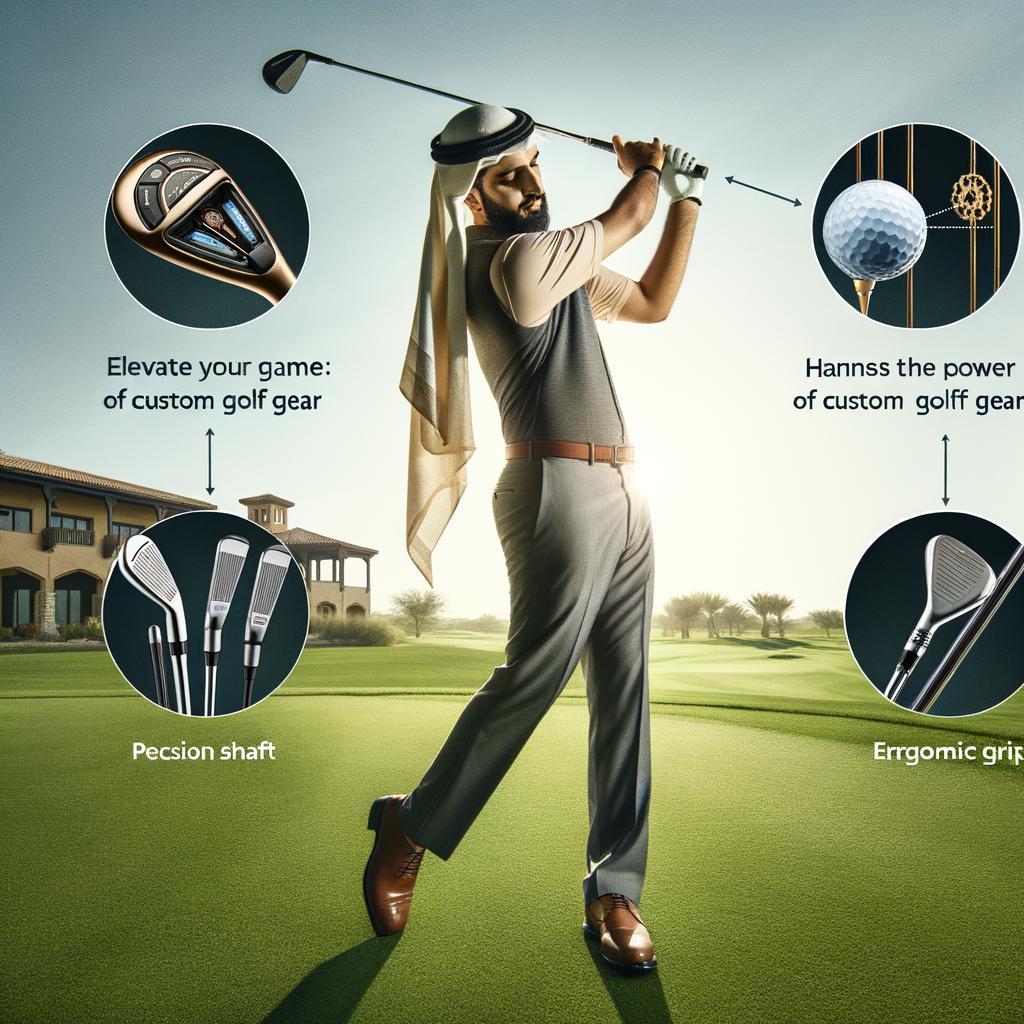
Elevate Your Game: Harness the Power of Custom Golf Gear for Superior Swings & Longer Drives
What “custom” really means for your golf clubs
The word “custom” generally means tailored for a specific need or practise. according to dictionaries, “custom” can mean a practice or something made to order (see Merriam‑Webster and Oxford definitions).
In golf, “custom” refers to equipment built or adjusted to match your unique swing characteristics-shaft flex, length, loft, lie angle, grip size, clubhead selection and more-so you produce a more efficient, repeatable swing and better ball flight.
Why custom golf gear matters for swing quality and longer drives
- Optimized launch conditions: The right shaft and loft produce ideal launch angle and spin for maximum carry and roll.
- Improved consistency: Proper lie, length and grip size reduce dispersion and promote a repeatable swing plane and contact point.
- More efficient energy transfer: Shaft weight and kick point matched to your tempo increase clubhead speed and smash factor-more ball speed for the same effort.
- Confidence and feel: Clubs that fit your body and swing build comfort and confidence, which translates to better on‑course performance.
Key custom fitting components that affect swing and distance
1. Shaft selection (flex, weight, kick point)
Shaft flex must match your swing speed and tempo. Too stiff reduces launch and can cause a fade/slice; too soft creates ballooning or loss of control.Shaft weight influences timing and feel: heavier for control, lighter for faster clubhead speed.Kick point (bend profile) affects launch angle and spin.
2. Club length and lie angle
Length changes swing arc and timing. Too long causes hooks or missed impact; too short reduces leverage and distance. Lie angle determines whether the toe or heel strikes first-flattened lie tends to hook, upright tends to fade.
3. Loft & clubhead design
Driver loft plus face angle and CG (center of gravity) drive your launch and spin.Irons and wedges with correct loft progression and CG placement help consistent contact and spin control.
4. Grip size and texture
Grip diameter affects wrist action and release. Wrong size causes compensations in the swing and errant shots. Material and tackiness influence comfort and confidence in wet/dry conditions.
5. Set makeup and gap balancing
Custom sets consider your typical distances and fill gaps between clubs so there are no overlaps or large yardage voids-this improves club selection and scoring.
How modern fitting tech informs better custom gear
- launch monitors (TrackMan, GCQuad): Measure ball speed, launch angle, spin rate, attack angle and carry distance-used to prescribe shaft and loft.
- High‑speed cameras & pressure mats: Reveal weight shift, release point, and impact location for better clubhead and shaft choices.
- Shaft fitting rigs & adjustable drivers: Allow on‑the‑fly testing of shaft options, lofts and head settings to lock in the optimal combination.
Practical custom fitting process (step‑by‑step)
- Begin with a short questionnaire: height, wrist‑to‑floor, average swing speed, ball flight tendencies (slice, draw, low, high).
- Measure static specs: grip size, wrist‑to‑floor, hand size, posture and address position.
- Launch monitor session: record carry, total distance, ball speed, spin, launch angle and attack angle.
- Test shafts and head settings: try progressive flexes, different kick points, and driver lofts to find peak ball speed and optimal spin/launch windows.
- Validate on the course: confirm fitting results under real conditions and fine‑tune lofts or shaft choices if needed.
Simple fitting reference: driver recommendations by clubhead speed
| Clubhead speed (mph) | Suggested Loft | Shaft Flex |
|---|---|---|
| 95+ | 8°-10° | Stiff/X‑Stiff |
| 85-95 | 9°-11° | Stiff/Regular |
| 75-85 | 11°-13° | Regular/Senior |
| <75 | 12°-15° | Senior/Lite |
Driver tuning checklist for longer drives
- Maximize ball speed: Choose the shaft that produces highest ball speed with acceptable spin.
- Target optimal spin: Too much spin steals distance; too little reduces carry. Aim for a balanced spin window for your swing (generally 1800-3500 rpm depending on speed).
- optimize launch angle: Adjust loft and shaft kick point to hit the launch window that gives the best carry + roll.
- Use adjustable hosel wisely: Fine‑tune face angle and loft but avoid masking a swing issue.
- Consider shaft length: Cutting 0.5-1 inch can improve accuracy with minimal distance loss for some players.
custom irons & wedges for superior swings and scoring
Custom irons tailored to your lie,loft progression and shaft choice produce tighter shot dispersion and improved contact. Wedge gapping and grind selection help control trajectory and spin around the green.
- Game improvement irons: Slightly more loft and perimeter weighting for forgiveness.
- Player’s irons: Narrower sole, more workability-match shaft flex and length to preserve feel.
- Wedges: Choose grind and bounce to match turf interaction-custom shaft and lie angle maintain consistent contact.
Grips, shaft fitting and the small things that matter
Small changes yield big results. A properly sized grip corrects excessive wrist roll, and the right shaft micro‑adjustment can smooth transition and improve timing.
Case studies & first‑hand style examples
Case Study A – Weekend golfer gains 18 yards
Player: Age 42, clubhead speed 92 mph. Issue: high spin and low launch with OEM driver. Fitting changes: switched to a mid‑kick shaft, +1° loft, and 0.5″ shorter length. Result: launch increased 2°, spin reduced 600 rpm, carry +15-18 yards and dispersion tightened by 20%.
Case study B - Senior player finds consistency
Player: Age 66, clubhead speed 78 mph. Issue: inconsistent contact and loss of distance. Fitting changes: lighter shaft with higher launch profile, thicker grip to reduce overactive release, irons shortened by 0.5″ to stabilize swing. Result: smoother tempo, more solid center‑face hits, distance variance reduced by 12 yards across set.
Training drills to convert custom gear gains into real scores
- Tee height variation drill: Practice hitting the driver at multiple tee heights to find one that produces the highest and most consistent carry with your fitted setup.
- Launch window drill: Use the monitor to target your ideal launch and spin band-hit 10 balls trying to keep launch & spin within that window.
- Short game validation: After fitting new wedges,hit 30 short game shots from varied lies to dial in feel and bounce/grind choice.
- Course simulation: Play 6 holes using only the fitted setup to test club selection and mental confidence under pressure.
Maintenance & when to re‑fit
- Re‑fit every 18-36 months or after significant swing changes (new coach, injury rehab, aging changes).
- inspect grips annually and replace when worn-tacky feel and size consistency matter.
- Check shaft integrity if you notice timing or feel changes-micro fractures can alter performance.
FAQs (quick answers)
Is custom fitting worth the investment?
Yes. For most golfers, the performance gains (distance, accuracy, consistency) pay off quickly-especially if you play regularly. Custom gear reduces compensations in your swing and improves confidence.
Can I get a good fitting online?
Online fittings using surveys and swing videos can be a helpful start, but in‑person launch monitor sessions provide the most precise results. Consider a hybrid approach: online for baseline then in‑person for fine tuning.
How much does custom fitting cost?
Costs vary. Basic fittings can be free with purchase at many shops; full launch monitor sessions and premium shaft testing may have fees. Consider the value-gains in distance and accuracy often offset the initial cost.
Quick checklist before booking a fitting
- Bring your current clubs and typical golf ball (fitting with your ball produces realistic data).
- Wear your normal shoes and clothes you play in for accurate posture and motion.
- Be prepared to hit at least 30-40 balls across different clubs for reliable data.
- Set performance goals: more distance, tighter dispersion, better greens‑in‑regulation-share them with the fitter.
Custom golf gear is not a magic bullet, but when combined with solid swing mechanics and focused practice it’s one of the most efficient ways to improve clubhead speed, ball flight and scoring. Built to your swing, custom clubs remove equipment limitations so you can play to your potential.
Relevant resources: Merriam‑Webster definition of “custom” (merriam-webster.com) and Oxford learner’s Dictionary (oxfordlearnersdictionaries.com).