

Mastering golf performance requires an integrative,evidence-based approach that systematically links biomechanical assessment to technique refinement across swing,driving,and putting. This article synthesizes current research and applied practice to present objective metrics,level-specific drills,and protocolized progressions designed to improve kinematic efficiency,stroke repeatability,and driving consistency. Emphasis is placed on measurable outcomes-clubhead speed, launch parameters, stroke path, and green-reading accuracy-alongside transfer strategies that embed practice adaptations into on-course decision making. By combining quantitative assessment with tailored coaching interventions, the framework offers coaches and advanced players a structured pathway to elevate consistency and lower scores.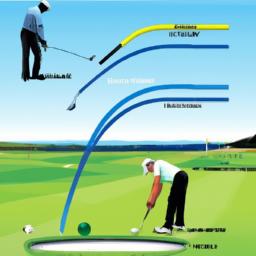
biomechanical foundations of an Efficient Golf Swing: Kinematic Sequencing and Corrective Strategies
An efficient golf swing is founded on a reproducible kinematic sequence in which the lower body initiates motion and energy is transferred progressively through the torso, arms, and finally the clubhead. At address prioritize a balanced setup: weight distribution 50/50, spine tilt approximately 10-15° forward from the hips, knee flex 20-30°, and shoulder alignment square to the target line. During the backswing aim for a pelvic rotation of ~35-45° and a shoulder turn of ~80-100° for advanced players (beginners may target 60-80° to preserve connection and tempo); these ranges create a beneficial X‑factor (torso-to-pelvis separation) that stores elastic energy.Importantly, the downswing must follow the proper temporal order – pelvis, torso, arms, hands/club – to produce clubhead speed without casting.Measurable technical checkpoints at impact include 60-70% of weight on the lead foot, hands slightly ahead of the ball by ~1-2 inches for irons (shaft lean), and a face-square-to-path alignment consistent with the targeted shot shape. equipment considerations that influence sequencing include shaft flex and torque (stiffer shafts can reduce unwanted lag release in stronger swingers) and loft selection for desired launch angles; adjust grip pressure to a firm-but-sensitive level (about a 5-6/10) to maintain control without inhibiting wrist hinge.
When sequencing breaks down, targeted corrective strategies and drills re-establish the intended kinematic order. begin with slow, rhythm-based repetitions to ingrain timing (use a 3:1 backswing-to-downswing tempo as a reference), then progress to game-speed practice with feedback. useful drills include:
- Pump drill: pause at waist-height on the backswing and perform three short pumps toward impact to feel the pelvis lead the downswing.
- Step drill: take a small step with the lead foot toward the target as you start the downswing to encourage weight transfer and hip rotation.
- Impact-bag or impact-board drill: practice delivering the hands forward into the bag to groove shaft lean and compression.
- Towel-under-arm drill: hold a towel under the trail armpit during swings to maintain connection and prevent early arm separation.
- One-arm swings (trail or lead): isolate arm and torso sequencing to detect early release or casting tendencies.
For practice structure, aim for 3 sets of 10-15 quality reps per drill, with video or launch monitor feedback every 30-50 swings. Set measurable short-term goals such as reducing lateral sway to ≤2 inches (use a headcover marker) or increasing consistent ball-first contact to 90% on iron shots. Progressively integrate these mechanics into short-game shots: for chips and pitches,use a reduced shoulder turn (~30-45°) while maintaining the same lower-body lead,and for bunker shots emphasize open stance and accelerated lower-body rotation to ensure reliable entry and exit angles.
translate biomechanical improvements into on-course strategy and decision-making to lower scores. Use your technical comfort zone as a selection criterion: if your practice shows reliable 7‑iron carry of 150 yards with repeatable sequence and dispersion ≤10 yards, then plan approaches that leave you within that distance for scoring. Pre-shot routine and mental rehearsal reinforce sequencing under pressure – incorporate a two-breath centering routine and a single swing thought (such as, “lead with hips”) to prevent breakdowns.Troubleshooting common faults on the course:
- Early extension (standing up): maintain flex at the knees and feel a sustained hip turn through impact; use impact bag reps on the range to recalibrate.
- Casting (early release): train wrist hinge with half-swings and the towel-under-arm drill; aim to retain lag until the last 10-15% of the downswing.
- Over-rotation or reverse pivot: check weight shift with the step drill and reduce upper-body dominant practice swings.
Adapt strategy to conditions: in wind or soft greens, prioritize trajectory control and sequence consistency by choosing clubs that allow a three-quarter swing rather than forcing full-power swings that disrupt timing. track on-course metrics (fairways hit, GIR, up-and-down percentage) across 9- or 18-hole practice rounds and set incremental goals (for example, improve up-and-down percentage by 5-10% over eight weeks) so biomechanical gains convert directly into lower scores and more confident course management.
Evidence Based Driving Protocols to Maximize Distance and Accuracy: Force Production,Launch Conditions,and Training Progressions
Begin by establishing a repeatable,athletic setup and lower‑body sequence to maximize force production while preserving accuracy. Start with a balanced posture: feet shoulder‑width (about 40-45 cm for most adults), a slight knee flex, and a spine tilt that places the ball opposite the lead heel for the driver; this promotes an upward strike and an optimal attack angle. Emphasize the kinematic sequence – hips → torso → arms → club – and coach the player to generate ground reaction forces by initiating a controlled lateral weight shift of roughly 10-20 cm and loading the trail leg during the backswing before transferring to about 60-70% of body weight onto the lead foot at impact. For practical training, progress from slow to fast: begin with half‑speed swings focusing on hip clearing, then ¾‑speed with impact‑bag work, and finally full‑speed swings with a launch monitor. Useful drills include:
- Medicine‑ball rotational throws (3 sets × 8 reps) to train explosive hip rotation and sequencing;
- Step‑through drill to encourage weight transfer and a positive angle of attack;
- Impact bag contact drills to feel forward shaft lean and compression through the ball.
Common mistakes are over‑rotating the shoulders early (which breaks the sequence) and lifting the head at impact; correct these with slow‑motion video feedback and targeted repetition until the kinematic sequence is consistent.
Next, tune launch conditions and equipment to convert produced force into maximum carry and desirable dispersion. Use a launch monitor to target an optimal combination of launch angle, spin rate, and smash factor: for many players with a driver, aim for a launch angle of 10-14°, smash factor ≥ 1.45,and a spin rate in the approximate range of 1,500-2,500 rpm depending on swing speed and conditions. Adjust loft and shaft (flex and torque) to influence dynamic loft and attack angle – for example, increasing tee height or moving the ball slightly back can reduce spin and lower launch for windy days. To correct common ball‑flight problems, use these troubleshooting steps:
- If the ball is slicing: check face angle at impact and emphasize a neutral to slightly closed clubface through impact; strengthen grip and perform inside‑out swing path drills.
- If the ball is hooking: reduce excessive wrist release and examine shaft flex and lie; practice delayed release drills and flighted‑shot patterns.
- If launch is too high with high spin: lower tee height, de‑loft the club, or move the ball fractionally back to encourage a more positive attack angle.
Transition from range tuning to course conditions by practicing trajectories into common wind and turf conditions (e.g.,firm fairways or wet rough) so equipment choices and launch profiles are situationally appropriate.
integrate technical gains into a structured training progression and course strategy that improves scoring. Implement a periodized plan: initial phase (weeks 1-4) focuses on movement quality and force production, intermediate phase (weeks 5-8) targets launch optimization and equipment fitting, and integration phase (weeks 9-12) emphasizes on‑course request and pressure drills. Set measurable goals such as increasing clubhead speed by 3-5% within eight weeks or reducing 95% dispersion radius by 10-15 yards, and verify progress with weekly launch monitor sessions and accuracy tests (e.g., 30‑ball target protocol). For course management, teach players to play to a preferred zone off the tee – such as, favoring a 230-260 yard corridor that avoids hazards even if it sacrifices a small amount of distance – and to select trajectories that match wind and landing conditions. include mental and variability practice: simulate pressured shot decisions, maintain a concise pre‑shot routine, and use alternating‑practice drills (power swing then precision shot) to develop both speed and control.By linking force production, launch tuning, and strategic decision‑making, golfers at every level can translate technical improvements into more fairways, better approach positions, and ultimately lower scores.
Precision Putting Through Motor Control Principles: Stroke Mechanics, Green Reading, and Consistency Drills
Develop the stroke with an emphasis on motor control principles that favor repeatability and feel. Begin with a reproducible setup: neutral spine angle with a slight anterior tilt so the eyes are approximately over the ball, soft knee flex, and a comfortable hand position that places the putter shaft near vertical. Use a putter with loft between 2°-4° (typical for modern milled and blade putters) and check that the face returns to square within ±1-2° of the intended line at impact; this degree of error can convert a makeable putt into a miss at tournament distances. Progressively train a low-wrist, pendulum-style stroke that minimizes deceleration into the ball: maintain a backswing/forward-swing tempo ratio close to 2:1 (for example, a 0.6s backstroke followed by a 0.3s acceleration), and focus on producing consistent forward roll rather than ball skidding. Common errors and corrections: if the ball starts left of your eyes, check for an open face or excessive wrist break; if speed is inconsistent, use a shorter, more stable arm-only stroke and re-establish the same setup each time.
Reading the green is a synthesis of physics, visual perception, and situational strategy. First, understand the fall line and grain: always identify the downhill direction (fall line) and the way the grass blades (grain) can slightly increase or decrease ball speed-grain toward the hole typically makes a putt faster, away makes it slower. Measure speed contextually: typical green speeds for competitive play fall in the range of 7-13 feet on the Stimpmeter, and faster surfaces amplify subtleties in slope; a 1-3° slope (very gentle) can produce a decisive break over 8-15 feet, so place your aim point accordingly. Practical green-reading routines include visualizing the ball’s path from multiple viewpoints (behind the ball, behind the hole, and at chest height to see the fall line) and using a consistent aim-point method such as a plumb-bob or the AimPoint technique to quantify a read. Drills and checkpoints to build green-reading skill:
- Clock drill around a hole at 3-6 feet to feel how identical slopes break differently with grain and speed.
- Plumb-bob drill: stand over a putt and drop a straight edge from eye level to gauge the fall line and confirm aim.
- Speed calibration: use a 20-foot lag putt and adjust stroke length to leave the ball within a 3-foot circle; record the forward/backswing length for repeatability.
These techniques translate directly to course strategy: on firm, fast links greens, opt to favor speed (get it close) over aggressive breaking lines; on slow, soft greens take more break but be cautious of coming up short.
Achieve consistency through structured, measurable practice that blends blocked repetition with variable, pressure-based training. Establish weekly objectives such as converting 80-85% of putts inside 6 feet within four weeks and reducing three-putts by 50% over eight weeks. Implement a practice routine that alternates focused mechanics work with decision-making scenarios:
- Gate drill for face alignment: place tees slightly wider than the putter head and stroke 30 putts without touching tees to reinforce square-face delivery.
- Distance ladder (3-6-10-20 feet): make a set number (e.g., 10) from each distance with only one miss allowed per station to build distance control.
- Pressure sets: simulate match conditions by playing “make three in a row” games or betting small stakes to induce competitive arousal control.
Adjust equipment and setup to individual needs-shorter putters can improve arc control for golfers with smaller stroke arcs, while mallet heads help stabilize face rotation for higher-handicap players. integrate the mental game: use a concise pre-putt routine, focus externally on the intended finish point (not on mechanics), and adopt a consistent self-talk phrase to manage nerves. by combining motor-control-informed mechanics, accurate green reading, and purposeful practice under pressure, golfers of all levels can measurably improve stroke consistency and lower scores on a variety of course conditions.
Level Specific Drill Prescriptions and Periodization for Swing, Driving, and Putting Development
Initially, establish a periodized training framework that phases technical correction, physical planning, and on-course application across a macrocycle (12-16 weeks), mesocycles (3-6 weeks) and weekly microcycles. For beginners the primary focus is on setup fundamentals – neutral grip, 50-60° shoulder plane alignment, 15° spine tilt and balanced base – with high-frequency short sessions to build motor patterns. Intermediate players progress to integrated swing sequencing and tempo work (such as a 3:1 metronome ratio for backswing:downswing), while low-handicap players concentrate on repeatability, launch conditions and shot-shaping under pressure. To operationalize this structure, use the following weekly exemplar that can be adjusted by level and competitive season:
- Technique days (2×/week): 45-60 minutes of focused drills tied to measurable targets (shoulder turn degrees, clubhead speed, attack angle)
- Speed/power or short-game days (1-2×/week): 30-45 minutes, including medicine-ball rotational throws or weighted-club swings for advanced players
- On-course/strategy day (1×/week): play 9-18 holes with defined goals (e.g., limit three-putts to ≤1 per round, GIR/Par conversion rates)
This progression ensures technical gains translate to scoring by integrating objective metrics (clubhead speed, smash factor, putt-stroke length) and testable performance outcomes (make percentages, proximity to hole). Periodize with a testing day every 4-6 weeks to reassess goals and modify loading, technique emphasis, or equipment choices.
Later, address full-swing and driving development with level-specific prescriptions that explicitly tie mechanics to launch-monitor data and course outcomes. For full-swing,emphasize a reproducible sequence: a clear takeaway (clubhead outside hands to set plane),~90° shoulder turn at the top for most adults,and a controlled weight transfer creating a 5-10° forward shaft lean at impact with irons. Drivers should target a positive angle of attack (+2° to +5°) and a launch angle that, combined with spin, achieves optimal carry (use driver loft adjustments and shaft flex to dial in a launch window). Practice drills:
- Impact tape check: create consistent center-face contact; correct heel or toe strikes by adjusting ball position ±1-2 cm
- Tempo ladder: swing at three distinct tempos (slow/target/fast) to build a stable timing pattern
- Path/face alignment drill: use headcovers or alignment sticks to enforce in-to-out or neutral paths for desired shot shape
Common mistakes include early extension,over-rotation of the trail shoulder,and excessive lateral movement; correct these with drills that isolate the pelvis rotation (resisted-band hip-turns) and by reducing grip pressure. Equipment considerations – loft, shaft kick point, and grip size – should be validated with launch-monitor testing and on-course carry yardage checks to ensure practice transfers to lower scores.
refine putting and short-game practice with measurable, situation-based drills and explicit course-strategy integration that directly impact scoring. Begin with the fundamentals: setup (eyes over the ball or slightly inside), face square to target, and a pendulum stroke that keeps the putter face neutral through impact. For distance control emphasize a backswing-to-follow-through ratio by feel and train with these drills:
- Clock drill (putting): 8-10 balls from 3-6 feet around the hole to build make-percentage; target ≥80% from 3 ft and ≥50% from 6 ft as progression benchmarks
- Lag ladder: place concentric rings at 10, 20 and 30 feet to measure proximity; aim to leave >80% of putts inside three feet from 20 ft
- Chipping landing-zone practice: vary club selection to land the ball on a defined 5‑yard target and roll out to hole, thereby improving trajectory and spin control
Moreover, incorporate situational practice (e.g., sidehill lies, wet greens, wind-upwind/ downwind putts) and mental routines to replicate match conditions; for instance, when facing a protected pin with a crosswind, practice punched wedge shots to control spin and trajectory. By connecting short-game consistency to strategic choices – such as aiming for the safer portion of the green to minimize recovery strokes – golfers at all levels will see measurable reductions in score.
Quantifiable Metrics and Assessment Tools for Tracking Performance Improvements and Managing Injury Risk
Effective assessment begins with objective measurement; therefore, integrate technology and standardized screens into every instructional plan to create repeatable baselines. Start with a launch monitor (e.g., TrackMan, FlightScope) to capture clubhead speed (mph or m/s), ball speed, launch angle (degrees), spin rate (rpm), attack angle (degrees) and dispersion (carry yards and lateral deviation).For practical benchmarks, set initial targets appropriate to the player: beginners might aim to increase driver clubhead speed from ~75-85 mph toward 90-100 mph with efficient technique, whereas low-handicappers may seek marginal gains above 100-110+ mph; a good driver smash factor target is approximately 1.45. Complement these data with high-speed video for kinematic analysis (swing plane, shoulder turn, hip rotation) and inertial measurement units (IMUs) or force-plate data to quantify weight transfer and ground reaction forces-record pelvis rotation in degrees, torso turn amplitude, and percentage weight shift (e.g., 60-70% into lead side at impact for many full swings). To operationalize this, follow a simple assessment sequence: baseline technology capture on a 10‑shot sample, video review for two recommended mechanical markers (e.g., wrist angle at top, clubface to path at impact), and standardized short-game tests (see drills below) to create a multidimensional performance profile.
Building on the baseline, translate metrics into practice plans with explicit, measurable goals and drills that link technique to scoring outcomes and course management. For instance, if dispersion is >15 yards offline on approach shots, prescribe targeted alignment and swing-path work using a gate drill (two alignment sticks) and record improvement as a decrease in lateral standard deviation over weekly 30‑shot samplings. When refining the short game, quantify putting distance control by aiming for 8/10 balls inside a 3‑ft circle from 20 ft in three consecutive sessions, and measure chipping by % of shots that run to within 5-10 ft of the hole from a given lie. Practice checkpoints and drills include:
- Gate drill for swing path-use alignment sticks to enforce an in-to-out or square path and measure change in face-to-path (degrees) via launch monitor.
- Impact bag or low-compression ball to train forward shaft lean and compressive impact-record subjective feel and ball flight consistency.
- Putting tempo drill using a metronome to establish a backswing:downswing ratio of ~2:1 to 3:1, then track make percentage and lag-putt proximity.
furthermore, integrate course strategy metrics: track greens in regulation (GIR), fairways hit, sand saves, and strokes gained metrics if available-set phased targets such as a 5-10% increase in GIR within 8-12 weeks and reduced three-putts per round by a demonstrable margin. When adapting for conditions (wind, wet greens), instruct players to modify launch angle and spin (lower launch and spin in wind) and to use numerical carry goals (e.g.,carry bunker by 5-10 yards) rather than only club names.
managing injury risk requires quantifiable monitoring integrated with skill training; thus, incorporate functional screens and workload metrics into your coaching protocol. Begin with a physical-screen battery (e.g.,thoracic rotation,hip internal/external rotation,shoulder internal rotation) and record ranges of motion in degrees-note thoracic rotation less than 40-45° or hip internal rotation below 20° as flags for compensatory patterns that can increase lumbar stress. Track practice load by counting swings per week and using an athlete-reported exertion scale (RPE) to calculate an acute:chronic workload ratio; maintain a conservative target range around 0.8-1.3 to reduce injury likelihood during load increases. Prescribe corrective and warm-up interventions tailored to results with step-by-step exercises:
- Dynamic thoracic rotations and band-resisted pull-aparts for improved upper-body dissociation.
- Glute activation drills (e.g., clamshells, single-leg bridges) to support hip stability and reduce lateral lumbar loading.
- Progressive swing-load plan that stages from half-swings to three-quarter to full swings with volume limits per session and regular reassessment.
Moreover, educate golfers on pain monitoring (use a simple 0-10 pain scale), restorative strategies (sleep, hydration, nutrition), and mental adjustments-encourage a measured cognitive approach to practice progression so players pair technical improvements (e.g., increasing swing speed) with physical readiness, thereby improving performance while minimizing injury risk.
Integrating Course Strategy and shot Selection into Practice: Decision Making Under Pressure and Simulation Drills
Develop a repeatable decision-making framework that translates practice into on-course strategy by first quantifying your tolerances and desired outcomes: set measurable goals such as reducing 150‑yard dispersion to within 10 yards,leaving approaches inside 30 ft for mid-handicappers and 15 ft for low handicappers,and creating consistent wedge gaps of ~5 yards between clubs. Begin each practice session with a clear pre-shot checklist-yardage, wind, lie, target landing zone, and margin for error-and then execute drills that mirror those checks. For example,on the range simulate a 150‑yard approach by firing at a narrow target and record club choice,carry,and miss pattern; on the short game area practice leaving the ball to a fixed distance (e.g., 12-20 ft) on different green speeds. To make this practical, use the following routine to build course-relevant data and choices:
- Yardage Mapping Drill: from known distances (50, 100, 125, 150, 175 yards), hit 10 balls, note median carry and dispersion, then log the best club for the given carry plus one for error allowance.
- Landing Zone Practice: choose a 15‑yard wide strip on the range and practice landing at three spots-front, center, back-to understand roll-out on firm versus soft days.
- Club‑Selection Matrix: build a quick-reference chart for wind and firmness (e.g., add 10% club for headwind, subtract 10% for tailwind; prefer >1 club extra width for firm fairways).
These steps create an objective baseline so decision-making becomes data-driven rather than reactive, improving in-round choices and lowering risk of penalty situations such as out of bounds or hazard play.
Next, integrate technical shot-selection adjustments into practice by linking specific setup and swing changes to the tactical shot you need to play. For shot shaping,use controlled setup alterations: to produce a consistent fade for a right‑handed golfer,open the clubface 2-4° to the target,set feet and shoulders slightly left of the target by about 1-1.5 club widths, and swing on a neutral-to-slightly out‑to‑in path; conversely, for a draw close the face 2-4° and promote an in‑to‑out path. for trajectory control, focus on ball position and angle of attack: aim for a slightly descending AOA of approximately -3° to -5° with irons for crisp contact and a positive AOA of +1° to +3° with the driver to lower spin and increase carry. Implement these technical refinements through targeted drills:
- Alignment‑and‑Face drill: place an alignment stick on the ground to mark the target line and use a second stick at the toe of the club to feel face orientation; make 10 shots controlling face angle by feel.
- Gate/Impact Bag Drill: for improved impact position and AOA, swing through a narrow gate (two tees or sticks) or impact bag to promote center contact and desired shaft lean.
- Partial‑to‑Full Progression: start with 3/4 swings focusing on path and face, then increase to full swings once repeatability is achieved; quantify improvements by counting solid strikes out of 10.
Common errors include over‑rotating the shoulders (causing loss of face control) and changing ball position mid‑swing; correct these by rehearsing setup checkpoints-grip pressure, spine tilt, and foot placement-until the desired shot is reliably reproduced under low fatigue.
practice decision-making under pressure via realistic simulation drills and measurable mental‑game strategies that transfer to tournament play. Use constrained practice formats to induce pressure: play 9‑hole practice rounds with a imposed penalty (e.g.,add one extra stroke for any putt missed inside 6 ft),compete against a partner for a small wager,or conduct a “one‑club challenge” where you must navigate three holes using only three clubs. Complement these with physiological and cognitive techniques: establish a concise pre‑shot routine (visualize flight, pick landing spot, breathe twice, execute) and rehearse it until it takes 10-12 seconds to complete consistently.Incorporate equipment and measurement tools to guide progression: use a launch monitor to track carry,launch angle,and spin rate (monitor ranges to identify bad misses-e.g., driver spin > 3500 rpm often produces ballooning on full swings), and regularly check loft/lie and shaft fit if dispersion increases. Suggested pressure drills and practice schedule:
- Pressure Ladder: start by holing 5 consecutive 8‑foot putts, then add 1‑stroke penalty for each miss and repeat until you can complete the ladder twice.
- Situational Simulation: play practice holes where you must avoid a defined hazard; if you hit into it, exercise the appropriate rules relief option (e.g., unplayable-stroke and distance or back‑on‑line with one‑stroke penalty) and record the decision outcome.
- Weekly Structure: 30-40 minutes short game,30 minutes iron accuracy,20 minutes driver/strategy work,plus one simulated tournament round per week.
By combining measurable technical benchmarks, equipment feedback, and pressure simulations, golfers at any level can refine both the mechanical execution and the cognitive processes necessary to make sound, repeatable shot selections on the course.
Implementing a personalized Practice Plan: Data Driven feedback Loops and Coach Athlete Communication
Begin with a rigorous baseline and quantifiable feedback loop: before prescribing technique changes,collect objective data over a representative sample (for example,50-100 swings per club across warm,mid,and fatigue states) using a launch monitor or high-frame-rate video (120-240 fps). Record clubhead speed, ball speed, launch angle, spin rate, attack angle, face-to-path and lateral dispersion; as a notable example, a driver launch angle target frequently enough falls between 12°-15° with spin in the range of 2,000-3,500 rpm depending on swing speed and loft. Use those metrics to define SMART goals (e.g., increase 7‑iron carry by 10 yards within 8 weeks by improving clubhead speed by 3-4 mph and reducing slice dispersion by 8 yards). Then implement a closed feedback loop: immediate feedback (video side-by-side,impact tape,audible strike),short-term feedback (session summary,key drills),and medium-term feedback (weekly strokes gained and up‑and‑down percentage). Practical drills to populate that loop include:
- Impact-target drill: place impact tape and align a short target 20 yards to monitor face contact and start-line consistency.
- Phase testing: alternate blocks of 10 swings focusing on one variable (path, face, tilt) and record metric change to isolate cause/effect.
- Fatigue series: perform 30‑shot sets at the end of practice to simulate late‑round performance and measure dispersion increase.
These measurements and drills create the objective foundation for targeted technical intervention that is measurable and repeatable.
Personalize practice with clear coach-athlete communication and progressive structure: translate data into an individualized curriculum that cycles through technical, situational, and performance phases. Begin each session with a setup checklist that the athlete and coach can observe and cue:
- Grip pressure: maintain ~4-6/10 to preserve feel without tension;
- Stance width: shoulder‑width for irons, 1.5× shoulder for driver;
- Ball position: half a ball back of center for short irons, forward for long clubs and driver.
Then structure practice in microcycles (daily), mesocycles (4-6 weeks) and macrocycles (seasonal goals). Communication should alternate between prescriptive cues (exact body movements, e.g., “reduce early wrist release by maintaining 90° hinge until transition”) and outcome cues (target-based, e.g., “shape a 10‑yard draw around the left bunker”). For different skill levels: beginners receive simplified checkpoints and high‑repetition drills (e.g., 50‑ball wedge routine aiming for 3 landing zones at 20/40/60 yards), while low-handicappers receive nuance work (face‑to‑path micro‑adjustments of 1°-3°). Common mistakes and fixes should be documented and rehearsed:
- Slice (open face + out-to-in path): drill with toe‑tie impact bag and path gate to promote in‑to‑out motion;
- Thin/duffed chips: practice a low‑trajectory bump‑and‑run with forward ball position and minimal wrist hinge;
- Putting speed inconsistency: use a 20‑hole clock drill to standardize backswing length and tempo.
Feedback cadence is explicit: immediate cues on feel, session notes with metrics, and weekly performance reports tying practice to scoring trends (strokes gained approach, putting, short game).
Translate technical gains to on‑course decision making and shot‑shaping under varied conditions: reinforce skill transfer by rehearsing course scenarios with measurable constraints (wind, tight fairway, preferred side of green) and explicit shot-selection criteria. Teach trajectory control through concrete manipulations: move the ball ½-1 ball width forward to increase launch, or back to lower flight; open/close the clubface 1°-3° and align swing path accordingly to produce a controlled fade or draw; and alter shaft lean at address to adjust dynamic loft by approximately 2°-4°. Practice drills that mirror course demands include:
- Wind ladder drill: hit 5 shots at incremental headwind speeds simulated with a fan or tee height changes to see carry loss per 5 mph (~5-7 yards for a mid‑iron) and adapt club selection;
- Risk/reward green approach: place two target flags (aggressive and safe) and alternate strategy, tracking score outcomes to quantify when aggression pays off;
- Pressure small‑target drill: competitive hole‑simulation with monetary or scoring penalties to train decision stability and pre‑shot routine adherence.
Incorporate mental strategies into the loop: use a short pre‑shot checklist, breathing cue and visualization to reduce tension and preserve technique under stress. set measurable on‑course transfer goals such as reduce average proximity to hole from approach shots by 2-4 feet or cut three‑putt rate to under 5% in eight weeks; then use the data loop and coach feedback to iterate the plan until improvements reliably manifest in scorecard outcomes.
Q&A
Note on provided search results:
The supplied web search results relate to the term “master” in contexts such as academic degrees and honorifics (Zhihu pages) and are not relevant to golf instruction. Below I proceed with a focused, academic-style Q&A for the requested article topic.
Q&A – Master Golf Training: Unlock Your Swing, Driving & Putting Precision
Q1: What is the conceptual framework of “master Golf Training”?
A1: Master Golf Training is an integrated, evidence-informed framework that combines biomechanical analysis, motor-learning principles, sport-specific conditioning, and course-strategy education to improve swing mechanics, driving distance/accuracy, and putting precision. the framework emphasizes objective measurement, progressive overload in practice, and transfer fidelity from practice to competitive play.
Q2: Which core domains should a comprehensive training program address?
A2: Four primary domains: (1) Biomechanics and kinematic sequencing (swing and stroke mechanics); (2) Perceptual-motor skill acquisition (aiming, tempo, distance control); (3) Physical preparation (mobility, strength, power, injury prevention); (4) Tactical decision-making and course management. Each domain is evaluated and trained with specific metrics and drills.
Q3: How does biomechanical analysis improve swing and driving performance?
A3: Biomechanical analysis quantifies kinematic sequencing (pelvis, torso, arms, and club), ground reaction forces, and clubhead dynamics (speed, path, face angle). Objective feedback identifies inefficiencies (e.g.,loss of lag,early extension,poor weight shift) allowing targeted interventions that optimize energy transfer and consistency,thereby improving ball speed and accuracy.
Q4: What objective metrics should be measured for swing, driving, and putting?
A4: Swing/driving: clubhead speed, ball speed, smash factor, launch angle, spin rate, swing path, face angle at impact, attack angle, dispersion (shot pattern).Putting: stroke path, face angle at impact, ball launch direction, roll quality, impact location, distance control (proximity to hole), and three-putt frequency. Use repeated measures to track trends and variability.
Q5: What measurement tools are recommended?
A5: Recommended tools include launch monitors (TrackMan, GCQuad, Flightscope), high-speed video, motion-capture systems or inertial sensors for kinematics, force plates or pressure mats for ground reaction forces and weight distribution, and putting analysis systems (SAM PuttLab, Foresight or similar).Simpler clinics may rely on calibrated video and standardized drills with distance/proximity recording.
Q6: What practice principles are evidence-based for skill acquisition in golf?
A6: Key motor-learning principles: deliberate and distributed practice, variability of practice to promote adaptability, blocked vs. random practice sequencing depending on acquisition vs. retention goals, contextual interference to enhance transfer, augmented feedback with fading schedules, and task specificity to maximize transfer to on-course performance.
Q7: Provide level-specific training emphases (beginner, intermediate, advanced).
A7: Beginner: fundamentals-grip, stance, alignment, basic swing plane; short-distance putting and basic green reading; build consistent contact. Intermediate: refine kinematic sequence, increase controlled clubhead speed, develop consistent ball flight, distance control for mid- and long-irons; more deliberate putting drills for distance and alignment. Advanced: optimize launch conditions and spin profiles for scoring clubs, refine dispersion control under pressure, integrate course-management strategy, work on subtle stroke mechanics and speed control for sub-10-foot putts.
Q8: What are practical, evidence-based drills for improving the full swing?
A8: Examples: (1) Kinematic-sequence drill-slow-motion swings emphasizing pelvis-to-torso onset; (2) Impact bag or tee target-promote forward shaft lean and compressing the ball; (3) One-arm swings and impact-position drills-improve sequencing and clubface control; (4) Speed ladder swings-incremental overspeed training with careful load management to increase clubhead speed.
Q9: What drills specifically improve driving distance and accuracy?
A9: Examples: (1) Launch-condition optimization-use launch monitor to test combinations of tee height,ball position,and attack angle; (2) Ground-reaction training-force-plate cues for better weight transfer and vertical ground force; (3) Shot-dispersion protocol-shoot sets of 10 drives at specific targets,record grouping metrics,and iterate technique; (4) Controlled overspeed and resistance training for power development.
Q10: what putting drills are most effective for precision and distance control?
A10: Examples: (1) Ladder (sprint) drill-place tees at 3, 6, 9, 12 feet and hit to each to train distance control; (2) Gate/arc drills-improve face path and impact alignment; (3) One-handed pendulum drill-promote consistent stroke and minimize wrist action; (4) Lag-putt pressure sets-simulate on-course decision-making and measure proximity to hole; (5) Read-and-aim practice with variability to train green-reading judgement.
Q11: how should practice be structured weekly for measurable progress?
A11: Structure: allocate sessions across domains (technical, physical, putting, course simulation). Example microcycle: 2 technical sessions with objective measurement (60-90 min),2 short-game/putting sessions (45-60 min),2 physical training sessions (strength/power and mobility) and 1 course-play simulation. Integrate deliberate warm-up and cool-down and schedule periodic testing (biweekly or monthly) for metrics.Q12: How do you integrate course strategy and decision-making into training?
A12: Incorporate scenario-based practice and course simulations that mimic pressure, variable lies, wind, and risk-reward choices. Use statistical analysis of your shot tendencies (e.g., dispersion, proximity, Strokes Gained components) to create club-selection charts and contingency strategies for common holes. Practice bail-out shots and short-game recovery under time or score constraints.
Q13: How should progress and outcomes be evaluated?
A13: Combine objective metrics (launch monitor data, dispersion, proximity to hole, putts per round, strokes Gained) with subjective performance indicators (consistency, confidence, decision-making). use repeated-measures and simple trend analysis (rolling averages) to distinguish real improvement from natural variability. Set SMART targets (Specific, Measurable, Achievable, Relevant, Time-bound).
Q14: What role does physical conditioning play and which capacities matter most?
A14: Critical capacities: rotational mobility, hip and thoracic flexibility, core stability, lower-body strength and reactive power, and shoulder stability for stroke repeatability. Conditioning improves force production, sequencing, resilience to fatigue, and injury prevention.Programs should be individualized and periodized according to competition schedule.Q15: How is mental training incorporated in this framework?
A15: Mental training includes pre-shot routines, arousal regulation, focus and attention strategies, visualization, and pressure-exposure practice. Integrate cognitive tasks in practice to simulate match pressure and use performance routines to reduce variability under stress.
Q16: How can coaches ensure transfer from practice to competition?
A16: Maximize practice fidelity (simulate course conditions),progressively introduce decision-making and pressure,vary practice contexts to encourage adaptability,and reinforce metrics that correlate with on-course success (e.g., proximity to hole, scrambling percentage). Periodic on-course validation sessions bridge the gap between range practice and competitive play.
Q17: What are common errors practitioners should avoid?
A17: Overemphasis on isolated mechanics without transfer context; excessive reliance on drills without objective measurement; under-loading or over-loading physical conditioning; neglecting variability in practice; and failing to measure and analyze dispersion or outcome metrics.
Q18: What is a recommended short-term testing battery for baseline assessment?
A18: Suggested battery: full-swing launch monitor session (10 shots per club for dispersion and averages), driver speed and carry profile, putting test (e.g., 20 putts from 3-12 feet measuring make rate and average proximity), short-game save test (recovery from 20-40 yards), and a physical screen (rotation, single-leg balance, hip mobility). Repeat monthly to monitor adaptation.
Q19: How should data inform the individual training plan?
A19: Use data to prioritize interventions (e.g., if dispersion is large despite adequate clubhead speed, focus on face control and path). Establish thresholds for progress,select drills that target the limiting factor,and re-test regularly.Integrate statistical feedback with coach observation to form a triangulated assessment.
Q20: What are expected timelines for measurable improvement?
A20: Timelines vary: basic contact and routine improvements can occur within weeks; consistent swing pattern change and measurable gains in Strokes Gained typically require 8-16 weeks of structured work; deeper biomechanical refinements, power gains, and on-course scoring improvements frequently enough require 3-6 months of disciplined training with periodic reassessment.
If you would like, I can:
– Transform the above Q&A into a printable FAQ for your article.
– Produce a sample 12-week periodized training plan for beginner, intermediate, or advanced golfers with weekly sessions and measurable testing points.
– Generate a concise metrics dashboard template (which metrics to track and how to visualize progress).
advancing from technical competence to durable performance in golf requires an integrated, evidence-based approach that synthesizes biomechanical analysis, targeted drills, and situational course strategy. By isolating and quantifying key elements of the swing, driving, and putting strokes-using objective metrics to guide intervention-practitioners can design level-specific protocols that reduce variability, accelerate motor learning, and translate practice gains into lower scores.
Future progress depends on iterative assessment: implement measurable goals, monitor outcomes with objective tools, and adjust training prescriptions in response to performance data. Collaboration between coaches, sports scientists, and players ensures that biomechanical insights are applied pragmatically and that psychological and tactical dimensions are incorporated alongside technique work.
Ultimately, mastery is achieved through disciplined, data-informed practice and strategic on-course application. Adopting the methods outlined in this article will enable golfers and coaching professionals to optimize precision in swing, driving, and putting, thereby improving consistency and scoring over time.




