
Putting is the statistical fulcrum of scoring in golf: small, repeatable motions at the green account for a disproportionate share of stroke variance and tournament outcomes. This article adopts an academic lens to synthesize biomechanical principles, motor-control theory, and evidence-based practice design in order to refine putting performance while explicitly linking these short-stroke mechanics to the kinematic and kinetic patterns that govern full-swing driving.By treating the putt as both a discrete motor task and an integral component of an overall stroke repertoire,we move beyond anecdote and prescription toward measurable,reproducible interventions.
The objectives are threefold: (1) to map the key biomechanical determinants of consistent putting-posture,pendulum dynamics,face-path control,and sensory-motor coupling-and relate these determinants to analogous variables in midsize and full swings; (2) to present empirically grounded drills and quantitative practice protocols (including objective metrics,progressions,and feedback modalities) that improve retention and transfer; and (3) to provide practitioners with assessment frameworks and training prescriptions that integrate kinematic measurement,variability management,and deliberate practice principles. Emphasis is placed on operationalizable metrics (e.g., face-angle variance, clubhead arc consistency, impact location dispersion, stroke tempo ratios) so coaches and players can evaluate change objectively.
The article is structured to support evidence-to-practice translation: an initial review of relevant literature and theoretical models; a biomechanical and motor-control analysis of putting mechanics with cross-references to full-swing dynamics; a catalog of drills classified by learning stage and targeted outcome; and recommended practice protocols with suggested measurement tools and progress criteria. By foregrounding measurable outcomes and connecting micro-level putting mechanics to macro-level swing behavior,this work aims to furnish golfers and coaches with a coherent,scientifically anchored roadmap for improving consistency across putting,swing,and driving.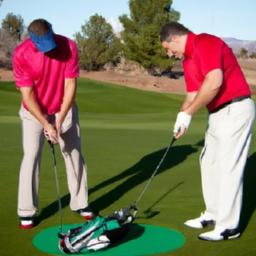
Foundations of a Repeatable Putting Stroke: Kinematics, Muscle Recruitment, and Face Management
Start by building a consistent static address that underpins reliable motion. Adopt a balanced stance with feet roughly shoulder-width, a modest knee bend (~10-15°), and a torso angle that positions the eyes about 1-2 inches inside the ball‑to‑target line-this alignment reduces compensatory hip and knee shifts while preserving a clear sightline. Fit the putter so the nominal face loft sits between 2°-4° and the lie matches your posture so the sole sits flat at address. Visually confirm the putter face is square to the intended line and allow the shaft to lean slightly forward (hands marginally ahead of the ball) to promote first‑roll contact; an alignment rod on the ground is a simple verification tool.From setup into stroke, keep head position steady and limit vertical bobbing-this stabilizes perceived line and prevents dynamic changes in loft and face angle at impact.
Then shape the actual kinematic pattern: most golfers benefit from a shoulder‑led pendulum while minimizing wrist action, though the exact club path (small arc vs. nearly straight) depends on putter balance. Think of the stroke more like a precision clock hand driven by the shoulders and scapula rather than a wrist snap; the deltoids and scapular rotation generate the motion with passive wrists to avoid unwanted face rotation.Players using toe‑hang heads will typically show a slight arc, and face‑balanced heads suit a straight back/through delivery-either is acceptable so long as the face returns square at impact. A practical coaching target is to hold face rotation at impact within ±2° to keep start lines predictable. Distance comes from coupling backswing and follow-through lengths (often a 1:1 ratio) and preserving an even tempo; many golfers find a metronome around 50-60 bpm useful to ingrain consistent timing.
Examine the muscular pattern that supports that motion. Consistent strokes typically show dominant recruitment of the shoulder girdle (anterior and middle deltoids) with isometric support from the forearms and rotator cuff; excessive wrist flexion or extension introduces face rotation and variability. Maintain stable ground reaction by engaging the glutes and quads to hold posture rather than to power the stroke, and use breathing cues to dissipate tension before initiating movement. Players with restricted shoulder mobility can adopt arm‑lock or belly‑length configurations to reduce wrist involvement while abiding by the Rules of Golf (anchoring the club to the body is not permitted). Progressive mobility and shoulder‑control exercises-thoracic rotation drills and light band work-typically reduce compensatory wrist activity and improve repeatability over weeks of consistent training.
Translate these principles into measurable practice. Track simple performance metrics (e.g., make percentages from 3, 6, 12, 20 feet and three‑putt frequency per nine) and include the following routines in weekly plans:
- Towel‑under‑armpits connection drill: place a folded towel under both armpits to promote unified shoulder motion and perform ~50 strokes per session to engrain the shoulder pivot.
- Gate/tee path drill: align two tees slightly wider than the putter head to enforce a square swing path and eliminate inside‑out / outside‑in tendencies.
- Revolving‑clock distance drill: 12 putts from several clock positions at 3, 6, and 9 feet to build pace and make percentage; log results daily and set progressive targets (for example, 85% from 3 ft, 70% from 6 ft within six weeks).
- Impact marking check: use impact tape or marking spray to confirm center‑face strikes and inform loft/lie adjustments if ther is consistent heel/toe bias.
These exercises target both kinematic stability and face control; set a short‑term objective such as shaving 0.5-1.0 strokes per round within eight weeks and iterate using your practice log.
Connect biomechanical practice to on‑course choices. Read greens by combining slope perception with pace judgment-on firm, speedy surfaces lengthen backswing but keep tempo constant; on softer or damp turf shorten the backswing and slightly increase acceleration to avoid leaving the ball short. Against extreme breaks or on steep grades, favor face control over force-square the face at impact and adjust alignment or aim point rather than adding wrist motion. Equipment also affects feel: a modestly heavier head (an increase of ~20-40 g) can stabilize the stroke for some players, and grip diameter influences wrist movement-larger grips generally reduce wrist breakdown. Finish every attempt with a short pre‑putt routine (visualize the line, take a practice stroke, settle into rhythm) to unite the technical and psychological elements into repeatable execution and better scoring.
Perception at the Hole: Optics, Eye Dominance, and Converting Slope into Line and Pace
Visual processing drives most decisions on the green, so begin by understanding where perception is strongest and where it fails.Human depth perception degrades on very near targets-typically under ~20-30 ft-when ocular alignment or light conditions are suboptimal. For long putts adopt a two‑stage visual routine: first pick a distant reference beyond the hole from standing height, then crouch to inspect immediate contours and grass grain. Moving between those visual planes reduces parallax and improves the translation of distant cues into precise local adjustments.Practice this with alignment sticks or a laser on the practice green to calibrate what you see from standing vs. over the ball. Note: polarized lenses can cut glare but sometimes reduce contrast in the grain-test eyewear in practice before competition.
Eye dominance influences perceived line and should be checked with a simple Porta/Miles test (make a small aperture with your hands, focus on a distant object, and alternate closing eyes-the eye that keeps the object centered is dominant). If your dominant eye sits on the same side as the putting line, alignment tends to be more intuitive; cross‑dominance may require small setup adjustments. Practical changes include moving the ball ~1-1.5 inches forward or back or subtly opening the stance to center the dominant eye over the target-confirm by sighting the putter face with the dominant eye closed to ensure it appears square. Use these checkpoints regularly so the adjustments become automatic:
- Verify dominant eye (Porta/Miles) before practicing or playing.
- Check eyes over or just inside the ball using a plumb test from forehead to ball center.
- Confirm face square by sighting along toe/heel lines with the dominant eye.
Quantify slope so it becomes actionable: slope is percent grade (rise/run × 100). A 2% grade equals roughly 1.15°, and over 10 feet produces about 2.4 inches of vertical drop. Lateral break, however, is influenced by friction, green speed (Stimpmeter), and launch velocity. On the course use a practiced conversion: estimate slope visually then map it to expected lateral deflection using a personal calibrated reference (for example, on your home green a 10‑ft putt on 2% slope may break ~6-8 inches). Maintain a mental or written table linking distance + slope% + green speed to expected breaks and refine it through routine measurement drills.
Turn perception into consistent action with targeted drills that train both observation and feel. Example practice routines with measurable outcomes:
- Two‑spot alignment: place two tees 8-12 ft apart to mark a target line; from 5, 10, and 15 ft tally balls finishing within 3 ft of the line-aim for an 80% success rate at 10 ft within six weeks.
- Slope mapping exercise: select a 10‑ft line, measure grade with a smartphone clinometer, roll 10 putts and record average break to populate your reference table.
- Dominant‑eye routine: perform 20 putts using only the dominant eye and 20 with both eyes to quantify alignment bias and adjust stance accordingly.
Log make percentages and average finish distances weekly. Add tempo drills (metronome or impact bag) to ensure perceived line matches actual roll by stabilizing stroke length.
Embed visual skills into course management. remember that many tournaments restrict slope‑measuring aids-check local rules-so develop pre‑round reading habits (walk lines, mark consistent cues). When approaching greens prefer leaving putts on manageable slopes (uphill when possible) and follow a three‑step read routine: scan long cues, confirm slope and grain close to the turf, then commit to line and speed. Avoid common errors-overlooking the hole, misreading grain in shaded patches, or hesitating-by rehearsing a short pre‑putt routine that includes one practice stroke, dominant‑eye confirmation, and a committed stroke.Properly integrated, optics and structured practice reduce three‑putts and improve conversion rates from 8-20 feet, producing tangible score gains and greater confidence.
Objective Metrics for Evaluating Stroke Quality: Tempo,Path,Face Tolerance,and Repeatability
Make stroke analysis objective by defining measurable targets for timing,delivery path,and impact characteristics. Focus on four core metrics: tempo ratio (backswing:downswing duration), path variability (deviation from intended delivery line), face‑angle tolerance at impact, and repeatability (share of strokes within set tolerances). Establish baselines with video analysis, metronome timing, or a putting analyzer so improvements are quantified rather than perceived. Set incremental benchmarks-as a notable example, aim to reduce face‑angle variance by 0.5° across eight focused sessions-and then link those mechanical gains to on‑course scoring outcomes.
Tempo governs both consistency and distance control.while the full swing often favors a roughly 3:1 backswing‑to‑downswing ratio, putting commonly benefits from a tighter ratio near 2:1 or even 1:1 depending on player preference.To train tempo: (1) choose a metronome cadence that matches the target ratio; (2) perform 20 half‑speed strokes concentrating solely on timing; (3) progress to full‑speed strokes while maintaining the ratio; (4) validate with video. beginners may start with exaggerated timing and shorten toward the target; advanced players fine‑tune tempo relative to green speed and stroke length.
Trajectory control depends on narrowing path and face‑angle variability because small impact errors magnify with distance. Practical tolerance guidelines: for full‑swing iron work aim for ±3° path variability and ±2° face error; elite players pursue ±1° face control. For putting, tighter thresholds-±0.5°-1.0° face tolerance and path variability under ±2°-help ensure intended lines on medium‑length putts. Reduce variability with:
- Gate work using alignment rods to constrain path;
- Impact tape to verify center‑face contact;
- Mirror and slow‑motion video checks for face rotation;
- Short‑backswing/short‑forward drills to isolate path before adding distance.
This progression prioritizes mechanical repeatability first, then adapts to green speed and external conditions.
Translate tolerances into practice targets: for developing players, seek 70-80% of strokes within tolerance during drills; competitive players should aim for 90-95% repeatability in non‑pressure practice. Measure performance in blocks of 30-50 strokes and track moving averages weekly. A productive session structure: warm‑up (10 min), focused block (3×10 reps at a single task), and pressure simulation (scored or result‑driven repetitions). Move through stages of blocked, variable, and random practice to cement motor patterns while maintaining adaptability for course situations.
Apply metrics to on‑course decision making. For example, if face‑angle variability spikes under pressure, opt for larger targets or lag strategies rather than aggressive make attempts; if tempo collapses in gusty conditions, shorten backswing length while preserving the established ratio. Common faults and fixes include:
- Hand over‑rotation: use wrist‑stabilization drills and shorten backswing;
- Path drift caused by setup errors: confirm foot, shoulder, and clubface alignment;
- Tempo breakdown with fatigue: apply breathing cues and shorten practice sets.
Pair these technical corrections with a concise pre‑shot routine and breathing strategies so that quantified practice transfers into lower scores.
Deliberate Practice Framework: Session Architecture, Distributed Scheduling, and Progressive complexity
Design each session with a clear, measurable aim and a warm‑up that moves from motor rehearsal to controlled pressure. A 30-40 minute session template might include 10 minutes of dynamic warm‑up (short putts, alignment checks), 15-20 minutes of targeted technical work (path and speed drills), and 5-10 minutes of pressure reps (make‑or‑miss games). Use distributed practice-shorter sessions (20-30 minutes) across 4-6 days per week-to enhance retention and motor consolidation rather than relying on a single long weekly block. Capture objective feedback via video, a launch monitor, or simple outcome stats so every session produces measurable progress.
Introduce complexity in stages so learning scaffolds logically. Typical levels:
- Level 1: short‑range accuracy (3-6 ft) to establish setup and a shoulder pivot;
- Level 2: mid‑range speed control (8-20 ft) including uphill/downhill judgment;
- Level 3: multi‑break reads and calibrated AimPoint‑style practice;
- Level 4: lag putting (30-60 ft) to a 3‑ft circle;
- Level 5: tournament simulation under pressure.
Representative drills: clock drill for short accuracy, Ladder drill for paced distance control, and Pressure matches for competitive resilience. Progress from closed/blocked work to random/variable practice to maximize transfer.
Make technique prescriptions explicit and measurable: adopt a reproducible setup (feet shoulder‑width, ball slightly forward of center ~0-½ in, eyes over or just inside the ball line, slight knee flex), verify putter loft (~3-4°) and lie, and keep a shoulder‑driven pendulum with minimal wrist hinge and a low point slightly 0.5-1 in ahead of the ball to encourage early forward roll. Tempo can be trained with a metronome (a range of 60-80 bpm often supports a 1:1 back‑to‑through feel). Troubleshooting:
- If the ball skids: move the ball marginally forward and increase forward press to reduce dynamic loft.
- If putts pull/push: recheck face‑angle at impact within ±1° using alignment aids.
- If tempo wavers: employ metronome or mirror practice and aim to relax grip to ~3-4/10 tension.
Combine equipment checks, measurement targets, and corrective drills in every cycle. Use alignment sticks, a putting mirror, or a launch monitor to verify face angle, path, and initial ball speed. Reasonable performance benchmarks include 80% of 3‑ft putts, 50% of 6‑ft putts, 30% of 10-15 ft putts, and lagging 40‑ft putts to within 3 ft in 9 of 10 trials. Address common faults with specific exercises (gate for face control, towel‑under‑arms for wrist restraint, uphill/downhill ladder for pace) and always honor the Rules of Golf-anchoring is not permitted-so practice both with and without the flagstick to understand its visual and pace effects.
Layer mental skills and course strategy into practice so gains transfer to scoring. Simulate tournament variables-wind,changing grain,and varied green speeds-so players learn when to attack a makeable birdie and when to safely lag.Build a concise pre‑putt ritual (visualize the line, two practice strokes at the same tempo, set the aim) and a pressure routine (breathing and commit‑to‑line cue) to mitigate tentative strokes and yips. Quantify course targets (for example, halve three‑putts or reach an 85% one‑putt rate inside 10 ft) and structure sessions to close the gap between practice metrics and on‑course performance.
Bridging Putting to Full Swing and Driving: Posture, Hip Sequencing, and Pressure Transfer
integration starts at address: carry the same lower‑body stability from putting into your iron and driver setups.Maintain a neutral spine for irons and a modest spine tilt away from the target (~10-15°) for the driver,with knee flex in the 20-25° range and hips hinged to allow rotation. Beginners can use a simple weight guideline-50/50 for irons and about 55/45 (back/lead) at driver setup to encourage a slightly upward attack-while advanced players fine‑tune these values to ball flight. Essentially,preserve putting’s stable base and scale the turn and power for longer shots.
Pelvic rotation provides the mechanical bridge between the quiet putting pelvis and the rotational full swing.Aim for roughly 30-45° pelvic rotation on the backswing with shoulders near 80-100° of turn in many players. Drill sequencing so the hips initiate downswing clearance and the torso follows, yielding consistent low‑point control. Useful drills include:
- Step‑and‑turn: simulate weight shift by stepping the lead foot back, rotate the pelvis ~30-45°, then step through to impact.
- Box/chair drill: place a small box behind the trail hip to discourage lateral slide and encourage rotation.
- Pendulum hip swings: make short swings with a mid‑iron focusing on hip rotation while keeping the head and upper axis stable, transferring the putting axis feel to the swing.
These exercises convert putting’s axis control into rotational power without sacrificing accuracy.
Pressure transfer-the subtle redistribution of weight between feet-links stroke types. In putting small pressure shifts drive the stroke; in the full swing amplify that into a measurable weight transfer. Targets to practice: strive for ~60/40 lead/back at impact for irons, and allow a slightly back‑weighted setup for the driver (~55/45 back/lead) before a strong lead transfer post‑impact. Training routines:
- Impact‑bag/towel drill: hit short swings into a bag or towel focusing on feeling pressure transfer to the lead foot at impact (3×10 reps with video).
- Putting‑to‑swing continuity: make 20 putts with a consistent 52/48 lead/back feel, then immediately do 10 half swings to reinforce the same pressure flow.
if you observe lateral hip slide or stuck weight, correct with shorter swings, more hip rotation, and slow, progressive rehearsals.
Use these mechanics to shape shots and manage strategy.To shape a fade, open stance slightly, reduce pelvic rotation by ~10-15%, and maintain a more upright spine to encourage an out‑to‑in path; for a draw increase pelvic clearance and shallow the arc while adjusting ball position and shoulder turn modestly. Equipment choices-shaft flex, loft, and putter length-alter necessary posture and pressure sensations (a longer putter often requires a more upright setup). In windy or firm conditions reduce shoulder turn and increase forward shaft lean to keep ball flight lower; on firm greens apply the same economy used in putting to long irons and driver for tighter dispersion.
implement a measurable training plan aligned to ability and learning style. Set concrete aims like cutting three‑putts to ≤1 per round in six weeks or trimming fairway dispersion by ~10 yards in two months using launch monitor metrics. Combine visual (side‑by‑side video), kinesthetic (weighted club work), and verbal cues in practice. Suggested weekly routine:
- 10-15 minutes daily on putting pressure and pendulum consistency;
- 2 sessions/week (20-30 minutes) focused on pelvic rotation and impact‑bag work;
- 1 on‑course session weekly to adapt posture and pressure transfer under realistic conditions.
Always follow the Rules of Golf-anchoring is banned-and layer in mental rehearsal to visualize efficient pressure flow and shot shape. Linking putting fundamentals to pelvic sequencing and weight transfer builds robust motor patterns that reduce scoring errors and sharpen course management.
Fitting and Equipment for Precise Putting: Head Type, shaft Length, Grip, and Turf Interaction
Putter head selection should match your natural stroke and alignment tendencies. Blade shapes suit players who prefer a straight‑back, straight‑through action and value toe feel; mallets and mid‑mallets with higher MOI offer greater forgiveness and help square the face for players with a small arc. Test candidates on the practice green at 3, 6, and 20 ft to observe start line and initial roll-choose the head that consistently starts and settles closest to your intended line.Consider moment of inertia (MOI) as a practical metric-higher MOI reduces twist on off‑center strikes, wich is valuable on faster or inconsistent greens. Ensure any long or nonstandard configuration complies with equipment rules (anchoring remains prohibited).
Shaft length and setup geometry alter arc radius and feel; thus conduct measurable fitting.Typical lengths are 32-36 in, but the right length lets you address with eyes approximately over the ball and the forearms hang naturally so the shoulders, not wrists, drive the stroke. Measure from the ground to wrist crease in address and adjust untill the shoulder pivot is comfortable. Longer shafts enlarge arc and lengthen the pendulum period (slower tempo); shorter shafts reduce arc and can aid players seeking tighter control. Use a metronome to record stroke frequency (target ~1.0-1.2 s back‑and‑forth for some players) and confirm consistent face angle at impact with alignment sticks or impact tape.
Grip choice governs wrist stability and release characteristics. Conventional pistol or mid‑size grips suit players who use modest wrist hinge; oversize or tackier grips, plus cross‑hand or arm‑lock options, reduce wrist motion and favor a shoulder‑led stroke.Note the arm‑lock approach is legal only when the shaft is not anchored to the body. Manage grip pressure-aim for a light hold (~2-3/10) to avoid tension that shortens arc and causes inconsistency. Try swift on‑green tests:
- Gate drill through tees to evaluate face control;
- One‑hand roll strokes to assess face rotation with the dominant hand;
- Grip‑size comparison: alternate 10 putts standard vs oversized to determine dispersion differences.
Surface factors-grass species, grain, moisture, and Stimpmeter speed-shape putter choice and stroke parameters. Most modern putters have ~3-4° loft to promote early roll; on slow, wet turf reduce loft or adopt a firmer tempo to limit skidding; on firm, fast greens favor softer touch while keeping loft. Grain (especially bermudagrass) and wind alter both line and pace-read grain by observing mowing patterns and how approach shots feed in, then adjust aim and speed. for example, on a green running at 11-12 ft (tournament speed) putts will hold longer with less break than at a local 9 ft green; in practice reduce break compensation by roughly 10-20% on very fast surfaces.
Combine equipment choices with mechanics and strategy for measurable gains. Set short‑term targets-80% of 3‑footers,50% of 6‑footers,and fewer than one 3‑putt per round-and use targeted drills (clock,ladder,competitive games) to reach them. If putts consistently pull left, inspect toe hang and face path; if they push right revisit grip pressure and shaft length. pair technical adjustments with a reliable pre‑shot routine that includes green reading and full commitment to a pace and line so equipment and mechanics translate into lower scores across conditions.
Mental and Physiological Methods for Pressure Performance: Pre‑Shot Rituals, Arousal Control, and Biofeedback
structure a short, repeatable cognitive sequence for every stroke: visualize the intended landing zone and roll path, pick a precise target (a spot on the fringe, a patch of fairway, or a mark on the green), and rehearse one purposeful practice stroke that matches intended tempo. Keep the pre‑shot routine compact-about 6-10 seconds-to avoid overthinking. At address confirm fundamentals appropriate to the shot: balanced feet for mid‑irons, wider stance for driver; ball position ~1-1.5 in inside the lead heel for driver and center/forward‑center for long irons; and light grip pressure (~3-5/10). Train returning the face square within ±1° at impact and finalize the decision with a small exhalation or nod to prevent post‑decision hesitation.
Regulating physiological arousal is key for delicate strokes. Use diaphragmatic or box breathing (e.g., 4‑4‑4‑4) to lower sympathetic activity and steady the hands. For putting combine this with a micro‑routine: read the break, take one slow practice stroke, set the putter behind the ball, inhale‑exhale onc, and execute. Monitor grip pressure and forearm tension-keeping grip at ~3-5/10 helps limit excess muscular activation. Common errors include rushing, over‑focusing on mechanics, or tensing-counter these by rehearsing breath and tempo until automatic under time constraints.
Biofeedback accelerates learning by making internal states observable. Affordable tools-chest or wrist HR monitors, HRV apps, and surface EMG for forearm tension-give objective data to pair with practice outcomes. Try these steps:
- Baseline calibration: record resting HR/HRV during quiet sitting and during a standard practice block to define typical ranges.
- simulated pressure: play a practice hole with stakes while monitoring HR; aim for a 5-10 bpm reduction from elevated levels using breathing to restore control.
- Putting clock with biofeedback: place balls at 3, 6, 9, 12 ft, maintain your pre‑putt breath and routine, log make rates, and target a 10-20% improvement in 6-8 weeks.
- Gate/alignment rod practice: use a two‑rod gate at impact to train straight face travel through contact.
These drills link physiological markers to outcomes and train conscious down‑regulation strategies in practice.
Embed arousal control into swing and short‑game work. Tension often causes early wrist release, posture loss, and rushed sequencing; maintain a spine tilt near 20-30° and consistent width through the swing to combat these tendencies. For the full swing practice a 3:1 backswing‑to‑downswing tempo with a metronome (three beats back, one beat transition/down) to preserve kinematic order under stress. In short‑game practice, simplify decisions (bump‑and‑run vs. full flop) and rehearse distance using defined stroke lengths (short chips 1-3 in for 5-10 ft,medium chips 4-8 in for 10-25 ft,etc.).Ensure putter loft (~3-4°) and length match posture so compensation and tension are minimized.
Make training progressive and measurable: track make% from 3,6,10,20 ft,average putts per hole,and three‑putt frequency; set stepwise goals (e.g., reduce three‑putts by 25% over eight weeks). Simulate course variables-wind, firm fairways, greens from Stimp 8-12-and adjust arousal targets accordingly. Offer multiple learning pathways: visual learners film and review,kinesthetic learners use alignment aids and biofeedback until sensations align with data,and auditory learners use metronomes or verbal triggers. Integrating breathing, process‑focused routines, and biofeedback with technical work yields measurable performance gains under pressure.
Data‑Driven Coaching: Video Kinematics, Instrumented Putters, KPIs, and Closed‑Loop Feedback
Begin with a rigorous baseline using synchronized measures: high‑frame‑rate video (ideally 120-240 fps) from face‑on and down‑the‑line views, plus an instrumented putter recording face angle, dynamic loft, clubhead path, and stroke tempo. Place visible markers on anatomical landmarks (sternum,C7,greater trochanter) to extract joint angles and rotational measures in a consistent coordinate frame. Set KPI baselines such as face‑angle SD at impact (target <±1.5°), center‑face impact within ±10 mm, stroke tempo ratio (~2:1), and launch angle (~2°-4°). Remember these tools are training aids-confirm tournament rules before relying on them in competition.
Convert data to precise interventions by isolating mechanical sources of misses and prescribing progressive drills. For beginners prioritize a consistent setup and face alignment; for intermediates and low handicaps refine centering and roll by training to a centered impact ±10 mm and face variance below ±1.0°. Practical interventions:
- Narrow gate drill at toe/heel to promote center contact (10 reps per distance).
- Tempo metronome set to elicit a 2:1 backswing:downswing ratio; 30 strokes per distance at 3, 6, 10 ft.
- Speed calibration ladder: 5 putts at 3, 6, 10, 20 ft, record ball speed and adjust stroke length for target roll (works well on Stimpmeter 8-12 surfaces).
These couple instrumented feedback with feel‑based repetition to accelerate motor learning.
Use kinematic video to diagnose full‑swing faults and tie them to on‑course metrics. Quantify shoulder turn (~80°-90° for many men, slightly less for women), pelvic rotation (~30°-50°), and X‑factor separation.Frame‑by‑frame analysis reveals issues such as early extension, casting, or over‑the‑top paths; pair each fault with a corrective drill and KPI target (e.g., reduce forward shaft lean by 10° in four weeks).For short‑game shots measure attack angle and launch characteristics-bump‑and‑run targets under 10° launch and lob shots landing within a 3‑meter circle, as an example.
Create a closed‑loop training cycle: assess (video + instruments),prescribe (two focused drills with KPI goals),practice (20-30 minutes daily with mixed reps),and reassess weekly. Use thresholds to progress (e.g., reduce face‑angle SD from 2.5° to 1.5° over six sessions) and deliver multimodal feedback-visual comparison clips, auditory tempo cues, and haptic alerts-to fit visual, auditory, and kinesthetic learners. troubleshooting:
- If misses consistently go left with a square setup, inspect grip pressure and toe hang;
- If face variance is high but impact location centered, prioritize wrist stability work;
- If tempo degrades under pressure, layer simulated‑pressure sets (counted putts with penalties).
This systematic loop produces reproducible technical gains rather than anecdotal fixes.
Ensure transfer to course situations by applying KPIs as decision tools during play. Practice scenario‑based routines (uphill/downhill, cross‑grain, winds of 5-15 mph) and set cutoffs-if face variance at 20 ft exceeds ±1.5°, prefer lagging to avoid three‑putts. Link mechanical improvements to scoring metrics (Strokes Gained: Putting, GIR, scramble rate): measurable reductions in face‑angle variability and improved center impacts should yield fewer three‑putts and more short‑game saves. Integrate process cues into every feedback cycle-pre‑shot routine, breathing, and process targets (e.g., make 60% of 6‑ft putts in practice before adding pressure)-so kinematic gains persist under competitive stress.
Q&A
Note: the supplied web search results did not contain facts relevant to putting, swing mechanics, or driving. The following Q&A is thus composed from established biomechanical principles, evidence-informed coaching practice, and measurable training protocols rather than from the provided (unrelated) search results.
Q1: What is the academic framework for “mastering putting” that links stroke mechanics to the broader golf swing and driving principles?
A1: Treat putting as a precision motor skill nested within a hierarchical performance system. Core components are: (1) sensorimotor control (visual alignment, proprioception, tempo), (2) biomechanical constraints (joint kinematics, rigid‑body chain from shoulders to putter), (3) environmental/equipment constraints (green speed, putter fit), and (4) structured practice (deliberate, variable, progressive overload). Linkages to the full swing include shared axis stability, pressure distribution, kinetic sequencing from ground reaction forces, and tempo control-while acknowledging putting demands lower force, higher precision, and different neuromuscular timing (reduced wrist/elbow motion, increased shoulder pivot stability).
Q2: Which biomechanical variables are most predictive of consistent putting performance?
A2: Predictive variables include putter‑face angle at impact, clubhead path (arc vs straight), impact location on the face, dynamic loft at impact, stroke tempo (ratio and absolute duration), head/body displacement, and shaft lean. High consistency correlates with repeatable face angle within ~±1-2°, minimal lateral head movement, and a stable center of mass. Measurement tools include high‑speed video, inertial sensors on the putter, pressure mats, and specialized lab systems.
Q3: How should one measure and track putting performance quantitatively?
A3: Combine on‑course stats with lab/practice metrics:
– On course: putts per round, putts per GIR, Strokes Gained: Putting, first‑putt distance from hole (FPDOH), make% at 3/5/10 ft, three‑putt rate.
– Practice/Lab: face‑angle SD at impact (deg), percent center hits, stroke duration (ms), path consistency (mm), pressure distribution stability.
Track weekly/monthly and report effect sizes (e.g., change in FPDOH or SG: Putting) rather than one‑off results.
Q4: What are practical, measurable drills to improve face control and alignment?
A4: Effective drills:
1) Gate/face‑aim: two tees as a gate slightly wider than the head; aim for ~90% accomplished passes from 3 m in 50 trials.
2) Impact‑stamp: use tape or powder across 50 strokes; target ≥80% center‑face contacts (within 1-1.5 cm).
3) Mirror/line setups: confirm eyes over ball and putter face square; objective = 95% correct setups over 30 trials.
Q5: How do you quantify and train putting tempo?
A5: Use metronome or sensors to record stroke times. Protocol: pick a backswing:forward ratio (commonly 1:1-1.2:1); set a total stroke duration target (e.g., 600-1000 ms depending on player); practice metronome‑paced blocks (3×30 putts). Track SD of stroke duration and make% at target distances.
Q6: What drills improve speed control reproducibly?
A6: Two‑stage approach:
1) Single‑length reps: from 3 m,hit 20 putts aiming to stop within a 0.5 m radius; repeat at multiple distances and measure pass rate.
2) Ladder drill: graded distances with scoring bands; track weekly improvements in pass rate.
Q7: How can putting practice be structured weekly for optimal acquisition?
A7: Example microcycle (3-5 sessions/week, 30-60 min):
– Session A (technique): 20-30 min alignment/face control, 10-20 min short putts.
– Session B (speed): 30-45 min ladder and single‑length reps.
– Session C (pressure/transfer): 30-45 min simulated rounds/competitive games.
Allocate ~60-70% time to variable, contextual practice and 30-40% to focused correction.
Q8: How do putting mechanics translate to full‑swing/driving principles?
A8: Transfer via shared motor/perceptual constraints:
– Axis stability and rotation parallels shoulder‑driven rotation in the swing.
– Pressure and balance work in putting supports stable setup and weight transfer in the driver.
– Tempo consistency in putting helps internalize timing for longer strokes.
– Refined feel for distance aids shot shaping and clubhead control in longer clubs.
Q9: What role does equipment play and how should it be evaluated?
A9: Equipment affects roll, loft at impact, and feel. Evaluate by fitting length, lie, loft, and grip; measure initial roll/skid patterns with high‑speed video; compare configurations across 30-50 strokes at key distances and select the setup with superior repeatability and comfort.Q10: How should practitioners address the “yips” or involuntary movement under pressure?
A10: Treat as multifactorial-distinguish anxiety/choking from task‑specific dystonia.Interventions:
– Behavioral: alter pre‑shot routine, increase task variability, use external focus cues, graded pressure exposure.
– Mechanical: change grip (claw/left‑hand‑low), longer putter or different stroke pattern.
– Clinical: refer to neurology if focal dystonia suspected.
Monitor make% under pressure and variability to evaluate progress.
Q11: How can technology be integrated for evidence‑based coaching?
A11: Tiered approach:
– Low cost: smartphone high‑speed video, metronome apps, alignment rods.
– Mid cost: pressure mats, inertial sensors, simplified launch monitors.
– High cost: SAM PuttLab, GCQuad, force plates, motion capture.
standardize testing and compare pre/post over 4-6 week blocks.
Q12: Which analytic methods help evaluate interventions?
A12: Use repeated measures designs, paired tests, effect sizes (Cohen’s d), control charts/rolling averages, and regression to link biomechanical predictors to outcomes (make%, FPDOH). A 4-8 week baseline, then intervention with weekly monitoring, is a practical design.
Q13: Common faults and corrections?
A13: Faults and fixes:
– Open/closed face: gate + mirror; emphasize shoulder rotation over wrist flip.
– Deceleration: tempo work with metronome; practice accelerating through impact.
– off‑center impacts: setup checks and impact‑stamp drill.
– Poor distance control: ladder/single‑length reps to stabilize swing length and tempo.
– Lateral movement: stability drills, pressure redistribution, and video feedback.
Q14: How to design a club‑level research practice study?
A14: Outline:
– n ≥ 12 paired design.- Baseline: 2 weeks of putts per round, FPDOH, make% at short ranges.
– Intervention: 6-8 weeks tempo + face control with standardized dosage (e.g., 3×/week, 40 min).
– Outcomes: weekly SG analogs, make%, FPDOH, biomechanical KPIs.
– Analysis: within‑subject change, effect sizes, learning curves, retention at 4 weeks.
Q15: Principal takeaways for coaches using an academic approach?
A15: Essentials:
– Set measurable objectives (e.g., reduce FPDOH by X%).
– Prioritize repeatable face control, tempo, and speed management with numeric targets.
– Combine deliberate technical drills with high‑context variable practice.
– Use accessible technology and basic stats to guide interventions.
– Address psychological and neuromuscular issues (yips) within an integrated plan.
If you would like, I can:
– Convert these Q&A items into a printable coach’s checklist.- Produce a 6-week practice plan with daily session templates and metrics to track.
– Create a short client intake form to assess putting baseline (on-course + lab metrics).
Summary and Next Steps
Conclusion
This synthesis integrates applied biomechanics and evidence‑based coaching into a practicable framework for improving the three pillars of golf performance-putting, swing, and driving. Coaches and players should (1) adopt objective metrics (tempo ratios, launch/roll conditions, face‑angle variance, stroke variability) as primary progress indicators, (2) prescribe level‑appropriate drills that isolate deficits while retaining task specificity, and (3) embed course strategy so mechanical gains convert into better scoring. Iterative measurement, targeted feedback, and deliberate practice maximize retention and on‑course transfer.
Future efforts should further connect lab findings with field interventions, identify individual responder profiles for different training modalities, and refine threshold values for meaningful change across ability levels. Treat skill acquisition as a measurable, testable process rather than a list of tips so that coaches and players can systematically raise performance and decision‑making under stress.
Note: the provided web‑search results did not yield directly relevant academic sources for this topic; practitioners seeking primary literature on biomechanics, motor learning, or putting science should consult peer‑reviewed sport‑science journals and repositories to supplement the practical guidance above.

Unlock Elite Golf Performance: Science-Backed Drills for swing,Putting & Driving
Why science matters for better golf swing,putting and driving
To play like an elite golfer you need more than feel – you need measurable mechanics. Research in biomechanics, motor learning and sports science shows that small, repeatable changes in posture, sequencing and tempo produce large gains in consistency, distance and accuracy. This article translates those principles into easy-to-follow, evidence-based golf drills and training plans for swing mechanics, putting stroke and driving performance.
Key performance metrics to track (use a launch monitor or phone apps)
- Clubhead speed – directly correlates to distance when paired with solid contact.
- ball speed & smash factor – measure efficiency of impact (ball speed / clubhead speed).
- Launch angle & spin rate – vital for optimizing carry and roll.
- Carry distance & dispersion (left/right & distance) – accuracy metrics for tee shots and long irons.
- Putting metrics – stroke path, face angle at impact, putts per round, 3-putt percentage.
Biomechanics basics to apply in every drill
- kinematic sequence: pelvis → torso → arms → club. Efficient energy transfer increases clubhead speed.
- Ground reaction forces: a strong, directional push off teh ground improves power and stability.
- Center of mass control: consistent weight shift and stable spine angle lead to repeatable contact.
- Clubface control & loft at impact: small changes in face angle massively influence shot shape and dispersion.
Swing Mechanics: Drills that build consistent ball striking
Goal: Create a repeatable swing that produces centered contact and predictable launch conditions.
1) The Kinematic sequence Drill (medicine ball/throw)
How it works: Use a 4-6 lb medicine ball. From athletic address, rotate hips first, then torso, then arms – throw the ball toward a net or target. Focus on initiating rotation from the hips and letting upper body follow.
- Sets: 3 x 8 throws, moderate rest.
- Benefit: Reinforces proper power sequence and helps transfer rotational power into the club.
2) Impact Bag / Towel-Under-Arm Drill
How it effectively works: Hitting into an impact bag or keeping a towel under the trail armpit trains connected arms and body rotation through impact. For the towel drill, make half-swings while keeping the towel secured; feel the body rotate and the arms remain connected.
- Sets: 5 x 10 half-swings with emphasis on impact position.
- Benefit: Better compression, improved ball-striking and reduced scooping.
3) Low-Point Control Drill (alignment stick)
How it works: Place an alignment rod a few inches behind the ball (parallel to the target line) to force the club to hit down and through before reaching the rod.
- sets: 3 x 10 with irons to ingrain low-point forward of the ball.
- Benefit: Cleaner turf interaction and consistent launch angle.
4) Tempo & Rhythm (metronome)
How it effectively works: Use a metronome app set to a comfortable tempo (e.g., 60-70 BPM). Practice 3-count rhythm (1 = takeaway, 2 = top, 3 = impact) to standardize tempo.
- Sets: 4 x 10 swings; work up to full speed while maintaining rhythm.
- Benefit: Reduced overswing, improved timing, and steadier contact.
Driving: Add distance without sacrificing accuracy
Goal: improve driver launch conditions and fairway hit percentage using technique and tee-shot strategy.
1) Tee Height & Angle-of-Attack Drill
How it works: Adjust tee height so half the ball sits above the crown of the driver.Use an impact tape or launch monitor to check if you’re increasing launch and reducing spin by promoting an upward angle-of-attack.
- Practice reps: 30 drives focusing on sweeping up with slight forward press at address.
- Tip: Aim for a launch angle that matches your optimized carry for your swing speed.
2) Ground Force / Step Drill
How it works: For power, practice a small lateral step with the lead foot just as you start the downswing. This helps create ground reaction force and a clearer hip lead.
- Sets: 3 x 8 step-swing reps,then 10 full swings.
- Benefit: Increased clubhead speed and better sequencing.
3) Flight Control & Itemized Shot Strategy
How it works: Practice fades and draws by altering swing path and face angle in small increments (5-7 swings each). On course, choose shot shapes that keep you in play rather than maxing distance every time.
- Benefit: Better course management and lower scoring via reduced big numbers.
Putting: Precision, feel and repeatability
Goal: Tighten stroke mechanics, improve alignment and build distance control for fewer 3-putts.
1) Gate Drill (face control)
How it effectively works: place two tees just wider than the putter head about 1-2 feet in front of the ball. Stroke the putt through the “gate” keeping the face square.
- Sets: 10-15 putts per distance, move to longer putts as you improve.
- Benefit: Improves face control and reduces toe/heel mis-hits.
2) Ladder Drill (distance control)
How it works: From 5, 10, 15, and 20 feet, set targets (or coins) for the ball to stop within. Work the putter stroke to consistently hit target distances while varying stroke length and force.
- Sets: 4 rounds; track how many hits land inside each target.
- Benefit: Better speed control for lag putting and fewer 3-putts.
3) Clock Drill (consistency around the hole)
how it works: Place balls on a clock face at 3, 6, 9, 12 o’clock positions around the hole at 3-6 feet. Hole each putt consecutively to build pressure-handling and repeatability.
Sample Weekly Practice Plan (balanced practice for swing, driving & putting)
| Day | Focus | Time |
|---|---|---|
| Monday | Putting drills (gate, ladder) | 45 min |
| Wednesday | Short game & chipping practice | 60 min |
| Friday | Swing mechanics (impact bag, tempo) | 60 min |
| Saturday | Driving & on-course strategy | 90 min |
| Sunday | Round or simulated pressure practice | Varies |
Monitoring progress: measurable benchmarks
- aim to increase clubhead speed by 2-4 mph over 8-12 weeks with proper sequencing and strength work.
- Improve smash factor (closer to 1.45-1.50 with driver indicates efficient contact).
- Reduce 3-putt rate by at least 30% after 6 weeks of targeted putting drills.
- Track fairways hit and strokes gained metrics if available – they’re practical indicators of progress.
Strength, mobility and recovery (supporting science)
Power and consistency require a base of mobility and strength. Prioritize:
- Rotational core work (medicine ball throws, anti-rotation presses).
- Single-leg stability and hip mobility (improves weight shift and balance).
- Thoracic spine mobility for a fuller, safer turn.
- Recovery: sleep, hydration and soft-tissue work to maintain swing quality.
Equipment & tech: how to use tools effectively
- Launch monitor: use it to dial launch angle, spin and carry – don’t chase raw distance without checking dispersion.
- Club fitting: properly fit shaft flex, loft and lie angle to match your swing and launch goals.
- Putter fitting: alignment, lie, and head-weight choices affect roll and consistency.
Case study: Four-week improvement snapshot (typical results)
Player profile: Mid-handicap golfer practicing 4×/week; baseline clubhead speed 94 mph, average putts/round 33.
- After 4 weeks using kinematic sequence and ground-force drills: clubhead speed +3 mph, ball speed +4 mph, carry distance +10 yards.
- Putting ladder and gate drills: 3-putt rate dropped from 18% to 10%, putts/round fell by 2.5 strokes.
- Driver accuracy maintained while distance increased thanks to improved angle-of-attack and consistent tee height.
Practical tips for maximum practice ROI
- Quality over quantity: 30 focused minutes with measurable intent beats unfocused hours.
- Block vs random practice: use blocked reps for early motor learning, then randomize to simulate course pressure.
- Use video: record swings and compare to ideal positions; small visual cues accelerate learning.
- Set micro-goals: e.g., “today I want 8/10 gate drills to pass” – specific, measurable, achievable.
First-hand approach: how a coach might structure a session
- Warm-up: dynamic mobility, 5 medicine ball rotational throws.
- technical block: 20 minutes of impact bag and low-point drills with feedback.
- Power block: 15 minutes of driver step-drill and 8-12 full swings on a launch monitor.
- Putting finish: 20 minutes of ladder and clock drills under simulated pressure (counted makes).
- Cool-down: soft tissue and mobility for recovery.
SEO and content tips for coaches publishing this content online
- Use primary keywords in headings (e.g., “golf swing drill”, “driving distance”, “putting drills”).
- Include secondary keywords naturally (e.g., “clubhead speed”, “smash factor”, “short game drills”).
- Structure content with H1/H2/H3 tags and short paragraphs to improve readability and ranking.
- Add schema for articles and local business if you run a coaching service to improve visibility.
Ready-made checklist before your next practice
- Launch monitor charged or app ready
- Alignment rods, impact bag/towel, medicine ball
- Putting practice area with tees/coins for ladder and gate drills
- Clear, measurable goals for the session
If you follow these science-backed drills, track the right metrics and structure focused practice sessions, you’ll create consistent swing mechanics, gain controllable driving distance and sharpen your putting – the three pillars of elite golf performance. Make small,measurable gains each week and the scorecard will follow.