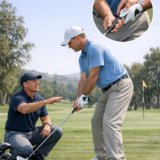
Putting proficiency is the single most influential short-game skill in scoring performance,yet it remains one of golf’s most misunderstood motor tasks. Achieving a repeatable, confident stroke requires precise coordination of kinematics (putter path, face angle, impact location), kinetics (weight distribution, shoulder and forearm force production), perceptual judgment (green reading, distance control), and consistent temporal patterns (tempo and rhythm). An evidence-informed approach reframes putting from a purely feel-based art into a measurable sensorimotor skill that can be analyzed, trained, and transferred to on-course performance.
This article synthesizes contemporary biomechanical principles, motor-learning theory, and empirically grounded practice design to provide actionable strategies for correcting stroke faults, refining swing mechanics, and enhancing driving consistency through integrated training. Emphasis is placed on objective diagnostics (e.g., stroke path, face-to-path metrics, impact location, tempo ratios), targeted interventions (movement cueing, constraint-led drills, augmented feedback), and progressive practice protocols that prioritize intentional practice, variability of practice, and error-based learning.
A central theme is the functional integration of putting mechanics with full-swing and driving performance. By situating the putting stroke within the broader kinetic-chain context-posture,shoulder rotation,spine angle,and tempo-coaches and players can remove inter-stroke conflicts and promote transfer across all strokes. Practical recommendations address common maladaptations (yips, deceleration, inconsistent contact), prescribe measurable drills to restore stability and feel, and outline monitoring methods to quantify enhancement over time.
Readers will be equipped with a concise diagnostic framework, a set of reproducible drills tied to specific biomechanical targets, and structured practice schedules that translate laboratory measures into on-course gains. The goal is a replicable pathway from assessment to corrective strategy to performance maintenance, grounded in measurable outcomes and scalable for recreational to elite players.
biomechanical Foundations of a Repeatable Putting Stroke: Joint kinematics, Center of Mass and Postural Control
Achieving a repeatable putting stroke begins with deliberate control of joint kinematics and a stable postural platform. Start by adopting a balanced setup: spine tilt ≈ 20-30° from vertical, knee flex ≈ 10-15°, and a stance width that places the center of mass (COM) approximately between the mid‑foot and the balls of the feet (roughly 50/50 to 55/45 weight distribution front/rear). From this base, establish a primarily shoulder‑driven pendulum action where the shoulders rotate about the spine and the elbows act as passive hinges; target shoulder rotation of ~15-30° on the backswing for most short putts, with wrist break kept under ~10° to minimize unwanted face rotation. In practical terms, check that the putter face remains square through impact by feeling the shoulders initiate both backswing and follow‑through in a smooth 2:1 tempo ratio (backswing:follow‑through), which promotes consistent loft interaction and top‑spin rather than bouncing or skidding. guard the COM against lateral sway: allow only minimal medial/lateral excursions (~1-2 cm) and prevent forward/back weight shifts that change loft at impact-this stability yields a predictable roll and directly reduces distance control errors on variable green speeds.
Once the kinematic baseline is established, translate it into actionable setup checkpoints and progressive practice drills that suit all skill levels. Begin with simple checks: eyes over or slightly inside the ball, shoulders parallel to the target line, and the putter shaft leaning slightly forward so the hands are ~1-2 inches ahead of the ball at address. Then use these drills to ingrain movement patterns and measurable improvements:
- Pendulum metronome drill – set a metronome at 60-72 bpm and stroke to maintain a consistent 2:1 tempo; aim for 80-90% consistency in stroke time over a 20‑stroke set.
- Gate and face awareness – use two tees slightly wider than the putter head to eliminate wrist breakdown; confirm the face returns square by rolling a 6-10 foot target 8/10 times.
- Distance ladder – from 3, 6, 9, and 12 feet, perform ten putts each and record make percentage; set progressive goals (e.g., reach 70% from 6 ft in 4 weeks).
- Chair or narrow‑stance drill – sit lightly on a bench to restrict lower‑body movement, then stand and replicate the same shoulder motion to reduce sway.
Also attend to equipment: ensure the putter’s loft (typically 3-4°) and lie suit your posture,and avoid anchored putting per the Rules of Golf (no anchoring to the body,rule in force since 2016).These drills create objective metrics (tempo variance, shoulder rotation range, make percentages) so both beginners and low handicappers can track progress and refine technique with measurable targets.
integrate biomechanical control with on‑course strategy, mental routines, and environmental adjustments to convert practice gains into lower scores.On the course, read the green for grain and slope and then match stroke length and tempo to conditions: use a firmer, slightly abbreviated stroke on wet or slow greens, and a longer, smoother pendulum on fast, firm surfaces. Troubleshoot common faults with targeted corrections-if putts are consistently pulled, check for early face closing due to excessive wrist action; if distance is short, increase backswing length while maintaining the 2:1 tempo rather than adding speed in the hands. Adopt a concise pre‑shot routine that includes visualization of the ball path and one technical cue (for example, “shoulders swing” or “feel the pause at impact”) to stabilize focus under pressure. Progress markers should include reducing three‑putts by a set percentage (e.g., cut three‑putts by 50% in 8 weeks), improving make rate from key distances (e.g., 6-10 ft), and maintaining stroke repeatability within a ±5° shoulder rotation window. By combining joint‑level mechanics, COM stability, equipment fit, and situational strategy, golfers can build a repeatable, resilient putting stroke that translates directly to improved scoring and smarter course management.

Objective Metrics and Measurement Protocols for Putting Consistency: Force Plates, Inertial Sensors and High Speed Video Analysis
Modern putting improvement begins with precise measurement: integrate force plates, inertial measurement units (IMUs), and high‑speed video into a single protocol to quantify stability, kinematics, and impact conditions. For setup, place the force plate beneath the golfer’s feet and sample at a minimum of 500-1000 Hz to resolve subtle center‑of‑pressure (COP) shifts; attach an IMU to the putter head and one to the sternum or shoulder line sampling at 200-1000 Hz for angular velocity and face rotation; record high‑speed video at 240-500 fps from a face‑on and down‑the‑line perspective to measure dynamic loft, attack angle and face‑to‑path at impact. Key objective metrics to track are address weight distribution (target ≈ 50/50 ±5%), lateral COP displacement (ideal <10-15 mm for repeatable roll), backswing:downswing tempo ratio (commonly 2:1), total stroke duration (typical training window 0.9-1.3 s), and face angle at impact (aim for ±1-2° of square). These measures are explained in accessible terms so that coaches can translate numbers into cues-e.g., an increase in COP lateral excursion correlates with face rotation and missed putts, while a backswing:downswing breakdown disrupts speed control.
Once metrics are established, use them diagnostically to prescribe drills and corrective steps that are measurable and repeatable. first,isolate the stability problem with force‑plate biofeedback: practice holding address weight and reducing lateral COP movement to the 10-15 mm range by making small stance adjustments and engaging hip bracing; a simple drill is to place an alignment rod across the toes while watching live COP output to keep pressure changes ±5% of body weight. Second, correct tempo and face control with IMU‑guided metronome drills-set the metronome to produce a 2:1 backswing:downswing feel and target a specific stroke duration (e.g., 1.0 ±0.15 s) while monitoring putter‑head angular velocity to keep face rotation ±2°.verify impact geometry with high‑speed video: review frame‑by‑frame for loft at impact (~3°-4° dynamic loft for most blades and mallets) and a neutral path; use the following practice items to structure sessions:
- Mirror/Camera Gate Drill: 2-3 minute sets aiming to strike through a 2-3 in. gate while holding face square at impact (video check at 240 fps).
- Force‑Plate Balance Hold: 30‑sec holds focusing on 50/50 weight and minimizing COP sway, repeat 4× with 60 sec rest.
- IMU Tempo Series: 20 putts at set tempo (metronome), alternate distances 6 ft/15 ft to train speed control.
Also, address common mistakes such as overactive wrists (correct with wrist‑restriction training), excessive grip pressure (measure with simple pressure sensors or self‑report aiming for a light but secure hold), and inconsistent ball position (check with a notch on the grip aligned to the ball’s equator).
translate lab metrics into on‑course strategy and measurable scoring improvements through progressive practice and situational simulations. Set short‑term measurable goals-such as increasing make rate from 6 ft to 80% within 6 weeks, or reducing three‑putt frequency by 50% in 8 weeks-and validate progress using the same devices during on‑course warmups (remember that electronic devices are for practice; under the Rules of Golf they are not to be used for assistance during competition). Implement a weekly routine that mixes sensor‑assisted sessions (2 × 30 minutes) with on‑green scenarios: for example, practice 10 putts uphill, downhill and across the grain with target leaving distances (e.g., leave within 18 inches for 60% of attempts) and log dispersion (left/right start) to refine alignment and aim. In windy or wet conditions, use the kinematic data to adjust stroke length and club‑face speed-shorter backswing with slightly firmer acceleration to compensate for slower green speeds-and practice these adjustments on variable‑speed practice greens. incorporate mental routines tied to objective feedback: before each putt perform the same setup checklist (stance, 50/50 weight, eye line, grip tension) and use a single affirmation or visual target to reduce overthinking; over time, the combination of force‑plate stability, IMU tempo, and high‑speed impact verification converts technical gains into consistent scoring improvements.
Precision Drills to calibrate Stroke Path and Face Angle: Measurable Progressions, Feedback Criteria and Performance Thresholds
Begin practice by establishing a reproducible setup and measurable baseline: address posture, eye position, and putter face alignment. Place your eyes directly over the ball or slightly inside the target line to reduce lateral error; check that the putter face is square to the intended line within ±1-2° using an alignment stick or face tape. For stroke-path calibration, decide whether you will use a straight-back, straight-through stroke or a slight arc (inside-square-inside) and measure your chosen path with an alignment stick placed on the ground parallel to the target line. Start with these drills to create repeatable feedback and quantify progress:
- Gate drill: two tees just wider than the putter head to enforce a square face through impact for 50 reps.
- Start-line confirmation: roll 30 putts of 3-6 feet and record how many start within ±3° of your intended line (beginners target 70%+, intermediates 85%+, low handicaps 95%+).
- Face-tape contact drill: 40 strokes to evaluate high/low and toe/heel impact distribution and reduce sidespin.
These baseline checks create objective criteria so that each session can be judged by start-line accuracy, impact location, and make percentage rather than feel alone.
Once setup is consistent, refine the relationship between stroke path and face angle – the primary determinants of initial ball direction and sidespin. Understand that a face angle that is open/closed to the path produces sidespin and a delayed true roll; therefore, aim to control face-to-path differential to within ±1° for precision putting. Use these technical drills and corrective checkpoints to train both novices and low handicappers:
- Mirror/line drill: use a small mirror or two parallel alignment sticks to maintain a square face through impact and train the eyes to see the intended stroke arc.
- Arc-to-straight progression: practice 25 strokes with a pronounced inside arc,then 25 with a neutral path,measuring start direction – the goal is consistent starts regardless of arc style.
- distance control series: perform ladder drills at 5,10,15,and 30 feet to link backswing length (measured in putter head displacement in inches) to distance; for example,a 6-8 inch backstroke typically produces good pace for 6-10 foot putts on medium-speed greens.
Correct common faults-deceleration (accelerate through impact using a 3:1 tempo ratio for backstroke:forward stroke), excessive wrist flip (use a lighter grip pressure and maintain forearm rotation), and face rotation (reduce shoulder-only rotation). In practice, simulate course scenarios such as uphill, downhill, and sidehill lies: slightly alter face angle and increase/decrease backswing length to compensate for green speed and slope, then validate adjustments by measuring start-line and final hole proximity.
translate mechanical improvements into measurable on-course performance and sustained progression by integrating pressure drills, equipment checks, and mental routines. Establish a practice progression over 6-8 weeks with objective thresholds: such as, improve average missed-putt distance from 8 ft to 6 ft and raise your 6-10 ft make percentage by 15 percentage points. Use multi-sensory training methods for different learners-visual learners employ chalk lines and alignment dots,kinesthetic learners use weighted training balls or exaggerated gate widths,and auditory learners use a metronome set to a pleasant cadence. Include these routine elements:
- Pressure set: make 10 consecutive 6-footers for a coin reward or create a match-play scenario to replicate tournament stress.
- Equipment checkpoint: verify putter loft (typically 2-4° of loft at address), lie and shaft length for your posture, and experiment with grip styles to find the most stable face control.
- On-course application: choose when to attack a three-footer versus lag a 40-foot left-to-right breaker; use green-reading techniques (slope percentage and grain direction) and select a conservative line when recovery is difficult to save strokes.
Additionally, incorporate a consistent pre-shot routine and breathing cue to manage pressure and maintain the motor patterns you trained. By tying measurable drill outcomes to course decisions and scoring goals, golfers of every level can convert calibrated stroke-path and face-angle control into lower scores and more confident putting under varied conditions.
Structured Practice Framework for Motor Learning in Putting: Distributed Repetition, Variable Practice and Retention Assessment
Effective motor learning for putting begins with distributed repetition and a repeatable setup that removes unneeded variability.Rather than one long session, schedule multiple short sessions (for example, 10-15 minutes, 3-5 times per week) so neural consolidation can occur between bouts; research and coaching practice show measurable retention improves with spacing intervals of 24-48 hours and additional testing at 7 days. In terms of mechanics, adopt a compact, pendulum-style stroke: shoulder-driven rotation with minimal wrist hinge, a putter shaft that leans forward ~2-4° at address to reduce effective loft, and ball position slightly forward of center (~1-2 cm) to promote a sweeping descent through impact. Setup checkpoints that you should verify every rep include:
- Eye position: directly over or marginally inside the ball line to help read initial roll.
- Stance width: roughly shoulder-width with slight knee flex to stabilise the torso.
- Putter face: aim to be within ±1-2° of square at impact; use impact tape or a mirror for validation.
- Tempo: a consistent backswing-to-follow-through ratio (start with a 1:1 or count “one” back, “one” through; extend to “one-two” for longer putts).
To build robust skill transfer to on-course situations, incorporate variable practice that systematically manipulates distance, slope, speed and target location so the motor system learns to generalize. For practical application, practice on greens with different stimpmeter speeds (for example 8-12 ft) and simulate common course scenarios-tight, backslope-lookers, and putts played with the flagstick in place (allowed under the Rules of Golf). Use the following drills to create variability while tracking progress:
- Ladder drill: take putts from 3, 6, 10, 20 ft-make 8/10 at each distance before advancing; record conversion rates.
- Clock drill: surround the hole at 3, 4, 5 ft with eight positions to practice start line and green-reading.
- Slope/adapt drill: practice on a 2-4% grade both uphill and downhill to feel pace differences and adjust backswing length accordingly (e.g., longer backswing for downhill).
- Gate/path drill: use a 1-2 mm gate to train a square face at impact and a consistent arc; target ±1-2° face variance measured with an alignment aid.
Transition between drills in random order (random practice) to strengthen adaptability; for example, alternate a 3 ft pressure make with a 20 ft lag putt to simulate holing short and saving par on the same hole.
Assessment and retention require objective metrics and targeted troubleshooting so improvements persist under pressure. Implement scheduled retention tests at 48 hours and 7 days post-training to measure percentages (e.g., 3-6 ft make rate target: beginners 60-70%, intermediates 70-80%, low-handicappers 80%+), putts per GIR, and three-putt frequency (goal: <1 three-putt per 9 holes). Use this unnumbered troubleshooting checklist when performance lags:
- Wrist breakdown: reduce flexion by shortening the lever arm and reinforcing shoulder pivot; drill – two-handed eyes-closed stroking for 30 seconds to feel body-led motion.
- Missing start line: square the face with an alignment stick and practice inward/outward gate tolerance; visualise the roll and use a short backswing to prioritise line over speed on short putts.
- Pace inconsistency: set a metronome (≈60-70 bpm) for tempo training and practice lag putts to a 3 ft circle around the hole to reduce three-putts.
integrate mental routines-consistent pre-shot routine, breath control, and imagery of initial ball roll-to stabilize execution under stress. Combine equipment choices (proper putter length, loft adjustment to de-loft at address, and grip size suited to hand tension) with these drills and measurements so technical refinements translate to lower scores and reliable on-course performance.
integrating Putting Mechanics with Full Swing and Driving Performance: Transferable Motor Patterns, tempo Coordination and Energy Management
To create reliable transfer between short-game strokes and the full swing, emphasize proximal-to-distal sequencing, shared rhythm, and consistent face control. Begin by internalizing the same kinetic sequence used in a good drive – torso coil (approximately 90° shoulder turn and ~45° hip rotation on the backswing for most players), weight shift toward the front foot to about 60% at impact, and a deliberate release through the hands – then simplify that pattern for the putting stroke by reducing range but preserving timing. In practice, use a metronome set so that the full-swing backswing-to-downswing ratio is roughly 3:1 and short putts adopt a slightly quicker ratio near 2:1; this creates a predictable tempo that transfers between strokes. To train motor-pattern transfer, perform these integrated drills:
- Impact-bag sequence: three slow swings focusing on body-driven sequencing, then two 6-8-foot putts using the same timing;
- One-handed roll-to-swing: a right-hand putting roll followed by a one-handed half-swing to reinforce low-hand stability and face awareness;
- Metronome rhythm set: 60-70 bpm for putting practice, 40-50 bpm for full-swing tempo work.
These exercises teach reproducible energy management – storing elastic energy in the torso and releasing with a relaxed wrist – which reduces mishits like casting or scooping when moving between clubs.
Next, align equipment, setup, and mechanics so that small adjustments do not break the transferable motor pattern. Ensure clubs conform to regulations (USGA/LGU limits) and are fitted: driver head volume up to 460cc, and lie/length adjusted so setup is repeatable. adopt setup fundamentals that are common across strokes: neutral grip pressure (3-5/10), eyes over or slightly inside the ball-line, and a spine tilt of about 6-10° for full swing; for putting, maintain the same shoulder width stance with the ball slightly forward of center for a slight forward press. Practical setup checkpoints:
- Ball position: driver off the inside of the left heel; mid-irons near center; putter centered to slightly forward depending on arc.
- Face control: ensure the putter’s leading edge and driver face are square through the intended line at impact by using an alignment rod and impact tape.
- Low-point control: practice half-swings and half-putts to keep the low point consistent; use a towel under the armpits to maintain connection.
For measurable goals, aim for a three-putt rate below 5% over a 9‑hole sample (low handicappers) and for beginners target a week-over-week reduction in lateral dispersion on drives by 10-20 yards through tempo control drills.
integrate these mechanical and tempo principles into course strategy,energy budgeting,and adaptive practice. On windier days, deliberately shorten backswing length to reduce clubhead speed while maintaining the same tempo ratio; on fast greens (e.g., Stimp 11-13), increase putter stroke length minimally but keep tempo steady to preserve feel. Use the following situational drills and routines to convert practice into scoring improvement:
- Pressure ladder - make five consecutive 6-8 foot putts, then add a 30‑yard controlled iron shot, repeating until you can link both under 3 attempts;
- Tempo ladder for driving – 10 controlled 80% swings focusing on rhythm, followed by 5 full swings, measuring dispersion and carry distance;
- Green-read simulation - practice three uphill/downhill and three cross-slope putts from the same spot, recording makes and proximity to hole.
Address common faults with specific corrections: casting – strengthen lead wrist set drill; reverse pivot – wall-tilt drills and slow motion swings to rebuild sequencing; overactive hands on putts - two-handed shoulder rock with minimal wrist hinge.in addition, incorporate a brief pre-shot routine (8-12 seconds), controlled breathing, and visualization to preserve tempo under pressure. By linking measurable practice targets, equipment-appropriate setup, and on-course applications, golfers of all levels can convert putting mechanics lessons into more consistent full swings and driving performance, yielding clear scoring benefit.
Correcting Common Putting Faults Through Data Driven interventions: Assessment to Prescription Workflow and Outcome Monitoring
Begin with a systematic, measurement-first assessment that links observable faults to quantifiable putting metrics. Use a short-game launch monitor or stroke analyzer (e.g., face-angle, loft-at-impact, impact point, stroke path and tempo) to establish a baseline; record face-angle at impact within ±1°, dynamic loft ~2-4° at impact, and path within ±2° as target norms.Together evaluate setup fundamentals: stance width (typically shoulder-width ±2 cm), ball position (blade: center to 1 cm forward; mallet: center), eye-line relative to ball (directly over or slightly inside the ball), and shaft lean (forward shaft lean of 2-5° at address for crisp contact). From this data-driven baseline, create an evidence-based problem list that separates errors caused by equipment (wrong loft/lie, long shaft, excessive toe-hang), setup (open stance, ball position), or stroke mechanics (wrist breakdown, excessive face rotation). For quick on-site checks use this setup checklist:
- Grip pressure: hold between 2-4 on a 10-point scale to minimize tension.
- Eye position: vertical alignment over ball centerline.
- Shoulder arc: equal length backswing/through-swing; shoulders, not wrists, should drive motion.
These steps create a repeatable assessment-to-prescription workflow and define measurable outcomes for later monitoring.
Next, prescribe targeted interventions that map directly to the measured faults and to on-course situations (uphill/downhill, grain, wind).When face-angle is open at impact (>+2°), prioritize a face-control sequence: gate drill to improve square-face path, mirror work to check face alignment, and a tempo drill using a metronome to normalize backswing/downswing ratios (aim for a 1:2 backswing:downswing timing initially).If dynamic loft is excessive or causing skid, introduce a forward-shaft-lean drill (place a 2-4 cm wedge under the toe at address or practice with a putter that has 2° less loft) until impact shows consistent forward press 2-5°. For distance control deficiencies, implement a graduated putting ladder (5, 10, 20, 30 feet) with a goal of 80% within a 3-foot radius at each distance for intermediate players and 60% within a 3-foot radius for beginners after a 6-week cycle. Prescriptive practice drills include:
- Gate drill for face/path alignment (short putts, focus on impact point)
- Clock drill for pressure and make-percentage (3-8 ft around the hole)
- Distance ladder for lag-putting control (set target radii and record percentages)
- Forward-lean impact drill using an impact tape or mark to confirm strike below equator
Each drill should have a stated measurable goal and a timeline (e.g., retest in 2 weeks for face-angle improvements) to ensure progression from practice to performance.
implement routine outcome monitoring and course-integration strategies so technical gains translate to lower scores. Track key performance indicators: strokes-gained: putting, putts per round, make percentage from 3-6 ft, and lag-putt success from 20+ ft; maintain a practice log with weekly aggregates and remeasure using the same analyzer every 10-14 days. On-course application requires situational prescriptions: when faced with a severe downhill putt or strong grain, play for pace and reduce break-read by aiming slightly higher on the fall line (aim point adjustment ~2-6 inches depending on green speed/stimp); when wind is present, focus on firmer contact to prevent float, and when the ball must be holed for match play, prioritize line confidence over marginal stroke changes. Additionally, include mental and pressure training-simulated pressure drills (competitions in practice, money balls) and a concise pre-shot routine (visualize line, breathe, two practice strokes, and execute) to stabilize execution under stress. For troubleshooting common persistent issues, consult this quick list:
- Skid then roll: reduce loft at impact, increase forward shaft lean.
- Pulls/Pushes: check aim and face angle with alignment rod and impact tape.
- Inconsistent distance: isolate tempo with metronome and perform distance ladder.
By closing the loop-measure, prescribe, practice, and remeasure-golfers of all levels can convert technical improvements into consistent on-course scoring gains while adapting to equipment, green conditions, and competitive situations.
Periodization and Longitudinal Performance Monitoring for Competitive Putting: Goal Setting, Load Management and Objective Progress Metrics
Begin with a formal baseline assessment and cumulative goal-setting process that mirrors periodized athletic training: establish an initial testing battery, set short-, mid- and long-term targets, then schedule mesocycles that manipulate volume, intensity and specificity.For assessment, perform a standardized 50-100 ball protocol on a true putting surface: 20 putts at 3 ft, 20 at 6 ft, 20 at 10-12 ft, and 20 lag putts from 25-40 ft, recording make percentage, average distance of first return (for misses), and putts per hole simulated. Use these numbers to define objective metrics such as putts per round, 3‑putt rate, one‑putt percentage inside 10 ft, and average left-over distance on missed putts. Next, convert findings into SMART goals (example: reduce 3‑putt rate from 7% to ≤3% and increase make% from 6-10 ft from 28% to 40% within 12 weeks) and enter weekly logs (sheet or app) that track practice duration, drill type, perceived exertion and performance metrics for longitudinal comparison.
Progressively structure practice blocks to manage training load while targeting specific components of the stroke and decision-making.In early accumulation blocks emphasize mechanics and repetition with low-pressure volume: short daily sessions of 20-40 minutes, 3-5 times per week, concentrating on setup fundamentals (eyes over ball, narrow stance, slight knee flex, putter shaft tilt 3-5° forward). Then shift to intensification where speed control, green reading and pressure simulation dominate-shorter, higher-intensity sessions with competitive drills and time-limited repetitions. Practical drills and checkpoints include:
- Clock Drill (six balls around hole at 3-6 ft) for make% and routine consistency;
- Distance Ladder (5, 10, 15, 20 ft single-putt progression) for speed control and feel;
- Gate/Alignment Drill (2-3 mm clearance) to train face angle at impact and low-loft contact;
- Lag-to-Circle (25-40 ft to 3 ft circle) to reduce average return distance; and
- Pressure/Competition Sets (money ball, matchplay scenarios) to rehearse routine under stress.
common technical fault corrections should be embedded in each drill: if the ball consistently misses left, check face angle at address and impact (use a mirror or face tape) and ensure stroke arc matches putter design (straight‑back‑straight‑through = 0° arc, mallet with slight arc = ~2-3°) and tempo targets (try a 3:1 backswing to forward swing timing). monitor physical load: if performance drops during a week, reduce volume and increase rest-this is equivalent to an athletic taper before competition.
translate longitudinal data into course strategy and in‑round execution to convert practice gains into lower scores. implement a pre‑round putting routine of 10-15 minutes that includes short makes, two mid-range speed reps (10-15 ft), and one full‑speed lag to prime both mechanics and feel. Use in‑round metrics: keep a simple scorecard note of first‑putt distances and missed‑short counts to diagnose poor speed judgment or green misreads. Adjust play by conditions-on fast greens (higher Stimpmeter readings) reduce backswing length by 10-20% and emphasize firmer, lower‑loft impacts; on grainy or wet greens increase speed focus and aim point adjustments.Mental periodization is also essential: schedule high‑pressure simulation in practice prior to vital events, rehearse a compact pre‑shot routine (visualize line, breath control, commit), and set measurable competition goals (e.g., no more than one 3‑putt per round). By consistently monitoring objective metrics, progressively managing load, and integrating technical and strategic practice into real‑course scenarios, golfers of all levels can produce measurable improvement in putting performance and scoring.
Q&A
Note on provided search results: the supplied web results refer to Chinese-language discussions of academic degree terminology and are unrelated to golf or putting. The Q&A below is an original, academically styled synthesis addressing biomechanics, measurable drills, and structured practice protocols for putting and for integrating putting mechanics with full-swing and driving performance.
Q1: What is the biomechanical model of an effective putting stroke?
A1: An effective putting stroke is most reliably described by a constrained pendulum model in which the shoulders and torso create a bilaterally symmetrical arc while the wrists act as stabilizers rather than primary movers. Key biomechanical principles include:
– Minimal distal (wrist/hand) compensation; motion originates from shoulder rotation with small elbow flexion/extension.
– Consistent spine angle and head/eye relationship to the ball to preserve sight lines and address consistency.
- Low variability of putter-face rotation at impact (minimized angular velocity about the shaft axis).
– Stable center of mass and consistent vertical load on the feet to control stroke path and tempo.
These principles reduce degrees of freedom, which aids motor control and repeatability.
Q2: Which kinematic and kinetic variables should be measured to evaluate putting technique?
A2: The most informative, measurable variables are:
– Putter path (mm lateral deviation, curvature) and face angle at impact (degrees).- Face rotation during the stroke (degrees and angular velocity).
– backswing/forward-stroke lengths and ratio.
– Tempo (backswing:forward time ratio and absolute durations).
– Impact conditions: ball speed,launch angle,and roll quality (skid/roll transition).
– Strike location on the face (x/y displacement from center).
– Ground reaction forces and weight distribution (N or % body weight) for stability analysis.
– Trial-to-trial variability metrics (standard deviation, coefficient of variation) for consistency assessment.
Q3: What objective targets should coaches and players use?
A3: Targets should be individualized but general benchmarks are:
– Face angle at impact within ±1° to ±2° of square.
– Face rotation through impact <2°.
- Strike location within 5-10 mm of the geometric center on most putts.- Trial-to-trial standard deviation of ball speed and launch angle minimized; aim for low coefficient of variation (e.g., <5-10% for routine short putts).- tempo ratio (backswing:forward) consistent within 5-10% across trials.
Use baseline testing to set personalized targets and track progress.
Q4: What drills provide measurable feedback on face control and alignment?
A4: Effective, measurable drills:
- Gate/funnel drill: place two tees slightly wider than the putter head to quantify lateral path errors; success rate (%) over 20-50 repetitions is a metric.
- Impact tape/marker sheet: records strike location; quantify % hits within a central radius.
- Face-angle mirror or smartphone slow-motion capture: measure face rotation visually and compute degrees using angle-measure apps.
- Alignment laser or string line: quantify address alignment deviation (mm) and track changes.
Record pre- and post-drill metrics to assess improvement.
Q5: How should distance control be trained and measured?
A5: Train distance control using repetitive, escalating-distance drills with objective measurement:
- Ladder drill: place targets at 3, 6, 9, 12 feet and record percentage of putts finishing within a target zone (e.g., 2 feet). Track mean distance-to-hole and standard deviation.
- Ball speed feedback (launch monitor or calibrated radar): aim to reduce variability in ball speed for each target distance.
- Progressive overload: increase difficulty by varying starting distances, surfaces, or introducing stochastic variability.
Measure retention with delayed tests and transfer with putting under simulated pressure.
Q6: What motor-learning principles should guide practice structure?
A6: Principles derived from motor-learning literature:
- Emphasize external focus of attention (focus on ball path or target rather than body parts).
- Use variable practice and contextual interference to promote transfer (vary distances, breaks, green speeds).
- Balance blocked practice (skill acquisition) with random practice (retention/transfer); early phases can be more blocked, with progression to randomized conditions.
- Provide summary and delayed feedback rather than constant augmented feedback to foster intrinsic error detection.
- Use deliberate practice principles: specific goals, immediate measurable feedback, and high repetitions with reflection.
Q7: How do you design an evidence-based practice protocol for putting?
A7: A structured protocol template:
- Assessment (session 0): baseline metrics-make percentage at 3/6/10/20 ft, face-angle variability, ball-speed SD, strike distribution.
- Weeks 1-2 (Acquisition): 3 sessions/week, 30-45 min/session. Blocked drills (short putts), immediate feedback, focus on face control and strike.- Weeks 3-5 (Consolidation): 3-4 sessions/week, 45-60 min. introduce variable distances,ladder drill,gate drill,and transfer tasks. Reduce augmented feedback frequency.
- Weeks 6-8 (Transfer & retention): 2-3 sessions/week, include simulated pressure and combined tasks with full-swing warm-ups. Test retention at 48-72 hours post-practice sessions.
- Metrics tracked each week: make percent by band, ball-speed CV, face-angle SD, strike-center %.
Adjust volume based on fatigue and plateaus; include deliberate rest.
Q8: Give a sample 8-week microcycle (concise).
A8: Example (per week):
- Session A (Short game focus, 45 min): Warm-up (10 min), Gate drill 3x20, 3-ft make series 6x10, Impact-tape assessment.
- Session B (Distance control, 45-60 min): Ladder drill 4x each distance, ball-speed feedback 3x10, 20-ft lag putts 10 reps.
- Session C (Transfer/pressure,30-45 min): Mixed-distance random practice,simulated pressure makes (e.g., consecutive makes), 10-minute combined warm-up with wedges to mimic approach-putt sequence.
Incrementally increase randomization and reduce feedback over weeks.
Q9: How can putting mechanics be integrated with full-swing and driving performance?
A9: Integration strategies:
- Consistent setup mechanics: similar neutral spine angle, ball position consistency, and balance reference points promote transfer between strokes.
- Tempo coherence: developing a reliable temporal pattern (metronome or rhythm count) that scales from putting to full swings can stabilize timing under pressure.
- Motor-pattern linking: practice approach-to-putt sequences so the nervous system learns transition states (e.g., 40-60 yard pitch followed by a short putt).
- physical conditioning: core stability and postural endurance exercises that benefit both putting stability and swing control.
- Perceptual training: green-reading and visual-motor decision-making drills that mirror the cognitive demands following full-swing approach shots.
Q10: What objective tools and technology are recommended for coaches and scientists?
A10: Useful tools:
- High-speed cameras / smartphone slow-motion for face rotation and strike visualization.
- Inertial Measurement Units (IMUs) or putter-mounted accelerometers for path and rotation metrics.
- Launch monitors (TrackMan/Flightscope/GCQuad) for ball speed, launch angle, and roll characteristics on controlled surfaces.
- Impact tape or pressure-sensitive sheets for strike and foot-pressure analysis.
- Force plates for advanced kinetic studies of weight shift and stability.
Q11: How do you evaluate transfer from practice to competition?
A11: Conduct systematic transfer tests:
- Pre/post competitive-simulation test: measure performance on standardized battery (make % at multiple distances, lag-putt residual distance) after a simulated round or pressure task.
- Retention test at delayed intervals (48-72 hours and 2-4 weeks).
- On-course metrics: strokes gained: putting, number of 3-putts, and putts per GIR across rounds.
Compare trends over time rather than single-session changes, and control for green-speed variability.
Q12: What are common Putting faults, their biomechanical causes, and corrective exercises?
A12: Common faults and fixes:
- Excessive wrist action: cause-overuse of distal joints; fix-abdominal/shoulder-driven pendulum drills, cross-handed or arm-lock drills.
- Open or closed face at impact: cause-path-face mismatch or grip tension; fix-gate drill, face-angle mirror, alignment checks.
- Poor distance control (inconsistent ball speed): cause-tempo variability or inconsistent strike; fix-metronome tempo drills, impact tape, ladder drills with speed targets.- Head/body movement: cause-poor posture endurance; fix-stability strengthening, short-session fatigue monitoring.
Q13: How should feedback be scheduled during a practice block?
A13: Effective schedule:
- Early acquisition: higher-frequency knowledge of results (KR) to accelerate learning (e.g., 50-70% of trials receive summary feedback).
- Mid-to-late practice: progressively reduce KR frequency, shift to summary and bandwidth feedback (feedback only when error exceeds threshold).
- Encourage self-assessment and provide occasional prescriptive cues rather than constant correction to foster autonomy and internal error detection.
Q14: How should putting practice be prioritized relative to full-swing practice during a typical training week?
A14: Prioritization depends on player needs and season phase:
- off-season/skills development: 30-40% of short-game time on putting,with structured blocks for motor learning.
- In-season: 10-25% of range/short-game time allocated to putting,with emphasis on maintenance,transfer,and competitive simulation.
- key principle: short, focused, high-quality putting sessions outperform high-volume low-attention practice.
Q15: How do you measure and train psychological aspects of putting (pressure, decision-making)?
A15: Measurement and training:
- Use performance under simulated pressure (consequential rewards, audience, scoring consequences) and quantify change in make percentage.- Train decision-making with variable practice that forces green-reading and speed judgments under time constraints.
- Integrate routines, pre-shot cues, and attentional focus strategies (external focus on target line) into practice so they become automatic in competition.
Q16: What research gaps remain and where should coaches be cautious?
A16: Research gaps and cautions:
- Individual differences: one-size-fits-all prescriptions underestimate different anthropometrics and perceptual strategies.
- Overreliance on technology: objective data is valuable but must be interpreted in the context of on-course transfer.
- Limited long-term randomized trials comparing specific putting training regimens; apply motor-learning principles while monitoring individual response.
Q17: summative checklist for a coach to implement immediately
A17: Quick implementation checklist:
- Baseline assessment: record make % at multiple distances, face-angle SD, strike distribution.
- Select 2-3 measurable targets (e.g., reduce face-angle SD to X°, increase 3-ft make % by Y%).
- schedule 2-4 focused putting sessions per week using blocked → variable progression.
- Use gate and ladder drills plus impact feedback for at least one session/week.
- Integrate approach-to-putt sequences once/week to promote transfer.
- Retest every 2 weeks and adjust goals.If you would like, I can:
- Convert the 8-week protocol into a printable weekly calendar.
- Produce video-linked drill progressions and cue phrases in an evidence-based sequence.
- Create a data-collection spreadsheet template to track the objective metrics listed above.
Note: the provided web search results relate to academic degree terminology and are not relevant to the golf topic requested. Below is the requested academic, professional outro for the article on “Master Putting: Academic Tips to Fix Stroke, Swing & Driving.”
In closing, mastering the putter requires more than intuition or repetition; it calls for an evidence‑based synthesis of biomechanics, measurable practice, and intentional transfer to full‑swing and driving mechanics. This article has outlined how objective measurement (stroke path, face angle, tempo, and distance dispersion), targeted drills that isolate and then reintegrate key kinematic elements, and structured practice protocols (progressive overload, variability, and distributed practice with calibrated feedback) collectively build a repeatable putting stroke.Equally important is recognizing shared biomechanical principles-posture, lower‑body stability, and coordinated sequencing-that enable consistent transfer between the short game and longer shots.
For practitioners and researchers, the implications are twofold: (1) adopt rigorous, quantifiable assessment and periodized training plans tailored to individual motor profiles; and (2) prioritize translational studies that evaluate how putter mechanics interact with full‑swing and driving parameters under realistic pressure. By combining biomechanical insight, reproducible drills, and disciplined monitoring, golfers and coaches can shift putting from a high‑variance skill to a reliably performed component of score management. Continued empirical refinement and individualized application will be essential to sustain improvement and close the gap between practice and performance.