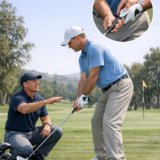
Introduction
“Master Sir Nick Faldo: Swing, Driving & Putting to Fix Your Game” undertakes a focused, evidence-informed examination of the technical and strategic components that underpin one of modern golf’s most methodical careers. Nick Faldo-a six‑time major champion whose career is widely studied for its rigorous biomechanics and competitive discipline-provides an instructive case study for players and coaches seeking to translate elite practise into measurable performance gains. This article synthesizes biomechanical principles, stroke mechanics, and course‑management strategies exemplified by Faldo, with the explicit aim of deriving practical interventions for swing faults, suboptimal driving, and inconsistent putting.
Framed within an applied sports‑science outlook, the analysis proceeds in three interconnected strands. First, a deconstruction of the Faldo swing highlights kinematic sequelae-tempo, plane control, and sequencing-that produce repeatable ball striking. Second, an exploration of driving emphasizes launch conditions, club‑path management, and decision frameworks that optimize distance and accuracy under variable course demands. Third, a focused treatment of putting-anchored by Faldo’s emphasis on lag putting and green reading-addresses distance control, stroke stability, and the psychological routines that reduce three‑putt susceptibility. Where appropriate, each section integrates empirical findings from golf biomechanics and motor‑learning literature to ground recommendations in contemporary scholarship.
Methodologically, the article combines technical film analysis, synthesis of coaching literature, and the translation of elite practices into progressions and drills suitable for intermediate and advanced recreational players. the intended contribution is twofold: to clarify the mechanistic foundations of Faldo’s approach in academically rigorous terms, and to provide a structured, coachable pathway by which golfers can implement those principles to remedy common performance deficiencies.
By articulating precise diagnostics, evidence‑based corrections, and progressive practice designs, this article aims to bridge the gap between elite technique and everyday improvement-enabling practitioners to apply Sir Nick Faldo’s enduring lessons to fix specific elements of their game and to cultivate greater consistency on the course.
Fundamental Principles of the Faldo Swing: Biomechanics, Tempo, and Reproducible Motion
Begin with a repeatable, athletic setup that creates the biomechanical platform for Sir Nick Faldo’s swing principles: adopt a balanced posture with a spine tilt of approximately 12-15° away from the target for full shots, a shoulder turn target of ~90° on the backswing, and hip rotation of roughly 40-50° to allow for proper coil without lateral sway. For most irons place the ball slightly forward of center for mid-irons and one ball forward for long irons/woods, while keeping the hands just ahead of the ball at address for consistent low-point control. Transitioning logically, Faldo emphasizes a stable base: knees flexed modestly, weight distributed about 50/50 at address shifting to ~60-70% on the lead foot at impact. To check these fundamentals during practice, use these short setup checkpoints:
- Alignment stick on the ground pointing to the target to verify aim
- mirror or video to confirm spine angle and shoulder tilt
- Grip pressure held light-to-medium (scale 4-5/10) to allow wrist hinge and feel
These address fundamentals reduce variability and form the reproducible starting condition Faldo prescribes for reliable ball-striking.
Next, break down the mechanical sequence into position-based stages so every swing becomes a reproducible motion rather than a collection of random compensations. Begin the takeaway with a one-piece movement of the hands,arms,and shoulders-keep the clubhead low for the first 18-24 inches-then allow a controlled wrist hinge to a wrist-**** angle of about 90° at the top (measured between shaft and lead arm). Faldo’s instruction often highlights the lower body initiating the downswing: initiate rotation of the hips toward the target while maintaining the upper-body coil to create lag; this produces the requisite shaft-surface angle for solid impact. Emphasizing tempo, adopt a backswing-to-downswing ratio near 3:1 (e.g., a slow 3-count takeaway and transition to a fast 1-count release) to preserve rhythm and timing. For practical request on-course, rehearse an abbreviated sequence: set-up → take-away to waist → half-turn pause → full turn and release to impact; then evaluate ball flight and adjust face control accordingly.
To make motion reproducible across conditions and skill levels, use position-check drills and objective measurements to reduce swing variability.Faldo favored “checkpoint” practice-freeze the swing at key positions (mid-backswing,top,impact) and confirm angles with video. Measurable practice goals might include reducing your swing-path variance to within ±5°, achieving a consistent impact location on the clubface within a 1-1.5 inch window for irons, and improving dispersion so that 70% of approach shots land inside a target 20-yard radius at a given yardage. use these drills to build reproducibility:
- Pause-at-the-top drill (3-second hold) to train transition timing
- Impact-bag drill for compressing the ball and feeling forward shaft lean
- Alignment-stick plane drill to groove the correct swing plane and avoid over-the-top moves
Common faults include early release (clubhead outrunning the body), reverse pivot, and lateral sway; correct them by exaggerating the lower-body lead in slow-motion swings and by practicing with a restricted backswing to maintain connection.
Integrate Faldo’s short game emphasis by treating wedges and putting as precision mechanics tied to the same reproducible motion concept: consistent setup, controlled tempo, and a repeatable low-point. For full wedge swings aim to maintain the same spine tilt and hinge pattern while shortening the arc; for chips and pitches, keep the hands slightly ahead of the ball at impact and use the club’s bounce to prevent digging. Specific drills include:
- Clock drill around the hole for pitch and chip distance control (use 6-8 balls at incremental distances)
- Landing-spot drill: pick a 1-2 foot rectangle on the green and practice landing the ball there to hone trajectory and spin
- Putting ladder for pace: 3,6,9 feet increments to build a repeatable stroke tempo
Equipment considerations matter: confirm wedge loft and gapping at 4-6° increments,choose bounce suited to turf firmness (higher bounce for soft/newer turf,lower for tight/firm lies),and ensure putter length and lie conform to your posture so setup reproducibility is maintained. Also be mindful of Rule-compliant equipment: clubs must conform to the Rules of Golf (see Equipment Rules in the USGA/ R&A guidance) to avoid penalty situations in competition.
translate mechanics into effective course strategy and practice structure so technical gains convert to lower scores. Faldo’s strategic principles-play the percentages, select the side of the green that offers the easiest par save, and always have a bailout plan-should be paired with yardage-based practice: simulate wind, firmness, and slope by varying target sizes and altering club selection. construct weekly practice sessions with measurable outcomes,for example:
- Session A – 60 balls: 30% long game (trajectory and carry),40% mid/short game (85% green proximity),30% putting (putt conversion goals)
- Session B – Situational play: 18-shot simulation from varied lies,including recovery shots from rough and penalty-area decisions
During play,use a clear pre-shot routine and visualization to replicate your practice tempo; when facing conditions like crosswinds or firm fairways,favor lower trajectory and aim for conservative targets. Lastly, monitor progress with objective metrics-fairways hit, greens in regulation, up-and-down percentage-and set incremental targets (e.g., raise scrambling percentage by 8-10% in three months).By weaving Faldo’s positional precision, tempo control, and strategic thinking into structured practice and course decision-making, golfers of all abilities can achieve measurable improvement and more consistent scoring.

Grip, Stance, and Alignment Strategies for Consistent Ball Striking
Begin with the fundamentals of grip as the primary determinant of clubface control at impact. Adopt a repeatable method-whether the Vardon (overlap), interlock, or ten-finger (baseball) grip-based on comfort and hand size, but always prioritize a neutral-to-slightly-strong left-hand grip to promote consistent face orientation; this is a subtlety frequently enough reinforced in Sir nick Faldo’s lessons to balance control and shot-shaping.Maintain a grip pressure of approximately 4-6/10 (light enough to allow wrist hinge, firm enough to prevent clubhead twisting) and check that the two “V” shapes formed by thumb and forefinger point to the right shoulder for right-handed players. At address, verify that the clubface is aimed at the target independent of body alignment-use a mirror or video to confirm face-positioning prior to practice swings. implement a short pre-shot grip-check routine: three seconds to set the hands, align the face, and feel the connection of palms to handle to create a consistent start-point for every shot.
Next, refine stance and posture to create a stable platform that transfers energy efficiently through impact. For most mid-irons use a shoulder-width stance; widen the base by one thumb-width per longer club (driver stance approximately 1-2 inches wider than shoulder width). Position the ball progressively forward as the club length increases: short irons slightly behind to center of stance, mid-irons center to +1 inch, long irons and woods 1-2 inches forward, and driver off the inside of the lead heel. Establish a neutral spine angle with a hip hinge (no excessive knee bend) and maintain a slight knee flex; for the driver include a 3-5° spine tilt away from the target to promote an upward strike, whereas irons should feature a more level spine for a downward, compressive impact. Use the following setup checkpoints while practicing to standardize posture and balance:
- Feet: shoulder-width for mid-irons, wider for longer clubs; toes flared slightly for comfort.
- Weight: irons ~55% on front foot at address; driver ~55% on back foot to facilitate an upstrike.
- clubface: aimed at the target; hands ahead of ball for mid/short irons at setup.
Transitioning from setup to alignment and pre-shot routine, stress the primacy of clubface-first aiming and visual targeting-Sir Nick Faldo repeatedly emphasizes that reliable alignment begins with the face and a clear target. Employ practical alignment drills to ingrain correct lines and visual references: lay an alignment stick on the ground along the intended target line to match your feet and shoulders parallel, then pick an intermediate landing spot (a knoll or patch of short grass) 10-15 yards in front and visualize the flight to that point before committing to the swing. for on-course application, use the “aim small, miss small” approach-identify a short, specific target (e.g., the center of the fairway 150 yards ahead) rather than a vague direction. Drills to reinforce this include:
- Alignment-stick routine: two sticks-one for clubface, one for body-until consistent without aids.
- Gate drill with two tees to ensure square-to-slightly-closed face through impact on short shots.
- Pre-shot routine rehearsal (3-5 seconds): visualize shot shape, set grip/stance, commit.
integrate grip, stance, and alignment into swing mechanics, short-game technique, and course strategy with measurable practice goals and corrective diagnostics. Connect setup to impact by measuring shaft lean and loft: for full irons aim for a slight forward shaft lean at impact (hands 0.5-1 inch ahead of the ball) to compress the ball and control spin; for the driver seek a neutral-to-slightly-upward attack angle with a launch angle of approximately 10-14° and spin in the range of 2,000-3,000 rpm for many players-use a launch monitor to establish baselines and set improvement targets. Short-game drills should be quantifiable: for wedges, a 50-ball practice set with a target of 80% of shots landing within 15 feet of the intended spot within six weeks is an effective performance objective. Equipment considerations-correct shaft flex, lie angle, and grip size-are critical; if shots consistently start offline toward the toe or heel, have your lie angle and grip size checked by a fitter. Common errors and immediate corrections include:
- Overactive hands at impact → practice slow-motion swings focusing on body rotation and delayed release.
- Open stance or aim → use the alignment-stick routine and a club across the shoulders to feel parallel lines.
- Excessive grip pressure → perform short-radius swings maintaining 4-6/10 pressure to restore feel.
Course management and situational adaptability synthesize technical skills into scoring performance. Apply Sir Nick Faldo’s ideology of planning two shots ahead: from the tee choose a landing zone that sets up a preferred approach angle rather than always attacking pins; in wind or wet conditions, adjust stance narrower for control and move the ball slightly back in the stance to lower trajectory. Prescribe a weekly practice plan that balances technical work with strategic simulation: three 20-30 minute setup-and-impact sessions, two 30-40 minute short-game routines, and one 60-minute on-course play/practice focusing on shot selection under pressure. Meanwhile, cultivate mental cues-breathing, commitment to target, and a consistent pre-shot routine-to reduce indecision. By setting measurable targets (fairways hit percentage, proximity to hole, dispersion radius), using drills above, and applying strategic adaptations for weather and lie, golfers from beginner to low handicap can convert technical improvements in grip, stance, and alignment into lower scores and greater on-course confidence.
Driving for Distance and accuracy: Clubface Control and Power Transfer Techniques
Begin with a repeatable setup that makes both distance and accuracy achievable; this foundation influences clubface orientation at impact and the efficiency of power transfer. Adopt a ball position of 1-2 ball widths forward of center for a driver and progressively more central toward the short irons, maintain a stance width of about shoulder width to 1.5× shoulder width depending on the club, and establish a subtle spine tilt of 3-5 degrees away from the target for driver clearance. equipment choices matter: match driver loft (typically 8°-12° for amateurs) and shaft flex to your measured swing speed (target ranges: 85-95 mph for many male mid-handicappers, 95-105+ mph for low handicappers seeking more carry). As Sir Nick Faldo emphasizes in his lessons, a consistent pre-shot routine and precise alignment to your target line reduce compensations later in the swing; practice aimed setups with an alignment rod and pre-shot visualization to automate target identification and address routine before every tee shot.
Next, organize the kinematic sequence for efficient power transfer: ground reaction through the legs and pelvis initiates rotation, followed by torso and then the arms and club-this proximal-to-distal sequence maximizes clubhead speed while preserving control. Strive for a shoulder turn of 80°-110° (depending on adaptability) with hips rotating ~45°-60° on the backswing to create an X-factor (shoulder minus hip turn) in the range of 15°-40° for improved torque and stored energy. To develop lag and late release rather than casted hands, practice the step-and-swing drill and the impact-bag drill-both promote a stable lower body and a late, powerful impact. Measurable practice goals include increasing clubhead speed by 2-4 mph over 6-8 weeks with consistent tempo, improving smash factor toward 1.45-1.50 on the launch monitor, and reducing driver dispersion to within a 20-30 yard corridor for mid-handicappers (tighter for low handicappers).
Clubface control is the primary determinant of ball flight; face-to-path differential creates curvature while loft and speed set launch and spin. A face that is open to the path produces a fade; a face closed to the path produces a draw. Therefore, train both face angle awareness and swing path with diagnostics such as impact tape or spray, and employ the following targeted drills to refine feel and consistency:
- Gate drill for neutral in-to-out path and consistent toe/heel contact
- Alignment-rod parallel path drill (rod 6″ outside ball) to promote on-plane takeaway and release
- Impact spot correction using an impact bag to reinforce forward shaft lean and square face at contact
Sir Nick Faldo’s teaching repeatedly highlights that shaping shots should be consciously planned-use body rotation to influence path and subtle forearm/hand action to control face; on narrow fairways or doglegs, prefer a controlled 75-85% swing to a forced full-power attempt that risks a miss.
Design practice sessions that progress from technical to situational with specific, measurable drills for all skill levels and accommodate different learning styles (visual, kinesthetic, analytic). For beginners, focus on setup checkpoints:
- Neutral grip pressure (firm enough to control, soft enough to allow release)
- Square shoulders and hips aligned with target
- Ball position and tee height appropriate to the club
intermediate players should add speed and consistency drills such as weighted swings and tempo training (use a metronome to target a 3:1 backswing-to-downswing tempo feel), while low handicappers integrate shaping drills and shot-scenario practice (e.g., wind-adjusted low drives). Set weekly,measurable objectives-such as increasing fairways hit by 10% or reducing average tee-shot lateral dispersion by 5-10 yards-and track progress with a launch monitor or on-course scorecard diagnostics. Common errors to monitor include early extension, casting, and an overactive upper body; correct these with chest-down impact bag reps, towel-under-arm swings for connection, and video feedback to verify improvements.
translate technical skills into course strategy and mental control under varied conditions.In crosswinds, de-loft the club by moving the ball slightly back and gripping down to produce a lower launch and reduced spin; in tailwinds, prioritize an optimal launch angle rather than maximum spin to avoid runaway roll problems. Apply Sir Nick Faldo’s course-management maxim: play to the widest part of the fairway and select a shot shape that reduces risk even if it sacrifices some carry-this often lowers score more than raw distance. Incorporate pressure simulation into practice (competitive reps, imposed penalties for miss-hits) and rehearse a concise pre-shot routine to prevent “overswinging” under stress; breathe and commit to a tempo-driven swing. By integrating setup fundamentals, sequenced power transfer, purposeful face control, equipment matching, and strategic decision-making, players from beginner to low handicap can achieve measurable improvements in both driving distance and accuracy, thereby lowering scores through better course management and execution.
Approach Shot Precision and Shot Shaping: Trajectory Management and Shot Selection
Begin with a reproducible setup and pre-shot routine that Sir Nick Faldo stresses in his teaching: align the feet,hips and shoulders to the intended target line,select the club based on required carry and expected roll,then perform a visual rehearsal of the flight and landing. Ball position should be adjusted by club: for wedges and short irons place the ball center to ½ ball forward of center; for mid‑irons ½-1 ball forward; for long irons/hybrids and woods move the ball 1-2 balls forward, and for driver off the left heel. Use a consistent grip pressure (about 5-6/10) and aim for a neutral shaft lean at address for most approach shots, increasing to a slight forward shaft lean (~5°) for crisp divot-taking with mid and long irons. This reproducible foundation reduces swing variability so trajectory choices are executed reliably under pressure.
Trajectory management is achieved through a controlled combination of loft, dynamic loft, and angle of attack. To lower trajectory use a shorter backswing, a more level finish, and reduce dynamic loft by compressing the shaft forward at impact; such as, change the attack angle from a typical iron descent of -4° toward -6° for a lower penetrating flight. Conversely, to increase height, hinge earlier, create more dynamic loft (+2-6°), or select a club with more static loft. When practicing, measure carry distances for each club in increments of 10-15 yards and track how small changes in attack angle change carry; this gives objective numbers for on‑course club selection. Nick Faldo’s emphasis on visualizing the landing area-pick a 3-5 yard window on the green where you want the ball to land-improves decision‑making under variable wind and firmness conditions.
Shot shaping (fade, draw, punch, and high soft shots) depends on the relationship between clubface angle and swing path, plus setup tweaks to influence curve and spin. for a moderate draw, close the face 1-3° relative to the path and aim the feet/hips slightly right of the target (for a right‑handed player); for a controlled fade, open the face 1-3° and align the body slightly left. To produce a low punch (wind play), narrow your stance by 1-2 inches, ball back in stance ½-1 ball, choke down ~1-2 inches and reduce wrist hinge to keep a shallower arc.Common errors include attempting curve solely with the hands (leads to inconsistent contact) or using excessive face rotation; correct these by practicing path/face feel drills listed below and by rehearsing Faldo’s coached rotation sequence-shoulder turn driving lower body rotation-so the arc and face relationship are repeatable.
Equipment and course management must be integrated into trajectory planning. Check loft and shaft flex-modern club lofts can vary by 2-4° from nominal-and account for green conditions: a firm green requires lower‑trajectory, run‑out shots while a soft receptive green favors higher, spin‑generating approaches.When wind is present, quantify it: a tailwind can add 5-15% carry depending on wind strength; a headwind may reduce carry dramatically and increase spin, so choose one club stronger and lower the flight. Also remember the Rules: play the ball as it lies and take relief only when permitted; club selection and shot execution must reflect the lie and hazards. Faldo’s course strategy advice-play to the wider portion of the green, favor the short side of the hole for safe approaches, and leave yourself a preferred side for the next shot-translates into measurable goals such as increasing GIR by 5% per month or reducing approach dispersion to within 10-15 yards of target.
adopt a structured practice plan with measurable drills and troubleshooting checkpoints to convert technique into scoring. Use the following practice items and adapt intensity by handicap level:
- Trajectory Ladder Drill: hit shots to targets at 40, 60, 80 yards with three different trajectories to learn loft/attack relationships.
- Gate/Face‑Path Drill: create a small gate to guide clubhead path and use alignment sticks to see face‑to‑path relationship-record degrees on a launch monitor if available.
- Punch‑to‑Full Progression: 20 punches, 20 three‑quarter swings, 20 full swings to refine tempo; use a metronome at 60-72 bpm for consistent rhythm.
- On‑Course simulation: practice approach shots into varying pin placements and with different wind directions; commit to club and intended landing window before each shot.
For troubleshooting, look for these symptoms: thin shots from early release (correct with wrist‑hinge reset drills), hooks from closed face at impact (use alignment and face‑angle feedback), or lack of distance control (track carry numbers and adjust swing length by 10-15%). Integrate mental routines-visualization, a two‑breath pre‑shot routine, and a committed swing thought (e.g., “finish low” for low shots)-to make these technical changes stick. By combining faldo‑style target focus,measurable practice prescriptions,and course‑aware club selection,golfers of all levels can refine approach precision and shot shaping to lower scores consistently.
lag Putting Methodology: Speed Control, Distance Management, and Routine Development
Effective long-range putting begins with a consistent foundation: setup, posture, and a pre-shot routine that prioritize speed control over attempting to “hit the line.” Drawing on Sir Nick Faldo’s emphasis on repeatable fundamentals, start with a neutral stance, eyes directly over or slightly inside the ball, and a slight forward shaft lean (0-3°) so the putter’s loft delofts at impact. Use a putter with a static loft of about 3-4° and set the ball slightly forward of center for flatter, lower-launch roll-this combination produces a truer initial roll and improved distance control. In practice, adopt a steady tempo ratio of approximately 2:1 (backswing:forward swing) and make this cadence the anchor of your routine so that each lag attempt focuses on pace rather than line alone.
From a mechanical standpoint, execute a compact pendulum stroke with minimal wrist hinge and controlled arc. Aim for a small putter path arc-typically <15°-and limit face rotation through impact to maintain predictable launch direction; excessive face rotation creates variable roll and degrades distance control. For beginners, emphasize pure shoulder rotation with hands acting as passive connectors; for advanced players, refine the same motion by checking for a consistent low point just ahead of the ball at impact. Drill suggestions that isolate mechanics include the gate drill for face control, a metronome drill to lock tempo, and impact tape checks to confirm consistent contact and launch. Practical correction: if you consistently decelerate, shorten your backswing by 10-20% and re-establish the 2:1 tempo before lengthening again.
Distance management is the central objective of lag putting and requires measurable goals and situational adaptation. Set objective targets such as leaving putts from 20-30 ft within 3 ft 70% of the time,and from 40-60 ft within 6 ft; track these during practice to quantify progress. Read greens by combining slope, grain, and speed-on fast greens (high Stimp readings) reduce your backswing length by approximately 10-20% and aim to land the ball earlier on downhill putts to prevent excessive skid. When applying Faldo’s course-awareness strategies, factor in hole location and pin placement: on tucked pins on the lower tier, favour pace that holds the tier even if it leaves a longer, safer comeback putt. Practice drills to develop these skills include:
- the ladder drill (place tees at 3, 6, 9, 12 ft and attempt to leave putts inside each marker from consistent yardages),
- 30/60/90 pace drill (three stations at 30, 60, 90 feet with target cones),
- the uphill/downhill adjustment set (practice the same stroke on varying slopes to calibrate backswing length).
routine development and the mental approach tie mechanics to performance under pressure. Build a concise 5-7 second pre-putt routine: assess the fall (2-3 seconds), select an intermediate visual target, take one practice stroke with the intended rhythm, then execute. Use a warm-up protocol inspired by elite coaches like Faldo: 15 minutes beginning with 30 putts inside 6 ft to build confidence, followed by 20 lag putts from 30-40 ft to calibrate pace.Include this checkpoint list before each round:
- alignment and ball position confirmed,
- tempo set with metronome or internal count,
- target selected and visualized,
- commitment to speed first, line second.
Address common errors-overgripping, excessive wrist action, or trying to “muscle” long putts-by reverting to your practice routine and simplifying the motion until contact and roll are consistent.
integrate lag putting into course strategy and equipment considerations to convert technique gains into lower scores. Choose putter length and grip size that maintain your natural posture and reduce wrist movement; small changes in grip thickness can alter feel and tempo. On course, decide between aggressive go-for-the-hole attempts and conservative speed-first plays by evaluating the risk of three-putts versus the reward of a make; when in doubt, favour leaving the ball within the 3-foot “make” circle for two-putt security. For measurable improvement, keep a putting log tracking 1-putt %, 3-putt frequency, and average putts per green, and follow a practice template of 3 sessions per week, 20-30 minutes each, focusing one session on mechanics, one on distance drills, and one on routine/pressure reps. By combining Faldo-inspired setup discipline, quantified drills, and strategic course application, golfers at all levels can achieve repeatable speed control, superior distance management, and a reliable routine that reduces scores.
Practice Protocols and Effective Drills to Ingrain faldo Techniques
Begin each practice session by reinforcing setup fundamentals that Sir Nick Faldo emphasized: neutral grip, square shoulders to the target line, and a balanced athletic posture. Ensure the spine tilt is maintained at approximately 10-15° away from the target for mid‑irons and slightly more for longer clubs; this creates a consistent low point and favors descending strikes. Verify ball position according to club (center for short irons, progressively forward for long irons and driver; driver just inside the left heel) and confirm a pre-shot alignment using an alignment stick or club on the ground so the feet, hips and shoulders are parallel to the intended target line. Practice checkpoints:
- Grip pressure: hold the club at 4-5 out of 10 intensity to allow release without tension.
- Weight distribution at address: 50/50 for short game, moving to a slight forward bias for full shots.
- Shoulder turn target: aim for approximately 90° of shoulder rotation on a full backswing (adjust for flexibility).
These measurable setup standards create repeatability and give immediate, objective feedback during drills.
Progress from setup into the rotary, body-driven swing that defined Faldo’s approach by prioritizing the sequence: lower body initiates the transition, the torso follows, and the arms release through impact. Emphasize maintaining the lag angle through the downswing-do not cast-so the club releases with the hands slightly ahead of the ball at impact; target 1-2 inches of shaft lean at impact for crisp iron strikes. To correct common errors such as early extension or casting, employ these practical drills:
- Towel under both armpits drill – maintains connection between arms and body and promotes a single unit turn.
- Impact bag drill – trains a square, solid impact and forward shaft lean without scooping.
- Step-through drill – encourages a proper weight shift and rotation through the shot.
For advanced players, integrate video or launch monitor feedback to quantify clubhead speed, attack angle, and face-to-path metrics; set targets such as reducing side spin by a measurable percentage or achieving a consistent attack angle within ±1° for specific clubs.
Short game mastery is a cornerstone of Faldo’s scoring philosophy; allocate focused practice to chipping, pitching, bunker play, and putting with precise, repeatable routines. For chipping, adopt a narrow stance, a slightly open clubface where appropriate, and a hands‑forward setup so the club strikes the turf 1-3 inches after the ball; practice landing-zone control by varying swing length to place the ball to a predetermined spot on the green. In bunker play, use an open stance, accelerate through the sand, and enter the sand approximately 1-2 inches behind the ball to ensure clean explosion shots. For putting, utilize Faldo’s lag principles: a shoulder-driven pendulum stroke with minimal wrist break and a putter loft that matches the stroke (commonly 3-4° loft). Effective putting drills include:
- Distance ladder drill – place targets at 6, 12, 18 and 24 feet and record proximity to hole, aiming to reduce three-putts to a set target (e.g., under 10% of attempts).
- Gate drill – improves face alignment and stroke path for short putts.
Set measurable goals such as improving average proximity to hole to 12-15 ft for amateurs or 8-10 ft for low handicappers.
Structure practice sessions with deliberate variation and progressive overload: begin with technical block practice to engrain movement patterns, then move to variable and random practice that simulates on-course variability and decision-making pressure. A practical weekly allocation could be 50% short game, 30% long game, and 20% putting for most amateurs, with adjustments for individual weaknesses.Implement session protocols such as:
- Warm-up: dynamic mobility, short putts, then progressive full‑swing ramp-up over 15-20 minutes.
- Metric tracking: track GIR, scrambling percentage, and proximity to hole; aim for incremental improvements (e.g., +5% GIR or -2 ft proximity over 8 weeks).
- Pressure simulations: play competitive short games or impose scoring penalties during practice to increase focus and resilience.
Use varied feedback modes-visual (video), numeric (launch monitor), and sensory (feel)-to accommodate different learning styles and physical abilities.
transfer practice to the course with strategic routines that incorporate Faldo’s emphasis on precision and mental rehearsal.Before each shot, perform a concise pre-shot routine that includes target selection, club selection, visualization of ball flight, and a breath to settle tempo; commit to a bail‑out plan (percent play) when risk is elevated, for example laying up short of a water hazard to a distance that leaves a cozy wedge. Consider environmental factors: in wind, play one club up or aim to reduce spin by selecting a lower loft and compressing the ball into the turf; on firm or wet turf adjust landing spots and spin expectations accordingly. Equipment considerations also influence protocol: confirm lie angle, shaft flex, and grip size suit your swing to avoid compensations that produce inconsistent contact. Adhere to rules and course etiquette during practice rounds-repair ball marks, replace divots, and maintain pace of play-to ensure your practice is sustainable and respectful. By integrating technical drills with on-course scenarios and measurable goals,golfers of all levels can systematically internalize Faldo‑inspired techniques and convert practice into lower scores.
Mental Preparation and Competitive Strategy: Focus, Course Management, and Resilience
Begin each hole with a disciplined pre-shot routine that converts cognitive focus into reliable execution.Limit the routine to 12-20 seconds so decision-making remains efficient; during that time take two to three deep breaths, assess the lie and wind, pick a specific intermediate target (e.g., the left edge of the fairway bunkers), and rehears one focused visualization of the shot flight. Sir nick Faldo’s lesson insight-“see the shot, then swing with one simple thought”-is a practical rule: choose a single, positive swing thought (such as, “rotate through” or “low-to-high”) and discard technical checklists once you step up to the ball.To make this repeatable, practice this routine on the range and under simulated pressure so it becomes automatic under tournament stress.
Translate mental clarity into consistent setup and swing mechanics by standardizing key alignment and body-position metrics. Adopt a shoulder-width stance for mid- and short-irons and about 1.5× shoulder width for the driver, set the ball position to center for wedges, one ball forward of center for mid-irons, and opposite the left heel for the driver (right-handed players). Maintain a light grip pressure, roughly 4-6 out of 10, and a subtle spine tilt of 3-6 degrees away from the target for long clubs to encourage a shallow descent at impact. Then use targeted drills to ingrain these positions: an alignment-rod routine for feet/shoulder alignment, the 3-2-1 tempo drill (3-count takeaway, 2-count transition, 1-count finish) for rhythm, and an impact-bag contact drill to feel square, centered strikes.These measures help golfers of all levels reduce dispersion and improve clubface control-leading to measurable goals such as improving fairways hit by 10% or reducing distance dispersion to within ±10 yards of your carry yardage.
Short-game precision and green-reading separate good scores from great ones; therefore combine technical repetition with perceptual training. For chipping and pitching, emphasize a compact stroke: 65-80% wrist hinge on a pitch, minimal wrist on chips, and a low point just ahead of the ball. Practice the
- clock drill (50 balls from 6, 9, 12, 15 yards with target circles) and
- gate drill for putter face control (two tees to limit arc)
- 3-target wedge routine (carry to 30, 60, 100 yards with 10 attempts each)
For green reading, adopt Faldo’s approach of visualizing the fall line from behind the hole and then walking the putt’s path to check grain and slope; always determine the required pace before aligning the face. Set measurable short-game goals-e.g., get up-and-down from 30-40 yards at a 60% clip or reduce three-putts to fewer than two per round-and use tangible practice targets to track progress.
Course management is applied strategy: select shots that maximize scoring probability rather than stunning but risky plays. Begin by knowing precise yardages and dispersion for each club (carry and total distance within ±5 yards), then plan tee shots to leave approach shots to your preferred side of the green or comfortable yardage (for many golfers this is 100-140 yards to allow wedge control). When the pin is tucked near a hazard or fringe,follow Faldo’s conservative maxim: play to the largest part of the green or to a safe cutoff point and take the short putt rather than attacking an exposed pin. Account for weather and course firmness by adjusting carry by 10-20% in wind or firm conditions and always verify relief options under the Rules (remember that free relief for abnormal ground condition requires dropping from knee height under current Rules). Use situational drills on the range-simulate a short-sided approach, a wind-affected drive, and a forced lay-up-to rehearse strategic decision-making.
cultivate resilience through deliberate practice of pressure and recovery skills so poor holes do not cascade into lost rounds. Implement post-shot rituals for recovery: exhale, note one brief corrective takeaway (no longer than one sentence), and reset your pre-shot routine before the next stroke; this creates a short memory system. Integrate pressure simulations into practice-match-play games, score-based consequences, or a partner-imposed penalty for missed targets-and measure success by adherence to routine (aim for 90% routine consistency during a practice block). Provide multiple learning pathways: visual learners should film and review swing clips with a coach, kinesthetic learners benefit from feel-based drills (impact bag and weighted club swings), and auditory learners can use metronome tempo work. through consistent application of these mental strategies, technical checks, and course-management principles-drawn from Sir Nick Faldo’s emphasis on preparation and visualization-golfers can convert practice into lower scores and reliable performance under tournament conditions.
Equipment Considerations and Data Driven feedback: Custom Fitting and Video Analysis
To harness modern instruction, integrate objective measurement with equipment choices so that swing changes produce repeatable on-course improvement. Begin every fitting or coaching session by recording ball speed,launch angle,spin rate,clubhead speed,smash factor and lateral dispersion using a calibrated launch monitor (e.g., TrackMan, GCQuad, Rapsodo). Simultaneously capture video at minimum 120 fps for general swing review and 240 fps or higher for impact/short‑game analysis. In practical terms, this means pairing data (numerical carry and spin values) with synchronized video frames so you can correlate a specific swing position (for example, an early release or an open face at impact) with an undesirable spin pattern or left/right miss. As Sir Nick Faldo frequently enough teaches, use the data to eliminate guesswork: measure one variable at a time (as a notable example, change shaft flex and keep grip/ball position constant) and document the numerical effect on carry and dispersion before making further changes.
Custom fitting should be structured around measurable yardage gapping and biomechanical realities rather than brand preference.A complete fitting session tests shaft flex and torque, club length, lie angle, loft, and grip size while collecting repeatable carry distances for each club; the target is consistent yardage gaps of 8-12 yards between clubs and a smooth distance progression through your set. For drivers, aim for a smash factor in the range of 1.45-1.50 for low-handicappers and use launch angle/spin to dial optimal carry (e.g., launch 10°-14° and spin 2000-3000 rpm depending on head design). For irons, measure angle of attack: most proficient players record -4° to -6° on mid-irons; beginners often have less negative or even positive AoA, which a fitter and coach should address through setup and weight transfer. Practice drills to reinforce fitting outcomes include:
- impact tape sessions to confirm center-face contact
- yardage ladder: hit three balls at 7, 8, 9-iron and record carry consistency
- two-ball drill: swap shafts/heads and compare dispersion envelopes
Correct common mistakes such as incorrect lie (causing left or right misses) by validating sole-to-ground contact at setup and using dynamic lie checks during the fitting.
Video analysis should be employed as a diagnostic and learning tool with a clear protocol: record three camera angles (face‑on,down‑the‑line,and impact zoom),synchronize them with launch monitor output,and annotate key frames for comparison to targeted positions. Use overlay grids or plane lines to assess swing plane and hip/shoulder rotation; mark the moment of impact to compare dynamic loft and shaft lean.Follow a step-by-step workflow: (1) capture baseline swings, (2) identify one primary fault (e.g., early release or open face), (3) prescribe a targeted drill, (4) re-test and log the numerical change.For accessibility, beginners can use smartphone video at 120 fps and a simple app for slow motion; advanced players should record high‑speed impact and compare to professional benchmarks. Troubleshooting checkpoints include:
- Hands ahead at impact for iron compression (aim for 1-1.5 inches of forward shaft lean on full irons)
- Stable head and balanced finish to ensure correct weight transfer
- Face‑to‑path relationship within ±3° at impact for consistent shot shape
Apply Faldo insights by rehearsing and holding impact positions-he stresses the value of ‘feel the finish’ to ingrain the correct rotation and impact geometry.
Short‑game and shot‑shaping effectiveness are highly equipment-dependent and benefit from data feedback. When fitting wedges,pay attention to bounce angle and sole grind relative to your typical turf interaction: players with steep attack angles need higher bounce (≥10°) to avoid digging,while shallow attackers perform better with lower bounce (4°-6°). Use launch monitor spin rates and carry/roll ratios to select wedge lofts that create predictable stopping patterns; for example,a 56° wedge that produces 7000-9000 rpm on full shots will behave differently in damp vs. firm conditions, so practice both. Drills to connect technique to equipment performance include:
- landing‑zone practice: pick a 5‑yard target and adjust swing length to hit the same spot with varied lofts
- towel drill for lower-body stability and clean contact
- knockdown series: practice three trajectory levels (high, medium, low) to understand how shaft lean and face angle effect spin and carry
In match‑play or windy links conditions, follow Faldo’s pragmatic course advice: lower trajectory, less spin, and aim for the safer side of the green rather than attempting low-percentage flagside approaches.
translate lab improvements into course strategy with a structured plan that uses data to inform club selection, target lines, and mental routines. Set measurable goals such as improving GIR by 10 percentage points or reducing three‑putts by 30% within eight weeks; use practice logs to track changes in dispersion,average carry,and proximity to hole. On the course, apply these rules: choose the club that leaves you a preferred yardage (ideal approach distances where your wedges produce a high percentage of hold), factor in wind adjustments (+/− distance per 10 mph head/tail/wind varies by club), and adopt Faldo-style pre‑shot routines-visualize shape, pick an intermediate target, and commit. For progressive training, consider multiple learning pathways to suit different abilities:
- visual learners: annotated video comparisons and target drills
- kinesthetic learners: impact‑hold drills and low‑flight knockdowns
- data-driven learners: weekly launch monitor reports with coached adjustments
By combining correct equipment, quantified feedback, and deliberate on‑course application, golfers from beginners to low‑handicappers can make predictable, measurable improvements that lower scores and increase strategic confidence.
Q&A
Below is a structured Q&A written in an academic register and professional tone for an article entitled “Master Sir Nick Faldo: Swing, Driving & Putting to Fix Your Game.” The questions address technical, tactical, and practice‑based aspects of the Faldo approach to golf, and the answers synthesize biomechanical principles, practice methodology, and course management that characterize Sir Nick Faldo’s teachings and legacy.
1. What are the core principles of the “Faldo swing” and how do they differ from generic swing prescriptions?
– Answer: The Faldo swing is predicated on repeatable positions, controlled sequencing, and emphasis on precision rather than raw power. Core principles include (a) a fundamentally sound address position with balanced posture and defined spine angle, (b) a compact and controlled takeaway that establishes a consistent swing plane, (c) a full but disciplined shoulder turn that stores rotational energy while minimizing lateral sway, (d) a deliberate transition that encourages lag and delayed release of the clubhead, and (e) a controlled lower‑body rotation through impact to stabilize the strike. Unlike prescriptive heuristics that prioritize maximal clubhead speed or dramatic physical moves, the Faldo methodology privileges reproducible kinematic positions and an outcome‑oriented sequencing that yields consistent ballstriking under pressure.
2. From a biomechanical standpoint, what movement sequencing produces the most consistent ballstriking in Faldo’s model?
– Answer: The optimal sequence emphasizes proximal‑to‑distal activation with temporal separation between the torso and the arms. Initiate the downswing with a controlled rotation of the hips toward the target while maintaining upper‑body coil,creating relative lag in the hands and club.This produces a whipping action where stored rotational energy transfers through the torso to the arms and finally the clubhead at impact. Critical biomechanical features are maintained spine tilt through impact, minimal lateral head movement, and a stable lead leg to permit energy transfer and consistent impact geometry.
3. How does Faldo’s approach to driving integrate accuracy and distance?
– Answer: Faldo’s driving philosophy prioritizes shot placement and control over maximizing distance nonetheless of context.Mechanically this translates to a slightly narrower swing arc for directional control, deliberate ball position and tee height adjustments for trajectory management, and an emphasis on tempo and repetitive swing positions rather than raw force. Strategically, Faldo advocates identifying a preferred driving shape and aiming zone for each hole, treating the driver as a precision tool to set up preferred approach angles. When greater distance is required,controlled increases in swing arc and efficient sequencing (rather than increased force) are recommended.
4. What does “lag putting” mean within the Faldo paradigm,and how is it trained?
– Answer: “Lag putting” refers to the prioritization of distance control on long and medium putts so the ball is left close to the hole rather than attempting to hole every putt. In Faldo’s framework, lag putting is a pendulum stroke with minimal wrist action, consistent stroke length relative to intended distance, and pre‑shot routines to calibrate feel. Training exercises include progressive distance drills (e.g., 10-20-30‑foot ladders), target area drills where the goal is to leave the ball inside a set radius, and rhythm drills using metronome timing to standardize tempo. Video feedback and green‑reading practice are used to refine speed perception and adjust for green conditions.
5. How should players structure practice to implement Faldo’s methods effectively?
– Answer: Practice should be systematic, position‑based, and periodized. A recommended structure: (a) Technical blocks (20-40% of session) focusing on specific positions and drills for swing mechanics; (b) Dynamic ball‑striking blocks (40-60%) where learned positions are applied to full shots with deliberate targets and variability; (c) Short game and putting blocks (20-40%) emphasizing contact, speed control, and holing percentages. Each session should begin with a clear objective,include measurable outcomes (e.g., dispersion patterns, proximity to hole), and conclude with reflection or video review. Weekly periodization alternates intensity and volume, with focused technical work during lower competition intensity phases and more scenario‑based, pressure work leading into events.
6. What diagnostic tools and metrics complement the Faldo teaching process?
– Answer: Objective diagnostics accelerate learning and validation. Useful tools include slow‑motion and high‑frame‑rate video for position analysis, launch monitors for ball speed, launch angle, spin, and dispersion metrics, and stroke analyzers for putting dynamics. Key metrics to monitor when applying Faldo principles include clubhead path and face angle at impact, attack angle, smash factor (ball speed/clubhead speed), launch and spin consistency, driving dispersion, and putting start‑line/roll characteristics. These metrics should be interpreted alongside qualitative feel and course performance.
7. What are common swing faults encountered when adopting the Faldo approach, and how are they remedied?
– Answer: Common faults include early extension (loss of posture through impact), casting (loss of lag before impact), and over‑rotation of the upper body leading to inconsistent impact loft. Remedies aligned with Faldo principles:
– Early extension: drills that reinforce maintaining spine angle (impact bag,mirror work,or a chair behind the hips to feel contact).
– Casting: pause‑and‑pump drills at the top of the swing or short‑arc drills to re‑establish the sensation of retaining lag.
– over‑rotation: tempo drills and shorter, controlled backswing positions to promote better transition sequencing.
All corrective work should focus on achieving repeatable positions rather than isolated muscular cues.
8. How does course management and mental preparation feature in Faldo’s instruction?
– Answer: Mental preparation and strategic course management are central. Faldo emphasizes clear pre‑shot routines, objective decision trees for shot selection, and acceptance strategies for the variability inherent in golf. Tactically,players should evaluate risk/reward based on lie,wind,hole design,and personal shot dispersion rather than defaulting to aggressive options.Psychologically, Faldo advocates performance routines to manage arousal, visualization of successful execution, short‑term memory discipline (one shot at a time), and process‑oriented goals (e.g.,strike quality,tempo consistency) to reduce outcome pressure.9.How should amateurs adapt Faldo’s elite methods to limited practice time and physical constraints?
– Answer: Prioritization is essential. Amateurs should:
– Focus on a small set of high‑leverage changes (address posture, backswing plane, and transition/lag) rather than overhauling the entire swing.
– Allocate more time to short game and putting, where strokes are most readily saved.
– Use deliberate practice: short, focused sessions with specific measurable outcomes rather than long, unfocused hitting sessions.
– Employ low‑impact physical conditioning focused on mobility (thoracic rotation, hip mobility) and stability (core and lead‑leg strength) to support safe replication of key positions.
Modifications should be progressive and validated by ballflight and on‑course results.
10. What practical drills embody Faldo’s teaching for swing, driving, and putting?
– Answer:
– Swing: Alignment‑stick plane drill (place an alignment stick parallel to intended clubshaft plane at address and rehearse takeaways that track the stick), “half‑swing position stops” (stop at key positions to ingrain geometry), and impact bag work for impact feeling.
– driving: Tee‑height and ball‑position experimentation with target‑oriented drives (set a narrow fairway target and use a 12‑ball string drill to measure dispersion).- Putting (lag): Distance‑ladder drill (putt from 10, 20, 30 feet aiming to stop within a 3‑foot circle), pendulum metronome drill (stroke in time with a metronome to standardize tempo), and “start‑line” gate drills to ensure consistent face squaring and roll initiation.Each drill should include objective success criteria (e.g., percentage of balls within target zone) and be integrated into regular practice.
11. How does equipment selection interact with Faldo’s techniques?
– Answer: Equipment should support reproducibility. Club fitting that optimizes shaft flex, length, lie angle, and loft for an individual’s swing characteristics enhances the ability to produce the intended impact geometry. For putting, mallet vs blade choice should be based on stroke type (arc vs straight) and alignment aids that improve start line. Faldo’s emphasis is not on equipment extremes but on appropriate fitting to enable consistent mechanics and predictable shot shapes.
12. What are realistic timelines for measurable improvement when implementing Faldo‑inspired changes?
– Answer: Timelines depend on the magnitude of change and the player’s practice discipline. Minor adjustments (tempo,ball position,basic posture) can yield measurable improvements in 4-8 weeks with regular focused practice. More substantial biomechanical or sequencing changes may require 3-6 months of deliberate practice to achieve on‑course consistency. Continual monitoring and iterative refinement are necessary; retention is accelerated by integrating changes into pressure simulations and tournament play.
13. How should progress be evaluated to determine whether changes are effective?
– Answer: Use a mixed methodology: quantitative performance indicators (fairways hit, greens in regulation, proximity to hole, putting stats, dispersion and launch monitor data) combined with qualitative assessments (consistency of feel, confidence under pressure). Establish baseline metrics, apply interventions, and re‑test under similar conditions. Changes that improve repeatability, shot quality, and scoring efficiency-especially on the short game and putting-indicate effective adoption.
14. Are there limitations or cautions when modeling one’s game after a single elite player such as Sir Nick Faldo?
– Answer: Yes. While elite models provide robust principles, individual anatomical, physiological, and psychological differences mean direct replication is often neither necessary nor optimal.Players should extract underlying principles-repeatable positions, sequence control, strategic discipline-rather than attempting a literal copy of another player’s swing.Coaching should adapt methods to the individual’s strengths and constraints to maximize transfer and reduce injury risk.
15. What final recommendations summarize a Faldo‑informed program to “fix your game”?
– Answer: A condensed prescription:
– Diagnose: record baseline metrics and video.
– Prioritize: identify the highest‑leverage areas (e.g., putting, transition sequencing).
– Structure practice: position‑based technical work, outcome‑based ball work, and scenario/pressure training.- Use feedback: video and launch monitor data to validate changes.
– Integrate mental and course management routines.
– Periodize: cycle intensity and focus depending on competition schedule.
Consistent adherence to these steps,with iterative refinement and realistic expectations,is likely to produce meaningful and sustainable improvement.
If you would like, I can convert this Q&A into a shorter FAQ for publication, add specific drills with step‑by‑step instructions and success criteria, or provide a 12‑week practice plan tailored to a specified handicap. Which would you prefer?
Insights and Conclusions
In sum, the instructional framework presented under the mantle of “Master Sir Nick faldo” synthesizes a rigorous attention to fundamentals with strategic acumen-principles that are readily translatable to measurable improvements in swing mechanics, driving consistency, and putting reliability. Faldo’s methods emphasize repeatable setup and motion patterns, judicious course management, and a disciplined pre-shot routine; when these elements are iteratively rehearsed and objectively assessed (e.g., through video analysis, launch‑monitor data, and on‑course performance metrics), they produce predictable gains in ball striking, distance control, and short‑game scoring. Practitioners and coaches should therefore treat faldo’s prescriptions not as prescriptive dogma but as a coherent, evidence‑compatible template to be adapted to individual biomechanics, skill level, and competitive demands.
the designation “Master” appropriately signals the level of expert refinement embodied in these teachings-reflecting common lexical definitions of mastery as remarkable skill and authoritative command of an art (see merriam‑Webster; Cambridge; Collins). For the serious student of golf, integrating Sir Nick Faldo’s strategic and technical emphases with contemporary coaching tools offers a disciplined pathway to fix persistent faults and to elevate overall performance. Continued empirical evaluation and tailored implementation remain essential for converting these insights into sustained on‑course success.