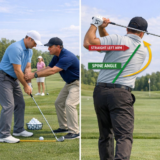
advances in biomechanics, motor‑control research, and modern sports‑science instruments now allow golf instruction to move from rules‑of‑thumb toward rigorously tested, evidence‑based practice. Mastery of the full swing, short game and putting demands a synthesis of mechanical concepts (kinematics, kinetics, and transfer of energy), perceptual‑motor learning principles, and objective outcome measurement.Many customary coaching approaches remain largely descriptive rather than quantitative, which leaves players and coaches without consistent ways to rank interventions or to measure progress against repeatable benchmarks.This revised article condenses peer‑reviewed biomechanical findings and applied training studies into actionable, measurable corrections that reliably boost driving distance and putting accuracy.
Drawing on motion‑capture, force‑plate and launch‑monitor research, the sections that follow identify the swing and stroke variables most strongly linked to performance, summarize intervention studies that modified those variables, and propose drills and testing routines supported by objective metrics. Primary outcome variables include clubhead speed, ball speed and smash factor, launch angle and spin, dispersion patterns and strokes‑gained for full shots; and for putting, face‑angle repeatability, launch‑to‑roll transition, lateral deviation, and putts‑to‑hole under standardized protocols.Every recommended drill includes a paired measurement protocol and attainable progression targets so coaches and players can quantify improvements and attribute change to the intervention rather than to normal shot‑to‑shot noise.
By ranking coaching cues and practice prescriptions wiht an evidence‑based hierarchy-focusing first on interventions with the largest and most consistent effects and explaining how to measure them-this work seeks to close the gap between laboratory insight and on‑range coaching. The objective is practical: equip players and coaches with reproducible, measurable adjustments that increase driving efficiency and shrink putting error, while giving clear criteria for ongoing evaluation and refinement.
Foundations of an Efficient Golf Swing: Movement Patterns, Muscle Roles, and Practical Training
Consistent swing mechanics start with a repeatable address and specific body angles that create an effective kinetic chain. Adopt a neutral posture: spine tilt near 15° from vertical, roughly 15° of knee flexion, and a shaft lean toward the target for irons of about 5-10°. These positions encourage balance and help transmit force from the hips thru the torso into the shoulders and hands. During the backswing aim for a shoulder rotation of about 80-100° with the pelvis rotating roughly 35-45°, producing an X‑factor (shoulder minus hip turn) in the neighborhood of 20-30° for a blend of power and repeatability. Use down‑the‑line and face‑on video to assess shoulder/hip separation at the top, and a launch monitor or radar to measure clubhead speed (typical male amateur: 85-95 mph driver; club‑level elite or low handicap: 100+ mph; note that PGA‑Tour averages hover around ~114 mph in recent seasons). Remember that each 1 mph of clubhead speed roughly adds 2.3 yards off the tee. To address faults such as casting, early extension, or an overactive trail arm, coach players to protect wrist lag and preserve spine angle through the transition; modest, quantified adjustments (such as, cutting lateral sway by 1-2 inches) frequently enough yield reliable flight corrections without rebuilding the swing from scratch.
Translating kinematic goals into strength and conditioning, training should emphasize the muscle activation patterns that drive an efficient swing: forceful hip extension (gluteus medius/maximus), rapid trunk twist (obliques and thoracic extensors), and precise distal control (forearm flexors/extensors and wrist stabilizers). A balanced program targets mobility, stability, strength and power with measurable targets: thoracic rotation ≥ 45° per side for adequate turn; single‑leg balance ≥ 15 seconds for stability; single‑leg RDL with 10-15% bodyweight for 8-12 reps as a baseline strength goal; and rotational medicine‑ball throws for power improvements tracked over 6-8 weeks. Typical weekly structure: 2-3 strength sessions (3 sets of 8-12 reps), 1-2 power sessions (3 sets of 4-6 explosive reps), and daily mobility work. Range drills that carry directly to course performance include:
- Timing & sequencing drill: perform slow half‑swings emphasizing hip initiation followed by torso rotation-use a metronome at 60-70 bpm to lock timing.
- Lag maintenance drill: execute 50%‑speed 7‑iron swings holding the shaft angle for a 2-3 second pause at the top before progressing toward full speed.
- Rotational med‑ball series: 3 sets × 6 explosive throws focusing on hip‑to‑shoulder transfer of momentum.
For newer golfers, concentrate on reliable setup checks and mobility; for skilled players, emphasize rotational power, fine stability and tempo refinement while tracking objective metrics (clubhead speed, launch angle and dispersion).
Convert biomechanical improvements into smarter course play and better short‑game scoring by pairing technique with shot selection and game situations. When wind conditions demand it, manage trajectory and spin: choke down 1-2 inches and reduce loft 2-4° to produce a lower‑flying punch, or add dynamic loft and increase swing intensity for soft landing approaches into firm greens. Short‑game practice should echo full‑swing principles-keep a stable spine on chips and use compact wrist action in bunker exits-and rely on measurable drills such as a clock‑face chipping test (land on the same 10‑ft target from 8, 12, and 16 yards; 10 attempts each; aim ≥ 70% success). Course management connects directly to biomechanics: if tee dispersion exceeds 15 yards, favor position shots (3‑wood or long iron) to improve GIR and cut scrambling. Common on‑course traps-overcomplicating the swing under stress, swapping grips, or attempting to muscle shots-can be reduced with a two‑shot pre‑shot routine, breath control and a single rehearsed swing check (for example, preserving spine tilt on the takeaway). Linking measurable technical goals, targeted physical training and contextual strategy lets golfers at all levels convert biomechanical gains into lower scores and greater confidence.
Data‑Led Driving: Launch, Ball Speed and Practical Optimization for Reliable Distance
Start with a data‑driven baseline: use a launch monitor (or a qualified coach) to log clubhead speed, ball speed, smash factor, launch angle, and spin rate. For many players an effective target window for carry and total distance is a launch angle of ~10-14° with a spin rate between 1,800-3,000 rpm, and a smash factor typically in the 1.45-1.50+ range depending on shaft‑head pairing. To ensure consistent readings standardize ball model, tee height and environmental conditions, and collect at least 20 swings (first 10 serve as warm‑up; next 10 are the test set). Analyze whether distance deficits stem from low ball speed,excess spin,a steep attack angle or off‑center strikes and prioritize fixes accordingly. Key setup checkpoints:
- Ball position: forward (near inside left heel) for driver to encourage an upward attack.
- Tee height: at crown‑top or with half the ball above the crown to bias an upward strike.
- Stance/weight: slight bias to the trail leg at address to load and then shift through impact.
Translate diagnostic data into focused mechanical work to increase ball speed while preserving useful launch and spin. Emphasize efficient energy transfer-improve ground reaction through hip drive and sequencing, stabilize spine angle to protect dynamic loft at impact, and train a shallow‑to‑neutral angle of attack for optimal driver carry (typically +1° to +4°). Sessions should combine technical rehearsal and speed work-for example, a 30-45 minute block with 15 minutes of impact drills and 15-20 minutes of measured speed sets.Effective drills include:
- Towel‑under‑arms: fosters connection and prevents casting.
- Impact bag / punch drill: feel forward shaft lean and compression to improve smash factor.
- Step‑through or feet‑together speed sets: 6-8 swings per set with launch‑monitor targets to raise clubhead speed incrementally (+1-3 mph goals) while keeping smash factor within range.
Common faults-early extension, wrist flipping, inconsistent ball position-respond well to mirror drills, slow‑motion reps and a return to fundamental posture before reintroducing speed.
Pair equipment and strategy choices so improved numbers translate into lower scores. Use loft and shaft adjustments (within USGA/R&A conforming limits) to tune launch and spin: adding 1-2° of loft or a softer flex can raise launch and modestly increase spin-useful in cold weather or for lower‑trajectory players. On course, adjust for conditions: into a headwind favor a lower‑spin penetrating ball flight; when fairways are firm play for more roll by aiming for a slightly higher launch and roll combination; and when hazard carry is the priority target tighter carry dispersion (±5-7 yards) over absolute distance. Support diverse learning preferences with multiple feedback modes-visual (launch monitor), kinesthetic drills on the range and checklist‑led pre‑shot routines-to reinforce the same technical aims. Set explicit practice milestones (for example, a 5-10% increase in ball speed or a 200-500 rpm reduction in spin within 8-12 weeks) and use mental strategies-controlled breathing, a two‑step swing thought and firm club commitment-to lock gains under pressure.
Putting with Precision: Stroke Path, Rhythm, Green Reading and Repeatable Practice
Begin putting with a mechanically sound address and a repeatable stroke that favors face control and minimal wrist involvement. set the eyes over or slightly inside the ball, and position the ball center to 1-2 cm forward from true center for flat putts; this creates slight shaft lean so the putter’s loft (typically ~3-4°) engages for early forward roll. Match your stroke to your putter: face‑balanced heads suit a straight back‑straight through path,while toe‑hang models frequently enough work best with a mild arcing stroke (~1-3° arc at impact). Keep a compact, hingeless pendulum-shoulders produce the motion, elbows remain softly connected, and wrists stay quiet-to deliver a face that returns square at contact. drills to build these fundamentals include:
- Gate drill: tees set 1-2 cm wider than the putter head to enforce a square path.
- Towel under arms: maintains torso‑arm connection and reduces wrist movement.
- Alignment rod / video check: verify eyes‑over‑ball and face alignment-aim for ≤2° deviation at impact.
Green reading and speed control account for the bulk of make‑rates.Pre‑putt, evaluate slope, grain, elevation and wind: view the line from behind the ball (6-10 feet behind the hole), then from the low side to confirm the fall line; use a plumb‑line image or an AimPoint touch to quantify break. Adjust speed deliberately-for instance, a 12‑foot downhill left‑to‑right putt on closely cut bentgrass often needs a firmer stroke and slightly less left aim than it visually appears because faster speed reduces break. employ a simple on‑green checklist:
- Mark & lift per Rules: repair ball marks but don’t improve the line.
- Pick an intermediate aiming reference (grain seam, blade edge or a blade of grass).
- Decide pace first,then set face orientation to the chosen target.
Practice drills such as the ladder drill (putts from 3,6,9 and 12 feet focused on leaving inside a 3‑foot circle) and the clock drill (12 balls arrayed around the hole) develop consistent feel across varied slopes and speeds.
Build repeatable practice routines and measurable goals to convert practice into lower scores: divide sessions roughly into 30% technique, 40% distance control and 30% pressure simulation. Set explicit targets-e.g., 90% make rate from 3 ft, 70% from 6 ft, and leaving putts inside 1.5 m (5 ft) on 80% of 10-20 footers-and log results to track progress. Include equipment checks-putter length (generally 33-35 inches),lie and loft verification with a fitter so the address position produces a square face-and choose grip size to manage hand action (bigger grips for a flicking tendency). Repeatable drills and routines:
- Tempo metronome: practice a 2:1 backswing:forward ratio to lock a smooth pendulum.
- Pressure drill: require consecutive makes to simulate competition stress.
- On‑course simulation: play six holes concentrating on three‑putt avoidance strategies and green‑reading protocol.
Typical errors-coming over the top (fix with gate drill), decelerating at impact (use forward‑roll drills), or shifting eye position (use mirror/video)-are corrected through these reproducible practices. Combining measurable outcomes, structured drills and focused green reading helps players from beginner to advanced improve putting precision and lower scores.
From Metrics to Practice: Level‑Appropriate Drills Informed by Motion Analysis
Translate motion‑capture and sensor outputs into concrete swing interventions using objective benchmarks-X‑factor (shoulder‑to‑pelvis separation),peak pelvic rotation,weight‑transfer percentage and attack angle-to prescribe technique work. Suggested target ranges are: X‑factor 10-20° for beginners, 20-35° for intermediates and 35-50° for low handicappers; aim for pelvic rotation ~30-45° and an address spine tilt of about 5-15°, adjusted for individual body type. Convert deficits into drills and checkpoints: if analysis shows early extension or lateral head movement, use the step‑through drill and a hands‑on hip brace to protect posture; if driver attack angle is negative, adjust tee height/ball position and practice a low‑toe impact drill to shallow the entry.Standardize progress by rehearsing:
- Setup checkpoints: ball placement for driver (inside left heel) and short irons (center), shaft lean at address and neutral grip pressure (4-6/10).
- Swing drills: one‑piece takeaway in front of a mirror, resistance‑band shoulder turns to increase X‑factor, and controlled half‑swings to refine release timing.
- Metrics tracking: log clubhead speed,ball speed,attack angle and dispersion cones each session and aim for incremental gains (e.g.,+2-4 mph clubhead speed or a 10% reduction in lateral dispersion over 6-8 weeks).
Apply motion analytics to the short game and putting where small mechanical tweaks often yield outsized scoring benefits. For putting, convert accelerometer/gyro outputs into tempo and face control targets: pursue a backstroke:forward tempo near 2:1, keep dynamic loft within ±1-2° of static loft at impact, and limit face rotation to ±3° on short strokes. For chips and pitches, measure attack‑angle vs. loft to pick a landing zone; teach 60-80% swing lengths for regular pitch shots and a bump‑and‑run for compact lies. Practical exercises:
- Putting ladder: gates at 3, 6 and 9 feet to reinforce distance control and 2:1 tempo.
- Impact bag / towel drill: target consistent contact and correct casting or flipping.
- Landing‑zone practice: from 40-80 yards mark a 10‑yard deep area, measure proximity and track GIR/up‑and‑down rates to convert motion data into scoring metrics.
Address issues such as the yips with graded exposure and set pre‑shot routines, and reduce excessive wrist action on chips with quiet‑hands drills. Provide scaled versions of each exercise for beginners through low handicappers.
Embed biomechanical advances into on‑course strategy and planned practice so technical gains convert into lower scores. Start sessions with a standard warm‑up (mobility, alignment checks and a 10-15 minute technical block centered on the primary metric from your last test), follow with a focused drill set for 20-30 minutes, and finish with on‑course simulation or pressure drills (for example, drive to a 30‑yard fairway corridor in crosswind). Use benchmarks to guide strategy: a 25‑yard lateral bias with the driver recommends club or aim changes to avoid hazards; poor lag putting suggests conservative approaches and focused lag drills. Recommended management and mental drills:
- targeted plays: repeatedly lay up to a designated yardage to build confidence in club selection.
- Wind/lie simulations: rehearse shots from uneven lies and into wind to learn attack‑angle adaptations.
- Pressure funnel: short matches where a missed short‑game shot costs a stroke to train resilience and routine adherence.
Linking quantified motion analysis to level‑specific drills and measurable on‑course targets (fairways hit,GIR,up‑and‑down rate,three‑putt frequency) creates a closed feedback loop that fosters repeatable mechanical gains,smarter choices and sustained scoring enhancement.
Course Strategy and Technique: Smart Club Selection, Risk Management and pressure Practice
Good shot selection starts with a systematic evaluation of the hole: wind, lie and turf firmness, elevation changes and pin placement relative to hazards. Measure exact distances with laser/GPS and adjust for conditions-generally add or subtract about one club per 10-20 yards of net elevation change-and factor in expected roll (e.g.,add 10-30 yards on very firm fairways). Use a risk‑reward hierarchy: choose higher‑percentage targets (green center, wide fairway) when the penalty for error outweighs the upside; be aggressive only when potential gains clearly exceed the cost of a miss (for instance, hitting driver over a fairway bunker to reach a short par‑5 when the carry to the bunker is comfortably within your average carry plus 10-15 yards). Apply the Rules pragmatically-when a ball is in a penalty area or OB weigh the expected value of a conservative relief versus taking the stroke penalty and replaying. Integrate these calculations into your pre‑shot routine so decisions are consistent under pressure.
After picking a target, convert the plan into repeatable technique. Shot shape depends on face‑to‑path relationship at impact: a 2-4° face‑to‑path difference usually produces a manageable fade or draw; larger differentials create greater curvature. Control trajectory through dynamic loft and attack angle: for driver maintain a slight positive AoA (0-3°) with a shallower shaft lean to optimize launch and cut spin; for irons strike with a descending blow and a low point about 1-2 inches forward of the ball for consistent compression and spin. Useful practice checkpoints:
- Gate drill (two alignment rods) to refine path and stop over‑inside/outside motions;
- Towel behind the ball to train a forward low point and clean iron contact;
- Impact tape or foot spray for feedback on strike location and effective loft at contact.
for the short game emphasize face control and tempo: practice 30-50 yard bump‑and‑runs to master trajectory, and 10-20 foot greenside pitches to tune spin and landing angle. beginners should lock in contact and alignment; advanced players can refine face deflection and spin loft for pinpoint approaches.
Include pressure simulation and structured practice to transfer skills to the course. Use progressive, measurable goals-such as increasing fairways hit by 10 percentage points in 8 weeks or cutting putts per round by 0.5-and validate improvement with adequate sample sizes (e.g., 50-100 shots per drill, nine 18‑hole rounds for baseline). Incorporate constrained practice that mimics scoring stress:
- Matchplay drills (alternate shot or best‑ball with points) to practice decisions under consequence;
- Pressure putting (must make three consecutive 6‑footers before moving back) to build short‑range composure;
- Forced carry reps (place an obstacle at carry distance) to rehearse club selection and ball‑flight control.
Develop a concise pre‑shot routine and breathing technique: visualize flight and landing, commit to a single club and target, then execute.Troubleshoot common misses-right iron shots often indicate an open face or late release; weak drives may be a ball‑position or weight‑transfer issue. Combining strategy, precise technique and pressure‑conditioned practice creates a reliable path from practice to lower scores for all skill levels.
Injury Prevention & Conditioning: Keeping Swing, Putting and Driving Sustainable
Start with a golf‑specific conditioning plan that shields the spine, shoulders and hips while improving the kinematic sequence. Begin every session with a dynamic warm‑up (8-12 minutes): leg swings (10 per side), banded lateral walks (2 × 10 steps), and walking lunges with rotation (2 × 10). Move on to activation and mobility work: thoracic rotations with a band/foam roller (3 × 8 per side), single‑leg Romanian deadlifts for posterior‑chain activation (3 × 8-10 per leg), and side‑plank variants for lateral core endurance (3 × 30-45 seconds). Aim to reach usable thoracic rotation near 45° each side and pelvic mobility sufficient for smooth weight transfer-assess progress with ROM tests every 4-6 weeks. To translate mobility into safe mechanics, preserve a neutral lumbar spine and avoid excessive lumbar rotation; at the top of the backswing aim for a weight distribution around 60/40 (trail/lead) shifting toward 40/60 at impact. Common faults-early extension, over‑rotated lumbar spine, tight shoulders-are addressed with brief targeted drills:
- Pump drill – pause at half backswing to feel spine tilt; repeat 8-12 reps per side.
- Step‑through drill - slow tempo step toward the target on follow‑through (3 sets of 10 slow swings) to groove weight transfer.
- Band‑resisted T‑spine rotations – 3 × 8 per side to coordinate shoulders and hips.
Apply conditioning directly to scoring shots where endurance and repeatability matter. For chipping and bunker play hold an athletic posture with a 45-55° torso tilt as appropriate and a hands‑ahead impact position for consistent loft and less wrist collapse. For putting adopt a low‑tension setup: eyes over or slightly inside the ball, hands ahead with minimal wrist hinge, and putter loft at address ~2-4° to encourage early forward roll. Practice with progressive, measurable drills:
- Clock drill (wedge control): balls at 3, 6, 9 and 12 yards to a 10‑ft target-target 80% inside 10 ft after 4 weeks.
- Distance ladder (putting): sequential putts to 3, 6, 9, 12 feet-repeat until 12 in a row to develop pace sensation.
- Gate drill (stroke path): use tees for 50 strokes to ingrain a square‑to‑square motion.
Teach beginners to focus on tempo and contact (soft hands, consistent setup) and advanced players to refine face rotation and release timing. During practice rounds adhere to the Rules of Golf and local policies-avoid practicing on the hole in competition-and use on‑course reps to simulate green speeds and wind so you can adapt aim and club choice to lie and firmness.
Protect driving longevity by prioritizing efficient sequencing and proper equipment fit to limit compensatory stress. Target an X‑factor of 20-40° for low‑handicap players but favor pain‑free motion over maximal figures-excessive separation without pelvic control increases lumbar loading. Optimize launch with driver angle and shaft selection: many players find a useful launch near 12-15° and spin in the 1,800-3,000 rpm band depending on speed and course. Balance power‑focused sessions (overspeed drills or med‑ball rotations once weekly) with tempo work and recovery-cap high‑intensity speed training at 1-2 sessions per week to reduce overuse injury. On course,choose shots that protect the body-use 3‑wood or long iron on tight fairways to avoid deceleration and limit aggressive swings-and pick lower‑lofted clubs into firm greens to limit excessive spin. Common driving errors and corrections:
- Casting: early wrist release-correct with a waist‑high pause drill (10-12 reps) to feel retained lag.
- Reverse C: posture loss-use mirror‑held posture swings and half‑swings maintaining spine angle (3 × 10).
- Deceleration: fear or poor sequencing-apply step‑through tempo drills and rhythmic speed sets emphasizing rhythm over force.
Integrate mental skills-pre‑shot routine, breath control and conservative course management-into physical sessions so technical gains hold up under pressure. Set measurable goals (e.g., increase clubhead speed by 3-5 mph in 12 weeks or cut three‑putts by 50% in 8 weeks) and track progress with periodic video and simple performance tests. This combination of conditioning, technique tweaks, equipment tuning and on‑course strategy maximizes performance while reducing injury risk across ability levels.
Assessment, Measurement and progression: Objective Testing, Feedback Tools and periodization
Kick off any development plan with a structured baseline battery that yields objective, repeatable metrics. Suggested staged assessment: (a) a 30‑shot iron dispersion test (three targets at 50, 100 and 150 yards, 10 shots each) to measure grouping radius and carry consistency; (b) a driver accuracy/distance test (20 drives with your tournament ball logging carry, total distance, launch angle, spin rate and clubhead speed via launch monitor); and (c) short‑game/putting tests (10 greenside bunker shots from the same lie, 10 pitch shots from 20-40 yards, and a 5/10/20‑ft putting test with 10 attempts each). Track KPIs such as GIR%, scrambling rate, proximity to hole (ft), average putts per round and strokes‑gained when available. Control environmental variables where feasible (same ball, similar wind, identical target spots) and follow competition rules during on‑course testing (do not improve the lie). From the results set time‑bound targets-e.g., increase GIR from 40% to 50% in 12 weeks, reduce three‑putts to 0.5 per round, or tighten 50‑yard dispersion to a 15‑yard radius-and retest every 4-6 weeks.
Introduce objective feedback layers to convert tests into targeted interventions. A progressive feedback approach works well: start with high‑speed video (face‑on and down‑the‑line) to inspect setup, swing plane and impact; add launch‑monitor metrics for attack angle, dynamic loft, clubface angle and ball spin; and include force‑plate or pressure‑mat data for balance and weight transfer where accessible. follow a stepwise process: capture a setup checklist, identify the primary technical fault linked to the objective metric (for example, an outside‑in path causing a slice and low GIR), then choose drills that deliver the correct feel and measurable change. Practical drills:
- Gate drill with alignment rods to encourage an inside‑out path for long clubs;
- Low‑point control (towel 2-3 inches behind the ball) to train forward low point and avoid fat iron shots;
- Wedge distance ladder (6, 8, 10, 12, 14‑yard chips) to calibrate gapping;
- Putting string & mirror work for face alignment and stroke arc with a target of 60% makes from 6 ft within 6 weeks.
Also rehearse setup checkpoints before every shot:
- Grip pressure: moderate (~4-5/10) to permit wrist hinge;
- Ball position: driver just inside left heel, mid‑irons centered, wedges slightly back of center;
- Posture/tilt: neutral spine with ~30° hip hinge and shoulders parallel to the target line;
- Weight distribution: 60/40 (lead/trail) for pitch/chips, 50/50 for full swings.
When correcting faults, pair cues with measurable outcomes (for instance, changing attack angle from −4° to −1° on the driver should raise carry and reduce spin).Offer regressions for novices (shortened swings, half‑swings) and progressive overload for advanced players (overspeed training, launch‑angle tuning).
Wrap improvements into a periodized plan that aligns practice with course goals and peak performance. Structure the macrocycle into three phases: Foundation (4-6 weeks) emphasizing mobility, setup stability and tempo work (find a backswing:downswing tempo that yields repeatable impacts); Specific (6-12 weeks) consolidating technical changes with skill acquisition drills, simulated pressure and strength work (rotational med‑ball throws, single‑leg stability); and Peaking/Competition (2-4 weeks) focused on course management, shot selection and mental routines. A weekly microcycle could include:
- 2 technique sessions (40-60 minutes) using video and launch‑monitor feedback,
- 2 short‑game/putting sessions (30-45 minutes) with outcome‑based reps,
- 1 on‑course situational practice (9 holes) emphasizing target selection and wind responses,
- 1 strength/mobility session (30 minutes).
Include course drills such as forced carries in wind, shaping shots around a bunker, and pre‑shot visualization routines to solidify decision making. Set progressive checkpoints (e.g.,reduce average proximity to hole by 3 ft every 6 weeks or lower handicap by 2 strokes per 12‑week mesocycle) and weave in mental skills-breathing,pre‑shot routine and post‑shot reflection-to enhance consistency. This cyclical, evidence‑informed approach turns objective measures into durable on‑course score gains for beginners through low handicappers.
Q&A
Q1. What is the aim of “Master Swing, putting & Driving: Evidence‑Based Golf Fixes”?
A1. The piece condenses biomechanical research, applied coaching studies and course‑management principles into practical, empirically informed interventions designed to (a) improve swing mechanics and consistency, (b) raise putting reliability, and (c) boost driving accuracy and efficiency-while embedding etiquette and structured practice to increase transfer to the course.
Q2. What evidence supports the recommendations?
A2. Recommendations rest on a hierarchy typical of sport science: peer‑reviewed biomechanics (motion capture, force plates, high‑speed video), experimental training interventions where available, observational and cohort performance studies, and applied coaching case work.Given the rarity of randomized trials in elite golf, findings are triangulated across methods and prioritized by effect size, reproducibility and mechanistic plausibility rather than single studies alone.
Q3. How is “evidence” defined and used?
A3. “Evidence” is treated as an empirical body of observations supporting inferences-used as a mass noun (non‑count) and carefully distinguished from absolute proof. The article differentiates between supporting evidence and definitive causal proof and flags provisional recommendations where direct trials are sparse.
Q4. How were interventions chosen and judged?
A4. Interventions were selected for relevance to common deficits, backing by empirical or mechanistic literature, and practical feasibility. Each was evaluated on study design, replication, effect size and safety. Where direct evidence was limited, mechanistic rationale is provided and recommendations are clearly labeled provisional.
Q5. Which biomechanical principles reliably link to better swing performance?
A5. Repeated correlates include efficient lower‑body‑to‑club energy transfer (proximal‑to‑distal sequencing), a stable but dynamic spine angle, controlled hip‑to‑shoulder separation to generate torque, and repeatable clubface alignment at impact. The emphasis is on kinetic sequencing and consistency, measured via outcomes like clubhead speed, impact location and launch parameters.
Q6.What evidence‑based swing fixes are recommended?
A6. Core fixes:
– Sequencing drills that emphasize lower‑body initiation and proximal‑to‑distal energy flow (step/weight‑shift drills with slow rehearsal).
– Impact‑focused reps with feedback (impact tape,launch monitor) to promote consistent strike and loft.
– Mobility and stability work targeting thoracic rotation, hip ROM and core control.
– Tempo training with metronomic cues to reduce variability.All fixes include objective progress markers and safety guidance.
Q7. How is putting handled-what interventions improve consistency?
A7. the putting section stresses:
- Stroke repeatability: a pendular shoulder motion with minimal wrist action for mid‑range putts.
– Green reading and pace control: progressive drills isolating distance then break reading, using measurable targets.- Immediate sensory feedback (laser lines, marked targets, roll data) and deliberate practice with blocked/variable schedules.
– Consistent pre‑putt routines to lower anxiety and variability.
Progressions specify metrics (make rates, RMS errors) for tracking improvement.Q8.What strategies improve driving?
A8. Driving recommendations:
– Optimize launch via setup and swing tweaks (ball position, tee height, attack angle) guided by launch‑monitor data (launch, spin, smash factor).
– Accuracy drills prioritizing fairway proximity over raw distance using dispersion maps.
– Kinetic‑chain conditioning (rotational power and anti‑rotation core work) to increase clubhead speed safely.
– Data‑driven course decisions with explicit risk thresholds.
Each strategy is paired with target values and a practice progression.
Q9. How should practice be structured?
A9. A structured practice model includes:
– warm‑up: dynamic mobility, short‑game activation, progressive intensity swings.
– Blocked technical work: focused, measurable repetitions with immediate feedback.
– Variable/contextual practice: on‑course scenarios to promote transfer.
– Dedicated short‑game and putting blocks with randomized distances and feedback reduction.
– Courtesy and etiquette integrated into range/green practice.
Session length, rests and reps scale with player level and recovery needs.
Q10. How does the program balance individual variability with generalized fixes?
A10. The approach is model‑based and individualized: begin with objective screening (biomechanics, launch monitor, movement tests), select candidate interventions, and monitor progress with pre‑specified metrics; adapt the plan based on data. General principles (repeatability, energy transfer, tempo control) guide selection, but implementation is tailored to body type, injury history and motor learning profile.
Q11. Which tools and metrics are recommended?
A11. Tools: launch monitors (ball speed, launch, spin, carry, dispersion), high‑speed video for kinematics, force plates/pressure mats for weight transfer, and on‑course KPIs (fairways, GIR, putts per round). Combine objective performance metrics (distance, dispersion, impact quality) with process metrics (tempo variability, repeatability) and subjective measures (confidence, exertion).
Q12. What limitations and biases are acknowledged?
A12. limitations include few randomized trials, small samples in some biomechanical work, heterogeneity in equipment and testing protocols, and publication bias toward positive findings. The article warns against overreliance on single studies, highlights risk of confirmation bias, and calls for replication and multimethod corroboration.Q13. How should statistical and practical significance be balanced?
A13. Distinguish statistical significance from practical (performance) impact. Small statistically notable changes may have minimal on‑course effect, while moderate effect sizes that reduce variability can be meaningful. Report and consider effect sizes,confidence intervals and practical thresholds when prioritizing interventions.
Q14. Are there recommendations for scientific language and reporting?
A14. Yes-use precise terminology, treat “evidence” as a mass noun, avoid equating evidence with proof, and be explicit about uncertainty. Make clear where conclusions are speculative versus supported, and report limitations transparently.
Q15. What practical next steps are advised for coaches and players?
A15. Recommended actions:
– Run a baseline assessment with objective metrics.
– prioritize 1-2 interventions at a time with measurable targets.
– Use immediate feedback tools (launch monitors, impact tape, video) and gradually reduce reliance on feedback as consistency improves.
– Integrate etiquette and on‑course simulation to aid transfer.
– Reassess at planned intervals and adjust based on data.
- when appropriate, consult a multidisciplinary team (coach + physiotherapist + swing analyst) for individualized program design.
References and further reading: The guidance draws on peer‑reviewed biomechanics and applied coaching literature and includes notes on terminology and evidence interpretation. For implementation help, specific study citations and a condensed one‑page training checklist can be provided on request.
The evidence‑based protocols here translate biomechanical insight into practical interventions for swing, putting and driving. Combining objective measurement, level‑appropriate drills and integrated course strategy lets coaches and players target the mechanical and decision‑making sources of inconsistency rather than relying solely on intuition. Implementation should be iterative and data‑driven: record baseline metrics, apply focused interventions, and retest with repeatable measures to quantify change. Future work should refine dose‑response for drill selection,examine practice‑to‑course transfer and explore individual response variability across skill levels. Embracing these methods improves reproducibility in training and, ultimately, score‑reliability on the course. Practitioners who center instruction on empirical evidence are best positioned to deliver sustained, measurable gains in swing, putting and driving.

Unlock Peak Golf Performance: Science-Backed Swing,Putting & Driving
Why biomechanics & Data Matter for better Golf
Modern golf performance blends feel with measurable metrics. Understanding basic biomechanics – weight transfer, hip-shoulder separation (the X‑factor), kinematic sequencing and clubface control – helps you turn practice into repeatable on-course results. Use launch monitors and simple video analysis to track clubhead speed, ball speed, launch angle and impact location. These objective metrics transform drills from “hope” into progress.
Core Swing Mechanics: What to train and Why
Key biomechanical principles
- Ground reaction & weight transfer: Efficient push from the back foot into the front foot creates power and stability.
- hip-shoulder separation (X-factor): A moderate separation between hips and shoulders stores elastic energy for a powerful downswing.
- Kinematic sequence: Pelvis → torso → arms → club. Proper sequence maximizes speed and consistency.
- Clubface control at impact: Path matters, but face angle governs shot direction – practice drills that promote a square face at impact.
- Centered contact: Off-center hits lose ball speed and increase dispersion - impact location should be an explicit practice metric.
Science-Backed Swing Drills (Level-Specific)
Beginner
- Alignment-stick setup drill: Two alignment sticks on ground to groove stance, ball position, and swing plane. 50 reps with feedback.
- Slow-motion mirror swings: 10 reps focusing on posture, shoulder turn and weight shift to ingrain positions.
Intermediate
- Hip-turn resistance band drill: Place a band around hips to practice initiating the downswing with the lower body (3 sets × 10).
- Impact bag / towel drill: Work on compressing the ball toward the target to train forward shaft lean and centered strikes.
Advanced
- Step-through power drill: Take a shorter backswing then step through on the downswing to promote sequencing and speed (6-8 reps).
- Smash-factor & launch monitor sessions: Track ball speed, clubhead speed and smash factor to optimize smash and consistency – focus on incremental gains (0.01-0.02 smash factor improvements matter).
Putting: From Stroke Mechanics to Green Strategy
Putting is 40-50% of your shots in a typical round. Prioritize distance control,line reading,and impact consistency. Biomechanically, a stable lower body with a pendulum-like shoulder-driven stroke yields consistent contact and pace.
Putting drills (all levels)
- Clock Drill (short putts): Place six balls around the hole at 3 feet – make all six. Improves alignment and confidence from close range.
- Ladder Distance Drill: Putt to 3,6,9,12 ft targets and return. Promotes pace control for medium-range putts.
- Gate Drill for face-path: Use two tees to create a gate slightly wider than the putter head - improves square face at impact.
- Pressure routine practice: Simulate ‘must-make’ scenarios to build routine resilience and reduce yips under stress.
Putting metrics to track
- One-putt percentage from 10-20 ft
- Average strokes gained: putting (use GPS apps or stat trackers)
- Distance control accuracy (landing zone ±1 ft)
Driving: Distance with Control
Driving is a mix of efficient power and strategic placement. Use driver-specific mechanics: wider stance, slightly forward ball position, and an upward angle of attack for optimal launch. Work on generating clubhead speed while maintaining face control and minimizing spin for maximized carry.
Driver drills
- One-arm drill: Hit half-swings with the trail arm only to feel the proper wrist hinge and release.
- step-and-drive: Short backswing, step forward into impact to emphasize lower-body lead and sequencing (5-8 reps).
- Tee-height experiment: Small incremental changes in tee height and ball position affect launch angle and spin. Use a launch monitor to find your optimum launch/spin window.
Driver metrics & targets
Use a launch monitor (e.g., TrackMan, FlightScope, GCQuad) to measure:
- ball speed: Higher is better – relates directly to distance.
- clubhead speed: Train with weighted clubs,overspeed,and strength work.
- Smash factor: Ball speed ÷ clubhead speed (target ~1.45+ for drivers).
- Launch angle: Typically 10-14° for many players with driver.
- Spin rate: Too high reduces roll – target varies, but many amateurs aim for 2000-3000 rpm.
12-Week Practice plan: build Skills & Track Metrics
Structure practices around focused themes with measurable weekly goals. Short, frequent sessions beat sporadic long ones.
- Weeks 1-4 (Foundation): Mechanics, alignment, and tempo. 3×30 min sessions/week. Track centered contact percentage.
- Weeks 5-8 (Power & Speed): Add overspeed training, medicine ball throws, and launch monitor sessions. 3-4×45 min sessions/week.
- Weeks 9-12 (Course Simulation & Pressure): integrate on-course simulations,pressure putting routines and scoring drills. 2-3 rounds + 2 practice sessions/week.
drill Progression & Measurable Targets
| Level | Drill | Simple Metric Target |
|---|---|---|
| Beginner | Alignment Stick Routine | 90% correct setup in 50 reps |
| Intermediate | Impact Bag Drill | 80% center strikes in 30 reps |
| Advanced | Launch Monitor Sessions | Smash factor +0.02 over baseline |
Course Strategy & Scoring Consistency
Grate scores come from combining technical skill with smart decisions. Key course-management ideas:
- Play to your miss: Know where you tend to miss and aim to the safe side of hazards and trouble.
- Club selection for approach shots: Choose a club that leaves you comfortable wedge distances into small targets.
- Green-first thinking: identify where to miss to give you a makeable putt.
- Short game emphasis: Up to 4-5 shots per round can be trimmed by improving scrambling and chipping.
Golf Fitness & Recovery
Strength, mobility and stability are essential. Prioritize:
- Rotational mobility: Thoracic spine and hip mobility allow bigger turns and reduce compensations.
- Core stability: Supports transfer of energy and protects the lower back.
- Glute & leg strength: Improves ground reaction force and balance.
- Recovery: Sleep, nutrition and adaptability work maintain consistency across practice and rounds.
How to Track Progress (Simple & Effective)
- Log practice sessions: duration, drill, number of reps, and perceived quality (1-10).
- Record quantifiable metrics weekly: clubhead speed, ball speed, smash factor, centered contact %.
- Play 9-hole scorecards with targeted goals (e.g., reduce 3-putts to ≤1 per 9 holes).
- Video every 2-4 weeks from down-the-line and face-on angles to compare positions.
Case Study: 3-Month Betterment Example
Player A (handicap 18) followed a structured 12-week plan emphasizing 2 weekly launch monitor sessions, 3 putting practices, and rotational mobility work. Results:
- Clubhead speed: +4 mph (from 96 to 100 mph)
- Smash factor: +0.03
- One-putt percentage from 10-20 ft: +12%
- Handicap: dropped from 18 to 14
The combination of objective metrics, level-specific drills, and consistent course strategy produced measurable scoring gains.
Practical Tips & Speedy Wins
- Warm up with wedge to driver progression – start short and work out to the driver.
- record one quality swing per practice hour and analyze it - quality over quantity.
- Use alignment sticks and tees for immediate feedback - cheap and effective.
- Practice under pressure once a week: simulate bets, gamified challenges, or count-must-make drills.
- Sleep and hydration: two small levers with outsized impact on motor learning and consistency.
Equipment & Fitting Notes
A performance plan includes equipment that matches your swing. Key fitting points:
- Shaft flex & length: Influence accuracy and launch.
- Driver loft & face angle: Tune to your launch/spin window.
- Grip size: Affects release and clubface control.
- Putter head and shaft: Match stroke type (arc vs. straight-back-straight-through).
Next Steps to Unlock Peak Performance
Pick 2-3 metrics to improve this month (e.g., smash factor, centered contact %, one-putt %), choose the appropriate level drills above, and commit to a consistent 8-12 week plan. Track progress and adjust – the combination of data-driven practice and smart course strategy produces lasting improvement.