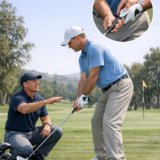
this article distills modern research and applied coaching into an integrated roadmap for improving swing mechanics, putting proficiency, and driving performance. Rooted in biomechanics, motor‑learning science, and empirically tested coaching methods, the piece breaks down the timed sequence of an efficient swing, identifies the sensory and mechanical factors that govern dependable putting, and outlines driver strategies that boost ball velocity, refine launch profiles, and inform smarter on‑course choices. The emphasis is on measurable outcomes (such as,clubhead speed,smash factor,launch angle,and green‑reading precision),staged practice plans,and purposeful drills that encourage transfer from practice environments to competitive play. By combining objective evaluation, tailored technical adjustments, and tactical decision frameworks, this guide gives coaches and committed players a practical path toward greater consistency, lower scores, and more resilient performance under match pressures.
Note on other meanings of “Unlock”:
The word “unlock” is also used commercially to describe a home‑equity firm that provides lump‑sum capital to homeowners in exchange for a share of future home value. That financial service is distinct from the golf content below and is only mentioned to clarify possible cross‑references in other contexts.
Physical Principles of the Swing: Objective Screening and Corrective Steps for power and Reliability
Creating an effective, repeatable golf motion starts with a methodical analysis of the kinetic sequence and a stable setup. Begin at address with consistent baseline positions: a near‑even weight split (roughly 52/48 lead-to-trail for full clubs), mild knee flex (~15°), and a spine tilt around 5-10° away from the target on long clubs to preserve a rotational axis. From this platform, check separation between pelvis and thorax - for many full swings a pelvic turn near ~40° with a shoulder rotation in the 80-100° range produces efficient sequencing where momentum flows hips → torso → arms → club. Simple diagnostic tools-an alignment stick alongside the pelvis to confirm hip rotation and a taped club across the shoulders to quantify torso turn-help identify restricted rotation or early extension. Typical technical faults (casting, overactive hands, or an open face at impact) reduce ball speed, create inconsistent launch angles, and generate predictable miss patterns; the remedy is a connected, compact takeaway and preserving wrist set through the top.to train these elements, use drills focused on sequencing and reproducibility:
- Towel‑under‑arm: maintains connection between torso and arms during the takeaway.
- Step‑through balance drill: enforces weight transfer and stability through impact.
- Pump progression (half → ¾ swings): encourages a later release and holds wrist hinge until transition.
Measure outcomes with a launch monitor or video (ball speed, launch angle, shot dispersion) and set incremental targets-examples include gaining 3-5 mph in clubhead speed or narrowing lateral dispersion to within 10-15 yards of the aim for a given club.
The short game and the tee game demand different technical emphases because they contribute uniquely to scoring.For putting, prioritize face control and stable low‑point: adopt a shoulder‑driven pendulum motion with minimal wrist action, eyes positioned over or just inside the ball, and a putter length that allows a free pendulum without anchoring (anchored methods remain prohibited by the Rules of Golf). Practice with quantifiable goals (for instance, converting 40 of 50 putts from 6 ft) and maintain a tempo ratio near 3:1 (backswing to follow‑through). Use drills such as a narrow gate for path consistency and a ladder for progressive distance control. For driving, set up to create a positive attack and favorable launch: move the ball forward in the stance, tilt the spine slightly to encourage an upward strike, and target an attack angle of about +2° to +4° to maximize carry and manage spin.Productive driving drills include:
- Tee‑height testing: alter tee height to promote a positive attack and observe launch/spin via monitor.
- Feet‑together half‑swings: enhance balance and sequencing for more consistent center strikes.
- Short‑swing face drill (impact bag/short strokes): builds a square face at impact to reduce slices/hooks.
Remember equipment matters: match shaft flex and loft to swing speed and spin objectives; a professional fitting that records smash factor, spin rate, and launch conditions should be part of any corrective plan.
To convert technical gains into lower scores, fold biomechanical work into a structured session and on‑course strategy. Start with a dynamic warmup and an objective data block (10-15 swings recorded on a launch monitor), progress through focused technique sets (30-50 repetitions of a single drill), and finish with randomized situational practice to mimic course pressure. Examples of measurable targets: keep clubhead speed within ±2% across ten drives, reach a driver smash factor above 1.45, or convert 70% of up‑and‑downs from inside 30 yards. Use tactical thinking on course-into heavy wind, lower trajectory by reducing loft or sweeping the swing; on narrow fairways, trade distance for accuracy with a 3‑wood or hybrid.Common on‑course problems and corrective paths:
- Slice: check face angle and path; work on a stronger grip,a more inside takeaway,and face‑control drills.
- Fat shots: inspect for early extension or weight‑back; use posture retention and ball‑position checks.
- Three‑putts: improve speed and reading using ladder drills and distance‑only practice.
layer in mental tools-a consistent pre‑shot routine, breath control, and a process‑focused attention-to hold technical changes under pressure. Alternating measured technical work, equipment tuning, and realistic course rehearsal helps players from beginners to low handicaps turn biomechanical gains into more reliable scoring.
Sequencing, Tempo and Motor Learning: Turning Technique into Dependable Shots
Repeatability starts with consistent setup and a dependable kinetic chain. Establish key address elements: a neutral spine tilt of about 10-15°, weight roughly 55% on the lead foot / 45% on the trail, near‑full shoulder turn (~90° for many men, slightly less for many women), and hip rotation in the 40-50° band depending on mobility. From that base, reinforce the proximal‑to‑distal activation pattern-the hips initiate the downswing, followed by torso, shoulders, arms, and hands-to optimize energy transfer and face control. Useful setup checkpoints for practice:
- Grip pressure: light to moderate (about 4/10) so release can occur naturally.
- Ball position: driver inside left heel, mid‑irons centered, short irons slightly back of center.
- shaft lean: modest forward lean with irons to favor compression at impact.
These measurable markers help the kinetic chain behave predictably across uneven lies, wind, and firm turf.
After establishing basic mechanics, apply motor‑learning prescriptions to embed reliable performance.Move practice from blocked repetition (same shot repeatedly) toward variable and random schedules (different clubs, targets, and contexts)-research and coaching practice both show variable practice improves retention and transfer. Train tempo using a metronome or app with an approximate 3:1 backswing:downswing ratio (example: 0.9 s backswing, 0.3 s downswing → ~1.2 s total).Use technology-launch monitors and slow‑motion video-to capture clubhead speed, face orientation at impact, and dispersion, and set concrete training objectives (for example, cut lateral dispersion by 20% in six weeks or raise smash factor by 0.05). Try these drills:
- Metronome tempo drill: 3 beats back, 1 beat through while gradually increasing speed.
- Towel‑under‑arm: maintain torso‑arm connection to discourage casting.
- Random‑target series: 30 shots from mixed yardages and clubs to demand adaptive sequencing.
Progression-technical slow swings → tempo work → full‑speed random practice-builds motor patterns that resist fatigue and perform under pressure.
Apply sequencing and motor learning to the short game and in‑round strategy. For chipping and pitching, scale the proximal‑to‑distal idea to shorter arcs: keep spine angle, start motion from the hips for consistent contact, and consider a clock‑face model for wedge control (a controlled 9→3 arc can reliably produce predictable pitch distances for many players). Calibrate wedge distances on the grass using either a launch monitor or measured range markers. On windy or firm conditions, match your play to what you can repeat-use lower flight with the ball back in the stance and less loft at address to control run‑out.Correct common errors with focused interventions: early extension → core strengthening and a chair‑drill to feel hip hinge; casting → impact‑bag work to sense wrist lag; tempo inconsistency → return to metronome half swings. Pair technical drills with a short pre‑shot routine and external focus cues (for example,”deliver the head to the middle of the target”) to foster automaticity. A weekly template-three 45-60 minute sessions (mechanics, tempo/short game, simulated play)-creates measurable progression from practice to lower scores.
Putting Mechanics and Reading Greens: Practical, Evidence‑Driven Steps for Pace and Aim
Start by simplifying the putting stroke into repeatable components: setup, face alignment, and a shoulder‑driven pendulum action. Position the ball slightly forward of center for medium putts and place the eyes over or up to 1 inch inside the line for improved visual alignment. A practical setup checklist: square shoulders, small knee flex, and a neutral spine. Aim for a putter loft in the 3-4° range at address to promote early roll; if a putter has excessive loft, reducing that loft often decreases initial skidding. stroke characteristics to emphasize: shoulder pendulum with minimal wrist hinge (allowing only ~2-4° movement) and soft grip pressure (~3/10) to preserve feel. When faults appear-wrist collapse or forearm tension-use slow‑motion half strokes and a metronome (around 60-70 bpm) to synchronize backswing and follow‑through.
Combine distance control with green reading through methodical calibration and situational practice. On a flat green build a backswing‑to‑distance chart: as a starting framework,1 o’clock → short putts (~3-4 ft),2 o’clock → medium (~8-12 ft),3 o’clock → long lags (20 ft+). Personalize by recording 10 reps at each length and computing the mean roll. Factor in slope and grain: even small grades (~1-2°) produce measurable lateral movement-expect on the order of an inch or two of break over 10 ft on a 1° slope, with effects scaling with grade. Practice with drills such as:
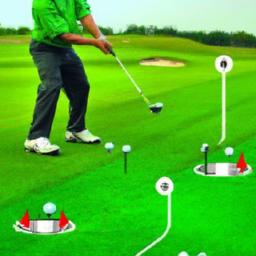
- Gate‑and‑ladder: tees at 3, 6, 9, 12 ft to build progressive pace control;
- Speed calibration: 20 lag putts from 30 ft aiming to stop inside a 3‑ft circle (target ≥70% in‑circle);
- Break mapping: on several greens chart uphill, downhill and across putts and record required adjustments into a personal reference table.
Those habits translate on course-fast, dry greens need shorter swings to cover the same distance, while soft greens require firmer contact and longer strokes.
Connect putting mechanics and reading to equipment choices, rules compliance, and on‑course routines.Note: anchoring the putter to the body is not allowed under current USGA/R&A rules; long‑shaft putters might potentially be used if not anchored and if they create a neutral, agreeable setup. Use a two‑step decision approach on the green: (1) pick a finish zone (safe side vs. hole‑side) based on risk and green speed; (2) determine the pace and read. Training goals that map to scoring: cut three‑putts by 30% in six weeks through three 20-30 minute lag sessions per week plus daily 10‑minute short‑putt work (aiming to hole ≥80% inside 6 ft). If aim errors persist, verify face alignment and eye position with an alignment rod; for distance variability, re‑calibrate tempo via metronome drills and the ladder exercise; if nerves affect execution, add two diaphragmatic breaths before the stroke and visualize the desired pace and path.
Driver Dynamics & Launch Tuning: Face Control, Loft Choices and conditioning to Gain Yards
Distance control depends on accurate face orientation and the relationship between path and dynamic loft. The impact face angle primarily determines lateral flight while clubhead speed and dynamic loft dictate launch and spin. For many players with swing speed above ~95 mph, an attack angle around +2° to +4° increases carry; players below ~90 mph may benefit from higher static lofts and a shallower attack to raise launch. Train with immediate feedback tools: an impact bag to feel centered strikes, face tape or spray to see contact location, and a gate made from tees to encourage a square path. Frequent issues-early release (loss of lag), open face at impact from insufficient wrist set, or lateral sway-are addressed with a compact takeaway, preserved spine angle, and slow‑motion half‑swing repetitions until a square impact is consistent. Track progress on a launch monitor and set stepwise targets such as a +3-5 mph gain in clubhead speed or a 20-30% cut in sidespin over 8-12 weeks.
Equipment fitting and loft selection fine‑tune launch optimization. Start with static fitting recommendations (as a guideline): higher loft (e.g., 12-14°) is often useful for slower swing speeds (~85 mph), medium lofts (10-12°) for mid speeds (~85-95 mph), and lower lofts (8-10°) for stronger hitters-then refine by observing actual launch angle (ideal driver launch commonly lands near 10-14°) and spin (many players target ~1800-3000 rpm depending on conditions). For irons, control dynamic loft at impact and avoid flipping-practices such as a forward press and maintaining wrist set into the downswing help preserve compression. Drills and checkpoints for the range include:
- Setup markers: ball position appropriate to club, consistent spine tilt, and target weight distribution (about 55/45 forward/back for driver at impact);
- Practice drills: tee‑down driver hits to promote a slightly level/descending feel, a mid‑iron impact drill with a headcover placed behind the ball to prevent too‑steep swings, and gate work for face control;
- troubleshooting: excessive spin → check loft/shaft torque; low trajectory → increase loft or adjust posture and hip clearance to raise dynamic loft.
Validate fitting changes on course by observing carry and dispersion in different wind and turf scenarios-downwind holes often benefit from lower spin and a penetrating flight, while into‑wind shots may require slightly higher launch and spin to preserve carry.
Pair technical adjustments with conditioning and course strategy to lock gains into scoring advantage. A targeted physical program emphasizing rotational power, hip mobility, and anti‑extension core strength will support improved sequencing and stable impact positions: include medicine‑ball rotational throws (3 × 8-10 each side), single‑leg deadlifts (3 × 8-10), and Pallof presses (3 × 10-12) two to three times per week; experienced players can add brief plyometric sets (e.g., 6-8 squat jumps) for explosive power. Track advancement-reasonable aims are a +3-7 mph increase in clubhead speed over 8-12 weeks or moving ≥80% of impacts to the face center. On course,convert physical gains into strategy by selecting lofts and shapes (controlled fade vs. draw) to match hole layout and wind, and use pre‑shot routines and visualization to preserve tempo-simple cues such as a two‑count takeaway help stabilize timing under pressure.Integrate visual, kinesthetic, and quantified feedback to suit individual learning styles and to address common faults (over‑rotation, early extension, excessive grip tension) with clear corrective steps.
Progressions, Practice Plans and Using Data: Level‑Specific Prescriptions with Tech Integration
Begin by establishing an objective baseline through technology and clear targets so every session becomes measurable. use a calibrated launch monitor (TrackMan/gcquad/FlightScope) and a shot‑tracking platform (arccos/ShotScope) to log clubhead speed, smash factor, launch angle, spin rate, carry/total distance, face‑to‑path and dispersion; for putting, complement with a stroke analyzer or high‑speed video to quantify face rotation and tempo. Level‑specific goals might look like:
- Beginners: achieve center contact on 8 of 10 strikes and bring driver dispersion inside ±20 yards of target;
- Intermediates: produce repeatable launch and spin windows for each iron (example: 7‑iron launch ≈ 18° with spin 5,000-6,500 rpm) and push GIR toward 60%+;
- Low handicaps: optimize smash factor and attack angles for distance while keeping average approach proximity near 20 ft.
Use metric‑linked progressions such as:
- Baseline drill: 30‑ball center‑contact practice with impact tape and metronome (goal: 8/10 center hits per 10 balls);
- Intermediate: launch‑angle ladder-5 shots at progressively larger swing lengths (25%, 50%, 75%, 100%) while recording peak height;
- Advanced: dispersion challenge-20 drives to a fairway target using shot tracker and then impose attack/face angle constraints based on monitor data.
Objective measures replace vague “feel” objectives and enable targeted progression, data review, and reproducible practice plans.
refine full‑swing and short‑game mechanics with concrete setup checks,measurable positions,and corrective drills that scale by ability.Key setup markers: shoulder‑width stance for mid‑irons and wider for driver, ball position from 1-2 ball widths left of center for short irons to 1 ball inside the left heel for driver, a driver spine tilt of about 5° away from target, and initial weight around 55/45 forward/back for consistent contact. Teach a controlled shoulder turn (~90°), an appropriate wrist set near the top for the player, and aim for 5-10° of forward shaft lean at iron impact to produce crisp divots. Useful drills and tools:
- Impact tape + tee drill: insist on 8 of 10 strikes inside the sweet spot before progressing;
- weighted‑club tempo: metronome at 3:1 backswing:downswing to stabilize sequencing and measure clubhead‑speed variance;
- Pitch/chip ladder: targets at 10, 20, 35 yards tracking proximity-beginners focus on landing zones, advanced players control spin/roll via loft and face angle;
- Putting (2:1 tempo): use a putting mat or lab to measure face rotation and aim for ±2° rotation on a 10‑ft putt and a 2:1 backstroke:forward‑stroke distance ratio.
Correct specific faults directly-outside‑in path (heel marks) → inside‑path gate drills; shallow divot → step‑through and impact‑bag work. Include equipment checks (shaft flex, loft, ball compression) so gear supports, not conceals, technical needs.
Map practice to course strategy with a performance‑oriented weekly plan. A useful distribution is 60% short game (inside 60 yards), 30% approach/iron work, and 10% driver/long game, ending sessions with situational 9‑hole play or pressured putting. Train decision making with scenarios: for a bunkered, soft green with stimp ~9.5, land the ball 10-12 yards short to account for rollout; when in a penalty area, rehearse relief options so choices under Rule 17 are automatic. Set measurable targets tracked by ShotScope/arccos: raise GIR by 10 percentage points in 12 weeks, cut three‑putts to one or fewer per round, and push scrambling above 50%. Add constrained practice (wind, slopes, tight fairways) and graduated pressure tests (monetary or score stakes) to simulate competition. Integrating data, progressive drills, equipment optimization, and deliberate on‑course rehearsal lets golfers at any level produce measurable gains in accuracy, consistency, and scoring.
On‑Course Strategy & Shot Selection: Converting Practice Gains into Lower Scores When It Counts
smart course choices start with a compact pre‑shot routine that synthesizes distance,lie,wind,green contours,and penalty risk into a single plan. Think in target zones rather than the pin: when water protects a green at 150 yards, pick a club/landing area that carries the hazard by 10-20 yards or opt for a conservative 120-130 yard layup to guarantee a comfortable wedge. Account for wind and trajectory-add or subtract roughly one club (~10-15 yards) for every ~10-15 mph of head/tail wind and punch a lower trajectory when gusts exceed 15 mph to reduce spin and drift. Know the Rules of Golf to choose relief and penalty options correctly (for example, free relief from abnormal ground conditions under Rule 16.1) so conservative decisions don’t backfire under match or stroke‑play formats.
To convert strategy into repeatable ball flight, lock basic setup checks into the routine: stance width = shoulder width for mid‑irons, ball position = center to slightly forward by club, and keep a measurable spine angle ~20° (checks via mirror or phone video).for short shots keep a ~60/40 weight bias forward and a forward shaft lean (~5-8°) at impact for crisp contact. Drills to ingrain these feels and shapes:
- Alignment‑rod gate: force an on‑plane takeaway and square impact;
- Clock‑face chipping: replicate 8/9/10 o’clock arcs to maintain a stable low point and minimal wrist action;
- Putting ladder (3‑2‑1): three putts from 10 ft, two from 8 ft, one from 6 ft to simulate pressure and sharpen speed control.
Isolate and fix faults-early extension, flipping, or excess lateral motion-through short targeted repetitions (half‑swing impact drills) and track improvements with carry, dispersion, and impact tape.
Bridge practice and competition with pressure replication, measurable goals, and situational drills that reflect real‑course variables (green speed, slope, weather). Examples of trackable performance aims: mid‑handicappers targeting ≥60% fairways hit,scrambling >50%,and putts per round in the 30-32 band. Simulate competitive tension-play nine holes where each three‑putt costs a penalty stroke, or demand 6 of 10 up‑and‑down saves from tight lies. Verify equipment gapping (aim for 8-12 yards between clubs) and ensure your ball choice aligns with spin and control needs.Finish rounds with a concise debrief on decisions, execution variance, and mental triggers, and use visual, kinesthetic, and verbal coaching modes to suit different learners and reproducibly lower scores under pressure.
Tracking Performance, Periodization and Recovery: Data‑Led Training and injury Prevention
Start by creating a repeatable baseline from objective measures and simple clinical screens so training and rehab are evidence‑based. Use a launch monitor and wearable IMU to record clubhead speed, ball speed, launch angle, spin rate, and attack angle during a standardized 10‑shot test with a 7‑iron and driver; log mean and standard deviation for distance and dispersion. Complement with physical screening-shoulder rotation, thoracic rotation, hip ROM, and single‑leg balance timings. Set short‑term, measurable goals (for example, add 5-10 yards to average 7‑iron carry or gain 2-4 mph clubhead speed in 12 weeks) and use a simple readiness score (sleep, pain 0-10, RPE) to modulate daily intensity. For consistent testing:
- standardize ball type, tee height, and target for each session;
- warm up with 10 minutes of mobility and progressive swing speed work before data capture;
- note environmental factors (wind, temperature) that affect carry.
Convert baseline results into a periodized program balancing skill acquisition, high‑quality reps, and recovery. Organize training into macro/meso/microcycles-such as, a 12‑week mesocycle alternating high‑intensity ballistic sessions with lower‑load technical blocks. Progress overload slowly (≈10% weekly increases in intensity or task complexity) and limit maximal high‑intensity range days to 2 per week for most golfers to reduce overuse. Volume guidance by level: beginners ~300-500 swings/week; intermediates/low‑handicaps ~600-900 swings/week blending power and precision. Embed injury prevention every microcycle with explicit sets/reps:
- rotator cuff band external rotations: 3 × 10-12 each arm;
- pallof press (anti‑rotation): 3 × 8-12 per side;
- single‑leg Romanian deadlift: 3 × 6-8 slow reps to reinforce hip hinge and balance.
Monitor technical issues-if head lateral movement creates inconsistent strikes use a wall‑hinge drill; for early extension reintroduce towel‑under‑arm swings-and recheck changes on a launch monitor to document dispersion and contact improvements.
Adopt recovery protocols guided by data and readiness so gains stick and injury risk stays low. Track HRV or a morning readiness score and, when fatigue indicators appear (sustained HRV drop or RPE >7), prioritize low‑load technical work, mobility flows, and short‑game practice rather than high‑power range sessions. Daily recovery routines might include 10-15 minutes dynamic mobility pre‑practice, a 6-8 minute post‑session soft‑tissue routine, and sleep targets of 7-9 hours. On course, adjust tactics by physical state-choose a 3‑wood or hybrid over the driver when tired or playing into strong wind to preserve fairways and reduce torque demand; on recovery days, reinforce tempo and shape shots at submaximal loads.Incorporate pre‑shot breathing and visualization into every session and maintain short measurable drills (putting ladder from 3/6/9/12 ft with a conversion target, chip‑to‑target 10 reps from four distances aiming for ≥70% within 3 ft) to preserve skill while protecting tissue health.
Q&A
Below is a concise, practitioner‑oriented Q&A tailored to readers of “Unlock Golf Techniques: master Swing, Perfect Putting & Transform Driving.” The answers merge biomechanical concepts, practical coaching progressions, course strategy, and drills suitable for committed players and coaches.
Primary Q&A: Unlock Golf Techniques – swing,putting,driving
Q1: What biomechanical concepts form the backbone of a powerful full swing?
A1: The swing depends on coordinated segmental sequencing (proximal‑to‑distal activation),a stable base and posture,and efficient force transfer from the ground through the pelvis and torso to the club. Key aspects include pelvic‑thoracic separation, preserved spinal angle, delayed wrist release to capture lag, and a controlled center‑of‑mass path-prioritizing timing and joint function over snapshot positions.
Q2: How should a coach evaluate a player to find priority fixes?
A2: Combine multi‑angle video analysis, baseline performance metrics (clubhead/ball speed, launch, spin, dispersion), simple physical screens (mobility, strength, asymmetry), and task analysis under varied conditions. Focus on changes likely to deliver measurable score gains and those within the player’s physical capacity.
Q3: What stepwise approach helps correct early extension in the downswing?
A3: Educate on desired spine angle; use exaggerated slow‑motion drills to feel hip rotation without vertical lift (posture‑holding half‑swings); add ground‑force awareness drills to recruit the posterior chain; reintroduce full swings with reduced load and progress to full speed with video or sensor feedback; pair with hip and thoracic mobility and posterior‑chain strengthening.
Q4: Which variables most influence driving distance and how are they optimized safely?
A4: Clubhead speed, smash factor (impact efficiency), launch angle, and spin rate. Improve speed through better sequencing and targeted power training (medicine‑ball throws, plyometrics) while maintaining control. Tune launch conditions (tee height, ball position, loft) to match speed, and manage workload and recovery to prevent injury.
Q5: How do you balance accuracy and distance off the tee?
A5: Use a performance trade‑off: quantify strokes gained versus dispersion loss when dialing back distance. Practice with controlled‑distance tee shots for accuracy and dedicated full‑power sessions for speed. On course, choose strategy by hole design, conditions, and personal dispersion stats-opting for a 3‑wood/hybrid rather of driver when accuracy gains outweigh yards.
Q6: What motor‑learning and mechanical principles create consistent putting?
A6: Mechanically, a shoulder‑driven pendulum with minimal wrist action and low‑variance force production is best.From motor learning, use external focus, blocked practice early, and variable practice later to build adaptability-pair with deliberate speed practice.
Q7: Which drills are best for lag‑putt speed control?
A7: A progressive distance ladder from increasing ranges trying to stop inside a target circle; gate‑and‑feel sets where only speed matters; and metronome‑guided tempo work to stabilize force timing.
Q8: How should players read slopes and compensate cognitively?
A8: Read the fall line, estimate relative slope, and translate visual cues into simple quantitative adjustments (e.g., aim X inches for Y slope at Z distance). Rely on a consistent pre‑shot routine to avoid overthinking and practice reading under fatigue to improve calibration.
Q9: Which tools and metrics best monitor improvement across skills?
A9: Track clubhead/ball speed, launch angle, spin, smash factor, dispersion, strokes‑gained categories, putts per round, and approach proximity. Combine with subjective readiness and physical tests and reassess every 4-8 weeks.
Q10: How can a recreational player periodize training for 12-24 weeks?
A10: Phase 1 (4-6 wks): technical stabilization and readiness; Phase 2 (6-8 wks): force/power advancement with speed work; Phase 3 (4-6 wks): competition tuning and scenario practice; Phase 4: taper and recovery before key events-adjust load by response.
Q11: What common causes create a slice and how should they be prioritized?
A11: Typical causes: open face at impact, outside‑in path, insufficient rotation, and poor release timing. Prioritize path and face work (gate drills, grip changes), strengthen rotation with medicine‑ball progressions, practice pronation/forearm drills, and verify changes with video.
Q12: How to adapt technique for limited mobility?
A12: Shorten the arc,optimize sequencing within available ROM (e.g.,emphasize pelvic rotation),use equipment options (shaft flex/length),and prioritize power training in safe ranges-focus on optimizing launch and accuracy rather than extreme distance.
Q13: Which drills build dependable sequencing for more speed?
A13: Segmental acceleration progressions (hips → torso → arms → club), delayed‑release cast‑and‑catch drills, and ground‑reaction exercises to enhance lower‑body force-use high‑speed video or inertial sensors to assess timing.
Q14: How to divide practice among technique,fitness,and on‑course play?
A14: For intermediates,a guideline: technical 40%,physical 25%,on‑course/simulation 25%,and putting 10%; adjust according to individual weaknesses and emphasize focused,measurable sessions over long unfocused practice.Q15: What is the impact of correct club fitting?
A15: Proper fitting aligns loft/lie, shaft flex/torque/length, and grip to a player’s mechanics and physical traits-optimizing launch, reducing compensations, and improving dispersion. Use launch monitor data to validate choices.
Q16: How to ensure practice transfers to tournament play?
A16: Use transfer‑oriented practice: pressure games, randomized contexts, course simulations, and rehearsed pre‑shot routines under stress. Track strokes gained and match practice rounds to competition to assess transfer.
Q17: how should technology be integrated into coaching?
A17: Use tech for baselines, immediate objective feedback, and tracking progress. Focus on a handful of actionable metrics (e.g., clubhead speed, launch angle, dispersion) and avoid letting devices replace expert coaching judgment.
Q18: Which mental skills help performance under stress?
A18: A reliable pre‑shot routine, visualization, breath control, cue words, and acceptance of variability. Simulate pressure in practice and use routines to stabilize attention.Q19: Sample 8‑week program for driver consistency and putting pace control?
A19: Weeks 1-2: stabilize technique-slow deliberate swings and 20 minutes/day on putting ladder. Weeks 3-4: add power (medicine‑ball throws, plyometrics) and path drills; continue metronome putting. Weeks 5-6: full‑speed driver sessions with monitor validation and pressure putting. Weeks 7-8: simulated rounds, variability practice, and performance testing (strokes gained, putts per round).
Q20: How to prioritize when a player has multiple deficits?
A20: Prioritize by likely score impact and feasibility: (1) fix physical limits that block safe improvement; (2) correct high‑impact technical faults (e.g., driver slice); (3) allocate deliberate putting time if short game is disproportionately poor. Use short‑term wins to build confidence and longer plans for systemic development.
Supplementary misconceptions
Q21: Is a longer backswing always better for distance?
A21: Not necessarily. Longer backswing can increase stored energy but often raises timing variability. Optimal length balances energy storage with reliable sequencing.Q22: Will endless blocked repetition produce best transfer to play?
A22: No. Blocked repetition can help short‑term acquisition, but variability and decision making in practice are necessary for robust transfer to on‑course performance.
note regarding provided web search results
The web search results you supplied point to a separate commercial entity (Unlock) offering home‑equity solutions; those results are not connected to the golf material above. If you intended the Q&A to address that organization specifically, please confirm and provide the desired content or link so the Q&A can be adapted accordingly.
If helpful, this Q&A can be tailored to a particular audience (elite coaches, club amateurs, beginners), condensed, expanded, or converted to printable FAQ or interview formats.
When combined,objective biomechanical assessment,evidence‑based practice protocols,and focused drills yield quantifiable improvements in swing,putting,and driving. Decomposing each skill into motor components, perceptual cues, and tactical demands lets coaches design level‑appropriate progressions that accelerate learning while limiting compensations. Emphasizing measurable indicators-kinematics for the full swing, tempo and read accuracy for putting, and launch‑monitor data for driving-creates reliable tracking for efficient intervention.
For sustained improvement, iterate assessment, individualize progressions, and embed course‑strategy practice. Alternate microcycles of technique‑focused training with situational, pressure‑based work to encourage transfer from practice green and range to the competition course. Use technology (video, launch monitors, pressure mats) where it clarifies intervention choices, but prioritize hypothesis‑driven testing: try a change, measure its effect, and adjust.
mastering swing mechanics, refining putting, and improving driving are interlinked objectives that benefit from a disciplined, evidence‑based approach. Applied consistently, the strategies above form a pragmatic roadmap to unlock golf techniques and realize long‑term performance gains.

Golf Game Changers: Elevate Your Swing,Sharpen Your Putting & Drive Like a Pro
Swing Fundamentals: Build a Repeatable,Powerful Motion
Every great golf swing begins with fundamentals that transfer to the range,short game,and course. Focus on these core elements to unlock consistency, power, and better ball-striking.
Key elements (biomechanics & technique)
- grip: neutral, pressure matched between hands. Gripping too tight kills tempo and distance.
- posture: Athletic spine angle, slight knee flex, hinge from hips. Maintain balance through the stroke.
- Alignment: feet-hips-shoulders square to target line for accuracy.
- Rotation & Sequencing: Coil the torso on the backswing, then initiate downswing from lower-body rotation – hips lead, then torso, then arms.
- Weight shift: Transfer from trail to lead foot through impact for power and compression.
- Clubface control: face and path at impact determine direction and shot shape.
Common swing faults and fixes
- Early extension: Causes thin or fat strikes. Fix: hinge the hips and maintain spine angle; use a towel behind hips drill.
- Over-the-top move: Causes slices. Fix: shallow the club on transition with hip lead and trail elbow connection drill.
- Loss of balance: Causes inconsistent strikes. Fix: practice single-leg balance drills and smaller swings focusing on finish.
High-value swing drills (measurable progress)
- Pause at the top drill: Pause 1-2 seconds at the top to train sequencing – 3 sets of 10 swings with a metronome.
- Impact bag drill: Teaches forward shaft lean and impact position; measure compression by ball flight quality.
- Headcover under lead arm: Keeps connection through impact; 3×10 swings with mid-iron, track dispersion.
- Alignment rod swing plane: Use an alignment rod to visualize plane and reduce over-the-top moves; record before/after dispersion.
Putting: Precision, Speed control & Green-Reading
Putting is where shots are saved or lost. improve stroke mechanics and green-reading to cut strokes quickly.
Putting fundamentals
- Setup: Eyes over or just inside the ball, shoulders level, relaxed grip.
- Pendulum stroke: Shoulder-driven arc with minimal wrist action.
- face alignment: Square face through impact – use a face-alignment aid to train.
- Distance control (lag putting): Feel and tempo over power – practice long putts with target proximities.
Putting drills that lower scores
- Gate drill (face control): Place tees just wider than the putter head and stroke through – 50 makes per session.
- 3-2-1 drill (pressure sequence): Putt 3ft x 10, 6ft x 10, 10ft x 10 aiming for 90% in-or-near; track make% weekly.
- Clock drill (consistency): Place balls around the hole at 3, 6, and 9 feet – complete 12 balls in a circle, repeat 3x.
- Distance ladder (lag control): Putt from 30, 40, 50 feet trying to finish inside designated targets.
Putting metrics to track
- Putts per round
- Putts per GIR (greens in regulation)
- 3‑foot conversion rate
- Average distance left on missed putts
driving: Launch, Accuracy & Smart Aggression
Driving well combines technique, equipment, and course strategy. Good drivers maximize distance while keeping dispersion tight and avoiding big misses.
Driver setup & launch basics
- Ball position: Just inside the lead heel for a sweeping strike and higher launch.
- Stance width: Slightly wider than iron stance to allow a longer arc and stable base.
- Tee height: Drive the ball off the front of the clubface for a higher launch and lower spin.
- Tempo: Maintain a smooth tempo – acceleration through the ball, not at it.
Driving drills and launch monitoring
- Fairway target practice: Aim at narrower corridors; restrict target width by focusing on a specific tree or fairway edge.
- Low-spin launch drill: Slightly deloft the head at setup and focus on sweeping contact; use launch monitor to track spin reduction.
- Controlled power set: Alternate 7/10, 8/10, and 10/10 swings to practice swing intensity and dispersion control.
Practice Plan: 4-Week Blueprint for Measurable Gains
Structure beats random practice. This 4-week plan balances technique,drills,on-course play,and metrics tracking.
| Week | Focus | Session Structure (per week) |
|---|---|---|
| 1 | Fundamentals (grip, posture, alignment) | 3 range sessions: 30% drills, 40% short game, 30% on-course practice |
| 2 | Putting & short game | Daily 20‑minute putting routine + 2 wedge sessions |
| 3 | Driver work & course management | 2 driving sessions with launch monitor + 1 tactical course day |
| 4 | Integration & performance testing | Play 2 rounds, test with metrics (dispersion, putts/round, GIR) |
Course Management & Mental Game
Smart play reduces big numbers. Combine strategic target selection with a pre-shot routine to maintain focus under pressure.
Strategic rules of thumb
- Play for the center of the green on long par 4s and par 5s if hazards make the pin risky.
- Lay up to your favorite wedge distance rather than attacking a heavily defended green.
- Know your scoring clubs – keep a log of average proximity to hole by club.
Mental routine (pre-shot)
- Visualize the shot shape and landing area.
- Take a practice swing that mirrors the intended stroke.
- Settle into your stance, controlled breath, and execute.
Metrics & Tracking: know What to Measure
Data removes guesswork. Use a notebook,app,or launch monitor to track progress in these areas:
- Clubhead speed and ball speed (driver)
- Launch angle and spin rate
- Shot dispersion (fairways hit,left/right misses)
- Putts per round,GIR,and strokes gained metrics if available
Equipment & Fitting: Make the Gear Work for You
Proper loft,shaft flex,and grip size can improve contact,launch,and comfort. A fitting session is a high-return investment.
- Driver loft and shaft play a huge role in launch and spin.
- Ionic or midsize grips can stabilize the hands; lighter shafts may increase tempo for some players.
- Use a launch monitor to dial in optimal launch/spin for maximum carry and roll.
Benefits & Practical Tips
- Short, consistent practice sessions (20-30 minutes focused) beat long unfocused hours.
- Track one metric at a time - e.g.,reduce 3-putts,then improve driver dispersion.
- Record swings on video from two angles (down-the-line and face-on) for biomechanical insights.
- Recovery and adaptability: incorporate mobility work to preserve swing range and reduce injury risk.
case Study: 6-Stroke Betterment in 8 Weeks (Typical Example)
player profile: Mid-handicap (14), inconsistent drives, poor lag putting.
- Interventions: Weekly 30-minute putting routine, driver tempo control drills, and 2 wedge distance sessions.
- Metrics improved: Putts per round decreased from 34 to 30; fairways hit improved by 10%.
- Result: Average score dropped 6 strokes after 8 weeks of structured practice and two on-course strategy sessions.
Resources & Next steps
To continue improving, combine structured practice, regular video analysis, and occasional fittings. Community forums and gear reviews help with equipment decisions (forums like GolfWRX are commonly used for gear discussion and user-tested reviews).
If you’d like, I can:
- Create a personalized 8-week practice plan based on your current stats (handicap, average drive distance, putting metrics).
- Design a short 15-minute daily putting routine or a 30-minute swing session tailored to your common faults.
- Recommend drills to fix a specific issue – slice, hook, fat shots, or lag putting inconsistencies.