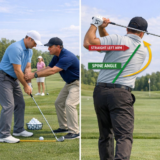
This piece brings together modern biomechanical findings, proven coaching practices, and pragmatic course strategy into a single, actionable roadmap for improving swing mechanics, tee-shot strategy, and putting performance. Using kinematic and kinetic principles, it identifies the physical factors that govern repeatable contact and efficient energy flow through the body, then converts those factors into precise drills, progressions, and objective performance markers. Motor‑learning ideas-such as variability in practice, meaningful feedback, and chunking complex actions-are embedded throughout to speed skill retention and transfer to competition. course management is treated as a trainable extension of technique: shot selection,risk‑reward evaluation,and adaptive decision‑making are positioned as skills that interact with execution. The intent is to equip committed players and coaches with a systematic path from assessment to individualized drill prescriptions,producing verifiable gains in consistency and scoring.
Building a Reliable Swing with Biomechanics and motor‑Control: Sequencing, Ground‑Force Strategy, and Practice Progressions
Repeatable swing mechanics depend on a predictable proximal‑to‑distal activation order: pelvis → thorax → arms → hands → club. Practically, target a sizable shoulder rotation (rough guide: ≈90° for men, ≈80° for women) paired with hip turn in the 45-60° range at the top, and preserve a consistent spine tilt of roughly 20-25° from address so the club travels on a stable plane. Timing of the transition is a keystone-many players find a 3:1 backswing-to-downswing tempo (three units back, one forward) helps maintain sequencing and coordinate ground reaction forces. Ground interactions involve both lateral and vertical components: start the downswing by increasing pressure into the trail foot, then lock into the lead side so that about 60-70% of body weight is over the lead foot at impact. This bracing stabilizes the lower body and allows cleaner transfer of momentum into clubhead speed. Look to contemporary pros like Dustin Johnson for lessons on initiating rotation with the lower half, and to Annika Sörenstam for disciplined repetition; prioritize pelvic rotation ahead of active arm work to stabilize ball flight and contact under varying course stresses.
Effective motor‑control progressions begin slowly and deliberately, then add speed, variability, and measurable feedback. Start with isolated neuromuscular tasks before moving to integrated swing actions. The drills below form a logical progression and enable straightforward benchmarking:
- Slow‑tempo sequencing drill: ten repetitions of a 3‑count backswing into a 1‑count downswing; record weekly at 120 fps to monitor shoulder‑hip separation.
- Medicine‑ball rotational throws: 3×10 throws to develop rotational power and balance; record throw distance and symmetry as objective indicators.
- Impact compression drill: 20 reps into an impact bag or compression pad to train a square face and forward shaft lean-aim for consistent compression on 18 of 20 strikes.
- Foot‑pressure patterning: use a pressure mat or foot spray to verify the shift from trail to lead, with a target of 60-70% pressure on the lead foot at impact.
- Metronome tempo training: enforce the 3:1 tempo and minimize unwanted body slide; aim for >90% tempo consistency within four focused weeks.
Modify these for skill level: novices should use half‑swings and alignment rods to build proprioception; skilled players should layer launch‑monitor goals (carry,attack angle,spin) and perform on‑course,pressure‑simulated reps so motor patterns transfer to scoring situations.
Make a direct connection between swing mechanics and short‑game/decision making so technical gains lower scores.Tighter sequencing reduces dispersion and improves proximity to the hole, enabling more assertive course strategy (e.g., going for tucked pins). When conditions demand it-firm turf or high wind-use partial swings and different loft/shaft pairings to control launch and spin.Equipment is part of the integration: choose shaft flex and loft to achieve a desired launch‑spin window (many players find a driver launch near 10-14° with a neutral attack angle is controllable), and confirm lie and grip dimensions support neutral wrist action. Use these setup checkpoints and simple fixes for common problems:
- Setup checks: grip pressure around 4/10, ball position (driver: just inside lead heel; mid‑iron: mid‑stance), and driver axis tilt ~5-8° away from the target.
- Typical faults & remedies: early extension → lead‑leg brace and wall drill; casting → impact bag to feel forward shaft lean; over‑rotation of shoulders → shorten backswing and use a rotation‑limit drill.
Pair technical work with a concise pre‑shot routine and the disciplined habits of players like Justin Thomas (consistent setup cues) and Lydia Ko (meticulous repetition) so biomechanical improvements hold under competitive pressure and translate into better scoring.

Refining Grip, Stance, and Posture for Reliable Clubface Control: Diagnostics and Targeted Corrections
Begin with a concise, reproducible setup checklist focusing on grip, stance, and posture-these are foundational for consistent face control.Measure grip tension on a 1-10 scale and aim for 4-5 (secure enough to steer the club, loose enough to allow natural wrist hinge). For a neutral grip, the “V” between thumb and forefinger should point to the right shoulder (for right‑handers). Interlocking or overlapping grips are acceptable provided the hands act as one unit. Assess posture: target ~15° spine tilt from vertical, knee flex of 15-25°, and iron shaft lean of 0-15° forward so the handle sits slightly ahead of the ball. Confirm ball positions by club (driver: just inside left heel; mid‑iron: centre; short irons: slightly back) and initial weight distribution (start 50/50 or 55/45 forward for compressed strikes). Use an alignment rod and phone camera or mirror to ensure the face looks square within a few degrees at address. Checklist for each shot:
- Grip pressure: 4-5/10
- Hand placement: V’s to right shoulder (R‑hand)
- Spine tilt & knee flex: ~15° & 15-25°
- Ball position & weight: per club
- Alignment rod/face check: face square to target
This routine cuts variability and creates measurable setup data for ongoing tracking.
Apply focused corrective drills to address diagnosed faults and train reproducible face control. For weak or strong grips, try the two‑ball drill: place an extra ball under the lifeline of the lead hand (right‑handers) to discourage over‑rotation and practice half‑swings until the extra ball stays put-this encourages neutral interaction through impact. For face/path control use the impact‑bag to feel a square face and forward shaft lean, and the toe‑up to toe‑up drill with a mid‑iron to synchronize wrist hinge and release-aim for similar toe‑up angles on takeaway and follow‑through within ±10°. address posture and balance with single‑leg swings and the step‑through drill to ensure proper weight shift and prevent casting; keep the spine tilt near ~15° during these exercises. Short‑game tweaks: narrow stance by 1-2 ball widths, place 60% weight on the lead foot, and open the face slightly for flop shots as seen in the technique of players focused on touch. Practice items:
- Two‑ball grip drill for hand cohesion
- Impact‑bag and toe‑up drills for face control
- Single‑leg and step‑through drills for balance and weight shift
- Short‑game stance tweaks (60% lead weight, 1-2 ball widths)
Set measurable goals-e.g., hold face angle within ±3° on a launch monitor for full swings and cut lateral dispersion by 20% over a four‑week block.
Translate technical gains into course resilience by adjusting setup for equipment, surface, and mindset. Near the green in wind, narrow the stance and choke down to lower trajectory; on soft turf allow extra forward shaft lean for compression. Always obey the Rules of Golf-do not press the club into the ground to test a lie; use practice swings to judge turf interaction. Adopt a short on‑course checklist to bridge practice and play:
- Three‑point pre‑shot check: grip, ball position, alignment
- Weather‑adaptive adjustments: stance width and ball position shifts
- Mental cue card: one concise swing thought (e.g., “turn,” “release”)
- Troubleshooting steps: slice → reassess grip/face; hook → check grip rotation/early release
Combining measurable drills, fitted equipment choices, and a compact mental routine enables players from beginners to low handicaps to stabilize clubface control and improve scoring under pressure.
Sequencing Power and Accuracy for the Tee Shot: Launch Conditions, clubhead Speed Targets, and Centered Contact
Consistent driving starts with a repeatable pre‑shot setup and a reliable kinematic chain that turns ground force into clubhead speed. Set the ball just inside the front heel for driver, tilt the spine so the lead shoulder is a touch higher, and use relaxed grip pressure to allow full acceleration through impact. Execute the kinetic chain by keeping the lower body quiet early in the backswing while storing energy in the hip coil, then initiate the downswing by uncoiling the hips before the torso and arms-this proximal‑to‑distal sequencing maximizes efficiency. Aim for a positive driver attack angle when physically capable (roughly +2° to +4°), and use launch‑monitor targets to track progress. Typical clubhead speed bands are broad-competitive amateurs often sit in the 85-105 mph zone, while elite amateurs and younger pros regularly exceed 105-120+ mph. monitor smash factor (ball speed/club speed) and target values near 1.45 for efficient driver energy transfer.fix common mistakes-early arm release or lateral sway-through connected drills that emphasize lower‑body lead and delayed wrist unhinge.
Centered face contact combines sound setup, impact awareness, and correct equipment. First, confirm loft/lie and shaft flex via a certified fitter; mismatches force compensations that hurt contact.At address keep hands slightly ahead of the ball for irons and neutral for driver to encourage the proper low‑point and compression. Useful drills:
- Gate drill: tees placed just outside the clubhead path to encourage center hits.
- Impact‑bag: compress to develop forward shaft lean and firm lead wrist.
- Progressive half‑to‑full swings: 30-60 shots from 50-150 yards working to a stable finish and balanced hold.
Use impact tape or foot spray to locate strikes; move the ball 1-2 cm if toe or heel contact predominates until centering is achieved. Advanced players can tweak loft by ±1-2° or adjust tee height to marginally alter launch,remembering competition equipment must comply with rules.
Apply these mechanics to tactical play: when conditions demand lower trajectories (strong crosswind or firm ground), reduce launch by ~2-4° and favor a controlled fade or draw to land on a preferred side. Emulate pros who blend power and precision-practice both overspeed/weighted sessions and focused accuracy sessions. Set measurable weekly targets-such as a +2-4 mph average clubhead speed gain over eight weeks, bringing face‑contact dispersion into a central 2‑inch circle, or holding carry distance within ±5 yards. solidify gains with pre‑shot visualizations and clear go/no‑go decision rules, and rehearse pressure through timed or scored practice so sequencing and centered contact remain under tournament stress.
Short‑Game Excellence: Green Reading, Speed Control, Stroke Mechanics, and Purposeful Putting Drills
Start green assessment with a methodical read that folds slope, grain, and speed into a single decision. Walk around the hole to determine the fall line-where water would flow-this reveals the primary break. Inspect grain direction by rolling the ball short distances in different orientations and by observing the green’s hue (grain often grows toward the setting sun on many courses). Combine visual inspection with a simple roll test from a few locations to sense surface speed.Remember the Rules: you may mark,lift,and clean on the putting green,enabling a clear look at subtle slopes without interfering with play.For novices, use the simple guideline of aiming the ball an equal distance from the hole opposite the expected break; more advanced players can apply a fall‑line percentage approach-identify the steepest slope axis and put a proportional aim point, a tactic many top professionals use when precision is required. Avoid common errors like relying on a single vantage point-verify reads from both sides and adopt a consistent pre‑putt routine with two focus points (target and intermediate).
Once the line is chosen, focus on a repeatable stroke and controlled speed. Favor a shoulder‑driven pendulum with minimal wrist action to reduce face rotation; typical putter lofts are 3°-4°, so contact should produce an early roll. Use tempo and length metrics: a 1:2 backswing‑to‑follow‑through ratio works well for many mid‑range putts, and aim to keep face rotation under 5° on center strikes. Key drills:
- Gate drill: narrow gaps equal to putter head width to train square impact.
- 3‑6‑9 ladder: putt to 3, 6, and 9 feet, trying to leave each within set distances (e.g., within 3 ft for 3‑footers) and track success rates.
- Distance control drill: roll to a 10‑foot target and aim to stop the ball within 12 inches past the hole to refine uphill/downhill feel.
Beginners should emphasize consistent contact and short distances; advanced players can vary equipment specs and practice long, pressure‑simulated sequences similar to routines used by elite competitors.
Make short‑game practice part of course strategy with concrete goals and remediation paths. Such as, target a 50% reduction in 3‑putts within eight weeks by logging rounds and practice results; structure sessions as 60% speed work, 30% line and reading, 10% pressure practice. Set putter length and lie so eyes are over or slightly inside the ball, retain light grip pressure (~3-5/10), and practice without dependence on alignment aids when they may be restricted in competition. On‑course, favor conservative targets on long, multi‑break, downhill putts-leave yourself an uphill tap rather than trying to hole from distance. Use corrective drills to fix excessive wrist motion (taped‑wrist stroke) and setup inconsistencies (alignment rod checks). By pairing visual reads, a dependable stroke, and targeted drills with on‑course decision rules, golfers at every level will improve read accuracy, speed control, and scoring.
Course Management & Shot Selection: Turning Technique into Lower Scores with Risk Assessment and Strategy
Smart on‑course choices begin with a compact, quantitative risk audit that aligns technical capacity with scoring goals. Before each tee or approach, do a rapid checklist: required carry yardage to clear hazards, width of the landing zone (give yourself at least 10-15 yards of margin each side when confidence is moderate), and the wind’s effect (roughly estimate wind as altering carry by ±5-15% depending on direction). Use a simple expected‑value model: multiply your probability of executing a preferred shot (derived from recent practice stats) by the strokes gained/lost; if the result is negative, opt for the safer play. Include the Rules in your decision set-as an example, relief options under Rule 17 and penalties such as stroke‑and‑distance can materially change expected value. When short‑sided, choose a loft and bounce suited to the lie (wedge bounce 8-12° for softer turf, >12° for fluffy sand) and aim to an escape quadrant rather than the flag to reduce three‑putt or penalty risk.
After strategy selection,control the two mechanical levers that determine shot shape: clubface and club path. Small changes make measurable differences-around 1-3° of face‑to‑path variance yields a moderate fade or draw; a face closed 1-2° with a slightly inside‑out path produces a controlled draw. Beginners should focus on square face, neutral path, and consistent ball position; advanced players refine precise face‑to‑path relationships to attack pins. Setup and practice checkpoints:
- Grip/wrist: neutral to slightly strong for draw work; avoid excessive cupping.
- Ball position: move ½-1 ball width back for controlled irons, forward for drivers to promote positive attack.
- Weight at impact: ~55/45 forward/back for irons; more forward for penetrating flight in wind.
Drills such as the mirror‑path (alignment stick to groove a 3-5° inside‑out path), 50‑ball distance calibration (track carry per club to build a yardage book), and alternating fade/draw sequences help ingrain face/path feel. Audit equipment-shaft flex, loft, and ball compression-so gear complements technique rather than masking flaws.
Convert technique and tactics into lower scores through short‑game proficiency, reliable green reading, and mental clarity under stress. Set measurable benchmarks-e.g., convert 60% of up‑and‑downs from inside 100 yards and reduce putts per green from 2.1 to 1.8-and design practice to meet them. Build three core short‑game shots (full‑swing half‑sand wedge, low bump‑and‑run, and high flop) and rotate them in focused 15‑minute blocks using a points system for proximity to the hole. For reads, adopt a consistent process used by tour players-identify low side, visualize intended break, pick a speed target (leave within 3-6 feet uphill equivalent), and commit. Common fixes: slow your pre‑shot routine (three‑step checklist),preserve tempo with 60-70% speed drills,and simplify reads under pressure by choosing conservative lines. Reinforce mental tools-process goals, breathing cues, and visualization-so management choices made on the range are executed on the course; the best strategy is the one that matches your practiced strengths and minimizes variance when it counts.
Strength, Mobility and Injury Prevention for Sustainable Play: Golf‑Specific conditioning and Periodization
Golf‑specific fitness begins with a movement screen that links swing demands to physical capacity. Quantify key ranges-shoulder turn targets of roughly 80-100° for men, hip rotation around 40-50°, and a functional spine tilt appropriate for your setup. Restrictions in thoracic rotation or hip mobility commonly lead to compensations such as casting or over‑use of the wrists. Include baseline tests: thoracic rotation (seated/standing),90/90 hip mobility,ankle dorsiflexion,and single‑leg balance-record values to track progress. Use setup cues to preserve kinematic sequencing: maintain shoulder‑to‑pelvis separation, keep knee flex ~15-20°, and stance width at shoulder width for irons (1-2 inches wider for driver). These checkpoints limit compensation, enhance contact, and help players of all levels apply technical fixes precisely.
Periodize training across the year to support skill development: off‑season focus on hypertrophy and foundational strength (2-3 sessions/week; 3-5 sets of 6-12 reps on compound lifts), pre‑season shift toward power and rate‑of‑force work with med‑ball rotational throws and contrast sets (3-5 sets of 3-6 explosive reps), then in‑season maintenance (1-2 sessions/week) emphasizing mobility and neural freshness. Immediately connect gym work to the swing by pairing sessions with short practice protocols-10-15 minutes of tempo swings after power work, 15-20 minutes of short‑game touch after mobility sessions. Sample drills:
- Med‑ball rotational throw: shoulders 90° turn, explode through hips-3-5 sets × 5 reps each side to train sequencing and speed.
- Single‑leg Romanian deadlift: 3 sets × 6-8 reps per leg to build posterior chain and impact stability (supporting ~60% lead‑foot pressure at impact).
- Putting tempo ladder: four balls from 6, 8, 10 feet with a metronome‑based 2:1 back‑to‑through ratio to preserve feel under fatigue.
These exercises produce measurable aims-e.g., raise rotational throw distance by 10-20% or double single‑leg hold time-so coaches and players can quantify transfer to ball striking and scoring.
Prevent injuries with prudent load management,targeted prehab,and on‑course adjustments that account for environmental strain. Include rotator cuff and scapular stabilizers (band external rotations: 3×12-15), eccentric forearm work to lower tendon overload risk, and cap weekly volume increases to about 10%. When fatigued or in adverse conditions,use conservative club choices-e.g., a 3‑wood or hybrid off the tee into a left‑to‑right wind to avoid penalties-and favor shots that keep you in play. Address common swing faults with specific drills: cast early → half‑swings with a paused transition; early extension → chair drill to retain hip flexion and spine angle. Blend breath control and briefer pre‑shot routines (30-60 seconds max) to manage physiological arousal so physical readiness translates to consistent shot selection, dependable short‑game touch, and sustained scoring improvements.
Data‑Driven Practice and Metrics for Verifiable Progress: Video, Launch‑Monitor Benchmarks, and Tracking
Start with a structured video‑analysis protocol that isolates the mechanical variables you intend to change and measures them objectively.Capture swings down‑the‑line to evaluate path and plane, and face‑on to observe rotation, weight transfer, and sequencing; record at 120-240 fps when possible (60 fps suffices for broader patterns). Annotate key frames (address, top, impact, release, finish) and compare against a reference model-study modern professionals’ impact compression and balance to set targets.Follow a disciplined corrective loop: (1) identify the primary fault, (2) pick one measurable variable to change (face angle, attack angle, hip rotation), (3) apply a focused drill, and (4) re‑record to quantify progress. Useful practices include:
- Impact‑bag to train forward shaft lean (~5°-10° forward at iron impact) and a firm lead wrist;
- Pause‑at‑the‑top to feel sequencing-hold 1-2 seconds and initiate the downswing with the hips;
- Half‑to‑full ladder to build acceleration while eliminating casting (50% → 75% → 100% speed progression).
Adaptions: beginners emphasize tempo and contact; mid‑handicappers refine sequencing and strike; low handicappers focus on release optimization and shot shaping.
Convert subjective feel into quantifiable benchmarks using launch‑monitor data: track ball speed,launch angle,spin rate,attack angle,carry,total distance, and smash factor. Representative driver bands (approximate) can guide practice expectations: beginners ball speed ~80-95 mph (carry ~150-210 yd),mid‑handicaps ~95-110 mph (carry ~200-240 yd),and stronger amateurs ~110-125+ mph (carry 240-280+ yd),with optimal driver spin frequently enough between ~1500-3000 rpm depending on launch. For irons aim for a negative attack angle on mid‑irons (e.g., −3° to −7°) and controlled dynamic loft to secure compression and spin. Equipment checkpoints:
- shaft flex/length (match delivery to shaft characteristics);
- clubhead loft and effective impact loft (verify on monitor);
- lie angle and grip size (tune for flight shape and comfort).
Set data‑backed goals-e.g., increase smash factor by 0.03-0.05 or reduce driver spin by ~500 rpm in an 8-12 week program-and align drills and fittings to those targets.
Link metrics to game plans and progress tracking so practice gains show up on the scorecard.Define SMART objectives using stats such as GIR,FIR,proximity (feet),scrambling %,and putts per round. Examples: cut 7‑iron proximity from 40 ft to 25 ft in 12 weeks, or boost scrambling from 45% to 60%. Organize weekly practice toward high‑leverage areas (suggested split: 40% short game, 30% approaches/irons, 20% driving, 10% putting), and include pressure simulations and on‑course rehearsals inspired by strategic pros-play conservative layups where the odds favor par, and employ creative recovery shots when required. Troubleshooting and mental checkpoints:
- If dispersion widens, reassess tempo and shaft flex before changing grip exclusively;
- If spin is high and carry low, test lower loft or firmer shaft and work on a shallower attack;
- If short‑game fails under stress, introduce penalties in practice to simulate competitive pressure.
By re‑testing with video and launch data, keeping a concise log of metrics and subjective notes, and using situational drills that mimic wind, lies, and green speed, players at every level can achieve measurable, repeatable gains that convert into smarter strategy and lower scores.
Q&A
Prefatory note (methodology)
– The following Q&A provides a compact, practice‑oriented summary of the material titled “Unlock legendary Techniques: Master swing, Putting & Driving Secrets.” It is organized to help coaches and players quickly apply the concepts described above.
A. Core golf performance Q&A
Q1. What is the primary aim of this article?
A1. To merge biomechanical insight, motor‑learning principles, and practical course strategy into a unified, actionable framework that converts technical work into measurable improvements in swing consistency, driving effectiveness, and putting reliability.
Q2. Which theoretical models support the full‑swing analysis?
A2. Kinematic sequencing (proximal‑to‑distal energy transfer), ground‑reaction force optimization, and motor‑control concepts (practice variability, feedback reduction, and chunking) guide the recommendations. These explain how timing, force application, and posture interact to create repeatable contact and ball flight.
Q3. Which measurable variables are most useful for evaluating full‑swing performance?
A3. Clubhead speed, ball speed, smash factor, launch angle, spin rate, attack angle, face‑to‑path at impact, and temporal sequencing of pelvis/thorax/club. Capture these with launch monitors, high‑speed video, and inertial sensors when possible.
Q4. What driving principles are emphasized to balance distance and control?
A4.Optimize launch/spin for terrain and pin placement, manage attack angle (positive for many drivers), preserve face control for tight dispersion, and use efficient ground forces. Equipment fitting should support these targets rather than force technique changes.
Q5. How should putting be structured technically and tactically?
A5. Use a shoulder‑dominated pendulum stroke with minimal wrist hinge, consistent tempo (e.g., 1:2 B/T ratio), and disciplined green reading that combines fall‑line, grain, and speed assessments. Drill for distance control and repeatable contact under pressure.
Q6. What practice structure best supports transfer to competition?
A6. A phased approach-acquisition (variable technical work),consolidation (blocked practice with reduced feedback),and transfer (contextual,pressure‑simulated play). Mix technical drills with applied scenarios and track objective metrics throughout.
Q7. How to quantify improvements and link them to scoring?
A7. use objective metrics (launch/face stats, dispersion measures) and outcome measures (FIR, GIR, proximity, putts/round, strokes‑gained components). Compare pre/post measures over a sufficient sample (multiple sessions or rounds) to assess meaning.
Q8. What immediate steps can players and coaches take?
A8. Record baselines with a launch monitor and short‑game test, pick 2-3 focused drills (swing sequencing, driver launch window, and putting tempo), commit to a mixed practice schedule, and log results for 6-12 weeks to evaluate progress.
B. Brief note on unrelated web results
– The supplied web search results referenced a financial services firm named “Unlock” and were not used in the technical golf synthesis above.
Closing summary
- This revised framework connects biomechanical principles, empirically supported coaching practices, and pragmatic course management to produce a structured pathway from assessment to on‑course performance. By emphasizing objective measurement (video and launch data), targeted drills, progressive practice, and situational decision‑making, players and coaches can accelerate transfer from the range to lower scores. Future investigation should quantify which specific interventions most directly affect strokes‑gained metrics under competition and leverage wearable sensors and machine learning to personalize feedback loops. Ultimately, mastery emerges through iterative assessment, focused intervention, and disciplined repetition rather than a single technique change.

Golf Like a Pro: discover the Hidden Secrets to Perfecting Your Swing, Putting, and Driving
get more consistent ball striking with proven golf swing fundamentals
Great golf begins with a repeatable swing. Focus on fundamentals-grip, posture, alignment, and tempo-and you’ll build a dependable golf swing that produces better ball striking, improved launch, and consistent shot shape. Below are biomechanical principles and practical drills to accelerate progress.
Key swing fundamentals (must-haves)
- Grip: Neutral to slightly strong. Hands work together as a single unit to square the clubface at impact.
- Posture: Hinge at the hips, soft knees, spine tilt slightly away from target for long irons and driver.
- Alignment: Feet, hips and shoulders parallel to target line. Use alignment sticks when practicing.
- Width & rotation: Maintain arm extension on the backswing and rotate the torso-power comes from the coiling and uncoiling of the core.
- Tempo: Smooth backswing, slightly faster transition to the downswing. Think “1-2” rhythm (backswing to downswing).
Biomechanics: what the body should do
Efficient swings transfer energy from the ground, through the legs and core, into the hands and club. Key points:
- Ground reaction forces: Push into the ground through the back foot on the downswing to create torque and speed.
- Sequencing: Hips start the downswing, then torso, then arms and hands-this kinematic sequence maximizes clubhead speed.
- Lag: Maintain wrist angle into the downswing to store energy (later release yields higher clubhead speed).
Actionable swing drills
- Gate Drill (impact position): Place two tees or headcovers slightly narrower than your clubhead and swing through-this helps promote a square face and center contact.
- Step Drill (sequencing): Take one step toward the target at the start of the downswing to train hip initiation and weight shift.
- Slow-Motion Swings: 10 slow full swings focusing on position at the top and impact-then gradually increase speed while preserving positions.
- Impact Bag: Hit an impact bag or stacked towels to feel a solid, forward impact and proper release through the ball.
Putting: the short-game secret weapon for scoring
Putting accounts for roughly 40-50% of your strokes in a round. Improving distance control, green reading, and stroke mechanics frequently enough produces the fastest advancement in score.
Putting fundamentals
- Setup: Eyes over the ball or slightly inside, shoulders level, light knee flex, putter shaft leaning slightly forward.
- Grip: Use a stroke-style grip (reverse overlap, claw, or cross-handed) that minimizes wrist break.
- Stroke: pendulum motion from the shoulders; minimal wrist movement for consistency.
- Alignment: Aim the putter face, then align body parallel to that line.use an alignment aid on the putter if needed.
Green reading & speed control
Reading the slope and optimizing speed matters more than perfect aim. Facts to remember:
- A putt hit too hard will break less (flatter line); too soft and it will break more-prioritize speed that reaches two-thirds of the hole if missed.
- Watch the grain on the green and note where sunlight and wind may dry or slow the surface.
- Use a consistent pre-putt routine-visualize the line, practice strokes behind the ball, then commit.
Putting drills that move the needle
- Ladder Drill: Putts from 3, 6, 9, 12 feet-focus strictly on speed control. Move farther only when you make 8/10 from each distance.
- Gate Drill (face control): Set two tees wider than the putter head and stroke through to ensure a square face through impact.
- Clock Drill (short putts): Place balls around a hole at 3 feet-make 12 in a row rotating positions to build pressure tolerance.
Driving: maximize distance without sacrificing accuracy
Modern driving is about controlling launch conditions (launch angle, spin rate, clubhead speed) as much as raw distance. Better launch equals more carry and roll without losing accuracy.
Driver setup checklist
- Tee height: Half the driver’s clubface above the ball-encourages an upward strike and optimal launch angle.
- Ball position: Just inside the left heel for right-handed players (opposite for lefties).
- Stance & width: Slightly wider than shoulder width for a stable base.
- Club selection & shaft: Use a driver with the correct loft and shaft flex for your swing speed to achieve proper launch and spin.
Driving biomechanics
To drive like a pro:
- Make a wide arc on the backswing while maintaining connection between arms and torso.
- Create and maintain lag into impact-don’t let the hands override the body rotation.
- Finish with a balanced follow-through and chest facing the target to ensure full transfer of power and accuracy.
Driver drills
- Tee-to-turf check: Alternate driver with a 3-wood and track where contact occurs-goal is slightly upward on driver.
- Swing-speed building: Use overspeed training (lighter clubs or a speed stick) two times per week for short bursts, focusing on relaxed acceleration.
- Target practice: Aim at specific fairway targets at distance to improve alignment and pre-shot routine.
Course management & strategy to save strokes
Playing smart often trumps pure shotmaking. Good course management converts good shots into low scores.
Smart play principles
- Play to your strengths-if your long iron is accurate, choose it over an aggressive driver when there’s risk.
- Think in terms of risk vs. reward-easier target zones and shorter approaches frequently enough reduce big numbers.
- Visualize the hole and pick a safe miss zone before addressing the ball.
on-course tactics
- Use a conservative tee shot when fairway is narrow or hazards lie beyond it.
- When attacking pins, consider the lie and green conditions-if the green is firm, go for it; if soft, aim for the center.
- Play percentage golf: reduce variance by choosing shots with higher success probabilities under pressure.
Practice plan: structure that creates measurable improvement
Practice with purpose. Below is a simple weekly plan to improve swing, putting, and driving in a balanced way.
| Day | Focus | Time | Key Drill |
|---|---|---|---|
| Mon | Putting & short game | 60 min | Clock drill & ladder drill |
| Wed | Short irons & swing mechanics | 75 min | Gate drill & slow-motion swings |
| Fri | Driver & long game | 60 min | Target practice & tee-to-turf checks |
| sat | On-course strategy | 9 holes | Play smart, track stats |
Benefits & practical tips that lower scores fast
- Improved putting reduces 2-3 strokes per round for moast players-prioritize short putts and lagging practice.
- Better swing mechanics reduce mishits and improve distance control-focus on impact position and tempo.
- Smarter driving reduces penalty strokes-play the hole, not the highlight reel.
- Track specific stats: fairways hit, greens in regulation (GIR), putts per round-to measure progress and identify weaknesses.
Case study: a 12-shot improvement in six months (realistic example)
Player profile: mid-80s handicapper, inconsistent driver, 36 putts per round.
- Month 1-2: Focus on putting-improved speed control, reduced 3-putts; putts per round down to 30.
- Month 3-4: Swing fundamentals and short game-better contact and wedge distance control; GIR up by three.
- Month 5-6: Driving and course management-fewer penalties and smarter tee choices; average score dropped by 12 strokes.
First-hand practice tips from coaches
- Record one swing per session and review for positions (top of backswing, impact, finish).
- Use targeted practice sessions-never more than 60-90 minutes of focused practice to avoid fatigue and muscle memory breakdown.
- Keep a practice journal-note drills, results, and feelings. Adjust the plan every 2-3 weeks.
Fast checklist before every round
- warm up: dynamic stretches, 10-15 short swings, 5-10 wedge shots, 5-10 iron shots, 5 driver swings.
- Hit several short putts to calibrate speed.
- Pick safe targets for tee shots; plan two-shot plays for risk holes.
- Visualize the shot, execute your routine, commit fully.
Useful SEO-friendly keywords used in this article
Golf swing, putting drills, driving tips, golf tips, golf drills, course management, short game, long game, ball striking, alignment, tempo, golf biomechanics, launch angle, distance control, reading greens, putting stroke, tee height, fairway strategy.
If you’d like, I can convert any of the drills into printable practice cards, a personalized 8-week training plan, or a video script to walk you through each drill step-by-step.