lowering a golf handicap demands more than intermittent practice or intuitive feel; it requires a systematic, evidence-based approach to skill growth.Contemporary research in biomechanics,motor learning,and performance analytics demonstrates that sustained improvement arises from integrating sound mechanical principles with objective feedback and structured training progressions.Within this framework, full-swing efficiency, driving precision, and putting performance emerge as the primary levers for meaningful score reduction.
This article examines how biomechanical optimization,quantifiable performance benchmarks,and progressively challenging drills can be combined to refine swing mechanics,increase driving distance and accuracy,and enhance putting consistency.Emphasis is placed on translating technical concepts into measurable outcomes-such as improved dispersion patterns, stroke-gained metrics, and reduced three-putt frequency-so that players can track improvement with clarity rather than relying on subjective impressions.By aligning technique, practice structure, and performance evaluation, golfers can develop a repeatable, resilient game capable of producing lower scores under a wide range of course conditions.
Biomechanical Foundations of an Efficient Golf Swing for Handicap Reduction
The foundation of an efficient golf swing begins with how the body interacts with the club and the ground. Posture, grip, and alignment form the biomechanical baseline that either supports a repeatable motion or forces compensations that inflate your handicap. At address, aim for a hip hinge of approximately 25-35 degrees, with a neutral spine, slight flex in the knees, and weight balanced roughly 55% on the led foot in irons and 50/50 for the driver. A neutral grip-where the “V’s” formed by thumb and index finger on both hands point between the trail shoulder and chin-promotes a square clubface at impact and reduces big curve errors (hooks/slices) that lead to penalty strokes and missed fairways. to check these fundamentals on the range or before a competition round, use the following checkpoints:
- Posture: Club across your hips; bow until the club points just over your toes, then let your arms hang naturally.
- Alignment: lay a club on the ground toward your target; feet, hips, and shoulders should be parallel left (for right-handers) of that line.
- Grip pressure: Hold the club at roughly 4-5 out of 10; too tight increases tension and reduces clubhead speed, costing distance and making distance control harder.
By reinforcing these simple biomechanical positions, beginners build a reliable baseline while low handicappers can fine-tune setup to reduce dispersion patterns and improve strokes-gained off the tee and into greens.
From this solid setup, an efficient swing uses the body’s big muscles to create sequenced rotation rather than isolated arm motion. On the backswing, the goal is approximately 80-100 degrees of shoulder turn against 35-45 degrees of hip turn, generating coil without strain.A useful feel is to let the trail hip rotate and the lead shoulder move down and across the chest, keeping approximately the same distance between hands and sternum throughout the motion to maintain structure. during transition and downswing, better players sequence from the ground up: lower body initiates, torso follows, then arms and club. To ingrain this kinetic chain and prevent casting or over-the-top moves that cause slices and pull-hook “double crosses,” integrate the following drills into a weekly practice routine:
- Pump Drill: Take the club to the top, then “pump” down to a position where the lead arm is parallel to the ground, shaft roughly at a 45-degree angle to the lead forearm, and clubhead behind the hands. Repeat three pumps, then swing through, focusing on maintaining your spine angle and letting the hips open first.
- Step-Through Drill: Set up normally; as you start the downswing, step your trail foot toward the target and swing through. This trains ground-force usage and proper weight shift for increased clubhead speed-crucial for longer drives and shorter approach clubs.
- Impact Fix Drill: Rehearse an impact position with the hands slightly ahead of the ball,lead wrist flat,trail wrist bent,hips opened about 30-40 degrees toward target; then make half swings replicating that feel.
Regularly monitoring ball flight (start line, curvature, and contact sound) allows you to link biomechanical changes to performance metrics such as fairways hit, greens in regulation, and average proximity to the hole, all of which correlate strongly with handicap reduction.
Translating biomechanical efficiency into lower scores requires integrating full-swing mechanics with short game technique and course management. around the green, the same principles of stable posture, neutral grip, and proper sequence apply, but with reduced speed and a narrower stance to enhance precision. For standard chips and pitches, position the ball slightly back of center, weight biased 60-70% on the lead foot, and maintain a quite lower body while the shoulders provide a pendulum-like motion; this encourages crisp, descending contact and predictable roll-out, reducing three-putts and improving scrambling percentage. in windy or wet conditions, favor more club and a shorter, more controlled swing to maintain balance and strike quality. To connect technique to scoring, establish measurable practice goals such as:
- Full Swing: Hit 10 consecutive balls within a 20-yard fairway grid at your typical driver distance; once comfortable, narrow to 15 yards to simulate tighter tee shots on demanding holes.
- Approach Play: With a mid-iron, aim to land at least 7 of 10 shots inside a 10-yard circle at your target distance, adjusting club selection until you can reliably carry bunkers and avoid short-sided misses.
- Short Game: Perform an “up-and-down” circuit from 5-25 yards, tracking how frequently enough you get the ball within 6 feet of the hole; improve this percentage week over week.
By blending sound biomechanics with strategic target selection-aiming away from trouble, choosing the right side of the fairway for preferred approach angles, and managing risk based on your current handicap-you create a swing and decision-making framework that is not only mechanically efficient but also scoring efficient, leading to lasting handicap improvement over time.
evidence Based Putting Mechanics to Improve Distance Control and Green Reading
Effective putting begins with a repeatable setup and stroke that are grounded in evidence-based mechanics. Research using high-speed cameras and SAM PuttLab consistently shows that elite putters maintain a stable face angle (within ±1° at impact) and a consistent impact point within a few millimeters of the putter’s sweet spot. To support this,adopt a setup where your eye line is either directly over the ball or slightly inside the target line (typically 0-2 cm inside),your putter shaft leans slightly toward the target (about 1-2° forward shaft lean),and your weight favors your lead foot at about 55-60%. For most golfers, a shoulder-width stance and a ball position just forward of center promote a slight upward strike that gets the ball rolling end-over-end more quickly. As a practical checkpoint, low handicappers can use a putting mirror to verify eye position and shoulder alignment, while higher handicaps can start by placing two alignment sticks on the ground (one for feet, one for putter path) to reduce face and path variability. common errors include excessive wrist action and overly long backstrokes; these frequently enough lead to inconsistent distance control and directional misses,particularly under pressure or on faster greens.
distance control is best trained through structured speed drills that build a reliable feel for different putt lengths and green speeds. Instead of guessing, use measurable targets and track dispersion.For exmaple,on a flat practice green,place tees at 10,20,and 30 feet and practice rolling three balls to each distance,aiming to stop them within a three-foot circle of the hole; low handicappers should progressively narrow the target to a two-foot circle. Integrate the concept of stimp speed by adjusting your stroke length and tempo as greens get faster: on a fast 11-12 stimp green,maintain the same rhythm but shorten the backstroke by 10-20%,while keeping follow-through slightly longer to preserve acceleration. To translate this into performance, use simple routines such as:
- “Ladder drill”: Putt from 10, 15, 20, 25, and 30 feet, only moving back when three consecutive putts finish within your target zone.
- “Around-the-clock lag drill”: Place balls in a circle at 25-35 feet around a hole and aim for stress-free two-putts; keep a scorecard of three-putts per practice session and aim to reduce that number week over week.
- Troubleshooting: If putts consistently finish short, check for deceleration (short follow-through) and ball position too far back; if long, check for overly long backstrokes and excessive grip tension.
By quantifying results (e.g., average leave distance, number of three-putts per round), golfers can directly connect improved mechanics to lower scores, especially from mid- to long-range where strokes are often lost.
Green reading should integrate systematic visual assessment with a stroke calibrated to start line and speed. Modern systems such as aimpoint and vector-based reads show that most golfers underestimate break, particularly on putts outside 10 feet. Begin your read from behind the ball to determine the general slope, then from behind the hole to confirm high and low points, before finally standing halfway along the line to feel the tilt with your feet. For a standard right-to-left breaking putt of 20 feet on a medium-speed green (stimp 9-10), a typical read for a mid-handicap golfer might be 8-12 inches of aim outside the cup, assuming a pace that would roll the ball 12-18 inches past the hole if it misses. To internalize the relationship between speed and break, practice:
- “two-speed read drill”: Read a putt once for a firm pace (finishing 2-3 feet past the hole) and once for a dying pace (finishing just past the front edge), noting the required change in start line for each.
- “High side bias drill”: For an entire practice session, exaggerate your aim to the high side on all breaking putts to train yourself out of aiming too low.
- Equipment and setup check: Ensure your putter’s loft (typically 2-4°) and lie angle are correctly fitted; an incorrect lie or loft can cause skidding and inconsistent roll,magnifying reading and speed errors.
By coupling consistent mechanics,calibrated speed control,and disciplined green reading,golfers from beginner level to scratch can reduce three-putts,convert more makeable ranges (inside 10 feet),and apply a repeatable,evidence-based framework that holds up in varied course conditions,from wet morning greens to firm,windy afternoon rounds.
Optimizing Driving Technique for Maximum Distance Fairway Accuracy and Consistency
Optimizing the driver begins with a precise setup that promotes both maximum distance and fairway accuracy. At address,position the ball just inside the lead heel,with roughly 55-60% of weight on the trail side to encourage an upward angle of attack. The shaft should lean only slightly or sit neutral, with the handle close to the lead thigh but not pressed forward as with an iron. For most golfers, a stance width of approximately shoulder-width to one-and-a-half shoulder-widths provides adequate stability without restricting rotation. align the feet, hips, and shoulders parallel to the target line, using intermediate targets such as a blade of grass or discolored spot 1-2 feet in front of the ball to reinforce alignment. To audit your setup, use simple checkpoints such as:
- Grip: Neutral to slightly strong, with 2-3 knuckles visible on the lead hand and the “V”s of both hands pointing between the trail shoulder and ear.
- Posture: Tilt from the hips with a straight back, slight knee flex, and a subtle spine tilt away from the target (~5-10°) to promote an in-to-out path and upward strike.
- ball position and tee height: Half the ball above the top line of the driver face, encouraging a high launch with low spin.
Beginners should prioritize repeating this pre-shot routine before every drive, while single-digit handicap players can refine micro-adjustments in ball position and stance width to match desired shot shape and course demands.
once the setup is consistent, the focus shifts to swing mechanics that blend speed with control. Start the club back low and wide, allowing the lead arm to stay extended without tension and the clubface to remain square relative to the arc in the first 60-90 cm of the takeaway.In the backswing, rotate the shoulders to approximately 80-100° while the hips turn less (around 35-45°), creating a powerful X-factor stretch without overswinging. On the downswing, transition by shifting pressure into the lead side before the arms and club move down-this sequence prevents “casting” and reduces the common over-the-top move that leads to slices and lost distance. A useful set of drills for building both consistency and fairway accuracy includes:
- Fairway Grid Drill: On the driving range, pick a 20-25 yard wide “fairway” between two targets. Hit sets of 10 balls,tracking how many finish within the corridor. Mid-handicap players can aim for 6/10, while low handicappers can target 8/10 with full-speed swings.
- Three-Speed ladder: hit three drives at 70%, 85%, and 100% effort, focusing on maintaining the same tempo and balance. This helps players find a “game speed” where dispersion is minimized but distance remains optimal.
- Impact Stripe Check: Use face tape or impact spray to verify contact location; strive to cluster strikes within a 1.5-2 cm area around the center or slightly toward the toe for maximum ball speed and gear-effect stability.
Correcting common faults-such as excessive sway, early extension, or flipping the hands through impact-should be done systematically, one variable at a time, to ensure changes translate from the range to the course.
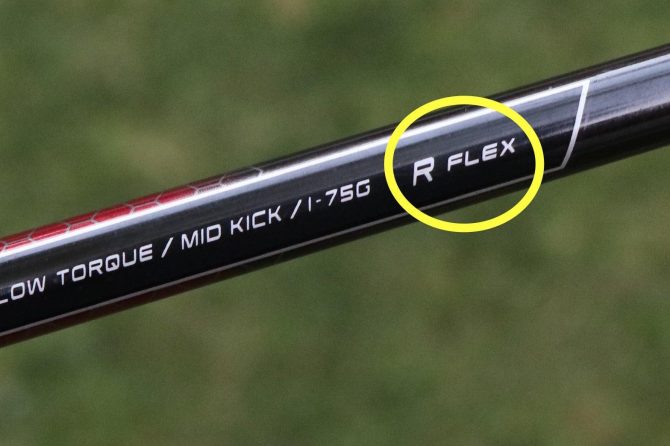
Integrating equipment choices and course management completes a complete driving strategy that lowers scores across all handicap levels. Proper driver fitting-particularly loft (typically 9-12° for most amateurs),shaft flex,and lie angle-can reduce side spin and optimize launch conditions; such as,a 15-handicap golfer who chronically slices may benefit from a slightly more upright lie and a draw-biased head to keep drives in play.On the course, adapt your target lines to your typical shot pattern rather than your ideal one: if your dispersion pattern shows a 10-15 yard fade, aim at the left rough line on wide fairways and at the left-center of the fairway on narrow ones. In windy or wet conditions,prioritize fairway first by clubbing down to a 3-wood or hybrid when penalty hazards tighten landing areas,accepting a longer approach shot in exchange for avoiding stroke-and-distance penalties under Rule 18.To train decision-making and mental discipline, incorporate the following into practice rounds:
- Fairway-or-Penalty Game: Count only drives that finish in the fairway; any miss is scored as a lost ball. This heightens focus on alignment, tempo, and conservative targets.
- Two-Ball Strategy Drill: Play one ball with your ”aggressive” line and one with a “conservative” line.compare resulting approach distances and scores over nine holes to understand which strategy truly lowers your scoring average.
- Pre-Shot Commitment Routine: before every drive, clearly state (internally or aloud) your intended shot shape, target, and swing cue (e.g., “soft fade, right-center fairway, smooth turn through”).this mental clarity reduces tension and promotes consistent execution under pressure.
By combining sound technique, fitted equipment, and intentional course strategy, golfers of all levels can systematically improve driving performance, leading to more greens in regulation, fewer big numbers, and a measurable reduction in scoring average over time.
Data Driven practice Structures and Skill Progressions for Sustainable Handicap Improvement
Effective,sustainable handicap improvement begins with a data-driven assessment of current performance and a structured progression that allocates practice time according to scoring impact. Golfers should first track at least 5-10 rounds using a strokes-gained app or detailed scorecard noting fairways hit, greens in regulation (GIR), proximity to the hole, up-and-down percentage, and three-putt frequency. From this performance profile, practice time can be distributed-for example, a mid-handicapper who averages 36-38 putts per round and hits <6 GIR should devote roughly 50% of practice to putting and short game, 30% to approach play, and 20% to tee shots and driving. to support this, players can structure sessions into short, focused blocks, such as:
- Putting block (20-30 minutes): Measure make percentage from 3, 6, and 9 feet and lag proximity from 20-40 feet; repeat weekly to quantify improvement.
- Short game block (20-30 minutes): Track up-and-down rate from 10-30 yards with varied lies (tight fairway, light rough, bunker).
- Full-swing block (30-40 minutes): Record dispersion (left-right and long-short spread) for driver, mid-iron, and wedge targets, adjusting technique based on shot pattern.
By revisiting these metrics monthly, golfers at all levels can verify that practice is translating into lower scores rather than simply more range balls hit.
Within this performance framework,skill progressions should move from basic mechanics to pressure-based execution.For full swing, beginners and higher handicappers can work on a neutral, repeatable motion by focusing on:
- Setup checkpoints: Feet approximately shoulder-width apart for irons, slightly wider for driver; ball position center-to-front-heel depending on club; spine tilted 5-10° away from target with the driver to encourage an upward angle of attack.
- Half-swing drill: Swing to lead arm parallel on the backswing and through-swing, emphasizing solid contact and centered strikes (use face tape or impact spray).This reduces moving parts and builds consistent low-point control.
- Alignment and start-line control: Lay two alignment sticks-one parallel to the target line,one on the target line-to confirm clubface and body alignment,then track how many shots start within a 5-yard window of the intended line at 100 yards.
As contact and direction stabilize, low handicappers can introduce shot-shaping progressions, learning to alter clubface angle by 2-4° and swing path by 2-3° to produce a reliable fade or draw. drills for advanced players include alternating fade/draw on command to the same target and tracking dispersion and carry distance with a launch monitor. Throughout, common errors-such as over-rotating the hips, early release causing thin or fat shots, or over-gripping-must be corrected with feedback-based drills (e.g., towel under trail arm to maintain connection or grip-pressure scales from 1-10 to prevent tension), ensuring mechanical change is quantifiable and stable under on-course conditions.
To convert mechanical gains into handicap reduction,practice must simulate real-course decision-making and stress. This involves course management progressions driven by actual scoring data. For instance, a player who records frequent double bogeys after penalty strokes can adopt a “bogey-avoidance strategy”: from the tee, choose clubs that keep the ball inside a 40-yard fairway corridor rather than maximizing distance, and aim approaches to the fat side of the green when flags are tucked near hazards.On the practice tee,golfers can run “play the course on the range” drills-visualizing each hole of their home course,selecting the appropriate club,and hitting only one ball per “shot” to mimic real pressure.Short game and putting can be organized into scoring games such as:
- Up-and-down ladder: Drop balls in 5 different lies (fairway, light rough, heavy rough, bunker, tight lie), attempt to get up-and-down, and record a target success rate (e.g., improve from 20% to 40% over six weeks).
- Three-putt elimination: Putt from 30-50 feet to a 3-foot circle; the goal is to finish inside the circle in two putts or less; track how many attempts stay within that standard.
By integrating pre-shot routines, wind and lie evaluation, and emotional regulation (deep breathing, clear target selection) into these drills, golfers learn to transfer range skills to scoring situations. Consequently, practice becomes not only technically focused but also strategically and psychologically aligned with the demands of lowering a USGA or WHS handicap index in real competition.
Integrating Course Management Strategies with Swing Putting and driving Decisions
Effective course management begins before the swing, with a structured decision-making process that links your tee shot, approach, and putting strategy into a single plan for the hole. On the tee, evaluate wind direction, firmness of the fairways, and your dispersion pattern (typical left-right miss) to choose the appropriate club and target.For example, a 15-handicap golfer who typically misses 20-25 yards right with the driver may be statistically better served aiming at the left-center of the fairway or selecting a 3-wood to reduce side spin and tighten dispersion. Low handicappers can refine this by choosing sightlines that match their preferred shot shape (e.g.,a 5-10 yard fade starting at the left fairway bunker). set up with a neutral grip, ball positioned just inside the lead heel for the driver, and shoulders aligned parallel to your start line, using intermediate targets 1-2 feet in front of the ball for improved accuracy. On short and narrow par 4s, shift the decision from maximum distance to optimal next shot distance (e.g., laying up to your favorite 90-110 yard wedge yardage), which simplifies your swing requirements and increases the likelihood of hitting the green in regulation.
Approach play and putting decisions must be integrated through a clear understanding of green contours, pin positions, and miss zones. Before executing any approach shot, determine the safest side to miss on based on the green’s slope and surrounding hazards; such as, when the green slopes severely from back to front with a front bunker, a mid-handicapper should favor a carry that finishes 5-8 yards past the flag to avoid a short-sided bunker shot. Match your swing shape to this plan: if you tend to draw your mid-irons,choose a target that allows the ball to curve into the largest landing area,not directly at a tucked pin. For putting, integrate your approach strategy with a clear aim to leave uphill, straight or slightly breaking putts; this means choosing approach targets that finish below the hole when the green speed (Stimpmeter reading) is above 10. To practice this integration, use drills such as:
- Three-Ball Strategy Drill: On the range, hit three balls per target-one aggressive at the flag, one safe to the fat side, and one designed to leave an uphill putt; track which option leads to more two-putt pars.
- Approach-to-Putt Mapping: On the practice green, drop balls in typical leave areas (front, back, left, right of an imaginary pin) and note which zones produce the easiest two-putts; use this data to guide where you aim your approach shots.
integrate your full swing, short game, and putting into a coherent scoring strategy through structured practice and in-round checkpoints. During practice, alternate between driving, wedge play, and putting to simulate real-course transitions: as an example, hit one driver, then a 9-iron, then perform a lag putting drill from 30-40 feet, repeating for 20-30 minutes. this develops the mental flexibility required to switch from power-focused swing mechanics (stable lower body, 40-45° shoulder turn, shallow angle of attack with driver) to finesse techniques (softer grip pressure, reduced wrist hinge, and shorter swing length for chips and pitches). On the course,use simple pre-shot checkpoints to prevent common errors:
- For driving: confirm target,wind,and miss zone; match ball position and stance width to club; avoid overswinging by feeling a controlled 80-90% effort.
- For approaches and wedges: Choose a precise landing spot, not just the flag; adjust club selection for lie and wind (e.g.,add 10% distance into a strong headwind); maintain consistent tempo regardless of club.
- for putting: read from low side,commit to a start line based on the highest point of the break,and focus on controlling stroke length relative to putt distance (e.g., matching backstroke length to a specific foot marker on the practice green).
By aligning these technical elements with thoughtful course management-playing to strengths, avoiding high-risk shots beyond your skill level, and setting measurable goals such as reducing penalty strokes or three-putts per round-golfers at all levels can convert better decisions into lower scores in a predictable, repeatable manner.
Psychological Conditioning Focus Routines and Performance Tracking for Competitive Play
Psychological conditioning for competitive golf begins with a pre-shot focus routine that links mental processes directly to swing mechanics and course strategy. Instead of treating routine as superstition, players should view it as a repeatable sequence that stabilizes attention and motor patterns under pressure. A robust routine typically includes: a brief course-management decision phase (selecting target line, ideal miss, and club), a visualization phase (seeing ball start line, curve, and landing area), and a physical rehearsal phase (one to two purposeful practice swings that match the intended shot shape and tempo).For example, a mid-handicapper facing a 150-yard approach into a left-to-right crosswind might visualize a 3-5 yard draw starting at the right edge of the green, then rehearse a slightly closed clubface with a smooth 75-80% swing. To maintain consistency, players should apply the same core routine from the tee, fairway, and even in bunker shots, with only minor adjustments for lie or wind. A key checkpoint is timing: keep the total pre-shot sequence between 15-25 seconds to prevent overthinking, while ensuring that grip pressure, posture, and alignment are verified on every shot.
to translate psychological conditioning into measurable performance gains, players need objective tracking systems that connect mental habits to scoring outcomes.Rather of only recording total score or fairways hit,advanced performance tracking should log: shot intention versus result,emotional state,and decision quality for each hole. Golfers can maintain a simple on-course log noting whether they committed fully to the chosen target and swing, then compare this to shot outcome.Low handicappers might track metrics such as strokes gained tee-to-green, up-and-down percentage inside 30 yards, and three-putt rate from 30-50 feet, while beginners focus on fairways in play (not just hit), greens reached in three shots on par-4s, and putts per hole. over several rounds, patterns emerge: for instance, a spike in missed greens to the short side may indicate overly aggressive target selection rather than flawed swing mechanics. By reviewing these data alongside video or launch monitor readings (club path, face angle, spin rate), golfers can isolate whether poor outcomes stem from technical errors-such as an out-to-in swing path of more than 5° left-or from mental lapses like rushing the routine, misreading wind, or choosing a low-probability shot shape from a tough lie.
Integrating mental routines with daily practice solidifies competitive resilience across all aspects of the game-full swing, short game, and putting. practice sessions should include pressure-based drills that mimic tournament stress while reinforcing tempo and decision-making. For full-swing training,a player might run a “simulated back nine” on the range: select a specific fairway and green for each shot,adjust club based on imaginary yardage and wind,then perform the full pre-shot routine before every swing,recording whether the ball finished in the ”safe zone” (for example,within a 20-yard corridor off the tee or within a 10-yard radius of the target on approach). Short-game focus routines can be developed using drills such as:
- Up-and-down ladder: Drop 10 balls in varied lies (tight fairway,rough,downhill,semi-wet) around the green,apply the same three-step routine (read,choose landing spot and trajectory,commit),and track up-and-down percentage; aim for 30-40% for higher handicaps and 60%+ for low handicappers.
- Lag putting zones: From 30-40 feet,perform your routine,focusing on start line and pace; log how many putts finish within a 3-foot circle. Beginners might target 50% success, while competitive players strive for 70-80%.
- Wind and lie simulation: on windy or uneven lies,adjust ball position (e.g., 1-2 ball widths back for knockdown shots), grip pressure (slightly firmer in wind or wet rough), and club selection (+1 club into strong headwind), always following the same mental script.
Through such structured routines and performance logs, golfers cultivate calm decision-making, reduce impulsive ”hero shots,” and align their technical skills, equipment choices, and mental game toward a single objective: more predictable scoring and steady handicap reduction across varied course conditions.
technology Assisted Feedback Systems for Ongoing Swing Putting and Driving refinement
Modern technology-assisted feedback systems,including high-speed video capture,launch monitors,and pressure-mat platforms,allow golfers to analyze swing,putting,and driving mechanics with a level of precision that was previously available only to elite players. When integrated correctly, these tools help players of all handicaps understand cause-and-effect relationships between movement patterns and ball flight. Such as, a launch monitor can quantify club path, face angle, angle of attack, swing speed, spin rate, and dynamic loft, while a putting system can track face rotation, path consistency, impact location, and start line error within fractions of a degree. Beginners should first use this data to confirm basic fundamentals-such as achieving a relatively neutral club path (within ±2°) and centered contact-whereas low handicappers can refine tighter benchmarks, like controlling launch angle with the driver to within 1°-2° and dispersion patterns to within a specific yardage corridor. Crucially,the objective is not to chase “perfect numbers,” but to use the feedback to build a repeatable motion that holds up under course pressure and varying course conditions.
to translate this facts into improvement, golfers should pair technology with structured practice routines and clear, measurable goals for both the full swing and the short game. A practical approach is to start each practice session with a baseline measurement session (10-15 shots with a single club or putter) and then apply drills that address the key metrics. Such as, a player struggling with a slice off the tee-often the result of an out-to-in path (e.g., −5°) with an open face-can use real-time feedback to gradually move the path closer to 0° while maintaining face control, using drills such as:
- alignment stick corridor: Place two alignment rods outside the ball line to create a swing “gate,” encouraging an in-to-out or neutral path for drives and iron shots.
- Impact tape and face mapping: Use impact tape or spray on the driver or putter face and confirm that contact consistently falls within a 1-1.5 cm zone around the sweet spot.
- Gate drill for putting start line: Set two tees just wider than the ball,about 30-40 cm in front of the ball; use a putting sensor or video to ensure the putter face is within ±1° of square at impact to roll the ball cleanly through the gate.
As handicap decreases, the focus can transition from “fixing big misses” to shot pattern management: for instance, a 5-handicap golfer may accept a natural 5-8 yard draw and use technology to tighten dispersion to one side of the fairway, linking this directly to course management decisions such as aiming at the safe half of a green or away from penalty areas in crosswinds.
technology-assisted feedback must be integrated with on-course strategy and the mental game to produce lower scores rather than just better practice range numbers. Golfers should periodically perform on-course data collection rounds, using GPS and shot-tracking apps to log fairways hit, greens in regulation, proximity to the hole, three-putts, and misses under different weather and lie conditions. This facts allows players and coaches to design targeted practice: as a notable example, a 15-handicap who routinely leaves approach shots short can use launch monitor data to calibrate carry distances with wedges and mid-irons in 5-yard increments, while incorporating wind and slope adjustments into club selection.Similarly, putting analytics that expose frequent misses from 1.5-2.5 meters can drive a routine focused on:
- Green-reading with aim feedback: Use an app or digital level to understand slope, then match intended start line with an alignment aid and putting sensor to verify face angle.
- Pressure simulation drills: Create “must-make” series (e.g., 10 putts in a row from 1.5 m) and track success rate; aim for 70-80% for mid-handicaps and 85-90% for low handicaps.
- Variable lie and lie-angle checks: Verify with a lie board or marker that the putter and irons are correctly fit so that the sole interacts evenly with the turf,supporting consistent face control and contact,especially under wet or windy course conditions.
By consistently reviewing this performance data and combining it with video, launch, and putting analytics, golfers develop a feedback loop that addresses both technical flaws and decision-making errors. Over time, this integrated, technology-supported approach enhances confidence, reinforces sound pre-shot routines, and converts technical refinement into tangible scoring improvements across driving, approach play, and the short game.
Q&A
**Q1.what is the central premise behind “Unlock Lower Golf handicap: Master Swing,Putting & Driving”?**
The central premise is that sustainable handicap reduction emerges from an integrated approach combining biomechanics,course management,and structured practice. Rather than treating swing,putting,and driving as isolated skills,the framework views them as interconnected systems that can be optimized through measurable,level-specific protocols. By aligning technical mechanics, cognitive strategy, and targeted drills, players at different handicap ranges can systematically improve consistency and scoring performance.
—
**Q2.How dose a biomechanical outlook contribute to lowering a golfer’s handicap?**
A biomechanical viewpoint seeks to optimize how the body produces and transfers force, maintains balance,and controls the club’s path and face orientation. Key contributions include:
– **Kinematic sequencing**: Ensuring the pelvis, thorax, arms, and club accelerate in an efficient proximal-to-distal sequence to maximize clubhead speed and stability.
– **Postural control**: Maintaining spine angle, joint alignment, and center-of-pressure (COP) management throughout the swing to reduce variability in low-point control and face contact.
– **Joint loading and injury prevention**: Modulating rotational and shear forces at the lumbar spine, hips, and lead knee to permit high-volume, high-quality practice without overuse injuries.
This biomechanical optimization reduces dispersion patterns, enhances energy transfer, and supports reproducible impact conditions, which in turn improves both distance and accuracy.
—
**Q3. How is swing improvement conceptualized within this framework?**
Swing improvement is conceptualized as the incremental reduction of variability in three primary domains:
1. **Clubface control** (start line and curvature): Managing face-to-path relationships to shrink shot pattern widths.
2. **Club path and low-point control** (contact quality): Establishing predictable ground contact (for irons) and centered face contact (for woods).
3. **speed production within stability limits**: Generating speed only to the extent that dispersion remains within an acceptable scoring window.
Progress is measured using quantifiable metrics such as dispersion radius, carry and roll consistency, and strike location distribution, rather than relying solely on aesthetic or subjective impressions of the swing.
—
**Q4.What are the defining characteristics of a “consistent” putting stroke from a biomechanical standpoint?**
A consistent putting stroke exhibits:
– **Stable head and lower body**: Minimal unnecessary motion to maintain a fixed reference frame for the stroke.
– **Reproducible arc and face angle profile**: A stroke path (slight arc or more square-to-square) that is repeatable, with tight variance in face angle at impact.
– **Tempo and rhythm regularity**: Consistent backswing-to-through-swing time ratios and stroke length relative to putt distance.
– **controlled wrist articulation**: Predominantly shoulder- and trunk-driven motion with limited, intentional wrist movement to reduce timing demands.
These features minimize errors in start line and speed control, which directly influence three-putt frequency and makeable one-putt conversions.
—
**Q5. How does driving consistency influence handicap differently from iron play or putting?**
Driving consistency exerts a disproportionate influence on scoring through:
– **Penalty avoidance**: Reducing out-of-bounds, water hazards, and unplayable lies, which create immediate strokes lost.
– **Approach shot positioning**: Improving lie quality, angle to the green, and approach distance, which enhances greens-in-regulation (GIR) potential.
– **Psychological load**: predictable tee-shot outcomes lower cognitive stress and decision fatigue, enabling clearer strategic choices on subsequent shots.
In contrast, irons primarily affect proximity and GIR, while putting governs conversion and damage control on the green. Driving, thus, functions as a primary “gateway” to lower scoring opportunities, especially for mid- and high-handicap golfers.
—
**Q6.How is course strategy integrated into the protocols for lowering handicap?**
Course strategy is incorporated as a structured decision-making framework based on:
– **Shot pattern management**: Selecting targets that accommodate a golfer’s typical dispersion rather than idealized shot shape.
– **Strokes-gained principles**: Weighing risk versus reward in terms of expected strokes gained/lost, not emotional preference.
– **Distance-accuracy trade-offs**: Adjusting club selection and swing intent (full, controlled, or positional) according to hole architecture, hazards, and scoring context.
– **Miss bias planning**: Intentionally favoring one side of the course (e.g., “safe side” of the green) to avoid high-penalty zones.Strategic protocols are tailored to handicap level, with more conservative, penalty-averse plans for higher handicaps and more nuanced risk-reward calculus for lower handicaps.
—
**Q7. What is meant by “level-specific protocols,” and how are handicap ranges differentiated?**
Level-specific protocols are structured practice and performance frameworks customized to typical constraints and error patterns within defined handicap bands,for example:
– **High handicap (20+)**: Emphasis on solid contact,big-miss elimination off the tee,basic green-reading,and short putt reliability.Metrics focus on reducing penalty shots, improving fairways hit, and limiting three-putts.- **Mid handicap (10-19)**: focus on face/path management, distance control with wedges and mid-irons, and intermediate putt performance.Metrics include GIR, proximity from 50-125 yards, and two-putt percentage from 20-40 feet.
– **Low handicap (0-9)**: Fine-tuning dispersion control, advanced course management, and conversion of birdie opportunities. Metrics emphasize strokes-gained benchmarks,approach proximity from 125-200 yards,and make rates from 6-15 feet.
Each level has differentiated drill prescriptions, volume, and feedback mechanisms aligned to the golfer’s current performance profile.
—
**Q8. How are practice sessions structured to transfer gains from the range to the course?**
Practice is organized into three overlapping modes:
1.**Technical practice**: Isolated drills to change specific movement patterns (e.g.,wrist angles, pressure shifts).High feedback,low variability.
2. **Skill practice**: Variable,quasi-random tasks (changing clubs,targets,lies) to enhance adaptability and perception-action coupling.Moderate feedback, higher variability.
3. **Transfer practice**: Simulated ”on-course” scenarios (e.g.,playing holes on the range,full pre-shot routine,result-based games) that stress test skills under cognitive and emotional load.The protocols balance these modes, with a trend toward increased skill and transfer practice as competitions or vital rounds approach.—
**Q9. What metrics are recommended to track progress in swing, putting, and driving consistency?**
Suggested quantitative metrics include:
- **Swing / approach**
- Greens in Regulation (GIR) and “near-GIR” (within a defined proximity).
– Average dispersion radius (left-right and short-long) with key clubs.
– Strike pattern distribution (face impact map).
– **Putting**
- Three-putt avoidance rate by distance band.
- Make percentage from 3-6 ft,6-10 ft,and 10-20 ft.- Average leave distance on first putts from >20 ft.
- **Driving**
– fairways in regulation (FIR), supplemented by a ”playable tee shot” metric.
– Penalty shot frequency per round.
– Average driving distance and dispersion cone.These metrics provide objective feedback, guide drill selection, and allow golfers to assess the efficacy of interventions over time.
—
**Q10.How do targeted drills differ from generic practice, and why are they emphasized?**
Targeted drills are task-specific, designed to address particular mechanical or performance deficits identified through assessment. They:
- **Constrain movement** to encourage desired mechanics (e.g., alignment rods, balance aids, impact bags).
– **link to measurable outcomes** (e.g., strike pattern, start line, dispersion) that can be observed or tracked.
– **Include progression criteria**, such as moving from blocked to random practice or increasing difficulty once benchmarks are met.
Generic practice (e.g., hitting balls without clear intention) may yield short-term feel improvements but lacks the specificity and feedback required for durable skill acquisition and handicap reduction.
—
**Q11. How does the article recommend balancing swing mechanics with “playing golf” rather than “playing swing”?**
The framework acknowledges that overemphasis on mechanics during play can degrade performance.It proposes:
– **Clear context separation**: Reserve detailed mechanical work for the range or designated practice windows; use simple, external cues on the course (e.g., target, ball flight shape, rhythm).
– **Compact swing cues**: limit on-course technical focus to one brief,process-oriented cue that does not overwhelm attentional capacity.
– **Performance goals vs. movement goals**: On course, aim at performance metrics (target zone, intended shape, process of routine), not perfect positions.
This balance supports mechanical improvement without compromising decision-making or mental clarity in competition.
—
**Q12. How are psychological factors such as pressure and confidence incorporated into the protocols?**
Psychological components are integrated through:
– **Routine standardization**: Developing consistent pre-shot and pre-putt routines that stabilize attention and reduce variability under pressure.
– **Constraint-based pressure drills**: Simulating pressure with consequence (e.g., “must make 8 of 10 from 5 feet or repeat the set,” or scoring games on the range).
– **process orientation**: Encouraging evaluation based on execution of controllable processes rather than solely outcome (score) to maintain confidence during variability phases of skill change.
These elements align with motor learning research indicating that performance under pressure improves when athletes practice coping with evaluative stress in controlled settings.
—
**Q13. What role do technology and data (e.g., launch monitors, putting analysis systems) play in the proposed approach?**
Technology functions as a measurement and feedback tool, not as an end in itself. Its primary roles include:
– **diagnosing key variables**: Face angle,path,attack angle,spin,ball speed,launch conditions for full shots; face angle,path,impact location,and roll characteristics for putting.
– **Quantifying changes**: Objectively confirming whether an intervention is moving metrics toward target ranges.
– **Supporting individualized protocols**: Identifying a player’s unique speed ceilings, optimal launch conditions, and tendencies to inform tailored drills and strategies.
The article emphasizes judicious use: technology should simplify decision-making and clarify priorities,not overwhelm the player with non-actionable data.
—
**Q14.How is improvement in handicap expected to progress over time when using these protocols?**
handicap improvement is conceptualized as non-linear but trend-oriented. The expected pattern is:
– **Initial phase**: Increased awareness, possible short-term score volatility as mechanical and strategic changes are implemented.
– **Consolidation phase**: Reduced dispersion, fewer penalty shots, improved putting from key ranges, leading to more frequent “good” rounds.
– **Stabilization phase**: Narrowing performance variability, with a new, lower scoring baseline and fewer extreme outliers.
Time frames depend on practice volume, quality of feedback, and the magnitude of technical change, but the framework presumes that consistent adherence to level-specific, measurable protocols will produce statistically meaningful handicap reduction.
—
**Q15.How can coaches and players practically implement this integrated model?**
Implementation involves:
1. **Assessment**: Collect baseline data (swing metrics, strokes-gained or equivalent, dispersion, putting stats).
2. **Prioritization**: Identify the highest-leverage constraints (e.g., penalty shots, three-putts, severe dispersion off the tee).
3. **Prescription**: Assign level-appropriate drills and course-strategy guidelines tied to specific performance metrics.
4. **practice design**: Structure weekly practice to include technical, skill, and transfer elements in appropriate proportions.
5. **monitoring and adjustment**: Reassess metrics periodically, refine drills and strategy, and adjust difficulty as competence improves.
This cyclical process formalizes improvement as an ongoing, data-informed experiment rather than a trial-and-error sequence of unrelated tips.
systematically lowering your handicap is not the product of a single “swift fix,” but of an integrated, evidence-based approach to swing mechanics, putting performance, and driving efficiency. By applying biomechanical principles to refine movement patterns,using structured drills to target specific skill deficits,and tracking objective performance metrics over time,golfers can transition from reactive,feel-based practice to deliberate,data-informed training.
Prioritizing technical soundness in the full swing, optimizing launch conditions off the tee, and building repeatable, high-pressure putting routines forms a closed feedback loop that directly influences scoring outcomes.When these components are further aligned with intelligent course-management strategies-club selection, risk-reward evaluation, and shot pattern awareness-players create a sustainable framework for continuous improvement rather than sporadic gains.
Ultimately, the path to a lower handicap is defined by disciplined practice, targeted interventions, and ongoing performance analysis. golfers who commit to mastering swing, putting, and driving within this structured paradigm are best positioned to translate practice range gains into measurable, on-course scoring advantages.

Slash Your Handicap Fast: Master Your Swing, Driving Power & Putting Precision

Why Most Golfers Don’t Improve Their Handicap (And How You Will)
Your golf handicap doesn’t drop because you want it to; it drops when you practice the right skills, in the right way, with feedback. This guide combines modern golf biomechanics, launch-monitor data, and practical course strategy so you can:
- Build a repeatable golf swing you can trust under pressure
- Increase driver distance without losing fairways
- Turn three‑putts into tap‑ins with elite putting fundamentals
- Use simple stats to target what actually lowers your handicap fastest
Lowering handicap Starts With Understanding Your Numbers
Before fixing your golf swing or changing equipment, you need a baseline. Use a simple stat-tracking app or scorecard to log:
- Fairways Hit (driver accuracy)
- Greens in Regulation (GIR)
- Up-and-Down % from inside 30 yards
- Putts per Round and 3‑Putts
| Handicap Goal | Fairways Hit | GIR | Putts / Round |
|---|---|---|---|
| Break 100 | 40-45% | 20-25% | 36-40 |
| break 90 | 50-55% | 35-40% | 34-36 |
| Break 80 | 55-65% | 45-55% | 30-33 |
Compare your stats to the table above to identify the biggest leak. Improving just one category by 10-15% can slash several strokes from your handicap.
master Your Golf Swing Mechanics
1. Build a Consistent Setup
Your setup is the only part of the swing you fully control. Great ball-strikers look boring over the ball-because they repeat the same positions every time.
- Grip: Neutral to slightly strong. See 2-3 knuckles of the lead hand; trail hand matches.
- Posture: Slight knee flex, hips hinged, straight but not rigid back, arms hanging naturally.
- Ball Position:
- Short irons – center
- Mid irons - one ball forward of center
- Long irons & hybrids – two balls forward
- Driver – opposite lead heel
- Alignment: Clubface at target, feet/hips/shoulders parallel to target line.
Biomechanics Check: The “Athletic Tilt” Drill
- stand tall with feet shoulder-width apart.
- Cross club across your hips, push them back while keeping spine long.
- When you feel weight in the middle of your feet and slight hamstring tension, you’re in a powerful golf posture.
2. Create a Powerful, On-Plane Backswing
A repeatable golf swing starts with a stable pivot and a connected takeaway.
Key Backswing Fundamentals
- One-piece takeaway: Club, hands, and chest move together for first 12-18 inches.
- Club path: Clubhead stays outside the hands early, then sets on plane.
- Width: Lead arm stays straight but not rigid-this stores power.
- Turn vs. Sway: Rotate around your spine; avoid sliding hips away from target.
Drill: Alignment stick “Rail”
- place an alignment stick on the ground along your target line.
- Hold another stick along the shaft of your club.
- As you take the club back, keep the stick “on the rail,” parallel to the ground stick.
This trains an on-plane, low-maintenance golf swing that reduces slices and hooks-key for consistent ball striking and lower scores.
3. Deliver the club With Compression and Control
The downswing is about sequence, not effort. Good players start from the ground up: lower body, torso, arms, then club.
Downswing Priorities
- Weight shift: Move pressure into the lead foot before the club reaches the top.
- Hip rotation: hips open to target at impact; chest slightly closed.
- Forward shaft lean: Hands ahead of the ball with irons.
- Stable clubface: Lead wrist flat or slightly bowed, not cupped.
Drill: Step-Through Punch
- Take a normal stance with a 7‑iron.
- Lift trail foot so only toe touches ground.
- Start backswing; as club reaches the top, step toward target with trail foot and swing through.
This emphasizes dynamic weight transfer, increasing both compression and clubhead speed.
Driving Power: Hit It Longer and Straighter
To cut your golf handicap quickly, your driver must become an asset, not a liability. The objective: max distance inside your dispersion window-long enough to shorten holes while still staying in play.
1. Launch Monitor Benchmarks for Club Golfers
| Player Type | Club Speed | Launch | Spin |
|---|---|---|---|
| High Handicap | 80-90 mph | 8-10° | 3,500-4,000 rpm |
| Mid Handicap | 90-100 mph | 10-13° | 2,800-3,200 rpm |
| Low Handicap | 100-110+ mph | 12-15° | 2,000-2,600 rpm |
An indoor golf simulator or launch monitor session can quickly show where you’re losing distance-too low launch, too much spin, or off‑center contact.
2. Setup for Power and Accuracy
- Ball Forward: Opposite lead heel.
- Spine Tilt: Slightly away from the target; trail shoulder lower than lead.
- Wider Stance: Slightly wider than shoulder-width for stability.
- “Athletic Tension”: Relax upper body; light grip pressure to allow speed.
Drill: Tee Line Contact Ladder
- Place three tees in a line: low, medium, high.
- Hit 5 shots off each tee,focusing on center-face contact.
- Note wich height gives you the most solid feel and best ball flight.
Find your personal optimal tee height to improve strike location-a huge driver-distance multiplier.
3. Speed Training Without Losing Control
You don’t need to swing “out of your shoes” to gain 10-20 yards. Use structured speed training 2-3 times per week.
Simple Speed Routine (10 Minutes)
- 5 x “max effort” swings with a mid‑iron (no ball)
- 5 x “max effort” driver swings (no ball)
- 5 x full driver swings with ball,at 90% effort focusing on balance
Measure clubhead speed with a basic radar if possible. The brain learns to accept higher speeds as the new normal, while your body adapts to control it.
Putting Precision: The Fastest Way to Lower Scores
Improving putting is the quickest route to slashing your handicap.Cutting just 3 putts per round is often easier than adding 10 yards with your driver-and it can drop your handicap by multiple strokes.
1. Rock-Solid Putting Setup
- Eyes: Over or just inside the ball line.
- Forearms: Parallel to target line for a square stroke.
- Grip: Light pressure; both thumbs straight down the shaft.
- Ball Position: Slightly forward of center to promote upward strike.
Drill: Line on the Ball
- Draw a straight line on your golf ball.
- Aim that line exactly along your intended start line.
- If the ball wobbles as it rolls,your stroke or face alignment is off.
2. Distance Control: Lag Putting That Kills 3‑Putts
For most amateurs, the problem isn’t missing 6‑footers-it’s leaving first putts 6-10 feet away. Master your speed on putts from 20-40 feet.
Drill: 20-30-40 Ladder
- place tees at 20,30,and 40 feet.
- Hit 5 putts to each distance, trying to finish within a 3‑foot circle.
- Track how many balls finish inside the circle (your lag success rate).
| Lag Success Rate | Expected 3‑Putts / Round |
|---|---|
| <40% | 5-7+ |
| 40-60% | 3-4 |
| >60% | 0-2 |
Push your lag success rate above 60% and your handicap will drop quickly.
3. Short Putts: Own everything Inside 6 Feet
Low-handicap golfers almost never miss inside 3 feet and are solid from 4-6 feet. Your goal is to build an automatic, confident stroke.
Drill: Circle of Confidence
- place 6 balls in a 3‑foot circle around the hole.
- hole every putt. If you miss, restart.
- when you can do that easily, move to 4 feet.
This builds mental toughness and routine-two essentials for clutch putting under pressure.
smart Practice Routines to Slash Your Handicap
Random range sessions don’t lower handicaps. Purposeful, skills-based practice does. Split your weekly practice into three pillars:
- Full swing & driving
- Short game (chipping, pitching, bunker)
- Putting
sample 60-Minute Practice Plan
| Time | Focus | Key Drill |
|---|---|---|
| 15 min | Warm-up & swing mechanics | Alignment stick “rail” with wedges & irons |
| 20 min | Driver & fairway accuracy | Tee Line Contact Ladder, fairway target games |
| 15 min | Short game | Up-and-down challenge from 10-30 yards |
| 10 min | Putting | 20-30-40 Lag Ladder & Circle of Confidence |
On-Course Strategy: turn skills Into Lower scores
Better swing mechanics and putting precision matter only if you make wise decisions on the golf course.
1.Play to Your Shot Shape
- identify your natural shot-fade or draw.
- Pick targets that leave room for your typical miss.
- Stop chasing “perfect straight” shots; consistency beats perfection.
2. Club Up and Play Smart
- Take one extra club into greens and swing at 80-90% effort.
- avoid the short‑side; favor the wide part of the green.
- On tight holes, use 3‑wood or hybrid if your driver dispersion is wide.
3. The ”No Hero Shots” Rule
If you’re more than 50% likely to bring double bogey into play,you’re not making a “hero shot,” you’re making a handicap killer. Punch out, wedge on, and trust your putting.
Case Study: From 18 to 10 Handicap in One Season
Starting point: 18 handicap, 270‑yard driver but 8-9 fairways hit, 36-38 putts per round.
Changes Implemented
- Two 60‑minute practice sessions per week, following the plan above.
- tracked stats for fairways, GIR, up-and-downs, and putts.
- Three key drills only: Alignment stick rail, Tee Line Contact Ladder, 20-30-40 Lag Ladder.
Results After 4 Months
| Metric | Before | After |
|---|---|---|
| Fairways Hit | 38% | 58% |
| GIR | 25% | 40% |
| Putts / Round | 37 | 31 |
| Handicap | 18 | 10 |
Note that swing changes were simple, but practice was structured and measured. That’s how you slash your handicap in a single season.
Practical Tips to Keep Improving
- Film your swing from face-on and down-the-line every few weeks.
- Use alignment sticks in every range session-cheap, powerful feedback.
- Warm up smart: 5 chips, 10 putts, 10-15 balls on the range.
- Play “practice rounds”: Drop extra balls from trouble spots to learn recovery shots.
- Schedule check-ins with a teaching pro to ensure your mechanics stay on track.
With a data-driven approach to your golf swing,driving power,and putting precision,your handicap becomes a number you actively control-not something that randomly happens to you.