
introduction
This paper explores how deliberate selection, precision customization, and thoughtful integration of golf hardware can reliably improve swing mechanics, putting outcomes, and driving efficiency.Combining biomechanical assessment, launch‑monitor evidence, and the latest findings in club and ball engineering, we extract practical, evidence-informed strategies for club and ball fitting that influence the core performance drivers-timing and sequencing, launch and spin windows, face control at impact, and ball roll behavior. We convert these principles into progressive, level‑appropriate protocols with measurable practice benchmarks, showing how matched equipment plus focused training and on‑course tactics yield repeatable gains in accuracy, distance control, and scoring. Aimed at coaches, fitters, and experienced players, the article treats equipment as an active element of player growth and provides concrete steps to embed equipment‑driven changes into coaching and development plans.
Clarifying the term “master”
When this article uses “master” it refers to achieving high proficiency and control of a skill set (see standard dictionary senses such as Merriam‑Webster, Cambridge, Dictionary.com). This usage is distinct from institutional meanings of “master” (for example, an academic master’s degree), which are outside the scope of this discussion.
Precision club‑fitting protocols to align swing biomechanics with ball flight
Start by building a neutral, objective baseline: record high‑speed video, capture ballflight with a launch monitor, and, where possible, measure ground reaction with a pressure/force plate to link movement patterns to results. Collect metrics such as swing speed, attack angle, dynamic loft, club path, face angle at impact, ball speed, launch angle, and spin rate across a representative set of swings (generally 20-30 solid strikes). Separate driver and iron sessions because their optimal launch/spin targets differ; for example, an amateur driver with about 95-105 mph clubhead speed commonly aims for a launch around 10-13° and a spin band of roughly 1,800-2,600 rpm.Also log setup variables (stance width, ball position, spine tilt, grip size) and range of motion limitations (thoracic rotation, hip mobility). This diagnostic profile becomes the reference point for all subsequent fitting choices and progress measurements.
Translate the diagnostics into concrete long‑game equipment adjustments and drill prescriptions. With drivers and fairway woods, manipulate loft, shaft flex, length, and kick point to place the player inside their preferred launch‑spin envelope-shallow attack angles commonly benefit from additional loft or a lower‑kick shaft to increase launch and lower spin. Prescribe drills that change measurable outputs directly: a weighted‑tee height routine to promote an upward driver attack, raising the tee for players seeking more launch, and a tempo exercise (metronome set for a 3:1 backswing‑to‑downswing ratio) to improve face‑timing consistency. Useful performance checkpoints include smash‑factor goals (driver > 1.45 for efficient energy transfer) and driver dispersion objectives (e.g.,60-80 yards lateral spread for mid‑handicappers narrowing to 40-60 yards for lower handicaps).Always confirm any final builds comply with USGA/R&A rules.
Iron fitting focuses on lie angle, loft gapping, and shaft choice to manage descent angle and stopping behaviour on greens. Target full‑iron descent angles near 45-50° to achieve consistent carry/roll ratios on typical parkland turf; wetter conditions favour steeper descent while firm, links‑style conditions may call for a flatter landing and reduced spin. Practical drills to improve contact and gapping include:
- Impact‑tape sessions to centralize strikes (for example, aim for 30 quality strikes per club before reassessing).
- Divot‑pattern practice to ensure the divot begins immediately after the ball with irons, preserving consistent launch and spin.
- Three‑club ladder drills for distance control (e.g., progressive 7‑iron partials at 50%, 75%, 100% against carry targets).
Set measurable targets such as narrowing yardage variance to ±5 yards per club and improving GIR by 5-10% over a 12‑week training block.
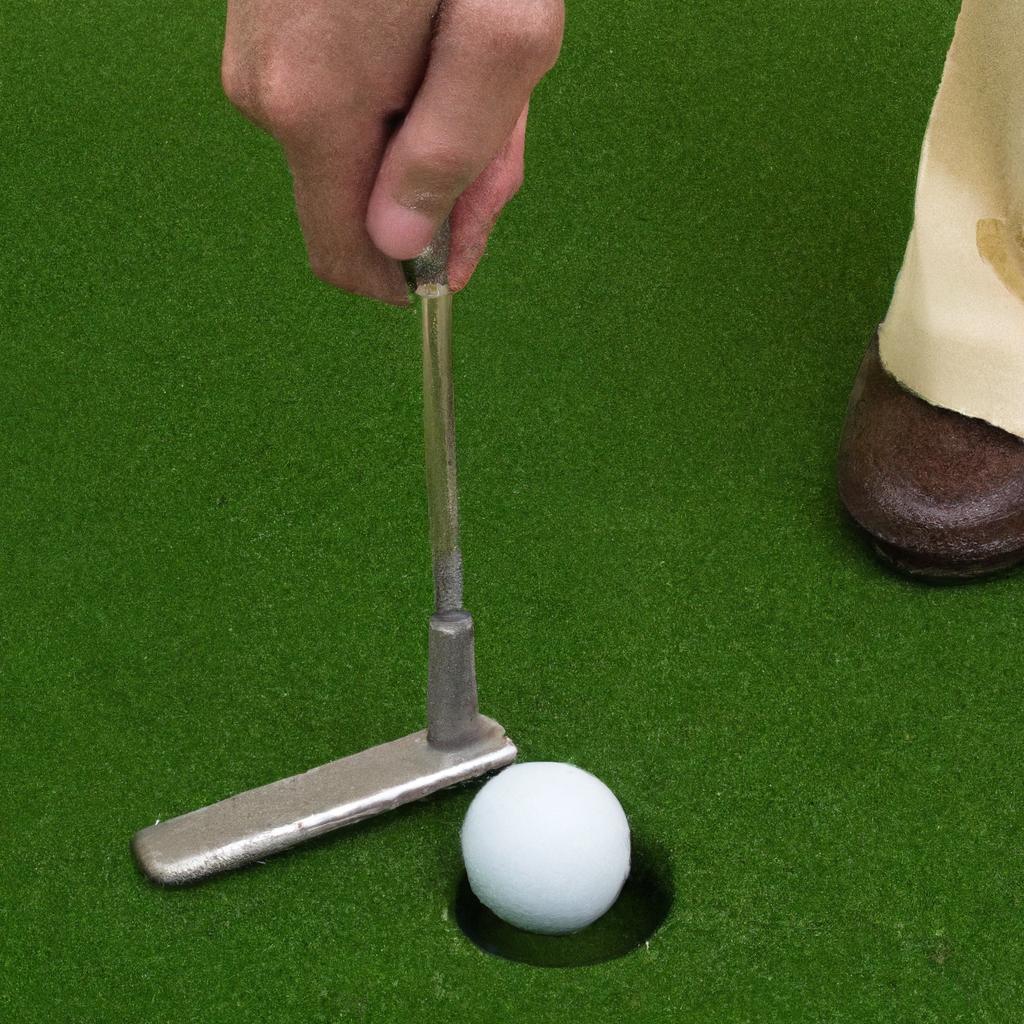
Short‑game and putter fitting have different priorities: putter length and lie must support the player’s posture and stroke arc; face loft should be matched to the putting attack angle (commonly 3-4°) to promote clean forward roll; and wedge loft and sole grind should reflect swing type and turf. For putting, use these checkpoints and drills:
- Setup checkpoints: eyes over or slightly inside the ball, hands beneath the shoulders, minimal knee flex.
- Gate drill: tees placed outside the putter head to discourage unwanted face rotation for players with a straight stroke.
- Ladder drill (distance control): roll 6-8 balls to increasing distances focusing on consistent stroke length and centered impact.
Typical fitting errors-overly lofted wedges that cause ballooning (fix with reduced dynamic loft and a shallower attack) or a putter that is too long/short causing wrist collapse (correct with length/lie and posture adjustments)-deliver quick scoring dividends around the greens where strokes are most easily saved.
Combine fitting outputs with course strategy and a phased practice plan that accounts for turf conditions and situational play. Use fitted metrics to build a hole‑ or course‑specific shot map-choose clubs and landing zones that minimize wind influence while balancing roll versus stop (as a notable example, into a strong headwind take an extra club and a lower‑lofted option to reduce spin and ballooning). Monitor KPIs-proximity to hole, dispersion radius, GIR, and scrambling %-and trigger a re‑fit if any metric drifts beyond preset thresholds (e.g., a >10% change in average carry after a seasonal temperature shift). For players with physical constraints, recommend alternatives such as limited‑range shaft profiles, progressive‑length builds, or swapping long irons for hybrids; for advanced players, refine bend profiles and grind options to suit preferred shot shapes. Plan a reassessment fitting after a 6-8 week training cycle to compare against baseline data and set the next measurable objectives for swing, putting, and driving.

Shaft selection and flex recommendations to optimize swing dynamics and driving distance
The shaft’s active role in launch, spin and dispersion: a golf shaft is an engineering component that governs timing, energy transfer and face orientation at impact-not merely a connector between grip and head. Choose flex based on measured clubhead speed and tempo, not self‑labelled swing archetypes. Rough guiding ranges are: <75 mph frequently enough benefits from Ladies/Senior (L/A) flex; 75-85 mph from A/R; 85-95 mph from Regular (R); 95-105 mph from Stiff (S); and >105 mph from Extra‑Stiff (X). Also account for kick point (higher = lower launch, lower = higher launch) and torque (lower torque tends to lessen face rotation at impact). For example, a high‑speed swinger with a shallow AoA may see improved dispersion and lower spin using a mid/high kick, low‑torque shaft-beneficial on exposed, windy venues.
Follow a repeatable testing routine with quantitative goals: schedule a dynamic fitting using a launch monitor or emulate it on the range.Warm up (10-15 minutes) to stabilise the swing,than hit at least 10 solid swings with each shaft candidate while recording clubhead speed,ball speed,launch,spin and carry. Aim for driver launch angles in the order of 10-16° and spin between 1,800-3,000 rpm depending on loft/conditions, with smash factors approaching 1.45-1.50. Prioritise shafts that consistently produce higher average ball speed and tighter lateral dispersion rather than a single maximum‑distance outlier.When testing irons/hybrids, track impact location (tape or sensor) and consider tip‑stiffening by tipping 1-2 inches to reduce excessive launch or spin if shots balloon.
Blend shaft selection with mechanics and tempo training: a mismatch between shaft characteristics and a golfer’s loading sequence induces timing faults-too soft a shaft for an aggressive transition can prompt early release (“flip”) with high spin and weak carry; too stiff a shaft for a smooth, late‑release swinger can cause heel strikes and depressed launch. To align shaft behaviour with technique, use these drills:
- Slow‑motion half‑swings to sense shaft loading near transition and encourage a slight lag with wrists set at the top.
- Tempo work with a metronome at 60-70 bpm to stabilise transition rhythm and monitor resultant ball speed and dispersion changes.
- Weighted‑club and broomstick drills to strengthen the loading sequence and improve sequencing without altering swing path.
These kinesthetic exercises help all levels internalize a consistent load‑release pattern that matches the selected flex, producing more predictable launch and steady driving distance.
Adapt shaft choices to course and weather: strategic play calls for different shaft priorities. On long downhill holes, damp conditions, or wind‑exposed layouts, prefer shafts with a lower launch profile and reduced spin (stiffer tip or higher kick point) so the ball penetrates and resists crosswinds. In cold weather or dense rough where compression is diminished, a slightly softer flex or higher torque can help sustain launch and ball speed. As an example, on a tight tree‑lined fairway with crosswind, choose a shaft that produces a lower trajectory and less spin, pair it with a slightly lower tee and a +1° closed face to encourage run‑out. Always validate such setups on the range in comparable weather before tournament play.
Set measurable targets and correct typical mismatches: define clear improvement metrics (e.g., raise average carry by 10-15 yards or cut 10‑shot dispersion by 25% within 8-12 weeks after a shaft/technique update). Common faults and fixes include: excessively soft shafts causing high launch and hooks-move up a flex or tip the shaft; overly stiff shafts producing low launch and toe‑biased strikes-soften the flex, shorten the length by 0.25-0.5 inches, or add loft. Consolidation practice might include:
- 30‑minute range session alternating tested shafts and focused ball‑flight drills (10 swings per configuration).
- On‑course validation: play three holes using the new shaft setup with attention to alignment, tee height, and attack angle.
- Mental routine: a concise pre‑shot routine with one swing cue (e.g., “smooth load, strong release”) to stabilise timing.
When equipment choices are paired with reproducible mechanics, defined metrics, and tactical thinking, players from novices to low handicappers can systematically enhance swing dynamics and driving distance.
Note on other references to “Shaft”: search results for “Shaft” may also reference the 2019 film starring Samuel L. Jackson, which is unrelated to this equipment discussion. If that media topic was intended, a separate summary can be provided; otherwise the guidance above is focused on golf equipment and performance.
Head geometry and loft‑gapping strategies for sharper approach play and short‑game control
Clubhead geometry is a primary determinant of ball flight; understanding its effects is essential for tighter approaches and better short‑game results. Blade vs cavity‑back designs differ not just in aesthetics but in performance: rear/lower CG tends to increase launch and spin, while forward CG reduces spin and flattens trajectory. Sole width and bounce govern turf interaction-wider soles increase forgiveness and reduce digging, narrower soles enable crisper contact from tight lies. Swapping to a low‑CG, high‑MOI iron can increase carry by roughly 5-10 yards versus a compact blade of identical loft at the same swing speed. When recommending heads, quantify carry and weigh forgiveness (MOI), CG placement, and offset against a player’s path, angle of attack and trajectory preference.
Loft selection and coherent gapping should be data driven and aligned with scoring objectives.Run a gapping protocol: measure carry distances for each iron and wedge using 3-5 calibrated swings, then compute yardage intervals. Aim for gap sizes of roughly 7-12 yards-better players often prefer tighter spacing (~7-9 yards or ~4° loft steps) to enable shot shaping, while higher handicaps may accept wider gaps (~10-12 yards).Options to tidy set makeup include adding a dedicated gap wedge (50-52°) between PW and SW,or fine‑tuning shaft length/lie instead of relying on overlapping lofts. Practically,if a 9‑iron carries 130 yards and the PW 115,insert or adjust a wedge to produce predictable intermediate carries.
Short‑game control depends on matching head design (sole, bounce, grind) with intended techniques. Bounce typically sits in low (4-6°), mid (7-10°) and high (10-14°) ranges: choose low bounce for firm, tight lies and skilled players who shallow the attack; mid bounce for all‑purpose play; high bounce for soft sand or turf where the sole must bounce through the material. Soles and grinds permit face opening without the leading edge digging-use a wider trailing‑edge grind for high flop shots and a heel‑biased grind for consistent sand exits. Technique notes: for bump‑and‑runs keep the ball back and hands slightly behind to ensure a descending blow; for flop shots open the face, widen stance and set a more upright shaft to lift the ball without excessive digging.
Translate equipment and technique into scoring with focused practice drills and checkpoints:
- Gap Test: log carry distances (3-5 reps) and build a yardage chart; if gaps exceed 12 yards, adjust lofts or add a wedge.
- Landing‑Spot Ladder: from 60-120 yards pick landing spots every 10 yards and practice stopping the ball within a 10‑foot radius of each target to train trajectory and spin.
- Bounce Awareness Drill: practice 10 shots from different lies with each wedge grind to feel how the sole interacts and identify the best bounce for each condition.
- one‑Hand Control: hit short pitches with just the lead hand to enhance face awareness and touch.
Set measurable goals such as keeping wedge distance consistency within ±5 yards and landing accuracy within 10 feet during approach practice.
Include equipment choices in strategic and mental decision making. In windy or firm conditions,prefer lower‑lofted clubs or lower‑bounce soles to keep the ball penetrating and reduce spin; on soft greens or downhill lies,choose higher‑lofted wedges with more bounce to avoid digging and improve stopping power. When confronting tricky pin placements, play percentage shots-for a front‑edge pin on a two‑tier green, land short and let the ball feed toward the hole rather than risking a high‑spin attempt that may lip out. any loft changes or sole work should be performed professionally and remain within USGA/R&A conformity for competitive play. Combining properly gapped,purpose‑built heads with deliberate practice and situational course management reduces error,improves proximity and lowers scores.
Putter geometry, weighting and stroke integration for repeatable putting
Consistent putting starts by matching head shape, balance and weight to the player’s stroke. Two critical geometric considerations are toe‑hang versus face‑balance and the putter’s effective loft and lie. Typical modern putter specifications-3°-4° loft, 33″-35″ shaft length, and lie angles around 70°-72°-influence launch, initial skid and face angle at impact. Adjustable sole weights and head mass change the club’s MOI: adding approximately 10-20 g increases stability and reduces twist on off‑center strikes. Note that anchoring the club to the body is banned under the Rules of Golf, so any lengthening or stabilising solutions must preserve a free‑swinging motion.Proper geometry and weighting ensure the putter matches a player’s stroke and produces predictable roll, which translates to better scoring and course management across different greens.
Convert geometry into dependable performance with setup and stroke alignment checks:
- Eye line over or slightly inside the ball to read the line;
- ball position marginally forward of centre for forward roll;
- shoulders parallel to the target and light grip pressure (~4/10).
Then harmonise stroke arc with putter balance: a face‑balanced head suits near straight strokes (arc < ~5°); a head with toe‑hang matches more arced strokes (arc > ~10°). A simple field test is an overhead video of the stroke to assess arc-if the shaft traces an arc larger than the ball diameter consistently, a toe‑hang model is likely appropriate. Maintain a shoulder‑driven pendulum motion with minimal wrist break so tempo transfers smoothly from long game routines to putting.
Weighting affects roll quality and forgiveness-heavier heads and higher MOI resist twisting and reduce skid on fast or undulating greens, while lighter heads are more touch‑sensitive for short putts (8-12 feet). Use these drills to quantify improvements and set targets:
- Ladder drill: 5 putts from 3,6,9,12,15 ft; record make % and tempo (aim 1:2 back‑to‑through). Targets: 95% inside 3 ft; 70% from 6-10 ft.
- Gate & alignment: ensure toe path matches desired arc and reduce face rotation to within ±2° at impact.
- Weighted‑head feel: 20 strokes with a heavier training putter to ingrain stability, then switch back and measure deviations over 10 repeats at 15 ft.
These metrics (make rate, face rotation, tempo ratio) are simple to track in practice and on the course.
advanced fitting couples launch‑monitor diagnostics and high‑speed video to measure launch, skid and early roll-data that guide head shape, weighting, and shaft length selection. For example, on a long uphill green prioritise higher MOI and slightly more loft to limit skidding; on soft, receptive greens a lower loft and softer insert can reduce skid and improve true roll. During play, adjust line and pace for grain, slope and wind-on a firm green with right‑to‑left grain, play firmer pace and aim left to let the ball hold the line. A practical integration routine could include:
- two 15‑minute weekly sessions on speed accuracy (ladder drill);
- one 30‑minute scenario session simulating holes with three‑putt pressure;
- quarterly fitting checks to confirm weighting/loft remain optimal.
These steps align equipment with situational play and help turn short‑game skill into lower scores across varied courses.
Troubleshooting and staged improvement emphasise measurable correction and mental preparedness. Common putting faults-excessive wrist action (remedied with a long‑handle/broomstick drill to force shoulder rotation),inconsistent face angle at impact (identify with impact tape or face spray),or an ill‑matched putter to the stroke arc (use the overhead arc method)-can be addressed with a six‑week progression:
- Weeks 1-2: fundamentals and setup-10 minutes/day on mirror and gate work;
- Weeks 3-4: distance control-ladder drill and slope simulation,track make rates;
- Weeks 5-6: pressure exposure-simulate three‑hole sequences with scoring goals to cut three‑putts by ~50%.
Adopt a concise pre‑shot routine (read, practice stroke, commit to speed) to reduce hesitation and improve conversions under pressure.for players with mobility constraints, slightly longer shafts or specialty grips can encourage a shoulder‑driven stroke while remaining compliant with rules. combined,equipment,technique and mental routines produce repeatable putting that reduces scores from beginner through low handicap levels.
Grip selection, hand placement and torque control for repeatable clubface management
Grip orientation is the primary determinant of clubface angle at impact. For right‑handers, a neutral grip aligns the left‑hand lifeline and left thumb so the two “V”s point between the chin and right shoulder; a strong grip rotates both hands toward the right hip (showing 2-3 left‑hand knuckles), while a weak grip rotates them left (fewer knuckles visible). Target a grip pressure of around 3-5/10 (light to medium) to allow wrist hinge while maintaining control. As a practical check, at address the shaft should form approximately a 90° angle with the lead forearm for standard irons-adjust 2-5° to accommodate natural wrist geometry rather than forcing position. Remember instrument interactions-grip diameter, shaft torque and head weight change feel and may require small hand‑rotation tweaks to preserve a square face at impact.
Refine hand placement and torque management to stabilise face rotation during the downswing and release. The two main inputs to face angle at impact are forearm/wrist rotation (supination/pronation and uncocking) and swing path, so the hands must produce consistent torque without tension. Key checkpoints include maintaining a neutral lead wrist at the top, allowing a controlled wrist hinge (~60-90° depending on the shot), and letting the trail hand support the face through release while avoiding an early flip. Practice drills:
- Towel‑under‑armpit: preserve connection and feel forearm rotation without excessive grip torque.
- Half‑swing gate drill: tees outside the clubhead path to train a shallow release and limit over‑rotation.
- Slow‑motion impact‑feel: swing a short iron at 50% speed and pause at impact to confirm face angle (use video or an instructor).
These exercises build sensitivity to how small forearm and wrist torques change face angle and should be used alongside impact tape or launch‑monitor feedback to quantify gains.
Progress from isolated face‑alignment work to integrated full‑swing practice: emphasise that clubface angle sets initial ball direction, while path determines curvature and spin axis-so prioritising face control reduces large dispersion. On a launch monitor, aim to lower mean face‑angle variance to about ±2° and keep path within ±4° for predictable shot shapes.Training progressions include stationary face alignment (address,set face,close eyes,swing),dynamic release exercises (impact bag,short swings focusing on neutral release),and full‑speed integration.Address early‑closure “flip” faults by promoting a delayed forearm roll and a stable lead wrist through impact.
Apply torque‑management principles to the short game and tactical decisions: hand placement changes trajectory and spin.For delicate chips and pitches use a slightly firmer lead‑hand anchor and a more open trail hand for soft‑landing shots; for running chips push the hands forward to produce lower,bump‑and‑run trajectories on firm turf. In wind or wet conditions favour a neutral‑to‑strong grip and a slightly firmer pressure to prevent the face from opening-this sacrifices some feel but stabilises the face. Course‑specific drills include:
- 100‑yard target progression-10 shots at five incremental stakes to use the same grip while varying ball position;
- Bunker face‑control routine-open face with narrow stance, record strike consistency over 30 reps;
- Wind‑adjustment exercise-hit low and high trajectories with the same club to explore how hand placement affects launch and spin.
These translate technical work into strategic shot choices so golfers select grips that match lie, wind and pin position.
Deploy a structured practice and mental plan to make grip and torque control automatic under pressure. Over a 6-8 week program set measurable benchmarks such as reducing dispersion by 20% and attaining >70% center contact with a given club; monitor face‑angle variance and smash factor weekly with video and launch‑monitor data. Progressions for each level: beginners focus on alignment and light pressure; intermediates/low handicaps refine wrist set, forearm timing and subtle grip strength for shot‑shaping. common corrections:
- Too tight a grip → relaxation/pressure drills and grip‑pressure meters;
- Excessive hand flip → impact‑bag and lead‑wrist stabilization;
- Over‑rotation on backswing → tempo work using a metronome (3‑1‑3 count).
Add simple mental cues such as a two‑second pre‑shot grip check and a consistent visual of the desired face angle to reduce cognitive load during play. Combining these technical adjustments with situational practice and measurable goals lets players of all abilities convert improved grip selection and torque control into lower scores and better course management.
Ball construction, compression and spin traits matched to player profile and shot intent
Ball construction must be matched to the player’s physical profile and intended shots. Modern balls differ in core compression, layer architecture (2‑, 3‑, 4‑piece) and cover material (Surlyn vs urethane), which together influence energy transfer, feel and spin. As a practical guide, pair ball compression to driver clubhead speed: players under ~85 mph clubhead speed usually feel benefits from lower compression (~50-70); those between 85-100 mph typically suit ~70-90; and very high speeds (>100-105 mph) are best served by firmer (>~90) compressions to avoid energy loss. Choose a urethane‑covered, multilayer ball when greenside spin and stopping power matter; use durable surlyn two‑piece models for beginners or higher handicaps focused on forgiveness and distance. Always confirm balls used in competition conform to USGA/R&A rules.
Translate ball construction into expected spin behaviour by understanding spin generation: spin is driven by dynamic loft, angle of attack (AoA), and face‑to‑path interaction-summarised by spin loft (dynamic loft minus AoA). as an example, a driver with about 12° dynamic loft and a small positive AoA (+2°) yields a spin loft near 10° and driver spin often in the 1,500-3,000 rpm band depending on strike quality and ball type. Irons and wedges, with higher dynamic loft and steeper negative AoA (irons ~−4° to −6°; wedges ~−8° to −12°), generate much higher spin-full wedge spins commonly reach 6,000-12,000+ rpm depending on cover and contact. Teach players to manipulate dynamic loft and strike location to change spin: reducing spin loft lowers backspin and increases roll; increasing spin loft (forward shaft lean and crisp compression) adds stopping power on receptive greens.
Apply ball and swing choices to course scenarios to improve scoring. On firm, windy links days select a lower‑spin, firmer ball and lower trajectory by reducing loft or tempo-many amateurs target a driver launch of 10-12° with spin under ~2,200 rpm to maximise roll. When attacking small receptive targets choose a higher‑spin urethane ball and emphasize crisp wedge strikes to create steep descent angles (> 45°) so shots hold more often. for strategic tee selection, match the ball and tee height to intent-select a lower‑spin ball and lower tee height to prioritise accuracy and run, or increase tee height and spin when stopping power is required into elevated greens.
Convert these concepts into repeatable skills by using launch‑monitor feedback to record spin, launch, carry, descent angle, and smash factor, and set incremental targets such as reducing spin standard deviation by ±300 rpm or keeping carry dispersion within ±8 yards. Representative drills:
- Impact‑tape sessions: identify miss patterns and adjust ball position/weighting to centre strikes (aim for >80% center‑face contact in a 20‑shot set).
- AoA drills: a low tee beside the ball promotes a shallow driver AoA; a towel behind the ball encourages steeper wedge impact-measure AoA changes on a monitor and target driver AoA near +1° to +4°, irons near −4° to −8°.
- Spin‑loft control routine: hit the same wedge with full, three‑quarter and bump‑and‑run strikes while varying forward shaft lean by 3-6° to observe predictable spin shifts on the monitor.
These are scalable: beginners focus on carry and contact; low‑handicappers refine rpm targets and descent angles.
Address common faults, fitting misalignments and psychological factors affecting ball performance. Typical issues include overly tight grip pressure that increases sidespin, inconsistent center contact that multiplies spin variance, and choosing balls mismatched to clubhead speed. Remedies: relax grip to around 4-5/10, perform extended impact‑tape sessions (50 shots), and schedule a combined ball‑and‑club fitting to match compression to swing dynamics. Introduce a pre‑shot mental checklist (club selection,wind,landing area) and pick the ball/shot shape that minimizes risk (e.g., a lower‑spin controlled fade on a tight dogleg). Recommended practice frequency: 3 focused sessions weekly of 30-45 minutes plus monthly launch‑monitor checks to quantify progression. Integrating ball construction, spin mechanics, targeted drills and course tactics yields measurable score improvements and greater consistency across conditions.
Using launch monitors and analytics for evidence‑based equipment choices and performance tracking
Start data‑driven work by establishing a robust baseline. Before equipment changes, collect a sizeable, consistent sample (minimum 30 swings per club) under controlled conditions to generate meaningful averages and dispersion statistics. Capture key metrics: clubhead speed, ball speed, smash factor, launch angle, spin rate, attack angle, and face‑to‑path. Record environmental factors (wind, temperature, altitude) as they materially affect carry-e.g., a steady 10 mph headwind can cut driver carry by an estimated 15-25 yards depending on spin.Confirm all tested equipment conforms to R&A/USGA rules for accurate, on‑course‑relevant comparisons.
Use the data to diagnose mechanics and prioritise instruction.Examples: a driver smash factor under 1.45 suggests off‑centre contact or excessive effective loft at impact-address with impact‑tape work and center‑strike drills.A steep negative driver AoA (e.g., < −2°) frequently enough reduces carry; correct with weight‑shift and spine‑tilt drills to produce a slight upward attack (target +1° to +3°) for more carry in many players. Practical checkpoints and drills to turn numbers into technique gains include:
- Impact tape & tee‑height experiment: adjust tee by ½‑inch steps until center strikes and smash factor improve.
- Step‑through drill: three‑quarter swings finishing with a forward step to feel an upward attack angle.
- Spin‑loft awareness: hit half‑shots with progressively lower loft to experience how dynamic loft relates to spin; monitor rpm changes.
These protocols suit novices (focus on contact and rhythm) and low handicappers (fine‑tune spin and launch for shot workability).
Quantify short‑game and approach play with launch‑monitor metrics to refine technique and club selection. For wedges target landing angle and spin relationships: higher landing angles and spin (for example, full wedge spin in the 5,000-8,000 rpm range in soft conditions) produce stopping power; firmer turf needs lower spin and shallower landing to release properly.Training routines:
- proximity drill: from set distances (50, 75, 100, 125 yds) record carry and proximity for 20 shots per distance and aim to raise percentage inside 15 ft by 10% over 6-8 weeks.
- Trajectory control: use 25/50/75% swings, record launch and carry to build a personalised yardage chart for windy conditions.
- Chipping spin test: vary ball position and loft to observe how contact alters spin-note forward hand positions generally lower spin.
These measurable targets help choose wedge loft and bounce for course conditions and align short‑game practice to scoring goals.
Analytics should drive equipment decisions rather than marketing claims. Compare empirical metrics across head/shaft/ball combos to identify trade‑offs that meet the player’s priorities: more carry, less dispersion, or controlled spin.For example a shaft that raises clubhead speed by 1-2 mph but widens dispersion beyond acceptable limits may be a net loss. Use analytics to evaluate:
- average carry and total distance ± SD: prioritise reducing SD even if mean distance shifts slightly.
- Launch/spin windows: identify lofts and shaft profiles that place shots in the target envelope (e.g., 12-14° launch and 1,800-2,500 rpm driver spin in calm conditions).
- Lie/loft verification: ensure on‑course performance matches monitor outcomes and adjust lie if shot bias persists.
Always test in real course scenarios-on windy seaside layouts, prefer lower‑spin piercing flights; on rain‑softened inland greens, favour higher spin wedges and allow an extra 5-10 yards carry to prevent plugs.
Build a structured performance‑tracking system linking quantitative objectives with deliberate practice and psychological preparation. Maintain a rolling dashboard of weekly metrics tied to practice tasks: for instance aim to raise driver smash factor by +0.03 and cut 7‑iron dispersion ellipse by 10% over 12 weeks.A recommended training session workflow:
- Warm‑up & calibration: 10-15 minutes of impact/location and tempo drills while recording a 10‑shot baseline per club.
- Focused intervention: 20-30 minutes of drills aimed at a specific metric (attack angle, face control, spin) with immediate launch‑monitor feedback.
- Transfer practice: play simulated holes or pressure drills (limited‑score back nine) to train club selection and decision making.
Pair data work with mental strategies-pre‑shot routines, visualization and breathing-to ensure technical improvements translate to lower scores. Iterative use of launch monitors, analytics and on‑course rehearsal lets players make objective equipment choices, measure technique gains, and convert practice into scoring improvements.
Q&A
Note: the search results returned general dictionary entries for “master” and were not relevant to this topic. The Q&A that follows is therefore based on applied knowledge of golf equipment, club/putter fitting and biomechanics.Q1: What is the core claim of “Master golf Equipment: Transform Swing, Putting & Driving”?
A1: the central claim is that carefully chosen and configured equipment-selected through evidence‑based club and putter fittings-interacts with an individual’s biomechanics to deliver measurable gains in swing mechanics, putting consistency, driving distance and scoring. The article contends that the largest, most durable improvements occur when equipment changes are integrated with biomechanical evaluation and practice that reinforces efficient movement patterns.
Q2: How does correct club fitting alter swing mechanics?
A2: Accurate fitting aligns club geometry (length, lie, loft, grip size) and shaft traits (flex, weight, torque, kick point) with a golfer’s body measurements and kinetic patterns. Properly fit clubs support consistent posture at address, a repeatable swing plane and predictable impact positions, reducing compensations and variability in face angle and path, which tightens dispersion and improves launch conditions.
Q3: Which shaft characteristics most strongly influence shot shape and consistency, and why?
A3: The key shaft attributes are flex (stiffness), weight, torque and bend profile (kick point). Flex affects timing and release; weight influences tempo and feel; torque impacts face rotation; bend profile modifies dynamic loft and launch. Matching these elements to swing speed, tempo and release timing reduces compensatory motions and enhances repeatability.
Q4: What biomechanical checks should be part of a fitting session?
A4: critically important assessments include static posture (spine, hip and knee angles), mobility (shoulder and thoracic rotation, hip ROM), swing kinematics (pelvic and torso rotation, arm path, wrist hinge), weight transfer/ground reaction patterns, and sequencing (proximal‑to‑distal activation). Tools can include motion capture,high‑speed video,force plates and launch monitors to link movement to ballflight.
Q5: How does putter selection interact with a player’s stroke?
A5: Putter length, lie, loft, head shape, toe‑hang/face‑balance and grip must match the stroke type (straight vs arced). Face‑balanced heads favour straight strokes; toe‑hang suits arcing strokes. Appropriate loft (typically 2°-4°) helps initiate forward roll. Proper matching reduces face rotation at impact and improves roll and distance control.
Q6: What launch‑monitor targets are useful when fitting a driver for distance?
A6: Targets depend on swing speed but typically include selecting a launch angle that maximises carry (frequently enough ~10°-15° for common amateur speeds), a spin rate low enough to avoid ballooning (generally 1,500-3,000 rpm depending on speed), and a high smash factor indicating efficient energy transfer. The chosen launch/spin combination should produce a penetrating, controllable ball flight with minimal sidespin.Q7: How do CG and MOI in clubheads affect forgiveness and shot shape?
A7: Low, rearward CG tends to increase launch and spin, making shots easier to get airborne; forward CG reduces spin and enhances workability. Higher MOI increases resistance to twisting on off‑centre impacts, improving forgiveness and lowering dispersion.Lateral CG shifts can bias the club toward draw or fade.
Q8: What trade‑offs exist between maximising distance and scoring consistency?
A8: Maximum distance often uses longer shafts and loft/spin tuning that can increase dispersion and penalise poor strikes. Scoring consistency emphasises forgiveness (higher MOI), controlled trajectories and predictable shot shapes, sometimes sacrificing a bit of peak distance. Optimal fitting finds the sweet spot where added carry does not unduly raise scoring risk.
Q9: How should a putter’s loft and face structure be tuned for best roll?
A9: Putter loft is usually 2°-4°: enough to prevent skidding but not so much that the ball skids excessively. Face texture and milling affect initial acceleration and skid length-smoother faces frequently enough shorten skid but alter feel. Fitting measurements should consider ball start direction, skid distance and roll‑out at varied speeds to choose the best loft/face combination.
Q10: What role does grip size/orientation play in equipment optimisation?
A10: Grip diameter influences wrist motion and release timing. Oversized grips can damp wrist action and reduce distance but can stabilise putts; undersized grips may promote excess wrist movement. Grip choice should match hand size, strength and stroke mechanics to minimise compensations.
Q11: Why combine biomechanics training with equipment changes?
A11: Equipment changes modify the mechanical constraints of the swing-without concurrent neuromuscular adaptation players can revert to compensatory patterns. Biomechanics work (mobility, sequencing drills and deliberate practice) helps the body adapt to the new equipment, producing long‑lasting gains in launch conditions and repeatability.
Q12: What is a recommended testing protocol for a full fitting?
A12: A robust protocol includes: (1) baseline biomechanical/static measures; (2) standardised warm‑up and ball conditions; (3) capture swing kinematics and ballflight with launch monitor/video; (4) systematic testing of head/shaft/grip/length/loft combos with ≥10-15 strikes per setup; (5) evaluate objective metrics (carry, spin, dispersion, smash); (6) collect subjective feel/confidence feedback; (7) finalise choices balancing metrics and goals; (8) prescribe follow‑up practice aligned to the new equipment.
Q13: Which objective metrics best forecast scoring gains after equipment optimisation?
A13: Predictive metrics include reduced dispersion (smaller SDs laterally and in distance),improved proximity on approach shots,consistent launch/spin producing repeatable yardages,and improvements in strokes‑gained components. Enhancing shot repeatability and distance control tends to produce the largest scoring effects.
Q14: How should fitters advise players with limited budgets?
A14: prioritise high‑ROI changes: correct length, lie and grip frist; then match shaft flex/weight to swing speed/tempo; finally adjust loft/face for launch/spin. Replacing heads with higher MOI options or upgrading basic shafts can yield substantial gains without premium pricing; second‑hand/demo equipment from reputable fitters is frequently enough cost‑effective. Emphasise technique improvements alongside hardware when budgets are constrained.
Q15: What research directions matter for equipment‑biomechanics interaction?
A15: Valuable areas include longitudinal studies on retention of equipment‑driven gains when paired with training; predictive models combining motion capture, force plates and ballflight to recommend equipment; how age‑related anthropometric changes should inform refitting schedules; and quantifying effects of new materials and head geometries on kinematics and injury risk.
concluding remark: Equipment optimisation is a systems challenge that requires objective measurement, tailored fitting and biomechanical training. Combined, these elements yield measurable improvements in swing mechanics, putting accuracy, driving performance and scoring consistency.
Wrapping up
Deliberate hardware selection and structured integration-grounded in biomechanics and evidence‑based fitting-can materially improve swing dynamics, putting consistency and driving outcomes. Coaches, fitters and players should prioritise objective fit metrics, stage‑appropriate drills and measurable performance indicators to translate equipment changes into on‑course scoring gains. Ongoing monitoring, iterative adjustments and alignment with course strategy make improvements durable rather than transient. Future progress will depend on rigorous evaluation and collaboration among coaches, fitters, sports scientists and players.By treating equipment proficiency as an empirical,process‑driven pursuit,golfers can enhance consistency,lower scores and sustain performance gains over time.
Note: In this article “master” denotes proficiency; for alternate meanings (lexical or academic) consult Dictionary.com and Merriam‑Webster,or see graduate program information such as OU Online:
https://www.dictionary.com/browse/master
https://www.merriam-webster.com/dictionary/master
https://online.ou.edu/programs/masters/
Unlock Your Best Game: Elevate Swing, Putting & Driving Skills
Basic Golf swing Mechanics Every Player Needs
Great scoring starts with a repeatable golf swing. Focus on posture,grip,alignment,and tempo – the building blocks of consistent swing mechanics. When you optimize these fundamentals you unlock power, accuracy, and reliability across your irons and woods.
Key alignment & setup cues
- Posture: Hinge at the hips, maintain a straight (not stiff) spine tilt, slight knee flex.
- grip: Neutral to slightly strong-both hands working as a single unit to control clubface.
- Ball position: Varies club-by-club – center for short irons, slightly forward for mid-iron, inside left heel for driver.
- Feet & shoulders: Parallel to the target line for full swings; practice alignment sticks to ingrain this.
Efficient swing sequence (Kinematic Chain)
Use the body’s sequencing to create power without tension. A basic order to practice:
- Lower body initiates the downswing (hips rotate toward the target)
- Torso follows, creating width
- Arms and hands deliver the clubhead
- Clubface squares through impact with a balanced finish
Common swing faults and quick fixes
- over-swinging / loss of balance - fix with shortened backswings and tempo drills.
- Early release / scooping the ball – practice half-swings keeping wrist set into impact.
- Slice – check grip pressure, clubface alignment at setup, and promote inside-to-out swing path.
Putting: Build Consistency with Stroke, Reading & Routine
Putting is the fastest way to lower scores. Develop a solid putting routine, improve distance control, and sharpen green reading to sink more putts per round.
Putting fundamentals
- Setup: Eyes over the ball or slightly inside, shoulders level, hands ahead of the ball for a forward-press feel.
- Stroke: Pendulum motion from the shoulders, minimal wrist action, steady head.
- Distance control: Practice three-putt prevention with long putt pace drills.
High-value putting drills
- Gate drill for face alignment – place tees either side of the putter head and stroke through without touching tees.
- Clock drill for short-range accuracy – make eight 3-footers around a hole clockwise and counter-clockwise.
- Lag putting ladder - put from 40, 30, 25, and 20 feet aiming to leave within a 3-foot circle.
Green-reading tips
Walk a 3-foot circle around your line to view grain changes, use the “fall line” concept, and visualize the break before you address the ball. Combine feel with visual read – trust your routine.
Driving Accuracy & Distance: Create a Reliable Tee Shot
Driving well balances distance, direction, and course management. Improve driving accuracy with setup, swing path awareness, and clubface control.
Driver setup & ball position
- Ball forward in stance (inside left heel for right-handers) to encourage upward strike.
- Slightly wider stance than irons for stability and hip turn.
- Weight distribution: Slightly favor the trail foot at setup,shift toward front foot during impact.
Driving drills for accuracy and distance
- Fairway target drill - place two alignment sticks 12-18 inches apart down the target line and practice hitting through the “gate” focusing on path.
- Step-through drill – start with a half swing and step forward into your front foot on the finish to encourage weight shift and avoid slicing.
- Speed control – gradually build swing speed with swing-speed specific drills, then apply to full swing for safe power gains.
Biomechanics & Golf Fitness to Boost Performance
Golf-specific fitness improves consistency, reduces injury risk, and increases clubhead speed. Training should target mobility, stability, and rotational power.
simple fitness routine
- Mobility: Thoracic rotation drills, hip openers, and ankle mobility work.
- stability: Single-leg balance holds, anti-rotation planks.
- Power: Medicine ball rotational throws, kettlebell swings for hip drive.
Stretch-to-swing transfer
Work on dynamic warm-ups before practice (leg swings, shoulder circles) and use static stretching after sessions. Improved thoracic mobility translates directly to wider, safer backswing and better clubface control.
Practice Plan: Progressive Drills & Weekly Schedule
Practice with purpose.Below is a simple weekly plan that balances swing, short game, putting, and fitness. Use it as a template and adjust by skill level.
| Day | Focus | Duration | Key Drill |
|---|---|---|---|
| Monday | Iron Swing Mechanics | 60 min | Slow-motion impact drills |
| Wednesday | Putting & Short Game | 60 min | Clock drill + bunker exit |
| Friday | Driving & Power | 60 min | Gate drill + step-through |
| Sunday | On-course Strategy | 90 min | Play 9 holes focusing on target management |
Course Management & Mental Game
Lower scores are often a result of smarter decisions, not just better swings. Course management and mental strategy are equal partners to technical skills.
Smart course management checklist
- Play to your strengths: Aim for areas of the fairway or green that suit your shape and distance.
- Know risk-reward: If a carry is tight over water, lay up to a comfortable yardage.
- Visualize shots and pre-shot routine: Rehearse one clear target and shot shape.
Mental skills for better rounds
- Pre-shot routine to calm nerves and create consistency.
- Breathing exercises for pressure shots (4-4-4 breathing works well).
- Process-focused goals (swing thoughts, alignment) vs. outcome-focused (only par or birdie).
Equipment Tips: Match Clubs to Your Goals
Modern clubfitting improves accuracy and distance. Basic checks to ensure your equipment supports your game:
- Shaft flex: Make sure flex matches swing speed for optimal launch and control.
- Club length & lie angle: Too long/two short can cause inconsistent strikes and miss-hits.
- Putter fit: Blade vs mallet, toe hang, and head weight to match your stroke arc.
Case Studies: Real-World Improvements (Short Examples)
Case 1 – From slicer to hitter
A 14-handicap player reduced slice frequency by addressing grip strength and swing path. Using the gate drill and inside-out path work over eight weeks, fairway hits increased by 30% and average score dropped 3 strokes.
Case 2 - Putting pace mastery
A weekend competitor with strong long putts but poor short putts implemented the clock drill, three-putt prevention ladder, and a consistent pre-putt routine. short putt make percentage rose from 62% to 78% in six weeks.
Benefits & Practical Tips
- Benefit: lower scores from better short-game and putting-practice the 40% of shots inside 100 yards.
- Tip: Use measurable goals - track fairways hit, greens in regulation, and putts per round.
- Tip: Video your swing from two angles (down the line and face-on) once per month for feedback.
- Benefit: Reduced injuries with routine golf fitness and mobility work.
First-Hand Practice Notes
When practicing, less mindless reps and more purposeful practice wins. Set clear objectives per session: such as, “60 balls focusing on low-impact finish and hip rotation” beats 200 poorly focused balls.Use alignment sticks, training aids, and a launch monitor (if available) to quantify improvement.
Quick Reference: Go-To Drills
- Impact bag for forward shaft lean and compressing the ball.
- Gate drill for face alignment and path consistency (works for driver & irons).
- Clock putting drill for short putt confidence.
- Medicine ball rotational throws for explosive hip turn and sequencing.